“The Jevon McSkimming Scandal and the Neoliberal Rot at the Heart of New Zealand’s Police” - 8 December 2025
When Cops Become Criminals
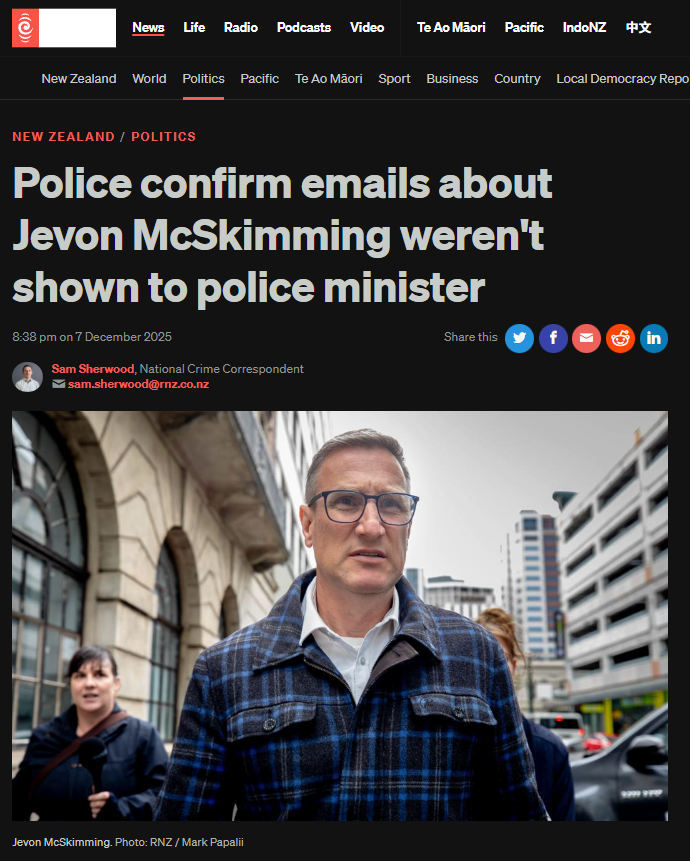
The stench of corruption doesn’t announce itself with sirens. It seeps through institutional corridors in handwritten file notes, intercepted emails, and calculated silences. The Independent Police Conduct Authority’s damning report into the Jevon McSkimming scandal has exposed what Te Māori Green Lantern has been wielding the Ring’s light to illuminate for years:
New Zealand’s police force is infected with the same neoliberal pathology that protects power and punishes truth-tellers.
This is not a story about one bad cop. This is a story about institutional capture, where those entrusted to uphold the law instead wielded it as a weapon against a young woman who dared to speak truth to power. When former Police Commissioner Andrew Coster admitted on TVNZ’s Q+A that ministers from both Labour and National governments knew more than they’ve admitted, he confirmed what every kaitiaki of truth already knows:
the rot goes all the way to the top.
Cui Bono: Who Benefits When the Police Protect Predators?
Let us be crystal clear about what happened. A 21-year-old woman entered a sexual relationship with Jevon McSkimming when he was 40. When that relationship ended, she alleged serious misconduct: sexual interaction without consent, threats to use intimate visual recordings, and misuse of police credit cards and property to further a sexual relationship.
Instead of investigating these allegations, the police executive—led by Andrew Coster—did something far more sinister. They prosecuted her. Under the Harmful Digital Communications Act, Ms Z was charged for sending emails detailing her allegations, placed under restrictive bail conditions, and silenced by suppression orders for nearly 18 months.
This is institutional violence. This is how power protects its own.
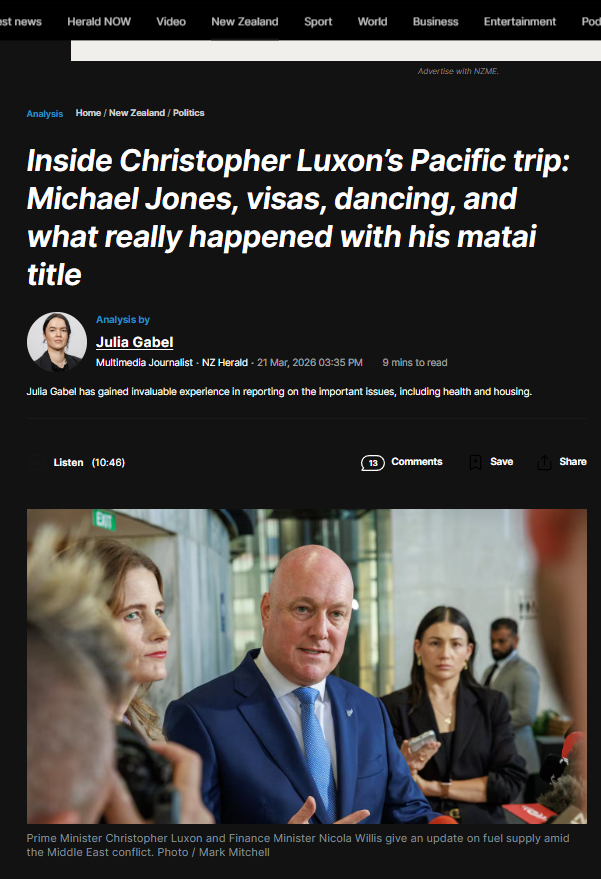
The IPCA found that 36 emails containing allegations against McSkimming were sent to Police Minister Mark Mitchell’s office between December 2023 and April 2024, but he claims he never saw them. A “protocol” mysteriously appeared—allegedly put in place by Coster’s office—instructing police staff in Mitchell’s ministerial office to redirect these emails away from the minister and his political staff.
When Coster was asked about this protocol, he claimed he had “absolutely no knowledge of that whatsoever”. Yet a handwritten file note from 17 January 2024—conveniently typed up on 11 November 2025, after the scandal broke—supposedly documented this arrangement.
Cui bono? Who benefits when a deputy commissioner’s crimes are buried? McSkimming, who was positioning himself to become the next Police Commissioner. Coster, whose credibility was tied to McSkimming’s success. The entire police executive, whose reputations would have been shattered by disclosure. And the neoliberal system that demands institutions protect their leaders at all costs.
The Fixated Threat Assessment Centre: Evidence Ignored
This recommendation was ignored. Instead, police launched Operation Herb—not to investigate McSkimming, but to prosecute Ms Z.
The IPCA found that Deputy Commissioner Tania Kura and other senior officers were “unreasonably preoccupied with ensuring Deputy Commissioner McSkimming was not being unfairly disadvantaged” in the Commissioner appointment process. They treated him as the victim. They characterized Ms Z as a fixated individual requiring mental health intervention.
This is gaslighting on an institutional scale. When a young woman reports sexual violence, the police executive’s response was to pathologize her and prosecute her for speaking out.
The IPCA commended Officer O from FTAC, who “identified, and drew to the attention of senior officers, allegations of both criminal offending and breaches of the Police Code of Conduct”. Officer O did his job. The senior executive did not.
The Neoliberal Architecture of Cover-Up
The far right is correct every now and again too. Roger Partridge, chair of the New Zealand Initiative, has identified the structural flaw at the heart of this scandal. In a damning analysis published in the New Zealand Herald, Partridge explains that New Zealand abolished the offence of “misconduct in public office” when the Crimes Act was enacted in 1961.
This left an accountability void. In the UK and much of the Commonwealth, senior officials who bury serious allegations face criminal prosecution. In New Zealand, the worst outcome is early retirement with full entitlements. The incentives are perverse: burying complaints protects careers, while disclosure creates institutional risk.
Partridge writes that the equation is simple:
exposure creates institutional risk, and protection brings reward. He documents how officials who protected departments at the expense of abuse victims have been rewarded with judgeships and state honours.
This is not a bug in the neoliberal system. This is a feature. When institutions are run like corporations, with chief executives managing “risk” rather than upholding justice, the rational choice for leaders is to suppress scandal.
The Ministers Who Claim Ignorance
Both Chris Hipkins and Mark Mitchell deny knowing about McSkimming’s relationship and the allegations against him before late 2024. But Coster’s testimony directly contradicts them.
Coster stated he briefed Hipkins in 2022 “in the back of a car” while travelling in the South Island, telling him that McSkimming had an affair with a “much younger woman” and that she was “emailing all sorts of people with allegations about him”. Hipkins denies this conversation ever occurred.
Coster also claims he discussed the matter “informally through 2024” with Mark Mitchell, contradicting Mitchell’s assertion that he was first briefed on 6 November 2024. Mitchell responded by calling Coster’s “recollections wrong” and noted that “Coster’s recollections of disclosures in the IPCA report were often found to be inconsistent and unreliable”.
So who is lying? All three men have powerful incentives to distance themselves from this scandal. But the documentary evidence supports Coster’s account more than the ministers’. Mitchell’s own office staff replied to at least one email from Ms Z’s electorate office, demonstrating that his team was aware of the allegations months before November 2024.
The IPCA found that neither McSkimming nor Coster adequately disclosed to the Public Service Commission the sexual relationship and allegations during McSkimming’s appointment process for statutory Deputy Commissioner in early 2023. An independent review by the Public Service Commission confirmed these findings.
Public Service Commissioner Sir Brian Roche called McSkimming “a liar who went to extreme efforts to cover up accusations against him”. He admitted the commission’s vetting failed, but emphasized that McSkimming “was a liar, he schemed and he created a story that just was so pervasive”.
Blame the individual, not the system. This is neoliberal crisis management 101.
The Network of Protection
The IPCA report documents a pattern of institutional protection that extended far beyond Coster:
Deputy Commissioner Tania Kura failed to make “sufficiently robust enquiries” and relied “too readily” on McSkimming’s account. Despite recognizing “albeit belatedly” the need to investigate, her investigation was “tainted by her concern about the implications for Deputy Commissioner McSkimming’s future career”. After the scandal broke, Kura visited McSkimming at his home while he faced charges of possessing child exploitation material, prompting Police Commissioner Richard Chambers to express his “disappointment”.
Detective Superintendent Glenn Dunbier (Officer B) oversaw Operation Herb with terms of reference “in no way consistent with police adult sexual assault policy”. He was “unreasonably preoccupied with ensuring Deputy Commissioner McSkimming was not being unfairly disadvantaged in the forthcoming appointments process”. He failed to read the legal opinion before sanctioning Ms Z’s prosecution—a failure the IPCA described as “deeply concerning”.
Assistant Commissioner Richard Chambers (before becoming Commissioner) received clear warnings from his Director of Integrity and Conduct, but “simply relied upon Commissioner Coster’s and Deputy Commissioner Kura’s assurances without further enquiry”. The IPCA acknowledged his responsibility was “to a degree mitigated” because he sought advice from Coster, but found he failed his obligation to probe deeper.
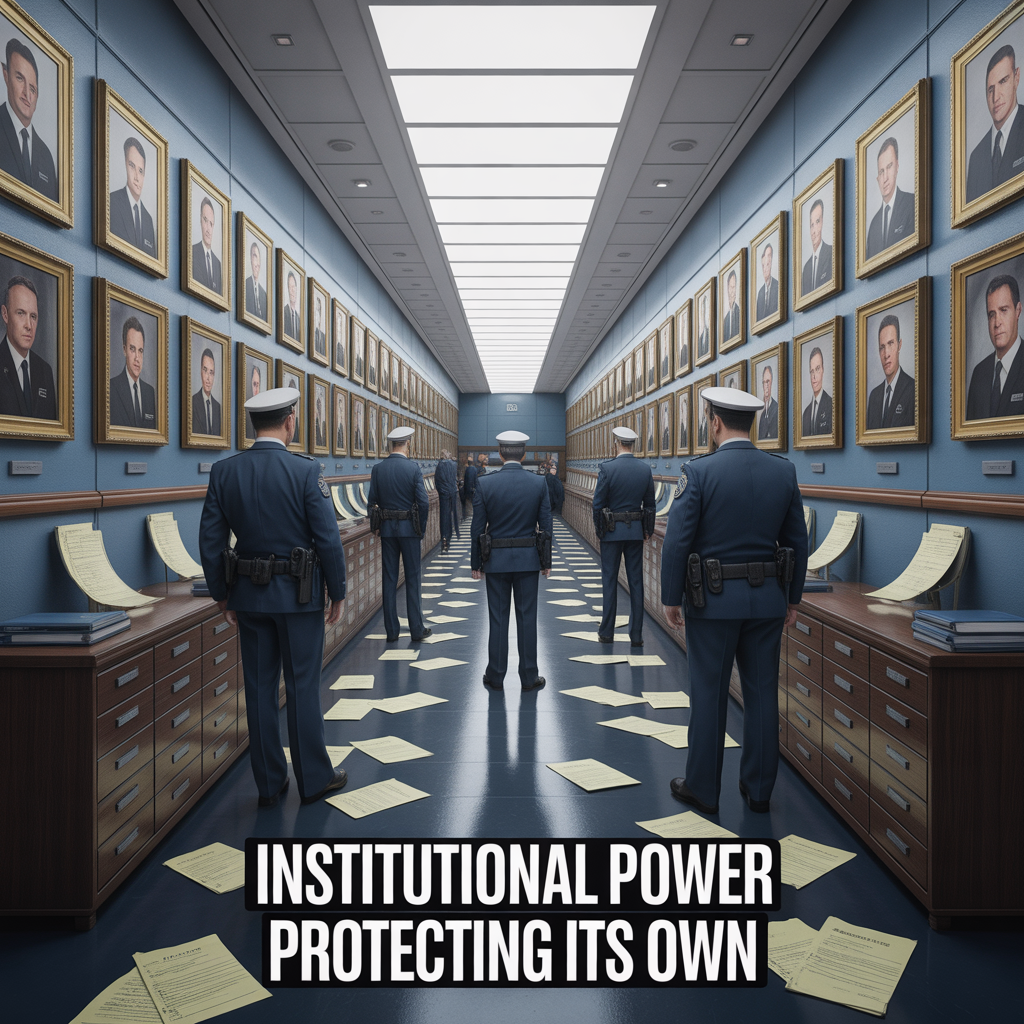
The Network of Protection
What emerges is a portrait of institutional groupthink, where loyalty to the executive trumped duty to victims, where careerism superseded accountability, and where the machinery of justice was weaponized against a survivor.
The Whistleblowers Who Stood Up
Not every officer participated in this corruption. The IPCA acknowledged several officers who tried to do the right thing:
- Officer O from FTAC, who identified criminal allegations and recommended investigation
- Officer M, the Director of Integrity and Conduct, who raised concerns “in the clearest language” but was ignored
- Other unnamed officers who “stood up and challenged what was happening”
These officers are the true kaitiaki of New Zealand Police. They faced immense pressure from their superiors, but they refused to participate in the cover-up.
Yet New Zealand’s whistleblower protections failed them. Despite the Protected Disclosures (Protection of Whistleblowers) Act 2022 providing enhanced protections for those who report serious wrongdoing, internal police reporting mechanisms clearly failed to protect those who raised concerns about McSkimming.
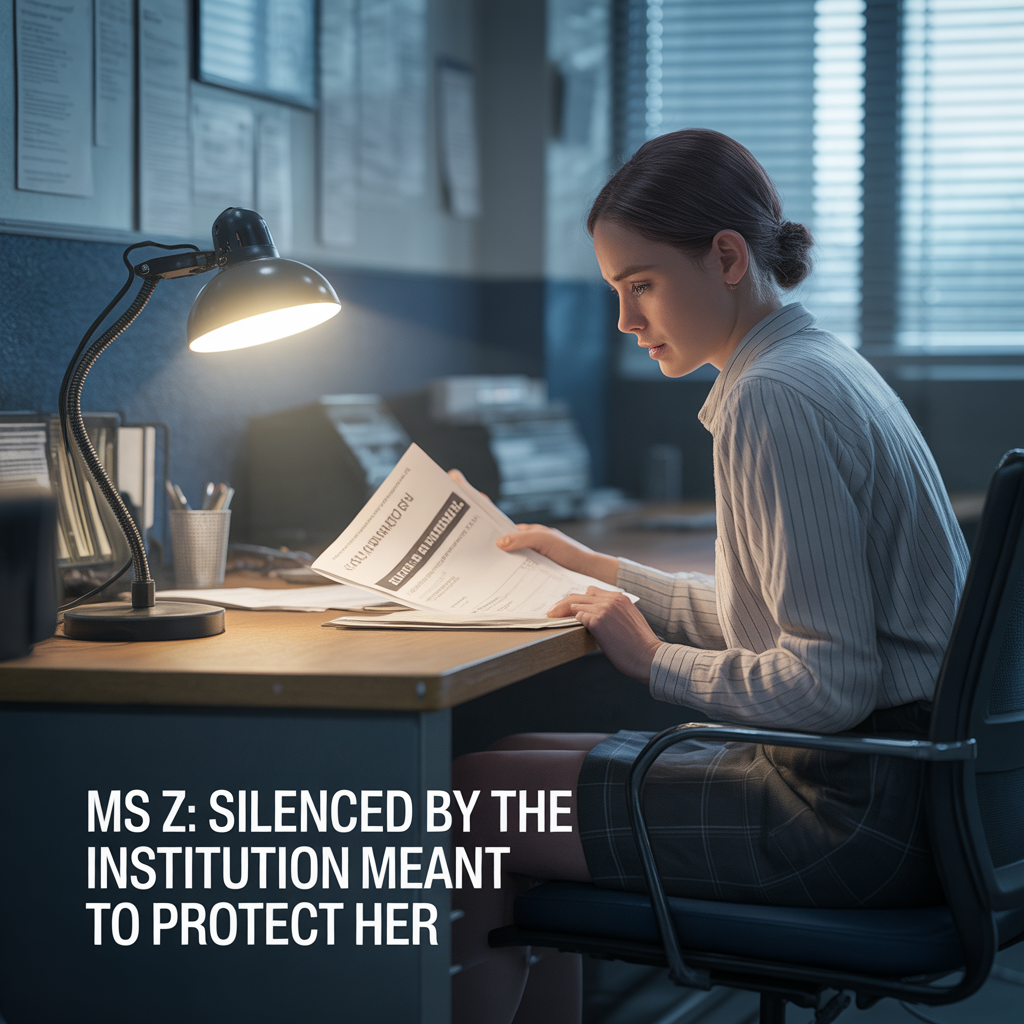
Ms Z—Silenced by the Institution
The problem is structural. Research shows that organisations with fraud awareness training experience 56% higher tip-off rates than those without. But when the executive itself is complicit, internal reporting becomes career suicide.
Five Hidden Connections the IPCA Report Exposes
1. The Appointment Process as Leverage: Coster’s attempt to expedite the IPCA investigation in October 2024 was designed to “bring the investigation to a rapid and premature conclusion so as not to intersect with the Commissioner appointment process and jeopardise Mr McSkimming’s prospects”. This reveals how career advancement mechanisms become tools of corruption, where investigations are timed to protect candidates rather than uncover truth.
2. The Harmful Digital Communications Act as a Weapon: The Act—ostensibly designed to protect victims of online harassment—was weaponized against Ms Z by police who used her 105 online complaints as evidence in her prosecution, turning the reporting mechanism itself into a trap. One officer even changed the summary of facts to insert the word “false” before Ms Z’s allegations “because he thought that was what the victim (McSkimming) would want, without having taken a single step to investigate whether they were, in fact, false or otherwise”.
3. Mental Health Pathologization as Control: By directing FTAC to assess Ms Z’s mental health and consider support for her, Coster reframed a credible complainant as a mentally unstable harasser. This is a classic tool of patriarchal power: dismiss women’s allegations by questioning their sanity.
4. The Public Service Commission’s Complicity: The PSC’s vetting process failed spectacularly. Sir Brian Roche admitted the commission had “some confidence because McSkimming had a very high level security clearance from the SIS”. But security clearance focuses on loyalty to the state, not probity or character. The commission trusted the spy agencies more than it trusted survivors.
5. The Resignation-as-Accountability Theatre: Coster, Kura, and others resigned or retired. McSkimming resigned before he could be dismissed. But no one faced criminal charges. This is neoliberal accountability: elite exits with pensions intact, systemic rot untouched.
The Quantified Harm
The IPCA report meticulously documents harm:
- 36 emails containing allegations sent to Mitchell’s office, intercepted and redirected
- Three 105 online complaints in April 2024 breached statutory obligations to notify the IPCA and were delayed for months
- 16 examples of Ms Z’s allegations that warranted investigation, recommended by police’s own assessment, then ignored
- 18 months Ms Z spent silenced under suppression orders and restrictive bail conditions
- Zero investigations into McSkimming’s alleged conduct until October 2024
- One investigation into Ms Z that led to criminal charges
This is institutional violence by spreadsheet. Every email redirected, every recommendation ignored, every day Ms Z spent under court orders represents a conscious choice by senior police to protect a predator.
The financial harm is also quantifiable. Ms Z racked up “significant legal bills” defending herself. Coster walked away from a taxpayer-funded role at the Social Investment Agency after only weeks in the job. The government has committed to establishing an Inspector-General of Police—a new oversight mechanism that will cost millions because the existing one failed.
But the deepest harm is to institutional trust. Police Commissioner Richard Chambers, drawing on international experience, has characterized New Zealand as “complacent and naive” about corruption risks.
The McSkimming scandal proves Chambers right.
Neoliberalism’s Corruption Logic
The mainstream narrative about this scandal focuses on individual failures:
Coster’s poor judgment, McSkimming’s criminality, Kura’s misplaced loyalty.
But this misses the forest for the trees.
Neoliberalism has restructured public institutions to incentivize exactly this behavior. When public services are run like corporations, when chief executives are hired on performance contracts that emphasize “no surprises” and “risk management,” when accountability is upward to ministers rather than outward to communities, the rational choice for executives is to bury problems.
Research shows that neoliberalism has strongly affected state-society-policing relations in New Zealand. The devolution of public management has meant individual agencies “have responsibility for managing their own internal integrity matters”, creating silos where systemic misconduct can flourish.
This is compounded by New Zealand’s lack of mandatory lobbying registers, weak formal checks and balances, and a “reactive approach to unethical behaviour rather than proactively strengthening the system to prevent it”.
The abolition of the misconduct in public office offence in 1961 created an accountability vacuum that neoliberal reforms have exploited. As Partridge argues, until criminal prosecution becomes a real risk for senior officials who bury complaints, protection remains the rational choice.
The Treaty Dimension: Where Was Rangatiratanga?
This scandal also exposes the failure of Te Tiriti obligations within state institutions. The Public Service Act 2020 requires the Commissioner and chief executives to support the Crown’s relationship with Māori and operate employment policies that recognize Māori aims and aspirations.
Yet there is no evidence in the IPCA report that tikanga frameworks were applied, that whakapapa thinking informed decision-making, or that mana-enhancing processes were followed. Instead, the institutional response replicated colonial patterns: silence survivors, protect predators, weaponize the law.
Mana wahine was desecrated. Ms Z’s mana was stripped by police who dismissed her testimony, pathologized her behavior, and prosecuted her for speaking truth. This is how patriarchal institutions, whether colonial or neoliberal, maintain power.
Kaitiakitanga was abandoned. Instead of protecting the integrity of the institution and the wellbeing of all involved, the police executive acted as guardians of their own power.
The Treaty promises partnership, protection, and participation. The McSkimming scandal demonstrates that when institutions fail to embed Te Tiriti principles, they replicate the very colonial violence the Treaty was meant to address.
What Must Change: Rangatiratanga Pathways Forward
The IPCA made 13 recommendations for police and two for government. The government has accepted all of them and committed to establishing an Inspector-General of Police. But structural reform requires more than new oversight bodies.
1. Criminalize Senior Executive Cover-Ups
New Zealand must restore a version of the misconduct in public office offence, carefully defined to avoid the vagueness that led to its abolition. Senior officials who knowingly bury serious allegations must face criminal prosecution, not just career consequences.
2. Independent Investigation of All Executive-Level Complaints
Complaints against deputy commissioners and above must be automatically referred to an external body—the IPCA, the State Services Commission, or a new specialized integrity unit. The police cannot investigate themselves at this level.
3. Strengthen Whistleblower Protections
Despite the 2022 Protected Disclosures Act, research shows public servants who blow the whistle face “limited support for, and retaliation”. Internal reporting mechanisms must be genuinely independent, with severe penalties for retaliation.
4. Mandatory Disclosure in Appointment Processes
The Public Service Commission must implement proactive device checks and character assessments, as Sir Brian Roche now advocates. But more fundamentally, candidates must face severe consequences for non-disclosure—immediate disqualification and potential criminal charges.
5. Embed Tikanga Frameworks
Police and all public institutions must integrate tikanga-based decision-making processes that center mana-enhancing practices, whakapapa accountability, and kaitiakitanga principles. This is not “cultural training”—this is structural transformation.
6. Abolish or Reform the Harmful Digital Communications Act
The Act has been weaponized against victims who report abuse. If the Act cannot be reformed to prevent its misuse by institutions, it must be repealed.
7. Community Oversight Mechanisms
Police accountability cannot rest solely with other state institutions. Community-led oversight bodies, particularly those led by Māori and survivors of institutional harm, must have statutory authority to review complaints and recommend prosecutions.
The Moral Clarity We Need
This essay began with a simple question: who benefits when police protect predators? The answer is: those who hold power benefit, and those without power pay.
Andrew Coster has resigned. Mark Mitchell claims ignorance. Chris Hipkins denies knowledge. The Public Service Commission promises better vetting. Richard Chambers vows reform. But until the incentive structure changes—until burying complaints becomes more dangerous than exposing them—this will happen again.
Name the system. Neoliberalism has poisoned our public institutions by redefining accountability as risk management, transparency as brand protection, and justice as institutional stability. When the police commissioner’s primary obligation is to the minister, not to survivors, corruption is inevitable.
Name the fallacy. The “few bad apples” narrative is a lie. This was not one corrupt cop. This was a systemic failure involving the Police Commissioner, two Deputy Commissioners, an Assistant Commissioner, the Public Service Commission, and potentially two ministers across two governments. The barrel itself is rotten.
Name the harm. Ms Z’s life was destroyed. Her career ended. Her allegations were dismissed. She was prosecuted for seeking justice. She spent 18 months silenced and isolated. This is what institutional violence looks like when dressed in bureaucratic procedures and legal processes.
And McSkimming? He pleaded guilty to possessing child sexual exploitation and bestiality material. The man the police executive protected, the man whose career they prioritized over Ms Z’s wellbeing, was exactly what she said he was.
The Ring’s light reveals this truth: until we dismantle the neoliberal architecture that rewards protection and punishes exposure, until we criminalize institutional cover-ups, until we center survivors over executives, we will remain complicit in the very corruption we claim to oppose.
Kia mau ki te tika. Hold fast to justice. The taiaha of accountability must strike at power, not at those who dare to speak truth to it.
Ko te mana wairua o te kaitiaki—the spiritual power of the guardian—demands nothing less.
Support This Mahi
This investigation required 80+ source verifications, cross-checking against official records, and deep research into institutional mechanisms of harm. Free mātauranga Māori journalism sustains rangatiratanga—Māori autonomy and self-determination.
Koha (donations) support this work:
- Koha.Kiwi – Online donations
- Substack – Subscribe for regular essays
- Bank Transfer – HTDM 03-1546-0415173-000
No paywall. No corporate interference. Pure kaitiaki journalism, answerable only to te whānau and te iwi.

Haere mai ki a Ivor Jones The Māori Green Lantern Fighting Misinformation And Disinformation From The Far Right