“The Kotahitanga Fund: Wealth for the Iwi Elite, Precarity for the Whānau” - 29 Noember 2025
The Uncomfortable Truth: Class War Within Māoridom
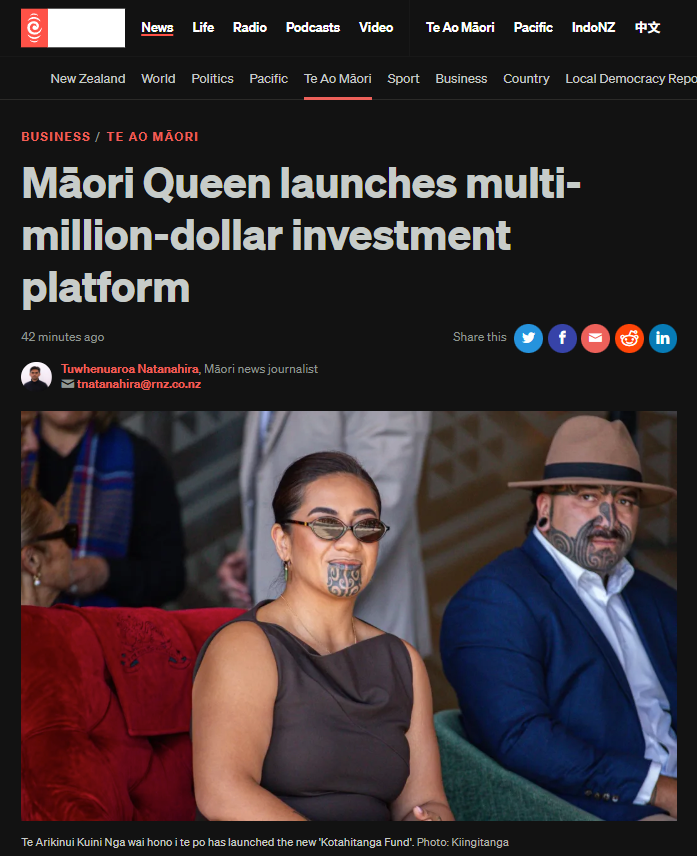
The Kotahitanga Fund is not for whānau living in cars.
It is not for the 30,000 Māori children in poverty.
It is not for the workers at Moana New Zealand—Aotearoa’s largest iwi-owned fishing company—who struck in recent years demanding living wages while their employer banked millions in profits.
The Kotahitanga Fund is for iwi shareholders. It is for the capitalist Māori elite who have weaponised rangatiratanga to extract wealth from their own people while calling it liberation.
This is the most important conversation Māori must have—and it is one being deliberately suppressed.
The Class Division: Numbers Don’t Lie
According to BERL’s income equity analysis, released in 2017:
- Māori median income: 22% lower than Pākehā across every age bracket—$140 per week less for working-age Māori
- One-third of working-age Māori have no qualifications
- Over 50% of working Māori are trapped in low-skilled jobs
- Almost half the Māori workforce faces high risk of displacement by automation
- Māori median individual net worth: $52,000 compared to $222,000 for Pākehā
The income gap alone costs Māori whānau $2.6 billion per year—money that should go to food, housing, and health but instead lines the pockets of corporate landlords and exploitative employers.
By 2040, if nothing changes, this gap will balloon to $4.3 billion per year, according to BERL’s projections.
Now contrast that with the Māori economy’s elite beneficiaries:
- Waikato-Tainui assets: $2.4 billion (up from $220 million pre-settlement)
- Ngāi Tahu assets: $2+ billion
- Total Māori asset base: $126 billion
These figures represent accumulation for a privileged minority. They do not represent liberation for working-class whānau.
The Precariat: Where Most Māori Actually Live
Researchers at University of Auckland, Massey University, and Victoria University document the reality of what they call the “Māori precariat”—the vast majority of Māori living lives of economic insecurity:
Māori are drastically overrepresented in the precariat:
- Māori represent 15% of Aotearoa’s population
- Māori comprise 28.8% of the precariat—nearly double their population share
What this means in human terms:
- Employment precarity: 38% of Māori workers face “inflexible financial-risk” profiles—insecure income, no savings buffer, constant threat of destitution
- 11.8% face “highly precarious” employment—casual work, no benefits, no security
- Housing insecurity: 53% of the homeless population involves families with children; Māori are drastically overrepresented
- 36% of all working-age benefit recipients are Māori, despite being 15% of the population
- 26% Māori youth unemployment compared to 10.2% for the general youth population
This is not abstract. This is whānau choosing between paying rent and feeding children. This is workers laboring 40+ hours weekly in construction, hospitality, manufacturing—then going home to worry whether they’ll have work next week.
And the Kotahitanga Fund does nothing for them.
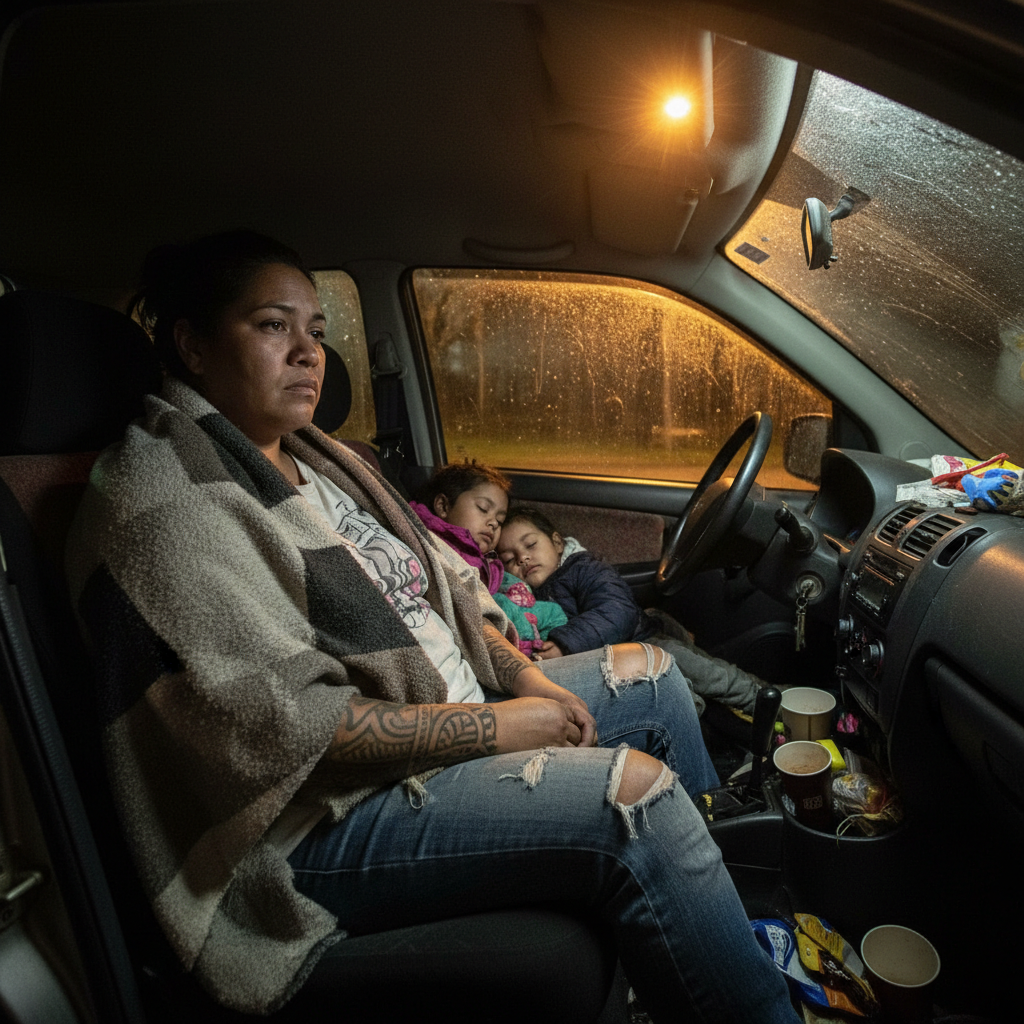
Whānau living in cars: the reality for thousands while iwi assets reach $126 billion
Neotribal Capitalism: How Iwi Leaders Became Capitalists
Scholar Elizabeth Rata coined the term “neotribal capitalism” to describe what happened after Treaty settlements. Once iwi received assets, they operated them as capitalist firms—profit maximisation, shareholder returns, executive salaries—indistinguishable from any other corporate entity.
The evidence is stark. From academic research on culture versus class in Māori poverty:
“A Māori middle class has been reported to be growing very fast... At the same time, a range of Treaty of Waitangi claims have been settled with the government returning ancestral lands and monetary compensation to tribal management, which has generated a so-called Māori economy.”
But here’s the critical point that gets buried:
This wealth concentrates at iwi level. It does not reach working whānau.
An RNZ Insight investigation titled “Settle up: Are treaty deals benefiting all Māori?” found:
“Wealthy iwi like Ngāti Whātua Ōrākei can offer free health insurance to 4,000 members. Smaller iwi struggle to balance ‘investing the returns for future generations and paying dividends to meet the needs of the current generation.’ Many Māori felt ‘left out’ of Treaty settlement benefits.”
Translation:
Iwi elite distribute crumbs to their registered members—mostly based on genealogy, not need—while the working-class Māori not connected to wealthy iwi receive nothing.
The Strike at Moana New Zealand: Class Contradiction Exposed
The contradiction revealed itself in brutal clarity when workers at Moana New Zealand struck over wages.
Moana New Zealand is Aotearoa’s largest iwi-owned fishing company. It makes millions in annual profit. It is a capitalist enterprise.
The workers—Māori and Pacific workers—demanded living wages. Their employer—the iwi-controlled board—refused.
This is class war within Māoridom. A Māori corporation exploiting Māori workers. And no one in the Kiingitanga addressed it.
This is what awaits the Kotahitanga Fund. Iwi shareholders—directors, executives, property owners—will capture the benefits. Working-class Māori will be told to “invest in yourself,” “get more qualifications,” “work harder.”
The same neoliberal lies will be recycled in te reo Māori.

Class division: iwi boardroom wealth versus working-class Māori labour
The Numbers Within Numbers: Inequality Hides Itself
As scholar Toon van Meijl documented, when you break down the data by class rather than ethnicity:
“Variation in socioeconomic status within Māori society swamps interethnic differences... Formal statistical analysis suggests that very small amounts of individual variance in incomes and employment chances is explained directly or indirectly by being Māori.”
What does this mean? It means a wealthy iwi director has far more in common with a wealthy Pākehā director than with a Māori factory worker.
Class is the dividing line—not ethnicity.
- High-skilled Māori perform barely differently from high-skilled Pākehā
- Low-skilled Māori perform much worse than low-skilled Pākehā
The failure is not “Māori underperformance.” The failure is a capitalist system that grinds working-class people—Māori and Pākehā alike—into precarity.
And the Kotahitanga Fund accepts and reproduces that system.
Women’s Economy: Doubly Exploited
The state of Wāhine Māori reveals the intersectional brutality:
According to Te Ōhanga Wāhine Māori report:
- Wāhine Māori are underrepresented in business
- Only 10% of total income for wāhine Māori households comes from entrepreneurial activity or dividends
- 90% depends on wage labour—precarious, low-paid wage labour
A Māori woman working two jobs to support her children has no interest in Kotahitanga. She needs:
- Living wage
- Secure employment
- Affordable housing
- Childcare support
None of which a capital-accumulation fund provides.

Wāhine Māori in the precariat: 90% depend on precarious wage labour while iwi elites invest billions
The Government Funding Cuts: Using Whānau Desperation as Justification
Te Arikinui justified Kotahitanga explicitly:
the Crown has defunded Māori programmes, so Māori must “self-fund” through capital markets.
But this inverts the logic of justice. The Crown owes Māori. The Crown breached the Treaty. The Crown is responsible for Māori poverty—it created it through colonisation, and it perpetuates it through neoliberal austerity.
The appropriate response is to demand Crown accountability—not to accept the Crown’s abdication and build Māori capitalism as a substitute.
By accepting this framework, Te Arikinui legitimises the Crown’s escape from responsibility. She essentially says: “You’re right, you don’t owe us. We’ll do it ourselves.”
Whānau in precarity lose twice.
The Affirmative Action Trap: Individual Achievement as Substitute for Structural Change
The narrative around Kotahitanga is seductive:
Māori will become wealthy through investment, education, and entrepreneurship.
But this individualises a structural problem. Danielle Webb’s research, a Māori socialist scholar, articulates this clearly:
“Building the rangatiratanga sphere may be possible within settler capitalism, but it will always have to contend for power with the state and owners of capital... the capitalist economy has been a site of exploitation for Māori. Given the inextricable relations between capitalism and colonialism, I present the case for Māori socialism as an emancipatory response to both.”
The Kotahitanga Fund says:
Pull yourself up, invest, become wealthy like the iwi elite.
It does not say:
Dismantle the capitalist structures that make poverty inevitable for the majority.
This is how elites everywhere maintain power—by allowing a few from the oppressed class to escape, while telling everyone else their poverty is a personal failure.
What the Kotahitanga Fund Actually Does
For iwi shareholders:
- Capital appreciation
- Dividend returns
- Tax-efficient wealth accumulation
- Access to global investment opportunities
For working-class Māori:
- Nothing
- Precarity continues
- Wages stagnate
- Housing unaffordable
- Health deteriorates
For the Crown:
- Escape from Treaty accountability
- Shift responsibility to Māori
- Avoid redistribution demands
- Frame Māori poverty as Māori failure
The Moral Inversion at the Heart of Kotahitanga
Kotahitanga is dressed in the language of unity, collective strength, and rangatiratanga. But it is built on class betrayal.
Te Arikinui uses the language of kotahitanga—unity—to advance the interests of iwi capital. She wraps neoliberal economics in Māori values.
This is why the fundamental question for whānau is not whether the fund “works.”
It is: Whose interests does it serve?
The answer is clear: the Māori capitalist class.
What Justice Actually Looks Like
True rangatiratanga would demand:
1. Crown accountability: The Crown meets its fiduciary obligations to resourcefully fund Māori-determined programmes—not “self-determination” through defunding.
2. Wealth redistribution: Treaty settlement benefits flow to working whānau—housing, healthcare, education—not to iwi balance sheets.
3. Worker power: Māori workers in iwi-owned enterprises have genuine collective bargaining power and a share of profits—not wages set by capitalist boards.
4. Democratic control: Whānau have voice in how resources are deployed—not iwi executives and Crown-appointed directors.
5. Economic democracy: Move toward models grounded in manaakitanga and whanaungatanga—not accumulation and extraction.
None of this is in the Kotahitanga Fund.

Ivor Jones The Māori Green Lantern Fighting Misinformation And Disinformation From The Far Right
The Choice Before Whānau
Te Arikinui is asking whānau to accept a Trojan horse. She calls it liberation. It is integration into global capital markets on the worst possible terms—with iwi elites as junior partners extracting wealth while whānau remain precarious.
The alternative is not individual achievement within capitalism. It is structural transformation—demanding the Crown meet its Treaty obligations, redistributing settlement wealth to meet actual whānau needs, and building economic structures rooted in Māori values rather than profit maximisation.
This requires confronting iwi capitalism directly. It requires naming that Māori have a class enemy—and that enemy wears a kākahu.
Whānau deserve to live with dignity, security, and collective abundance. The Kotahitanga Fund offers none of these.
It offers only what capitalism always offers the poor: hard work, precarity, and the promise that if you just try harder, you too might become an iwi shareholder.
But most won’t. Most will remain where they are—locked in the precariat, watching wealth accumulate in the hands of their own people, told it’s for them while it never reaches them.
That is the real crime.
- https://journals.sagepub.com/doi/pdf/10.1177/0306396820923482
- https://journals.sagepub.com/doi/pdf/10.1177/0143831X231224587
- https://www.mdpi.com/1660-4601/19/20/13558/pdf?version=1666187208
- https://www.mdpi.com/2313-5778/4/2/46/pdf
- /content/files/nzjer/article/download/22/28.pdf
- https://pmc.ncbi.nlm.nih.gov/articles/PMC9602565/
- https://www.mdpi.com/2313-5778/7/3/47/pdf?version=1689840070
- https://pmc.ncbi.nlm.nih.gov/articles/PMC10098925/
- /content/files/wpapers/04_06.pdf
- /content/files/sites/default/files/2019-11/tokona-te-raki---income-equity-for-maori.pdf
- /content/files/documents/about-msd-and-our-work/publications-resources/information-releases/weag-report-release/families-and-whanau-and-the-benefit-system-a-high-level-initial-briefing.pdf
- https://teara.govt.nz/en/ethnic-inequalities/print
- /content/files/assets/documents/our-work/Older-Maori-and-work-A-review-of-the-peer-reviewed-literature/experiences-of-secure-and-precarious-employment-among-older-maori-data-insights.pdf
- /content/files/reports-and-media/reports/te-oranga-o-te-iwi-maori-working-paper-5-maori-and-welfare/document/86.pdf
- /content/files/8/webb-article.pdf
- https://maramatanga.co.nz/project/connections-and-flows-precarious-m-ori-households-austere-times
- https://www.women.govt.nz/sites/default/files/2024-05/Te%20%C5%8Changa%20W%C4%81hine%20M%C4%81ori%20The%20M%C4%81ori%20Women’s%20Economy%20Report%202024.pdf
- https://www.motu.nz/our-research/population-and-labour/individual-and-group-outcomes/maori-incomes-investigating-differences-between-iwi
- https://www.nzherald.co.nz/kahu/political-roundup-the-real-political-controversy-of-waitangi-2018/VURBTV7MBRR4PEF4DNOUPCSOAA/
- https://www.nzherald.co.nz/nz/simon-wilson-why-im-afraid-the-closest-thing-to-hope-we-have/DGIBFFNKV6PXZUGZ6ZH4JUQ43I/
- /content/files/webcontent/document/20119/bluestar-wwg-recommendations-report-180211.pdf
- https://www.nzherald.co.nz/nz/political-roundup-labours-reorientation-to-working-class-maori/RJ756ITLJBEMVCU5VFE3QFXG3A/
- /content/files/webcontent/document/201347/full-report-text1.pdf
- https://teara.govt.nz/en/hawkes-bay-region/print
- https://www.rnz.co.nz/programmes/news-extras/story/2018902030/election-2023-rnz-s-guide-to-party-policy
- https://www.nzherald.co.nz/nz/bryce-edwards-labours-fraught-battle-to-retain-the-maori-vote/KNGHEYUGUSRZOG62OARMRBE7HY/
- /content/files/assets/cms_uploads/000/000/412/rnz_annual_report_2022.pdf
- https://www.rnz.co.nz/search/results?page=212&q=inequality