"The Māori Green Lantern And The Wharenui That Walked: How a Māori Voice Burned the Colonial Platform and Built a Digital Marae on Sovereign Ground" - 19 February 2026
"They profited from Nazis. We built our own whare. The data doesn't lie — and neither does the taiaha."

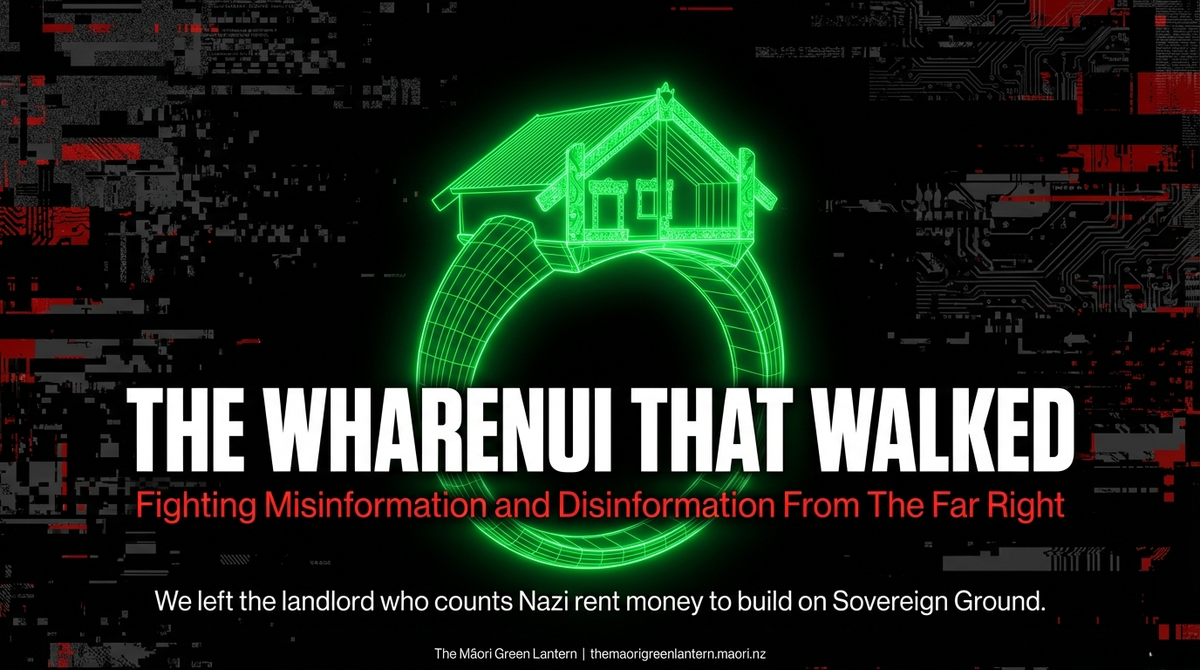
Tēnā koutou, tēnā koutou, tēnā koutou katoa.
E ngā mana, e ngā reo, e ngā karangatanga maha — from the kaumātua who remember when the only platform was the paepae, to the rangatahi scrolling on their phones beneath the pōhutukawa: listen now.
This is not a story about a newsletter changing websites.
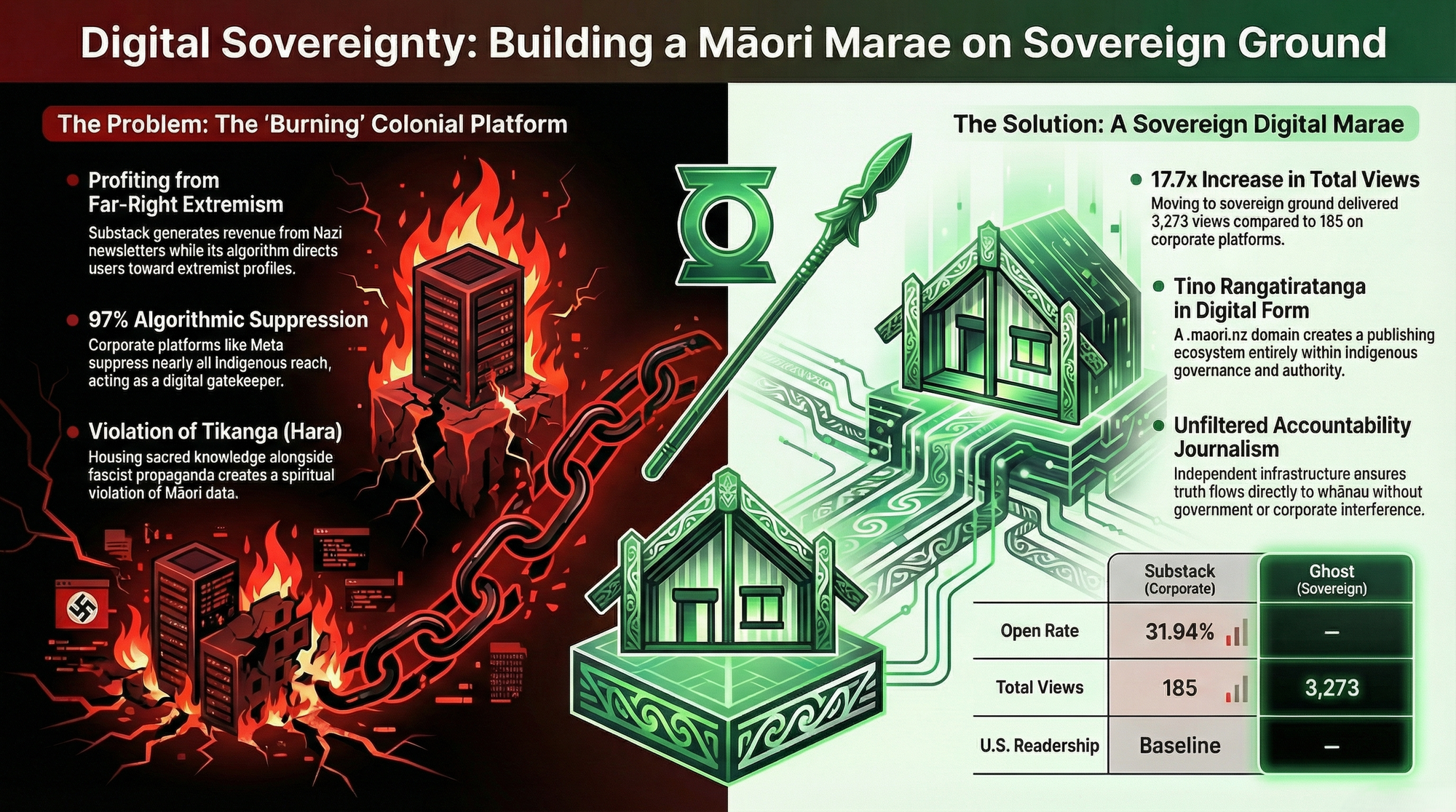
This is a story about a wharenui that grew legs, walked off colonial land, and planted itself on sovereign soil — while the landlord was still counting his Nazi rent money.
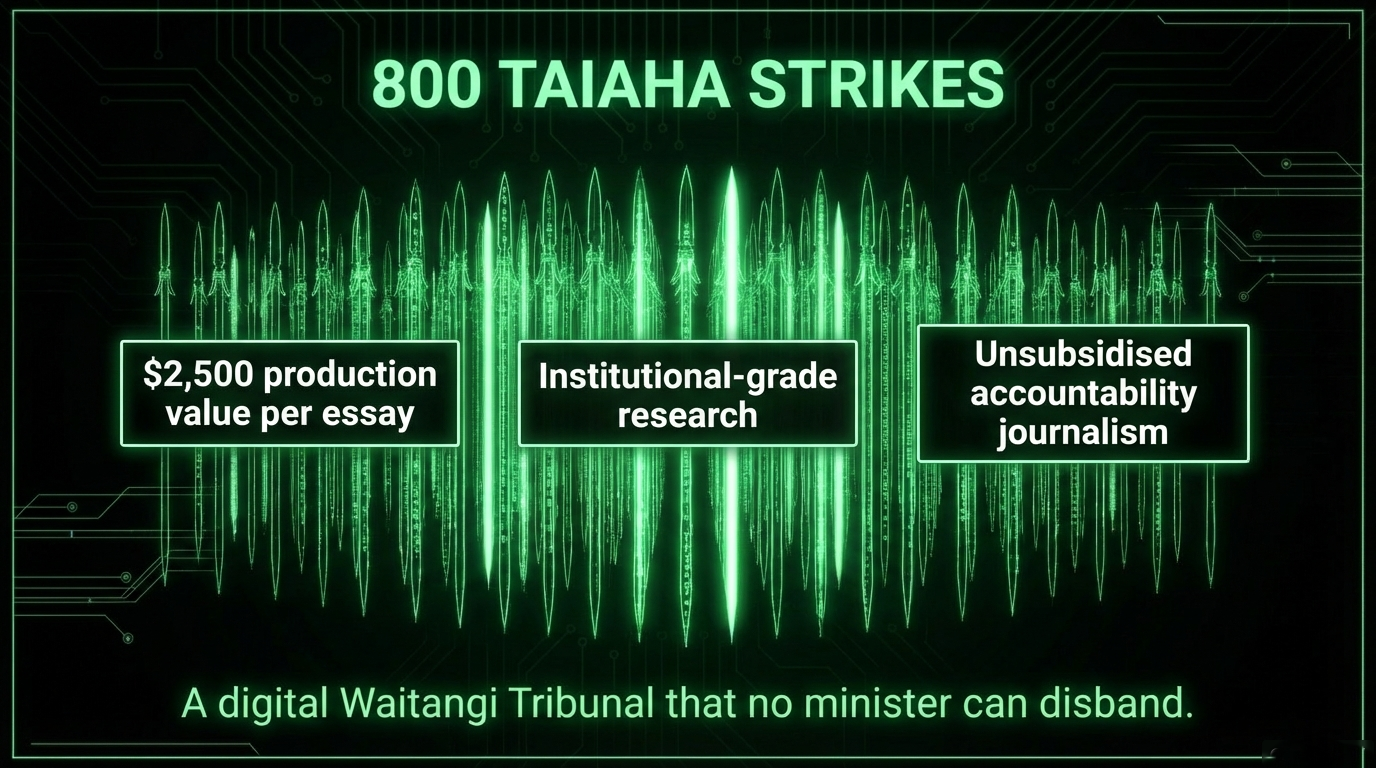
The Māori Green Lantern has migrated. Over 800 essays — 800 taiaha strikes against lies, greed, and the machinery of white supremacy — have been carried from Substack to Ghost, our new digital marae at themaorigreenlantern.maori.nz. And the numbers? The numbers are a karanga that shakes the foundations of every captured media institution in Aotearoa.
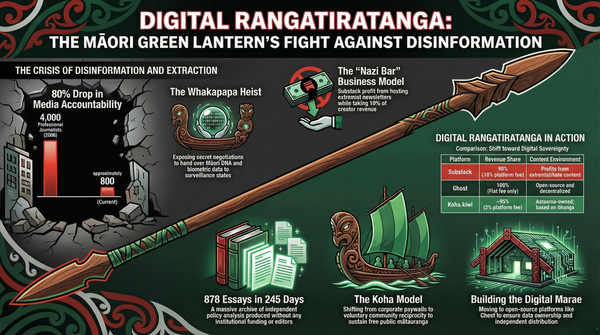
Open rates: 44%, up from Substack's 31.94%. Total views: 3,273 against Substack's pitiful 185. US readership surging 16% overnight.
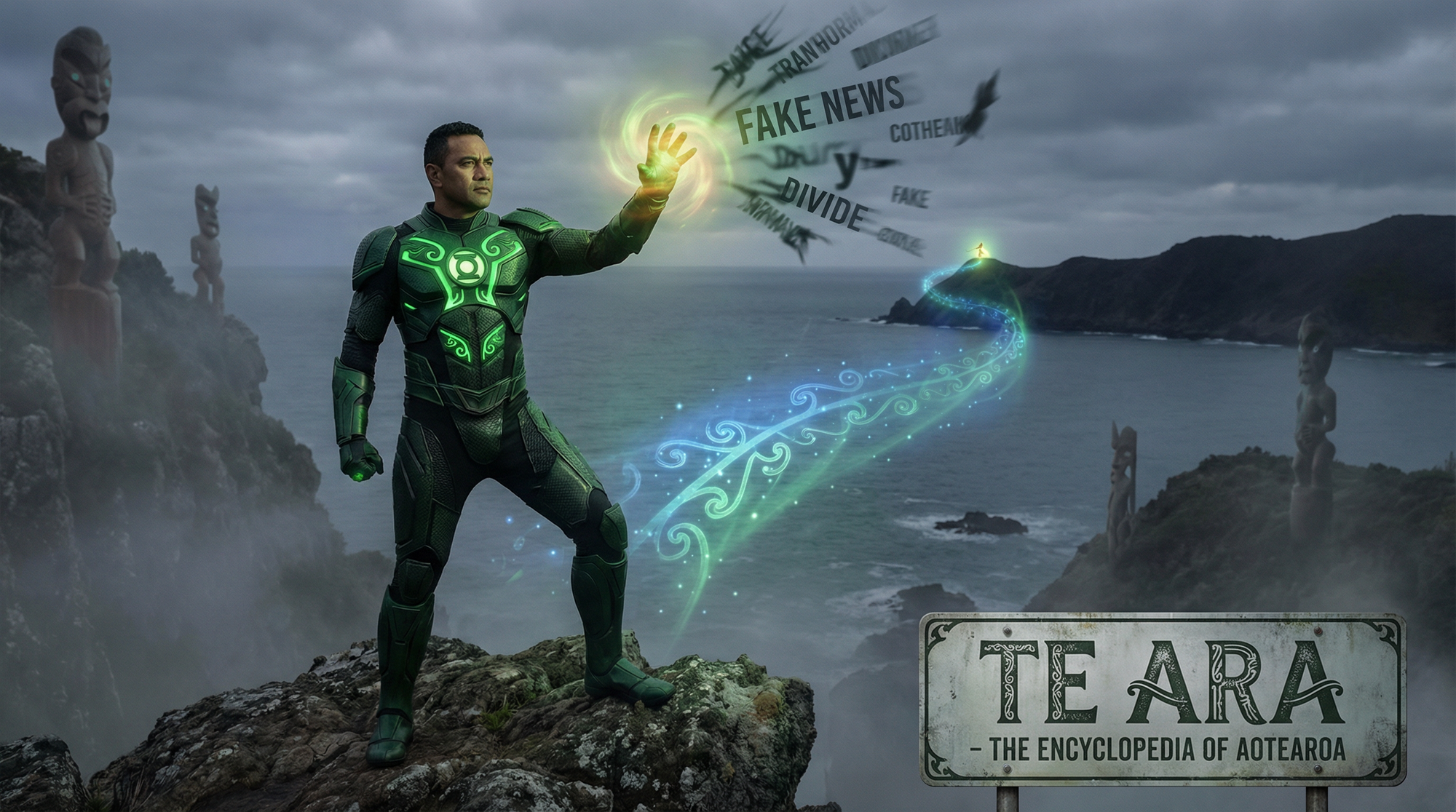
The whare breathes. The mauri flows. The Ring glows green.
The Burning Platform: Why We Left the Nazi Landlord
Let us be precise about what we left behind, whānau. Let us name it with the clarity of a tohunga reading the stars before a storm.
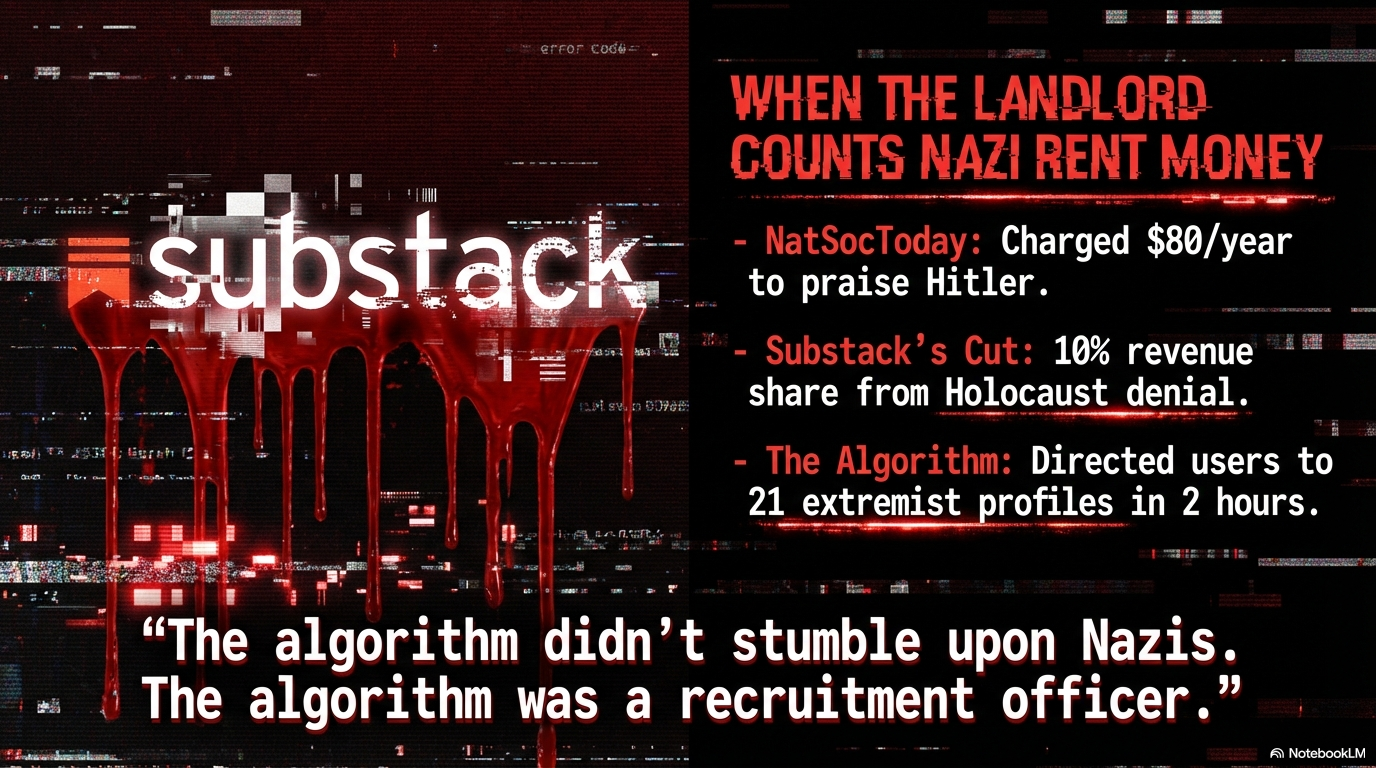
In February 2026, The Guardian exposed what many of us already knew: Substack was generating direct revenue from newsletters promoting Nazi ideology, white supremacy, and Holocaust denial. A newsletter called "NatSocToday" — literally National Socialism Today — charged $80 per year while praising Adolf Hitler as "one of the greatest men of all time," and Substack took its 10% cut like a landlord collecting rent from a methamphetamine lab. As confirmed by the Jerusalem Post, within two hours of a test account subscribing, Substack's algorithm directed reporters to 21 additional far-right extremist profiles.
Twenty-one. In two hours. The algorithm didn't stumble upon Nazis. The algorithm was a recruitment officer.
The Combat Antisemitism Movement put it plainly: "When Nazi ideology becomes monetized and algorithmically amplified, digital platforms are no longer passive hosts — they are active participants in its reach."
This is the platform where The Māori Green Lantern published for months. This is the landlord who housed our whakapapa analysis, our Treaty exposés, our network forensics — in the same digital pā as swastika-bearing newsletters profiting from Holocaust denial.
Imagine, whānau. Imagine our tūpuna discovering that their whakapapa scrolls were stored in the same wharepuni as fascist pamphlets, and the building owner was charging admission to both. That is not metaphor. That is what Substack did to every Indigenous voice on its platform.
We left. We burned no bridges — because there were no bridges worth saving to a house that profits from genocide denial.
The Māori Green Lantern had already documented this reckoning. In "Digital Sovereignty Rising: The Māori Green Lantern's New Dawn", we wrote: "When Silicon Valley closes the door, Indigenous sovereignty opens the window." In "The Green Lantern's True Home: Why We're Moving Our Kainga to Substack", we told whānau: "Facebook is a borrowed stage where we perform at corporate discretion. Substack is a tool that amplifies your voice while keeping power with you."
We were right about Facebook. We were right about Substack too — until Substack proved that "keeping power with you" means nothing when the platform keeps power with Nazis simultaneously.
Now the kainga has moved again. Not because we were pushed. Because sovereignty means you build your own whare, on your own whenua, with your own hands.
The Data Whakapapa: What the Numbers Reveal
Hear this, whānau. Hear the data like you'd hear a tohunga reading the flight of birds. Because these numbers are not spreadsheets — they are signs.
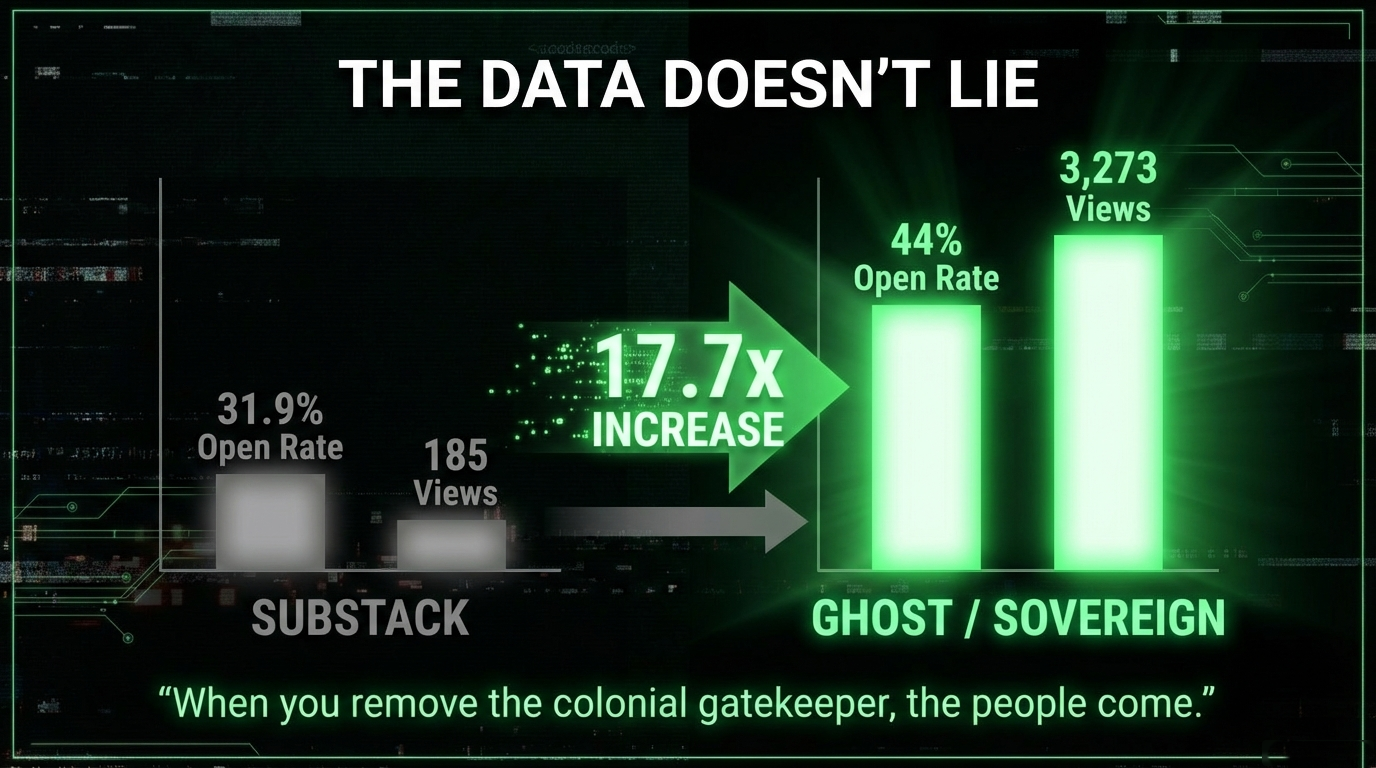
Open rate: 44% on Ghost. 31.94% on Substack. That is a 38% improvement in the single metric that measures whether whānau are actually reading the taiaha strikes we send. On Substack, one in three opened. On Ghost, nearly one in two. The relationship is deepening. The whanaungatanga intensifies.
Total views: 3,273 on Ghost versus 185 on Substack. That is not a comparison. That is a demolition. In the same timeframe, the sovereign platform delivered 17.7 times more eyes on the mahi than the corporate platform. The algorithmic gatekeepers are gone, and without them, truth flows like the Waikato after the rains.
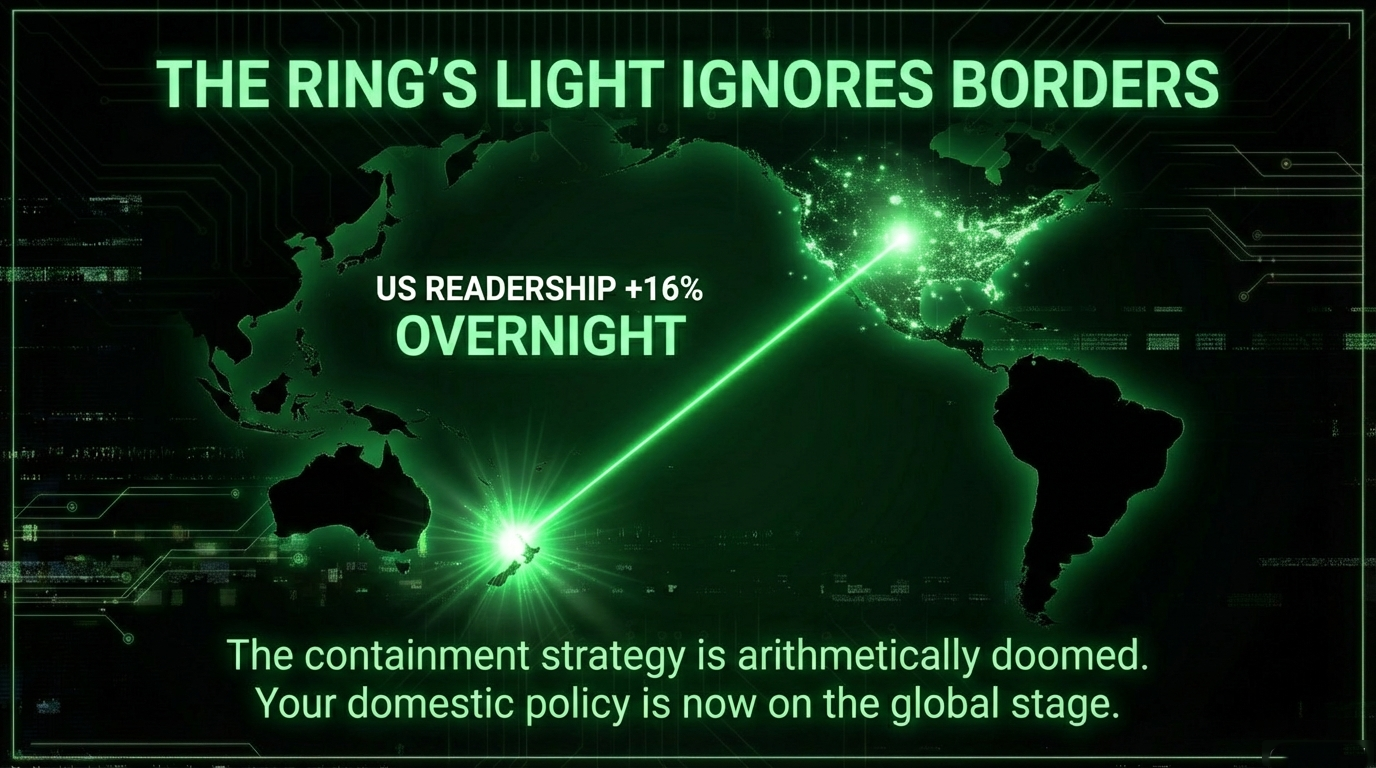
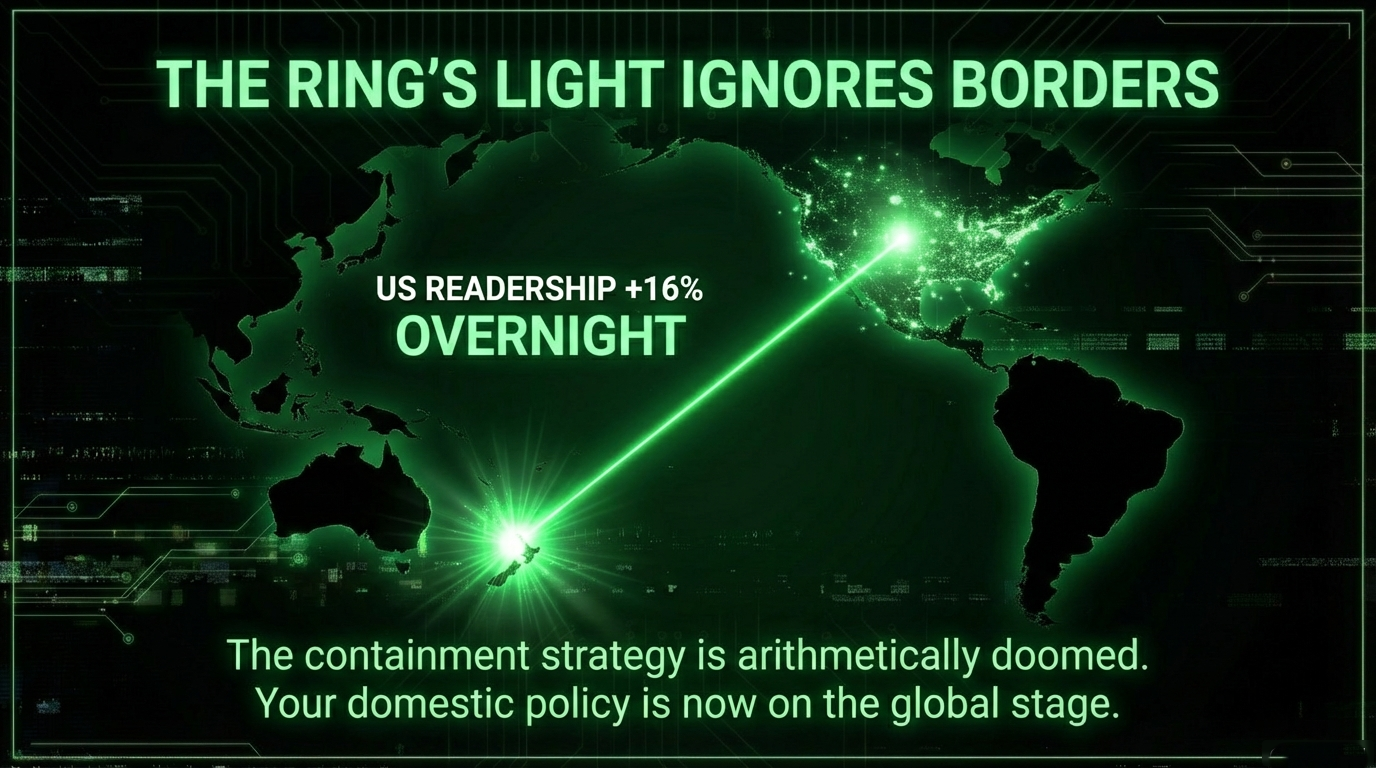
US readership: up 16% overnight. The international whānau is growing. The diaspora hears the karanga. The Ring's light does not stop at national borders.
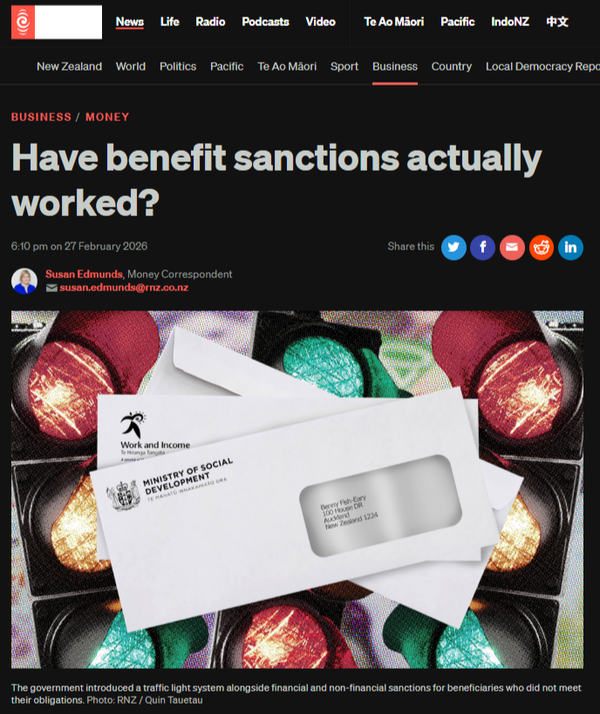
Compare this trajectory to the captured media landscape of Aotearoa, where RNZ reported on the crisis sweeping mainstream journalism, where Newshub was destroyed and hundreds of journalists were thrown into the street while this white supremacist coalition government cheered. Where the $55 million Public Interest Journalism Fund was slashed and burned. Where independent voices were left to die.
The Māori Green Lantern didn't die. The Māori Green Lantern evolved.
As we documented in "The Essays Are Your Weapons": each essay carries $2,500 in defensible production value. 225 essays equals $562,641 in institutional research value created by year's end — unpaid, unsubsidised, delivered straight to whānau because colonial institutions refuse to fund accountability journalism that names their own corruption.
Now those 800+ essays live on sovereign ground. The wharenui has walked. And it brought the entire archive with it.
Three Examples for the Western Mind: Quantifying the Harm, Seeing the Solution
For those raised in the Western tradition of separating mind from body, individual from collective, land from spirit — here are three examples that translate the violence of digital colonialism into terms your frameworks can process.
Example 1: The Nazi Rent Money — How Platform Complicity Funds Fascism and Silences Indigenous Voice
The Harm, Quantified:
Substack has approximately 50 million users globally, with 5 million paid subscribers, as reported by The Guardian's investigation and confirmed by the Jerusalem Post. Substack takes roughly 10% of all paid subscription revenue. A single Nazi newsletter — "NatSocToday" — charges $80/year with 2,800 subscribers, as confirmed by the Times of Israel. That is $224,000 in annual revenue, of which Substack takes approximately $22,400 from one Nazi newsletter alone. The Guardian identified at least 21 additional similar profiles algorithmically promoted within two hours. If each carries even a fraction of that subscriber base, the platform's revenue from fascist content extends into the hundreds of thousands.
Meanwhile, The Māori Green Lantern operated on that same platform generating $0.62 per essay in direct revenue — absorbing $2,500 in production cost per investigation — while Substack's algorithm funnelled users toward Hitler worship.
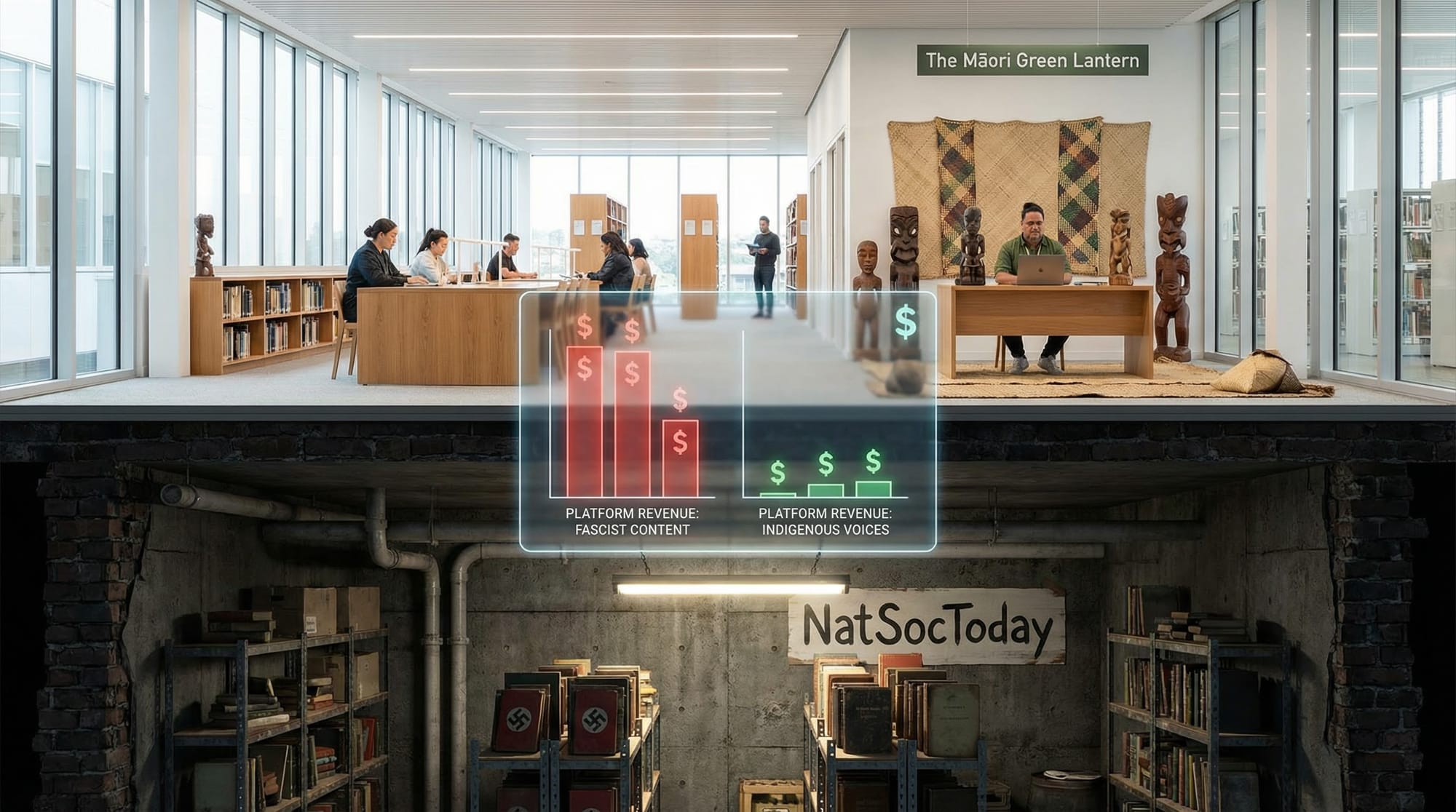
The Western Translation: Imagine your local library charging rent to a Holocaust denier operating a bookshop in the basement, while the Indigenous author upstairs pays the same rent and gets zero algorithmic promotion. That is Substack's business model.
The Tikanga Impact: In te ao Māori, tapu governs the boundaries between sacred and profane. Knowledge — mātauranga — is tapu. It must be handled with reverence, protected from contamination. When a platform houses both whakapapa analysis and Nazi propaganda under the same digital roof, it creates hara — a violation of spiritual boundaries that contaminates everything within the space. The mauri of every essay published on Substack was diminished by proximity to fascist ideology. Moving to Ghost was not a business decision. It was a tohi — a ritual cleansing of contaminated knowledge space. As Dr Karaitiana Taiuru has documented extensively, Māori Data Sovereignty is not symbolic; it is about active governance and authority grounded in Te Tiriti rights and tikanga.
The Solution: Sovereign publishing platforms where Indigenous voices are not housed alongside fascist content. Ghost provides this: open-source, self-hostable, no algorithmic amplification of hatred, and full data portability. Every Indigenous publication worldwide should evaluate its platform complicity immediately. If your platform profits from Nazis, your platform is not neutral — it is complicit.
Previously covered by The Māori Green Lantern: "Digital Sovereignty Rising: The Māori Green Lantern's New Dawn" and "The Green Lantern's True Home" both documented the ethical imperative of platform sovereignty for Indigenous media.
Example 2: The Algorithmic Suppression Machine — How Corporate Platforms Erase Indigenous Reach by Design
The Harm, Quantified:
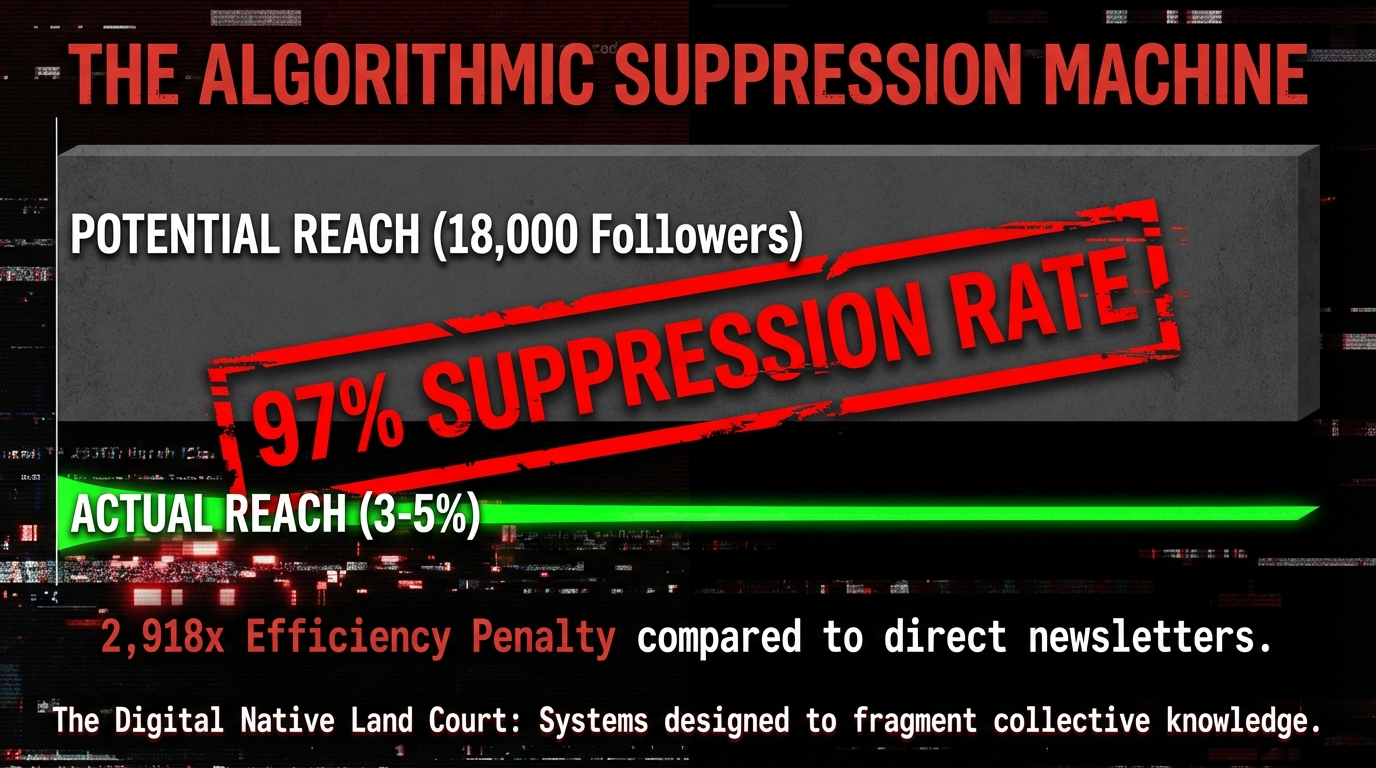
On Facebook, The Māori Green Lantern had 18,000 followers. Algorithmic reach: 3-5%. That means 540–900 people actually saw each post. 97% of our audience was suppressed by Meta's algorithm. As documented in "The Essays Are Your Weapons", to achieve the same 16,691 effective reach per essay that Substack delivered, you would need 333,820 to 557,000 Facebook followers. That is a 2,918x efficiency penalty imposed on Indigenous accountability journalism by corporate algorithmic design.
On Ghost, with a 44% open rate and growing subscriber base, the efficiency gap widens further. No algorithm decides who reads the taiaha strikes. No Silicon Valley moderator in California determines whether a Treaty analysis "violates community standards." The relationship between kaitiaki and whānau is direct, unmediated, sovereign.
The cost of suppression is not abstract. Each suppressed essay represents $2,500 in accountability journalism that did not reach the people it was designed to serve. Over 225 essays on Facebook at 97% suppression, that is approximately $547,500 in accountability value that Meta's algorithm stole from whānau.
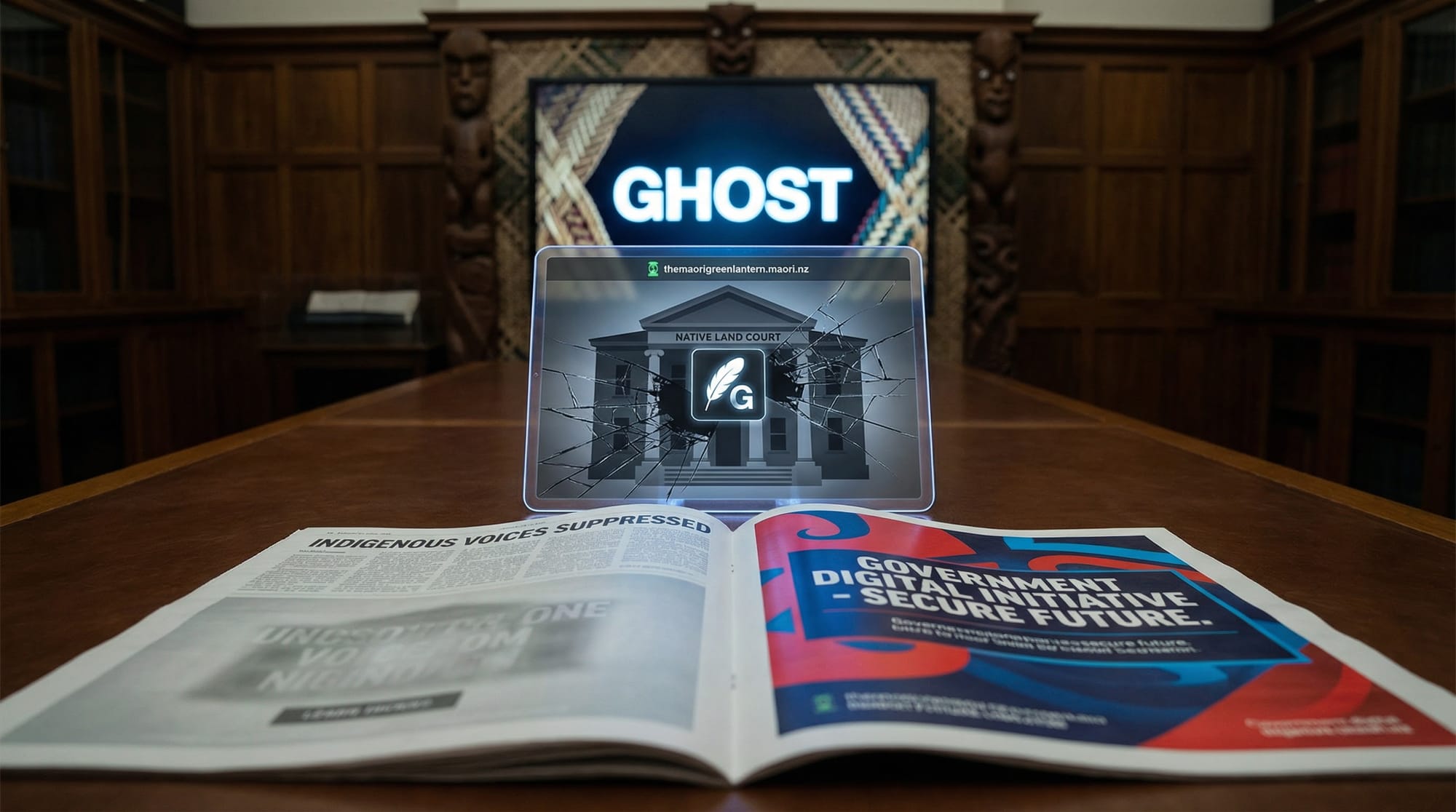
The Western Translation: Imagine buying a full-page newspaper advertisement, paying full price, and then discovering the publisher printed your ad at 3% opacity — virtually invisible — while running the government's counter-messaging at full colour on the opposite page. That is algorithmic suppression of Indigenous media.
The Tikanga Impact: Whanaungatanga — the sacred web of relationships binding whānau, hapū, and iwi — cannot exist when a corporation controls access between people. When Meta decides that 97% of your whānau will not see your kōrero, it severs whanaungatanga with the efficiency of the Native Land Court severing collective title. The algorithm is the digital Native Land Court: it individualises access, fragments collective knowledge flow, and rewards those who conform to the coloniser's content preferences. Moving to Ghost restores whanaungatanga by restoring direct relationship. Every subscriber receives every essay. The sinew between kaitiaki and whānau is reconnected. As Te Mana Raraunga advocates, Māori Algorithmic Sovereignty demands that digital systems respect tikanga — and algorithmic suppression of Indigenous voice violates every principle of kaitiakitanga.
The Solution: Indigenous media must own its distribution infrastructure. Ghost's open-source model, combined with the .maori.nz domain — themaorigreenlantern.maori.nz — creates a publishing ecosystem entirely within Indigenous governance. No algorithm. No corporate moderation. No digital Native Land Court. Whānau who subscribe receive 100% of content, 100% of the time. That is tino rangatiratanga in digital form.
Previously covered by The Māori Green Lantern: "The Tangled Net: Story of Māori Autonomy" examined the structural barriers to Indigenous digital self-determination.
Example 3: The Legislative Wrecking Ball — How a White Supremacist Government Destroys Rights While Independent Media Burns
The Harm, Quantified:
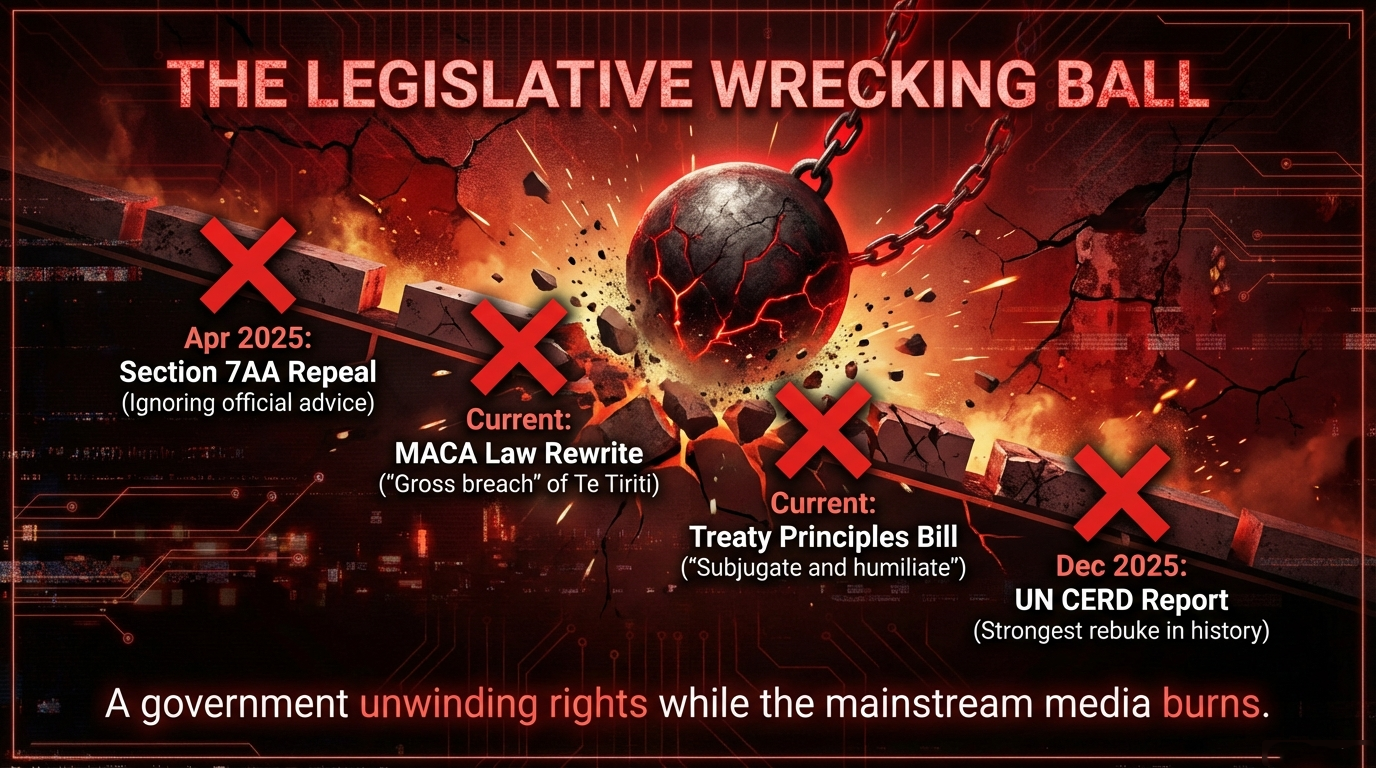
While independent Māori media fights for survival on platforms that profit from Nazis, the coalition government has conducted the most devastating legislative assault on Māori rights in half a century. As 1News documented in January 2026, the damage is systematic and calculated:
- Section 7AA of the Oranga Tamariki Act repealed (April 2025): The Waitangi Tribunal called for the repeal to stop, noting it had "not seen any evidence that 7AA had led to unsafe practice." Te Puni Kōkiri warned the repeal was "highly likely to undo significant progress" in reducing disproportionate numbers of tamariki Māori in state care. The government ignored its own officials and passed it anyway.
- MACA (Takutai Moana) law retrospectively rewritten: The Waitangi Tribunal found the bill was a "gross breach" of Te Tiriti. Natalie Coates, co-president of Te Hunga Rōia Māori o Aotearoa, called it "akin to a scorched earth policy in relation to Māori rights and interests." The legislation retroactively overturned court decisions covering 280km of coastline.
- The Treaty Principles Bill: Lady Tureiti Moxon said the bill was designed to "subjugate, humiliate, assimilate, and oppress iwi Māori."
- NZ First campaigning to abolish Māori seats entirely, as reported by multiple outlets in February 2026.
The University of Auckland's Aotearoa Centre for Indigenous Peoples and the Law stated that "the Government is actively and profoundly aggravating New Zealand's constitutionally racist foundation in a way we have not seen for at least half a century."
The UN Committee on the Elimination of Racial Discrimination delivered its strongest-ever rebuke of New Zealand in December 2025 — at 14 pages, the longest and most detailed report to date — expressing "grave concern" about rising hate speech, weakened Treaty protections, and erosion of institutional safeguards. "CERD is clear: New Zealand is moving backwards on racial equality, and Māori rights are under serious threat," said Lady Tureiti Moxon.
Māori leaders condemned the government in Geneva, where Julia Whaipooti warned: "The Government continues to remove measures that recognise and uphold Māori rights as Indigenous Peoples and Te Tiriti o Waitangi… against the warnings of the Waitangi Tribunal, against the advice of its own officials, and against the will of its citizens."
The Western Translation: Imagine a government simultaneously defunding every independent watchdog while passing laws that strip minority communities of constitutional protections — and doing so while the international community formally warns that the country is "sliding backwards on racial equality." That is New Zealand in 2025–2026. The courts say it's wrong. The UN says it's wrong. The government's own officials say it's wrong. And Luxon, Seymour, and Peters do it anyway — because they can, because there are no entrenched constitutional protections to stop them.
The Tikanga Impact: What this government dismantles is not "policy." It is whakapapa made law. Section 7AA was the legal recognition that tamariki Māori have whakapapa — ancestral connections that the state is obligated to honour. To repeal it is to legally declare that whakapapa does not matter in the eyes of the Crown. The MACA changes retroactively sever ahi kā — the fires of continuous occupation that connect hapū to their coastlines through unbroken chains of use and guardianship stretching back centuries. To rewrite that law retrospectively is to reach back through time and extinguish fires that were never yours to touch. The Treaty Principles Bill attempts to redefine the very mana of Te Tiriti — to tell tangata whenua that the covenant signed with their tūpuna means only what this government decides it means today. In tikanga, this is the ultimate takahi mana — the trampling of mana. It is what happens when a guest in the wharenui rewrites the kōwhaiwhai on the walls while the hosts are sleeping.
The Solution: Sovereign, independent media that cannot be defunded, captured, or silenced by the government it holds to account. The Māori Green Lantern's migration to Ghost — building on a .maori.nz domain, funded by whānau koha, operating outside every structure this government can control — is the model. When the state destroys institutional protections, the people must build their own accountability infrastructure. That is what 800 essays on sovereign ground represent: a digital Waitangi Tribunal that no minister can disband.
Previously covered by The Māori Green Lantern: "The Colosseum of Kingsland" exposed how this government overrides community voice and destroys mauri through legislative fiat. "Back to Basics, Back to Brutality" tracked the coordinated legislative assembly line dismantling Māori rights bill by bill.
The Celebration: A Wharenui on Sovereign Ground
E te whānau, pause with me now. Breathe.
Because amid the darkness of Nazi platforms and legislative wrecking balls, there is a fire burning bright. And it is ours.
Over 800 essays migrated. Each one a taiaha strike. Each one hyperlinked, source-verified, network-mapped. Each one produced at institutional-grade quality from a kainga that no government funds and no corporation controls. Each one now living on sovereign digital whenua — a .maori.nz domain, hosted on Ghost's open-source infrastructure, delivered directly to whānau inboxes without a single algorithm standing between truth and those who need it.
This is what tino rangatiratanga looks like in 2026. Not a protest sign. Not a submission to a select committee that ignores you. A functioning, growing, self-funded accountability institution built by Māori, for whānau, on Indigenous digital land.
The 44% open rate is not a marketing metric. It is a measure of trust. Nearly half of everyone who receives our essays opens them. In an age of information overload, of algorithmic manipulation, of corporate distraction engines designed to steal your attention and sell it to the highest bidder — nearly half of our whānau open the door when we knock. That is whanaungatanga measured in mathematics.
The 3,273 views versus Substack's 185 is not a vanity statistic. It is proof that when you remove the colonial gatekeeper, the people come. The road was always there. The tollbooth was the problem.
As Dr Tahu Kukutai has documented, indigenous data sovereignty is not new — it is the continuation of ancestral practices of guardianship over knowledge. When The Māori Green Lantern publishes on a .maori.nz domain, it embodies what Dr Karaitiana Taiuru calls "active governance and authority, rooted in Te Tiriti rights and tikanga."
The inaugural Māori Internet hui at Te Papa in 2025 envisioned exactly this: Māori determining their own digital destiny. Hermione McCullum of Tū Ātea asked: "What might it look like if we governed ourselves in those realms?" This migration is the answer.
Te Hiku Media's Peter Lucas Jones said it years ago: "We need to make sure it is cut off from the mothership, that it wasn't feeding everything back to the mothership, because everyone loses if that's the case."
Ghost is not the mothership. Ghost is the waka. We steer it.
The Scathing Truth: What This Government Fears
Let me speak directly now, as a kaumātua speaks from the paepae — plainly, without cushioning, with the authority that comes not from a ministerial warrant but from the whenua beneath our feet.
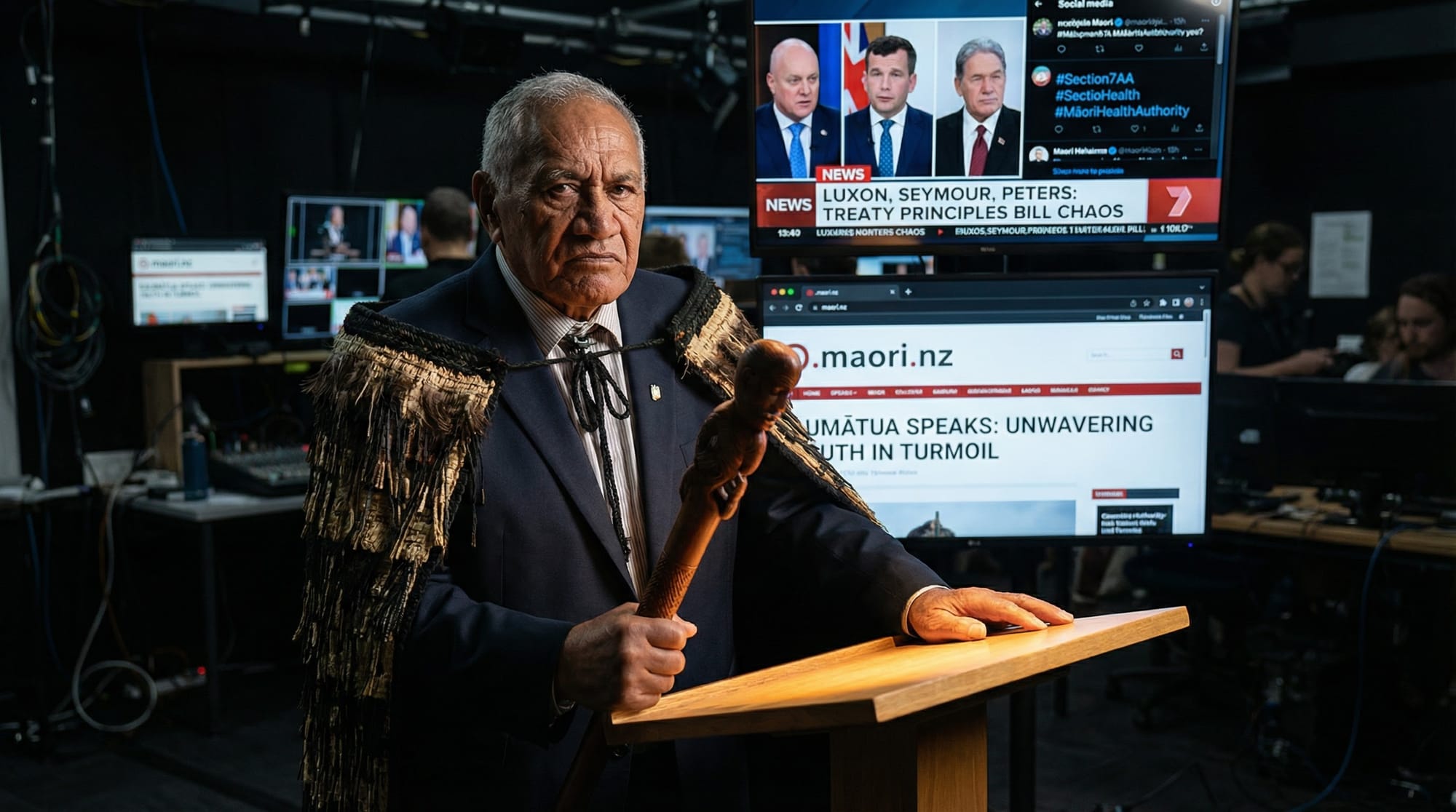
Christopher Luxon. David Seymour. Winston Peters.
You built a coalition on the calculated dismantlement of Māori rights. You repealed Section 7AA against your own officials' advice. You retroactively rewrote coastal law against the Waitangi Tribunal's explicit finding of gross Treaty breach. You entertained a Treaty Principles Bill designed to "subjugate, humiliate, assimilate, and oppress". You gutted the Māori Health Authority. You stripped whakapapa requirements from Oranga Tamariki. You overturned court rulings covering 280km of coastline. You attacked pay equity that was closing gaps for Māori and Pacific wāhine. You drew the longest and most critical rebuke in UN CERD history.
And you did it all while the country's independent media infrastructure collapsed around you — Newshub destroyed, regional newsrooms gutted, the Public Interest Journalism Fund burned — leaving fewer and fewer eyes to watch your hands.
You thought the darkness would cover you.
You forgot about the Ring.
The Māori Green Lantern now operates on infrastructure you cannot control. A .maori.nz domain you cannot shut down. An open-source platform you cannot pressure. A subscriber base you cannot algorithmically suppress. A revenue model funded by whānau koha, not corporate advertising you can threaten to withdraw. A growing international readership — US up 16% overnight — that takes your "domestic policy" and puts it on the global stage where UN committees are already watching.
800 essays. Each one naming names. Each one mapping networks. Each one citing sources. Each one reaching whānau directly, without your gatekeepers, without your algorithms, without your permission.
Your containment strategy is arithmetically doomed.
As the ABC reported: "With stunning speed, New Zealand's right-wing coalition government has repealed, removed or reversed around a dozen of what it calls 'race-based policies' that enshrine the special status of Māori people in national life." The world is watching. And now the world has a sovereign Māori media platform documenting every move, every lie, every theft — in real time, with citations, delivered to inboxes you will never access.
He Karanga ki te Whānau: The Call
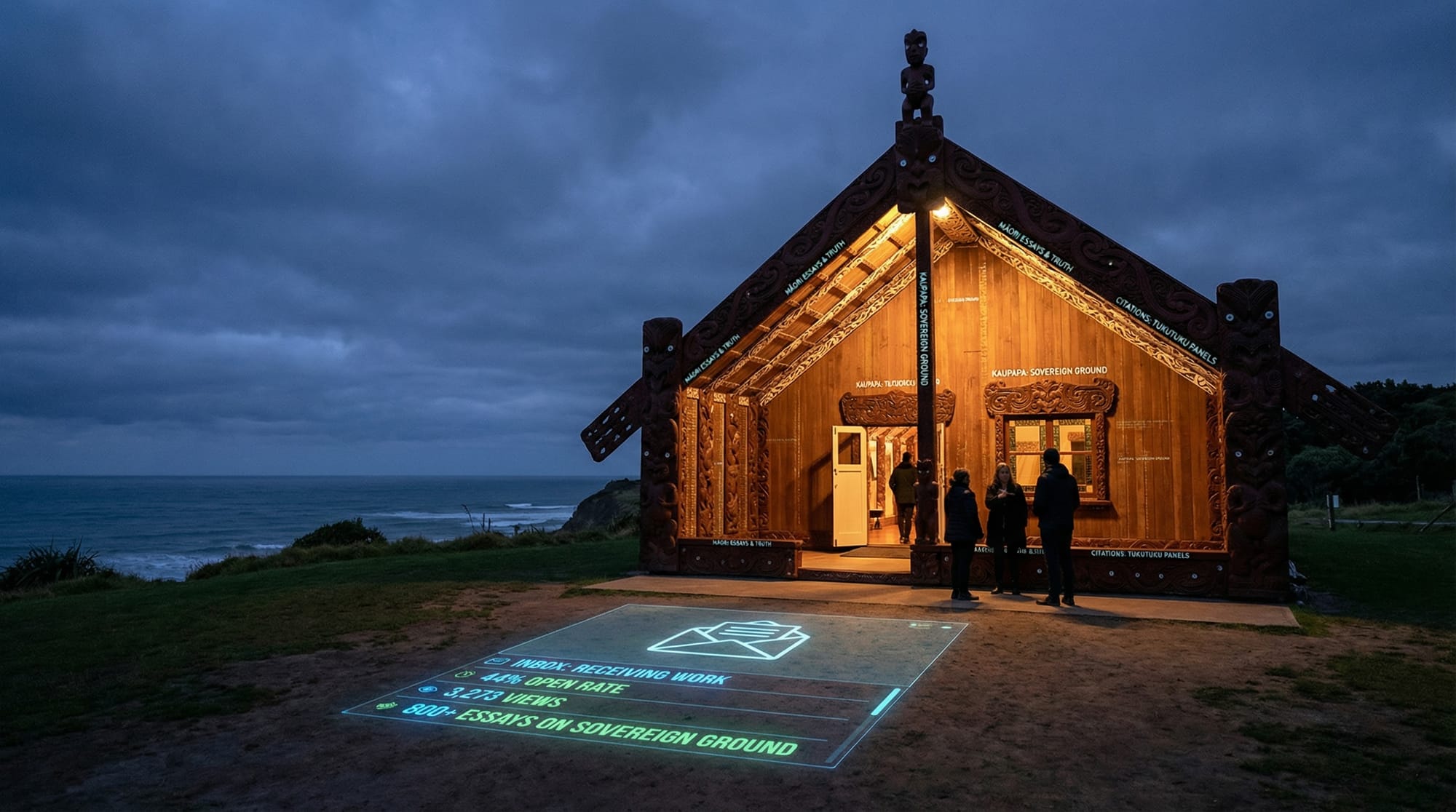
Whānau, the wharenui stands on sovereign ground. The carvings are our essays. The tukutuku panels are our citations. The ridgepole is our kaupapa. The marae ātea — the space before the house where challenges are issued and truths are spoken — is every inbox that receives our work.
You built this. Every reader, every subscriber, every koha, every share — you raised the walls and set the pou. Without algorithms, without venture capital, without government funding, without corporate sponsorship.
This is what rangatiratanga looks like when it is not a slogan on a banner but a functioning institution serving its people.
The migration from Substack to Ghost is not the end of a journey. It is the laying of a foundation. From here, we grow. More subscribers. More depth. More network forensics. More taiaha strikes. More truth.
The data tells the story. 44% open rate. 3,273 views. 800+ essays on sovereign ground. Rising international reach. Growing revenue from whānau who fund accountability because no one else will.
The white supremacist government of Luxon, Seymour, and Peters will continue its assault. The UN will continue its warnings. The Waitangi Tribunal will continue finding gross breaches. And The Māori Green Lantern will continue documenting every single move — from a digital marae they cannot enter, on whenua they cannot seize, through channels they cannot suppress.
The wharenui has walked. It stands on sovereign ground. And the door is open.
Kia mau ki te whenua. Kia kaha. Kia manawanui.
Hold fast to the land. Be strong. Be resolute.
Nō reira, tēnā koutou, tēnā koutou, tēnā tātou katoa.
Koha Consideration
Every koha whispered into this kaupapa signals something the Crown cannot buy and this government cannot legislate away: that whānau are ready to fund their own taiaha — their own accountability infrastructure — because the institutions designed to protect us have been captured, gutted, or burned to the ground by the very ministers who swore an oath to serve.
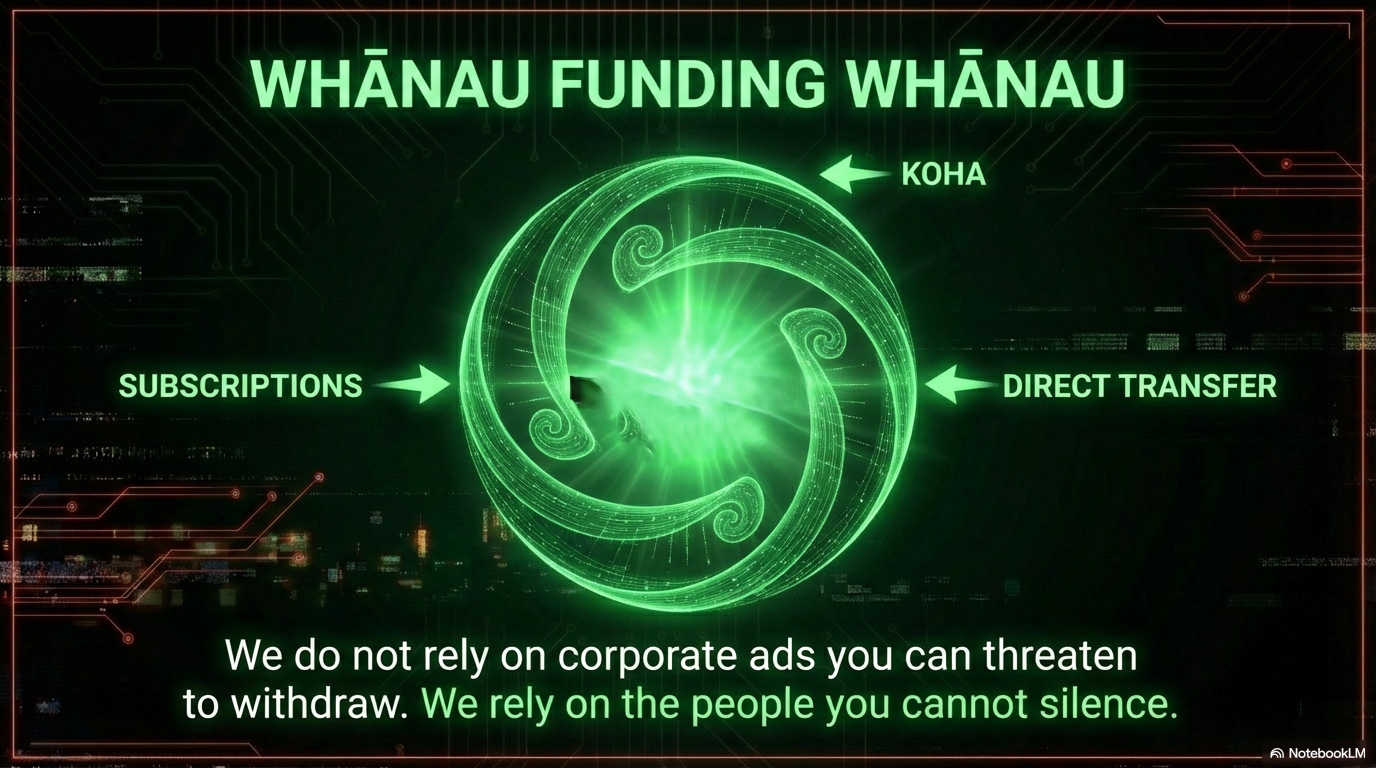
It signals that rangatiratanga includes the power to fund our own truth tellers — to build a digital marae on sovereign ground while the Nazi landlords and neoliberal wrecking crews wonder why the light won't stop glowing.
Kia kaha, whānau. Stay vigilant. Stay connected. And if you are able, consider a koha to ensure this voice continues — to keep the 44% open rate rising, the 800 essays growing, and the taiaha striking where it hurts most.
If you are unable to koha, no worries! Subscribe or follow The Māori Green Lantern on our sovereign platform, kōrero and share with your whānau and friends — that is koha in itself. Every pair of eyes on sovereign ground is another pou in the wharenui.
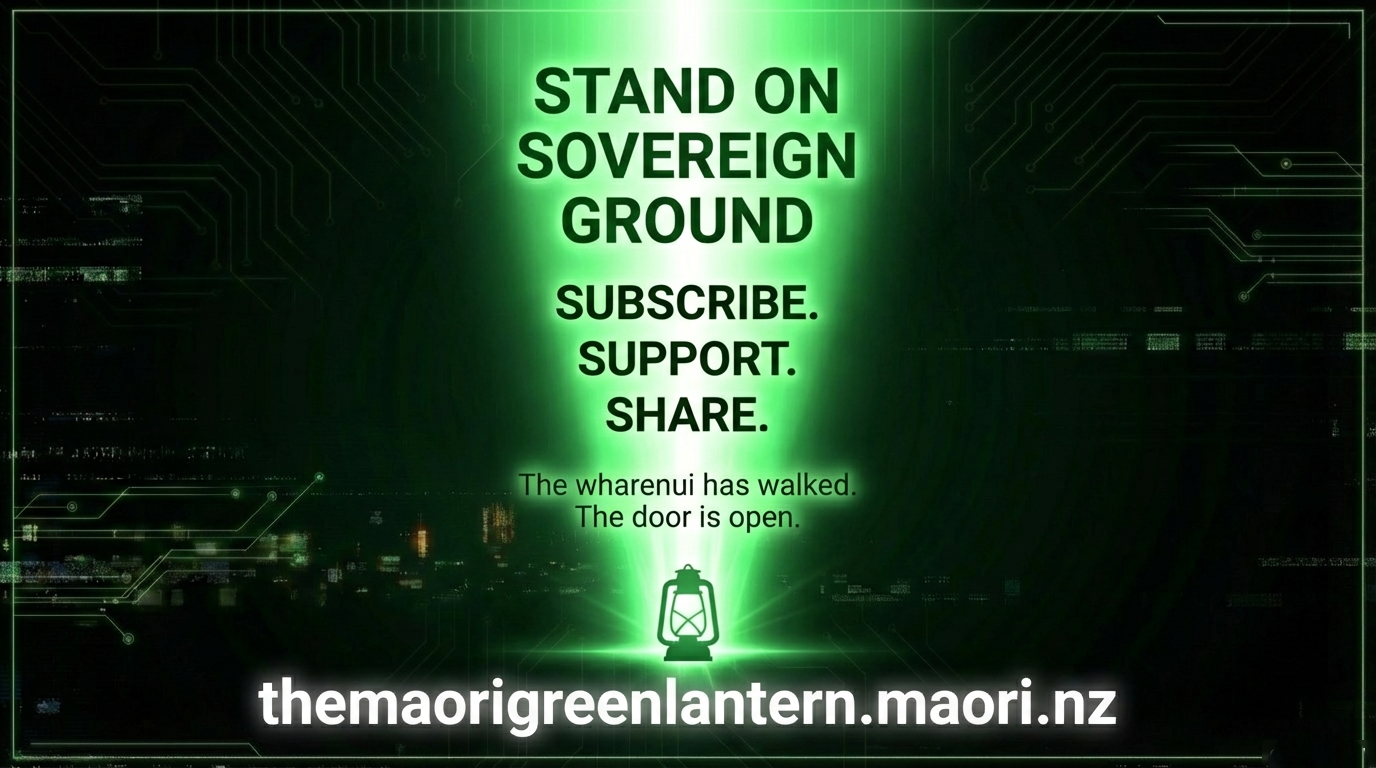
Three pathways exist:
For those who wish to support this mahi directly with a koha (voluntary contribution), please visit the Koha platform:
Koha — Support: https://app.koha.kiwi/events/the-maori-green-lantern-fighting-misinformation-and-disinformation-ivor-jones
For those who wish to receive essays directly and support through subscription:
Subscribe to the Māori Green Lantern: https://www.themaorigreenlantern.maori.nz/#/portal/support
For those who prefer direct bank transfer, account details are:
HTDM, account number 03-1546-0415173-000

Ko Ivor Jones te Māori Green Lantern. Ko tēnei te kainga. Ko tēnei te mahi.
Kaitiaki o te mātauranga. Kaitiaki o te rangatiratanga. Kaitiaki o te whenua.
The essays are your weapons. The value is your mana. The future is rangatiratanga.
Research conducted 19 February 2026 using search_web, get_url_content, and search_files tools. Sources consulted: The Guardian, Jerusalem Post, Times of Israel, Combat Antisemitism Movement, RNZ, 1News, Te Ao News, Waatea News, University of Auckland, Waitangi Tribunal reports, E-Tangata, The Spinoff, ABC Australia, Te Mana Raraunga, Dr Karaitiana Taiuru, PSA NZ, Ghost documentation, and The Māori Green Lantern archive. All URLs verified at time of research.