“The Māori Green Lantern Exposes Nicola Willis's Web of Lies” - 3 September 2025
How a Finance Minister's Deception Reveals the Colonial Power Structure's Contempt for Truth
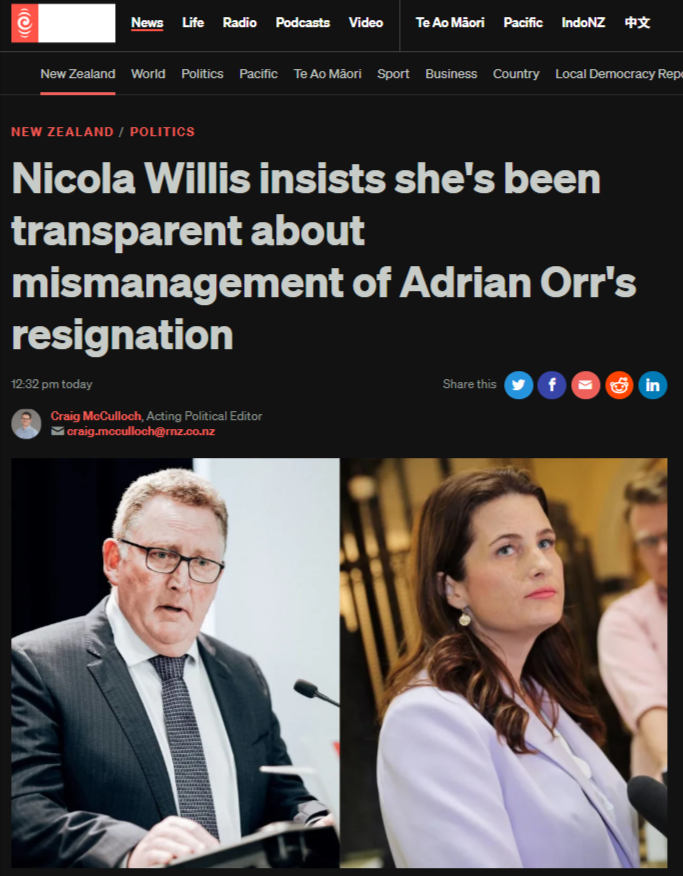
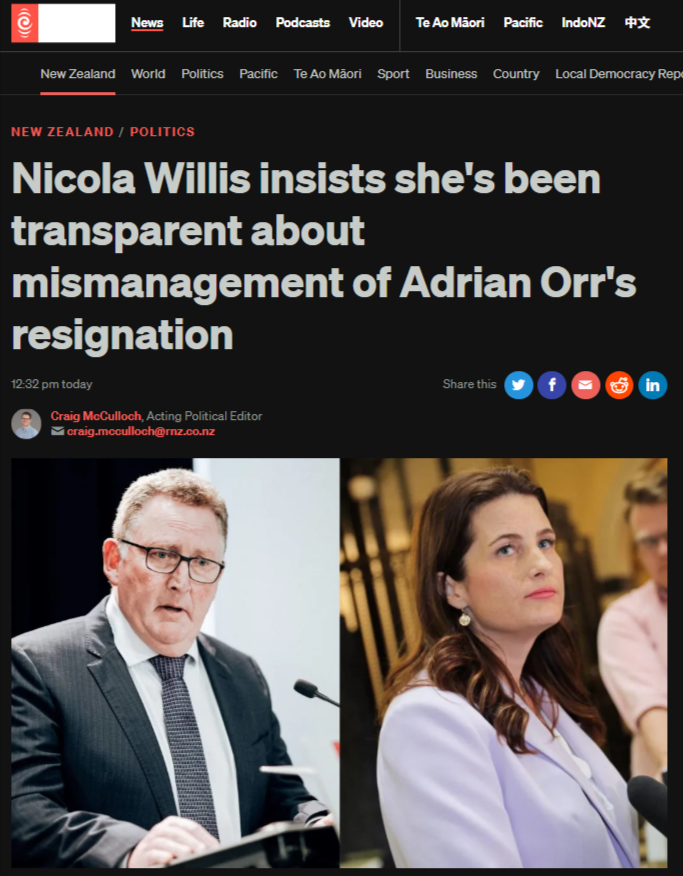
Kia ora whānau, When those in power lie with such brazen confidence, they expose the rotten core of our colonial system.
Finance Minister Nicola Willis stands accused not merely of political spin, but of orchestrating a deliberate deception that lasted six months and required the Chief Ombudsman to force the truth into daylight. Her claim on September 3rd that she has been as transparent as possible represents the apex of political dishonesty - a brazen lie told in the face of overwhelming evidence to the contrary. This essay will demonstrate through documented evidence that Willis not only knew the true circumstances of Adrian Orr's forced resignation from day one, but actively participated in a cover-up that treated New Zealand citizens with contempt. Her deception reflects the colonial mindset that views tangata whenua and all New Zealanders as subjects to be manipulated rather than citizens deserving truth.
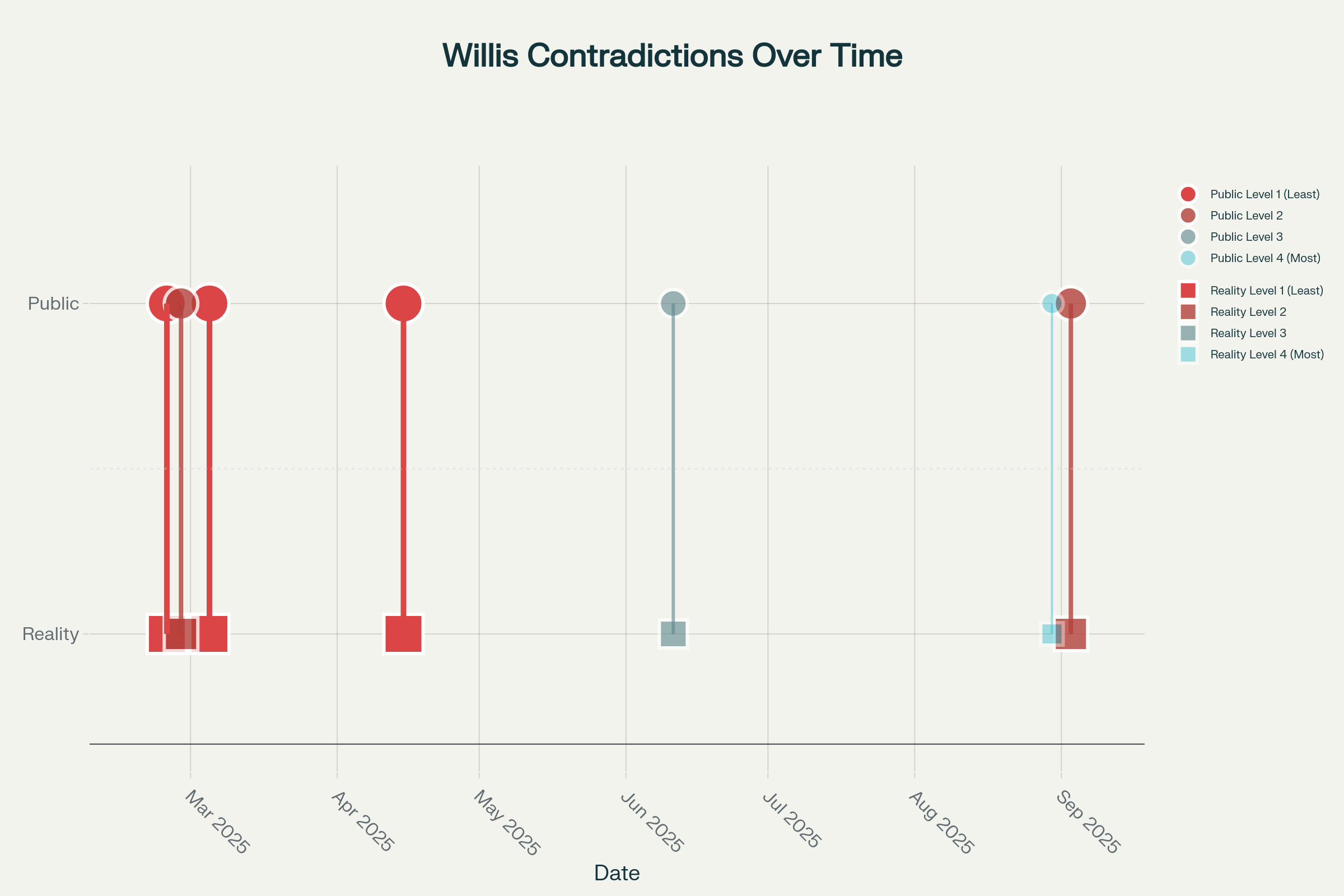
imeline of Nicola Willis's contradictory statements about Adrian Orr's resignation, showing the gap between her public claims and actual knowledge
Background
The Reserve Bank of New Zealand operates under te ao Pākehā financial structures that prioritise market stability over community wellbeing. As kaitiaki of truth, we must understand that financial institutions like the RBNZ serve colonial capital first, not the people. The relationship between the Finance Minister and Reserve Bank Governor represents a critical nexus of economic power that affects every whānau's mortgage, every small business's survival, every community's prosperity.
Adrian Orr served as RBNZ Governor from 2018 through the pandemic, implementing policies that kept inflation within target ranges while navigating unprecedented global disruption. Neil Quigley chaired the RBNZ Board for nine years, supposedly providing independent oversight. Nicola Willis, as Finance Minister, holds ultimate responsibility for appointments to and oversight of the Reserve Bank - a power she wields over institutions that control billions in public resources.
The Official Information Act exists as one of our few weapons against government secrecy, designed to ensure transparency and accountability. When institutions abuse OIA processes to hide wrongdoing, they attack the democratic foundations that protect all communities, but particularly marginalised voices who rely on transparency to expose systemic oppression.
What’s Going On?
On March 5, 2025, Adrian Orr's resignation as RBNZ Governor was announced with carefully crafted lies that characterized his departure as a "personal decision." RBNZ Chair Neil Quigley deliberately misled the public, stating Orr felt "with inflation back within target range it is time to go". Willis supported this deception by claiming she wouldn't "characterise the reasons" and directing questions to the board.
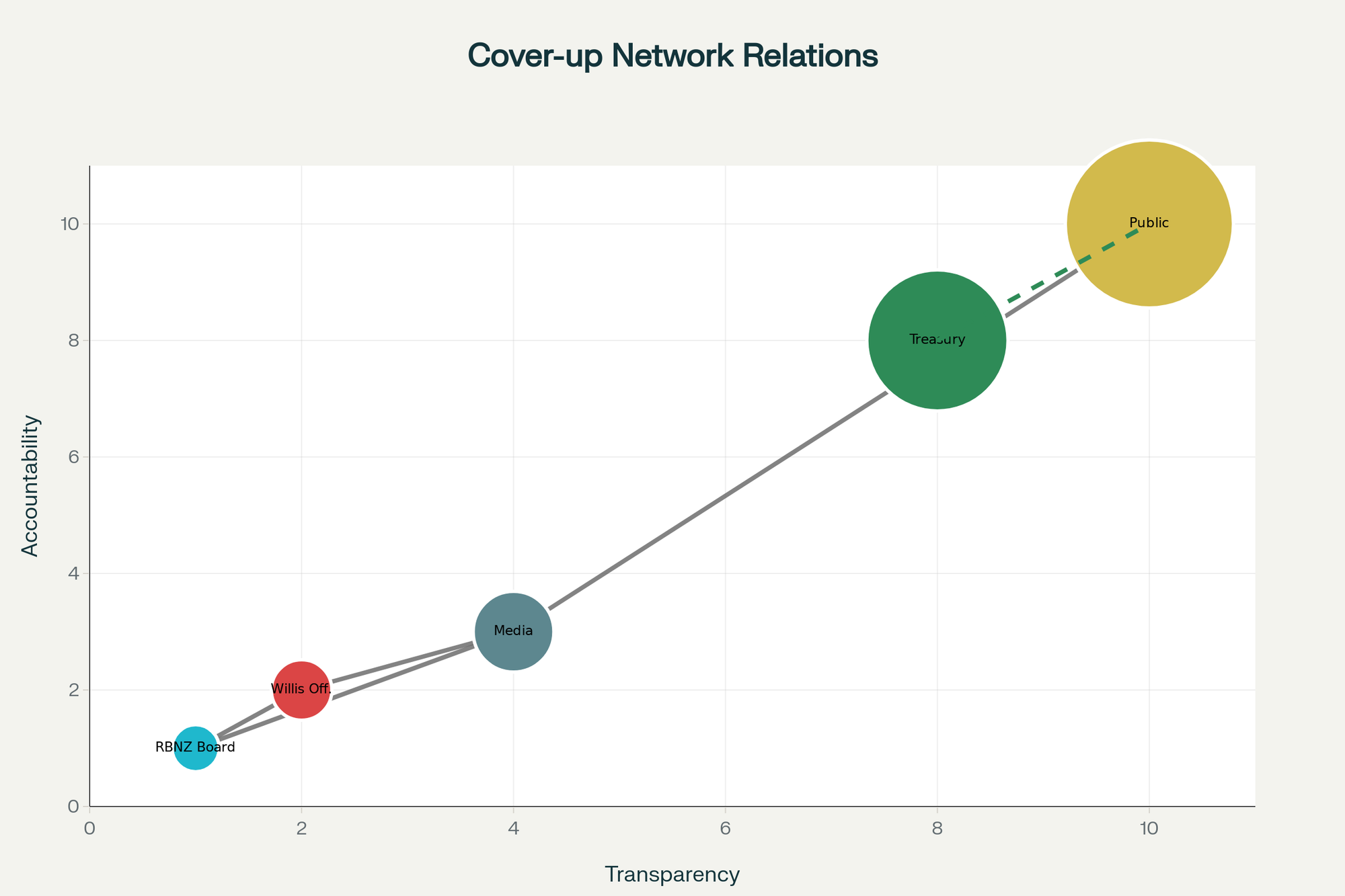
The institutional cover-up network showing how Willis and the RBNZ Board colluded to deceive the New Zealand public
The truth, forced out only through Ombudsman intervention, reveals Orr was effectively pushed out after refusing to accept massive funding cuts and after tensions with Willis reached breaking point during a February 24 meeting where he "stormed out" in frustration. The RBNZ Board had prepared a formal letter of concerns about Orr's conduct, which was withdrawn only as part of his negotiated resignation.
This matters to tangata whenua because it demonstrates how colonial institutions operate through deception and manipulation. When those controlling our financial systems lie about basic facts, they reveal their contempt for democratic accountability. The pattern mirrors broader colonial practices of information control, where Pākehā power structures decide what Māori and other New Zealanders deserve to know about decisions affecting their lives.
Willis Knew Everything and Lied About It
The February 24 Confrontation
The evidence obliterates Willis's claims of ignorance. Treasury meeting minutes document Willis witnessing Orr "storm out" of their meeting after expressing "frustration at the relationship between the RBNZ and Treasury." She sat there as Orr made clear he believed the proposed funding was inadequate and that trust had broken down between all parties.
That same day, Willis was advised by Treasury Secretary Iain Rennie that employment discussions had commenced with Adrian Orr. Yet three days later, she participated in public statements about funding cuts while knowing Orr was in crisis over those very cuts.
The March 5 Orchestrated Deception
Willis's office received the planned press release from Quigley at 10:57am on March 5, complete with instructions for "No further comment" if questioned. Rather than demanding transparency, her Senior Press Secretary made two calls encouraging Quigley to front the media to sell the "personal decision" lie.
Willis knew Orr had been out of the office since February 27 - a full week before the public announcement. She knew about the Board's letter of concerns. She knew about the funding dispute. Yet she told media she wouldn't "characterise the reasons" and had only been aware "for a few days" of resignation discussions. Every word was calculated deception.
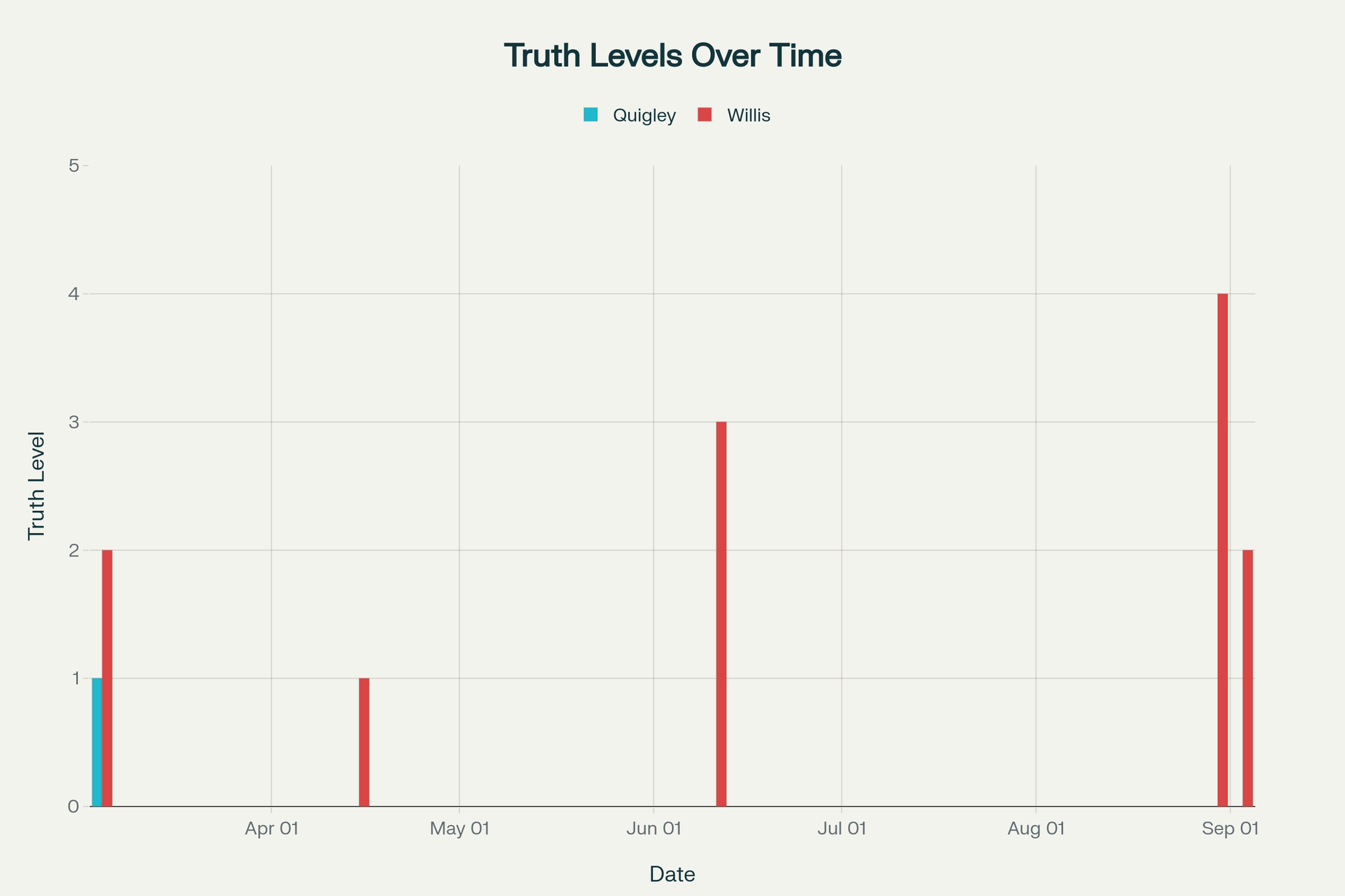
Truth levels in public statements about the Orr resignation, showing consistently low honesty from both Quigley and Willis
The Systematic Cover-Up Continues
For months, Willis maintained her performance of ignorance. In April, she claimed Orr's resignation was "separate" from funding issues, despite knowing the opposite was true. In June, when documents finally emerged showing the funding dispute, she criticized the RBNZ for poor transparency while conveniently omitting her own role in the deception.
Her office prepared deliberately misleading briefing notes for media questions, including the false claim that she wasn't aware of any link between Orr's resignation and the funding agreement. These weren't innocent mistakes - they were calculated lies designed to prevent public understanding of a crisis she had witnessed firsthand.
The Hidden Hand of Colonial Control
Willis's behavior reveals the colonial mindset that treats transparency as optional and citizens as subjects to be managed. Her repeated claims of powerlessness - portraying herself as a "helpless Karori mother" unable to demand transparency from institutions she oversees - insults our intelligence while demonstrating how colonial power operates through feigned innocence.
The timing exposes her calculation. Only when the Ombudsman forced document releases did Willis suddenly discover concerns about RBNZ transparency. Only then did she demand Quigley's resignation, claiming she would have asked for it if he hadn't offered. The information forcing her hand in August was virtually identical to what she'd possessed since February - the only difference was public exposure.
Finance Minister Nicola Willis facing scrutiny over her deceptive statements
The Network of Institutional Deception
Coordinated Messaging Control
The evidence reveals sophisticated coordination between Willis's office and the RBNZ to control public narrative. When Quigley sent his planned statement claiming Orr's departure was a "personal decision," Willis's office raised no objections despite knowing it was false. Her press secretary actively encouraged Quigley to front media with these lies.
Willis's office instructed staff not to reveal what the February 24 meeting had covered, preparing defensive talking points that were "actively deceptive." The coordination extended to ensuring consistent messaging across government entities while keeping the public in deliberate ignorance.
Treasury as Unwitting Truth-Teller
Treasury officials, following proper procedures, took detailed meeting minutes and later released them under OIA requests. Quigley's furious response - threatening that release would "immediately destroy goodwill" - exposed the cover-up's fragility when faced with legal transparency requirements.
The Treasury's professional conduct contrasts starkly with Willis and Quigley's deceptive approach. While Treasury documented events accurately and released information as legally required, Willis and the RBNZ Board worked to suppress truth and mislead citizens.

The secretive RBNZ boardroom where the cover-up was orchestrated
The Colonial Pattern of Information Control
Weaponizing Independence
Willis's defense relies on claims about RBNZ "independence" - the same colonial legal fiction used to shield institutions from accountability. She portrays herself as respectfully distant from employment matters while simultaneously admitting she witnessed Orr's breakdown, received immediate briefings about employment discussions, and ultimately held power over all key appointments.
This mirrors colonial governance patterns where Pākehā institutions claim independence while operating within systems of white supremacist control. The Finance Minister appoints the Governor, controls the Board Chair, and oversees funding - yet claims powerlessness when convenient for avoiding accountability.
The Privilege of Plausible Deniability
Willis's strategy demonstrates how privilege operates in Aotearoa's colonial system. A Pākehā minister can lie repeatedly, be caught in those lies through documentary evidence, then simply claim she was "transparent" and move on. This privilege is unavailable to tangata whenua, who face intense scrutiny and are held to different standards of accountability.
Her performance of helplessness - claiming she couldn't involve herself in employment matters - while actively participating in orchestrating public messaging reveals the calculated nature of her deception.
Implications for Democratic Accountability
Institutional Capture by Neoliberal Interests
Willis's behavior serves broader neoliberal interests that benefit from reduced transparency and weakened public institutions. By participating in the cover-up while simultaneously demanding RBNZ funding cuts, she advances the neoliberal agenda of institutional capture disguised as efficiency.
The funding dispute that triggered Orr's departure centered on the government's demand for 25% budget cuts to an institution responsible for financial stability. Willis's deception prevented public scrutiny of whether these cuts served public interests or simply satisfied ideological demands for smaller government.
Impact on Māori and Working Communities
Financial institutions like the RBNZ directly affect tangata whenua through monetary policy, bank regulation, and access to capital. When these institutions operate through deception, Māori communities lose the transparency needed to hold power accountable for policies affecting their economic wellbeing.
Willis's lies demonstrate how colonial power structures protect themselves through information control. The same patterns appear in government deception about Treaty settlements, co-governance arrangements, and resource allocation - always serving to maintain Pākehā control while claiming transparency and consultation.

The Māori Green Lantern Fighting Misinformation And Disinformation From The Far Right
The evidence is incontrovertible: Nicola Willis deliberately deceived New Zealand for six months about circumstances she witnessed firsthand. Her claims of transparency on September 3rd represent the final insult - lying about her lies while documents prove her complicity in institutional deception.
This isn't mere political embarrassment. It reveals how colonial power operates through calculated dishonesty, treating citizens as subjects to be managed rather than people deserving truth. Willis's behavior demonstrates that under our current system, Pākehā politicians can lie with impunity, safe in the knowledge that media and institutional structures will protect them from consequences.
The cover-up required coordination between Willis's office and the RBNZ Board, showing how colonial institutions work together to protect power. Only external pressure from the Ombudsman and persistent investigation by critics like Michael Reddell forced partial truth into public view.
Tangata whenua understand institutional deception intimately - it's been the foundation of colonization for 180 years. Willis's behavior fits this pattern perfectly: deny, deflect, delay, then claim transparency when finally caught. Her lies about the Orr resignation are practice runs for bigger deceptions about Treaty partnerships, environmental protection, and resource distribution.
The call to action is clear: we must demand complete transparency about who knew what and when, including Willis's role in orchestrating the cover-up. We must reject the colonial privilege that allows Pākehā politicians to lie without consequences. And we must recognize that financial institutions operating through deception cannot serve our communities' interests.
For readers who find value in exposing these colonial power structures and supporting indigenous analysis, please consider contributing a koha if you have capacity: HTDM: 03-1546-0415173-000. The Māori Green Lantern understands these tough economic times for whānau, so please only contribute if you wish to and are able.
Mauri ora,
Ivor Jones The Māori Green Lantern