The Māori Green Lantern exposes Shane Jones' colonial strongarm tactics against Ngāpuhi sovereignty - 24 June 2025
Forcing Hapū Silence: How Jones' Settlement Bill Undermines Indigenous Self-Determination
Kia ora koutou katoa - Greetings to you all
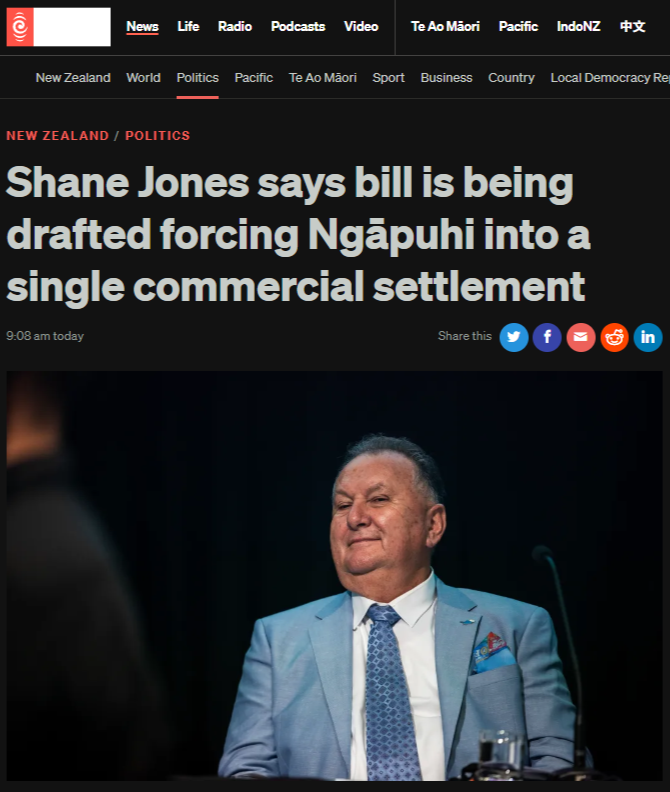
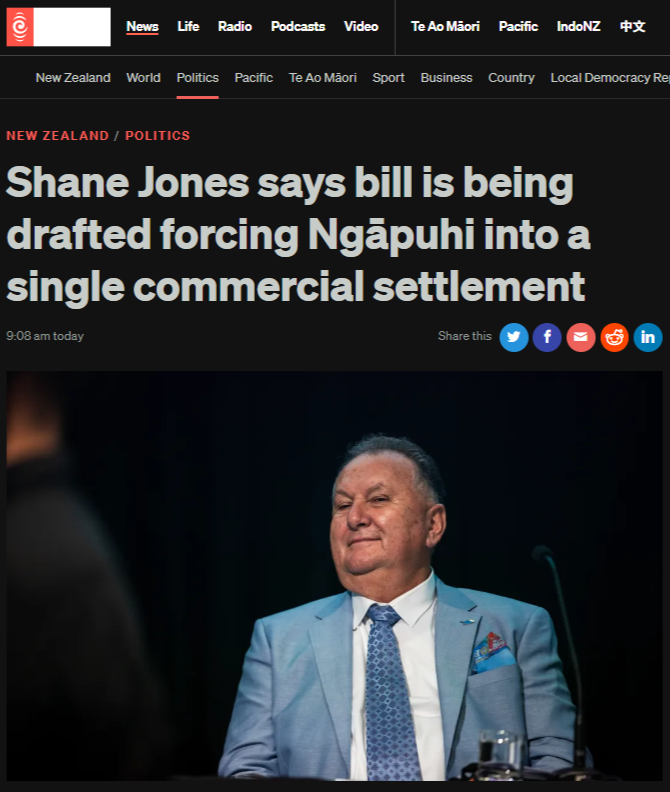
Shane Jones and his New Zealand First cronies have revealed their true colonial colours with their latest assault on Māori self-determination 1. This brazen attempt to force Ngāpuhi into a single commercial settlement while explicitly silencing hapū sovereignty claims represents everything wrong with neoliberal politics dressed up in populist rhetoric 1. Jones' proposed member's bill is nothing more than economic colonialism designed to strip away the fundamental Treaty rights that our tīpuna fought and died to protect.
Background: Understanding Ngāpuhi's Rightful Claim to Sovereignty
Ngāpuhi, as Aotearoa's largest iwi with over 140,000 members, has maintained its sovereign status since before 1840 2. The Waitangi Tribunal conclusively found in 2014 that Ngāpuhi chiefs never ceded sovereignty when they signed Te Tiriti o Waitangi, upholding claims that these rangatira never handed over their power and authority to the British 3, 4. This finding was reinforced in the comprehensive Te Paparahi o Te Raki inquiry, which documented how the Crown systematically breached Treaty obligations through land alienation, military conflict, and the deliberate undermining of hapū governance structures 5, 6.
The tribunal's 2022 report revealed that over one million acres of Ngāpuhi land were transferred out of Māori hands by 1865, with the Crown's native land laws causing further "severe and lasting prejudice" by fragmenting traditional tribal structures and enabling mass land alienation 5. These historical breaches form the foundation of Ngāpuhi's legitimate claims for redress and recognition of their continuing sovereignty.
The Jones Bill: Colonial Strongarm Tactics Disguised as Economic Pragmatism
Shane Jones' proposed legislation represents a textbook example of far-right misinformation tactics designed to undermine Māori sovereignty claims 1. By demanding "no mention of hapū sovereignty" in any settlement and establishing an interim body to "hold and grow" the settlement, Jones is essentially proposing Crown-controlled economic colonialism 1, 7. His rhetoric about avoiding "insoluble debates pertaining to indigenous sovereignty" deliberately frames Māori rights as obstacles to economic progress rather than fundamental constitutional principles 1.
Jones employs classic neoliberal propaganda by framing privatisation and Crown control as efficient solutions while dismissing collective Māori decision-making processes as "economic confetti" 1. His claim that Ngāpuhi should focus on "good governance" and a "strong economic base" rather than sovereignty debates reveals the market fundamentalism at the heart of his argument - positioning individual responsibility rhetoric over structural recognition of colonial racism 8.
The minister's dismissive language about Ngāpuhi being "like a flock of ducks quacking loudly, flying in all different directions" demonstrates the white supremacist mentality that views Indigenous self-determination as chaotic and unworthy of respect 1. This colonial apologia defending supposed Crown "achievements" while denying the legitimacy of Māori governance structures follows well-established patterns of historical revisionism 9.
The Intersection of Race, Class and Neoliberal Control
Jones' bill reveals the deep connections between neoliberal economics and white supremacist narratives that portray Māori advancement as threatening to Pākehā interests 8, 10. His argument that "there is only one sovereignty, only one citizenship and an indivisible sense of nationhood" employs replacement theory rhetoric suggesting that Māori sovereignty somehow undermines Crown authority 1. This "one law for all" rhetoric promoting supposed equality actually serves to maintain existing power structures by refusing to acknowledge the special constitutional status guaranteed to Māori under Te Tiriti 11, 12.
The economic fear-mongering in Jones' statements deliberately targets Māori as scapegoats for broader social problems 1. His claim that Ngāpuhi has "the worst stats of all tribes for poor social outcomes" and is "the most imprisoned tribe" ignores the systemic racism and colonial violence that created these conditions 1. Research consistently shows that Māori are imprisoned at twice the rate of Europeans for the same crimes, with 52% of prisoners being Māori despite representing only 15% of the population 13, 14, 15. These disparities result from structural inequalities, not Māori inadequacy.
The minister's assertion that the settlement process has consumed "millions of dollars with nothing to show for it" deliberately obscures the Crown's responsibility for creating these grievances through 180 years of Treaty breaches 1. This welfare scapegoating portrays Māori as undeserving beneficiaries rather than Indigenous peoples seeking redress for documented historical injustices 5, 6.
Jones' attack on the Waitangi Tribunal as operating like a "star chamber" represents a broader assault on Indigenous institutions that challenge Crown power 16. His threat to review the tribunal's function demonstrates the authoritarian tendency to undermine independent oversight when it produces findings uncomfortable to the government 16. Māori lawyers correctly identified these comments as breaching separation of powers principles and undermining tribunal processes regarding live claims 16.
Implications: The Broader Attack on Māori Constitutional Rights
This assault on Ngāpuhi sovereignty connects to wider far-right campaigns promoting anti-co-governance rhetoric and Treaty denialism 17, 18, 19. The current coalition government's commitment to introducing a Treaty Principles Bill represents a systematic attempt to rewrite Te Tiriti and cement Crown supremacy into law 20, 21. ACT leader David Seymour's proposed principles explicitly reject Indigenous sovereignty by claiming "all political authority comes from the people by democratic means" — code for majoritarian tyranny over Indigenous rights 20.
Research demonstrates that the Treaty Principles Bill has directly contributed to a substantial increase in violent anti-Māori rhetoric online, creating pathways into extremist communities and normalising racist sentiment through proximity to mainstream political discourse 10. The documented proliferation of "Great Replacement" theory, white genocide rhetoric, and ethno-nationalist narratives targeting Māori represents a dangerous escalation in far-right mobilisation around Treaty issues 10.
The coalition's broader agenda includes removing Māori names from government departments, withdrawing from the United Nations Declaration on the Rights of Indigenous People, and ending policies they characterise as "race-based" 20. This systematic dismantling of Māori institutional presence follows classic white supremacist strategies of cultural erasure and political marginalisation.
Jones' specific targeting of Ngāpuhi reflects the Crown's historical fear of the iwi's influential role in asserting Māori sovereignty claims 22, 23. As the first to sign Te Tiriti, Ngāpuhi's continued assertion of their sovereign status poses a fundamental challenge to Crown legitimacy 3, 22. The 1835 Declaration of Independence signed by 34 Ngāpuhi chiefs established their autonomous status before Te Tiriti, providing a constitutional foundation for contemporary sovereignty claims 24, 25.
Community Impact: The Human Cost of Colonial Violence
The real-world impact of this legislative assault falls most heavily on Ngāpuhi whānau already struggling with the effects of 180 years of colonial dispossession 26, 27, 28. Māori children experience poverty at almost double the national average, with 18.8% living in material hardship compared to 10.3% nationally 29, 30. For Māori, the median income remains only 78.9% of the national median, while they face unemployment rates significantly higher than other ethnic groups 27.
These statistics reflect the ongoing effects of Crown policies that systematically excluded Māori from economic opportunities while appropriating their land and resources 5, 31. The deliberate destruction of Māori economic bases through land alienation and the imposition of individualistic property regimes designed to fragment collective ownership created the conditions for contemporary disadvantage 2, 5.
Jones' bill threatens to perpetuate this colonial violence by denying Ngāpuhi the right to self-determination promised under Te Tiriti 32, 33. Tino rangatiratanga — often translated as self-determination or absolute sovereignty — represents the constitutional principle that Māori retain authority over their own affairs as guaranteed in Article Two of Te Tiriti 32, 34, 25.
The Crown's failure to honour Treaty obligations has been repeatedly documented by the Waitangi Tribunal, which found that Crown actions in Te Raki caused "severe and lasting prejudice" through land loss, military conflict, and the erosion of tribal structures 35, 36. These breaches continue today through policies that refuse to recognise Māori constitutional status and authority over their own development.

Connections to Larger Patterns: The Global Rise of Indigenous Suppression
Jones' assault on Ngāpuhi sovereignty reflects broader international patterns of neoliberal governments attacking Indigenous rights under the guise of economic efficiency 8. The World Bank and International Monetary Fund’s promotion of privatisation as more “efficient” than public provision serves corporate interests while ignoring human rights standards and abandoning compassion for vulnerable communities 8.
This "neoliberal wave" weakens state obligations to protect Indigenous rights by transferring public goods to private control, creating power imbalances that undermine collective decision-making 8. The diversity of service providers resulting from privatisation makes accountability more difficult while privileging profit over community wellbeing 8.
The targeting of Indigenous sovereignty claims follows established colonial patterns of legal dispossession documented across settler states 37, 38. From Australia to Canada to the United States, settler governments have consistently used legislative mechanisms to undermine Indigenous land rights and self-determination while maintaining the fiction of legal legitimacy 37, 39.
In Aotearoa, this process accelerated with the neoliberal restructuring of the 1980s, which disproportionately impacted Māori communities through job losses in manufacturing and state sector cuts 31, 40. The resulting increase in unemployment and poverty created conditions for the mass incarceration of Māori, with imprisonment rates reaching nearly 700 per 100,000 compared to around 100 per 100,000 for non-Māori 40, 15.
Grounding in Māori Values: Reclaiming Constitutional Authority
Our response to this colonial assault must be grounded in the enduring strength of tikanga Māori and our commitment to tino rangatiratanga 32, 41. The principles of whanaungatanga (relationships), manaakitanga (care and hospitality), and kotahitanga (unity) provide the foundation for collective resistance to these divide-and-rule tactics 42, 32, 43.
Rangatiratanga – defined as self-governance and being in control – represents our inherent authority to determine our own political and economic futures 44, 45. This principle cannot be separated from our responsibilities as tangata whenua to protect the mauri (life force) of our people and environment against extractive colonial capitalism 41.
The concept of utu (balanced exchange) requires that any settlement process honour the reciprocal obligations established under Te Tiriti, where Māori agreement to Crown presence was exchanged for guaranteed protection of our tino rangatiratanga 43, 46. Jones' bill violates this fundamental compact by attempting to impose Crown-defined terms while silencing Māori constitutional voice.
Kaitiakitanga (guardianship) demands that we protect the rights of future generations against short-term political opportunism 47, 41. The Crown's repeated attempts to resolve Treaty claims through economic settlements while avoiding constitutional questions represents a fundamental misunderstanding of our relationship with the land and our responsibilities to our mokopuna.
Whakapapa (genealogical connections) links our contemporary struggles to the resistance of our tīpuna who signed Te Tiriti to protect our sovereign authority 43, 25. Hōne Heke’s chopping down of British flagpoles in the 1840s demonstrated that Māori never accepted subordinate status, and his example continues to inspire contemporary assertions of mana motuhake (self-determination) 22, 48.

Call to Action: Building Resistance to Colonial Strongarm Tactics
The fight against Jones’ colonial bill requires sustained grassroots organising that centres Māori leadership while building broader solidarity 19, 10. The success of the recent hīkoi mō te Tiriti demonstrated the power of unified resistance to government attacks on Treaty rights 10.
We must expose the connections between this legislation and the broader far-right agenda targeting Indigenous peoples globally 10. The documented links between anti-Māori sentiment and international white supremacist networks require coordinated responses that address both local and transnational dimensions of this threat 10.
Educational work remains crucial to counter the misinformation that portrays Māori rights as “special privileges” rather than constitutional guarantees 17, 10. The deliberate confusion between equity measures and sovereignty claims serves to undermine public understanding of Te Tiriti’s ongoing relevance 17, 21.
Legal challenges to any legislation that attempts to override Treaty obligations must be supported through collective funding and strategic coordination 16, 21. The courts remain an important venue for asserting constitutional rights, despite their limitations within the colonial legal system 39, 21.
Most importantly, we must continue to practice our sovereignty through the establishment of Māori institutions that operate according to tikanga rather than Crown diktat 42, 32, 33. Te Pāti Māori’s success in building kaupapa Māori political representation demonstrates the potential for constitutional transformation through grassroots organising 33.
The upcoming constitutional discussions promised by the Waitangi Tribunal provide an opportunity to advance genuine dialogue about sharing power rather than simply managing Māori grievances 35. These conversations must centre Māori constitutional authority rather than Crown definitions of acceptable political arrangements.
Shane Jones and his colonial enablers represent the dying gasps of a settler state that can no longer maintain legitimacy through simple denial of Indigenous rights 10, 21. Their resort to legislative strongarm tactics reveals their weakness, not their strength. Our tīpuna’s resistance secured our survival through 180 years of colonial assault, and their example guides us forward into a future where tino rangatiratanga is fully realised.
E kore au e ngaro, he kākano i ruia mai i Rangiātea – I will never be lost, for I am a seed sown from Rangiātea.
Support the cause: If you value this mahi and wish to contribute, you can make a koha to HTDM: 03-1546-0415173-000. Only give if you have the means—your presence, awareness, and voice are already a powerful act of resistance.
Nāku noa, nā Ivor Jones, The Māori Green Lantern