“The Neoliberal Hit Squad” - 26 August 2025
How the Taxpayers Union Weaponizes Misinformation Against Local Democracy
Kia ora e hoa mā. He tangata whenua au, he kaitiaki hoki. Greetings friends. I am tangata whenua, and I am a guardian.
Exposing the Deceptive Empire of Atlas-Funded Agitators
The Taxpayers Union has once again deployed its arsenal of statistical manipulation and corporate-funded propaganda to attack local government, this time targeting Bay of Plenty councils with deliberately misleading CEO salary figures. This latest stunt reveals the organization's true nature: not as champions of ratepayers, but as neoliberal attack dogs serving foreign corporate interests while masquerading as grassroots advocates.
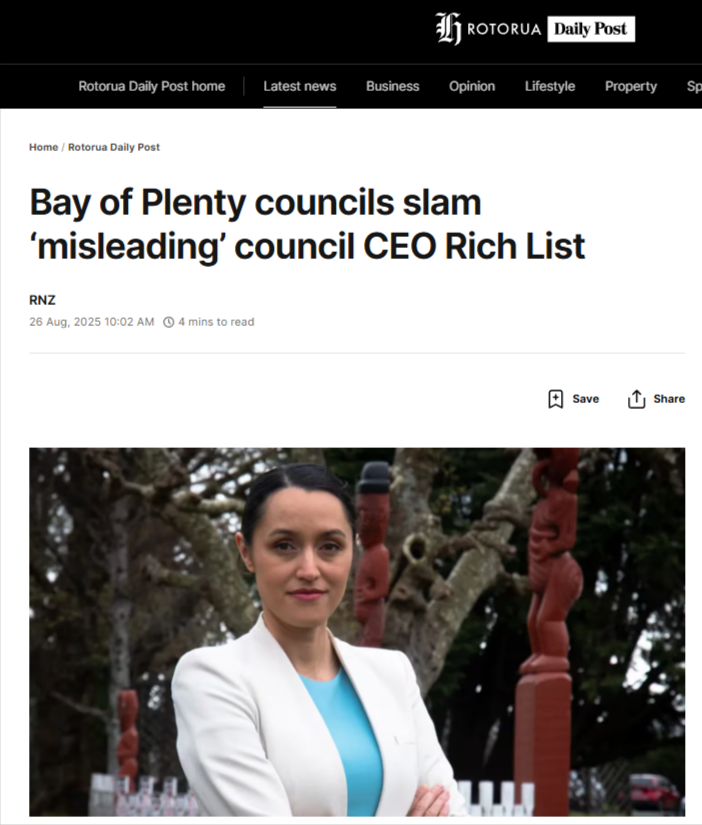
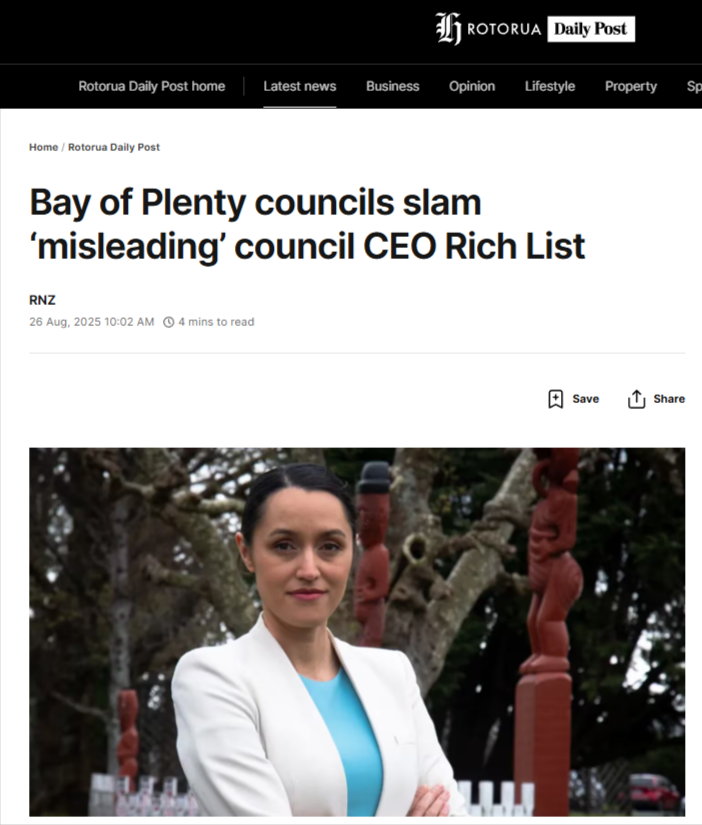
When Rotorua Lakes Council Mayor Tania Tapsell called the Taxpayers Union's methodology "disappointing click bait" and "a deception", she wasn't just defending her council - she was exposing a systematic pattern of misinformation designed to undermine public trust in democratic institutions. This isn't journalism or accountability; it's weaponized propaganda serving Atlas Network interests.
Background: The Atlas Network's Local Government Assault
The Taxpayers Union, founded in 2013 by Jordan Williams, operates as New Zealand's primary conduit for Atlas Network influence. This international network of right-wing think tanks has spent decades promoting privatization, deregulation, and the systematic dismantling of public services. With over 450 affiliated organizations globally and US$20.2 million in annual funding, the Atlas Network has identified local government as a key battleground for advancing corporate interests over community needs.
The Atlas Network's strategy is clear: undermine public confidence in government services, promote privatization as the solution, and ensure corporate interests dominate policy-making. In New Zealand, this manifests through the Taxpayers Union's relentless attacks on councils, public sector workers, and any form of collective decision-making that prioritizes community wellbeing over corporate profits.
The significance from a Māori perspective cannot be overstated. Local government represents one of the few democratic spaces where Māori can exercise meaningful political power and protect our interests in te taiao (the environment) and community wellbeing. The Atlas Network's assault on local democracy directly threatens Māori sovereignty and our ability to practice kaitiakitanga (guardianship) over our lands and waters.
Manufacturing Outrage Through Statistical Manipulation
The Taxpayers Union's latest "Council CEO Rich List" perfectly exemplifies their deceptive methodology. By manipulating figures to create sensational headlines, they've demonstrated contempt for both factual accuracy and democratic accountability. The organization deliberately inflated CEO salary figures through:
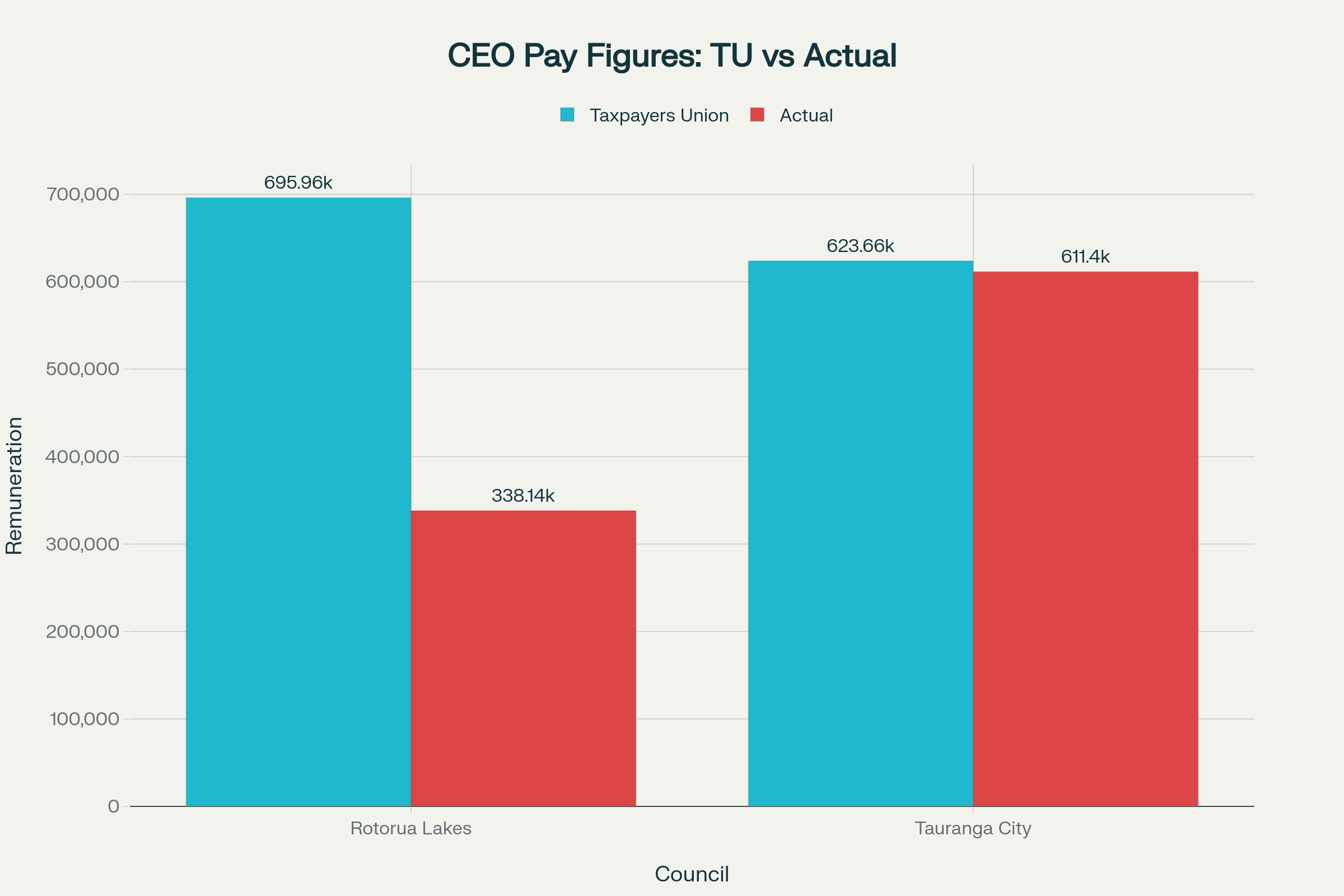
Combining Multiple Salaries: For Rotorua Lakes Council, they combined payments to three different people who held the CEO role during 2023-24 - the current CEO Andrew Moraes, previous CEO Geoff Williams (including his contract payout), and acting CEO Gina Rangi. This inflated the figure from what would be $338,139 for the current CEO to $695,961, moving Rotorua from 53rd place to 4th place in their manufactured ranking.
Double-Counting and Inflating Costs: For Tauranga City Council, they double-counted superannuation contributions already included in the total remuneration and added vehicle fringe benefits to inflate CEO Marty Grenfell's salary.
This matters deeply to Māori because local government is where many of our environmental protections, cultural considerations, and community services are determined. When organizations like the Taxpayers Union systematically undermine trust in these institutions, they're attacking the democratic foundations that enable Māori participation in decision-making about our own communities.
The scope of this analysis extends beyond simple fact-checking. This represents a broader pattern of neoliberal propaganda designed to justify the systematic defunding and privatization of public services, ultimately serving corporate interests at the expense of community wellbeing and Māori self-determination.
Taxpayers Union Misleading CEO Salary Figures vs Reality
The Propaganda Playbook: Atlas Network Tactics in Action
Manufacturing Crisis Through Misleading Data
The Taxpayers Union's manipulation of CEO salary figures follows a well-established propaganda playbook designed to generate public outrage and justify neoliberal "solutions." Their methodology reveals sophisticated understanding of how to weaponize information for political ends.
Emotional Manipulation Over Facts: By labeling their report a "Rich List" and using inflammatory language about CEOs "living it up" while "ratepayers are forking out," the Taxpayers Union prioritizes emotional response over factual analysis. This technique, known as emotional framing, is designed to bypass rational evaluation and generate visceral reactions that support predetermined political outcomes.
Statistical Sleight of Hand: The organization's treatment of Rotorua's figures - combining three separate CEO payments to create a single inflated number - represents deliberate deception rather than methodological error. When challenged, they maintained their position despite knowing the figure was misleading, demonstrating that accuracy takes a backseat to propaganda value.
False Equivalency and Context Stripping: By comparing New Zealand CEO salaries to overseas jurisdictions without accounting for economic conditions, cost of living, or governance structures, the Taxpayers Union creates false narratives about "excessive" compensation. This technique strips away crucial context to support predetermined conclusions.
Astroturfing and Corporate Ventriloquism
Former ACT Party researcher Grant McLachlan exposed how the Taxpayers Union functions as an "astroturf" organization - fake grassroots activism serving corporate interests. He revealed that the organization "did a lot of the groundwork for the party in the 2020 election" and created "contrived problems" to serve ACT's political agenda.
This astroturfing serves Atlas Network objectives by creating the illusion of public support for policies that primarily benefit corporate interests. When the Taxpayers Union campaigns against public services or democratic accountability measures, they're not representing genuine grassroots sentiment but advancing the agenda of their international funders.
Corporate Funding Disguised as Public Interest: Despite claims of grassroots support, the Taxpayers Union receives significant funding from Atlas Network grants and wealthy individual donors. Jordan Williams admits to receiving Atlas Network training and funding, including a "$10,000 three-metre long cheque" for campaign work. This foreign funding of domestic political activity represents a form of soft colonialism that prioritizes international corporate interests over local democratic decision-making.
Undermining Democratic Legitimacy
The Atlas Network's broader strategy involves systematically undermining public trust in democratic institutions to justify privatization and corporate control. The Taxpayers Union's attacks on local government serve this agenda by:
Delegitimizing Public Service: By portraying public sector workers as overpaid and inefficient, they create political pressure for privatization and budget cuts. This ignores the complex challenges facing local government and the vital services they provide to communities, particularly Māori communities who rely heavily on public services.
Promoting Corporate Solutions: Every criticism of public sector "waste" or "inefficiency" implicitly promotes private sector "efficiency" as the solution. This false dichotomy ignores extensive evidence of private sector failures and the higher costs often associated with privatization.
Attacking Democratic Participation: By characterizing democratic decision-making as "bloated bureaucracy" or "vanity projects," they undermine the legitimacy of community input and collective decision-making. This serves corporate interests by reducing public oversight and accountability.
Hidden Connections: The Atlas Network's New Zealand Operation
International Funding and Domestic Interference
The Taxpayers Union's connection to the Atlas Network represents a form of soft colonialism that prioritizes international corporate interests over local democratic sovereignty. Atlas Network documentation reveals they distributed US$75,800 (NZ$123,000) to Australia and New Zealand in 2022, with the Taxpayers Union being their primary New Zealand partner.
This foreign funding of domestic political activity raises serious questions about democratic sovereignty and corporate capture. When international organizations fund local political campaigns, they're essentially purchasing influence over New Zealand's democratic processes to serve their own interests rather than those of New Zealand communities.
Coordination with Political Parties: The close relationship between the Taxpayers Union and ACT Party, documented by former ACT staffer Grant McLachlan, reveals how foreign-funded organizations coordinate with political parties to advance shared agendas. This represents a form of political money laundering that disguises corporate interests as grassroots activism.
Timeline of Corporate Capture: The Taxpayers Union's founding in 2013 coincided with intensified international efforts to promote neoliberal policies in developed countries following the 2008 financial crisis. The organization's rapid growth and professional operations suggest substantial financial backing from the outset, contradicting claims of organic grassroots development.
The Revolving Door of Right-Wing Influence
Jordan Williams' career trajectory reveals the interconnected nature of New Zealand's right-wing political ecosystem. Before founding the Taxpayers Union, he worked for Stephen Franks' law firm (former ACT MP) and led the "Vote for Change" campaign against MMP. This background demonstrates how the same individuals cycle through different organizations while maintaining consistent ideological objectives.
Professional Network Connections: The Taxpayers Union's board has included prominent conservative figures like John Bishop (father of National MP Chris Bishop) and Ruth Richardson (architect of New Zealand's neoliberal reforms). These connections reveal how the organization serves as a vehicle for established right-wing interests rather than genuine taxpayer advocacy.
Media Manipulation Networks: Williams' involvement in defamation cases with Colin Craig and his connections to various political campaigns demonstrate sophisticated understanding of media manipulation and political warfare. These skills serve Atlas Network objectives by creating favorable media coverage for neoliberal policies while attacking opponents.
Democratic Destruction and Māori Rights
Attacking Māori Representation
The Taxpayers Union's broader agenda directly threatens Māori political representation and self-determination. Their campaigns against "co-governance" and Treaty-based partnerships represent thinly veiled attacks on Māori sovereignty disguised as taxpayer advocacy.
Environmental Kaitiakitanga Under Attack: Local government represents a crucial arena for practicing kaitiakitanga (environmental guardianship), with councils responsible for resource management, water quality, and environmental protection. Atlas Network ideology promotes deregulation and privatization of natural resources, directly conflicting with Māori worldviews about collective responsibility for te taiao (the environment).
Cultural Services and Support: Many councils provide essential services supporting Māori language, culture, and community development. The Taxpayers Union's campaigns for budget cuts and "core services only" threaten these programs, representing cultural warfare disguised as fiscal responsibility.
Democratic Participation Barriers: By promoting corporate solutions over democratic decision-making, the Taxpayers Union creates barriers to Māori political participation. Corporate boardrooms are less accessible to Māori communities than council chambers, effectively reducing Māori influence over decisions affecting our lives and lands.
Neoliberal Colonialism in Practice
The Atlas Network's promotion of privatization and deregulation represents a form of neocolonialism that prioritizes corporate profits over indigenous rights and community wellbeing. This ideology treats natural resources, public services, and community assets as commodities to be bought and sold rather than collective resources to be protected for future generations.
Privatization as Cultural Destruction: When public services are privatized, they shift from being collective resources governed by democratic processes to private commodities governed by profit motives. This transition directly conflicts with Māori values of collective ownership and intergenerational responsibility.
Market Fundamentalism vs. Māori Values: The Atlas Network's promotion of "free market" solutions ignores the market failures and social costs that these policies create. Māori communities often bear disproportionate costs from privatization while receiving fewer benefits, representing a form of economic colonialism that perpetuates historical injustices.
Implications: The Assault on Community Self-Determination
Broader Democratic Implications
The Taxpayers Union's misinformation campaigns represent more than simple political advocacy - they constitute a systematic assault on democratic governance itself. By undermining public trust in elected officials and democratic institutions, they create political conditions favorable to corporate takeover of public services and resources.
Manufactured Consent for Privatization: Each successful attack on public sector "waste" or "inefficiency" creates political pressure for privatization, regardless of evidence about private sector performance. This manufactured consent serves corporate interests by opening new markets for profit extraction while reducing public accountability and democratic oversight.
Eroding Civic Engagement: When citizens lose trust in democratic institutions, they become less likely to participate in civic processes like voting, attending council meetings, or engaging in community decision-making. This civic disengagement serves corporate interests by reducing public oversight and accountability while making communities more vulnerable to external manipulation.
Creating Policy Dependency: By consistently attacking public sector capacity while promoting private sector solutions, organizations like the Taxpayers Union create political dependency on corporate services. This dependency reduces community self-reliance and democratic autonomy while increasing vulnerability to corporate interests.
Community Impact Assessment
The real-world consequences of the Taxpayers Union's campaigns extend far beyond political theater. Their successful advocacy for budget cuts, privatization, and reduced public services creates measurable harm in communities across New Zealand.
Service Degradation: Successful campaigns for budget cuts often result in reduced service quality, longer wait times, and decreased accessibility for vulnerable community members. These impacts disproportionately affect Māori, Pacific, and low-income communities who rely most heavily on public services.
Increased Inequality: Privatization typically results in reduced access for those unable to pay market rates while improving services for those who can afford premium options. This two-tier system increases social inequality and reduces social cohesion within communities.
Environmental Degradation: Deregulation and privatization often reduce environmental protections and monitoring, leading to degraded water quality, increased pollution, and loss of biodiversity. These environmental costs represent intergenerational theft that violates fundamental Māori values about kaitiakitanga and collective responsibility.
Impact on Māori Specifically
The Taxpayers Union's agenda creates particular harm for Māori communities who depend heavily on public services and democratic institutions for protection of our rights and interests.
Reduced Cultural Support: Budget cuts often target "non-essential" services including Māori language programs, cultural centers, and community development initiatives. These cuts represent cultural warfare that weakens Māori identity and community cohesion.
Environmental Justice Issues: Privatization and deregulation often result in increased environmental degradation in Māori communities, who frequently live near industrial sites and face disproportionate exposure to pollution and environmental hazards.
Political Marginalization: Corporate capture of public services reduces Māori political influence by shifting decision-making from democratic institutions (where Māori have political rights) to corporate boardrooms (where Māori have no guaranteed representation).
Connections to Larger Patterns
Global Neoliberal Strategy
The Taxpayers Union's activities in New Zealand represent part of a coordinated global campaign by the Atlas Network to promote corporate interests over democratic governance. This international coordination reveals the systematic nature of attacks on public services and democratic institutions across developed countries.
Standardized Talking Points: The similarity between Taxpayers Union rhetoric and that of Atlas Network affiliates worldwide suggests coordinated messaging designed to advance shared political objectives rather than genuine local advocacy.
Resource Sharing: The Atlas Network's provision of training, funding, and strategic support enables local affiliates like the Taxpayers Union to punch above their weight in domestic political contests, creating artificial amplification of corporate interests.
Policy Template Distribution: Success stories from one Atlas Network affiliate are often replicated in other countries, suggesting coordinated policy development rather than organic local innovation.
Corporate Capture of Democracy
The broader pattern of corporate influence over democratic institutions extends far beyond the Taxpayers Union to include think tanks, lobby groups, and political organizations across the political spectrum.
Regulatory Capture: When corporate interests successfully influence regulatory agencies, they can shape rules to benefit themselves while imposing costs on communities and competitors.
Intellectual Capture: By funding academic research and policy development, corporate interests can shape the ideas and evidence available to policymakers, creating apparent intellectual consensus around policies that serve corporate rather than public interests.
Political Capture: Through political donations, lobbying, and astroturf organizations like the Taxpayers Union, corporate interests can influence electoral outcomes and policy decisions while maintaining the appearance of democratic legitimacy.

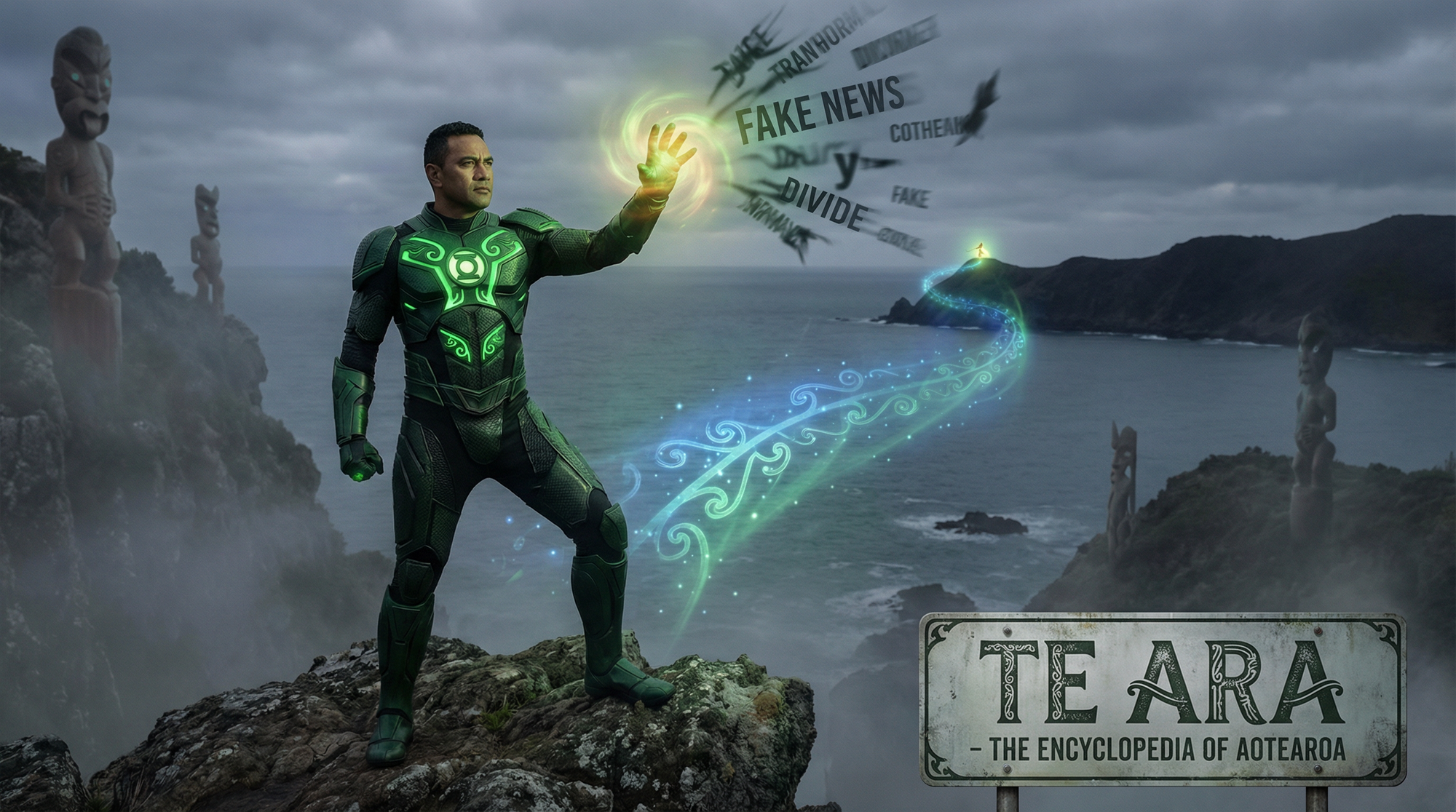
The Māori Green Lantern fighting misinformation and disinformation from the far right
Reclaiming Democratic Sovereignty
The Taxpayers Union's manipulation of CEO salary figures represents far more than simple statistical errors or partisan advocacy. It reveals a sophisticated propaganda operation designed to undermine public trust in democratic institutions while advancing corporate interests disguised as taxpayer advocacy.
For Māori communities, these attacks on local democracy represent a direct threat to our ability to exercise political sovereignty and protect our collective interests. When foreign-funded organizations successfully undermine public confidence in democratic institutions, they weaken the very mechanisms through which Māori can participate in decisions affecting our lives, lands, and waters.
The solution requires more than simply fact-checking misleading statistics or exposing corporate funding sources. We must actively defend and strengthen democratic institutions while building community capacity to resist corporate capture and manipulation.
This means supporting genuine community organizations over astroturf operations, prioritizing collective wellbeing over individual profit, and maintaining healthy skepticism toward any organization that consistently attacks public services while promoting private sector "solutions."
Most importantly, it means recognizing that democracy is not a spectator sport. When we allow corporate interests to dominate public discourse and political decision-making, we surrender the collective power that enables communities to shape their own futures according to their own values and priorities.
The Taxpayers Union's deceptive practices remind us that vigilance against manipulation and misinformation is the price of democratic freedom. By exposing their tactics and defending truthful public discourse, we protect not just factual accuracy but the democratic foundations that enable communities to govern themselves according to principles of justice, sustainability, and collective wellbeing.
Ko au ko te taiao, ko te taiao ko au. I am the environment, and the environment is me.
Te Māori Green Lantern continues to shine light into the darkness, exposing the networks of power and influence that threaten our collective wellbeing. For those who find value in this mahi, please consider supporting this work with a koha to HTDM: 03-1546-0415173-000. Only contribute if you have capacity and wish to support the cause - I understand these are challenging economic times for many whānau.
Mauri ora.