"THE PĀTAKA IS ASH: How Nicola Willis and Christopher Luxon Poured Petrol on the Poor and Called It Relief" - 25 March 2026

Mōrena ano Aotearoa,
In my working life, I've worked as a Labourer for the Rotorua District Council, Security Guard for Armour Guard and a Doorman at a Rotorua Nightclub, the Department Of Social Welfare, Skill New Zealand, The Tertiary Education Commission, Careers New Zealand, a Manager for Iwi, a Trustee, Digital Media Creator/websites/Social Media Management/Video Production, Private Career Practice, and some other stuff too.
I've been around, I've worked for this Government, for Iwi, for myself, for others. I've lived through the neoliberal 80's as a kid and saw what it did to my father who worked for the Ministry Of Works, and had to start his own private business in the early 90's because of privatization (which was hard).
This is a glimpse into the whakapapa of The Māori Green Lantern and is the motivation for this mahi. Neoliberalism is the enemy.
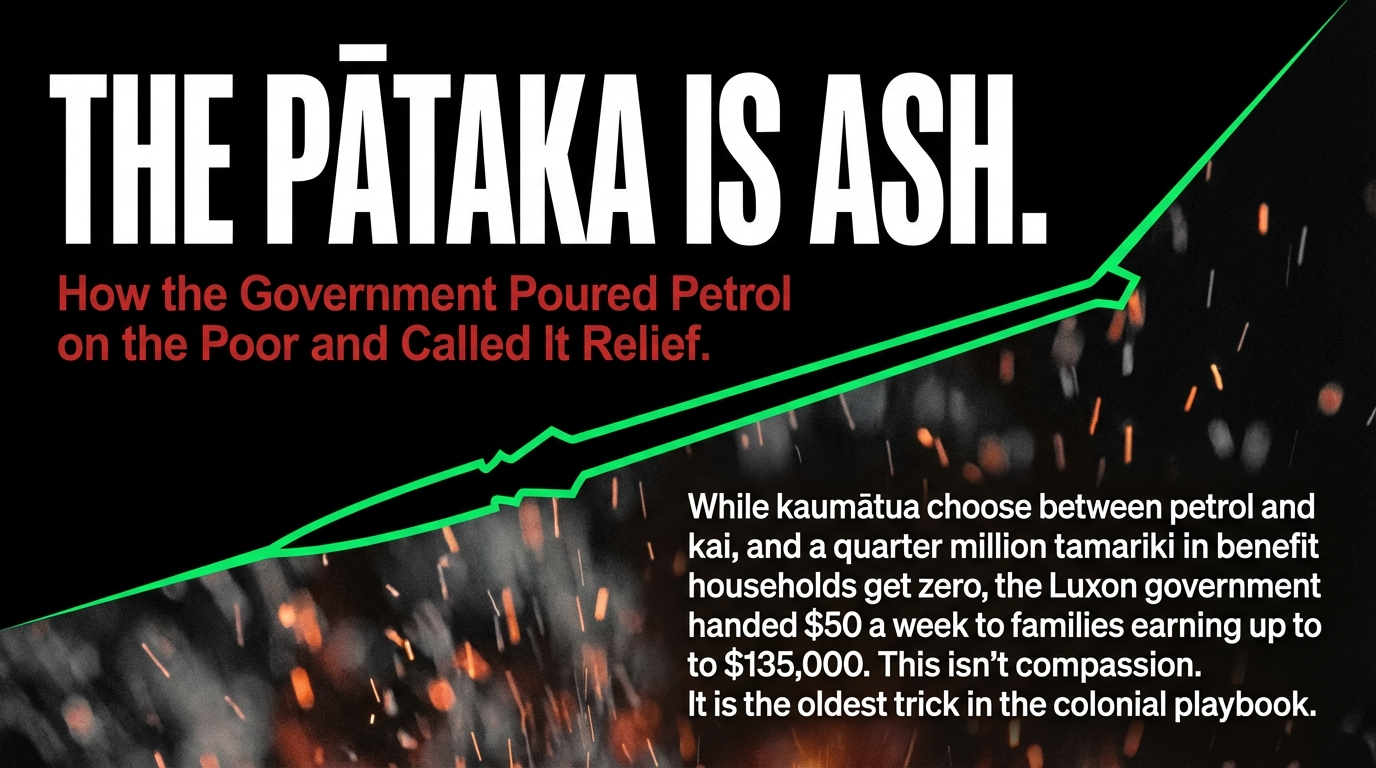
While kaumātua choose between petrol and kai, and a quarter million tamariki in benefit households get zero, the Luxon government handed $50 a week to families earning up to $135,000 — and called it compassion. It isn't. It's the oldest trick in the colonial playbook: perform care while engineering abandonment.
The Metaphor That Explains Everything
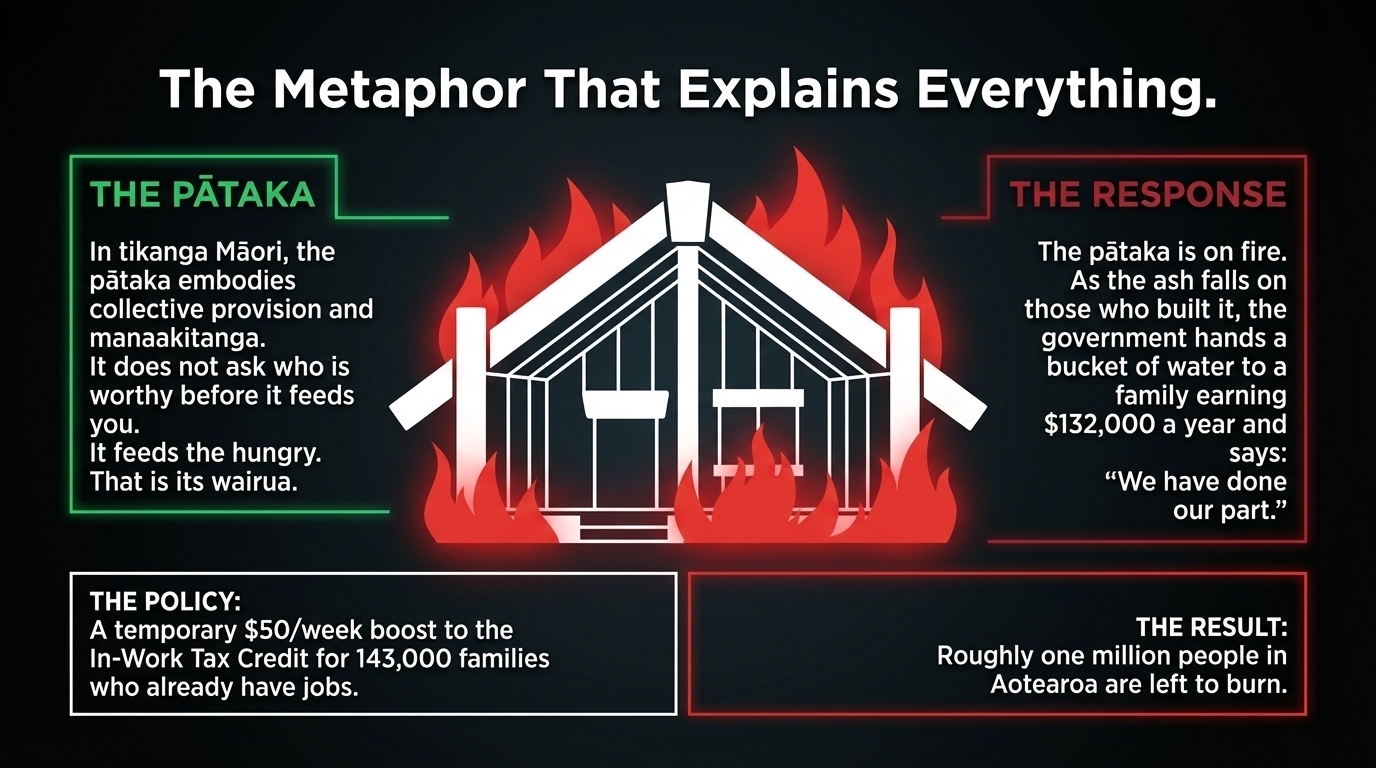
Imagine a pātaka — a raised storehouse, sacred in tikanga Māori, the embodiment of collective provision and manaakitanga. The pātaka does not ask who is worthy before it feeds you. It feeds the hungry. That is its entire purpose. That is its wairua.
Now imagine a government that sets that pātaka on fire and, as the ash falls on the faces of those who built it — the kaumātua, the sick, the solo mothers on benefit, the tamariki in damp houses — hands a bucket of water to a family earning $130,000 a year and says:
"We have done our part."
That is exactly what Nicola Willis and Christopher Luxon did on 25 March 2026.
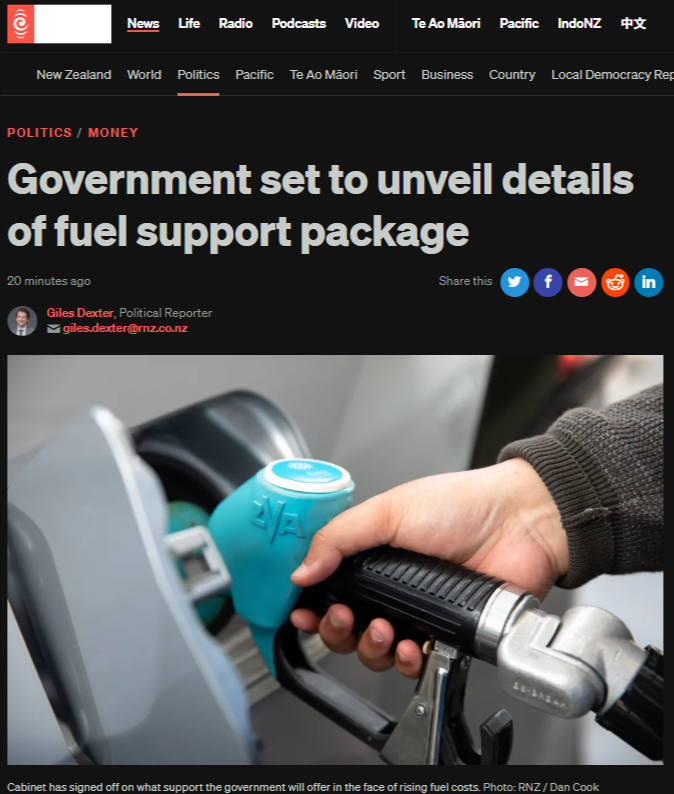
The Middle East is on fire. Trump and Israel's assault on Iran closed the Strait of Hormuz. Brent crude briefly topped US$119 a barrel. Petrol at New Zealand pumps has surged from $2.50 to around $3.29 a litre nationally — and up to $4 a litre in parts of the country. Officials warn this will continue for at least another 100 days. And the government's response — its total, complete, and morally bankrupt response — is a temporary boost to the in-work tax credit of $50 a week for 143,000 families who already have jobs.
Everyone else — roughly a million people — can burn.
The Deep Dive Podcast
Listen to a lively conversation between two hosts, unpacking and connecting topics in the sources of this essay
The Architecture of Cruelty
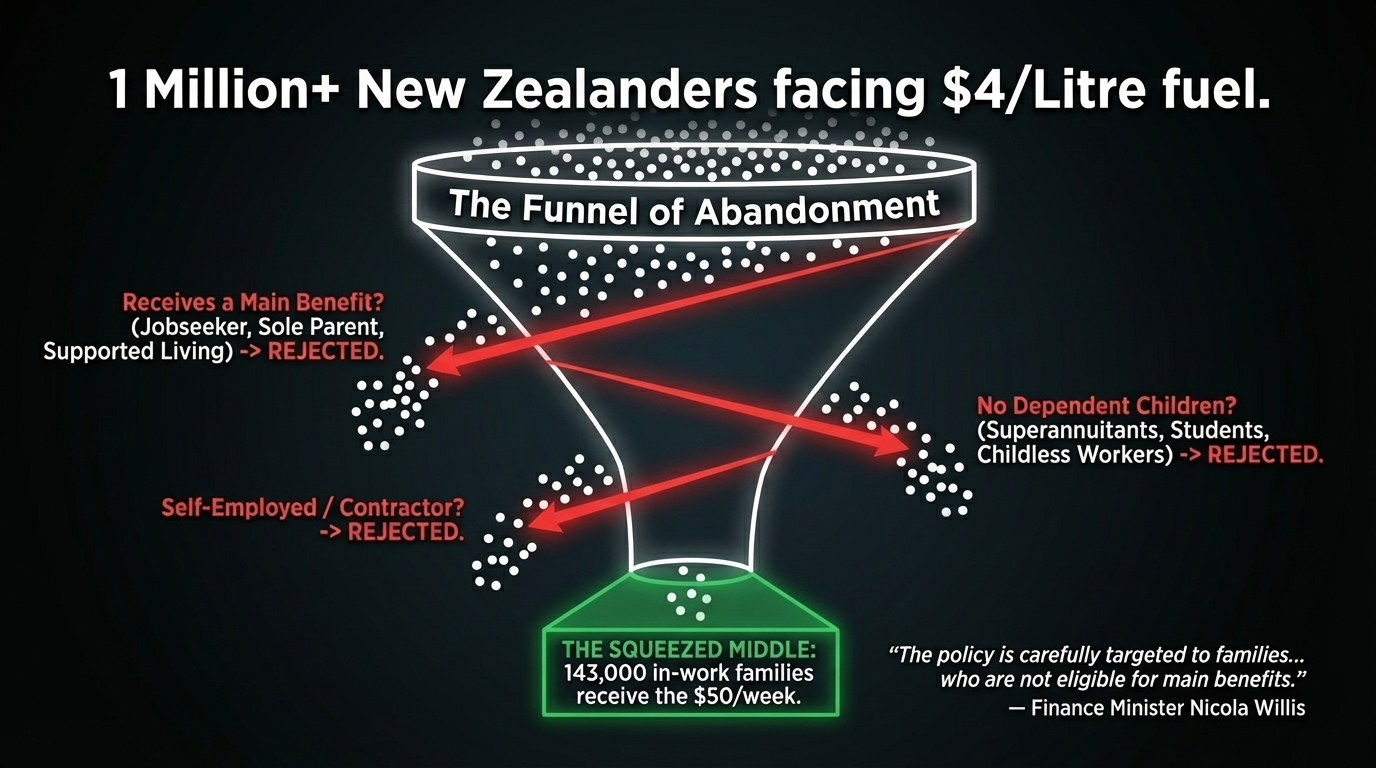
This is not an accident. This is design.
The in-work tax credit exists within a system — Working for Families — that has always contained a deliberate poison pill: if you receive a main benefit, you are disqualified. Jobseeker Support. Sole Parent Support. Supported Living Payment. Doesn't matter. You may have children. You may be driving to medical appointments, food banks, WINZ offices, school runs. You may have the most desperate fuel need of anyone in Aotearoa. The answer from this government is: you do not deserve our help.
CPAG spokesperson Isaac Gunson, quoted by 1News, put it plainly:
"Close to a quarter of a million children live in households receiving a core benefit and the idea that there's no additional support for them that will be made available is pretty outrageous."
When Willis was asked to justify this, she said beneficiaries are "potentially less affected because they did not have to travel to work." Let that sink in. The Finance Minister of Aotearoa New Zealand — in the middle of a fuel crisis — told a quarter million children in poverty that their parents probably don't need to drive anywhere.
Gunson destroyed this immediately, again via 1News:
"The idea that benefit-dependent households won't face as big a downturn in their finances because they don't have the same obligations to go to work… that just doesn't stand up."
This is not ignorance. Willis knows the data. She reads the reports. She chooses this.
As the Green Party's official response stated:
"This package does nothing for beneficiaries and their children, retirees, or unpaid carers, who are all left out entirely."
The Numbers That Indict a Government
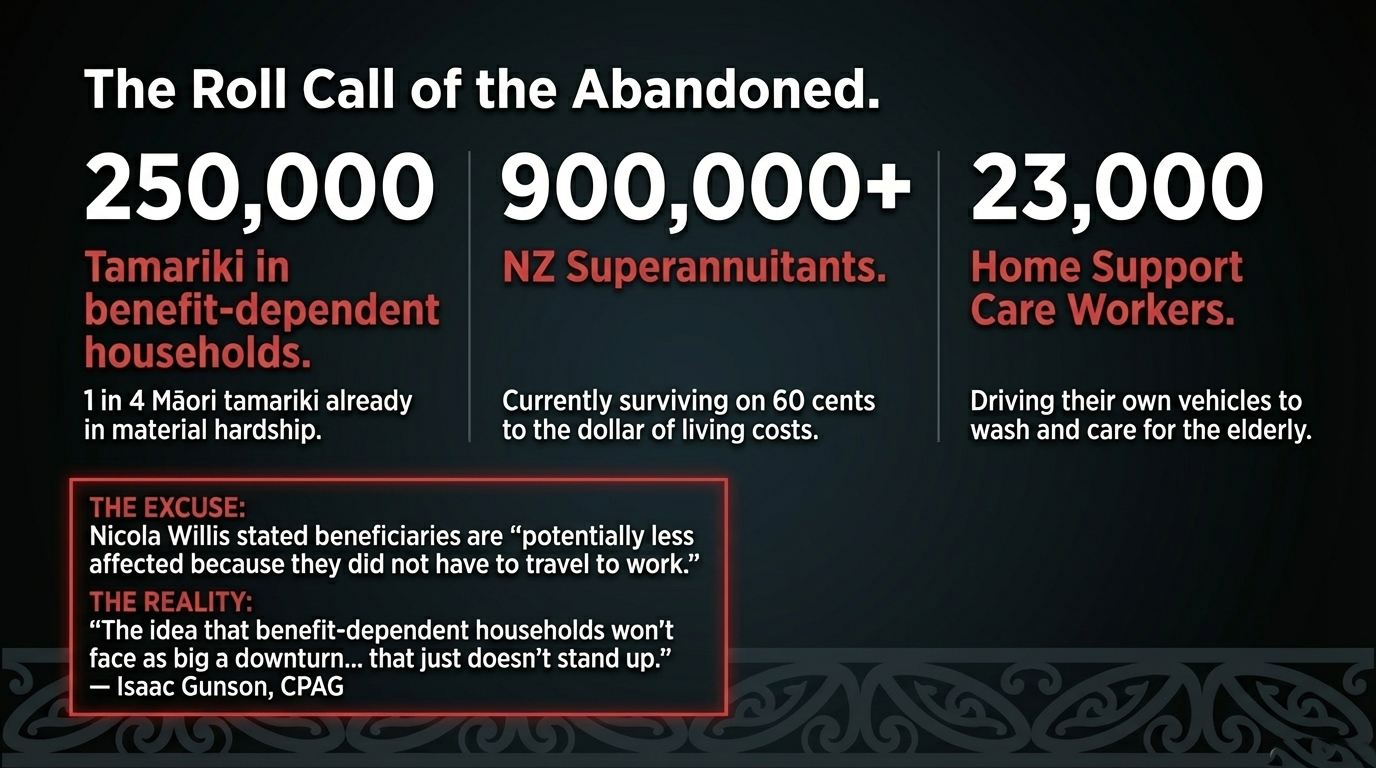
To understand the scale of deliberate harm here, you need context. This crisis did not fall from the sky onto a healthy, equal society. It detonated on top of a pre-existing catastrophe — one this government has consistently chosen not to fix.
Statistics New Zealand data released just weeks ago shows no annual improvement in child poverty. Nearly 150,000 tamariki remain in poverty in Aotearoa. For tamariki Māori, one in four lives in material hardship. For Pacific tamariki, it is one in three. The Māori unemployment rate was 10.5 percent in September 2025 — more than double the Pākehā rate.
The Children's Commissioner, as reported by 1News, called the stall in child poverty progress "absolutely unacceptable" and confirmed Aotearoa is "not on track" to meet its own statutory targets under the Child Poverty Reduction Act. The NZCTU confirms child poverty continues to trend upwards — one in eight before housing costs, one in six after.
Into this burning house, Willis threw a box of matches and called it aid.
Three Examples for the Western Mind — What This Looks Like in a Real Life
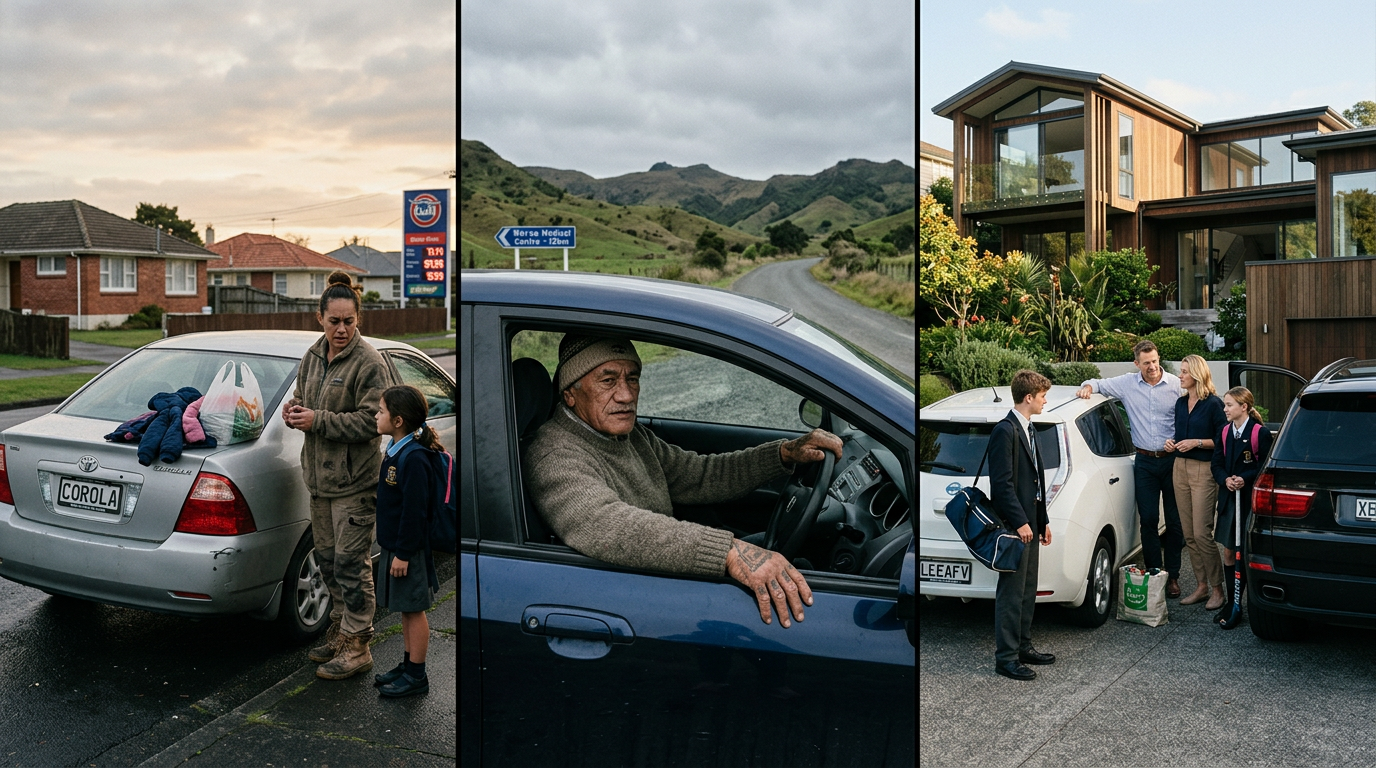
Example 1: Mere, the sole parent in Ōtara
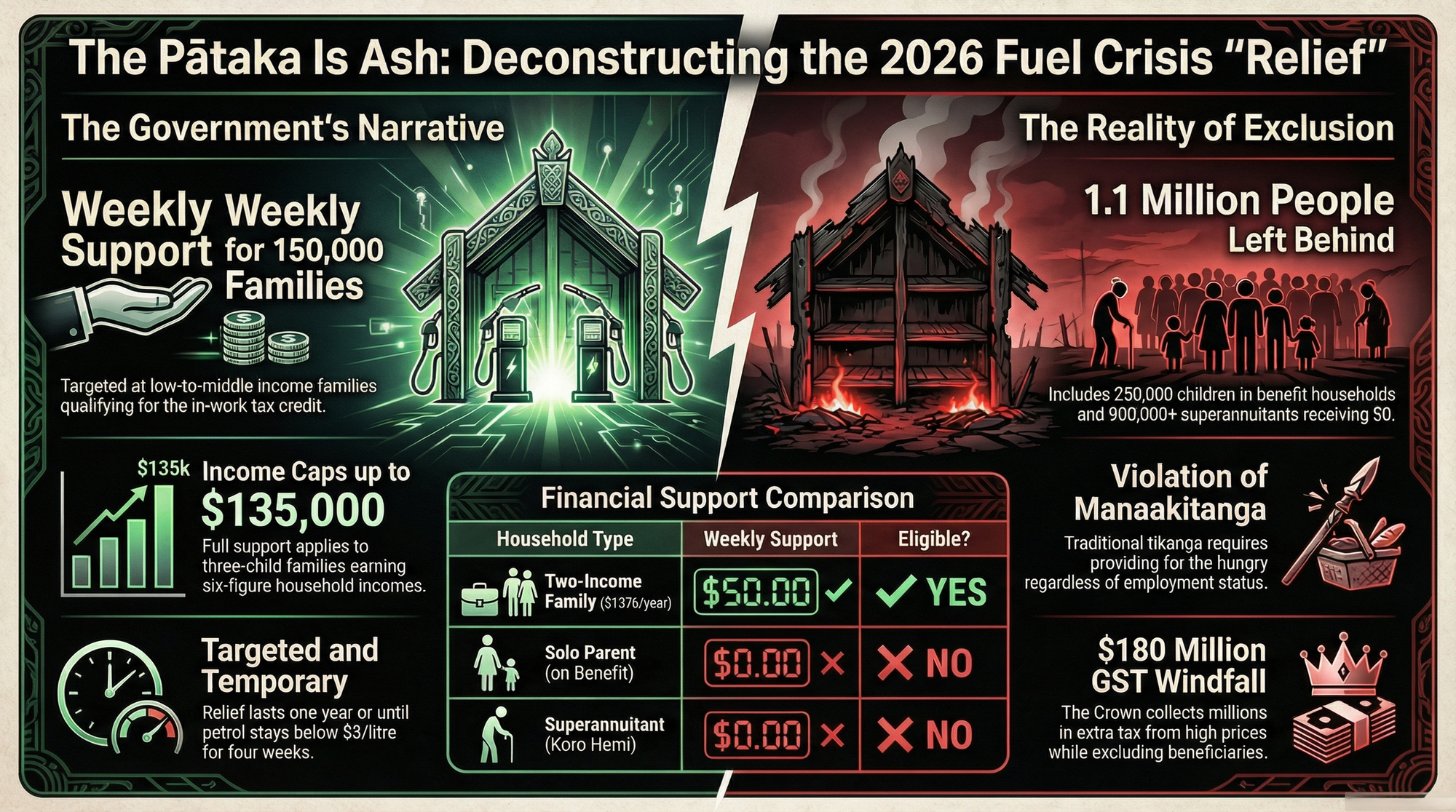
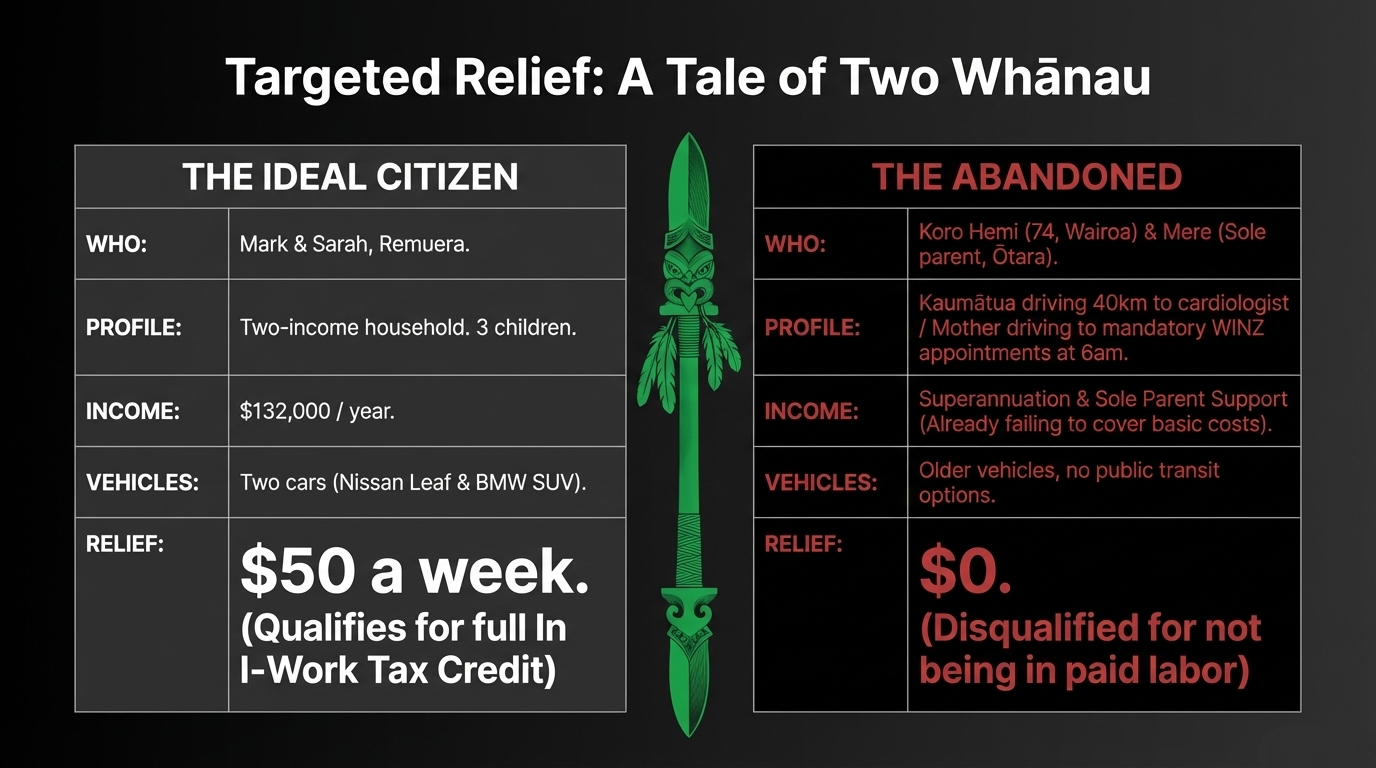
Mere is a Māori sole parent in South Auckland. She receives Sole Parent Support after losing her cleaning job when her daughter got sick. She drives a 2004 Toyota Corolla. She has no choice — there is no bus at 6am to get her daughter to school before Mere gets to the WINZ appointment she must attend or face sanctions, as documented in The Traffic Light Taiaha essay at The Māori Green Lantern. Petrol is now $3.29 a litre. She fills 35 litres a week. That is an extra $27.65 a week compared to last month — on a benefit that already fails to cover basic living costs. From this government: zero dollars. Because she doesn't have a job. The tikanga violation here is acute: in te ao Māori, manaakitanga — the obligation to provide for those who need — does not come with employment conditions attached.
Example 2: Koro Hemi, kaumātua in rural Wairoa
Hemi is 74. He lives on New Zealand Superannuation — which now covers just 60 percent of average retiree living costs. He drives 40km to his cardiologist in Gisborne once a fortnight. That round trip is now costing him roughly $52 in petrol — up from $30 last month. He has no children at home. He is not in paid work. He is exactly the kind of kaumātua that tikanga demands we protect and honour — the living repositories of whakapapa, mātauranga, and wairua. From this government: zero dollars. ACT's David Seymour, as reported by 1News, called the package "sensible and proportionate." Perhaps Seymour would like to explain that to Koro Hemi.
Example 3: The Two-Income Family in Remuera That Gets the Full $50
Mark and Sarah live in Remuera. They have three children and a combined household income of $132,000 a year. They drive two cars — a Nissan Leaf and a BMW SUV. They have KiwiSaver, a mortgage, school fees. They are, by any measure, not in crisis. Under this package — per the eligibility criteria published by 1News — they qualify for the full $50 a week. This is "targeted" relief. Targeted, that is, at people who vote National.
Tikanga Explained — Why This Is Not Just Bad Policy, It Is a Moral Violation
For readers approaching this from a Western liberal framework, here is the concept you need: manaakitanga.
In tikanga Māori, manaakitanga is not charity. It is not welfare. It is not means-tested compassion distributed to the deserving poor. It is an unconditional obligation — a sacred responsibility — to provide for the wellbeing of others, particularly those in need. A rangatira who withheld food from the hungry while their storehouse was full was not just being cruel. They were violating the very covenant that gave them authority. Their mana — their legitimacy to lead — depended on their generosity. Leadership without mana is occupation.
This government is in occupation of the pātaka. They have the resources. The extra $180 million in GST Willis will collect from higher petrol prices alone this year could have funded direct payments to every beneficiary household in the country. Instead, she takes that money — extracted from struggling whānau at the pump — deposits it into the Crown account, and announces $373 million in relief that structurally bypasses the poorest. This is the colonial logic of the Working for Families system made explicit: the Crown's obligation to Māori and the poor extends only as far as it is politically convenient.
As the Auditor-General noted in 2025, government interventions show
"limited evidence of targeted action planned to address inequities for disproportionately disadvantaged groups."
Manaakitanga demands the opposite: the most vulnerable receive the most care. This government delivers the inverse.
The Dog Whistle — How Willis Used a Māori Woman to Justify Abandoning Her
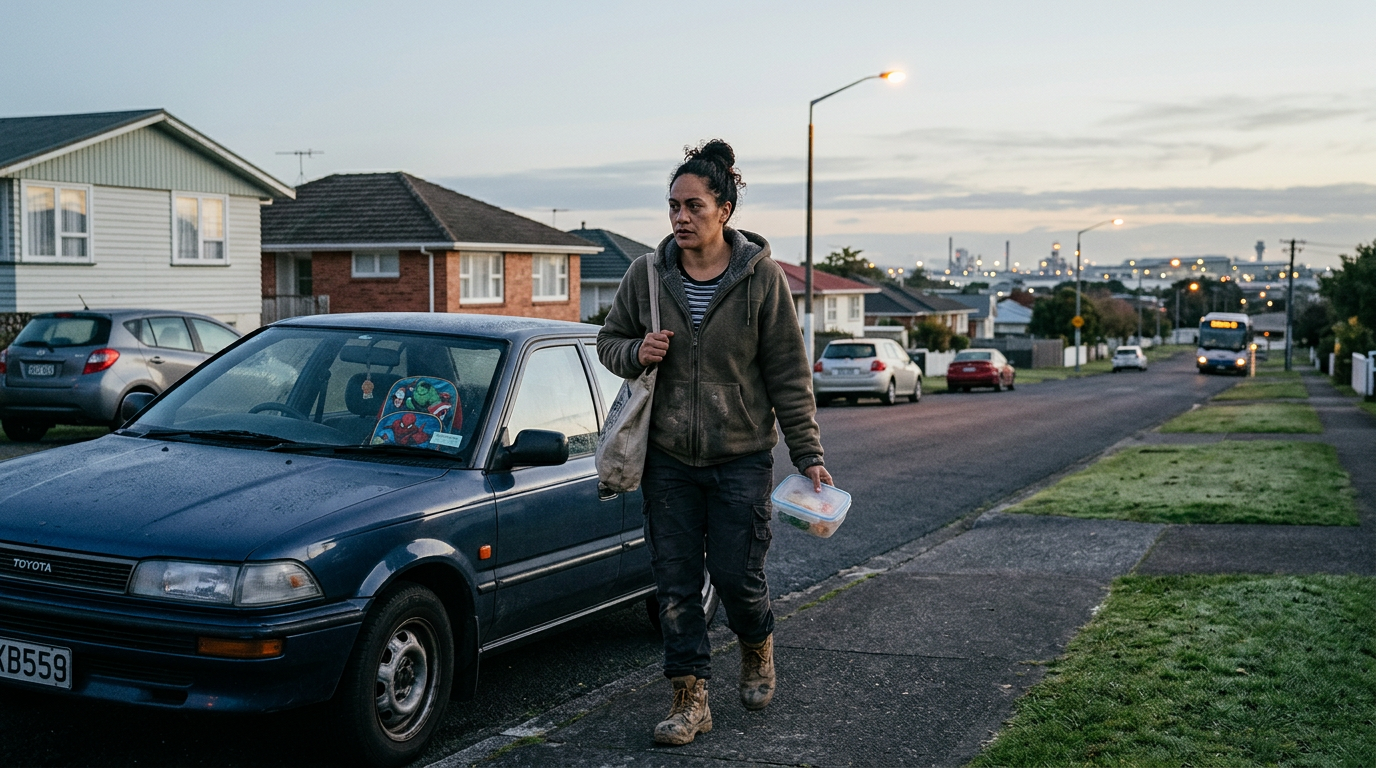
This may be the most cynical element of the entire announcement. Willis repeatedly invoked the image of
"the mother — potentially living in South Auckland — who has no choice but to use her car each day to get to her cleaning shift at the airport,"
as reported by 1News.
She named a Māori or Pacific wahine — low paid, shift worker, South Auckland, driving necessity — to justify a package that statistically excludes that woman if she is on a benefit.
This is not empathy. This is performance. It is the oldest Crown trick in the book: invoke the image of the indigenous poor to launder a policy that serves the settler middle class. The woman Willis described — the cleaner, the carer, the wahine hauling her kids through the dark to catch a shift — is statistically more likely to be Māori or Pacific, more likely to be on a main benefit or in a benefit-dependent household, more likely to receive nothing from this package at all. And Willis knows this. The data is sitting on her desk.
The Salvation Army's Ana Ika confirmed, as reported by Pacific Media Network, that Pacific families facing fuel cost increases feel it in "housing, food, and for those needing regular medical trips" — and yet large proportions are structurally excluded from this mechanism. Using their image to sell their exclusion is not a policy error. It is a desecration.
The Rural Betrayal — Diesel, Kāinga, and the Forgotten
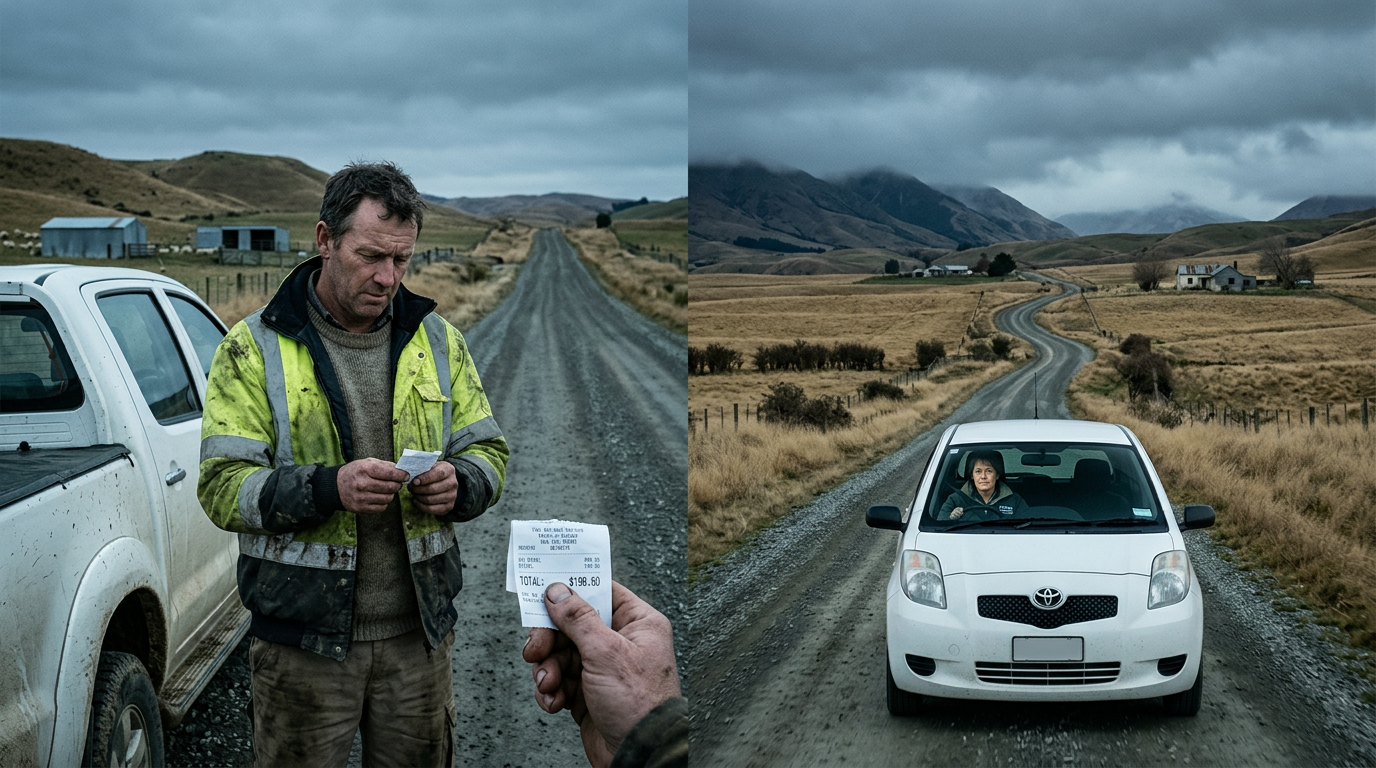
Luxon himself told media that diesel is the key fuel for New Zealand. One Ashburton rural contractor described costs of an extra $10,000–$12,000 per day. The Rural News Group reported that rural contractors are being urged to renegotiate contracts because their cost base has blown out entirely. And the package? Does nothing for them. The self-employed, the rural, the contractors — gone.
The NZ Public Service Association was unambiguous, posting directly:
"The fuel relief package won't even touch the sides for many home support workers."
These are the 23,000 care and support workers — predominantly women, predominantly Māori and Pacific — who drive their own vehicles across vast distances to provide funded home care for the elderly and disabled. The Greens specifically called for increased mileage rates for care workers. Willis dismissed it without comment.
The Fiscal Deception
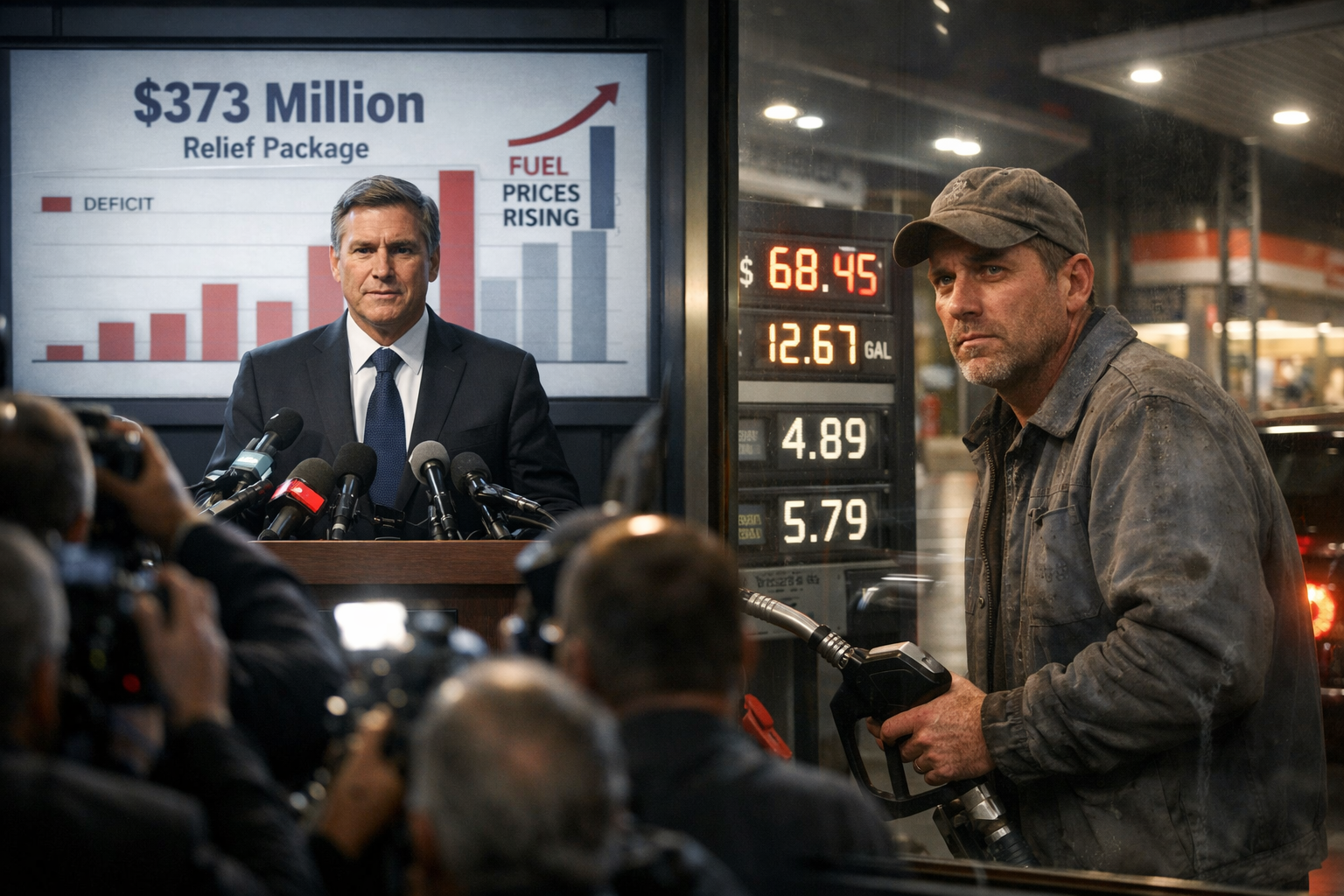
Willis insists the $373 million package will not increase debt because it draws from the Budget 2026 operating allowance. She won't say what gets cut.
As The Spinoff reported, that allowance is already "very tight at $2.4 billion." Something will be cut on Budget Day, 28 May. Odds are it will not be Luxon's accommodation allowance.
Meanwhile — and this is the number that should make you incandescent — economist Shamubeel Eaqub estimated, via 1News, that Willis will collect an extra $180 million in GST from higher pump prices this year alone. The government is profiting from the crisis it is performing compassion about. They extract $180 million from every struggling driver at the pump — disproportionately Māori, Pacific, rural, low-income — and then announce $373 million in relief that excludes the very people being squeezed.
Willis stood before the cameras and called it "targeted." What she meant was: targeted at people who already vote for us.
Who Gets Nothing: The Roll Call of the Abandoned
| Group | Excluded? | Source |
|---|---|---|
| ~250,000 children in benefit-dependent households | Yes | 1News/CPAG |
| ~900,000+ NZ Superannuitants | Yes | Green Party |
| Disabled people on Supported Living Payment | Yes | Green Party |
| Unpaid carers | Yes | Green Party |
| Childless workers of any income | Yes | 1News |
| 23,000 home support care workers | Yes | NZPSA |
| Rural self-employed contractors | Largely excluded | Rural News Group |
What a Rangatiratanga Response Would Look Like
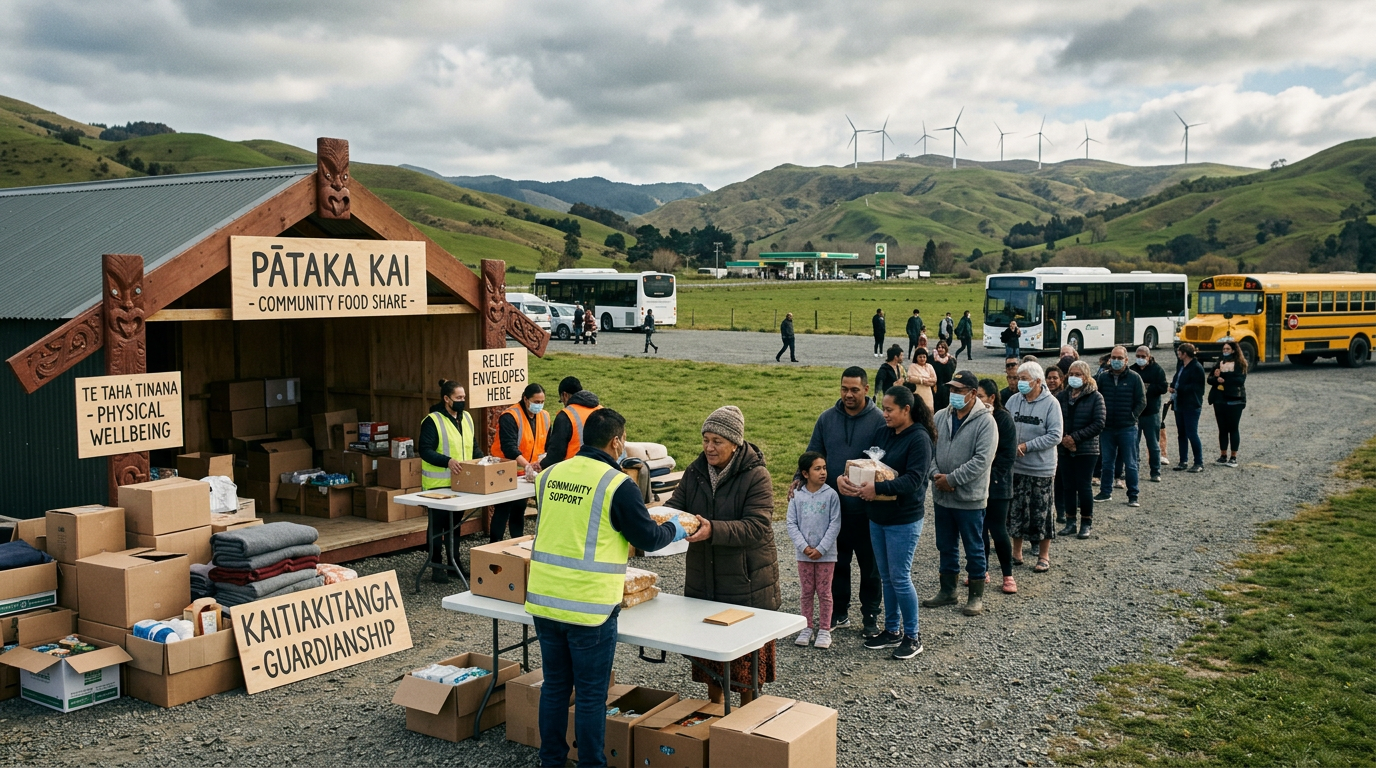
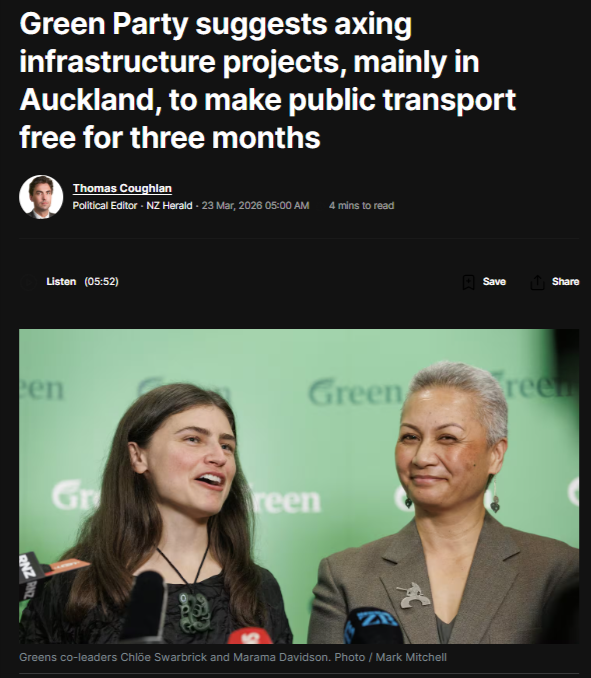
The Green Party proposed a Fossil Fuel Crisis Relief Payment targeting all adults earning under the median, all rural residents where public transport is unavailable, free public transport, increased school bus services, a windfall profits tax on fuel companies, and increased mileage rates for care workers. That is a pātaka-based policy — one rooted in the principle that the storehouse provides for all, that crisis demands collective response, and that the measure of a government's mana is who it protects in the fire.
Willis ruled out the 2022 cost-of-living payment because it "ended up in the back pockets of French backpackers," as reported by 1News. The real reason? Universality cannot be used to divide the deserving from the undeserving. Universal payments cannot be weaponised to reinforce the colonial fantasy that beneficiaries are moral failures. The ideology is the policy. The ideology is the harm.
Previous Mahi — The Pattern Is Not New

This abandonment is not an isolated event. It is a pattern, documented at The Māori Green Lantern across multiple investigations:
- The Starving of the Seedlings — How Aotearoa's Coalition of Cruelty chose corporate efficiency over children, documented in March 2026. The same ideological machinery that starves child poverty funding now runs the fuel relief design.
- The Traffic Light Taiaha — How a white supremacist government built a punishment machine for the poor, published February 2026. The benefit sanctions system that penalises the poorest is the same system that now disqualifies them from fuel relief.
- Ka Noho i Roto i te Ahi — The Government's Toll Booth to Hell and the Green Party's Open Gate, March 2026. The pre-crisis fuel policy failure that set the stage for this catastrophe.
- The Charity of Conquerors — How the Crown turned its sacred obligation to warrior families into a means-tested favour, March 2026. The same Crown logic at work — obligation reframed as charity, charity made conditional, conditions designed to exclude.
- Trump's Iran War — When a Nuclear-Free Nation Genuflects Before the Bombs That Shatter Global Stability, February 2026. The geopolitical root of this fuel crisis — and New Zealand's complicit silence.
The Pātaka Is Ash, and They Lit the Match
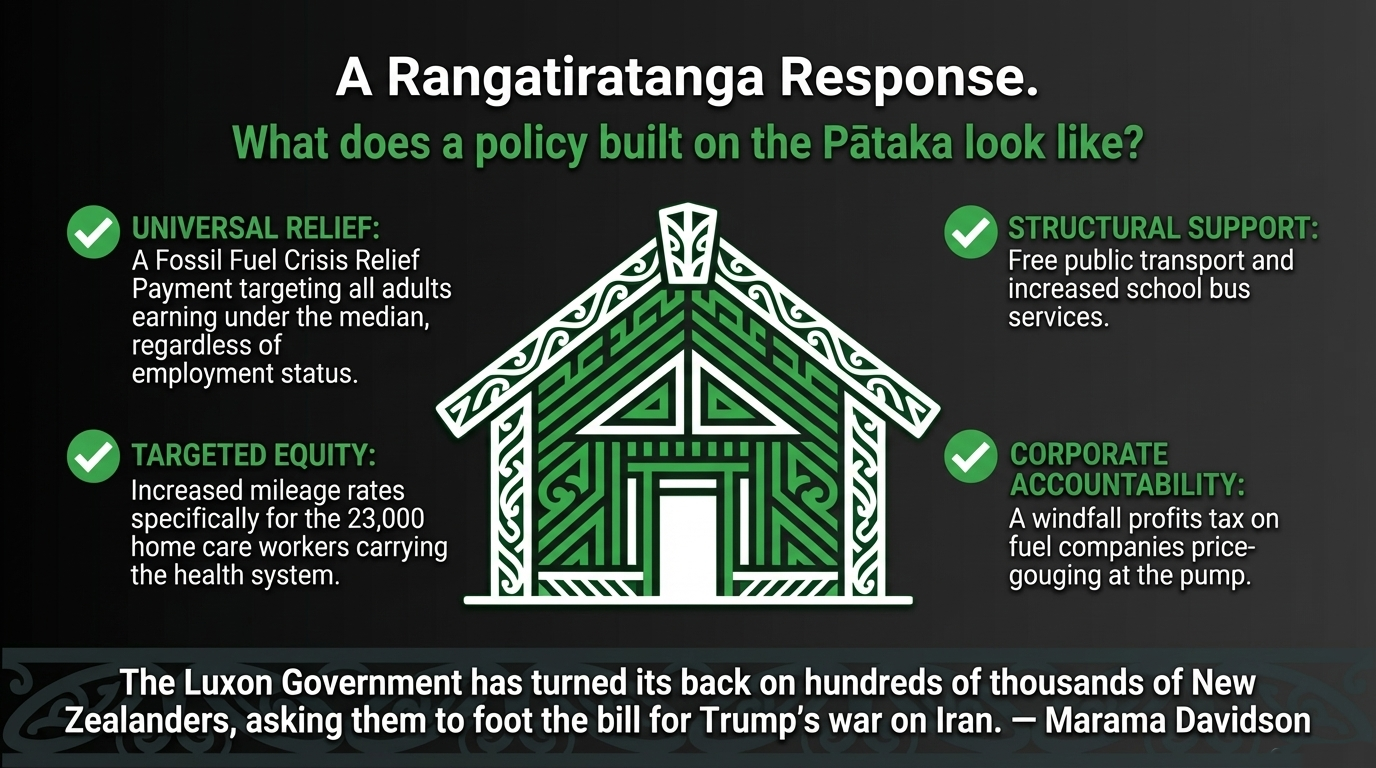
Marama Davidson named it with the precision of a taiaha strike, in the Greens' official release:
"The Luxon Government has turned its back on hundreds of thousands of New Zealanders, asking them to foot the bill for Trump's war on Iran."
For tamariki Māori — one in four already in material hardship before this crisis — the package offers nothing. For kaumātua surviving on 60 cents in the dollar of what superannuation was supposed to cover, nothing. For the Pacific wahine driving to the hospital nightshift — if she's on a benefit — nothing. For the rural contractor watching his business haemorrhage — nothing. For the home support worker driving 80 kilometres through Northland to wash an elderly kaumātua — nothing.
This government did not fail to help the vulnerable. They looked at the vulnerable, identified them precisely, and drew a line excluding them from relief. That is not failure. That is policy. That is white supremacist neoliberalism operating exactly as designed — using a crisis to reward those already comfortable, while the pātaka turns to ash and the most vulnerable go without.
The taiaha is raised. The names are named. The evidence is here.
Koha Consideration
When a government abandons a quarter million tamariki in benefit households during a fuel crisis, when kaumātua choose between petrol and kai, when the Finance Minister stands before the cameras and tells the poorest people in Aotearoa they probably don't need to drive anywhere — someone has to name it, document it, and refuse to let it disappear into the news cycle.
Every koha to this mahi is an act of rangatiratanga. It signals that whānau are done waiting for the Crown to fund its own accountability. It signals that the truth about what is being done to Māori, to Pacific peoples, to the disabled, to the elderly, to the children — will be recorded, verified, and spoken plainly, regardless of whether it is comfortable for those in power.
Kia kaha, whānau. If the $50 a week wasn't coming to you, let this essay be the receipt. Stay vigilant. Stay connected. And if you are able, consider a koha to keep this taiaha swinging.
If you are unable to koha, no worries at all — subscribe, follow, kōrero, and share with your whānau and friends. That is koha in itself.
Three pathways:
🟢 Koha directly — Support the Māori Green Lantern on Koha
📩 Subscribe for essays — themaorigreenlantern.maori.nz
🏦 Direct bank transfer — HTDM, account number 03-1546-0415173-000

Research tools used: search_web, get_url_content. Sources consulted: RNZ, 1News, The Spinoff, Beehive, Stats NZ, Green Party of Aotearoa, Child Poverty Action Group, Save the Children NZ, Auditor-General, MSD, MBIE, Rural News Group, ODT, Pacific Media Network, Te Ao Māori News, NZPSA, The Māori Green Lantern archive. Research conducted 25 March 2026. All URLs verified at time of publication.