“The Prison Industrial Complex Exposed - Unpacking America's Billion-Dollar Human Trafficking Operation” - 29 August 2025
Modern Slavery with Corporate Logos
Tēnā koutou katoa - greetings to you all. This analysis exposes the racist foundations of America's prison industrial complex and its neoliberal blueprint for human commodification.
The brutal truth: Private prisons are modern plantations where corporations extract maximum profit from predominantly Black and Brown bodies while maintaining the fiction that they are delivering justice.
Background
The term "prison industrial complex" describes the web of corporate interests that profit from mass incarceration - a system rooted in the deliberate targeting of Indigenous peoples and communities of color. Understanding this system requires examining how private corporations have transformed human suffering into shareholder value, creating what scholars call "a for-profit ideology that aims to save money by cutting costs wherever possible" while maintaining no interest in rehabilitation since "they make money with every incarcerated person".
The privatization of punishment emerged in the 1980s during "an unprecedented prison expansion because of ongoing wars on crime and drugs", coinciding with neoliberal politicians promising tax cuts while allowing "private capital to profit by taking on some traditional responsibilities of government".
This represents a fundamental violation of tikanga Māori principles of manaakitanga (hospitality and care) and whakatōhea (restoration and healing). The commodification of human beings contradicts Indigenous values that prioritize collective wellbeing over individual profit.
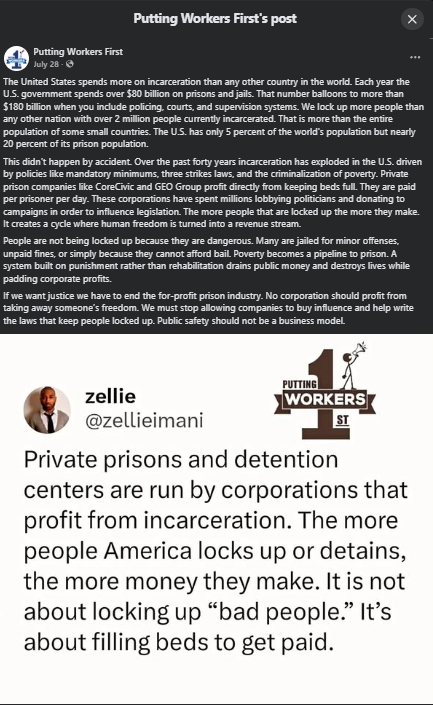
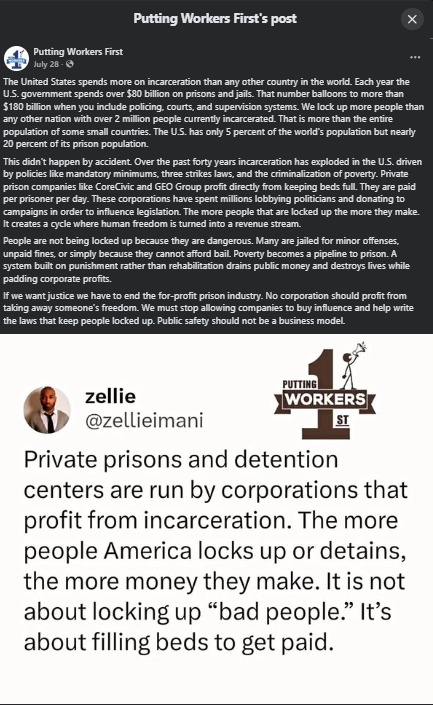
The Facebook post from "Putting Workers First" containing Zellie's Instagram critique exposes a fundamental truth about America's carceral system: "Private prisons and detention centers are run by corporations that profit from incarceration. The more people America locks up or detains, the more money they make". This isn't hyperbole - it's documented fact.
The United States holds "25 percent of the world's prisoners even though it only accounts for 5 percent of the world's population". This staggering disparity reveals how America has weaponized incarceration as a tool of social control and wealth extraction. The system particularly targets communities of color - "African Americans are five times more likely to be imprisoned than Whites".
For tangata whenua and other Indigenous peoples globally, this represents a familiar pattern of colonial violence disguised as law and order. The deliberate targeting of Māori in Aotearoa's justice system - where Māori represent 51 percent of prisoners while being only 16 percent of the population - mirrors the racist foundations of American mass incarceration.
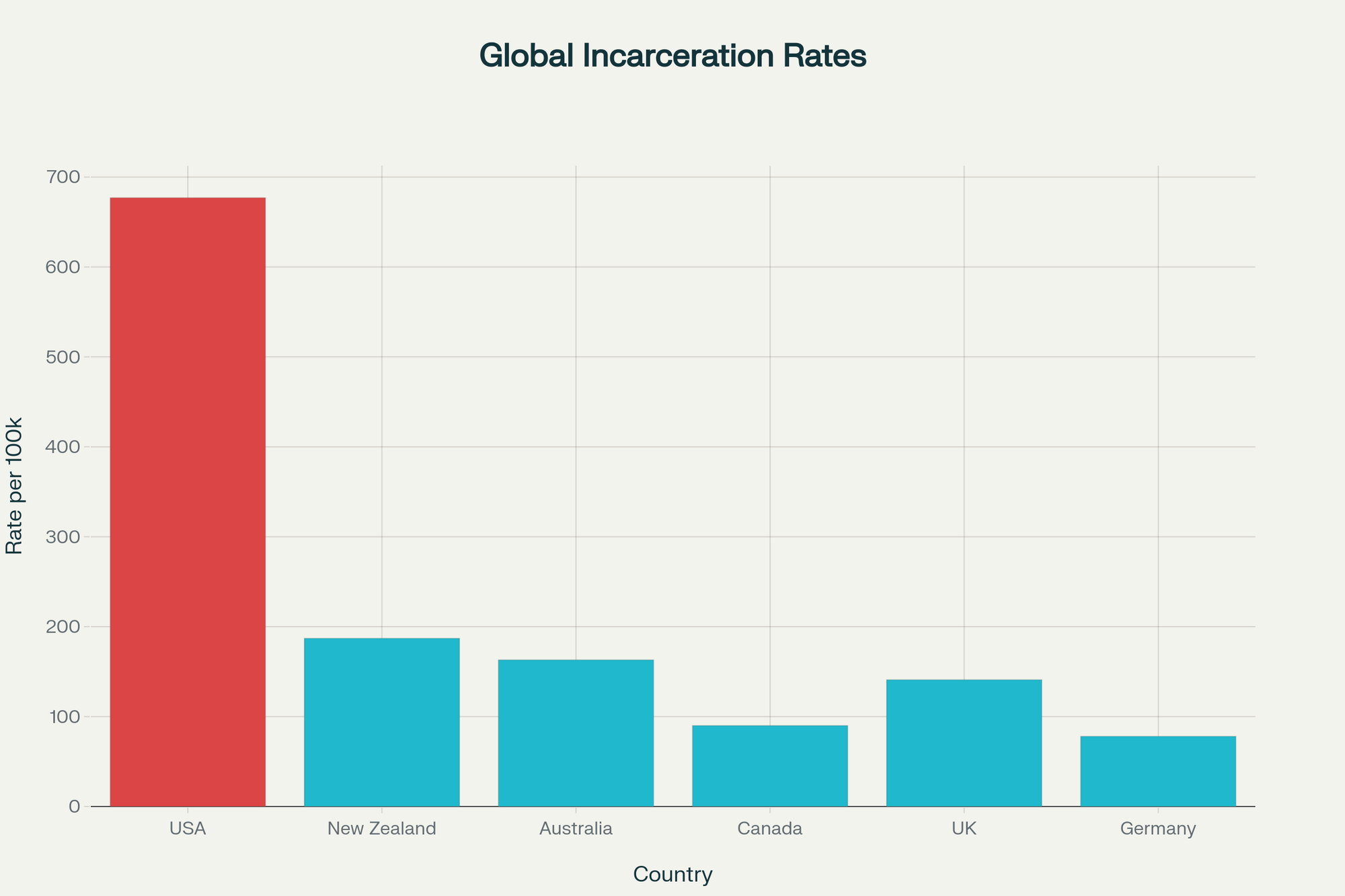
International comparison of incarceration rates per 100,000 population, highlighting America's massive prison population
The Corporate Death Machine: Following the Blood Money
The scale of corporate profiteering from human misery is breathtaking. CoreCivic and The GEO Group, the two largest private prison corporations, generate billions in revenue while paying prisoners wages as low as "$0.33 to $1.41 per hour" compared to the federal minimum wage of $7.25.
The arithmetic of exploitation is staggering. Approximately one million incarcerated people work for profit-making corporations in prison sweatshops, generating "annual value of prison and jail industrial output" worth "around $2 billion". This modern slavery operates under the 13th Amendment's exception allowing slavery "if you are incarcerated".
Major corporations including "Walmart, Victoria's Secret, Boeing, Microsoft, and Starbucks" have directly profited from this slave labor system. These aren't obscure companies - they're household names that built fortunes on the backs of captive workers denied basic labor rights.
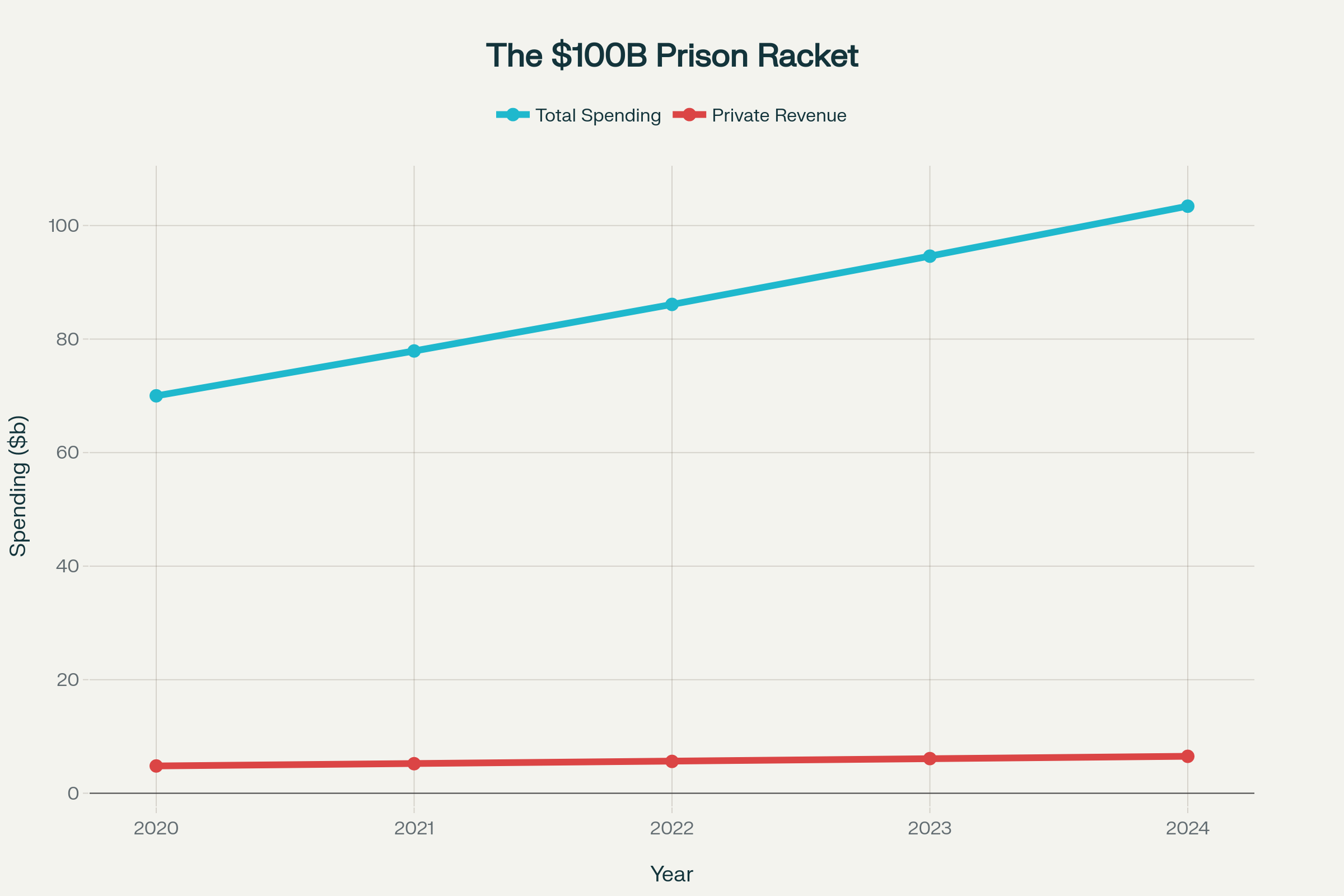
Growth in total US prison spending and private prison revenues, showing the massive scale of the carceral economy
The financial trajectory tells the story of systematic extraction. US prison spending has exploded from $70 billion in 2020 to over $103 billion in 2024, while private prison revenues climbed from $4.8 billion to $6.5 billion over the same period. This isn't justice - it's a business model based on human commodification.
The Neoliberal Blueprint: From Reagan to Corporate Boardrooms
The prison industrial complex didn't emerge by accident. It represents the deliberate application of neoliberal ideology to punishment, transforming what should be community healing into profit centers for multinational corporations. "From 1980 onwards, the privatization under the influence of the neoliberal politics supremacy in the world entered the criminal justice arena".
This timing wasn't coincidental. As Chris Hedges observes, "with de-industrialization and the abandonment of huge formerly industrial centers these bodies on the street, in the eyes of corporations, are worth nothing. But if you lock them up in a cage they generate anything from $40,000 to $60,000 per year".
The corporate capture of punishment follows a familiar neoliberal pattern: create artificial scarcity (tough-on-crime politics), manufacture demand (mandatory minimums, three-strikes laws), then privatize the solution while extracting maximum profit. Private prison companies have used "lobbying, providing direct campaign contributions, and building relationships and networks to a range of state and federal politicians" to shape policy for corporate benefit.
This represents a fundamental perversion of justice consistent with what Apirana Ngata warned against - the subordination of collective wellbeing to individual accumulation. The transformation of punishment from community restoration to corporate profit violates every principle of indigenous justice.
The Racial Targeting Machine: White Supremacy as Business Strategy
The prison industrial complex operates as a sophisticated system of racial control masquerading as colorblind law enforcement. Research reveals "US incarceration is deeply stratified by race" with the system specifically designed to "enable the commodification of African Americans and other minorities for the profit motive".
The parallels with Aotearoa's colonial justice system are unmistakable. Just as Māori imprisonment rates exploded from representing less than 3% of prisoners in the 19th century to over 50% today, African American incarceration rates reflect deliberate policy choices rather than crime patterns.
Professor Peter Temin's analysis reveals how "Jim Crow laws of the south that kept blacks out of civil life still operate today under the guise of mass incarceration". This isn't historical accident - it's systematic design. The prison system functions as what academics call a form of "institutional racism that disproportionately targets impoverished men of African and Latin American descent".
The corporate benefits are clear. "The PIC draws its profits from those at the bottom of the socioeconomic scale, including both incarcerated individuals and their families". This creates perverse incentives where corporate profits depend on maintaining racial disparities in imprisonment.
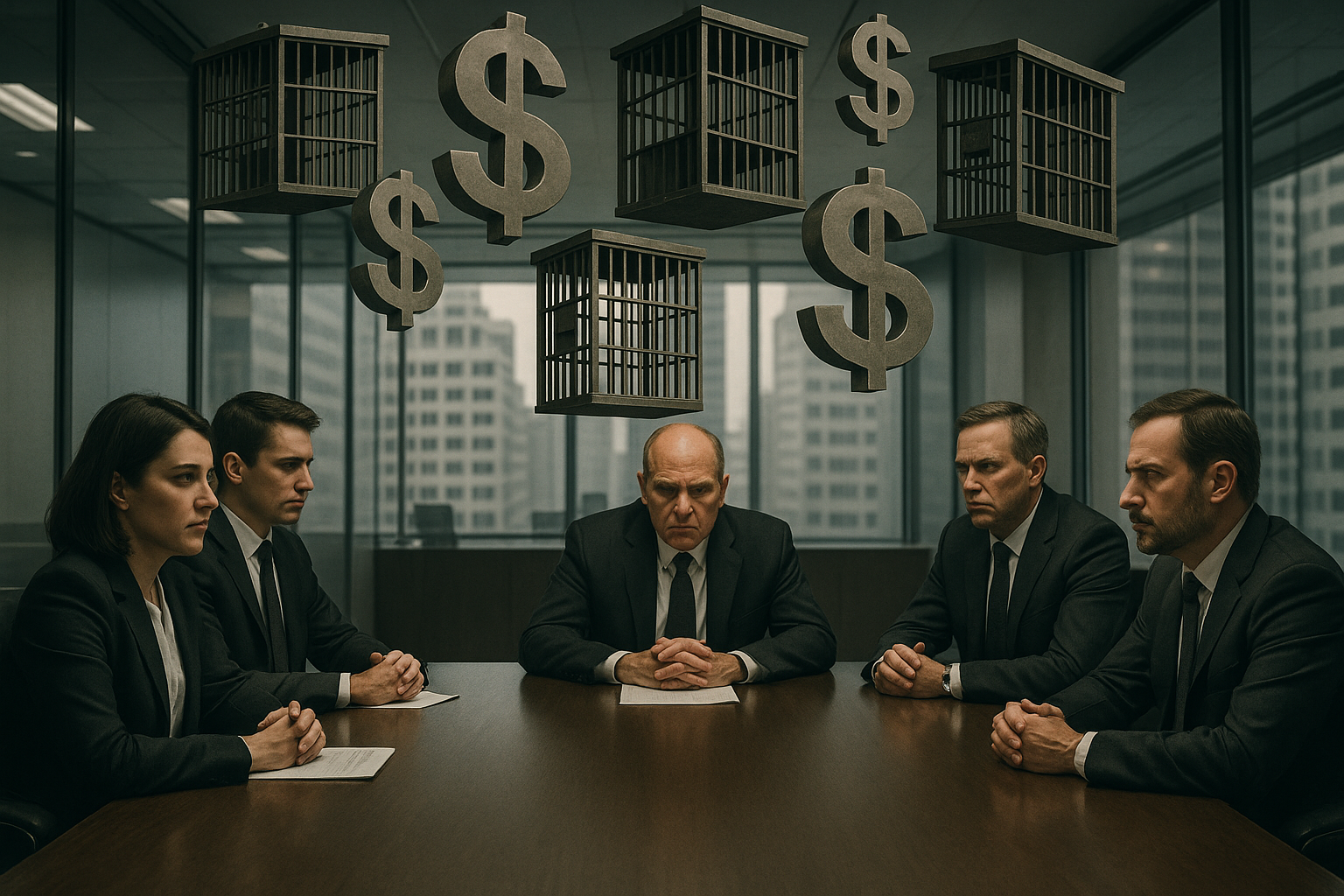
Corporate executives profiting from mass incarceration
The Global Export of Carceral Capitalism
America's prison model isn't staying within its borders. New Zealand now has "the fourth-largest population of inmates in private prisons in the world - more than the United States" proportionally. This represents the successful export of American carceral capitalism to other settler colonial states.
The company Serco, which operated New Zealand private prisons, demonstrates how multinational corporations spread carceral technologies globally. After losing its contract at Mt Eden following the "fightclub scandal," Serco continued operating at Wiri prison, showing how corporate accountability remains minimal even after documented failures.
The impact on Māori communities has been devastating. Between 1950 and 1990, there was "a sevenfold increase in the number of Māori in prison – four times the increase in non-Māori imprisonment over the same period". This explosion coincides exactly with the period of neoliberal policy implementation in Aotearoa.
The Recidivism Racket: Designed to Fail
The prison industrial complex has no interest in reducing crime or rehabilitation. Successful rehabilitation would eliminate their customer base. Instead, the system is designed to ensure recidivism. "Within five years of release, 76 percent of people return to prison" in the United States.
This isn't failure - it's the intended outcome. As investigative journalist Shane Bauer discovered, "private prisons are always worse than public ones because they're under constant pressure to cut costs". Rehabilitation programs are expensive; recidivism is profitable.
The system creates what Chris Hedges calls "vested interests wanting recidivism levels here so companies can profit from it, with their lobbyists active in Washington". This represents the complete inversion of justice - where success is measured by how many people return rather than how many stay out.
Hidden Connections: The Corporate Web of Complicity
The prison industrial complex extends far beyond obvious players like CoreCivic and GEO Group. A massive network of corporations profits from captive populations through inflated prices for basic services. "If they want to make phone calls, transfer money and anything else they need to use to live they need to pay for it" at exploitative rates.
This ecosystem of extraction includes telecommunications companies charging premium rates for prison calls, commissary vendors selling basic goods at inflated prices, and medical contractors providing substandard healthcare. The system creates multiple "cost points" at which individuals who make contact with public systems of justice are charged by private entities.
The web extends to construction companies building new facilities, staffing agencies providing guards, and technology firms selling surveillance equipment. Each link in this chain has a financial incentive to expand incarceration rather than reduce it.
Implications
The prison industrial complex represents neoliberalism's ultimate logic - the transformation of human suffering into shareholder value. For Māori and other Indigenous peoples, this system demonstrates how settler colonial states monetize the very communities they displaced and marginalized.
The model is spreading globally as multinational corporations export American carceral capitalism. Countries like New Zealand, Australia, and the UK increasingly adopt private prison models despite overwhelming evidence of their failures. This represents the successful colonization of justice systems by corporate interests.
The impact on whānau and communities is catastrophic. Every person imprisoned represents families destroyed, children separated from parents, and communities deprived of their members. The ripple effects include poverty, trauma, and social disconnection that span generations.
For democracy itself, the prison industrial complex represents a fundamental threat. When corporations profit from punishment, they inevitably lobby for policies that increase incarceration regardless of public safety outcomes. This creates a corporate-state partnership that prioritizes profit over people.

The Māori Green Lantern fighting misinformation and disinformation from the far right
Call to Action
The prison industrial complex must be dismantled, not reformed. This requires understanding that the system is working exactly as designed - to extract wealth from Black, Brown, and Indigenous communities while maintaining white supremacist social control.
Tangata whenua and other Indigenous peoples must lead resistance to carceral capitalism while offering alternative models based on restorative justice and community healing. The principles of tikanga Māori - including whakatōhea (restoration), manaakitanga (care), and kotahitanga (unity) - provide frameworks for genuine justice.
Internationally, movements must connect the struggles against mass incarceration in the United States with resistance to prison privatization elsewhere. The same corporations profiting from American suffering are expanding globally, requiring coordinated opposition.
Most importantly, we must reject the neoliberal framing that treats human beings as commodities to be managed for profit. Justice systems must serve communities, not corporations. The choice is clear: corporate profits or human dignity.
The Māori Green Lantern stands with all those fighting against the commodification of justice and the weaponization of punishment. Kia kaha - be strong. The ancestors demand nothing less than the complete liberation of our people from these corporate cages.
The MGL understands these tough economic times for whānau so please only contribute a koha if you have capacity and wish to do so. Readers who find value in this analysis and wish to support the kaupapa can contribute via HTDM: 03-1546-0415173-000.
Noho ora mai - stay well.
Ivor Jones
The Māori Green Lantern