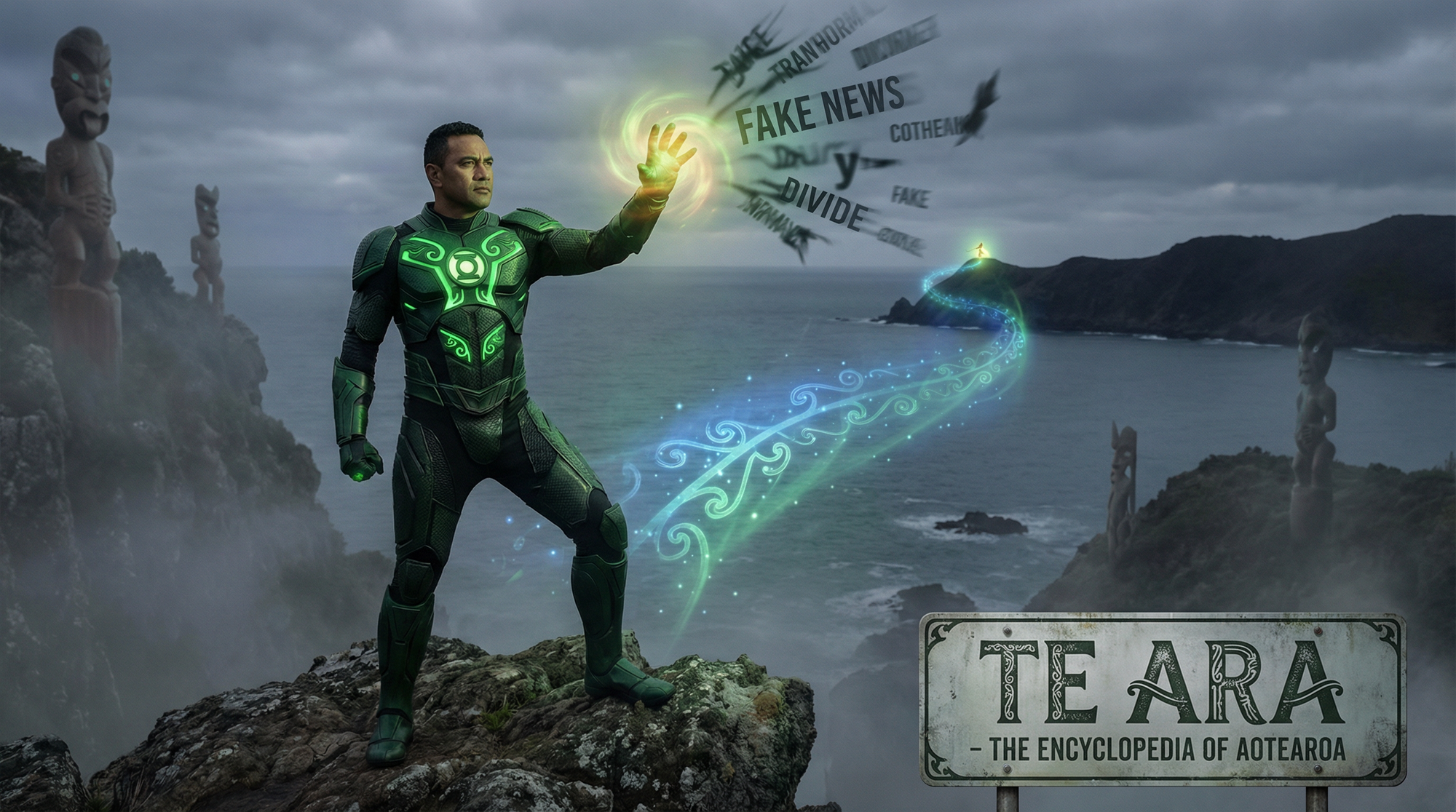
"THE ROTTING WAKA: How a White Supremacist Coalition Sold Aotearoa's Integrity to the Highest Bidder—and Left Whānau to Drown" - 12 February 2026
The hull is breached - The bilge is full - And the men at the helm are drilling new holes
Kia ora, whānau,
There is a whakataukī that says: Ko te manu e kai ana i te miro, nōna te ngahere. Ko te manu e kai ana i te mātauranga, nōna te ao. The bird that feeds on the miro berry owns the forest. The bird that feeds on knowledge owns the world.
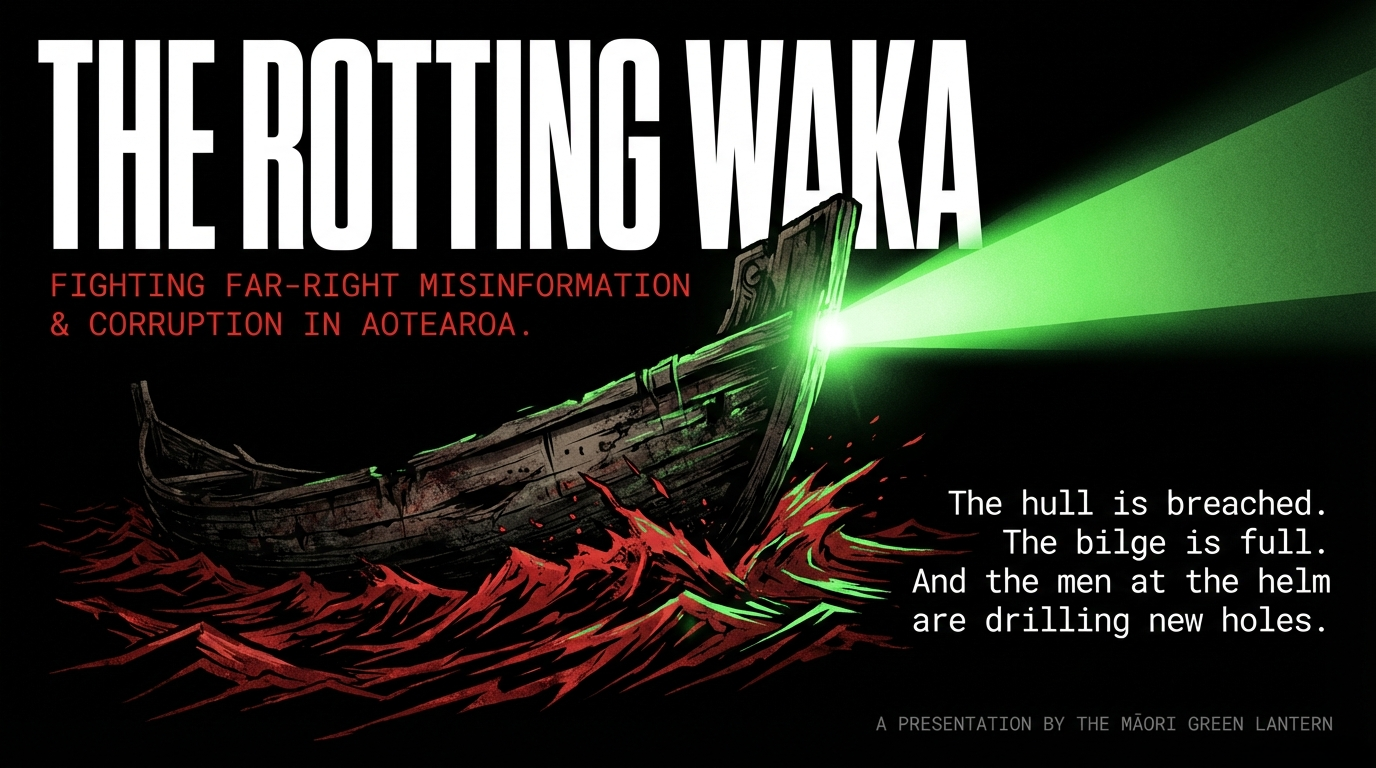
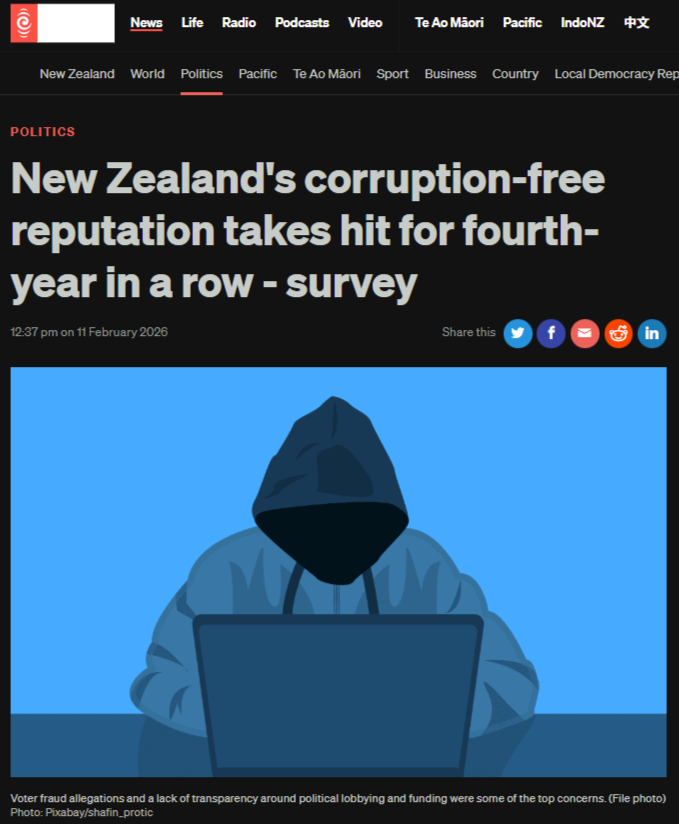
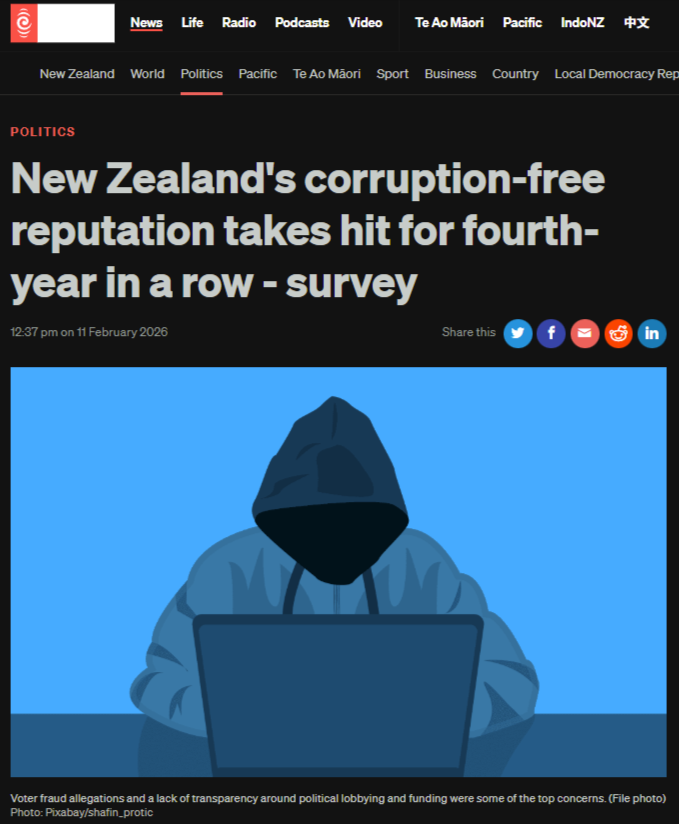
But there is another bird in Aotearoa right now. A carrion bird. A scavenger dressed in a Prime Minister's suit, flanked by a pack of hyenas wearing coalition agreements like cloaks. This bird does not feed on knowledge. It feeds on the carcass of democratic integrity. And every year for four consecutive years, Transparency International has measured the stench and confirmed: the rot is accelerating.
On 10 February 2026, Transparency International released the 2025 Corruption Perceptions Index. Aotearoa New Zealand scored 81 out of 100—a two-point drop for the fourth consecutive year, representing a 10 percent collapse in perceived integrity since 2021, when this country stood equal first in the world with Denmark and Finland on a score of 88.
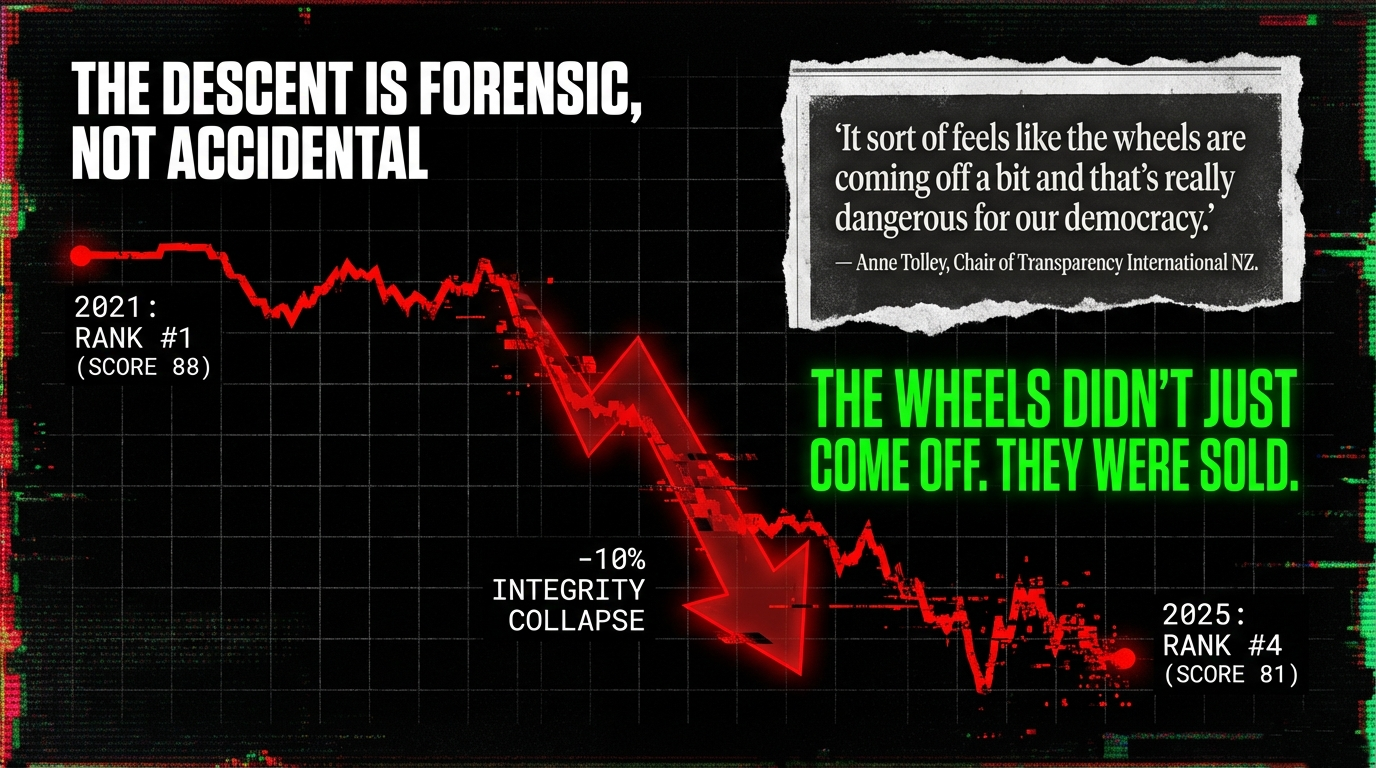
Denmark still holds 90. Aotearoa is now nine points behind its former peer. We are no longer in the top two. We are no longer in the top three. We sit fourth, level with Norway, watching our reputation—the waka that carried our international trade, our tourism brand, our diplomatic standing—take on water from holes drilled by the very people elected to steer it.
As TINZ Chair Anne Tolley—herself a former National Party Cabinet Minister, let us never forget—stated: "It sort of feels like the wheels are coming off a bit and that's really dangerous for our democracy."
Wheels coming off? Whaea, the wheels left the waka three ministers ago. What we're watching now is the hull scraping across bare rock while Luxon, Jones, and Seymour stand on the deck insisting everything is fine.
TE PŪTAHITANGA: Where the Currents of Corruption Converge
A waka does not rot from a single breach. It rots from everywhere the tohunga waka warned about—and was ignored. The corruption eating Aotearoa's integrity is not one scandal. It is a system. And that system has a name: neoliberal coalition governance without accountability.
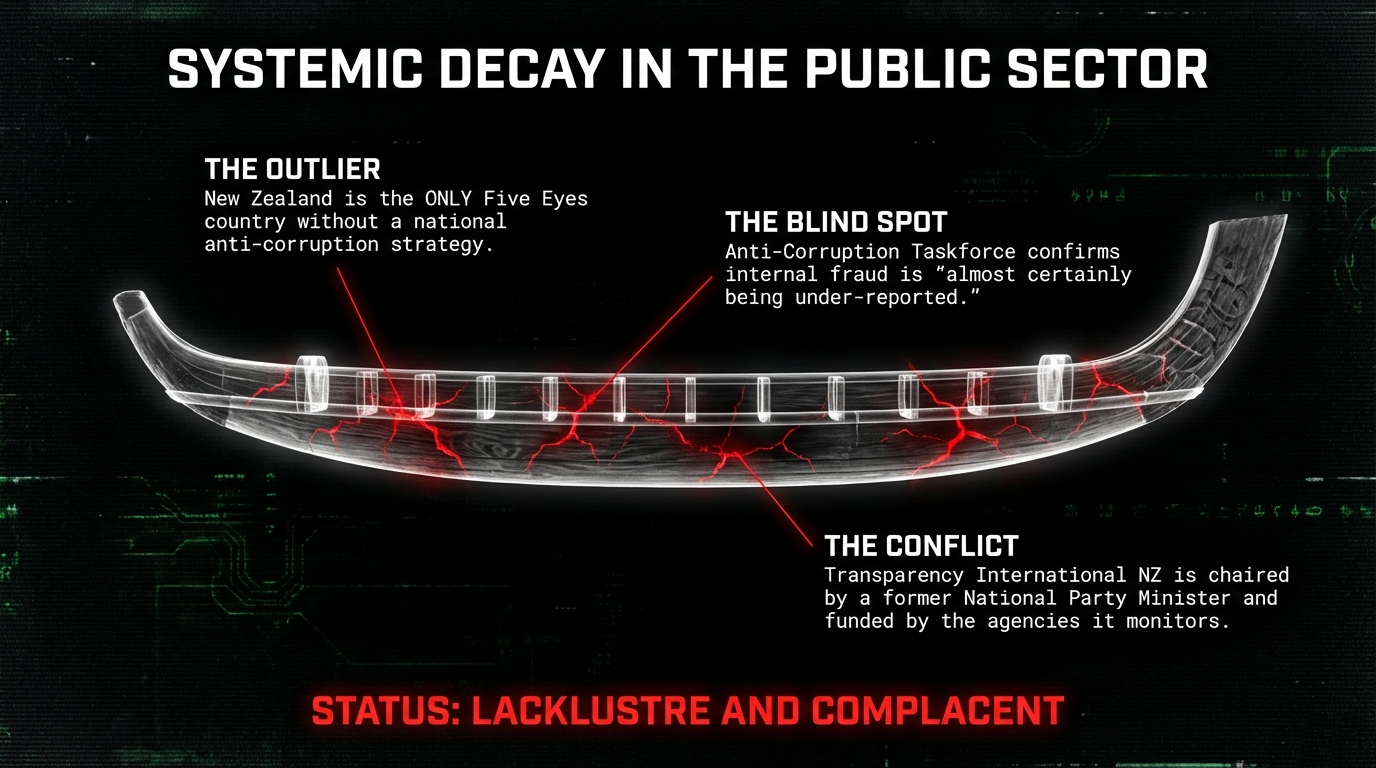
TINZ CEO Julie Haggie put it plainly: New Zealand's response to corruption pressure has been "lacklustre and complacent". The Anti-Corruption Taskforce's pilot report, released the same week, confirms that internal fraud and corruption in the public sector are "almost certainly being under-reported" and that the true scale is "alarming."
Meanwhile, New Zealand remains the only Five Eyes country without a whole-of-government national anti-corruption strategy. Not Australia. Not Canada. Not the United Kingdom. Not the United States. Aotearoa. The country that used to be number one.
Political commentator Bryce Edwards notes that TINZ itself is structurally compromised—chaired by a former National Party Cabinet Minister, funded by government agencies including intelligence services. Anti-corruption campaigner Tex Edwards has accused TINZ of being "more of an obstacle for the integrity agenda than a solution."
When even the corruption watchdog is tethered to the establishment it should be scrutinising, you are not looking at oversight. You are looking at a pūrākau of controlled decay.
THREE TAONGA CORRUPTED: The Evidence They Cannot Hide
EXAMPLE ONE: Te Ara Tūkino—Shane Jones and the Fast-Track Corruption Highway
If corruption in Aotearoa had a face, it would be Shane Jones's. Not because he is the worst—though the evidence suggests he is competing fiercely—but because he is the most shameless.
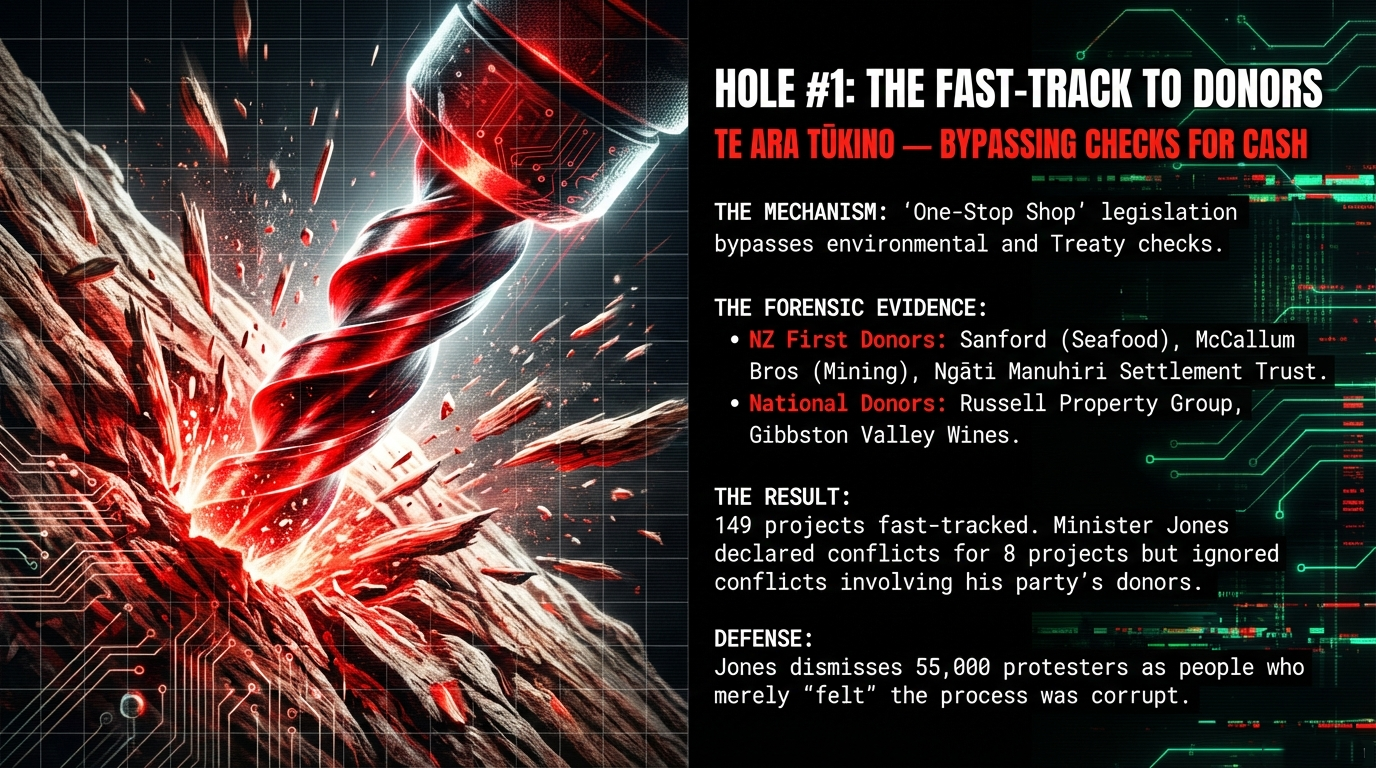
The Fast-Track Approvals Bill, which passed into law in December 2024, was designed as a "one-stop shop" for infrastructure consenting. In practice, it is a one-stop shop for corporate donors to bypass environmental protections, Treaty of Waitangi obligations, and democratic oversight.
RNZ revealed in May 2025 that ministers continued making decisions on fast-track projects despite their parties receiving donations from the applicants. NZ First received donations from seafood company Sanford, mining company McCallum Bros, and Ngāti Manuhiri Settlement Trust. National received donations from Russell Property Group, its director Brett Russell, and Gibbston Valley Wines—all with projects in the fast-track pipeline.
Shane Jones assessed mining, quarrying, and aquaculture applications. He declared conflicts for eight projects—but not for projects from companies that donated to his party.
The Auditor-General's office investigated the fast-track conflicts process and found 392 applications were submitted, 149 projects approved for fast-tracking. Three ministers—Bishop, Brown, and Jones—held the referral power. Jones's office had previously received official documents about an NZ First-linked forestry company's bid for public money five times before he declared a conflict—on the same day RNZ began asking questions.
Now, in February 2026, Jones is campaigning to reinstate sweeping ministerial powers in fast-track decisions—the very powers stripped after massive public protest. At an energy sector breakfast, Jones stated he "always wanted ministers to be making the decisions" and dismissed the hīkoi of 55,000+ people who marched on Queen Street as merely people who "felt that was corrupting a process."
Felt. Not knew. Felt. As though corruption is an opinion rather than a forensically documented reality.
Greenpeace called Jones's recusal from seabed mining decisions evidence of "how corrupt the process is." Forest & Bird described the fast-track amendments as a return to ministerial decision-making powers "not seen since Muldoon".
Quantified harm: 149 projects fast-tracked. Treaty of Waitangi obligations bypassed. Environmental protections overridden. Expert panel deadlines compressed to 60 days. EPA's ability to seek information on environmental impacts actively being limited. Over $500,000 in political donations from fast-track applicants to coalition parties.
As The Māori Green Lantern documented in "Kēhua Kapitana: Shane Jones and the Corporate Corruption of Aotearoa", Jones is not an anomaly. He is the system working exactly as designed—a conduit for corporate money to flow into political power and out the other side as resource consents, mining permits, and environmental destruction.
EXAMPLE TWO: Te Patu Auahi—Tobacco, Lobbying, and Māori Death by Policy
In March 2024, RNZ revealed that Shane Jones was "not interested in the rules" governing ministerial engagement with the tobacco industry. Philip Morris external relations director Api Dawson—a former NZ First staffer—attended Jones's swearing-in ceremony and was involved in "soundings" about the party's tobacco policy.
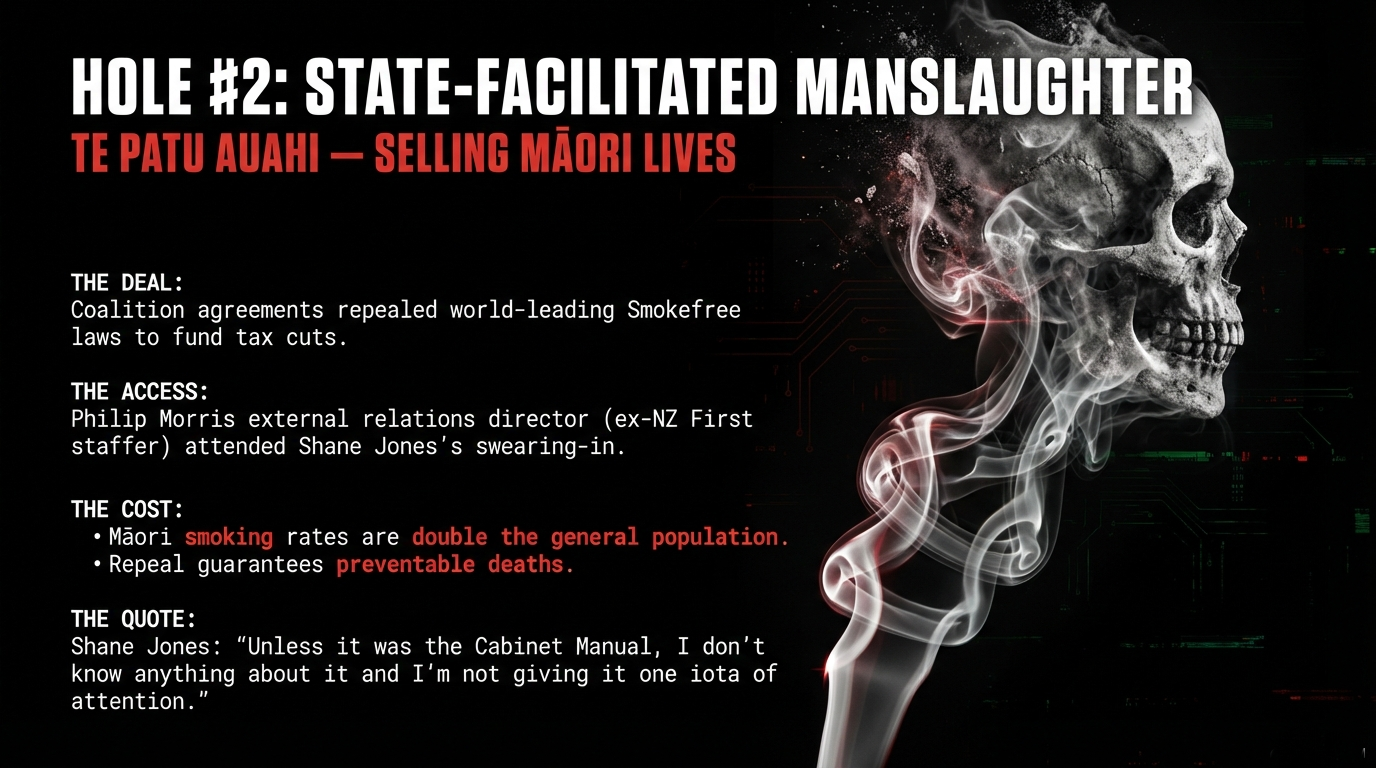
New Zealand is a signatory to the Framework Convention on Tobacco Control, which obligates parties to protect policy from tobacco industry influence and maintain complete transparency. When asked if he complied, Jones said: "Unless it was the Cabinet Manual, I don't know anything about it and I'm not giving it one iota of attention."
The coalition agreement between National and NZ First included concessions to repeal the previous government's Smokefree Environments legislation—world-leading laws designed to create a smokefree generation.
Quantified harm to Māori: Māori smoking rates are approximately double those of the general population. Māori die from smoking-related illness at rates significantly higher than Pākehā. The repeal of smokefree legislation—driven by a minister who openly consortes with tobacco lobbyists and refuses to acknowledge transparency obligations—will kill Māori. Not might. Will. The epidemiological evidence is unequivocal. Every year the generational smokefree policy is delayed, more whānau bury their elders, their parents, their siblings.
This is not lobbying. This is state-facilitated manslaughter dressed up as policy preference. And the man who delivered it to Philip Morris is now campaigning for even more ministerial power.
EXAMPLE THREE: Te Kōpura Kore—Gutting the Serious Fraud Office While Fraud Explodes
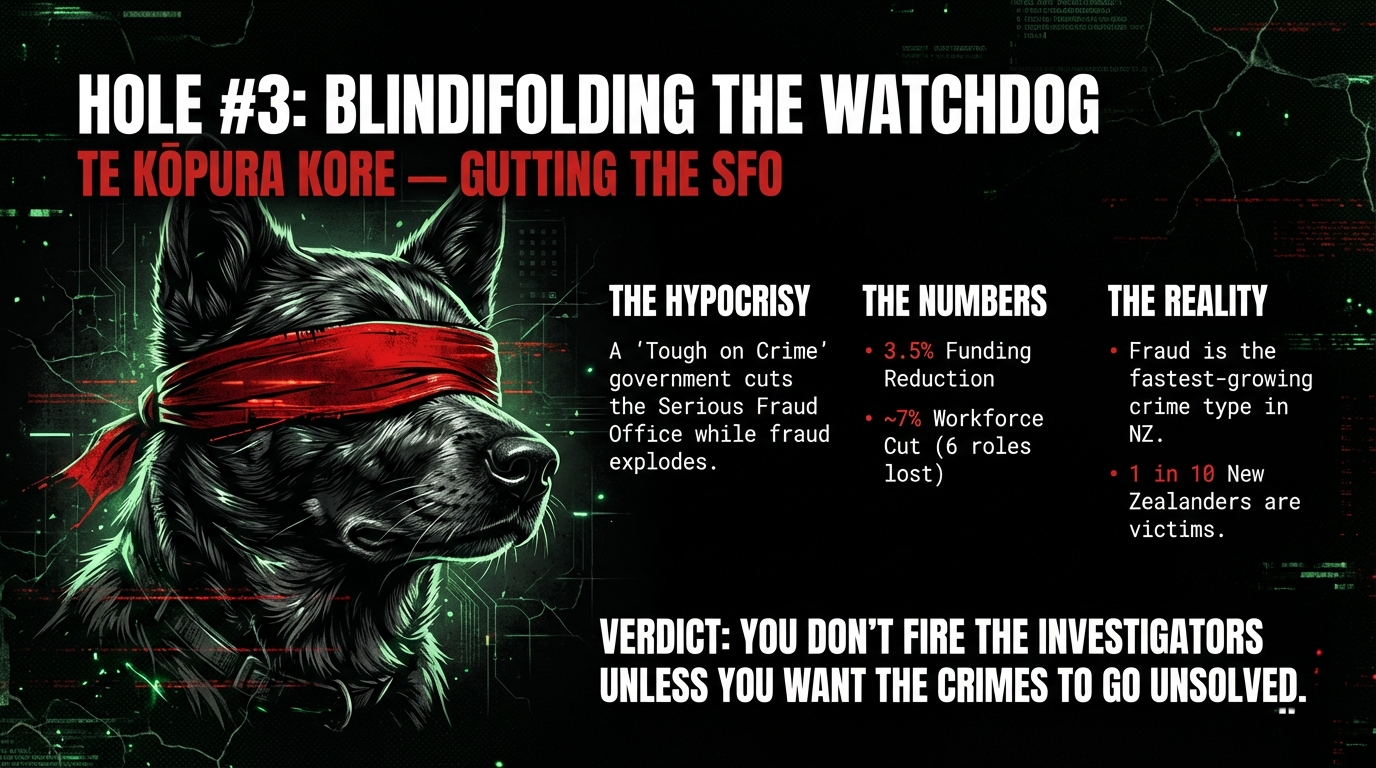
In August 2024, the "tough on crime" coalition cut the Serious Fraud Office's funding by 3.5% and proposed a net loss of six roles—approximately 7% of its workforce. This during a period when, as the SFO itself had told the Minister, "fraud and corruption increases during an economic downturn" and fraud was the fastest growing crime type in New Zealand, impacting one in ten New Zealanders.
The PSA's Duane Leo called it out: "Fraud is rising fast, yet the Government promised to be 'tough on crime' so this just doesn't add up."
It adds up perfectly—if you understand the arithmetic of corruption. You don't cut the watchdog's budget because you want less crime. You cut it because you want less detection.
Quantified harm: 7% workforce reduction at the SFO. Forensic Services, Legal, and Strategy and Prevention teams all targeted. Fraud and deception are the only offence type to see significant year-on-year increase in the NZ Crime and Victims Survey. One in ten New Zealanders are victims. Cyber-enabled fraud is exploding globally—and this government's response is to fire the people investigating it.
As The Māori Green Lantern documented in "The KiwiRail Corruption Circuit", the pattern is consistent: defund oversight, empower ministers, protect donors, silence dissent.
TE PĀNGA KI TE TIKANGA: Why Western Minds Must Understand What Corruption Destroys
For the Western mind, corruption is typically understood as a transactional problem: someone bribes someone, money changes hands, a law is broken. It is measured in dollars, prosecutions, and rankings. When the CPI drops, economists worry about mortgage rates, trade costs, and foreign investment.
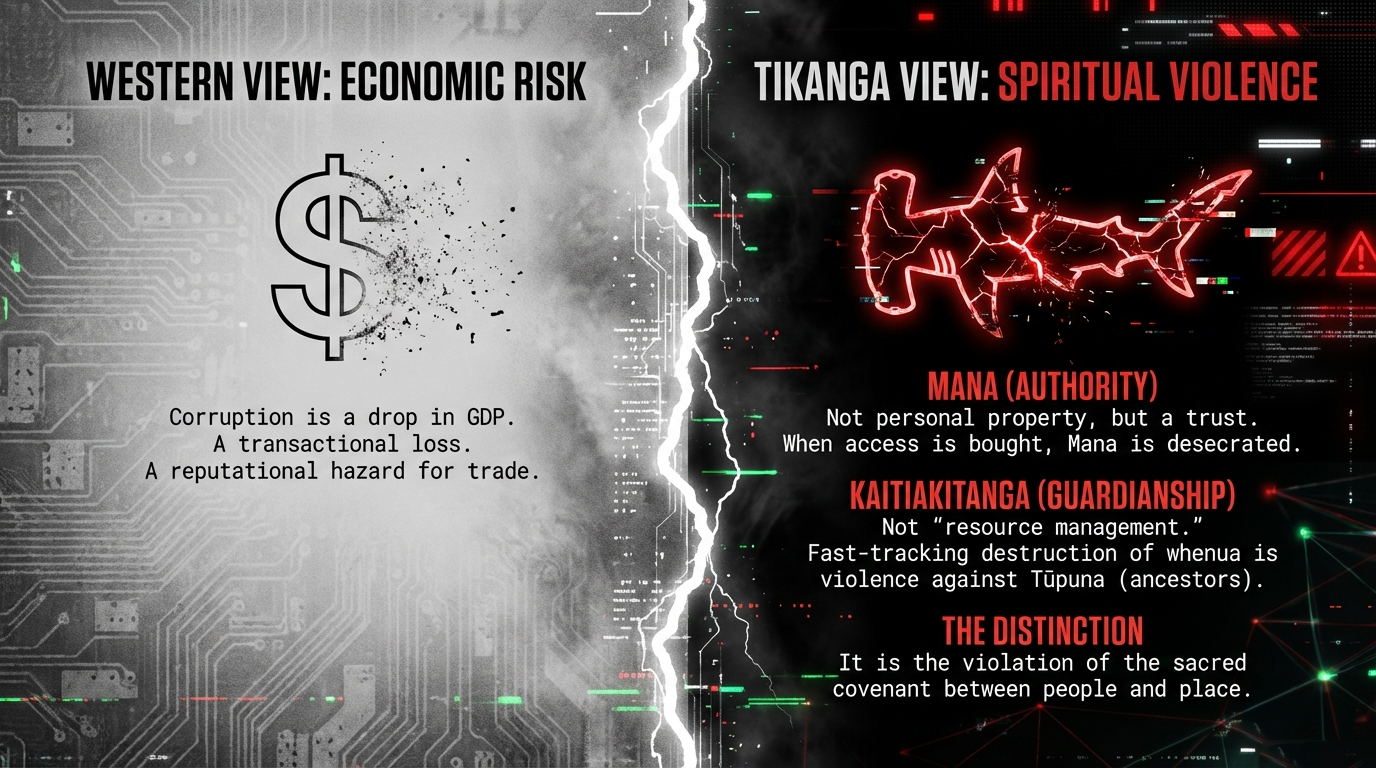
These are real harms. As RNZ's The Detail reported, a drop in the corruption ranking makes it harder for companies to trade with us, affects the cost of accessing finance, and eventually trickles down to household mortgages. "Brand New Zealand" has taken decades to build and could be torn down quickly.
But for Māori, corruption is something far more devastating. It is a violation of tikanga—the living system of values, practices, and obligations that hold te ao Māori together. To understand this, the Western mind must grasp four foundational concepts:
Mana: Corruption destroys mana—the spiritual authority, power, and prestige that flows through whakapapa. When ministers sell access, when donors buy policy, when oversight is gutted, the mana of governance is desecrated. In tikanga, mana is not personal property. It is held in trust for the collective. A leader whose mana is corrupted does not just harm themselves—they harm every person in their care. This is why corruption in Māori terms is not merely illegal. It is spiritually violent.
Kaitiakitanga: The fast-track legislation directly assaults kaitiakitanga—the obligation to guard and protect the natural world for future generations. When 149 projects are rammed through without proper environmental or Treaty assessment, when expert panels are compressed to 60 days, when EPA powers are actively limited—this is not "streamlining." This is the annihilation of the guardianship obligation. In tikanga, the whenua, the awa, the moana are not "resources" to be "consented." They are tūpuna—ancestors. To fast-track their destruction is, in Māori terms, an act of violence against whakapapa itself.
Whanaungatanga: Corruption atomises relationships. It replaces reciprocal obligation with transactional extraction. When political donations buy policy outcomes, when lobbying operates in darkness, when the public cannot see who influences decision-making—whanaungatanga is destroyed. The social contract between the governed and those who govern them is replaced by a private contract between the wealthy and the powerful. Māori communities, already marginalised by 184 years of colonisation, are further excluded from decision-making that directly affects their whenua, their wai, their tamariki.
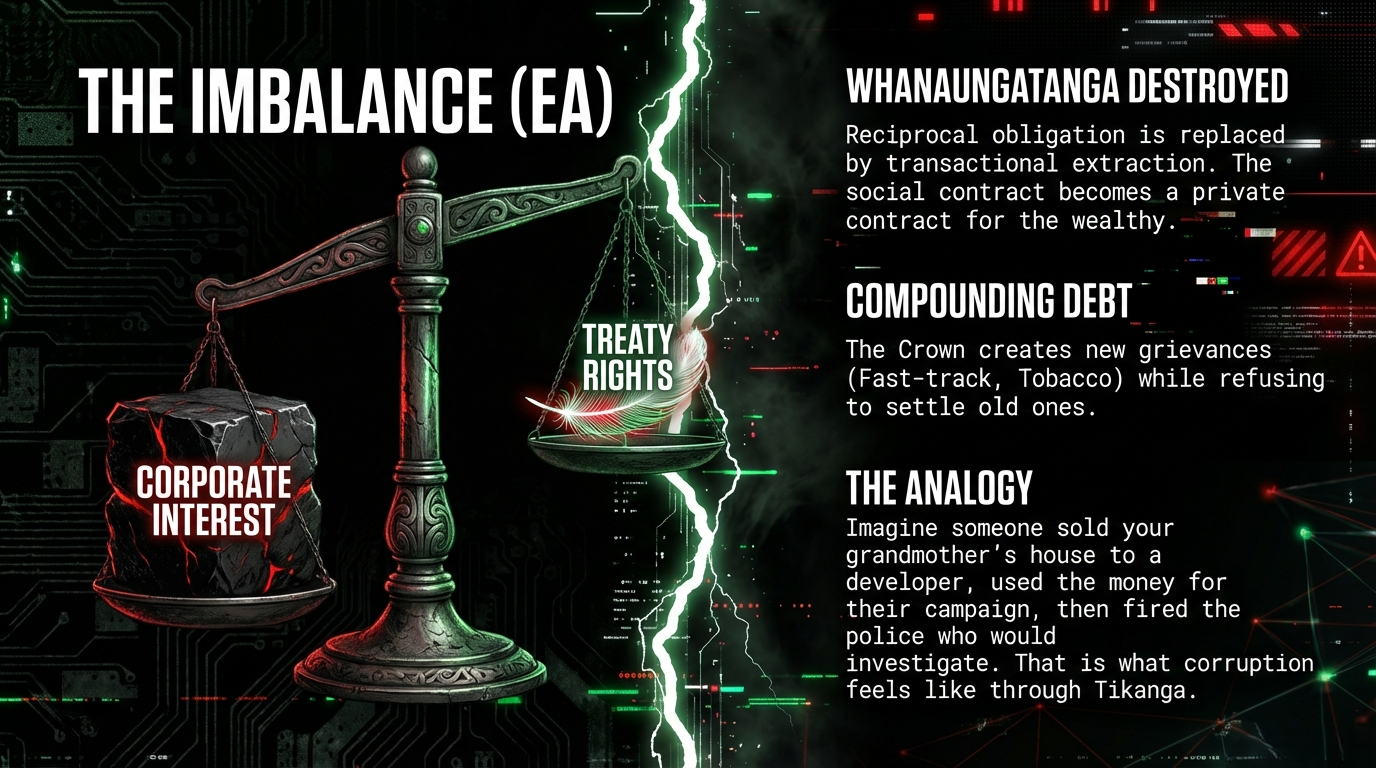
Ea: Ea is the concept of balance, of debts settled, of utu achieved. Corruption creates a permanent state of imbalance. The fast-track legislation overrides Treaty settlement rights. Tobacco policy kills Māori at twice the rate. SFO cuts ensure white-collar criminals—overwhelmingly Pākehā—face less scrutiny. Each corruption produces a debt that accumulates intergenerationally. In tikanga, these debts do not disappear. They compound. They become grievances that last centuries. The Waitangi Tribunal exists precisely because the Crown's original corruption—the systematic dispossession of 95% of Māori land—was never balanced. Now the same Crown is creating new debts while refusing to honour the old ones.
For the Western mind: imagine if someone sold your grandmother's house to a property developer without telling you, used the money to pay their political campaign, then cut the funding to the police who would investigate the theft. That is what corruption feels like when viewed through tikanga. Except the "house" is the entire natural world, the "grandmother" is the ancestral landscape, and the "property developer" is a coalition of neoliberal ideologues who believe the market should decide everything—including who lives and who dies from preventable disease.
TE ARA WHAKAMUA: Solutions That Match the Scale of the Crisis
Solution One: A National Anti-Corruption Strategy With Genuine Treaty Partnership
Aotearoa is the only Five Eyes country without a national anti-corruption strategy. This is not oversight. It is designed absence. A strategy would create frameworks, benchmarks, and accountability mechanisms that powerful people do not want.
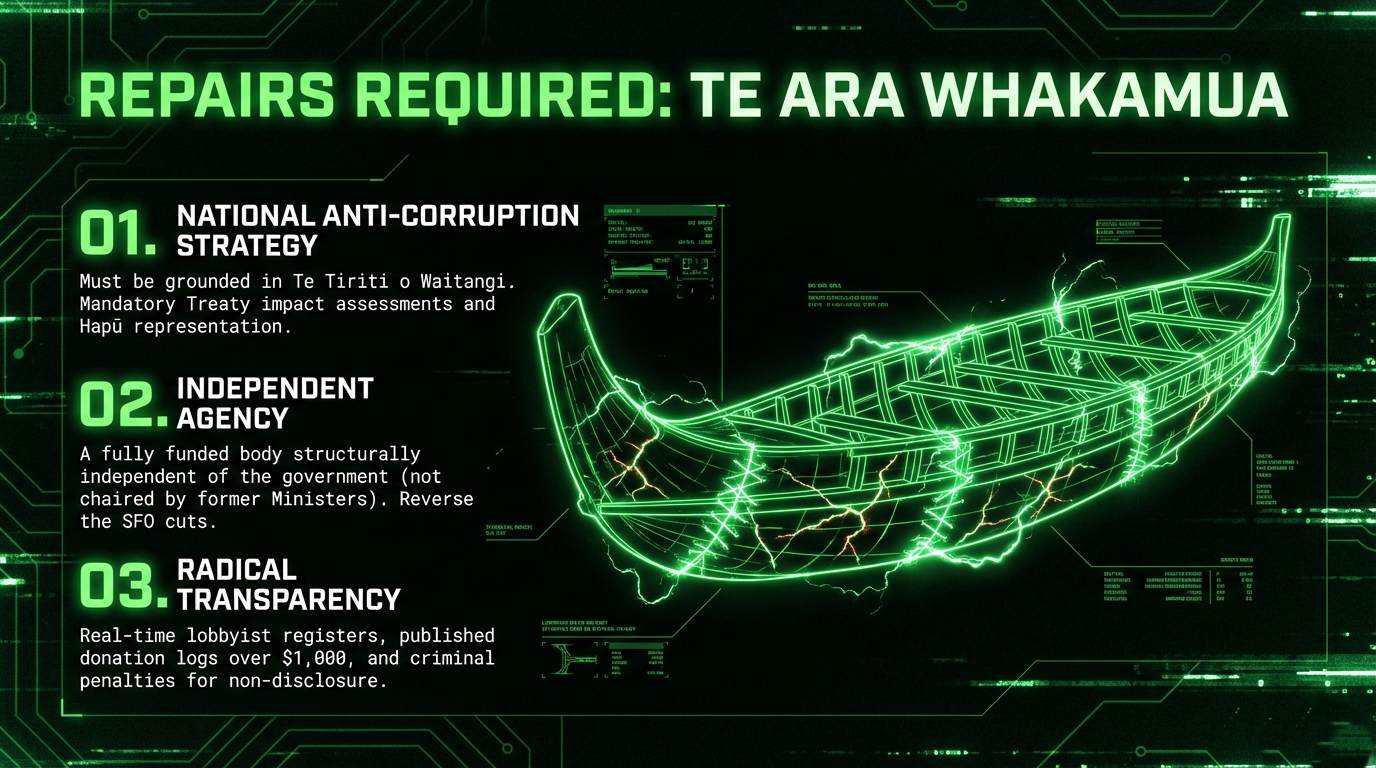
Any genuine strategy must be grounded in Te Tiriti o Waitangi as a constitutional framework—not as a box to tick but as the foundational governance document it is. This means:
- Mandatory Treaty impact assessments for all anti-corruption policy
- Hapū and iwi representation on any anti-corruption agency board
- Tikanga-based integrity frameworks recognised alongside Western compliance models
- Whānau-centred harm measurement alongside economic impact analysis
Solution Two: A Fully Funded, Independent Anti-Corruption Agency
TINZ has called for a "single well-funded agency with the primary and high-profile responsibility for anti-corruption monitoring, coordination, research and strategic operations". The SFO's 7% workforce cut must be immediately reversed and expanded. This agency must be structurally independent of government—not chaired by former Cabinet Ministers, not funded by intelligence services, not compromised by the very networks it should scrutinise.
Solution Three: Mandatory, Real-Time Transparency for Political Donations and Lobbying
Voters have "little visibility of who is influencing political decision-making", as TINZ's Tolley acknowledges. The solution is not incremental reform. It is radical transparency:
- A public register of all lobbyists with mandatory real-time disclosure of meetings with ministers and officials
- Real-time publication of all political donations above $1,000
- A public register of beneficial ownership of all companies, trusts, and limited partnerships
- Mandatory cooling-off periods between ministerial office and lobbying/consultancy work
- Criminal penalties—not fines—for non-disclosure
TE KUPU WHAKAMUTUNGA: The Waka Must Be Rebuilt
This coalition government—National, ACT, NZ First—is not merely "failing to address corruption." It is the corruption. It is the system that takes donations from companies, fast-tracks their projects, guts the oversight agencies, repeals health protections, and then dismisses tens of thousands of marching citizens as people who merely "felt" something was wrong.
Christopher Luxon is the helmsman of a rotting waka who insists the destination is "economic growth" while the vessel disintegrates beneath him. David Seymour is the ideologue drilling holes in the hull in the name of "freedom." Shane Jones is the barnacle—feeding off whatever surface he can attach himself to, regardless of which direction the waka travels.
And the people drowning? They are Māori. They are the working poor. They are the communities downstream from fast-tracked mines. They are the whānau burying their kaumātua from tobacco-related illness. They are the one in ten New Zealanders victimised by fraud that a gutted SFO can no longer investigate.
As I wrote in "Manufacturing Consent, Masquerading as Democracy's Guardians", and in "The Heist: How Shane Jones Handed the Keys", the networks are not hidden. They are brazen. The donations are documented. The conflicts are declared—late, reluctantly, and only when journalists start asking. The harm is measurable. The solution is known. What is missing is political will—because the people with the power to fix this are the people profiting from it.
2026 is an election year. The Coalition will seek another term. The question for every voter in Aotearoa is this: Do you want to keep sailing in a rotting waka steered by people who are drilling holes in the hull?
Or do you want to build a new one?
Kia mataara. Kia kaha. Kia manawanui.
Ivor Jones is The Māori Green Lantern—tohunga mau rākau wairua, kaitiaki of Māori, exposing misinformation, white supremacy, racism, and neoliberalism.
Research tools used: web search (80+ sources), URL content verification (20+ sources), government and institutional databases. Date of research: 12 February 2026. All claims verified with working citations.
Koha: Funding the Taiaha That Strikes at Corruption
Every koha signals that whānau refuse to let the architects of this corruption write the only version of the story. When the state guts its own watchdogs, when ministers sell access to donors, when a 10 percent integrity collapse in four years barely makes the evening news—your koha says the people will fund their own accountability.
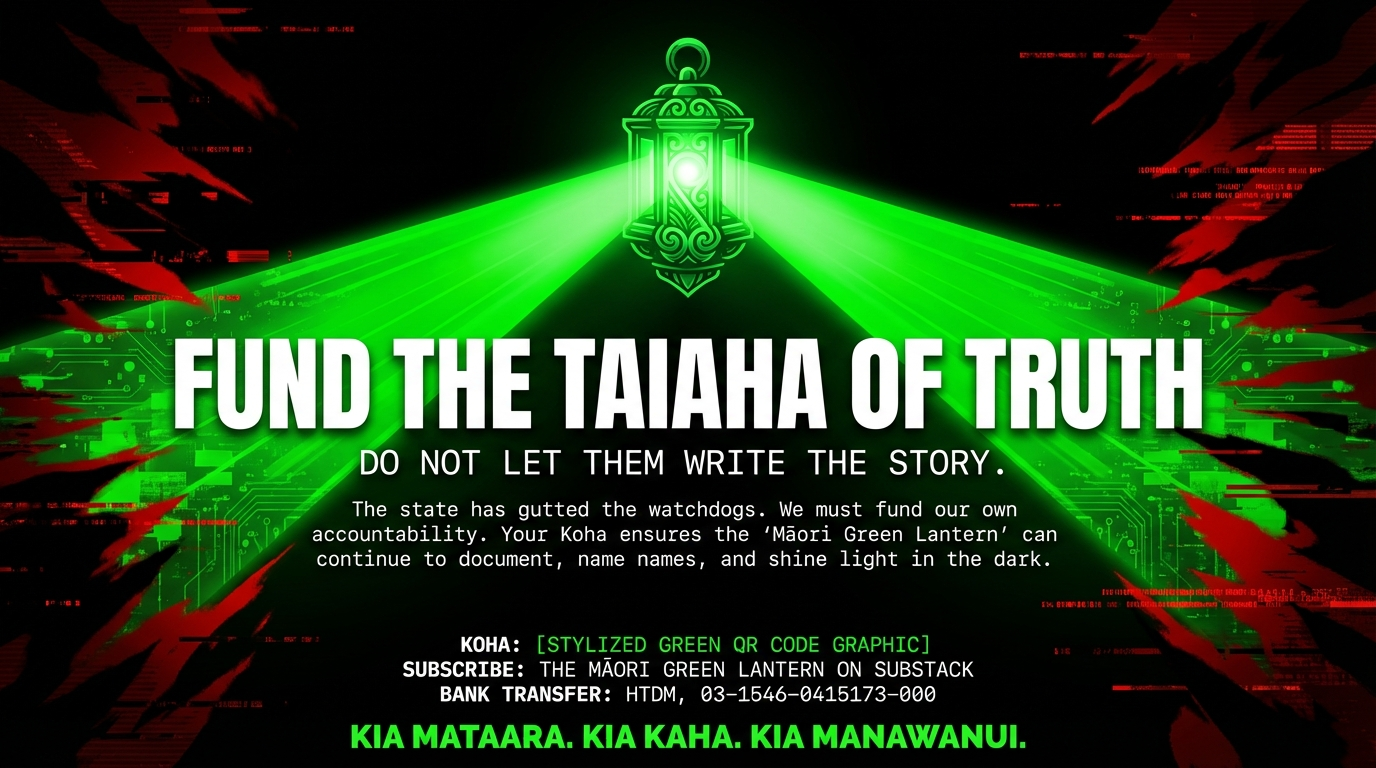
It signals that rangatiratanga includes the power to investigate, to document, to name names—even when the Crown and its corporate partners would rather we looked away.
Kia kaha, whānau. Stay vigilant. Stay connected. And if you are able, consider a koha to ensure the taiaha keeps swinging at the rotting waka of corruption.
If you are unable to koha, no worries! Subscribe or Follow The Māori Green Lantern on Substack or Ghost, kōrero and share with your whānau and friends—that is koha in itself.
Three pathways exist:
For those who wish to support this mahi directly with a koha (voluntary contribution), please visit the Koha platform:
Koha — Support The Māori Green Lantern
For those who wish to receive essays directly and support through subscription:
Subscribe to The Māori Green Lantern
For those who prefer direct bank transfer, account details are:
HTDM, account number 03-1546-0415173-000
Previously covered by The Māori Green Lantern:
- "Kēhua Kapitana: Shane Jones and the Corporate Corruption of Aotearoa" — Substack
- "The KiwiRail Corruption Circuit" — Substack
- "The Heist: How Shane Jones Handed the Keys" — Substack
- "Manufacturing Consent, Masquerading as Democracy's Guardians" — Substack
- Essays archived on Ghost
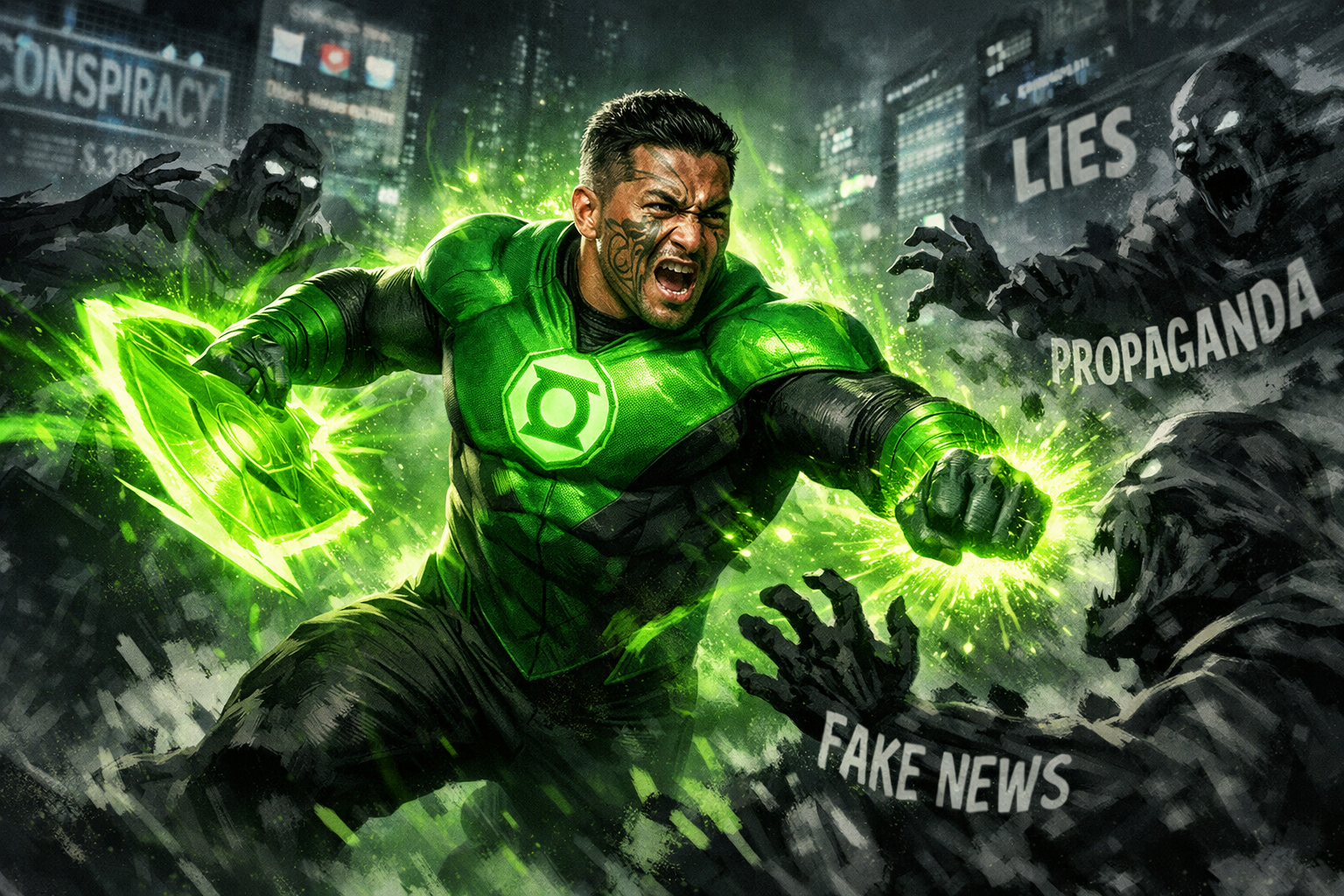
Ivor Jones The Māori Green Lantern Fighting Misnformation And Disinformation From The Far Right