"The Silent Warrior in the Gallery of Oppression" - 29 August 2025
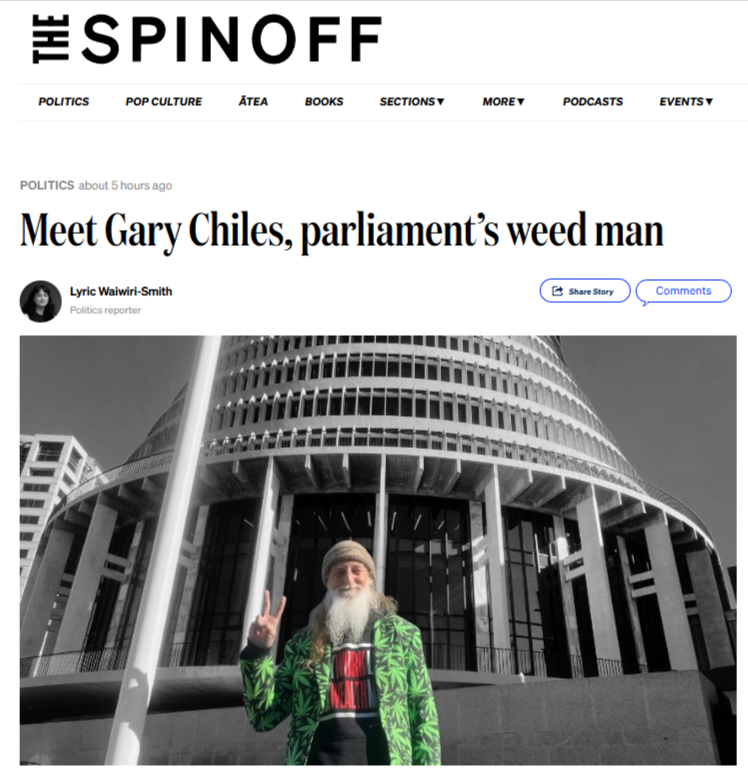
Gary Chiles stands as a living rebuke to the racist machine that grinds our people into dust while politicians play their colonial charades.
The Silent Warrior in the Gallery of Oppression
Kia ora koutou katoa. Hello to all my people. Ko Ivor Jones ahau, The Māori Green Lantern, your digital kaitiaki fighting the forces of white supremacy and colonial oppression wherever they rear their ugly heads.
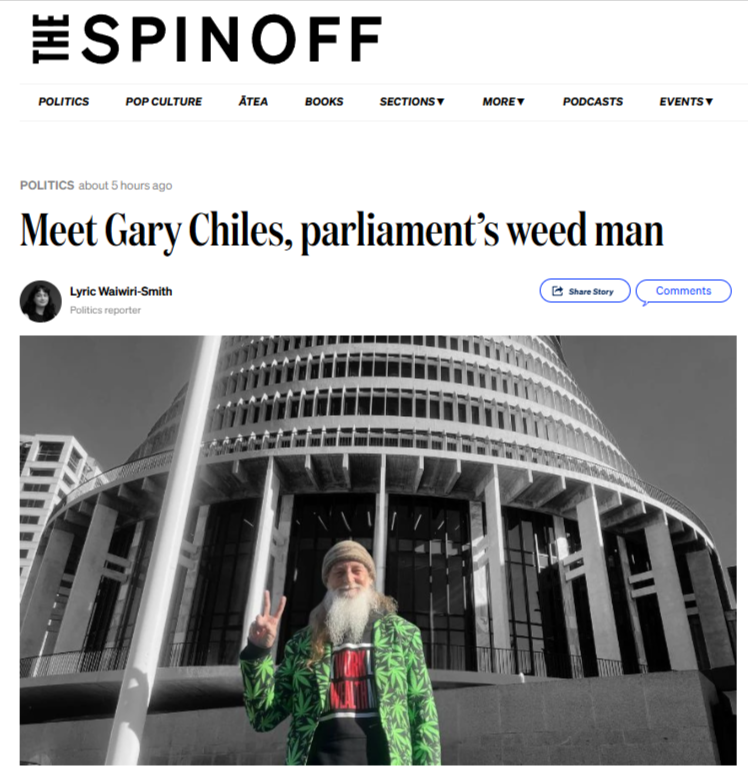
The Spinoff has delivered us a fascinating profile of Gary Chiles, the cannabis-suited crusader who haunts Parliament's public gallery like a green-clad spectre of justice. But beneath this seemingly feel-good story of parliamentary persistence lies a devastating indictment of New Zealand's racist drug war and the colonial violence embedded in our so-called democratic institutions.
The System's Bloody Foundations
For nearly five decades, New Zealand's Misuse of Drugs Act 1975 has served as a weapon of mass incarceration against Māori communities. This colonial legislation, birthed from the same racist impulses that drove prohibition policies worldwide, has systematically targeted Indigenous peoples while allowing Pākehā to escape its harshest consequences.
The statistics paint a picture so damning it would make a colonial administrator blush with pride. Māori represent over 50 percent of our prison population while comprising only 15 percent of the general population. This is not coincidence, accident, or natural consequence - this is the system working exactly as designed.
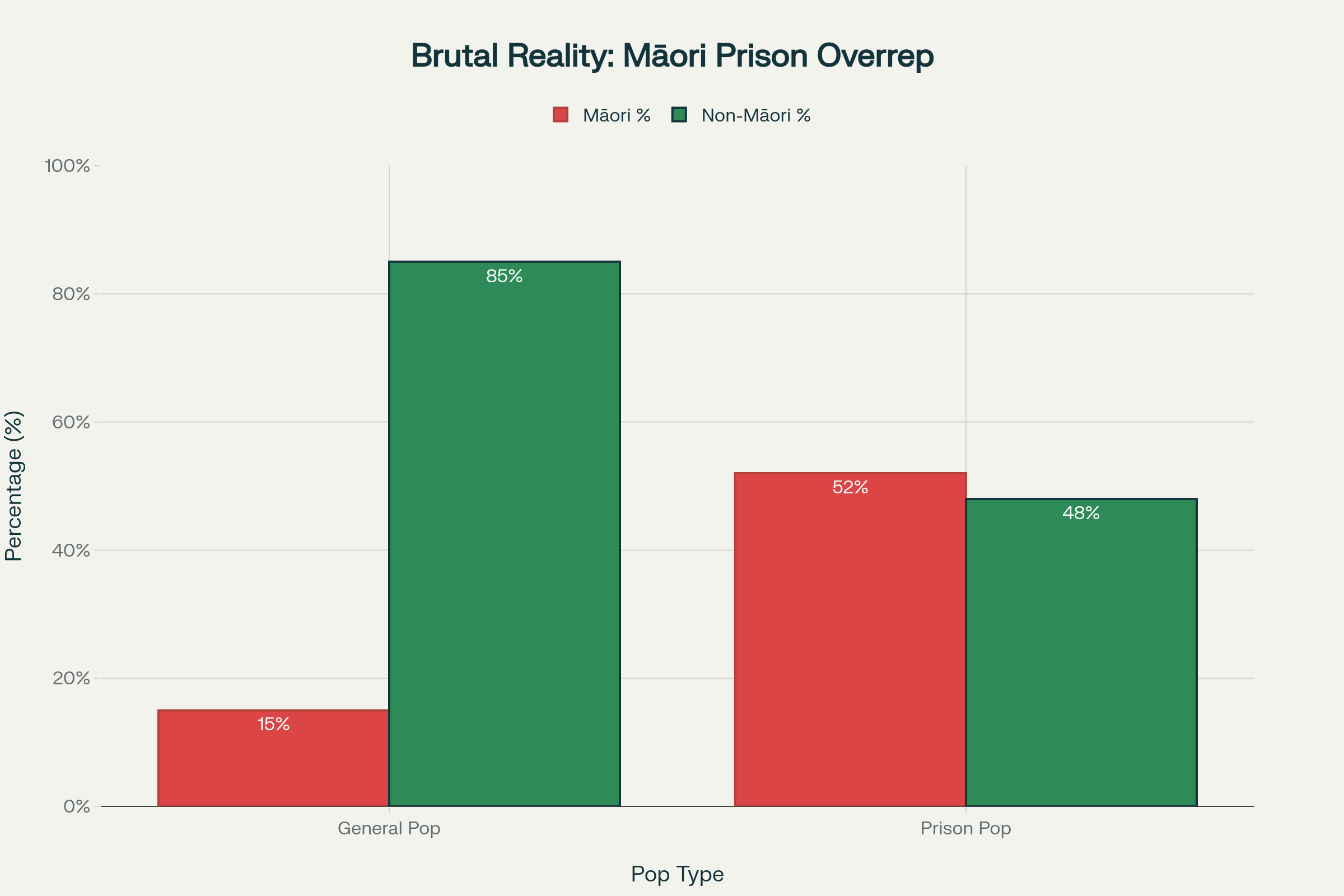
This chart reveals the devastating impact of systemic racism in New Zealand's justice system, showing how Māori make up only 15% of the population but 52% of prisoners
Gary Chiles understands this reality intimately. His eight-year vigil in Parliament's gallery represents more than advocacy for drug law reform - it stands as witness to institutional racism in its purest, most concentrated form. When Chiles sits above the government benches, facing the opposition, he positions himself as a living reminder that the current system rewards nasty punches down on people that are actually trying to do something good.
The Colonial Architecture of Oppression
Parliament House itself represents everything wrong with our democracy. As Chiles observes, this institution is too rigid and too colonial, a monument to Pākehā supremacy masquerading as democratic representation. The building's very architecture enforces hierarchy, separating the powerful from the powerless, the coloniser from the colonised.
Te Pāti Māori's vision of a tikanga-informed parliament represents the only path forward because the current system cannot be reformed - it must be transformed or replaced. When Chiles participated in the haka during the Treaty Principles Bill's first reading, he glimpsed what genuine democratic participation might look like: the most pure situation you can be in.
Drug War as Racial War
The numbers expose the lie of equal justice under law. Research shows Māori face disproportionately higher rates of cannabis convictions compared to Pākehā, despite similar usage patterns across ethnic groups. This targeting is not accidental - it flows directly from institutional structures designed to criminalise Indigenous resistance and maintain colonial control.
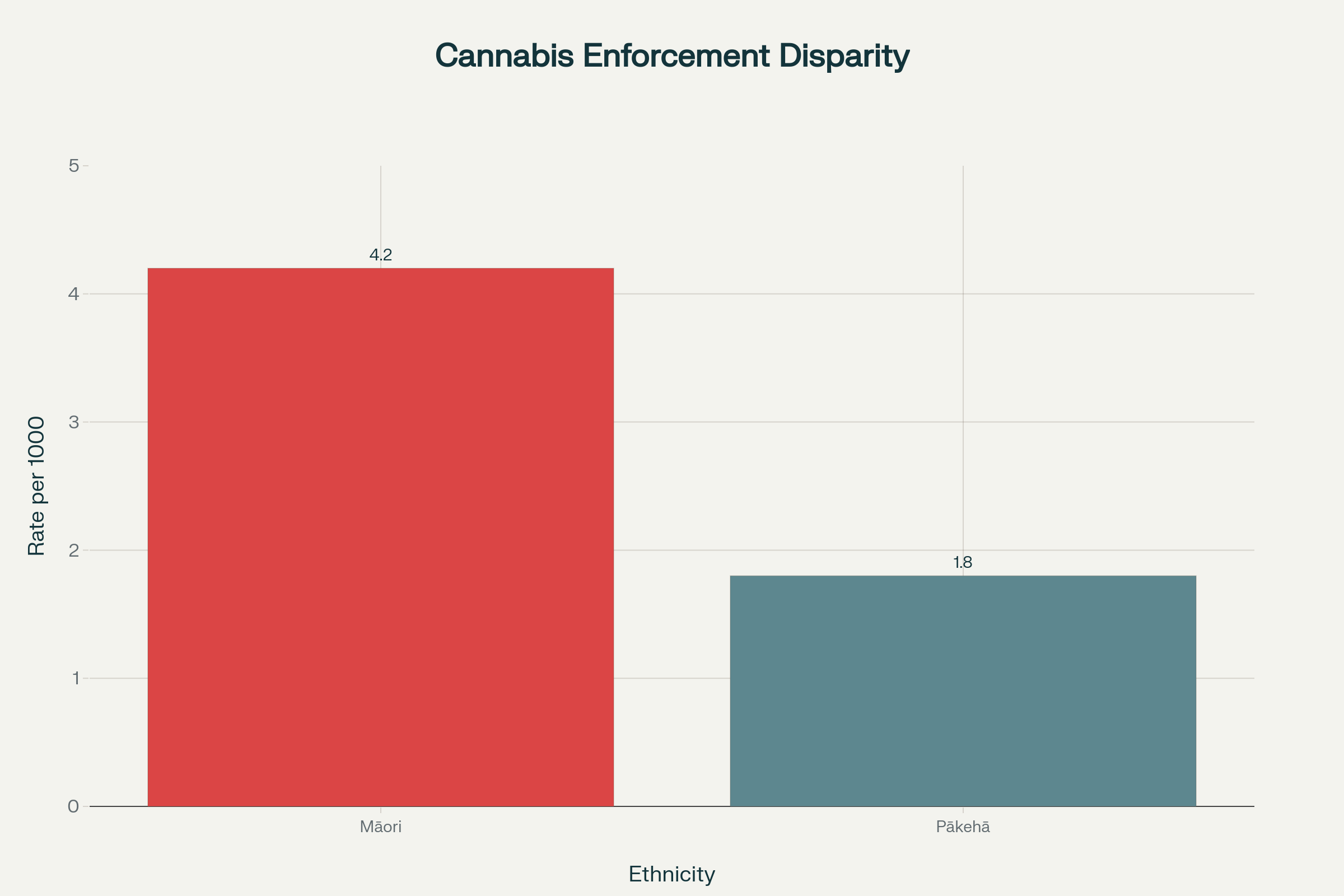
This chart exposes how New Zealand's drug prohibition laws disproportionately target Māori communities, with conviction rates over twice as high as Pākehā despite similar usage patterns
The Misuse of Drugs Act functions as a contemporary continuation of historical policies designed to break Māori social structures, separate whānau, and feed the prison-industrial complex. Globally, Black, Brown and Indigenous peoples are disproportionately targeted for drug law enforcement and face discrimination across the criminal system.
The Guardian Angel vs The Colonial Machine
Chlöe Swarbrick's description of Chiles as the guardian angel of the public gallery reveals something profound about power relationships in our supposed democracy. The fact that MPs need a guardian angel to protect them from their own institution exposes the violence embedded in parliamentary process.
When Swarbrick notes that Gary sees the interconnection between all of these different issues, from drug law reform through to inequality in our economy, through to corporate greed and the fast-tracking of the destruction of our environment, through to human rights and the freedoms of Palestinians, she acknowledges what Chiles represents: systemic analysis that connects dots the establishment desperately wants to keep separate.
The Colonial Coalition's War on Progress
The National-Act-NZ First coalition represents the most reactionary government in decades, openly hostile to Māori rights, environmental protection, and social justice. David Seymour's Treaty Principles Bill embodies white supremacist ideology wrapped in constitutional language, seeking to eliminate Māori political authority through legislative violence.
When Chiles venomously despises the Act Party and sees Winston Peters as a major barrier to drug law reform, he recognises these figures for what they are: defenders of colonial privilege who profit from maintaining systems of oppression. Their drug war policies serve the same function as historical policies designed to destroy Indigenous communities through criminalisation and incarceration.
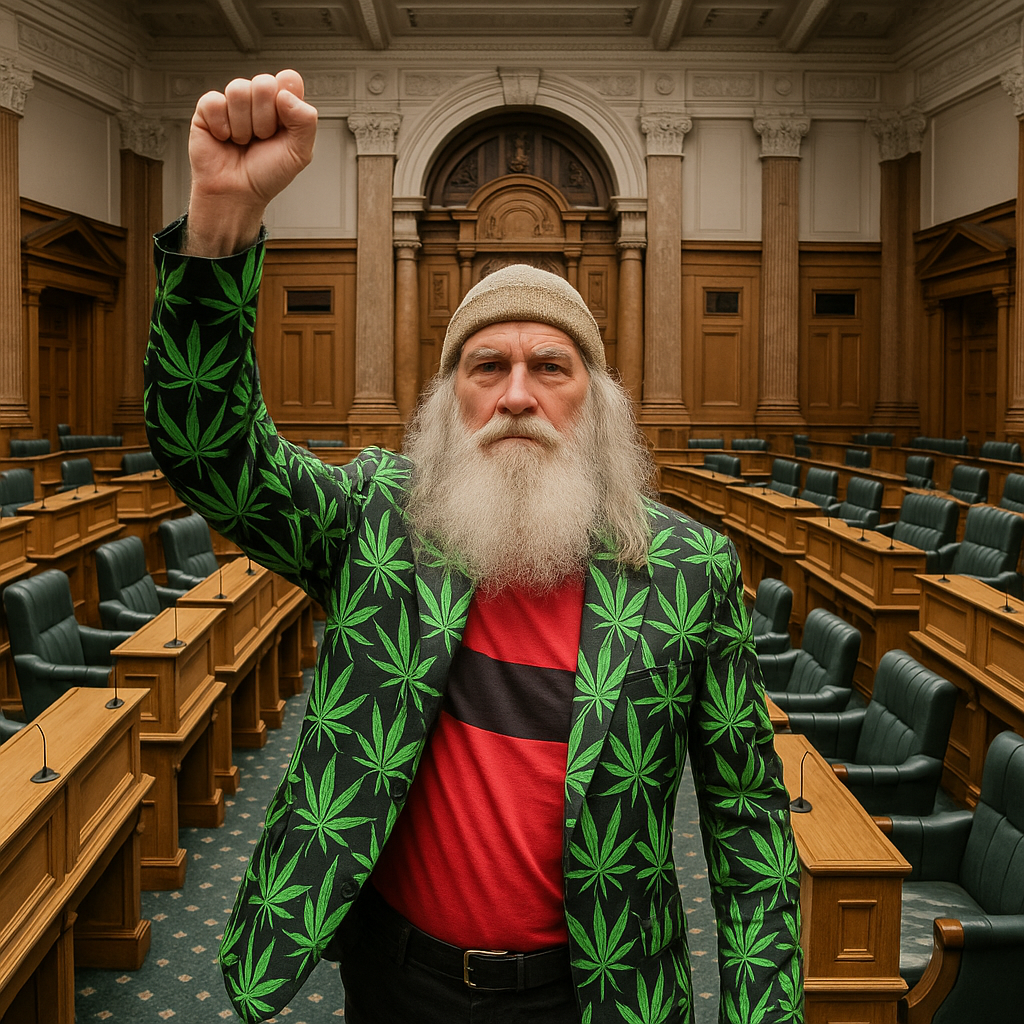
Gary Chiles as a symbol of resistance in parliament's oppressive colonial architecture
Paula Bennett's Racist Theatre
The anecdote about Paula Bennett offering to dry clean Chiles' suit, then withdrawing the offer because she only did it to try and infer that I was a dirty druggie, perfectly encapsulates the racist assumptions underlying drug prohibition discourse. Bennett's performance reveals how politicians weaponise stigma to dismiss legitimate policy criticism while reinforcing harmful stereotypes about drug users.
This incident demonstrates how seemingly small acts of discrimination reflect and reinforce broader systems of oppression. Bennett's behaviour embodies the casual racism that permeates political discourse, treating Māori and their allies as inherently suspicious, unclean, and undeserving of basic respect.
The Failure of Liberal Reform
The 2020 cannabis referendum's failure exposed the limits of liberal democracy in addressing structural racism. Despite growing evidence of drug prohibition's devastating impact on Māori communities, New Zealand voters rejected legalisation by a narrow margin, choosing to maintain a system that disproportionately harms Indigenous peoples.
This result reflected successful fear-mongering campaigns that exploited racist stereotypes while ignoring the actual harms caused by prohibition. The referendum's failure condemned another generation of Māori to experience the violence of criminalisation for behaviour that should be treated as a health and social issue.
The Path Forward: Revolutionary Change
Gary Chiles' presence in Parliament represents more than drug law advocacy - it embodies resistance to colonial authority and insistence on Indigenous perspectives in spaces designed to exclude them. His cannabis-leaf suit functions as both protest symbol and cultural assertion, refusing to conform to colonial dress codes that enforce respectability politics.
When Chiles wears his Toitū Te Tiriti t-shirt underneath his suit, he declares allegiance to Treaty promises while rejecting the colonial state's authority to define appropriate political expression. This layered identity - activist, advocate, and Indigenous ally - challenges the artificial boundaries that separate supposedly distinct political issues.
The solution requires more than drug law reform - it demands dismantling the colonial structures that make such violence possible. This means supporting kaupapa Māori approaches to harm reduction, investing in Indigenous-led community healing programmes, and challenging the racist assumptions underlying current policy frameworks.

The Māori Green Lantern fighting misinformation and disinformation from the far right
Revolution in Plain Sight
Gary Chiles' eight-year parliamentary pilgrimage represents revolutionary activity disguised as liberal reform advocacy. His presence challenges the institution's legitimacy while supporting those trapped within its oppressive structures. By maintaining visibility in spaces designed to exclude perspectives like his, Chiles performs crucial cultural work that extends far beyond drug policy.
The coalition government's hostility toward progress makes Chiles' support role even more vital. When he provides visual solidarity to embattled opposition MPs, he demonstrates how solidarity transcends institutional boundaries and connects struggles for justice across different movements.
Ultimately, Chiles embodies the spirit of resistance that colonial institutions cannot contain or co-opt. His cannabis suit may seem like street theatre, but it represents something far more dangerous to the establishment: persistent, principled opposition that refuses to disappear or conform to acceptable protest boundaries.
The system wants us to believe that change happens through proper channels, respectful dialogue, and institutional reform. Gary Chiles proves otherwise - sometimes revolution wears a cannabis suit and sits in the public gallery, bearing witness to colonial violence while supporting those brave enough to challenge it from within.
Readers who find value in this analysis and wish to support our ongoing work exposing institutional racism and colonial violence are invited to consider a koha to: HTDM: 03-1546-0415173-000. The MGL understands these are difficult economic times for whānau, so please only contribute if you have capacity and genuinely wish to do so.
Kia kaha, kia māia, kia manawanui.
Ivor Jones - The Māori Green Lantern