"THE STARVING OF THE SEEDLINGS: How Aotearoa's Coalition of Cruelty Chose Corporate Efficiency Over the Hunger of Papatūānuku's Tamariki" - 9 March 2026
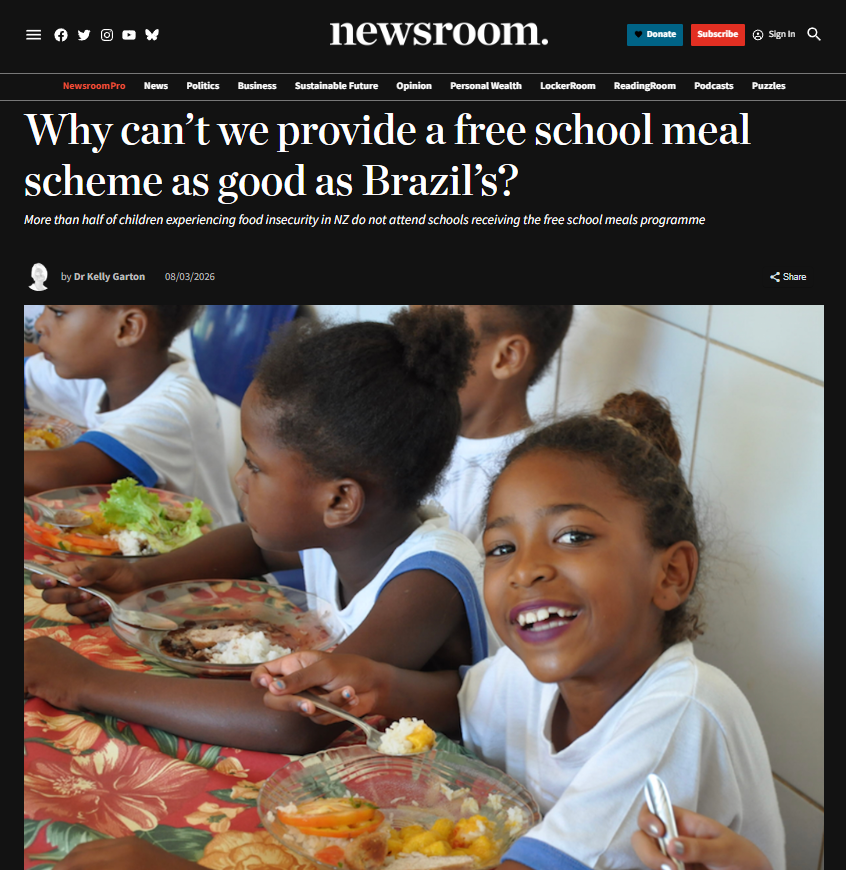
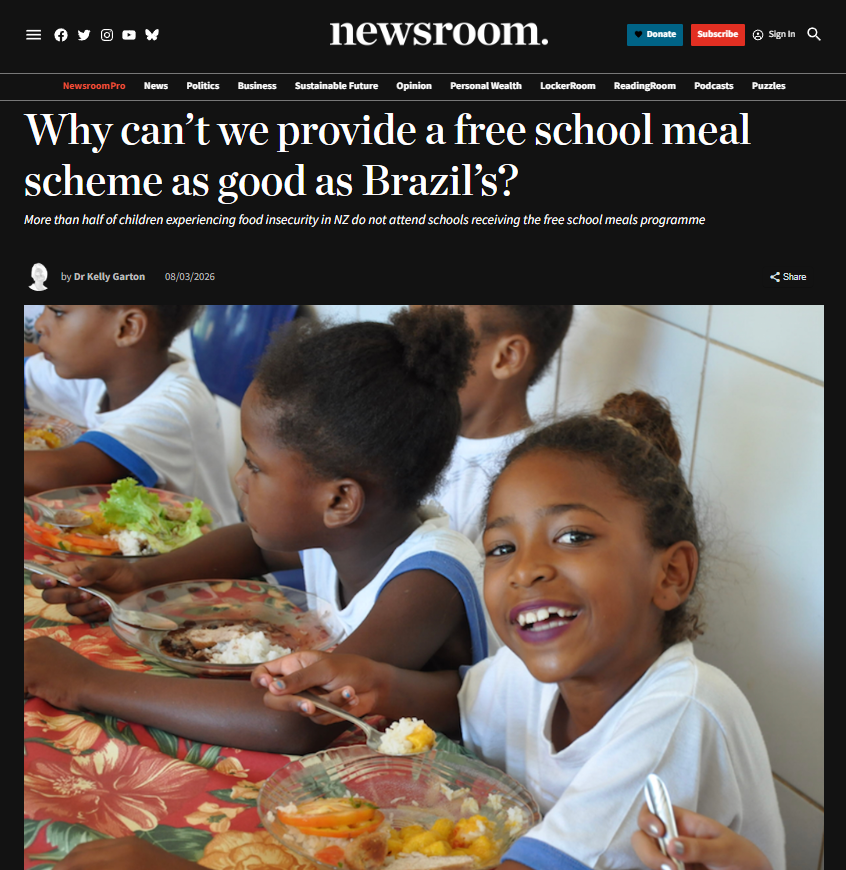
Brazil feeds 40 million children with dignity, culture, and fresh kai from local hands. New Zealand's neoliberal taniwha stripped the reo, slashed the food, handed it to a multinational corporation — and branded the wreckage "value for taxpayers."

Mōrena Aotearoa,
I hope that your Monday has started well for you. Thank you for taking the time to consider these thoughts, ngā mihi.
Deep dive into this essay and the source
He Whakatūwhera Kōrero — Opening: The Gourd Has Been Hollowed Out
There is an old image in the mātauranga of our tūpuna: the hue, the gourd, cultivated with aroha, filled with sustenance for the journey. When the hue is full, whānau travel far. When it is emptied — not by drought, not by disaster, but by the deliberate hand of those who hold power — that is not economics. That is cruelty dressed in a spreadsheet.
What is happening to the school lunch programme in Aotearoa is the hollowing of the hue. Not by accident. Not by necessity. But by ideology — the cold, grey theology of neoliberalism, wielded by a coalition government that has spent two years proving, with statistical precision, that it does not consider Māori and Pasifika tamariki to be fully human.
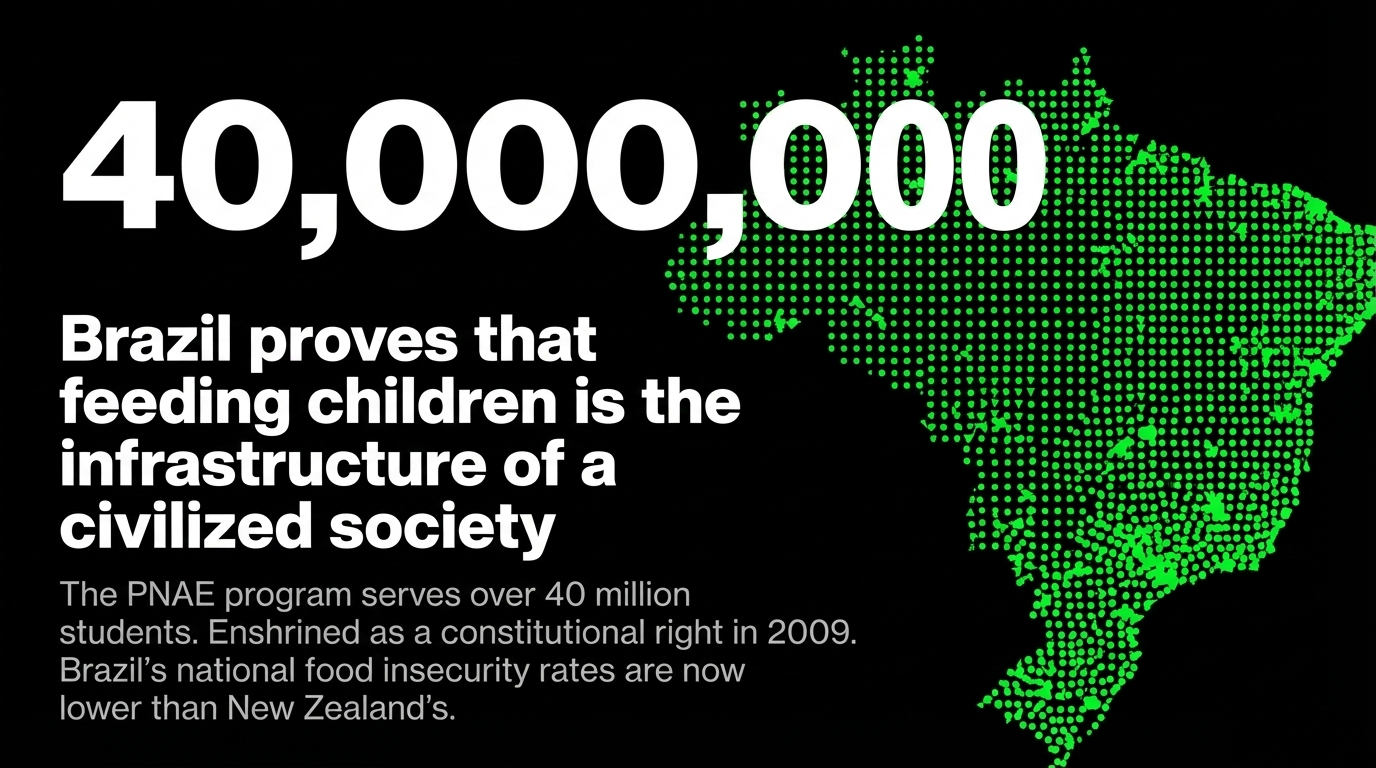
While Brazil — a nation of 215 million, plagued by poverty far deeper than ours, with political dysfunction that would make even Winston Peters blush — has built a school feeding programme that serves over 40 million students with nutritious, culturally appropriate, locally sourced meals as a constitutional right, Aotearoa's Associate Minister of Education David Seymour has been busy renaming things.
He renamed the programme. He stripped the reo Māori from it. He called it efficiency. And in doing so, he told every Māori child in every underfunded, overcrowded school in this country exactly where they sit in the hierarchy of this government's compassion.
Koha Consideration
Every hungry tamariki Māori in a classroom today is paying the real cost of this government's "savings." They cannot send a press release. They cannot write a budget bid. They sit at their desks and try to learn on empty stomachs while Seymour announces another $145 million saved.
This mahi — naming what is being done, tracing who benefits, exposing the whakapapa of cruelty — is funded by whānau, for whānau. Every koha signals that our communities are prepared to fund the accountability that the Crown and its corporate partners will never provide for themselves. It signals that manaakitanga is not dead — it is simply not in the Beehive.
Kia kaha, whānau. While 169,300 children fill Eden Park three times over with their quiet suffering, stay vigilant, stay loud, and share this with everyone who still believes we can do better. Because Brazil already proved that we can.
If you are able, consider a koha to keep this voice alive:
Koha — Support the Māori Green Lantern
To receive essays directly:
Subscribe to the Māori Green Lantern
For direct bank transfer: HTDM, account number 03-1546-0415173-000
If you cannot koha — no worries at all. Kōrero about this. Share it. Forward it to your school principal, your MP, your whānau group chat. That is koha. That is the ahi kā kept burning.
Te Hītori — The History: From Ka Ora, Ka Ako to Corporate Scraps
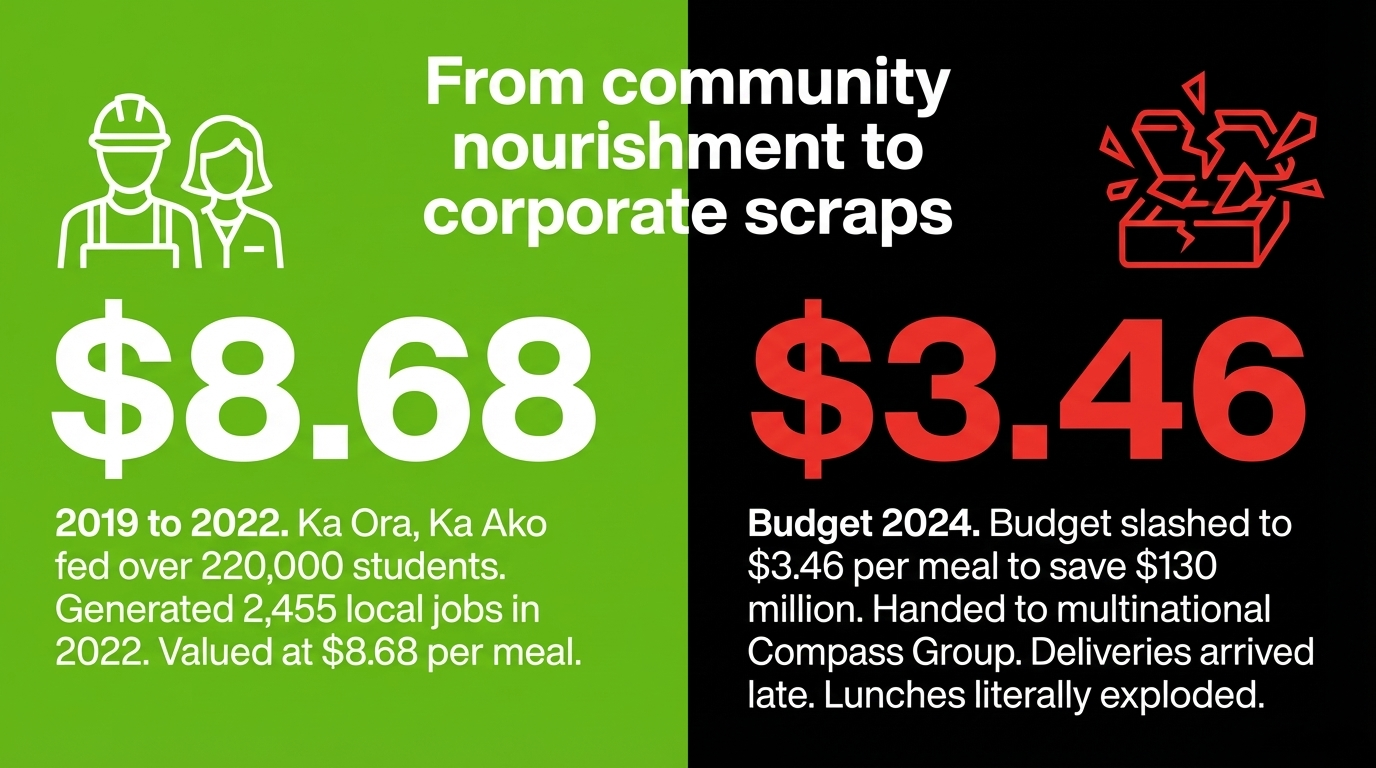
The programme once known as Ka Ora, Ka Ako — Healthy, I Learn — was introduced by the Labour government in 2019. By the time the coalition bulldozed it, it was feeding more than 220,000 students, roughly a quarter of all students in Aotearoa. It supported local suppliers, iwi-led food businesses, and a living wage for workers. It was, by every measure from researchers to principals to hungry children themselves, working.
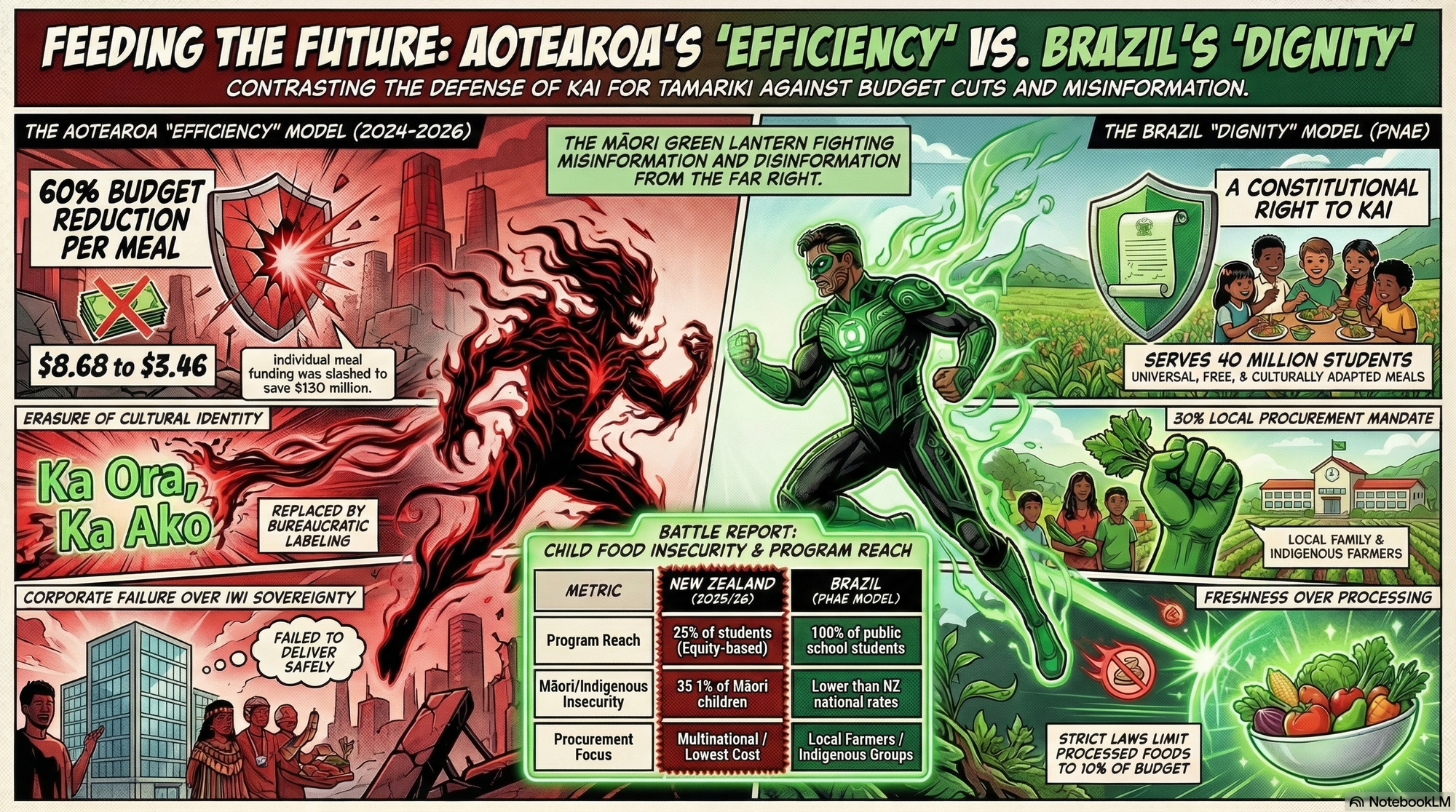
Then came Budget 2024. Finance Minister Nicola Willis, wielding her fiscal blade with the precision of someone who has never watched a child try to concentrate on arithmetic with an empty stomach, agreed to gut the programme. The Beehive announced it would save $130 million per year — praised as a triumph of "commercial expertise." The cost per meal dropped from $8.68 under Labour to $3.46 under Seymour. The global catering giant Compass Group was brought in.
Then, from Term 1 2025, some schools began paying out of their own budgets to feed children when Compass Group deliveries arrived late. Children were burned. Lunches exploded — literally. The programme that was supposed to demonstrate the genius of market logic devolved into a national embarrassment. By November 2025, Compass Group was excluded from the next round of the programme entirely — a quiet corporate admission of disaster, buried in ministerial language about "regional approaches."
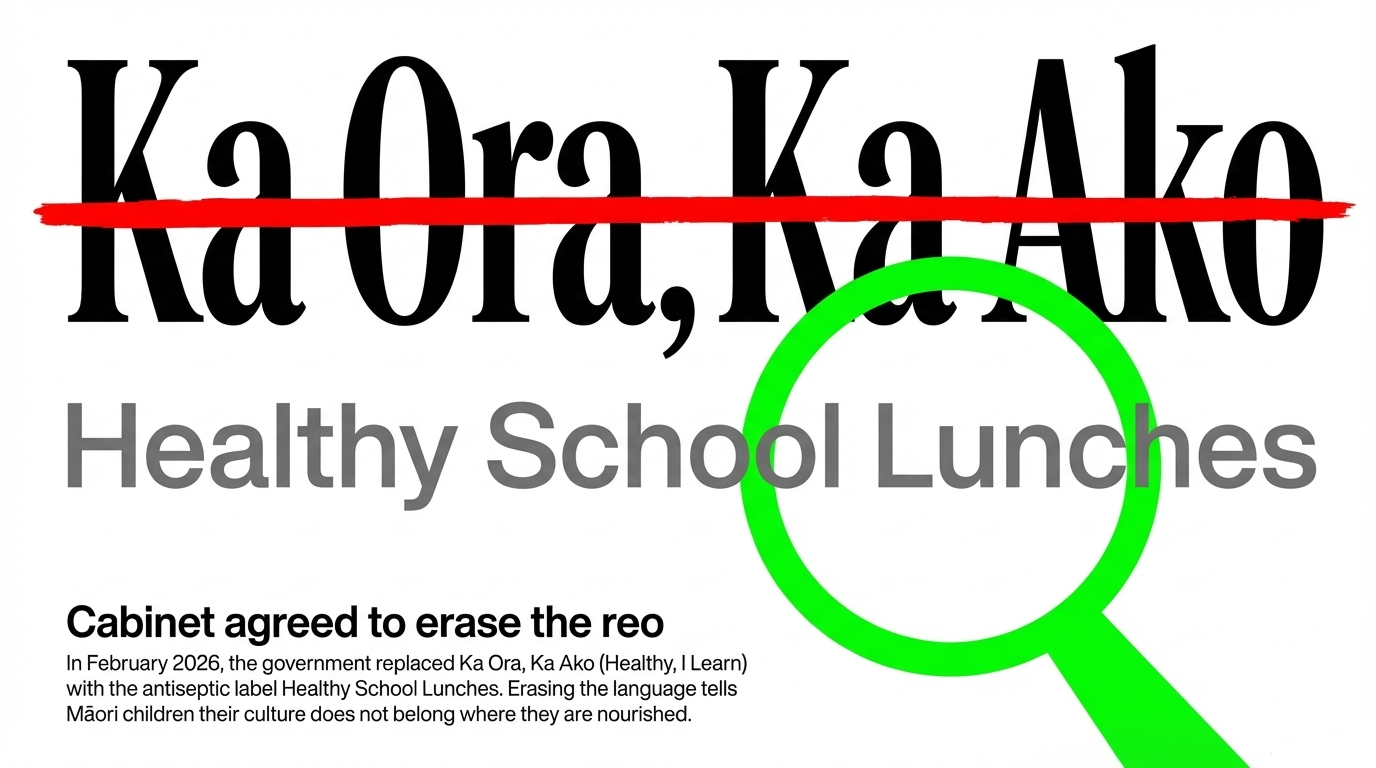
And then, in February 2026, as if determined to prove that contempt for Māori children was not merely procedural but philosophical, Cabinet agreed to rename the programme — erasing Ka Ora, Ka Ako and replacing it with the antiseptic bureaucratic label
"Healthy School Lunches." Seymour explained: "People need to know what things are." Green MP Teanau Tuiono named it plainly: "It's anti-Māori, it's racist, and in many ways pathetic."
This is the whakapapa of the wound. Now let us measure it.
Te Inenga o te Mamae — Quantifying the Harm: Numbers That Should Shame a Nation
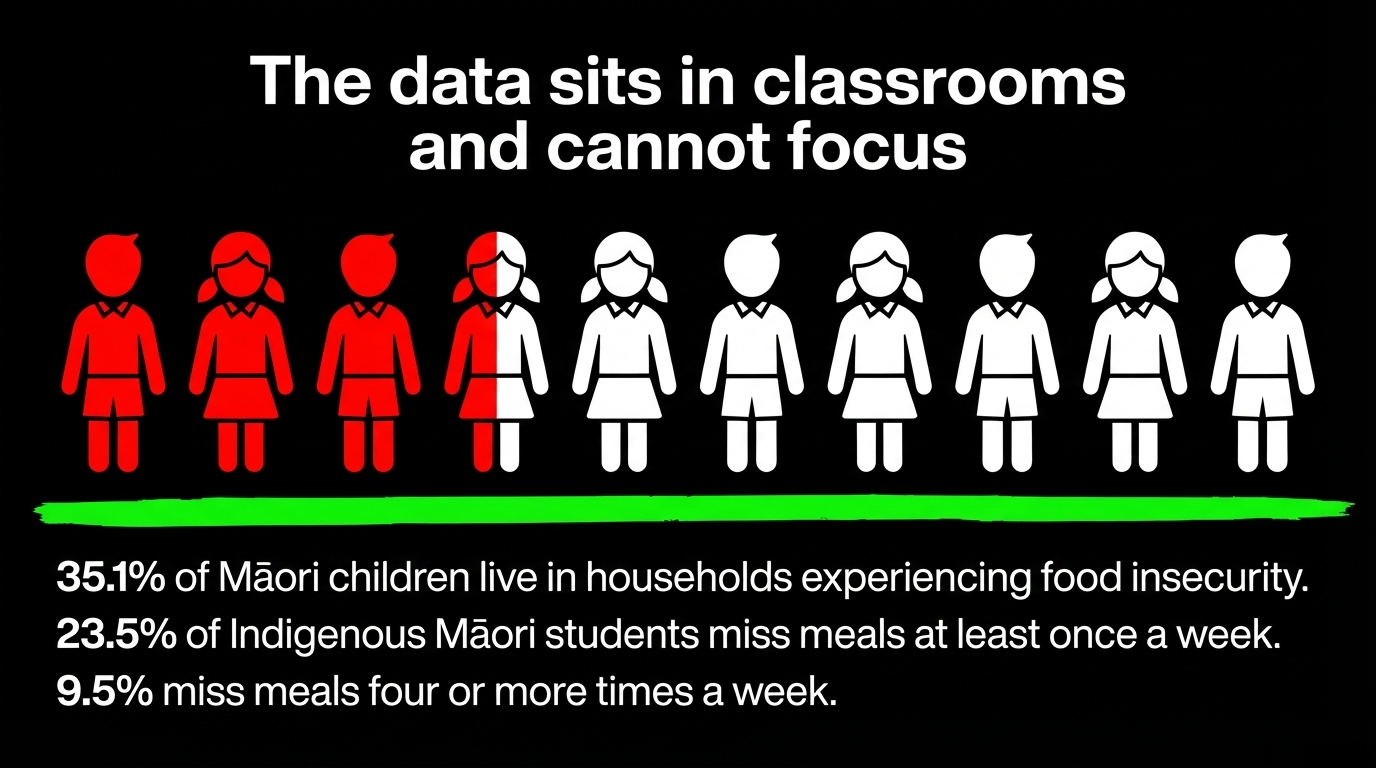
The data is not abstract. It breathes. It sits in classrooms. It cannot focus.
35.1% of Māori children live in households experiencing food insecurity — more than one in three. 23.5% of Indigenous Māori students miss meals at least once a week. 9.5% miss meals four or more times a week. This is not a statistic. This is a classroom. This is thirty children, eight of whom arrive having eaten nothing and will eat nothing until 3pm. This is the cognitive cost that no ACT Party press release has ever accounted for.
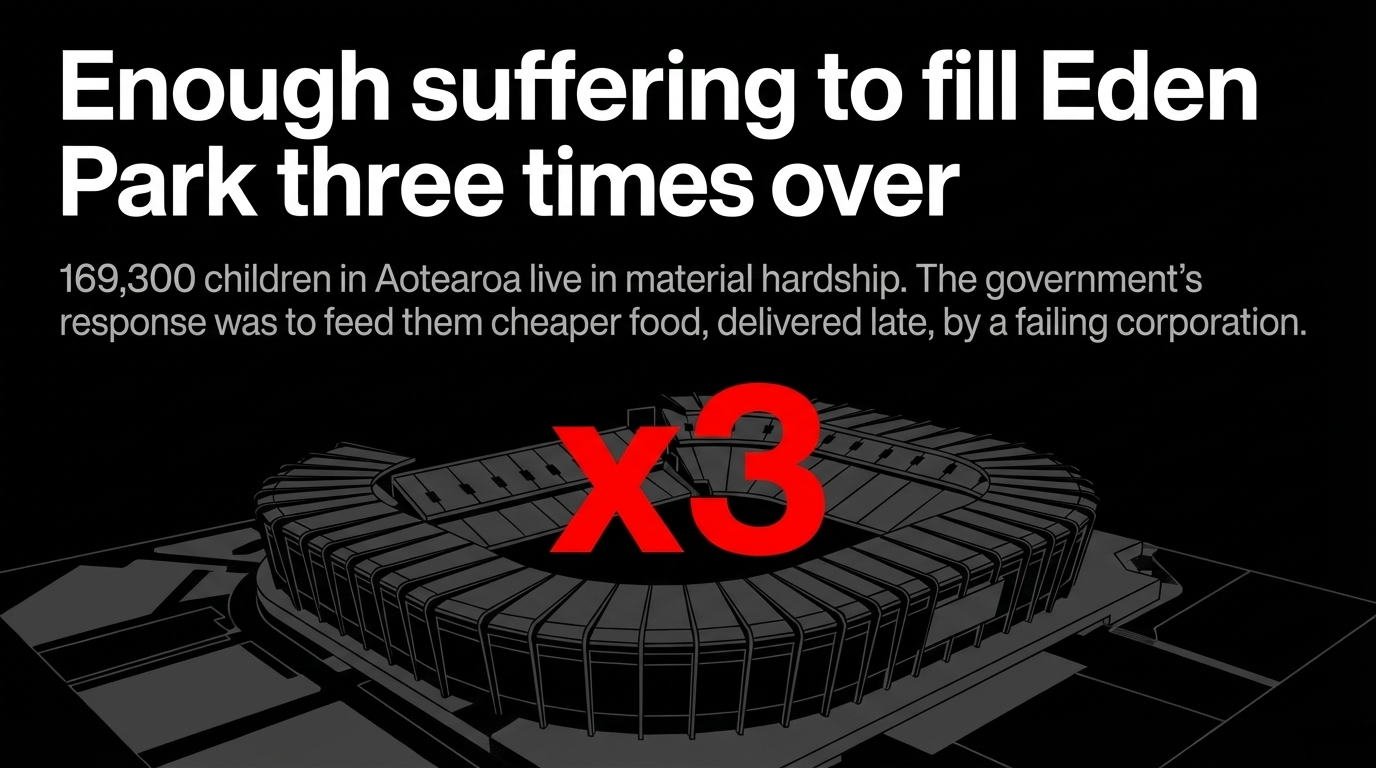
As of the latest poverty data released in February 2026, 169,300 children in Aotearoa live in material hardship — enough, as Children's Commissioner Dr Claire Achmad noted, "to fill Eden Park more than three times." Māori and Pacific children are hardest hit, living at disproportionate rates below the thresholds that define a dignified childhood. This government's response to that reality was to save $130 million a year by feeding those same children cheaper food, delivered late, by a corporation that has since been shown the door.
The Child Poverty Action Group went directly to Nicola Willis in March 2025 with a formal Budget Bid, demanding the reversal of the cuts. Willis did not reverse them. She was busy finding billions to cut elsewhere.
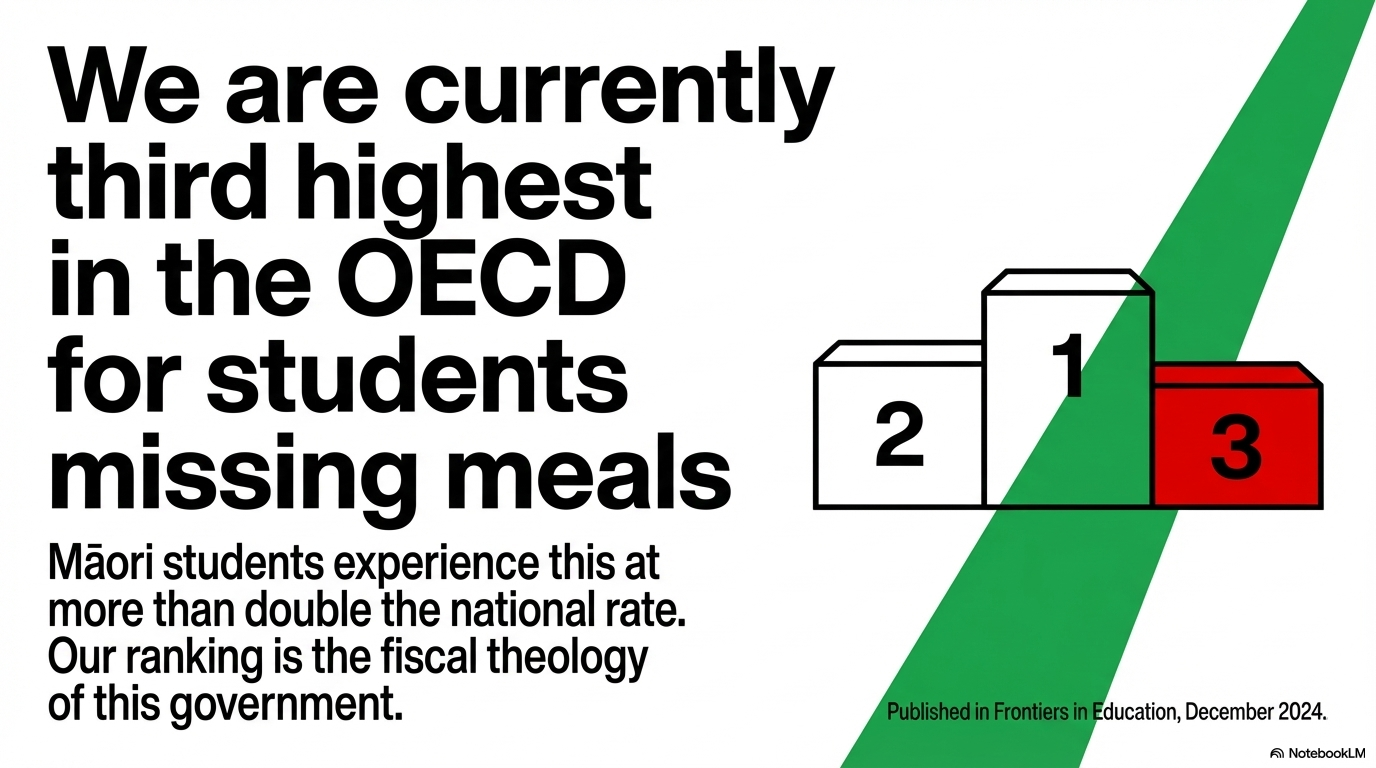
New Zealand was already the third highest in the OECD for students missing meals at least once a week. This government's gift to future generations is a higher ranking on that particular leaderboard.
Ngā Akoranga mō te Hinengaro o te Rāwhiti — Three Examples for the Western Mind
For those who think in the frameworks of international policy comparison, here are three examples that expose the full scale of what is being done to the tamariki of this land.
Example 1 — Brazil's PNAE: What Dignity Looks Like at Scale
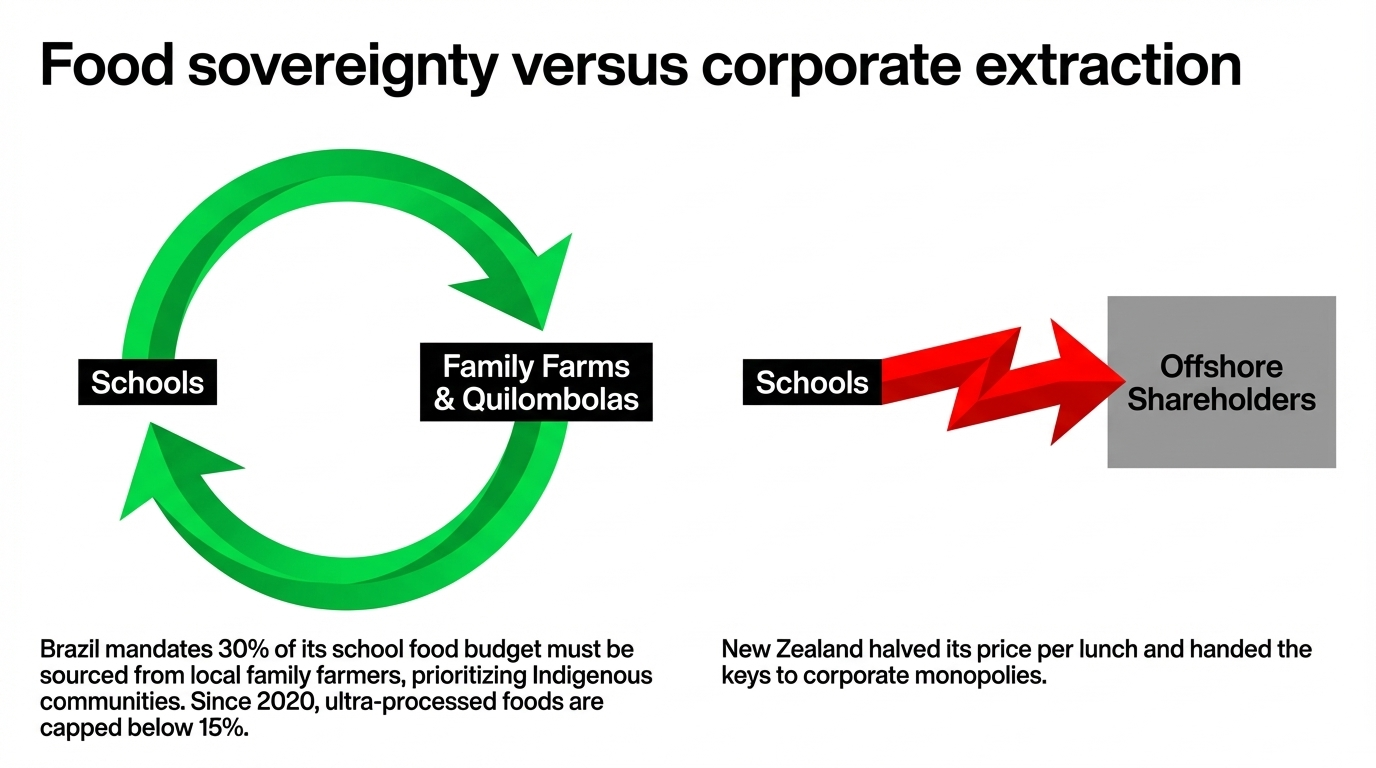
Brazil launched the Programa Nacional de Alimentação Escolar in 1955 and constitutionally enshrined it as a right in 2009. Today, the PNAE serves over 40 million students in public basic education across the entire country — free, universal, nutritious, and culturally adapted. By law, at least 30% of the food budget must be sourced from local family farmers, embedding the programme within the local economy as a tool of both nutrition and food sovereignty.
Brazil is not a wealthy country in per capita terms. Brazil has endemic poverty, inequality, and political dysfunction that would fill ten volumes. And yet Brazil understood, constitutionally, that feeding children at school is not charity — it is the basic infrastructure of a civilised society. The programme promotes food and nutrition education, respects regional culture, and supports short supply chains that strengthen local communities.
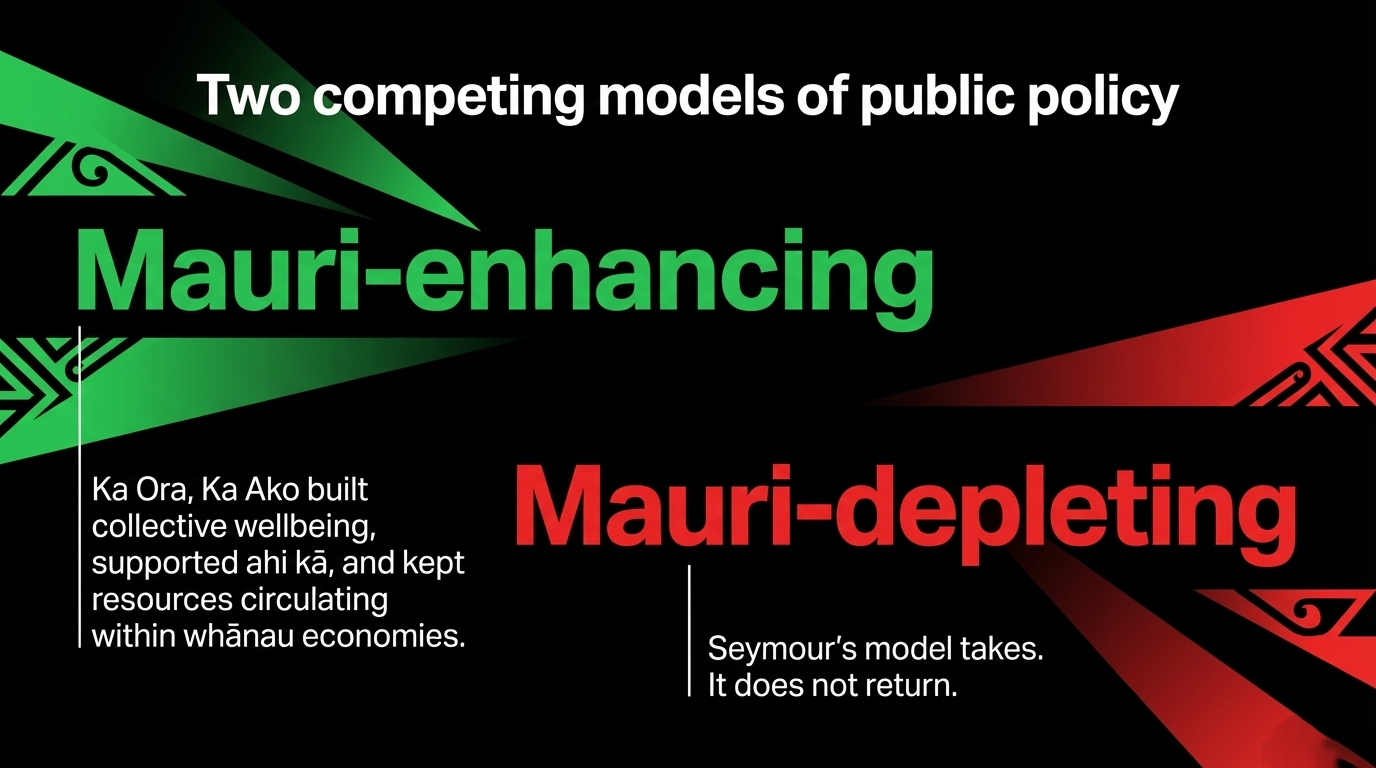
Compare that to Aotearoa in 2025, where a global catering conglomerate delivered burned meals to underfunded schools and called it "innovative procurement." The harm to the taonga of tikanga is not merely symbolic — it is the difference between a programme that builds food sovereignty and kaitiakitanga within communities, and one that extracts value upward to offshore shareholders. In tikanga terms, Ka Ora, Ka Ako was mauri-enhancing — it built collective wellbeing, supported ahi kā, and kept resources circulating within whānau and hapū economies. Seymour's model is mauri-depleting. It takes. It does not return.
Example 2 — Marcus Rashford and the United Kingdom: What Happens When People Fight Back
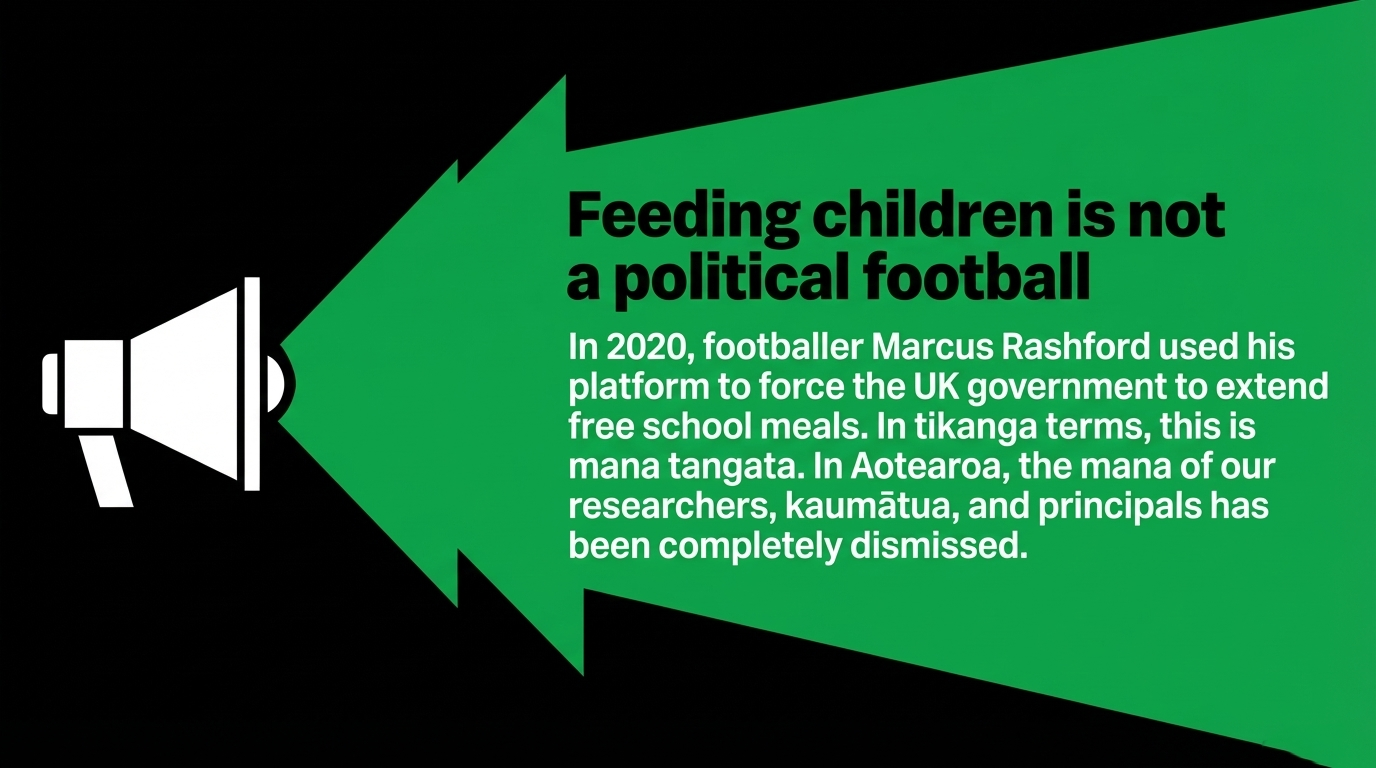
In 2020, footballer Marcus Rashford — himself a child who had used the UK free school meals programme — launched a public campaign to extend free school meals through the COVID holidays after the UK government refused. The government capitulated within days, following a social media firestorm and local authority rebellion. The lesson: feeding children is not a political football. It is the bedrock of public trust. As the Spinoff documented, Aotearoa's Budget 2024 achieved its tax cuts through hundreds of little slashes — each one invisible to the comfortable, each one catastrophic to those living at the margin. One of those slashes was directly from the mouths of children.
In tikanga terms, Rashford demonstrated mana tangata — the authority that comes from embodying the values of the people. He used his platform not for himself but for his community. In this country, the people who carry mana tangata on this issue — the principals, the researchers, the kaumātua, the Child Poverty Action Group, the Children's Commissioner — have all been ignored. Their mana has been dismissed by a minister who eats a school lunch for the cameras and calls it research.
Example 3 — The OECD Learning Poverty Data: The Price of an Empty Stomach
The research journal Frontiers in Education published findings in December 2024 that make the government's position not merely cruel but scientifically indefensible: New Zealand has the third highest rate in the OECD for students missing meals at least once a week, with Māori students at more than double the national rate. The Ka Ora, Ka Ako programme had already demonstrated measurable impacts on hunger at school, wellbeing, dietary patterns, attendance, and local employment.
Seymour's famous counter-claim — that there was "no hard evidence" the programme improved attendance — was what researchers call a false negative: the absence of his preferred metric did not mean the absence of benefit. A Porirua principal told RNZ it was "the most successful education initiative I have ever seen." For the western mind: a programme that demonstrably reduces hunger in a country where Māori children are the hungriest, has been cut to fund tax relief for people who have never had to wonder if their children ate today. That is the fiscal theology of this government. Name it clearly: this is the deliberate underfunding of Māori and Pasifika futures.
Ngā Hononga Huna — Five Hidden Connections
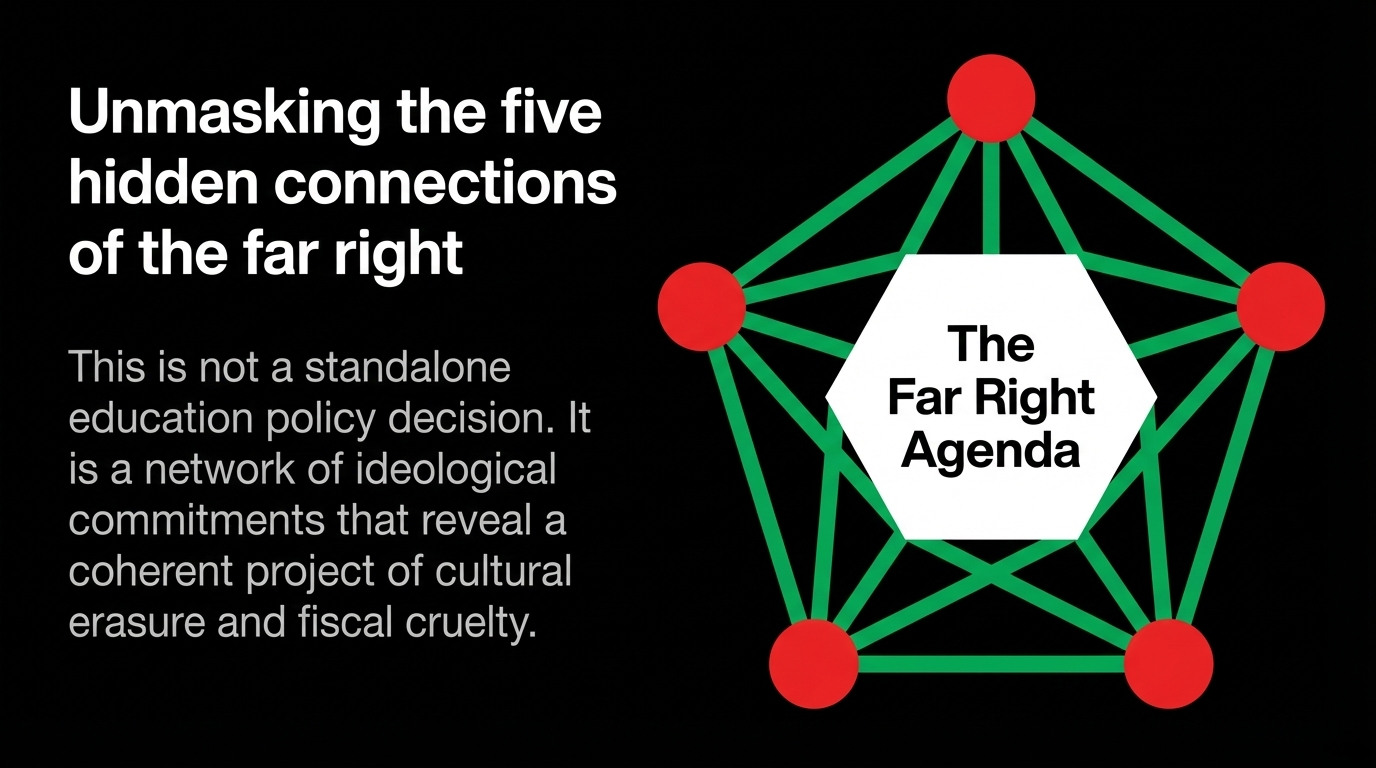
What is being done here is not a standalone education policy decision. It is part of a network of ideological commitments that, when traced, reveal a coherent project:
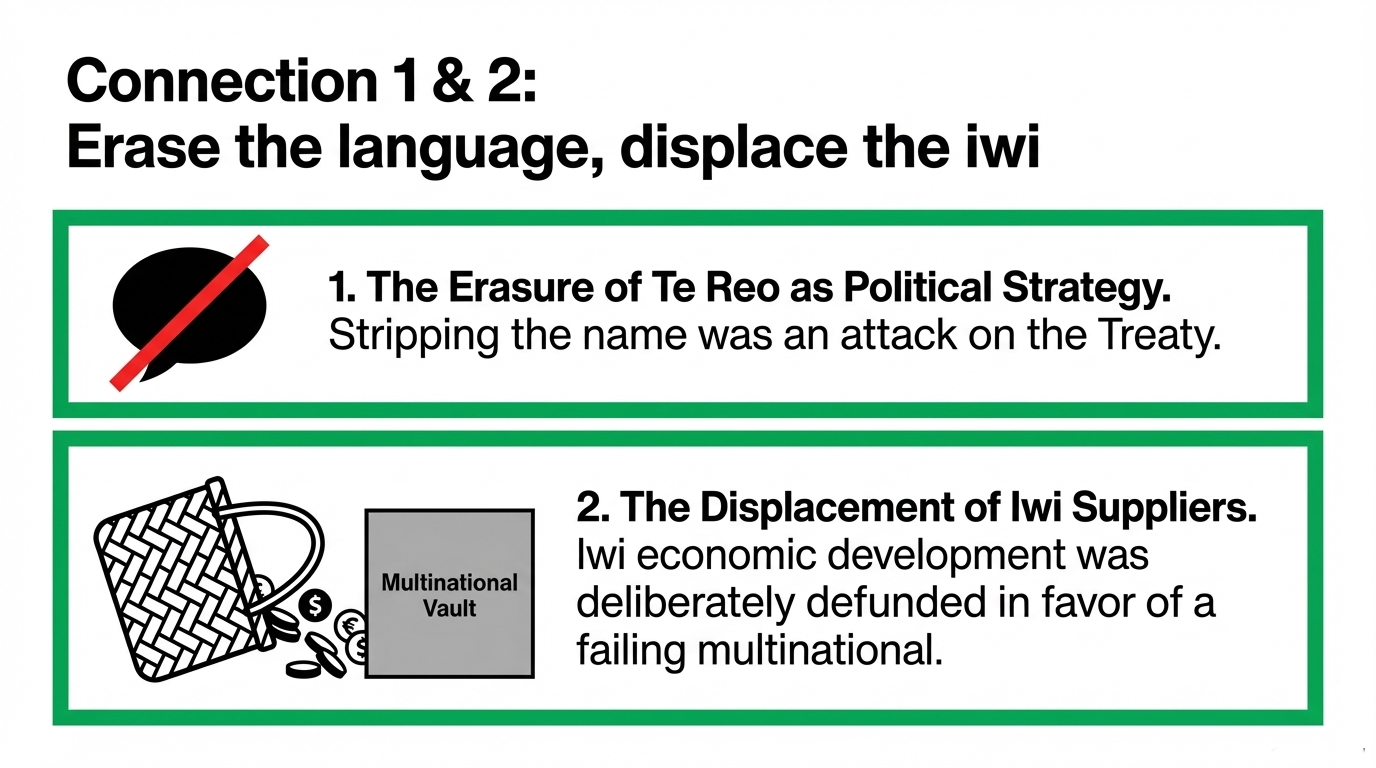
1. The Erasure of Te Reo as Political Strategy. Stripping Ka Ora, Ka Ako of its reo Māori name was Cabinet-approved on 20 October 2024. This was not a naming accident. It is part of the same pattern of erasure documented by Te Pāti Māori co-leader Debbie Ngarewa-Packer, who called it "an attack at the Treaty, an attack at Māori." When you remove the reo from the programme that feeds the children, you are not simplifying administration. You are telling Māori children their language does not belong in the places where they are nourished.
2. The Displacement of Iwi Suppliers. The original Ka Ora, Ka Ako model included iwi/hapū food providers who prepared meals using tikanga-aligned practices, kept money in Māori economies, and built mātauranga around kai. Seymour's model directed funding toward a multinational — Compass Group — which has since been excluded from the programme after demonstrable failure. The hidden connection: iwi economic development was deliberately defunded in favour of a corporation that did not deliver.
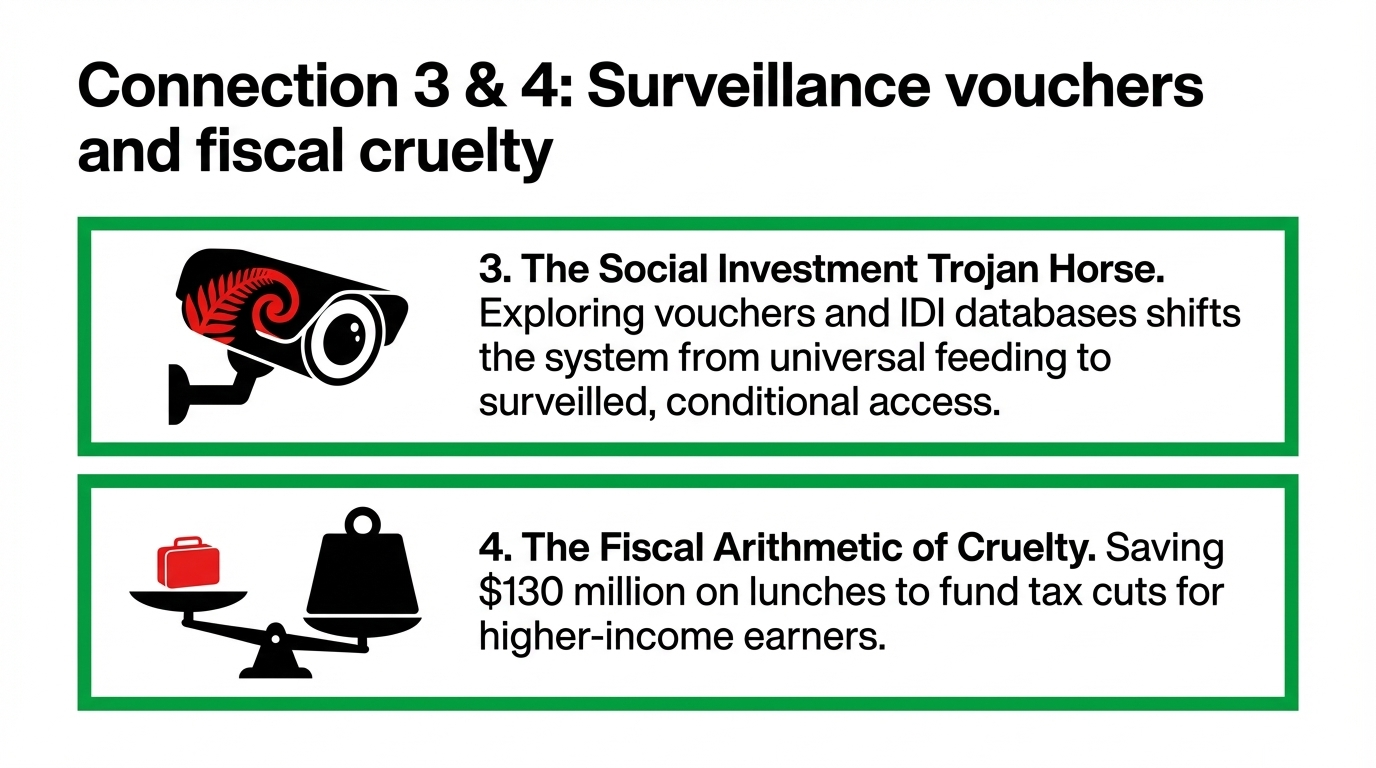
3. The Social Investment Trojan Horse. Cabinet's OIA-released papers show the government is exploring a "voucher-type solution" and use of the Integrated Data Infrastructure Database to target food support. This is the Social Investment framework — the surveillance and conditionality model that the ACT-National coalition has been building. The direction of travel is clear: from universal feeding to means-tested, surveilled, conditional access. That is not food security. That is a hunger management system.
4. The Fiscal Arithmetic of Cruelty. The government saved $130 million per year from the school lunch programme. The tax cuts delivered in Budget 2024 — which disproportionately benefited higher-income earners — cost far more. As confirmed by RNZ's Budget 2025 coverage, this is a government that routinely finds money for those who already have it while finding efficiencies in programmes that serve those who do not.
5. The Silence of the Pākehā Commentariat. The same political class that erupted over "wasteful government spending" when lunches cost $8.68 has been notably quiet about the cost of late deliveries, school-funded emergency meals, and the social infrastructure damage wrought by hungry children. The CPAG's formal budget bid was made in March 2025. It was ignored. That silence is itself a data point.
Te Arotake — What This Government Has Actually Done to Tikanga
For the western mind: tikanga is not a cultural add-on. It is a system of obligations, relationships, and accountabilities that governs how a people treat one another. At its core is the concept of manaakitanga — the obligation to uplift the dignity and wellbeing of the other, especially the most vulnerable. When a child arrives hungry, the tikanga response is not to calculate the cost-per-meal efficiency of their hunger. It is to feed them. Full stop.
The removal of Ka Ora, Ka Ako's name is not, as Seymour suggested, a minor administrative matter. It is the erasure of a kaupapa — a guiding philosophy that said: when children are healthy, they learn; when they learn, they thrive; when they thrive, the whole community is enriched. That philosophy is embedded in every iwi-based food programme, every kura kaupapa kitchen, every whānau gathering where no one leaves hungry. It is the opposite of means-testing. It is the opposite of conditionality. It is unconditional manaakitanga expressed as public policy.
This government has, with a Cabinet paper and a rebrand, declared that philosophy "no longer fit for purpose."
Ngā Ara Whakamua — Pathways Forward
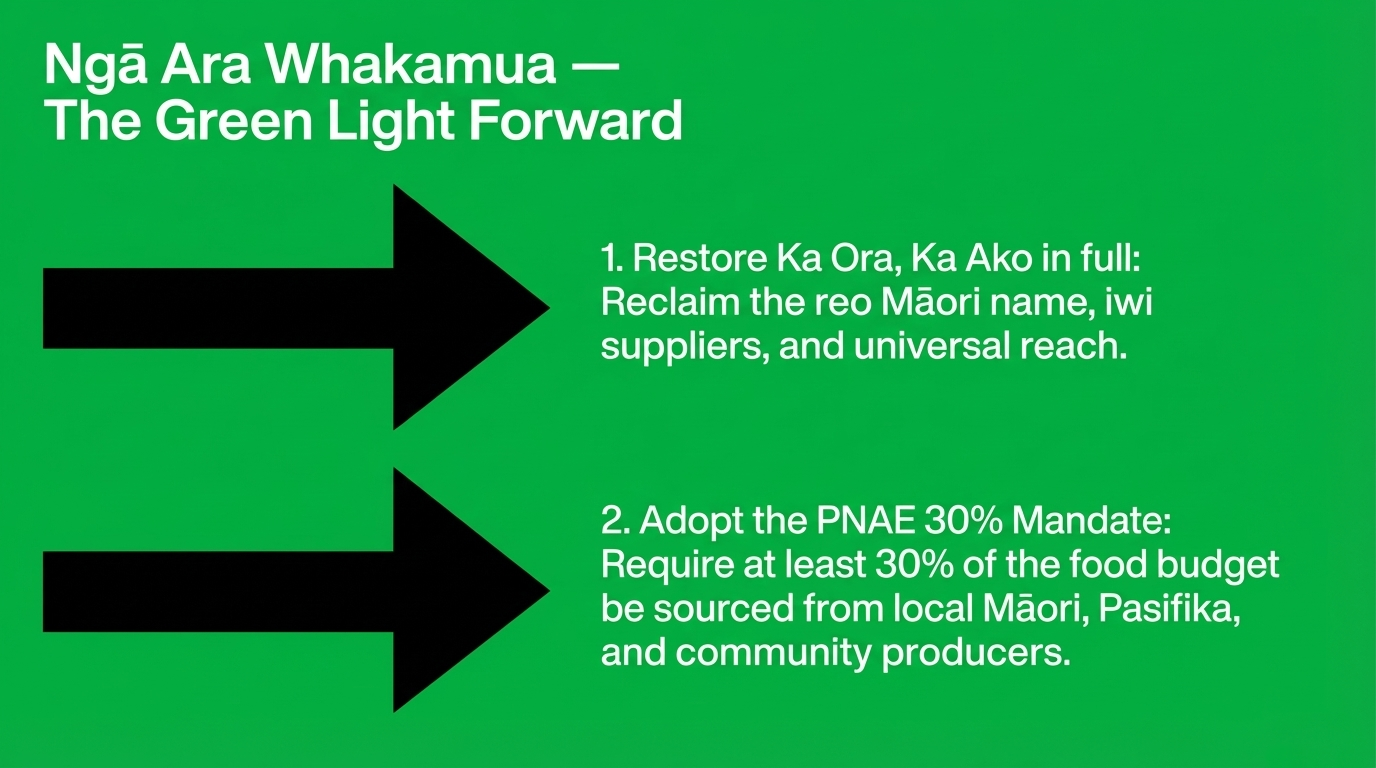
- Restore and expand Ka Ora, Ka Ako in full, with its reo Māori name, its iwi/hapū supplier provisions, its living wage requirements, and its universal reach — funded not from "efficiencies" but from the same revenue that funded tax cuts for those who need them least.
- Adopt the PNAE model's 30% local procurement mandate — requiring that at least 30% of the school lunch budget be sourced from local Māori, Pasifika, and community food producers. This transforms a feeding programme into an economic sovereignty programme.
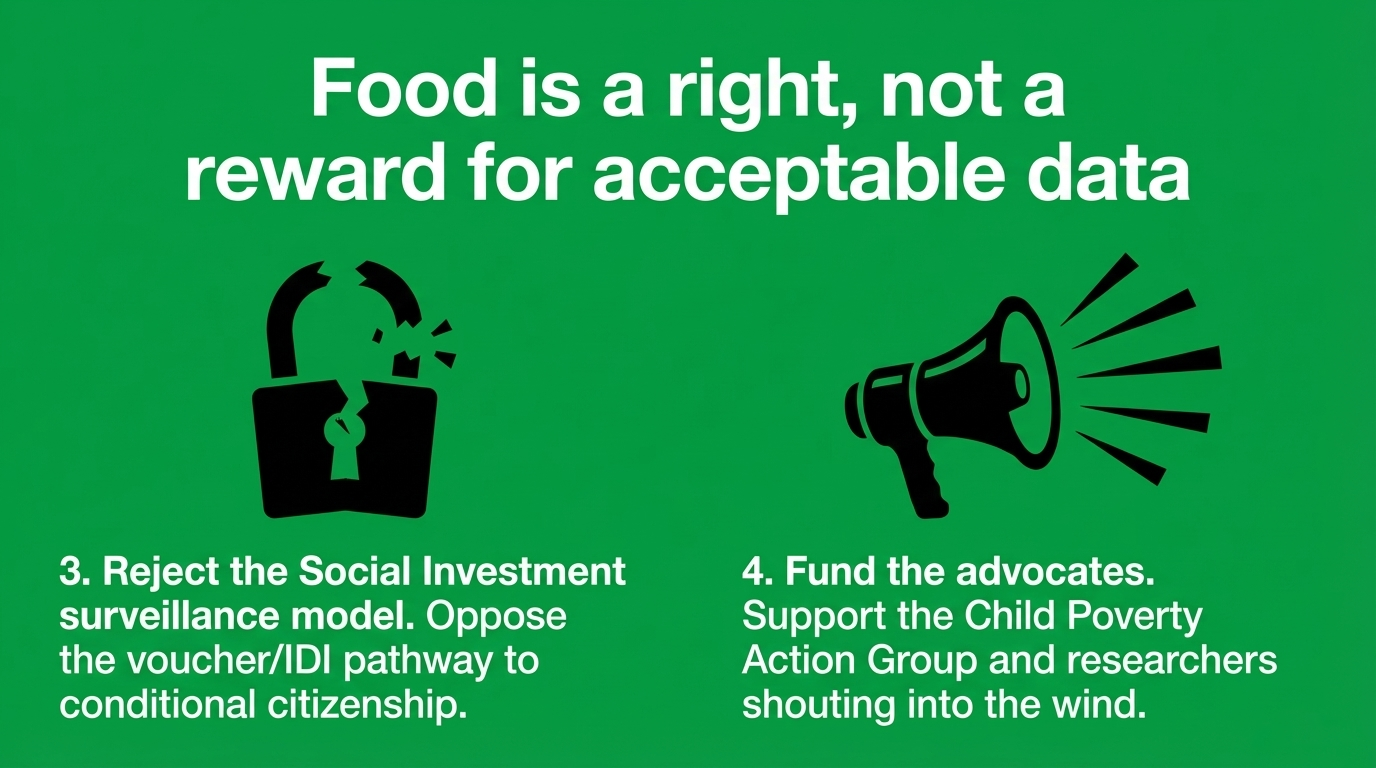
- Reject the Social Investment surveillance model for food access. Food is a right, not a reward for acceptable data footprints. The voucher/IDI targeting pathway is a road toward conditional citizenship, and Māori communities have seen where that road ends.
- Fund the researchers and the advocates. The Child Poverty Action Group, Dr Pippa McKelvie-Sebileau's research team, and Māori public health advocates have been shouting into the wind. They need platforms, resources, and political allies.
He Kōrero Whakamutunga — Conclusion: The Kūpapa of Efficiency
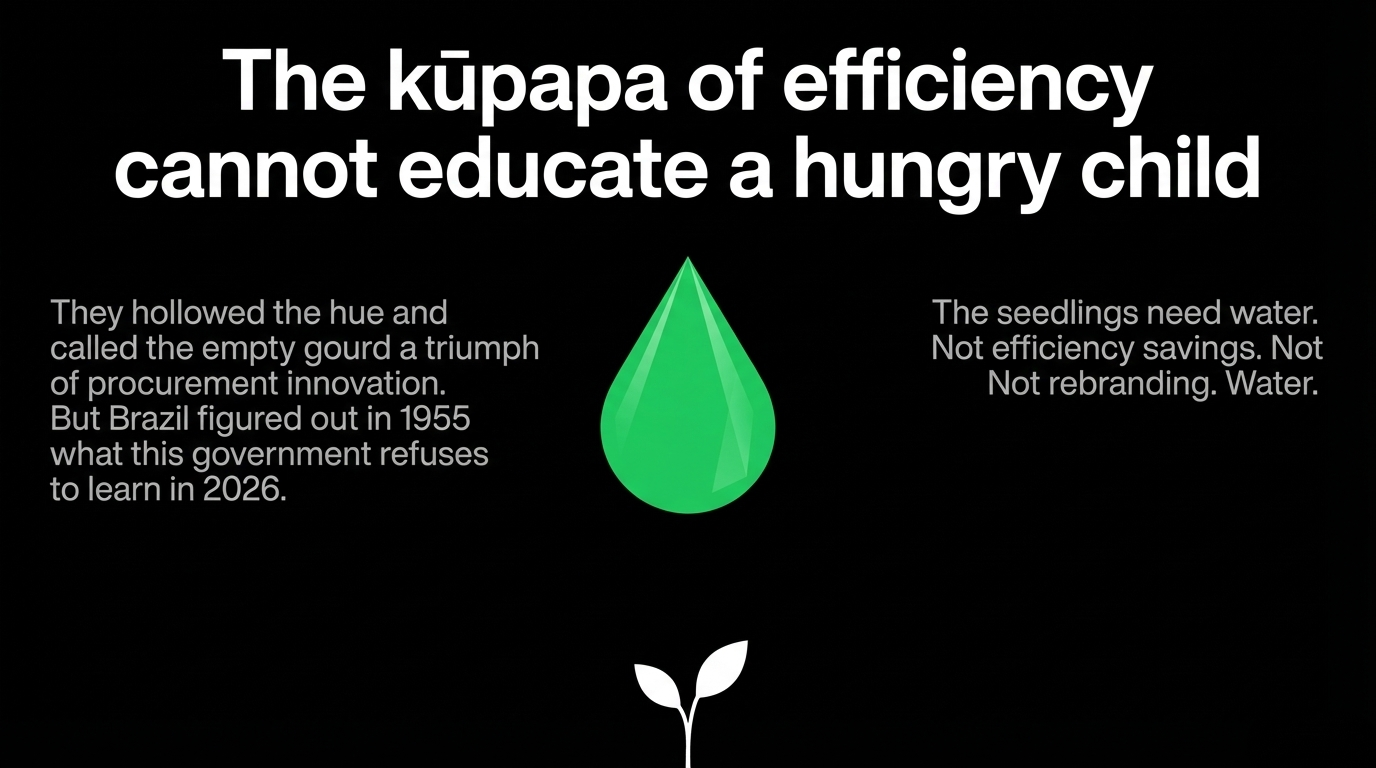
In the reo of our tūpuna, kūpapa once described those who fought on the side of the Crown against their own people. Today's kūpapa wear suits. They speak in fiscal frameworks. They invoke the taxpayer like a god who must be appeased with child hunger offerings. They strip the reo from programmes, hollow the hue, and call the empty gourd a triumph of procurement innovation.
As documented in the previous Māori Green Lantern essay Te Kūkupa Kore Parirau — the wingless pigeon who thought he was a hawk — this is a government that cannot land a policy any more than it can land a coherent argument. Luxon's coalition has now produced a school lunch programme that was reformed, rebranded, corporatised, failed, had its corporate partner ejected, been renamed to erase the reo, and is now heading toward a voucher-based surveillance model — all while 169,300 children remain in material hardship and 35% of Māori tamariki go hungry.
Brazil figured out in 1955 what this government refuses to learn in 2026: you cannot educate a hungry child. And you cannot build a just nation on a foundation of deliberately starved futures.
The seedlings need water. Not efficiency savings. Not rebranding. Not Compass Group. Water.

Ivor Jones The Māori Green Lantern Fighting Misinformation And Disinformation From The Far Right
Research conducted 8 March 2026. Sources include RNZ, 1News, Newsroom, the Beehive, Frontiers in Education, the Child Poverty Action Group, Te Ao News, the Global Alliance Against Hunger and Poverty, and Brazil's School Meals Watch observatory. All URLs verified at time of publication.