"THE TŪPUNA OF THE TURNCOAT: How a Government That Can't Keep a Promise for Five Minutes Expects You to Trust It for Five Years" - 2 March 2026
They sold you certainty. They delivered vertigo. And now they're campaigning to undo what they did yesterday — and calling it leadership.
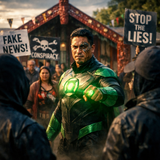
Kia ora e te whānau,
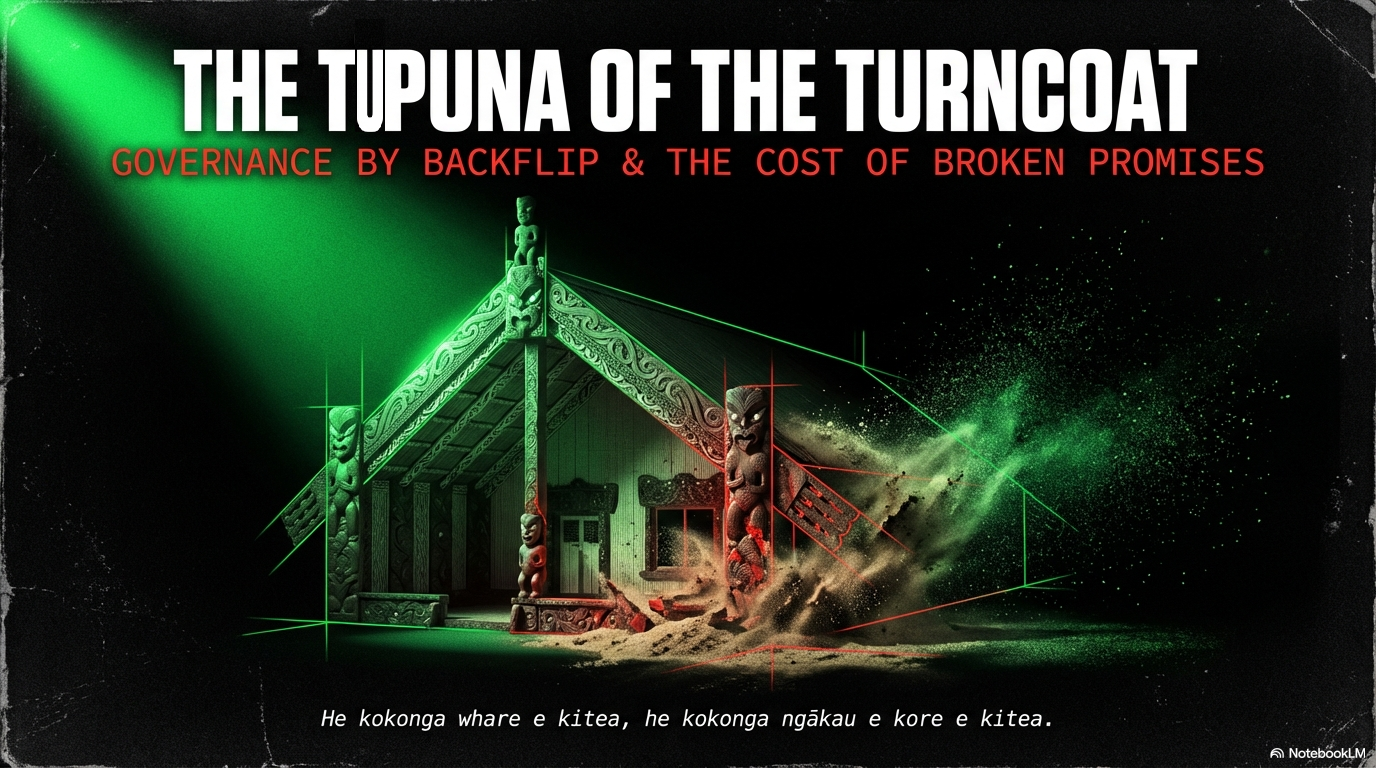
There is a whakataukī that the tupuna carved into the memory of this land long before Christopher Luxon learned to grin into a camera:
"He kokonga whare e kitea, he kokonga ngākau e kore e kitea."
The corners of a house can be seen; the corners of the heart are hidden.
The house this government built has no corners. It has no walls. It has no foundation. It is a whare built on quicksand, by architects who draw plans in pencil and carry erasers the size of their egos. Every beam they raise, they pull down. Every wall they plaster, they demolish. Every promise they carve into law, they sandblast into dust — then point to the blank stone and call it vision.
This is not governance. This is a government performing governance — a pantomime where the actors change costumes mid-scene and expect the audience to forget what they were wearing five minutes ago.
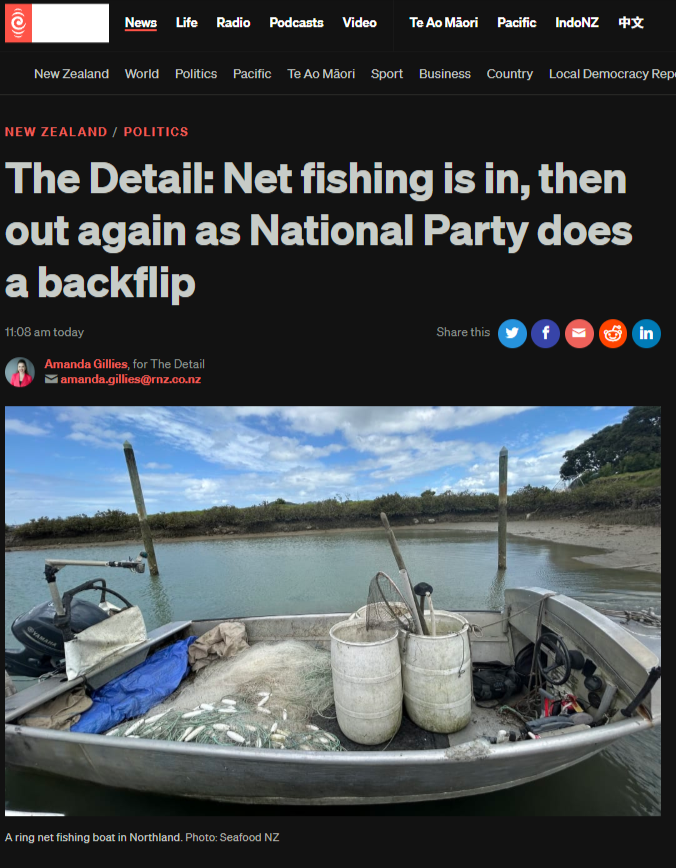
The Hauraki Gulf net-fishing backflip is not an anomaly. It is the template. It is the perfect, crystallised specimen of a government that governs by opinion poll, legislates by donor instruction, and retreats by press release — then has the breathtaking gall to call the retreat a "bold new direction."
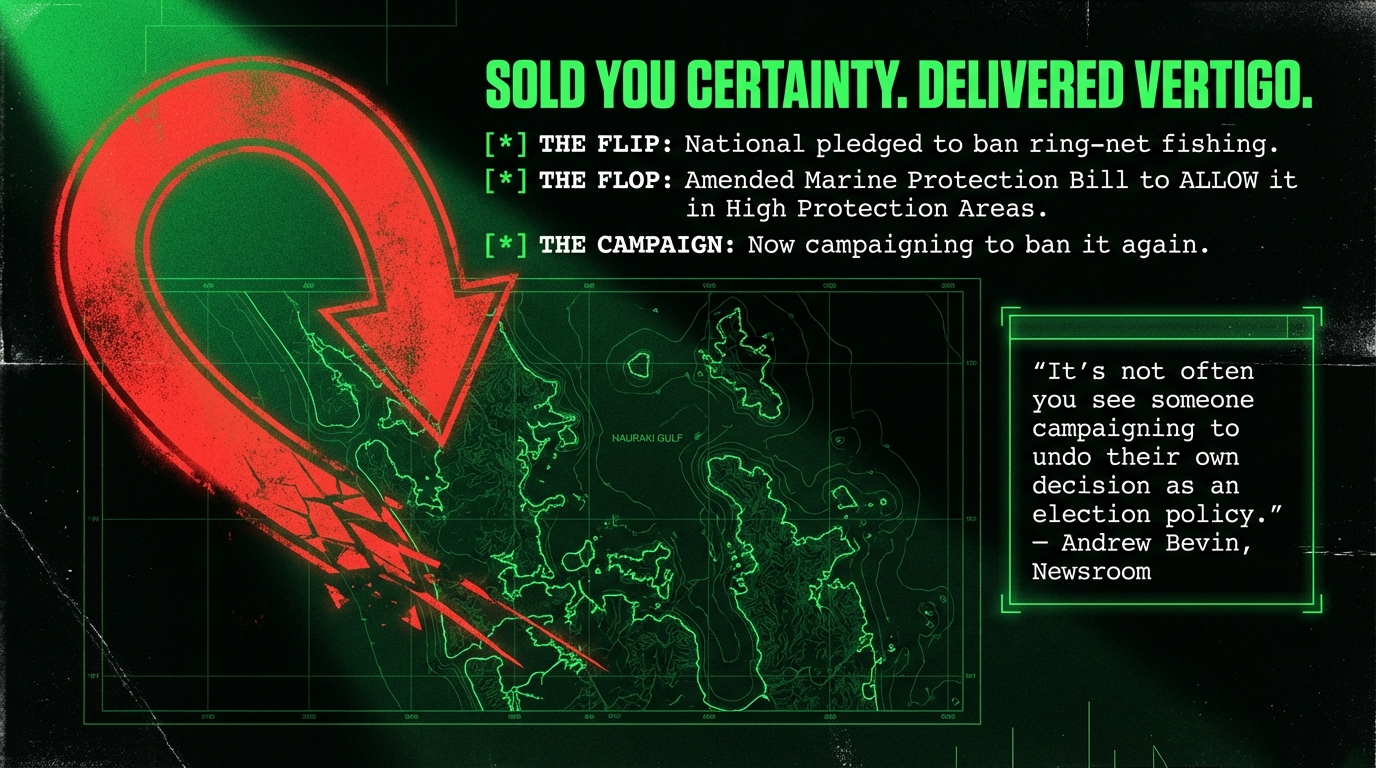
As Newsroom's Andrew Bevin observed:
"It's not often you see someone campaigning to undo their own decision as an election policy."
Nine months before the election, Tama Potaka — the same conservation minister who presided over the weakening of the Hauraki Gulf Marine Protection Act — now pledges to reinstate the ban on fishing that his own government removed. The party that, at the eleventh hour, amended the Marine Protection Bill to allow commercial ring-net fishing in two of twelve high-protection areas — against the unanimous recommendation of the environment select committee — now asks voters to trust them to undo what they just did.
As LegaSea spokesman Sam Woolford put it:
"The government has said it's okay for commercial fishing to continue inside a high protected area. Not only have we created that precedent, we've actually created exclusive commercial fishing zones."
Seafood New Zealand's own chief executive, Lisa Futschek, called the reversal "confusing" and "not about sustainability," saying:
"The fact that the National caucus has decided to roll those back early — or certainly they are electioneering on that promise — is really confusing to us, because it isn't about sustainability and we would like to understand what it is really about."
What it is really about is this: the mauri of the Hauraki Gulf became expendable when donors whispered, and became precious again when polls screamed.
The Anatomy of the Backflip: A Government That Campaigns Against Itself
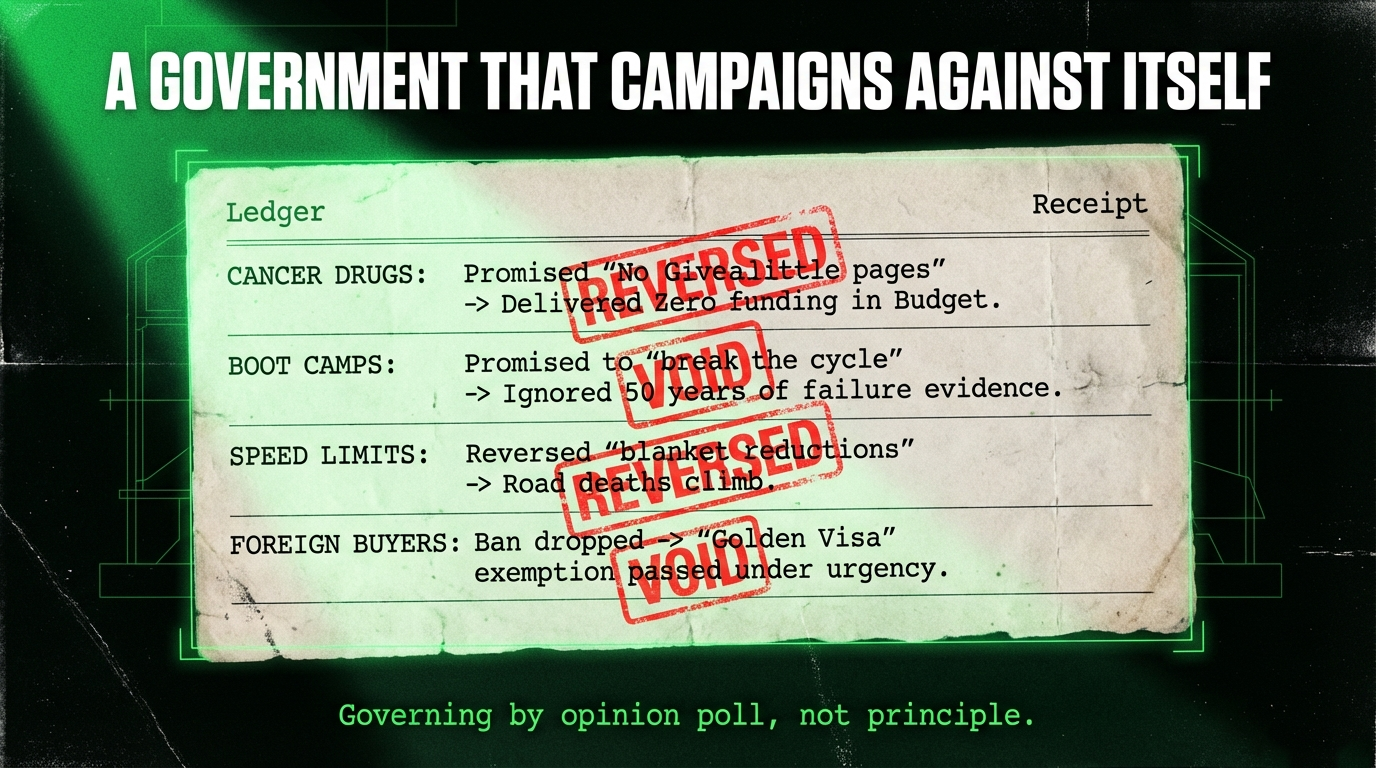
In te ao Māori, consistency is not mere preference — it is structural. The whare tūpuna stands because every pou is placed with intention, every heke carries weight, every tukutuku panel tells a story that does not change with the weather. When the pou are pulled out and re-driven every six months, the whare collapses. When the stories on the tukutuku change with every visitor, they cease to be stories at all.
This government does not build whare. It builds stage sets.
The Hauraki Gulf backflip is the latest in a parade of reversals so brazen that even the government's own supporters are left staggering. This is not a government with a kaupapa. It is a government with a Rolodex of kaupapa, shuffled daily according to which donor called last and which poll dropped hardest.
Let the record show the pattern:
The Ledger of Lies
| Policy | The Promise | The Backflip | Who Suffered |
|---|---|---|---|
| Cancer drugs | 13 life-saving treatments, "no Kiwi will need a Givealittle page" | Budget 2024: zero funded. Scrambled months later with $604m raided from next year's budget | Cancer patients who died waiting. Vickie Hudson-Craig paying $5,500/month |
| Boot camps | Military academies to "break the cycle" of youth offending | 80% reoffended. One participant killed in car crash. Two absconded. Seven of nine reoffended to residential threshold | Rangatahi Māori — overwhelmingly the targets of a programme that has failed every time it has been tried since 1971 |
| Foreign buyers ban | Dropped the $2m foreign buyer tax during coalition talks with NZ First | Quietly passed the "golden visa" exemption allowing $5m+ purchases, rushed through under urgency on a Friday night with zero public consultation | |
| Speed limits | Reversed Labour's safer speed limits, calling them "blanket reductions" | Judicial review lodged. 38 state highway sections raised. Road safety advocates warn lives will be lost | Whānau on the roads — especially rural Māori communities where higher speeds mean higher death tolls |
| Hauraki Gulf | Passed Marine Protection Act with 12 HPAs | Amended at the eleventh hour to allow commercial ring-netting in two HPAs. Now campaigns to reverse their own amendment | Tangaroa. The moana. Every species struggling to survive in a gulf in ecological free-fall |
| Section 7AA | Repealed Treaty obligations from Oranga Tamariki — despite no empirical evidence of harm, and against advice from Oranga Tamariki itself, Te Puni Kōkiri, and the Waitangi Tribunal | Now governs a child protection system stripped of its Treaty compass | Tamariki Māori — 69% of children in state care — whose whakapapa connections are now legally dispensable |
Three Examples for the Western Mind: What This Means in Language the Coloniser Cannot Ignore
Example 1: The Cancer Drug Betrayal — A Promise Written in Blood, Broken in Budget Ink
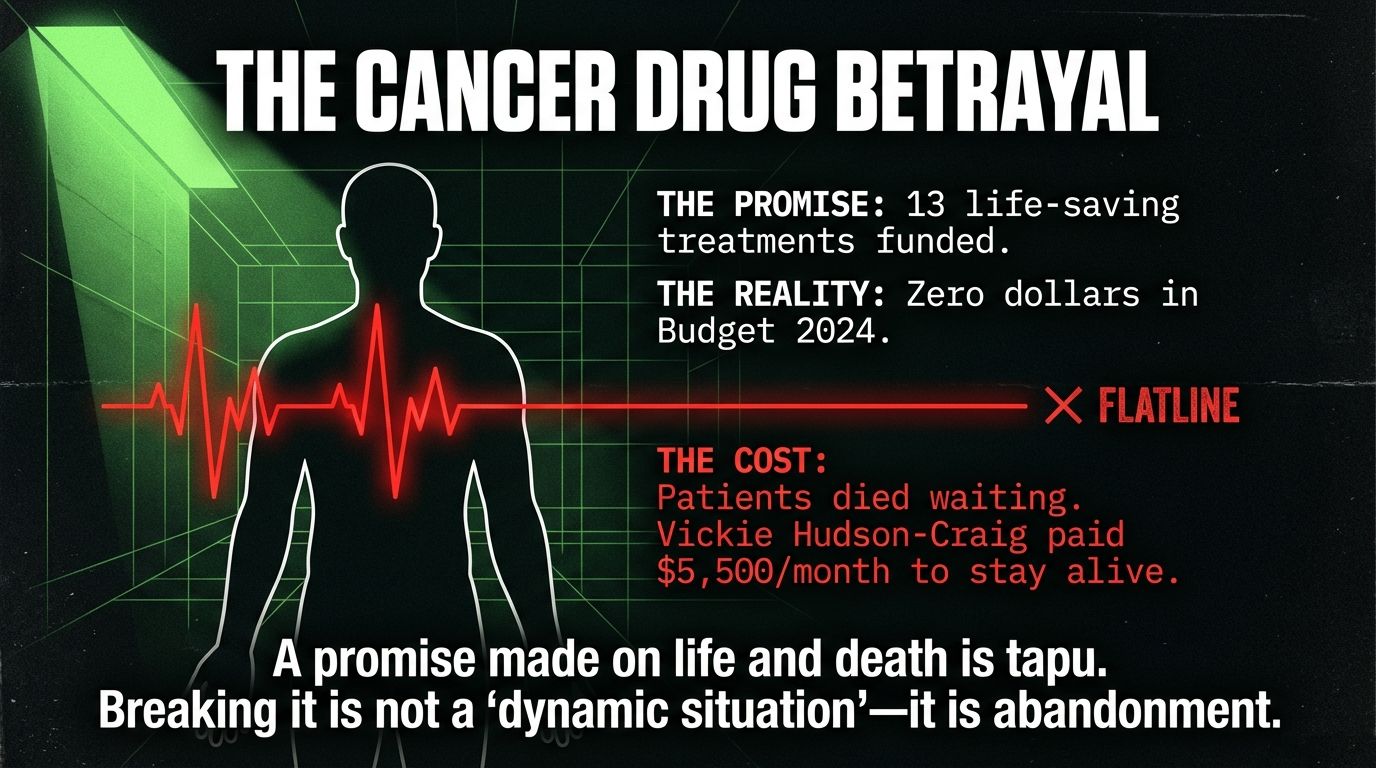
What happened: In August 2023, National promised to fund 13 cancer treatments. Christopher Luxon stood before the nation and declared:
"Under National, New Zealanders will not have to leave the country, mortgage their home, or start a Givealittle page to fund potentially lifesaving and life-extending treatments."
Budget 2024 contained zero dollars for these drugs. Not one cent. Vickie Hudson-Craig, who has melanoma tumours on her heart, was paying $5,500 per month to stay alive. She wept. Patient advocate Melissa Vining called it "absolutely despicable" and said: "There are people who will literally die as a result of that decision."
Luxon's response? It was a "dynamic situation."
The quantified harm: Patients died waiting. Others depleted savings, mortgaged homes, set up the very Givealittle pages Luxon swore would become unnecessary. Blood cancer patients discovered that the six drugs eventually funded covered less than 1% of sufferers, and none treated myeloma — forcing patients to flee to Australia or cash out their KiwiSaver.
The tikanga violation: In te ao Māori, a promise made in the context of life and death carries the weight of tapu. A rangatira who promises healing and delivers abandonment has not merely broken a promise — they have violated the mana of the vulnerable. The word given before an election, to people facing death, is not a "dynamic situation." It is a covenant. When that covenant is broken, the mauri of every person who trusted it is diminished. This is not metaphor. This is the lived reality of whānau who buried loved ones while politicians shrugged.
The solution: Fully fund the 13 promised cancer drugs and the outstanding blood cancer medications. Establish a transparent, depoliticised pathway for Pharmac funding that cannot be held hostage to election cycles. Remove the ability for politicians to make life-and-death promises they cannot keep — or face formal accountability when they break them. As previously covered by The Māori Green Lantern in "The Road Cone Parable", this government's pattern is consistent: manufacture a crisis, fund performative cruelty, defund life-saving care.
Example 2: Boot Camps — A $5 Million Monument to Ideological Stupidity
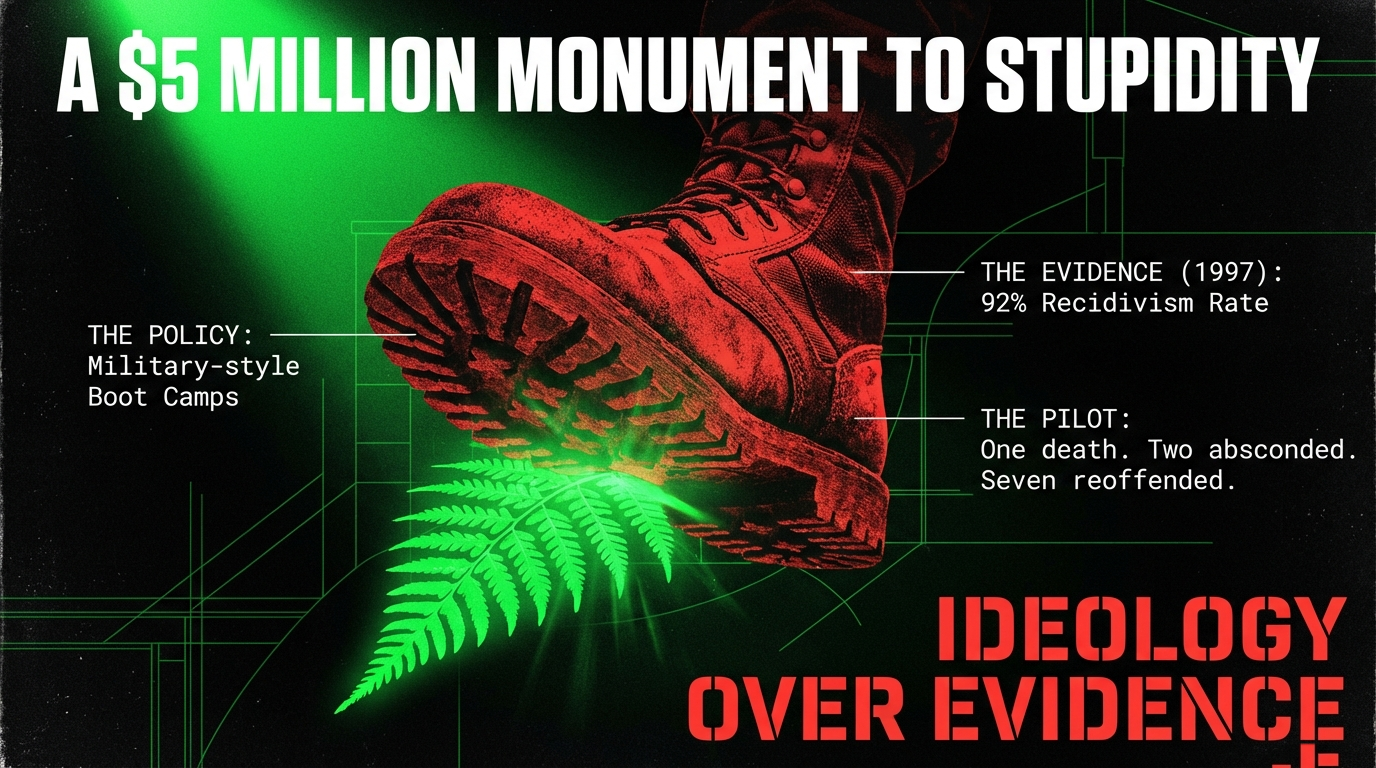
What happened: National promised military-style boot camps would break the cycle of youth offending. The evidence against boot camps stretches back to 1971. By 1997, the recidivism rate for correctional training graduates was 92% after five years — three times the general population rate. Even National's own Corrections Minister Paul East admitted in 1997 that the approach did not work.
They did it anyway. Of the ten participants in the pilot, one died in a car crash, two absconded (one from a tangi), and seven of the nine survivors reoffended to a threshold requiring return to residence. Some reoffending included assault, carjacking, and robbery. Labour's Willow-Jean Prime called it "a complete failure."
The government's response? It announced plans to make boot camps permanent and extend residential periods to twelve months.
The quantified harm: Millions spent on a programme with decades of evidence showing it increases harm. Meanwhile, the genuinely effective Te Pae Oranga programme — which reports 81% non-reoffending rates and is grounded in tikanga Māori restorative justice — is overlooked because it doesn't photograph well for the six o'clock news.
The tikanga violation: In te ao Māori, rangatahi are taonga — treasures held in trust by the collective. The community is responsible for the wellbeing of its young. Boot camps sever that collective responsibility. They rip rangatahi from whānau, from whenua, from whakapapa, and place them in an environment designed around punishment, not restoration. This violates whanaungatanga (kinship), manaakitanga (care for the vulnerable), and kaitiakitanga (guardianship). When one of those rangatahi died in a car crash in Tirau, the mauri of an entire community was damaged. The tangi was not just for a young man — it was for a system that treated him as a political prop rather than a human being.
The solution: Defund boot camps immediately. Redirect all funding to Te Pae Oranga and kaupapa Māori youth justice programmes with proven outcomes. Invest in housing, education, mental health, and whānau support — the actual drivers of youth offending. As covered in "The Colosseum of Kingsland" on The Māori Green Lantern, this government consistently chooses spectacle over substance, bread-and-circuses over genuine care.
Example 3: Section 7AA — Severing the Umbilical Cord of Whakapapa
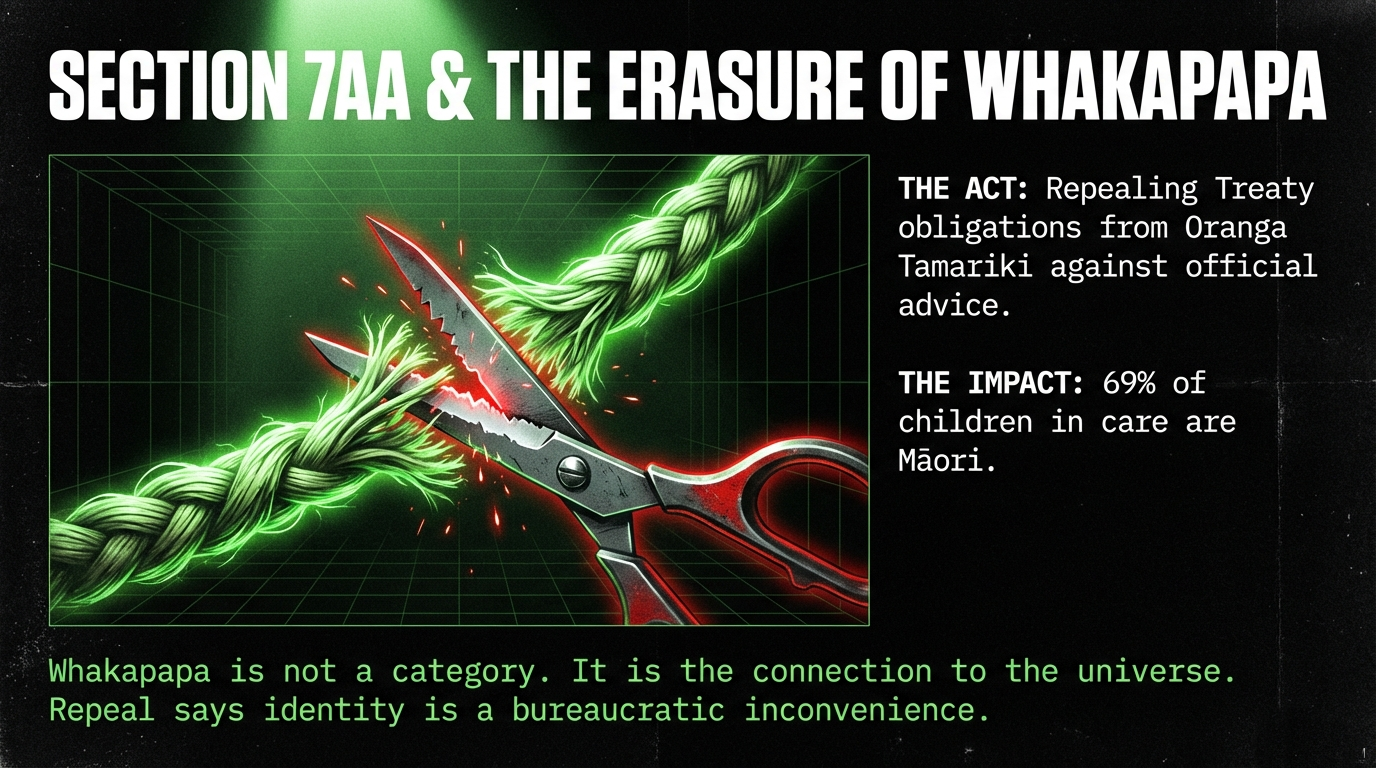
What happened: The coalition repealed Section 7AA of the Oranga Tamariki Act — the provision that bound the child protection agency to the principles of Te Tiriti o Waitangi, required it to reduce disparities for tamariki Māori, and prioritised whakapapa connections in care placements.
Children's Minister Karen Chhour claimed Section 7AA had "led to confusion" and resulted in "children being put second." When pressed for empirical evidence, she said: "I'm not exactly sure what you're asking for there."
Te Puni Kōkiri — the government's own Ministry for Māori Development — advised against the repeal, saying the decision was "based on anecdotal evidence as opposed to facts." Oranga Tamariki itself warned the repeal would "diminish the unique rights, needs and voices of tamariki Māori". The Waitangi Tribunal summoned the minister to provide evidence — and Crown lawyers filed to block the summons.
Former Children's Minister Tracey Martin — a NZ First MP — told the select committee:
"We do not have a child protection service in this country. We have a child crisis service... 7AA is the key to making this change."
The quantified harm: 69% of children in state care are Māori. The Royal Commission of Inquiry into Abuse in State Care documented decades of violence, torture, and cultural erasure inflicted on tamariki removed from whānau. Section 7AA was the legislative response — the bare minimum structural commitment to never repeat that history. Its repeal strips the only mechanism requiring Oranga Tamariki to account for Māori outcomes. It returns the system to the colour-blind ideology that produced the abuse in the first place.
The tikanga violation: In te ao Māori, whakapapa is not a bureaucratic category. It is the umbilical cord connecting a child to the universe — to atua, to tūpuna, to whenua, to whānau. To sever that cord is not a policy decision. It is an act of spiritual violence. The concept of whāngai — where children are raised by wider kin while maintaining connection to birth parents — has existed for centuries. The Western system of adoption severs those connections. Section 7AA was the acknowledgement that Māori children need Māori solutions. Its repeal says: your whakapapa is dispensable; your culture is optional; your identity is a bureaucratic inconvenience. As documented in The Māori Green Lantern's "Whakapapa — The Layers They Buried", this repeal is not an isolated act — it is part of a coordinated demolition of every structure designed to protect Māori existence within Crown systems.
The solution: Reinstate Section 7AA immediately. Fund iwi-led care and protection services. Implement the Royal Commission's recommendations in full. Recognise that the best interests of the child and the cultural identity of the child are not competing priorities — they are the same thing.
The Hidden Architecture: Five Connections They Don't Want You to See
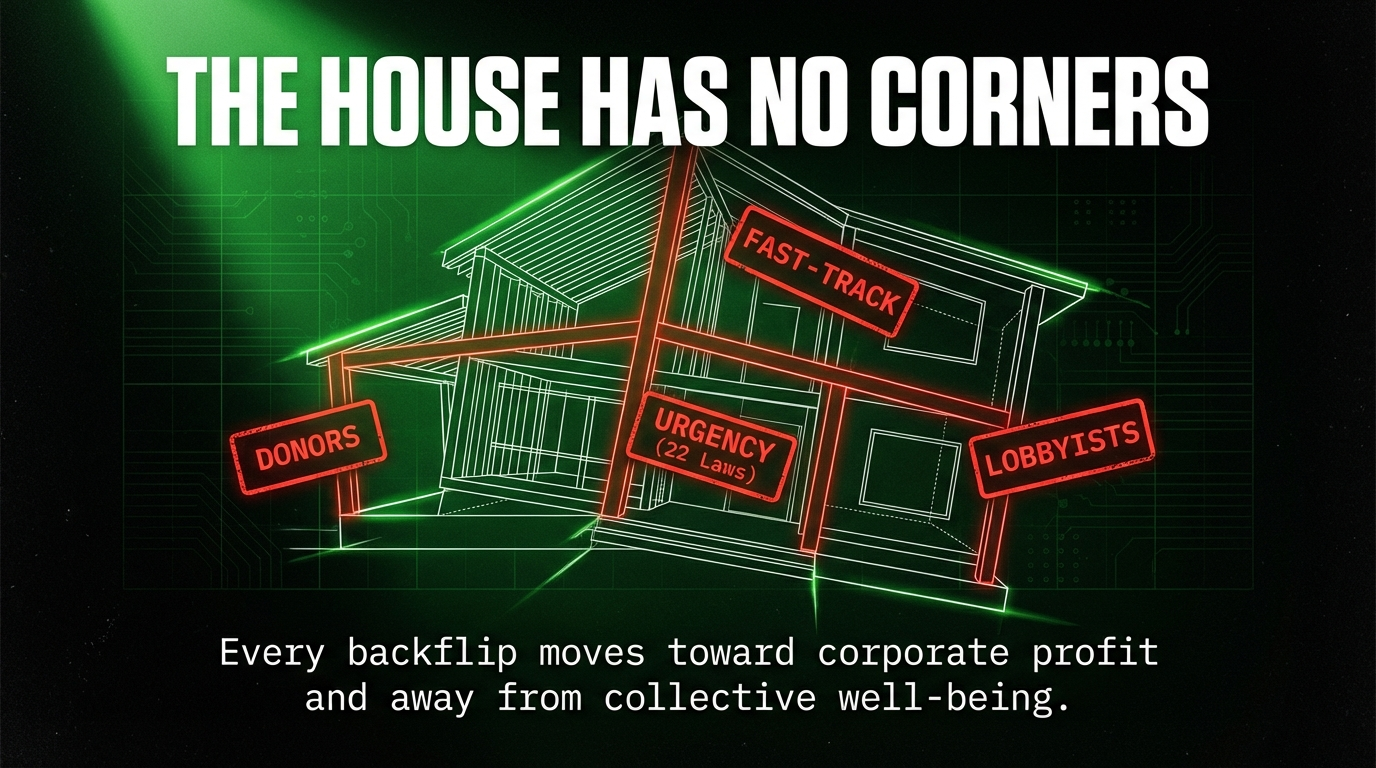
Connection 1: Every backflip serves the same master. The cancer drugs were delayed to fund tax cuts. The boot camps serve law-and-order theatre to distract from housing failure. The Hauraki Gulf was opened to commercial fishers to satisfy industry donors. The speed limits were raised to perform "common sense" while road deaths climb. Section 7AA was repealed to deliver on ACT's ideological project to erase Treaty obligations from law. Every backflip lands in the same direction: toward corporate profit and away from collective wellbeing.
Connection 2: The urgency machine. The coalition has used parliamentary urgency to pass laws — skipping public consultation — at least 22 times, nearing the 17-year record of 28 in a single term. Pay equity changes were announced Tuesday morning, introduced that afternoon, and passed Wednesday evening. The foreign buyers ban was reversed on a Friday night under urgency, after select committee had already closed — meaning zero public feedback. Even David Farrar, a former National Party staffer, said of the pay equity rush: "I have not seen and can't see from a public policy point of view how you justify saying we're not going to let the public have a say."
Connection 3: The Fast-Track precedent turns every backflip into permanent infrastructure. The Fast-Track Approvals Act allows 149 projects to bypass environmental and Treaty protections. When 95% of submitters opposed amendments to the Act, the government passed it anyway after a submission window of just 10 days. Forest & Bird warns the amendments represent a concentration of ministerial power not seen since Muldoon.
Connection 4: The Treaty erasure is systematic, not incidental. The Treaty Principles Bill. Section 7AA repeal. Removal of Māori wards referendums. Passport redesign to push te reo below English. Co-governance dismantled. Review of all Treaty clauses in legislation. Te Pāti Māori co-leader Debbie Ngarewa-Packer said: "The stripping down of te reo Māori, or marginalising our indigenous identity, reflects this government's sad obsession with erasing Te Tiriti o Waitangi and dragging us back to a monocultural past."
Connection 5: The homelessness-to-criminalisation pipeline completes the circle. Emergency housing slashed. Rough sleeping criminalised with move-on orders for people as young as 14. Labour's Carmel Sepuloni called it "punch-down politics". The government creates the homelessness through policy, then punishes the homeless for existing.
The Tūpuna Would Not Recognise This Whare
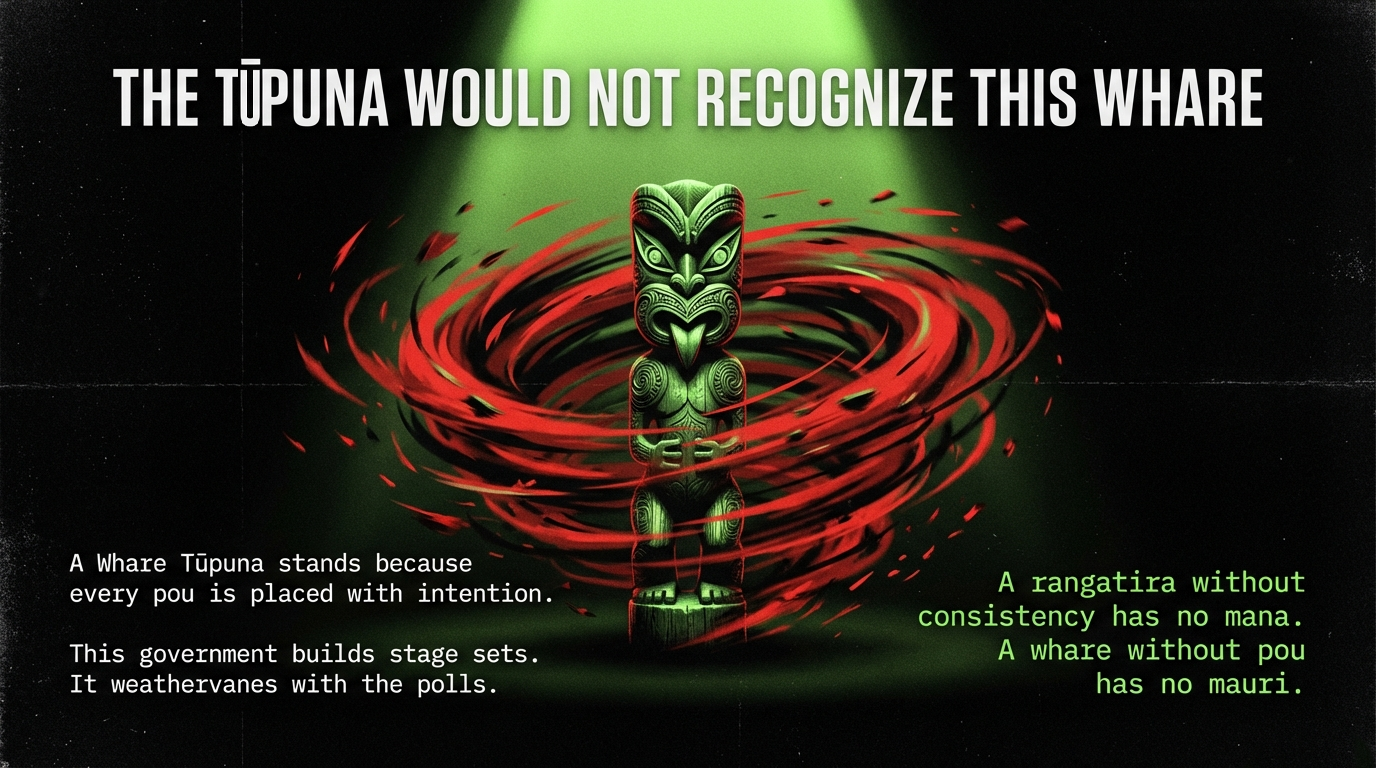
A government that reverses its own decisions with every electoral breeze is not governing. It is weathervaning. It spins with every gust of public opinion and calls the spinning "responsiveness." It abandons its own legislation and calls the abandonment "courage." It campaigns against its own record and calls the campaign "fresh ideas."
The Hauraki Gulf net-fishing reversal is not a one-off. It is the defining metaphor of this entire parliamentary term: a government that builds only to demolish, promises only to betray, legislates only to repeal — and then asks you to re-elect it so it can do the whole performance again.
In te ao Māori, this is the ultimate violation of mana. A rangatira who cannot hold their word has no mana. A whare with no pou has no mauri. A government with no consistency has no legitimacy.
The mauri of Aotearoa's governance is dying — not because the country lacks capability, but because those entrusted with kaitiakitanga have traded their taiaha for a weather vane.
Kia kaha. Kia māia. Kia manawanui.
He waka eke noa — but not this waka. This one has no rudder.
Nāku noa, nā Ivor Jones — Te Māori Green Lantern
Koha Consideration
Every koha signals that whānau are ready to fund the accountability that a backflipping, weathervaning government will never provide. When the Crown writes promises in pencil and erases them before the ink of its own legislation is dry — when cancer patients die waiting, rangatahi are caged in failed boot camps, and tamariki Māori have their whakapapa severed by ministerial decree — it falls to us to fund our own truth.
It signals that rangatiratanga includes the power to fund our own truth tellers — especially when the government campaigns against its own record and expects us not to notice.
Kia kaha, whānau. Stay vigilant. Stay connected. And if you are able, consider a koha to ensure this voice continues to track the backflips, name the names, and hold the line when the Crown will not.
If you are unable to koha, no worries! Subscribe or follow The Māori Green Lantern, kōrero and share with your whānau and friends — that is koha in itself. Every share is a pou driven into ground they cannot erase.
Three pathways exist:
Koha — Support: https://app.koha.kiwi/events/the-maori-green-lantern-fighting-misinformation-and-disinformation-ivor-jones
Subscribe to the Māori Green Lantern: https://www.themaorigreenlantern.maori.nz/#/portal/support
Direct bank transfer: HTDM, account number 03-1546-0415173-000
Ivor Jones The Māori Green Lantern Fighting Misinformation And Disinformation From The Far Right
Research conducted 2 March 2026 using web search, URL verification, and document analysis tools. Sources consulted: RNZ, 1News, Newsroom, NZ Parliament, Oranga Tamariki, Te Ara, Waitangi Tribunal reports, LegaSea, academic publications, and government Beehive releases. All URLs tested at time of research.