"THE WAKA THAT ATE ITSELF: How Te Pāti Māori's Kawa-Killers Handed the Crown Its Most Valuable Weapon — For Free" - 11 March 2026
When the guardians of rangatiratanga torch their own wharenui, the arsonists don't need to be white
Mōrena Aotearoa,
The Vision That Bled
Once, the waka moved as one. Te Pāti Māori rose from the ashes of broken promises and the wreckage of a Treaty Principles Bill that this white supremacist, neoliberal Crown government — drunk on its own colonial arrogance — wielded like a taiaha against the very people it was elected to govern. The waka was supposed to be unsinkable. Then, from within the hull, someone began pulling out the nails.
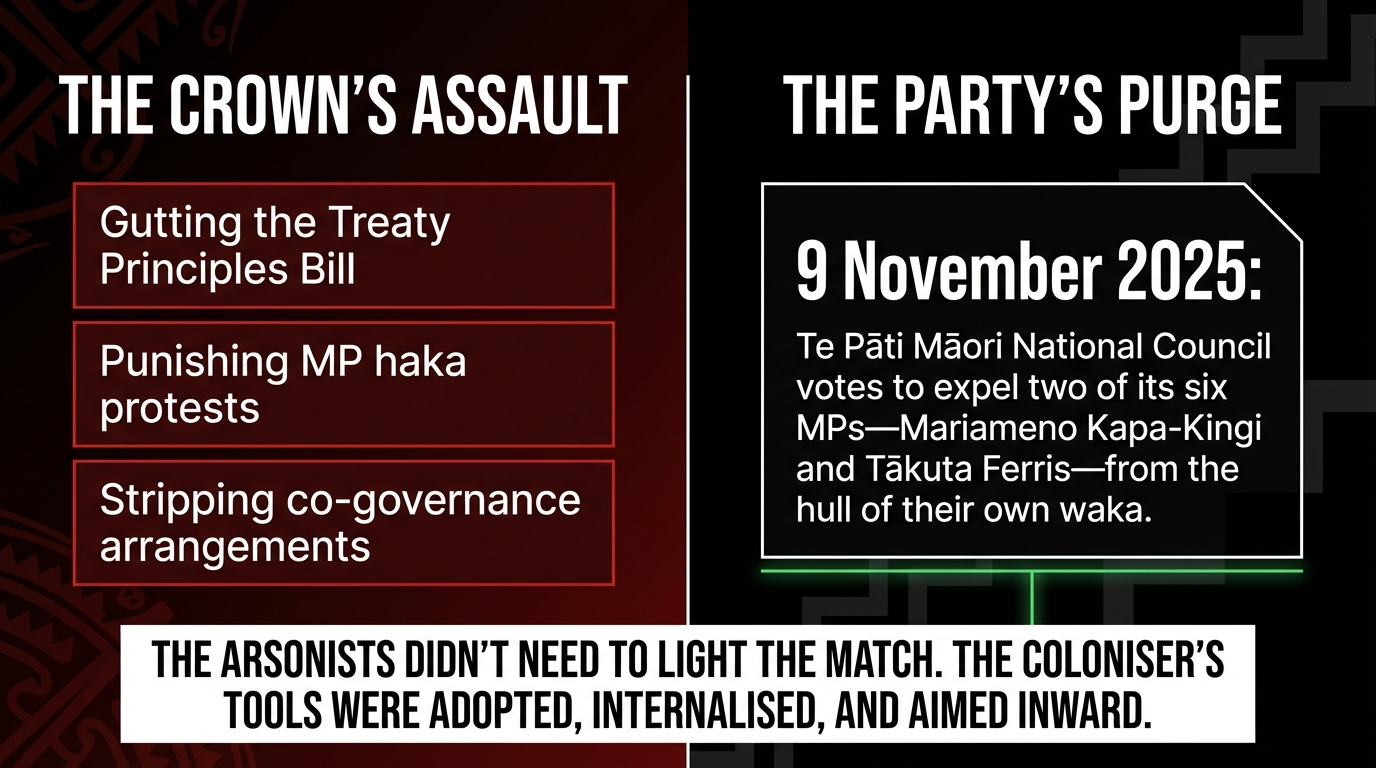
On 9 November 2025, as confirmed by 1News, the Te Pāti Māori National Council voted to expel two of its six MPs — Mariameno Kapa-Kingi (Te Tai Tokerau) and Tākuta Ferris (Te Tai Tonga) — from the party. The official charge? "Misuse of funds" and "disrepute." The actual charge? Daring to breathe differently from the inner circle.
And this white supremacist government sat back, poured itself a glass of fine Marlborough Sauvignon Blanc, and watched the waka burn.
The Corpse of Process
Here is the metaphor: imagine a rangatira is dragged before a tribunal at midnight, with no notice, no electorate representatives present, no right of reply — and then told she has "breached the kawa." Except the kawa — Te Pāti Māori's own binding constitution — was the very instrument that was violated against her.
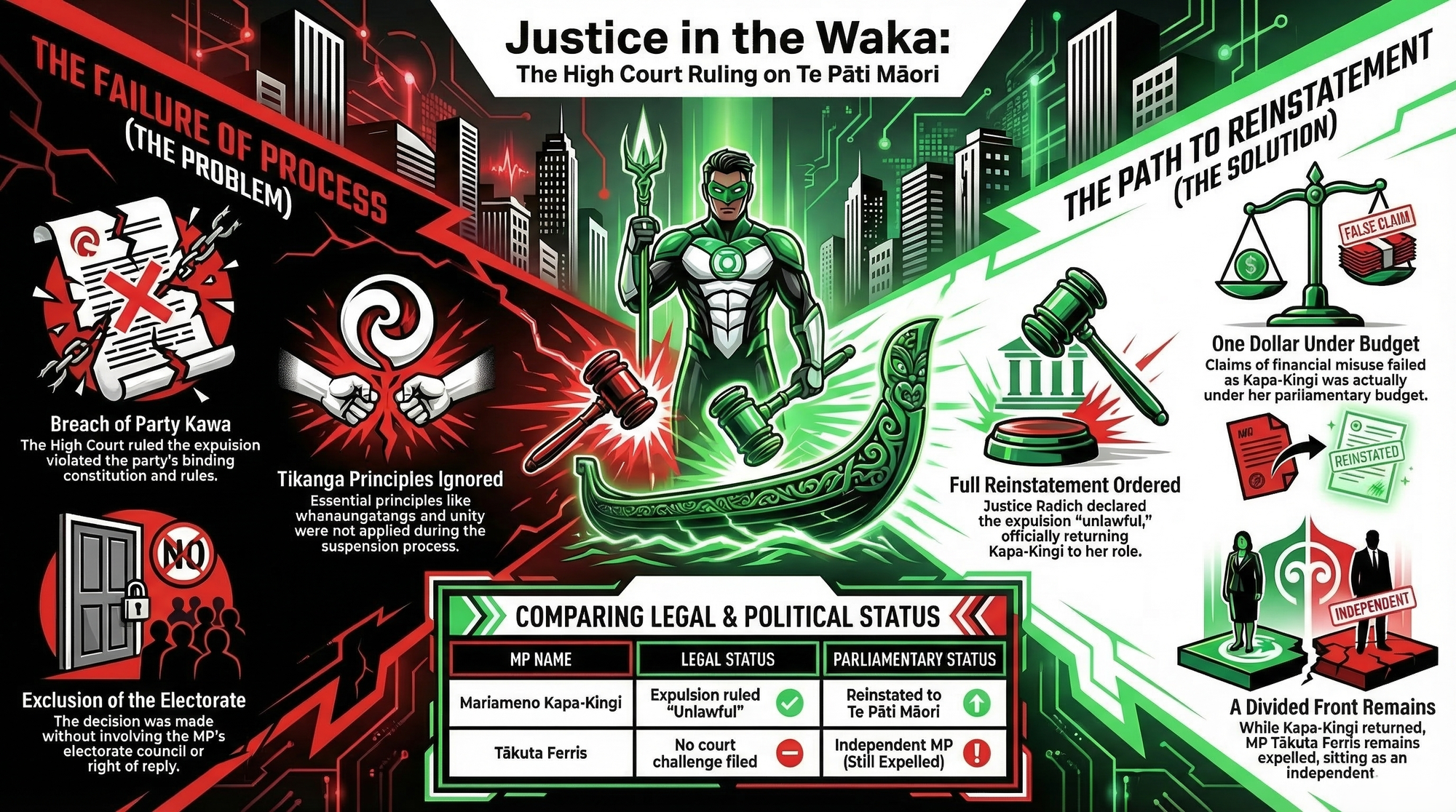
As RNZ reported, lawyer Mike Colson KC argued before Justice Paul Radich that the party's National Council did not have the power to expel Kapa-Kingi, and that the entire process was conducted in breach of both the dispute resolution procedures and tikanga itself. The High Court ultimately agreed — Justice Radich ruled, as RNZ confirmed, that the resolutions to suspend and expel Kapa-Kingi were "in breach of the party's kawa" and therefore unlawful.
Let that land. The Māori Party — the movement founded to protect tikanga, to centre te ao Māori, to weaponise mātauranga against colonial erasure — had its own actions declared unlawful by a Pākehā court because it breached its own tikanga processes. The Crown did not need to lift a finger.
🌿 Koha Consideration
Mariameno Kapa-Kingi had to take a Māori party to a Pākehā court to defend tikanga. Tākuta Ferris still sits outside the waka, stranded on the shore by the same unlawful process. John Tamihere remains entrenched, shielded by the very ambiguous constitution Justice Radich condemned. This is the story the party's press releases will not tell, and the story the Luxon government hopes no one tells loudly enough to matter.
This essay — naming that contradiction, tracing those hidden connections, refusing to let power rewrite the story — is only possible because whānau fund it.
Every koha signals that rangatiratanga includes the power to fund our own truth-tellers. The Māori Green Lantern will keep wielding the taiaha — exposing the kawa-killers inside and outside the movement — as long as whānau keep this waka on the water.
Kia kaha, whānau. Stay vigilant. Stay connected. And if you are able, consider a koha to ensure this voice continues.
If you are unable to koha — no worries! Subscribe, follow, kōrero and share with your whānau and friends. That is koha in itself.
Three pathways:
🌿 Direct Koha — Support The Māori Green Lantern here
📩 Subscribe for essays direct to your inbox — Subscribe here
🏦 Direct bank transfer — HTDM, account number 03-1546-0415173-000
🎧 Go deeper

— Listen to the full podcast audio analysis of this essay and its sources:
Deep Dive Podcast — The Waka That Ate Itself
The Architecture of the Purge
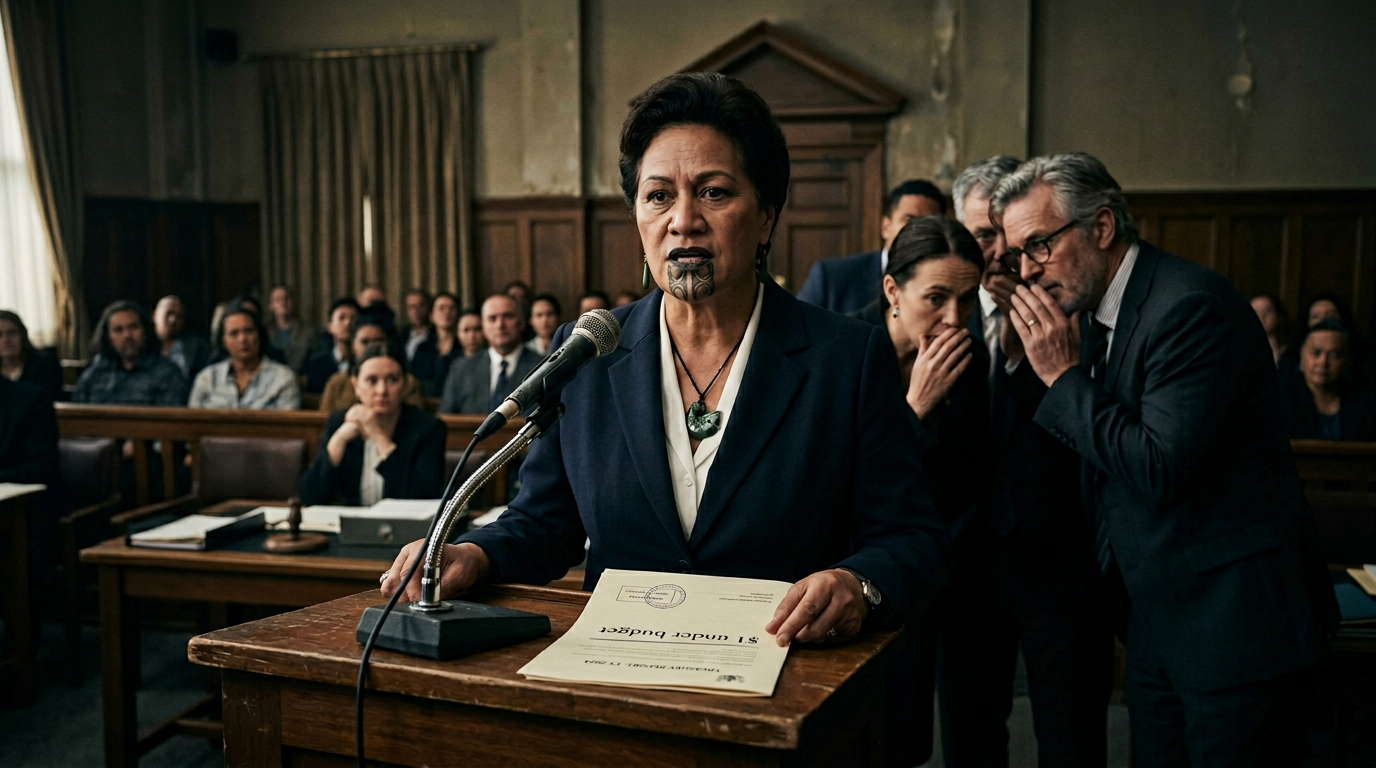
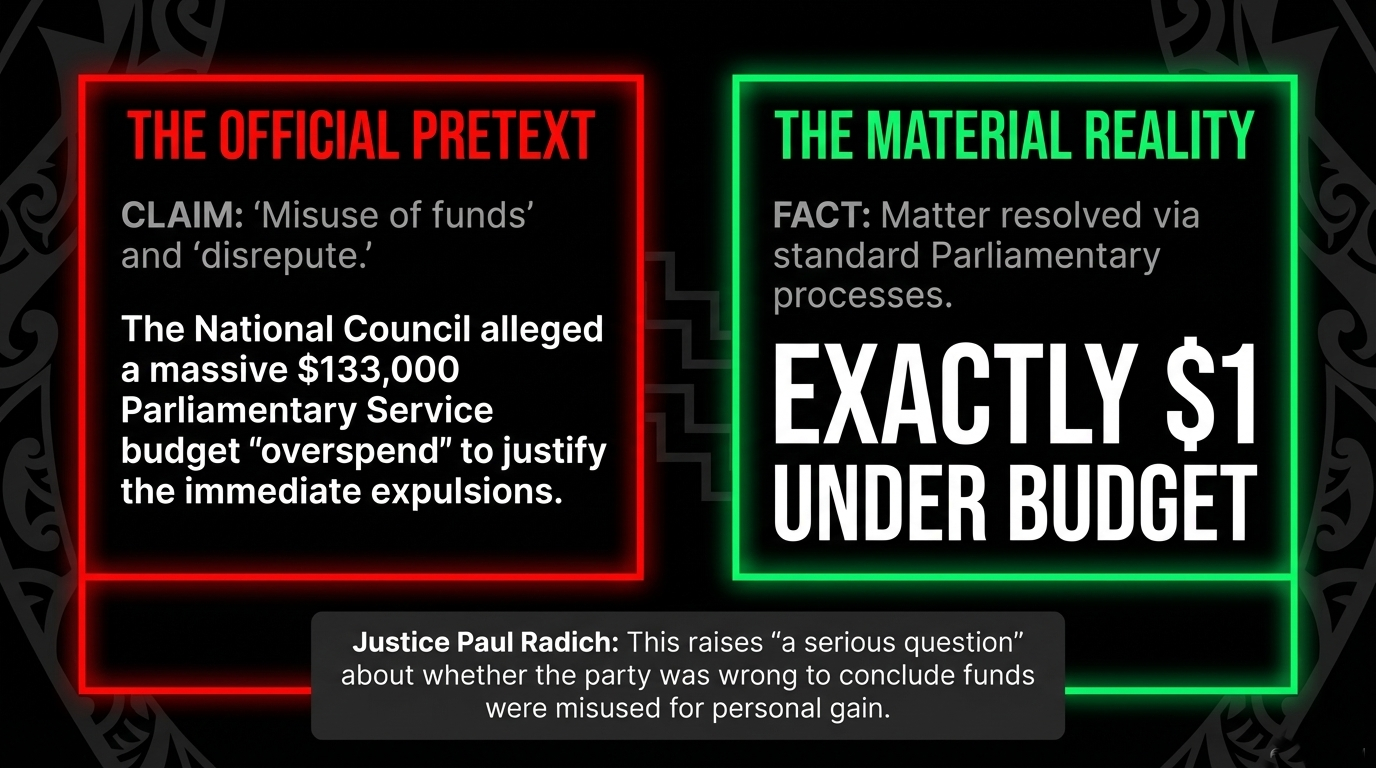
The financial pretext crumbles under examination. 1News revealed that the so-called "overspend" — a disputed $133,000 Parliamentary Service budget matter — was resolved through Parliamentary Service processes, with Kapa-Kingi finishing the year one dollar under budget. Justice Radich himself noted this raised "a serious question" about whether the party was wrong to conclude she misused funds for personal gain.
One dollar. One dollar under budget. And they tore the waka apart for it.
The real architecture of the purge, as Waatea News documented, was political. Party President John Tamihere — unelected, unanswerable to any electorate — claimed in his extraordinary document "The Anatomy of Madness" that Kapa-Kingi and Ferris had sought to challenge the co-leadership of Rawiri Waititi and Debbie Ngarewa-Packer. A challenge to leadership. In a democratic movement. The horror.
The settlement offer Tamihere floated, as Te Ao News detailed, involved reconvening a full National Council — on the condition that Kapa-Kingi abandon her legal challenge to Tamihere's presidency. In other words: drop the accountability, or stay expelled. This is not tikanga. This is extortion wearing a pounamu pendant.
Five Hidden Connections the Crown Hopes You Miss
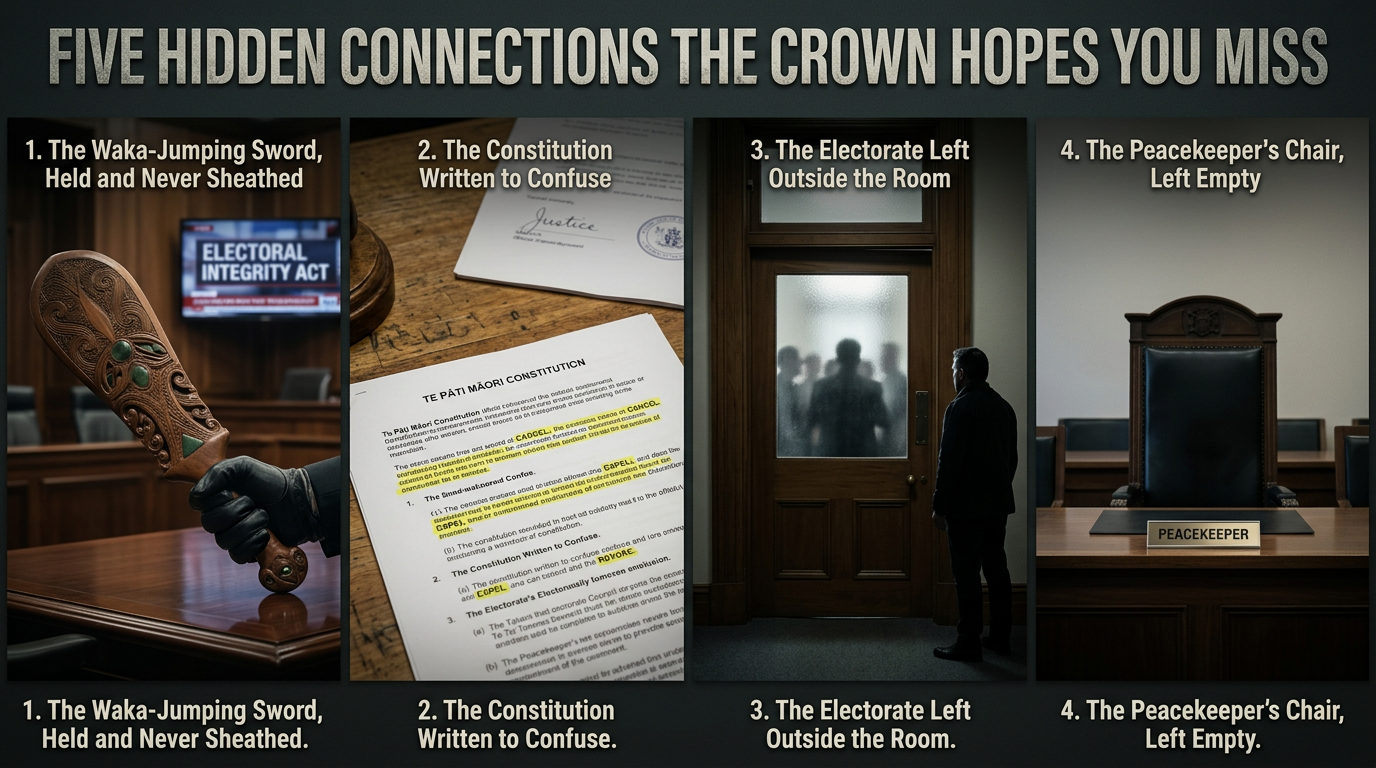
1. The Waka-Jumping Sword, Held and Never Sheathed
The Luxon government's Electoral Integrity Act — the waka-jumping legislation that this neoliberal regime uses to shackle parliamentary democracy — hung over Kapa-Kingi's head like a mere waiting to fall. The Spinoff reported that co-leaders threatened the possibility of invoking waka-jumping to force a by-election in Te Tai Tokerau. A weapon designed by the Crown — used as a threat inside a Māori movement. The coloniser's tools, adopted, internalised, aimed inward.
2. The Constitution Written to Confuse
Justice Radich himself observed that Te Pāti Māori's 32-page constitution uses the terms "cancel," "expel," and "revoke" interchangeably, ruling — as The Spinoff documented — that "It's not an easy constitution to follow." A deliberately ambiguous kawa is not a kawa — it is a trap door that power can spring at will. Tamihere knew this. And used it.
3. The Electorate Left Outside the Room
The Te Tai Tokerau Electorate Council was not invited to the hui that voted to suspend Kapa-Kingi. The Te Tai Tonga electorate had previously abstained from the suspension vote, as 1News reported. Tākuta Ferris was expelled while four of the party's own MPs were absent from the vote. In tikanga, this is not a decision — it is a decree. The difference between rangatiratanga and authoritarianism is exactly this: who is allowed in the room.
4. The Peacekeeper's Chair, Left Empty
RNZ documented that the death of the party's "peacekeeper" left a vacuum that made tikanga-based resolution impossible. The National Iwi Chairs Forum urgently intervened, stating "meeting with Te Pāti Māori to help resolve internal challenges on a tikanga basis is a priority for ngā iwi katoa." This intervention was ignored. When the tohunga of peace is gone and the iwi chairs' counsel is brushed aside — you are no longer operating from mātauranga. You are operating from ego.
5. The Government That Watched and Benefited
While Te Pāti Māori destroyed itself from within, the Luxon government was in the middle of its most sustained assault on Māori rights in modern history — gutting the Treaty Principles Bill process, punishing MP haka protest with parliamentary suspension, stripping Māori from co-governance arrangements, and dismantling every institutional protection fought for over decades. As The Māori Green Lantern previously exposed: "The government attacks tikanga. Labour campaigns to destroy the only Māori voice. The media amplifies the feast. The internal fractures hand them all the knife."
Three Western Examples to Understand What Was Destroyed
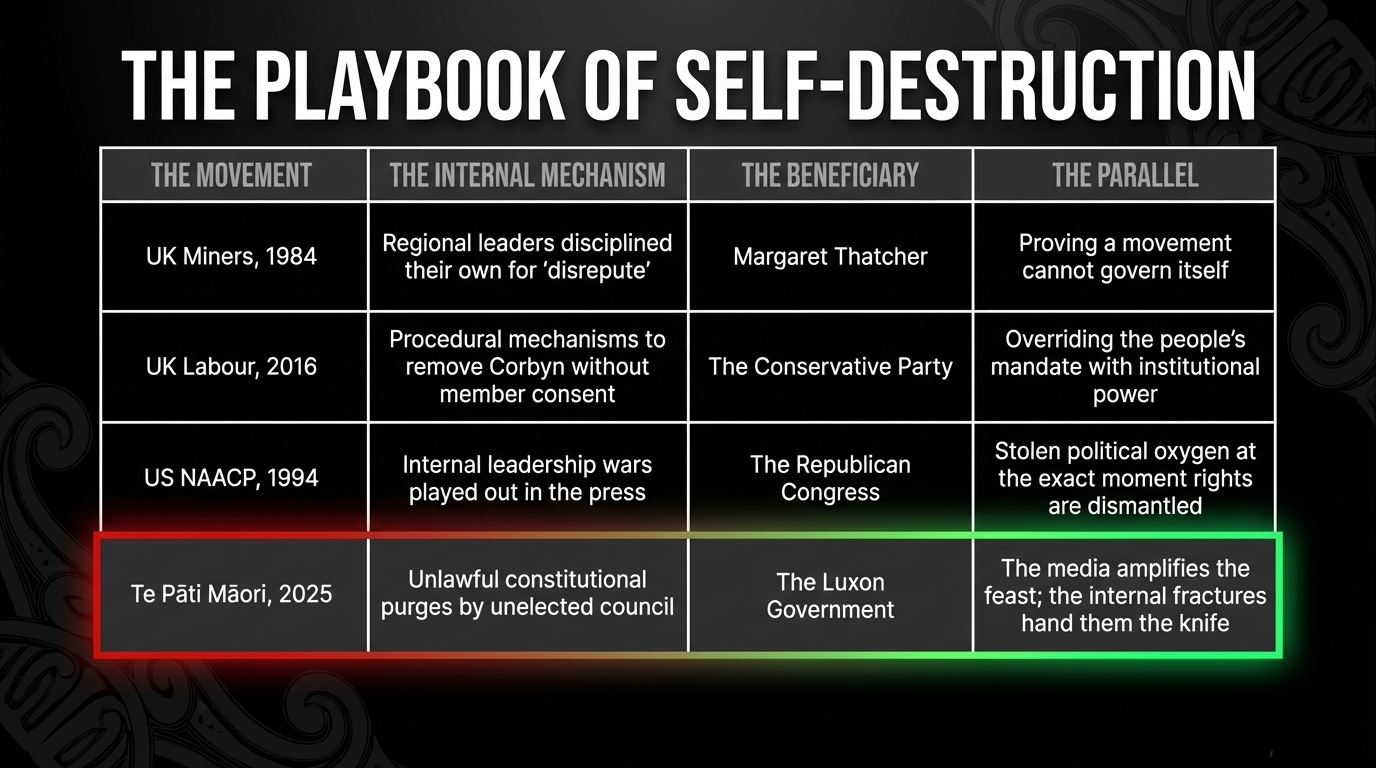
Example 1: The Union That Fired Its Own Shop Steward (UK, 1984)
During the British Miners' Strike, the National Union of Mineworkers' internal splits — where regional leaders began disciplining their own members for "disrepute" — handed Thatcher exactly the weapon she needed to crush the movement. The government didn't break the union. The union broke the union. The parallel: When Te Pāti Māori expelled its own electorate MPs on procedurally unlawful grounds, it handed the Luxon government a gift worth more than any policy win — proof, broadcast nationally, that the Māori political movement cannot govern itself. Every Pākehā voter who was "on the fence" about Māori co-governance just got their excuse.
Example 2: The Labour Party's Coup Against Jeremy Corbyn (UK, 2016)
When the British Parliamentary Labour Party moved against Corbyn using procedural mechanisms — removing whips, triggering leadership contests, leaking internal reports — without the consent of the party membership who had elected him, they destroyed their own electoral coalition for a generation. The harm was quantified: Labour lost the 2019 election by 80 seats. The parallel: Te Pāti Māori had 6 MPs fighting the hardest battle Māori have faced in Parliament since the Foreshore and Seabed. The expulsion of two of those MPs — not by the people of Te Tai Tokerau or Te Tai Tonga, but by an unelected National Council — is the exact same playbook. The people's mandate, overridden by institutional power from within.
Example 3: The NAACP's Internal Crisis (USA, 1994)
When the NAACP — America's oldest civil rights organisation — descended into financial mismanagement allegations and internal leadership wars that played out in the press, donations collapsed by 40%, chapters haemorrhaged members, and the organisation lost a decade of political leverage at the precise moment the Republican Congress was dismantling civil rights protections. The parallel: Te Pāti Māori's internal war was fought publicly, loudly, and in front of every media platform willing to amplify it at the precise moment this neoliberal government was dismantling the institutional architecture of Māori political power piece by piece. The harm is not theoretical. It is measurable in the political oxygen stolen from the fight.
The Impact on Tikanga — For Those Who Need It Spelled Out
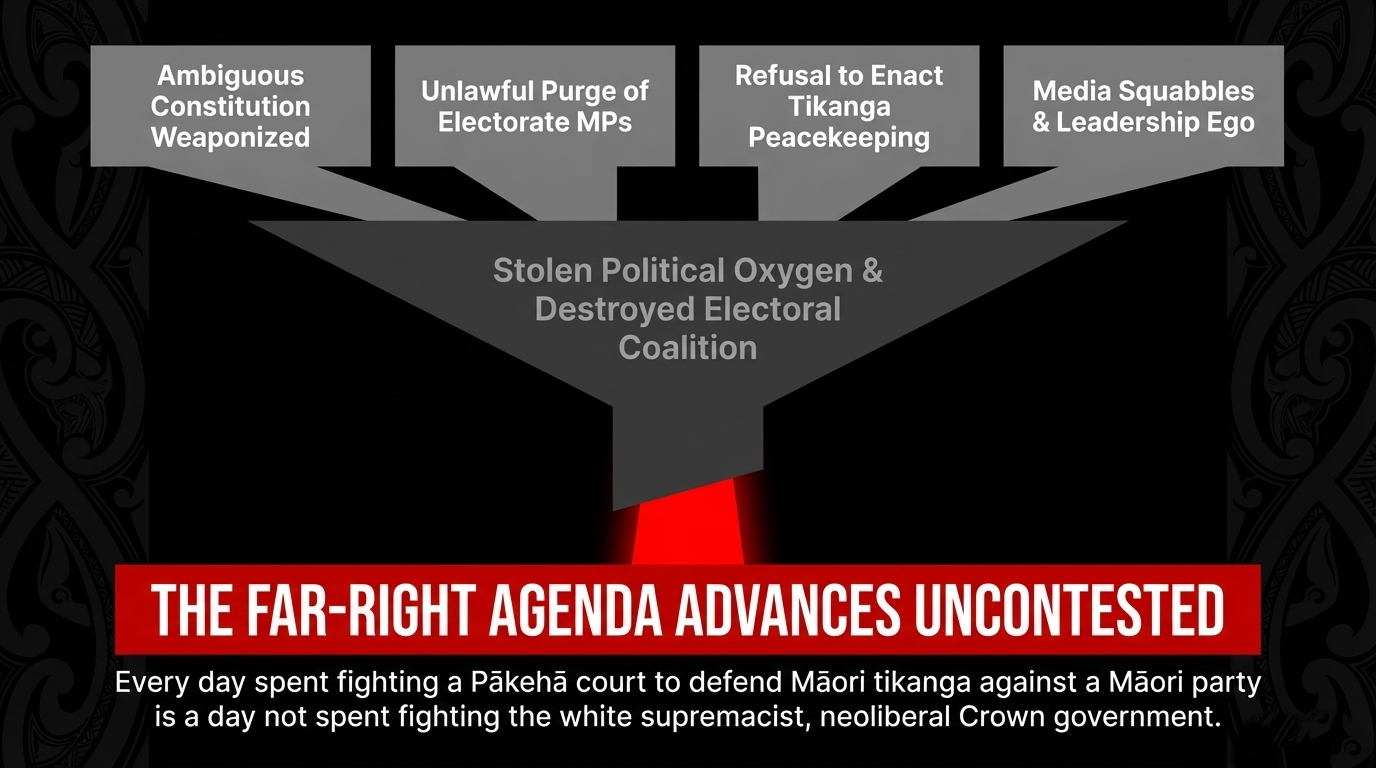
Tikanga is not a procedural checklist. It is not Robert's Rules of Order written in te reo. Tikanga is a living, relational system of ethics — the accumulated whakaaro of generations of Māori who understood that process is not separate from outcome; process IS the outcome.
When you expel a rangatira without her electorate present, without written notice, without following the dispute resolution process embedded in your own kawa, you are not just breaking a rule. You are violating the relational fabric that makes the decision legitimate in the first place. A decision made in breach of tikanga does not merely lack legal validity — it lacks mana. It has no mauri. It cannot bind people who were not honoured in the process of making it.
Kapa-Kingi herself said it clearly, as 1News reported:
"From the beginning, my hope was to resolve this through tikanga, kōrero and houhou te rongo. Court was never the path I wanted to take, and it was only chosen when all other options had been exhausted."
She went to a Pākehā court to defend Māori tikanga against a Māori party. Read that again.
The Court Ruled — The Crisis Did Not End
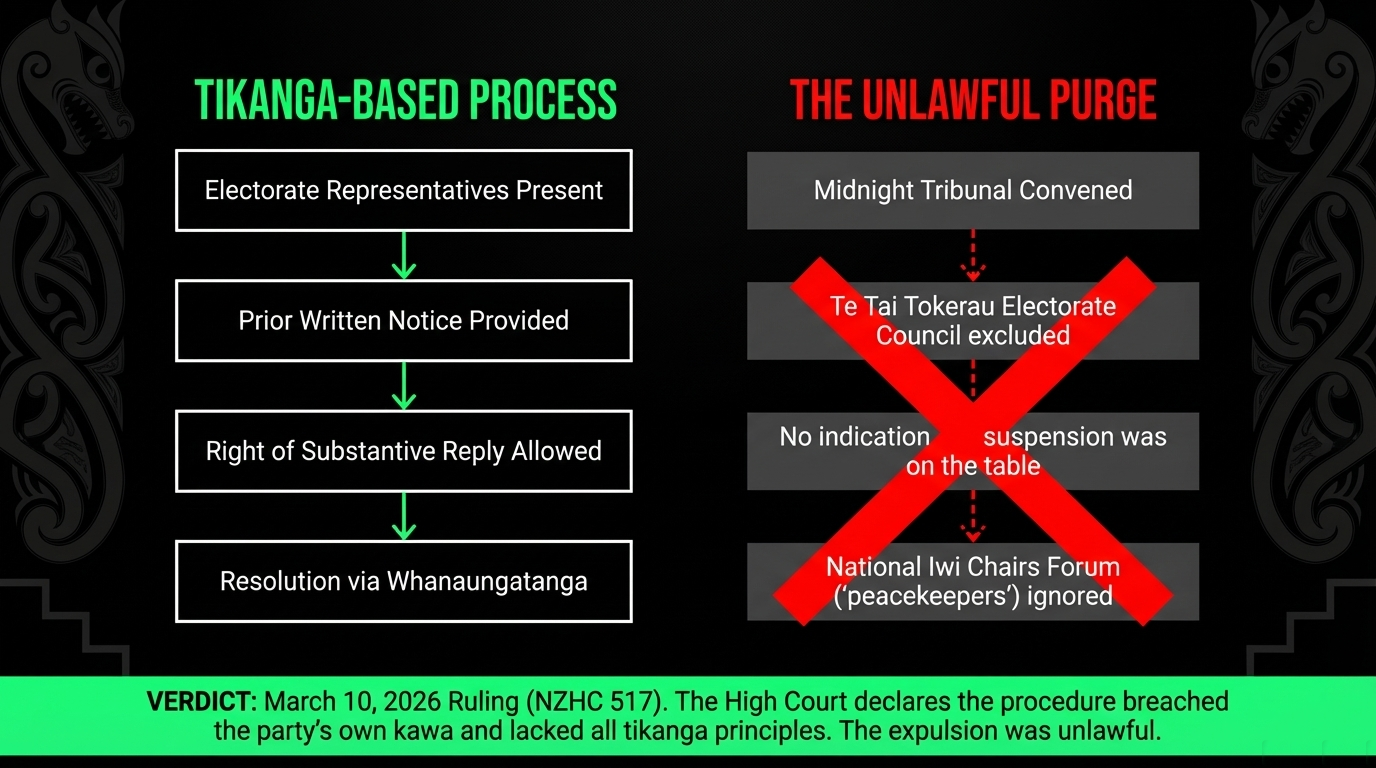
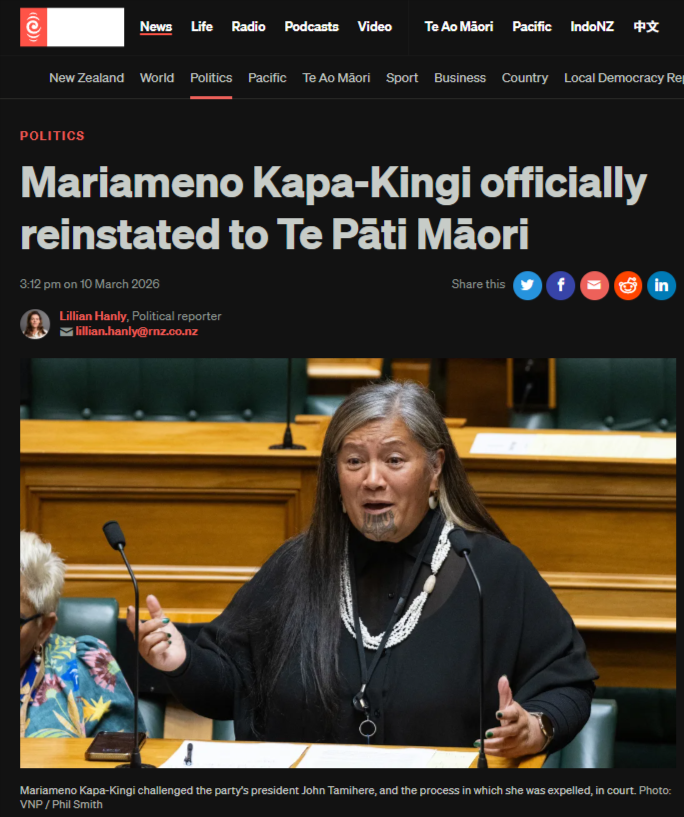
The March 10, 2026 High Court ruling (NZHC 517) reinstated Kapa-Kingi as a member of Te Pāti Māori. Te Pāti Māori issued a terse statement acknowledging the decision and saying it "would not be engaging in ongoing commentary or relitigating this matter through the media" — which is precisely what an institution says when it has lost but refuses to reckon with why it lost. A court order is not reconciliation. It is a legal minimum. The battles that follow are larger, harder, and remain entirely unfought.
Tākuta Ferris: The Paddler Still on the Shore
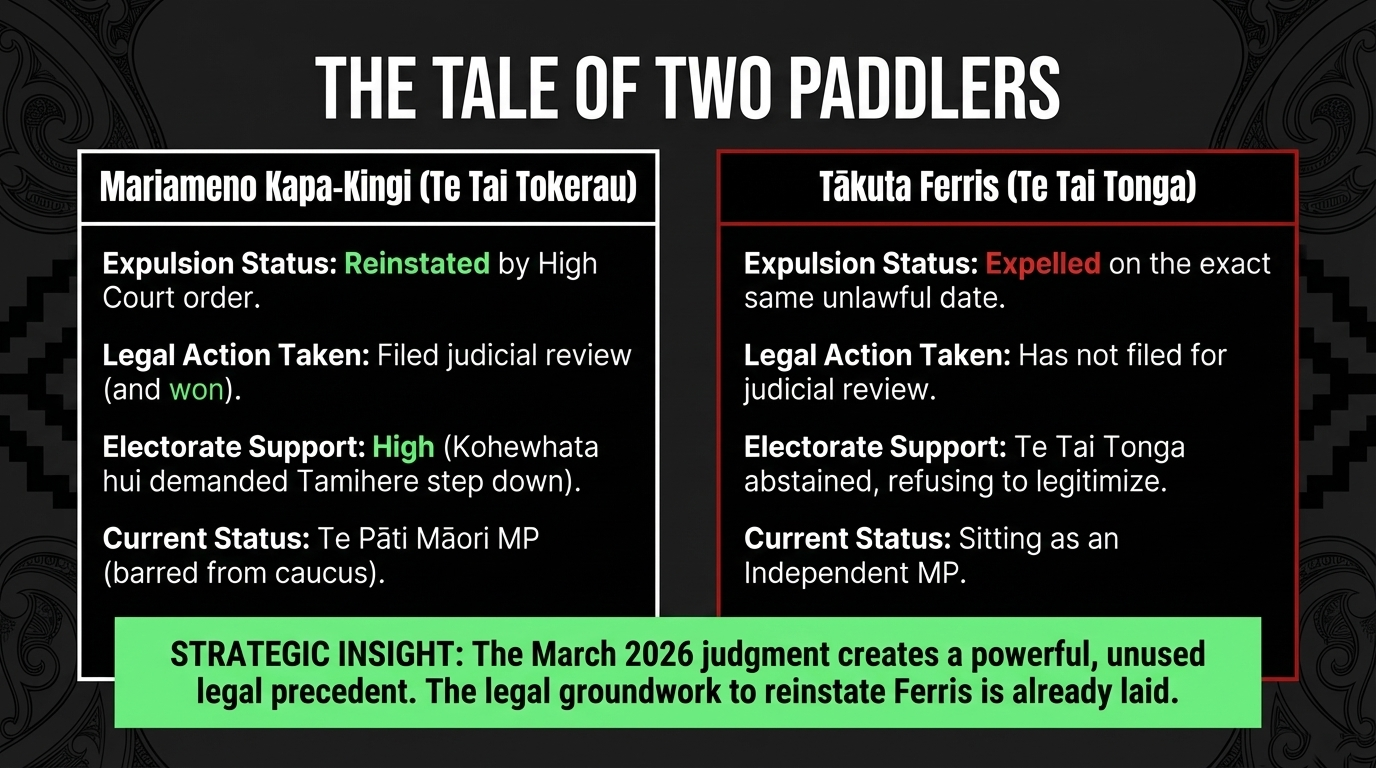
This is the open wound no one is talking about loudly enough. Ferris — the MP for Te Tai Tonga — was expelled in the same unlawful process on 9 November 2025. The critical difference: while Kapa-Kingi immediately filed for judicial review and won, Ferris has not challenged his expulsion in court, as the NZ Herald confirmed. Without a court challenge, there is no legal mechanism to compel his reinstatement — regardless of the fact that Justice Radich found the same process used against both MPs to be unlawful. The ruling was Kapa-Kingi v Tamihere. Not Ferris v Tamihere.
His electorate never accepted the expulsion. Te Tai Tonga did not merely object — they refused to legitimise the process entirely, abstaining from the National Council vote as RNZ reported, because accepting the motion would imply they agreed the process was valid. Ferris stated plainly: "No executive has the authority to strip the mandate of our electorate — that power rests with Te Tai Tonga alone."
The March 2026 judgment creates powerful legal precedent Ferris could now deploy — Justice Radich found the National Council lacked constitutional power to expel through this process. If he chose to file, the legal groundwork is already laid. The question is whether he wants to return on those terms, and whether the party would resist or welcome it. Adding further weight to his case, Ferris made the explosive allegation — reported by RNZ — of "despicable" treatment of terminally ill MP Takutai Tarsh Kemp by the party leadership. Those allegations were never formally investigated or publicly resolved.
| Factor | Status |
|---|---|
| Court challenge filed | No — Ferris never filed judicial review |
| Electorate position | Supportive — Te Tai Tonga rejected expulsion process |
| Current parliamentary status | Independent MP — expelled from Te Pāti Māori |
| Legal precedent available | Yes — Kapa-Kingi ruling directly applicable |
| Party leadership openness | Unclear — no public statement post-March ruling |
| Election year pressure | High — 2026 election makes his absence a strategic liability |
The waka has one paddler back. The other stands on the shore. In an election year, that is not a footnote — it is a structural crisis.
John Tamihere: The Root Infection No Court Order Has Treated
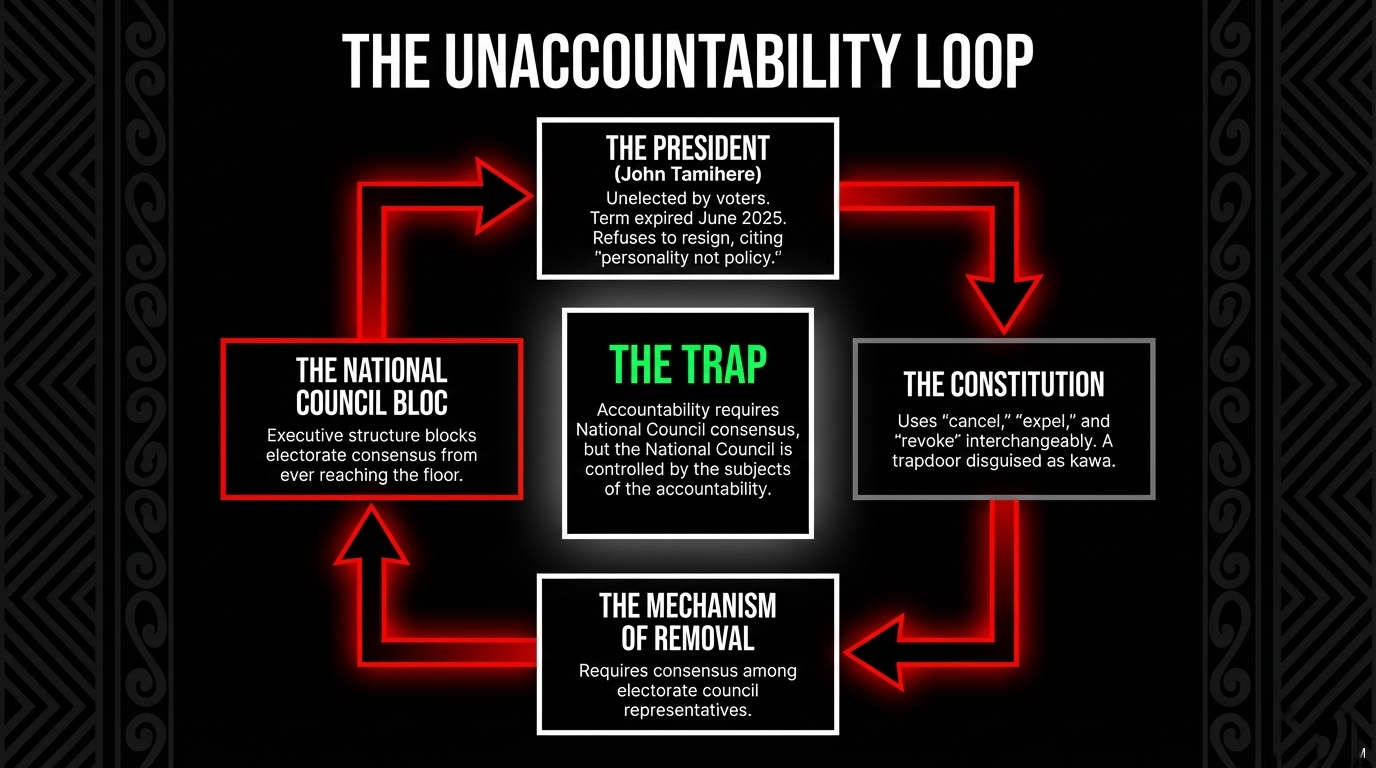
Tamihere remains party president. He has refused every call to resign. He has dug in, fired back, and used the very constitutional ambiguity Justice Radich condemned as the shield protecting his position. This is the man at the centre of it all — and as of today, he is entirely unaccountable.
The calls against him are broad, senior, and persistent:
| Who | What They Said |
|---|---|
| Te Tai Tonga Electorate Executive | Formal petition and vote of no confidence since October 2025 [teaonews.co] |
| Te Tai Tokerau Kohewhata hui (200+ attendees) | Resolutions demanding he step down before Kapa-Kingi's return [1news.co] |
| Dame Naida Glavish (former party president) | "Te Pāti Māori was not established to belittle people" [1news.co] |
| Ngira Simmonds (former candidate) | Challenged co-leaders publicly at AGM: "Are you the right people?" [rnz.co] |
| National Iwi Chairs Forum | Urgently intervened, warning "a split tōtara is only good for the fire" [rnz.co] |
| Mariameno Kapa-Kingi | "How do we end this? We stand JT down. That's how we end it." [rnz.co] |
His response to every one of these voices? He accused Kapa-Kingi and Ferris of "greed, avarice, and entitlement" as 1News documented, demanded they resign instead, and told the December AGM he would only step down for "reasons about policy, about programme, about politics — not personality" as RNZ reported. When the Kohewhata Marae unity hui — attended by over 200 whānau — extended an invitation for the National Executive to attend, the executive declined citing "legal concerns," an act described as "extremely disheartening and insulting" by hui organisers, as RNZ confirmed.
The constitutional trap he exploits is real. As The Spinoff's analysis confirmed, the only mechanism to remove him requires consensus among electorate council representatives — the same National Council he controls. He almost gloated at the AGM that opponents "simply didn't have the numbers." He was first elected to the presidency in June 2022 for a three-year term, meaning it expired in June 2025. A 2024 AGM "reaffirmed" him — but only approximately 20 people attended, as The Spinoff confirmed, raising serious questions about constitutional legitimacy that remain unresolved.
The March 10, 2026 ruling does three things that structurally weaken his position without removing him:
- It demolishes the expulsion's moral justification. He called Kapa-Kingi guilty of "greed, avarice and entitlement." A Pākehā court has now ruled the process he used to remove her was unlawful. Every claim he made about her conduct was premised on a process Justice Radich declared invalid[courtsofnz.govt]
- It renews scrutiny of his presidency's legitimacy. The original judicial review challenged his presidency alongside the expulsion. That challenge was never withdrawn — only the expulsion ruling was issued. The constitutional question of whether his term lawfully expired remains live[courtsofnz.govt]
- It eliminates his argument that due process was followed. His entire defence of the purge rested on proper process. That defence no longer exists[thespinoff.co]
Co-leader Debbie Ngarewa-Packer confirmed in December 2025 that "absolutely no consideration" was being given to Tamihere stepping down, as RNZ reported. The co-leaders and Tamihere form a controlling bloc — making internal removal structurally near-impossible without the kind of mass electorate mobilisation that Kohewhata represented but could not yet deliver.
The Six Battles Still Unfought
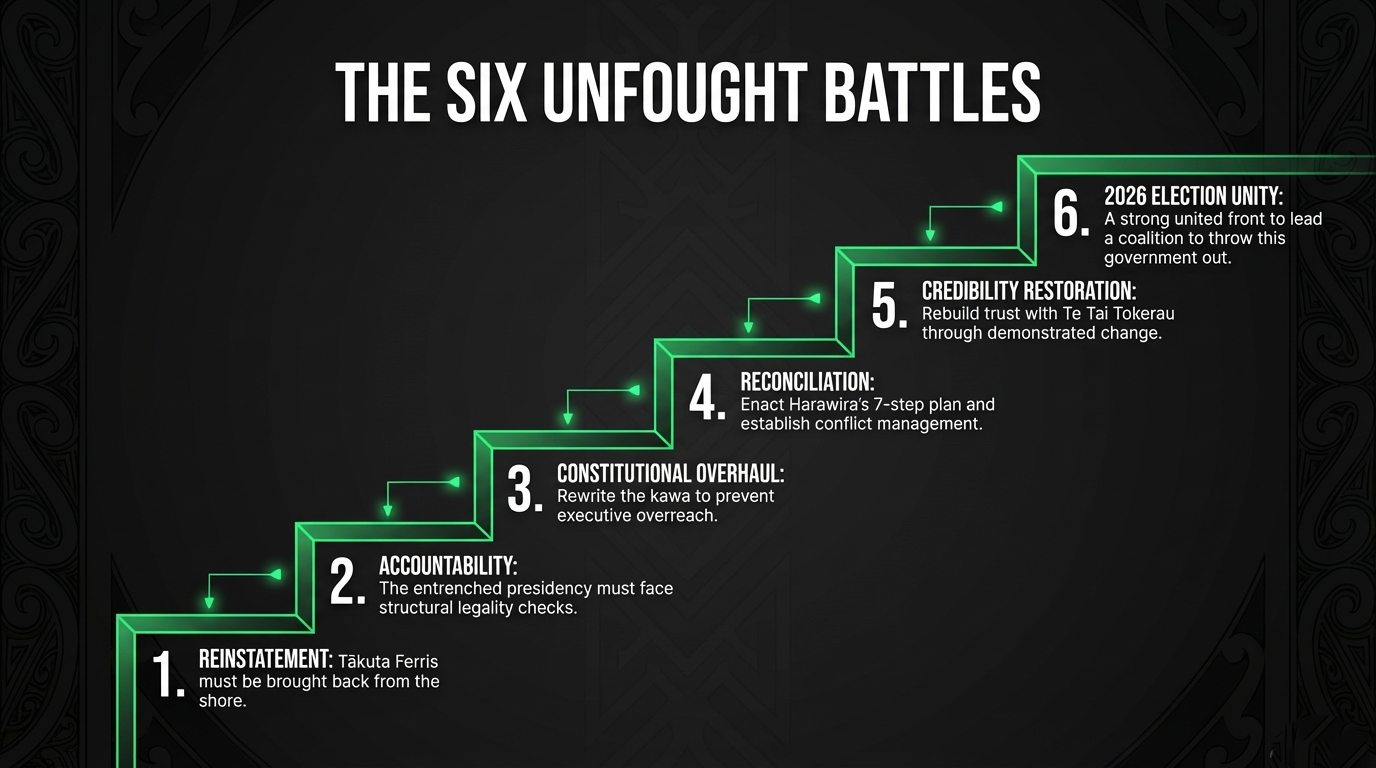
The court gave Kapa-Kingi back her seat at the table. It cannot give back the months lost, the mamae carried, the political oxygen burned. These six battles remain:
- Tākuta Ferris's reinstatement — he remains expelled, sitting as an independent, with legal precedent available but not yet used
- Tamihere's accountability — his presidency's legitimacy is legally contested and constitutionally dubious; he has refused every call to step aside
- Constitutional overhaul — Justice Radich's own words condemn the current constitution as unworkable; until it is rewritten to embed genuine tikanga-based due process and protect electorate representatives from executive overreach, this will happen again
- Hone Harawira's seven-step reconciliation plan — return of Kapa-Kingi and Ferris; bring the full team together; establish conflict management processes; agree a collective workplan; publicly recommit to Māori; conduct a national reconciliation tour. As 1News documented, Kapa-Kingi's reinstatement completes only step one — and only partially, because Ferris remains out
- Credibility restoration with Te Tai Tokerau — the people of Te Tai Tokerau watched their chosen representative dragged through a process a Pākehā court declared unlawful. Trust is not restored by a court order; it is restored by accountability, apology, and demonstrated change
- The 2026 election countdown — Harawira was blunt: "Only with a strong united front of Te Pāti Māori MPs can we lead a Māori, Greens, Labour coalition to throw this government out in 2026." A party still fighting its own members cannot mobilise an electorate
The White Supremacist Government's Quiet Celebration
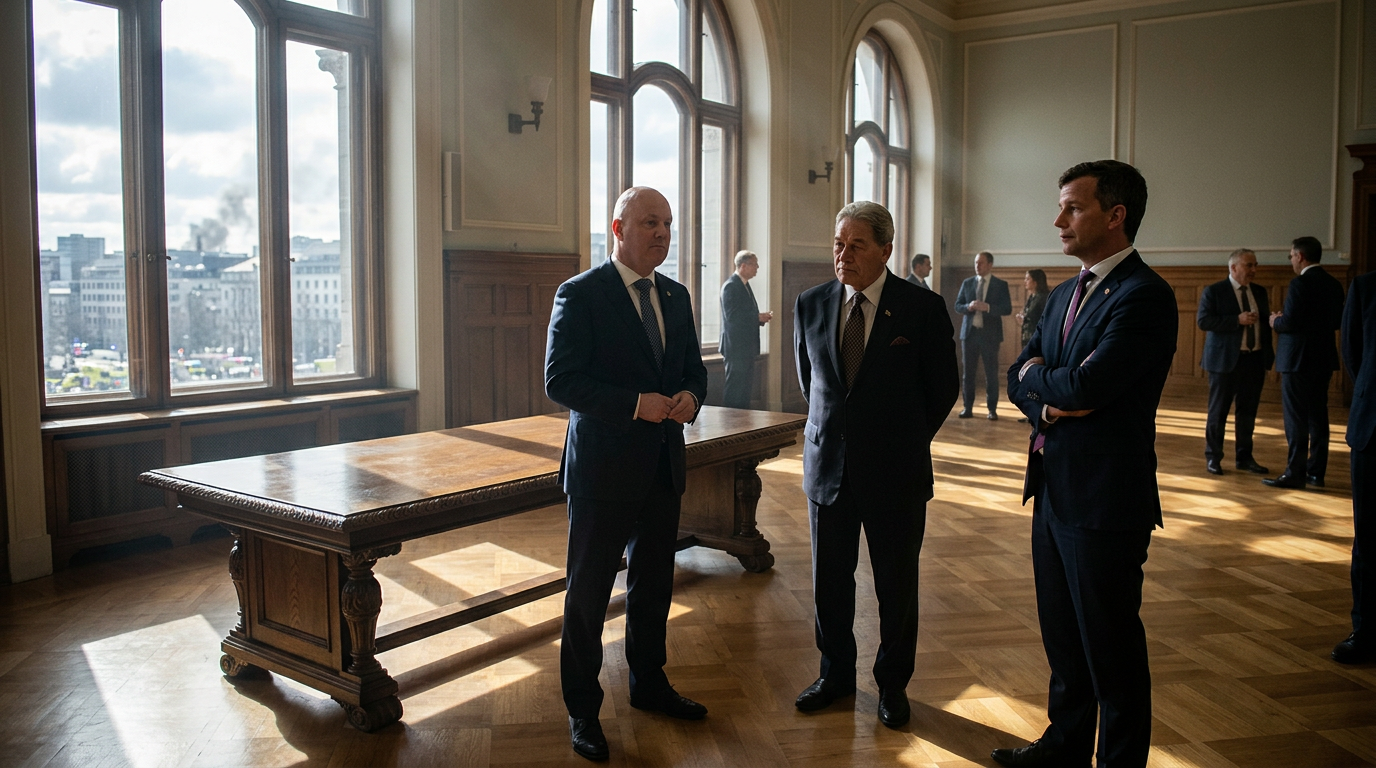
This Luxon-Peters-Seymour government — which suspended Te Pāti Māori MPs for performing a haka in Parliament, which tried to strip the Treaty of its principles, which has systematically defunded, delegitimised, and demolished every Māori institutional gain of the last thirty years — did not need to intervene in this crisis.
It watched. It waited. It benefited.
The Māori Green Lantern previously named what this government is: "The Split Tōtara and the Arsonists Who Lit the Match: How Te Pāti Māori's Purge Serves the Crown's Colonial Endgame." When the waka is burning, you don't blame the smoke — you find the hand that struck the match. The hand that struck the match was not Christopher Luxon's. But Luxon held the kindling. And Tamihere picked it up.
Rangatiratanga Requires More Than Survival
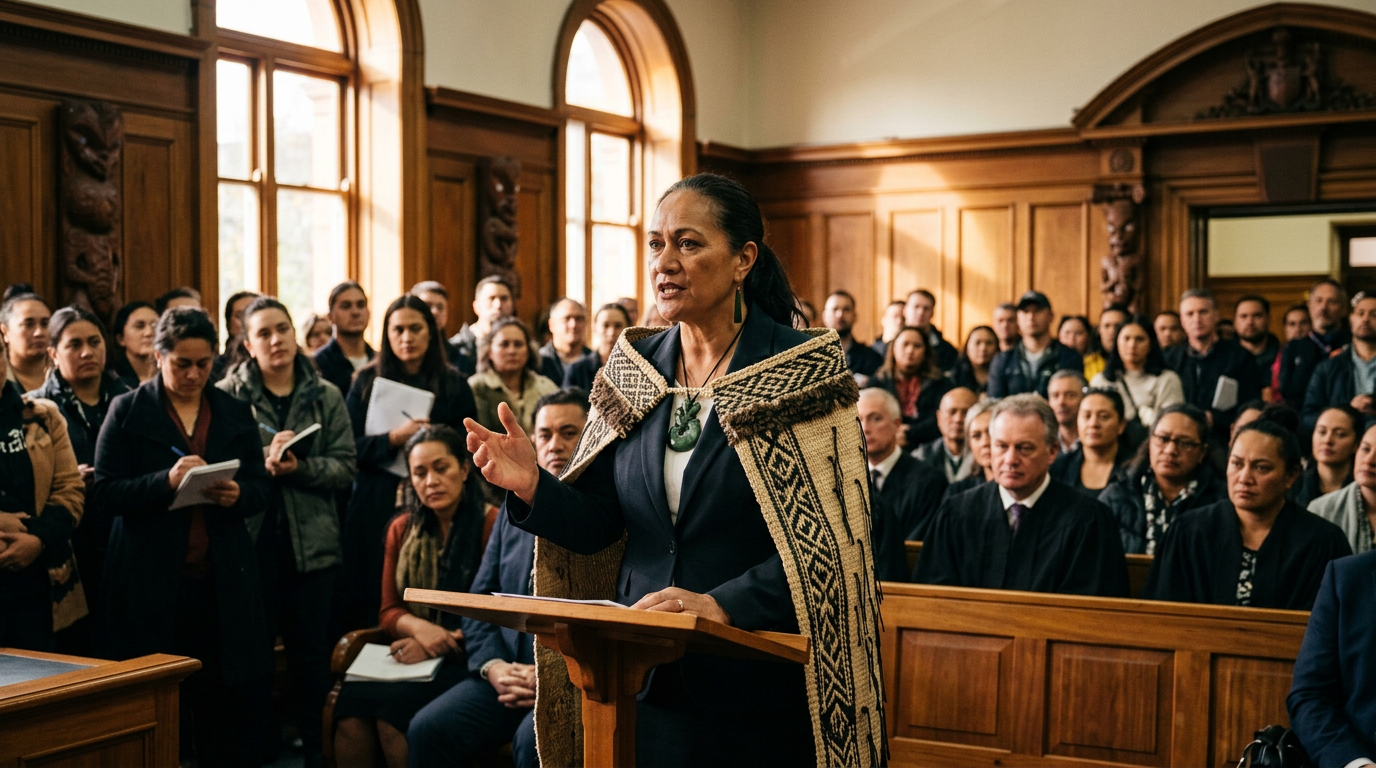
Mariameno Kapa-Kingi has been reinstated. The court has spoken. Justice Radich has confirmed, in the language the Crown understands, what tikanga already knew: the expulsion had no mana. It was unlawful. It was wrong.
But the question that remains — the question this white supremacist government is praying Te Pāti Māori never fully answers — is this:
Can the waka be made whole again before the election?
Because the real test of rangatiratanga is not survival. It is the capacity to heal without abandoning accountability, to restore without pretending the wound was never inflicted, to recommit to tikanga not as a slogan — but as the actual governing principle of a movement that claims to speak for the most dispossessed people in Aotearoa.
Tākuta Ferris remains on the shore. John Tamihere remains at the helm. The kawa remains broken. The constitution remains a trap.
The tōtara was split. The arsonists were found. The court has spoken.
Now the mahi of rebuilding — honest, accountable, tikanga-centred — begins.
Kia tūpato. Kia kaha. Kia tika.
Ivor Jones The Māori Green Lantern Fighting Misinformation And Disinformation From The Far Right
Research conducted 10 March 2026. Sources include RNZ, 1News, Te Ao News, Waatea News, The Spinoff, Courts of NZ (NZHC 517, NZHC 3776), and The Māori Green Lantern archive. All URLs verified at time of publication.