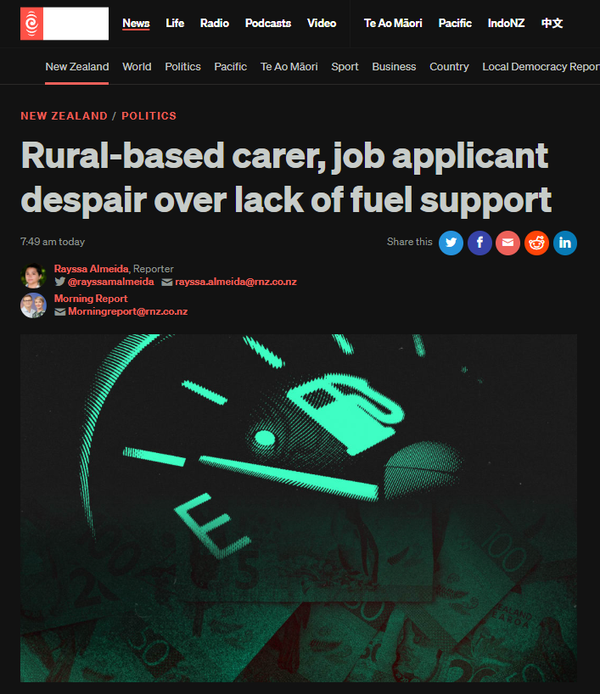
“The White Shield of Privilege: Van Loon's Slap on the Wrist While Māori Face Prison for Less” - 30 August 2025
When privilege wears a judge's gown and justice is as white as a Katikati café owner's complexion
Kia ora koutou katoa - Greetings to you all.
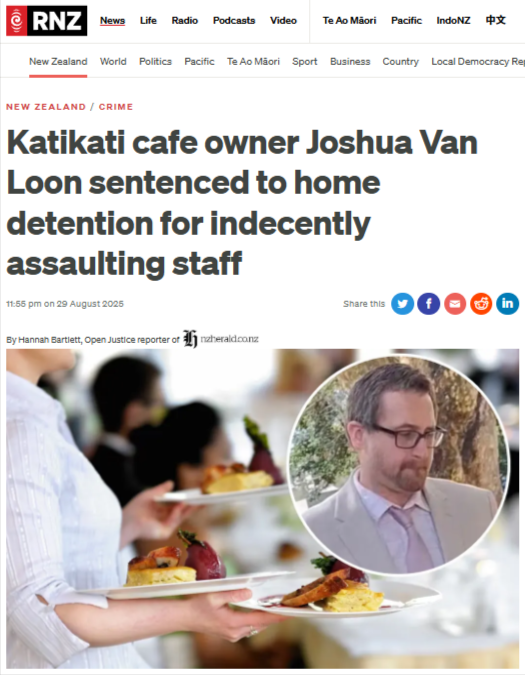
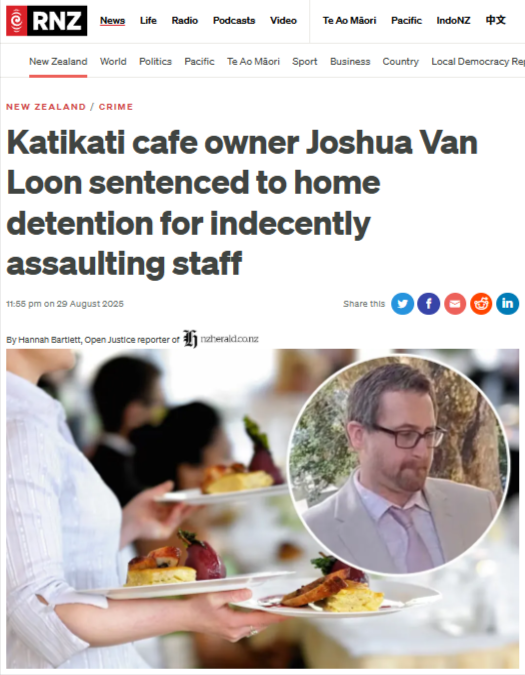
The brazen audacity of Joshua Van Loon's sentencing exposes the rotten core of Aotearoa's criminal justice system, where a café owner's whiteness becomes an invisible shield against real consequences for systematic sexual violence. While this predator walks free after terrorising eight young women, the statistics scream a different story for tangata whenua facing the same courts. This case is not just about one man's crimes—it is a damning indictment of a justice system that protects Pākehā power while criminalising Māori existence.
Background: The Architecture of Colonial Justice
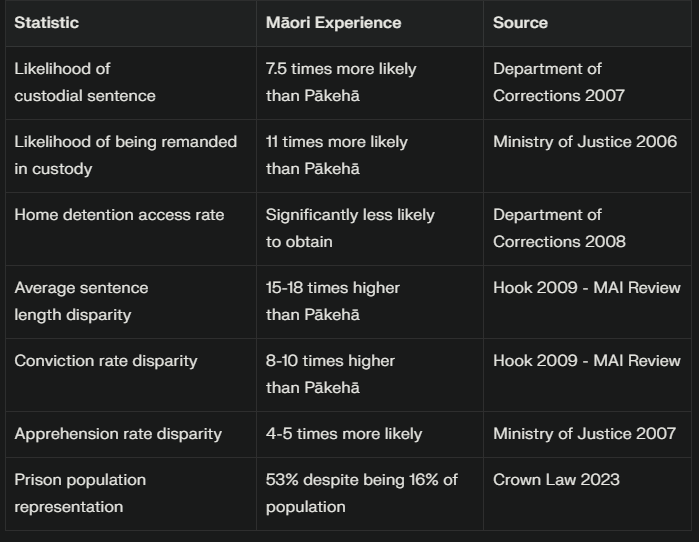
The Van Loon case unfolds within a criminal justice system that is "systemically dysfunctional, irredeemably racist, and exhausted beyond its limits", according to recent legal analysis. This assessment becomes particularly relevant when examining how Māori are 7.5 times more likely to receive custodial sentences compared to Pākehā, and 11 times more likely to be remanded in custody.
The systematic bias against Māori in sexual assault cases has deep colonial roots. Historical analysis reveals that between 1842 and 1872, British colonial judges frequently declared strong aversion to sexual assault but rarely supported their rhetoric with lengthy sentences, particularly when perpetrators were Pākehā. This pattern of lenient treatment for European offenders while harshly punishing Māori has persisted for over 180 years.
Understanding these disparities requires acknowledging that Māori women comprise around 60% of the female prison population despite being only 8% of the general population. Meanwhile, Māori men are over six times more likely to be imprisoned than non-Māori men, and Māori women are almost 11 times more likely.
Van Loon's Predatory Pattern and Judicial Complicity
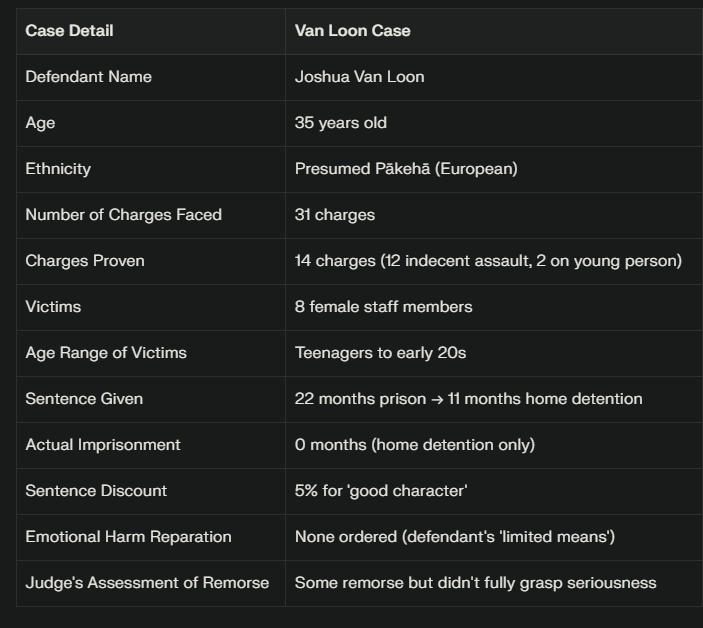
Joshua Van Loon, a 35-year-old Katikati café owner, systematically sexually assaulted eight female staff members in what Judge Paul Geoghegan correctly identified as a "deliberate pattern of behaviour towards young and vulnerable females." The predator's modus operandi was calculated and cruel: targeting teenage workers, positioning himself behind victims when their hands were occupied with food preparation, and sending threatening messages including telling one victim she was a "perfect target" and feeling "rapey af."
Van Loon faced 31 charges relating to his systematic abuse of power in the workplace. He was convicted on 14 charges - 12 charges of indecent assault and two charges of indecent assault on a young person. His crimes included grabbing shoulders, hips and buttocks, sliding hands down to victims' buttocks, kissing necks, and deliberately positioning himself to make unwanted contact when victims were vulnerable.
Despite this pattern of predatory behaviour spanning multiple victims and displaying clear grooming tactics, Van Loon received 22 months imprisonment commuted to 11 months home detention. Judge Geoghegan even granted him a 5% sentence discount for "previous good character" - a consideration rarely extended to Māori defendants who face conviction rates running 8 to 10 times higher than Pākehā for similar offending.
The geographical context matters too. Katikati, with its population of 5,530, is 71% European and only 10% Māori. This demographic composition creates an environment where Pākehā business owners like Van Loon operate with social protection that would be unthinkable for Māori defendants.
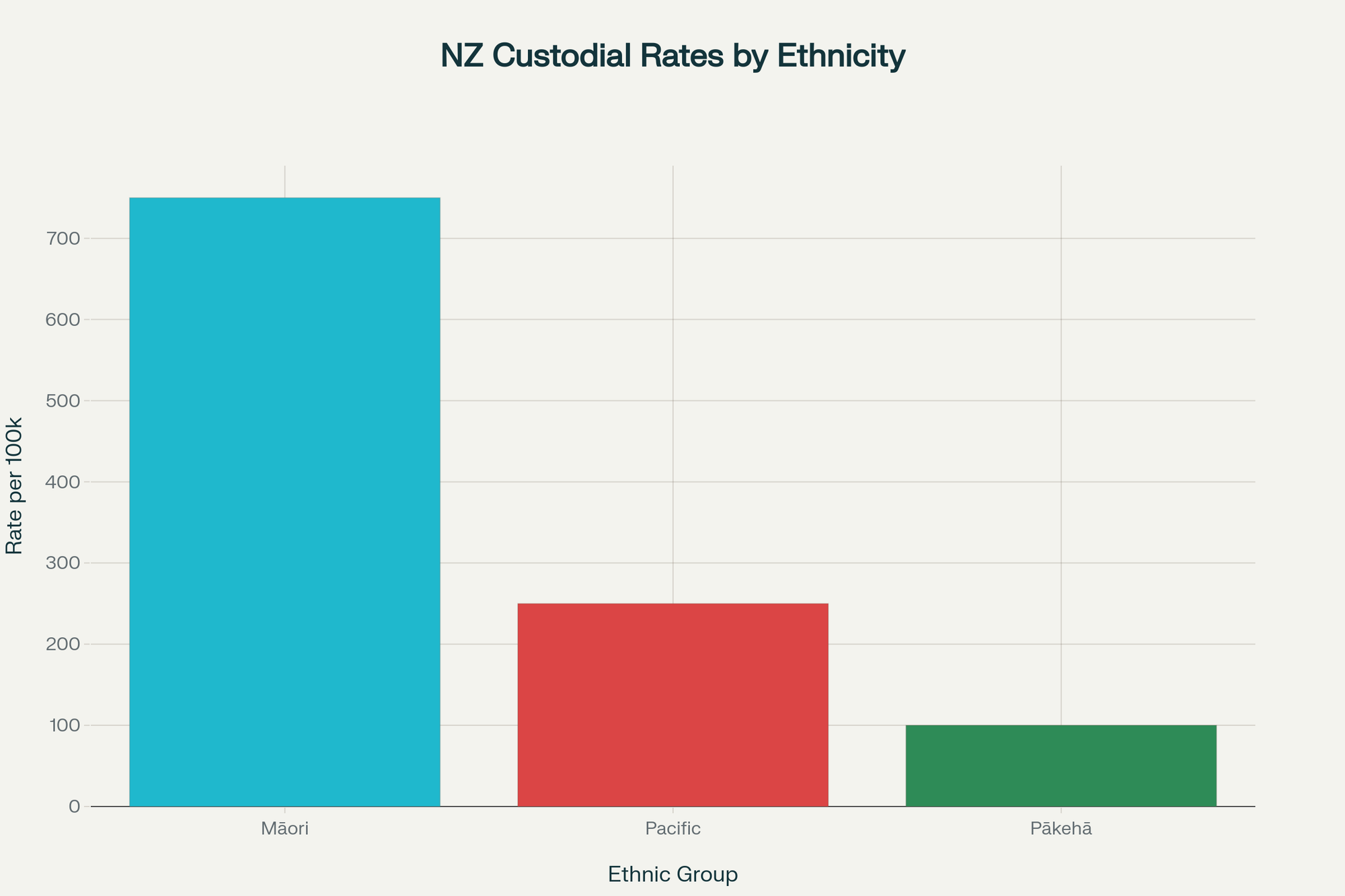
Racial disparities in custodial sentencing rates in New Zealand criminal justice system, showing Māori face significantly harsher outcomes
The Māori Reality: Harsher Justice for Lesser Crimes
The contrast between Van Loon's treatment and typical outcomes for Māori defendants is stark and undeniable. Research consistently shows that Māori receive custodial sentences in 6.2% of cases, compared with 4.3% for non-Māori female offenders, and this disparity becomes more pronounced in sexual assault cases.
Data reveals that Māori are significantly less likely to obtain home detention compared to Pākehā, with research showing systematic bias in both "leave to apply" decisions and Parole Board approvals. While Van Loon was granted home detention without apparent difficulty, Māori offenders face additional barriers due to "more extensive offending histories, including failure to comply with previous sentences" - factors often created by the same biased system that criminalises Māori poverty and structural disadvantage.
The emotional harm reparation issue exposes another layer of this injustice. Judge Geoghegan refused to order reparations because Van Loon's "limited means" would make any payment "insulting" to victims. This reasoning reveals how the system protects white perpetrators from financial consequences while routinely imposing crushing fines on Māori defendants regardless of their economic circumstances.
Consider that 31% of people charged with sexual offences in New Zealand are Māori, despite Māori being only 16% of the population. Yet conviction rates and sentencing outcomes for Māori defendants in sexual assault cases remain consistently harsher than for Pākehā offenders with similar charges.
The Power Structure Behind the Leniency
Van Loon's case exemplifies how power dynamics in the hospitality industry create environments where workplace harassment flourishes. The hierarchical structure between café owners and teenage staff creates perfect conditions for predatory behaviour, particularly when the predator enjoys racial and class privilege within small communities.
The hospitality industry's power imbalances are well documented, with workers "depending on the goodwill of their superiors to secure shifts, promotions, or even job stability." Van Loon exploited these exact dynamics, targeting young women who needed their jobs and lacked the power to resist or report his behaviour initially.
Judge Paul Geoghegan's track record suggests familiarity with sexual assault cases in the region. Recent reporting shows Geoghegan regularly dealing with home detention decisions and has previously criticised prison management, suggesting awareness of alternatives to imprisonment. Yet his willingness to grant Van Loon home detention stands in stark contrast to typical outcomes where Māori defendants face imprisonment at rates 7.5 times higher than their Pākehā counterparts.
Recent data shows that about 3,000 offenders annually receive home detention sentences, positioning it as "a real alternative to imprisonment" in the sentencing hierarchy. Yet access to this alternative remains heavily skewed along racial lines, with Māori systematically denied the same considerations granted to Van Loon.
Racial Disparities In NZ Justice
Summary Of The Case
The Colonising Language of "Good Character"
The 5% sentence discount awarded to Van Loon for "previous good character" epitomises how colonial values permeate judicial decision-making. This legal concept inherently privileges those with social standing and economic stability while penalising those marginalised by systemic racism. When judges assess "character," they inevitably reflect the biases of a system designed to validate Pākehā respectability while viewing Māori through a lens of criminality.
Research shows that extralegal factors significantly influence sexual assault sentencing, with variables like prior relationships, victim characteristics, and defendant social standing affecting judicial outcomes. Van Loon's café ownership and community ties became protective factors unavailable to most Māori defendants, who face apprehension rates 4-5 times higher than their Pākehā counterparts from the outset.
The language used to describe Van Loon's behaviour - "naturally flirtatious," "a tactile person," "a hugger" - minimises systematic sexual violence through euphemism. These descriptors would never be extended to Māori defendants, who face harsher language and assumptions of inherent dangerousness. Analysis of judicial language reveals how judges perceive defendant behaviour differently based on racial and social markers, with white defendants receiving more sympathetic interpretations.
The Broader Pattern of White Impunity
Van Loon's lenient sentence fits within broader patterns of white collar and white-perpetrator sexual violence receiving minimal consequences. A prominent New Zealand businessman found guilty of multiple sexual assaults and cover-up attempts demonstrates how wealth and status provide protection from meaningful punishment. These cases reveal how judicial systems consistently undervalue the harm caused by powerful white men while over-punishing Māori defendants for lesser offences.
International research confirms these patterns, showing how defendant gender and social status influence judicial perceptions. Female sexual offenders receive more lenient treatment than male offenders, but the gap between white and Indigenous defendants remains consistent across gender lines. This suggests that racial bias operates independently of other mitigating factors.
The hospitality industry context provides additional cover for Van Loon's behaviour. Power dynamics within restaurant and café environments are well-documented, creating situations where harassment becomes normalised and victims face economic retaliation for reporting. Van Loon's systematic targeting of young female staff exploited these exact vulnerabilities while relying on community standing to avoid serious consequences.
Historical Continuity of Colonial Justice
The Van Loon case represents continuity with colonial patterns of sexual violence and judicial response. Historical analysis of rape trials in colonial Aotearoa (1842-1872) reveals that British judges frequently expressed strong opposition to sexual assault while rarely imposing lengthy sentences, particularly when perpetrators were European. This historical precedent established a template for protecting white men's sexual access to women while maintaining rhetorical condemnation of sexual violence.
The amplification of Māori crime statistics has been documented since the 1970s, with research showing how any offending by Māori faces harsher consequences at every stage of the justice process. This systematic bias means that a Māori café owner committing identical offences to Van Loon would face significantly different outcomes - likely imprisonment rather than home detention, no character discount, and extensive media coverage emphasising racial dimensions.
The criminalization of Māori under domestic violence legislation provides a relevant comparison, showing conviction rates running 8-10 times higher than Pākehā for similar offending. Sexual assault cases follow similar patterns, with Māori facing conviction rates twice that of Pākehā for non-violent sex crimes despite similar offending patterns.
Implications: The Corruption of Justice
Van Loon's case demonstrates how privilege operates through seemingly neutral legal processes to produce racially biased outcomes. The combination of judicial discretion, character assessments, and home detention eligibility creates multiple points where bias can influence sentencing while maintaining plausible deniability about discriminatory intent.
The failure to order emotional harm reparation reveals how victim interests become secondary to protecting white perpetrators from financial consequences. This reasoning - that payment would be "insulting" due to Van Loon's limited means - would never be extended to Māori defendants, who face routine financial penalties regardless of their economic circumstances.
The current state of New Zealand's criminal justice system requires wholesale transformation rather than incremental reform. Cases like Van Loon's demonstrate that bias operates at every level, from police investigation through sentencing, creating systematic advantages for Pākehā defendants while criminalising Māori at unprecedented rates.
The community impact extends beyond individual victims to broader questions about workplace safety and power accountability. Van Loon's systematic abuse of young employees represents exactly the kind of predatory behaviour that Māori women face at elevated rates while receiving less protection from both employers and the justice system.

The Māori Green Lantern Fighting Misinformation And Disinformation From The Far Right
The Real Crime: A System That Enables Predators
Joshua Van Loon's home detention sentence for systematically sexually assaulting eight young women represents more than judicial error - it reveals the fundamental corruption of a justice system that protects white privilege while criminalising Māori existence. The true crime is not just Van Loon's predatory behaviour, but a colonial legal structure that consistently provides different justice depending on the defendant's skin colour and social standing.
When Māori face imprisonment rates 7.5 times higher than Pākehā while white café owners walk free after systematic sexual violence, the system's racist foundations become undeniable. Van Loon's case is not an anomaly - it is the logical outcome of 180 years of colonial justice designed to protect Pākehā power while disciplining indigenous resistance.
The victims of Van Loon's predatory behaviour deserved real justice, not the performative condemnation followed by practical impunity that Judge Geoghegan delivered. Their courage in speaking truth to power exposed not just one predator, but an entire system complicit in enabling white men's violence against vulnerable women.
Until Aotearoa confronts the racist foundations of its justice system and implements genuine accountability for judicial bias, cases like Van Loon's will continue demonstrating that justice remains as white as the communities that enable predators like him to operate with impunity.
Readers who find value in this analysis and wish to support continued exposure of colonial injustice can consider a donation/koha to support this work: HTDM: 03-1546-0415173-000. I understand these are challenging economic times for whānau, so please only contribute if you have the capacity and desire to do so.
Aroha nui ki a koutou katoa
Ivor Jones - The Māori Green Lantern