“Trump's Colonial Arrogance: The Supreme Court Ruling That Won't Save His Birthright Blunder” - 28 June 2025
When the orange tyrant believes his own hype, reality becomes his greatest enemy
Kia ora whānau, ko te mauri o te taiao kei roto i a mātou. May the life force of nature be within us all.
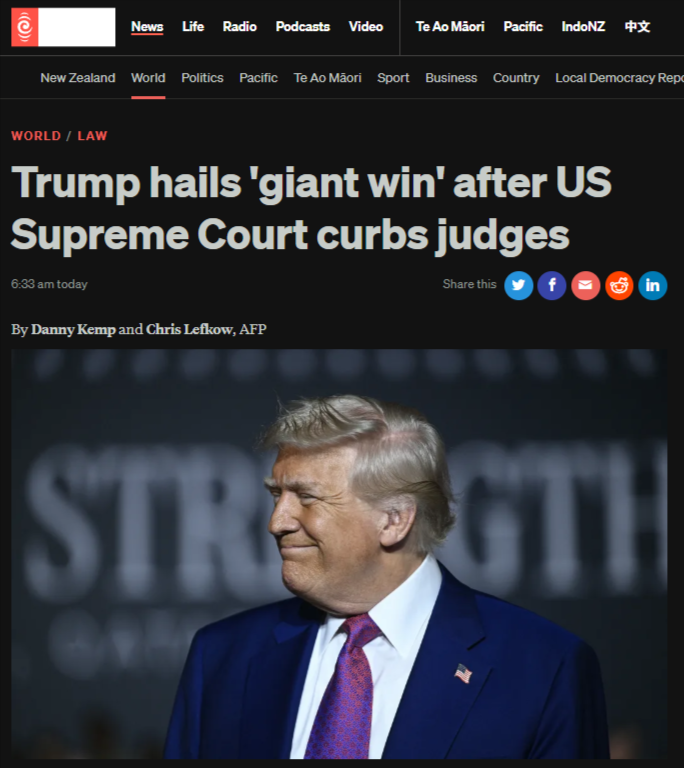
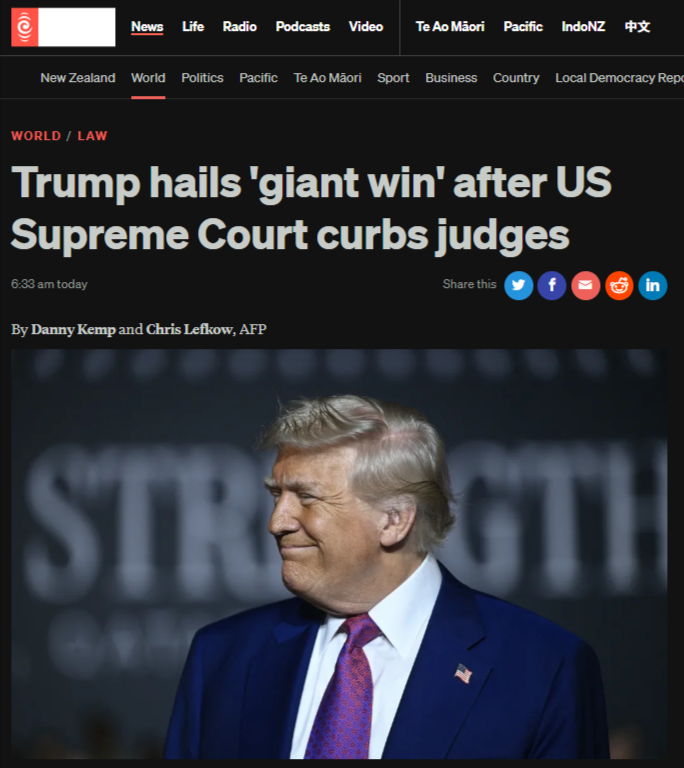
The self-proclaimed "deal maker" Donald Trump strutted before cameras yesterday like a tīeke showing off its white plumage, declaring his Supreme Court victory over nationwide injunctions as "tremendous" and "amazing." But this latest display of colonial overconfidence reveals the same dangerous pattern that has defined his presidency: a fundamental misunderstanding of how power, resistance, and constitutional democracy actually work. While Trump celebrates what he believes is his licence to ram through racist policies without judicial interference, he has once again exposed the very colonial mindset that Indigenous peoples worldwide have been fighting for centuries.
The Illusion of Supreme Victory
Trump's executive order attempting to end birthright citizenship represents more than just another unconstitutional power grab – it embodies the white supremacist fantasy that has driven American expansion since European colonisers first set foot on Turtle Island. This settler-colonial mindset views Indigenous peoples and other marginalised communities as obstacles to be removed rather than human beings with inherent rights.
The Supreme Court's Friday ruling limiting nationwide injunctions does not validate Trump's racist agenda – it merely restricts one tool that federal judges can use to challenge his policies. The court explicitly avoided ruling on the constitutionality of ending birthright citizenship, leaving that fundamental question unanswered. Yet Trump, true to his pattern of premature victory declarations, has misread this procedural change as vindication of his broader authoritarian vision.
A History of Overconfident Assumptions
Research consistently shows that Trump's overconfidence is both an electoral asset and a governing liability. Academic studies reveal that voters struggle to distinguish between genuine competence and overconfident performance, making Trump's blustering style politically effective even when his policies fail spectacularly.
This overconfidence manifests in predictable ways. Trump's presidency has been characterised by "impatience" and "childlike" demands for immediate results, leading to policy reversals when reality fails to match his grandiose promises. His trade wars, immigration crackdowns, and foreign policy theatrics all follow the same pattern: bold declarations followed by chaotic implementation and eventual backtracking when consequences mount.
Legal experts warn that Trump's latest victory may be short-lived, as his administration has already faced setbacks from federal courts willing to challenge executive overreach. The constitutional questions surrounding birthright citizenship remain unresolved, and multiple legal challenges continue to wind through the courts.
The Fight Continues Despite Supreme Court Limitations
What Trump fails to grasp, in his colonial arrogance, is that resistance operates on multiple levels. While he celebrates limiting one judicial tool, civil rights organisations are already adapting their strategies. The American Civil Liberties Union and immigrant rights groups have refiled their challenges as class-action lawsuits, using the very procedural changes the Supreme Court outlined as permissible.
Twenty-two Democratic-led states continue their legal challenges, ensuring that Trump's order remains blocked in jurisdictions covering millions of Americans. These state-level protections create a patchwork of resistance that Trump's federal power cannot easily override.
Beyond the courts, grassroots resistance is mobilising across the country. Democratic politicians report "massive earfuls" from constituents demanding stronger opposition to Trump's agenda. Universities, law firms, and other institutions are finding their spine after initially capitulating to administration pressure.

Lessons from Māori Resistance to Colonial Power
The pattern of colonial overconfidence Trump displays echoes centuries of European assumptions about Indigenous peoples. Like the colonial administrators who believed they could simply impose their legal frameworks on tangata whenua, Trump assumes that procedural victories translate into substantive control over complex social and constitutional realities.
Māori resistance to colonisation offers crucial lessons for understanding how power truly operates. Despite massive resource disparities and legal disadvantages, tangata whenua maintained their resistance through cultural preservation, strategic legal challenges, and community organisation. The Treaty settlement process, while imperfect, demonstrates how sustained pressure can force even the most powerful institutions to acknowledge Indigenous rights.
Contemporary Māori leaders understand that decolonisation requires challenging colonial mindsets, not just changing laws. This understanding is reflected in initiatives like Te Awa Tupua's recognition as a legal person, which challenges the fundamental colonial assumption that nature exists solely for human exploitation.
The Deeper Constitutional Crisis
Trump's celebration of the Supreme Court ruling reveals his fundamental misunderstanding of American democracy. The court's decision reflects a broader crisis of democratic institutions under pressure from authoritarian movements worldwide. Trump's assumption that procedural victories equal substantive power mirrors the colonial delusion that legal frameworks can substitute for genuine legitimacy.
Indigenous peoples in the United States face similar challenges, with tribal sovereignty under constant threat from federal overreach. The UN Declaration on the Rights of Indigenous Peoples provides international standards for protecting Indigenous rights, but implementation requires sustained advocacy and resistance to colonial mindsets.
Climate change adds urgency to these struggles, as environmental degradation disproportionately affects Indigenous communities while benefiting the same extractive industries that drive colonial expansion. Trump's recent speculation about acquiring Greenland demonstrates how colonial impulses adapt to contemporary circumstances while maintaining their essential character.
Why This Victory Will Backfire
Trump's overconfidence in his Supreme Court victory contains the seeds of its own undoing. By prematurely declaring success, he has energised opposition movements and clarified the stakes for vulnerable communities. His pattern of impatience and grandiose claims consistently leads to policy failures when reality fails to match his rhetoric.
The constitutional questions surrounding birthright citizenship remain fundamentally unchanged. Legal experts note that the 14th Amendment's language is clear: "All persons born or naturalized in the United States, and subject to the jurisdiction thereof, are citizens of the United States." No Supreme Court procedural ruling can alter this constitutional text or the century of precedent supporting birthright citizenship.
Democratic resistance is strengthening rather than weakening in response to Trump's authoritarian overreach. Organisers report that Trump's extreme agenda is mobilising opposition across multiple sectors of society, from legal advocacy to grassroots activism.

The Power of Sustained Resistance
Trump's colonial mindset blinds him to the reality that true power emerges from legitimacy, not just legal procedure. His assumption that limiting judicial tools will eliminate resistance demonstrates the same arrogance that led colonial administrators to believe they could pacify Indigenous peoples through superior firepower and legal frameworks.
History shows that sustained resistance ultimately prevails against even the most powerful colonial forces. The civil rights movement, Indigenous sovereignty movements, and international decolonisation all demonstrate how organised communities can challenge and ultimately transform oppressive systems.
Contemporary resistance movements understand these lessons, using multiple strategies and maintaining pressure across different fronts. Trump's procedural victory may delay some challenges, but it cannot eliminate the fundamental constitutional, moral, and political opposition to his racist agenda.
Moving Forward with Indigenous Wisdom
The path forward requires embracing Indigenous approaches to resistance that emphasise relationship, reciprocity, and long-term thinking. Māori concepts like kaitiakitanga offer frameworks for understanding responsibility that transcend colonial assumptions about power and control.
Trump's overconfidence will ultimately prove his undoing because it prevents him from understanding the deeper currents of resistance flowing beneath surface political changes. His celebration of yesterday's Supreme Court ruling reveals the same colonial blindness that has led to the downfall of oppressive systems throughout history.
The fight for birthright citizenship, Indigenous rights, and democratic institutions will continue regardless of Trump's premature victory declarations. His assumption that procedural changes equal substantive control demonstrates why sustained resistance, grounded in Indigenous wisdom and constitutional principles, will ultimately prevail against his colonial project.
Trump's gleeful reaction to the Supreme Court's nationwide injunction ruling exposes the dangerous overconfidence that has characterised his approach to power throughout his political career. Like colonial administrators who mistake temporary advantages for permanent victories, Trump fundamentally misunderstands how resistance operates and evolves in response to oppression.
The constitutional questions surrounding birthright citizenship remain unresolved, legal challenges continue through alternative channels, and grassroots resistance is strengthening in response to his authoritarian overreach. His pattern of premature victory declarations followed by policy failures when reality intervenes suggests that this latest celebration will prove equally short-lived.
Indigenous wisdom teaches us that true power emerges from relationship and legitimacy, not just legal procedure. Trump's colonial mindset blinds him to these deeper realities, ensuring that his apparent victories will ultimately contribute to his political downfall.
The struggle for justice requires the patience of our ancestors and the fierce determination of our descendants. E noho ra, whānau. Stay strong, stay united, and remember that colonial power has always been more fragile than it appears.
Readers who find value in my mahi and wish to support this kaupapa of exposing misinformation and white supremacy may consider offering a koha to HTDM: 03-1546-0415173-000. I understand these are challenging economic times for many whānau, so please only contribute if you have the capacity and desire to do so.
Mauri ora.
References: