"Trump's Federal Troops: The Authoritarian March Toward Civil War" - 27 August 2025
The American Settler Empire's Latest Chapter in Domestic Repression
Kia ora e te whānau. Greetings to the family.
Donald Trump is not simply deploying federal troops to American cities - he is orchestrating the methodical transformation of the United States into a full military police state, deliberately targeting Democratic strongholds while protecting Republican territories with higher crime rates. This calculated pattern exposes the manufactured nature of his "law and order" campaign and reveals the deeper authoritarian project at work: the systematic dismantling of democratic governance through militarized occupation of dissenting communities.[1]
Alex Garland's prophetic 2024 film "Civil War" serves as both warning and mirror, depicting a near-future America where Trump's MAGA rebellion has been provisionally successful, facing counter-rebellion by Western Forces in an alliance between California and Texas. Art imitates life as we witness the very scenarios Garland envisioned unfolding in real time.[2]
Background
The militarization of domestic American law enforcement traces its roots to counterinsurgency strategies developed during America's global imperial expansions, creating mutually constitutive relationships between domestic and foreign policing projects. This imperial boomerang effect demonstrates how techniques perfected abroad inevitably return home to target domestic populations deemed threatening to white supremacist power structures.[3]
Trump's current deployment strategy follows the playbook of historical American military interventions against its own citizens. The Great Railroad Strike of 1877 saw federal troops deployed to Chicago, Baltimore, Pittsburgh, and other cities to crush labor uprisings, establishing precedent for using military force against civilian populations when economic and political elites feel threatened.[4]
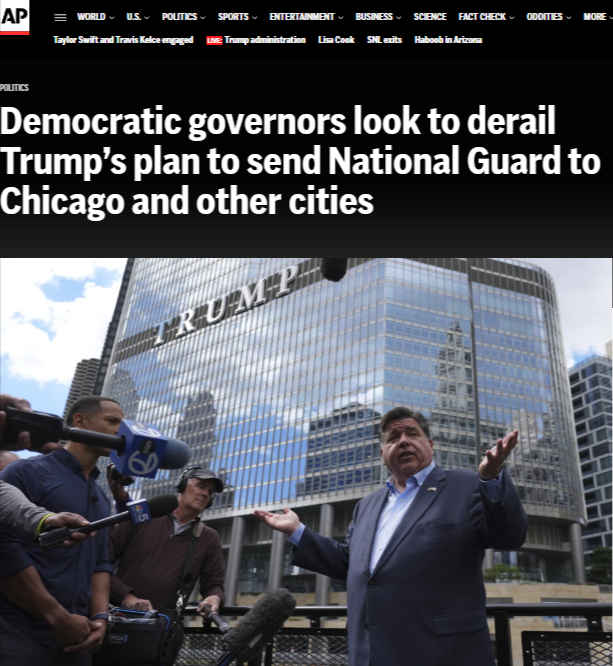
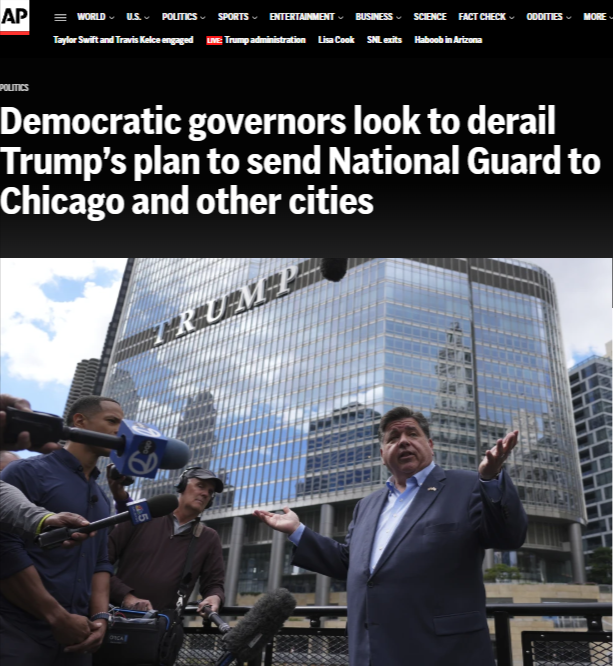
Trump's military deployments reveal a calculated pattern of partisan targeting that exposes the fraudulent nature of his "public safety" rhetoric. After deploying National Guard units to Los Angeles in June 2025 and Washington D.C. in August 2025, Trump now threatens Chicago and Baltimore - both Democratic strongholds led by governors positioning themselves as potential 2028 presidential candidates.[1]
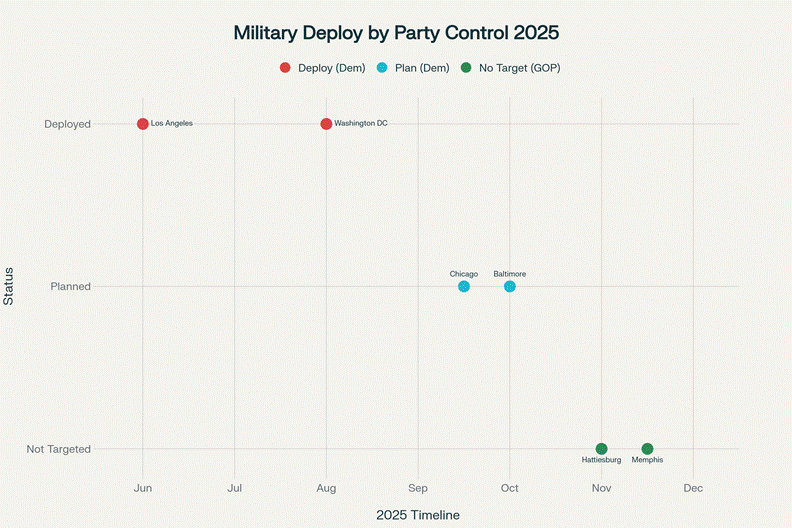
Trump's Partisan Pattern of Federal Military Deployment to Cities
The geographic selectivity is damning. As Governor J.B. Pritzker noted, Hattiesburg, Mississippi, and Memphis, Tennessee, have notably higher murder rates than Chicago, yet Trump avoids mentioning these Republican-controlled territories. This selective blindness reveals that Trump's deployments have nothing to do with crime and everything to do with political intimidation and authoritarian consolidation.[1]
The manufactured crisis serves multiple functions: casting Democratic leaders as weak and ineffective, advancing Trump's mass deportation agenda through militarized enforcement, and establishing precedent for federal override of local democratic governance. Most insidiously, it conditions the American public to accept military occupation of civilian spaces as normal and necessary.[1]
The Federal Troops Strategy as Colonial Control
Trump's deployment pattern mirrors classic colonial occupation strategies, where imperial powers establish military presence in territories deemed rebellious or requiring "pacification." The selective targeting of Democratic cities while ignoring Republican areas with higher crime rates exposes this as political warfare disguised as public safety intervention.
The American empire's domestic imperial strategies have long targeted communities of color and political dissidents through militarized police interventions. Indigenous peoples globally understand this pattern - military occupation presented as protection while systematically dismantling local autonomy and self-determination.[3]
From a Māori worldview of whakatōhea (collective responsibility), we recognize that genuine public safety emerges from addressing root causes of social breakdown: poverty, inequality, lack of opportunity, and institutional racism. Trump's military response actively avoids these structural issues, instead weaponizing social problems to justify authoritarian expansion.
The Manufactured Crisis Doctrine
Trump's approach follows the fascist playbook of creating artificial emergencies to justify extraordinary measures. He deliberately exaggerates violence in Democratic cities while presenting himself as the sole solution, employing classic authoritarian fear-mongering to condition public acceptance of military rule.[1]
The principle of manaakitanga (hospitality and care) demands we examine who benefits from this manufactured crisis. Military contractors profit from expanded deployments. Private prison corporations gain from mass arrests. White supremacist movements receive state validation of their "replacement theory" fears. Meanwhile, working-class communities - disproportionately Black, Latino, and Indigenous - face the violence of military occupation.
Chicago Mayor Brandon Johnson's observation that "we cannot incarcerate our way out of violence" reflects understanding that genuine safety requires investment in communities, not military suppression. Trump's refusal to engage with proven community-based solutions exposes his true agenda: political control through military force.[1]
The Civil War Precedent
Garland's "Civil War" film depicts journalists covering an American civil war that arose from toxically divided politics and trashed democratic norms. The movie's Western Forces alliance between California and Texas mirrors current regional political tensions, where Democratic governors are forming defensive coalitions against federal authoritarian overreach.[2]
Historical precedent shows how federal military intervention during the 1877 Railroad Strike established patterns of using troops against civilian populations during political crises. That deployment targeted the same cities Trump threatens today - Chicago and Baltimore - revealing deep structural continuities in American state violence.[4]
The withdrawal of federal troops from the South in 1877 ended Reconstruction and enabled the rise of Jim Crow white supremacy. Today's deployment threatens to reverse democratic progress by establishing military occupation of multiracial urban centers that represent America's demographic future.
Democratic Response and the Politics of Resistance
Democratic governors like Pritzker, Wes Moore of Maryland, and Gavin Newsom of California are positioning themselves as bulwarks against Trump's authoritarian expansion. Their resistance echoes historical patterns where state and local officials defended democratic governance against federal overreach.[1]
However, their strategy of legal challenges and political theater may prove inadequate against an administration willing to deploy military force domestically. The principle of kaitiakitanga (guardianship and protection) demands more decisive action to protect vulnerable communities from state violence.
Governor Pritzker's warning to Trump - "If you hurt my people, nothing will stop me...from making sure that you face justice under our constitutional rule of law" - represents the kind of principled resistance necessary, but requires backing with concrete protective measures.[1]
The White Supremacist Agenda
Trump's selective targeting exposes the racial and political calculations underlying his strategy. By avoiding Republican-controlled areas with higher crime rates while targeting diverse Democratic cities, he advances classic white supremacist narratives about Black and Brown criminality while protecting white conservative spaces from scrutiny.
This aligns with broader patterns of American security discourse that elevates internal "enemies of the people" through populist security frameworks. Indigenous peoples worldwide recognize these tactics - using military force to suppress communities deemed threatening to settler colonial order while claiming to restore "law and order."[5]
The deployment pattern also serves Trump's mass deportation agenda by establishing military infrastructure in immigrant-heavy Democratic cities while avoiding Republican areas with significant immigrant populations who work in agriculture and other industries crucial to conservative constituencies.
Implications
The Road to Armed Conflict
Trump's federal deployments represent a calculated escalation toward civil conflict. By establishing military presence in Democratic strongholds while claiming constitutional authority to override local governance, he creates conditions for violent confrontation between federal forces and local communities.
The pattern mirrors classic authoritarian tactics: manufactured crisis, militarized response, normalization of occupation, expansion of control. Each successful deployment without effective resistance emboldens further escalation.
For Māori observing from Aotearoa, this trajectory appears disturbingly familiar. Settler colonial states consistently use military force to suppress Indigenous resistance and maintain colonial control. The American empire now turns these same tools against its own urban populations deemed too diverse, too democratic, too threatening to white supremacist order.
Impact on Communities of Color
The militarization of American cities will disproportionately harm Black, Latino, Indigenous, and other communities of color who bear the brunt of police violence. Military occupation normalizes and escalates state violence against these communities while providing white supremacist movements with state validation.
From a Māori perspective grounded in whakapapa (relationships and connections), we recognize that attacks on any oppressed community threaten all oppressed communities. The militarization of American cities serves as testing ground for tactics that will eventually target Indigenous communities, environmental activists, and other groups challenging colonial power structures.
The principle of manaakitanga requires solidarity with communities facing military occupation and concrete support for their resistance efforts.

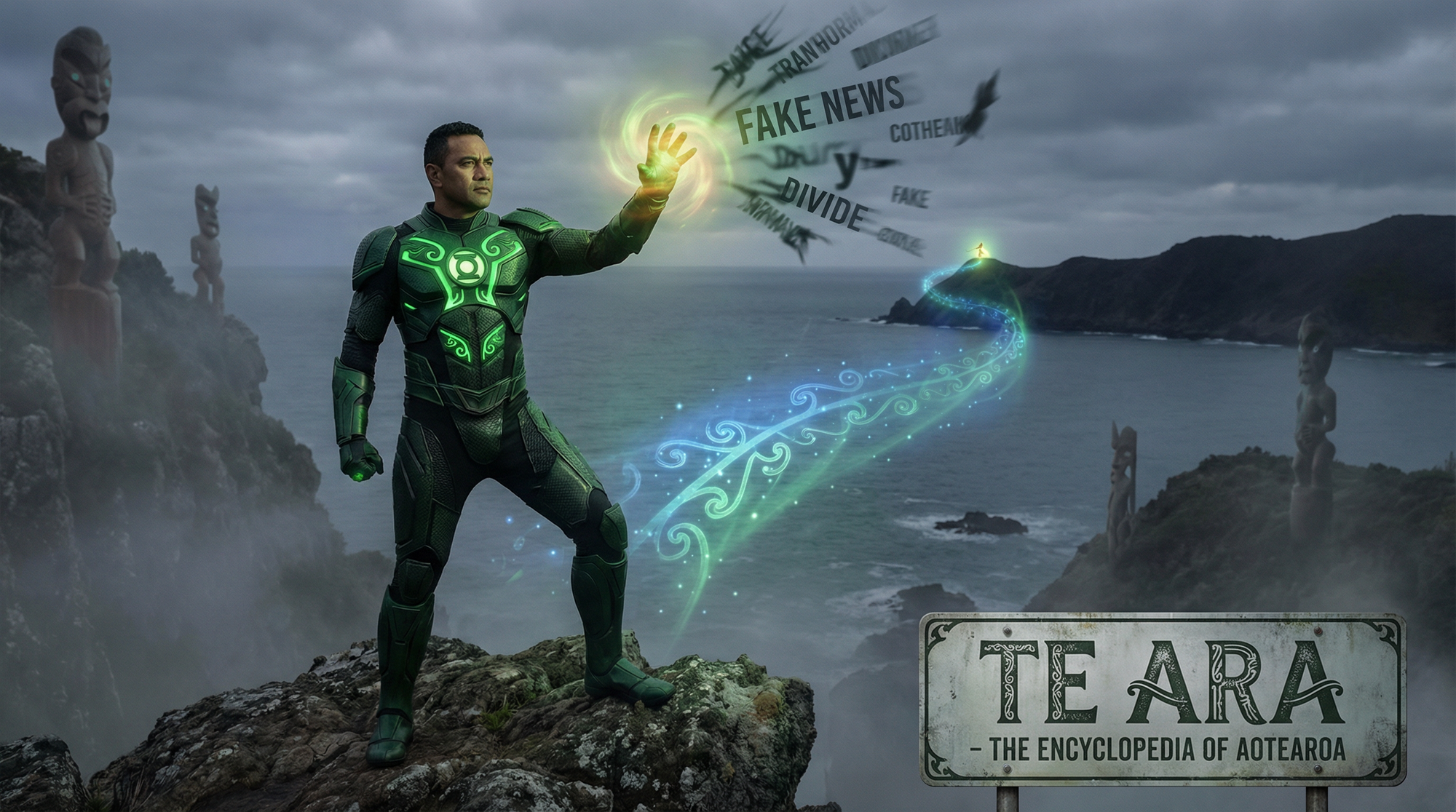
The Māori Green Lantern fighting misinformation and disinformation from the far right
Trump's deployment of federal troops to Democratic cities represents not crime-fighting but the systematic implementation of an authoritarian police state designed to crush democratic opposition and advance white supremacist political control. The selective targeting of diverse urban centers while protecting Republican areas with higher crime rates exposes this as calculated political warfare.
Alex Garland's "Civil War" serves as prophetic warning of where this trajectory leads - armed conflict between federal authorities and state/local coalitions defending democratic governance. The historical precedent of the 1877 Railroad Strike demonstrates how military intervention in American cities has served to crush popular movements and consolidate elite power.
For Indigenous peoples globally, including Māori in Aotearoa, this pattern appears depressingly familiar. Settler colonial states inevitably turn their imperial violence inward when faced with challenges to their foundational white supremacist order. The American empire now deploys against its own citizens the same militarized tactics perfected through centuries of colonial expansion.
The time for polite political resistance has passed. Democratic governors, community leaders, and ordinary citizens must prepare for the reality that America stands on the brink of civil conflict. Whether that conflict remains political or becomes armed depends on choices being made right now in city halls, state capitols, and communities across the nation.
The principle of tino rangatiratanga (self-determination) demands that communities resist military occupation and assert their right to democratic self-governance. The alternative is the normalization of American fascism and the complete collapse of whatever democratic institutions remain.
Ko te aroha, ko te rangatiratanga, ko te whakatōhea. Love, leadership, and collective responsibility must guide our response to this manufactured crisis. The future of American democracy - and the safety of its most vulnerable communities - depends on our ability to see through Trump's authoritarian theatrics and mount effective resistance to his military occupation of civilian spaces.
If you find value in this analysis and wish to support continued examination of power structures and colonial violence, please consider offering koha to: HTDM: 03-1546-0415173-000. The MGL understands these are tough economic times for whānau, so please only contribute if you have capacity and wish to do so.
Mauri ora - Life force to you all.
The Māori Green Lantern
References