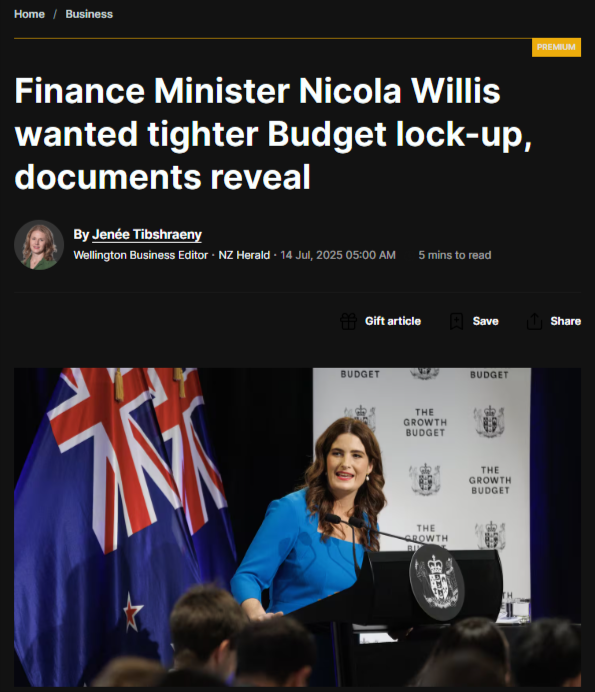
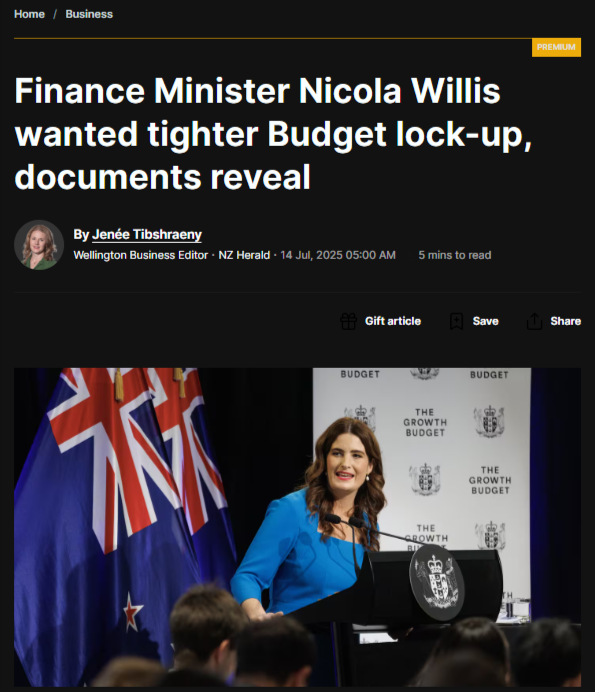
“Unmasking the Propaganda: Willis's Budget Lockup Lies Exposed” - 14 July 2025
The Hypocrisy of Power: When Finance Ministers Fabricate Democracy
Kia ora, whānau. Ko Ivor Jones, he Māori Green Lantern ahau. Hello, my name is Ivor Jones, and I am the Māori Green Lantern.
The latest revelations about Finance Minister Nicola Willis's manipulation of the Budget lockup process represent a masterclass in neoliberal doublespeak and authoritarian control masquerading as democratic transparency. Willis's public statements about "directing" Treasury to expand access while secretly orchestrating restrictions expose the fundamental dishonesty at the heart of this government's approach to democratic participation.
Background: The Budget Lockup as Democratic Theater
The Budget lockup serves as a crucial democratic mechanism in New Zealand's fiscal process. Traditionally, this restricted briefing provides advance access to Budget documents under embargo, allowing journalists, economists, and civil society representatives time to analyze complex fiscal information before public release. This process has historically included unions, think tanks, and advocacy groups that represent hundreds of thousands of New Zealanders.
The significance of this democratic institution cannot be overstated. As Treasury itself acknowledges, transparency is "a fundamental part" of effective government spending accountability. The lockup provides the only opportunity for civil society to directly question Treasury officials about Budget estimates and methodologies.
The Manufactured Crisis: Willis's War on Working People
Willis's attack on the Budget lockup represents a calculated assault on democratic participation, particularly targeting working-class voices. The documented evidence reveals a systematic campaign to silence criticism through bureaucratic manipulation.
The Craig Renney Witch Hunt
The documents expose Willis's petty vendetta against Craig Renney, the Council of Trade Unions economist. Willis's office characterized a simple quotation mark error as "fabrication", despite the mistake being corrected within 50 minutes. This represents the kind of authoritarian overreach that targets working-class representatives while protecting corporate interests.
The reality is clear: Renney maintains the error was innocent and quickly corrected, yet Willis weaponized this minor mistake to justify broader restrictions on democratic participation. This vindictive approach reflects the government's fundamental hostility toward organized labor and working-class representation.
The Systematic Exclusion of Democratic Voices
Willis's true agenda becomes clear when examining the broader pattern of exclusions. The Treasury barred representatives from unions, advocacy groups, and civil society organizations while maintaining access for banks, financial institutions, and corporate interests. This selective democracy serves neoliberal interests by silencing voices that might challenge corporate welfare and austerity measures.
The New Zealand Council of Trade Unions represents over 300,000 workers, yet Willis deemed their input less valuable than foreign financial institutions. This prioritization reveals the government's true constituency: international capital rather than New Zealand workers.
Debunking Willis's Fabricated Narratives
Willis's public statements about the lockup represent a series of calculated lies designed to obscure her authoritarian agenda. Each claim requires systematic debunking:
Lie 1: "I Directed Treasury to Open Up the Lockup"
Willis's public statement that she "directed" Treasury to expand access represents a complete fabrication. The documents reveal that Willis initially wanted even greater restrictions, specifically requesting the same approach used for the December 2024 Half-Year Economic and Fiscal Update, which had been criticized for its exclusionary approach.
Only after public pressure and legal threats did Willis reverse course, adding 30 people to the acceptance list. This represents reactive damage control, not proactive transparency.
Lie 2: "I Recognized the Value of Broader Participation"
Willis's claim that she "recognized" the value of broader participation is contradicted by her office's explicit instructions to Treasury. The documents show her press secretary told Treasury that lockup attendees should not be given "the opportunity to advocate for their point of view", revealing fundamental hostility toward democratic engagement.
This restriction would have transformed the lockup from a democratic institution into a technocratic briefing, eliminating the advocacy function that allows civil society to represent community interests.
Lie 3: "The Changes Were About Transparency"
Willis's framing of the restrictions as promoting transparency represents classic neoliberal inversion. True transparency requires diverse voices, not just financial market participants. The exclusion of unions, advocacy groups, and civil society organizations while maintaining access for international banks serves corporate interests, not democratic accountability.
The Open Government Partnership principles explicitly recognize that Budget transparency requires "public participation" and inclusion of "relevant groups outside of government." Willis's restrictions violated these democratic commitments.
The Broader Pattern: Neoliberal Authoritarianism
Willis's lockup manipulation represents part of a broader pattern of neoliberal authoritarianism that prioritizes corporate interests over democratic participation. This government consistently demonstrates contempt for working-class voices while elevating business interests.
The Austerity Agenda
The Budget lockup restrictions serve the government's broader austerity agenda. Budget 2025 delivered $21 billion in cuts13, including devastating attacks on pay equity claims that disproportionately affect women and Māori workers. By restricting access to critics, Willis sought to control the narrative around these regressive policies.
The Corporate Welfare System
While cutting support for working families, Willis delivered $6.6 billion in business tax relief. This represents classic neoliberal redistribution: from workers to capital, from public services to private profits. The lockup restrictions prevented effective scrutiny of this corporate welfare system.
The Māori Dimension: Colonial Exclusion
The Budget lockup restrictions carry particular significance for Māori communities, who face systematic exclusion from fiscal decision-making processes. Research demonstrates that the Crown's Budget process lacks meaningful Māori participation16, violating Treaty principles of partnership and participation.
Willis's restrictions compound this colonial exclusion by silencing advocacy organizations that represent Māori interests. The Budget has profound implications for tino rangatiratanga, yet Māori voices are systematically marginalized in favor of corporate interests.
The Democratic Deficit
Willis's lockup manipulation exposes the fundamental democratic deficit in New Zealand's fiscal governance. While Treasury proclaims commitment to transparency, the reality involves systematic exclusion of democratic voices in favor of corporate interests.
This represents what scholars term "simulated democracy" – maintaining democratic forms while emptying them of substantive content. The lockup becomes theater, providing the appearance of transparency while restricting meaningful participation.
The Resistance Response
The response to Willis's restrictions demonstrates the potential for democratic resistance. Organizations across the political spectrum, from the Council of Trade Unions to the Taxpayers' Union, united in opposition to these authoritarian measures. This unusual coalition reveals the broad threat posed by Willis's approach to democratic participation.
The eventual reversal of some restrictions demonstrates that organized resistance can challenge neoliberal authoritarianism. However, this reactive approach cannot substitute for proactive democratic reform.

The Māori Green Lantern fighting misinformation and disinformation from the far right
Implications for Democratic Governance
Willis's lockup manipulation has broader implications for New Zealand's democratic governance. It demonstrates how neoliberal governments use bureaucratic procedures to restrict democratic participation while maintaining plausible deniability.
The pattern extends beyond fiscal policy to encompass broader attacks on democratic institutions. This government consistently demonstrates contempt for public participation, consultation, and democratic accountability.
The Path Forward
Confronting Willis's authoritarian agenda requires systemic democratic reform. This includes:
Legislating Open Budget Requirements: Parliament should mandate broad civil society participation in Budget processes, preventing future ministerial manipulation.
Strengthening Democratic Institutions: The lockup should be expanded to include diverse voices, not restricted to corporate interests.
Protecting Advocacy Rights: The government's attack on advocacy organizations threatens fundamental democratic rights that require legislative protection.
Māori Participation: Any democratic reform must center Māori voices and Treaty partnership principles.
Willis's Budget lockup manipulation represents a textbook case of neoliberal authoritarianism: restricting democratic participation while claiming to promote transparency. Her public lies about "directing" expanded access while secretly orchestrating restrictions expose the fundamental dishonesty at the heart of this government's approach to democracy.
The documents reveal a Finance Minister more concerned with controlling narratives than enabling democratic participation. Willis's vindictive pursuit of Craig Renney, combined with systematic exclusion of working-class voices, demonstrates the government's true priorities: protecting corporate interests at the expense of democratic accountability.
For Māori communities, these restrictions represent another layer of colonial exclusion, denying meaningful participation in fiscal decisions that profoundly affect our people. The Budget process remains a site of struggle between democratic participation and corporate control.
The resistance to Willis's restrictions demonstrates that democratic forces can challenge neoliberal authoritarianism. However, this requires sustained organizing, clear analysis, and uncompromising commitment to democratic principles.
Willis's lies are now exposed. The question remains: will we accept this assault on democracy, or will we organize to reclaim our democratic institutions from corporate capture?
The fight for democratic participation continues. Kia kaha, whānau.
Readers who find value in my content and wish to support the cause can consider a donation/koha to HTDM: 03-1546-0415173-000. The MGL understands these are tough economic times for whānau, so please only contribute if you have capacity and wish to do so.
Nāku noa, nā Ivor Jones, The Māori Green Lantern.