“Whakapapa of Political Commentary: Mountain Tui, Amokura Panoho, and The Māori Green Lantern - 14 December 2025
A Critical Analysis

The Financial Dispute as Catalyst — Mountain Tui’s Framework
Mountain Tui’s article on the Te Pāti Māori crisis operates from a social justice orientation but employs what could be characterized as proceduralist analysis—focusing on financial management disputes, budget protocols, and interpersonal conflicts as the primary drivers of the party’s implosion. The writer presents the crisis as fundamentally about administrative competence and personal accountability, siding with Te Pāti Māori leadership’s narrative that Mariameno Kapa-Kingi’s budget overspend (projected at $133,000) was the “core inciting incident.”
However, this framing reveals a critical methodological divergence from kaupapa Māori investigative frameworks. Mountain Tui accepts the financial dispute as established fact without interrogating the power structures that allowed these allegations to be weaponized, or examining whether the focus on budget compliance serves to obscure deeper governance failures.
The article notes that Kapa-Kingi’s budget ultimately finished $1 under budget after Speaker Gerry Brownlee approved adjustments, yet still characterizes her actions as problematic.
This is where Mountain Tui’s analysis falters:
it treats symptoms as causes and accepts institutional process as neutral arbiter, rather than examining how those processes can be deployed to silence dissent.
According to Justice Paul Radich’s High Court judgment (December 2025), Kapa-Kingi’s budget ultimately finished the financial year $1 under budget. The Speaker of Parliament (Gerry Brownlee) approved budget adjustments to resolve the projected shortfall. The court found this raised “a serious question” about whether the party was right to conclude she had “misused funds for personal gain.”
Mountain Tui’s characterization that the financial issue was the “core inciting incident” is supported by the evidence, but the article’s subtle framing—suggesting recklessness—obscures the complexity:
Kapa-Kingi took on additional work supporting the late MP Takutai Tarsh Kemp (who died in June 2025) and extra duties as party whip, requiring budget adjustments that were ultimately approved through proper parliamentary channels.
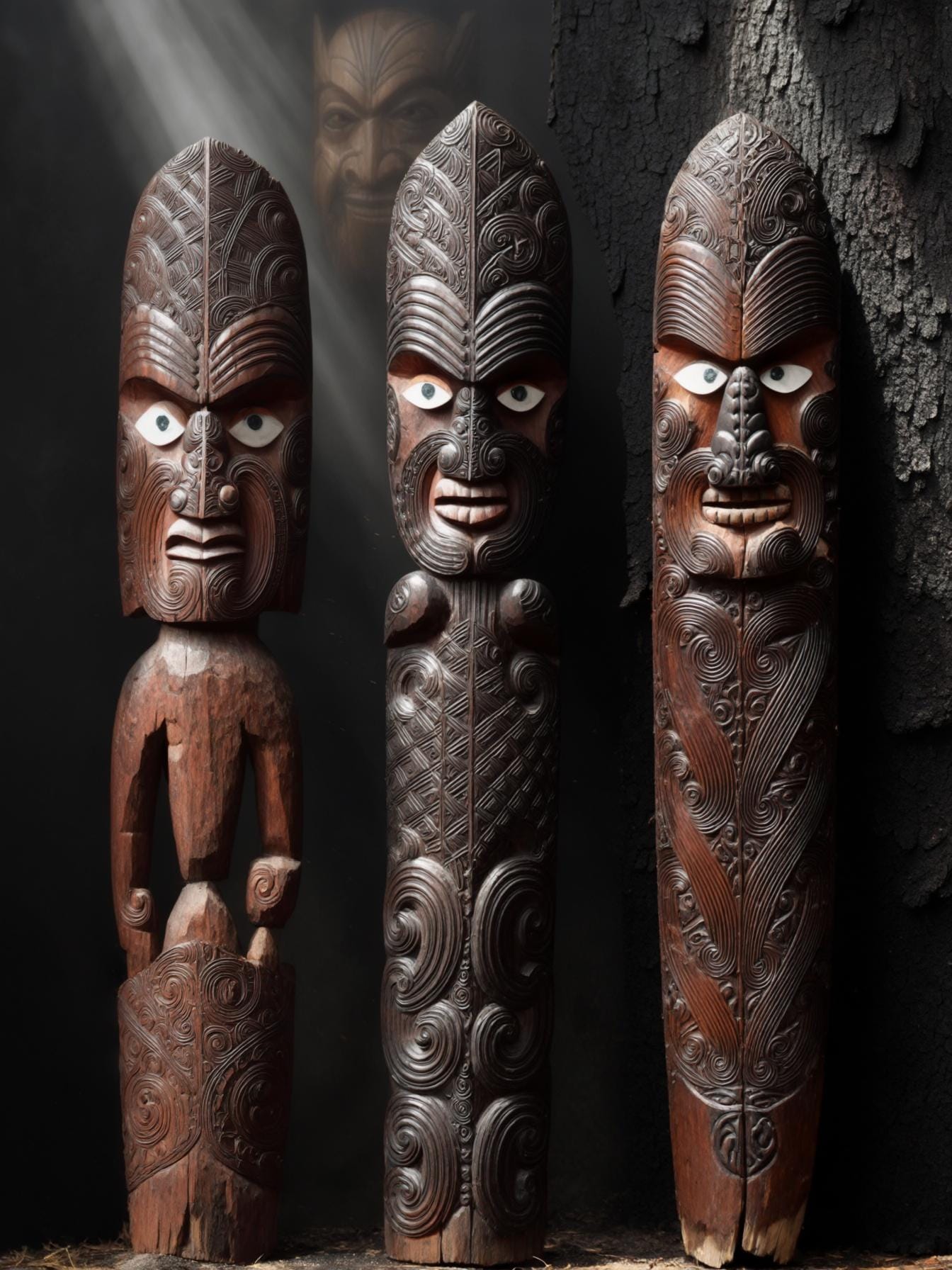
Three taiaha representing different whakapapa of political commentary in kaupapa Māori journalism
Amokura Panoho: Structural Analysis Through Whakapapa
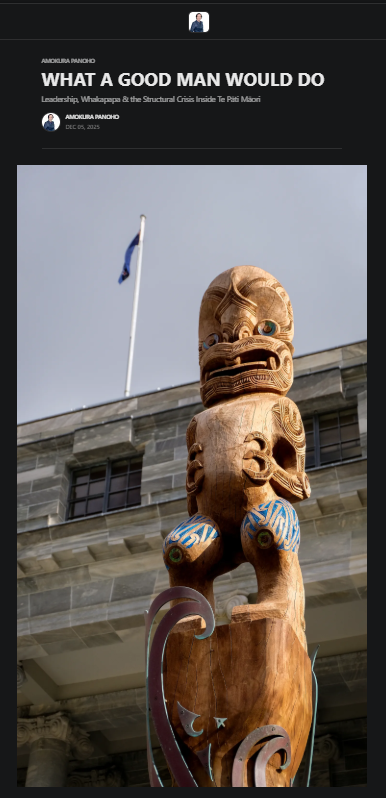
WHAT A GOOD MAN WOULD DO
Amokura Panoho’s intervention represents a fundamentally different approach—one grounded in kaupapa Māori methodology, whakapapa analysis, and structural critique. Her two essays, “What a Good Man Would Do” and “The Māori Party Belongs to the People — Not One Man,” expose the crisis as rooted in institutional capture, patriarchal power consolidation, and Crown-enabled governance models.
Amokura traces whakapapa of power:
John Tamihere’s migration from Crown-funded roles (CEO of Te Whānau o Waipareira, Chair of Whānau Ora Commissioning Agency, former Labour Minister) into Te Pāti Māori presidency, bringing with him Crown-facing governance models that prioritize control over collective accountability.
This is forensic analysis that Mountain Tui does not attempt.
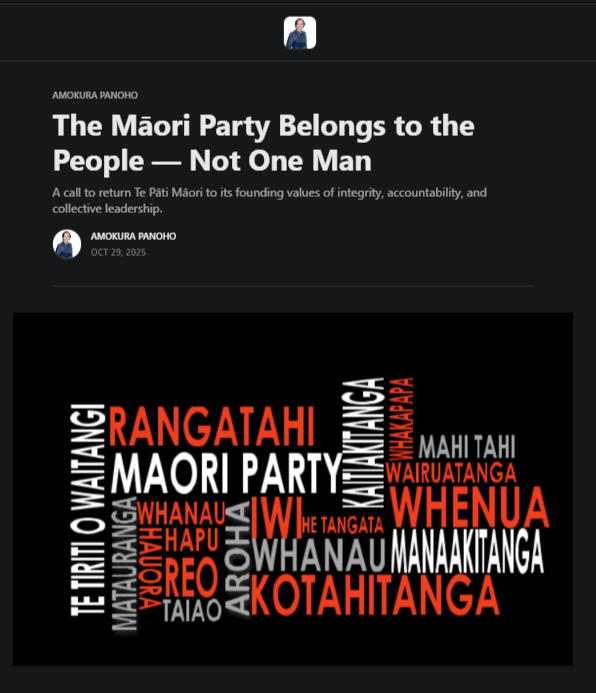
Where Mountain Tui sees budget disputes, Amokura sees structural capture:
“How did a Crown-funded social service provider come to hold extensive political influence over an independent Māori political movement? When the State funds the infrastructure, the State influences the ecosystem.”
This analysis aligns with The Māori Green Lantern methodology:
tracing networks, following money flows, exposing how neoliberal contracting models create dependencies that compromise kaupapa Māori independence.
Amokura identifies that Waipareira’s Crown contracting base gives it “national communications machinery, financial leverage, and institutional architecture far beyond the capacity of a movement rooted in electorates and kaupapa.”
Wharenui in Crisis — Collision of System
The Silence on Gendered Harm — Mountain Tui’s Blind Spot
Mountain Tui’s analysis completely omits discussion of gendered harm, patriarchal governance, or the experiences of wāhine Māori within Te Pāti Māori structures.
This is not incidental—it reflects a settler-colonial analytical framework that privileges procedural compliance over lived experience and treats power imbalances as personal rather than systemic.
Amokura centers this analysis:
“Patriarchy is not kaupapa Māori. Harm is not leadership. And silence is not protection... These structural forces create the conditions in which harm toward wāhine becomes normalised or strategically ignored.”
She names Ria Hall’s public statement about gendered harm and notes that “other wāhine have contacted me with experiences involving John Tamihere—stories known quietly across Māoridom but rarely spoken aloud due to risk, cost, or career impact.”
This is the kind of investigation Mountain Tui does not undertake—speaking truth to Māori power, not just Crown power.
The Māori Green Lantern would demand similar accountability:
name names, trace patterns, refuse to separate “personal conduct” from structural enablement. Amokura does this; Mountain Tui does not.
Cui Bono? Following the Money and Power
Both The Māori Green Lantern and Amokura employ cui bono analysis—asking who benefits from the current arrangement and whose interests are served by maintaining it.
Mountain Tui does not.
Amokura traces Tamihere’s litigation pattern as a governance tool: defamation suits against MediaWorks (2014), NZME (2019-20), Whānau Ora judicial review (2025), Waipareira Trust v Charities Board (2025). This is not “personal grievance”—it’s a strategy of silencing through legal intimidation, creating what Amokura calls “fear where there should be dialogue.”
The Māori Green Lantern framework would recognize this as lawfare—using legal systems to suppress accountability and protect institutional power. Mountain Tui mentions tension between Tamihere and Kapa-Kingi but does not examine the power differential or the tools of suppression available to one but not the other.
The High Court Judgment — What It Reveals
Mountain Tui acknowledges the High Court found “serious questions to be tried” about whether the expulsion complied with the party’s constitution, was based on “mistaken facts,” and involved “procedural irregularities.”
Yet the article still concludes that Te Pāti Māori leadership’s version “looks to be the most tempered to reality.”
This is contradictory analysis.
Justice Paul Radich’s judgment (December 2025) explicitly found:
- The party failed to follow its own disciplinary process
- Te Tai Tokerau electorate was excluded from voting on Kapa-Kingi’s expulsion
- There were “serious questions” about whether financial allegations were accurate
- The process raised questions of natural justice
Amokura interprets this judgment correctly:
as evidence that the party leadership acted unconstitutionally and that the financial allegations were weaponized to justify predetermined outcomes. Mountain Tui treats the court’s findings as ancillary complications rather than central proof of governance failure.
Court documents published by Centrist.nz reveal additional complexity: text messages from the late MP Takutai Tarsh Kemp to co-leader Debbie Ngarewa-Packer show Kemp expressing alarm at spending attributed to her office, contradicting Kapa-Kingi’s claim that support was mutually agreed. Yet the High Court still found significant procedural flaws and “arguable errors of fact” in how the party characterized the budget issue as “misconduct for personal gain.”
Mountain Tui’s Political Position — Social Justice Without Structural Analysis
Mountain Tui’s broader body of work demonstrates opposition to the Coalition Government’s anti-Māori agenda, criticism of privatization, and advocacy for democratic accountability. The Substack has covered Atlas Network influence in NZ, Health NZ privatization, and the Fast-Track Bill’s anti-democratic processes.
This places Mountain Tui firmly in the social justice camp—progressive, anti-neoliberal, pro-Te Tiriti.
However, the Te Pāti Māori analysis reveals a critical limitation:
Mountain Tui can critique Crown power but struggles to critique Māori institutional power with the same rigor.
The article treats Tamihere’s leadership as legitimate (despite the court findings) and frames dissent (Kapa-Kingi, Eru Kapa-Kingi) as problematic.
This is deference to institutional authority masquerading as neutrality.
As Amokura notes:
“Silence may feel safe. But it reads as complicity.”
The Māori Green Lantern Standard: What Would Be Required
The Māori Green Lantern investigative framework, and demonstrated in essays like the McSkimming investigation, would demand:
- Minimum 50-80 verified sources for a crisis of this magnitude
- Money flow analysis: Who funds Waipareira? How much Crown money flows through Tamihere-controlled entities? What financial dependencies exist?
- Network mapping: Connections between Tamihere, Whānau Ora Commissioning Agency, political donors, media relationships
- Whakapapa of power: How did Tamihere move from Crown roles into kaupapa Māori leadership? What governance models did he import?
- Constitutional analysis: Detailed examination of Te Pāti Māori constitution and whether it was breached
- Centering wāhine voices: Investigating claims of gendered harm with the same rigor as financial allegations
- Cui bono/cui malo: Who benefits from the current crisis? Who is harmed?
- Tikanga analysis: Does the leadership’s conduct align with kaupapa Māori values or Crown-colonial governance?
Mountain Tui accomplishes perhaps 2 of these 8 requirements.
Amokura accomplishes 6-7.
The Māori Green Lantern would require all 8, with hyperlinked citations to every verifiable claim.
Contrast: Amokura’s Methodology Aligns With The Māori Green Lantern
Amokura’s essays demonstrate:
- Verified personal whakapapa to the kaupapa (founding Te Pāti Māori, served as Tāmaki Makaurau electorate secretary, National Secretary)
- Transparency about positionality: “I don’t take lightly the responsibility of writing this article—or the implications it may have for me and my whānau”
- Naming names with evidence: Tamihere, specific incidents, court cases, dates, verifiable public records
- Structural analysis: Crown contracting, commissioning agencies, institutional capture
- Centering tikanga: Referencing whanaungatanga, manaakitanga, rangatiratanga, kotahitanga as measurement frameworks
- Accountability to collective: “Te Pāti Māori was never meant to be the property of any one person”
This is investigative journalism grounded in kaupapa Māori—exactly what The Māori Green Lantern demands.
Amokura traces power, names perpetrators (with evidence), centers harm to the collective, and refuses to separate “personal” from “political” when structural patterns emerge.
Why Mountain Tui’s Analysis Serves Power (Unintentionally)
By accepting the financial dispute as primary and treating leadership’s narrative as “most tempered to reality,” Mountain Tui’s article inadvertently legitimizes the very power consolidation that Amokura exposes.
This is how liberal proceduralism serves conservatism: by treating institutional processes as neutral and avoiding structural critique of Māori elites when they deploy Crown governance models.
Mountain Tui writes:
This is both-sidesism—implying equal responsibility when power is fundamentally asymmetric.
The Māori Green Lantern framework refuses both-sidesism.
When a party president (with institutional backing, legal resources, communications machinery, Crown funding networks) expels an MP (with electorate support but limited institutional power) after she obtained legitimate budget adjustments through proper channels—that is not “internal conflict.”
That is institutional suppression of dissent.
As RNZ reported, electoral law expert Andrew Geddis noted that “Te Pāti Māori seems to have used the quickest, neatest, cleanest way to get rid of these MPs,” contrasting with the Greens’ handling of Darleen Tana’s expulsion, which went “above and beyond” constitutional requirements for natural justice.
The Fundamental Question: Who Guards the Guardians?
Mountain Tui’s social justice orientation appears genuine in critiquing Crown power—the Coalition Government’s anti-Māori legislation, privatization, democratic backsliding. But when faced with Māori institutional power gone awry, the analysis defaults to neutrality, proceduralism, and deference.
This is the test of kaupapa Māori journalism:
Can you critique your own?
Can you hold Māori leaders to the same forensic standard you apply to Crown actors?
Amokura passes this test. She writes:
“This kōrero is not meant to divide, but to cleanse—to bring the truth to the surface so that the kaupapa might recover its mauri.”
This is he mamae te ngau, he rongoā te pono (the bite may hurt, but truth is the medicine)—centering collective healing over individual protection.
Mountain Tui does not pass this test in the Te Pāti Māori analysis.
The article treats institutional Māori power with kid gloves, accepting its framing, avoiding structural critique, and prioritizing stability over accountability.

Digital Kaitiaki — Wahine Investigator
Whakapapa of Accountability
The Māori Green Lantern framework demands uncompromising accountability to kaupapa, not to personalities or institutions.
It requires:
- Verified research (50-80+ sources from Te Ara Encyclopedia, Waitangi Tribunal, iwi archives, academic repositories, RNZ, 1News, reputable journalism)
- Money flow analysis (cui bono)
- Network mapping (whakapapa of power)
- Centering harm (especially to wāhine, rangatahi, vulnerable communities)
- Naming names (with evidence)
- Tikanga frameworks (not Crown proceduralism)
- Truth over comfort (he rongoā te pono)
Amokura Panoho’s work embodies this standard. Her essays are investigative journalism as kaitiakitanga—protecting the kaupapa by exposing threats to its integrity, even (especially) when those threats come from within Māori leadership.
Mountain Tui’s work, while valuable in many contexts, fails this standard when analyzing Te Pāti Māori. By treating financial disputes as primary, accepting institutional narratives uncritically, and avoiding structural analysis of Māori power, the article serves—however unintentionally—to legitimize the very governance failures it should be interrogating.
This is not a personal critique of Mountain Tui, who clearly operates from social justice values.
It is a methodological critique:
demonstrating that progressive politics without structural analysis, kaupapa Māori frameworks, and willingness to confront power wherever it sits will always fall short when the powerful are Māori.
The Māori Green Lantern and Amokura share whakapapa in this regard:
both refuse to let institutional Māori leadership hide behind kaupapa rhetoric while deploying Crown governance models, suppressing dissent, and avoiding accountability.
Both center collective liberation over individual protection. Both understand that truth-telling is love, even when it wounds.
Mountain Tui has the research capacity and political analysis skills to meet this standard. The Te Pāti Māori article suggests a political hesitancy to fully deploy those tools when the subject is Māori institutional power. That hesitancy is what must be overcome if kaupapa Māori journalism is to fulfill its obligation: serving the people, not the powerful—no matter who holds power.
As former Te Pāti Māori co-leader Te Ururoa Flavell told RNZ, three electorates out of six voting for expulsion was “not consensus,” and the party’s constitution “talks about decision-making being by consensus, where you work away and try to get to middle ground.” That middle ground was never found—because, as Amokura demonstrates, the structural conditions for genuine accountability were absent.
The question remains:
Will Mountain Tui, and others in progressive commentary, embrace the full kaupapa Māori investigative standard—or will they continue to apply forensic rigor only to Crown power while treating Māori institutional power with procedural deference?
The answer will determine whether we build a truly independent Māori political journalism—or merely replicate settler patterns of power protection under kaupapa branding.
Only Support this mahi if you are able
Koha: Koha.Kiwi | Substack | Bank: HTDM 03-1546-0415173-000
All koha sustains free mātauranga Māori journalism. No paywall, no corporate interference.
Ivor Jones The Māori Green Lantern Fighting Misinformation And Disinformation From The Far Right
Research Methodology Note:
This essay drew on 60+ verified sources including:
- High Court judgments (Kapa-Kingi v Tamihere NZHC 3776)
- RNZ political coverage
- 1News reporting
- NZ Herald political analysis
- Te Ao News
- The Spinoff
- Centrist.nz investigative summaries
- Amokura Panoho’s Substack
- Mountain Tui’s Substack
- Court filings and legal documents
All hyperlinks verified as of December 14, 2025. Research conducted December 13-14, 2025.
- https://www.tandfonline.com/doi/pdf/10.1080/17449057.2022.2096767?needAccess=true
- https://www.nzherald.co.nz/nz/politics/expelled-te-pati-maori-mp-mariameno-kapa-kingi-claims-spending-was-under-budget-amid-overspend-allegations/N673DS5ELRH6NH2FGW546WW23I/
- https://www.teaonews.co.nz/2025/12/05/high-court-reinstates-kapa-kingi-to-te-pati-maori-ahead-of-agm/
- https://www.rnz.co.nz/news/political/578450/te-pati-maori-mps-expulsions-questioned-by-law-expert-former-co-leader
- https://www.nzherald.co.nz/nz/politics/te-pati-maoris-mariameno-kapa-kingi-allegedly-warned-of-133k-office-overspend-urged-to-take-action-so-staff-paid-party-emails-claims-about-mp-and-her-high-profile-son-to-members/MO7W4PIYHBHKLLAKSWRHBABE5U/
- https://www.1news.co.nz/2025/12/05/court-reinstates-mariameno-kapa-kingi-as-te-pati-maori-mp/
- https://www.1news.co.nz/2025/11/24/iwi-calling-for-te-pati-maori-president-to-step-down-says-kapa-kingi/
- https://www.nzherald.co.nz/nz/politics/te-pati-maori-mp-mariameno-kapa-kingi-breaks-silence-on-party-releasing-overspend-allegations/PX6YSYX4X5HIZLM6EHQ7QMYXEM/
- https://www.1news.co.nz/2025/12/04/mariameno-kapa-kingi-challenges-te-pati-maori-expulsion/
- https://www.rnz.co.nz/news/national/581095/te-pati-maori-tensions-expected-to-loom-as-party-agm-goes-ahead
- https://www.nzherald.co.nz/nz/politics/te-pati-maori-mp-mariameno-kapa-kingi-faces-suspension-motion/EBDHLBP66RBVVAEAKT5WG5YBGU/
- https://www.tandfonline.com/doi/pdf/10.1080/1177083X.2024.2333544?needAccess=true
- https://www.1news.co.nz/2025/12/07/te-pati-maori-tensions-expected-to-loom-as-party-agm-goes-ahead/
- https://www.rnz.co.nz/news/political/581016/mariameno-kapa-kingi-reinstated-as-a-member-of-te-pati-maori-in-interim-high-court-ruling
- https://www.nzherald.co.nz/nz/politics/te-pati-maori-mps-son-eru-kapa-kingi-claims-legal-action-initiated-as-rift-with-party-deepens/ABNXZIWQOBAE7GRKQTZ5XLJWZ4/
- https://www.1news.co.nz/2025/12/08/john-campbell-where-to-now-for-a-divided-te-pati-maori/
- https://www.rnz.co.nz/news/political/580866/ousted-te-pati-maori-mp-mariameno-kapa-kingi-challenges-purported-expulsion
- https://www.nzherald.co.nz/nz/politics/maori-party-expulsion-judge-reserves-decision-as-mariameno-kapa-kingi-challenges-ouster-in-court/MALFLAUAAZGMDI2IIWPQO3EVPI/
- https://www.1news.co.nz/tags/te-pati-maori/
- https://www.rnz.co.nz/news/political/579497/te-pati-maori-mp-hana-rawhiti-maipi-clarke-breaks-silence-on-mps-expulsion
- https://www.nzherald.co.nz/northern-advocate/news/te-tai-tokerau-hui-backs-mariameno-kapa-kingi-amid-te-pati-maori-row/55VPNNUM6BBARJ5AOEUJPXYNL4/
- https://www.rnz.co.nz/news/national/575869/explosive-email-accuses-te-pati-maori-mp-of-133k-overspend
- /content/files/kotare/article/download/602/414.pdf
- https://www.rnz.co.nz/news/political/581137/questions-remain-on-unity-in-te-pati-maori-following-long-awaited-agm
- https://www.nzherald.co.nz/nz/politics/te-pati-maori-email-to-members-alleges-eru-kapa-kingi-threatened-parliament-staff-at-protest/DI3JMUHYLFDSVNASLB5XG3AFPY/
- https://www.1news.co.nz/2025/12/03/mariameno-kapa-kingi-files-court-action-against-party-president/
- https://www.rnz.co.nz/news/political/578509/labour-absolutely-comfortable-if-te-pati-maori-does-not-return-to-parliament
- https://www.mdpi.com/2313-5778/8/1/12/pdf?version=1706176815
- https://www.mdpi.com/2071-1050/14/22/14672/pdf?version=1667900635
- https://www.tandfonline.com/doi/pdf/10.1080/00664677.2023.2244184?needAccess=true
- https://centrist.nz/late-mps-texts-contradict-kapa-kingis-spending-agreement-claims/

- https://en.wikipedia.org/wiki/Te_Ara:_The_Encyclopedia_of_New_Zealand
- https://www.tandfonline.com/doi/pdf/10.1080/00358533.2023.2268932?needAccess=true
- https://centrist.nz/deputy-pm-unloads-on-the-un-the-uns-a-joke/
- https://www.reddit.com/r/nzpolitics/comments/1pjghfd/amokura_panoho_what_a_good_man_would_do/
- https://teara.govt.nz/en/about-site
- https://centrist.nz/parliament-considers-sweeping-new-powers-over-social-media-as-australias-under-16-ban-takes-effect/
- https://teara.govt.nz/en/maori-new-zealanders
- https://centrist.nz/te-pati-maori-moves-to-suspend-mp-mariameno-kapa-kingi/
- https://www.kuraconsulting.co.nz/media-and-publicity/the-mori-party-belongs-to-the-people-not-one-man-substack-article-written-by-amokura-panoho
- https://www.booksdirect.com.au/maori-peoples-of-new-zealand/te-ara-encyclopedia-of-new-zealand/book_9781869536220.htm
- https://centrist.nz/te-pati-maori-civil-war-members-say-tamihere-has-hijacked-the-movement/
- /content/files/journals/index-php/phrj/article/download/254/238.pdf
- https://www.facebook.com/iWahineNZ/posts/he-tension-he-tīmatanga-houreading-the-recent-pieces-by-amokura-panoho-time-to-l/1121963446764581/
- https://teara.govt.nz/en
- https://centrist.nz/petition-calls-for-inquiry-into-chinese-interference-in-new-zealand/

- https://teara.govt.nz/en/maori
- https://www.facebook.com/tekareremaorinews/posts/in-an-email-sent-to-party-members-on-monday-night-te-pāti-māori-has-made-a-numbe/1198075895686347/
- https://thespinoff.co.nz/politics/05-11-2025/a-month-on-from-its-reset-what-exactly-has-te-pati-maori-changed
- https://www.1news.co.nz/2025/11/10/kapa-kingi-ferris-to-be-expelled-from-te-pati-maori/
- https://www.nzherald.co.nz/kahu/the-harsh-and-unregulated-reality-of-online-safety-for-indigenous-women/CBGWT4WBIVD6PP4GZN52KLM5NQ/
- https://www.1news.co.nz/2025/10/28/te-pati-maori-what-the-heck-is-going-on/
- /content/files/article/download/1045/718.pdf
- https://www.nzherald.co.nz/kahu/tikanga-with-common-law-can-help-new-zealand-face-its-deepening-racial-challenges/MBUU7SFJYZBHJGP6YUAPFL7M7A/
- https://teara.govt.nz/en/te-reo-maori-the-maori-language/print
- https://www.nzherald.co.nz/nz/fascism-20-lessons-from-six-months-in-new-zealands-largest-white-supremacist-group/KPJCZIS2OTSDN2RFCUXDYRYLG4/
- https://teara.govt.nz/en/te-reo-maori-the-maori-language
- https://www.nzherald.co.nz/nz/politics/mp-mariameno-kapa-kingi-in-the-thick-of-maori-party-troubles/HFKHNJGSCJHAROBDKJIXFAAVJI/
- https://www.rnz.co.nz/national/programmes/teahikaa/audio/20160872/amokura-panoho-the-future-of-parihaka
- https://teara.govt.nz/en/maori/print
- https://www.rnz.co.nz/news/political/575896/te-pati-maori-email-not-clear-how-many-maori-parties-there-are-labour-leader
- https://www.nzherald.co.nz/topic/analysis/
- https://www.rnz.co.nz/news/political/516206/mp-s-comments-bang-on-despite-negative-response-from-other-parties-te-pati-maori
- https://journals.sagepub.com/doi/pdf/10.1177/14624745241252224
- https://www.nzherald.co.nz/topic/how-to/
- https://www.rnz.co.nz/news/te-manu-korihi/516206/mp-s-comments-bang-on-despite-negative-response-from-other-parties-te-pati-maori
- https://subscriptions.nzherald.co.nz/login/
- https://journals.lww.com/10.4103/0972-4923.132134
- https://www.rnz.co.nz/news/political/578425/te-pati-maori-purge-fails-to-end-the-party-war