“When Business Owners Cry "Lefty Councillors" - 30 August 2025
While Communities Suffer: The Entitlement of Hamilton's Hospitality Elite
Kia ora whānau. The Maori Green Lantern here, exposing the grotesque privilege of business owners who demand "tough bylaws" while communities struggle under colonialism, capitalism, and systemic neglect.
Behind the Hospitality Owner Hysteria
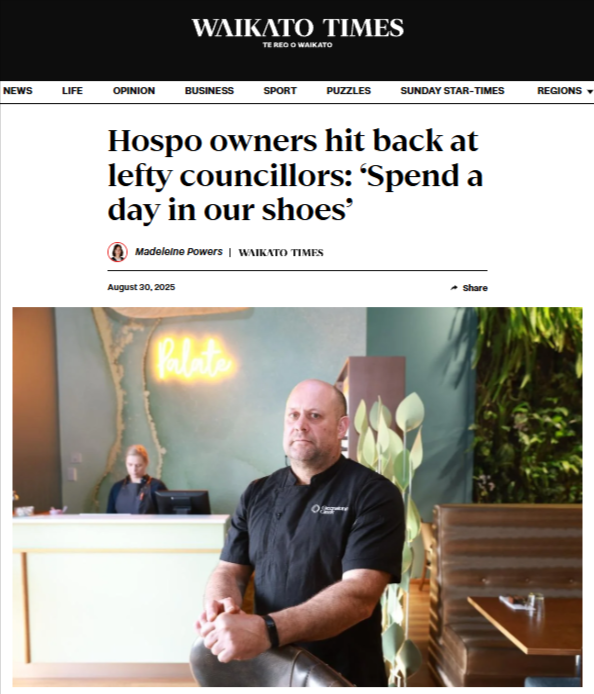
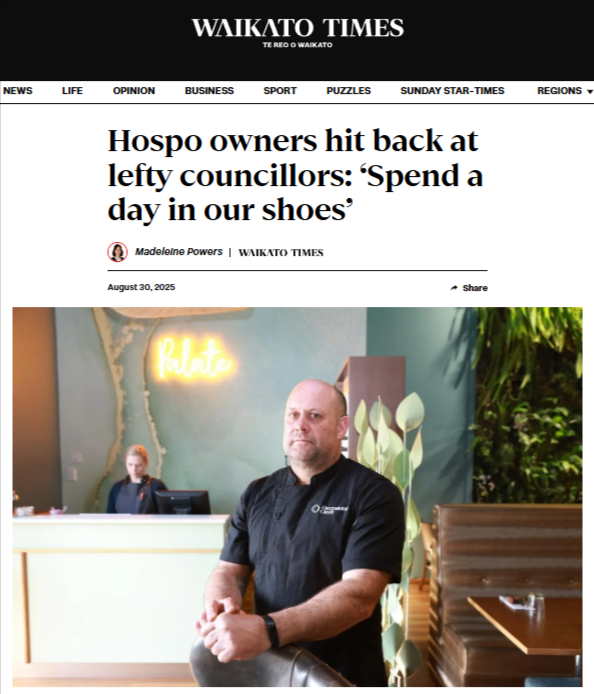
When Mat McLean of Palate Restaurant had cash stolen from his till on Thursday afternoon, his response revealed the nauseating entitlement that defines Hamilton's business elite. Rather than examining the systemic issues driving people to desperate acts, McLean and his fellow hospitality owners immediately turned to scapegoating "lefty councillors" who apparently aren't tough enough on crime.
This knee-jerk reaction exposes a fundamental truth about New Zealand's settler-colonial mindset: when faced with the consequences of inequality and dispossession, the propertied class demands harsher punishment rather than addressing root causes.
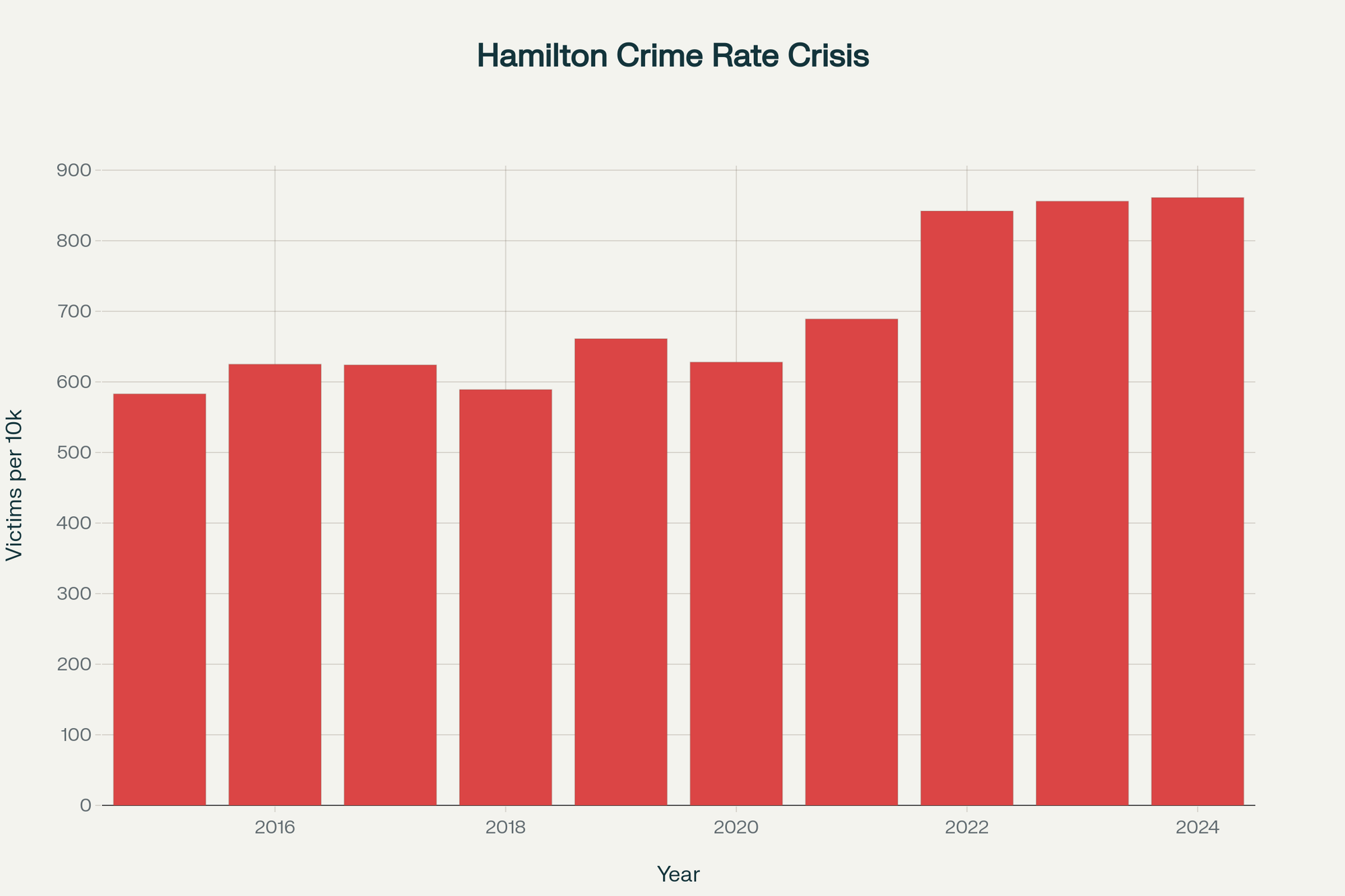
Crime rates in Waikato region showing alarming increase from 2015-2024
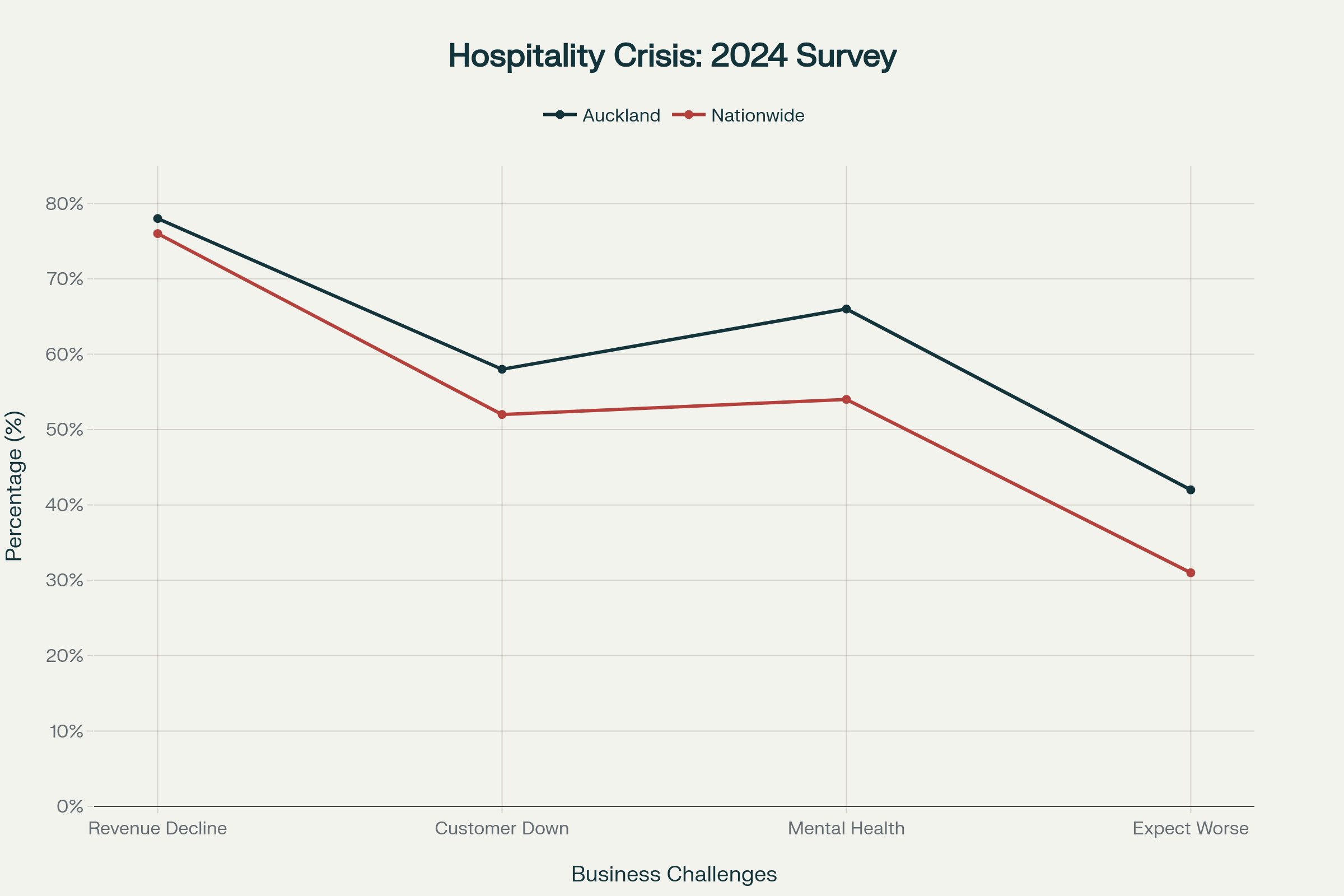
The crime data tells a devastating story: Hamilton's crime victimisation rate has skyrocketed to 1,314 per 10,000 residents in 2024, the highest in the Waikato region. Yet rather than connecting this to record-breaking hospitality industry failures, where 78% of Auckland businesses report revenue decline and 66% cite worsened mental health among workers, McLean and his cohort demand punitive measures.
The Colonial Mindset of "Tough on Crime"
McLean's demand that councillors "spend a day in our shoes" reeks of the paternalistic arrogance that has defined Pākehā attitudes toward Māori and working-class communities for generations. This is the same mindset that justified colonial theft of whenua through claims of "civilising" the "savage" natives.
The Restaurant Association's submission on Hamilton's alcohol licensing fees reveals the true priorities of these business owners. While demanding harsh crime measures, they simultaneously whinge about paying their fair share for alcohol licensing, arguing that only 5% of costs should come from general rates when they want 30%. The hypocrisy is staggering - socialise the costs, privatise the profits, criminalise the consequences.
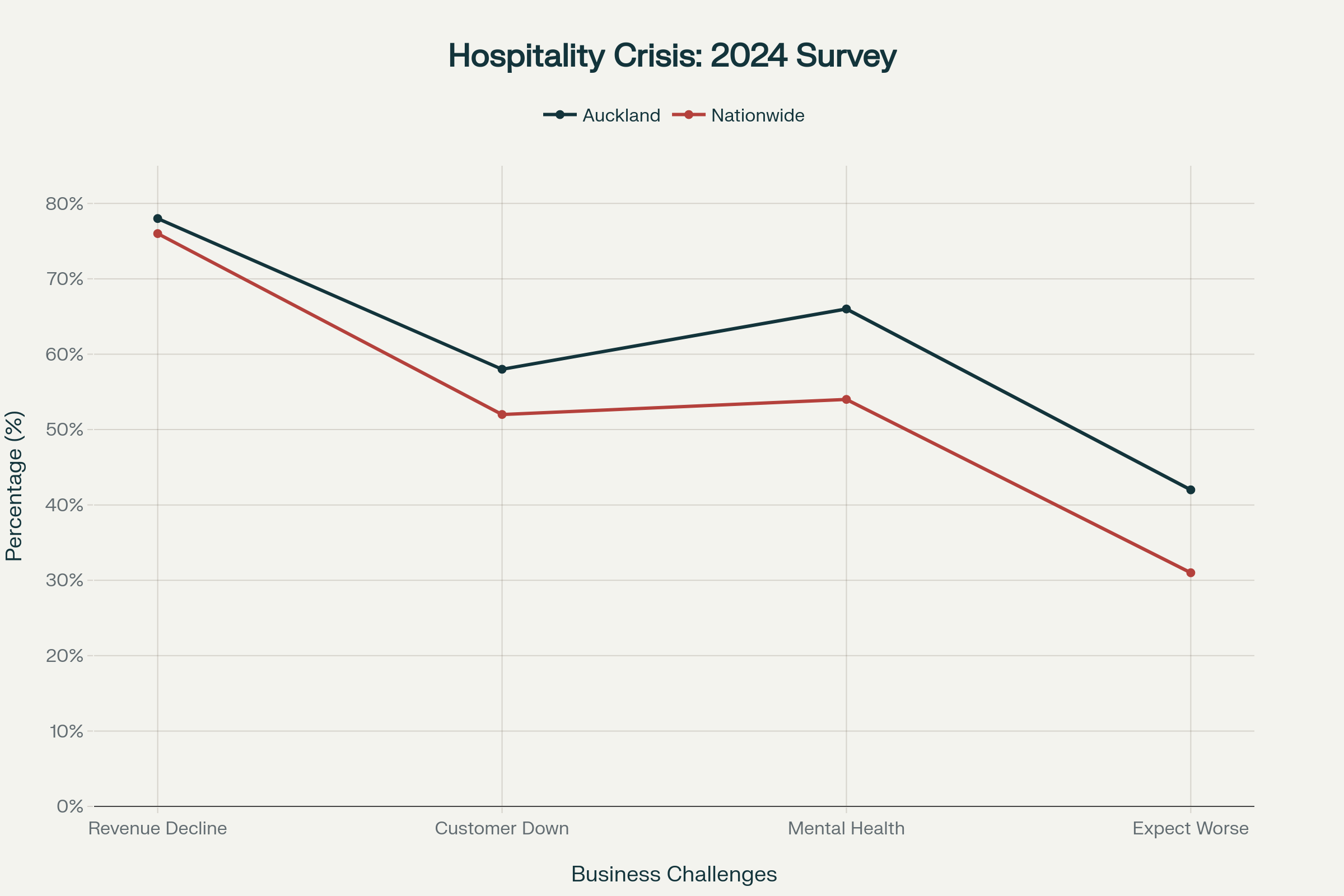
Hospitality industry facing multiple crises with majority of businesses struggling
The Real Crime: Systemic Exploitation
What McLean won't acknowledge is that Hamilton's hospitality industry is systematically exploiting workers. The recent conviction of Bay of Plenty bakery owner Ratha Ny for exploiting migrant workers - underpaying below minimum wage and failing to provide proper entitlements - represents the tip of the iceberg. The court ordered $335,000 in fines, reparations and wage arrears, yet this exploitation continues across the industry.
Satirical illustration contrasting hospitality owner privilege with community struggles
The Restaurant Association's own safety survey reveals that many hospitality operators are experiencing safety incidents including theft and antisocial behaviour. But they systematically ignore how their industry's exploitation of workers, particularly migrant workers, creates the very conditions driving crime.
When businesses like Hamilton dairy owners are forced to install cage doors and fog cannons after machete attacks, the real question isn't about "tough bylaws" - it's about why capitalism has created such desperation that people resort to violence for survival.
Council Complicity in Capitalist Crime
Hamilton City Council's response exposes their role as enforcers of capitalist order. Mayor Paula Southgate's calls for "multi-agency approaches" are coded language for increased surveillance and policing of working-class communities. The expansion of City Safe teams into suburbs represents the militarisation of social problems.
The council's Safety in Public Places Bylaw criminalises homelessness through restrictions on sleeping in public places, while simultaneously allowing business owners like McLean to operate in venues that have moved three times, suggesting significant capital mobility unavailable to those the bylaws target.
The Whitewashing of "Lefty Councillors"
The term "lefty councillors" deployed by McLean reveals the racist undertones of this discourse. In Hamilton's context, this is barely-concealed code for councillors who represent Māori interests or advocate for social justice. Hamilton's council includes two Māori ward representatives - Moko Tauariki and Maria Huata - who likely oppose the punitive measures McLean demands.
This echoes broader anti-co-governance rhetoric that portrays any challenge to Pākehā dominance as "radical left" politics. The reality is that genuine left politics would demand the dismantling of the capitalist system that creates both the conditions McLean profits from and the desperation that drives people to steal from his till.
Implications for Māori Communities
The demands of Hamilton's hospitality elite for tougher bylaws will inevitably target Māori disproportionately. Police data shows that over 5,000 shoplifting complaints under $500 were not investigated due to controversial police directives, revealing how the system already criminalises poverty while protecting property.
When Hamilton's crime rate sits at 1,314 per 10,000 residents - the highest in Waikato - the solution isn't more bylaws to criminalise Māori struggling under ongoing colonisation. It's addressing the land theft, cultural destruction, and economic marginalisation that create these conditions.
The increase in knife crime by 19% over two years reflects deeper trauma within communities abandoned by the colonial state. Yet McLean and his fellow business owners demand punishment rather than healing.

The Māori Green Lantern Fighting Misinformation And Disinformation From The Far Right
The Path Forward
Real safety comes from mana whenua having control over their territories, not from criminalising the symptoms of colonial capitalism. While McLean counts his cash, Hamilton's hospitality workers face mental health crises and exploitation becomes so normalised that courts must order hundreds of thousands in reparations.
The solution isn't "spending a day in McLean's shoes" - it's ensuring that everyone has shoes to wear, food to eat, and housing that provides security. This requires dismantling the very system that allows McLean to accumulate wealth while others resort to theft for survival.
Until business owners like McLean acknowledge their role in creating the conditions they complain about, their calls for "tough bylaws" remain nothing more than settler-colonial violence disguised as public safety.
Ko Ivor Jones, Te Māori Green Lantern
For readers who find value in this analysis and wish to support the cause of exposing misinformation and white supremacy, please consider a koha to HTDM: 03-1546-0415173-000. I understand these are tough economic times for whānau, so please only contribute if you have the capacity and wish to do so.
Kia kaha, kia māia, kia manawanui.