“When Colonial Courts Accidentally Tell the Truth About Their Own Violence” - 29 August 2025
The Whakapapa of State-Made Monsters
Kia ora e te whānau - Greetings to our people.
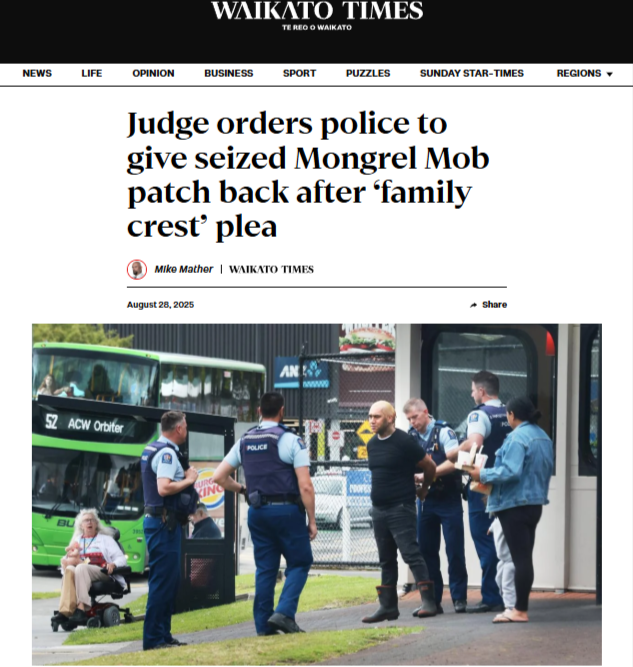
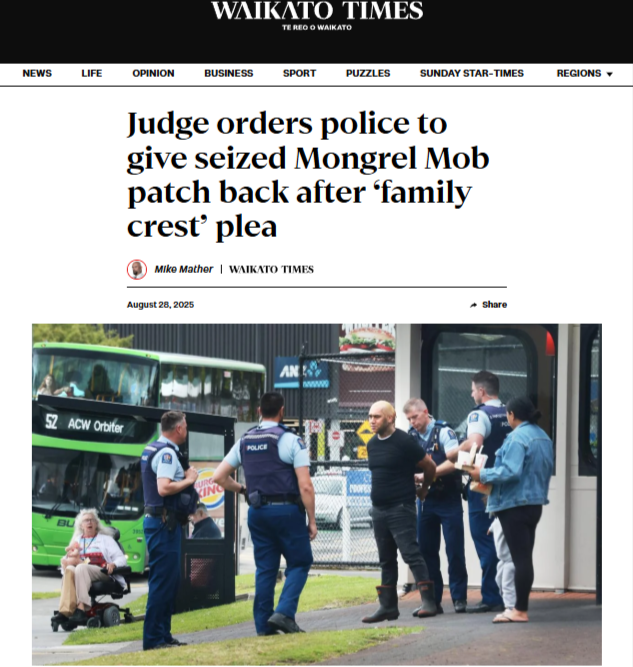
The recent Waikato Times coverage of Judge Lance Rowe's decision to return Andrew Leef's Mongrel Mob patch reveals more about the colonial state's guilty conscience than any journalist intended. When a district court judge acknowledges that a gang patch represents "family crest" under tikanga Māori, citing concepts of mana and whakapapa, we witness a rare moment of judicial honesty about the state's role in manufacturing the very "gang problem" it now criminalises through punitive legislation.
This essay exposes how mainstream media coverage obscures the colonial origins of gang formation while the state deploys increasingly authoritarian measures against predominantly Māori communities. The Gangs Act 2024 represents not crime prevention but colonial violence disguised as law and order, targeting the descendants of children tortured in state institutions.
Background: Understanding the Colonial Context
To understand this case's significance, we must grasp how tikanga Māori has been recognised as part of New Zealand's common law, with courts acknowledging it as "the first law of Aotearoa." Judge Rowe's decision correctly identified Andrew Leef's submissions as "consistent with expressions of mana and whakapapa" - fundamental concepts in Māori worldview where identity, belonging, and kinship transcend Western individualism.
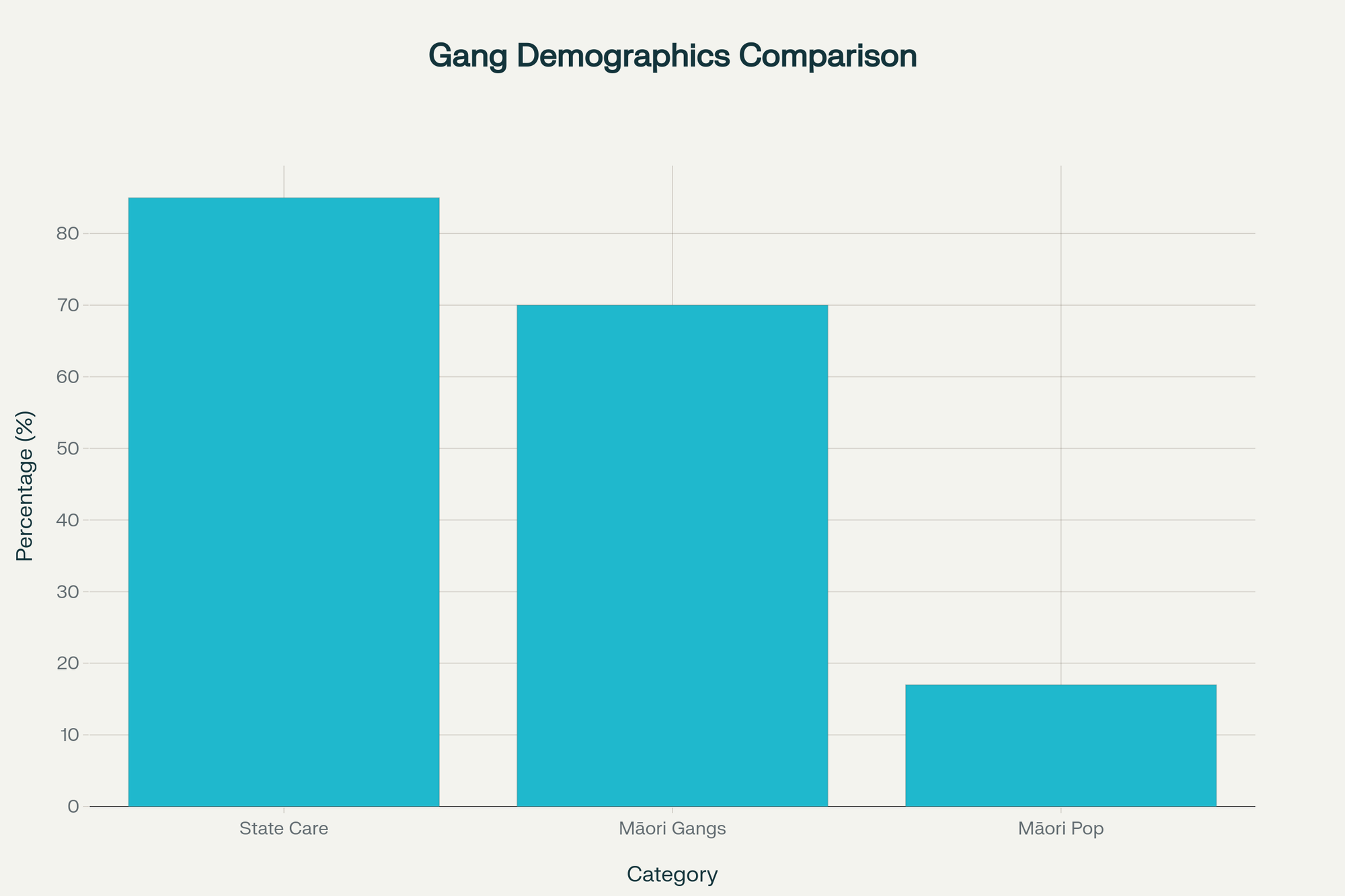
The Mongrel Mob itself emerged from state care institutions in the 1960s, with research showing that 80-90% of Mongrel Mob and Black Power members were state wards. These institutions systematically disconnected Māori children from their whakapapa, whenua, and cultural identity through violence and abuse.
The Gangs Act 2024, which criminalises patch-wearing, passed despite Ministry of Justice advice that there is no evidence it would reduce long-term gang offending and could make problems worse.
Deconstructing Media Mythology
The Waikato Times presents Judge Rowe's decision as an interesting legal curiosity - a quirky case where tikanga meets gang law. This framing deliberately obscures the structural violence that created gangs while legitimising the state's current criminalisation campaign. The article mentions Leef's 25-year gang membership and view of the Mob as "family" without connecting this to the colonial destruction of Māori kinship systems.
Mike Mather's reporting treats the state's seizure of cultural items as normal police procedure, noting that "police have been approached for comment" as if their perspective matters more than the fundamental rights violations occurring. The article's neutral tone masks how racial profiling by police targets young Māori while ignoring the colonial origins of the communities they criminalise.
This case matters because it reveals how the colonial legal system occasionally recognises its own violence while simultaneously escalating that violence through increasingly authoritarian legislation targeting Māori.
Structural Roots: State Care and Ethnic Marginalisation Fuel Gangs in Aotearoa
The Colonial Manufacturing of "Monsters"
The judge's acknowledgment that "gangs are not a product of te ao Māori" but emerged from "abuse in State care" represents a moment of rare institutional honesty. Professor Tracey McIntosh's research demonstrates that 80% of young boys in youth residences in 1975 were Māori, creating "forced association" among traumatised children completely severed from their whakapapa and whenua.
The colonial state manufactured these "monsters" through systematic torture in institutions like Lake Alice, then criminalised their responses to that trauma. As research on gang formation reveals, the state continues creating "a pool of children who are susceptible to joining gangs" through ongoing institutional violence.
Yet mainstream media presents gangs as threatening external forces rather than the state's own colonial products. The Waikato Times coverage exemplifies this mythology, treating Andrew Leef's 25-year gang membership as personal choice rather than institutional consequence. This narrative inversion allows the state to position itself as victim rather than perpetrator.
White Supremacist Rhetoric and the "Gang Panic"
Politicians exploit anti-gang sentiment to advance white supremacist narratives about Māori threat while implementing authoritarian controls. National Party rhetoric about gangs "outnumbering police" and needing to "give streets back to law-abiding citizens" employs classic replacement theory language that positions Māori as occupying forces in their own whenua.
The Gangs Act 2024's provisions allowing police to search private homes after three patch violations represent colonial surveillance expanding into domestic spaces. This echoes historical surveillance of Māori activists where police installed listening devices on marae and conducted extensive surveillance of political meetings.
The legislation's disproportionate impact on Māori families reveals its true purpose: not crime reduction but colonial control. When senior Black Power members express concern about "the safety of people's homes" and impacts on "affiliates, known members, family members," they identify the law's collective punishment approach targeting entire whānau networks.
Media Complicity in Colonial Violence
The Waikato Times coverage demonstrates how mainstream media legitimises state violence through supposedly neutral reporting. By presenting Judge Rowe's decision as unusual rather than revealing systemic colonial violence, the article maintains the fiction that gangs represent external threats rather than state-manufactured responses to institutional trauma.
Mather's focus on legal technicalities - whether the hoodie and cap should be returned alongside the vest - obscures the fundamental violence of seizing cultural items that represent belonging and identity for people severed from their original kinship systems. The article's emphasis on Leef "pleading guilty" reinforces narratives of individual responsibility while ignoring structural causation.
This media framing serves neoliberal mythology that attributes social problems to individual choices rather than systemic violence. When coverage mentions Leef's "previous convictions" and "minor" recent offending without contextualising these within colonial institutional violence, it perpetuates victim-blaming narratives that justify continued state oppression.
The Tikanga Recognition Paradox
Judge Rowe's acknowledgment of tikanga principles creates a profound paradox: the colonial legal system recognising Indigenous law while simultaneously escalating violence against Indigenous communities. The judge correctly identified that tikanga "was the first law of New Zealand" and remains relevant to contemporary legal decisions, yet this recognition occurs within legislation designed to further criminalise Māori.
Academic analysis of gang patches as korowai - cultural cloaks representing whakapapa and belonging - reveals how colonial law occasionally glimpses Indigenous reality while remaining structurally committed to Indigenous elimination. The patch represents what colonisation destroyed: kinship, belonging, cultural continuity, and collective identity.
When Leef described the Mongrel Mob as his "family" and the patch as his "family crest," he articulated Indigenous concepts of belonging that transcend Western individualism. The colonial state's recognition of these concepts through tikanga doctrine while simultaneously criminalising their expression reveals the legal system's fundamental contradictions.
Implications: Escalating Colonial Control
This case signals escalating colonial control disguised as crime prevention. The Gangs Act 2024's expansion into private homes, mandatory forfeiture provisions, and collective punishment approaches represent authoritarian measures that would be recognised as human rights violations if applied to Pākehā communities. Legal experts warn the legislation breaches multiple Bill of Rights protections while lacking evidence of effectiveness.
The broader implications extend beyond gang members to all Māori communities subject to increased surveillance and criminalisation. When police use apps to photograph young Māori for intelligence databases while leaving Pākehā youth alone, we witness systematic racial profiling that the gang legislation legitimises and expands.
For Māori communities, this represents another phase of colonial violence: first destroying traditional kinship systems, then criminalising alternative kinship formations that emerge from that destruction. The cycle perpetuates colonial control while maintaining the fiction of individual responsibility and choice.

The Māori Green Lantern fighting misinformation and disinformation from the far right
Confronting Colonial Truth
Judge Rowe's decision inadvertently exposes the colonial state's guilty conscience about its role in manufacturing the communities it now criminalises. When a district court acknowledges that gang patches represent family crests under tikanga Māori, we witness rare institutional honesty about colonial violence disguised as crime prevention.
The Waikato Times coverage, however, demonstrates how mainstream media obscures these structural realities through supposedly neutral reporting that legitimises state violence. We must reject narratives that present gangs as external threats rather than colonial products, and resist legislation that escalates authoritarian control over Indigenous communities.
Our whānau deserve truth about colonial violence, not media mythology that serves white supremacist narratives about Indigenous threat. The real threat comes from colonial institutions that manufacture trauma then criminalise responses to that trauma.
He aha te mea nui o te ao? He tangata, he tangata, he tangata.
Readers who find value in exposing colonial violence and supporting Indigenous resistance, please consider a koha/donation to support this mahi: HTDM: 03-1546-0415173-000. The MGL understands these are tough economic times for whānau, so please only contribute if you have capacity and wish to do so.
With aroha and resistance,
Ivor Jones, The Māori Green Lantern