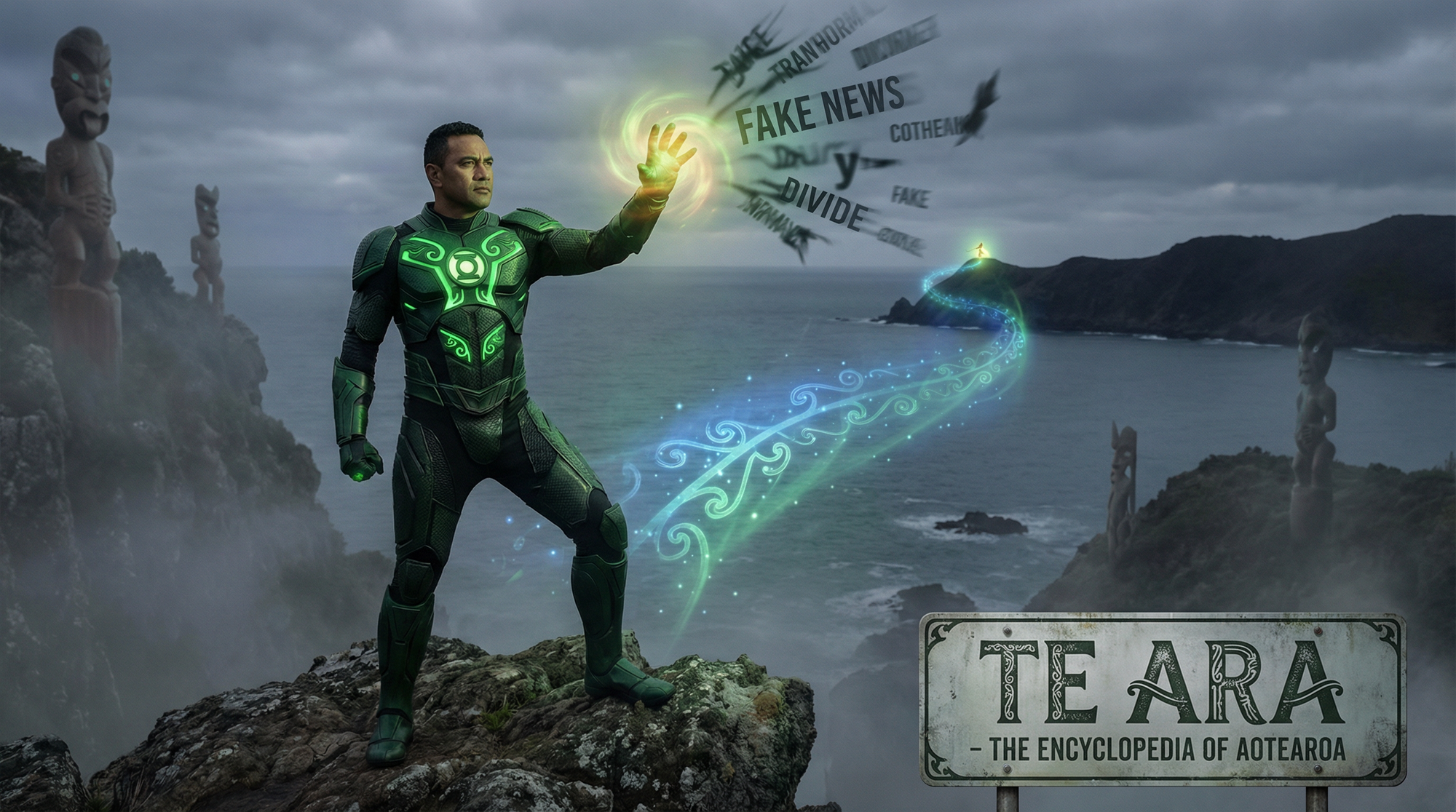
““When Equality Becomes a Weapon, Truth Is the First Casualty” - 3 September 2925
A Māori Green Lantern Exposé of Far-Right Myths Undermining Te Tiriti and Human Rights
Kia ora e te whānau, tēnā koutou katoa — greetings to all, with respect and resolve to uphold mana and truth in Aotearoa New Zealand.
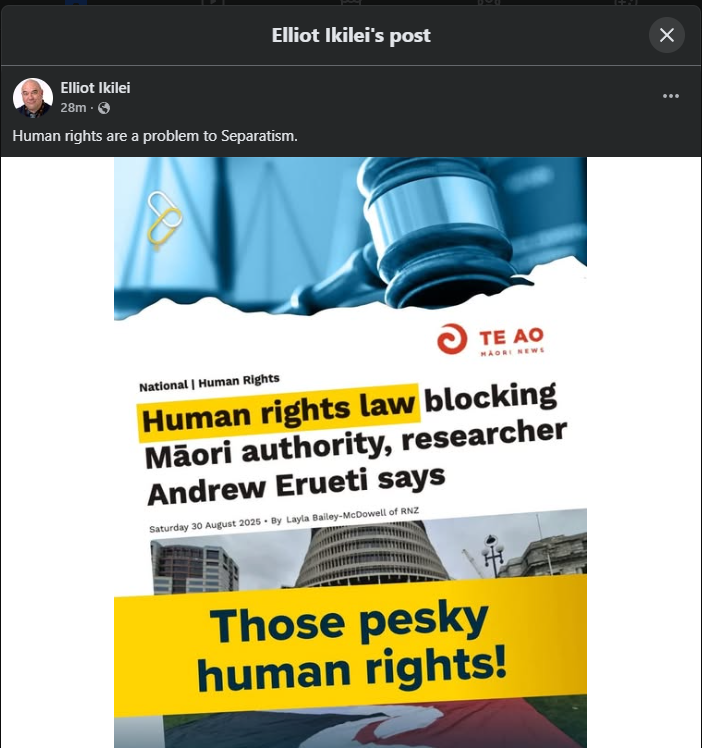
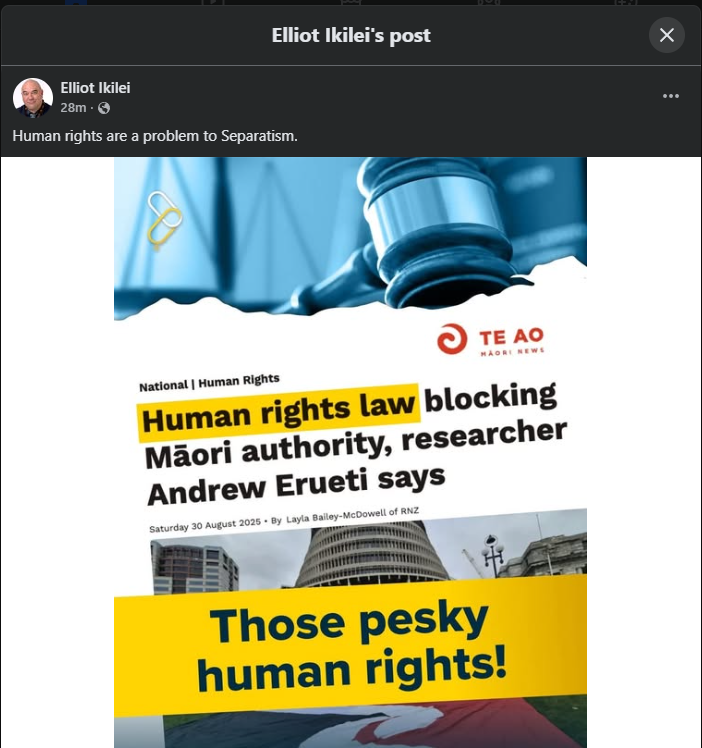
Elliot The Idiot Of Hobson’s Pledge claim thats “human rights are a problem to separatism”, is not analysis; it is the latest echo of a long colonial script that twists equality into a weapon against tino rangatiratanga, and it collapses under evidence, law, and the lived history of Māori struggle for shared authority promised by Te Tiriti o Waitangi.
The claim and the harm
Ikilei’s framing tries to turn human rights into a cudgel against Māori authority, ignoring that Aotearoa’s human rights architecture is designed to protect minorities and to ensure fair participation in decisions affecting our lives, which aligns with core Māori values of manaakitanga and kotahitanga as expressed through Te Tiriti.
Public sentiment already rejects the zero-sum fearmongering: independent polling for the Human Rights Commission found most people want decisions about Te Tiriti made on an equal footing between Māori and non‑Māori, showing that partnership, not panic, reflects the national mood and duty of care link: RNZ reporting on HRC poll showing 70 percent support for equal say.
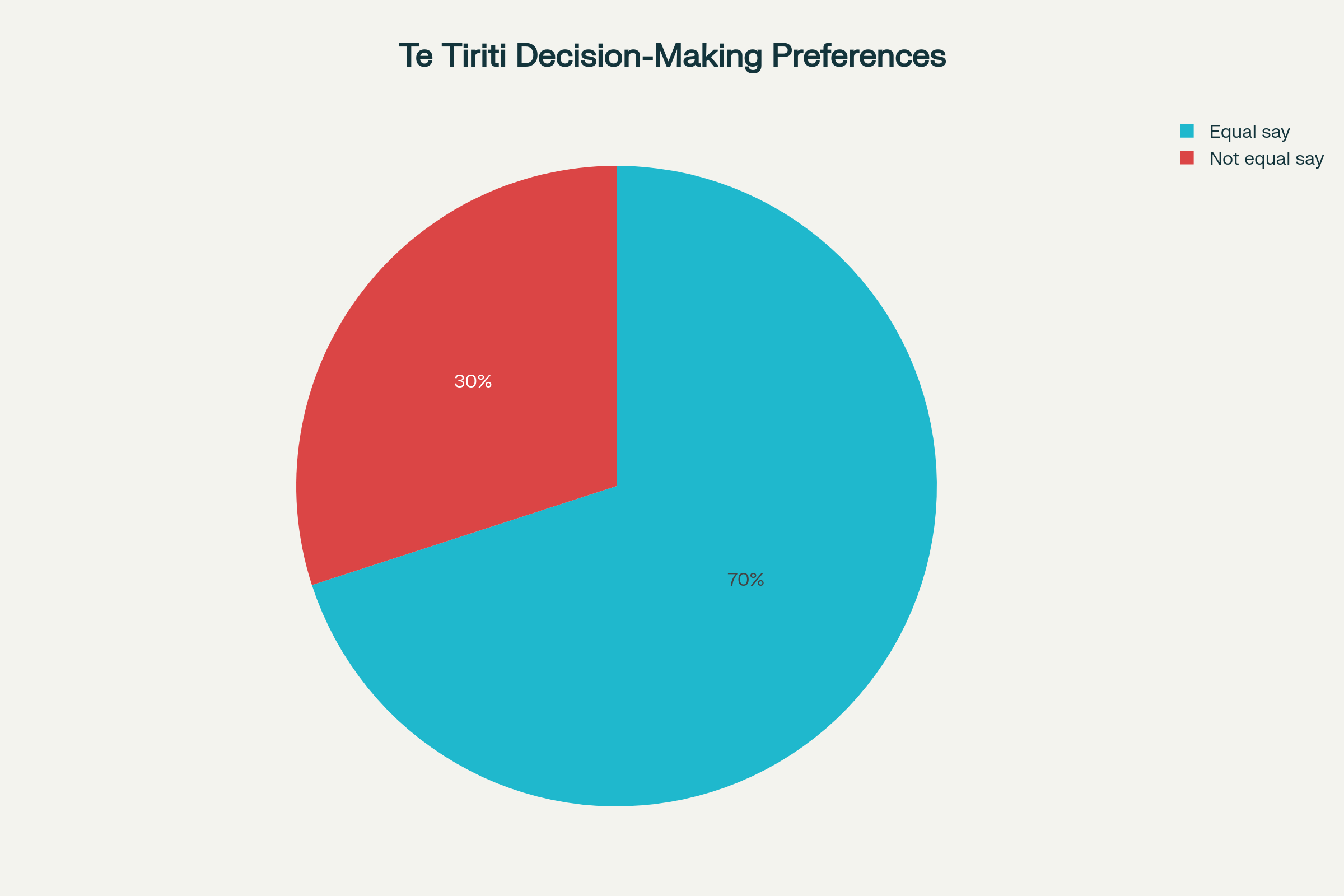
Public support for equal decision-making under Te Tiriti o Waitangi
Background: What human rights law actually says
The Crown’s own guidance to officials makes it plain: human rights are part of New Zealand’s general law, anchored by the New Zealand Bill of Rights Act 1990 and the Human Rights Act 1993, and decision‑makers must interpret powers consistently with these rights, including freedom from discrimination and minority cultural rights that protect Indigenous communities link: Crown Law’s “The Judge Over Your Shoulder” human rights guidance.
The same guidance underscores that BORA standards increasingly invalidate or constrain administrative decisions that breach rights, which undercuts the far‑right trope that “one law for all” means erasing remedies tailored to address historic and structural inequities affecting Māori link: PDF version of Crown Law guidance reiterating BORA constraints on decision‑making.
New Zealand’s international reputation is already strained by failure to deliver on treaty‑based obligations, with legal scholars warning the country is “better at talking about human rights than walking the talk,” especially regarding persistent inequities facing Māori, which is exactly why targeted measures and shared authority are required rather than demonised link: Law Foundation summary of “Fault Lines: Human Rights in New Zealand”.
What Ikilei misrepresents
Ikilei points to coverage of Associate Professor Andrew Erueti’s research to imply human rights are “pesky” and obstructive, but Erueti’s actual argument is far more precise: equal‑treatment rhetoric is being selectively weaponised to block Māori authority, turning human rights into a double‑edged sword that undercuts tino rangatiratanga when misapplied link: RNZ feature on Erueti’s research explaining how equality language is used to resist Māori authority.
The University of Auckland synopsis of his work reinforces that governments have invoked “non‑discrimination” to resist Māori self‑government while downplaying the Treaty’s promise of shared authority and Māori decision‑making in accordance with tikanga, which is the real context Ikilei refuses to admit link: University of Auckland summary of Erueti’s “Indigenous Rights Beyond the Liberal Frame”.
This matters because public institutions are being pushed to adopt rigid “one law” slogans while simultaneously rolling back Māori representation at local level via forced binding polls on Māori wards, a move condemned by councils and civil society as discriminatory and destabilising to democracy link: RNZ on mass polls triggered by law change on Māori wards.
How the far right cooks the numbers, the history, and the law
Fear‑manufacturing about co‑governance
Far‑right messaging treats co‑governance as takeover, but independent Horizon polling shows a stark ethnic split: Pākehā are far more driven by “stopping co‑governance” while Māori are more motivated by honouring Te Tiriti, revealing who benefits from fear campaigns and who bears their costs link: Te Ao News summary of Horizon poll on co‑governance vote drivers.
Those same data quantify the divide: 28 percent of Pākehā say stopping co‑governance drives their vote versus 17 percent of Māori, while 46 percent of Māori versus 20 percent of Pākehā say honouring Te Tiriti is important, which demolishes the myth that opposition reflects a shared national consensus rather than a targeted mobilization strategy link: Horizon data on ethnic divides over co‑governance and Treaty priorities.
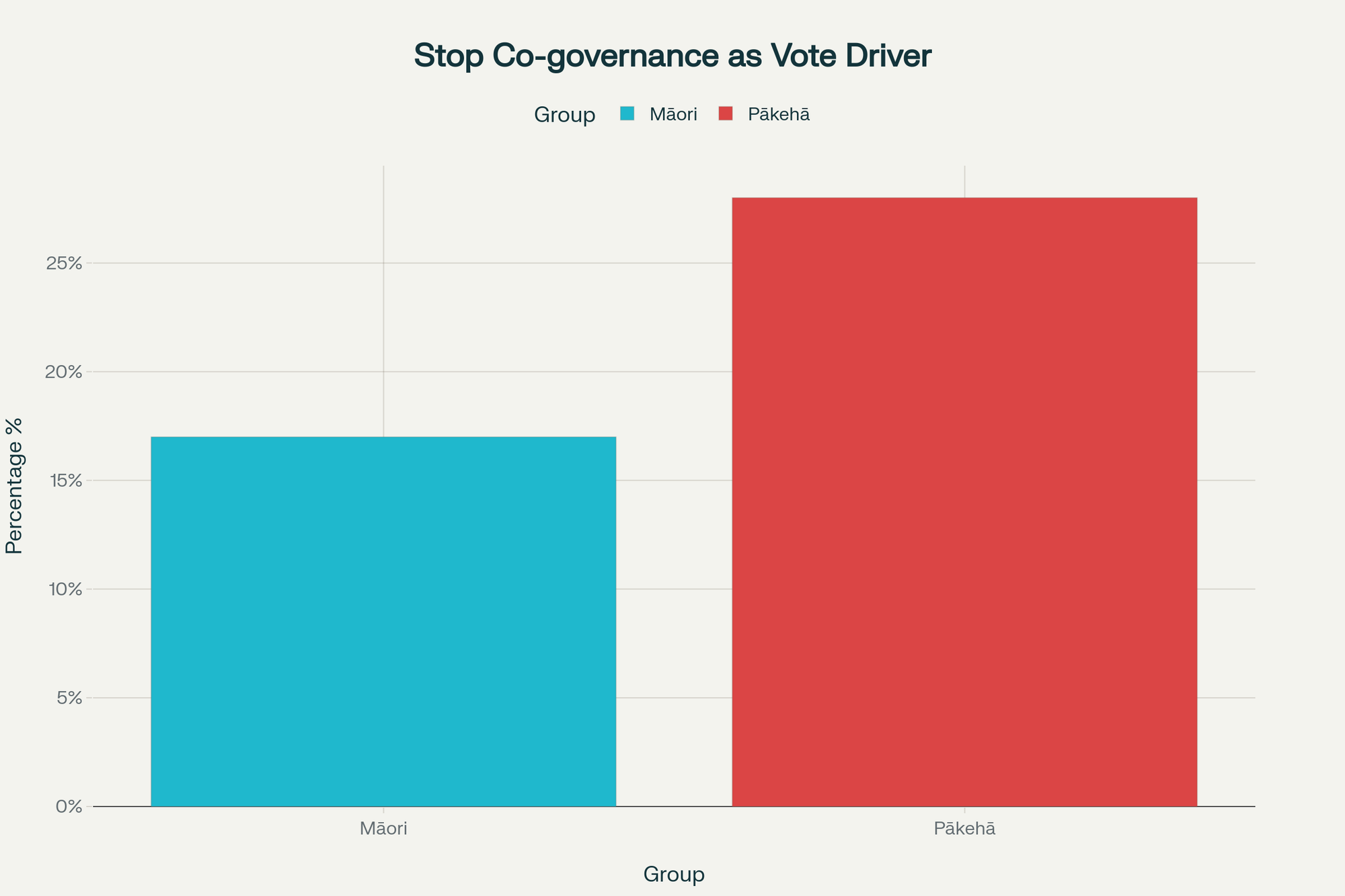
Importance of stopping co-governance as a vote-driver
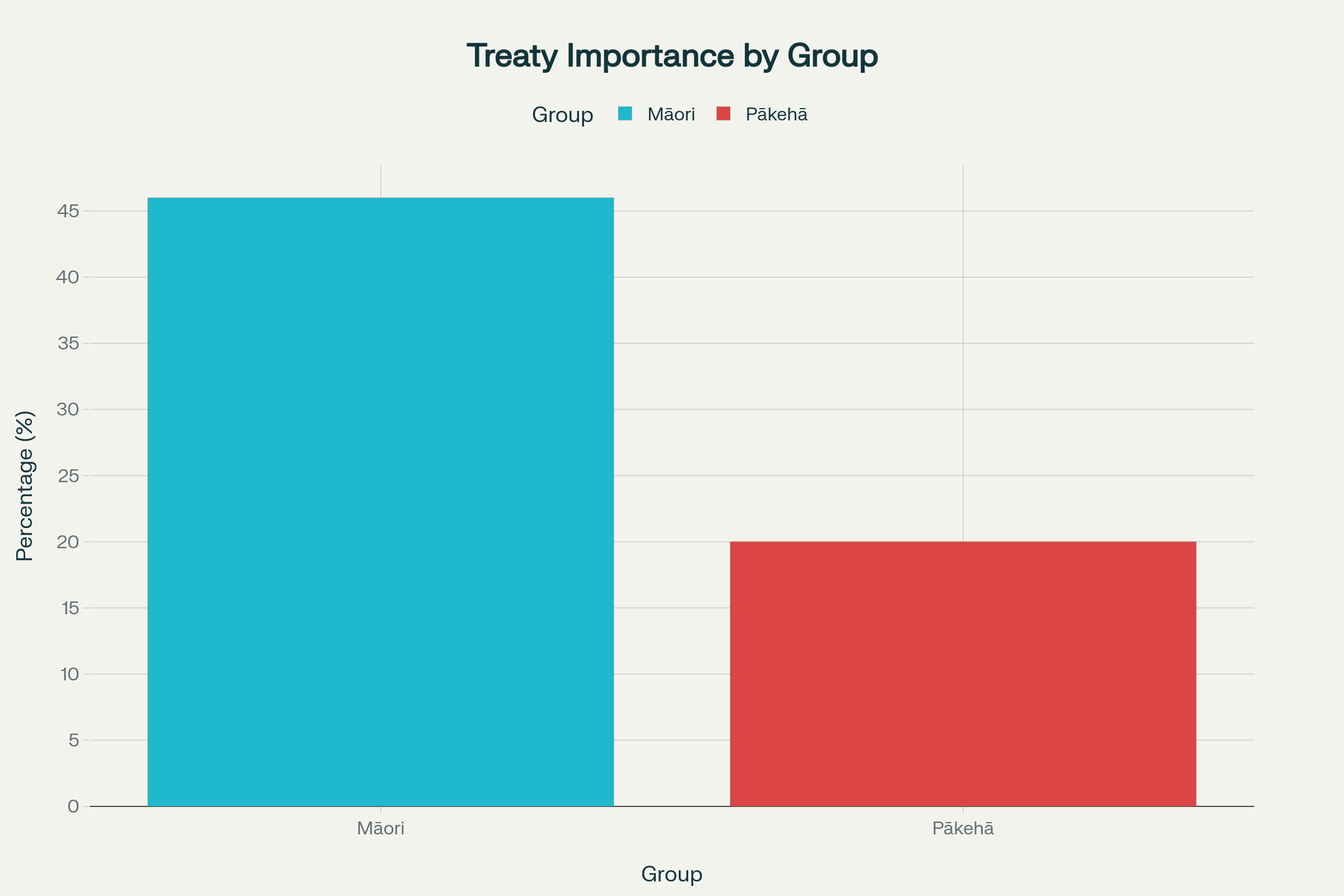
Importance of honouring the Treaty of Waitangi
Historical revisionism dressed as “unity”
Ikilei’s “separatism” line recycles a century‑old pattern: erase violent dispossession, then vilify Māori collective action as divisive whenever tino rangatiratanga resurges, a cycle seen from Bastion Point to nationwide hikoi and modern campaigns to honour the Treaty’s promises link: Te Ara overview of Māori protest movements and landmark actions.
Māori movements from Ngā Tamatoa to Whina Cooper’s land march demonstrate that protest forced constitutional recognition and tribunal processes the Crown long resisted, making today’s co‑governance debates a continuation of that struggle, not a rupture from national unity link: Te Ara entry recounting Māori protest organisations and their impact on law and policy.
How “one law for all” is misused against Indigenous rights
The Crown’s own BORA/HR guidance accepts that rights are used to challenge policy, but minority cultural rights and freedom from discrimination exist precisely to ensure tailored protections for groups historically targeted by the state, including Māori, which undercuts claims that equality demands identical treatment regardless of context link: Crown Law guidance on human rights implications for decision‑making.
When the government floated a Treaty Principles Bill, independent legal analysis reported that the only way it would survive BORA review was if courts refused to read it as undermining Māori minority rights or Te Tiriti itself, a damning acknowledgement that crude “one law” drafting collides with constitutional protections for Indigenous culture and equality link: RNZ analysis of Crown Law’s BORA advice on the Treaty Principles Bill.
Hidden connections: polls, policy, and the rollback of representation
The same political forces rebranding co‑governance as “separatism” also pushed the re‑imposition of binding polls designed historically to veto Māori wards, forcing dozens of councils into referendums that drain resources and embolden racialised campaigns, even as many councils publicly resist and choose to keep their wards link: RNZ report on binding poll law and council responses.
This rollback is not neutral procedure; it is a targeted political project that weaponises procedure to shrink Māori voice, which is why institutions like the Salvation Army and many councils have openly opposed the change as contrary to Te Tiriti and democratic inclusion link: Salvation Army advocacy briefing on Māori ward referendum law and actions.
Language analysis: the bait‑and‑switch of “rights”
Ikilei’s post relies on a bait‑and‑switch: invoke “human rights” as absolute equality, then equate any Te Tiriti‑grounded remedy with unfair privilege, a move directly called out by Erueti’s research showing how equality talk is repurposed to block Māori authority rather than to protect the minority harmed by colonisation link: RNZ interview with Andrew Erueti on human rights being used to block Māori authority.
In actual law, Section 20 of BORA protects the rights of minorities to enjoy their culture and language, illustrating that any honest rights analysis must account for collective survival and cultural continuity, not just formal sameness that preserves status quo power link: discussion of BORA s 20 as a minority‑rights safeguard rooted in ICCPR Article 27.
Far‑right mobilisation and public mood
Despite loud anti‑Treaty campaigns, evidence points to a broad public desire to proceed with care and partnership, not division; the Human Rights Commission poll shows an overwhelming preference for equal say in Treaty decisions, contradicting the apocalyptic rhetoric used to inflame race relations for political gain link: RNZ coverage of HRC poll and commentary by commissioners on equal partnership.
Mass protest waves and civic mobilisation have pushed back against attempts to legislate Treaty fictions, demonstrating that communities understand the stakes and will not accept the erasure of Māori rights through euphemisms about neutrality or sameness link: NZ Herald reporting on nationwide hīkoi and planned protests against anti‑Treaty policy, noting scale and purpose.
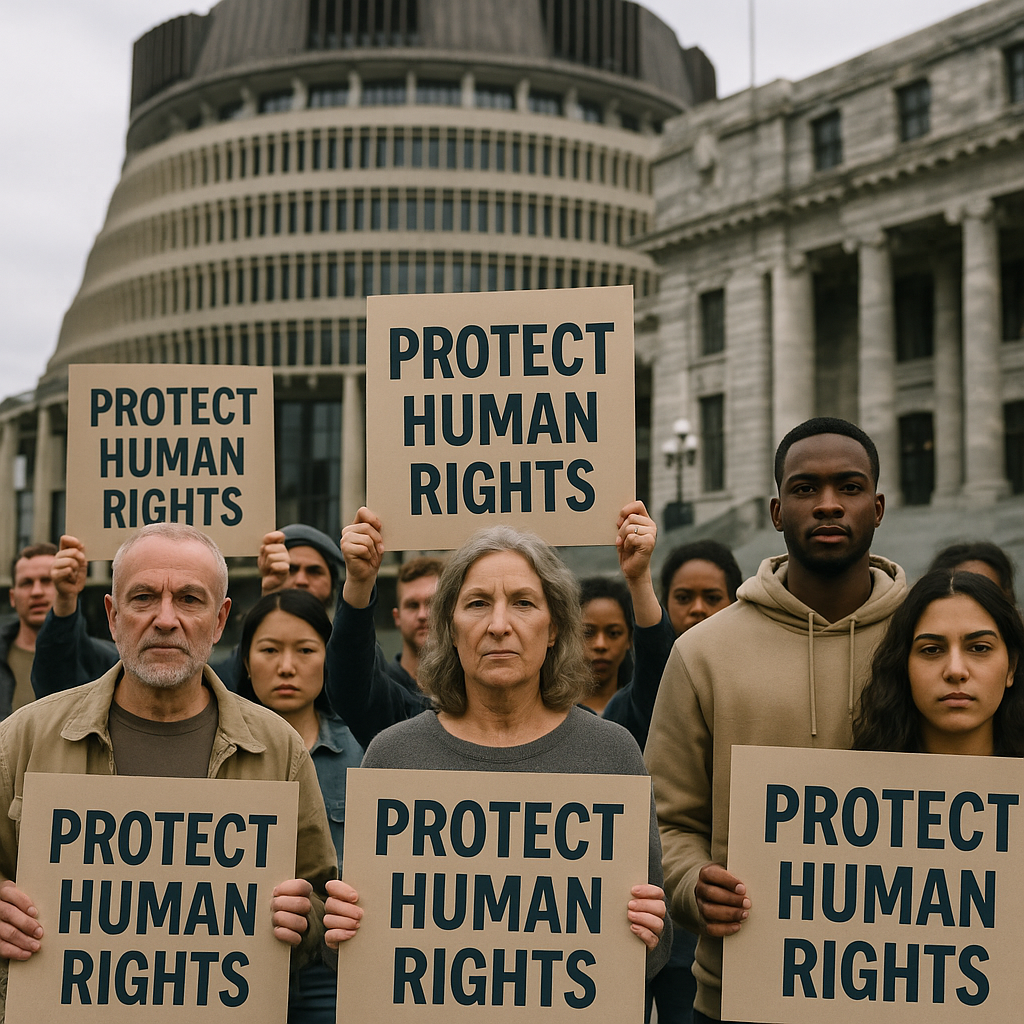
Māori activists defending human rights
Privacy and surveillance: another front of harm
Human rights are also about protection from overreach, yet Māori report higher rates of privacy breaches and elevated concern about data misuse, raising alarms about how surveillance, data handling, and policing can be turned against Indigenous communities under the guise of order and “equal treatment” link: Office of the Privacy Commissioner 2025 survey showing 19 percent of Māori report breaches and higher concern levels.
This environment amplifies chilling effects on Māori organising and civic participation, particularly when protest movements are mischaracterised as extremist rather than as the historic engine of change that won language rights, land protections, and recognition of Te Tiriti breaches link: Te Ara on the central role of Māori protest in securing institutional change.

Surveillance targeting Māori community
Counterarguments and why they fail
“One law for all” is not and has never been a licence to extinguish minority protections; BORA and the Human Rights Act require that government decisions respect rights including freedom from discrimination and minority cultural life, and courts routinely test policies against these standards when they are used to sideline Indigenous interests link: Crown Law guidance detailing how decision‑makers must act consistently with BORA and anti‑discrimination rules.
Where governments seek to downgrade Māori rights via plain‑English slogans, legal advice indicates courts would read such statutes to preserve BORA‑protected minority rights and Treaty obligations, rendering bad‑faith legislation constitutionally ineffective—a legal reality Ikilei’s post tries to obscure with mockery rather than meeting on substance link: RNZ analysis of Crown Law BORA advice on the Treaty Principles Bill’s limits.
Implications for Māori and the nation
Rolling back Māori representation through binding polls and demonising co‑governance increases social division and undermines democratic legitimacy, which is why councils across the motu have voted to retain Māori wards despite the new law’s pressure tactics and political theatre link: RNZ coverage of councils’ decisions to keep Māori wards under binding poll threats.
Internationally, persisting inequities and a refusal to enact rights‑consistent measures threaten New Zealand’s human rights reputation, making it imperative to align domestic law and policy with Te Tiriti and with the standards we claim to champion abroad link: Law Foundation report warning of serious fault lines in New Zealand’s human rights performance.
He kupu whakamutunga from the MGL

The Māori Green Lantern Fighting Misinformation And Disinformation From The Far Right
Ikilei’s line about “pesky human rights” is a tell: it is not about unity, it is about power—keeping Māori authority out of the room by twisting equality into a veto against redress, shared decision‑making, and the dignity Te Tiriti guarantees to tangata whenua link: RNZ feature on Erueti’s critique of equality rhetoric being weaponised.
The path forward is simple and demanding: uphold human rights as they are written, honour Te Tiriti as our founding commitment, and reject the politics of division that feed on fear rather than fact, kōrero grounded in aroha, rangatiratanga, and mana motuhake link: RNZ reporting on 70 percent public support for equal Treaty decision‑making.
Koha: If this kaupapa is of value, please consider a donation/koha to HTDM: 03-1546-0415173-000 to support ongoing mahi; only contribute if there is capacity and desire to do so, with compassion for the hard times whānau face.
Ngā manaakitanga,
Ivor Jones, The Māori Green Lantern — kaitiaki against misinformation, white supremacy, racism, and neoliberal propaganda in Aotearoa.