“When Kaumātua Can't Keep the Lights On: How Neoliberal Austerity is Killing Our Elders” - 25 August 2025
Finance Minister Nicola Willis thinks councils are kids in a candy store, but who's paying the price for her ideological starvation diet?
Kia ora whānau, tēnā koutou katoa - Greetings to you all
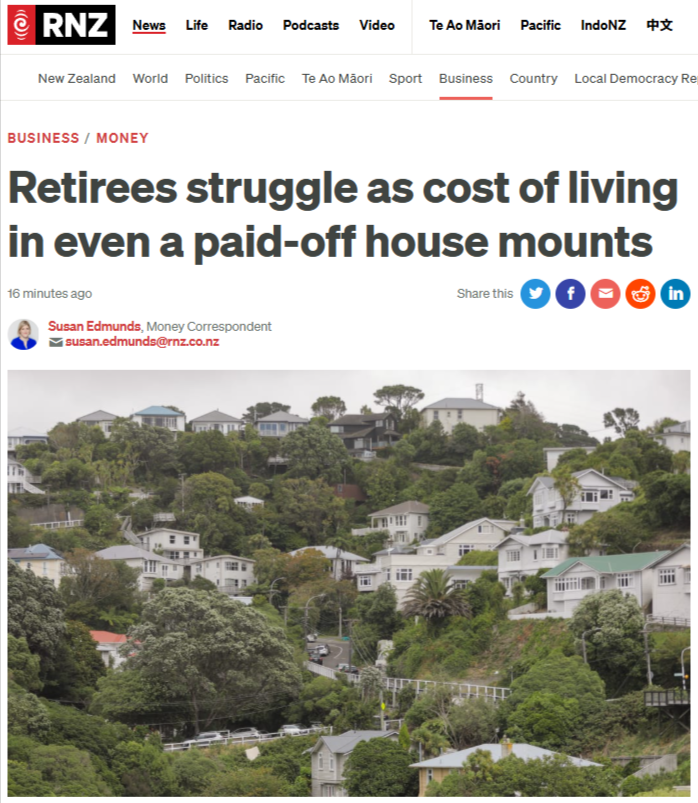
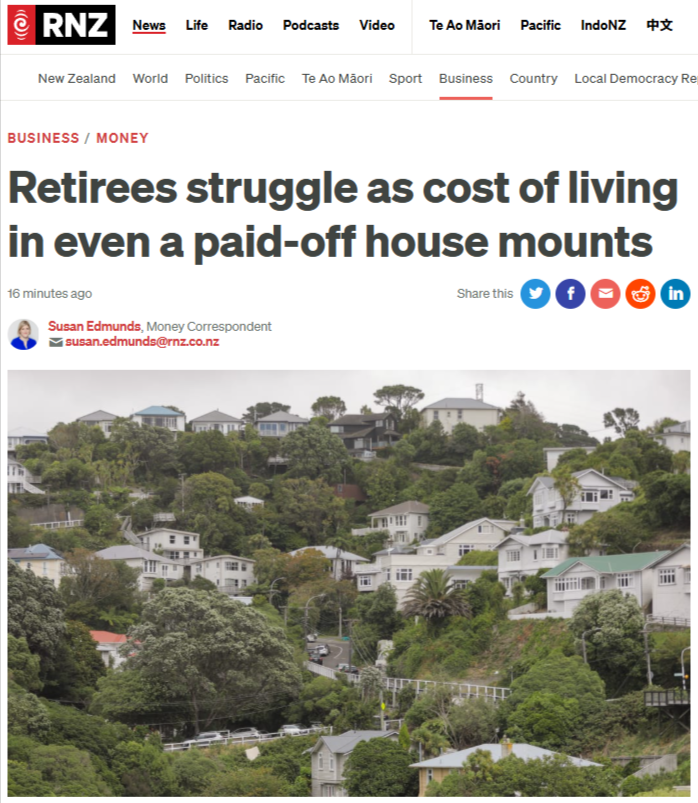
New Zealand's housing crisis has reached a devastating new phase where even retirees who supposedly did everything right - worked hard, paid off their mortgages, followed the neoliberal promise of home ownership as security - are now struggling to afford the basic costs of staying in their homes. RNZ's latest investigation reveals that housing costs are consuming up to 37% of superannuation income, forcing many elderly New Zealanders into poverty despite owning their own homes. For Māori elders, who face significantly lower rates of home ownership and shorter life expectancy, this crisis represents another brutal manifestation of structural racism embedded in our economic system.
This crisis doesn't exist in a vacuum - it's the predictable outcome of decades of neoliberal policies that have systematically dismantled community support systems, privatised essential services, and transferred wealth from working people to corporate elites. Finance Minister Nicola Willis's recent comparison of councils to "kids in a candy store" while proposing rates caps reveals the Coalition government's true priorities: protecting capital while abandoning the vulnerable through ideological austerity.
Background
The current housing cost crisis affecting retirees represents the collision of multiple systemic failures that disproportionately impact Indigenous communities. To understand how we reached this point, we must examine the historical context of how colonisation systematically stripped Māori of land ownership, the foundation of intergenerational wealth.
Māori home ownership rates have fallen dramatically from 31.2% in 2013 to just 27.5% in 2023, while general population ownership rates actually increased to 66%. This isn't coincidence - it's the ongoing impact of colonial land theft that stripped Māori of whenua and forced urbanisation that disconnected whānau from their traditional support systems.
The current superannuation system, established during the post-war period when home ownership was assumed, is fundamentally based on the assumption that retirees would be mortgage-free homeowners. This assumption was never true for many Māori families, who faced systematic discrimination in lending and institutional racism in housing based on appearance.
Local government rates, originally designed to fund basic community infrastructure, have become a key mechanism for extracting wealth from homeowners as central government has systematically downloaded costs onto local authorities while constraining their revenue sources. The current Coalition government's rhetoric about "wasteful councils" deliberately obscures this structural fiscal imbalance.
The Perfect Storm of Elderly Poverty
RNZ's comprehensive survey reveals housing costs now range from $5,834 to $9,434 annually for supposedly "paid-off" homes across different regions. In the most expensive areas like Carterton, these costs consume over one-third of a single retiree's superannuation income, forcing elders to choose between heating, food, and keeping their homes.
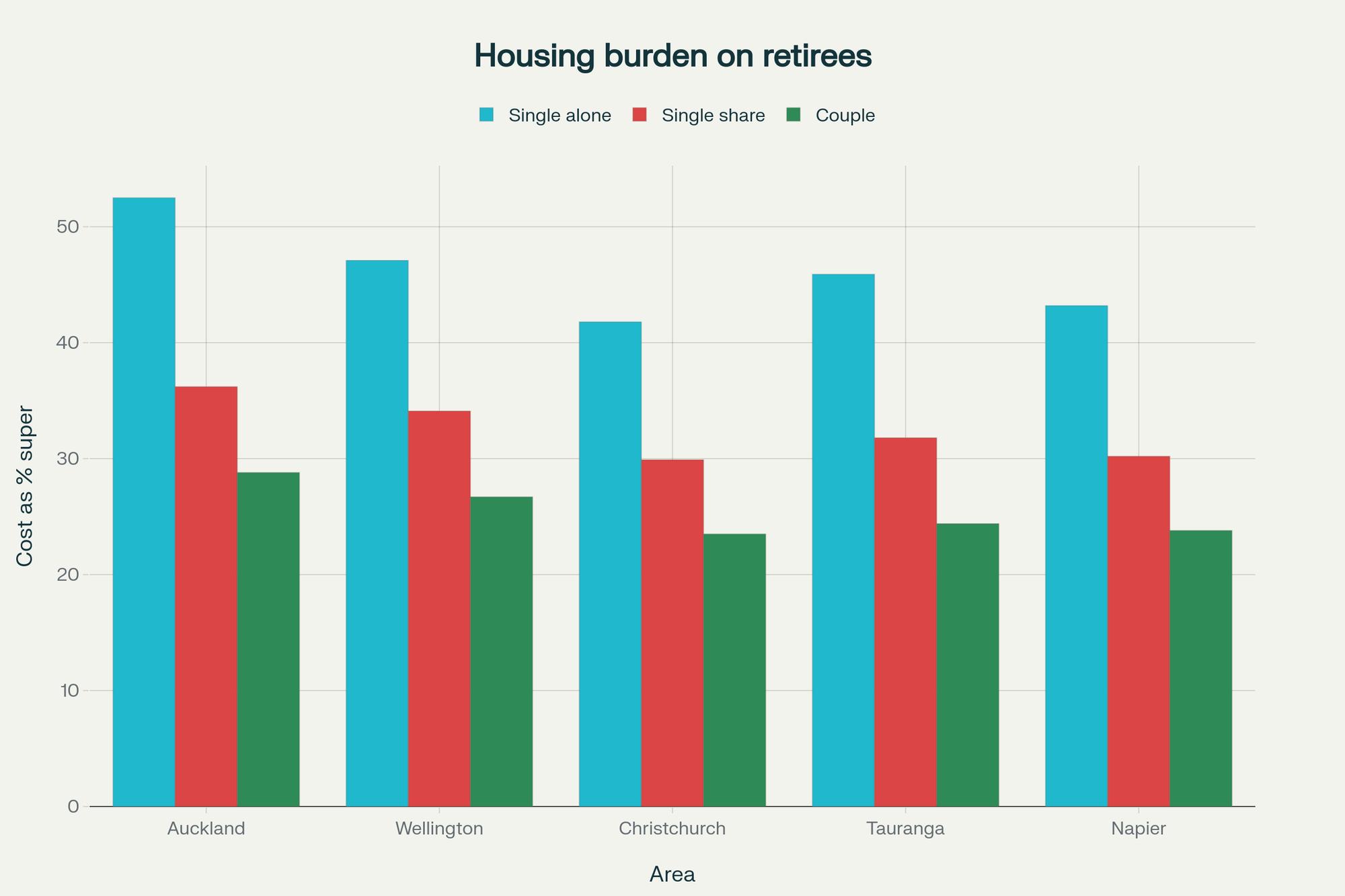
Housing costs consume up to 37% of superannuation income for retirees, with Māori disproportionately affected by high costs and low home ownership rates
The data shows this burden falls heaviest on single elderly people living alone, who receive $538.42 per week after tax. For these retirees in high-cost areas, housing expenses alone consume $181 per week - more than a third of their total income before they've even bought food or paid for medical expenses.
This crisis particularly devastates Māori communities, where research shows persistent gaps in economic living standards between Māori and non-Māori throughout retirement. Māori retirees earn approximately $15,000 less than non-Māori before retirement and maintain a $4,500 gap throughout their retirement years. With only 48% of older Māori owning homes compared to 58% of older Europeans, many Māori elders face both rental costs and the housing costs documented in this crisis.
The Coalition government's response reveals their true priorities. Rather than addressing the systemic underfunding of local government or the inadequacy of superannuation, they're pursuing rates caps that will further strangle essential services while implementing brutal austerity measures that have already saved $5.3 billion annually by attacking women's pay equity and retirement savings.
The Manufactured Crisis: Neoliberal Austerity in Action
Willis's "candy store" rhetoric represents a masterclass in neoliberal gaslighting. Councils across New Zealand have experienced rates increases averaging 34.4% over three years - but this isn't because mayors suddenly developed sugar addictions. It's because central government has systematically downloaded infrastructure costs, regulatory compliance, and climate adaptation expenses onto local authorities while constraining their revenue tools to property rates.
The Coalition's rates cap proposal represents classic neoliberal policy: create fiscal constraints through underfunding, then blame local authorities for the resulting crisis while imposing further austerity. ACT leader David Seymour openly admits the strategy: "don't cap your income until you've got your spending under control" - meaning force councils to cut services before limiting their ability to raise revenue.
This austerity playbook has devastating consequences for elderly populations. International research on austerity measures in England shows that each 1% decline in support for low-income pensioners was associated with a 0.68% increase in elderly mortality rates. The Coalition's approach directly threatens the lives of our most vulnerable elders.
The government's savage cuts to pay equity schemes that disproportionately benefit women and halving of KiwiSaver contributions further entrench the conditions that will create more elderly poverty in coming decades. This isn't fiscal responsibility - it's ideological warfare against working people, with the costs transferred to tomorrow's retirees.
Taxpayers Union: Corporate Astroturfing for Austerity
Behind the push for rates caps lurks the Taxpayers Union, a corporate-funded lobby group that masquerades as grassroots advocacy while pushing policies that benefit wealthy property developers and corporations. Their dashboard claiming councils are "out of control" conveniently ignores the systematic downloading of costs from central to local government.
The Union's campaigns directly echo neoliberal talking points developed by corporate interests to dismantle public services. Their rhetoric about "waste" and "efficiency" has been used globally to justify privatisation schemes that transfer public assets to private hands while deteriorating services for ordinary people.
Executive Director Jordan Williams's description of Local Government New Zealand as a "left-wing Labour Party political campaign" for opposing rates caps reveals the organisation's true partisan nature. Any resistance to austerity is branded as political extremism, while their own corporate-funded activism is presented as neutral advocacy for "taxpayers" - a classic far-right rhetorical strategy.
The hidden connections between the Taxpayers Union and property development interests deserve scrutiny. Rates caps benefit large property owners and developers by constraining councils' ability to fund infrastructure for new developments, effectively subsidising private profit with public cost savings.
The Māori Dimension: Cultural Genocide Through Economic Policy
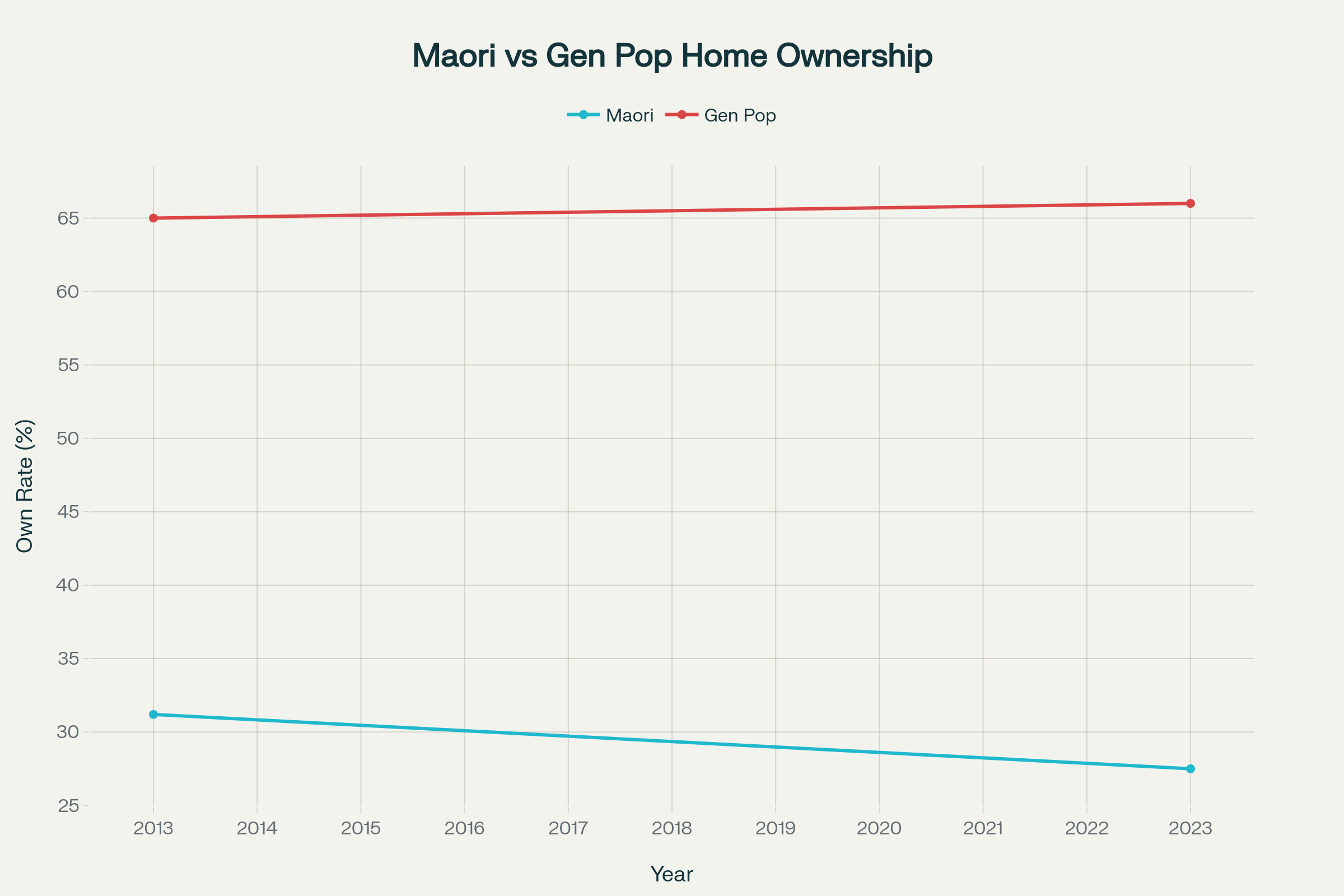
While general home ownership increased, Māori home ownership fell by 3.7% between 2013-2023, deepening housing inequality
For Māori communities, this housing crisis represents another chapter in the ongoing project of cultural and economic genocide initiated by colonisation. The dramatic decline in Māori home ownership while general ownership rates increase demonstrates how supposedly neutral market policies systematically disadvantage Indigenous people.
Research reveals that "looking Māori" independently predicts decreased rates of home ownership, demonstrating institutional racism in lending practices that persists today. This appearance-based discrimination compounds the historical effects of land theft to create intergenerational poverty that manifests brutally in old age.
Māori concepts of collective responsibility and intergenerational care - embodied in values like manaakitanga (hospitality), whakatōhea (collective responsibility), and rangatiratanga (self-determination) - stand in direct opposition to the neoliberal individualism driving current policies. The Coalition's austerity measures attack these values by forcing whānau to choose between caring for elders and meeting their own basic needs.
The shorter life expectancy of Māori means they receive NZ Superannuation for fewer years despite paying taxes throughout their working lives. Any policy discussion that ignores this disparity - such as proposals to raise the retirement age - effectively discriminates against Indigenous people.
Corporate Capture of Housing Policy
The current crisis represents the successful capture of housing policy by financial and development interests who profit from housing scarcity. Government policies since the 1980s have transformed housing from a human right into a commodity, creating artificial scarcity that inflates property values while generating homelessness and rental stress.
The Coalition's promises to help international supermarket chains enter New Zealand while implementing austerity measures that force elderly New Zealanders to choose between food and housing reveals their true priorities. Corporate convenience takes precedence over human dignity.
Research on regulatory capture shows how corporate interests have systematically captured policy processes, steering massive transfers of wealth from taxpayers to private interests through privatisation and deregulation. The current housing crisis represents the predictable outcome of these captured policies.
Property developers and financial institutions benefit directly from housing scarcity and high prices. Rates caps serve their interests by constraining councils' ability to fund infrastructure that might increase housing supply, while austerity measures ensure government won't build public housing that might compete with private developers.
Climate Change: The Multiplying Crisis
The housing cost crisis intersects devastatingly with climate change impacts that disproportionately affect low-income communities and Māori. Rising insurance costs due to climate disasters are forcing elderly homeowners to choose between protection and affordability.
Climate adaptation requires massive public investment in resilient infrastructure - precisely what rates caps and austerity measures prevent. The Coalition's opening of new gas fields while cutting climate initiatives demonstrates their commitment to short-term corporate profits over long-term community survival.
Māori communities, often located in areas vulnerable to flooding and sea-level rise due to historical dispossession, face disproportionate climate risks. Austerity policies that constrain adaptation spending effectively abandon these communities to climate disasters while protecting wealthy areas with better political representation.
Implications: The Death Spiral of Neoliberal Governance
The retiree housing crisis reveals the fundamental contradiction of neoliberal governance: policies designed to benefit capital systematically undermine the social foundations necessary for a functioning society. Willis's "candy store" rhetoric while implementing brutal austerity demonstrates the contempt this government holds for ordinary New Zealanders struggling with the consequences of their ideological policies.
For Māori communities, these policies represent continued colonisation through economic means. The systematic transfer of wealth from Indigenous communities to corporate interests continues the colonial project of land theft through new mechanisms of dispossession.
The intersection of aging demographics, climate change, and neoliberal austerity creates conditions for mass elderly poverty and social breakdown. International research on austerity's health impacts suggests the Coalition's policies will literally kill vulnerable elderly people through increased mortality from poverty and stress.
The broader pattern connects to global far-right politics where economic policies create desperation that fascist movements exploit. Blaming immigrants, Indigenous people, and "welfare dependents" for problems created by corporate capitalism represents a classic fascist strategy that's emerging across Western democracies.
Reclaiming Our Future
The struggle over housing costs for retirees represents a broader battle for the soul of Aotearoa. Will we accept the neoliberal vision of society as a marketplace where human dignity is sacrificed to corporate profit? Or will we build a society based on Māori values of collective care, intergenerational responsibility, and genuine partnership?
The Coalition's austerity agenda isn't inevitable - it's a choice that serves corporate interests while abandoning our most vulnerable community members. Finance Minister Willis can mock councils as children in a candy store, but the real children here are the corporate elites who demand their profits while ordinary people suffer the consequences.
True solutions require rejecting the neoliberal framework entirely. We need massive public investment in social housing, universal basic services that guarantee dignity in old age, and economic policies that prioritise human wellbeing over corporate wealth accumulation. Most importantly, we need to centre Māori values and Indigenous knowledge in rebuilding systems that have been corrupted by colonisation and capitalism.
The data is clear: rates caps and austerity measures will worsen this crisis while protecting the wealthy interests who created it. The choice facing New Zealanders is equally clear - continue down the path of neoliberal destruction, or build a society worthy of our ancestors' struggles and our children's future.
Koha/Donation Statement:
Readers who find value in this analysis and want to support independent media that challenges power structures and centres Indigenous perspectives can consider making a koha to support this work. In these tough economic times caused by the policies this essay critiques, please only contribute if you have capacity and wish to do so: HTDM: 03-1546-0415173-000.
He whakatōhea tātou - We must act collectively.
The Māori Green Lantern
Kaitiaki exposing misinformation, white supremacy, racism, and neoliberalism

The Māori Green Lantern fighting misinformation and disinformation from the far right