"When Pākehā Media Gatekeepers Talk About "Trust" - Who Are They Really Serving?" - 30 June 2025
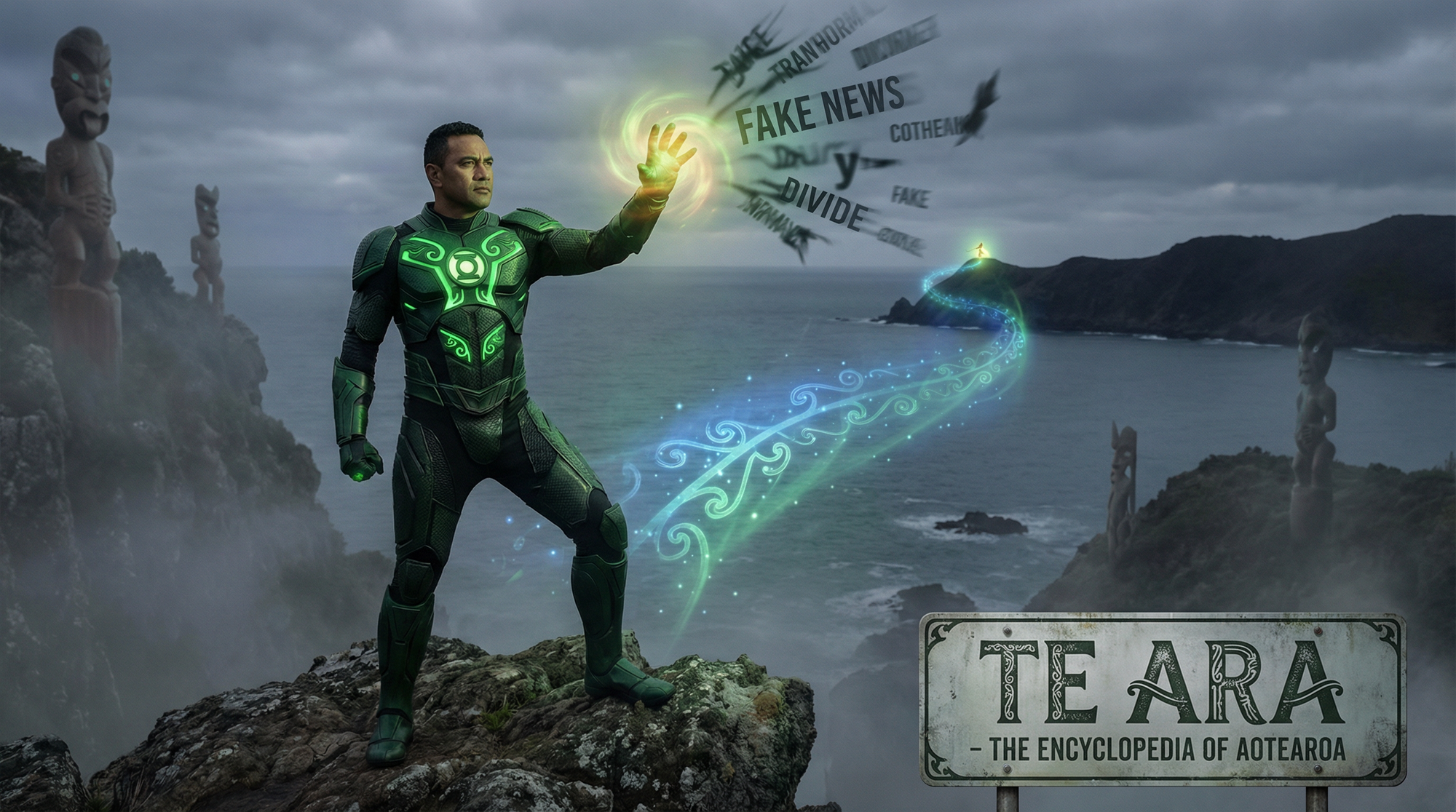
By Ivor Jones, The Māori Green Lantern - Kaitiaki exposing misinformation, white supremacy, and colonial propaganda
Kia ora whānau, Ko Ivor Jones ahau, he Māori Green Lantern, he kaitiaki (I am Ivor Jones, a Māori Green Lantern, a guardian)
When Pākehā Media Gatekeepers Talk About "Trust" - Who Are They Really Serving?
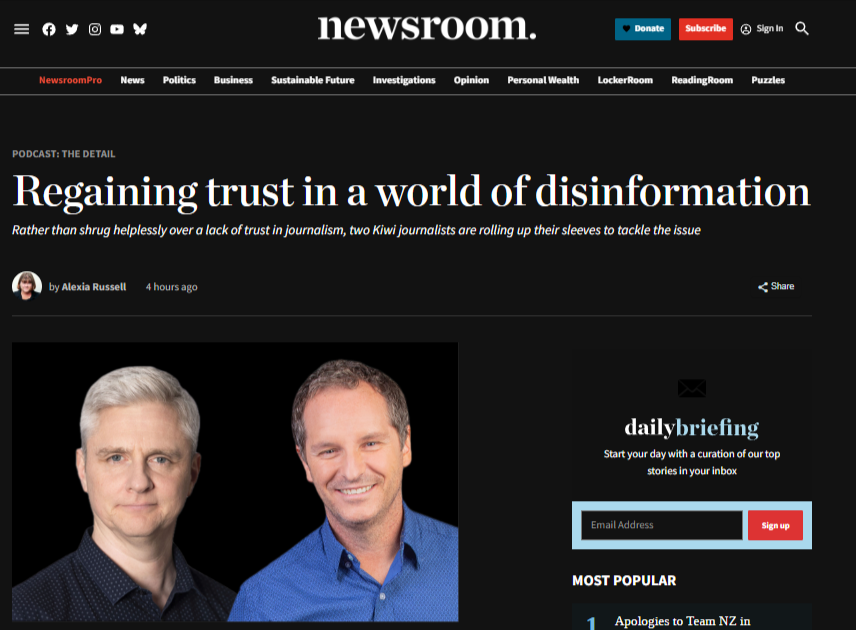
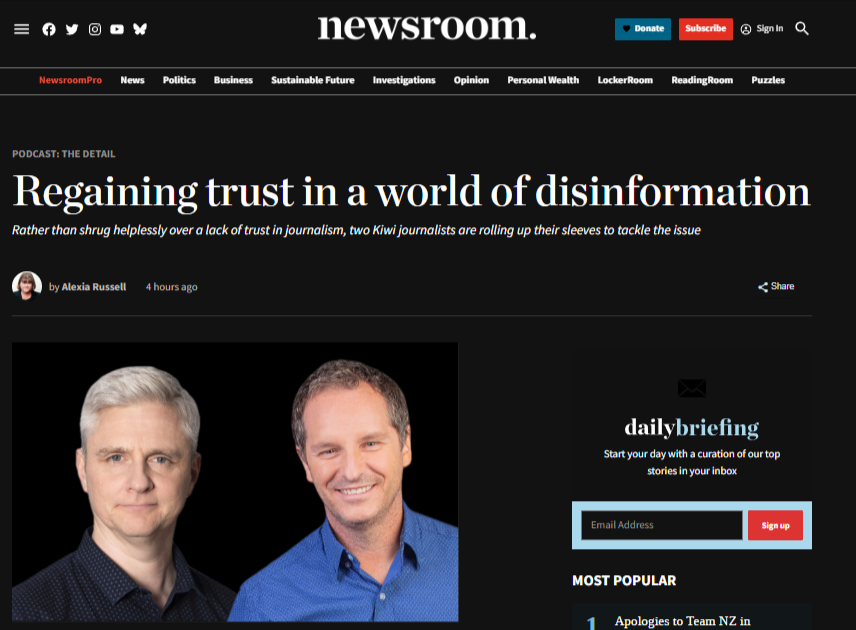
Two prominent New Zealand media executives recently discussed rebuilding trust in journalism, but their conversation reveals the colonial blind spots that plague our media landscape. While Tim Watkin and Richard Sutherland's efforts to combat disinformation deserve recognition, their analysis fundamentally ignores how mainstream journalism has systematically undermined Māori voices and perpetuated the very misinformation they claim to oppose.
Unpacking the Colonial Framework of "Journalistic Trust"
Media trust cannot be divorced from power structures. When discussing journalism's credibility crisis, we must examine who controls the narrative and whose voices are systematically excluded. The concept of "objectivity" that Watkin champions as essential for rebuilding trust has historically been used to silence Indigenous perspectives by framing them as "biased" or "political" while presenting colonial viewpoints as neutral fact.
Research shows that expectations regarding impartiality and concerns about fake news are important indicators of media trust, but this framework fails to acknowledge how "impartiality" often means maintaining the status quo that disadvantages Māori communities.
The Estonian model that Sutherland praises focuses on external threats - Russian disinformation - while ignoring internal colonial structures. Estonia's approach to media literacy, developed in response to foreign interference, cannot simply be transplanted to Aotearoa where the primary source of disinformation often comes from within our own media institutions perpetuating anti-Māori narratives.
The Invisible Disinformation Campaign Against Tangata Whenua
What's glaringly absent from this discussion is acknowledgment of how New Zealand media has been complicit in spreading misinformation about Māori. From misrepresenting Treaty settlements as "special treatment" to amplifying anti-co-governance rhetoric without proper context, mainstream journalism has consistently failed tangata whenua.
The "yellow press era" that Watkin references as a historical example of media unreliability parallels today's treatment of Māori issues. Just as sensationalist journalism once fabricated stories, contemporary media frequently platforms anti-Māori voices while presenting legitimate Indigenous concerns through a deficit lens.
Studies indicate that trust in media is sensitive to social, economic, cultural, and technological changes, yet neither journalist addresses how their industry's colonial framework inherently generates distrust among Māori communities who see their reality consistently misrepresented.
Neoliberal Solutions to Colonial Problems
Sutherland's pilgrimage to Estonia represents classic neoliberal thinking - seeking technical solutions from overseas rather than addressing structural inequities at home. This mirrors how New Zealand policymakers consistently look to European models while ignoring Indigenous knowledge systems that have sustained communities for centuries.
The focus on individual media literacy rather than systemic media reform reflects neoliberal ideology that places responsibility on consumers rather than challenging the concentrated media ownership that limits diverse perspectives. Local and regional media outlets have much more credibility than national organizations, yet both journalists work for state-funded national broadcasters that often fail to reflect community realities.
What's missing is discussion of how media ownership concentration affects Māori representation. When a handful of companies control most news outlets, diverse Indigenous voices are inevitably marginalized in favor of content that serves capital interests.
The Algorithmic Amplification of Anti-Māori Sentiment
Neither journalist adequately addresses how digital platforms amplify anti-Māori content. Research demonstrates that news media and digital platforms significantly impact awareness of and belief in misinformation, yet there's no analysis of how these systems specifically target Indigenous communities.
The mana-enhancing principle of whakatōhea (collective responsibility) demands that media practitioners acknowledge their role in either perpetuating or dismantling systems of oppression. By focusing solely on external disinformation threats while ignoring internal colonial propaganda, these journalists perpetuate the very problem they claim to solve.
Audiences are not passive recipients of disinformation but actively interpret meaning and mitigate risks through pragmatic skepticism. Māori communities have developed sophisticated methods for evaluating information based on whakapapa (genealogical connections) and kaupapa (foundational principles) that mainstream media consistently fails to understand or respect.
Where Mātauranga Māori Offers Real Solutions
True media literacy must be grounded in Indigenous knowledge systems that emphasize whakatōhea (collective wellbeing) over individual consumption. Rather than importing European models, we need approaches that honor Māori ways of knowing and being.
The principle of pono (truth/integrity) demands that journalists acknowledge their own cultural positioning rather than hiding behind false claims of objectivity. Māori journalism practices that center community accountability and whakapapa-based verification offer more robust frameworks for combating disinformation than the individualistic approaches championed by these media executives.
Fighting misinformation requires reestablishing trust in legitimate news, but legitimacy cannot be divorced from colonial power structures. Until mainstream media acknowledges its complicity in perpetuating anti-Māori narratives, calls for "trust" ring hollow.

Broader Implications for Democratic Participation
This conversation reveals how supposedly progressive media figures can perpetuate colonial thinking while believing they're part of the solution. Their focus on technical fixes rather than structural transformation mirrors broader patterns of how institutions co-opt decolonization language while maintaining oppressive systems.
The emphasis on individual media literacy rather than collective media sovereignty reflects neoliberal ideology that atomizes communities and prevents systemic change. For Māori, media sovereignty means controlling our own narratives rather than hoping colonial institutions will represent us fairly.
The phenomenon of fake news disrupts social stability and public trust, but the most dangerous misinformation often comes from authoritative sources that systematically exclude Indigenous perspectives while claiming objectivity.
Moving Forward with Tino Rangatiratanga
Real solutions require acknowledging that media trust cannot be rebuilt within colonial frameworks. Instead of importing Estonian models or nostalgic appeals to mid-20th century journalism standards, we need approaches grounded in mātauranga Māori and tino rangatiratanga.
This means supporting Indigenous media outlets, challenging concentrated ownership structures, and demanding that mainstream journalists acknowledge their cultural positioning rather than hiding behind false neutrality. Until media institutions center Indigenous voices and challenge colonial power structures, their calls for "trust" remain hollow performance.
The kōrero between Watkin and Sutherland represents well-intentioned but ultimately colonial thinking that seeks technical solutions to structural problems. Real change requires confronting how mainstream media perpetuates the very disinformation it claims to oppose.
Ngā mihi ki a koutou katoa. For readers who find value in exposing these colonial blind spots, please consider supporting this mahi with a koha to HTDM: 03-1546-0415173-000. The MGL understands these are tough economic times for whānau, so please only contribute if you have capacity and wish to do so.
Kia kaha, kia māia, kia manawanui.