“When Rugby Becomes Rōrā: A Māori Perspective on the Industrial Complex of Brain Damage” - 27 August 2025
The Death of Shane Christie: How The Rugby Industrial Complex Sacrifices Māori Bodies For Pākehā Profits
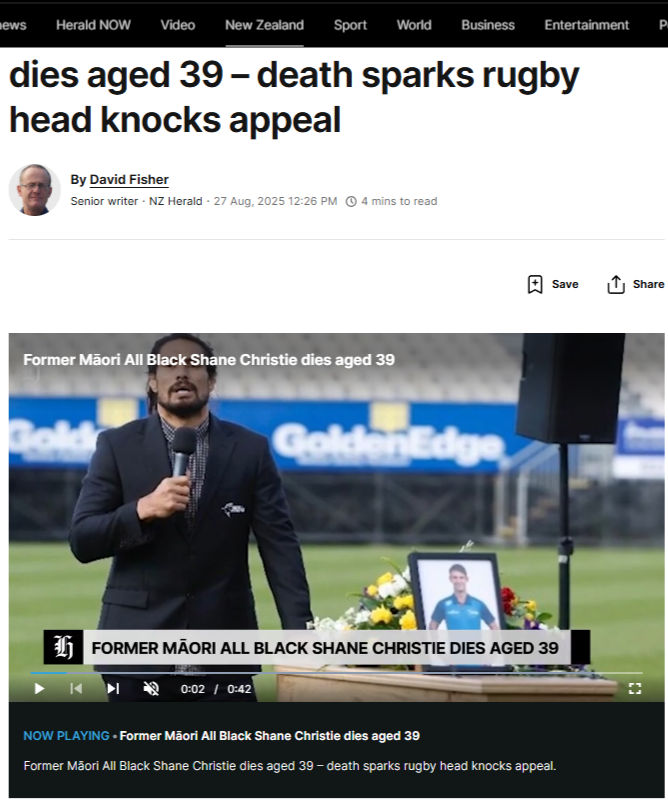
Kia ora whānau, those who think rugby is just a game are deluding themselves - it's a billion-dollar brain harvesting operation.
The tragic death of former Māori All Black Shane Christie at just 39 years old[1] is not an isolated incident but the predictable outcome of a sport that has transformed Māori warriors into expendable commodities for a predominantly Pākehā-controlled rugby establishment. Christie's suspected suicide following severe concussion symptoms[1] represents the latest casualty in what can only be described as an industrial-scale exploitation of primarily Indigenous and Pacific bodies for the entertainment and enrichment of rugby's power brokers.
This essay examines how the rugby establishment - from New Zealand Rugby to World Rugby - has systematically ignored, minimized, and covered up the devastating brain injury epidemic plaguing players while continuing to extract millions in revenue from their suffering. Through a te ao Māori lens, we will expose the colonizing nature of modern rugby and its deliberate sacrifice of tangata whenua for corporate profit.
Background: The Science They Don't Want You To Know
Chronic Traumatic Encephalopathy (CTE) is a degenerative brain disease caused by repeated head impacts that can only be diagnosed after death[2]. The symptoms include aggression, depression, memory loss, and paranoia - a cocktail of suffering that the rugby establishment has known about for decades but systematically concealed from players and their whānau.
The evidence is overwhelming and damning. Recent research shows that rugby players suffer white matter damage and brain structure changes even during active play[3], with rugby-specific studies confirming CTE in multiple former players across Australia and New Zealand[4][5]. A comprehensive analysis of young contact sport athletes found CTE in 41.4% of cases[6][7], with rugby players specifically showing altered brain cortical thickness and biomarkers of traumatic brain injury[8][9].
From a Māori worldview, the rugby establishment's willful ignorance of this science violates the fundamental principle of manaakitanga - the duty of care we owe to one another. Instead of protecting players, they have created a system that profits from their neurological destruction.
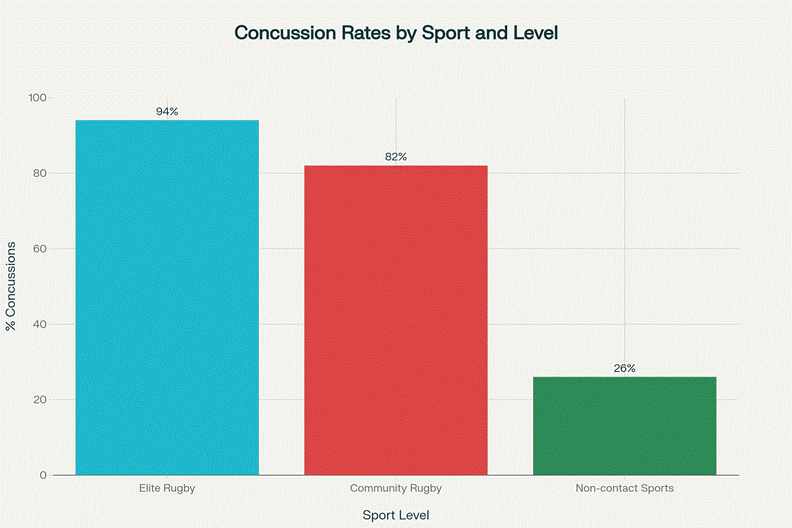
Concussion rates showing stark differences between rugby and non-contact sports
The Body Count Keeps Rising
Shane Christie's death follows an established pattern of rugby-related brain injury casualties that the establishment dismisses as "tragic but rare" incidents. Billy Guyton, Christie's close friend and teammate, was confirmed to have CTE after his death by suspected suicide in 2023 at age 33[1]. Christie himself had told the Herald he wanted his brain studied for CTE damage[1], a prescient decision that reveals his understanding of what the game had done to him.
The scope of this crisis extends far beyond individual tragedies. New Zealand research shows elite rugby players report 94% concussion rates, community players 82%, compared to just 26% for non-contact sport athletes[10]. This represents a systematic assault on the neurological health of primarily Māori and Pacific players who make up the majority of professional rugby teams.
Yet the rugby establishment continues to prioritize profits over player welfare, implementing token concussion protocols that serve more as legal protection than genuine player safety measures.
The Colonial Project of Modern Rugby: Sacrificing Brown Bodies for White Profits
The Commodification of Māori Warriors
Rugby's transformation from a colonial import to New Zealand's "national game" represents a masterclass in cultural appropriation and economic exploitation. The sport has weaponized Māori and Pacific cultural concepts like the haka and warrior mentality to market itself globally while simultaneously destroying the very people who embody these traditions.
The rugby industrial complex operates on a plantation model where predominantly white executives, coaches, and administrators extract wealth from the physical sacrifices of brown and black bodies. Professional rugby players, particularly those who manipulated concussion testing to continue playing[11], exemplify how the system coerces vulnerable athletes into sacrificing their long-term health for short-term financial survival.
This exploitation is particularly insidious because it masquerades as cultural celebration. The All Blacks' pre-match haka generates millions in broadcasting and merchandising revenue, yet the very players performing these sacred movements face a future of dementia, depression, and early death. The rugby establishment has essentially monetized Māori spirituality while discarding the tangata whenua who embody it.
The "Run It Straight" Deception
The rugby establishment's response to mounting brain injury evidence has been to deploy sophisticated public relations campaigns that minimize risk while maximizing profit extraction. These campaigns, often marketed as "player safety initiatives," actually serve to provide legal cover for continued exploitation.
New Zealand Rugby's Community Concussion Management Pathway research reveals that only 28% of players follow the "ideal pathway"[12], with 70% reporting concussions logged in apps[12] but many continuing to play through symptoms. This systemic non-compliance isn't a failure of individual players but evidence of a culture that financially incentivizes neurological damage.
The establishment's insistence that rugby is becoming "safer" through rule changes represents gaslighting on an industrial scale. Elite rugby players show measurable brain damage even during active play[3][13], yet administrators continue promoting the game to vulnerable youth populations in low-income communities.
The Litigation Trap
Perhaps most cynically, the rugby establishment has structured the sport's legal framework to avoid accountability for the brain injury epidemic they've created. Unlike American football, where NFL concussion lawsuits resulted in billion-dollar settlements, rugby's international structure makes class-action litigation nearly impossible.
World Rugby's injury insurance systems[14] create the illusion of player protection while actually limiting financial exposure for rugby unions. Players suffer the neurological consequences while organizations profit from plausible deniability about long-term health impacts.
Research Reveals the Conspiracy of Silence
The Academic Cover-Up
The rugby establishment has funded selective research that minimizes brain injury risks while suppressing studies that reveal the true scale of neurological damage. Research showing that rugby concussion education programs failed to improve player knowledge or attitudes[15] exposes how "safety initiatives" serve primarily as marketing tools rather than genuine health interventions.
More damning is evidence that Pasifika players had significantly lower concussion knowledge than Pākehā players[15], revealing how the system deliberately maintains information asymmetries that disadvantage the very populations most exploited by professional rugby. This represents educational apartheid designed to keep vulnerable players uninformed about the risks they're accepting.
The Medical Establishment's Complicity
Rugby's medical professionals have largely functioned as enablers rather than advocates for player welfare. Research showing that players manipulated concussion testing with medical assistance[11] reveals how healthcare providers have been co-opted into the profit-extraction system rather than serving their primary duty to patient care.
The proliferation of concussion management pathways[12][16][17] creates an illusion of medical oversight while actually systematizing the return of brain-injured players to further harm. These protocols serve more as legal documentation than genuine health protection, allowing organizations to claim they followed "best practices" while players suffered permanent neurological damage.
Implications: The Generational Trauma of Rugby Brain Injury
The Whānau Impact
Shane Christie's death represents not just an individual tragedy but a wound inflicted on entire whānau and hapū networks. When rugby destroys the neurological health of predominantly Māori players, it attacks the cognitive leadership capacity of Indigenous communities for generations.
Research showing higher injury rates among Māori and Pacific school players[18][19] reveals how the rugby system targets vulnerable youth before they can make informed decisions about long-term health risks. This represents a form of cognitive colonization that permanently damages Indigenous intellectual capital.
The establishment's response has been to increase marketing to these same vulnerable populations while providing minimal support for families dealing with rugby-induced brain injuries. The disconnect between rugby's billion-dollar revenues and the poverty experienced by many brain-injured former players exposes the sport's extractive colonial logic.
The Cultural Destruction
Rugby brain injury doesn't just harm individual players - it attacks the intergenerational transmission of Māori knowledge systems. When rangatira-level athletes suffer dementia and cognitive decline in their 30s and 40s, entire communities lose access to potential leadership that could have guided them for decades.
The rugby establishment has essentially weaponized our own cultural values against us. The warrior ethos that makes Māori players devastating on the field becomes a trap that prevents them from acknowledging brain injury symptoms until permanent damage occurs.

The Māori Green Lantern fighting misinformation and disinformation from the far right
Reclaiming Our Rangatira from the Rugby Plantation
Shane Christie's death should mark the end of Māori complicity in our own neurological destruction. We cannot continue feeding our finest rangatira into a meat grinder designed to enrich predominantly Pākehā administrators while our communities bear the generational trauma of brain-injured whānau.
The time has come for Māori communities to establish our own sporting institutions that prioritize our people's long-term cognitive health over short-term financial extraction. We must reject the colonial logic that treats Māori bodies as expendable resources for Pākehā entertainment.
Rugby as currently constituted represents a form of cultural genocide disguised as sport. Every Māori player who suffers CTE-related suicide represents a victory for the colonial project and a devastating loss for our people's future leadership capacity.
We owe it to Shane Christie, Billy Guyton, and countless others to expose this system and build alternatives that honor both our warrior traditions and our responsibility to protect our people's neurological wellbeing. The rugby establishment has shown they will sacrifice every Māori brain for profit - we must show them we value our people more than their money.
Ivor Jones - The Māori Green Lantern