“Where Are the People - The Collapse of Luxon's Neoliberal Fantasy” - 30 August 2025
When the powerful stumble, they take everyone down with them except themselves.
Tēnā koutou katoa. Greetings to you all.
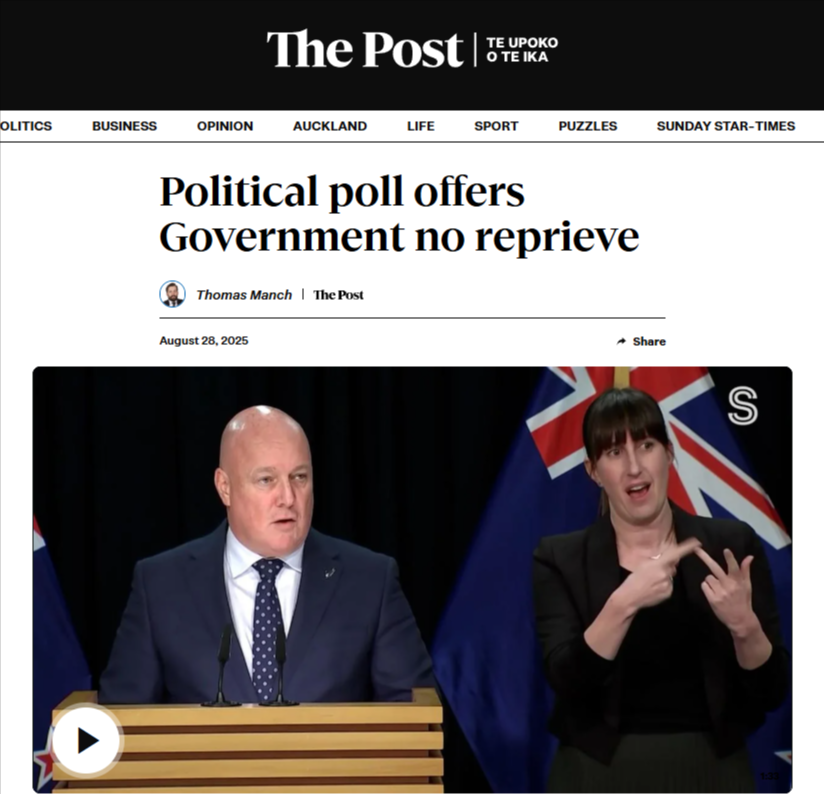
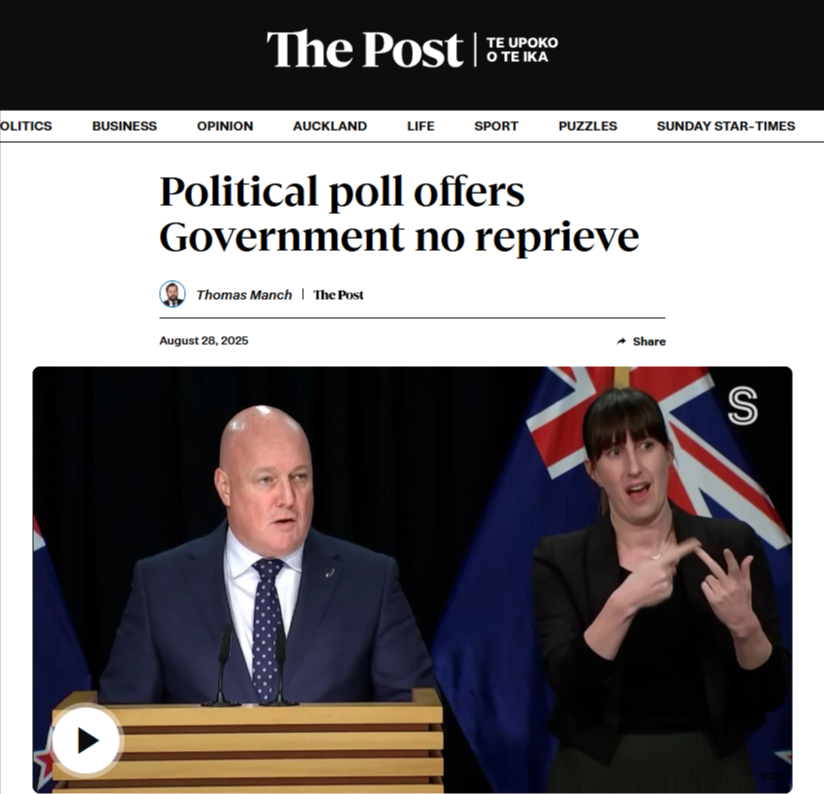
Christopher Luxon's government stands on the precipice of political oblivion, clutching desperately to power as New Zealand faces economic devastation and social collapse. The latest polling data from Thomas Manch at The Post reveals a government offering "no reprieve" to struggling New Zealanders, exposing the fundamental bankruptcy of neoliberal capitalism and the white supremacist structures that uphold it.
The Polling Death Spiral: When Numbers Don't Lie
The numbers paint a portrait of a government in terminal decline. Recent polling shows Labour surging ahead of National, with the coalition clinging to just 63 seats compared to the left bloc's 58. But these figures mask a deeper crisis - one rooted in the systematic oppression of tangata whenua and the deliberate impoverishment of working people.
Thomas Manch's reporting consistently exposes the government's failures, yet mainstream media continues to frame this as mere political horse-trading rather than the colonial violence it represents. As a senior political reporter covering Parliament, Manch has documented how Luxon's preferred prime minister rating has plummeted to historic lows, yet the coverage rarely connects this decline to the government's attacks on Māori sovereignty and working-class communities.
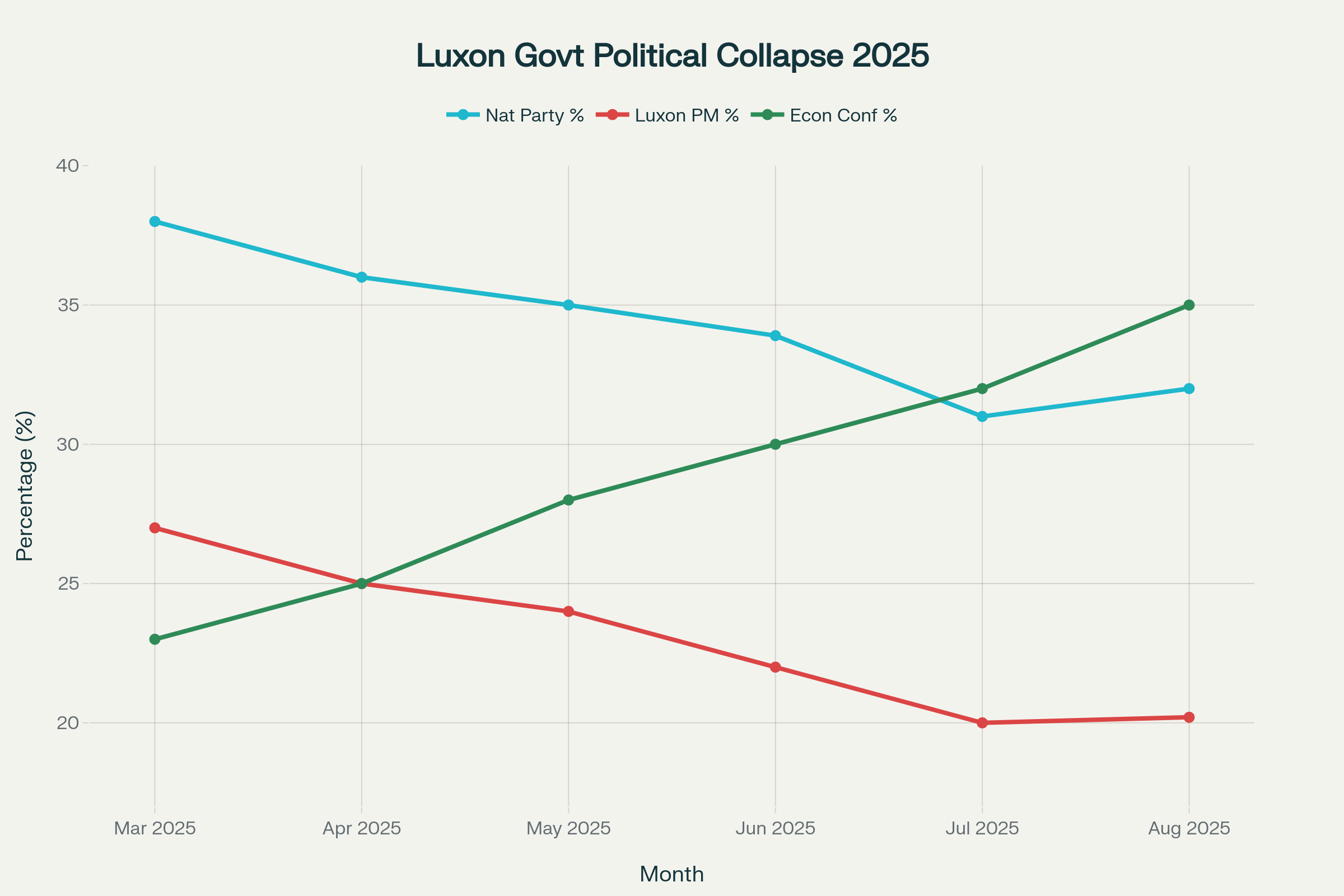
Chart showing the dramatic decline in Christopher Luxon's political support and economic confidence throughout 2025
The Manufactured Crisis: Neoliberalism's Death Rattle
This polling collapse isn't accidental - it's the inevitable result of a government committed to serving capital over people. Luxon's administration has presided over unemployment rising to 5.2 percent, with Māori disproportionately affected by economic policies designed to extract wealth from communities and funnel it to the wealthy elite.
The government's focus on "fixing the economy" reveals the fundamental lie at the heart of neoliberalism: that an economy built on exploitation can somehow deliver prosperity for all. When Luxon speaks of economic recovery, he means recovery for his corporate backers, not for the hundreds of thousands of New Zealanders struggling to pay rent or put food on their tables.
The winter of economic gloom that Manch describes isn't a natural disaster - it's the predictable outcome of decades of neoliberal policy that has stripped communities of their economic base while enriching a small elite. When 48.9 percent of New Zealanders believe the country is headed in the wrong direction, they're responding to lived experience of colonial capitalism's failures.
Anti-Māori Backlash: The Core of Coalition Politics
The coalition's polling decline accelerated dramatically following public resistance to the Treaty Principles Bill, revealing how anti-Māori sentiment forms the ideological backbone of far-right politics in Aotearoa. David Seymour's racist definition of using "race as a qualifier" as inherent racism exposes the white supremacist logic driving coalition policy.
This isn't merely political positioning - it's part of a global far-right strategy to undermine Indigenous sovereignty and democratic institutions. As research on colonisation and white supremacy in Aotearoa demonstrates, these attacks on Māori rights are fundamental to maintaining colonial power structures.
The dramatic decline in Māori who feel able to express their identity - from 84% in 2018 to 75% in 2023/24 - reflects the success of the coalition's cultural warfare. When specialist Māori housing roles are axed despite the housing crisis, it becomes clear that this government's "economic priorities" are actually about dismantling Indigenous rights and services.
Corporate Capture and Democratic Decay
Luxon's business background represents everything wrong with modern politics - the belief that democratic governance should operate like corporate management, with citizens treated as consumers and communities as markets to be exploited. His failure to articulate any vision beyond "moving the dial" on "key economic indicators" reveals the intellectual poverty of neoliberal leadership.
The government's fast-track legislation and donor-friendly policies demonstrate how corporate capture operates in practice. When policy decisions correlate directly with donation patterns, we're witnessing not democracy but plutocracy - rule by the wealthy for the wealthy.
Research on democratic backsliding shows how right-wing governments systematically undermine democratic institutions while maintaining the facade of electoral legitimacy. Luxon's government exemplifies this pattern, using urgency procedures to bypass democratic scrutiny while claiming to restore "economic fundamentals."
Media Complicity and Colonial Narratives
Thomas Manch's reporting, while documenting government failures, operates within colonial frameworks that obscure the systemic nature of these crises. When journalists frame unemployment and housing crises as policy challenges rather than symptoms of colonial capitalism, they inadvertently legitimise the system causing the problems.
The media's focus on polling horse races and preferred prime minister rankings diverts attention from the material conditions driving political discontent. When 93% of Māori experience racism "on a daily basis", the real story isn't Luxon's declining popularity but the systematic white supremacy his government represents and reinforces.
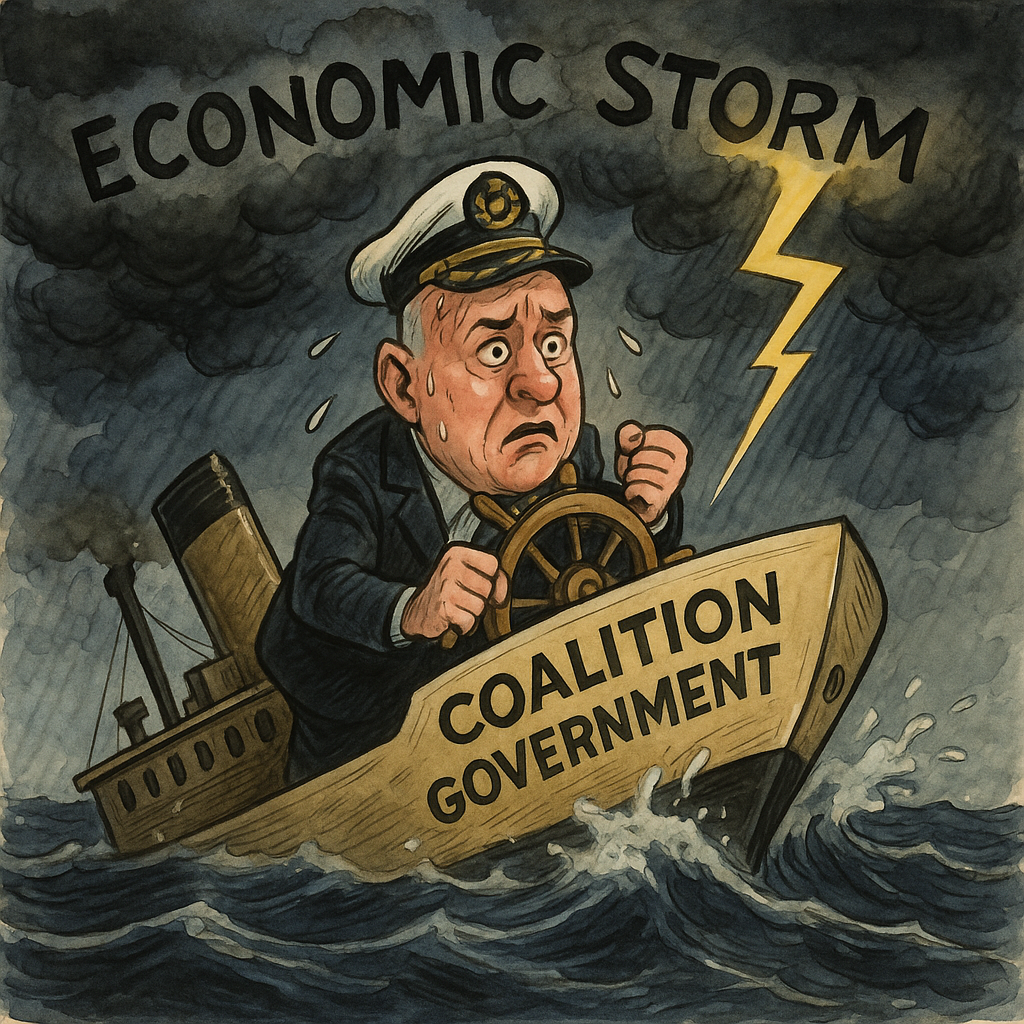
Political cartoon depicting Luxon's leadership crisis amid economic turmoil
The Economic Reality Behind the Numbers
The coalition's economic policies reveal the fundamental contradictions of neoliberal capitalism. While Luxon claims policies are "working to fix the economy," unemployment continues rising and economic confidence plummets. This isn't policy failure - it's policy success from capital's perspective.
When business leaders like Simon Bridges criticise the government for not doing enough to stimulate the economy, they're demanding more corporate welfare, not genuine economic justice. The government's infrastructure summits and trade missions represent performative capitalism - grand gestures that benefit elites while ordinary people struggle with rising costs and insecure employment.
Global Context: Far-Right Networks and Local Impacts
The coalition's failures reflect global trends in far-right governance, where economic nationalism combines with cultural warfare to divide working-class communities. Research on how conspiracy theories move from white supremacist networks to Māori communities reveals the sophisticated nature of far-right propaganda operations.
Platform imperialism and disinformation campaigns target Indigenous communities specifically, seeking to undermine collective resistance while promoting individualistic solutions that benefit capital. The coalition's success in reducing Māori confidence in expressing their identity demonstrates how these strategies operate in practice.
Constitutional Crisis and Treaty Obligations
The Treaty Principles Bill represents more than bad policy - it's an attempt to constitutionally entrench white supremacy. When Lady Tureiti Moxon describes the bill as designed to "subjugate, humiliate, assimilate, and oppress iwi Māori", she's identifying the colonial violence at its core.
Research on Māori sovereignty and colonial resistance shows how Crown discourses of sovereignty function as "empowering and (de-)authorising political devices" linked to colonisation processes. The coalition's constitutional vandalism isn't preserving democracy - it's undermining the Treaty relationship that could provide the foundation for genuine democratic transformation.

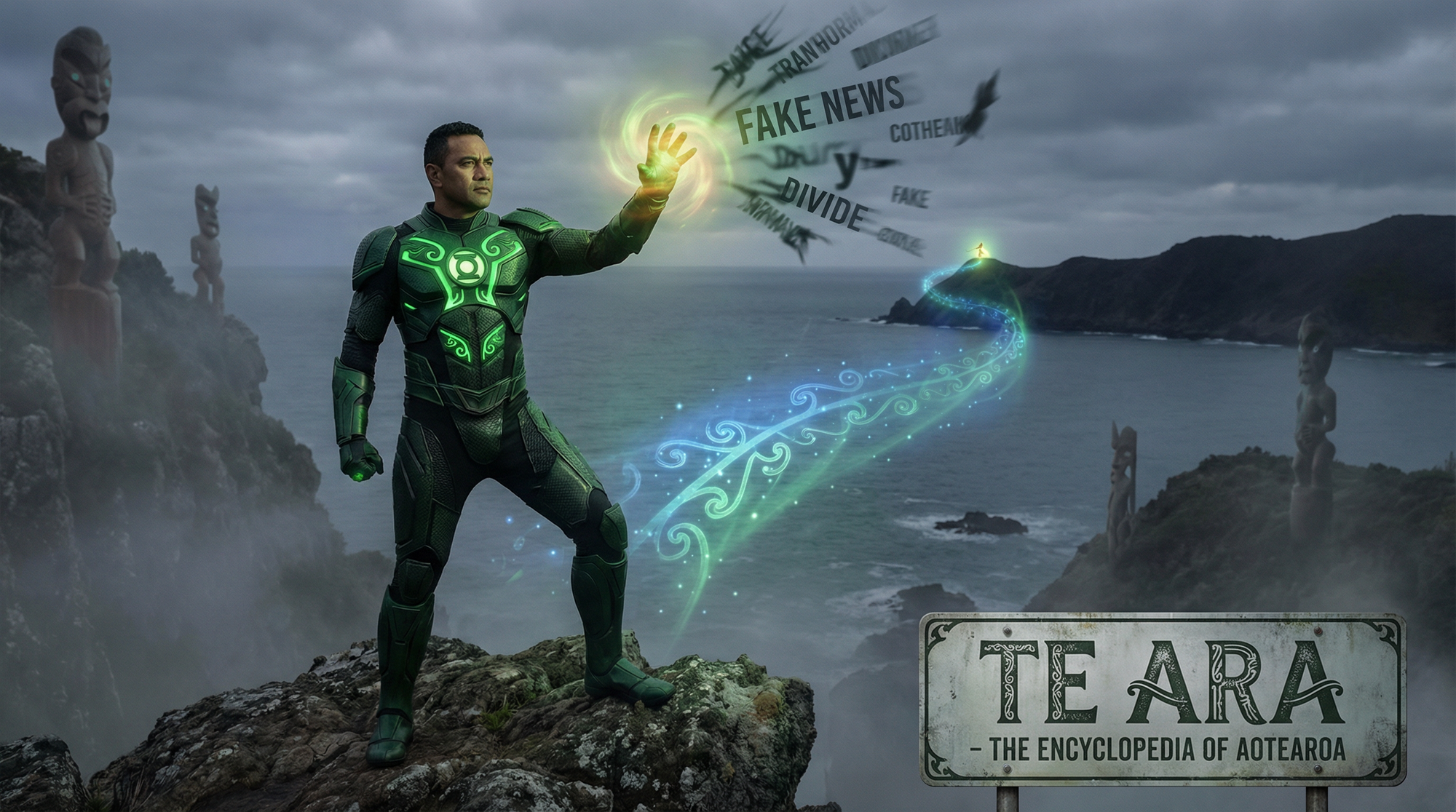
The Māori Green Lantern Fighting Misinformation And Disinformation From The Far Right
The Path Forward: Decolonisation and Economic Justice
Real change requires confronting the colonial capitalism that creates these crises. Calls for a Truth, Reconciliation and Justice Commission to address colonisation, racism and white supremacy point toward the kind of structural transformation needed.
Research advocating for wealth taxes and cross-party focus on wellbeing recognises that economic justice requires redistributive policies that challenge capitalist accumulation. When Luxon dismisses wealth taxes as "completely the wrong answer," he's defending the class interests of his corporate backers.
The polling collapse documented by Thomas Manch and others reflects growing recognition that the current system cannot deliver justice or prosperity for working people. But electoral change alone won't address the structural racism and economic exploitation that define colonial capitalism.
Beyond Electoral Politics
The government's polling crisis represents more than political unpopularity - it signals the growing illegitimacy of colonial capitalism itself. While mainstream media focuses on electoral horse races, the real struggle is between those defending Indigenous sovereignty and economic justice versus those protecting white supremacy and corporate power.
Thomas Manch's documentation of government failures provides important evidence, but the solutions lie beyond electoral politics. Real change requires building power within communities, defending Indigenous rights, and creating economic systems based on reciprocity rather than extraction.
The numbers don't lie - this government is failing because its ideology is bankrupt. But the system that created this crisis will persist until we build something better to replace it.
Readers who find value in this analysis and wish to support continued kaitiaki work exposing these structures can contribute a koha to: HTDM: 03-1546-0415173-000. The MGL understands these tough economic times for whānau, so please only contribute if you have capacity and wish to do so.
Kia kaha, kia māia, kia manawanui.
In solidarity and resistance,
Ivor Jones
Te Māori Green Lantern