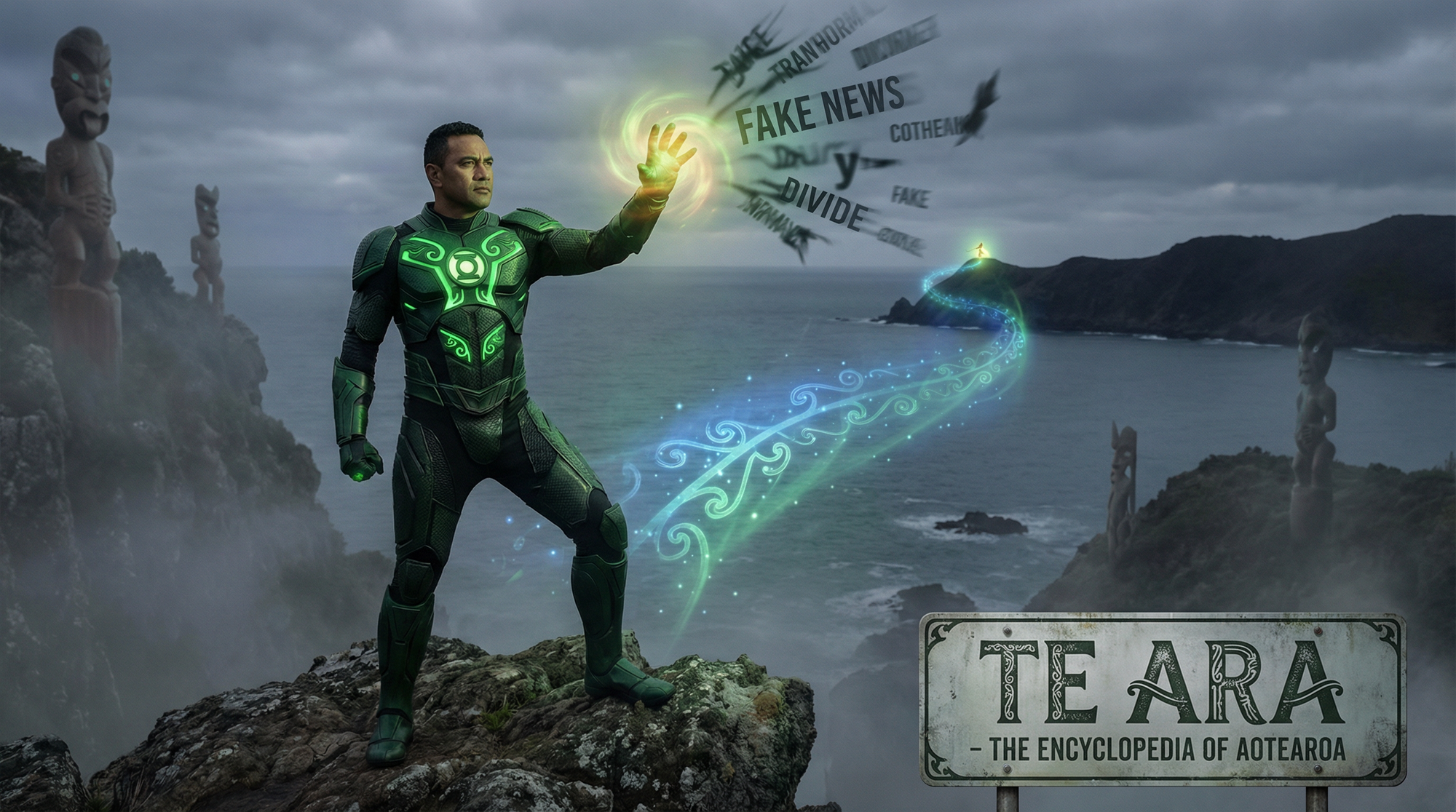
“Winston Peters' Ferry Fiasco: The $671 Million Betrayal of New Zealand” - 16 August 2025
When accountability dies, the people pay twice
Kia ora whānau. Welcome to another exposé of the systemic failures that define this coalition government's contempt for working New Zealanders.
The Cook Strait ferry debacle represents far more than bureaucratic incompetence—it exemplifies the fundamental betrayal inherent in neoliberal politics and the cynical manipulation of public resources by career politicians who refuse to accept responsibility for their failures. Winston Peters' defence of the $671 million ferry cancellation cost reveals a master class in political deflection that would make even the most hardened spin doctors blush. This analysis will dissect how Peters, a man who helped create the very mess he now claims to have solved, has orchestrated one of the most expensive policy failures in recent New Zealand history while somehow positioning himself as the hero of his own disaster story.
The ferry saga serves as a perfect case study in how political elites operate: they create problems, blame others for the consequences, then charge taxpayers enormous sums to fix what they broke in the first place. For Māori communities who rely on affordable inter-island transport for employment, healthcare, and maintaining whānau connections, this $671 million write-off represents resources that could have funded decades of genuine infrastructure investment in our communities.
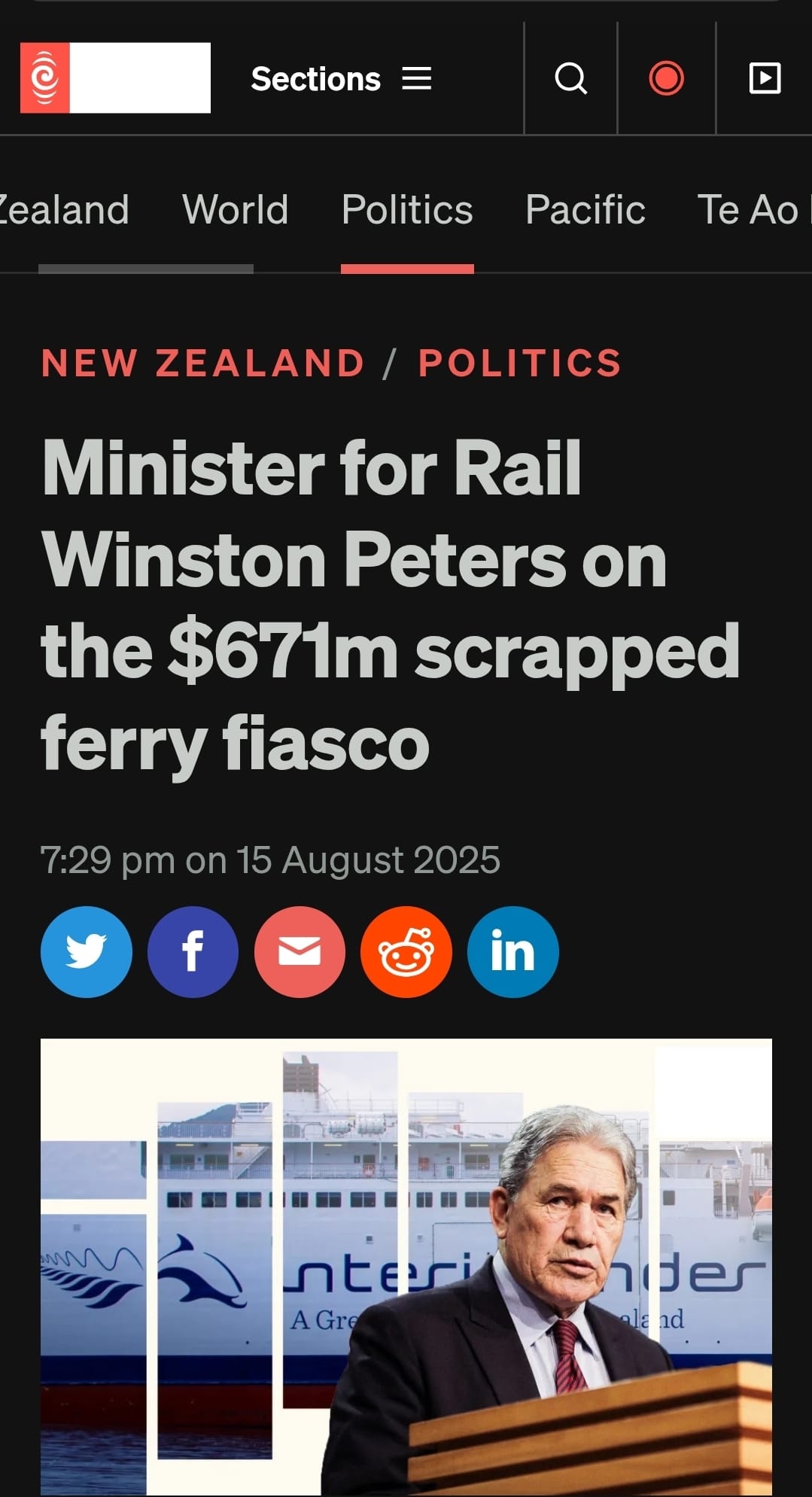
https://www.rnz.co.nz/news/political/570125/minister-for-rail-winston-peters-on-the-671m-scrapped-ferry-fiasco
Background
To understand the magnitude of this betrayal, we must first grasp what the Cook Strait ferry service means to New Zealand's economic and social fabric. The ferries are not merely tourist conveniences—they form a critical link in State Highway 1 and the national rail network, carrying everything from essential goods to families travelling between islands. For many whānau, particularly those with limited incomes, the ferry represents their only affordable means of maintaining connections across Te Moana-a-Raukawa.
The Inter-Island Resilient Connection project, known as iReX, was originally conceived to replace the aging ferry fleet with modern, efficient vessels capable of carrying both rail and road traffic. The original 2018 business case estimated costs at $775 million, a figure that would prove to be as reliable as Peters' political promises.
The project's significance extends beyond transportation—it represents a test case for how New Zealand handles major infrastructure development in an era of climate change and economic uncertainty. For Māori, infrastructure projects of this scale often become flashpoints for broader discussions about sovereignty, environmental protection, and the equitable distribution of public resources.
Peters now finds himself defending a staggering $671 million loss to taxpayers—money spent with absolutely nothing to show for it except broken contracts and political spin. The final settlement with Hyundai Mipo Dockyard alone cost $144 million, bringing total payments to the Korean shipbuilder to $222 million. The remaining $449 million disappeared into "landside infrastructure, project management and wind-down costs"—bureaucratic speak for an spectacular policy failure that has left New Zealand without new ferries and hundreds of millions of dollars poorer.
The human cost of this disaster cannot be measured in dollars alone. The Aratere, the fleet's only rail-enabled ferry, was retired in August 2025, severing the rail connection between islands and making rail freight less viable for years to come. This directly contradicts global trends toward sustainable transport and represents a massive step backwards for New Zealand's climate goals.
Peters' response to this catastrophe reveals everything wrong with our political system. Rather than accepting responsibility, he has launched into a defensive tirade blaming "doomsayers" and claiming the cancellation was a "seriously good deal". This from the same man who helped create the problem in the first place.
The Web of Deception: How Peters Created His Own Crisis
The most galling aspect of Peters' performance is his brazen attempt to rewrite history and absolve himself of responsibility for a disaster he helped orchestrate. Let us examine the timeline of Peters' involvement with forensic precision.
In May 2020, while serving as Deputy Prime Minister and Minister for Rail in the Labour-New Zealand First coalition, Peters signed off on the original iReX plan at a cost of $401 million. By November 2019, the cost estimate had already risen to almost $1.4 billion. Yet Peters, with characteristic arrogance, now claims it was "a bare-faced lie" to hold him responsible.
When Labour increased the ferry specifications in 2021 to "massively bigger ferries," Peters was indeed out of Parliament. However, this convenient absence does not erase his fundamental role in establishing the flawed project structure that enabled the subsequent cost blowouts. Peters created the institutional framework that allowed costs to balloon from the original $775 million in 2018 to nearly $3 billion by 2023.
The deeper scandal lies not in Peters' temporary absence from Parliament, but in his return to power as Minister for Rail in 2024, positioning himself as the solution to a problem he helped create. This represents the kind of cynical political opportunism that defines neoliberal governance—create chaos, disappear during the worst of it, then return as the saviour while ordinary New Zealanders pay the price.
Peters' claim that he "extracted" a fair deal from Hyundai deserves particular scrutiny. His statement that he went to see Hyundai and negotiated the $144 million settlement reveals the colonial mentality that still pervades our political class—the assumption that flying overseas to cut deals with foreign corporations represents sound governance rather than damage control for previous incompetence.
The Neoliberal Framework of Failure
The ferry fiasco cannot be understood in isolation from the broader neoliberal framework that governs New Zealand's approach to public infrastructure. Finance Minister Nicola Willis' decision to cancel the iReX project in December 2023 exemplifies the short-term thinking that characterises neoliberal governance—slash spending now, worry about the consequences later.
Willis' justification for the cancellation—that the government needed to "address the cost pressures that are impacting on New Zealanders"—reveals the fundamental dishonesty of neoliberal rhetoric. The decision to waste $671 million while leaving New Zealand without adequate ferry infrastructure hardly addresses cost pressures on ordinary families. Instead, it represents the kind of penny-wise, pound-foolish thinking that prioritises short-term political optics over long-term national interests.
The creation of Ferry Holdings Ltd as a Schedule 4 company to handle the new procurement process represents another layer of neoliberal obfuscation. By removing the project from direct government control and placing it within a corporate structure, the government creates distance between itself and potential future failures while maintaining the illusion of business-like efficiency.
This corporate model reflects the neoliberal faith in market mechanisms over democratic accountability. Rather than strengthen KiwiRail's capacity to manage major projects, the government has created another layer of bureaucracy that insulates political decision-makers from responsibility while potentially opening new avenues for private profit extraction from public assets.
The Māori Perspective: Infrastructure as Colonial Control
From a Māori worldview, the ferry disaster represents far more than policy failure—it exemplifies how colonial structures continue to prioritise corporate interests over community needs. The $671 million write-off could have funded transformative infrastructure projects in Māori communities, from housing to digital connectivity to renewable energy initiatives.
The decision to remove rail capability from the Cook Strait connection directly contradicts the principles of kaitiakitanga and intergenerational responsibility. By prioritising short-term cost savings over sustainable transport options, the government has abandoned its obligations to future generations and to the environment.
For Māori communities in Te Tauihu and other regions dependent on ferry access, the extended delays and reduced service reliability represent a form of systematic exclusion from economic and social opportunities. When the original plan promised ferries by 2026 but New Zealanders now face delays until 2029, the human cost falls disproportionately on those communities with the fewest alternatives.
The broader pattern reflects how colonial infrastructure development has always served the interests of capital extraction over community wellbeing. The ferry service, like the railways before it, was designed to move commodities and tourists rather than to serve the mobility needs of local populations. Peters' focus on maintaining "road, rail and passengers" connections reveals this commodified view of public infrastructure as a service to capital rather than a right of citizenship.
The Corporate Media's Complicity
Peters' attack on "doomsayers" and media critics represents a calculated attempt to deflect attention from his own failures by blaming those who accurately predicted the project's problems. His claim that critics suggested the cancellation would cost "the full $551 million contract value" deliberately misrepresents media coverage while ignoring the fundamental issue—that any cancellation cost represents a failure of governance.
The mainstream media's coverage of the ferry saga has largely failed to provide the systemic analysis necessary to understand how such failures occur. By focusing on personalities and political horse-trading rather than examining the underlying structural problems with New Zealand's infrastructure planning, media outlets have enabled the kind of blame-shifting that Peters employs so effectively.
The failure to connect the ferry disaster to broader patterns of neoliberal governance reflects the media's own entanglement with corporate interests and its investment in maintaining the illusion that better management, rather than systemic change, can solve these recurring problems.
Hidden Connections and Patterns
The ferry fiasco reveals several disturbing patterns that extend far beyond transportation policy. First, the revolving door between government and corporate interests that enables politicians like Peters to move seamlessly between creating problems and profiting from their solutions. Peters' negotiation with Hyundai while simultaneously positioning the company as a potential contractor for new ferries represents a clear conflict of interest that would be scandalous in any properly functioning democracy.
Second, the pattern of socialising losses while privatising gains that defines neoliberal infrastructure development. The $671 million loss falls entirely on taxpayers, while future contracts will likely generate substantial profits for private corporations. The government's establishment of Ferry Holdings Ltd creates a mechanism for further private involvement while maintaining public liability for any future failures.
Third, the systematic undermining of public capacity in favour of consultants and external contractors. Peters' criticism that "the previous government spent hundreds of millions on consultants instead of buildings" ignores his own government's continued reliance on external advice rather than building internal expertise within public institutions.
The International Context: Learning from Failure
Peters' reference to Tasmania's ferry problems provides an illuminating comparison that reveals the global nature of infrastructure privatisation failures. His warning that New Zealand could end up "with new boats, but no suitable infrastructure" acknowledges the systemic problems created when infrastructure planning is subordinated to short-term political cycles.
The Tasmanian experience, where new Spirit of Tasmania ferries cannot operate at full capacity due to infrastructure limitations, demonstrates how the neoliberal approach to infrastructure development creates recurring cycles of crisis and expensive fixes. By treating infrastructure as discrete projects rather than integrated systems, governments create the conditions for exactly the kind of expensive failures that both jurisdictions have experienced.
Implications
The ferry fiasco's implications extend far beyond transport policy to fundamentally challenge New Zealand's capacity for effective governance. The $671 million loss represents not merely wasted money, but a catastrophic failure of democratic accountability that undermines public faith in government institutions.
For Māori communities, the disaster reinforces the need for alternative approaches to infrastructure development that prioritise community needs over corporate profits. The failure demonstrates how colonial governance structures continue to subordinate Indigenous interests to the demands of capital accumulation.
The broader implications for New Zealand's climate goals cannot be overstated. By undermining rail connectivity and extending the lifespan of aging, inefficient ferries, the government has actively worked against its own environmental commitments while wasting resources that could have supported genuine sustainability initiatives.
The international ramifications also deserve consideration. New Zealand's reputation as a competent manager of public resources has been severely damaged by this debacle, potentially affecting everything from credit ratings to investment confidence to diplomatic relationships.
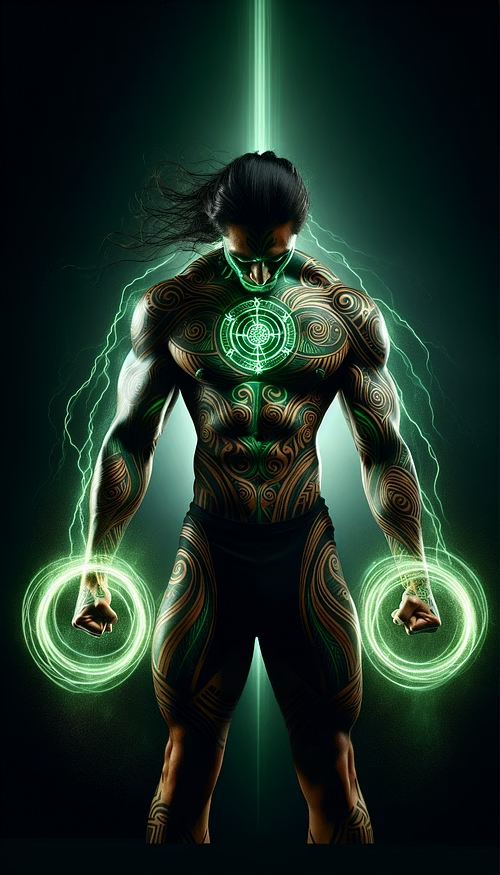
The Māori Green Lantern fighting misinformation and disinformation from the far right
Winston Peters' defence of the $671 million ferry disaster represents everything wrong with New Zealand's political system: a career politician who helped create a massive problem, disappeared during the worst of it, then returned to profit from the cleanup while blaming everyone else for the mess. His performance combines the worst elements of colonial arrogance, neoliberal irresponsibility, and populist deflection.
The ferry fiasco stands as a monument to the failure of neoliberal governance and the urgent need for systemic change in how New Zealand approaches infrastructure development. The $671 million write-off could have funded countless community projects, supported renewable energy initiatives, or addressed the housing crisis—instead, it has disappeared into the pockets of consultants and contractors while leaving New Zealand with less reliable transport infrastructure than when the whole process began.
For Māori communities and working families across New Zealand, this disaster demonstrates why we cannot continue to trust our future to politicians like Peters who treat public resources as personal playthings. The ferry fiasco demands nothing less than a fundamental reimagining of how we approach infrastructure development, prioritising community needs and environmental sustainability over corporate profits and political convenience.
The people of New Zealand deserve better than Winston Peters' ferry fiasco. They deserve infrastructure development guided by principles of manaakitanga, whakatōhea, and genuine care for future generations—not the cynical opportunism that has wasted $671 million while leaving us with aging ferries and broken promises.
Kia kaha, whānau. The struggle for genuine democracy and sustainable infrastructure continues.
Na Ivor Jones, The Māori Green Lantern
Readers who find value in my content and wish to support this mahi can contribute a koha to: HTDM: 03-1546-0415173-000. I understand these are tough economic times for whānau, so please only contribute if you have capacity and wish to do so.
- https://ppl-ai-file-upload.s3.amazonaws.com/web/direct-files/attachments/2123776/750f2c2b-c76a-434f-a240-8387060b10b8/Minister-for-Rail-Winston-Peters-on-the-671m-scrapped-ferry-fiasco-_-RNZ-News.PDF
- https://ppl-ai-file-upload.s3.amazonaws.com/web/direct-files/attachments/images/2123776/b955bf35-c0ab-4a6f-9bc0-e02666db6272/Screenshot_20250816_053849_Brave.jpg
- https://www.rnz.co.nz/news/political/570125/minister-for-rail-winston-peters-on-the-671m-scrapped-ferry-fiasco
- https://www.rnz.co.nz/news/political/556720/new-details-of-cook-strait-ferry-replacement-plan-unveiled
- https://www.rnz.co.nz/national/programmes/ninetonoon/audio/2018919676/ferry-mega-budget-blow-out-where-to-from-here
- https://www.1news.co.nz/2025/08/15/kiwirail-settles-with-ship-builder-over-cancelled-irex-project/
- https://www.1news.co.nz/2024/06/23/govt-advised-to-replace-cook-strait-ferries-with-new-smaller-boats/
- https://www.rnz.co.nz/news/political/536203/ferry-replacement-to-cost-less-than-labour-s-irex-christopher-luxon
- https://www.rnz.co.nz/news/political/560273/kiwirail-reveals-500-million-spent-on-axed-cook-strait-ferry-project
- https://www.1news.co.nz/2024/01/21/john-campbell-i-saw-peace-joy-and-10000-people-uniting-to-say-no/
- https://www.1news.co.nz/2023/12/13/govt-declines-more-funding-for-interislander-project-amid-cost-blowout/
- https://www.nzherald.co.nz/nz/politics/kiwirail-settles-with-hyundai-over-cancelled-ferries-with-144-million-payment/XQGS7HO5PFFYBNSXE4BD3FVTEQ/
- https://www.1news.co.nz/2024/05/05/new-documentary-dives-into-controversial-2004-foreshore-and-seabed-act/
- https://www.nzherald.co.nz/nz/kiwirail-reveals-what-led-to-cook-strait-mega-ferry-cost-blowout/3BV5MBMRZFC4TCMJRPINE3K4AQ/
- https://www.rnz.co.nz/news/political/536339/government-won-t-reveal-cost-of-new-cook-strait-ferry-plan
- https://www.rnz.co.nz/news/political/543699/government-s-irex-ferry-cancellation-costed-at-300-million-for-now
- https://www.1news.co.nz/2025/08/15/five-big-things-that-happened-today-friday-august-15/
- https://www.1news.co.nz/2025/08/15/how-much-it-cost-to-cancel-irex-ferry-contract/
- https://www.semanticscholar.org/paper/3197e1486a7f2e74a60692465c2652373fcf642c
- https://www.rnz.co.nz/news/thedetail/535813/the-risk-of-missing-the-boat-on-a-good-deal-for-the-cook-strait-ferries
- https://www.rnz.co.nz/news/alert-top/570081/final-cost-of-breaking-south-korean-ferry-contract-revealed
- https://www.rnz.co.nz/news/political/556802/bare-faced-lie-to-blame-me-for-ferry-saga-winston-peters
- https://www.1news.co.nz/2025/07/01/cook-strait-ferries-no-nonsense-infrastructure-deal-peters/
- https://www.1news.co.nz/2024/12/11/new-cook-strait-ferries-expected-for-2029-cost-not-revealed/
- https://www.rnz.co.nz/news/political/570125/live-minister-for-rail-winston-peters-on-the-671m-scrapped-ferry-fiasco
- https://www.nzherald.co.nz/nz/kiwirails-cook-strait-ferry-cost-blowout-lands-with-nicola-willis/HP7LVCPQBBE7NAOWZXCCHQEUQM/
- https://www.rnz.co.nz/news/national/504650/interislander-ferry-fleet-project-to-wind-down-after-being-denied-further-government-funding
- https://www.rnz.co.nz/news/political/504678/finance-minister-should-resign-over-scrapping-of-interislander-upgrade-funding-unions
- https://www.cambridge.org/core/product/identifier/S1743923X21000039/type/journal_article
- https://www.tandfonline.com/doi/full/10.1080/10357718.2020.1734773
- /content/files/nzjer/article/download/13/7.pdf
- /content/files/nzjer/article/download/15/9.pdf
- /content/files/journals/index-php/cjlg/article/download/3055/3257.pdf
- /content/files/record/2132681/files/article.pdf
- https://www.tandfonline.com/doi/pdf/10.1080/09644016.2021.1877477?needAccess=true
- https://www.tandfonline.com/doi/pdf/10.1080/00323187.2022.2064759?needAccess=true
- /content/files/nzjer/article/download/14/8.pdf
- https://www.rnz.co.nz/news/political/500308/election-2023-a-beginner-s-guide-to-coalition-government
- https://www.nzherald.co.nz/the-listener/politics/danyl-mclauclan-david-seymour-once-again-pulls-the-rug-out-from-under-national/TAAU34RB5ZA2JLESEYKKPU6N2I/
- https://www.rnz.co.nz/news/political/536291/advocates-divided-as-government-unveils-cook-strait-ferry-plan
- https://www.1news.co.nz/2023/10/01/what-happens-when-winston-peters-goes-into-coalition-talks/
- https://www.nzherald.co.nz/nz/coalition-talks-winston-peters-shows-who-will-be-boss-in-the-next-government-shane-te-pou/JTHATZ3DHRDJPFKVSOFSNPZ4NY/
- https://www.1news.co.nz/2025/07/02/dublin-st-overbridge-confirmed-in-post-irex-picton-plans/
- https://www.rnz.co.nz/news/top/503207/three-parties-two-deals-one-govt-the-stress-points-within-nz-s-coalition-of-many-colours
- https://www.rnz.co.nz/news/national/559539/rail-freight-will-be-less-viable-without-aratere-ferry-critics-say
- https://www.rnz.co.nz/news/on-the-inside/503195/analysis-the-coalition-announcement-was-a-three-ringed-circus-to-rival-reality-tv
- https://www.rnz.co.nz/news/national/501825/winston-peters-back-in-the-driver-s-seat-for-coalition-negotiations
- https://www.rnz.co.nz/news/election-2023/501959/coalition-talks-nz-first-and-act-meet-for-first-time-since-election