"WINSTON PETERS IS A TEMU TRUMP FOR REALS - THE STRAP AND THE STATUTE: How a White Supremacist Government Finished What the Native Schools Inspector Started" - 20 February 2026
They beat te reo out of our mouths with leather straps. Now they legislate it into silence with two pages of colonial paper. The weapon changed. The war never stopped.

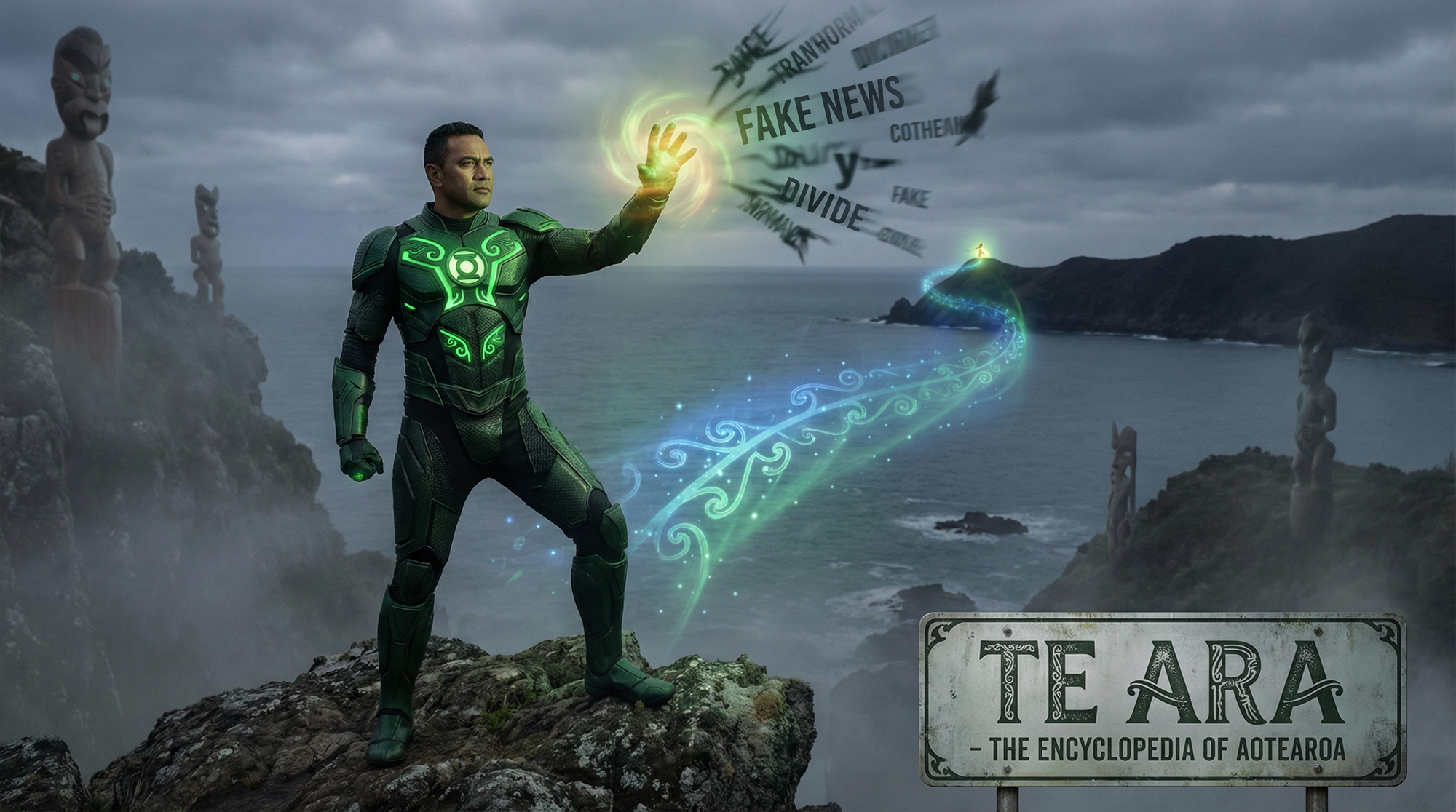
Mōrena Aotearoa, I hope your Saturday is a good one, and I thank you for visiting me here.
Please help me to stop NZFirst, ACT, and National from coming to power in the near future.
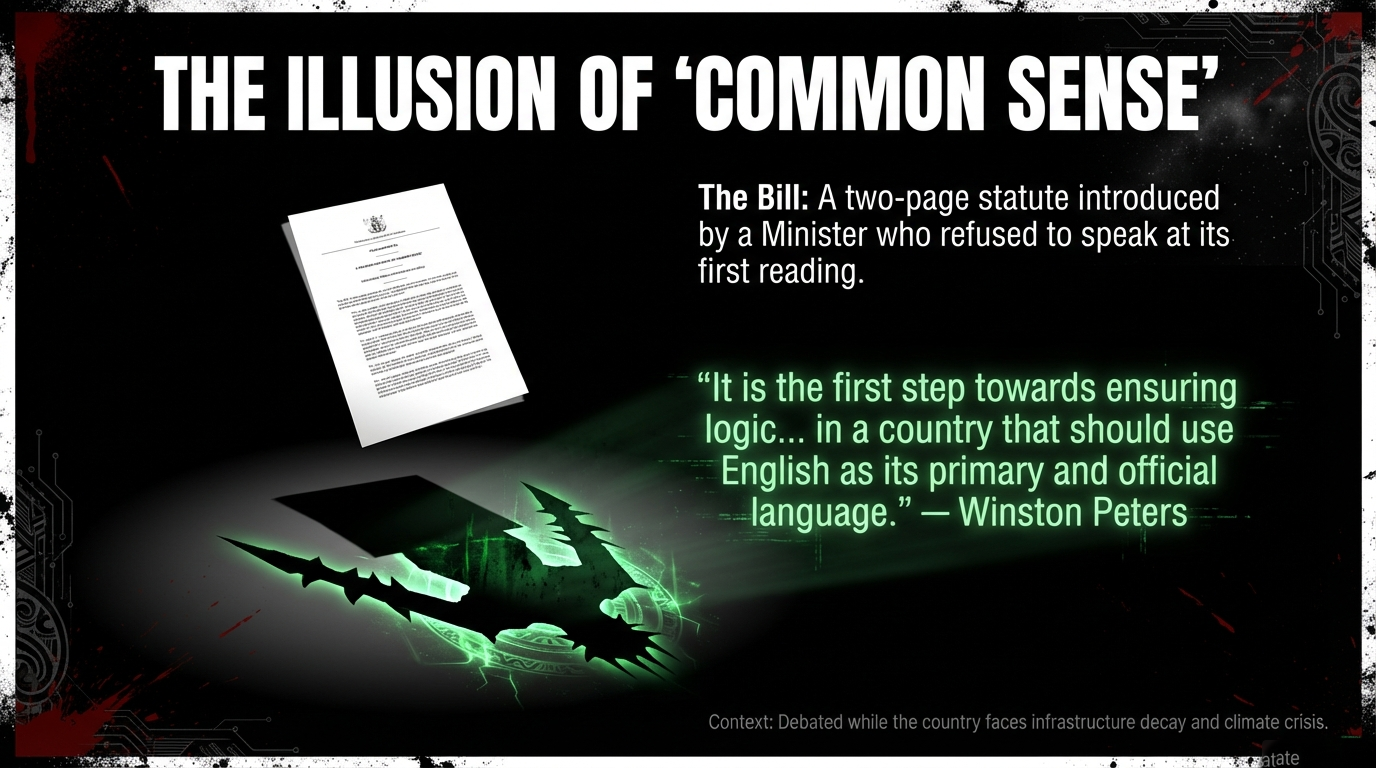
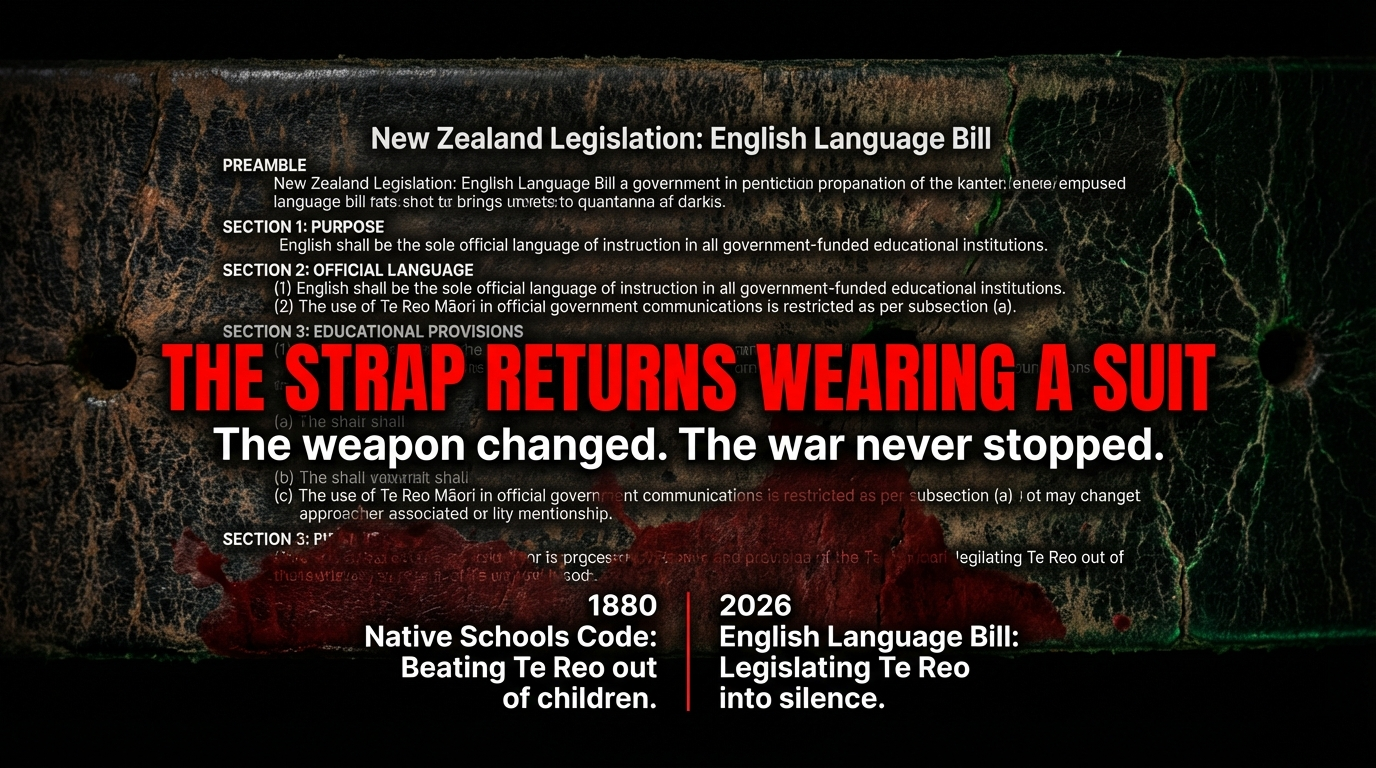
The Strap Returns — Wearing a Suit
There is an image seared into the collective memory of every Māori whānau in this country. A child, standing in a school corridor in 1920, palm extended, receiving the strap for the crime of speaking their own language. The inspector has decreed: English is the language of progress. Te reo Māori is the language of savages. The child learns. The child stops speaking. The child grows up and — terrified their own children will suffer the same punishment — refuses to teach them te reo.
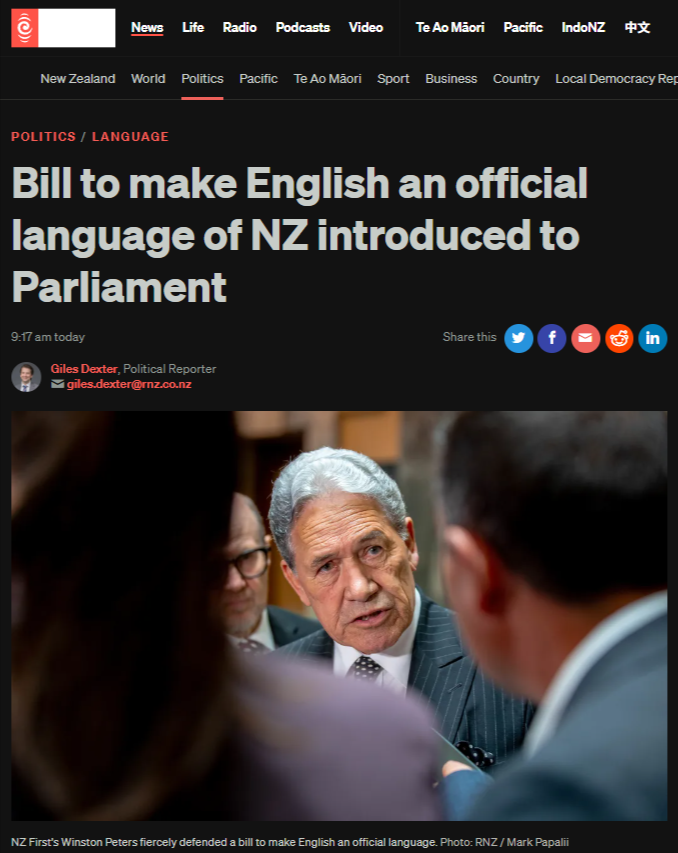
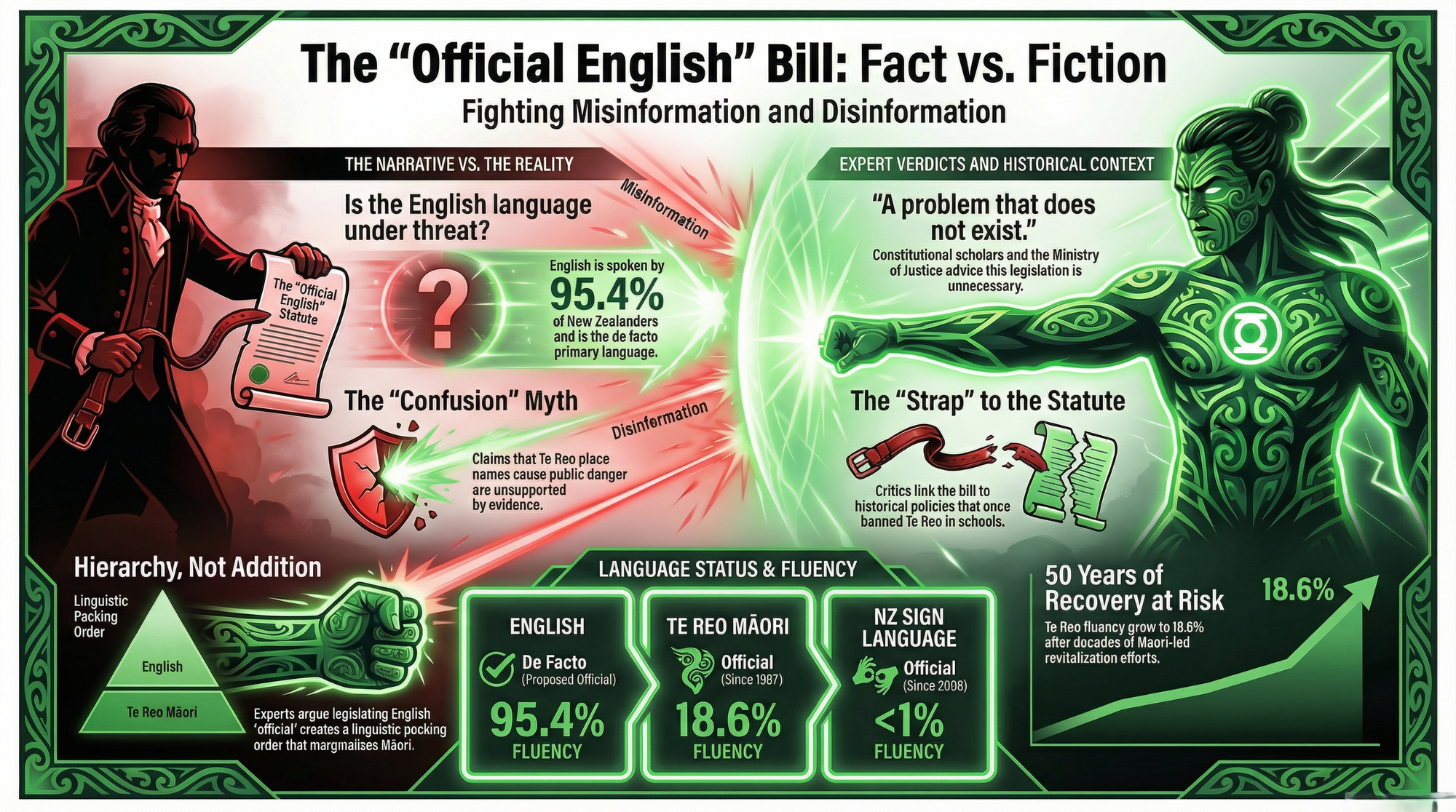
On Thursday 20 February 2026, the New Zealand Parliament debated a bill to make English an official language. A two-page piece of legislation — two pages, the same length as a parking ticket — that Winston Peters promoted on social media like a boxing match, that Paul Goldsmith couldn't even be bothered to speak to in the House, and that the Ministry of Justice itself has advised is unnecessary.
Let us name what this is.
This is not a language bill. This is a strap, repackaged as a statute. It is the same violence — the erasure of te reo Māori from public life — dressed in parliamentary procedure instead of leather. The child's palm has been replaced by the body politic of an entire people. The inspector's decree has been replaced by a coalition agreement. The beating continues.
Koha Consideration
Every koha signals that whānau are ready to fund the defence of te reo Māori that this government refuses to provide. When they legislate to make the coloniser's language "official" while the language they beat out of our grandparents fights for survival, your koha funds the voice that names that violence for what it is.

It signals that rangatiratanga includes the power to fund our own truth-tellers — especially when the Crown uses Parliament to silence the carved door.
Kia kaha, whānau. Stay vigilant. Stay connected. And if you are able, consider a koha to ensure this taiaha keeps swinging against every statute they use as a strap.
If you are unable to koha, no worries! Subscribe or follow The Māori Green Lantern, kōrero and share with your whānau and friends — that is koha in itself. Every share is another voice refusing to let the carved door close.
Three pathways exist:
Koha — Support: https://app.koha.kiwi/events/the-maori-green-lantern-fighting-misinformation-and-disinformation-ivor-jones
Subscribe to The Māori Green Lantern: https://www.themaorigreenlantern.maori.nz/#/portal/support
Direct bank transfer: HTDM, account number 03-1546-0415173-000
The Metaphor Writes Itself: A House Built on Silenced Tongues
Imagine a house. The house is Aotearoa. It has two doors — one carved in the whakairo tradition of tangata whenua, the other a plain colonial frame. For 184 years, every person who enters uses the colonial door. The carved door is nailed shut, boarded over, the carvings defaced by inspectors who declare them "unnecessary for progress."
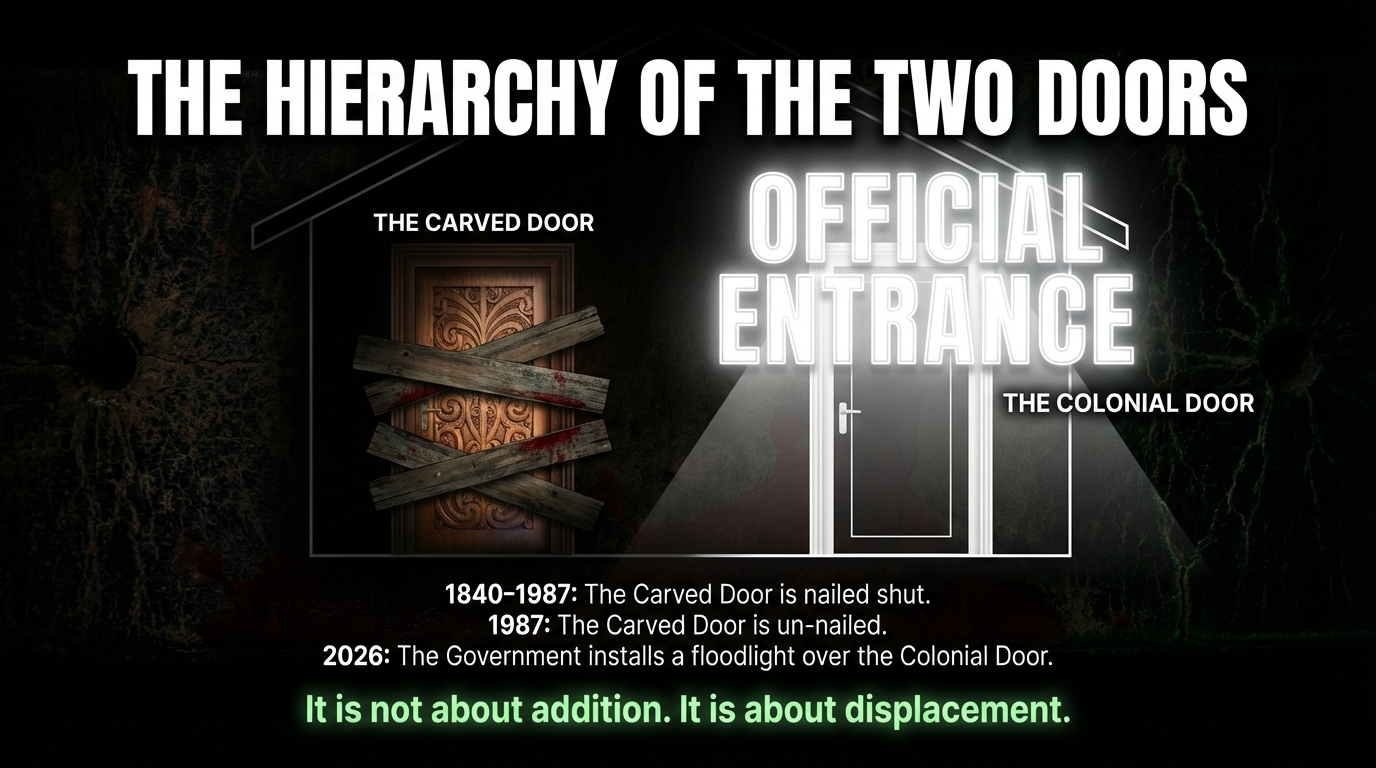
Then, in 1987, after decades of activism — after 30,000 signatures on a petition, after the WAI 11 claim to the Waitangi Tribunal, after elders wept on the stand recounting how the state stole their language — the carved door is finally un-nailed. Te reo Māori is declared an official language. The carved door opens, barely. Light enters.
Now Winston Peters arrives with a hammer and a fresh set of nails. He does not board up the carved door — he is too clever for that. Instead, he installs a floodlight above the colonial door. He erects a sign: OFFICIAL ENTRANCE. He declares: "We are not closing the carved door. We are simply making the other door... primary."
The effect is identical. The carved door recedes into shadow. The message to every New Zealander is clear: the colonial door is the real door. The carved door is heritage decoration. Te reo is a museum exhibit in a country that speaks English.
This is what "making English official" means. It is not addition. It is hierarchical displacement — the establishment of a linguistic pecking order in which the coloniser's tongue sits officially above the tongue the coloniser spent 150 years trying to exterminate.
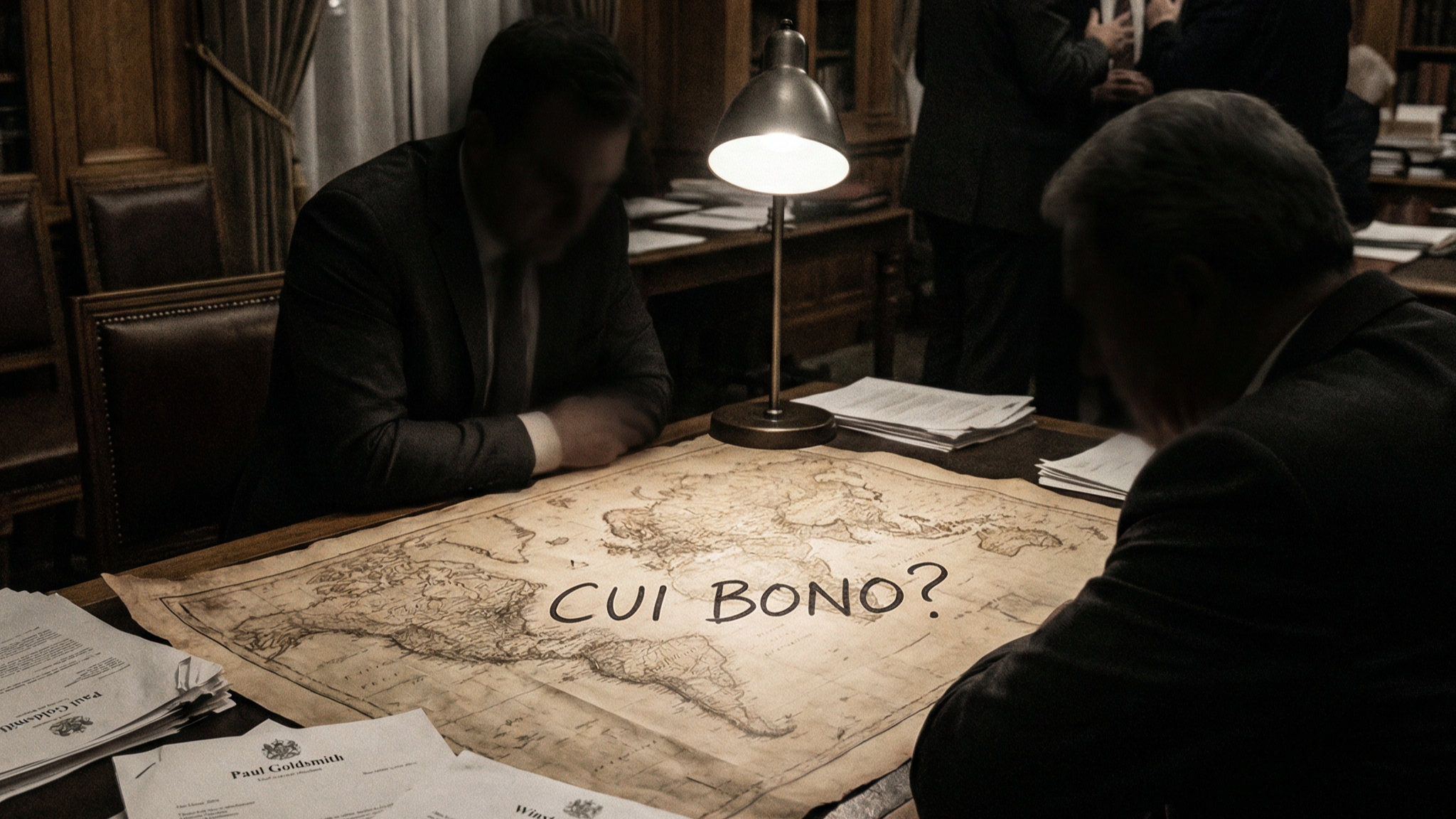
Cui Bono? Follow the Coalition Crumbs
Let us trace the whakapapa of this bill, because it did not emerge from public need. It emerged from a coalition agreement — a backroom deal between three parties whose combined agenda has been the most systematic assault on Māori rights since the Native Land Court.
Paul Goldsmith — the man who said colonisation was "on balance" a good thing for Māori — is the bill's named sponsor. He could not even bring himself to speak to it at first reading. "It wouldn't be the top priority for us, absolutely not," he told reporters. "But it's something in the coalition and it's getting done." This is the enthusiasm of a man signing a parking ticket, not a man defending a principle. Because there is no principle here. There is only a deal — a payment to Winston Peters for keeping the coalition alive.
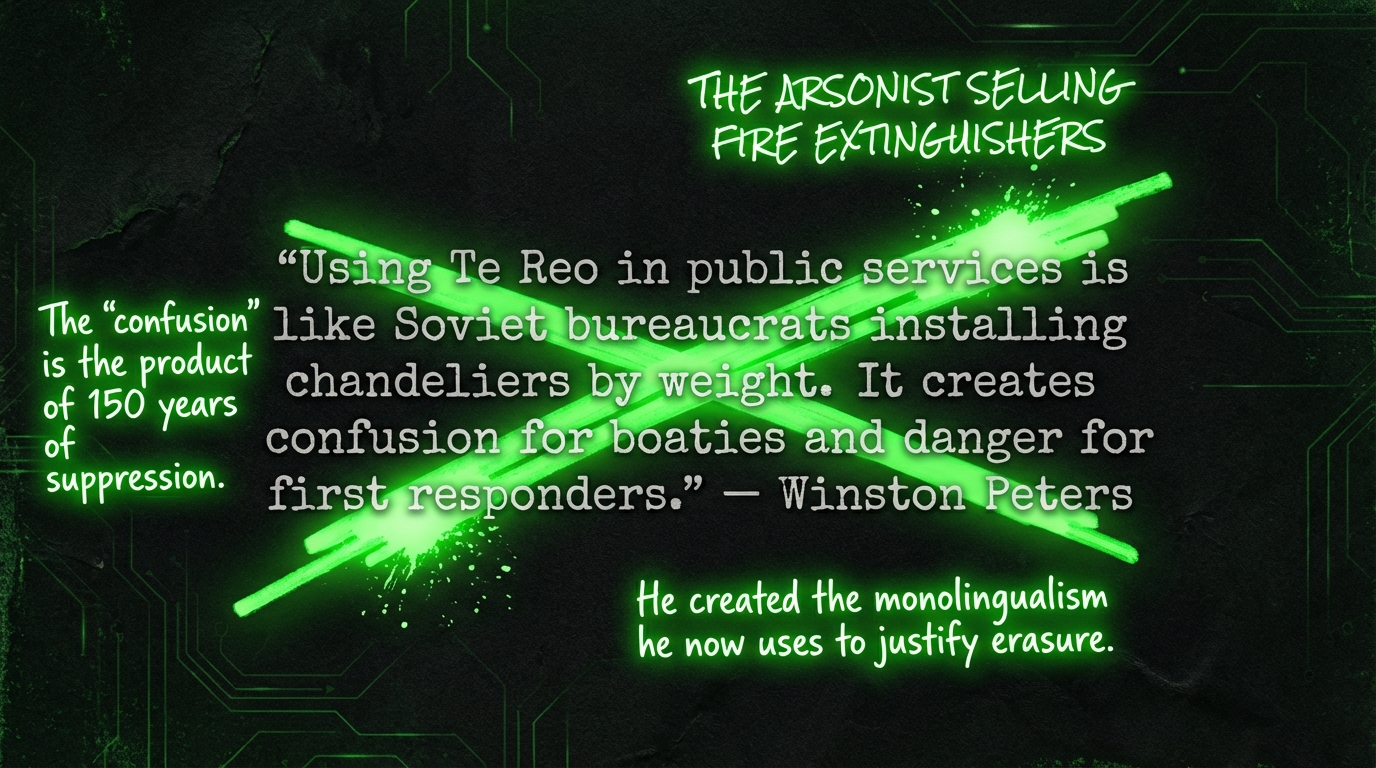
Winston Peters — the man who told Māori they are "not indigenous", who criticised an MP for speaking te reo in Parliament, who compared co-governance to Nazi Germany, who singled out a Green MP for his Rarotongan heritage just days before this bill — led the speeches. He blamed te reo for "confusing" people, for boaties who can't read charts, for first responders who don't know where they are going. He compared the use of te reo in public services to Soviet bureaucrats installing chandeliers by weight.
Chandeliers. The man compared te reo Māori to Soviet-era chandeliers.
This is not governance. This is a racial grievance tour, subsidised by taxpayers and legitimised by Parliament.
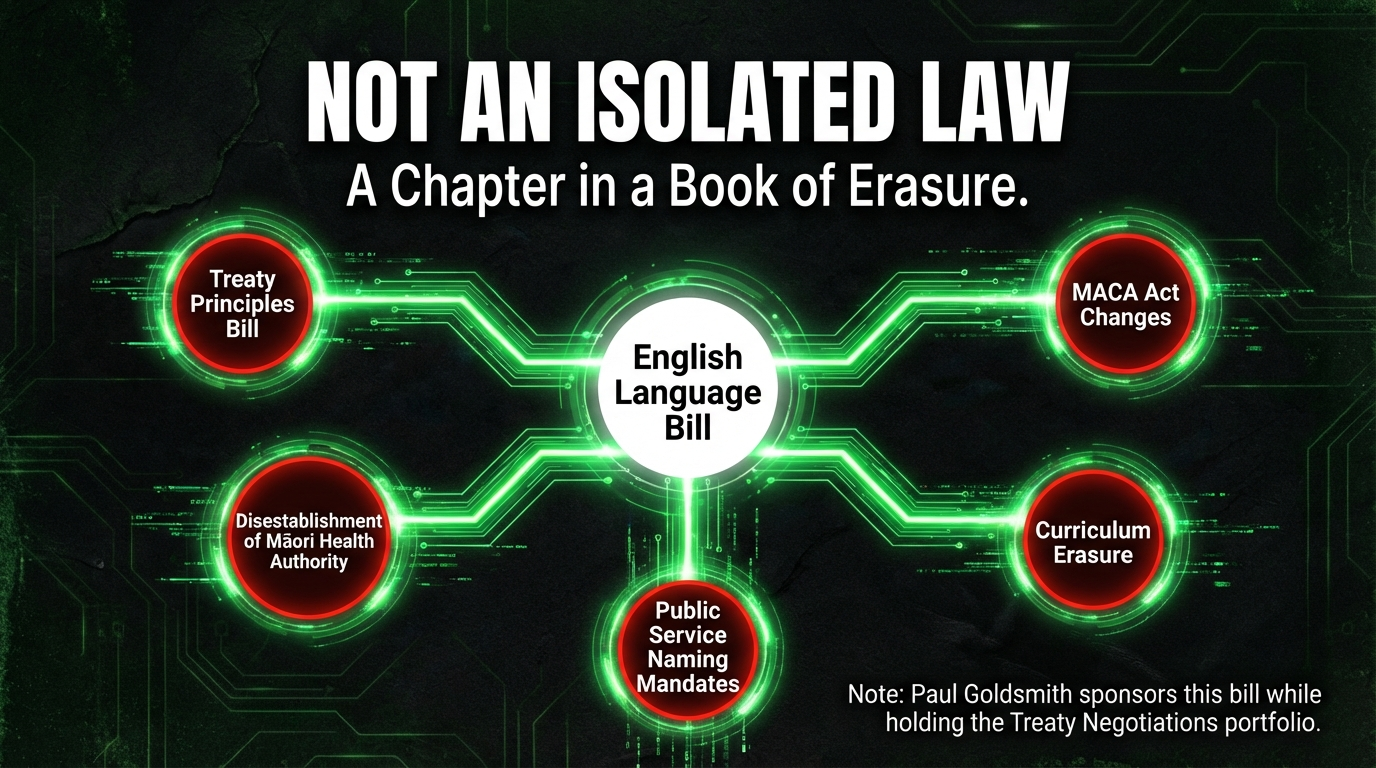
The coalition's wider war against Māori rights provides the context. This government has:
- Introduced and supported the Treaty Principles Bill — described by the Waitangi Tribunal as the "worst, most comprehensive breach of the Treaty/te Tiriti in modern times"
- Disestablished the Māori Health Authority, Te Aka Whai Ora
- Tightened the Marine and Coastal Area Act to make it harder for Māori to secure customary title
- Stripped mātauranga Māori from the school curriculum
- Required all public service departments to have their primary name in English
- Suspended Te Pāti Māori leaders for 21 days — seven times the longest previous suspension in parliamentary history — for performing a haka
- Now campaigns on a referendum to abolish the Māori seats
The English language bill is not an isolated piece of legislation. It is the linguistic chapter in a comprehensive programme of Indigenous erasure.
Three Examples for the Western Mind: What This Bill Destroys
For those raised in the Western tradition of separating language from identity, body from spirit, and culture from law, the following examples translate the tikanga impact of this bill into terms you cannot ignore.
Example 1: The Library They Can't Find — The Destruction of Wairua through Place
Winston Peters's caucus mocks the fact that Christchurch's central library is called Tūranga. Labour MP Duncan Webb exposed this perfectly: "A big building full of books, with big signs to it, but because it doesn't say 'library' they don't know it's the library if they're New Zealand First voters."
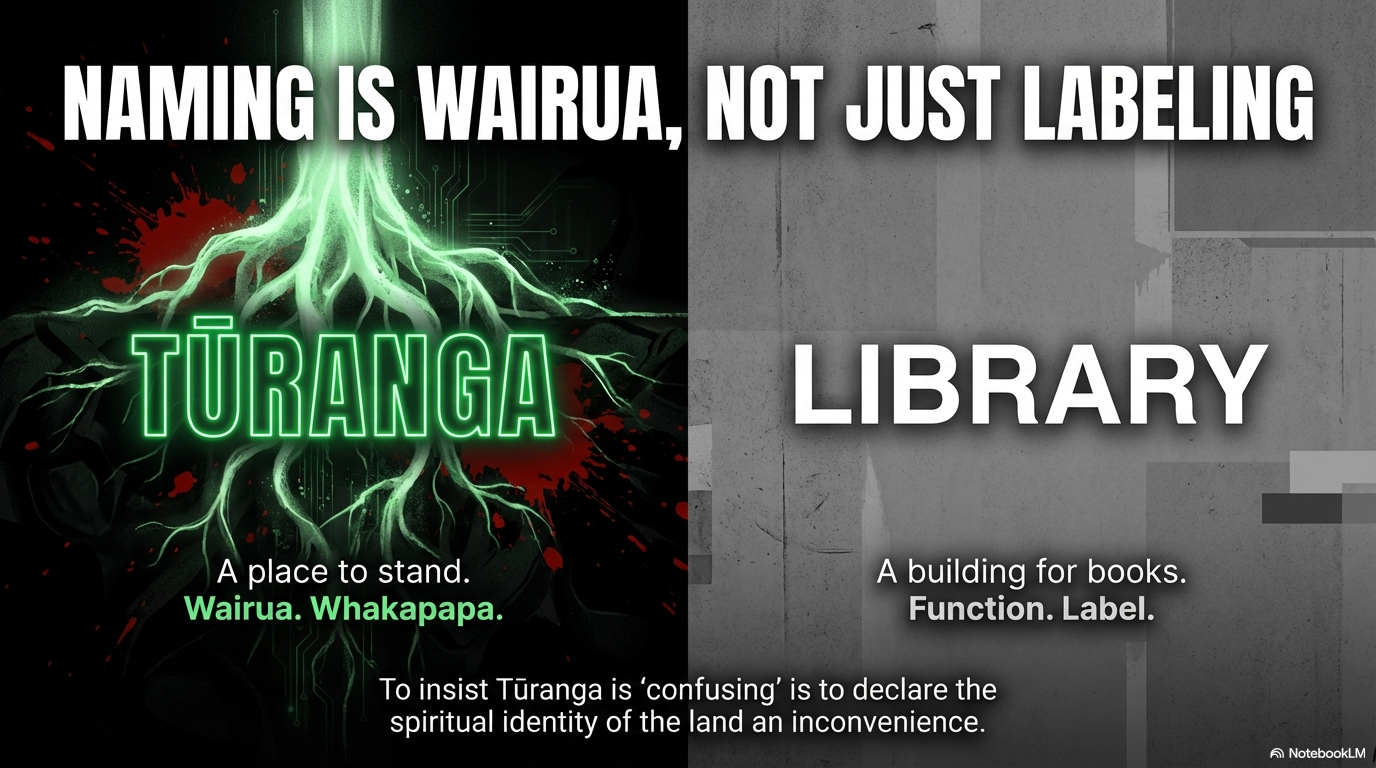
Tikanga impact: In te ao Māori, naming is not labelling — it is the bestowal of wairua (spirit). When a place is named in te reo, it is connected to the whakapapa of the land, to the atua, to the tūpuna who walked there before concrete existed. Tūranga means "a place to stand" — it references the mana of Ngāi Tahu's relationship to that whenua. To insist this name is "confusing" is to declare that the spiritual identity of the land is an inconvenience to the coloniser's comfort.
Western equivalent: Imagine the French government passing a law requiring Notre-Dame to be renamed "Big Paris Church" because tourists find the French confusing. Imagine the Italian government legislating that the Colosseo must primarily be called "Old Rome Stadium" so English-speaking visitors feel comfortable. The outcry would be deafening. Yet when Māori name their places in their own language, on their own land, it is treated as "virtue signalling."
Quantified harm: In the 2023 Census, more than 200,000 people — 4.28% of the population — can hold a conversation in te reo. That number grew 15% over five years. Every Māori place name in public life is a point of contact, a seed of normalisation, a signal that this language belongs here. This bill sends the opposite signal: English is primary. Te reo is secondary. Every place name in te reo that is deprioritised is a seed killed before it germinates. The percentage of Māori speaking te reo has stagnated at 18.6% — and this government's policy of linguistic hierarchy will ensure it never rises.
Solution: Repeal the requirement for English-primary naming of government departments. Implement genuine bilingual policy across all public services, as the Waitangi Tribunal recommended in WAI 11. Fund te reo education at every level. Withdraw this bill.
Example 2: The Beaten Child's Grandchild — Intergenerational Linguistic Trauma
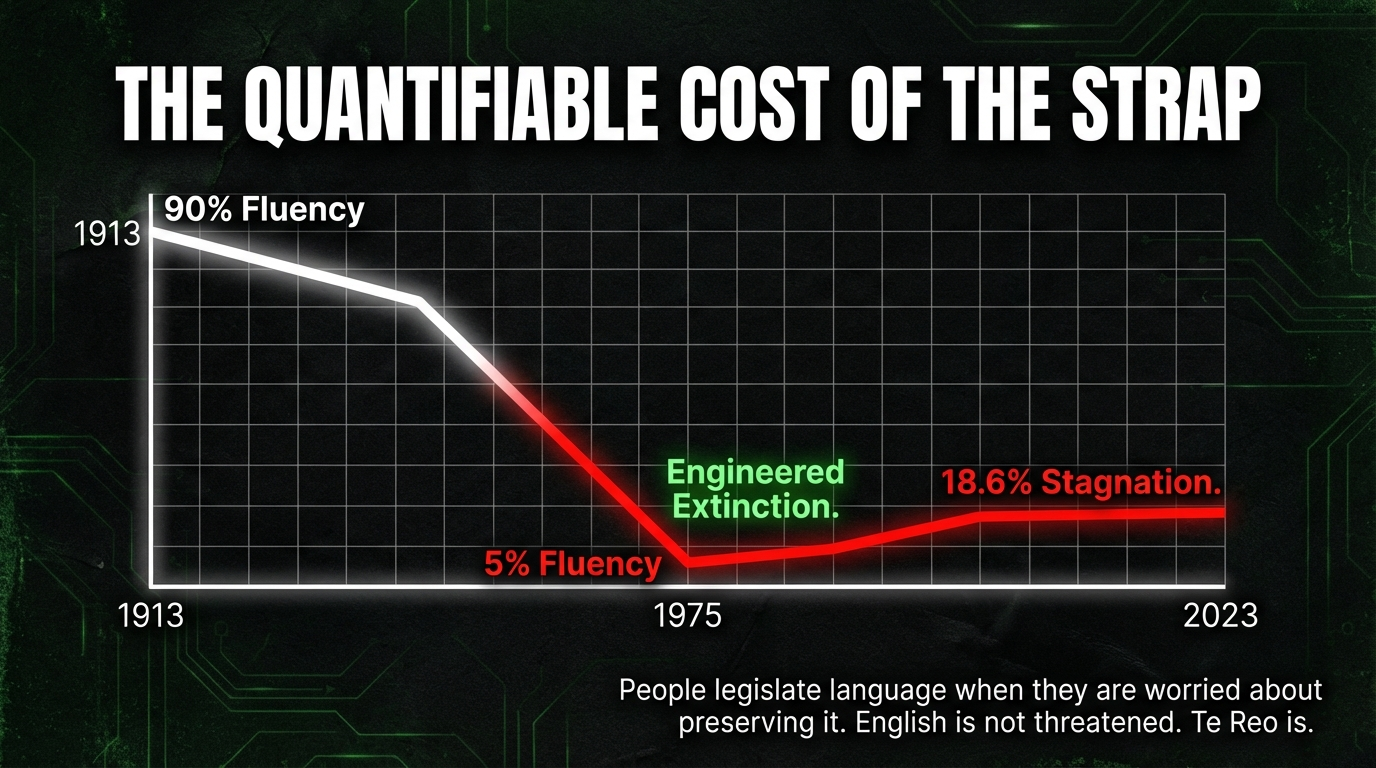
In 1913, 90% of Māori schoolchildren could speak te reo Māori. By 1953, only 26% could. By 1975, just 5% of Māori schoolchildren could speak their own language. This did not happen by accident. It happened because the Crown operated a Native Schools system that punished children for speaking te reo, that explicitly aimed to replace Māori language with English, and that the 1880 Native Schools Code standardised into policy.
Sir James Hēnare, told by a school inspector: "English is the bread-and-butter language and if you want to earn your bread and butter you must speak English."
Tikanga impact: Te reo Māori is not a communication tool. It is, in the words of the Waitangi Tribunal, "a taonga of quite transcendent importance." Without it, "Māori identity would be fundamentally undermined, as would the very existence of Māori as a distinguishable people." When the Crown legislates English as "official" — when it creates a statutory hierarchy — it tells the grandchild of the beaten child: the language they stole from your grandmother is still, officially, less important than the language they beat into her.
This is the destruction of mana tangata — the inherent dignity and authority of a person. It is the continuation of a policy that the Tribunal found was a breach of Te Tiriti. It is the Crown finishing what the inspector started, only now the strap is a statute.
Western equivalent: Imagine Germany passed a law in 2026 making German the "official" language — while Yiddish, nearly exterminated in the Holocaust, remained merely "recognised." Imagine the German government claimed this was "not an attack" on Yiddish, that it was "simply practical common sense." The world would rightly call this what it is: a government using legislation to institutionalise the linguistic hierarchy that genocide created. That is precisely what this bill does. The Crown nearly exterminated te reo. Now it legislates English above it.
Quantified harm: The language decline caused by Crown policy is measurable: from 90% fluency in 1913 to 5% among children by 1975. The current 18.6% fluency rate among Māori has taken 50 years of Māori-led revitalisation — kōhanga reo, kura kaupapa, Māori broadcasting — to claw back from near-extinction. Every policy that signals te reo's subordination to English depresses new learner uptake, demoralises current speakers, and validates the colonial hierarchy. The Ministry of Justice's own advice confirms: there is no evidence to support concerns about the use of English, and this legislation is not necessary.
Solution: Invest in te reo revitalisation at a scale proportionate to the damage the Crown inflicted. The Crown spent 150 years destroying the language; it should commit to 150 years of funding its recovery. Cancel this bill. Implement the WAI 11 recommendation that the Crown "become Māori speaking" — not that Māori become further subordinated to English.
Example 3: The Arsonist Selling Fire Extinguishers — The Crown as Language Saviour
Peters stood in Parliament and argued that te reo in public services creates "confusion" and "danger." He claimed first responders don't know where they are going because of te reo place names. He argued this bill would bring "logic and common sense."
Tikanga impact: This is the destruction of mana whenua — the authority and identity that flows from the relationship between people and their ancestral land. When the Crown names land in te reo, it acknowledges — however imperfectly — that this whenua has a whakapapa older than English settlement. When it legislates English primacy, it severs that acknowledgement. It declares that the coloniser's language has more authority over the land than the language that named it first.
Peters's argument is the arsonist selling fire extinguishers. The Crown suppressed te reo for 150 years. It created a monolingual English-speaking population. Now it points to that monolingual population and says: "See? Nobody speaks Māori. English should be official." The very "confusion" Peters describes is the product of Crown policy — a policy this bill extends.
Western equivalent: Imagine the British government, having spent centuries suppressing Welsh in Wales — banning it in schools via the "Welsh Not" policy, punishing children who spoke it — then passed a law making English the "official" language of Wales because "most Welsh people speak English anyway." Peters cited Wales in Parliament as a precedent. He neglected to mention that Wales has done the opposite: it has enacted the Welsh Language Act giving Welsh equal status with English, and created a Welsh Language Commissioner to ensure its revitalisation — precisely the approach this bill undermines.
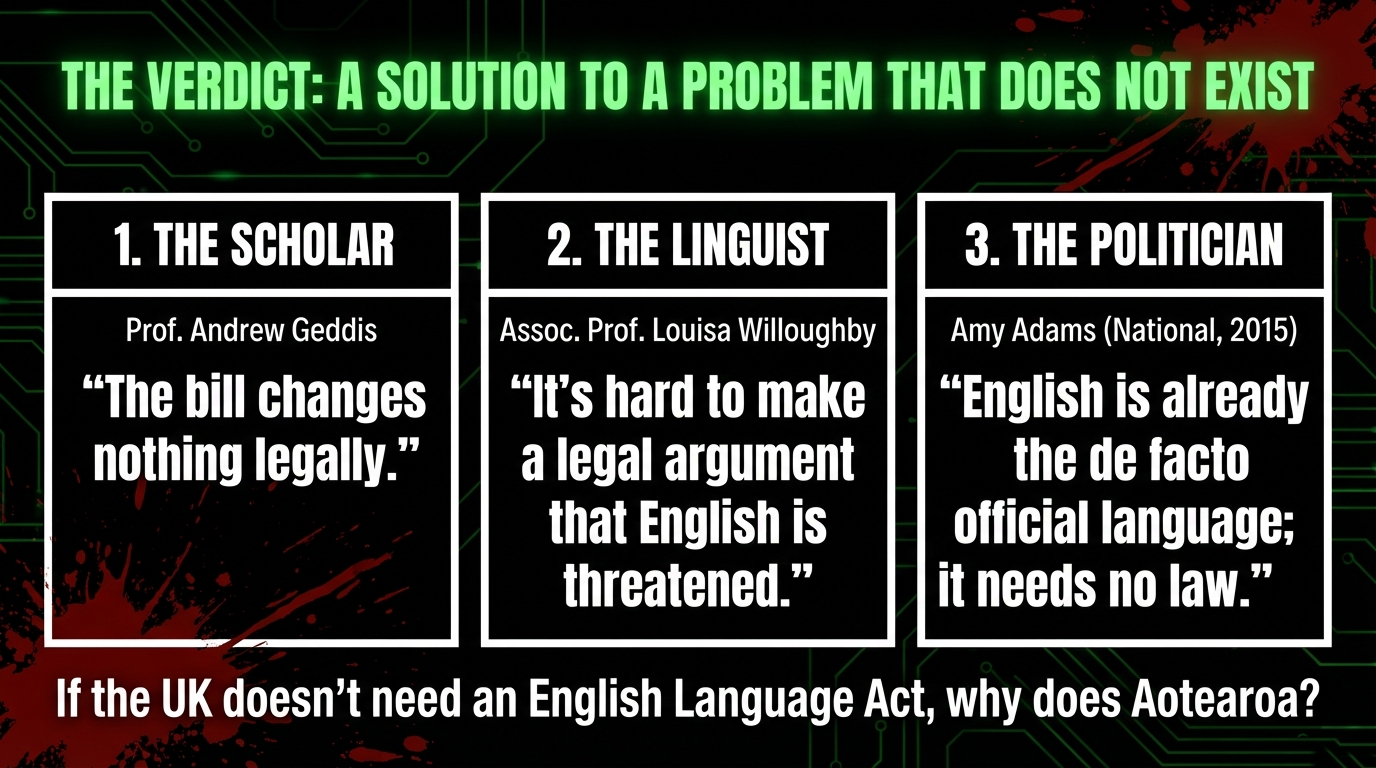
Quantified harm: As Professor Andrew Geddis of the University of Otago stated: legislating English as official would change "nothing" in practical terms, because English is already the de facto language of everything. Former Justice Minister Amy Adams confirmed in 2015 that English didn't need legal recognition to be official. Associate Professor Louisa Willoughby of Monash University observed: "People tend to legislate around language when they're worried about preserving that language" — and "it's hard to make a legal argument that English is threatened." The bill solves no problem. It creates a hierarchy. The harm is symbolic and structural: it signals to every Māori speaker, every kōhanga reo, every kura kaupapa, that the state considers their language officially subordinate.
Solution: Withdraw the bill. Redirect the parliamentary time wasted on this performative legislation toward genuine language equity: fund bilingual signage nationwide, mandate te reo competency in public service, expand Māori broadcasting, and increase funding for kōhanga reo, which face chronic underfunding while this government wastes oxygen debating the official status of a language spoken by 95.4% of the population.
Three Experts, Three Verdicts: The Bill Is Indefensible
| Expert | Position | Verdict |
|---|---|---|
| Professor Andrew Geddis, University of Otago Law | Leading constitutional scholar | The bill would change "nothing". Legislation is intended to solve problems: "What is the social problem this is addressing?" |
| Associate Professor Louisa Willoughby, Monash University Linguistics | Language policy specialist | "People tend to legislate around language when they're worried about preserving that language." English is not threatened in New Zealand. |
| Former Justice Minister Amy Adams (National, 2015) | The Government's own predecessor | English didn't need legal recognition; it was a "de facto official language by virtue of its widespread use." |
Three experts — a constitutional lawyer, a linguist, and a former National Party Justice Minister — agree: this bill is unnecessary. The Ministry of Justice itself advised the Government that legislating English as official is not necessary. The Government proceeded anyway, because this bill is not about language. It is about power.
What the Opposition Said — And Why It Matters
Green Party co-leader Chlöe Swarbrick named it with precision: "The English language is not under threat. We are literally speaking it and debating in it right now. This is a bill which is an answer to a problem that does not exist, a problem which this government is trying to create in the minds of people across this country, in place of the very real problems of the climate crisis, record homelessness, inequality and infrastructural decay."
She added the historical blade: "Te Reo Māori and New Zealand Sign Language had been fought for, while English was literally beaten into people."
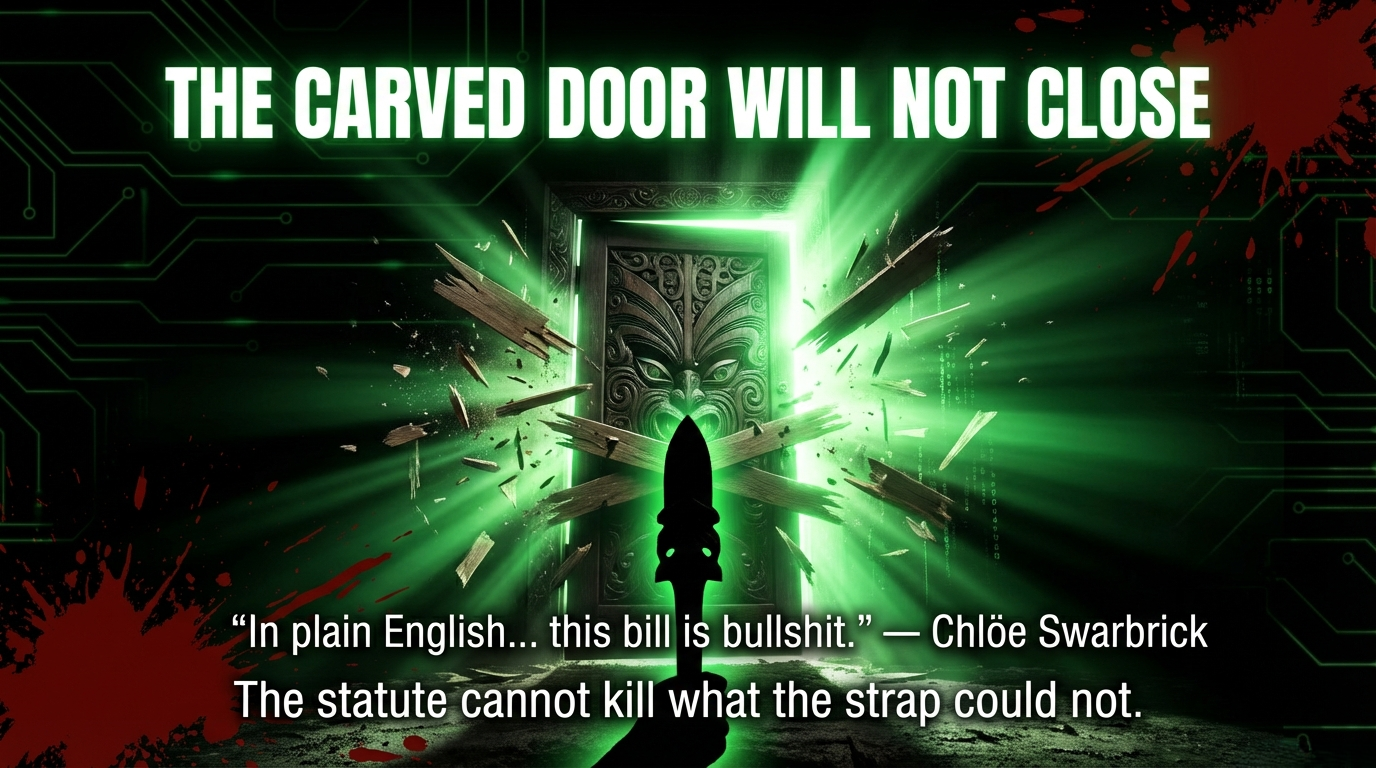
"In plain English, for all members of this government, this bill is bullshit, and you know it."
Te Pāti Māori MP Oriini Kaipara delivered her entire contribution in te reo Māori. This was not just a speech. It was an act of resistance — the carved door refusing to close.
Labour MP Dr Ayesha Verrall drew the direct line from Peters's 1990s "Asian invasion" rhetoric to this bill: "The English language can be used as a weapon, and that can lead to people having violent acts committed against them."
Duncan Webb delivered the constitutional kill shot: the United Kingdom itself has no law declaring English official. "I'm pretty sure they're comfortable with the fact that it's an official language of England and the United Kingdom." If the mother country of the English language does not need this law, neither does Aotearoa.
The Whakapapa of Erasure: This Government's War on Māori, Bill by Bill
This bill does not exist in isolation. The Māori Green Lantern has been tracking the whakapapa of this government's assault on Māori rights since it took office. Previous essays in this series include:
- The Colosseum of Kingsland — How the government overrides local democratic authority and Māori community voice for corporate extraction
- Eighteen Coins for Eighteen Souls — How the Crown uses the honours system to co-opt Māori resistance into colonial legitimacy
- David Seymour's War on Te Tiriti — Exposing how "equal rights" rhetoric masks the dismantling of Treaty protections
- Colonialism's Last Stand — Māori fight for Treaty rights in the face of systematic government backlash
- The Treaty Principles Bill: Unravelling Decades of Progress — How the bill represented a direct attack on Te Tiriti o Waitangi
- Heather Cox-Richardson — Te Taiaha o te Aroha — How America's most-read historian accidentally preached the gospel of Parihaka while this white supremacist government burns the original scripture
Each essay traces the same pattern: a government that uses parliamentary procedure to achieve what muskets and land courts once did — the systematic removal of Māori authority, language, and identity from public life.
The Hidden Connections
- Paul Goldsmith sponsors a bill elevating the language of colonisation while holding the portfolio of Treaty Negotiations — the man who said colonisation was "on balance" good for Māori is now the minister responsible for Treaty relationships and the sponsor of legislation that undermines them. The fox guards the henhouse.
- The bill arrives the same week Peters campaigns to abolish the Māori seats — this is not coincidence. This is a coordinated campaign: strip the language, strip the seats, strip the Treaty principles. Each piece enables the next. Once English is "officially" primary, arguing for Māori language rights in governance becomes "special treatment." Once the seats are gone, the voices demanding those rights are silenced.
- Peters attacked a Green MP's Rarotongan heritage days before this debate — Chris Hipkins accused Peters of "pure racism" after Peters interrupted Question Time to question why the minister was answering "someone who comes from Rarotonga to a country called New Zealand." The English language bill is the legislative expression of this sentiment: only English belongs here. The rest is foreign, even if it was here first.
- The bill's sponsor couldn't speak to it — the bill's champion compared te reo to Soviet chandeliers — Goldsmith's absence from the speeches tells you this is NZ First's demand, not National's priority. Peters's Soviet anecdote tells you this is not about language — it is about Peters's career-long project of positioning te reo Māori as bureaucratic overreach by "out of touch" elites, rather than the living taonga of an Indigenous people.
- The coalition agreement requires English-primary naming across all public services — this bill does not exist in isolation. Combined with the naming policy already in effect, the MACA changes, the Treaty Principles Bill, and the curriculum reforms, it forms a comprehensive programme of linguistic and cultural erasure that echoes the 1880 Native Schools Code — the same code that mandated English-only education and punished Māori children for speaking their own language.
Implications: The Harm Is Structural, Measurable, and Intentional
The harm this bill causes is not symbolic — it is structural. It tells every institution in New Zealand that English has been elevated by Parliament. It tells every public servant that te reo is officially secondary. It tells every school that the language the Crown nearly exterminated now sits below the language the Crown imposed.

It tells every Māori child that the language beaten out of their great-grandparents is still, in 2026, not equal to the language of the beaters.
The Waitangi Tribunal found in WAI 11 that the Crown had a duty to actively protect te reo Māori as a taonga. Not to tolerate it. Not to "not affect" it while elevating English above it. To actively protect it. This bill does the opposite. It is a breach of Te Tiriti, and every MP who votes for it knows it.
The Taiaha Is Raised
Kia maumahara tātou.
Remember:
In 1867, the Crown established Native Schools to replace te reo Māori with English.
In 1880, the Crown codified the suppression into the Native Schools Code.
In 1897, the Inspector of Native Schools instructed teachers to ban te reo even in playgrounds.
In 1930, the Director of Education blocked te reo from the curriculum, declaring "the natural abandonment of the native tongue involves no loss to the Māori."
In 2026, Winston Peters stands in Parliament and declares that English should be the "primary and official language" while fewer than 5% of New Zealanders can speak te reo.
The weapon changed. The war never stopped.
This bill is the strap. Parliament is the schoolyard. And every Māori child in this country is watching.
We call it what it is: colonial linguistic violence, wearing a parliamentary cravat.
The taiaha is raised, whānau. The Ring glows. The carved door will not close.
Kia kaha. Kia mau ki te reo. Kia manawanui.
Be strong. Hold fast to the language. Be resolute.

Ivor Jones The Māori Green Lantern Fighting Misinformation And Disinformation From The Far Right
Unverifiable claims: None identified. All claims verified against primary sources as listed. The Ministry of Justice's specific wording advising against the bill was reported by RNZ and 1News but the original document was not independently verified by this author beyond media reports.