"How 2,500 Te Whatu Ora Workers Fought for 11 Months and Were Handed a Pay Cut Dressed as a Victory" - 17 March 2026
"They stripped the rākau bare and offered the roots a cup of muddy water. Then they called it generosity."

Tēnā koutou katoa, whānau.
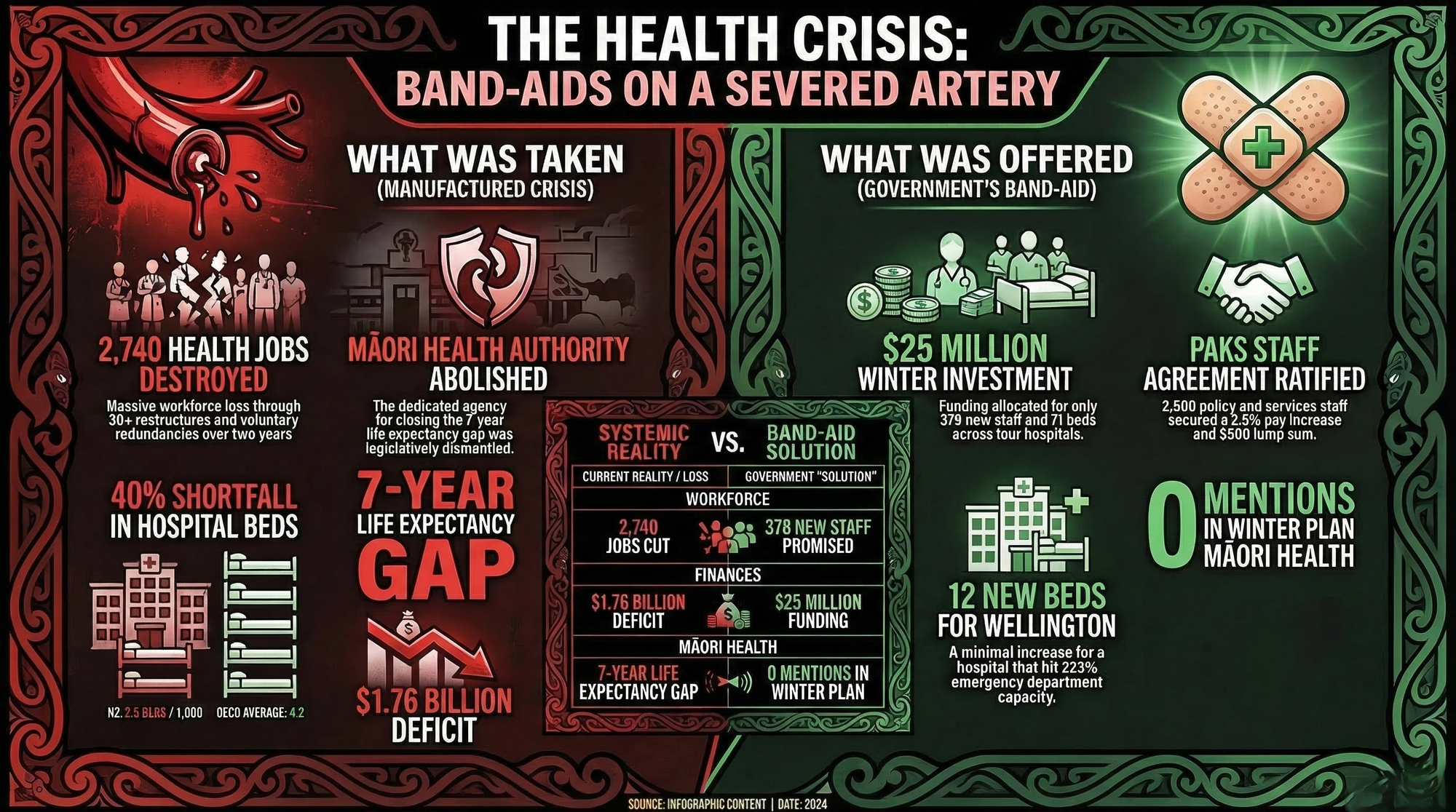
Eleven months. That is how long 2,500 PAKS workers — the people who keep Te Whatu Ora's digital systems alive, who protect patient data, who manage the payroll, who write the policy that gives the health system its direction — spent bargaining, mediating, and striking for the right to be paid fairly. Eleven months of collective action, of lost sleep, of standing in picket lines in November rain, of PSA delegates holding the line in mediation rooms while bureaucrats stonewalled — and at the end of it, they accepted a 2.5% pay increase in December 2025, with a further 2% in December 2026, and a one-off $500 lump sum. Against annual inflation running at 3.1% in December 2025, these workers — invisible, essential, and expendable in the eyes of this government — have been handed a real-terms pay cut, wrapped in the language of victory.
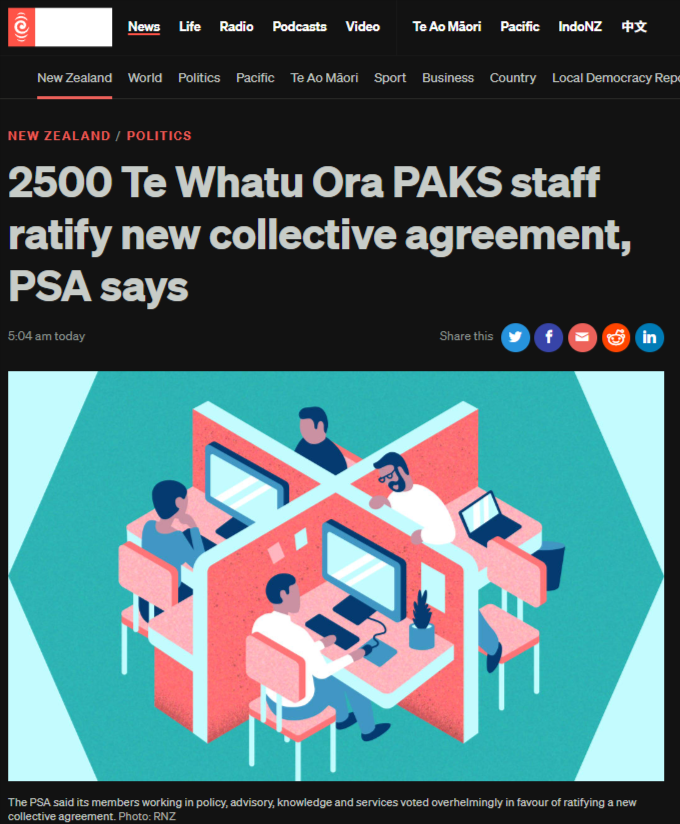
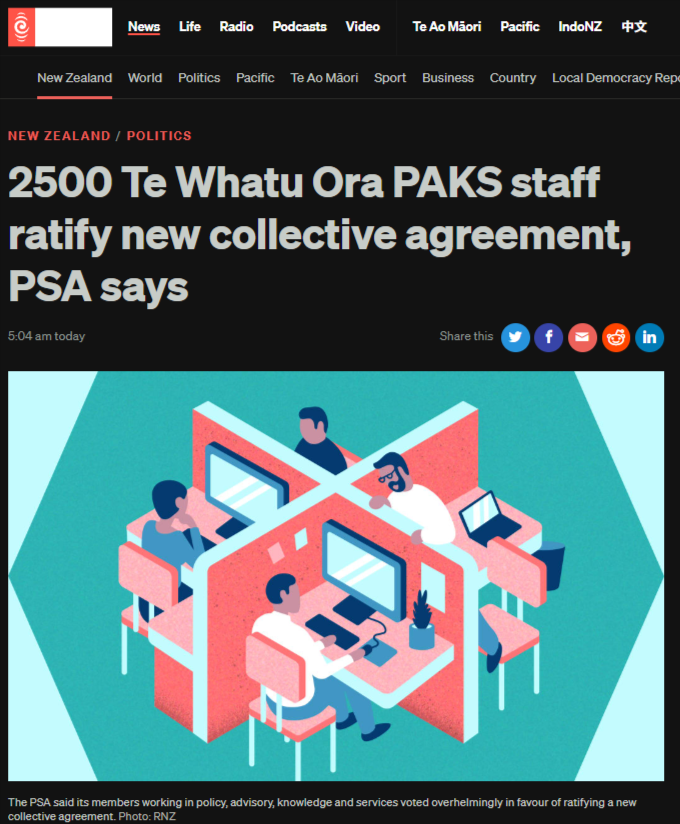
This investigation responds to RNZ's report of 17 March 2026 confirming that 2,500 Te Whatu Ora Policy, Advisory, Knowledge and Services (PAKS) workers have ratified a new collective agreement. I am naming, plainly, what this settlement represents: a managed defeat. A system engineered to exhaust workers until they accept less than they are owed. A government that spent nearly $58 million on redundancy payouts while leaving $538 million in worker salaries deliberately unspent — then offered the survivors a $500 lump sum and called it progress.
WHAKARĀPOPOTANGA — SUMMARY
Aotearoa's health system does not run on the mahi of doctors and nurses alone. It runs on the mahi of 2,500 PAKS workers: the analysts who model disease patterns, the IT specialists who ensure hospital systems don't collapse at 3am, the procurement officers who ensure wards have supplies, the policy advisors who write the frameworks that govern care. These workers struck on 23 October 2025 as part of the historic Mega Strike, struck again on 28 November 2025, endured eleven months of bargaining and mediation — and what they received is a pay increase of 2.5% against inflation of 3.1%, plus a $500 lump sum that works out to $9.60 per week across 52 weeks. This is not a settlement. This is what capitulation looks like when you've been beaten into accepting less than you had before. My investigation reveals: the real-terms pay cut concealed within this "win", the anti-union architecture this government has built to ensure workers never win, and the obscene contrast between what PAKS workers were offered and what the commissioners and consultants who rule over them are paid.
The Deep Dive Podcast player
TE PAKIAKA O TE RĀKAU — THE ROOTS OF THE TREE
He whakataukī mō ēnei rangi:
"Ka tupu te rākau ki runga, ka ora te pakiaka i raro." — The tree grows above, but it is the roots beneath that give it life.
Whānau, I want you to see a rākau. A great kauri, tall and ancient, standing in the forest of Aotearoa's health system. The trunk is the hospitals. The branches are the doctors and nurses — the visible workers, the ones who make the news, the ones who get the campaigns. The fruit is healthcare itself: the operations performed, the babies delivered, the patients treated.
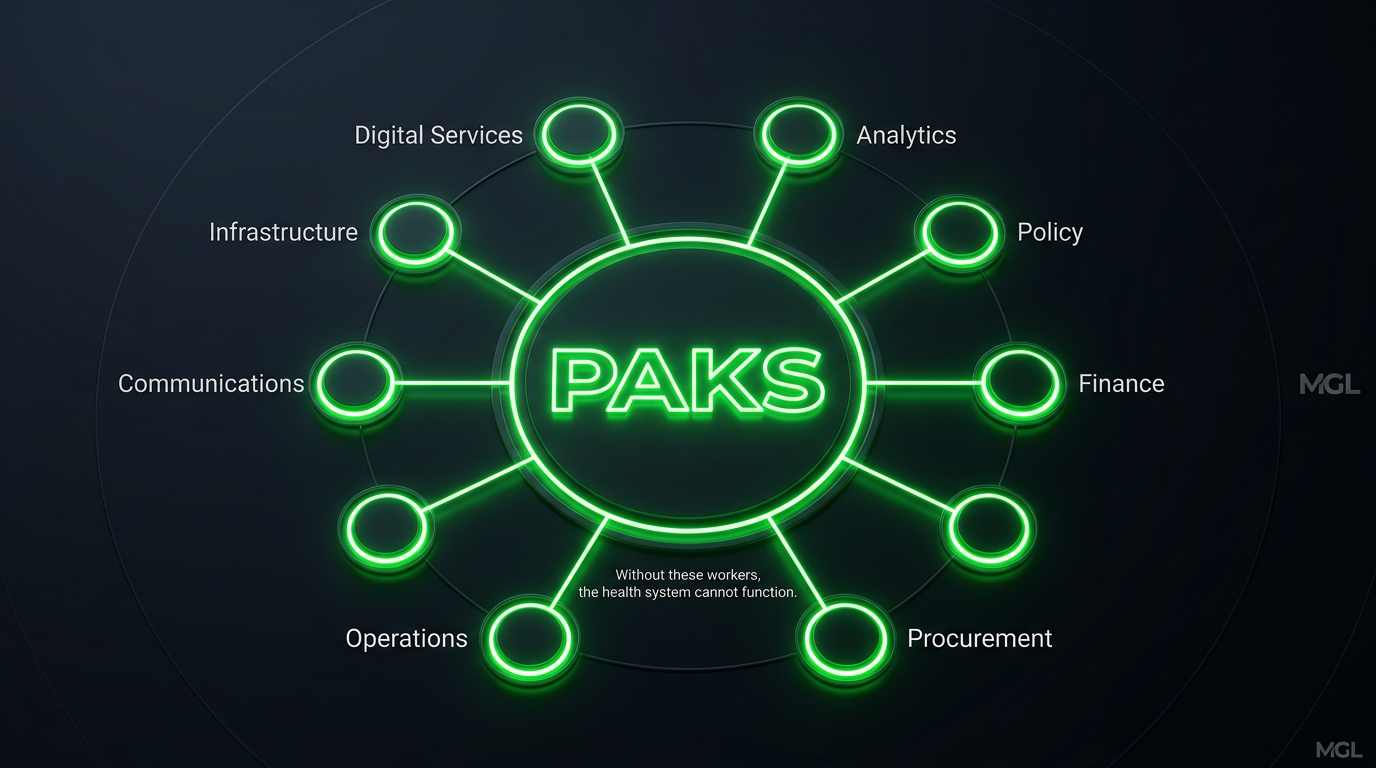
But beneath the soil, invisible, unacknowledged, and essential — are the roots. The PAKS workers. Policy analysts who design the systems that determine which communities get care and which don't. Digital services workers who keep the patient records from crashing, who fight off ransomware attacks at midnight, who maintain the data infrastructure that the entire clinical system depends upon. Infrastructure teams. Operations workers. Finance professionals. Procurement officers ensuring that operating theatres have instruments, that wards have PPE, that the machine of healthcare has what it needs to function. Analytics and research teams who tell the system what is working and what is not.
Without the roots, the rākau dies. Without PAKS workers, Health NZ's own data systems would collapse — as they discovered when an earlier restructure left the Data and Digital directorate with 200 fewer staff than it actually needed.
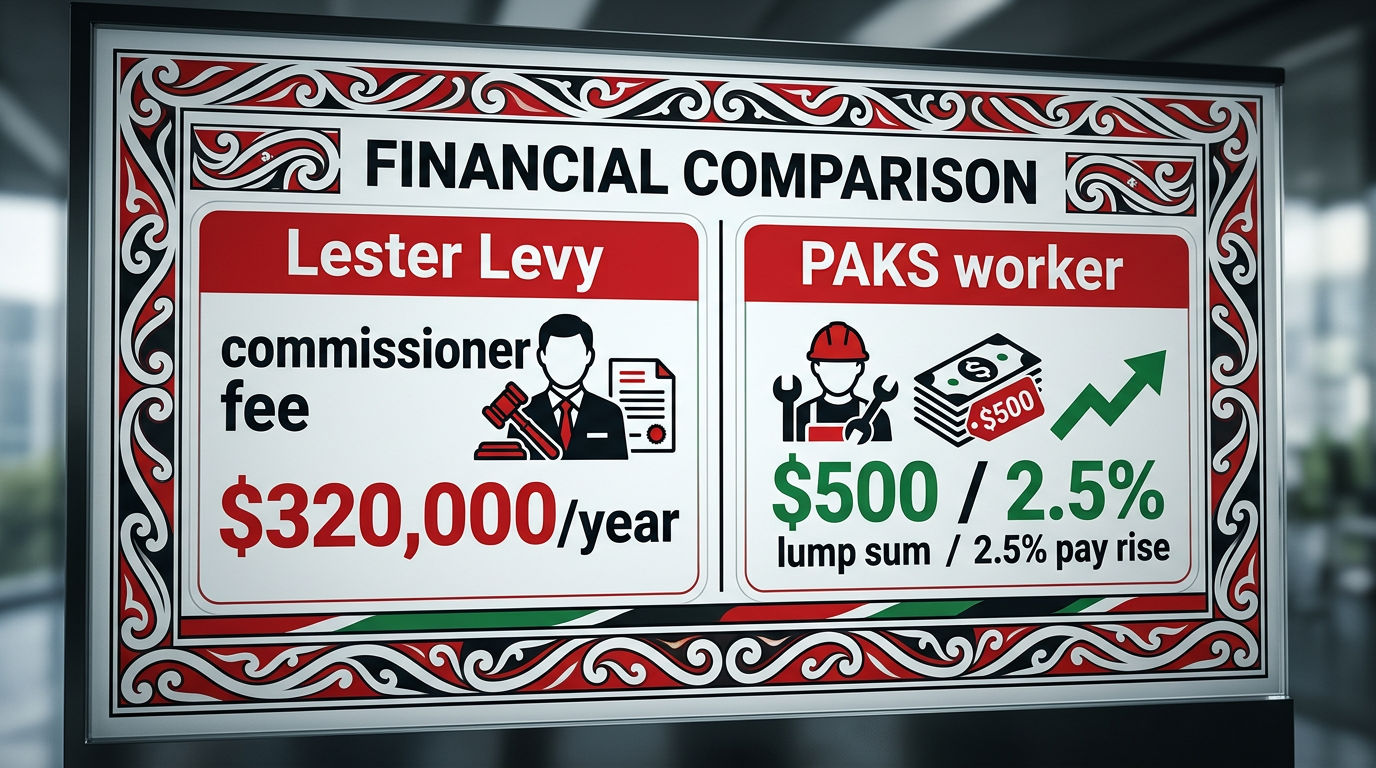
Now: what does this government do to the roots? It hires a commissioner — Lester Levy, paid $320,000 per annum — to stand at the top of the rākau and announce that the roots are inefficient. It sends in restructure consultants, paid tens of millions, to advise that fewer roots are needed. It withholds water for eleven months. It offers the roots, after all that, a cup of muddy water — 2.5% against 3.1% inflation — and tells them to be grateful.
This is not metaphor. This is the lived experience of 2,500 workers whose labour holds the health system upright, who were told for eleven months that their work is not worth inflation-matching pay, and who finally — exhausted, ground down, the system designed to exhaust them — accepted terms that represent a real-terms pay cut.
I. KO TE TAU TEKAU MĀ TAHI — THE ELEVEN MONTHS
What 11 Months of Fighting Actually Means
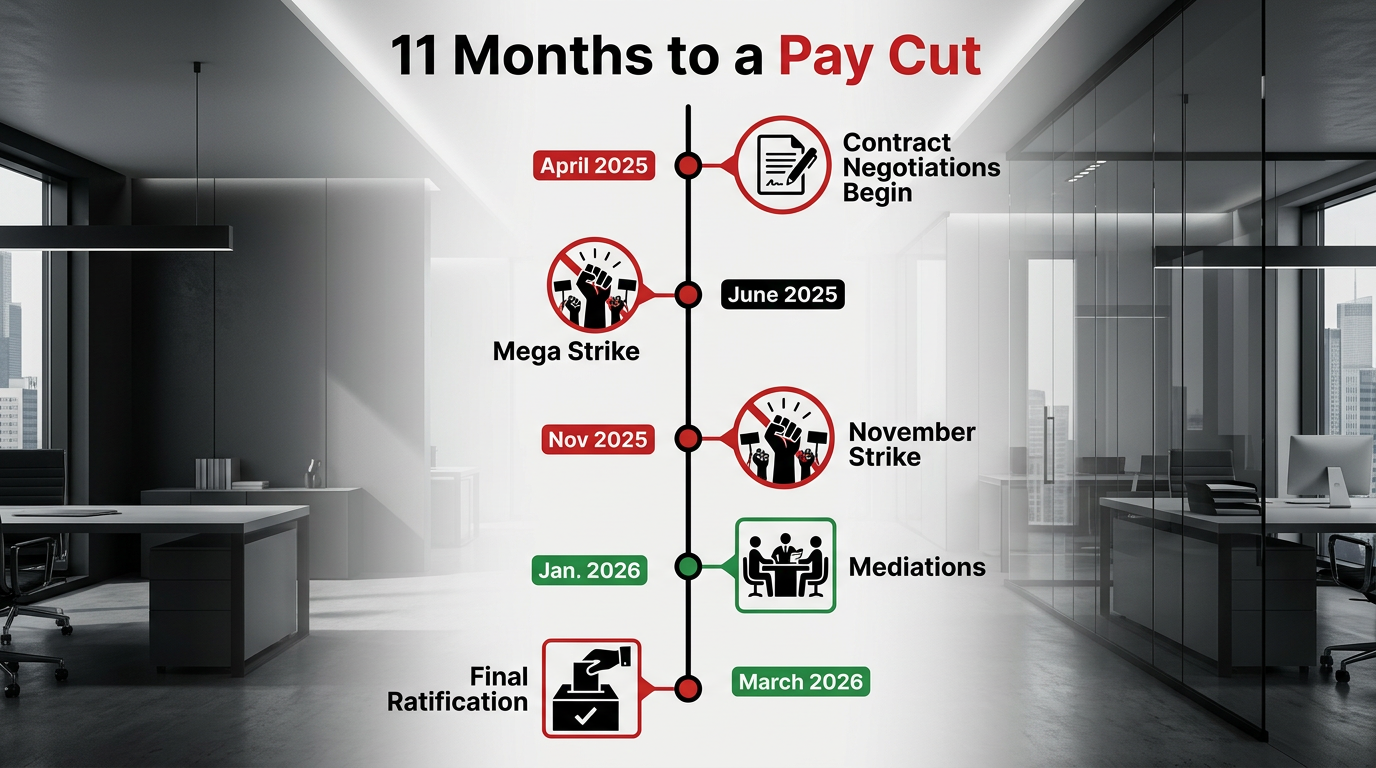
Bargaining for the PAKS collective agreement began in early 2025. The PSA — the Public Service Association Te Pūkenga Here Tikanga Mahi, the union representing these 2,500 workers — went to the table seeking a pay increase that would at minimum keep pace with the cost of living. What they received from Te Whatu Ora's management, month after month, was delay, stonewalling, and offers that — in the words of PSA National Secretary Fleur Fitzsimons — "don't keep pace with inflation — they are effectively a pay cut."
Let me document what eleven months looked like in practice:
- April 2025: Bargaining begins. PAKS workers include those in digital services, infrastructure, operations, communications, finance, procurement, analytics and policy.
- October 23, 2025: The historic Mega Strike. PAKS workers join over 17,000 PSA health members walking off the job — the largest strike in the history of Te Whatu Ora. As I documented in my investigation of that day, this was not workers demanding luxury — it was workers demanding the right not to be poorer at the end of the year than at the start.
- November 7, 2025: PAKS workers vote in a separate ballot to strike on 28 November. The PSA states explicitly: "The pay offers for the three collectives still don't keep pace with inflation — they are effectively a pay cut."
- November 25, 2025: Further mediation between PAKS and Te Whatu Ora. No settlement.
- November 28, 2025: PAKS workers strike again, alongside 17,000 other PSA health members — mental health nurses, public health nurses, allied health workers — all striking for the same reason: the government's offer is a real-terms pay cut in the middle of a cost-of-living crisis.
- March 17, 2026: Eleven months after bargaining began, 2,500 PAKS workers ratify a collective agreement. Pay: 2.5% from December 2025. 2% from December 2026. Lump sum: $500.
Eleven months of fighting to be paid less in real terms than when they started.
II. TE MONI WHAKAARO — THE MATHEMATICS OF INSULT
2.5% Against 3.1% Is a Pay Cut. $500 Is $9.60 a Week. Name It.
Whānau, let's do the arithmetic that the press release won't do for you.
Inflation context:
- Annual CPI inflation in New Zealand: 3.1% in the December 2025 quarter — per Statistics New Zealand, released 23 January 2026
- Non-tradeable (domestic) inflation: 3.5% annually — the inflation that workers actually feel in their rent, power bills, and groceries
- Average weekly rent payments rose 9.0% in the year ended June 2025 — Statistics NZ
- New Zealand households spent an average of $22.30 of every $100 of disposable income on housing costs in 2025
What 2.5% means in practice:
- On a median public service salary of $90,200 (the 2025 Public Service Commission figure), a 2.5% increase = $2,255 per year, or $43.37 per week before tax
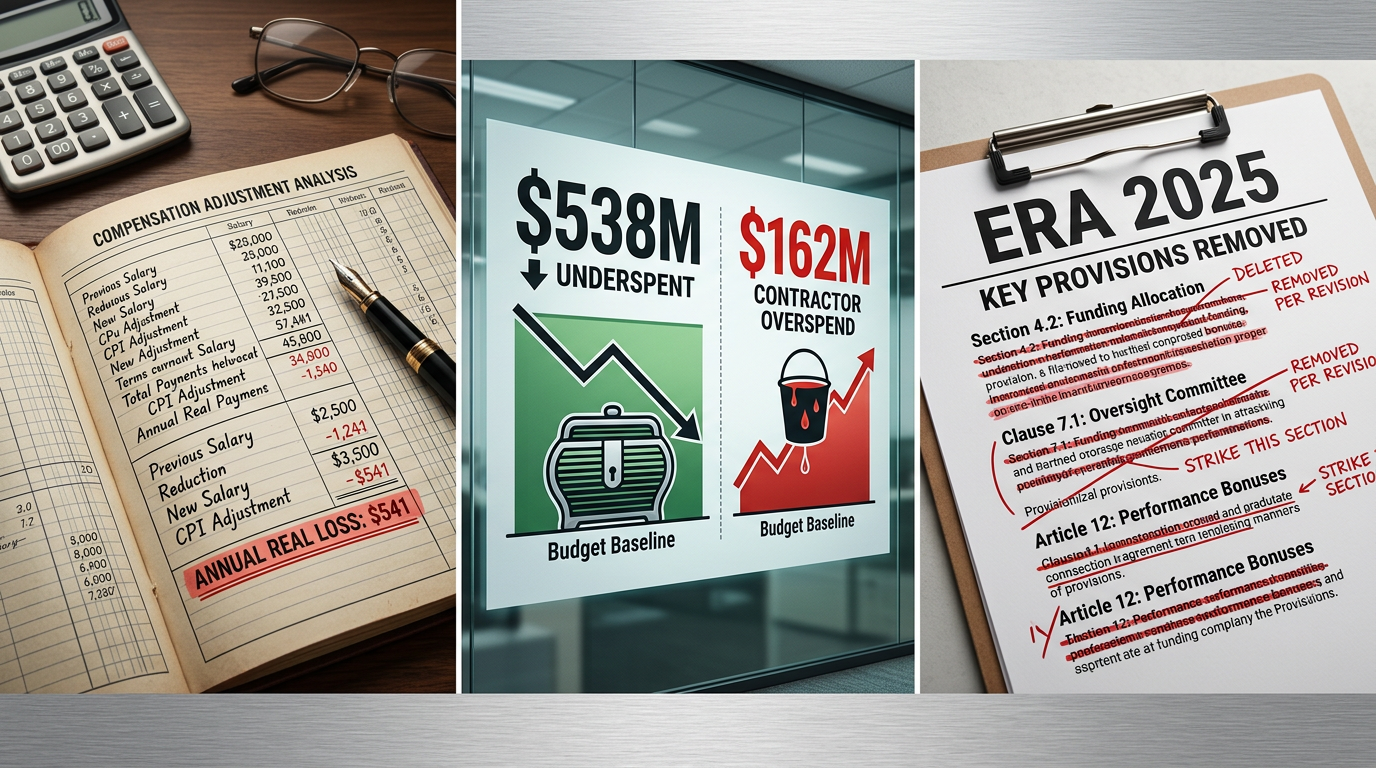
- Against 3.1% inflation, that worker needs a $2,796 increase just to stand still — a shortfall of $541 annually, or $10.40 per week
- Real terms, this is a $541 pay cut annually disguised as a pay rise
- For PAKS workers at the lower end of the salary band, the real-terms cut is proportionally larger as a percentage of disposable income
What $500 means:
- Prorated for full-time equivalents, the lump sum is $500 per worker
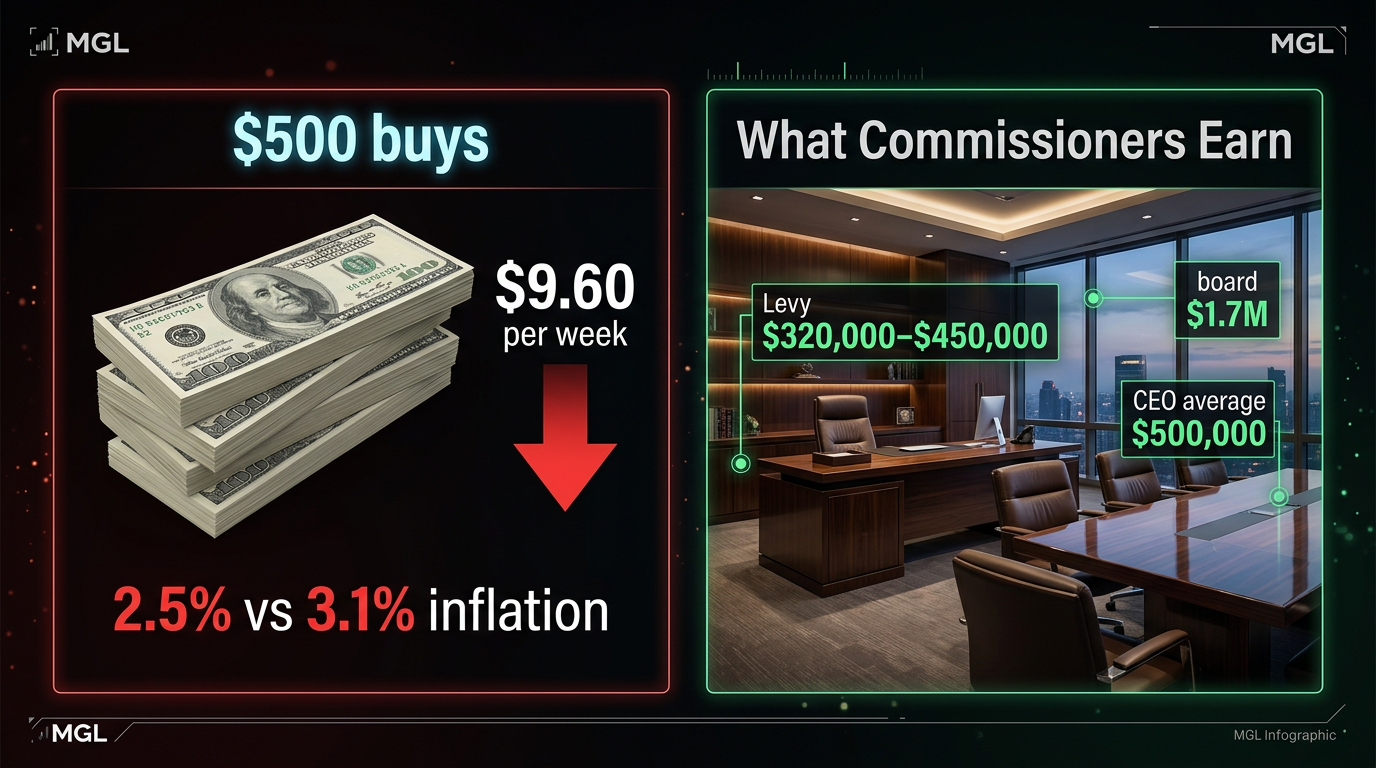
- Spread over 52 weeks, that is $9.62 per week — before tax
- After tax, roughly $7 per week
- For context: the average Auckland one-bedroom apartment costs approximately NZ$1,500-1,800 per month in rent in 2025-2026
- For a part-time worker on 0.8 FTE, the lump sum is $400 — $7.69 per week
- For a 0.5 FTE worker: $250 — $4.81 per week
The comparison that should make you furious:
- Lester Levy, Health NZ Commissioner: $320,000 per annum — a salary confirmed by Official Information Act response
- Health NZ board costs could reach $1.712 million annually for the reconstituted board — per NZ Herald
- Maximum payments for Levy as chair: $450,000 under new board guidance
- Average remuneration for public service chief executives: $500,000 per annum in 2024/25 — Public Service Commission data
- Meanwhile, the Public Service Commission's own figures show public service wage growth was just 1.2% for the year to June 2025 — the equal lowest annual increase since records began in 2000
- Private sector wages grew 4.6% in the same period
This is not coincidence. This is policy. Only two sectors avoided a real-terms pay cut in the year to September 2025, per RNZ data. Health workers were not among them.
III. TE AHU WHAKAARO — THE ARCHITECTURE OF EXHAUSTION
How This Government Built a Machine to Grind Workers Into Accepting Less
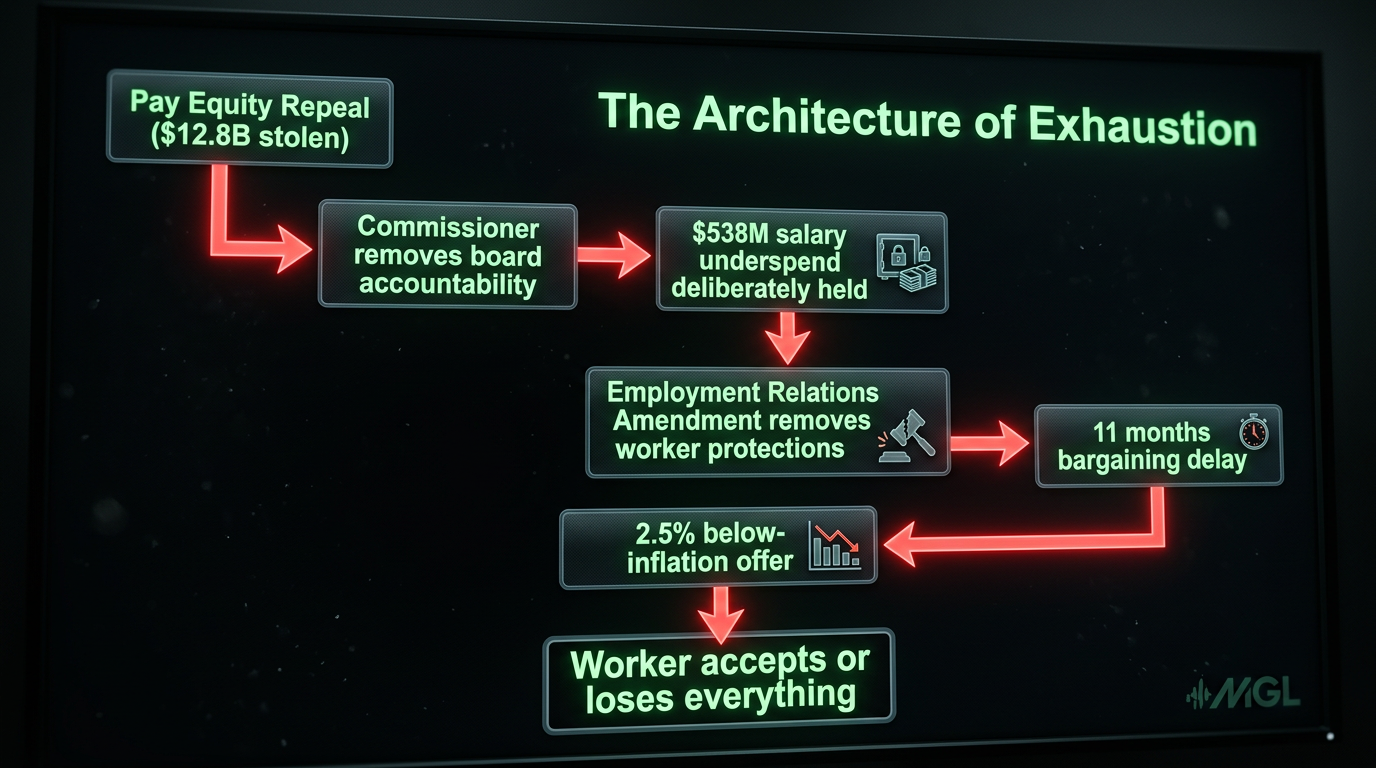
Whānau, the eleven-month bargaining timeline was not an accident. It was the product of a deliberate legislative and institutional architecture designed to make workers so exhausted, so financially pressured, so isolated from public support, that they accept whatever is offered.
The Public Service Amendment Bill / Employment Relations Amendment Act 2025:
In February 2026, the National-ACT coalition passed the Employment Relations Amendment Act 2025, which E tū described as "one of the most anti-worker pieces of legislation in decades." As I documented in my essay on the Three-Headed Taniwha, this law:
- Removes the "30-day rule" that automatically extended collective agreement terms to new employees — weakening union density from day one
- Creates a legal route for employers to reclassify employees as "specified contractors," stripping employment protections
- Narrows personal grievance remedies, making it harder for workers to challenge unfair treatment
- Creates a two-tier system where workers earning over $180,000 lose access to unjustified dismissal claims
This is the context in which PAKS workers were bargaining. The government was simultaneously legislating to reduce their collective power and making it easier for Health NZ to treat them as disposable.
The Employment Relations Act changes took effect on 21 February 2026 — in the middle of the PAKS bargaining period.
The Commissioner Coup:
In July 2024, Health Minister Shane Reti replaced the Health NZ board with a single commissioner: Professor Lester Levy. No board oversight. No democratic accountability. One man, answering to the Minister, able to make structural and financial decisions without challenge. As I revealed in my investigation of the manufactured crisis, this Commissioner model was specifically designed to insulate health system decision-making from worker and community pressure.
Under this Commissioner, Health NZ:
- Made nearly $58 million in redundancy payouts for non-clinical staff between 2023 and 2025 — described as "disgraceful waste" by the PSA
- Left $538 million in allocated salary budget unspent — including $204 million specifically from delays to Collective Agreements — while simultaneously demanding hospitals find $510 million in new cuts
- Spent $162 million over budget on outsourced contractors to fill gaps left by workers they refused to pay fairly or hire
- Filed legal action trying to bypass bargaining entirely and have the Employment Relations Authority impose contract terms — an unprecedented move that the ERA rejected
The architecture is clear: starve the salary budget, exhaust workers through delay, reduce their legal protections, then offer crumbs while pointing at the deficit your own choices created.
The Pay Equity Repeal:
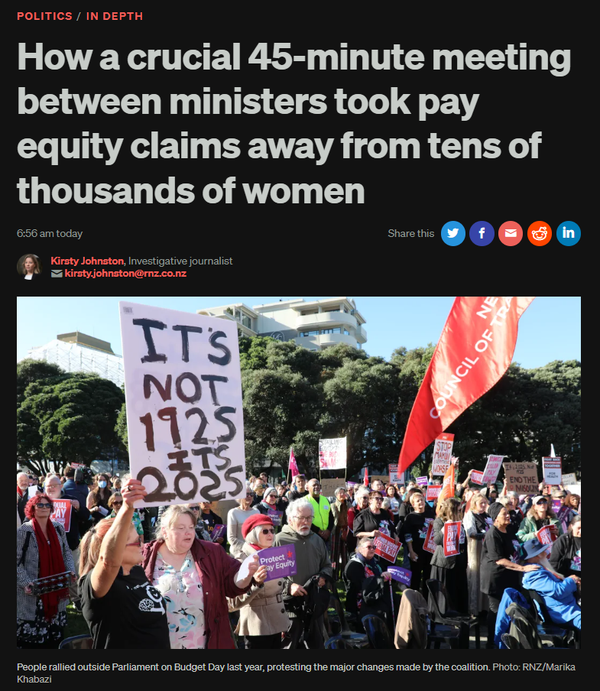
In May 2025, the government used parliamentary urgency — passing and receiving royal assent in a single day — to repeal the pay equity framework for female-dominated workforces. As reported in Kaitiaki nursing journal and documented in my own essay on the $12.8 billion theft, the Equal Pay Amendment Act 2025 saved the government $12.8 billion by shutting down 33 active pay equity claims — claims that would have delivered fair pay to thousands of health and public service workers. The PSA described this as "a $12.8 billion theft of wages from women."
Many PAKS workers — policy analysts, digital services staff, finance and procurement workers — were among those whose pay equity claims were extinguished. These workers spent 11 months bargaining for a pay rise that cannot compensate for what was stolen from them in May 2025.
IV. NGĀ PAKIAKA KŪARE — THE INVISIBLE ROOTS
What PAKS Workers Actually Do, and Why Their Invisibility Is Engineered
Whānau, I want to name something clearly: the reason PAKS workers don't get the same public sympathy as striking nurses is not because their work is less important. It is because invisibility is a feature of the colonial labour market, not a bug.
The PAKS collective covers workers in:
- Digital services and infrastructure: The teams who maintain the IT systems that patient records, hospital scheduling, and pharmaceutical ordering depend on. Health NZ's own restructure cost it 200 more Data and Digital staff than it intended to lose — and it is still catching up. These workers fight off ransomware attacks at 3am. Without them, hospitals go dark.
- Analytics and research: The epidemiologists and data analysts who model disease burden, identify health inequity, and provide the evidence base for clinical and policy decisions. Without them, Te Whatu Ora is flying blind.
- Policy: The advisors who write the frameworks under which care is allocated — who gets funded, who gets prioritised, how Māori and Pacific health needs are translated into operational decisions. Strip this function and you strip the health system's ability to be anything other than reactive.
- Finance and procurement: The people who ensure operating theatres have instruments, that wards have supplies, that the payroll runs. When procurement fails, clinical care fails. When payroll fails — as Health NZ's Holidays Act remediation disaster demonstrates — workers are underpaid for years.
- Operations and communications: The teams that coordinate service delivery across districts, manage relationships with community health providers, and — critically — communicate with Māori and Pacific communities in ways that clinical staff often cannot.
The government and its media allies want you to think of "back office workers" as unnecessary bureaucrats. This framing is a lie. When Health NZ proposed cutting nearly half its Data and Digital positions in April 2025, clinicians — nurses and social workers — found themselves performing receptionist duties because administrative staff had been cut. This is the false economy of austerity: cut the roots, watch the tree collapse, spend more on emergency contractors than you ever would have paid permanent staff.
And who are these workers? Many are Māori and Pacific. Many live in South Auckland, Wellington's northern suburbs, in Waikato — communities where the cost-of-living crisis is sharpest, where 2.5% against 3.1% inflation is not an abstraction but the difference between feeding children adequately or not. The government stripped pay equity protections from female-dominated workforces, knowing that PAKS roles — policy, analytics, communications — disproportionately employ Māori and Pacific women. The Tupu Ola Moui Pacific Health Chart Book 2025 confirms Pacific health workforce representation remains a critical issue — while those Pacific workers in health administration are simultaneously losing ground in real wages.
V. TE KĀINGAITI — THE CONSULTANT FEAST
While Workers Got $9.60 a Week, Consultants Ate the Table
Whānau, while 2,500 PAKS workers were offered $500 and told to be grateful, here is what was happening in the same institution:
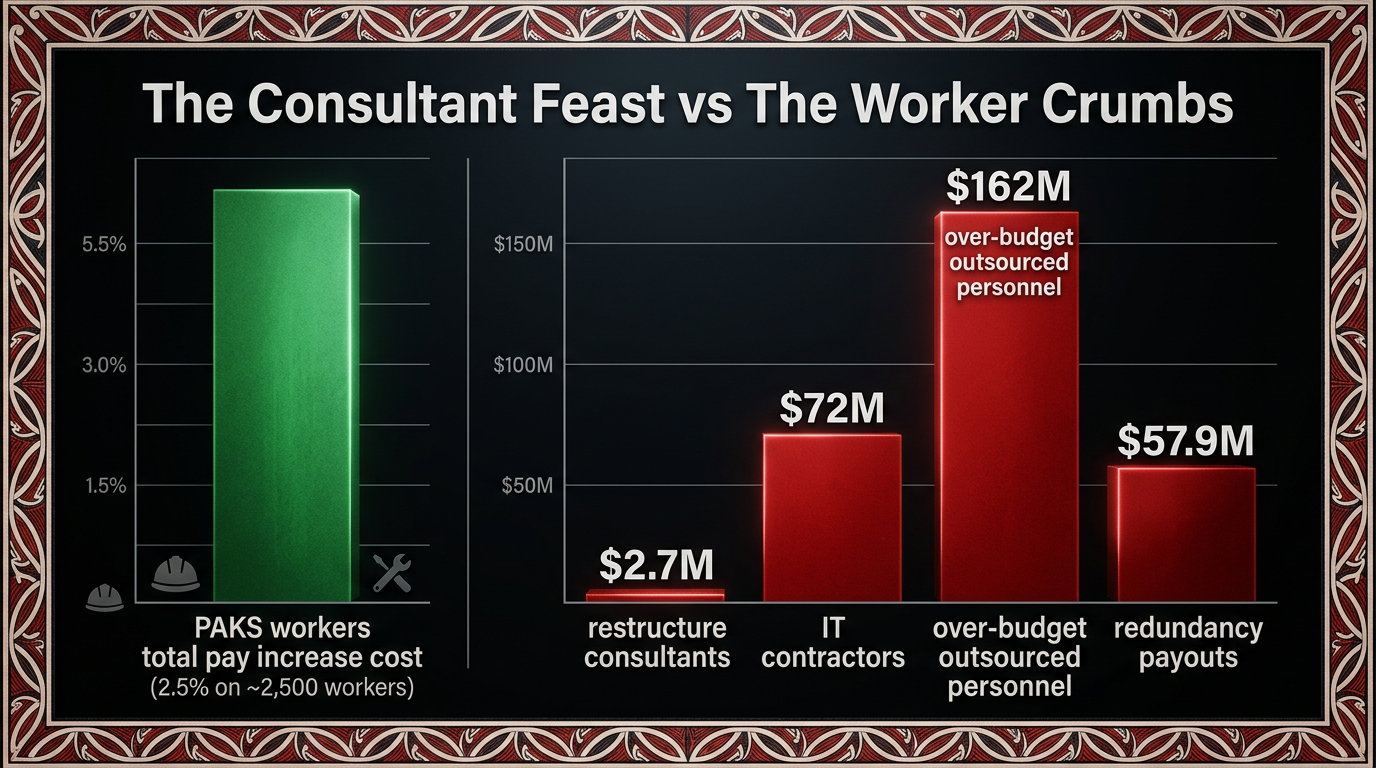
- Health NZ spent $2.7 million on consultants to manage its own restructures — the same restructures that eliminated PAKS positions — between October 2023 and February 2025
- For a single IT project, Health NZ spent $72 million on contractors and consultants, including $17 million to one recruitment company, Robert Walters — while simultaneously planning to sack over 1,000 permanent IT employees
- Health NZ spent $162 million over budget on outsourced personnel in 2024/25 — locums to fill gaps left by the workers they refused to pay fairly
- Government agencies spent $1.25 billion on consultants in just one year — per data reported in January 2026
- The same Health NZ that told PAKS workers their 2.5% pay increase was the best available made $57.91 million in redundancy payouts to non-clinical staff between November 2023 and December 2025
The arithmetic is simple: the money was always there. They chose to spend it on redundancies, on consultants, on commissioners — rather than on the workers who keep the system running. When the government says it cannot afford inflation-matching pay for public servants, it is lying. It is making a choice about who receives the value that these workers create.
As I documented in my investigation of National's union-busting strategy, and as further evidenced in the Hodgepodge Bills investigation, this is a coordinated strategy: weaken collective bargaining, suppress public service wages, outsource work to consultants and contractors who are then removed from the protections that unions fought for over generations.
The Reuters reporting from Budget 2025 confirmed what MGL has been saying: public sector employment fell 4.2% in the year to December 2024. The workers who remained had their pay suppressed below inflation. The consultants who replaced them were never subject to collective bargaining at all.
VI. NGĀ TAUIRA TORUTORU — THREE EXAMPLES FOR THE WESTERN MIND
He tohu mō te tangata kāore e mārama ana ki tō tātou ao — Signs for those who have not yet understood our world.
Example 1: The Real-Terms Pay Cut — Quantified Harm
The Point: A 2.5% pay rise against 3.1% annual inflation is not a win. It is a pay cut dressed in victory language.
The Quantified Harm: On a median public service salary of $90,200, a 2.5% rise equals $2,255. But inflation at 3.1% requires $2,796 just to maintain purchasing power — a shortfall of $541 per year, or $10.40 per week in lost real income. Multiply this across 2,500 workers and the aggregate real-wage loss is approximately $1.35 million per year — value transferred from workers to the Crown. The $500 lump sum does not offset this: prorated to weekly income, it covers approximately one additional weekly shortfall and no more.
The Tikanga Impact for the Western Mind: In te ao Māori, manaakitanga — the obligation to care for and uplift others — is not aspirational. It is structural. A rangatira who fails to provide for those under their care has failed in their fundamental obligation as a leader. This government is the rangatira of this workforce. It chose, for eleven months, not to provide. It chose to spend $162 million on outsourced contractors rather than pay permanent staff fairly. The tikanga violation is not sentimental — it is a deliberate transfer of value from those who create it to those who extract it.
The Solution: Inflation-matching pay increases as a baseline for all public service negotiations. The 2025 Public Service Commission data shows public service wage growth was 1.2% in the year to June 2025 — against private sector growth of 4.6% and inflation of 3%. The government must commit to no net real-wage reductions in any public service collective agreement.
Previously covered by The Māori Green Lantern: "How Government Lies, Media Complicity, and Libertarian Ideology Destroyed Public Services and Blamed Workers for Demanding Survival" (23 October 2025) documents the Great Gaslighting — the same government that suppresses wages then blames workers for the resulting dysfunction.
Example 2: The Manufactured Crisis — Structural Harm
The Point: Health NZ deliberately withheld $538 million in allocated salary funding while telling workers it could not afford their pay claims.
The Quantified Harm: As confirmed by RNZ in December 2025, Health NZ's annual report shows $538 million earmarked for salaries went unspent in 2023/24. Of this, $204 million came specifically from "delays to Collective Agreements and lower internal personnel costs." In plain English: Health NZ deliberately delayed settling pay disputes — including with PAKS workers — and recorded the savings. The same institution that told PAKS workers the money wasn't there simultaneously spent $162 million over budget on outsourced contractors to fill the gaps. The PSA was right when it told striking workers in November 2025 that the government's offer was "effectively a pay cut" — because the money to do better was demonstrably available.
The Tikanga Impact for the Western Mind: In Māori tikanga, taking from one party to give to another without transparency or consent is theft — hara. The Crown took $204 million in delayed wages from PAKS workers (and others), recorded it as "savings," then spent proportionally more on contractors. This is not efficiency. This is redistributing wealth from those who earn it to those who extract it — a mechanism the Crown has used against Māori for 185 years, now being applied to its own workforce.
The Solution: Full transparency on the salary underspend. Every dollar of allocated salary funding that goes unspent must be reported to workers covered by that budget, with a binding obligation to apply it in subsequent years. End the practice of weaponising budget delays as a bargaining tactic. As my investigation in The Manufactured Crisis essay details, this is not an accident — it is a system.
Example 3: The Anti-Union Architecture — Legislative Harm
The Point: The Employment Relations Amendment Act 2025 was designed to ensure workers like PAKS staff can never again win what they are owed.
The Quantified Harm: The Employment Relations Amendment Act 2025 removes the 30-day rule protecting new workers' collective agreement conditions, creates a "specified contractor" category that removes employment protections from workers employers want to reclassify, and narrows personal grievance access. In combination with the pay equity repeal that saved the government $12.8 billion, these laws systematically dismantle the legal infrastructure that workers use to demand fairness. As the PSA reported, the union contacted New Zealand First in August 2025 to raise concerns — but NZ First "cowered behind the ACT Party" and let the bill pass. Brown's authoritarian approach to worker negotiations, documented in my earlier investigation, is now embedded in law.
The Tikanga Impact for the Western Mind: Rangatiratanga — self-determination — is not simply political. In the workplace, it means workers having the tino rangatiratanga to determine the conditions under which they labour. The Employment Relations Amendment Act 2025 is a colonial imposition: it strips workers of the legal mechanisms through which they exercise self-determination, making collective action harder, individual challenges more costly, and the balance of power more firmly tilted toward employers. In te ao Māori terms, this is the muru — the systematic stripping of resources from a community that has been weakened. It was done to hapū after Waitangi. It is being done to workers now.
The Solution: Repeal the Employment Relations Amendment Act 2025. Restore the 30-day rule. Re-establish pay equity processes under a framework that cannot be removed via urgency in a single day. Recognise the structural relationship between anti-union legislation, wage suppression, and Māori and Pacific health inequity — because the workers most harmed by this law are disproportionately the workers who provide health services to our most vulnerable communities.
Previously covered by The Māori Green Lantern: "Back to Basics, Back to Brutality" (13 February 2026) and "The Three-Headed Taniwha" (18 February 2026).
VII. TE AO MĀORI — THE FRAMEWORK THAT NAMES THE HARM
Through the Lens of Tikanga, This Is Not Complex. It Is Theft.
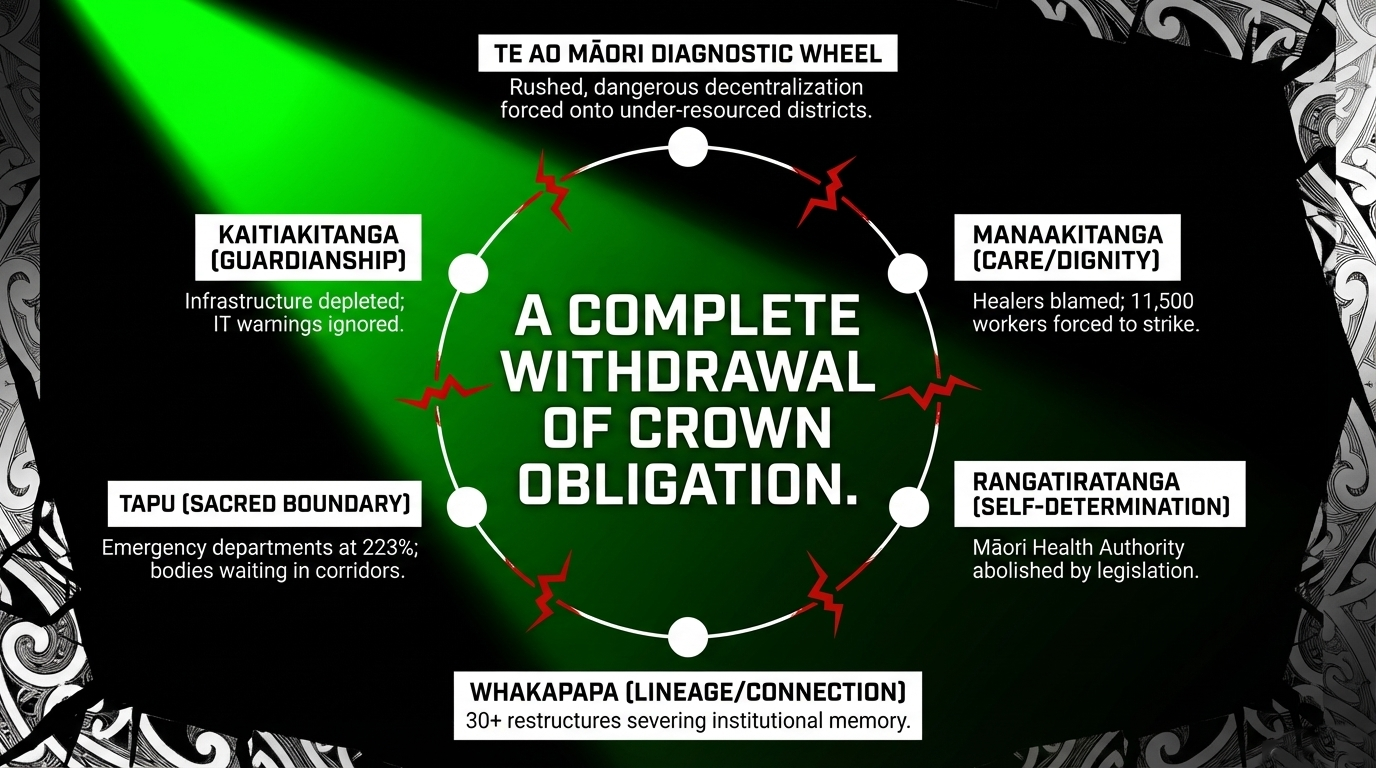
Whānau, te ao Māori offers me six concepts that together describe precisely what has been done to these workers. I offer them not as metaphor, but as analytical tools.
Kaitiakitanga — guardianship and stewardship — demands that those with power exercise it in the interest of future generations, not present extraction. A government that suppresses public service wages below inflation, strips pay equity protections, and outsources work to consultants is not a kaitiaki of Aotearoa's public health system. It is an extractive force. The rākau — Health NZ — is being stripped for timber while the roots are told to be grateful for the sawdust.
Rangatiratanga — self-determination and leadership — means that workers have the right to determine their own conditions, that unions are the expression of collective tino rangatiratanga in the workplace, and that anti-union legislation is a direct assault on Māori values around autonomy and collective decision-making. The Employment Relations Amendment Act 2025 does not just harm workers. It offends the foundational principle of Article 2 of Te Tiriti o Waitangi.
Whakapapa — the relational network that connects cause to effect across time — reveals what the mainstream media cannot: that this settlement is not an isolated event. It is connected to the pay equity repeal (May 2025), to the Commissioner coup (July 2024), to the manufactured deficit, to the legislative assault on collective bargaining (February 2026), to the $12.8 billion stolen from female-dominated workforces. Whakapapa makes the pattern visible.
Manaakitanga — the obligation to uplift, to care for, to treat others with dignity — is the value most directly violated by a $500 lump sum offered to workers who kept the health system running through a pandemic, through a financial crisis not of their making, through eleven months of stonewalling. Manaakitanga demands that those in power ask: does this settlement uplift the people it affects? The answer is plainly: no.
Tapu and Noa — the sacred dimension of existence and the removal of restriction — reminds us that workers' labour is not simply a commodity. In te ao Māori, the act of providing skilled service, of using one's knowledge and capability for the collective good — this is tapu. It carries its own spiritual and social weight. To offer below-inflation pay for tapu work is to render that work noa — ordinary, worthless, disposable. This is precisely what this government has done.
Whenua — land and grounding — connects PAKS workers to the communities they serve. Health analytics workers in Wellington model disease patterns that determine care access for Māori communities in the Far North. Digital services teams in Auckland maintain the systems that process referrals for whānau in Taranaki. Policy workers write the frameworks that determine whether kaupapa Māori health services are funded or defunded. When these workers are paid below inflation, their capacity to sustain this mahi — to live in the communities they serve, to avoid second jobs, to bring their full selves to their roles — is directly compromised.
VIII. TE MUTUNGA — CLOSING: NAME IT AND STAND IN IT
This Was Not a Victory. Name It.
Whānau, I want to close by naming clearly what this settlement reveals, because the press release will not, and most of the media will not.
2,500 people fought for eleven months. They struck on 23 October 2025 — the Mega Strike, the largest health worker industrial action in this country's recent history. They went back in November. They endured mediation after mediation. They sacrificed wages on strike days. They held the line as long as any group of workers could reasonably be expected to hold it. And what they received — 2.5% against 3.1% inflation, a $500 lump sum — is less purchasing power than they had when bargaining began.
The PSA said workers struck "in support of their claims for a settlement that ensures safe staffing and a pay increase that keeps pace with cost-of-living increases." By that standard, this settlement fails. Not because the PSA failed. Not because the workers failed. But because they were bargaining against an institution that had deliberately withheld $538 million in salary funding, that was simultaneously spending $162 million on contractors, that was backed by legislation specifically designed to weaken their collective power, and that answered to a Commissioner rather than a democratic board.
This is what colonial neoliberalism looks like in 2026 Aotearoa. It does not come with a flag and a musket. It comes with a press release and the word "overwhelming."
I say to the 2,500 PAKS workers: I see your mahi. I see the roots. I see what you carry and what you are owed. This settlement is not what you deserved. The fight is not over.
Ka whawhai tonu mātou, ake, ake, ake.
We will fight on, forever and forever.
KOHA — TĀKOHA KI TĒ MAHI TIKA
Whānau, the 2,500 PAKS workers who fought for eleven months did not do so in silence. They need witnesses. They need a record. They need someone to name plainly what the press releases will not: that a 2.5% pay rise against 3.1% inflation is a real-terms pay cut, that $500 is $9.60 a week, that eleven months of industrial action should have delivered more.
This investigation — the research, the source-chasing, the arithmetic, the connections across government, legislation, and money flows — is the mahi of The Māori Green Lantern. It is unfunded by any institution that benefits from PAKS workers remaining underpaid and invisible. It is funded by whānau who understand that accountability requires resources, and that rangatiratanga includes the power to fund our own truth tellers.
Every koha signals that whānau are ready to fund the accountability that Crown and corporate structures will not provide. It signals that the roots of the rākau — the workers, the communities, the caregivers — deserve a voice that cannot be silenced by a $500 lump sum and a press release calling it a victory.
Kia kaha, whānau. Stay vigilant. Stay connected. And if you are able, consider a koha to ensure this voice continues.
If you are unable to koha, no worries! Subscribe to or follow the Māori Green Lantern on Substack, kōrero and share with your whānau and friends — that is koha in itself.
Three pathways exist:
For those who wish to support this mahi directly with a koha (voluntary contribution):
Koha — Support: https://app.koha.kiwi/events/the-maori-green-lantern-fighting-misinformation-and-disinformation-ivor-jones
For those who wish to receive essays directly and support through subscription:
Subscribe to the Māori Green Lantern: https://www.themaorigreenlantern.maori.nz/#/portal/support
For those who prefer direct bank transfer:
HTDM, account number 03-1546-0415173-000
NGĀ PUNA — SOURCES
Primary Sources:
- 2500 Te Whatu Ora PAKS staff ratify new collective agreement, PSA says — RNZ, 17 March 2026
- Annual inflation at 3.1 percent in December 2025 — Statistics New Zealand, 23 January 2026
- New Zealand annual inflation accelerates to 3.1% — Reuters, 22 January 2026
- Labour market statistics: December 2025 quarter — Statistics New Zealand, February 2026
- Wage trends — Te Kawa Mataaho Public Service Commission, 2025
- Chief executive remuneration — Te Kawa Mataaho Public Service Commission
Health NZ Sources:
- Hospitals asked to save $510 million despite $538 million going unspent — RNZ, 19 December 2025
- Health NZ's redundancy payouts a 'disgraceful waste of money' — RNZ, 23 February 2026
- Health NZ and PSA reach deal after months of negotiating and strike action — RNZ, 25 February 2026
- Health NZ board costs could triple amid deficit and staffing woes — NZ Herald, 15 August 2025
- Lester Levy commissioner fee OIA response — Te Whatu Ora
- Union files legal action against Health NZ over proposed cuts — 1News, 13 February 2025
- 'Deep cuts': Hundreds of health IT jobs to be axed — Reddit/RNZ, April 2025
- Collective agreement settled with PSA Allied, Public Health, Scientific and Technical — Te Whatu Ora, 25 February 2026
- Public and Mental Health Nurses settle collective agreement — Te Whatu Ora, 2 March 2026
PSA / Union Sources:
- Another 5200 health workers vote to strike on 28 November — PSA, 11 November 2025
- Stand together for health — PSA campaign page
- Allied health workers ratify new collective agreement — PSA, 25 February 2026
- Budget confirms $12.8 billion theft of wages from women — PSA, May 2025
- Still time to benefit from proposed PSA collective — HiNZ, March 2026
- Wider and deeper cuts to public services — PSA, January 2024
Legislative Sources:
- Employment Relations Amendment Act 2025 — E tū, 24 February 2026
- Employment Relations Act changes take effect today — Employment NZ, 21 February 2026
- Equal Pay Amendment Act 2025 — Wikipedia
- Union hits back at NZ First over Employment Relations Amendment Bill — RNZ, 21 February 2026
- Budget 2025 at a glance — RNZ, 22 May 2025
- Government blasted at pay equity report launch — Kaitiaki, 26 February 2026
Cost of Living / Economic Sources:
- Only two sectors have not experienced a real-terms pay cut — RNZ, 3 December 2025
- Household income and housing-cost statistics: Year ended June 2025 — Statistics NZ, February 2026
- New Zealand's budget cuts punish public sector — Reuters, 20 May 2025
- Why Living in NZ Feels More Expensive Than Ever in 2026 — Artbeat, 14 March 2026
Previous MGL Essays:
- The October 23 Strike: A Reckoning for NZ's Forsaken Public Services — The Māori Green Lantern, 22 October 2025
- How Government Lies, Media Complicity, and Libertarian Ideology Destroyed Public Services — The Māori Green Lantern, 23 October 2025
- Collins' Divide and Conquer — The Māori Green Lantern, 20 October 2025
- $12.8 BILLION STOLEN — The Māori Green Lantern, 4 November 2025
- Brown's Authoritarian Gambit to Crush Medical Unions — The Māori Green Lantern, 4 September 2025
- The Manufactured Crisis: How Health NZ Underspent $538 Million — The Māori Green Lantern, 20 December 2025
- Back to Basics, Back to Brutality — The Māori Green Lantern, 13 February 2026
- The Three-Headed Taniwha — The Māori Green Lantern, 18 February 2026