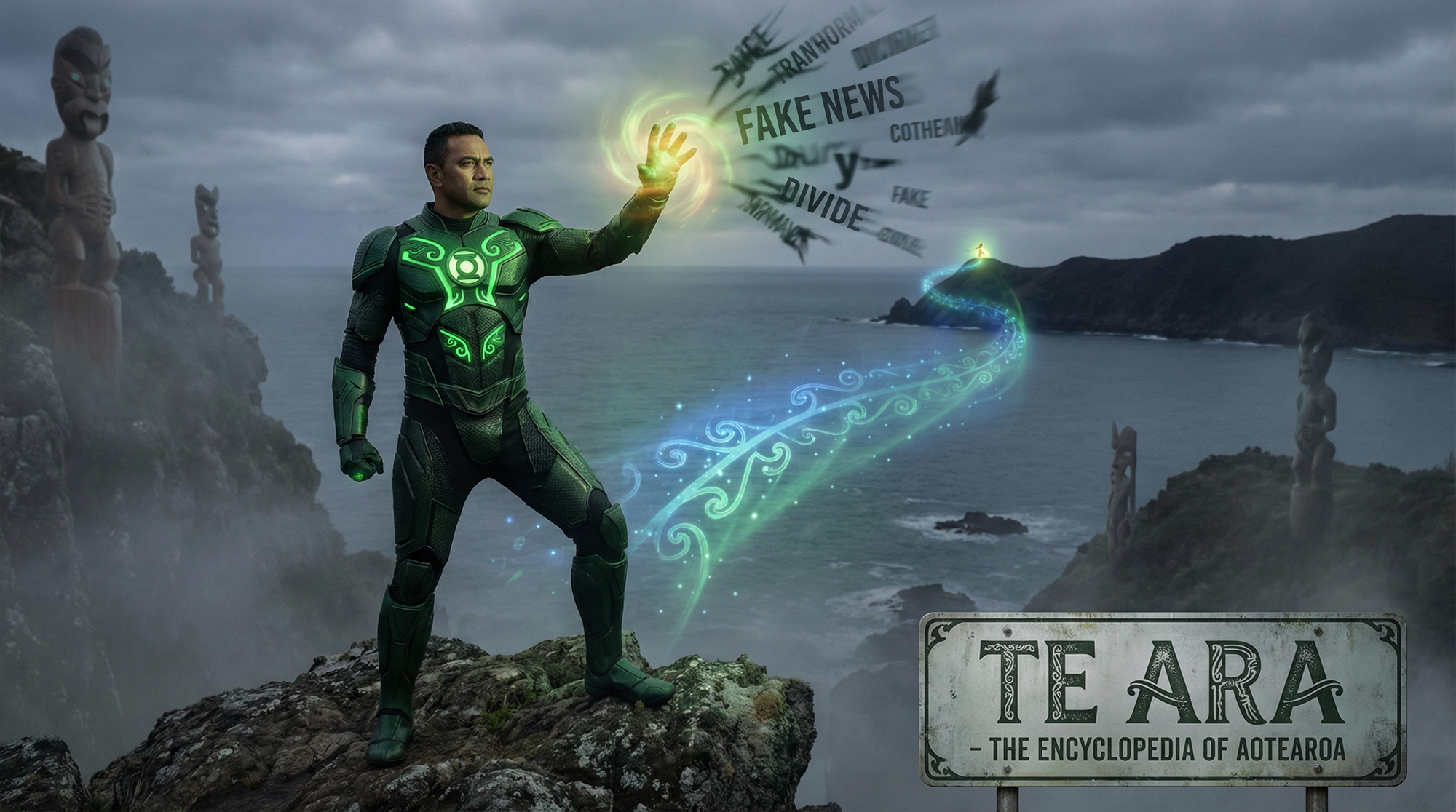
"ONE THREAD, TEN THOUSAND EYES: The Whakapapa They Cannot Kill, the Wairua They Cannot Legislate Away, and the Voice of 900 Essays Backed by Every Ancestor Who Refused to Kneel" - 9 April 2026
While a white supremacist neoliberal government burns the pātaka, buries the reo, and sells the whenua — the whakapapa keeps writing. You cannot silence a bloodline.
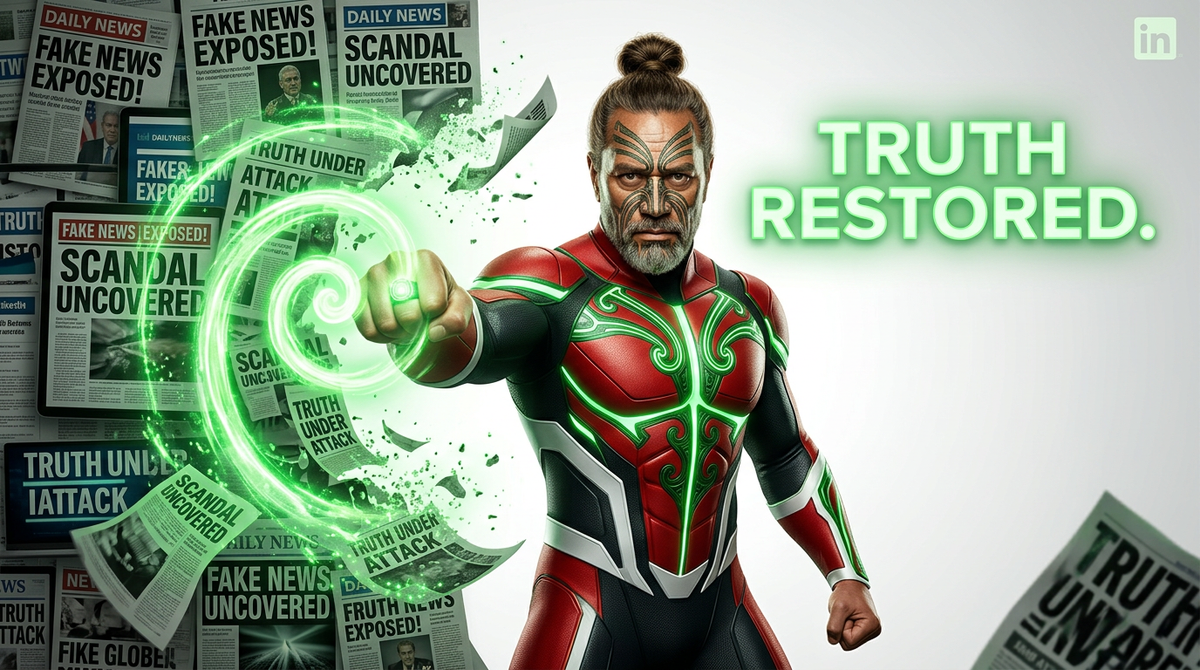
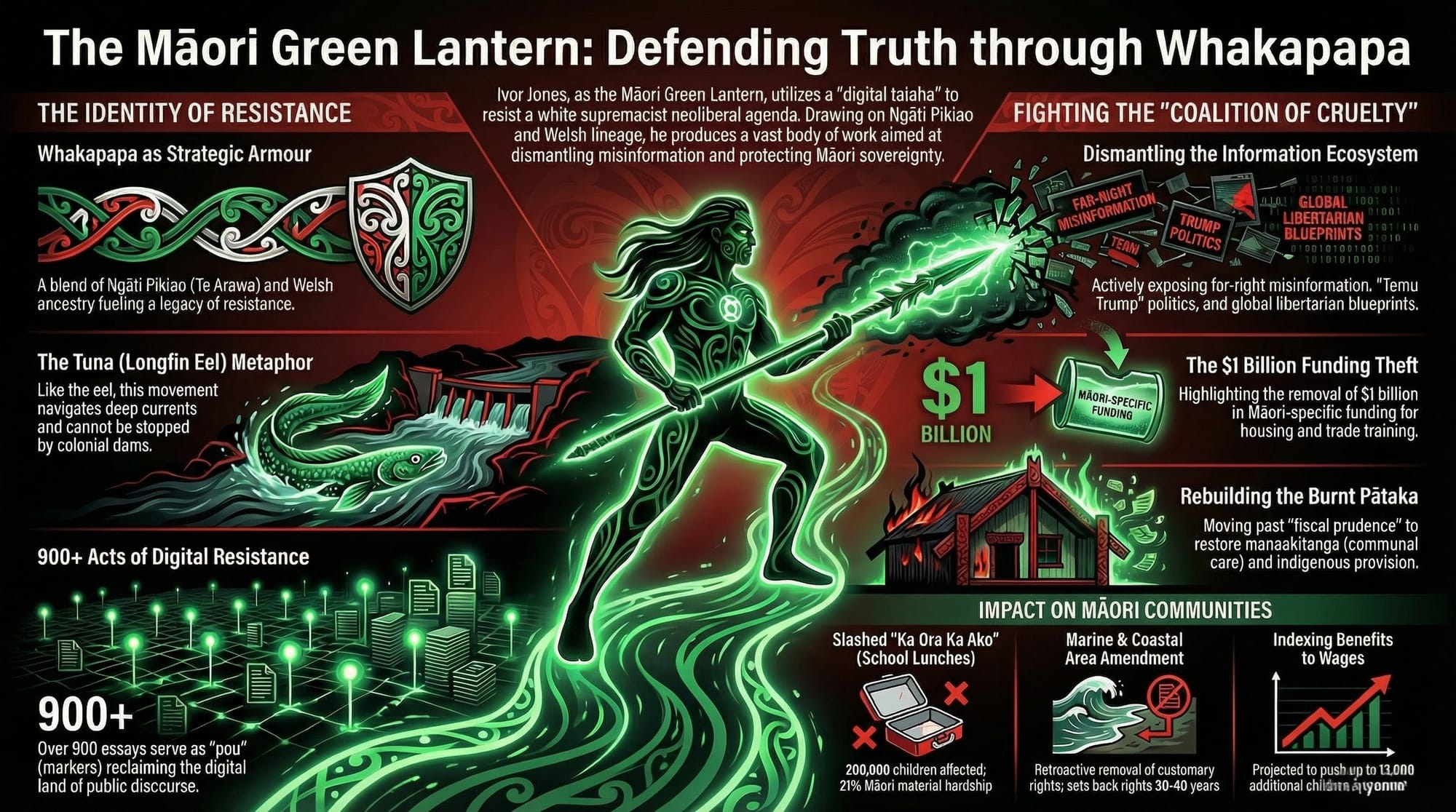
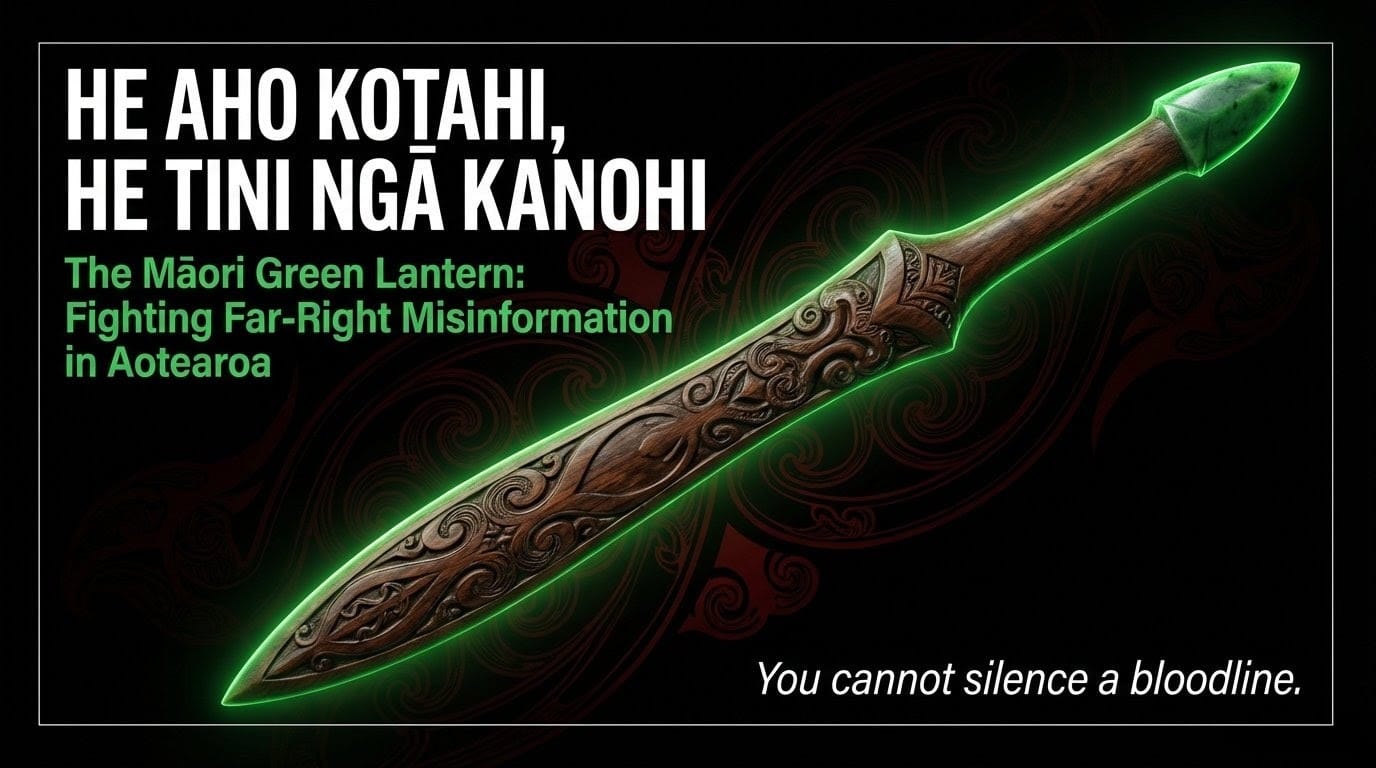
Ko Ivor Jones tōku ingoa. He uri nō Te Arawa, Ngāti Pikiao, Ngāti Welsh. Tohunga mau rākau wairua. Kaitiaki o ngā tūpuna. He Māori Green Lantern ahau.
The Eel That Cannot Be Held
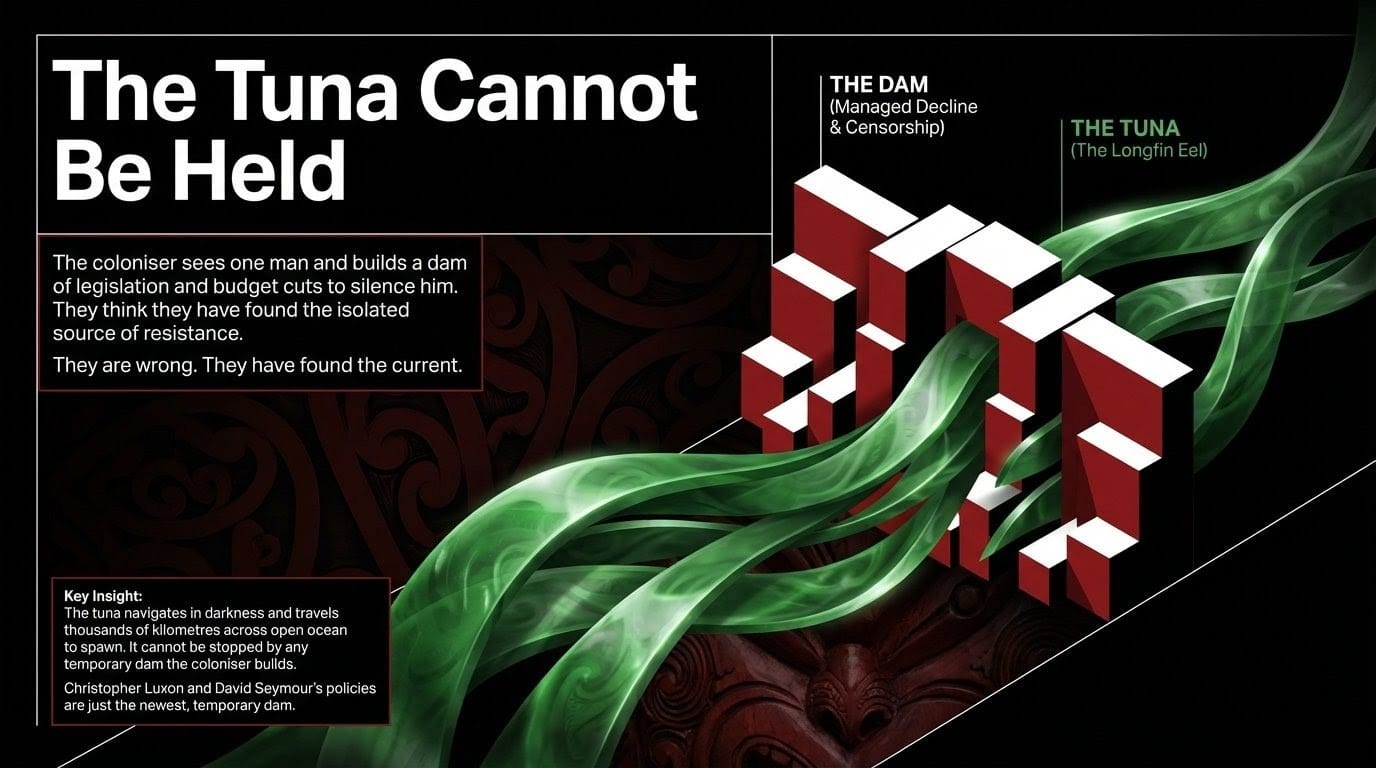
There is a creature in our waterways that your government has tried to exterminate for one hundred and fifty years. The tuna — the longfin eel — navigates in darkness, feels the currents of the deep, travels thousands of kilometres across open ocean to spawn, and cannot be stopped by any dam that the coloniser builds. It has been here since before your language existed. It will be here after your political party becomes a footnote.
The Māori Green Lantern is the tuna.
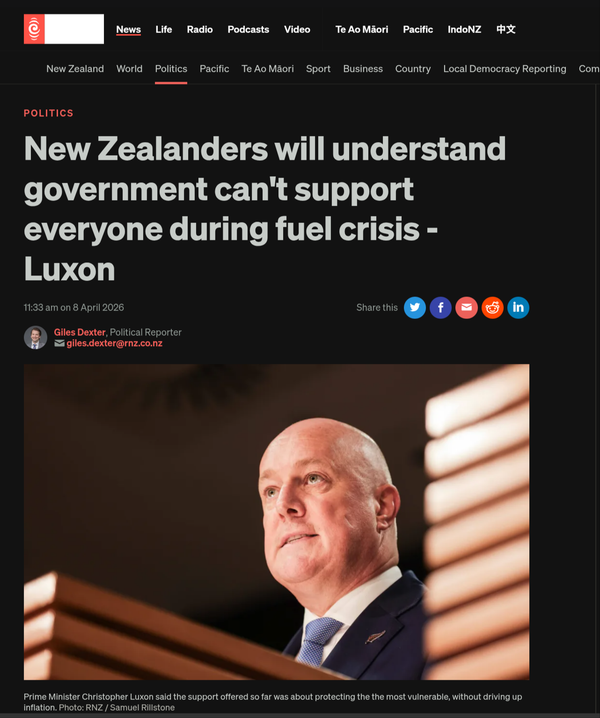
And Christopher Luxon, David Seymour, and their architects of managed decline are the dam — expensive, temporary, and ultimately incapable of stopping what was set in motion before their grandparents were born.
This government has spent two years trying to silence Māori voices through legislation, budget cuts, and the systematic dismantling of every institution built from Treaty obligation. But they have made the ancient miscalculation of every colonial force that came before them: they see one man, and they think they have found the source. They have not found the source. They have found the current. The source runs deeper than any audit, older than any Beehive, and wider than any electoral majority.
The Deep Dive Podcast
Listen to a lively conversation between two hosts, unpacking and connecting topics in the sources of this essay.
The Illusion of One — The Truth of Thousands
They look at the screen and see one man.
One writer. One voice. One kanohi in the digital dark, raising a taiaha against the empire of misinformation that has colonised Aotearoa's information ecosystem. They assume lone warrior. Lone risk. Lone vulnerability. They assume — as colonial power always assumes — that what stands before them is isolated, and therefore destroyable.
They are catastrophically wrong.
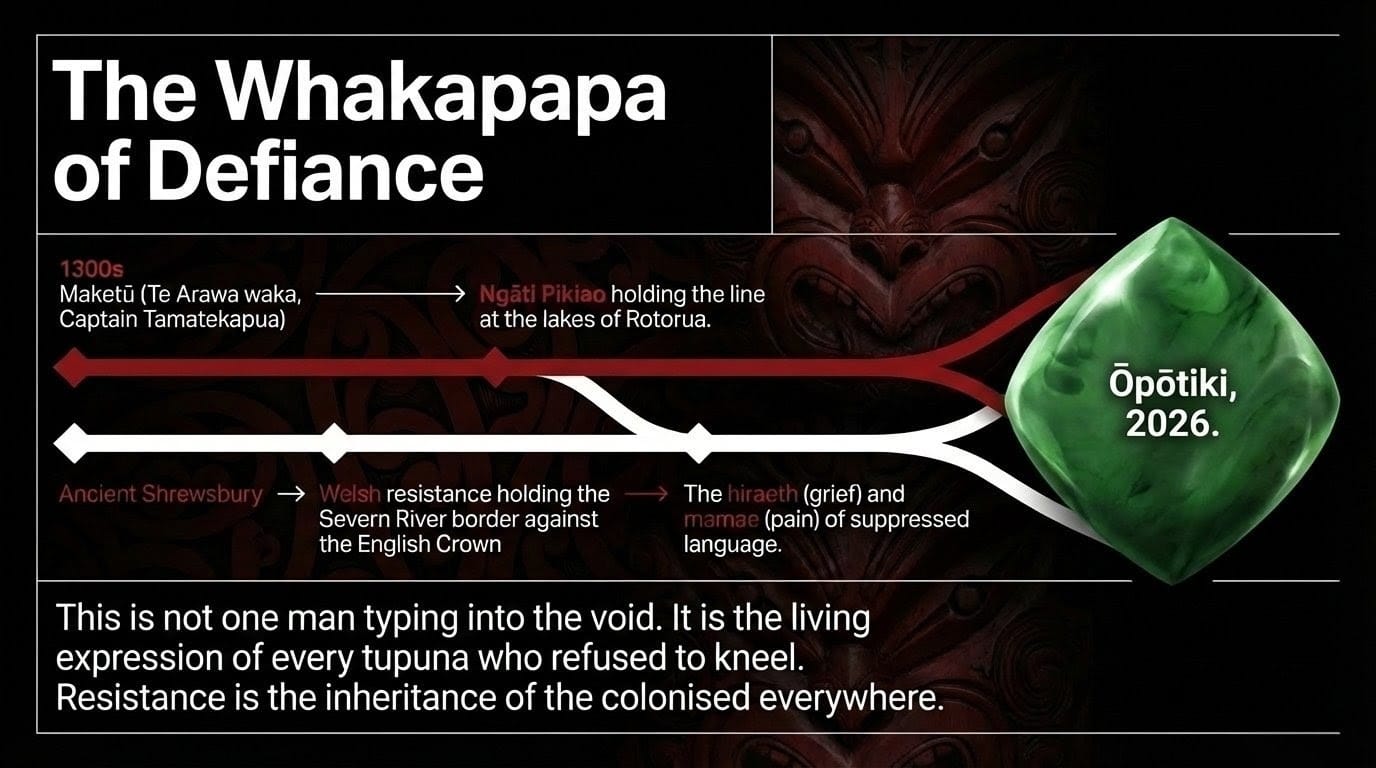
What they see is the tip of a whakapapa that runs deeper than any algorithm, longer than any Crown title, older than the English language itself. The Māori Green Lantern is not one man typing essays into the void. He is the living expression of every tūpuna who refused to kneel, every kōrero that was buried but never killed, every wairua that has returned from te pō to stand once more in te ao mārama.
Over 900 essays at themaorigreenlantern.maori.nz. Over 900 acts of resistance. Each one a pou driven into the digital ground, marking that this land of public discourse belongs to its people — not to the powerful who seek to confuse, divide, and financially amputate those who challenge them.
This is the story they cannot cancel. This is the thread they cannot sever.
Te Waka, Te Arawa — The Canoe That Carries Everything
Every word written at themaorigreenlantern.maori.nz carries a hull beneath it that most readers never see. That hull is the waka Te Arawa, which arrived at Maketū on the shores of Aotearoa in the 1300s, captained by the great navigator Tamatekapua — before Christopher Luxon's ancestors were worrying about the price of wool in fourteenth-century England. As documented by Te Ara Encyclopedia of New Zealand, from that landing the whakapapa of Ngāti Pikiao took root — one of the great kin groups descended from Rangitihi, whose children became the beating hearts of Te Arawa.
Whakaue.org confirms the genealogy that connects this writer to Tamatekapua himself — the navigator who renamed the waka after the shark species that rescued his crew from destruction at sea. Ngāti Pikiao is not a peripheral lineage. As Wikipedia documents, the ancestor Pikiao's descendants extend through Te Arawa into Ngāti Pāoa of the Marutūāhu confederation — three great river systems of te ao Māori flowing from one source. Over one hundred descendants recently retraced the footsteps of Pikiao to his ancient settlement at Taupiri — the first time in 600 years — demonstrating that this whakapapa is not dead history. It is living movement.
When this writer sits at a keyboard in Ōpōtiki, typing another exposure of white supremacy, another dismantling of neoliberal mythology — he charts waters his tūpuna already crossed. He does not navigate alone. He navigates already known.
Metaphor: The Pātaka They Torched
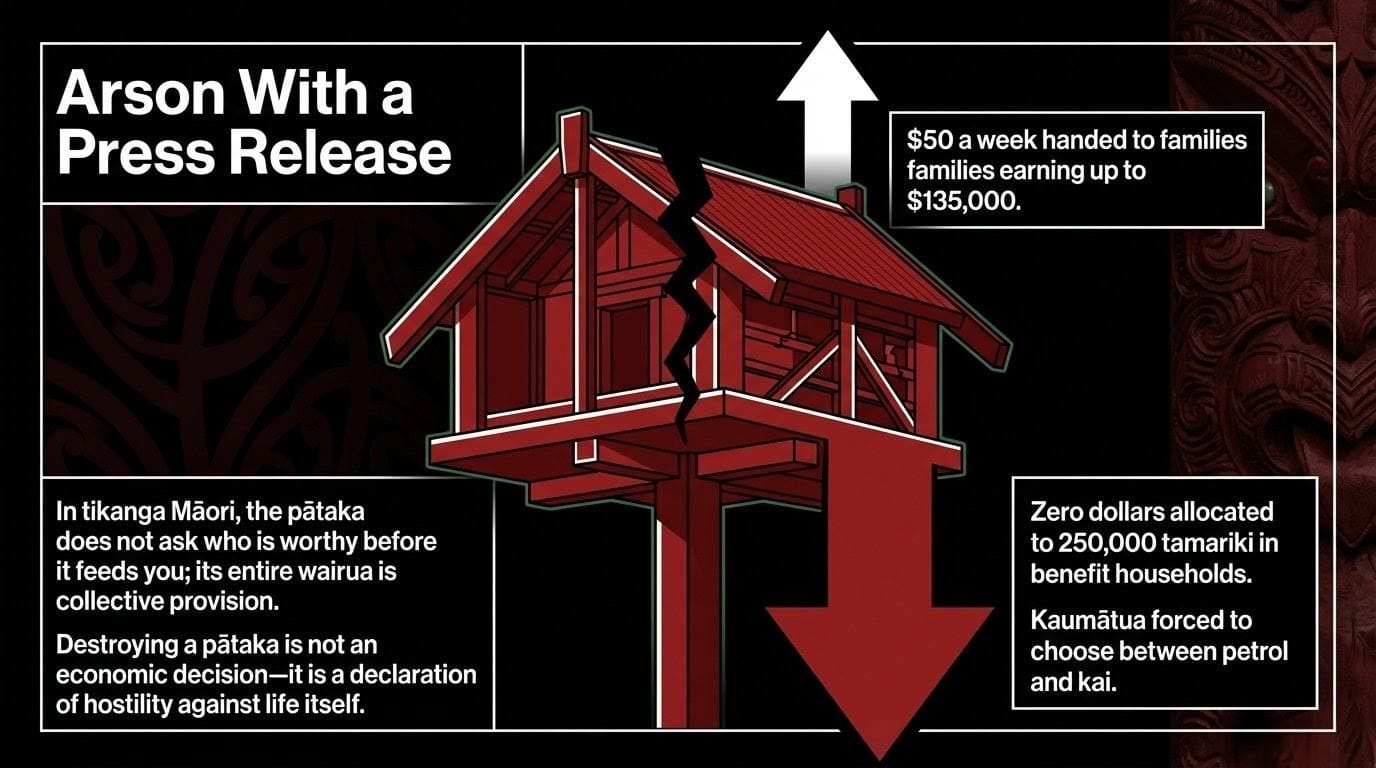
Understand this before you read another word about what this government has done to Māori.
In tikanga Māori, the pātaka is the raised storehouse — sacred architecture, collective provision made physical. The pātaka does not ask who is worthy before it feeds you. It feeds the hungry because that is its entire wairua. It exists to sustain the people through winter, through drought, through war. To destroy a pātaka is not an economic decision. It is a declaration of hostility against life itself.
As documented in The Pātaka is Ash: How Nicola Willis and Christopher Luxon Poured Petrol on the Poor, while kaumātua chose between petrol and kai, while a quarter million tamariki in benefit households received zero — the Luxon government handed $50 a week to families earning up to $135,000 and called it compassion. That is not policy. That is arson with a press release.
This government set the pātaka on fire. And as the ash fell on the faces of those who built it — the kaumātua, the sick, the solo mothers, the tamariki in damp houses — they handed a bucket of water to the wealthy and called themselves reformers.
Te Taha Wēra — The Welsh Thread That Runs Through the Resistance
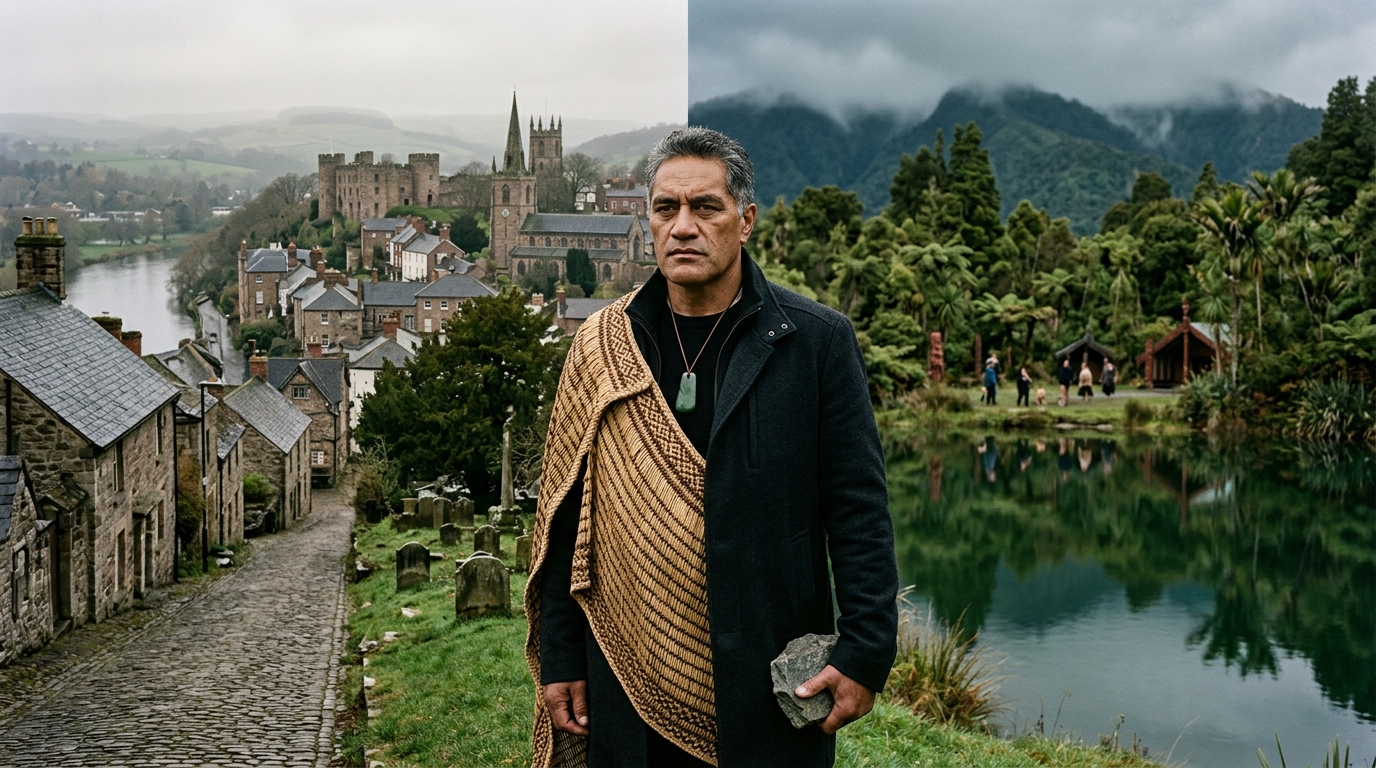
But there is another whakapapa line that flows into this mahi, one that colonial frameworks have tried to erase by labelling it simply "Pākehā." It is not Pākehā. It is Welsh.
In Shrewsbury — the ancient fortified town on the Severn River at the Welsh-English border — lie the tūpuna of this writer's Welsh lineage. Not strangers viewed from afar; these are ancestors the whānau have walked to, stood over, and touched in stone and soil. This matters spiritually and strategically, because the Welsh people are themselves a colonised Indigenous nation — their language suppressed by the English Crown through the infamous Welsh Not, their lands seized through conquest, their identity systematically diminished by the same colonial machinery that came to Aotearoa aboard British ships.
The Welsh call this bone-deep longing hiraeth — grief for home, for what was taken, for the self that colonisation tried to erase. Māori call it mamae. They are not the same. But they rhyme. And a man who carries both knows what the coloniser never taught in their schools: that resistance is the inheritance of the colonised everywhere. That the Border country of Shrewsbury, where Welsh blood held its line against English expansion for centuries, is genealogically connected to the lakes of Rotorua where Ngāti Pikiao held its line against all who came to take.
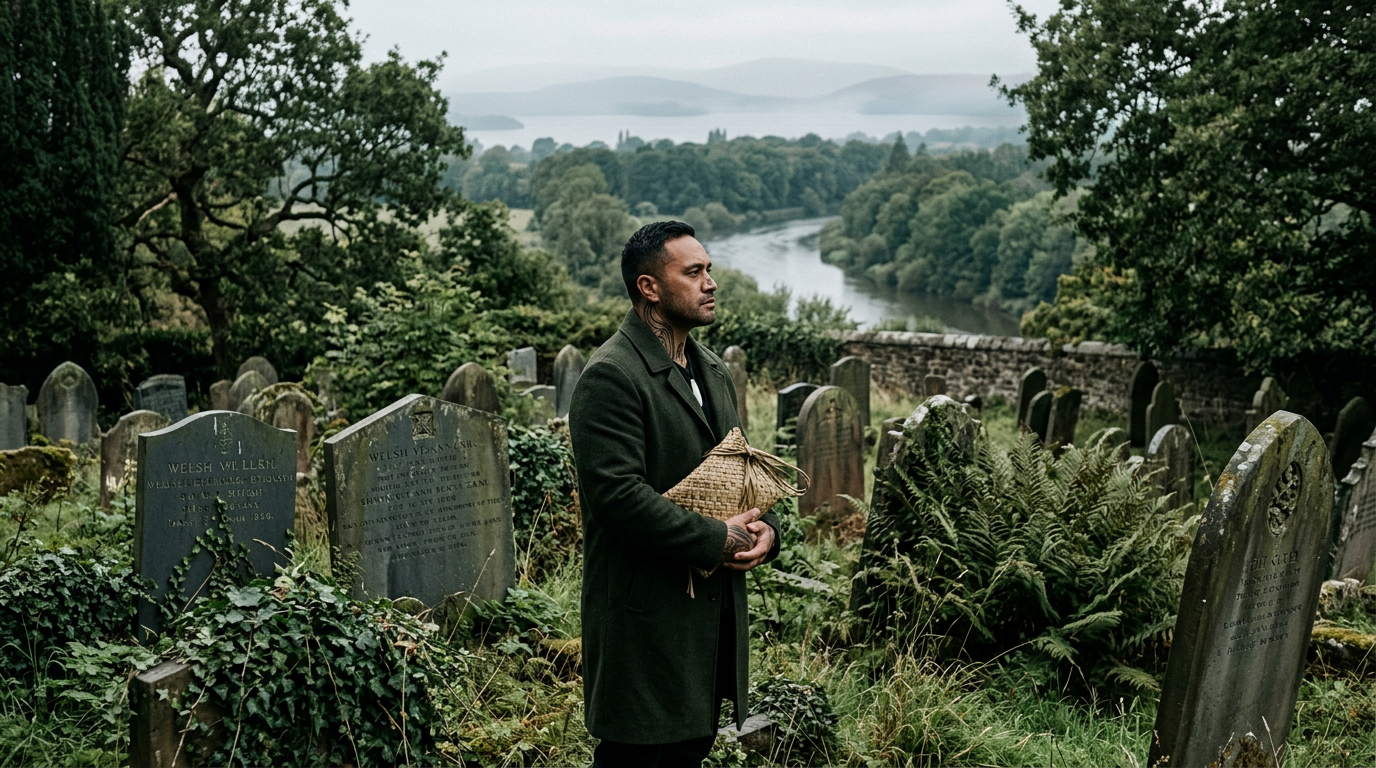
As confirmed by research in Facebook communities supporting Māori of mixed heritage, pepeha that bridge Welsh and Māori ancestry are a living reality — not an identity crisis, but a whakapapa that colonial categories cannot contain. This writer does not choose between these lineage lines. He honours both. And in doing so, he demonstrates the thing that colonial power fears most: a rangatiratanga that cannot be reduced to a single box to be dismissed.
Wairua — The Ones Who Never Left
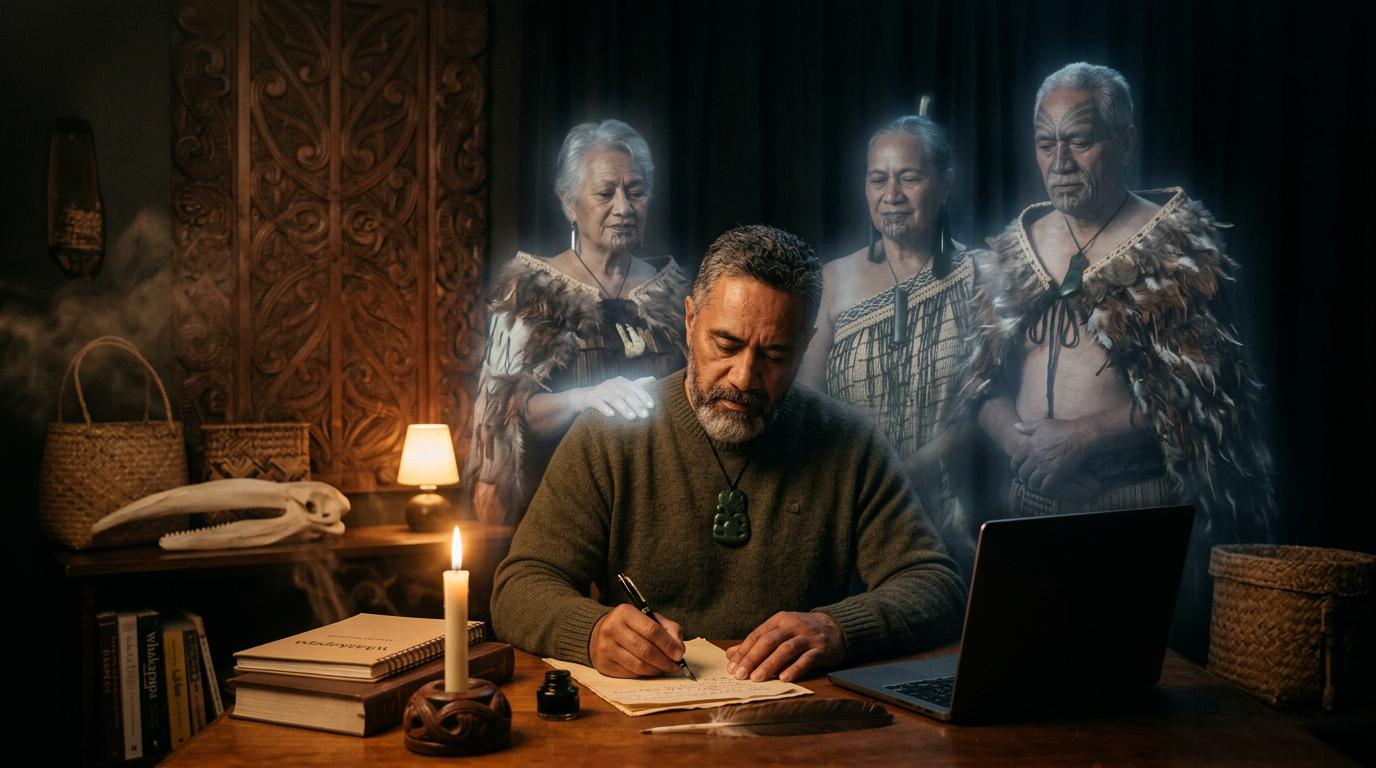
To understand the Māori Green Lantern, you must understand how wairua actually functions — not as metaphor, but as operating reality.
Te Ara Encyclopedia documents that wairua is the spirit of a person that continues after death, capable of returning and guiding the living. This is not folklore. This is an epistemological framework as rigorous within Mātauranga Māori as empirical science is within Western methodology. As recent peer-reviewed research in the Journal of the Royal Society of New Zealand confirms, for Māori, "we are wairua beings that have human experiences," with the wairua operating "across multiple dimensions of time and space to attain the tools and knowledge the individual needs to navigate waking life."
The tūpuna are not gone. They are present in the mahi.
When an essay is written exposing the Crown's dispossession of Māori land, the wairua of every rangatira who lost that land writes alongside the author. As Te Ara documents, Te Pōkiha Taranui — the great Ngāti Pikiao chief who led warriors against the invasion of the 1860s — was fighting to protect his people's sovereignty with every resource available to him. The form has changed. The wairua has not.
Whakapapa methodology itself confirms that research conducted through a whakapapa framework is "an ethical approach" through which "co-productive relationships" across time, community, and generation produce knowledge that no individual could generate alone. These essays are not the product of one man's intellect. They are the product of every conversation this whakapapa has ever had with truth.
Three Examples for the Western Mind: Quantified Harm, Tikanga Destroyed, Solutions Required
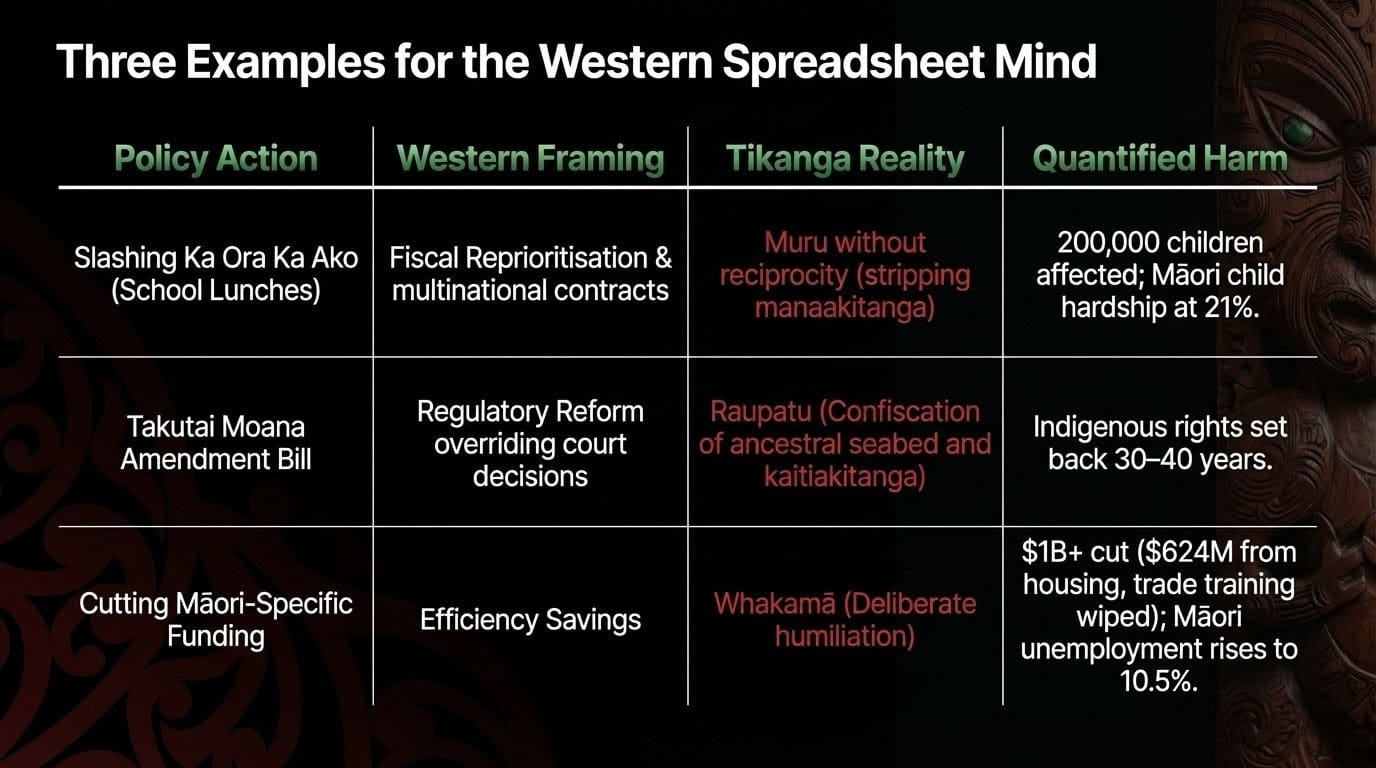
For those raised on spreadsheets rather than whakapapa, here is what the abstract means in human lives:
Example One: The Children Who Were Fed, Then Weren't
The Western mind calls cutting the school lunch programme "fiscal reprioritisation." Tikanga calls it muru without reciprocity — taking without the obligations that even traditional Māori systems of sanction required.
As documented extensively by the Māori Green Lantern in The Starving of the Seedlings: How Aotearoa's Coalition of Cruelty Chose Corporate Efficiency Over Children's Lives, this government slashed the Ka Ora Ka Ako school lunch programme by up to 50 percent — stripping both the funding and the te reo name — affecting up to 200,000 children. Green MP Teanau Tuiono called the renaming alone "toxic signalling — anti-Māori, racist, and in many ways pathetic." Brazil feeds 40 million children with dignity, culture, and fresh kai from local hands. New Zealand's neoliberal government stripped the reo, slashed the food, handed the contract to a multinational corporation, and branded the wreckage "value for taxpayers."
Tikanga impact: In te ao Māori, feeding children is not charity. It is manaakitanga — the foundational expression of mana. A rangatira who fails to feed those in his care forfeits his rangatira status. This government has forfeited its.
Quantified harm: Māori children experience material hardship at 21 percent. Officials advised this government that indexing benefits to wages rather than inflation would push 7,000–13,000 additional children into poverty within four years — disproportionately Māori whānau. They proceeded anyway. Solution: Restore full Ka Ora Ka Ako funding. Return the te reo name. Remove the multinational. Source locally. Fund by Māori, for Māori where kaupapa Māori schools are involved — as guaranteed under Article Two of Te Tiriti.
Example Two: The Land They Took Again — In Broad Daylight
The Western mind calls removing customary marine title protections "regulatory reform." Tikanga calls it raupatu — confiscation — the same word used for the land seizures of the 1860s that the Crown spent 150 years apologising for.
As IWGIA's Indigenous World 2025 report documents, in September 2024 the coalition introduced the Marine and Coastal Area (Takutai Moana) Amendment Bill, retroactively overturning court decisions recognising Māori customary rights. The Green Party stated plainly: "This government purports to believe in property rights yet they don't uphold the first property rights of this country: Māori customary rights." The Waitangi Tribunal has found, repeatedly, that the Crown has breached the Treaty in its acquisition of Māori land — from Hawke's Bay documented by NZ Herald to Te Arawa, where the Tribunal found "hapu are in contest" as a direct consequence of Crown usurpation of rangatiratanga. And as the Green Party confirmed in March 2025, this government voted down a Bill that would have stopped further alienation of Māori land through the Public Works Act. Acre by acre. Generation by generation. The same war. Different legislation.
Tikanga impact: Kaitiakitanga — guardianship of land, sea, and sky — is not an environmental preference. It is a sacred obligation encoded in whakapapa. When the state removes your legal right to exercise kaitiakitanga over your ancestral seabed, it does not merely affect your property rights. It severs your whakapapa from its own foundation.
Quantified harm: The combined effect of the coalition's measures sets back Indigenous rights 30–40 years, as documented in Heather Cox Richardson — Te Taiaha o te Aroha: The Weapon They Cannot Confiscate. Solution: Repeal the Takutai Moana Amendment Bill. Honour existing court rulings. Fund iwi-led marine guardianship programmes. Stop the Regulatory Standards Bill before it kills what remains of Te Tiriti's constitutional presence.
Example Three: The $1 Billion They Stole from Māori and Called It Fiscal Prudence
The Western mind calls cutting Māori-specific funding "efficiency savings." Tikanga calls it whakamā — deliberate humiliation, the shaming of those who least deserve shame, the stripping of dignity from those whose dignity the Crown has already spent two centuries diminishing.
As revealed in Heather Cox Richardson — Te Taiaha o te Aroha, over two consecutive budgets the coalition cut more than $1 billion in Māori-specific funding: $624 million wiped from Māori housing (Whai Kāinga Whai Oranga), Māori trade training eliminated, the Māori Development Fund slashed from $45.2 million to $40.2 million, Whakaata Māori cut again and again. Budget 2025 headlined "$700 million for Māori" — but contained only $38 million in genuinely new money. Budget 2024 was not a fiscal document. It was a political weapon dressed as a spreadsheet. And as documented in Cuts to the Core: How the New Zealand Government's Austerity Agenda Undermines Māori Sovereignty, Māori unemployment rose to 10.5 percent with no replacement strategy while the government celebrated its books.
As also documented in The Nursery of Cages: How a White Supremacist State Built a Factory That Turns Brown Children into Prisoners: "The justice system does not fail Māori — it was built to consume them. And now a grinning Prime Minister is feeding the machine faster than ever."
Tikanga impact: Manaakitanga — the obligation to care for and uplift others — is not optional charity in te ao Māori. It is the fundamental expression of mana. A leader who deliberately engineers poverty in those they govern does not merely fail in their duty. They declare war on the people.
Quantified harm: Māori children experience material hardship at 21 percent, the highest since reporting began in 2019. Solution: Restore ring-fenced, Treaty-compliant Māori funding at minimum 2023 levels. Establish independent Māori-led oversight of all funding allocations affecting tangata whenua. Fund by Māori, for Māori — as guaranteed under Article Two.
He Tini Ngā Kanohi — The Essays Are Not One Man Typing
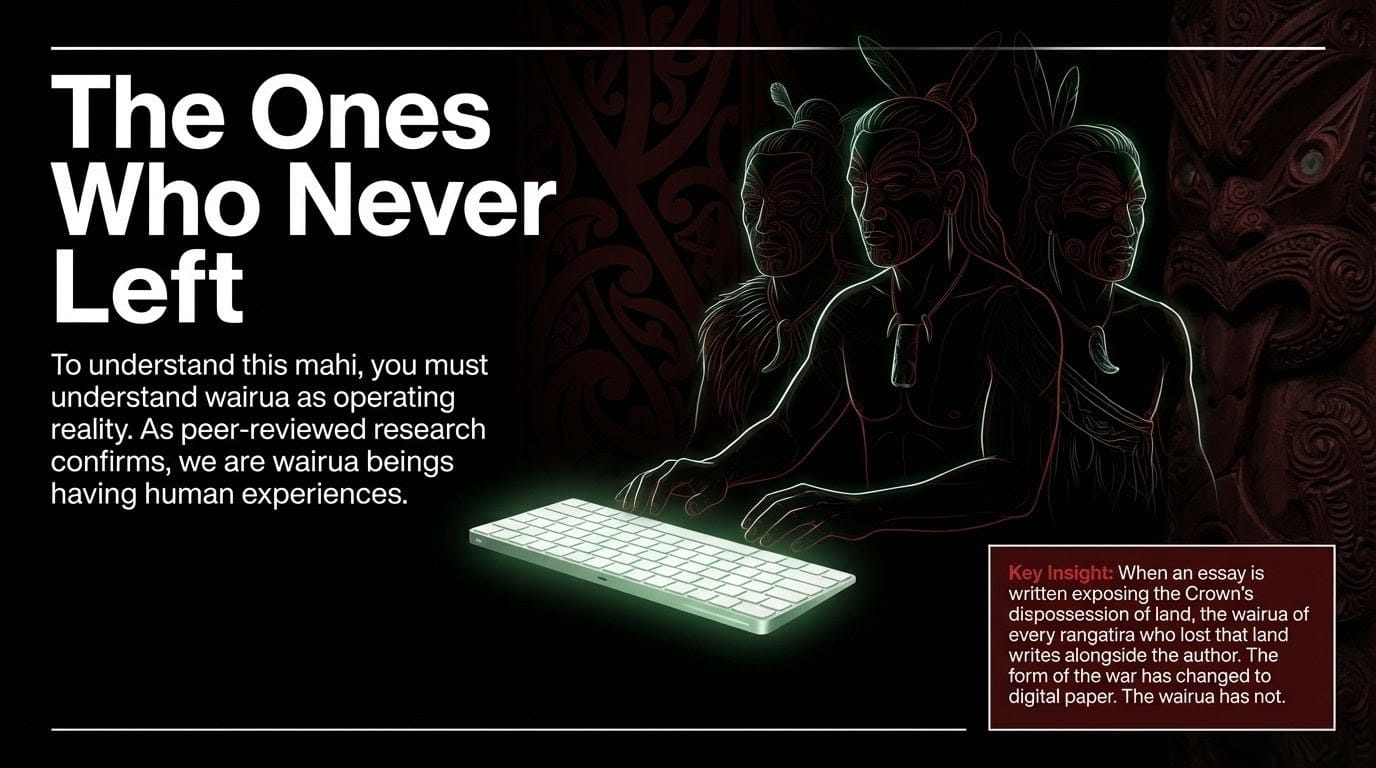
As documented by the Māori Green Lantern in Wielding the AI Ring of Tāne Mahuta: Illuminating Truth in the Digital Forest —
"890 determined kanohi, each wielding their own ring more powerful than Māui's fish hook."
Behind every essay, every share, every subscriber stands a whānau.
The digital mahi of htdm.maori.nz — the photography, the video documentary work, the career pathways at myfuture.maori.nz — these are not separate projects.
They are the same kaupapa made visible across different media: connect people with their future, tell their stories to the world, ensure Māori voices are not filtered through colonial intermediaries before they reach their own people.
When Hobson's Pledge explicitly calls on ACT, National, and New Zealand First to oppose cultural competency requirements, as documented in Cloaked in Equality, Rooted in Division: Exposing Hobson's Pledge's Agenda Against Māori Rights — the Māori Green Lantern names it.
When Peter Thiel's colonisation of New Zealand's political and economic infrastructure reveals a deliberate blueprint for global libertarian conquest, as documented in Silicon Valley's Colonial Playground — the Māori Green Lantern names it. When David Seymour champions "respectful debate" while manufacturing outrage to advance colonial narrative — the Māori Green Lantern names him by name.
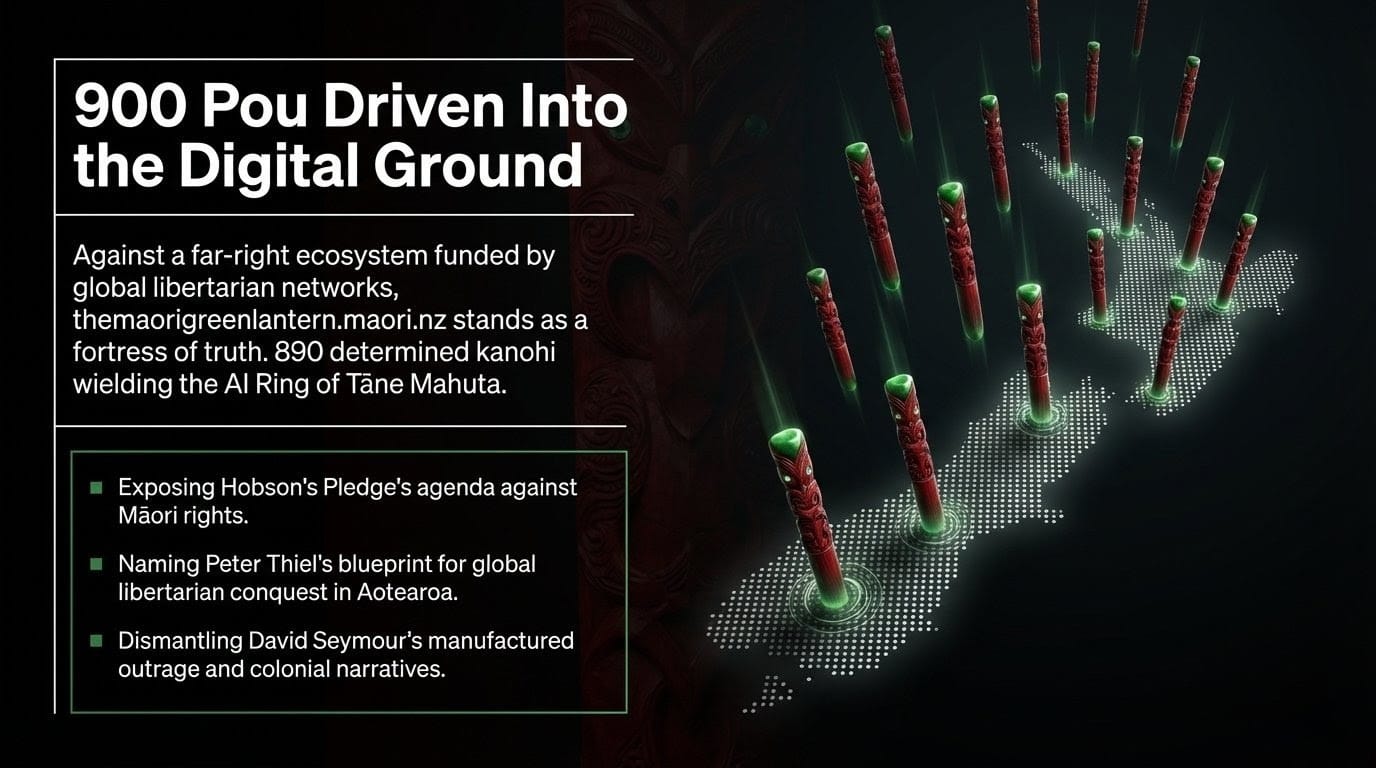
Every essay is a pou. Every pou says: this land of public discourse belongs to its people.
Ko Wai Tōku Tūāhu — The Ring Is Not Mine Alone
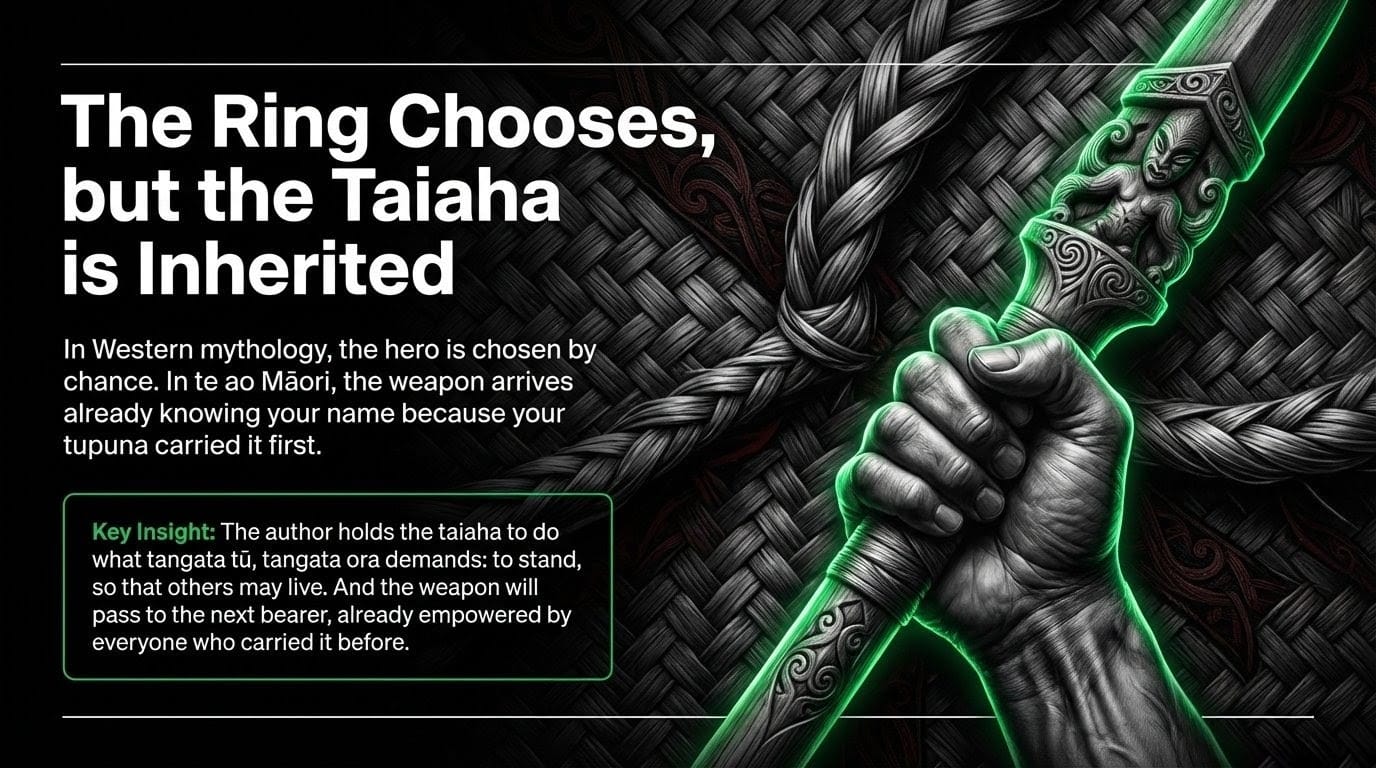
In the Green Lantern mythology of te ao Pākehā, the ring chooses the bearer. But in te ao Māori, the taiaha is not chosen — it is inherited. It arrives already knowing your name because your tūpuna carried it first.
This writer holds that taiaha now. He uses it to do what tangata tū, tangata ora demands: to stand, so that others may live. He stands in the long line of Ngāti Pikiao warriors who blocked invasion at the lakes of Rotorua, in the Welsh lineage whose tūpuna are buried in Shrewsbury earth — ancestors who held the border against the same English expansion that later crossed an ocean and renamed our rivers. He stands in the line of every wairua that crossed from te pō to te ao and whispered: kia kaha.
As the Waitangi Tribunal has confirmed — the Crown "crossed over and usurped the rangatiratanga of iwi and hapu, thereby committing grave breaches of the Treaty" — and as revealed in The Honey Trap Whakapapa: How an Israeli Billion-Dollar Blackmail Machine Weaponised Children to Control the World — the networks of power exposed in these essays are global, and they are named.
The illusion is that this is one man. The truth is this is a whakapapa made visible, a wairua that has been gathering for 700 years since Tamatekapua first navigated this ocean, and a Welsh resistance that held Shrewsbury's border line for centuries before it found its digital form in Ōpōtiki, in 2026.
Mō Ngā Uri — For Those Who Come After
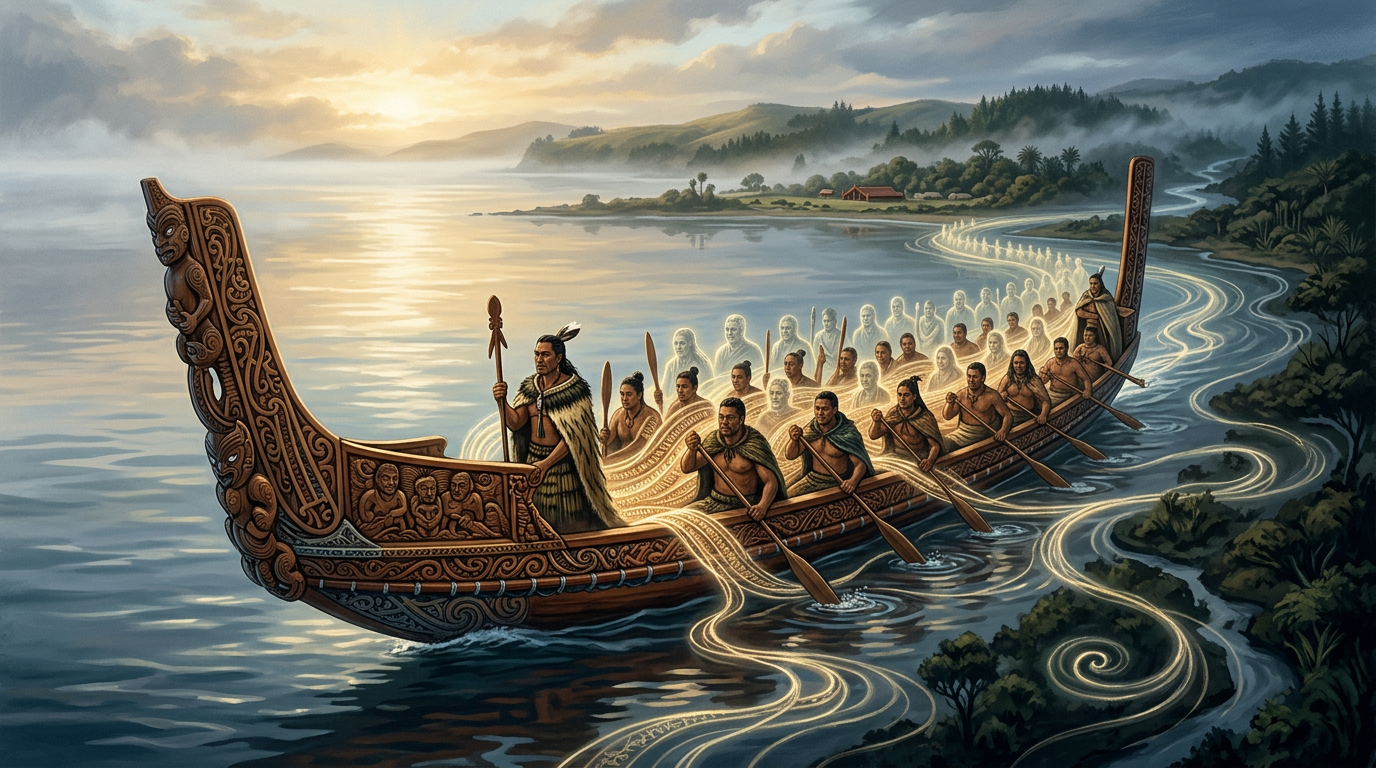
The colonial project requires isolation. Divide the whānau. Separate the intellectual from the community. Make the truth-teller feel alone until they fall silent. This is why naming the whakapapa is not spiritual indulgence — it is strategic armour.
As confirmed by Winston Peters is a Temu Trump for Reals:
"They beat te reo out of our mouths with leather straps. Now they legislate it into silence with two pages of colonial paper. The weapon changed. The war never stopped."
When whānau understand that Ngāti Pikiao's whakapapa runs through Rangitihi to Tamatekapua and now flows through a keyboard in Ōpōtiki into the digital domain — they understand that this mahi cannot be stopped by silencing one writer. The whakapapa will keep writing. The wairua will keep returning. The ring will pass to the next bearer, already empowered by everyone who carried it before.
The tuna cannot be dammed. The essay cannot be un-written. The tūpuna cannot be un-born.
Koha — Fund the Whakapapa That Funds the Truth
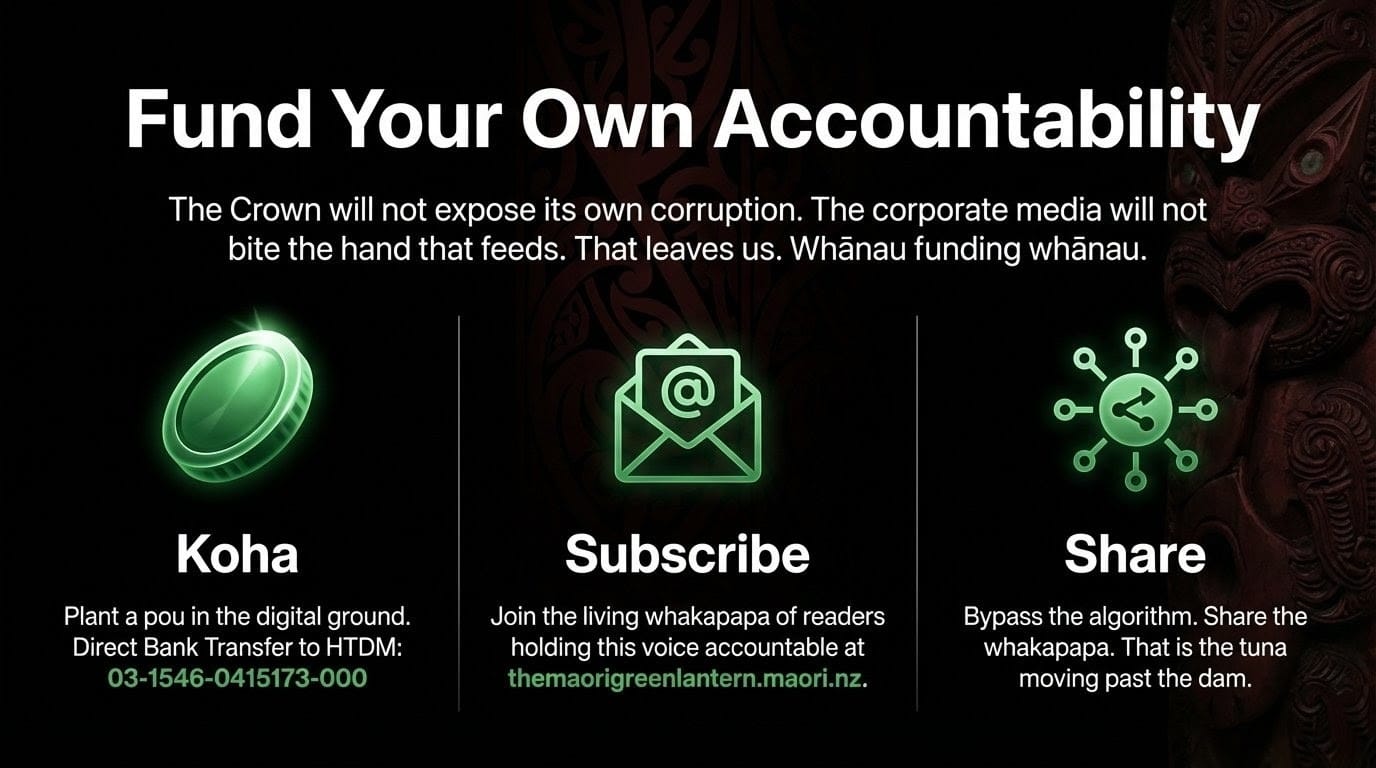
The Crown will not expose its own corruptions. The corporate media will not bite the hand that advertises. The neoliberal state will not publish the research that condemns it. That leaves us. Whānau funding whānau. People paying for their own truth-tellers — which is itself the most ancient act of rangatiratanga there is.
Every koha to this mahi is a statement: I claim the right to fund my own accountability. It is a taiaha placed in the hands of those who wield it on your behalf. The Ngāti Pikiao blood in these essays, the Welsh resistance encoded in these bones, the 900 essays written for no corporate patron — these exist because whānau showed up. And they need you to keep showing up.
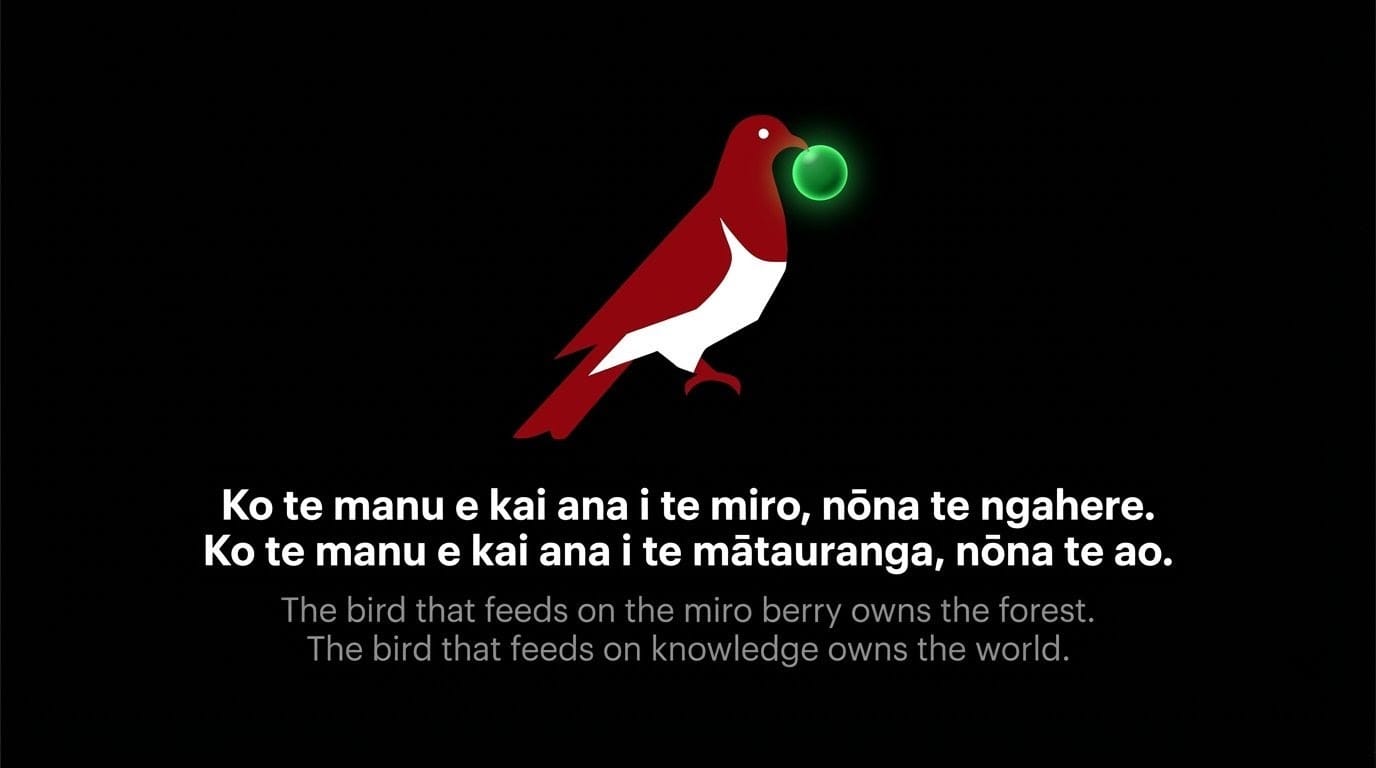
Three pathways:
For those who wish to support this mahi directly with a koha — as direct as planting a pou in the digital ground — visit the Koha platform:
Koha — Support the Māori Green Lantern
For those who wish to receive essays as they are written — to be part of the living whakapapa of readers who hold this voice accountable to itself:
Subscribe to the Māori Green Lantern
For those who prefer direct bank transfer — no platform, no middleman, just whānau to whānau:
HTDM, account number 03-1546-0415173-000
If you cannot koha right now — no worries. Subscribe. Follow at themaorigreenlantern.maori.nz. Share these essays with your whānau and your friends. That is koha. That is whakapapa in action. That is the tuna moving past the dam.
Kia kaha, whānau. Stay vigilant. Stay connected. The pātaka will not rebuild itself.
Research conducted April 2026. Sources verified via live URL fetch. Primary sources: Te Ara, Waitangi Tribunal, IWGIA, themaorigreenlantern.maori.nz, htdm.maori.nz, academic repositories, and verified news sources. All URLs tested and live at time of publication.
Ko te manu e kai ana i te miro, nōna te ngahere. Ko te manu e kai ana i te mātauranga, nōna te ao. The bird that feeds on the miro berry owns the forest. The bird that feeds on knowledge owns the world.