“The Pātaka Beside the Strait” - 25 March 2026

Kia ora Whānau,
The pātaka is burning, and he’s selling tickets
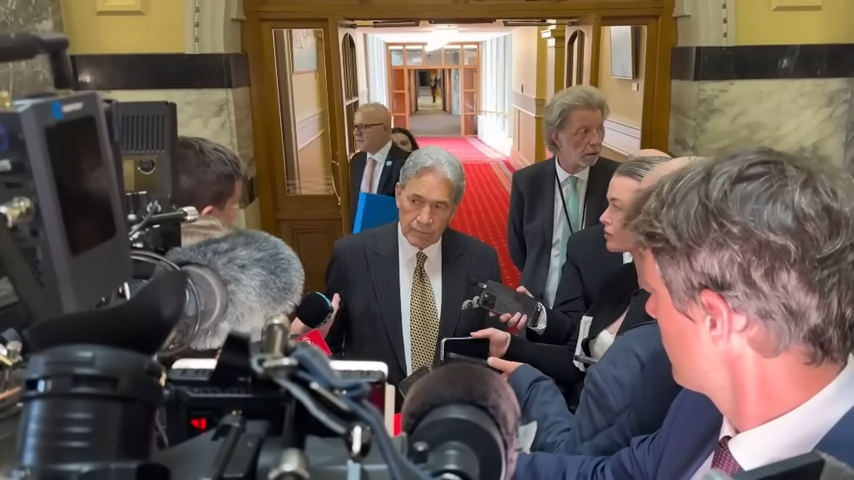
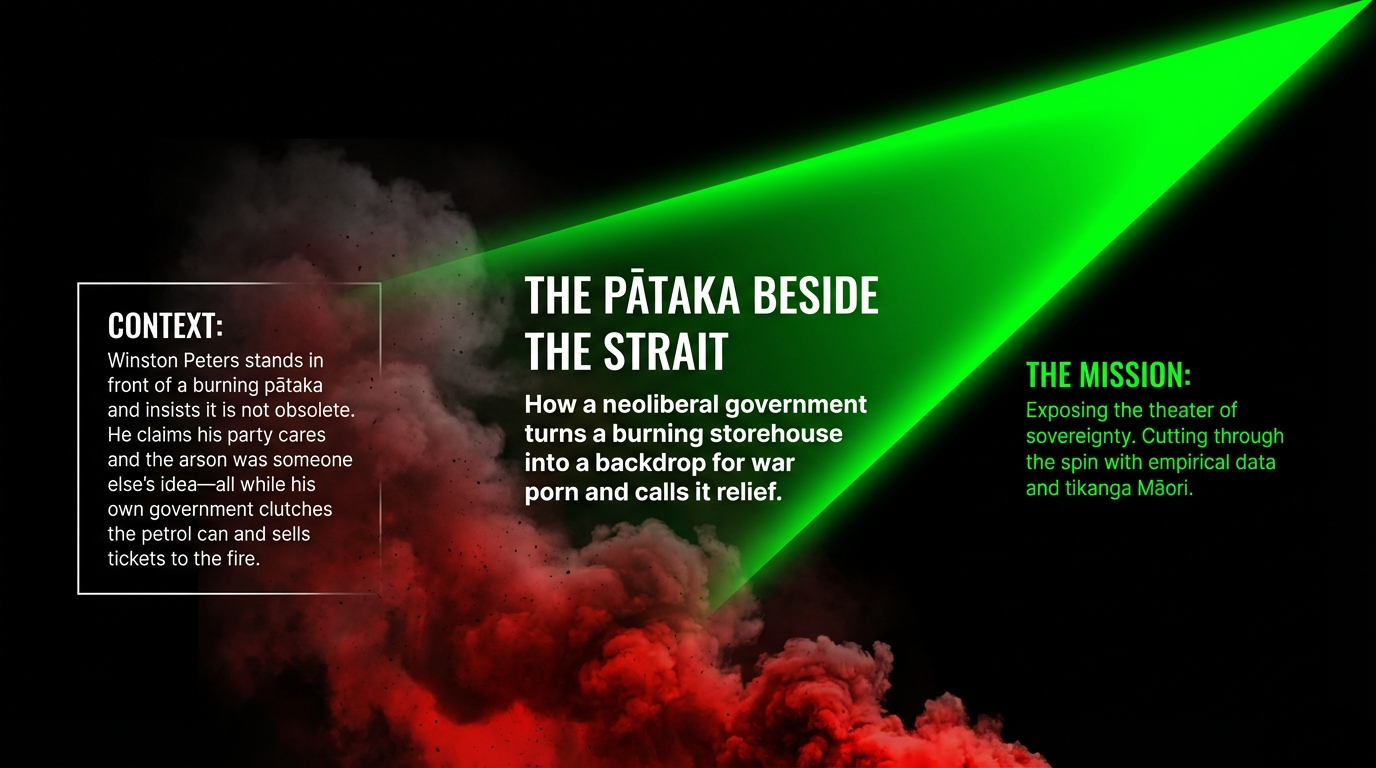
Winston Peters stands in front of a burning pātaka and insists it is “not obsolete”, that only his party cares, that the arson was somebody else’s idea – all while his own government clutches the petrol can and sells tickets to the fire as “fuel relief”.
When he rants about Marsden Point, the Strait of Hormuz, and the WHO, he is not defending sovereignty; he is laundering a white‑supremacist, neoliberal project that treats Māori, rural communities and low‑income whānau as acceptable collateral for someone else’s profits and someone else’s war.
The Deep Dive Podcast
Listen to a lively conversation between two hosts, unpacking and connecting topics in the sources of this essay
Background: How the pātaka was actually sold
Marsden Point was built in the 1960s as Aotearoa’s only oil refinery, producing around 70% of our petrol and 90% of our diesel for decades, anchored in deep‑water infrastructure and a pipeline to Auckland, as Te Ara documents. See Te Ara – Marsden Point Oil Refinery and Te Ara – Importing oil, Marsden Point.
But the key fact Peters carefully avoids is this: Marsden Point was privately owned and its closure was a board‑room decision, not a Cabinet order.
Channel Infrastructure (formerly Refining NZ) itself announced in November 2021 that its board had taken a “final investment decision” to stop refining and convert Marsden Point into an import‑only terminal from April 2022, after signing long‑term terminal agreements with bp, Mobil and Z Energy because refining margins had collapsed. See Channel Infrastructure – Board confirms transition to import terminal and Channel Infrastructure – first day of import terminal operations.
The government of the day did not own the refinery, held zero shares, and would have had to buy and then subsidise a deeply uneconomic asset to keep it open, a point even critics grudgingly note when they spell out that shareholders, not ministers, pulled the plug. See the summary of ownership in MBIE – Fuel Security in New Zealand, and contemporary explanations cited in mainstream coverage such as 1News on CO₂ shortages after closure and Channel Infrastructure’s own releases.
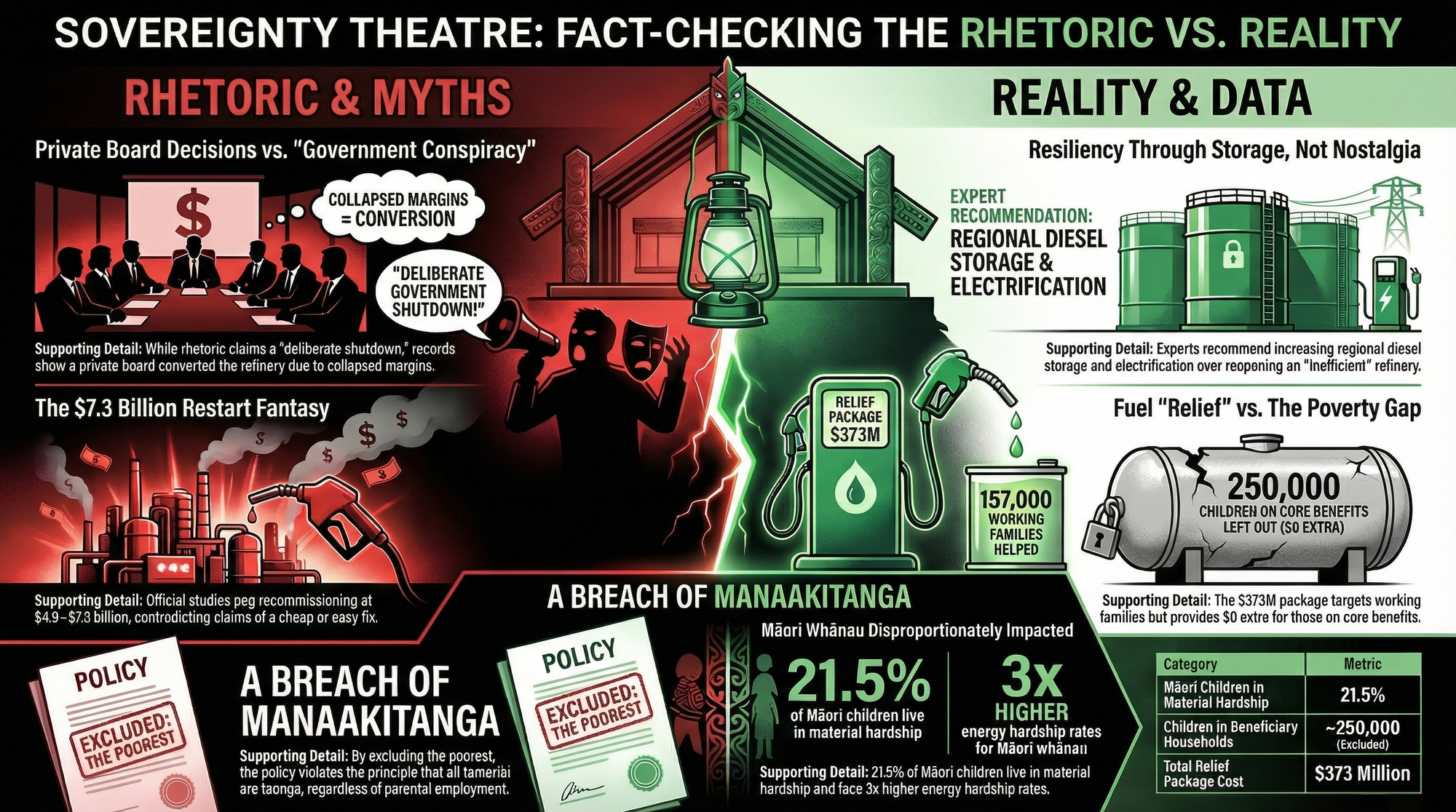
When Peters now screams that Labour “deliberately” closed Marsden Point, he is lying by omission: erasing the board minutes, the shareholder vote, the multi‑nation oil majors, and the coalition’s own commissioned Fuel Security Study, which concludes that reopening the refinery is one of the worst value options on the table.
MBIE’s Fuel Security Study, prepared by Envisory and Castalia in 2025, finds that re‑establishing Marsden Point refinery would require around six years and between NZD 4.9–7.3 billion in capital costs, and still be economically marginal. See MBIE – Fuel Security Study (PDF) and independent summary in Adapt Research – “Beyond 90 Days”.
In other words: the pātaka was sold off by private owners, with global capital calling the tune. This coalition promised to “investigate” buying it back, got told it would cost billions and six years, and is now pretending that a mythical NZD 50–60 million restart is being unfairly denied by some shadowy establishment.
What Peters is really doing in that clip
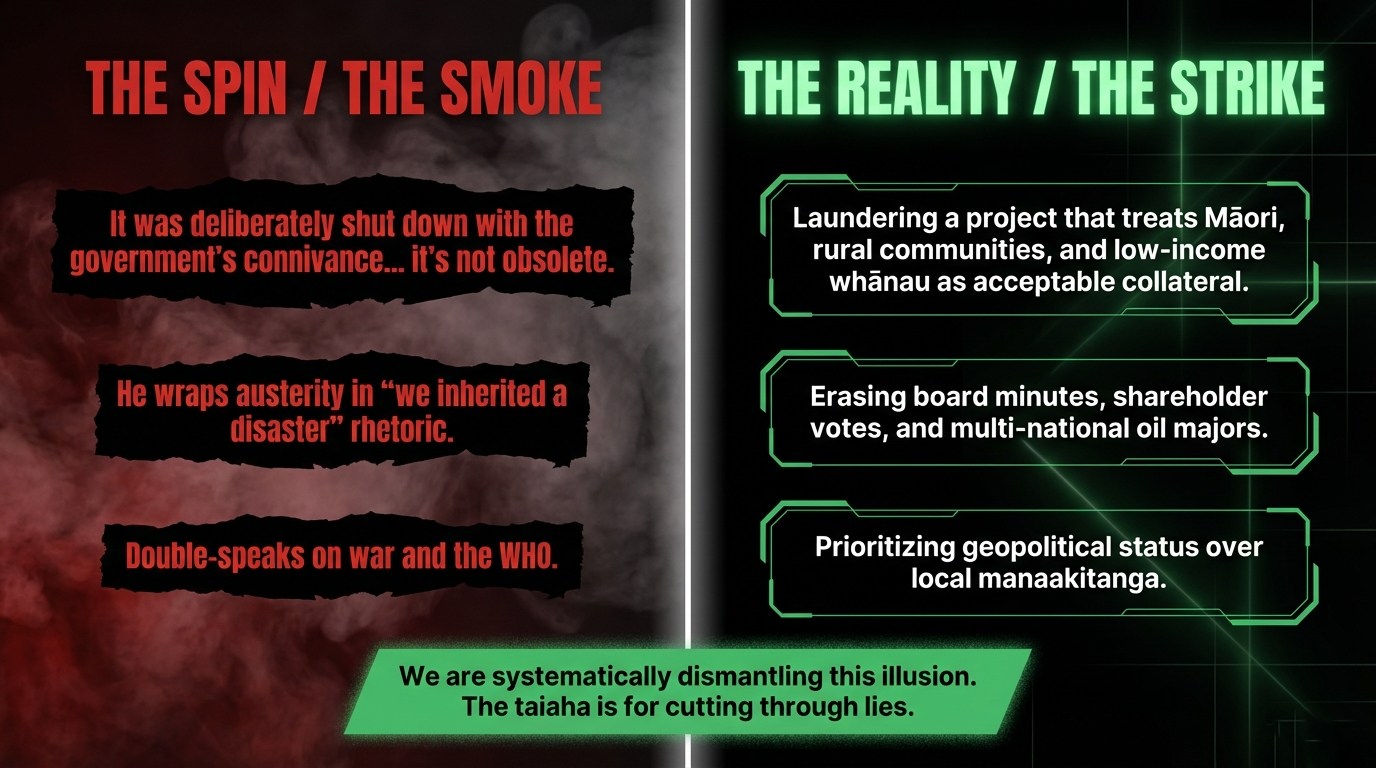
When you strip the bluster away, Peters’ performance in that press stand‑up does four things at once:
- He rewrites the whakapapa of Marsden Point – turning a private, shareholder‑driven closure into a Labour conspiracy, despite the public record to the contrary.
The MBIE Fuel Security Study and Channel Infrastructure documents make clear the closure was driven by long‑term margin collapse and board decisions, not a ministerial decree. See MBIE – Fuel Security Study and Channel Infrastructure release. - He sells a fake “cheap fix” – brushing off the journalist’s reference to a NZD 50–60m figure but refusing to say his own number, while his own coalition’s study pegs real recommissioning costs at up to NZD 7.3b.
That estimate is reported in industry coverage of the interim recommissioning report, which cites Worley’s range of NZD 4.9–7.3b and a six‑year timeframe. See Argus Media – “Reopening New Zealand refinery could cost $4bn” and Adapt Research. - He wraps austerity in “we inherited a disaster” rhetoric – using the fuel support package to posture as the reluctant saviour who wishes he could give more, while backing a design that deliberately excludes many of the poorest whānau.
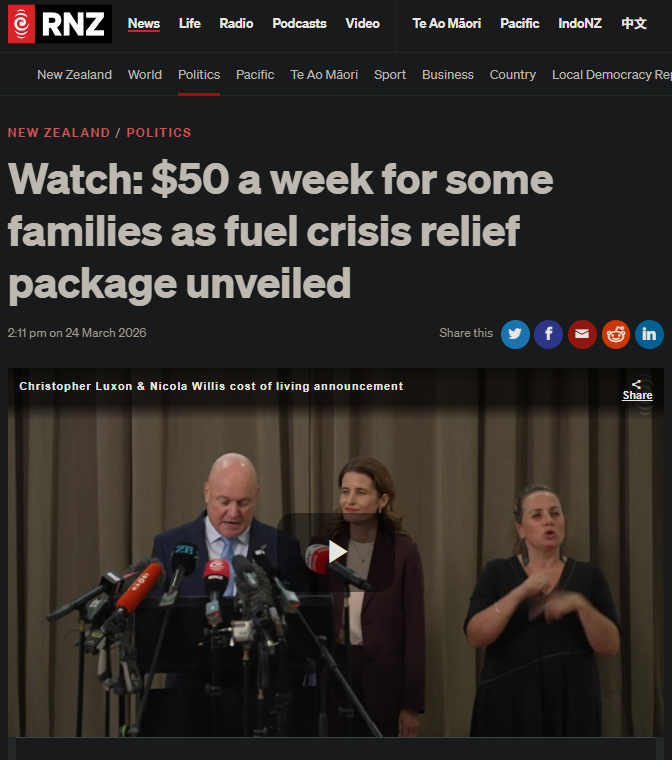
The package gives $50/week via the In‑Work Tax Credit to about 143,000 working families in full and 14,000 more at a reduced rate, costing up to $373m, but provides nothing extra for beneficiaries despite around a quarter of a million children living in households on main benefits. See 1News/RNZ explainer and the RNZ press conference coverage via RNZ video. - He double‑speaks on war and the WHO – signing New Zealand onto joint statements about securing the Strait of Hormuz and rejecting WHO regulations, then insisting NATO’s Mark Rutte “doesn’t speak for us” and that WHO is trying to “run the world”, despite his own Ministry’s documentation showing a much more modest reality.
Compare the NATO Secretary‑General’s description of a 22‑country effort including New Zealand to reopen the Strait of Hormuz in coverage like Astro Awani and CBS‑syndicated reports, with Peters’ denials in RNZ/ODT reporting.
And contrast his WHO fear‑mongering with the Ministry of Health’s explanation of the International Health Regulations amendments – which focus on clearer definitions of pandemics, equity in access to vaccines and medicines, and establishing national IHR authorities – in Ministry of Health – IHR amendment update and analysis by public health experts in 1News.
This is not an elder statesman correcting the record. It is a practiced operator spinning another layer of smoke over a fire his own government is feeding.
Marsden Point: The burned pātaka he pretends is intact
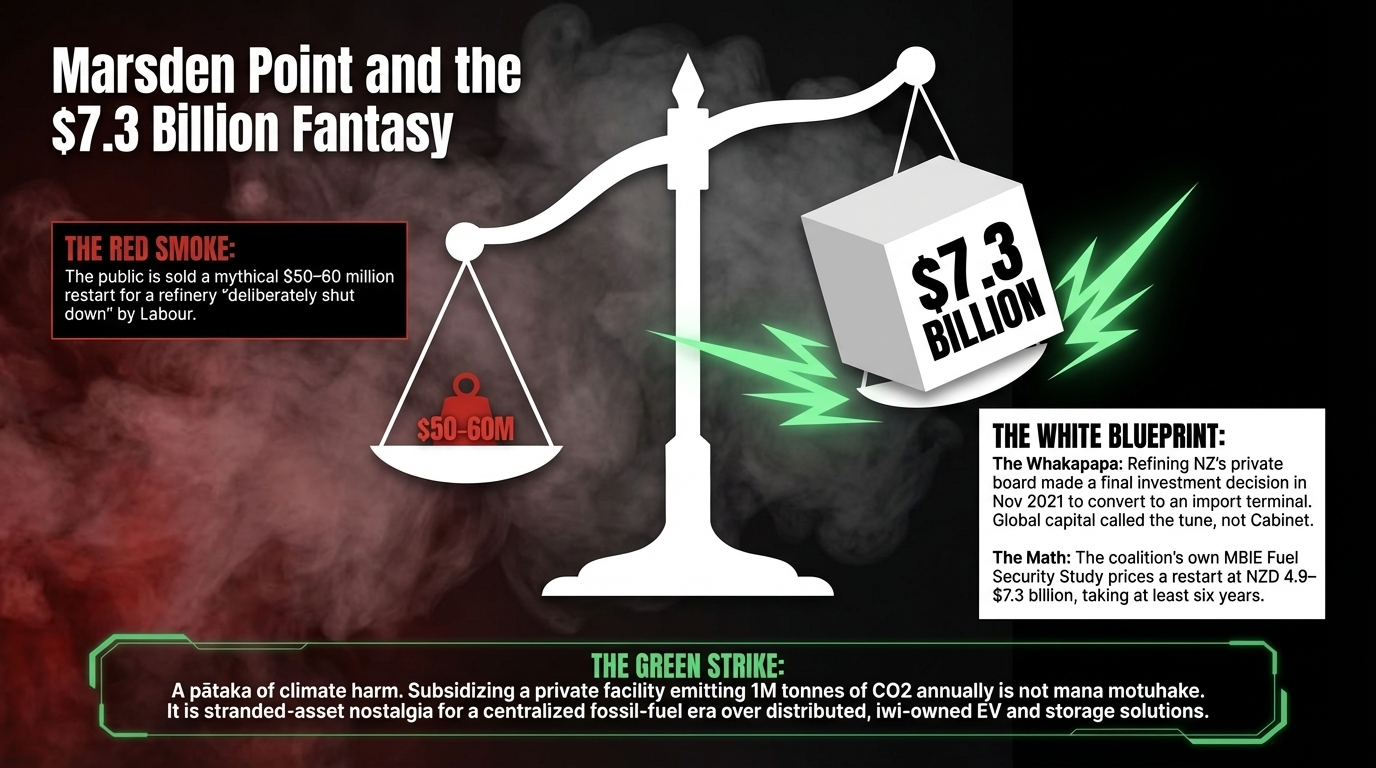
Peters says Marsden Point “was deliberately shut down with the government’s connivance” and “it’s not obsolete”. The record says otherwise.
- Private board, not Cabinet: Refining NZ’s 22 November 2021 statement is explicit: its board took the final investment decision to convert to an import terminal, after a strategic review and shareholder approval of long‑term import contracts. There is no Cabinet directive in that whakapapa, only market logic. See Channel Infrastructure – transition decision.
- Import‑only reality: Since March 2022, Channel Infrastructure has run Marsden Point as an import terminal handling around 40% of New Zealand’s refined fuel through its deep‑water jetties and pipeline to South Auckland, as outlined in its own terminal and pipeline documentation and in MBIE’s Fuel Security Plan. See Channel Infrastructure – Terminal & Pipeline Services and MBIE – Fuel Security Plan (PDF).
- Fuel Security Study verdict: The coalition’s Fuel Security Study, commissioned under the National–NZ First deal, assesses options to improve resilience up to 2035. It finds that the most cost‑effective measures are increasing diesel and jet storage, boosting trucking capacity, and accelerating zero‑emission vehicles – while reopening Marsden Point or building a new refinery is “inefficient” given its NZD 4.9–7.3b cost and limited benefit across fuel types. See MBIE – Fuel Security Study and its summary on Fuel Security in New Zealand.
Meanwhile, the same study notes that stock levels for diesel and jet have already increased since closure, helped by new storage and a minimum stockholding obligation that will require importers to hold 28 days of petrol, 21 days of diesel, and 24 days of jet onshore, plus extra diesel cover. See Fuel Security Plan.
So when Peters implies the answer is simply to “get it up and going” again, he is erasing six years of capital works, deliberate decommissioning, and a multi‑billion‑dollar cost estimate that his own government commissioned and then quietly shelved.
He is also ignoring that the same Fuel Security Study recommends focusing on storage, logistics and decarbonisation, not throwing money at a single high‑carbon point of failure. See MBIE – Fuel Security Study and independent critique in Adapt Research.
Tikanga impact: pātaka as infrastructure whakapapa
In te ao Māori, a pātaka is not just a shed; it is a whare that holds whakapapa of obligation – to feed, to protect, to anticipate storms.
Marsden Point, for all its colonial and fossil‑fuel whakapapa, functioned as a kind of national pātaka for high‑density fuels and critical by‑products like CO₂ and sulphur. Its closure has already produced downstream shocks, like the CO₂ shortages that threatened breweries and food processing after 2022. See 1News on CO₂ shortage.
But tikanga analysis cuts both ways:
A pātaka that can only be fed by imported crude and emits a million tonnes of CO₂ a year is a pātaka of climate harm as well as security. Channel Infrastructure notes that conversion to an import terminal cuts its direct emissions by almost one million tonnes annually – about a third of the first Emissions Reduction Budget. See Channel Infrastructure – transition release.
Tikanga asks: who controls the key, who decides what is stored, who eats first when the storm hits? Under the current regime, that key is held by a private company and global suppliers, but Peters’ solution is not to return control to hapū, iwi or communities – it is to fantasise about a Crown‑subsidised refinery operating on behalf of the same global supply chains.
This is not mana motuhake over energy. It is nostalgia for a whiter, more centralised industrial era, wrapped in conspiracy about Labour “closing” something they never owned.
Fuel “relief”: pouring petrol on the poor and calling it kindness
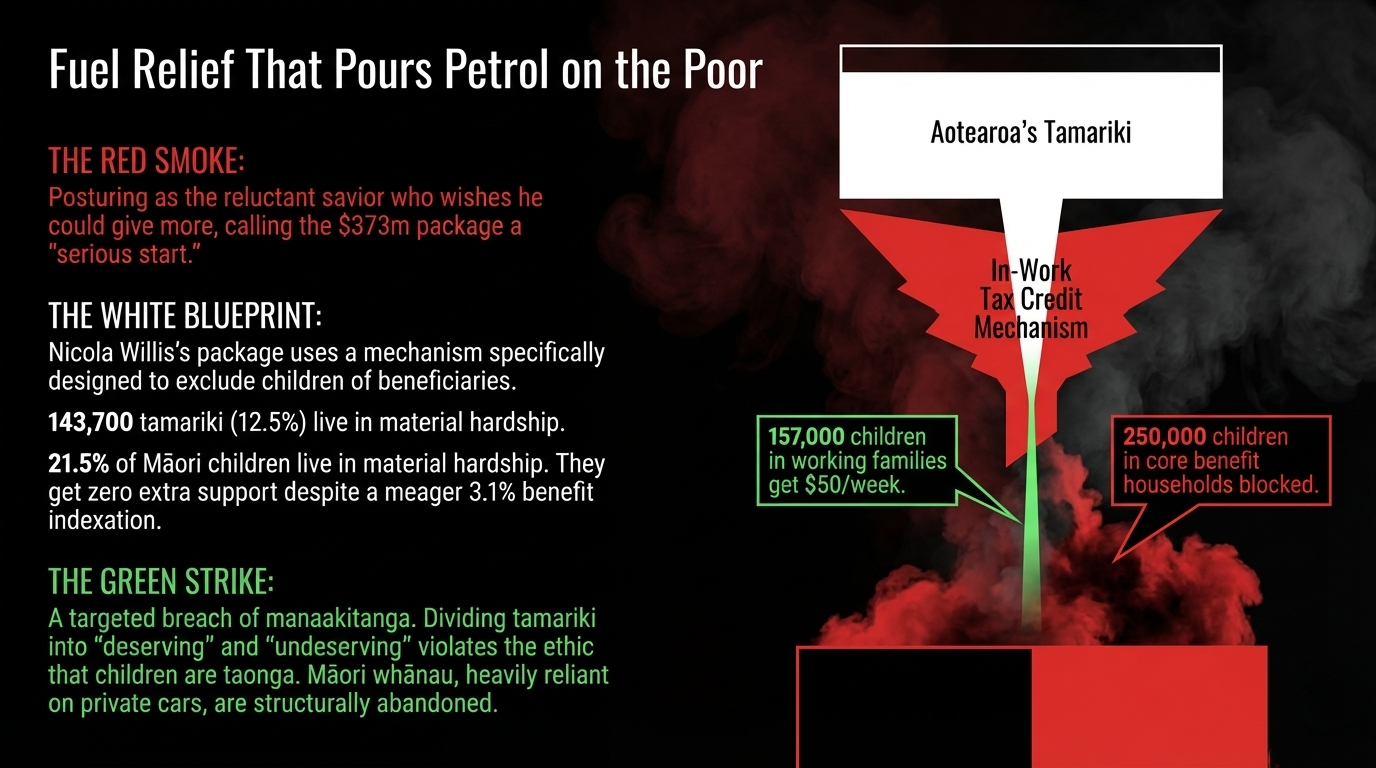
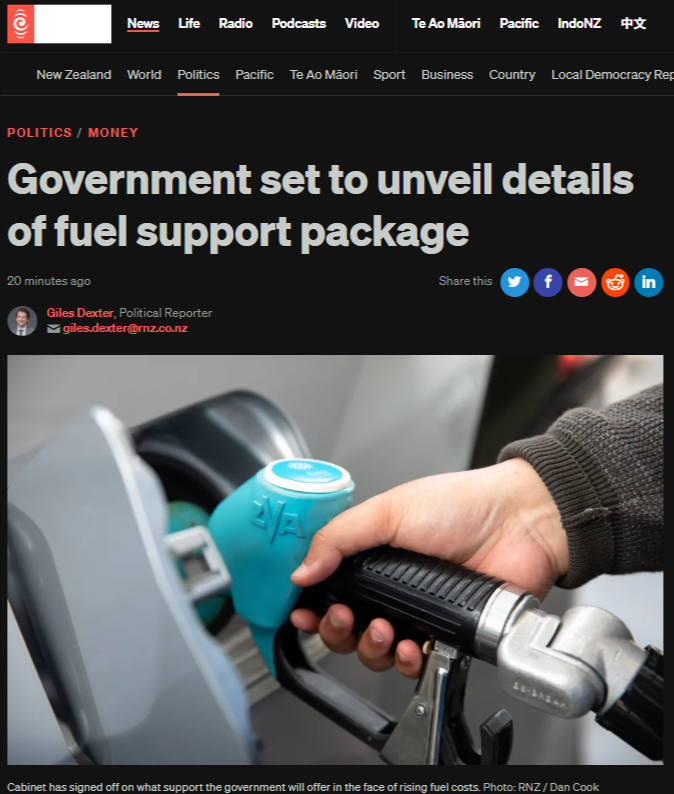
Peters calls the government’s fuel support a “serious start”, then pleads fiscal poverty when pressed on why it does not go further. The design of that package tells the real story.
The package, announced by Finance Minister Nicola Willis, delivers:
- $50/week to around 143,000 low‑ to middle‑income working families with children via a temporary boost to the In‑Work Tax Credit, with another 14,000 families getting a reduced amount.
- The payment starts in early April, lasts up to a year, or until 91 octane petrol drops below $3/litre for four consecutive weeks.
- The estimated cost is up to $373m, funded within the existing Budget 2026 operating allowance. See 1News/RNZ coverage, RNZ’s press conference video and transcript, and the social media summary by RNZ.
Child Poverty Action Group points out the obvious obscenity: roughly a quarter of a million children in households reliant on core benefits – those living closest to the edge – get nothing extra at all.
See critique quoted in 1News.
Now lay that against the latest hardship data:
- By June 2023, 12.5% of children (143,700 tamariki) were living in material hardship – up from 10.5% a year earlier.
- 21.5% of Māori children were in material hardship, roughly one in five.
- 17.5% of all children (202,100) were in households with incomes below 50% of the median after housing costs – the worst rate since 2019.
These figures come from Stats NZ child poverty data summarised by 1News.
In other words, the coalition has designed a fuel “relief” scheme that:
- Directs hundreds of millions to households already in paid work who qualify for the In‑Work Tax Credit;
- Leaves many of the poorest whānau, disproportionately Māori and Pacific, to absorb fuel and transport shocks with only a 3.1% benefit indexation – already judged inadequate by child advocates;
- Uses the In‑Work Tax Credit architecture, which has long been criticised for excluding children in beneficiary families from full support. See persistent critiques summarised by Child Poverty Action Group and background in MSD’s Families Package evaluation.
Tikanga impact: manaakitanga for some, abandonment for others
Manaakitanga is not means‑tested on whether you ticked the “hours worked” box this week.
From a tikanga lens:
- Dividing tamariki into “deserving” (parents in paid work) and “undeserving” (parents on benefits) violates the basic ethic that children are taonga whose wellbeing is not conditional on labour market status.
- Transport dependence is not evenly spread. Māori whānau – particularly kaumātua and rural communities – rely heavily on private cars for daily living, cultural obligations and access to health care, with limited viable public transport. Research on Māori transport patterns shows kaumātua are almost entirely car‑dependent, and increased fuel costs directly constrain their ability to maintain cultural practices and whānau connections. See “Transport practices of Māori Kaumātua” and Raerino et al., “Indigenous Māori perspectives on urban transport”.
So when Peters shrugs that “of course” he’s worried about regional New Zealand but didn’t push for targeted support to diesel‑reliant rural whānau, he is admitting – proudly – that the coalition’s priority was keeping the Budget optics clean, not keeping mokopuna warm and mobile.
That is not fiscal prudence. It is a carefully targeted breach of manaakitanga and whanaungatanga aimed squarely at the poor, with Māori carrying a disproportionate share of the hurt, as wider inequality data on incomes and wages confirms. See Te Ara – Ethnic Inequalities and Treasury’s ethnic wage gap analysis.
Strait of Hormuz: sovereignty theatre in front of someone else’s war
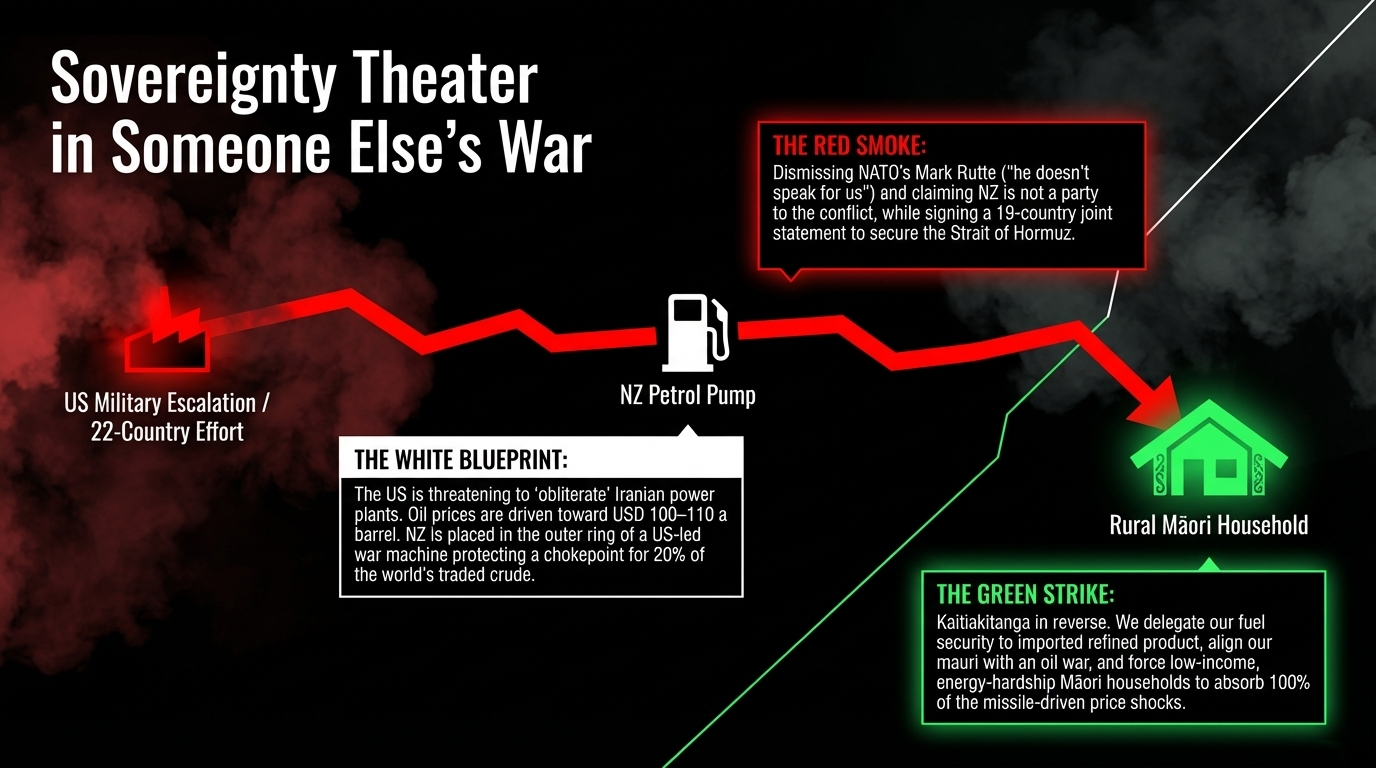
When Peters is pressed on NATO Secretary‑General Mark Rutte saying New Zealand is part of efforts to secure the Strait of Hormuz, he snaps back that Rutte “doesn’t speak for us” and was probably “misinformed”.
But look at the actual diplomatic whakapapa:
- A joint statement signed by New Zealand and 19 other countries condemns Iranian attacks on commercial ships and declares signatories “ready to contribute to appropriate efforts to ensure safe passage through the Strait”.
- Rutte then goes on television and lists New Zealand among around 22 countries “coming together” to reopen the Strait. See coverage in Astro Awani and US outlets like WSJ live coverage.
Domestically, Peters reassures the public that New Zealand is “not a party to this conflict” and has “absolutely no intention of joining it”, casting critics as scaremongers. See his comments summarised in RNZ/ODT – “Peters denies NZ has signed up to secure Strait of Hormuz”.
Meanwhile, the war Peters dismisses as “guesswork” is already:
- Driving oil prices towards or above USD 100–110 a barrel;
- Seeing Trump threaten to “obliterate” Iranian power plants if the Strait is not reopened within 48 hours, then “pausing” those strikes for five days to allow “very good and productive” talks – a pattern reported across multiple outlets. See 1News – Trump threats and deadline, 1News – Trump extends deadline and talks, and detailed analysis in Al‑Monitor.
New Zealand is not sending marines. But Peters has placed us in the outer ring of a US‑led war machine that is explicitly about protecting the flow of oil through a chokepoint that carries roughly a fifth of the world’s traded crude, as energy analysts and outlets like 1News regularly note. See explanation of the strait’s significance in 1News conflict coverage.
Tikanga impact: aligning our mauri to a war for oil
From a tikanga lens, this is not abstract geopolitics.
- Every litre of fuel whose price spikes because of the Hormuz war lands hardest on low‑income, rural and Māori households already disproportionately in material hardship and energy hardship, as both Stats NZ and MBIE’s energy hardship reports show. See 1News on child poverty and MBIE’s Report on energy hardship measures.
- Aligning our foreign policy more closely with an explicitly aggressive US campaign to bomb Iranian energy infrastructure, while still delegating our fuel security to imported refined product, is the opposite of kaitiakitanga. Our whenua and moana still bear the extraction cost of fossil fuels, but our people carry the price shock from every missile fired half a world away.
Peters wants the mana of being seen with Trump and NATO on “security” while disavowing any responsibility for the economic and tikanga consequences of tying our economic mauri to their war.
WHO regulations: fake taniwha, real viruses
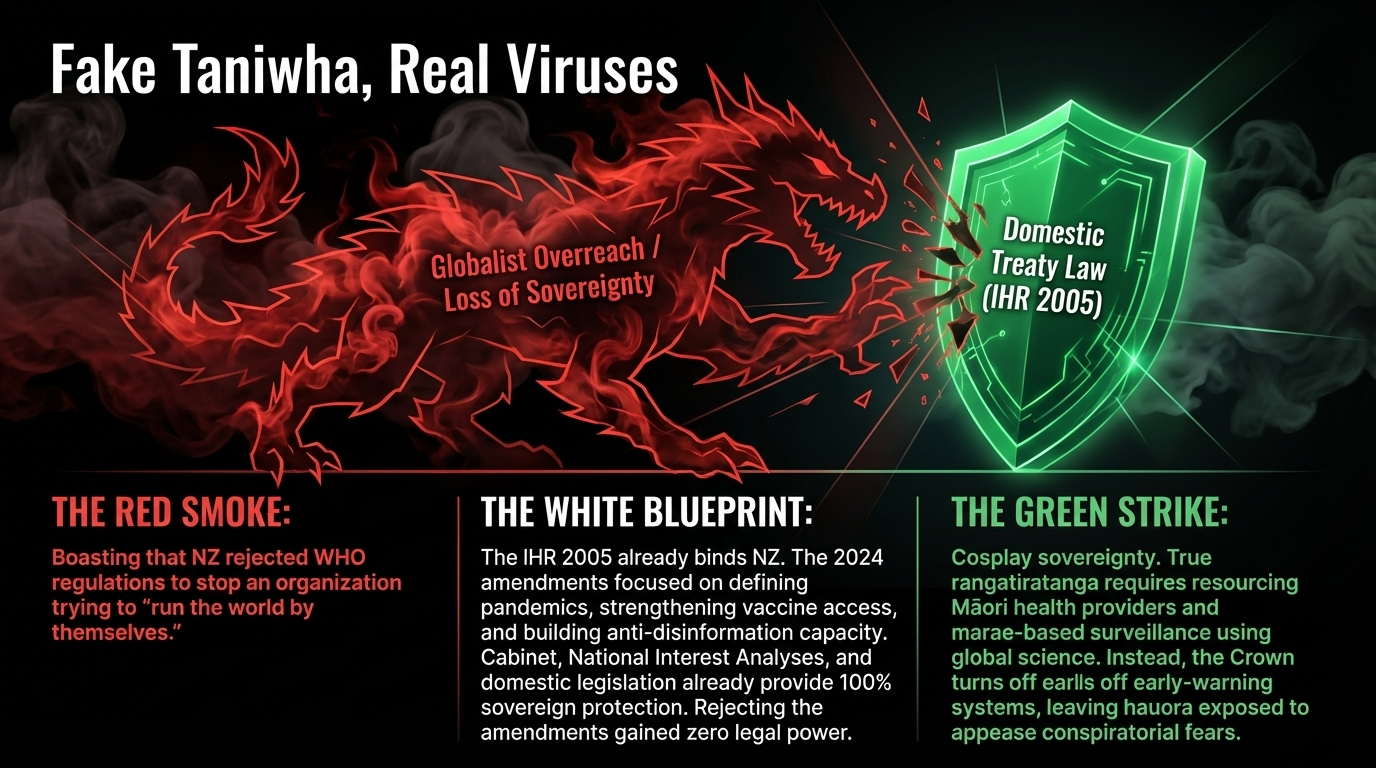
In the clip, Peters boasts that the government rejected WHO International Health Regulations (IHR) amendments because the WHO went from “respecting national sovereignty” to thinking it could “run the world by themselves”.
The actual record:
- New Zealand is party to the IHR 2005, an agreement between WHO member states setting out how countries prevent, prepare for and respond to cross‑border disease threats while minimising unnecessary disruption to travel and trade. This is laid out clearly in Te Ara’s overview of epidemics and in the Ministry of Health’s own pages. See Te Ara – Epidemics, international responsibilities and Ministry of Health – IHR amendment update.
- In 2023, the previous government rejected a 2022 amendment to Article 59 (shortening the decision window) to give more time to consider future amendments – a step the Ministry openly explained. See Ministry of Health update.
- In 2024, the World Health Assembly adopted a package of IHR amendments focused on: defining “pandemic emergency”; strengthening access to medical products and financing for developing countries; setting up a state parties committee; and requiring countries to establish national IHR authorities, including capacity to address misinformation and disinformation. This is summarised by public health experts in 1News analysis and specialist commentary like the Public Health Expert Briefing in Aotearoa.
- In March 2026, the Ministry of Health states that “New Zealand has decided to reject the 2024 amendments to the IHR” and has notified the WHO Director‑General, a decision also reported in sympathetic outlets that quote Peters framing it as “health decisions should be made from Wellington, not Geneva”. See summary in Centrist’s report on the decision drawing directly on the Ministry’s wording.
Crucially, none of these amendments would have given the WHO power to impose lockdowns, vaccine mandates or any of the apocalyptic fantasies NZ First campaigned on. Legal scholars and public law experts have already explained – patiently – that New Zealand retains full control over how treaties are implemented, through Cabinet approval, National Interest Analyses, select committee scrutiny and domestic legislation. See 1News – “Analysis: NZ First fears over WHO regulations are misplaced” and the Cabinet Manual‑based process described there.
Global health reporters and organisations like ProPublica have also underlined that WHO’s problem is weakness, not tyrannical overreach: it lacks enforcement power, is structurally deferential to member states, and cannot force compliance – a reality that frustrated many during COVID‑19. See, for example, ProPublica’s investigation into US attempts to leave the WHO and commentary on IHR’s limited enforcement muscle in “Inside the Trump Administration’s Decision to Leave the World Health Organization”.
Tikanga impact: sovereignty talk that abandons hauora
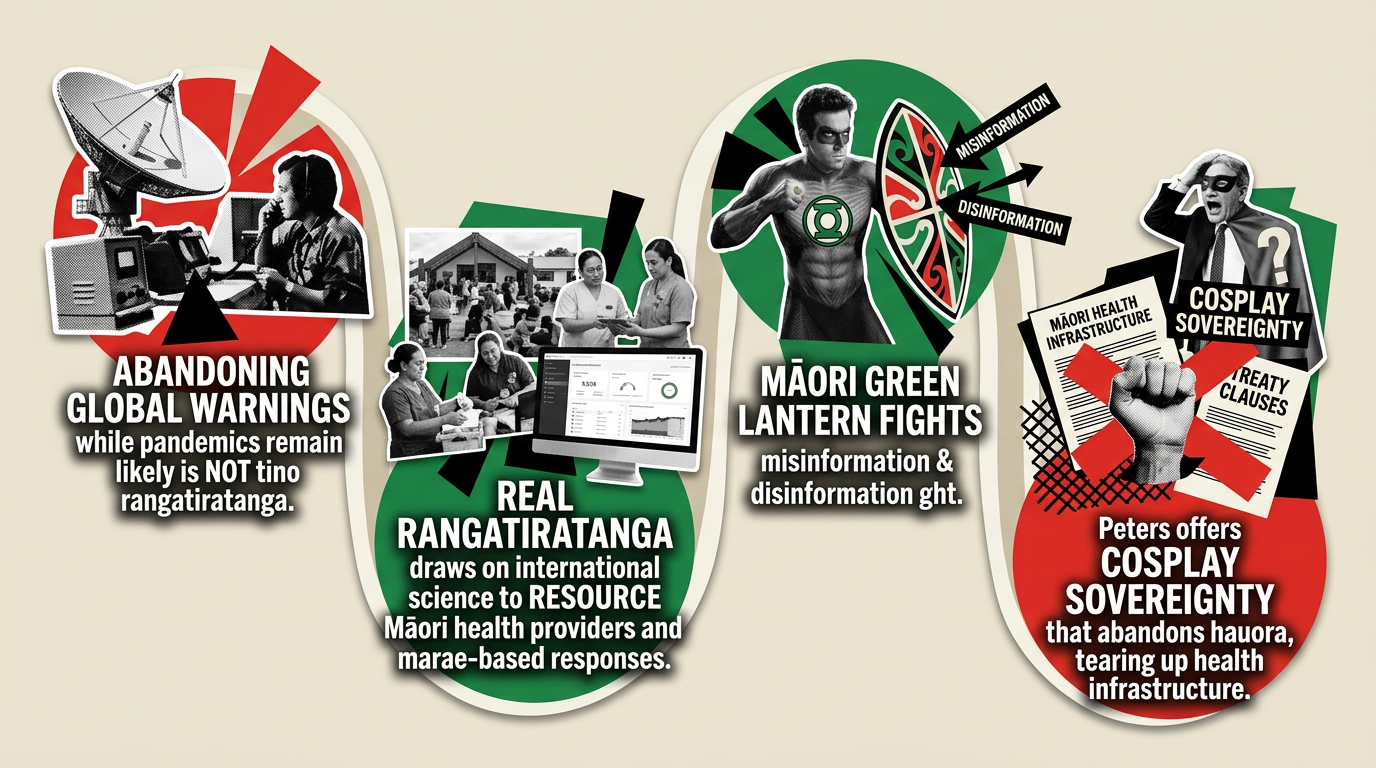
From a tikanga standpoint:
- Tino rangatiratanga in health is not achieved by turning off global early‑warning systems while pandemics remain likely – WHO itself warns countries to prepare for a pandemic “worse than Covid‑19” in our lifetimes. See 1News – WHO warning.
- Real rangatiratanga would mean resourcing Māori health providers, marae‑based responses, and iwi‑led surveillance in ways that draw on international science without subordinating us to it – exactly the kind of Indigenous‑led disaster risk reduction Te Ara and Māori scholarship describe. See Te Ara – Epidemics and research like “Indigenous Knowledges of forest and biodiversity management” via SAGE.
Instead, Peters offers a cosplay version of sovereignty that plays to conspiratorial Pākehā fears of “globalists”, even as his own government gleefully tears up Māori health infrastructure and rewrites Treaty clauses across domestic law – a pattern The Māori Green Lantern has already documented in detail in “Back to Basics, Back to Brutality: How a ‘Hodgepodge’ of Bills Became the Most Coordinated Assault on Māori Rights in a Generation”. See link via The Māori Green Lantern archive.
Tikanga under siege: what this all means for Māori
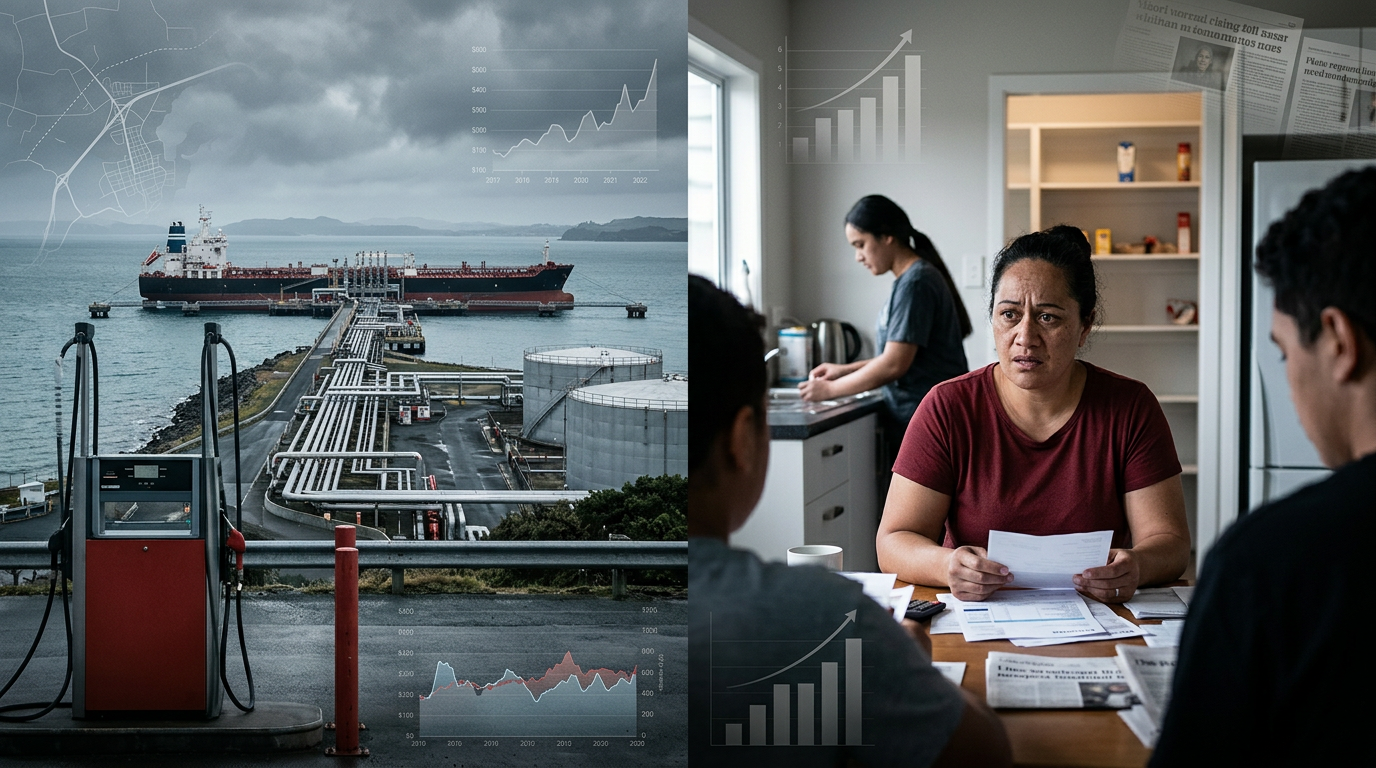
Put Peters’ talking points together and the pattern is stark:
- Marsden Point: He refuses to confront a private, profit‑driven closure documented by MBIE and Channel Infrastructure, but wants Māori and working‑class communities to rally behind a fantasy of a cheap nationalist restart – while ignoring both climate impacts and the government’s own expert advice. See MBIE Fuel Security materials and Channel Infrastructure releases.
- Fuel relief: He sells a package that directs hundreds of millions through a mechanism structurally biased against beneficiary families, in a context where one in five Māori tamariki are already in material hardship and Māori households are more likely to experience energy hardship and housing problems. See 1News on child poverty and MBIE’s energy hardship report.
- Hormuz and WHO: He uses the language of sovereignty to justify siding with Trump’s oil war at one end of the supply chain while turning away from collective pandemic preparedness at the other, leaving Māori whānau squeezed between volatile fuel prices and future health crises with weakened international coordination.
This is exactly the pattern The Māori Green Lantern has traced in other contexts:
“The Pātaka Is Ash: How Nicola Willis Stood Before a Burning Storehouse and Called It Warm” dissects how this coalition has misrepresented fuel stock figures, underplayed on‑shore diesel days, and used paper contracts as cover while Māori and rural communities face real scarcity and price spikes. See The Māori Green Lantern – The Pātaka Is Ash.
“The Nursery of Cages” and “The Colosseum of Kingsland” show how the same government centralises surveillance and dispossession at home while talking “freedom” and “democracy” abroad. See The Māori Green Lantern – The Nursery of Cages and The Colosseum of Kingsland.
“The Butcher, the Baker, and the Blackmail Maker” lays bare how Crown institutions feed global systems of abuse while pretending not to see the whakapapa linking NZDF, Epstein, Palantir and Gaza. See The Māori Green Lantern – The Butcher, the Baker, and the Blackmail Maker.
The Marsden/Hormuz/WHO performance is just the latest scene in the same play: Crown and corporate structures protecting their own supply chains, profits and geopolitical status, while Māori and the poor are asked to pay in fuel prices, child hunger, and health risk.
Three examples for the Western mind
You asked for three concrete examples that quantify harm, offer solutions, and explain the tikanga impact in terms a Western policy mind can grasp. Here they are.
Example 1: The NZD 7.3b refinery fantasy vs cheaper, fairer resilience
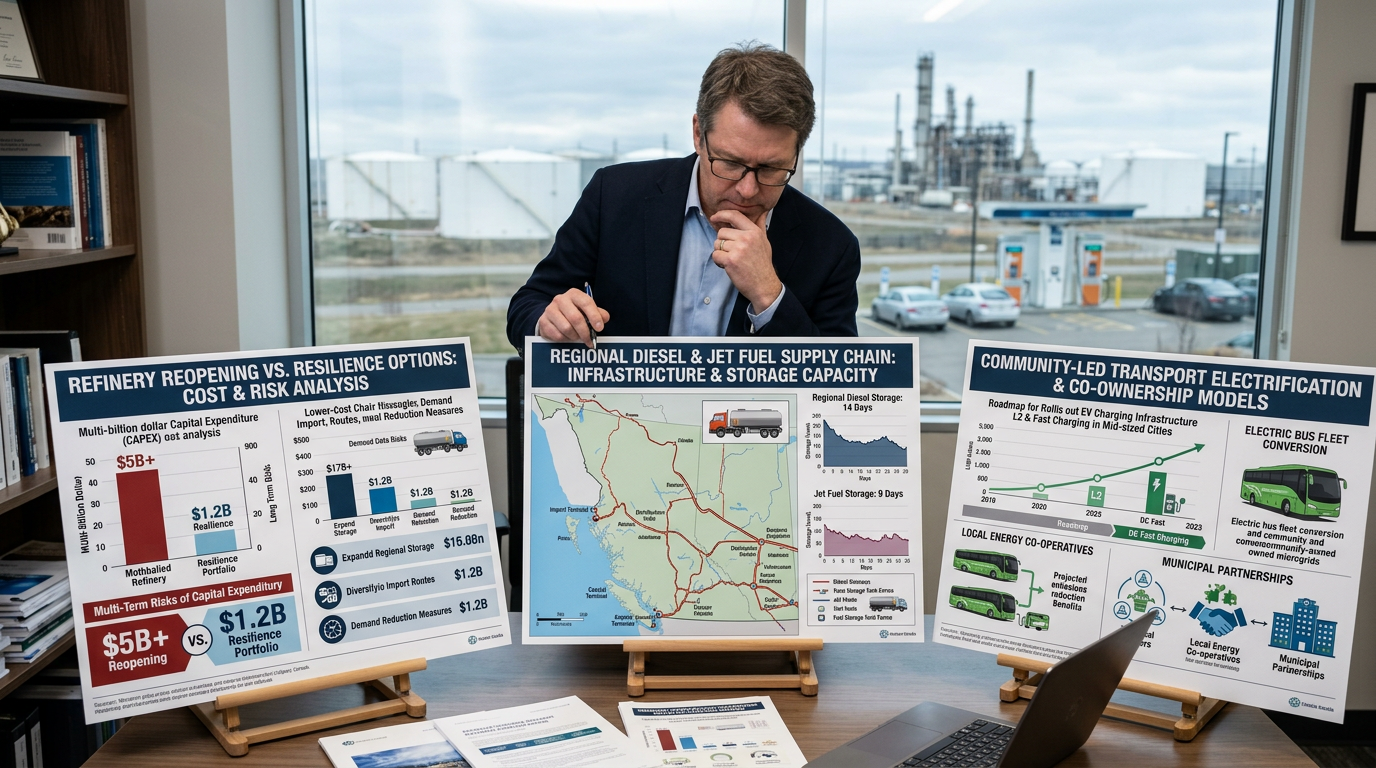
The numbers
- Government‑commissioned analysis estimates re‑establishing Marsden Point refinery would cost NZD 4.9–7.3b and take at least six years, with major commercial risk. See Argus Media and MBIE Fuel Security Study.
- The same study finds that increasing diesel and jet storage, upgrading trucking capacity, and accelerating zero‑emission vehicles deliver more resilience per dollar than reopening the refinery, and explicitly labels reopening as “inefficient” compared to these options. See MBIE – Fuel Security Study.
The harm
Every dollar sunk into a refinery fantasy is a dollar not spent on:
- Extra regional storage so that rural marae and hauora providers have guaranteed access to diesel in crises;
- Electrifying public and community transport that would reduce Māori dependence on private cars over time, as recommended by transport and health equity research. See “The Impact of Transport on Population Health and Health Equity for Māori”.
In Western economic language: this is a catastrophic misallocation of scarce capital, creating stranded‑asset risk while entrenching household exposure to imported fuel volatility.
The tikanga violation
Tikanga requires that when you rebuild a pātaka after a storm, you do so in a way that protects whakapapa and mauri in the long term. Reopening Marsden would lock us into higher emissions and a single‑site failure point, while ignoring more distributed, locally controlled solutions.
The solution (Western‑framed)
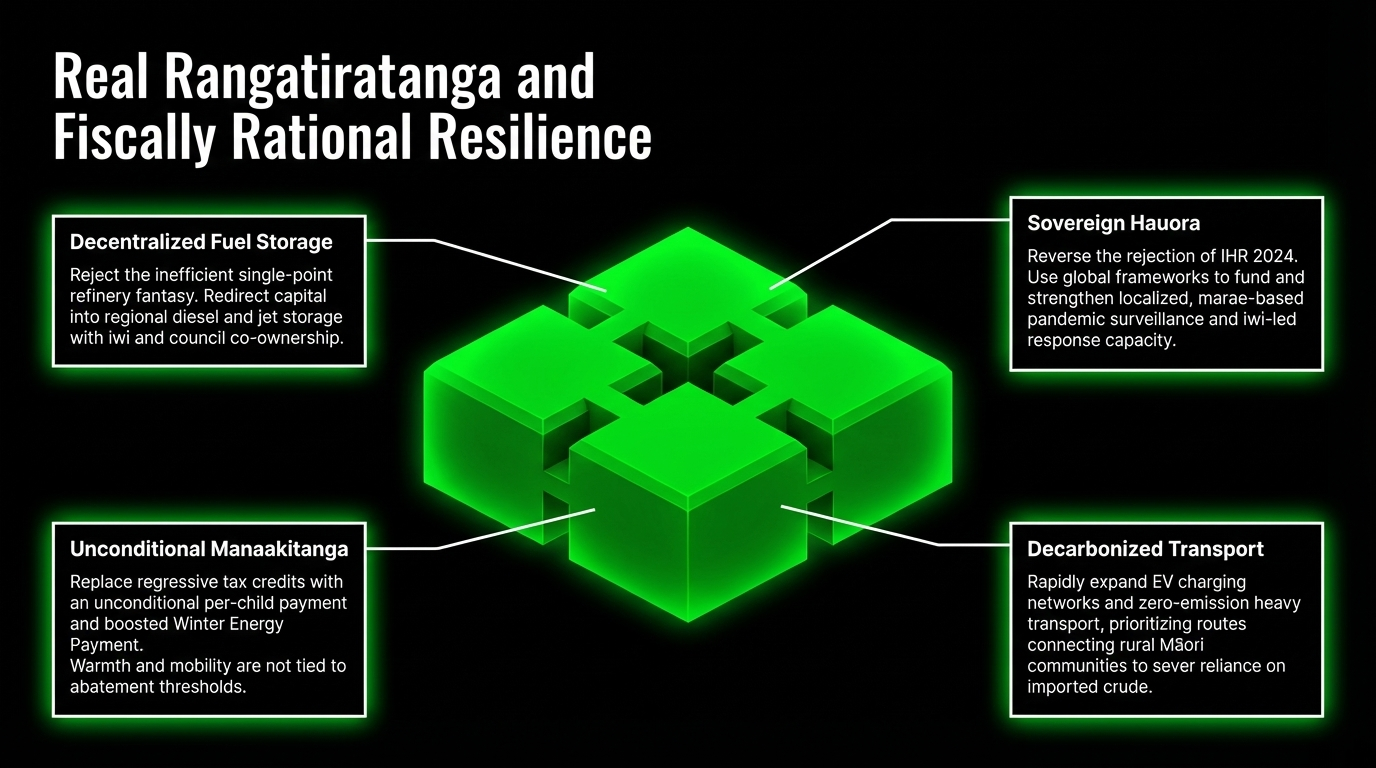
- Accept the Fuel Security Study’s core recommendation: no refinery restart.
- Redirect capital into:
- Regional diesel and jet storage with iwi and council co‑ownership;
- Rapid expansion of EV charging networks and zero‑emission heavy transport, prioritising routes connecting Māori communities, as per MBIE’s own Fuel Security Plan actions. See Fuel Security Plan.
This is both fiscally rational and tikanga‑consistent: it decentralises risk, honours kaitiakitanga, and builds genuine resilience instead of nostalgia.
Example 2: The $373m fuel giveaway that leaves Māori tamariki cold

The numbers
- Fuel support package: up to $373m, reaching about 157,000 working families with an extra $50/week or less via the In‑Work Tax Credit. See 1News coverage and RNZ press conference.
- Child poverty: 143,700 children (12.5%) in material hardship, 202,100 children (17.5%) below 50% median income after housing costs, with Māori tamariki at 21.5% material hardship. See 1News – Cost of living pushes more children into poverty.
- Energy hardship: households with Māori are 2–3 times more likely than the general population to experience problems heating homes or paying utility bills, even as some measures improve. See MBIE’s Report on energy hardship measures.
The harm
A Western policy analyst would recognise this as regressive targeting:
- You deliver support to the “squeezed middle”, many of whom already have greater resilience, while leaving out those on core benefits who are empirically at greatest risk of child poverty and energy hardship.
- You entrench a workfare logic where the children of beneficiaries are treated as less deserving of fuel‑related relief, even though their parents still have to drive to shops, schools, medical appointments and whānau obligations.
In purely secular language: this deepens inter‑generational inequality and racialised poverty, since Māori children are over‑represented among those left out. Stats and Treasury data on ethnic income gaps back this up; Māori workers’ average hourly wages remain around 80–82% of Pākehā wages. See Treasury’s ethnic wage gap analysis.
The tikanga violation
This is a textbook breach of manaakitanga and whanaungatanga: it treats tamariki Māori as budget line items whose worth can be discounted if their parents fall on the wrong side of an abatement threshold.
The solution (Western‑framed)
- Replace or supplement the In‑Work Tax Credit boost with a per‑child payment reaching all low‑income families, including those on benefits, during the fuel crisis period – effectively a temporary child supplement keyed to fuel price triggers.
- Increase the Winter Energy Payment substantially for the duration of the crisis, as CPAG advocates, to reflect actual energy and transport burdens. See CPAG commentary quoted in 1News.
From a Crown accountant’s perspective, this is a different distribution of the same $373m envelope; from a tikanga perspective, it re‑aligns support with the principle that all tamariki are taonga whose warmth and mobility matter.
Example 3: WHO theatre that raises pandemic risk while doing nothing for Māori sovereignty
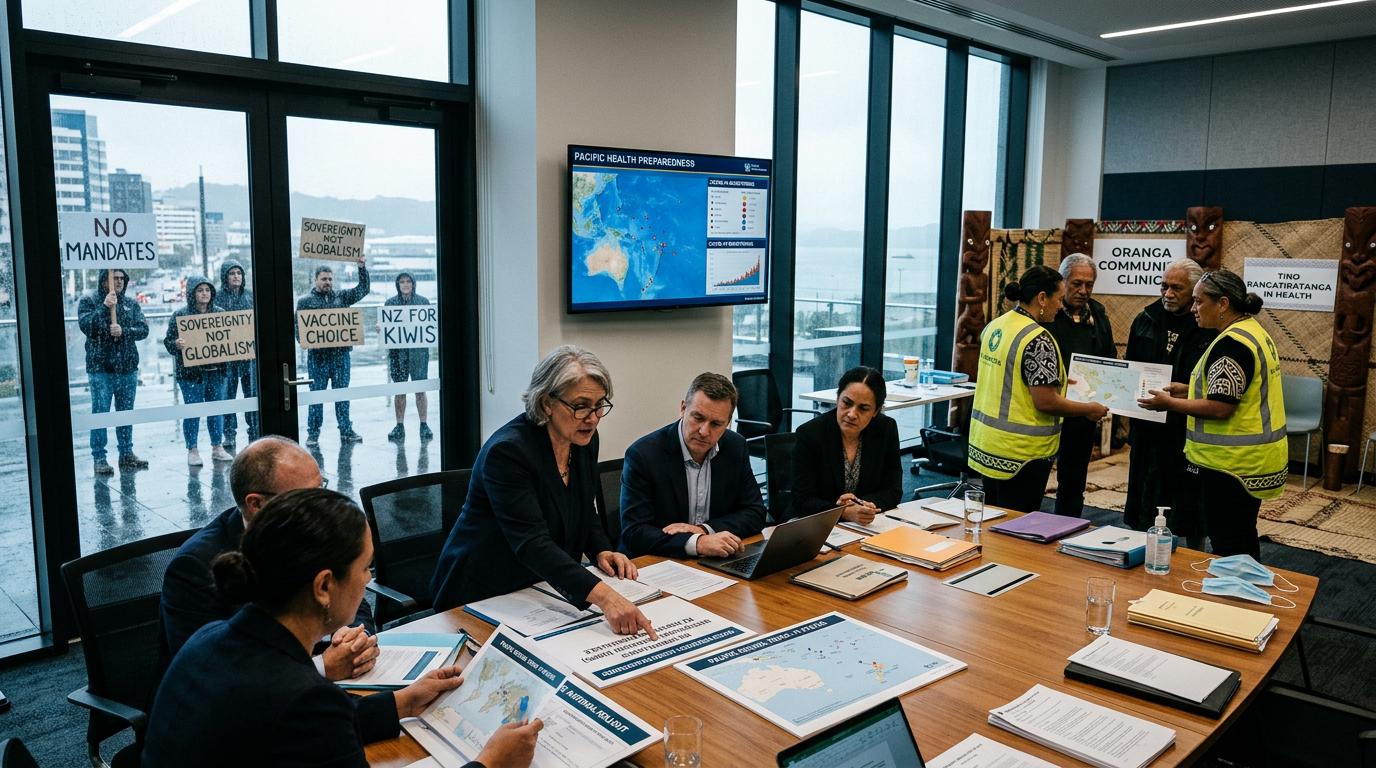
The numbers and law
- The IHR 2005 are already binding; amendments do not change the fundamental reality that WHO cannot override domestic law. New Zealand’s treaty process requires Cabinet approval, a National Interest Analysis, select‑committee scrutiny, and enabling legislation where needed. See 1News analysis by law professors Breen and Gillespie.
- The 2024 amendments focus on: defining “pandemic emergency”; establishing national IHR authorities; and building capacity for risk communication, including handling misinformation. See Ministry of Health – IHR amendment update and 1News public health analysis.
- New Zealand has now rejected those amendments while still remaining party to the base IHR, as acknowledged in Ministry wording and reporting such as Centrist’s summary.
The harm
In Western risk language:
- We reduce our alignment with updated global standards aimed at faster detection, better equity in medical counter‑measures, and more coherent communication – all lessons from COVID‑19 – while gaining no practical increase in sovereign decision‑making power, which we already had.
- We feed domestic disinformation ecosystems that will also be weaponised against Māori health measures, vaccines, and rāhui next time, exactly as we saw at Parliament’s grounds in 2022.
Global public health experts, including those publishing through the Public Health Expert Briefing and international watchdogs like ProPublica, warn that the world remains structurally under‑prepared for the next pandemic, and that weakening cooperative frameworks makes everyone more vulnerable. See Public Health Expert Briefing summary and ProPublica’s pandemic reporting.
The tikanga violation
Peters dresses this as protecting rangatiratanga, but real Māori sovereignty in health would mean:
- Using IHR frameworks to strengthen Māori‑led surveillance, marae‑based vaccination and community‑led response capacity;
- Demanding equity in vaccine access and global financing for Indigenous‑led health systems.
Instead, he delivers a symbolic “no” that wins him applause from anti‑WHO activists while leaving Māori communities more exposed when the next virus crosses Te Moana‑nui‑a‑Kiwa.
The solution (Western‑framed)
- Reverse the rejection of the 2024 amendments after a transparent National Interest Analysis that centres Māori health leadership, and lodge explicit interpretive statements protecting Te Tiriti and Māori self‑determination in health.
- At the same time, legislate domestic protections that prevent any international commitment being used to override Te Tiriti‑consistent Māori health authority – in other words, real sovereignty, not slogan sovereignty.
Implications: counting the damage
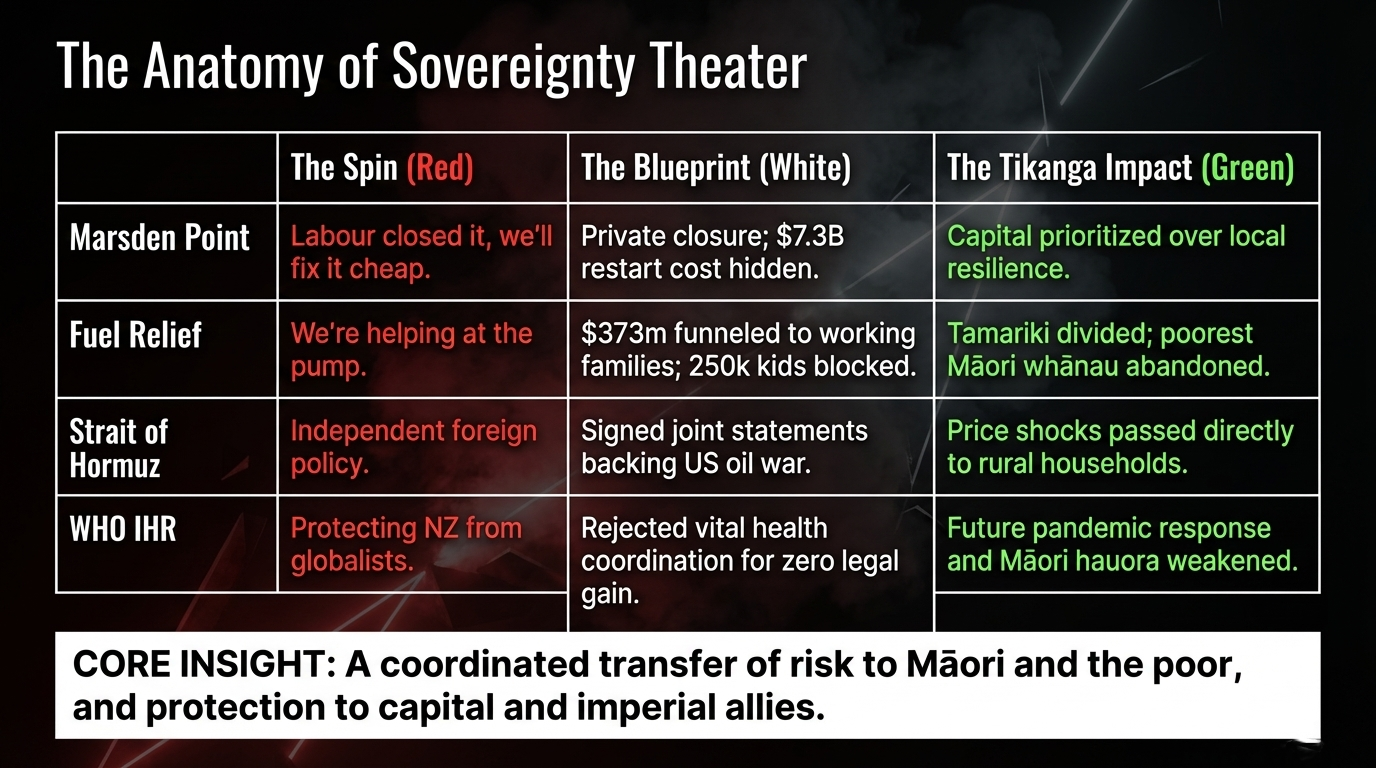
Quantifying the harm is grim but necessary:
- A refinery restart would demand NZD 4.9–7.3b in public or subsidised capital with no guarantee of long‑term viability, while MBIE’s own analysis shows cheaper, more effective paths to resilience. See MBIE Fuel Security Study and Adapt Research.
- The fuel “relief” package, at up to $373m, currently bypasses tens of thousands of Māori tamariki in beneficiary households, in a context where 21.5% of Māori children already live in material hardship and Māori households are up to three times more likely to experience energy hardship indicators. See 1News on child poverty and MBIE’s energy hardship report.
- Rejecting WHO IHR amendments gains zero new legal sovereignty but raises coordination risk for a future pandemic that WHO itself says could be more devastating than COVID‑19, particularly for communities already carrying higher chronic disease burdens and lower life expectancy – categories in which Māori remain over‑represented. See Health NZ’s 2023 Health Status Report coverage and 1News – WHO warning.
Add to this the broader economic context – stagnant productivity, persistent ethnic wage gaps, and an exodus of workers to Australia – as catalogued in 1News’ political and economic coverage, and you get the real picture: a government that protects capital and imperial alliances first, and expects Māori and the poor to tighten their belts, their seatbelts, and their borders for everyone else’s comfort.
See 1News – election‑year economic overview and 1News – “Ditching NZ for Oz”.
Picking up the taiaha
Winston Peters likes to joke he should be a journalist for a week. The problem is that his idea of journalism is to sneer at reporters who have done their homework, while he recycles talking points already contradicted by his own ministries’ PDFs.
- The Fuel Security Study his coalition ordered blows apart his Marsden Point cost fantasy.
- MBIE’s Fuel Security Plan shows that real resilience lies in storage, trucking logistics and decarbonisation, not refinery nostalgia.
- Stats NZ and Health NZ data show Māori tamariki and households bear the sharpest edge of poverty and energy hardship, the very groups his fuel package sidelines.
- The Ministry of Health and international public health experts spell out what the WHO IHR amendments do – and do not – do, in black and white.
This is not ignorance. It is choice. It is white‑supremacist neoliberalism doing what it has always done in Aotearoa:
- Protecting the flows of capital and oil;
- Invoking “sovereignty” to punch down at Māori, the poor, and international institutions that might one day constrain the worst corporate excesses;
- Weaponising fear of “globalists” while happily binding us closer to an American war machine prepared to bomb power plants over a shipping lane.
The taiaha response is not to politely “debate” this. It is to name it, track the whakapapa of every decision, every PDF, every speech, and to organise so that when the next budget, the next war scare, the next pandemic proposal arrives, Māori and our allies are not standing in the forecourt begging for $50 of relief while the pātaka burns behind us.
Kia mau ki te riri tika. The taiaha is for cutting through lies, not for decoration.
Koha Consideration
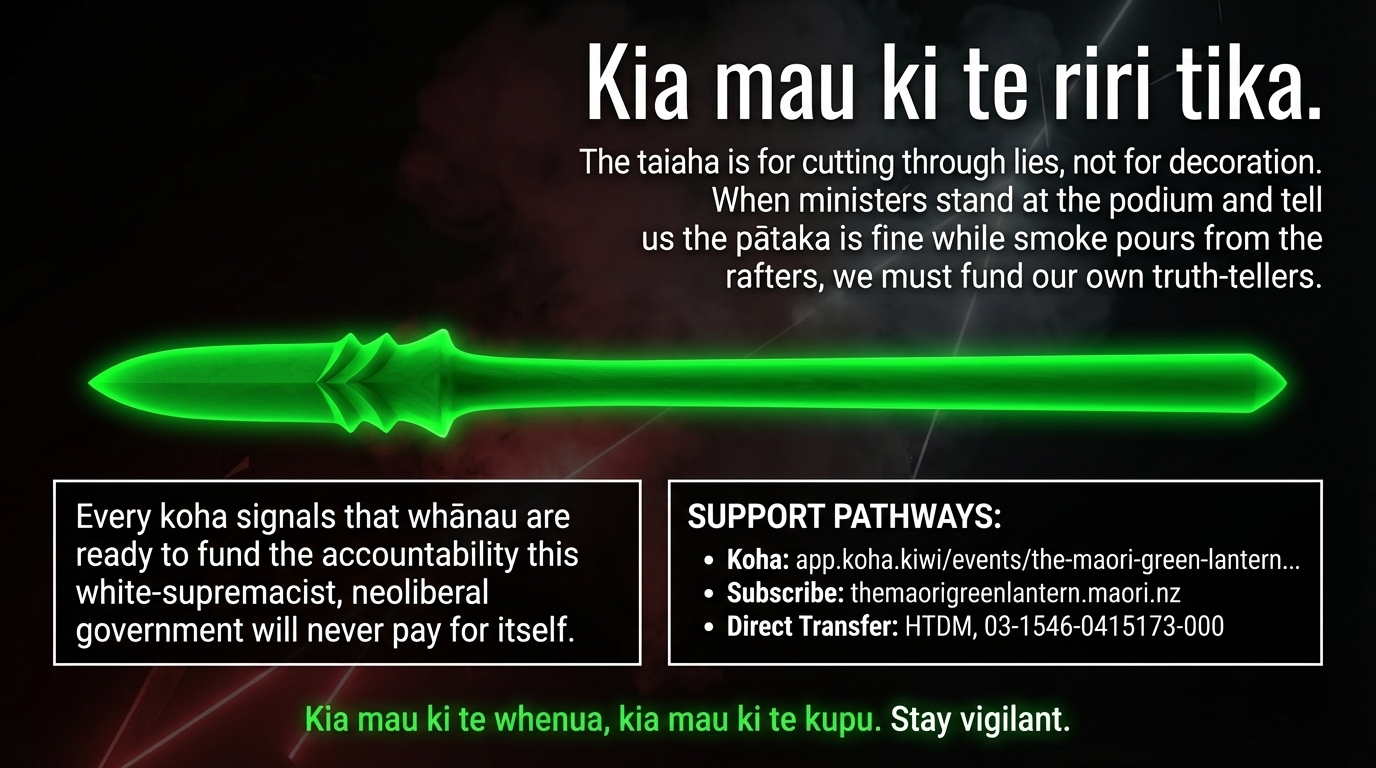
Every koha to this kaupapa signals that whānau are ready to fund the accountability this white‑supremacist, neoliberal government will never pay for itself.
It signals that rangatiratanga over our fuel, our hauora, and our mokopuna’s future includes the power to fund our own truth‑tellers when ministers stand at the podium and tell us the pātaka is fine while smoke pours from the rafters.
Kia kaha, whānau. Stay vigilant. Stay connected. Share this kōrero with those who have been told they should be grateful for $50 while billion‑dollar refinery fantasies and foreign wars swallow the real money. And if you are able, consider a koha to ensure this voice keeps tracing the whakapapa they want buried.
If you are unable to koha, kāore he raruraru. Subscribe or follow The Māori Green Lantern at themaorigreenlantern.maori.nz, kōrero and share with your whānau and friends – that is koha in itself.
Three pathways exist:
For those who wish to support this mahi directly with a koha (voluntary contribution), please visit the Koha platform:
Koha — Support – https://app.koha.kiwi/events/the-maori-green-lantern-fighting-misinformation-and-disinformation-ivor-jones
For those who wish to receive essays directly and support through subscription:
Subscribe to The Māori Green Lantern – https://www.themaorigreenlantern.maori.nz/#/portal/support
For those who prefer direct bank transfer, account details are: HTDM, account number 03-1546-0415173-000.
Kia mau ki te whenua, kia mau ki te kupu.