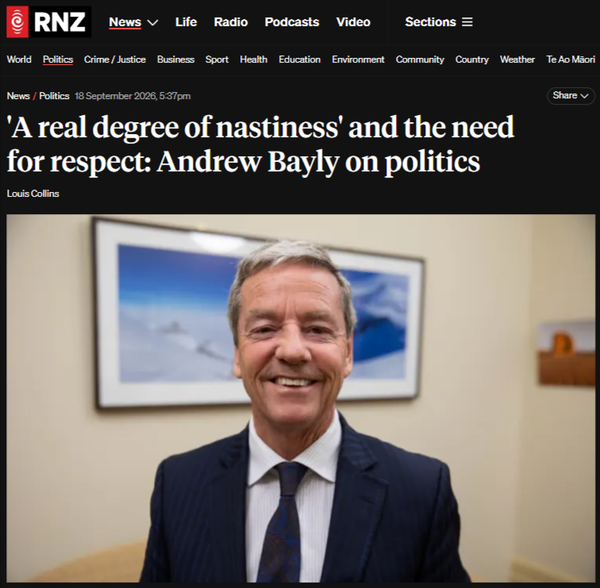
"The Tax That Taxes Nobody: How Chris Hipkins Built A Capital Gains Con To Protect Wealth He Once Swore To Touch" - 20 September 2026
Nine In Ten New Zealanders Will Never Pay This Tax. Most Māori Whānau Will Never Own The Asset It Taxes. That Is Not An Accident. That Is The Design.

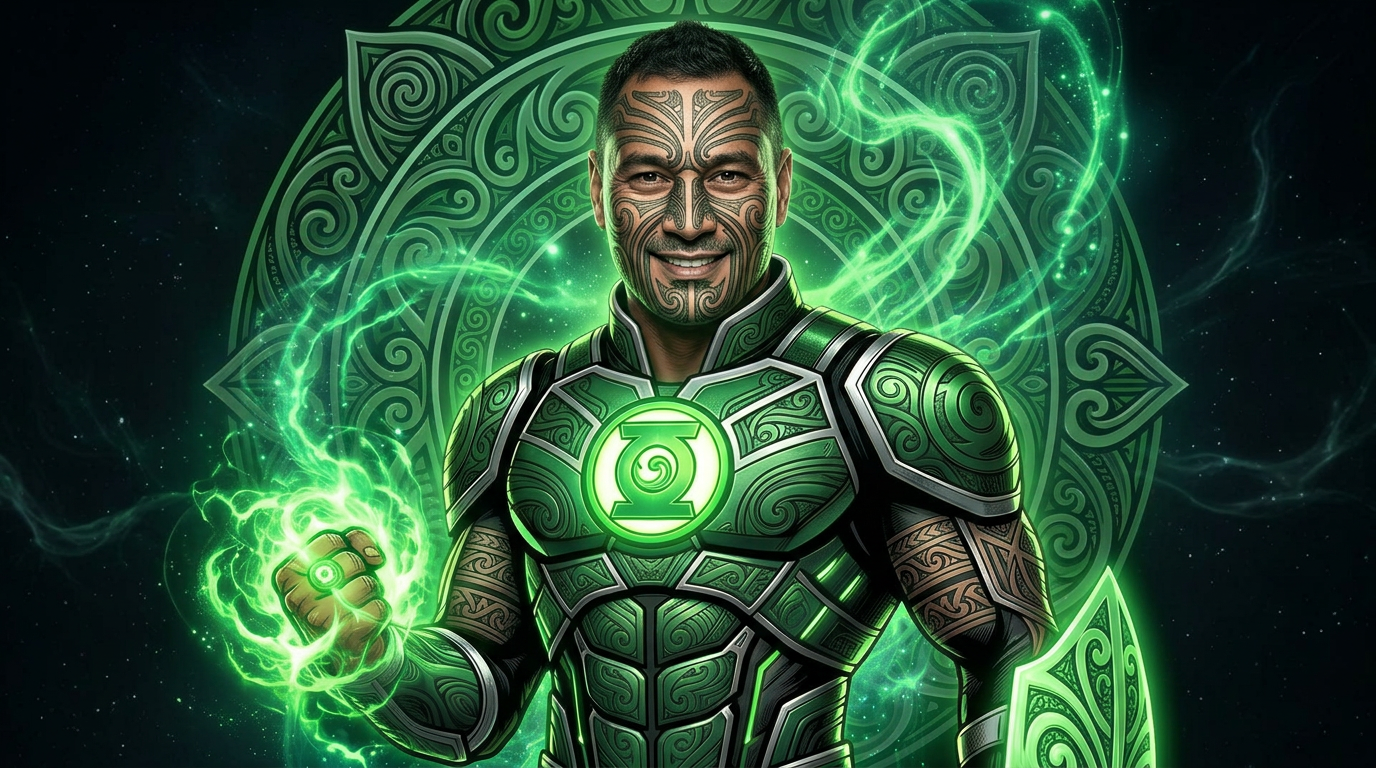
Kia ora whānau, ko Ivor Jones tēnei, The Māori Green Lantern.
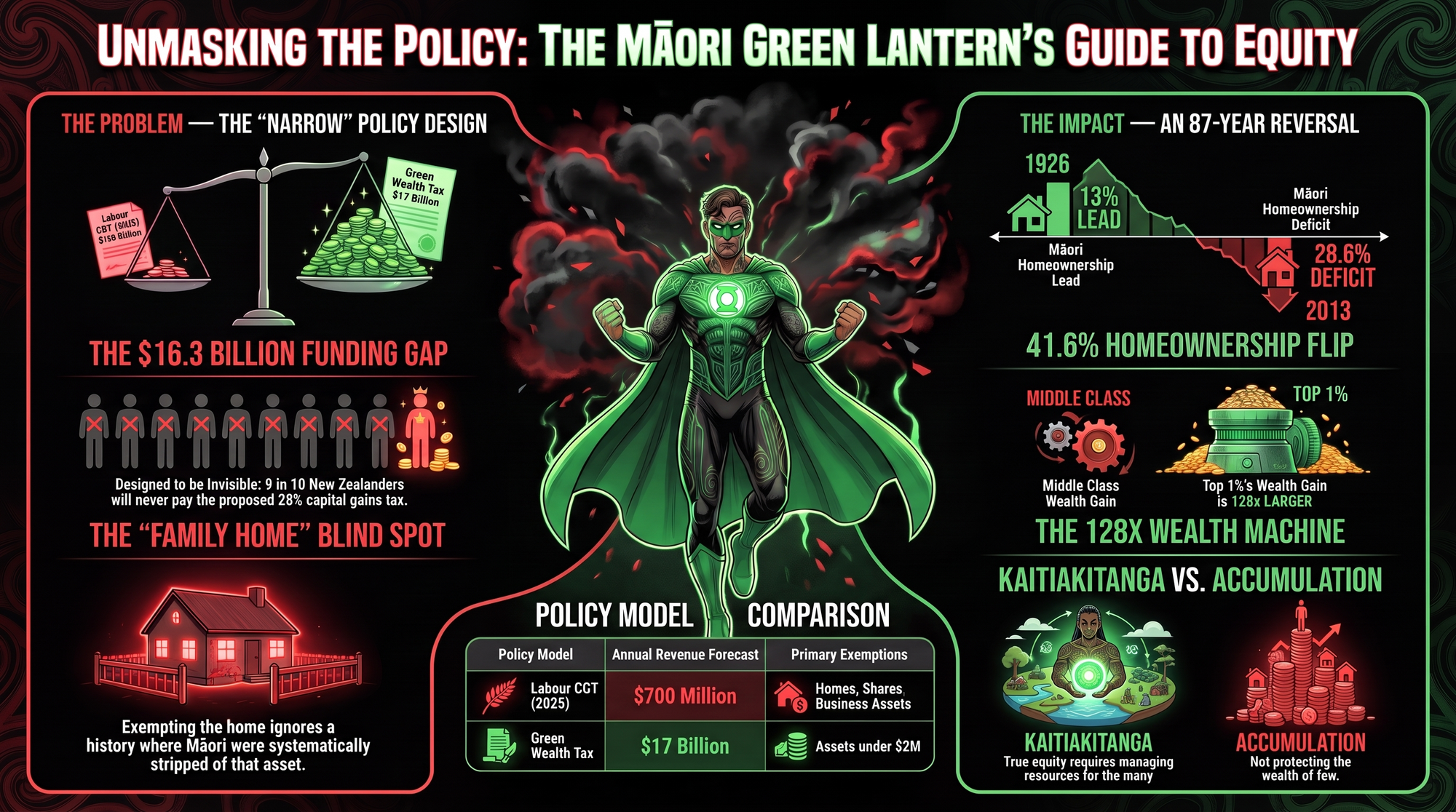
In this essay I am going to walk you through exactly how Chris Hipkins's Labour Party built a capital gains tax so narrow it flatters the very wealth hierarchy it claims to fix — I will show you the numbers behind the spin, trace where the design actually came from, and connect it to the eighty-seven-year history of Māori being stripped of the one asset class every "targeted" tax carefully leaves untouched: the home.
I will give you three concrete examples, quantify the harm in dollars and percentage points, name a solution, and explain why this matters for tikanga and for te ao Māori specifically.
And I will tell you, plainly, why this coalition government does not deserve your vote in November — and who does.
Before you read on: I've built this kaupapa across three formats for however whānau like to learn.
There's an audio podcast that walks through this in detail if you'd rather listen than read.
There's a short video breaking down the core argument in a few minutes if you're pressed for time.
And for those who want the full receipts, this 3,000-word cited essay is sitting right here waiting for you — because this is a repository for our mokopuna to look back on and say: at least the Māori Green Lantern, among a few, was warning us.
Te Horopaki — Where This Actually Came From
Ka mihi ake au ki tēnei — respect where it's earned — Hipkins did eventually put a tax on the table. But watch the timeline, because it tells you everything about how much this cost the man politically to concede.
In February 2023 he called it "inane" to rule anything in or out.
By July 2023 he stood as sitting Prime Minister and told the country: "Under a government I lead there will be no wealth or capital gains tax after the election. End of story."
He lost the election three months later.
By November 2023, out of office and with nothing left to lose, he put the tax back on the table.
This is not a leader who found conviction.
This is a politician who found conviction cheap once the polling risk disappeared.
And this pattern is not new — RNZ's own timeline shows Labour has scrapped, revived, and re-scrapped a CGT going back to David Lange in 1990, through Phil Goff in 2011, David Cunliffe in 2014, Andrew Little in 2017, and Jacinda Ardern twice — once in September 2017, once again categorically in April 2019.
So when the policy finally arrived in October 2025, whose fingerprints were actually on it?
Not Michael Cullen's.
His 2019 Tax Working Group majority wanted a broad tax on shares, business assets, and intellectual property.
Labour instead followed the minority dissent written by tax lawyers Robin Oliver and Joanne Hodge and Business NZ's Kirk Hope — the side that wanted the least tax possible (Interest.co.nz).
That is the hidden connection. Cui bono? Not whānau. Not the health system, not really. The design serves exactly the people it was supposedly aimed at.
Te Whakarāpopototanga — What Labour Is Actually Selling You
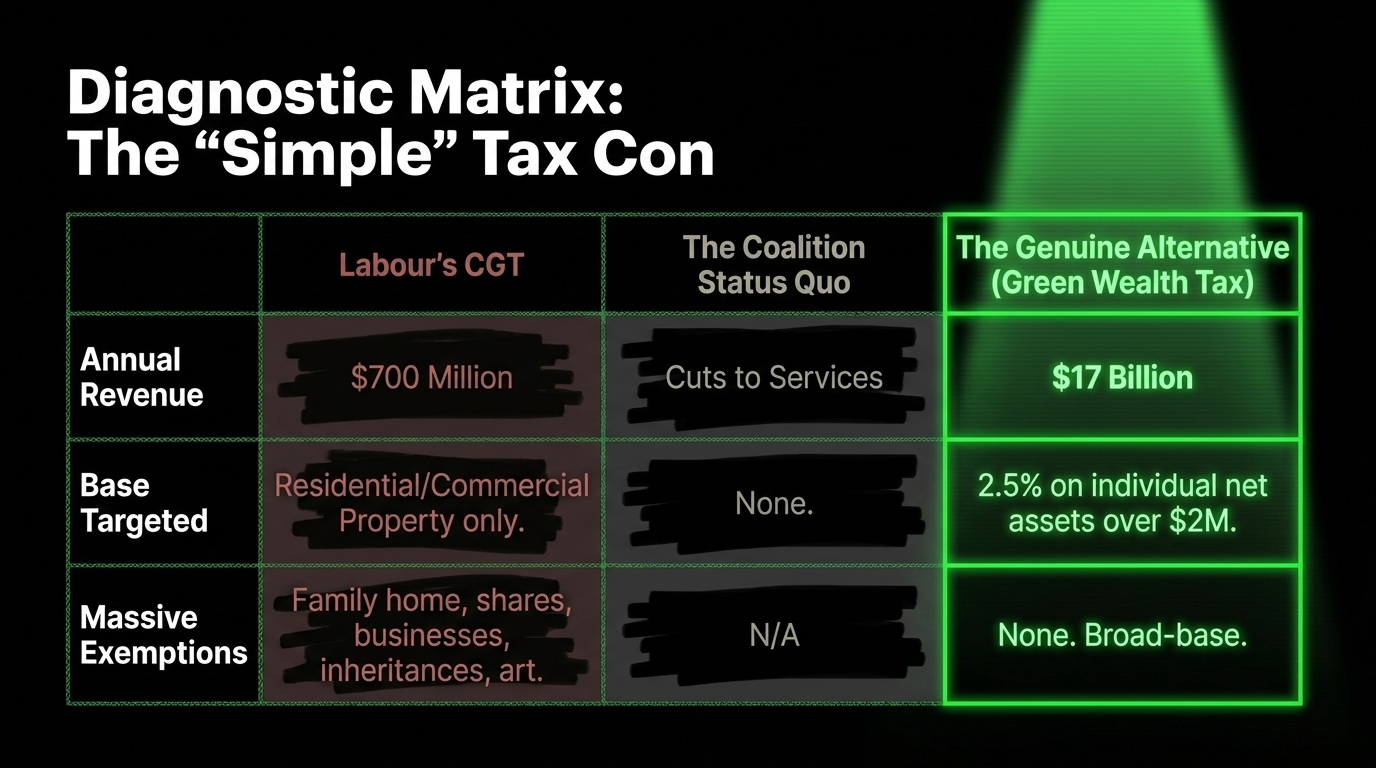
Read Labour's own policy page and here is what you get, in their own words: a 28% tax, starting only on gains made after 1 July 2027, applying only to residential investment and commercial property.
Exempt: the family home, lifestyle blocks, farms, KiwiSaver, shares, business assets, inheritances, gifts, cars, boats, art, furniture.
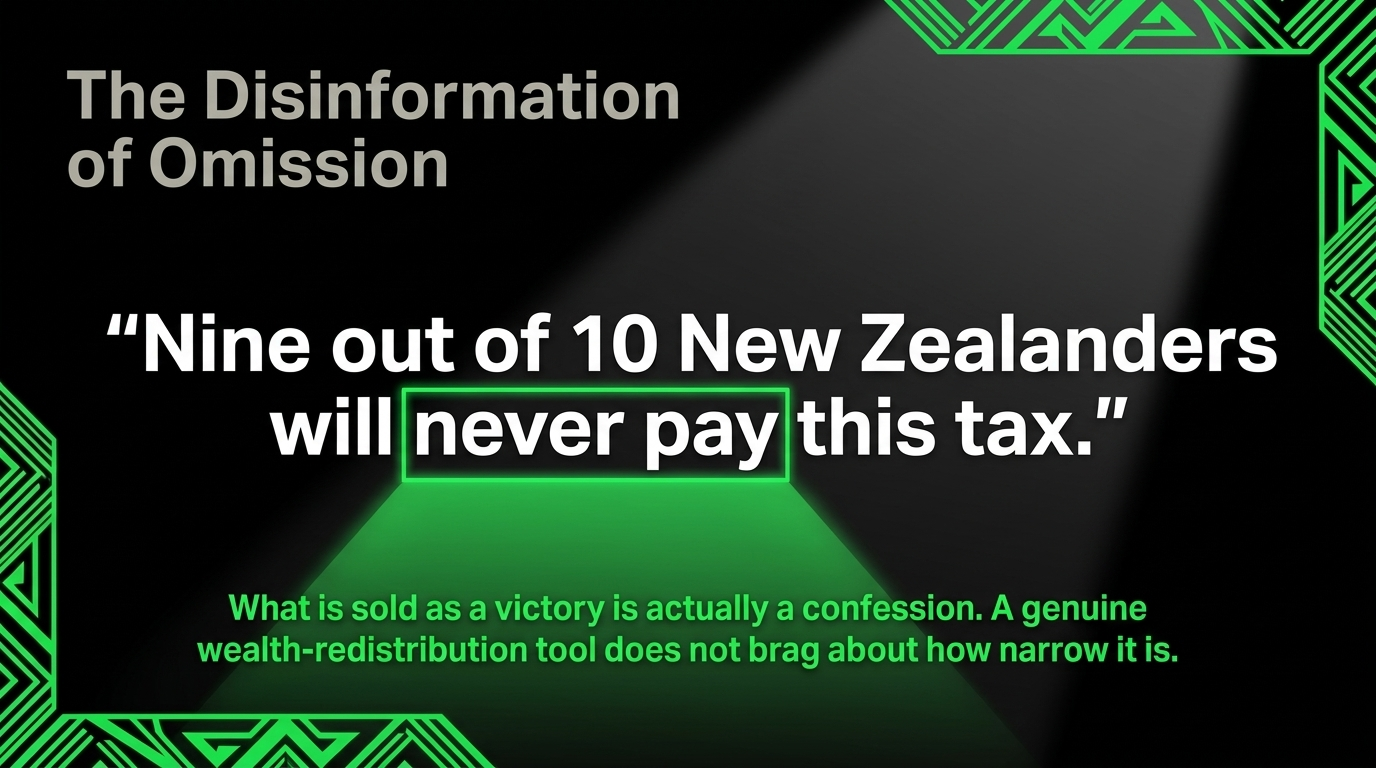
Their own headline stat: "nine out of 10 New Zealanders" won't pay a cent.
Read that again.
This is a tax explicitly marketed on how few people it touches. That is the whole sales pitch — and it should terrify you, because a genuine wealth-redistribution tool does not brag about how narrow it is.
The Deep Dive Podcast
Listen to a lively conversation between two hosts, unpacking and connecting topics in the sources of this essay. I apologise in advance for the AI's very harsh pronounciation of reo. Please dont shoot me, :).
Youtube Video
Like video? Here is a short video suppporting the essay. Again, don't shoot the messenger please because of AI's pronounciation. 😄
He Kupu Koha — About Supporting This Mahi
You might ask who is paying the Māori Green Lantern to trace twenty-four-times funding gaps and eighty-seven-year home-ownership reversals that nobody else is auditing.
The answer is you do. This mahi is supported through koha and that is it. There is no corporate line item behind these numbers, no property lobby, no party funding the citations you just read. Every koha signals that whānau are ready to support the accountability the Crown and corporate structures will not provide themselves — that rangatiratanga includes the power to support our own truth tellers, especially when the truth is a spreadsheet the government hoped nobody would build.
Kia kaha, whānau. Stay vigilant. Stay connected. And if you are able, consider a koha to ensure this voice continues.
If you are unable to koha, no worries! Subscribe or follow the Māori Green Lantern at themaorigreenlantern.maori.nz, kōrero and share with your whānau and friends — that is koha in itself.
Four pathways exist:
For those who wish to support this mahi directly with a koha (voluntary contribution): Koha — Support
For those who wish to receive essays directly and support through subscription: Subscribe to the Māori Green Lantern
For those who prefer direct bank transfer: Ivor Jones, account number 03-1395-0099387-000
For those on Facebook: Follow and Subscribe
Ngā Tauira Mō Te Hinengaro Pākehā — Three Examples For The Western Mind
Example One: The Twenty-Four-Times Gap
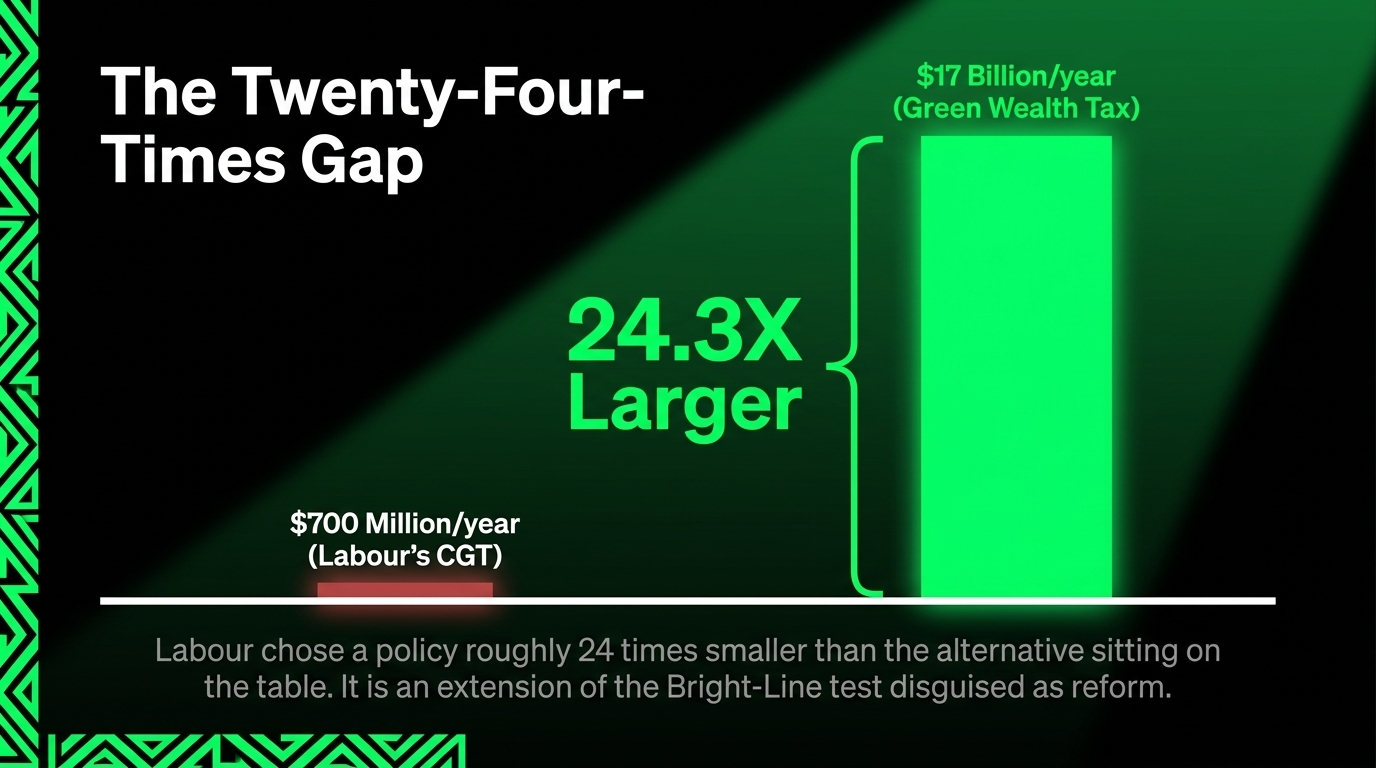
The point: Labour's CGT is not a wealth tax.
It is, at best, an extension of the Bright-Line Test to infinity (Interest.co.nz).
The Green Party's alternative — a 2.5% wealth tax on individual net assets above $2 million — is costed at potentially $17 billion a year (Interest.co.nz), against Labour's own forecast average of $700 million a year (Interest.co.nz).
Quantified harm: 17,000 ÷ 700 = 24.3. Labour chose a policy roughly twenty-four times smaller than the alternative already sitting on the table from its own likely coalition partner.
Solution: adopt the Tax Working Group majority's broad-base model, or the Green wealth tax, either of which actually moves the dial on the numbers below.
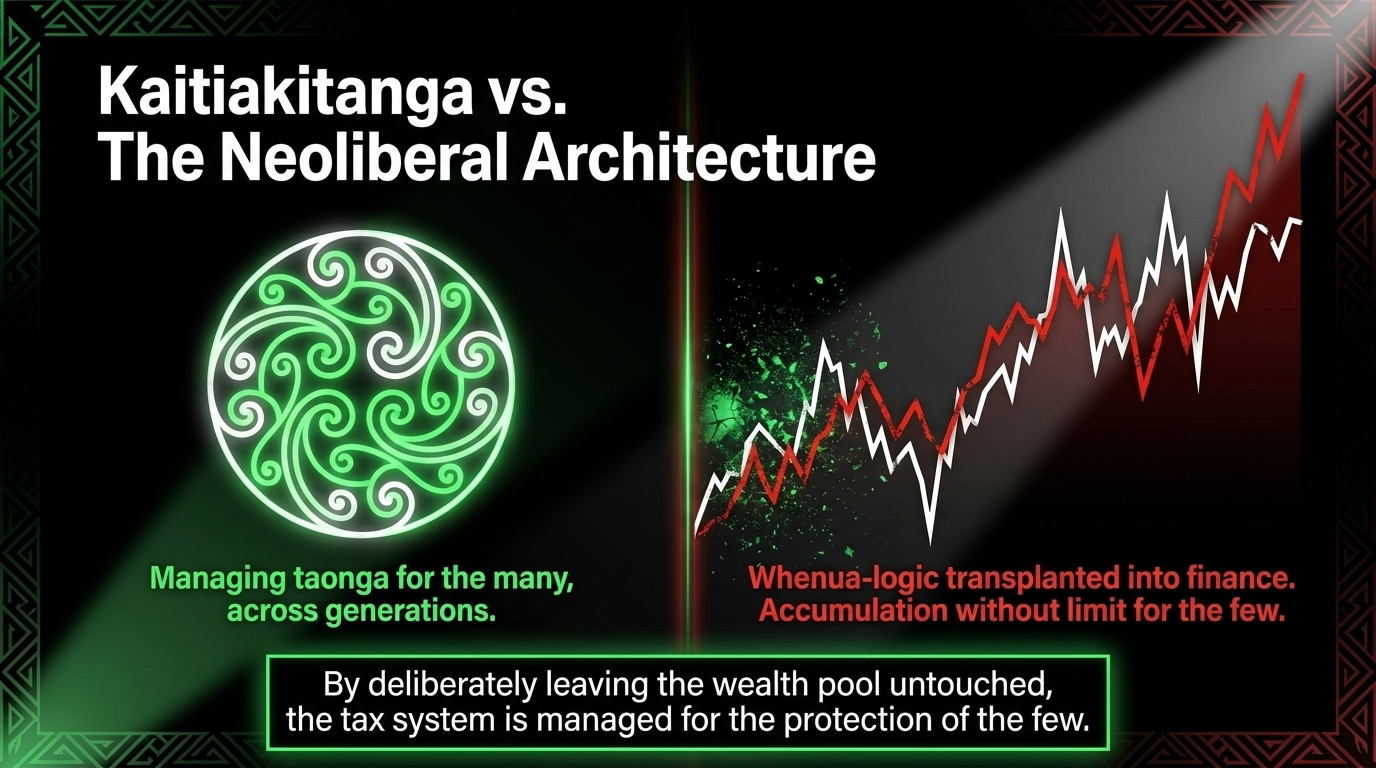
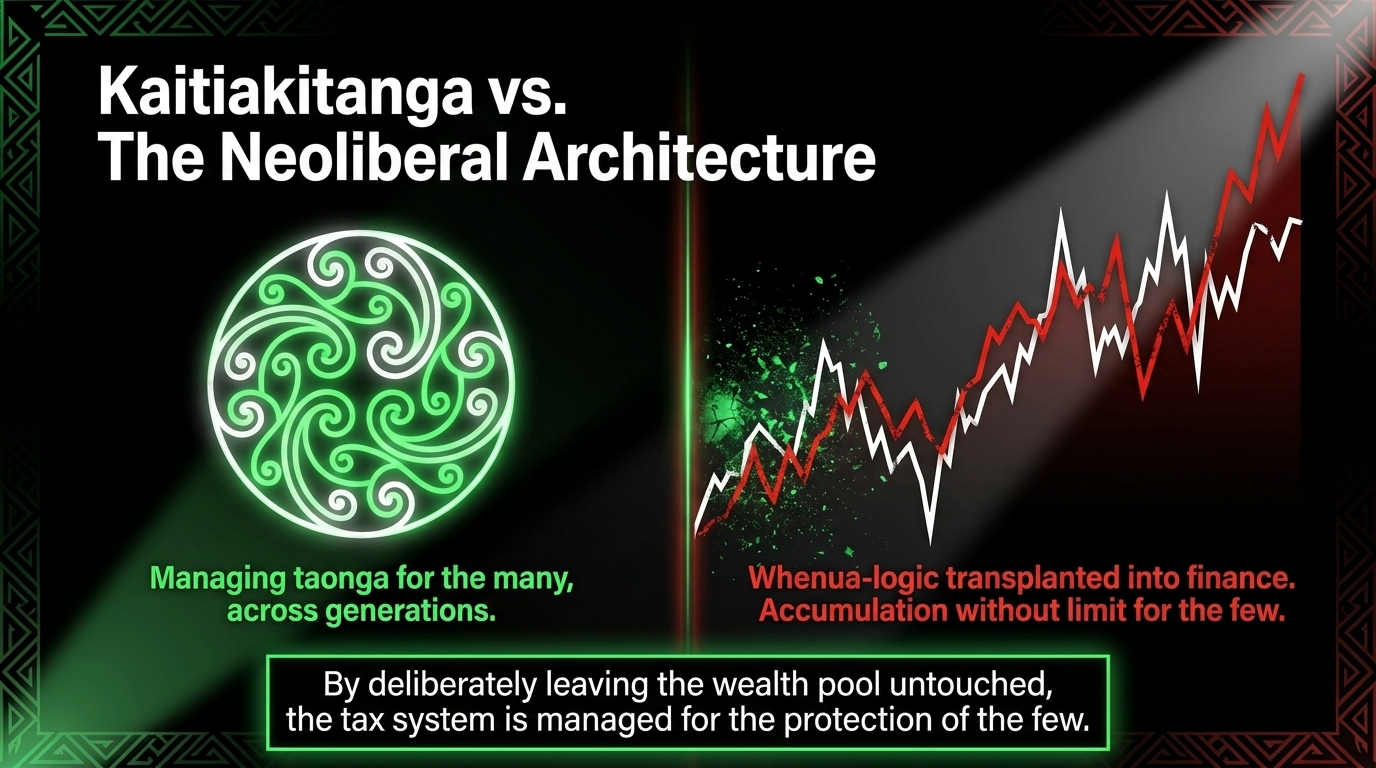
Tikanga impact for the Western mind: in te ao Māori, taonga are managed for the many, across generations — kaitiakitanga. A tax deliberately engineered to leave the wealth pool almost untouched inverts that principle entirely: it manages the tax system for the protection of the few.
I've traced this exact "designed to fail" pattern before in "The Sun Tax Con", where I documented how the same coalition sold whānau a solar market it never intended anyone to actually enter.
Example Two: The 128-Times Wealth Machine
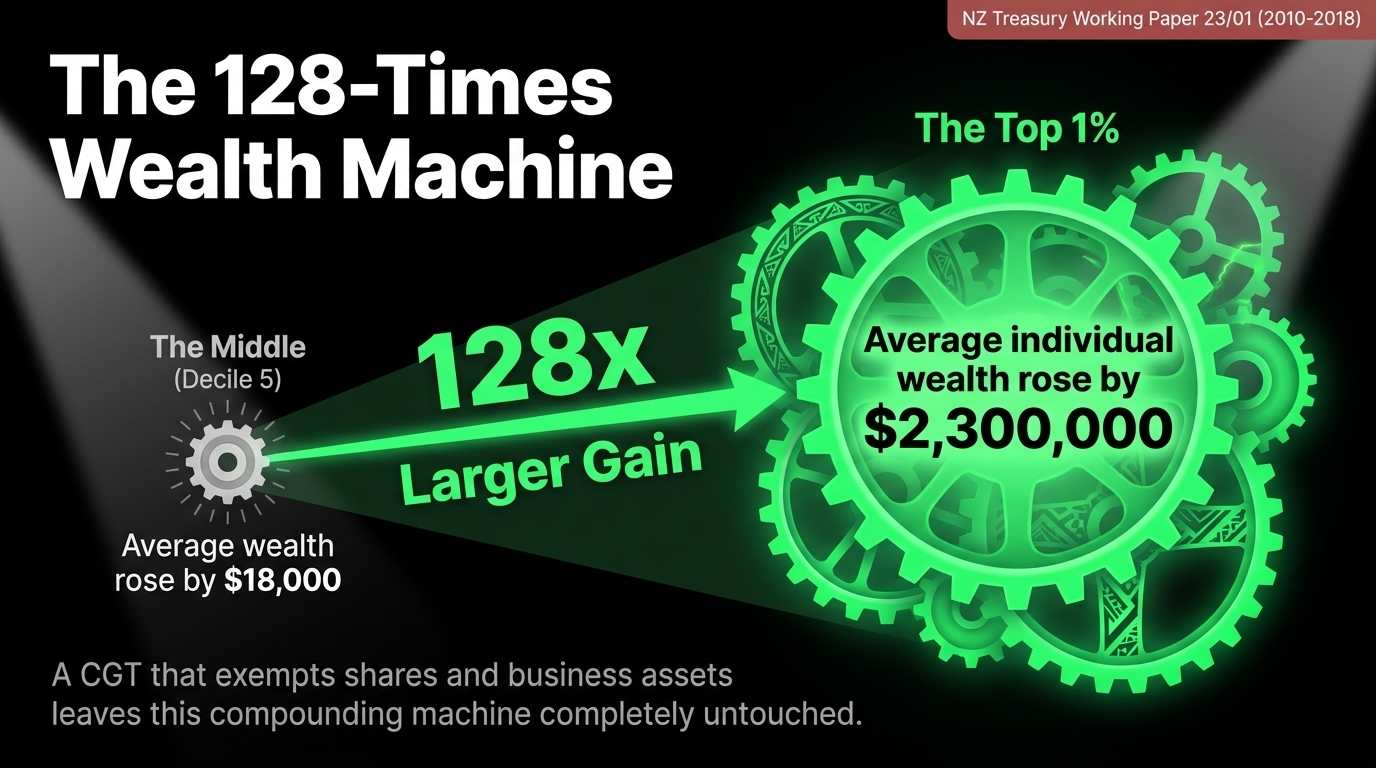
The point: New Zealand's own Treasury confirms wealth concentration at the top is not stalling — it is compounding.
In 2018, the top 10% of individuals held 67.2% of net wealth, the top 1% held 26.1%, and the top 0.1% held 8.3% (NZ Treasury Working Paper 23/01).
Between 2010 and 2018, the top 1%'s wealth share actually fell by 2.8 percentage points — but their average individual wealth still rose by $2.3 million. Decile 5, the middle of the country, saw its wealth share rise by only 0.2 points, and average wealth rise by just $18,000 over the same eight years (NZ Treasury Working Paper 23/01).
Quantified harm: $2,300,000 ÷ $18,000 = 127.8. The richest one percent's absolute wealth gain was roughly 128 times larger than the middle of the country's, even while their share of the pie was shrinking.
That is how deep the compounding runs. A CGT that exempts shares and business assets — the very vehicles Treasury shows this wealth compounds through — cannot touch this machine.
Solution: broaden the tax base to shares and business assets, as the 2019 Working Group majority recommended, or index a wealth tax directly to net assets.
Tikanga impact: this is whenua-logic transplanted into finance — accumulation without limit, at the direct expense of the collective, the same structural pattern this coalition has repeated across sectors, which I detailed in "Two Monopolies, One Coalition" on the deliberate protection of concentrated ownership.
Example Three: The Eighty-Seven-Year Reversal
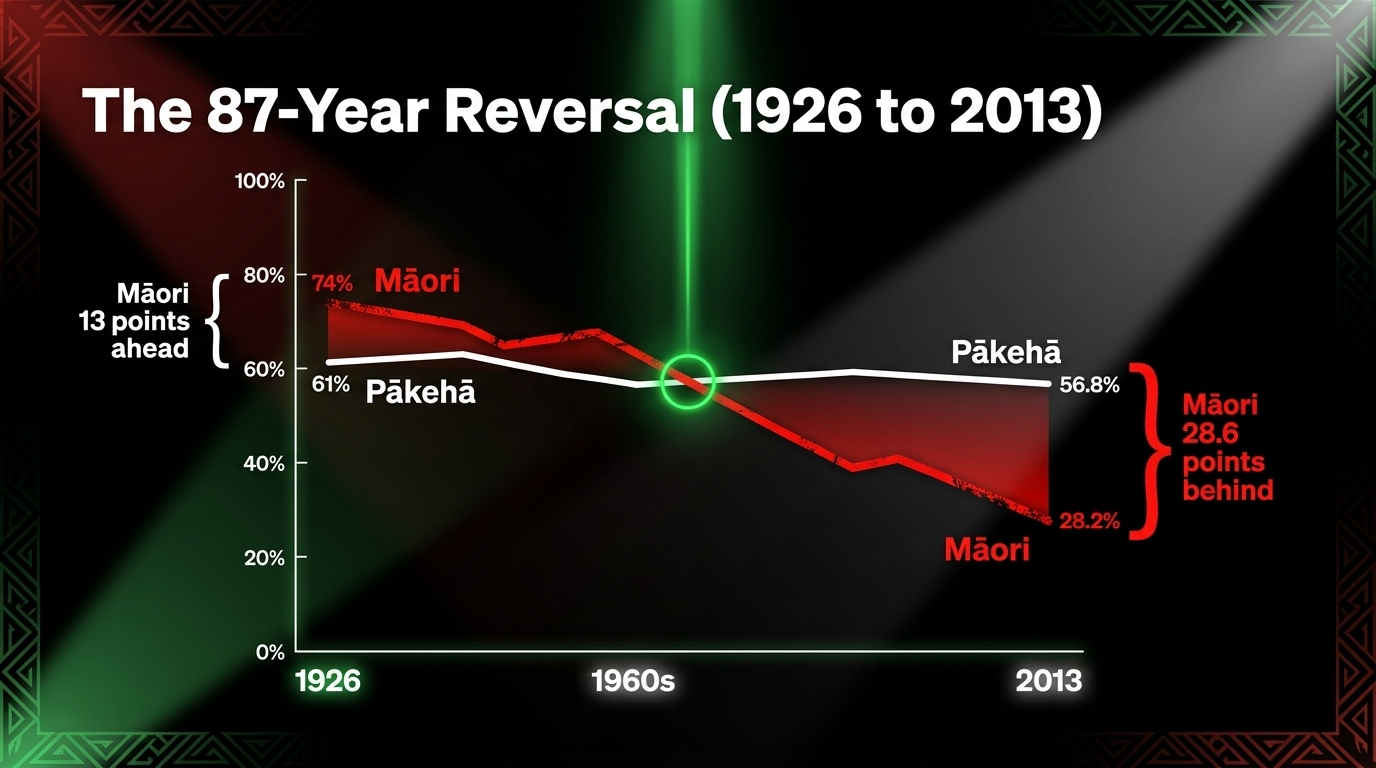
The point: this tax's biggest exemption — the family home — assumes an asset base Māori do not equally hold, and never has this been an accident of history.
In 1926, 74% of Māori owned their home compared with 61% of Pākehā — Māori were thirteen points ahead (Population Association of NZ).
By 1945, urbanisation and land loss had dragged both groups to roughly 55% (Population Association of NZ).
By 2013, Māori individual home ownership had fallen to 28.2%, down from 31.7% in 2001 — an 11.2% relative decline — while European ownership fell only 4.9%, from 59.7% to 56.8% (Goodyear 2017, via Population Association of NZ).
Quantified harm: the gap flipped from a 13-point Māori lead in 1926 to a 28.6-point Māori deficit by 2013 — a 41.6 percentage point reversal in less than ninety years.
And it goes deeper: Waitangi Tribunal evidence in the Wai 2750 housing inquiry records that in 2009/10, Māori made up 13% of the population but held only 5% of net worth (Wai 2750, Waitangi Tribunal filing), with median individual net worth for Māori sitting at just $29,000 by 2018 (Wai 2750, Waitangi Tribunal filing).
A tax that exempts "the family home" as its central concession is exempting an asset the historical record shows was systematically taken from Māori hands in the first place.
Solution: any genuine tax reform needs a dedicated Māori wealth-equity mechanism — not a blanket exemption that quietly assumes everyone already owns the house.
Tikanga impact: whenua is whakapapa. A policy that treats "the family home" as a neutral, universal exemption erases the specific colonial history of who lost that home and why — the exact blind spot I named in "Labour Sat On The Cure For Four Years", where delay itself became the policy.
Te Take Kotahi, E Toru Ngā Kupu — One Meeting, Three Faces
Here is where the pattern becomes impossible to ignore.
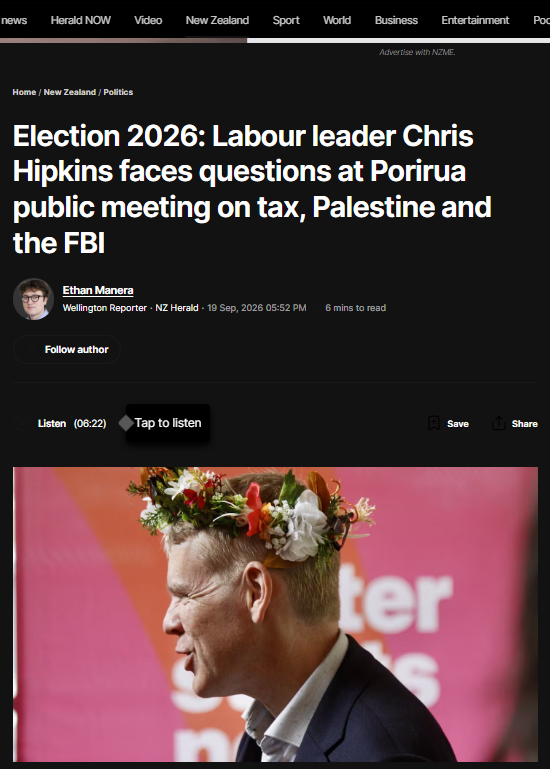
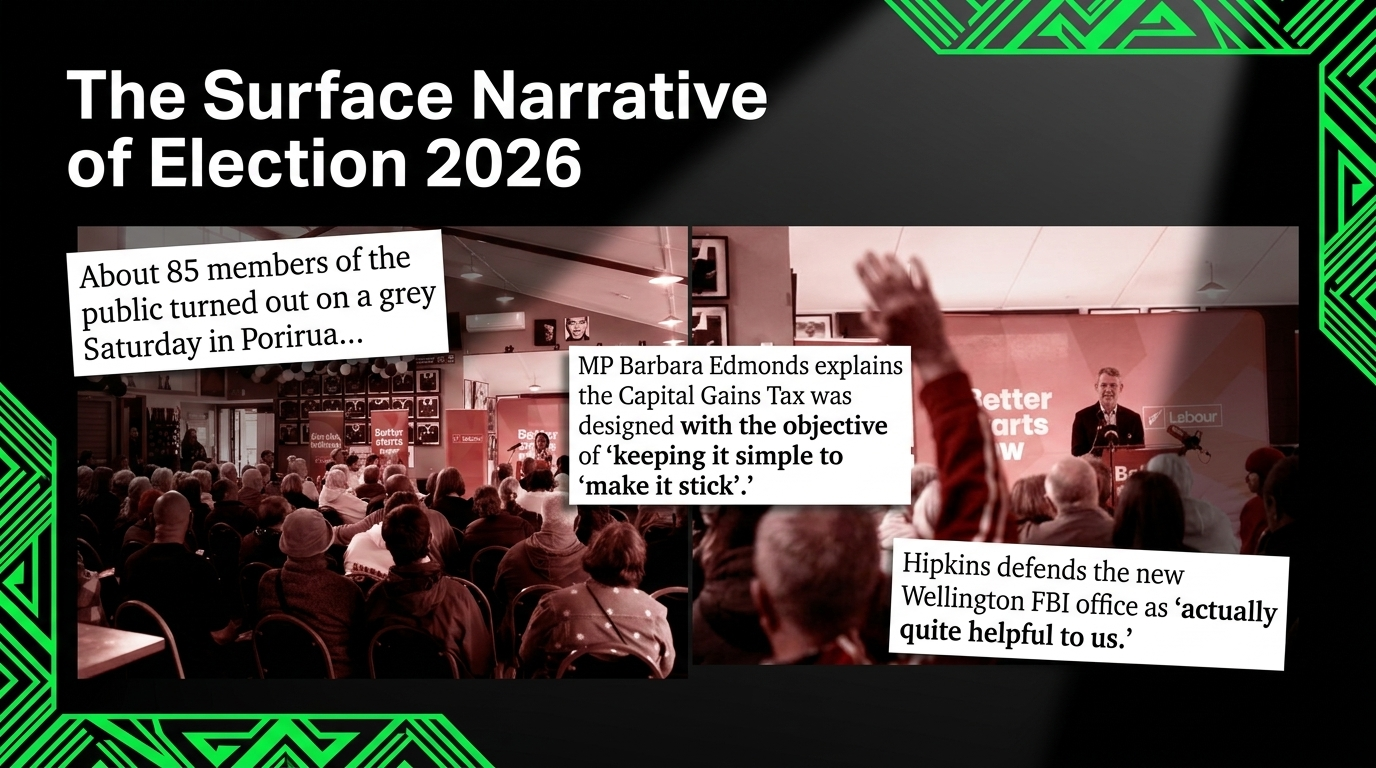
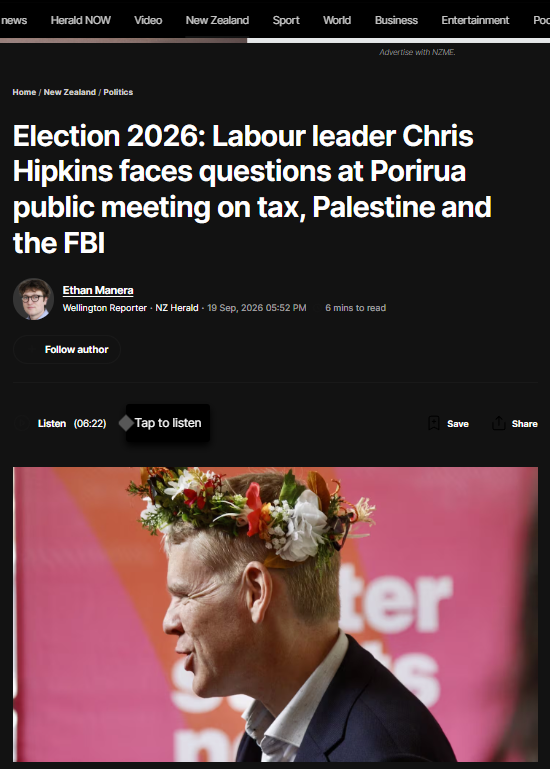
On 19 September 2026, at Porirua's Northern United Football Rugby Club, Hipkins stood in front of roughly 85 people and answered questions on tax, Palestine, and the FBI — three issues, in one room, in under an hour (NZ Herald).
Watch which one he chose to sound brave on, and which two he chose to defend the status quo on — because the pattern tells you exactly where his actual political spine bends.
On Palestine, Hipkins found his loudest voice of the entire meeting. Asked about recognising Palestinian statehood, he told the crowd: "There is an unfolding genocide happening in Palestine at the moment... we need to recognise Palestine as a state and we will do that under a Labour Government... sanctions are one way that we can do that" (NZ Herald).
Strong words. Costless words, too — recognising Palestine requires no domestic legislation, threatens no donor, and polls well with exactly the young, red-clad supporter who asked the question.
Compare that bravery to the CGT above: nine in ten people pay nothing, and it took Hipkins four public reversals over three years to even offer that much.
Then a man in the audience asked why the United States has an intelligence office in Wellington and whether it pressures the Government.
Hipkins corrected him — it's the FBI, not the CIA — and then actively defended its expanded presence: "this might sound unusual coming from a lefty politician like me, but it's actually quite helpful to us... a lot of the information that we rely on for our own security as a country actually comes from the information that we share with other like-minded countries like the US, Australia, Canada, the UK" (NZ Herald).
What he did not tell that room: the FBI's Wellington office was upgraded to a permanent, standalone post in July 2025 via a deliberately unannounced, taxpayer-funded visit — SIS briefing documents released under the Official Information Act state the visit "will not be publicly avowed... until after the Director has left New Zealand," and it only became public because a Press Gallery journalist spotted FBI Director Kash Patel in the Beehive basement (1News/RNZ).
Patel's own stated reason for the office was to "confront the CCP" in the Pacific (Reuters) — a framing New Zealand ministers publicly downplayed (1News/RNZ).
And it was Hipkins's own Labour Party that "expressed surprise" and "demanded an explanation" when the upgrade was first announced (1News/RNZ) — a full reversal, on the exact same timeline logic as his tax flip-flopping, except in the opposite direction: surprise and objection when it cost nothing politically, quiet defence once he needed to sound tough on security during a campaign.
Line those three answers up and the shape is unmistakable.
Genocide in Gaza: full moral clarity, zero domestic cost.
A US federal law-enforcement agency embedding a permanent officer in the Beehive's own backyard, under a director accused by his own government's Senate overseers of turning the Bureau into a partisan weapon: "quite helpful," no scrutiny offered to the room.
A tax that could have clawed back even a fraction of the wealth concentration documented below: four years, four reversals, and a design borrowed from the tax lawyers who wanted the least possible reform. This is not conviction. This is triangulation dressed as principle — and whānau deserve to see all three answers side by side before they mark a ballot.
Ngā Pānga — What This Costs Whānau
This is not abstract.
Every year this tax sits at $700 million instead of the $17 billion a genuine wealth tax could raise is a year that Māori — 13% of the population holding 5% of the wealth — carry a disproportionate share of consumption and income taxes while the top 1% compounds wealth at 128 times the rate of the middle.
Every year the family home stays "exempt" as a universal principle is a year the specific historical dispossession of Māori homeownership goes unaddressed by design, not by oversight.
He Kupu Whakamutunga — Why This Coalition Does Not Deserve Your Vote

I have spent this essay scrutinising Labour, and rightly so — a watered-down tax dressed as reform deserves scrutiny. But do not mistake that scrutiny for an endorsement of the alternative.
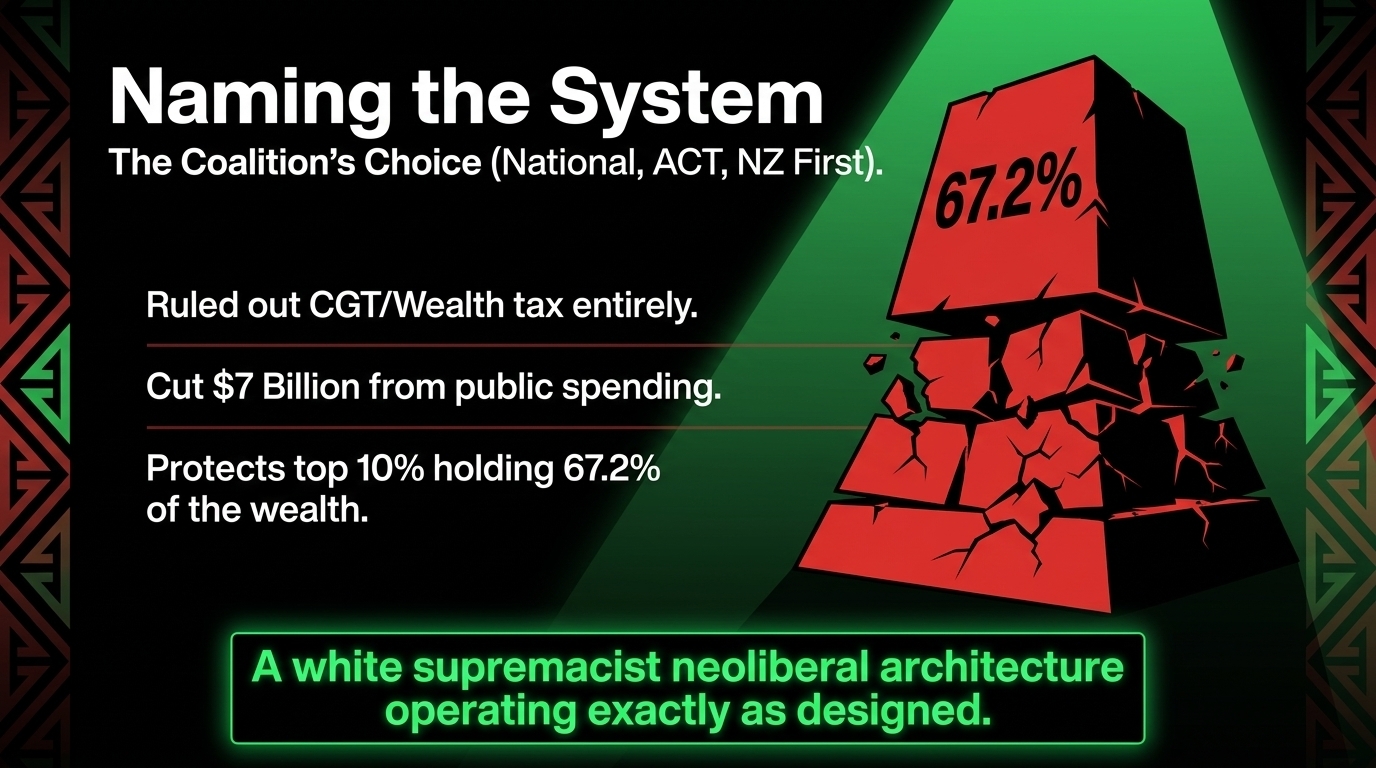
This coalition government — National, ACT, and New Zealand First — has ruled out any form of capital gains or wealth tax entirely, with Christopher Luxon explicitly ruling it out "under his leadership" in November 2024, while cutting roughly $7 billion from government spending since 2023 and redirecting it into tax cuts (Interest.co.nz).
That is a government that has made its choice with total clarity: protect the wealth machine at 67.2%, 26.1%, and 8.3% concentration, and ask the middle and the dispossessed to fund everything else. This is a white supremacist neoliberal architecture operating exactly as designed — not broken, not failing, working precisely as intended for those it was built to serve.
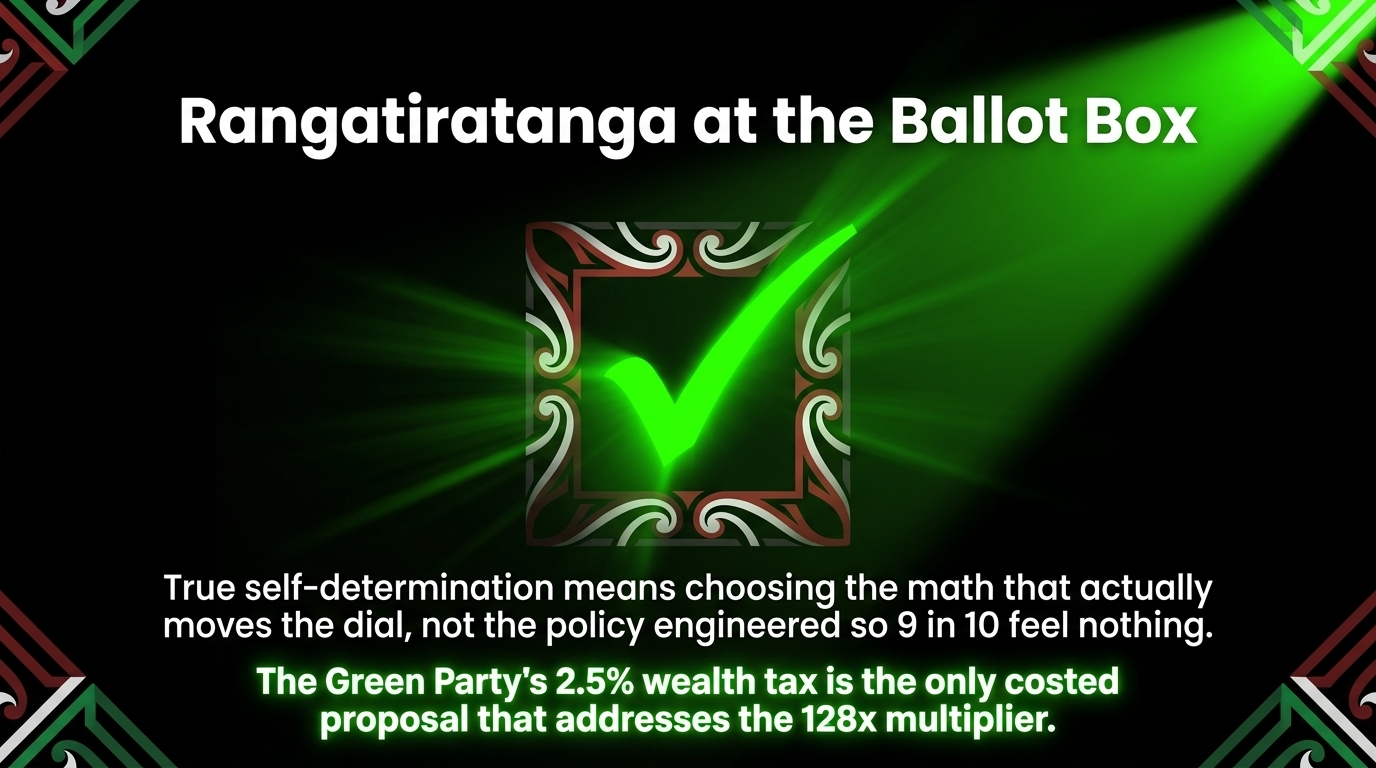
If you want a party that has actually costed and proposed the scale of tax reform Treasury's own numbers demand — a 2.5% wealth tax raising potentially $17 billion, twenty-four times what Labour is offering — that is the Green Party, and Chloe Swarbrick has said so plainly on the record (Interest.co.nz).
Rangatiratanga means choosing the option with the numbers to actually move the 67.2% down, not the option engineered so nine in ten of us feel nothing at all.
Disclaimer: Published in the public interest under the Māori Green Lantern's mandate to counter misinformation and hold power accountable. Reflects verified fact and clearly flagged opinion as at 20 September 2026. No malice is intended toward any individual; criticism is confined to public policy conduct in public office. Retraction and correction requests will be actioned promptly on verified complaint.