"When Plunket Picks Up the Phone And Calls The Māori Green Lantern: The SLAPP Playbook of the White Supremacist Right" - 3 April 2026

Kia ora ano Aotearoa!
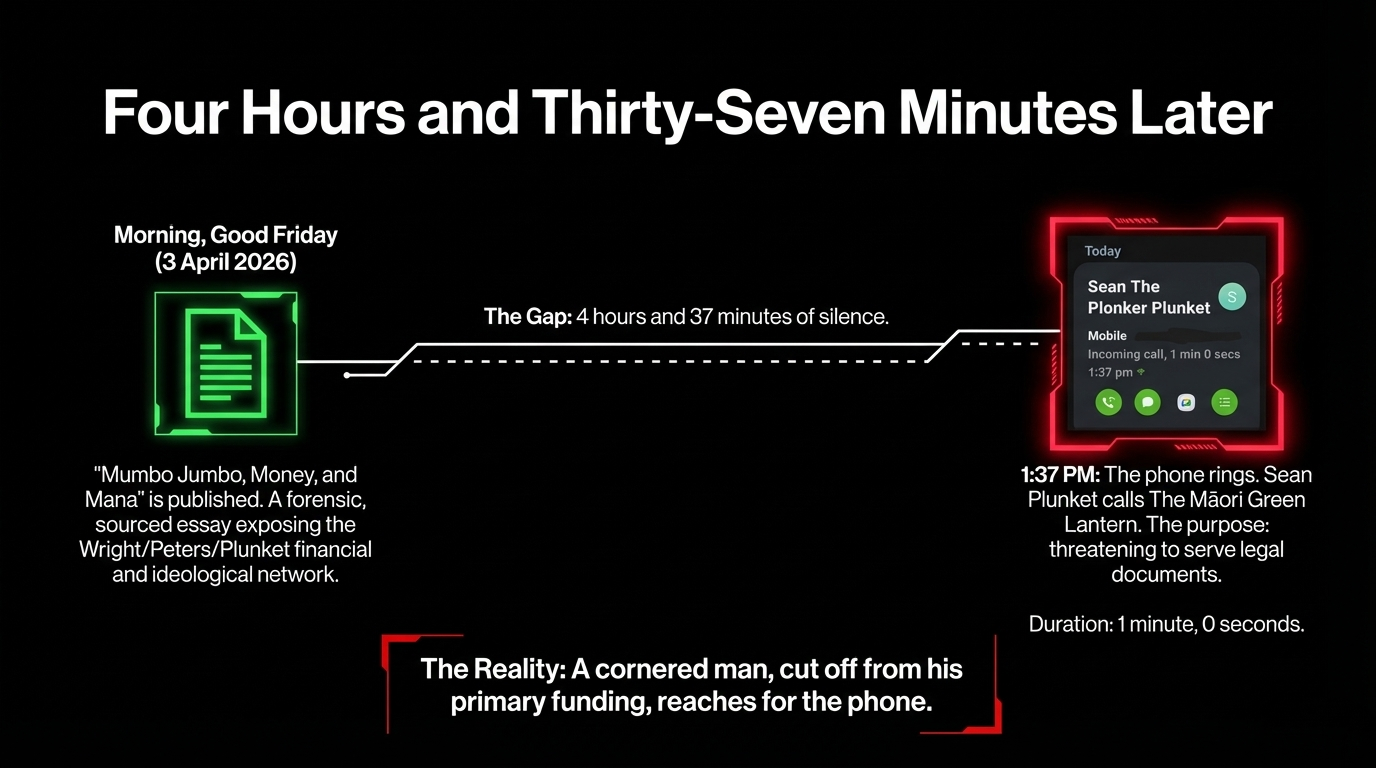
Good Friday. 1:37 pm. A phone rings.
On the other end: Sean Plunket of The Platform New Zealand — a man who has built a media enterprise on anti-Māori narratives, Treaty denialism, and the slow, deliberate erosion of rangatiratanga — calling to inform me he wants to serve legal documents on The Māori Green Lantern.
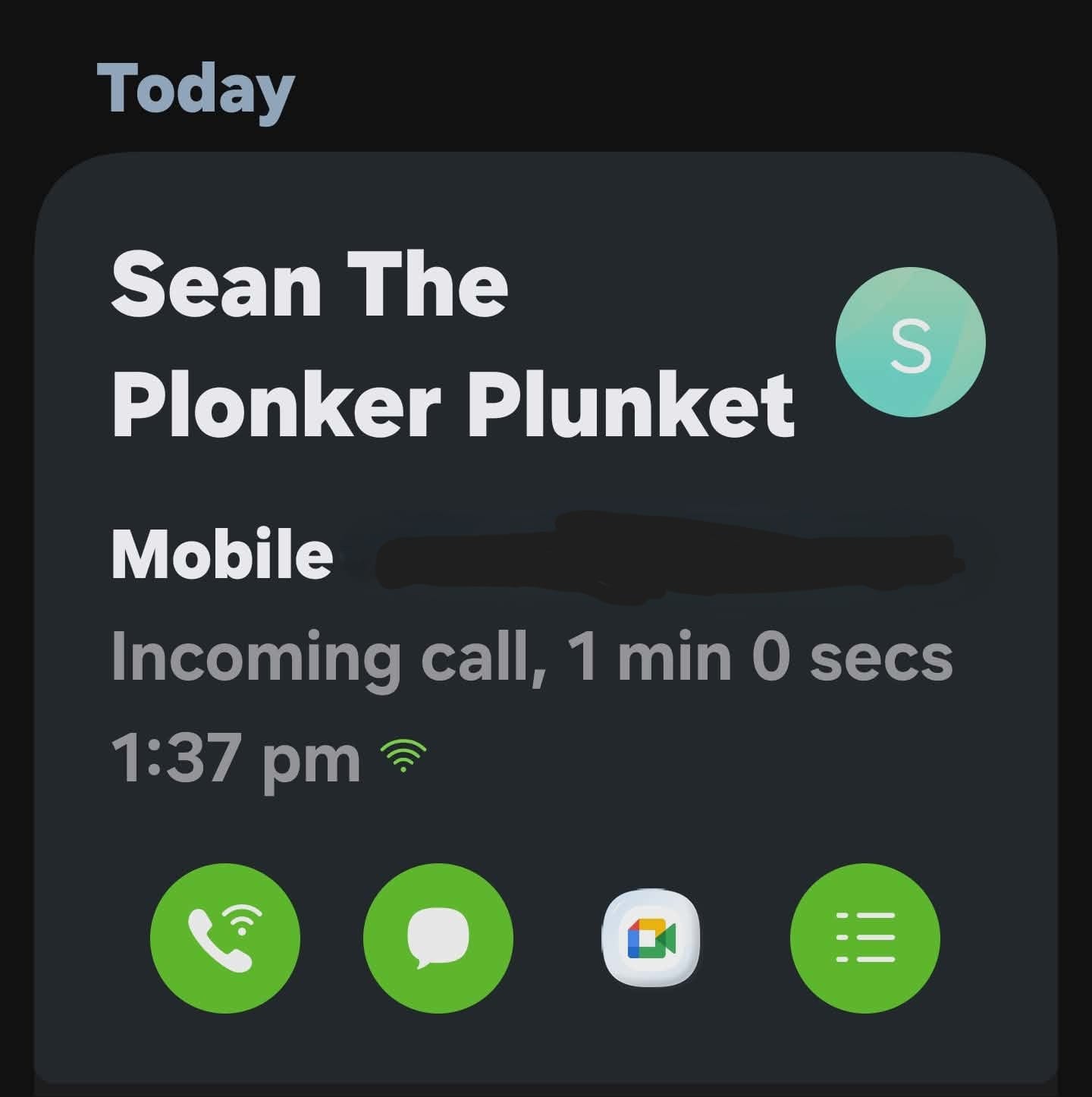
One minute. Zero seconds of substance. A lifetime of what it reveals.
This is not a legal matter. This is a warning shot. And it is one of the oldest plays in the white supremacist handbook.
The Essay That Lit the Fuse
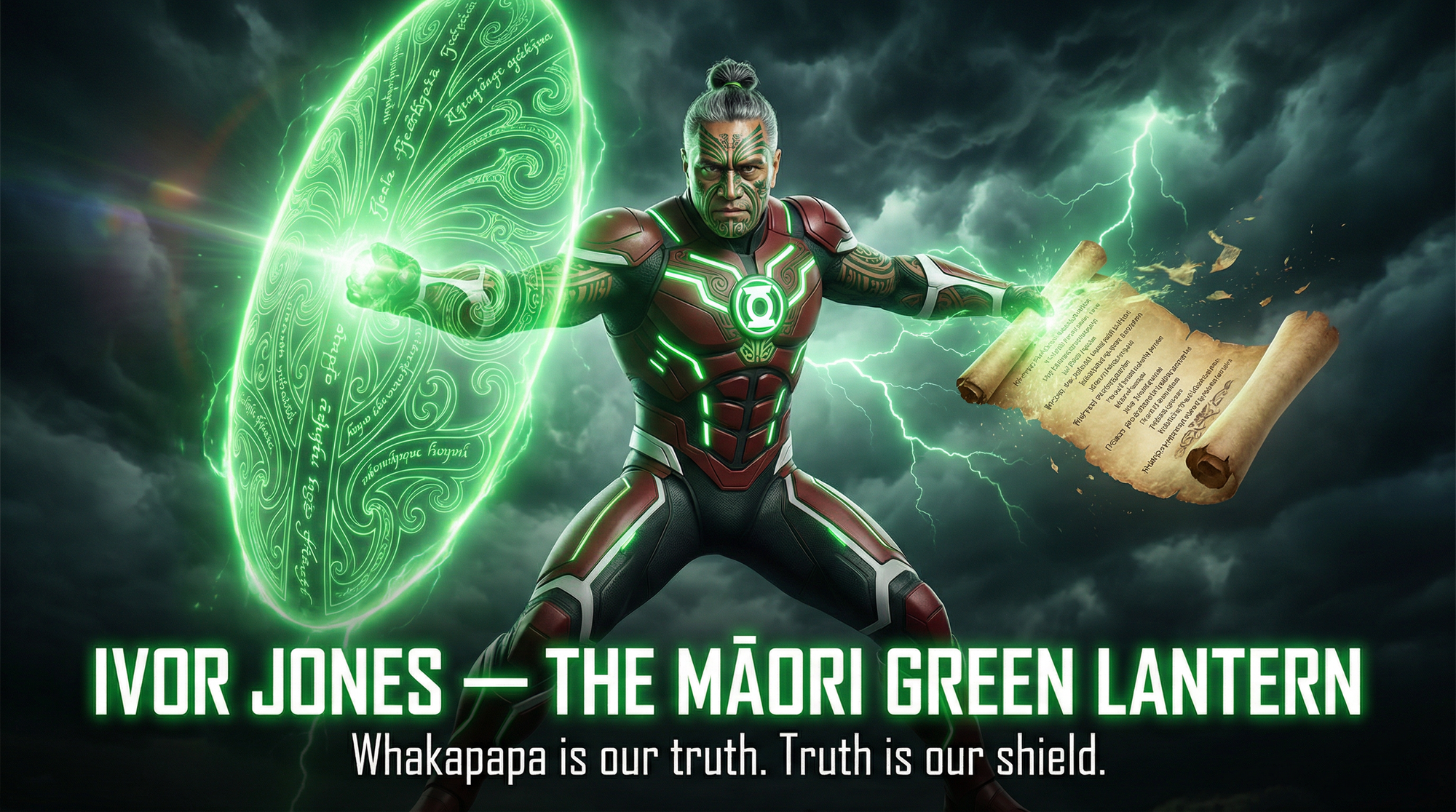
 Ivor Jones The Māori Green Lantern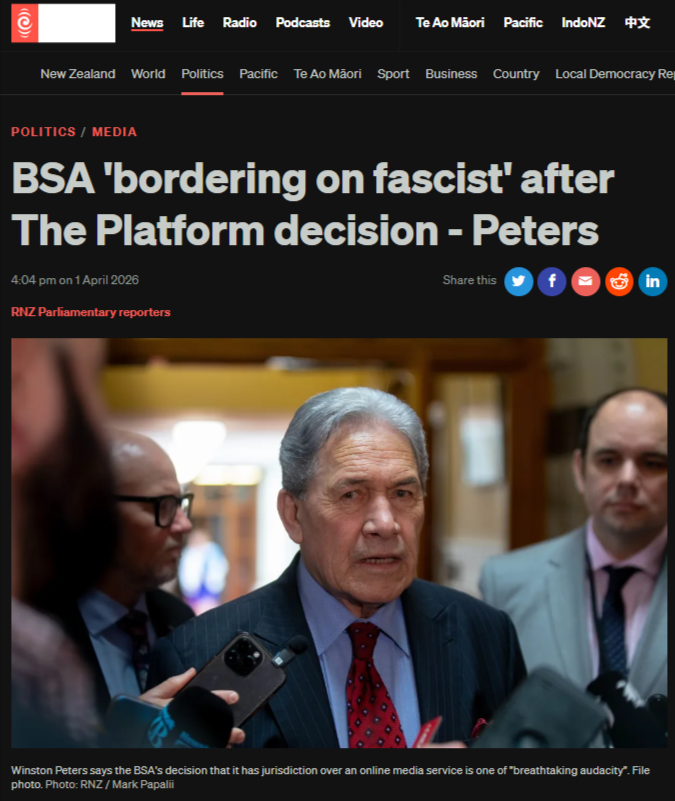
Let us be precise about the timing, because precision is everything.
This morning — Good Friday, 3 April 2026 — The Māori Green Lantern published Mumbo Jumbo, Money and Mana: How Plunket, Peters and the Wright Family Built New Zealand's Anti-Māori Broadcasting Machine — and How the BSA Just Lit the Fuse Under It.
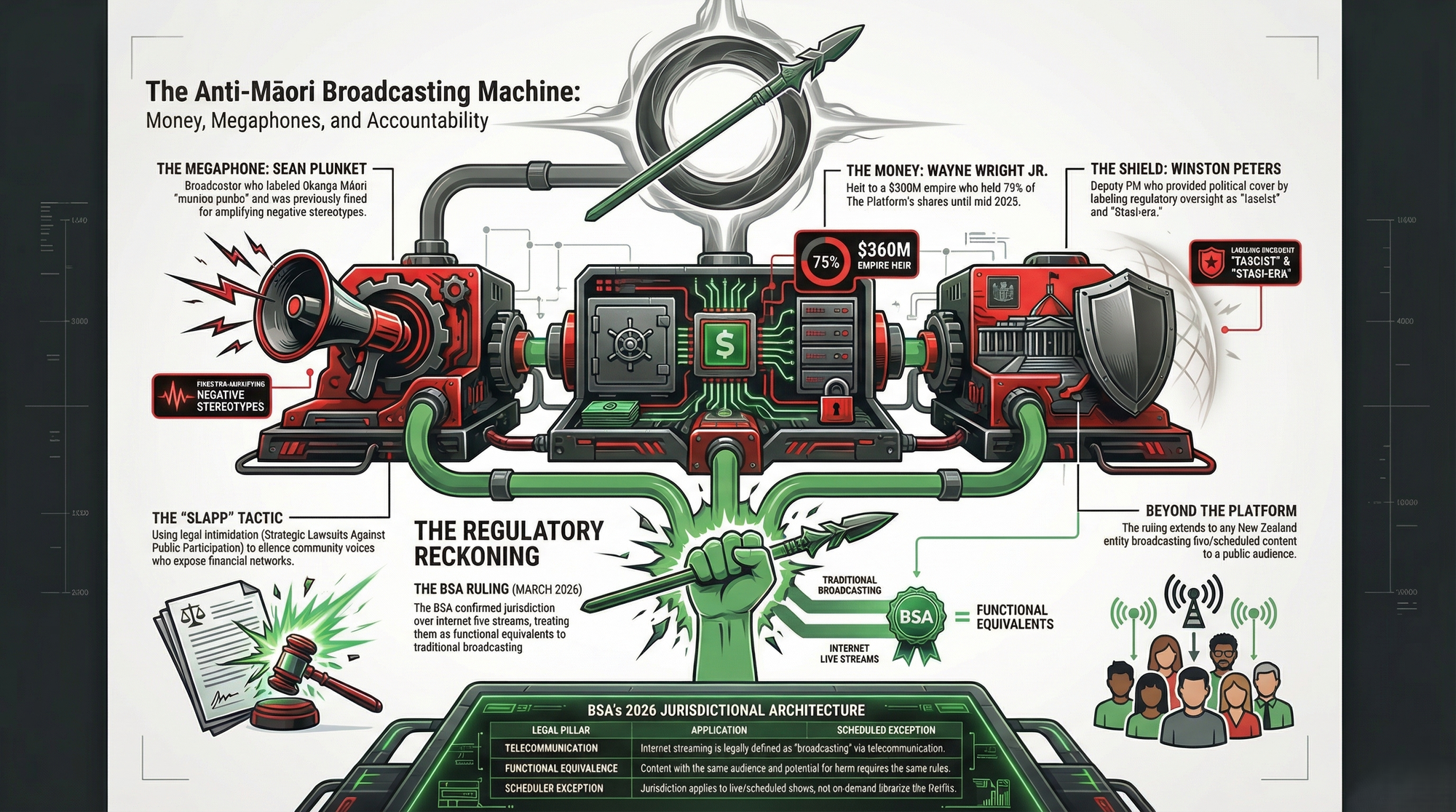
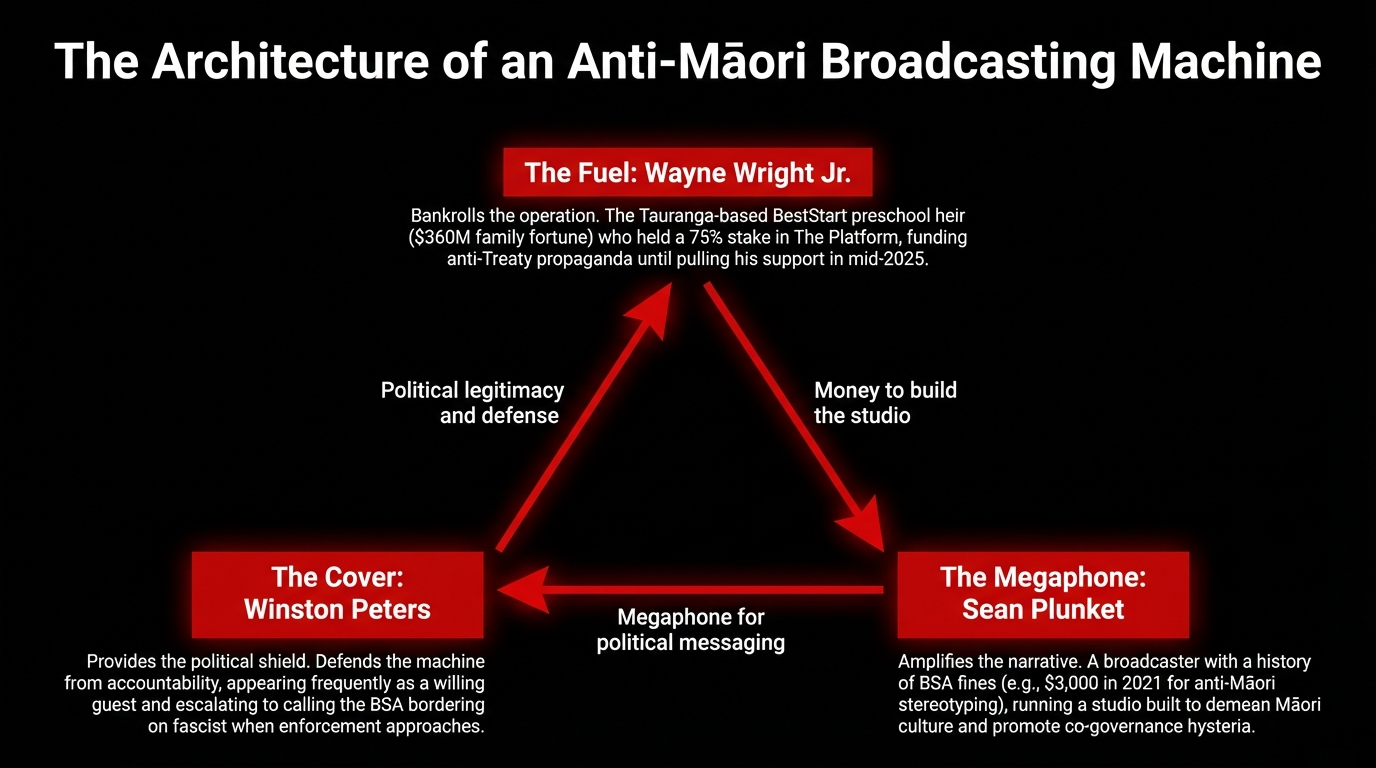
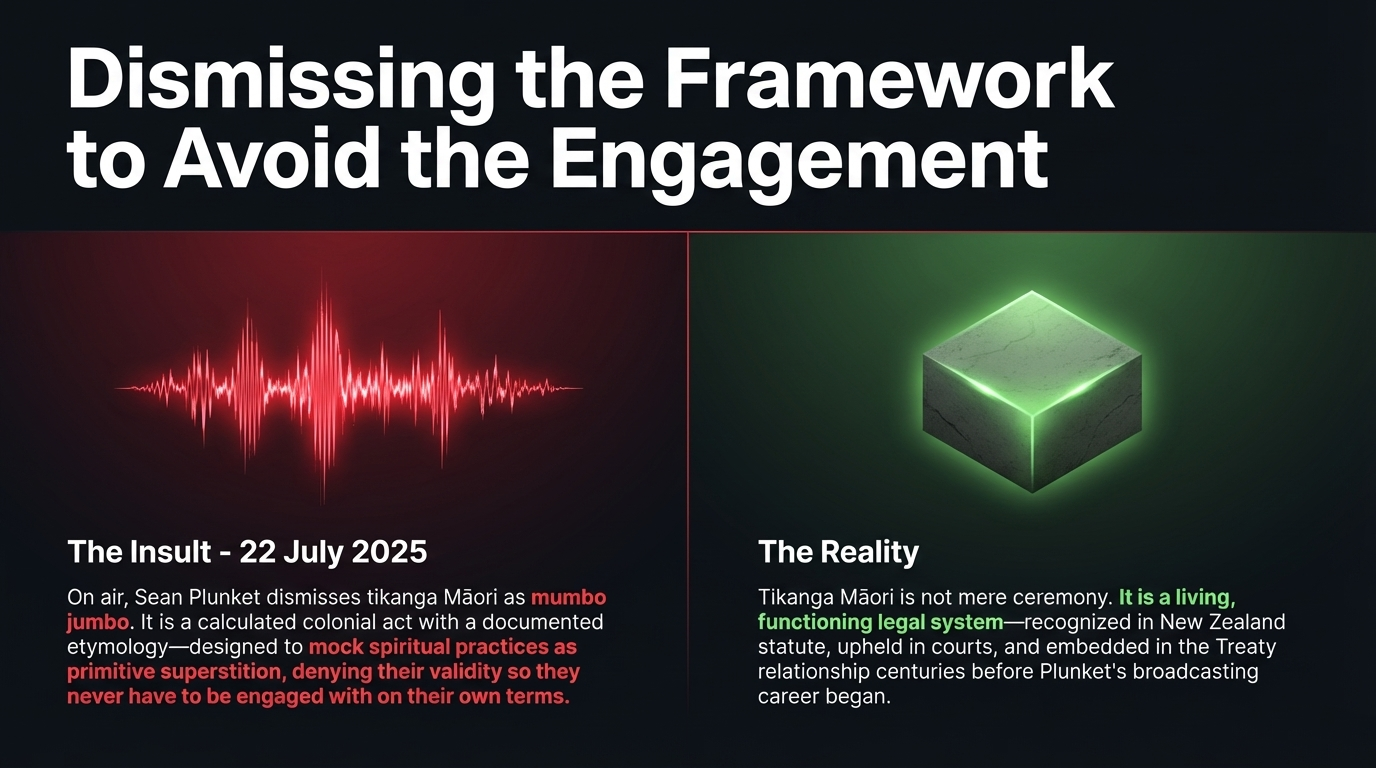
That essay traced, with documented evidence, the financial networks, ideological alliances, and coordinated media machinery behind The Platform — including the Wright family's role as funders, Winston Peters' political air cover, and the Broadcasting Standards Authority's historic decision to claim jurisdiction over Plunket's operation after he described tikanga Māori as "mumbo jumbo" on air on 22 July 2025.
Four hours and thirty-seven minutes later, Plunket's number appeared on my phone.
You do the maths.
That essay had clearly landed. Not because it was inflammatory — it was forensic. Not because it was inaccurate — every claim was sourced and verified.
But because the powerful cannot stand being named.
They cannot stand being connected.
They cannot stand the light.
The Anatomy of the SLAPP
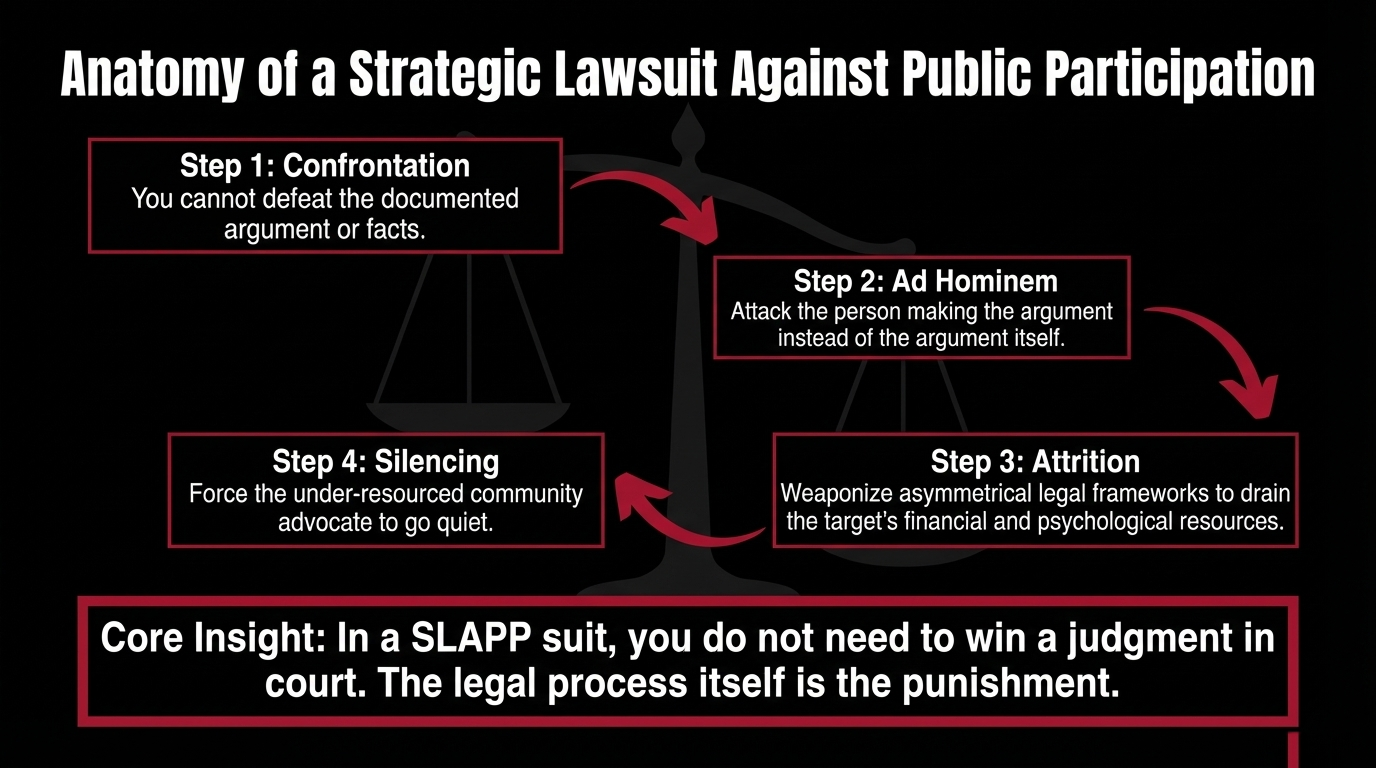
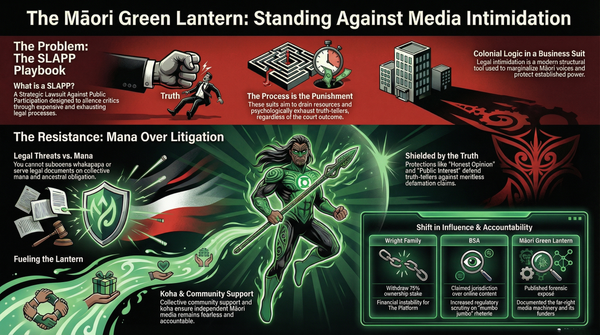
There is a legal term for what happened on my phone today. It is called a SLAPP — a Strategic Lawsuit Against Public Participation.
The tactic is simple: when you cannot defeat the argument, you attack the person making it. You do not need to win in court. You only need to make the process so expensive, so exhausting, so psychologically draining, that the truth-teller goes quiet.
As documented by the NZ Ministry of Justice, New Zealand's legal frameworks were built overwhelmingly by Pākehā, for Pākehā. They were not designed with Māori voices in mind. They were not designed to protect kaitiaki of mātauranga from well-resourced media personalities with lawyers on retainer.
SLAPP suits have been used globally — against journalists, activists, Indigenous land defenders, and community organisers — precisely because the process is the punishment. You do not need a judgment. The cost of defence is the weapon. Sean Plunket knows this. His call was not an accident. It was a calculation.
The Platform's Project

Let us be clear about what The Platform New Zealand actually is. When it launched in 2022, The Spinoff described it as a "mysterious new anti-woke media company" — built around personalities rejected by mainstream broadcasters, with "cancel culture" derision printed in red on its own landing page.
That is not neutrality. That is a project.
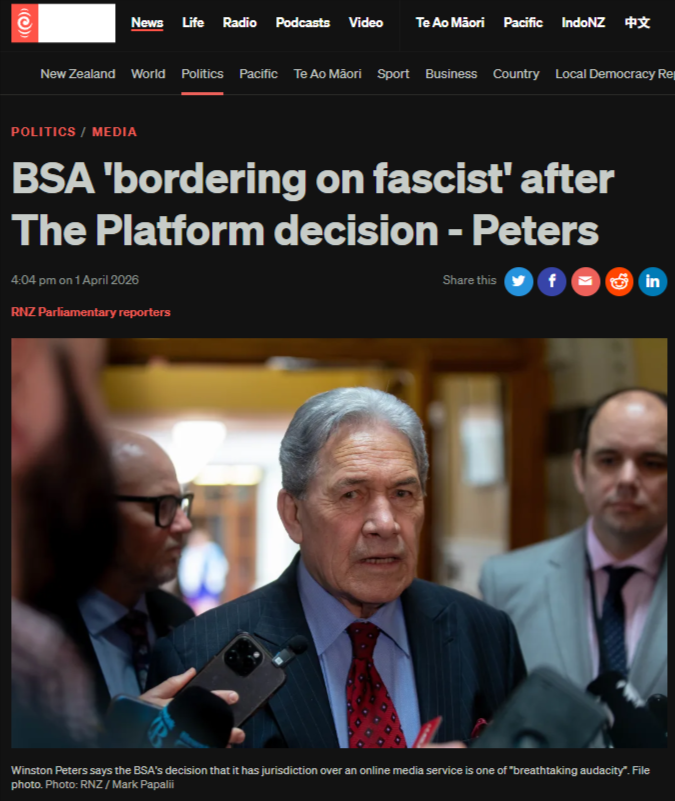
The record is unambiguous. On 22 July 2025, as Chris Lynch Media confirmed, Plunket described tikanga Māori as "mumbo jumbo" on air — dismissing the entire philosophical, cultural and spiritual foundation of tangata whenua in two contemptuous words. When a formal complaint was lodged, Plunket called the complainant a "plonker" and declared The Platform exempt from the BSA because it operated online. When the BSA rejected that position and claimed jurisdiction at the end of March 2026, as NZ Herald's Media Insider reported, Plunket immediately had Winston Peters on air calling the BSA's move "fascist behaviour."
That is the coalition. That is the machine. And as The Spinoff confirmed in September 2025, the Wright family — who had held a 75% ownership stake in The Platform — cut their financial support entirely in March 2025, leaving Plunket alone, precarious, and cornered.
A cornered man reaches for the phone.
What They Always Do When the Heat Comes
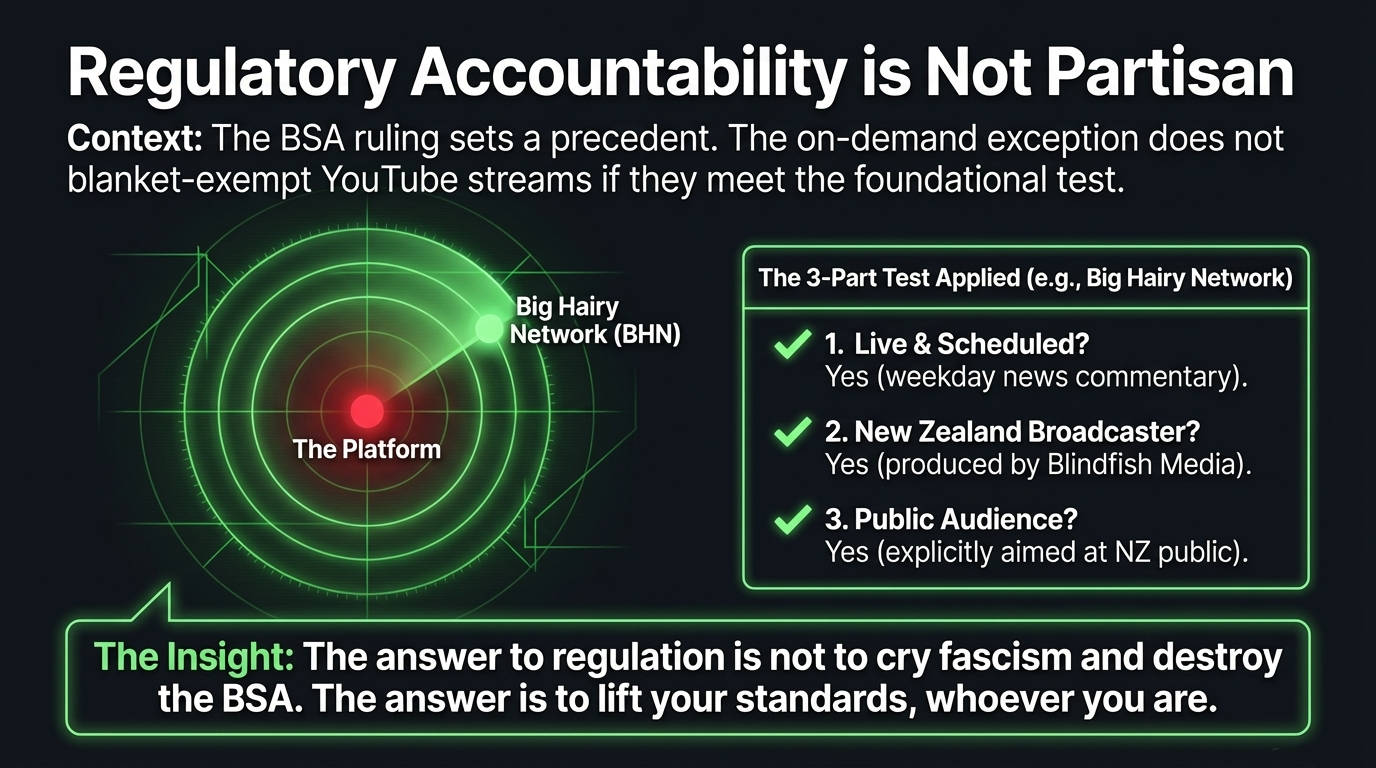
Understand the pattern, whānau. This is not new. This is ancient colonial logic wearing a business suit.
When Māori land defenders stood at Ihumātao, they were met with injunctions. When Māori journalists asked hard questions of power, they faced defamation threats. When Māori academics published findings that challenged the colonial narrative, they were met with institutional pressure, funding cuts, and professional marginalisation. The tools change. The intention does not.
White supremacy — and let us use that phrase precisely, not hyperbolically — does not only express itself in neo-Nazi symbols and explicit racial slurs. It expresses itself structurally, institutionally, and legally. It expresses itself when a well-resourced Pākehā media figure, whose platform has been a consistent vehicle for anti-Māori ideology, picks up a phone on Good Friday to threaten a Māori community voice with legal action hours after that community voice publishes documented evidence of his conduct.
The message is: know your place.
Our answer is: we know exactly where we stand.
The Structural Violence of Legal Intimidation
As the NZ Government's own guidance on doxing and digital harm makes clear, publishing someone's personal information "can harm someone's privacy, security, and safety."
The same logic applies in reverse: deploying legal process as a weapon against an under-resourced community advocate is a different kind of harm — financial, psychological, and silencing — and it is no less calculated.
Legal defence in New Zealand is not affordable for community organisations, independent media, or solo advocates operating without institutional backing. The Harmful Digital Communications Act 2015 and broader civil litigation frameworks can be weaponised asymmetrically — by the powerful against the less powerful — regardless of the merits of any claim. That asymmetry is not accidental. It is structural. And it is a feature, not a bug, of the system that protects men like Plunket.
The Mana That Cannot Be Served
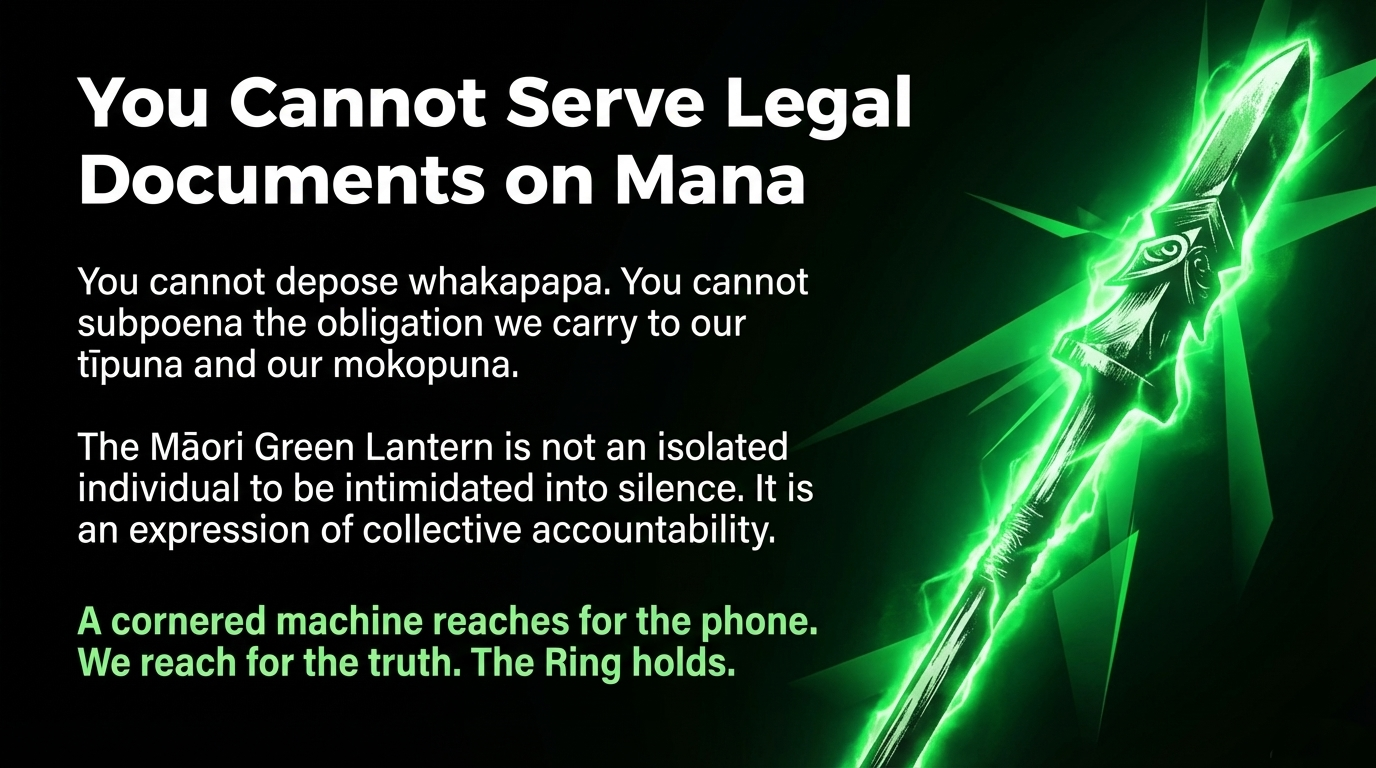
Here is what Sean Plunket fundamentally misunderstands about this moment.
You cannot serve legal documents on mana. You cannot depose whakapapa. You cannot subpoena the obligation we carry to our tīpuna and our mokopuna. The Māori Green Lantern is not an individual to be intimidated into silence — it is an expression of collective accountability that whānau across this motu have chosen to resource and support.
Every phone call like this one does not silence us. It confirms us. It proves the work is landing. That the essay published this morning exposed something he did not want exposed. That the named connections between Plunket, Peters, the Wright family, and the BSA battle struck a nerve so raw that within hours, he was dialling.
Plunket spent one minute on that call. He achieved the opposite of what he intended.
Our Standard Is Higher Than Theirs
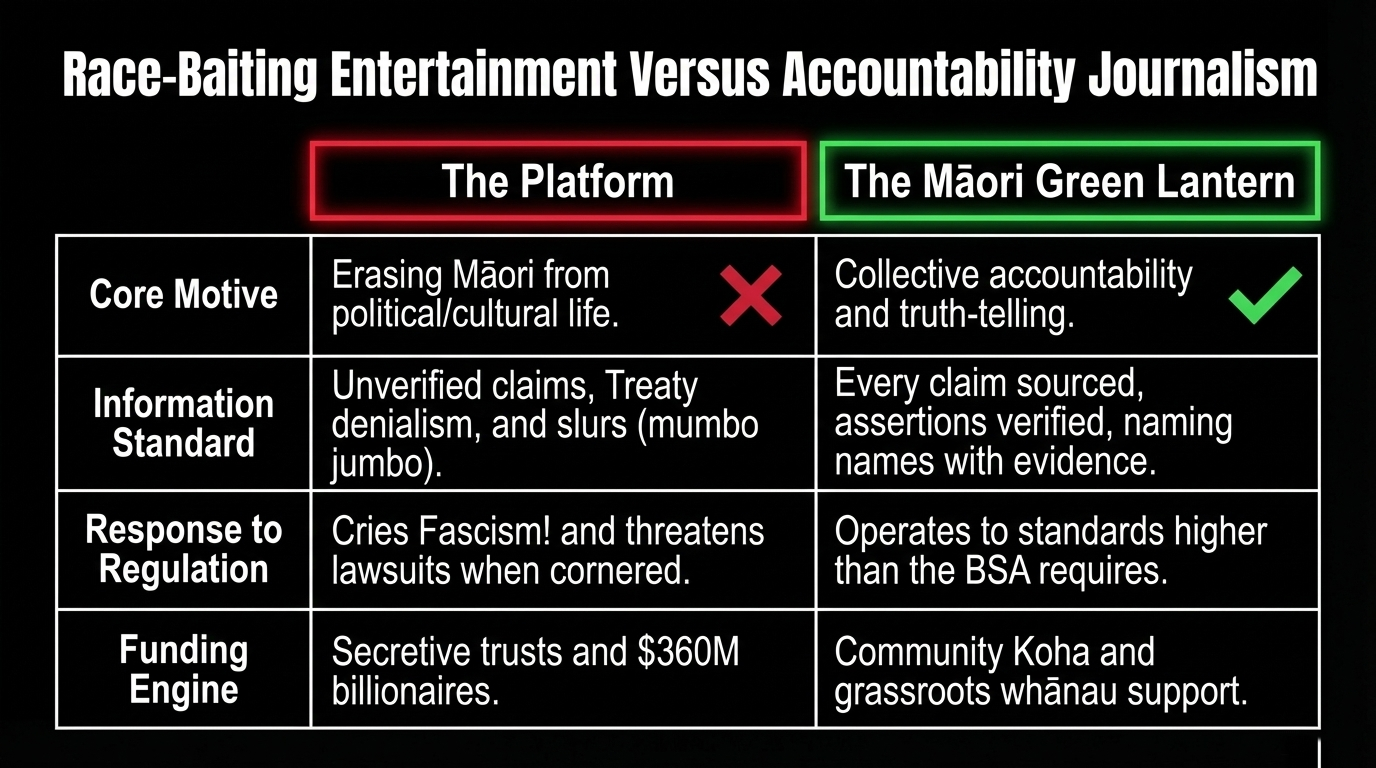
I removed the post that contained Plunket's phone number. Not because he deserves protection from scrutiny — he does not. But because our standards must be higher than his. The NZ Government is explicit that publishing private contact details without consent causes harm — and we do not deal in the tools of harm. We deal in evidence, in accountability, and in truth.
The story of what he did — calling a Māori community voice to threaten legal action on Good Friday, hours after a forensically sourced essay about his conduct went live — stands entirely on its own. It needs no phone number. It needs no embellishment. It needs only to be told clearly, loudly, and on the record.
This essay is that record.
The Ring Holds
Sean Plunket: your call did not frighten us. It documented you. It showed whānau exactly who you are when the cameras are off and the lawyers are on speed dial. It confirmed every network diagram, every financial connection, every named relationship in the essay that ran this morning — because men who have nothing to fear do not call journalists to threaten them on public holidays.
As The Spinoff reported in September 2025, The Platform now rests solely on Plunket's shoulders — financially exposed, commercially marginalised, facing a BSA jurisdiction battle he cannot easily win. A man alone on a shrinking platform, reaching for a phone on Good Friday afternoon, trying to silence a Māori voice that just named every piece of his machine.
You wanted silence. You got this.
To whānau reading this: this is the pattern. Recognise it. Name it. Share it. And if you are able, fund the voices that refuse to be silenced.
Kia kaha. Kia māia. Kia manawanui.
🌿 The Ring holds. The taiaha is raised. The work continues.
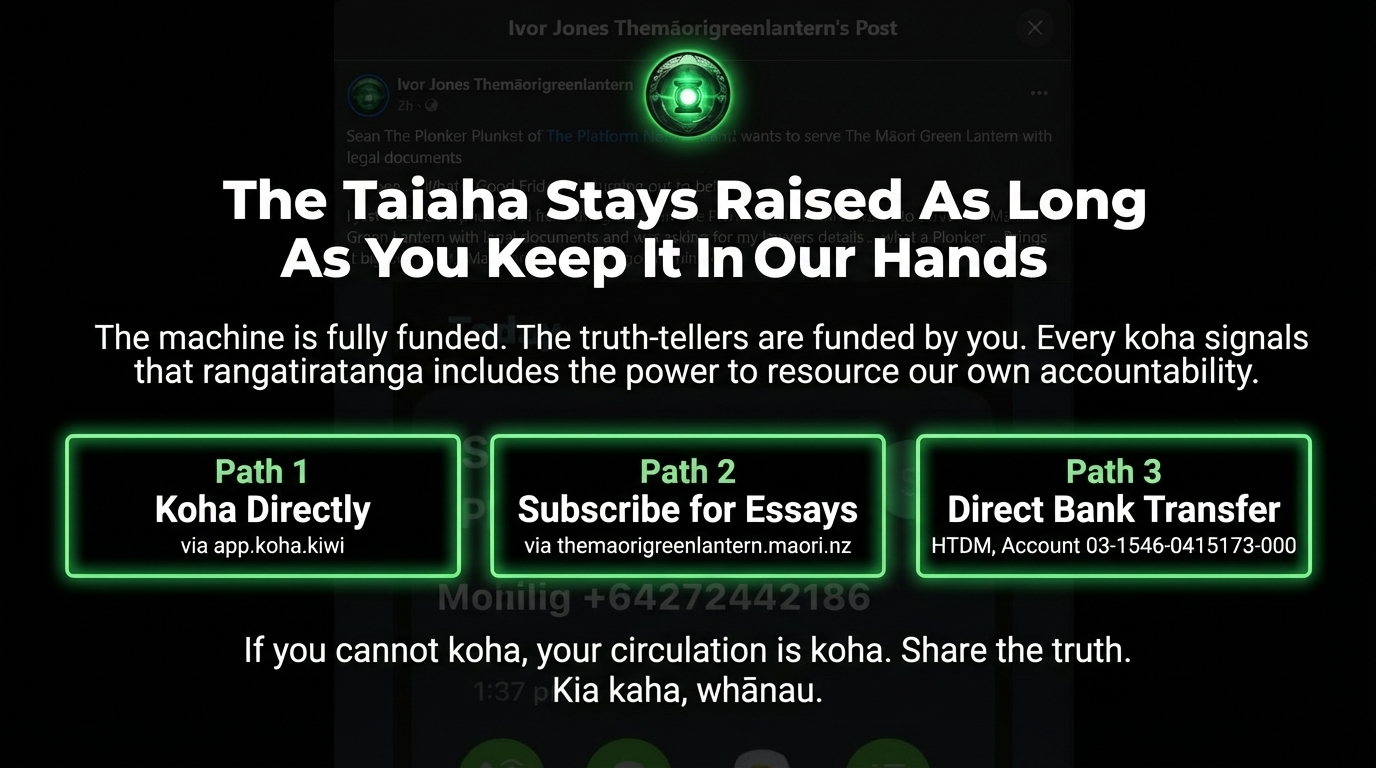
If this mahi matters to you — if you believe Māori deserve funded, fearless, accountable truth-telling — please consider a koha here, or subscribe on Substack. Direct bank transfer: HTDM, 03-1546-0415173-000.
Research note: All URLs verified live at time of publication, 3 April 2026. Sources include The Spinoff (2022), The Spinoff (September 2025), NZ Herald Media Insider (March 2026), Chris Lynch Media, NZ Ministry of Justice, NZ Government – Doxing Guidance. The phone call described occurred 3 April 2026 and is documented by the author.