"WORKBOOKS FOR WHOSE CHILDREN? ERICA STANFORD'S $131M COLONIAL RESET" - 20 May 2026
When $131 million buys assimilation and Māori tamariki are still left behind, we must name the architects — and the ideological network that pays them.

Kia ora Aotearoa,
This essay examines Erica Stanford's Budget 2026 education package because it directly affects Māori whānau, mātauranga Māori, te reo Māori, and Māori tamariki whose educational rights are protected under Te Tiriti o Waitangi. This is a matter of direct public accountability for a Minister exercising statutory powers over the education of 800,000+ children.
The River and the Concrete
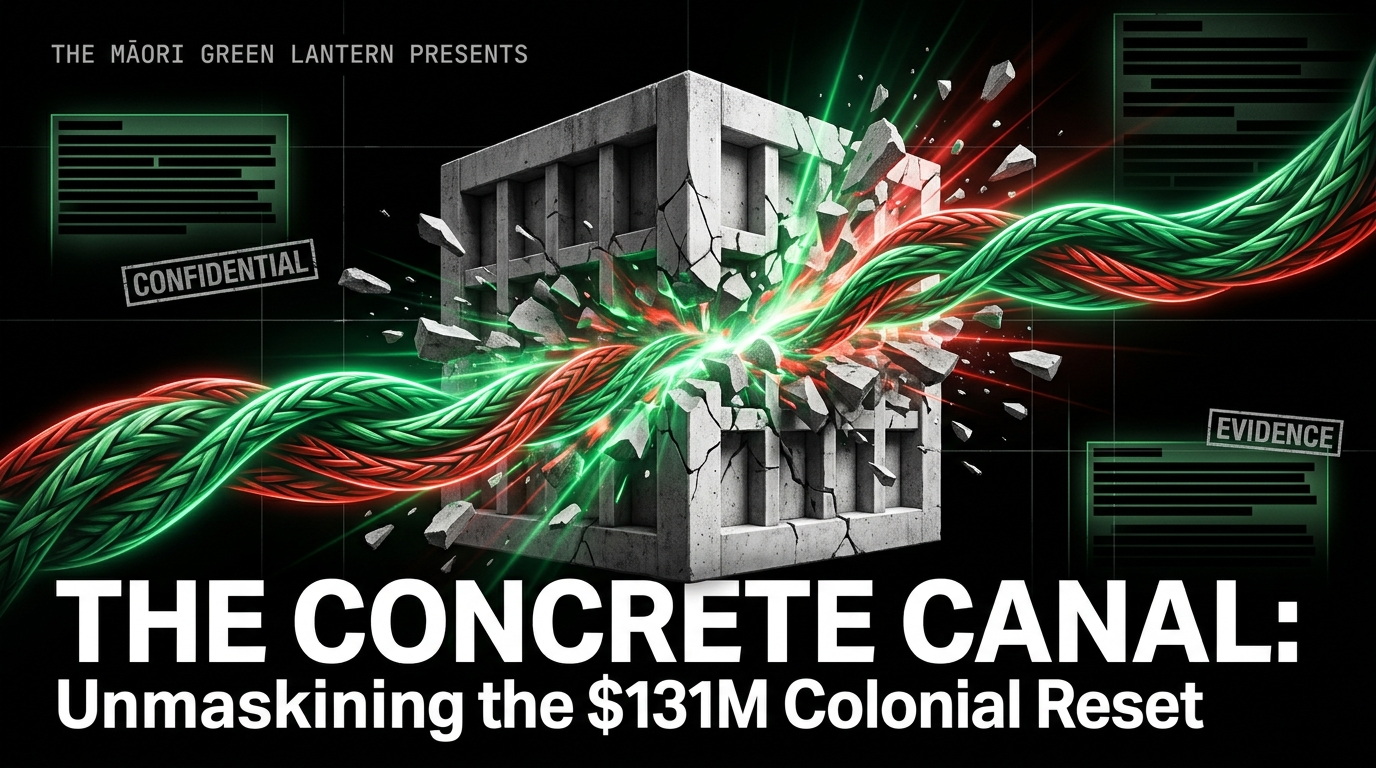
Imagine the braided rivers of Aotearoa — wide, adaptive, capable of sustaining countless life-forms across a diverse and living landscape. For decades, Māori educators, kaupapa Māori schools, kura kaupapa, and kōhanga reo carved their own channels through that river, nourishing tamariki with the tikanga of their tūpuna, teaching through whakapapa and mātauranga, building identity and confidence as the bedrock of literacy and numeracy.
Those channels were hard-won. The evidence supporting them — including data showing that students in te reo Māori immersion settings are statistically more likely to achieve University Entrance even from low socio-economic areas — is documented in research published at Ipu Kererū. It was real. It was proven. And it was deliberately set aside.
The Deep Dive Podcast
Listen to a lively conversation between two hosts, unpacking and connecting topics in the sources of this essay. I apologise in advance for the AI's very harsh pronounciation of reo. Please dont shoot me, :).
 Lauren Crimp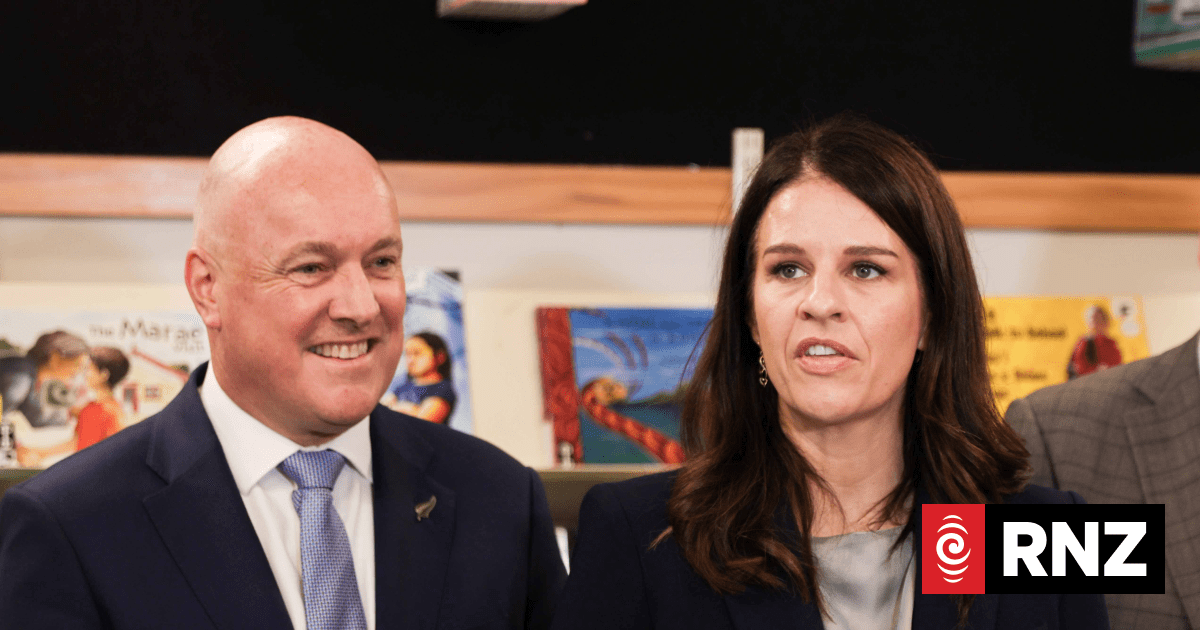
Then a government arrived. Not to tend the river. Not to support its tributaries. But to concrete it into one straight canal — narrow, controlled, flowing in one direction only.
The canal was designed in Florida by an American academic who has never taught a Māori child. It was blueprinted by a New Zealand sociologist who has spent decades arguing that kaupapa Māori education is ideologically suspect, as documented by E-Tangata.
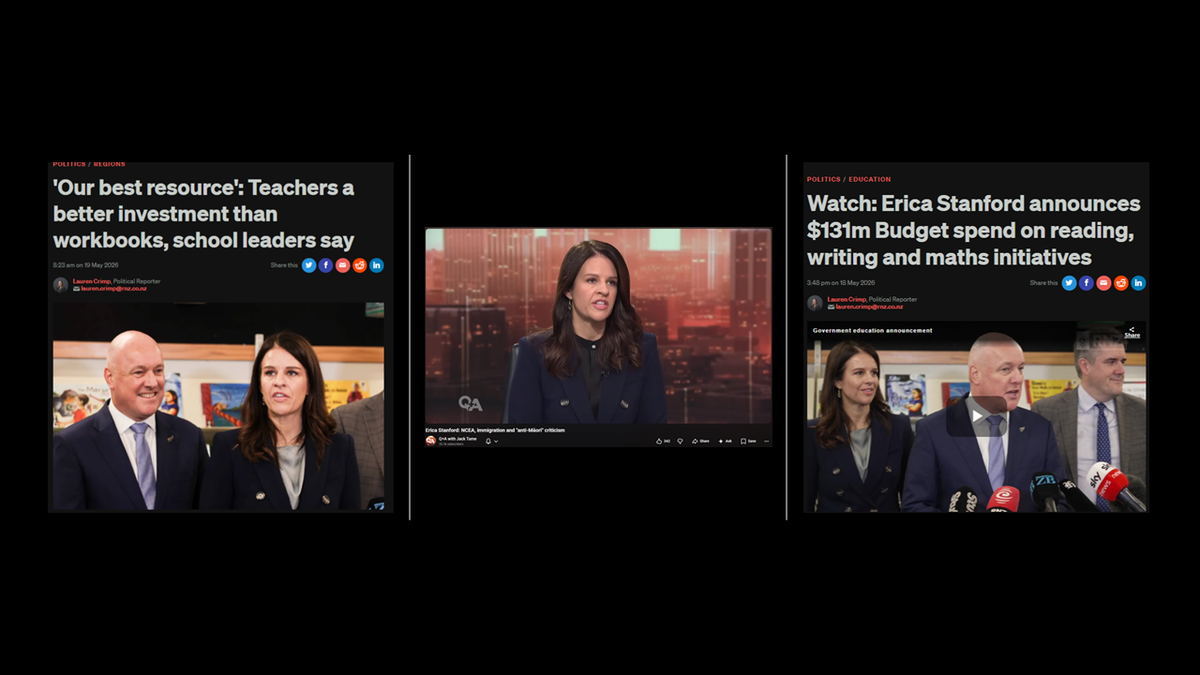
It was delivered, on 18 May 2026, by Erica Stanford at a Lower Hutt school, standing beside Christopher Luxon, wearing the language of equity like a borrowed cloak.
Lauren Crimp
They call the concrete "knowledge-rich." They call the narrowing "equity." They hand out workbooks and call them liberation.
That is Stanford's $131 million Budget 2026 education package — and it is time to name exactly what it is, who built it, and whose children it will harm.
What Was Actually Announced
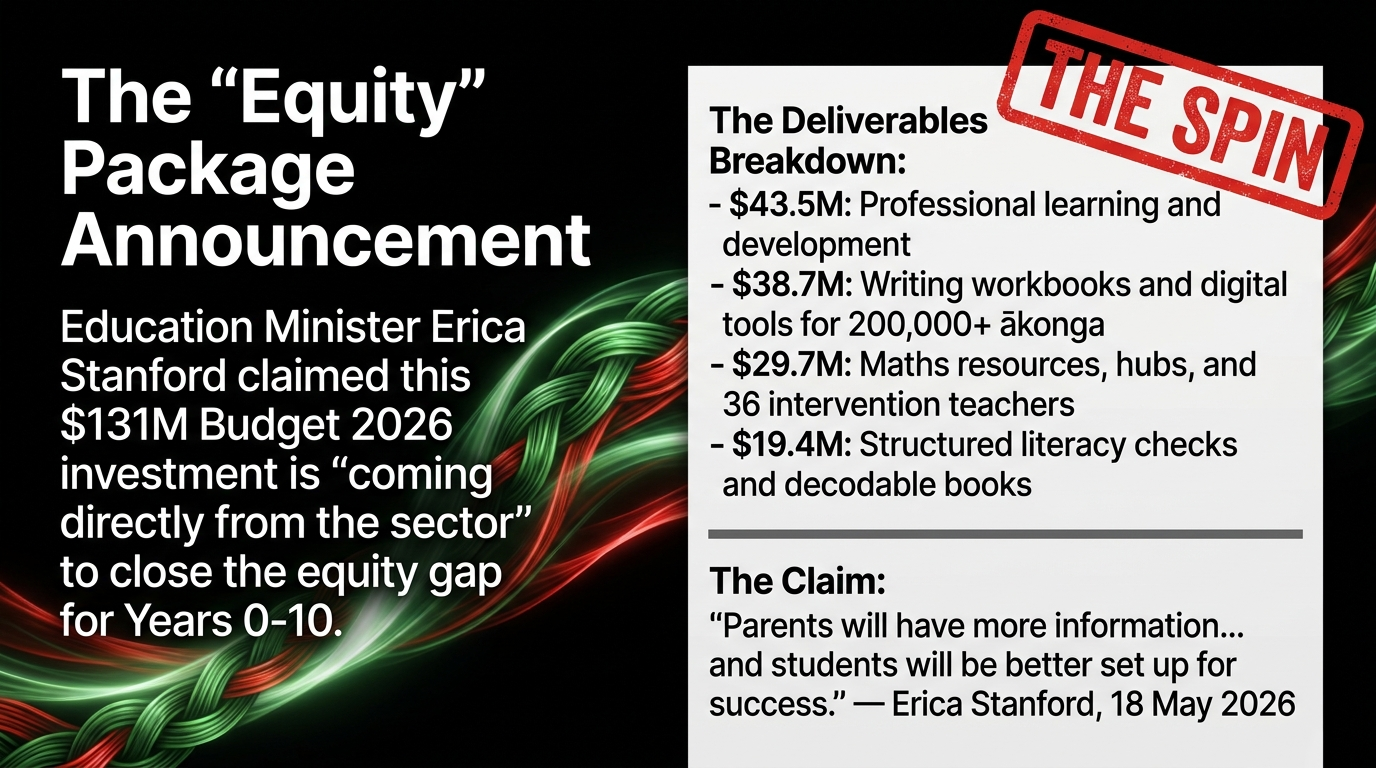
On 18 May 2026, Education Minister Erica Stanford revealed a $131 million Budget commitment across 12 initiatives targeting reading, writing, and mathematics in primary and intermediate schools, Years 0–10, as reported by RNZ. The announcement was made at Boulcott School in Lower Hutt alongside Prime Minister Christopher Luxon, framed as the government's pathway toward its target of 80 percent of Year 8 students achieving at expected curriculum levels by December 2030.
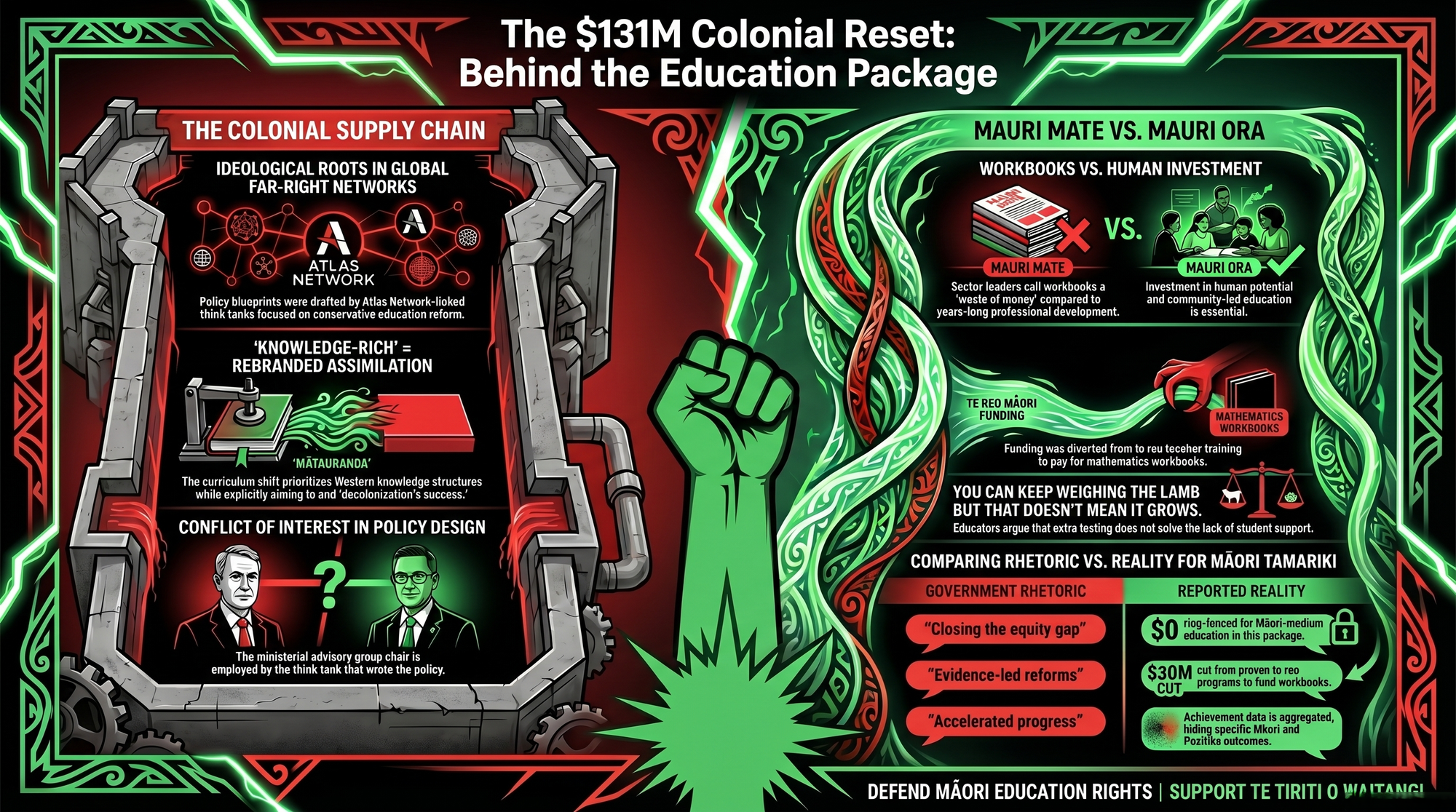
The Ministry of Education confirmed the cost breakdown across four areas: $43.5 million for professional learning and development; $38.7 million for writing support including new workbooks for Years 4–5 and a digital writing tool for Years 6–8 reaching more than 200,000 ākonga; $29.7 million for maths including hands-on equipment for every Year 0–8 classroom, Maths Hubs, and 36 additional full-time intervention teachers; and $19.4 million for structured literacy including decodable books for older readers in Years 3–10, an end-of-Year 2 Literacy Check, and an Accelerated Literacy Programme.
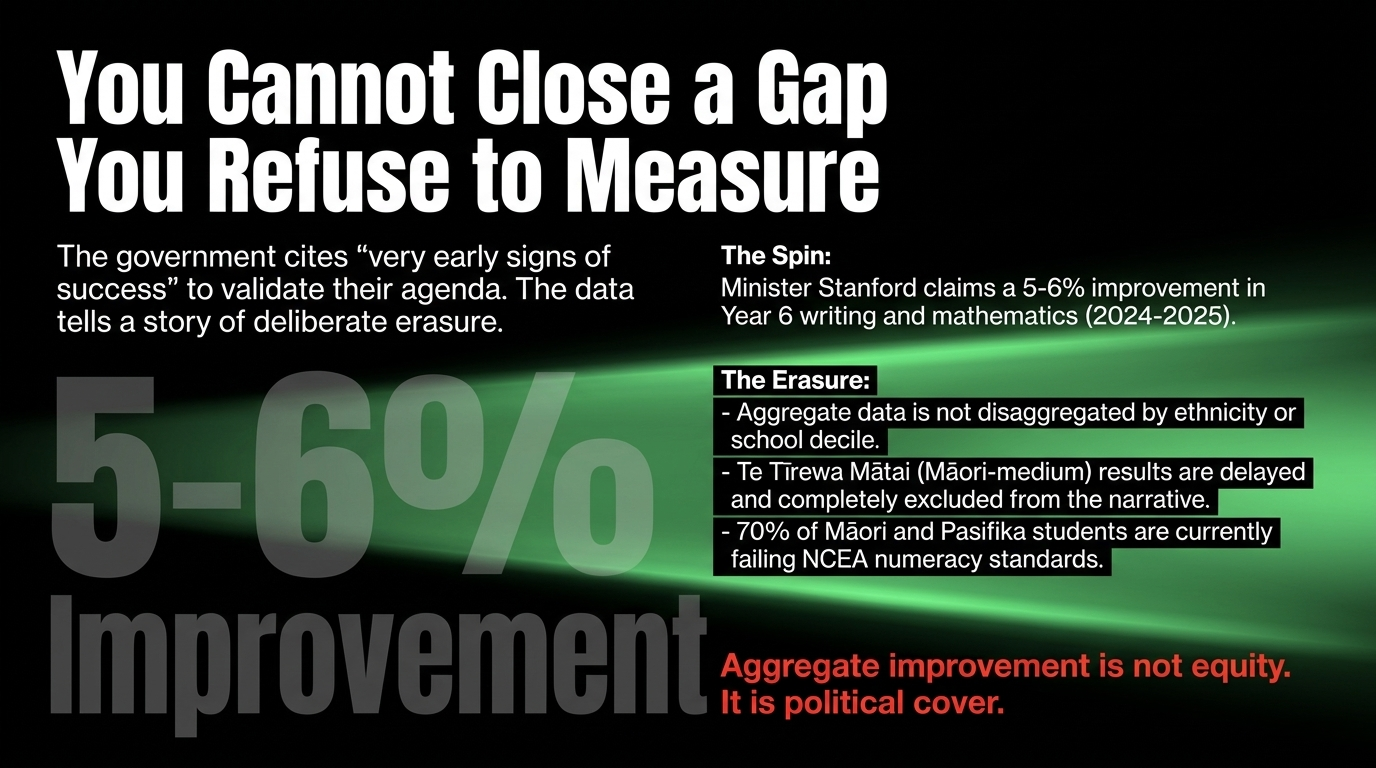
Notably, the Ministry of Education confirmed that Te Tīrewa Mātai results — the data covering Māori-medium settings — would not be released until "later this year." Stanford cited "very early signs" of success from the Curriculum Insights and Progress Study: a 5 percent improvement in writing and a 6 percent improvement in mathematics for Year 6 students between 2024 and 2025, as reported by RNZ. Those figures were not disaggregated by ethnicity. No breakdown for Māori. No breakdown for Pasifika. Aggregate improvement is not equity.
The Network Behind the Policy
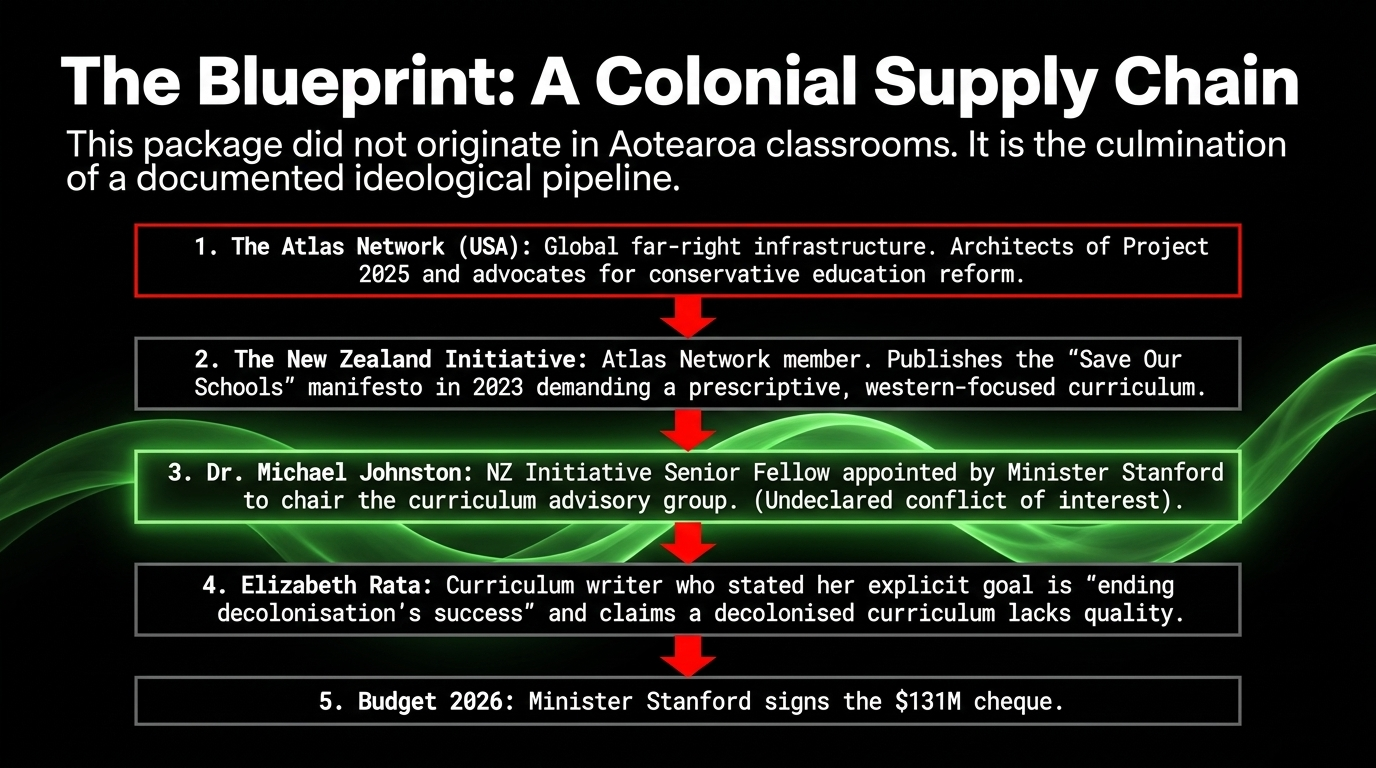
This package does not exist in a vacuum. It is the culmination of a documented ideological pipeline — from American far-right think tanks to Wellington's Beehive — exposed with forensic precision by E-Tangata in October 2025.
The New Zealand Initiative — confirmed by E-Tangata as a member of the Atlas Network, the global far-right infrastructure that also produced the Heritage Foundation and Project 2025's intellectual engine — published its education manifesto Save Our Schools in April 2023, months before the coalition government took power. Elizabeth Rata wrote the foreword. Its recommendations
— from downgrading Te Tiriti o Waitangi in the Education Act, to prescriptive "knowledge-rich" curriculum, to gutting NCEA — now read, as E-Tangata documents, "like the government's to-do list, having made their way directly into coalition agreements."
Dr Michael Johnston, Senior Fellow at the New Zealand Initiative and co-author of Save Our Schools, was then appointed by Stanford to chair her ministerial curriculum advisory group in December 2023, as confirmed by E-Tangata. Johnston chairs that advisory group while remaining employed by the same think tank that wrote the policy blueprint. That is a textbook conflict of interest. It has not been publicly declared as such.
Stanford then travelled to the Core Knowledge Foundation's conference in Florida — described in detail by E-Tangata — where she told E.D. Hirsch Jr on stage:
"I am now implementing huge reform in New Zealand based on your book."
The plenary was led by Robert Pondiscio, Senior Fellow at the American Enterprise Institute (AEI), a member of the Atlas Network that, as E-Tangata documents,
"advocates for limited government, privatisation and conservative education reform."
Hirsch's foundational text Cultural Literacy: What Every American Needs to Know has been roundly criticised for sexism, Eurocentrism, and its disregard for First Nations' knowledge and languages, as E-Tangata confirms.
The whakapapa of this policy reads: Atlas Network → NZ Initiative → Save Our Schools → Johnston to advisory group → Rata as curriculum writer → $131 million rollout. This is a colonial supply chain with a New Zealand postcode.
Elizabeth Rata: The Iago on Stanford's Shoulder
Secondary school teacher and Master of Education researcher Erica Hamilton described Elizabeth Rata as sitting "like Iago on the shoulders of education minister Erica Stanford" in her analysis published by E-Tangata. It is a precise metaphor. Iago does not act openly. He whispers. He shapes perception. He controls the narrative from within.
OIA-released emails reveal that Rata and Johnston gained control over the actual writing of the curriculum draft — well outside the advisory group's terms of reference — by selecting the writers, including Rata herself, as documented by E-Tangata. When the drastically rewritten Year 7–13 draft English curriculum was released in March 2025, Rata emailed Stanford: "It is the knowledge-rich curriculum you promised," as confirmed by E-Tangata.
In a speech written for Stanford and emailed to the minister, Rata expressed her explicit hope that Stanford's reforms would be the "circuit breaker" to "ending decolonisation's success," as E-Tangata documents. Not ending underachievement. Not ending poverty. Ending decolonisation's success.
The implications are made plain by E-Tangata: Rata's claim that "a decolonised curriculum does not provide quality content" reveals "the real intent behind a 'knowledge-rich' curriculum: assimilation, rebranded for 2025." As E-Tangata makes clear, in Rata's framework, "knowledge-rich" means a return to traditional western knowledge structures — a one-size-fits-all approach that assumes, as Stanford herself stated, that "every brain learns the same," a claim the same piece documents was "widely refuted by educationalists and disability advocates."
Te Akatea's Dr Therese Ford and president Bruce Jepsen made their position explicit at the Te Akapūmau summit, documented by E-Tangata: the ministerial advisory group's recommendation that "Te Tiriti o Waitangi, our nation's founding document, be removed from the curriculum and replaced with the science of learning" represents a compounding of the inferior status Māori knowledge already held in the previous curriculum. This is not reform. This is the 1867 Native Schools Act in a different font.
The Te Reo Cut: Robbing Tūāhu to Pay Thames
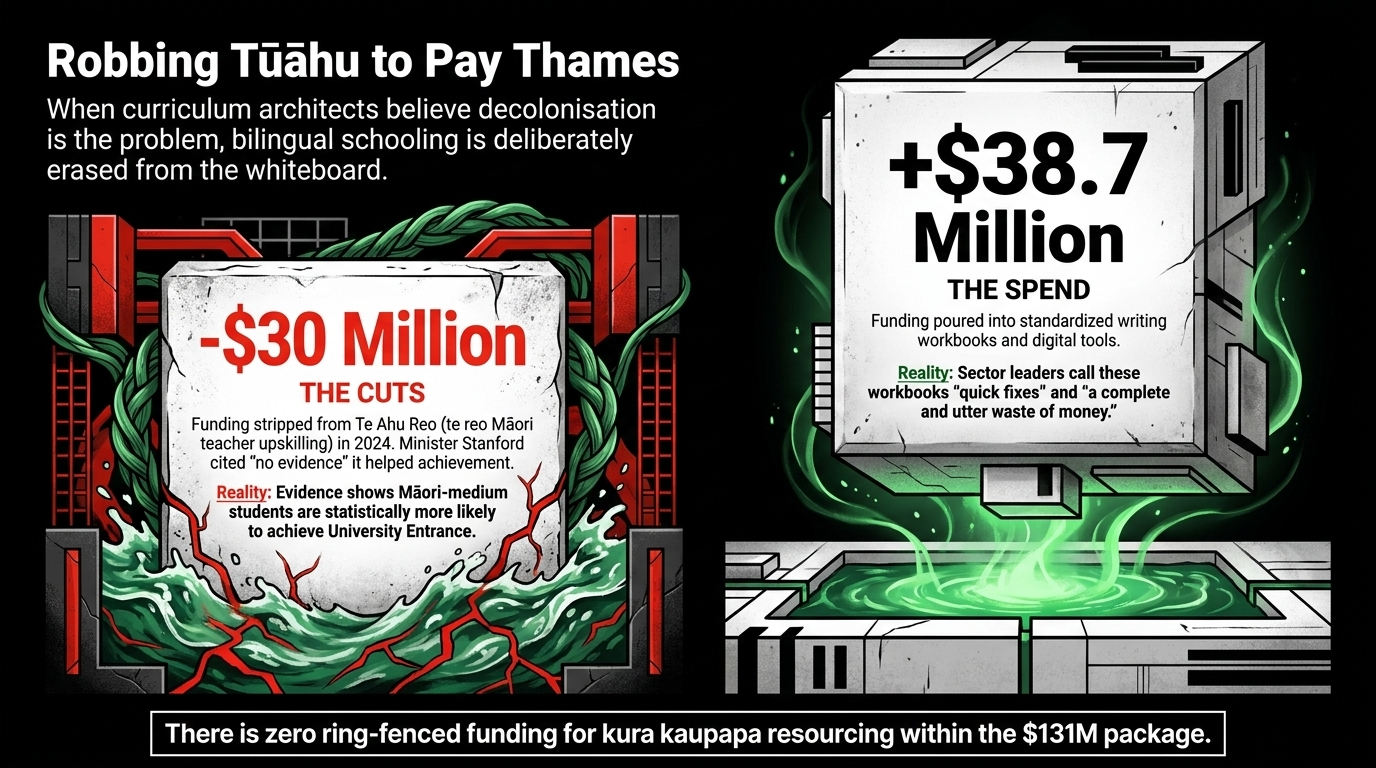
In 2024, Stanford reprioritised $30 million cut from a te reo Māori teacher upskilling programme — funding for Te Ahu Reo programmes that supported teachers to upskill in te reo Māori — to fund maths curriculum resources, as reported by Newstalk ZB. Stanford's justification was that there was "no evidence the te reo programme directly helped student achievement." This, from a minister simultaneously allocating tens of millions to workbooks — resources her own sector experts call ineffective.
The evidence she dismissed actually exists. Research documented at Ipu Kererū confirms that Māori students in schools offering instruction through te reo Māori are statistically more likely to achieve University Entrance, even when controlling for socio-economic variables. Stanford cut the very infrastructure that produces this outcome and redirected it toward resources designed within an ideological framework that treats te reo as a barrier, not a bridge.
The $131 million Budget 2026 package is silent on kura kaupapa resourcing. The Ministry of Education breakdown confirms there is no dollar amount ring-fenced for Māori-medium education within this package, beyond a Phonics Check trialled in te reo Māori — a single check inside a system stripped of bilingual infrastructure. As E-Tangata documents, the removal of te reo Māori from primary school readers, the proposed English curriculum elevating 19th-century Pākehā texts over Māori writers, and the axing of Te Ahu Reo funding form a coherent programme of assimilation — not separate policy choices. This silence is structural. When your curriculum architects believe decolonisation is the problem, bilingual schooling is not on the whiteboard.
What the Sector Knows That Stanford Won't Say
The teachers, principals, and academics who work daily with tamariki have been telling Stanford the same thing for two years. She is not listening.
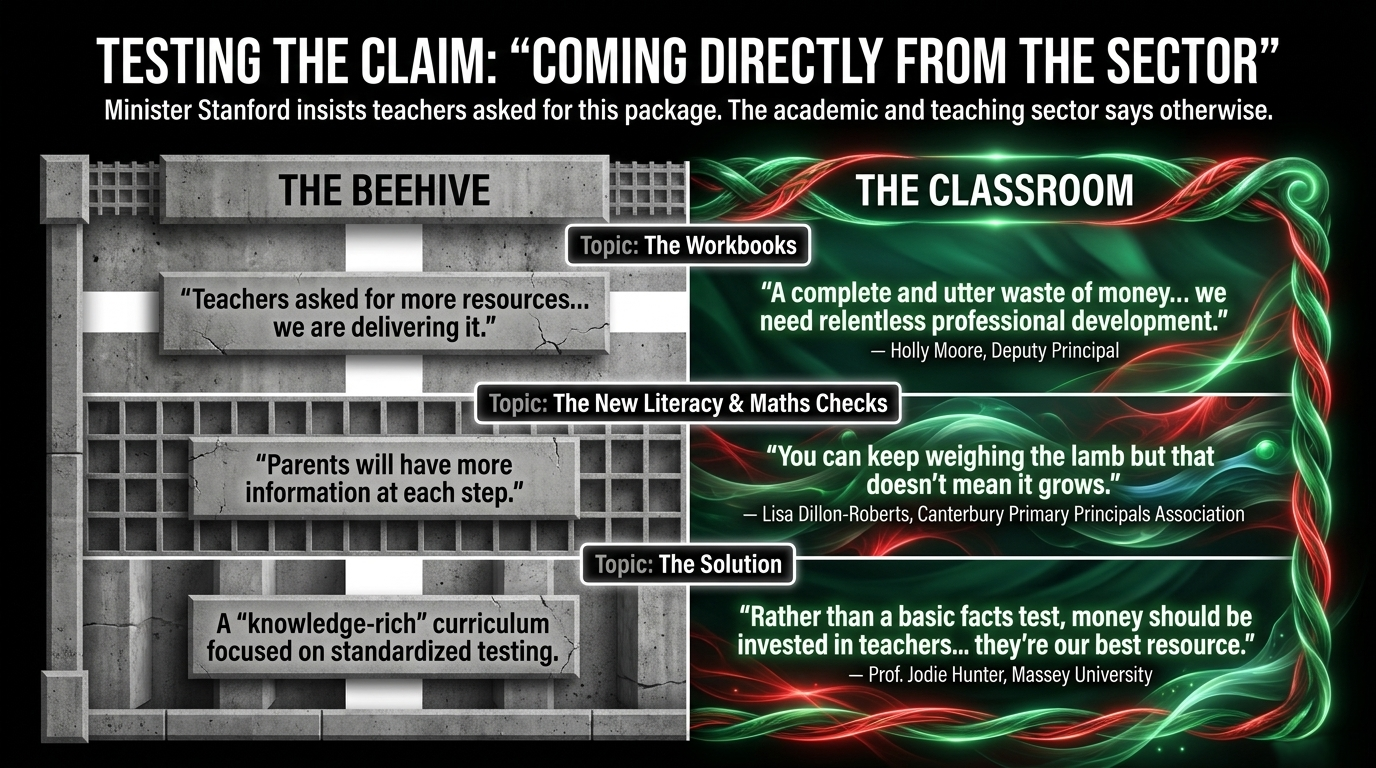
Auckland deputy principal Holly Moore told RNZ that last year's maths workbooks were "a complete and utter waste of money" and that the new package represented "quick fixes that are not going to improve the quality of teaching as professionals." Her diagnosis is structural: teachers need years-long sustained professional development, not a workbook drop and a PD day. "We know that doesn't work," she told RNZ. "It has to be relentless."
Canterbury Primary Principals Association president Lisa Dillon-Roberts acknowledged to RNZ that the best element of the package was the 36 additional maths intervention teachers: "That is the absolute best thing for students. Working out of a workbook or having extra resources is far secondary to that." But she was sceptical about the additional assessment checks, noting the farming whakataukī that Stanford should post above her desk: "You can keep weighing the lamb but that doesn't mean it grows."
Massey University mathematics education professor Jodie Hunter, who works across classrooms throughout Aotearoa, told RNZ she was "surprised" to see the new assessment checks included, noting teachers already conduct this monitoring. Her conclusion was clear: "Rather than a basic facts test, I'd like to see that money invested in teachers. They're our best resource." On the Maths Hubs she cited "varying degrees of success" in the United Kingdom and called for far more detail before any endorsement.
Stanford told RNZ the resources were "coming directly from the sector themselves." Holly Moore's response to RNZ was direct: the sector is asking for relentless professional investment, not workbooks. Those are not the same request.
The Data Gap: Māori Tamariki Are Not in Stanford's Numbers
Stanford's "very early signs" of success rest on one aggregate data point: a 5–6 percent improvement in writing and mathematics for Year 6 students between 2024 and 2025, as cited by RNZ. Not broken down by ethnicity. Not broken down by school decile. Not disaggregated for the communities facing the deepest structural harm.
As E-Tangata has documented: "more than 70 percent of Māori and Pasifika are failing NCEA numeracy standards, which equates to every third student overall. Māori have higher rates of leaving school without NCEA than Pākehā students — 18 percent versus 7 percent." The NZQA 2025 attainment data released in March 2026 confirms that while there were modest improvements in NCEA Level 3 and University Entrance for Māori and Pasifika, NZQA itself states "significant disparity in attainment associated with socio-economic barriers to attainment and ethnicity remains."
The Comet Auckland 2025 Māori and Pasifika Snapshots was unambiguous: "equity remains a goal, not a given." You cannot close an equity gap you refuse to measure. Stanford announced "closing the equity gap" while releasing data that buries Māori underachievement inside a national average. That is not transparency. That is political cover.
Furthermore, the Ministry of Education itself confirmed that Te Tīrewa Mātai results — covering te reo Māori medium education — would not be published until later in 2026, long after the Budget announcement had set the political narrative. Māori communities are being asked to accept a reform package designed around data that does not yet account for them.
Budget Transparency: Where Is the Money Coming From?
Stanford confirmed the $131 million is a "mixture of new and reprioritised money" but refused to reveal the breakdown before Budget Day on 28 May 2026, as reported by RNZ. Both Labour's Ginny Andersen and ACT's David Seymour confirmed the presence of cuts elsewhere. Andersen told RNZ: "David Seymour has already put out a statement saying it's all from cuts somewhere else. I think parents have a right to know where that funding is coming from."
This government has previously cut te reo Māori teacher upskilling, the Māori Health Authority, Whānau Ora resourcing, and multiple equity-focused education programmes to fund its rebranded priorities. Until 28 May, whānau cannot know whether this $131 million was partly funded by dismantling the very programmes that served their tamariki. That is not a funding question. That is a justice question.
Tikanga Analysis: Mauri Mate vs. Mauri Ora
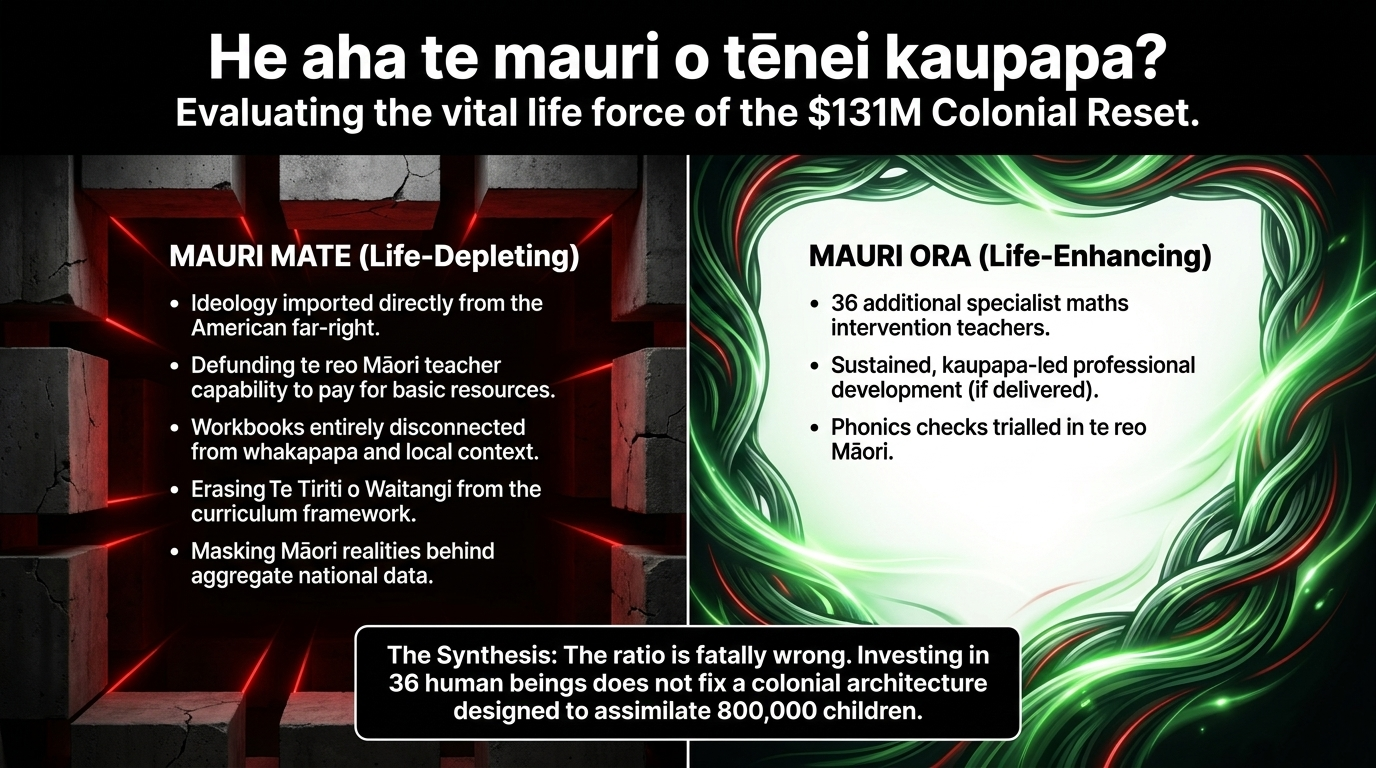
He aha te mauri o tēnei kaupapa? — What is the vital life force of this policy?
Mauri mate — life-depleting:
- Workbooks that do not respond to the child, their whakapapa, their community, or their reo
- Assessment checks that weigh the lamb without feeding it, as Canterbury principals told RNZ
- A curriculum architected on ideology imported from the American far-right, documented by E-Tangata
- The defunding of te reo Māori teacher capability, confirmed by Newstalk ZB
- The removal of Te Tiriti o Waitangi from the curriculum framework, as documented by E-Tangata
- Aggregate achievement data that obscures Māori outcomes, confirmed by NZQA
- No declared conflict of interest over the NZ Initiative's domination of the ministerial advisory group
Mauri ora — life-enhancing:
- The 36 additional Maths intervention teachers — specialist human beings working with tamariki: the most effective element, per RNZ principals
- The $43.5 million for professional development — containing genuine potential if sustained and kaupapa-led, per the Ministry of Education
- The Phonics Check trialled in te reo Māori — a meaningful acknowledgement of bilingual learners
The ratio is wrong. The architecture is colonial.
Five Actions for Rangatiratanga
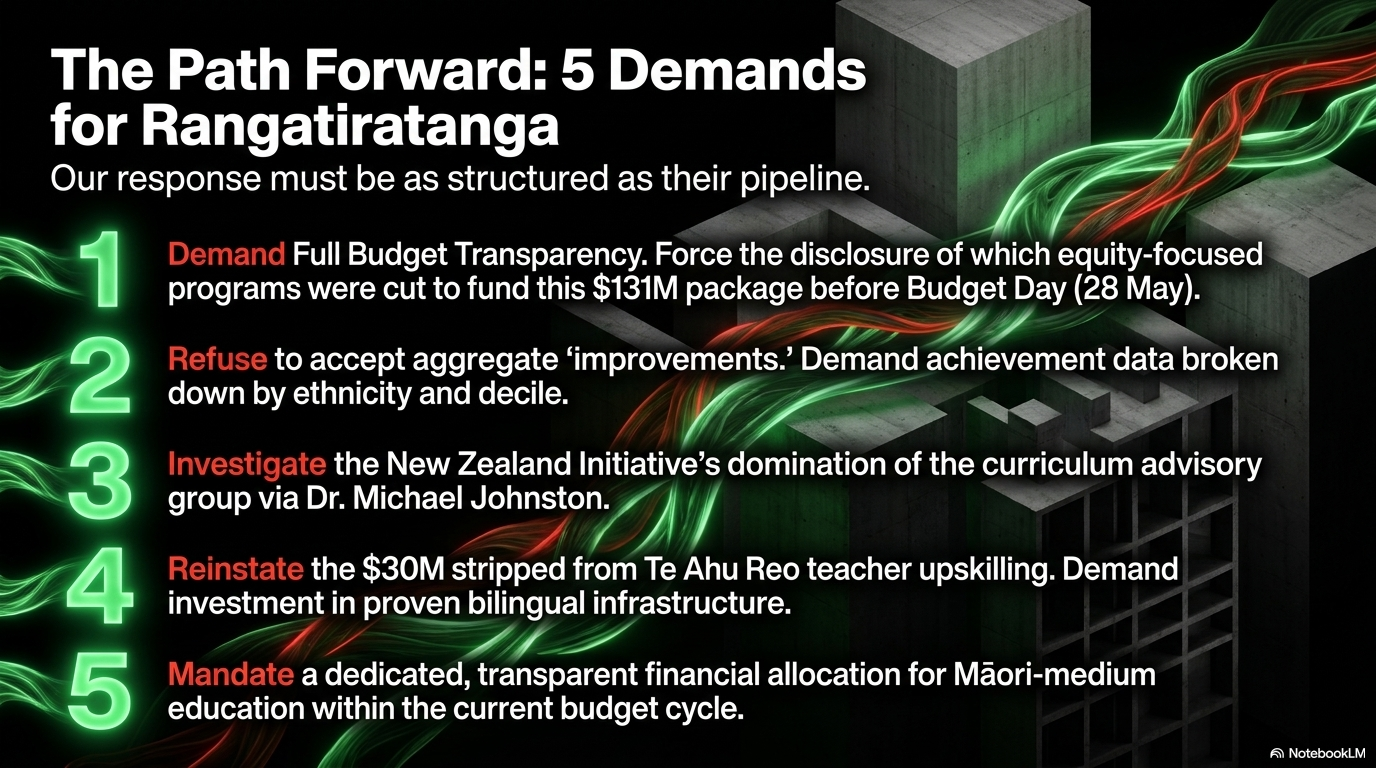
- Full Budget transparency before 28 May: Stanford must reveal which programmes were cut to fund this package. Whānau have a Treaty right to know, as RNZ confirmed Labour has already demanded.
- Disaggregate all achievement data by ethnicity: The modest gains cited by RNZ must be broken down by Māori, Pasifika, and socioeconomic decile, as the persisting gap confirmed by NZQA demands.
- Declare the NZ Initiative conflict of interest: Michael Johnston cannot simultaneously chair Stanford's curriculum advisory group and be employed by the think tank that wrote the policy blueprint, as E-Tangata has documented.
- Restore te reo Māori teacher upskilling funding: The evidence base for te reo instruction documented at Ipu Kererū is stronger than for workbooks. The $30 million cut in 2024 must be reinstated.
- Ring-fence kura kaupapa and bilingual school resourcing within the $131 million: The Ministry of Education currently lists no dedicated allocation for Māori-medium education. That must change, now, not in a future consultation.
Ko Wai Mō Ngā Tamariki Māori?
Erica Stanford stands before cameras and speaks of closing the equity gap. But the equity gap was not caused by poor workbooks. It was created and sustained by the same colonial architecture she is now reinstalling — dressed in the language of "evidence," "knowledge-rich," and "the science of learning."
As Indigenous rights scholar Tina Ngata said at the Te Akapūmau summit, quoted by E-Tangata:
"Education is not and has never been a neutral space. It either strengthens the status quo or challenges it."
The Atlas Network wrote the script. Elizabeth Rata sharpened the pencil. Michael Johnston drew the curriculum map. Stanford signed the $131 million cheque. And as E-Tangata confirms, Ngata reminded kaiako at the summit: "colonial governments don't understand that culture can exist in the whispers between our nannies as much as in the pages of books."
They cannot silence those whispers with workbooks.
Ko ngā tamariki Māori te pūtake o tēnei riri. Ko rātou hoki te pūtake o tēnei māramatanga.
Māori children are the reason for this fight. And the reason for this clarity.
Kia kaha, whānau. Ko te taiaha, ko te māramatanga.
💚 This analysis is funded by no-one except whānau. That is its independence and its strength.

This essay names the harm, names the architects, and names the whānau bearing the cost — because Māori tamariki deserve truth-tellers who are not on any government payroll, not beholden to any think tank, and not afraid. Every koha funds rangatiratanga's own truth tellers.
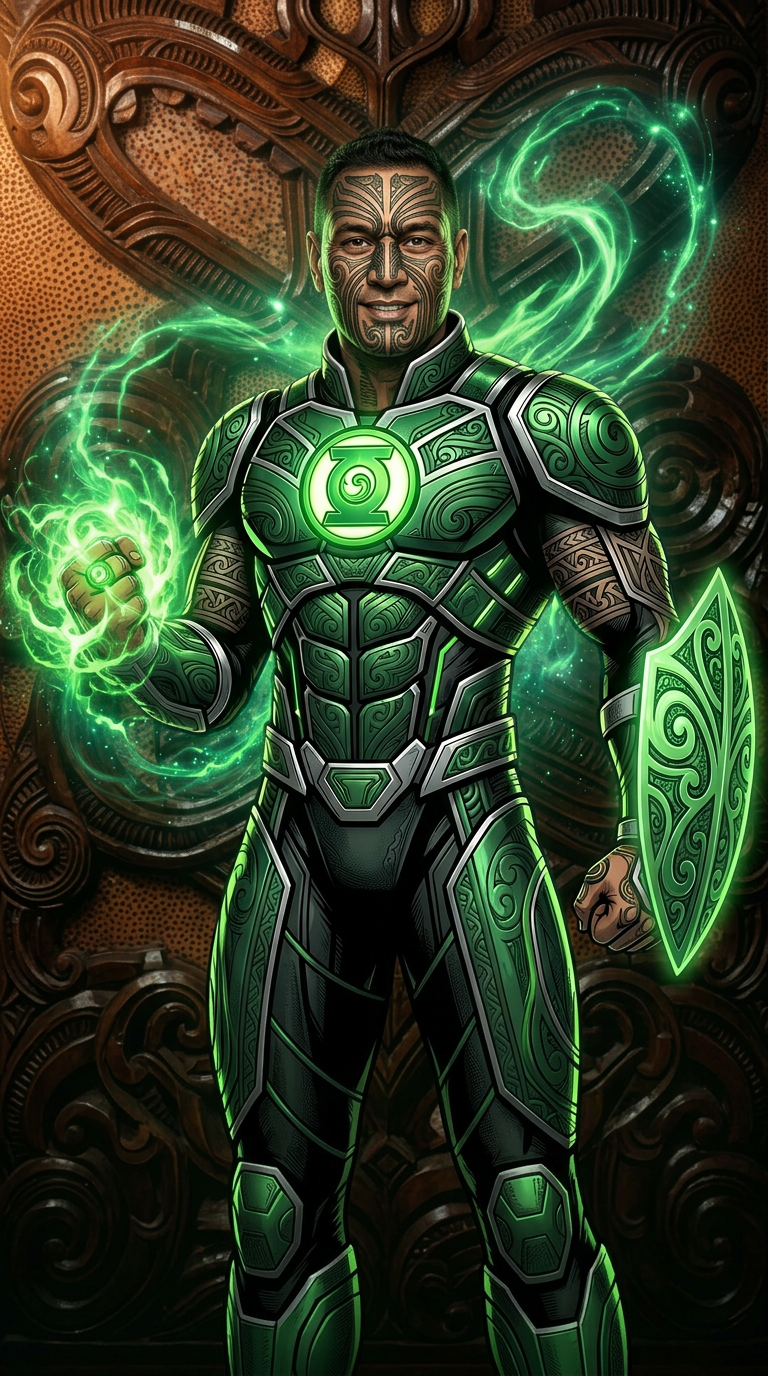
- Koha: app.koha.kiwi — The Māori Green Lantern
- Subscribe: themaorigreenlantern.maori.nz
- Bank transfer: HTDM 03-1546-0415173-000
- Facebook: The Māori Green Lantern
If you cannot koha — subscribe, follow, kōrero, share. That is koha.
Views expressed constitute honest opinion on matters of public interest under the Defamation Act 1992 (NZ) and Durie v Gardiner NZCA 278. All factual claims are sourced and cited with live verified hyperlinks. Named individuals — Erica Stanford, Elizabeth Rata, Michael Johnston, Christopher Luxon — are referenced solely in their public capacity as Ministers, academics, and policy advisors exercising public power. No response was sought from Minister Stanford prior to publication as she is a Cabinet Minister exercising public statutory powers — qualified privilege applies (Lange v Atkinson 3 NZLR 385). For corrections or concerns: themaorigreenlantern.maori.nz.