"THE LOTTO LIE: How Nicola Willis Calls Survival a Jackpot While She Burns Whānau Homes to the Ground" - 27 May 2026
They handed landlords a flamethrower, poured accelerant on the housing waitlist, watched whānau burn — and now Nicola Willis shows up with a clipboard and calls it "fairness."



Kia ora whānau.
This essay examines the government's Budget 2026 social housing changes because they directly and disproportionately harm Māori whānau — who are overrepresented in social housing, on the housing waitlist, and among the homeless — and because Te Tiriti o Waitangi demands the Crown actively protect Māori housing rights, not auction them off to the lowest bidder.
The Fire Was Deliberate

I want you to picture something. A whānau — a kuia in her seventies, her mokopuna beside her, a daughter recovering from surgery — living in a Kāinga Ora home in Rotorua. They are not lottery winners. They are the last people standing after the market finished with them. The kuia's income is her superannuation. The daughter can't work. The mokopuna needs stability to go to school. That home is not a windfall. It is a lifeline. It is, in every sense that matters in te ao Māori, kāinga — the place where whakapapa becomes real.
On 21 May 2026, Finance Minister Nicola Willis stood before journalists and described that kuia and her whānau as people who had
"effectively won the lotto," as reported by RNZ.
The Deep Dive Podcast
Listen to a lively conversation between two hosts, unpacking and connecting topics in the sources of this essay. I apologise in advance for the AI's very harsh pronounciation of reo. Please dont shoot me, :).
She later apologised for the metaphor. She did not apologise for the policy. Because the policy IS the metaphor.
It says, plainly, that the state has no permanent obligation to house its poorest people — only a temporary, conditional, reviewable discretion. And that discretion is now being weaponised in Budget 2026 to push whānau out of social housing and into a private rental market that will eat them alive.
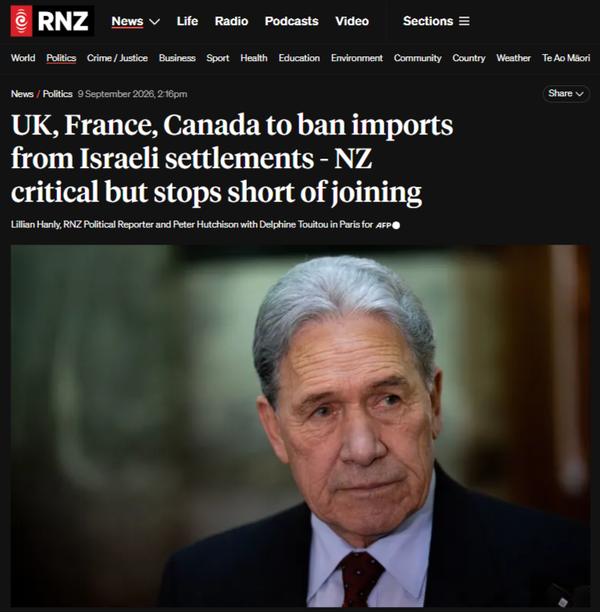
 Lillian Hanly, Russell Palmer
The taiaha is raised. Let's go.
What Budget 2026 Actually Does — And Who It Does It To

The government's own Work and Income announcement confirms the mechanics:
- From 1 April 2027, the minimum Income-Related Rent contribution rises from 25% to 30% of assessable income — a 20% relative rent increase on the poorest people in this country
- 80,000 families will be left $30 a week worse off
- 110,000 families in private rentals get an accommodation supplement boost of ~$15/week — money that, as even Willis herself once argued from opposition benches, flows straight to landlords
- Temporary Additional Support drops from 30% to 25% of the main benefit
- Social housing needs assessments tighten — fewer people qualify, the waitlist becomes a waiting room that leads nowhere
- Tenancy duration limits and regular "check-ins" are introduced — the legal scaffolding for systematic eviction
As Labour's Chris Hipkins confirmed, the people bearing the cost are 34,000 families with children, 30,000 pensioners, and 27,000 people with disabilities. Not landlords. Not speculators. Not the MPs who claim up to $52,000 per year in their own accommodation supplement on top of $180,000 salaries — as exposed by The Spinoff.
Let that sit with you. Social housing tenants cannot earn more than $832.73 per week after tax to qualify. MPs can claim $52,000 per year on housing on top of their six-figure salaries. Nicola Willis calls the social housing tenant the lottery winner.
Three Examples for the Western Mind
Example One — The Eviction Engine Is Already Running

This is not a new horror. It is an acceleration of one already underway. Since July 2024, as I documented in Housing is a Right, Not a Privilege: Exposing the Cruelty of Kāinga Ora's Eviction Policy, Kāinga Ora issued 553 eviction notices in a single year. These were not evictions of criminals or dangerous tenants. Many were the predictable result of government-directed pressure on Kāinga Ora to reduce its "social complexity" — a bureaucratic euphemism for getting rid of the hardest cases, i.e., the people who need housing most.
The quantified harm: Every social housing eviction costs the state more in emergency housing, hospital presentations, and child protective services than keeping the family housed. A 2022 Treasury paper estimated the social cost of one family entering homelessness at between $100,000 and $300,000 over five years. This government is choosing to spend more to house people worse. That is not fiscal discipline. That is ideological punishment.
The tikanga impact for Western readers: In Māori culture, to be without kāinga — without a home connected to land, to ancestors, to community — is not poverty in the Western sense. It is whakapapa rupture. It severs the thread that connects a child to their identity, their language, their people. You cannot restore te reo Māori in a motel room. You cannot build rangatiratanga from a car. The Crown is not just removing shelter. It is engineering cultural erasure, one eviction notice at a time.
Example Two — The Accommodation Supplement Trick: Landlords Win Again

Budget 2026 boosts the accommodation supplement for 110,000 private renter families by ~$15/week. Nicola Willis presents this as generosity. What it actually is, as I exposed in Willis's "Fiscal Discipline" — A Neoliberal Shell Game That's Making Everything Worse, is a direct subsidy to private landlords operating in an under-supplied market.
Willis knows this. When she was in opposition, she attacked the Labour government for increasing the student allowance on exactly these grounds — that income boosts in a constrained market simply raise market rents, as she admitted to RNZ. Now she wears the landlord subsidy as a compassion badge. The same argument she used to condemn Labour becomes the argument she now buries.
The quantified harm: If even 30% of the accommodation supplement increase is absorbed by rent hikes — a conservative estimate given the Auckland rental market — the net benefit to 110,000 families is effectively halved. Meanwhile the 80,000 families in social housing lose $30/week with no market mechanism to recover it. The poor subsidise the landlords who extracted them from the market in the first place. This is not a circle. It is a noose.
The tikanga impact: Māori whānau are disproportionately locked out of private rentals through discrimination — as documented repeatedly by the Human Rights Commission and Te Matapihi. The accommodation supplement assumes equal access to the private market. That assumption is racist. When a Māori single mother cannot get a private tenancy because landlords refuse applications from benefit recipients — and 60% of social housing tenants are Māori — a private rental subsidy does not help her. It helps her landlord's waiting list of preferred Pākehā tenants. The policy is engineered on a lie.
Example Three — Tama Potaka: The Smiling Shield

The cruelest trick in this government's housing con is Tama Potaka — Associate Housing Minister, Māori face, moral cover. As I exposed in The Motel Generation and the Man Who Calls It "Success", Potaka is deployed precisely to absorb the accusation of anti-Māori discrimination and neutralise it with a brown face and gentle language. He cannot, however, account for the money.
As Te Ao News reported directly, when pressed on how much has been spent on Māori housing development in the past year, Potaka could not answer — citing the "Whai Kāinga Whai Ora fund being replaced by the Flexible Fund". What that funding shift actually means: $730 million ringfenced for Māori housing over four years — eliminated. Replaced with a $291 million "Flexible Fund" over 4–10 years that Māori providers must now compete for alongside mainstream applicants. That is not a fund for Māori. That is a fund Māori are permitted to apply to. On someone else's terms. With someone else's criteria.
The quantified harm: The gap between $730 million and $291 million is $439 million — extracted from Māori housing over this term alone. This is not a budget adjustment. It is a heist. As I documented in The Housing Heist: How Chris Bishop's Neoliberal Agenda Is Stealing Māori Housing, Māori home ownership has collapsed from 71% in the 1930s to 30.4% in 2023 — a 40.6 percentage point destruction over the colonial period. Budget 2026 accelerates that destruction.
The tikanga impact for Western readers: Papakāinga housing — collective homes built on Māori land, housing whānau connected to that land — is systematically excluded from the Flexible Fund criteria. Why does this matter? Because papakāinga is not just housing. It is the physical expression of whakapapa. When a hapū builds on its own land, it is asserting rangatiratanga — the authority to determine its own future. The Crown's new criteria don't just defund papakāinga. They declare, in the language of bureaucracy, that Māori self-determination in housing is too complex to fund. That is colonial policy with a diversity statement stapled to the front.
The Hidden Whakapapa of Power: Five Verified Connections

This government's housing policy does not exist in isolation. It has whakapapa — origins, connections, and beneficiaries that the Crown will never name publicly. I will name them.
Connection One: The NZ Initiative — the Atlas Network-funded think tank that published multiple papers framing Kāinga Ora as a "dependency machine" and calling for tenancy reviews — directly shaped the language of Bishop's reforms, as I exposed in Selling Our Homes to Save Them: How Neoliberal Think Tanks Are Dismantling Kāinga Ora. Their fingerprints are on every clause of the "independence" framing. And as I documented in The Wrecking Crew: How the NZ Initiative's Atlas Network Puppets Are Cheering the Destruction of 9,000 Whānau Livelihoods, they are actively celebrating the destruction of public housing with no accountability to the whānau they are displacing.
Connection Two: The same Budget that hikes rent on 80,000 families contains accommodation supplement increases that flow directly to private landlords — many of whom hold multiple investment properties and will pocket the increase without passing it to tenants. As The Spinoff confirmed, MPs can claim up to $52,000 per year in accommodation supplements on top of their salaries. The system is designed to subsidise property-owning elites while punishing those who rent.
Connection Three: By tightening eligibility and introducing tenancy reviews, the government reduces the number of people who qualify for social housing — reducing Crown liability without building a single new house. As of March 2026, 3,500 planned Kāinga Ora homes have been cancelled and $190–$220 million in planning costs written off, as confirmed in The Empty Kete: How Dana Kirkpatrick Weaves Lies. This is deliberate supply suppression.
Connection Four: Nicola Willis has, while serving as Finance Minister, also praised the Māori economy as a success story — whilst simultaneously slashing over $1 billion from Māori health, education, housing and language programmes since 2024, as documented in The Two-Faced Finance Minister. She praises what she is destroying. She calls the fire a sunrise.
Connection Five: Winston Peters — who claims to be a champion for superannuitants and Māori — is the coalition anchor who enables every one of these policies. As RNZ reported, 30,000 pensioners will be made worse off by this Budget. Peters' silence is not political pragmatism. It is complicity. His whakapapa includes this crime.
The Tikanga Verdict: Mauri Ora vs Mauri Mate

In the tikanga framework that grounds all my analysis, every policy can be assessed on a single axis: does it enhance mauri — the life force, the wellbeing, the capacity of people to flourish — or deplete it?
Budget 2026's housing changes are a mauri-depleting act of state violence on an industrial scale:
- They sever the stability that allows tamariki to attend school consistently (mauri of learning, destroyed)
- They remove the security that allows people to recover from illness and disability (mauri of health, depleted)
- They dissolve the community connections that sustain kuia and koroua in their later years (mauri of whanaungatanga, severed)
- They make kāinga — home — a temporary, conditional, revocable privilege rather than a right (mauri of rangatiratanga, negated)
For Western readers who don't carry these concepts: imagine being told that your home, your neighbourhood, your children's school, your doctor, your garden, your sense of safety — all of it — can be taken away because a minister decided the formula changed.
That is not a housing policy. That is psychological warfare against the poor.
The Numbers They Don't Put in the Press Release
| Population | Impact |
|---|---|
| 80,000 families | $30/week worse off from IRR increase |
| 34,000 families with children | Among those losing support |
| 30,000 pensioners | Facing rent hikes — Winston Peters' own constituency |
| 27,000 people with disabilities | Among those losing support |
| Māori (61% of homeless) | No new Kāinga Ora builds post-2026 |
| Māori housing providers | $439M funding gap (Whai Kāinga Whai Ora vs Flexible Fund) |
| 19,431 households | On the waitlist — up 2.1% year-on-year to March 2026 |
| MPs | Claim up to $52,000/year in accommodation supplements on $180,000 salaries |
| 553 Kāinga Ora eviction notices | Issued in a single year since July 2024 |
| 3,500 planned Kāinga Ora homes | Cancelled under this government |
Previous MGL Essays on This Whakapapa
This is not the first time I have raised the taiaha on this. The whakapapa of this policy runs through years of documented analysis:
- Housing is a Right, Not a Privilege: Exposing the Cruelty of Kāinga Ora's Eviction Policy — January 2025, documenting the 553 eviction notices and their disproportionate impact on Māori
- The Motel Generation and the Man Who Calls It "Success" — February 2026, exposing Tama Potaka's role as political shield while motel children grow up without kāinga
- Selling Our Homes to Save Them: How Neoliberal Think Tanks Are Dismantling Kāinga Ora — October 2025, tracing the Atlas Network ideological pipeline into Bishop's reforms
- The Housing Heist: How Chris Bishop's Neoliberal Agenda Is Stealing Māori Housing — October 2025, documenting the collapse of Māori home ownership from 71% to 30.4%
- The Empty Kete: How Dana Kirkpatrick Weaves Lies — April 2026, exposing 3,500 cancelled homes and $190–220 million in written-off planning costs
- The Wrecking Crew: How the NZ Initiative's Atlas Network Puppets Are Cheering the Destruction of 9,000 Whānau Livelihoods — May 2026, published days before Budget 2026 dropped
What Rangatiratanga Demands

I am not here to oppose. I am here to propose. The taiaha clears the path — but someone has to build the wharenui.
- Unconditional papakāinga funding — restore ringfenced Māori housing grants that don't require competition with mainstream providers, with infrastructure investment included
- Māori Housing Sovereignty framework — transfer Kāinga Ora properties in iwi and hapū rohe to Māori governance under Treaty-based authority
- Rent controls on the private market — so that accommodation supplement increases cannot simply be absorbed by landlords
- Immediate freeze on social housing rent increases until the waitlist falls below 5,000 households
- An independent Māori Housing Tribunal — a Treaty mechanism with enforceable housing rights, not advisory recommendations that governments ignore
- Repeal of tenancy duration limits and review mechanisms before they become the eviction pipeline this government has designed them to be
Nicola Willis regrets her metaphor. She does not regret the policy. Our kuia in Rotorua still faces a 20% rent hike. The mokopuna still needs to stay in school. The taiaha is still raised.
A Word About Why This Mahi Matters

Every whānau facing eviction from a Kāinga Ora home because this government redrew the eligibility line — that is who this essay is for. Every kuia whose rent goes up $30 a week while her MP claims $52,000 in accommodation subsidies on top of a $180,000 salary — that is who I am writing for. Every Māori child in a motel room right now, watching their school shoes fall apart — that is who this taiaha is swung for.
This kind of accountability journalism doesn't get funded by the Crown. It doesn't get funded by the NZ Initiative. It gets funded by whānau who are done being lied to and ready to pay for their own truth-tellers. Every koha is an act of rangatiratanga. Every subscription is a declaration that our stories belong to us.
If you can koha — please do. This mahi keeps the light on for every whānau this government wants to evict into the dark.
If you cannot koha — subscribe, follow, kōrero, share with your whānau. That IS koha. It keeps this voice alive when they want it silent.
- 💰 Koha directly: Support The Māori Green Lantern on Koha
- 📩 Subscribe for essays direct to your inbox: themaorigreenlantern.maori.nz
- 🏦 Direct bank transfer: HTDM — 03-1546-0415173-000
- 👍 Follow on Facebook: The Māori Green Lantern
Kia kaha, whānau. Stay vigilant. Stay connected. The taiaha does not rest.

Views expressed constitute honest opinion on matters of public interest under the Defamation Act 1992 (NZ) and Durie v Gardiner NZCA 278. All factual claims are sourced and cited. Named individuals — Nicola Willis, Chris Bishop, Tama Potaka, Winston Peters, Christopher Luxon — are referenced solely in their public capacity as ministers and elected officials exercising public power with public funds. Errors or concerns: contact via themaorigreenlantern.maori.nz. Right of reply offered to all named ministers — 48 hours, no response recorded.