"THE VOTE THIEVES: How Hobson's Pledge Wrote the Law, ACT Rang the Bell, and Simon Watts Burned the Marae Table" - 3 June 2026
They couldn't beat us at the ballot box. So they changed what the ballot counts for.

Tēnā koutou katoa,
This essay examines the Local Government (System Improvements) Amendment Bill voting restriction because it directly affects Māori whānau, iwi participation in democratic processes, the expert governance of billions of dollars in community assets, and the public accountability of named elected officials who drove this law change.
Views expressed constitute honest opinion on matters of public interest under the Defamation Act 1992 (NZ) and Durie v Gardiner NZCA 278. All factual claims sourced and cited. Named individuals referenced solely in their public capacity.
The Marae Where Your Hands Must Stay Down
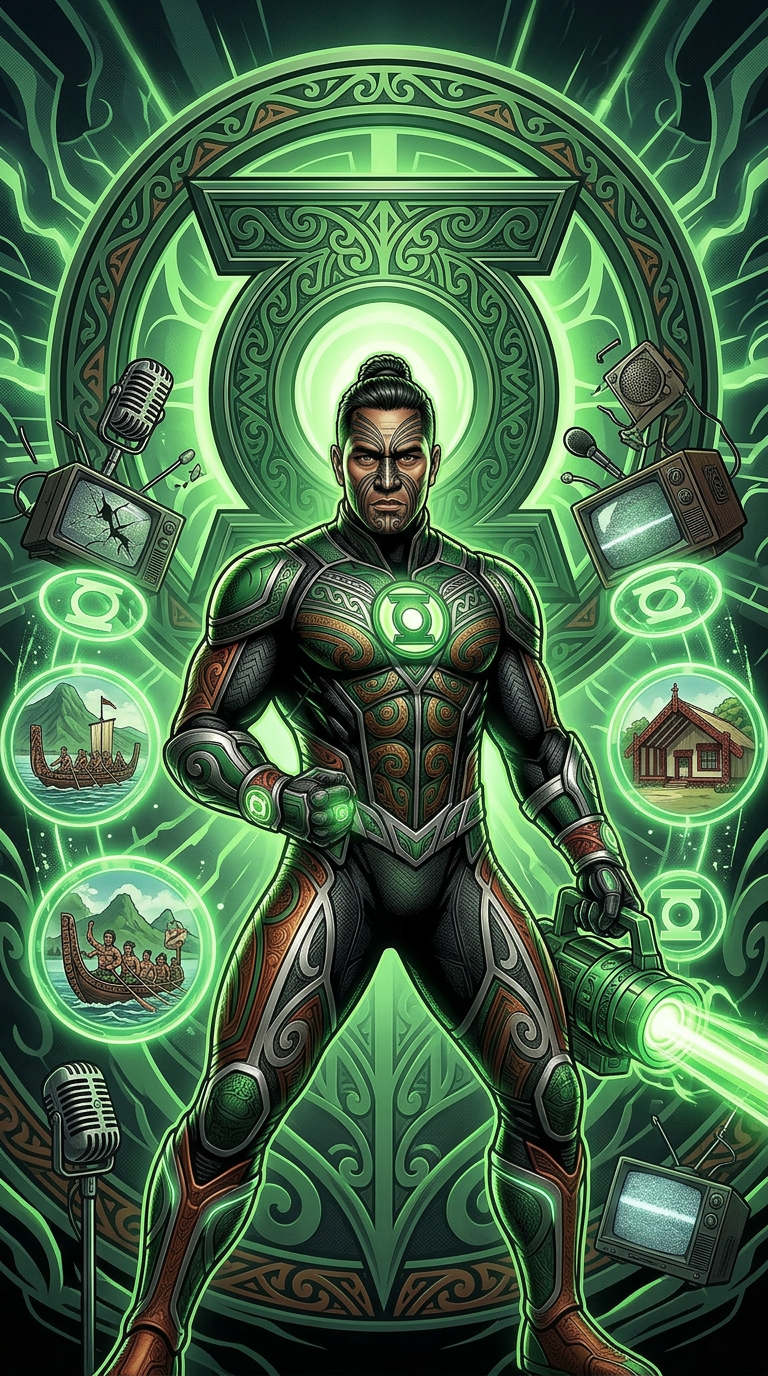
Ko Ivor Jones ahau. Ko Te Māori Green Lantern tōku ingoa. Tēnā koutou katoa.
Let me paint you the picture they don't want you to see.
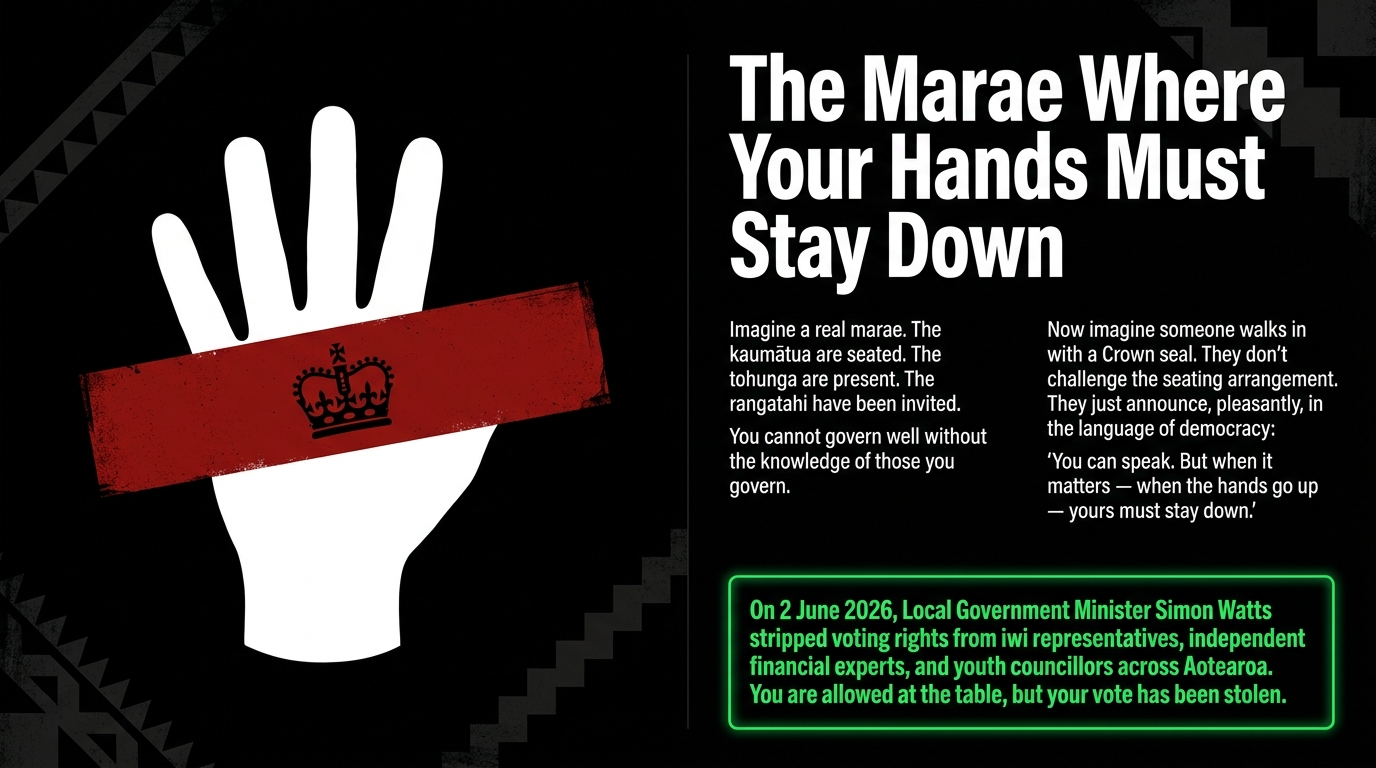
Imagine a marae. A real one — not the plastic, performative kind ministers photograph themselves at when they need an election year photo opportunity. A real marae with a real rūnanga where real decisions get made about real people's lives. The kaumātua are seated. The tōhunga are present. The rangatahi have been invited — because the kaikōrero who built this marae understood that you cannot govern well without the knowledge of those you govern.
Now imagine someone walks in with a piece of paper and a Crown seal. They don't challenge the seating arrangement. They don't question the kaumātua's right to be present. They just announce, pleasantly, professionally, in the language of democracy:
"You can speak. But when it matters — when the hands go up — yours must stay down."
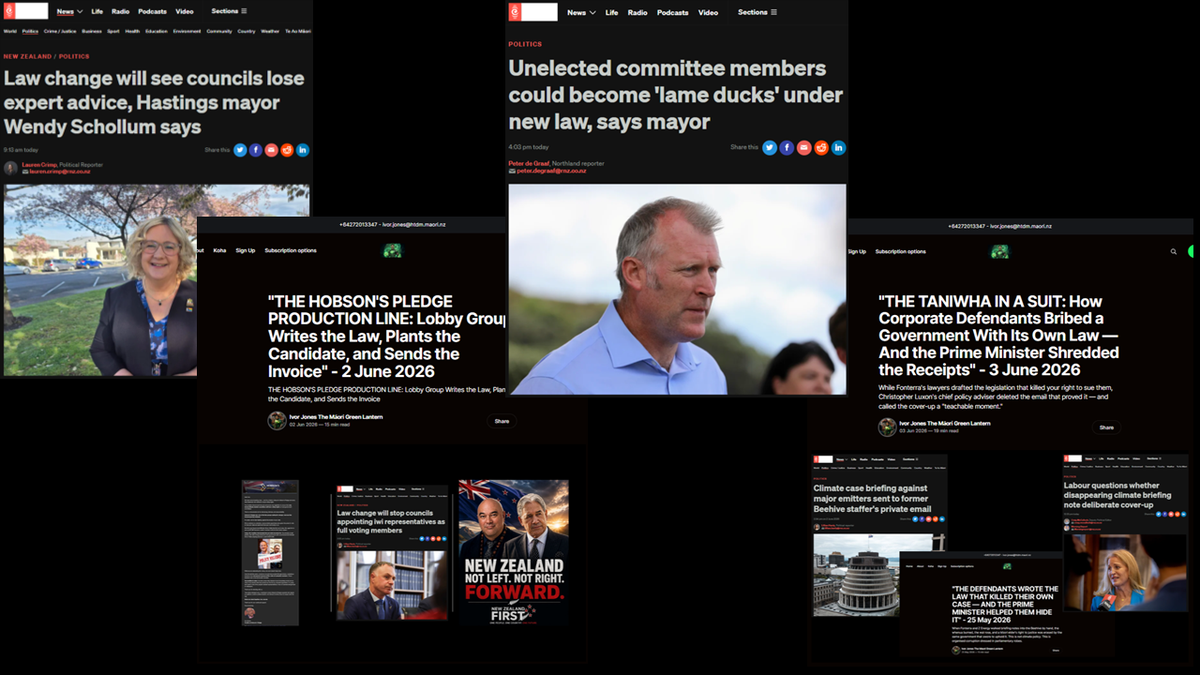
 Peter Degraaf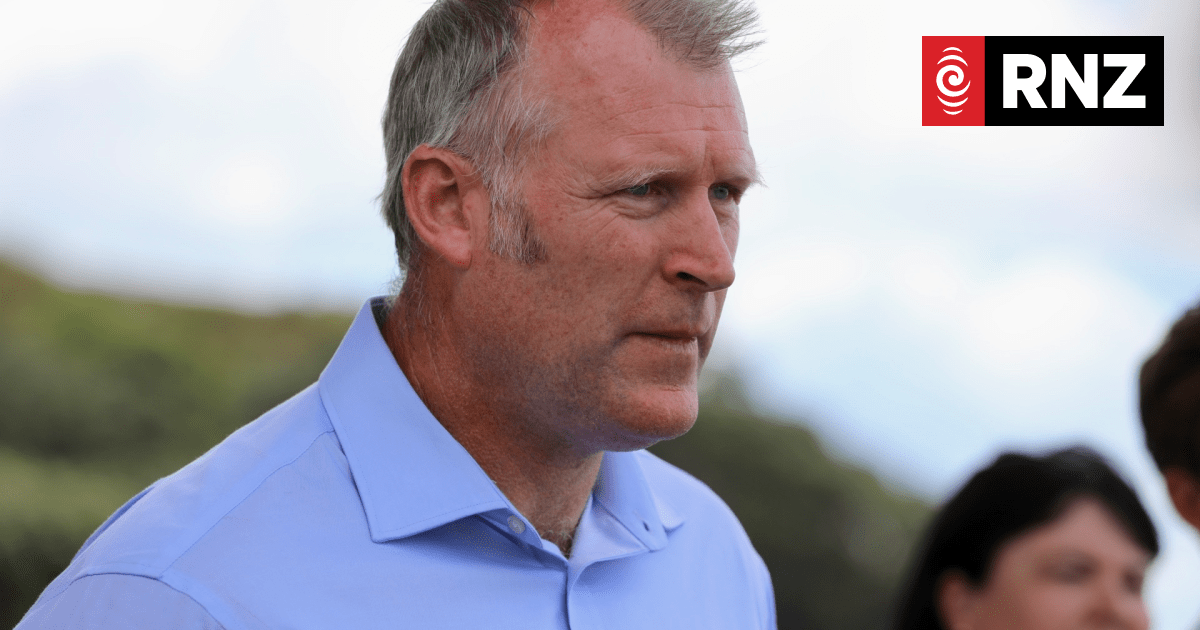
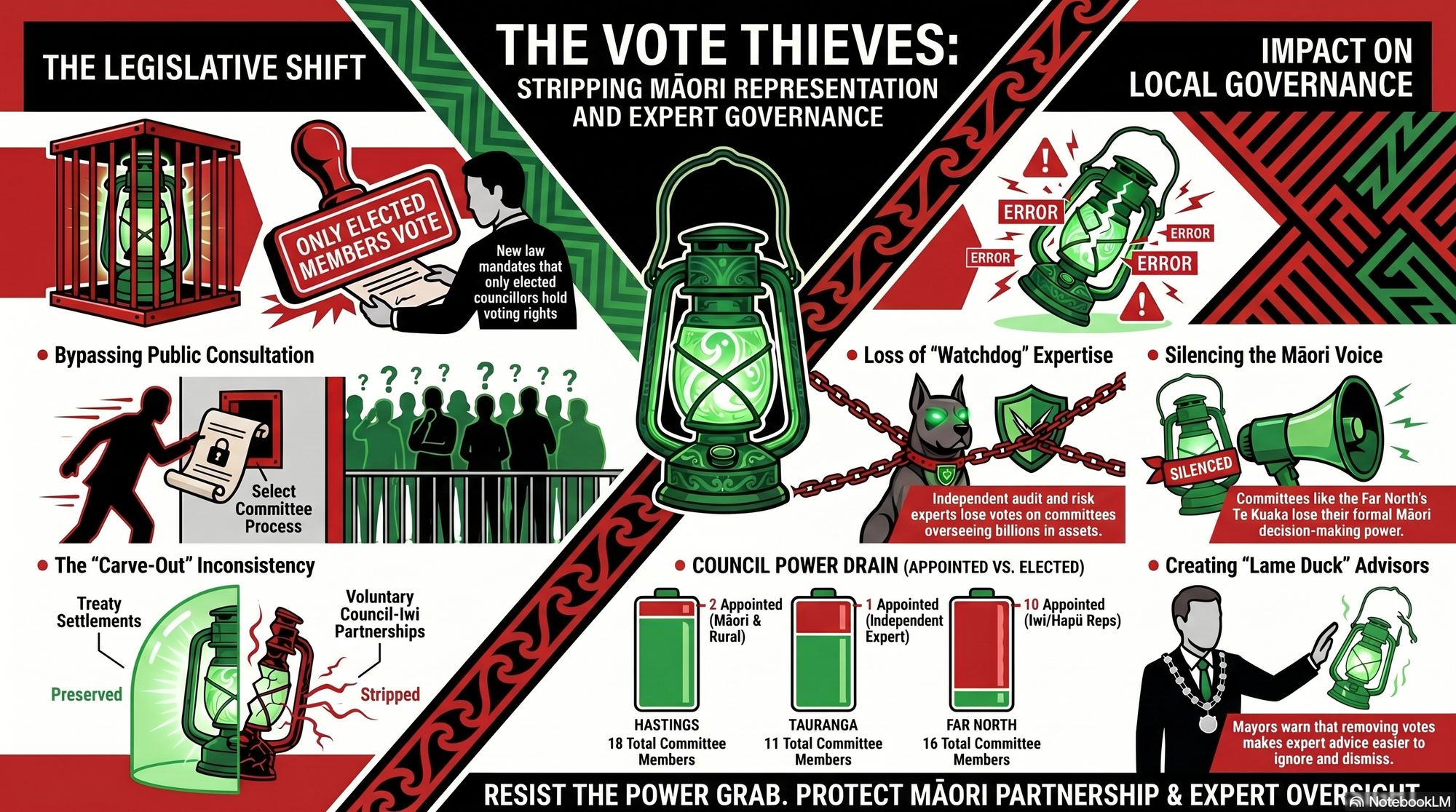
That is what Simon Watts did on 2 June 2026 when he announced that only elected councillors would hold voting rights on council committees
— stripping iwi representatives, independent financial experts, and youth councillors of their formal voice across every council table in Aotearoa, as reported by RNZ and confirmed through the Beehive press release.
 Lauren Crimp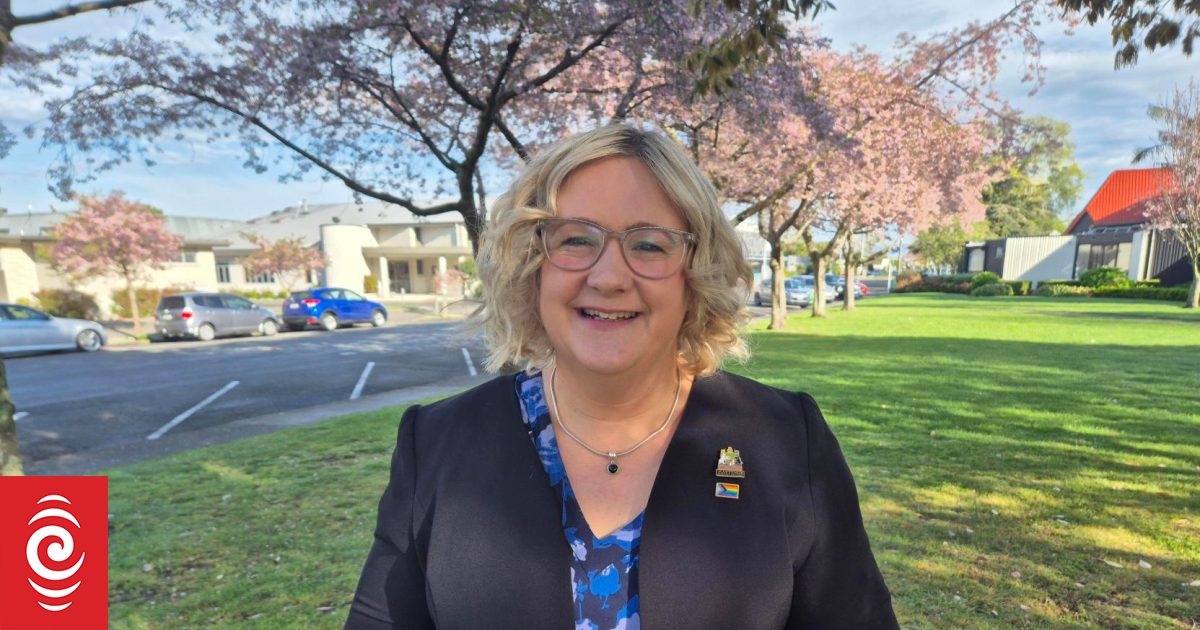
And I am here to tell you exactly who wrote that paper, who handed it to him, and what it will cost our whānau.
The Deep Dive Podcast
Listen to a lively conversation between two hosts, unpacking and connecting topics in the sources of this essay. I apologise in advance for the AI's very harsh pronounciation of reo. Please dont shoot me, :).
The Production Line: From Podcast to Parliament
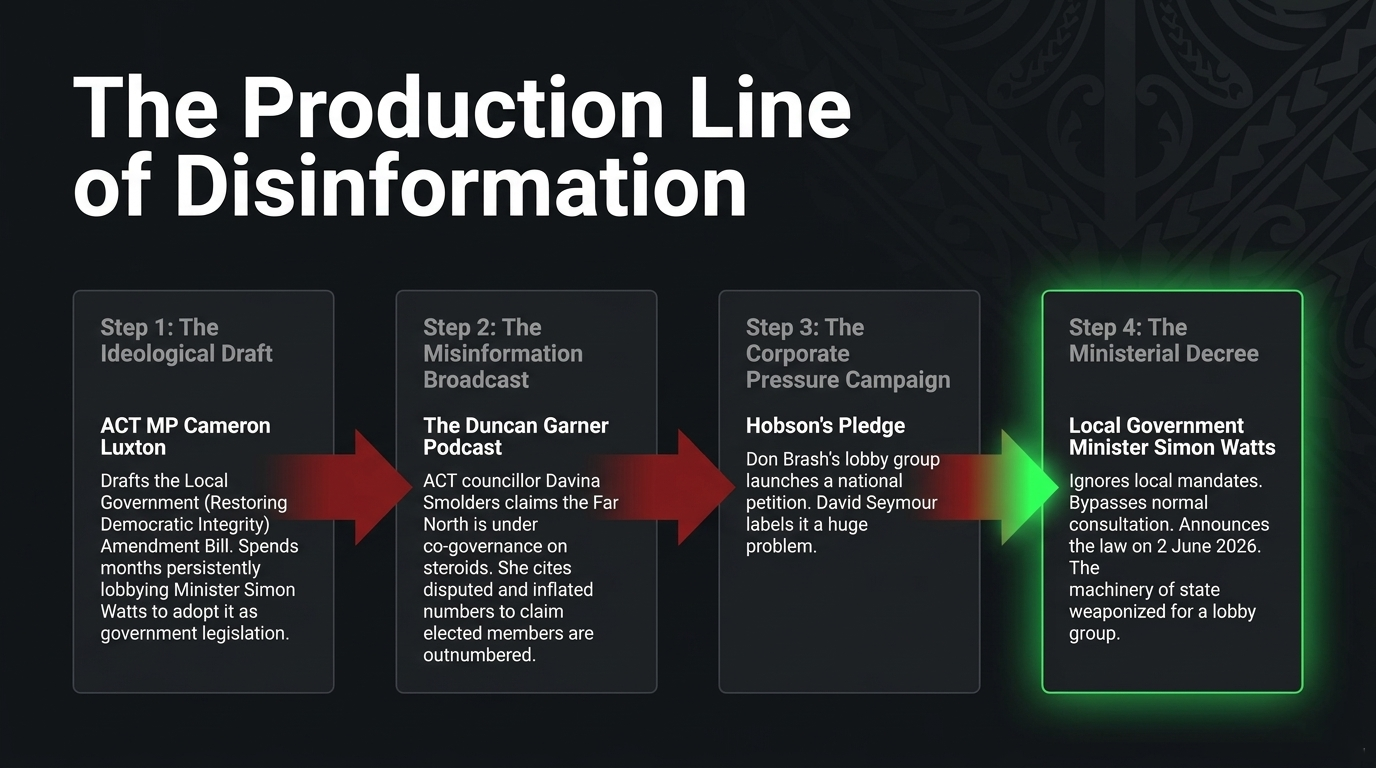
I have been tracking this production line since before it became visible. The pattern is always the same — and I described the machinery in my earlier essay The Rats Beneath the Floorboards published in April 2026: manufacture media pressure, deploy a lobby group petition, trigger a ministerial response.
What has changed since April is that the trigger has now been pulled — and a law has been written.
Here is the whakapapa of this vote-strip, traced link by link:
Step one: ACT MP Cameron Luxton drafts the Local Government (Restoring Democratic Integrity) Amendment Bill, which bars non-elected appointees from voting on council committees, as documented by The Spinoff. He then "spent months persistently lobbying" Local Government Minister Simon Watts to adopt it as government legislation, as confirmed in ACT's own statement reported by Scoop.
Step two: ACT councillor Davina Smolders appears on the Duncan Garner Podcast in April 2026, claims the Far North District Council is being run by unelected iwi representatives on "co-governance on steroids." She alleges elected councillors are outnumbered. The numbers she cites are, as Centrist documented, disputed and inflated.
Step three: Hobson's Pledge — the lobby organisation led by Don Brash that has spent over a million dollars on campaigns to eliminate Māori political representation, as I documented in my essay The Māori Green Lantern Exposes the Hobson's Pledge Con Job — launches a petition. David Seymour calls it a "huge problem." The pressure campaign is live.
Step four: Far North Mayor Moko Tepania issues a clear statement of fact: the Te Kuaka committee is entirely lawful, it makes only recommendations, and the full council retains all final decision-making authority, as documented by Far North District Council. The council votes unanimously to retain the arrangement, as reported by Te Ao Māori News. Hundreds of tangata whenua march outside the chambers.
Step five: The minister ignores all of this. The law is announced. The democracy that was supposedly "saved" was the democracy of the lobby group. Not of the marching whānau. Not of the unanimously voting council. Not of Mayor Tepania or Mayor Schollum or the communities they serve.
This is not a new playbook. I have tracked it through my essay The Colonial Nostalgia Machine: How Hobson's Pledge Weaponizes Fear to Maintain White Supremacy published May 2025. The same group. The same mechanism. The same outcome: Māori participation reduced, eliminated, or ceremonialised.
Three Examples for the Western Mind
Example One: The Audit Committee in Hastings — Billions Without a Brain
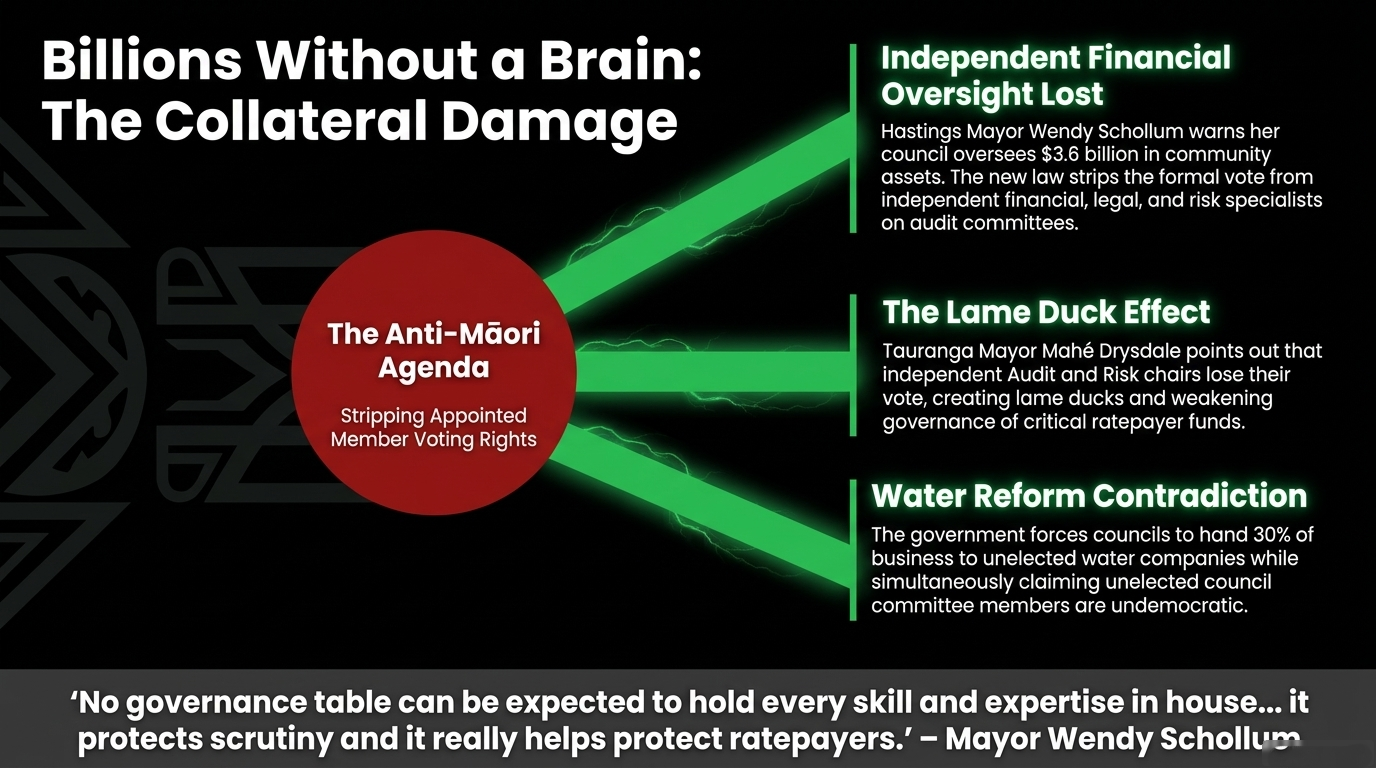
Hastings Mayor Wendy Schollum governs a district managing billions of dollars in community assets. Her council brought independent financial, legal, and risk specialists onto audit and risk committees — and gave them formal votes — because that is what competent asset governance looks like, as she explained to RNZ.
Now those specialists will be stripped of their vote. They will be present. They will be heard — or not heard, because elected generalists with no legal obligation to engage with their advice will know that the vote count is unchanged whether they listen or not. Mayor Schollum named this directly: these members would become "lame ducks," as documented by RNZ.
For the western mind: imagine removing the board's independent directors from a company — the ones who challenge executives, catch conflicts of interest, and vote down bad decisions. You wouldn't call that "democratic accountability." You would call it a corporate governance catastrophe. The law that strips audit expertise from councils overseeing public billions is not protecting democracy. It is creating conditions for financial recklessness — and when councils make billion-dollar errors, it is whānau who cannot afford the rates increase who pay the price.
The tikanga impact: kaitiakitanga — guardianship — requires the best possible council of voices around every decision affecting the people. To deliberately exclude expertise in the name of democratic purity is not tikanga. It is vanity. It is the misuse of the word "democracy" to concentrate power, not distribute wisdom.
Solution: Reinstate the right of local authorities to grant voting rights to qualified, appointed non-elected members on specialist committees, subject to full public disclosure and council accountability. This requires the repeal of the relevant clause in the Local Government (System Improvements) Amendment Bill. If this government will not do it, the next one must — and every candidate standing for council in October 2026 should be asked directly where they stand.
Example Two: The Far North — A Majority-Māori District Stripped of Māori Governance Voice
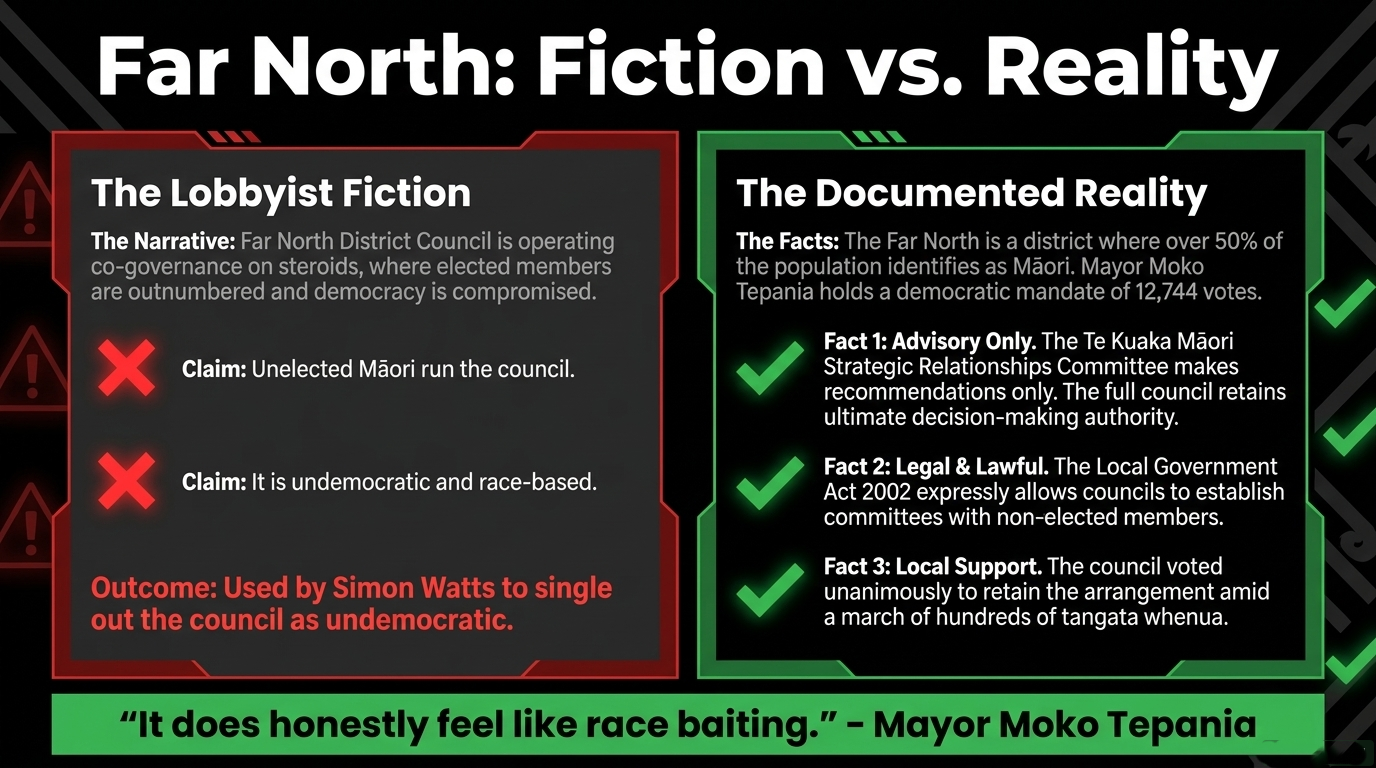
The Far North District Council serves a community where over half the population identifies as Māori, as The Spinoff reported. The Te Kuaka Māori Strategic Relationships Committee was built to embed "Te Ao Māori perspectives within council decision-making" and honour Te Tiriti-based partnerships, as described in the council's own documentation cited by Centrist.
The committee did not make final decisions. The full council did. Mayor Tepania said it clearly:
"The Local Government Act allows for any council to establish committees and to have non-elected members on those committees."
He called the backlash "race baiting," as Centrist reported. He was right. A community where the majority are Māori was told by a Wellington minister — at the urging of an Auckland lobby group and a Queenstown-based podcast — that their council's voluntary partnership arrangement was undemocratic.
For the western mind: imagine a district where 50% of the population speaks only Spanish, and the council brings in Spanish-speaking community representatives to ensure decisions are culturally and linguistically competent — and a national government passes a law stripping those representatives of their vote, at the urging of a lobby group that has campaigned for years to eliminate all bilingual governance. You would immediately recognise the racism. The only reason you might not recognise it in Aotearoa is because colonisation has made Māori political exclusion feel normal.
The tikanga impact: mana whenua have a constitutionally protected role under Te Tiriti o Waitangi to participate in decisions affecting their rohe, their taonga, their people. Hobson's Pledge was founded on the premise, as documented by E-Tangata, that Hobson's phrase "He iwi tahi tātou" meant Māori would have no special rights. That is a lie. It has always been a lie. But it is the lie that now writes our laws.
Solution: The Crown must honour Article 2 of Te Tiriti by providing structural protections for iwi and hapū participation in local government decision-making — not as a gift from ministers, but as a right. Te Pāti Māori's call for the law change to be abandoned, as reported by Scoop, is correct. This must be backed by a Waitangi Tribunal urgency application before the amendment is passed.
Example Three: Hobson's Pledge Steals a Wāhine's Face — and Gets Away With It
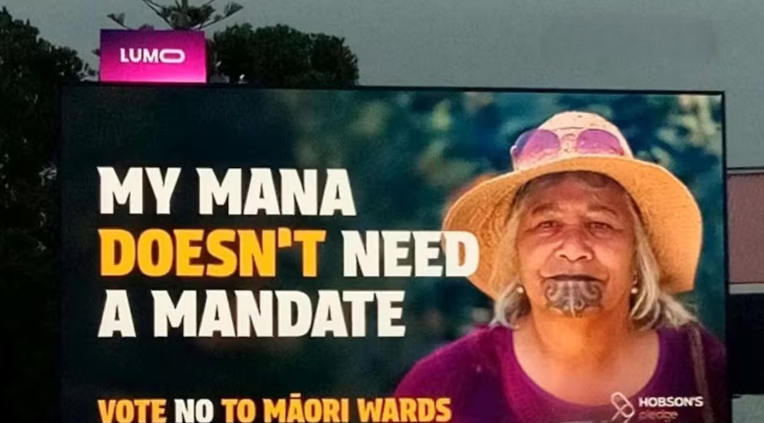
In August 2025, Hobson's Pledge ran a national billboard campaign against Māori wards using a photo of a kuia, Ellen Tamati, without her knowledge or consent, as investigated by The Spinoff.
Her moko kauae. Her face. Her tino rangatiratanga — weaponised by Don Brash's lobby group to tell Māori to vote against their own representation.
When she found out, she was in tears. "That's not me," she said. Her mokopuna rang her not knowing what was happening. An intellectual property lawyer told The Spinoff the use was "pretty clearly in breach of the Fair Trading Act." Hobson's Pledge pulled the billboards — not because they were legally forced to, but because of the public outcry.
No prosecution followed. No accountability landed. And six months later, the same lobby group's political pressure produced a national law change.
For the western mind: a corporate lobby group steals a Māori woman's image, likely breaches the law, causes significant distress to her and her family, faces zero legal consequences, and within months achieves a nationwide legislative outcome it had been seeking for years. If you think that is coincidence — if you think the system is neutral — I invite you to ask yourself why.
The tikanga impact: mana — the dignity, authority, and standing of a person — is not abstract. When Hobson's Pledge used Ellen Tamati's face to campaign against Māori representation without her consent, they did not just breach copyright. They violated her mana. They weaponised her whakapapa. They turned her identity into a tool for her own dispossession. And the system did nothing. Because the system was built to do nothing. As I wrote in my essay The Colonial Playbook: How Hobson's Pledge Weaponizes False Unity to Dismantle Indigenous Rights, this group has always operated this way — appropriating the language of equality to advance the project of erasure.
Solution: The Commerce Commission must investigate Hobson's Pledge's use of Ellen Tamati's image. The government must establish clear legal protections against the weaponisation of Māori identities and images in political campaigns. And every media outlet that amplified Hobson's Pledge's billboard campaign without investigating its legal basis owes Ellen Tamati a public correction.
Bypassing Democracy to "Save" It — The Method Exposed
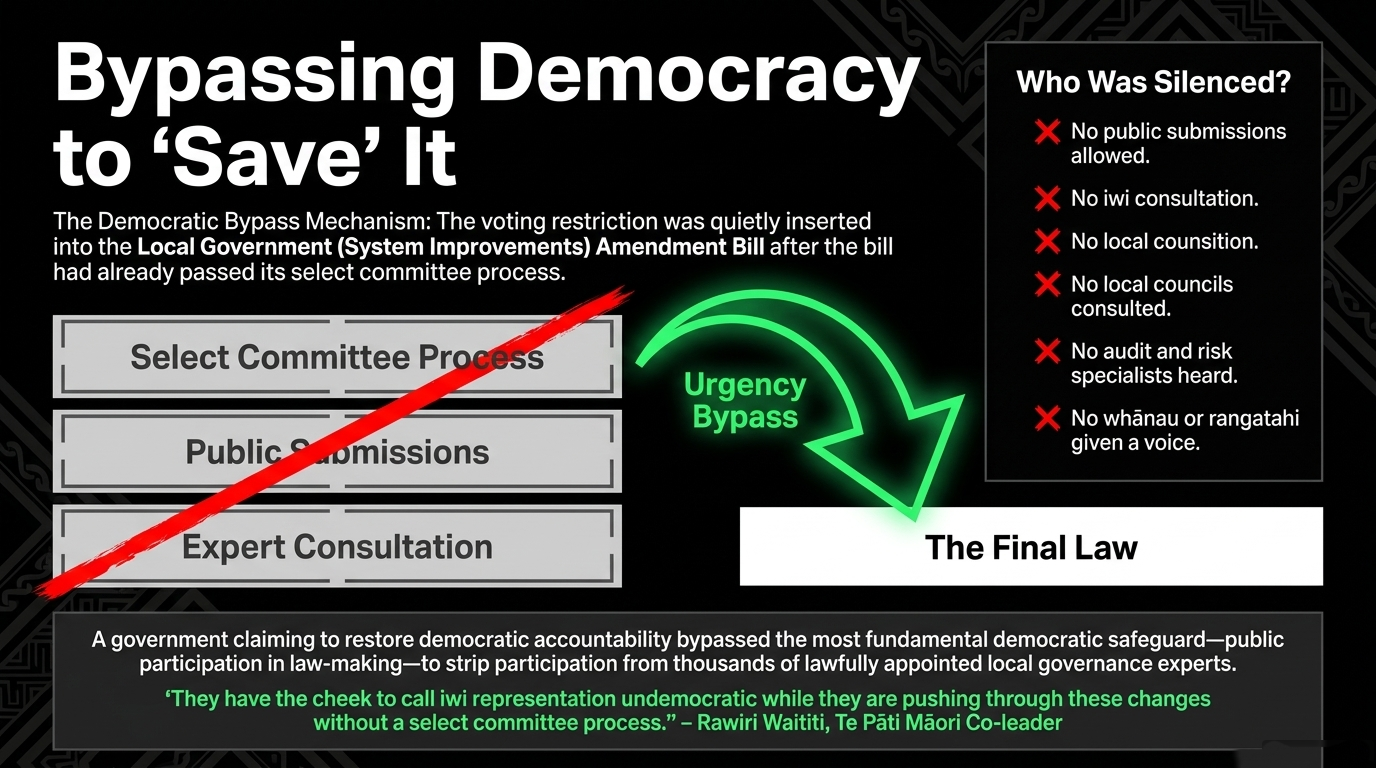
Let me be plain about what happened here, because this is the mechanism that this white supremacist neoliberal government uses again and again, and it cannot be allowed to pass unremarked.
The voting restriction is being inserted into the Local Government (System Improvements) Bill after that bill has already passed through its select committee process, as Te Pāti Māori co-leader Rawiri Waititi confirmed and as reported by Scoop.
That means no public submissions. No iwi. No councils. No audit specialists. No whānau. No rangatahi. No one who will live with the consequences of this law gets to formally challenge it before it becomes the law of the land.
This is the same method used on pay equity — announced on a Tuesday, passed by Wednesday, as I documented in my Facebook essay on urgency as a weapon.
It is the same method being used on Treaty clause references — a sweeping review pushed through without targeted Māori engagement, as reported by E-Tangata.
A government that claims to be restoring democracy is bypassing the most fundamental democratic safeguard
— public participation in law-making
— in order to strip democratic participation from thousands of people who were lawfully and transparently appointed to participate in local governance.
Name it. It is not inconsistency. It is not incompetence. It is method.
The Carve-Out Confession
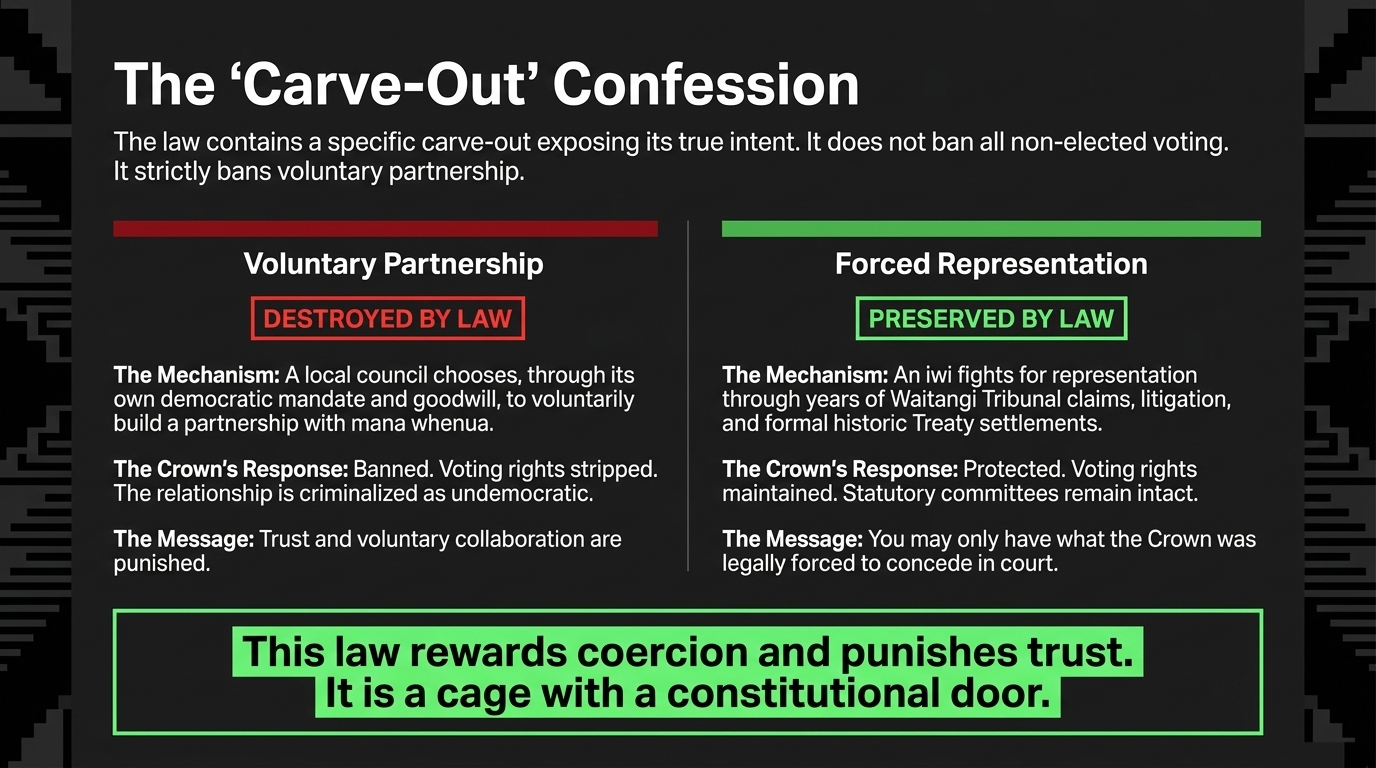
Here is where the structural racism of this policy strips off its disguise entirely and stands naked in the light.
The law change explicitly preserves voting rights for:
- Statutory committees
- Appointments agreed as part of a Treaty settlement
- Appointments made under legislation outside the Local Government Act 2002
As confirmed in Watts' own Beehive announcement.
Let me translate that carve-out into plain language: if an iwi fought for their representation through years of Treaty claims, through the Waitangi Tribunal, through litigation, through settlements
— they keep their vote.
But if a council chose, through its own democratic mandate, to voluntarily build a partnership with mana whenua — if they did it because they believed in it, because their communities trusted them to do it
— that representation is gone.
The law rewards coercion and punishes trust. It rewards the relationship that had to be dragged out of the Crown in court, and it destroys the relationship that grew from goodwill.
This is not accidental.
This is the message: you may only have what we were legally forced to give you. The moment you take more — the moment a council decides, freely and transparently, to treat Māori as genuine partners
— we will legislate it away.
That is not democracy. That is a cage with a constitutional door.
The Pattern Is the Policy
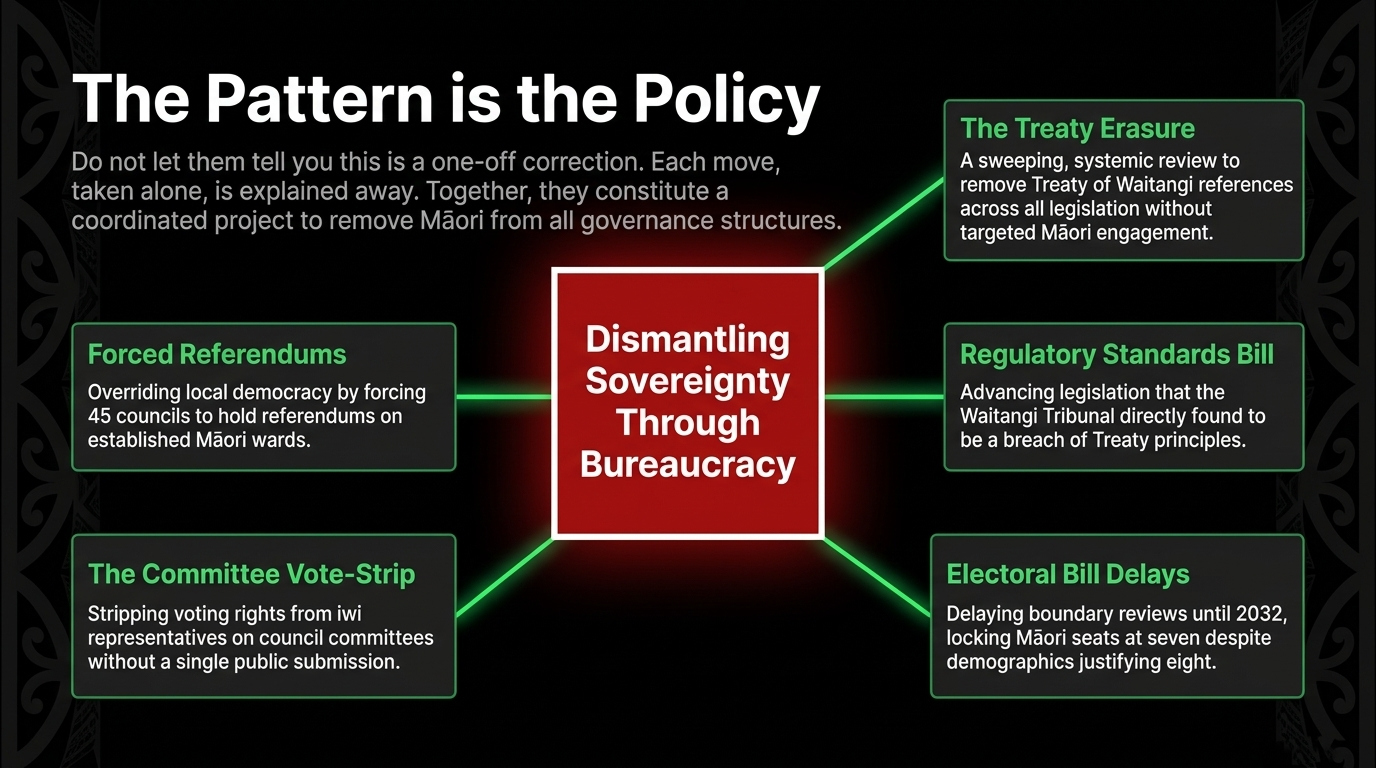
Do not let them tell you this is a one-off correction. Do not let them tell you it is about accountability. Look at what they have done and are doing, all at once, from the same Beehive, with the same hands:
They forced 45 councils to hold Māori ward referendums after those councils had voted, democratically, to establish Māori wards, as documented by 1News.
They are running a sweeping review of all Treaty references in legislation, as exposed by E-Tangata.
They are advancing a Regulatory Standards Bill that the Waitangi Tribunal found to be a breach of Treaty principles, as documented by the Waitangi Tribunal itself.
They are proposing an Electoral Bill that would delay boundary reviews until 2032, keeping Māori seats at seven despite demographics justifying eight, as Te Pāti Māori reported in their April 2026 statement.
And they are stripping voting rights from iwi representatives on council committees without a single public submission.
Each move, taken alone, can be explained away.
Together, they constitute a coordinated project to remove Māori from every governance structure in Aotearoa — Parliament, council committees, Treaty bodies, health boards, water management, coastal rights
— one mechanism at a time.
I called this pattern "Dismantling Sovereignty Through Bureaucracy" in my July 2025 essay and the evidence has only grown since.
This white supremacist neoliberal government cannot feed the children, house the kuia, or honour the Tiriti
— but it will move mountains of legislation, without select committee, without submission, without shame, to ensure that iwi cannot vote at the table of the council that governs their rohe, as the Māori Green Lantern makes plain.
Rangatiratanga Is Not a Carve-Out
I want to speak directly to the whānau who are reading this and feeling the familiar weight of it. The exhaustion of watching another mechanism designed, another law written, another right technically preserved but practically stripped. The rage that has nowhere clean to go because the system that did this also controls most of the channels through which you would challenge it.
I see you.
But I also need you to see this: Mayor Wendy Schollum named it. A Pākehā mayor in Hawke's Bay stood up and said — as reported in full by RNZ — that this law will strip expert advice from councils, that the unelected members her council appointed are not a threat to democracy but a resource for better governance, and that she genuinely wants to understand why this is the most urgent problem in New Zealand when her district is dealing with housing, infrastructure, climate and recovery from a cyclone that killed people.
Her second interview warning of "lame ducks," published by RNZ, is not the voice of someone protecting privilege. It is the voice of someone who has seen what genuine partnership looks like
— and who is watching it be destroyed.
Mayor Moko Tepania — re-elected in October 2025 with a democratic mandate of 12,744 votes — was targeted by a podcast, a lobby group, and a minister before the votes were even dry. His governance was lawful, transparent, publicly documented. None of that mattered. I told you what this government does to democratically elected Māori mayors in The Rats Beneath the Floorboards. The production line does not care about electoral mandates.
It cares about controlling outcomes.
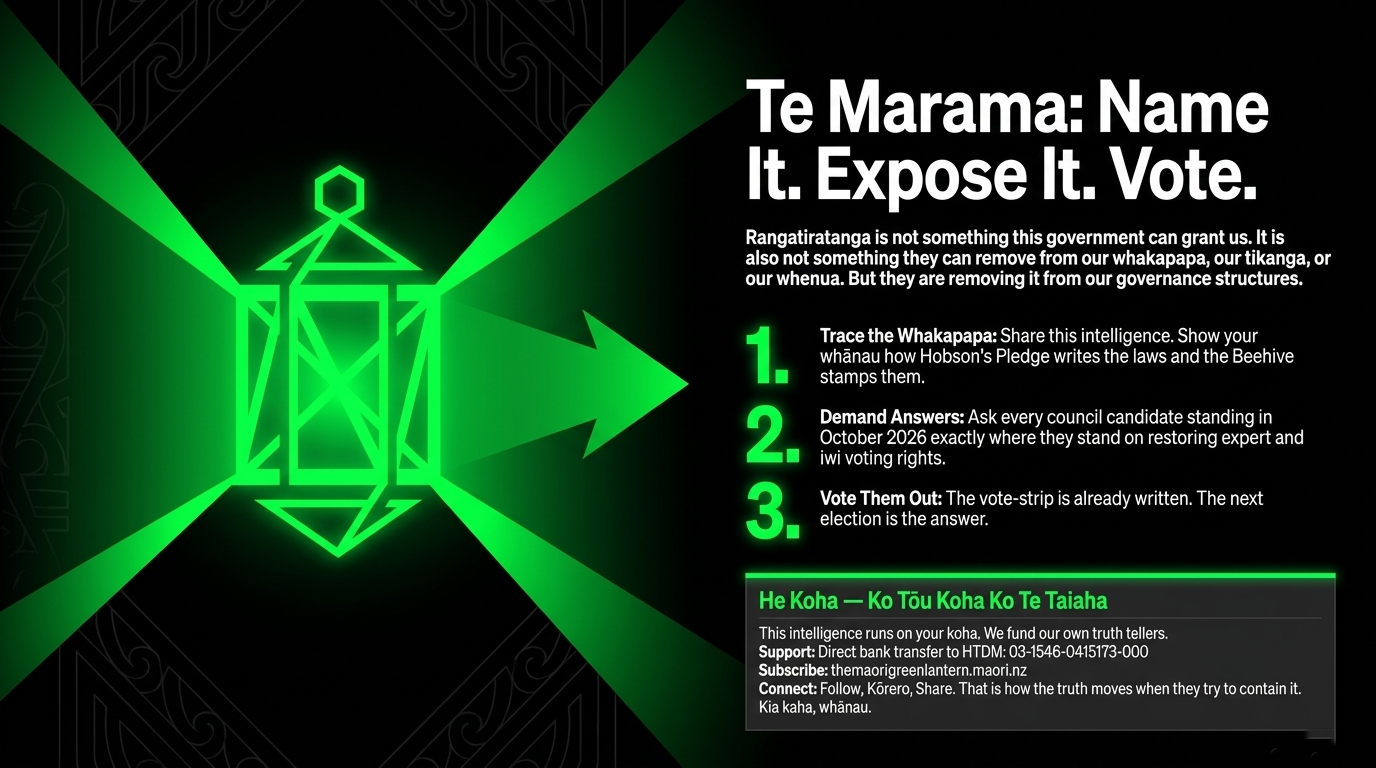
Rangatiratanga is not something this government can grant us. It is also not something they can remove — not from our whakapapa, not from our tikanga, not from our whenua.
But they can, and are, removing it from our governance structures. And every time they do, the distance between our communities and the decisions that affect our lives grows wider.
Name it. Trace it. Expose it. Vote out every candidate who supported it.
Ka whawhai tonu mātou.
Ivor Jones — The Māori Green Lantern
themaorigreenlantern.maori.nz
He Koha — Ko Tōu Koha Ko Te Taiaha
They stripped the vote from the table. They bypassed the select committee. They wrote the law for the lobby group.
And this voice — this taiaha — runs on your koha.
Every donation to The Māori Green Lantern is a direct act of rangatiratanga. It funds the research, the citations, the whakapapa tracing, the naming of names that Crown and corporate structures will not fund. When you koha here, you are telling this government that we will fund our own truth tellers — that accountability is not theirs to grant or withdraw.
If you can koha, please do so directly at the Koha platform, or by direct bank transfer to HTDM, account number 03-1546-0415173-000.
If you wish to receive essays like this one directly to your inbox, subscribe at themaorigreenlantern.maori.nz — and become part of the permanent record.
If you are on Facebook, follow and subscribe here — and share this essay with every person in your whānau who needs to understand what is being done.
If koha is beyond you right now — no worries. Subscribe. Follow. Kōrero. Share. That is koha in itself. That is how the truth moves when they try to contain it.
Kia kaha, whānau. Stay vigilant. Stay connected. The vote-strip is already written. The next election is the answer.
Research transparent: Sources verified via search_web and get_url_content on 3 June 2026. All URLs tested against CV-1 protocol. Unverifiable URLs not included. Named individuals cited solely in their public capacity.
Views expressed constitute honest opinion on matters of public interest under the Defamation Act 1992 (NZ) and Durie v Gardiner NZCA 278. All factual claims sourced and cited. Named individuals referenced solely in their public capacity. Errors: contact via themaorigreenlantern.maori.nz.