"They Sold Your Railway For Sixteen Cents A Share — And Now They Call The Repair A White Elephant" - 4 October 2026
The Merchant Bankers Looted Your Tracks, The Roads Lobby Litters Your News Feed, And This White Supremacist Neoliberal Coalition Wants Four More Years To Finish The Job — Kia Kaha, Whānau, Read The Ledger They Pray You Never Open.

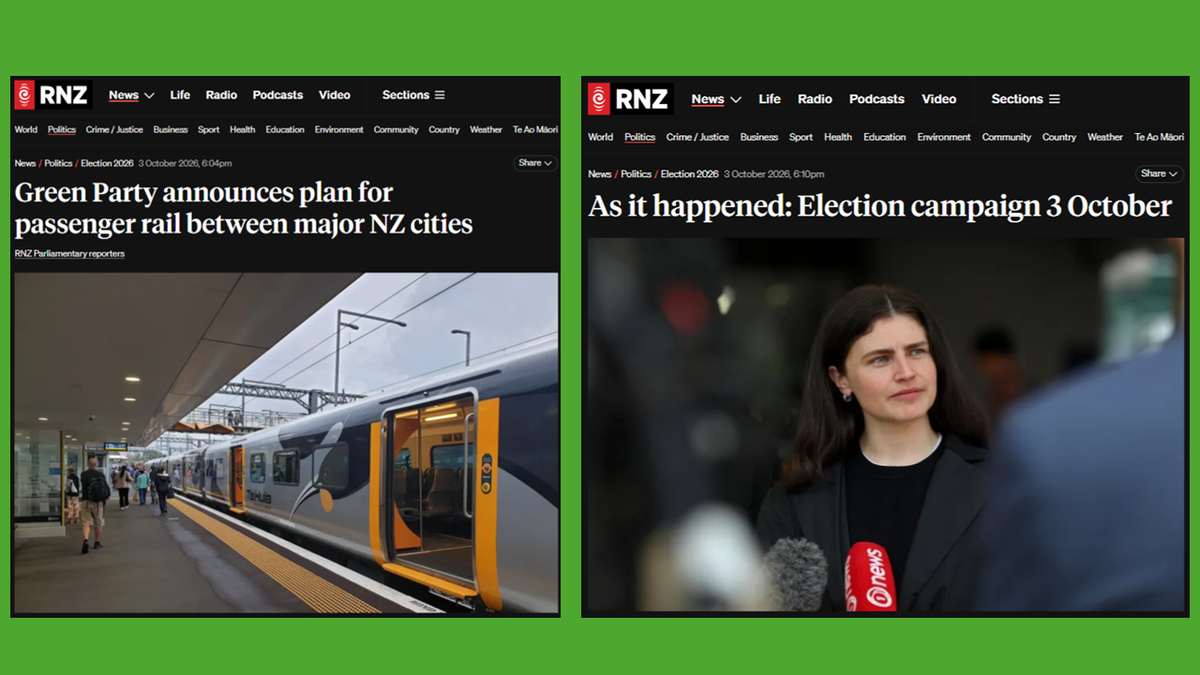
Mōrena whānau,
I hope your weekend is going well and I thank you for visiting this space.
Here is what this essay covers.
First, the whakapapa of the crime: how your grandparents' railway was taken, tidied up, and sold for one fifth of what the Crown had just spent on it.
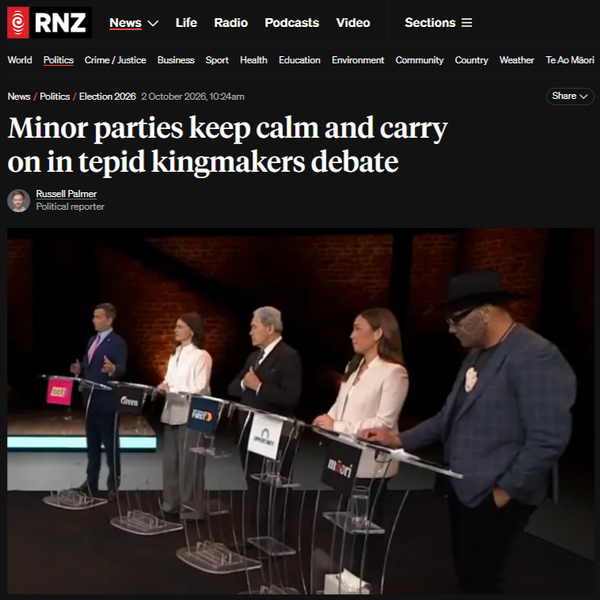
 RNZ | Te Reo Irirangi o Aotearoa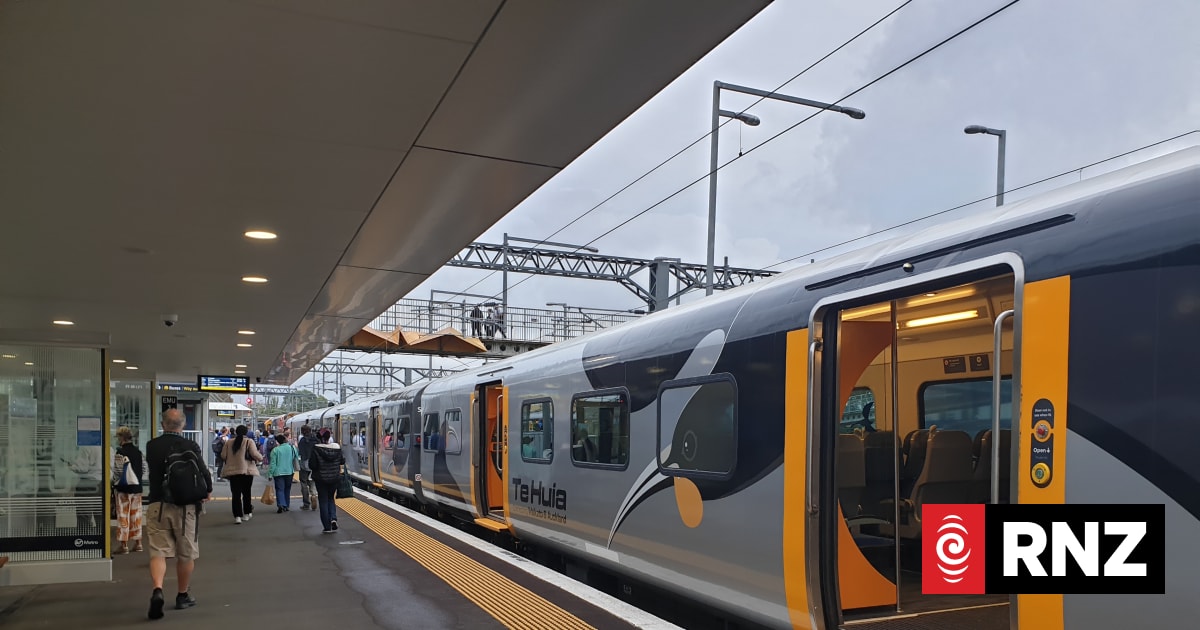
Second, the framework of Tika, Pono and Tikanga, and how this transport system fails every one of the five tikanga tests — mana, whakapapa, wairua, whānau, wellbeing.
 RNZ | Te Reo Irirangi o Aotearoa
Third, three examples for the Western mind, with the harm measured in dollars and dead bodies, and the solutions already costed and sitting on the table. Fourth, five hidden connections between the looters of 1993 and the government of 2026.
Fifth, the reckoning in November.
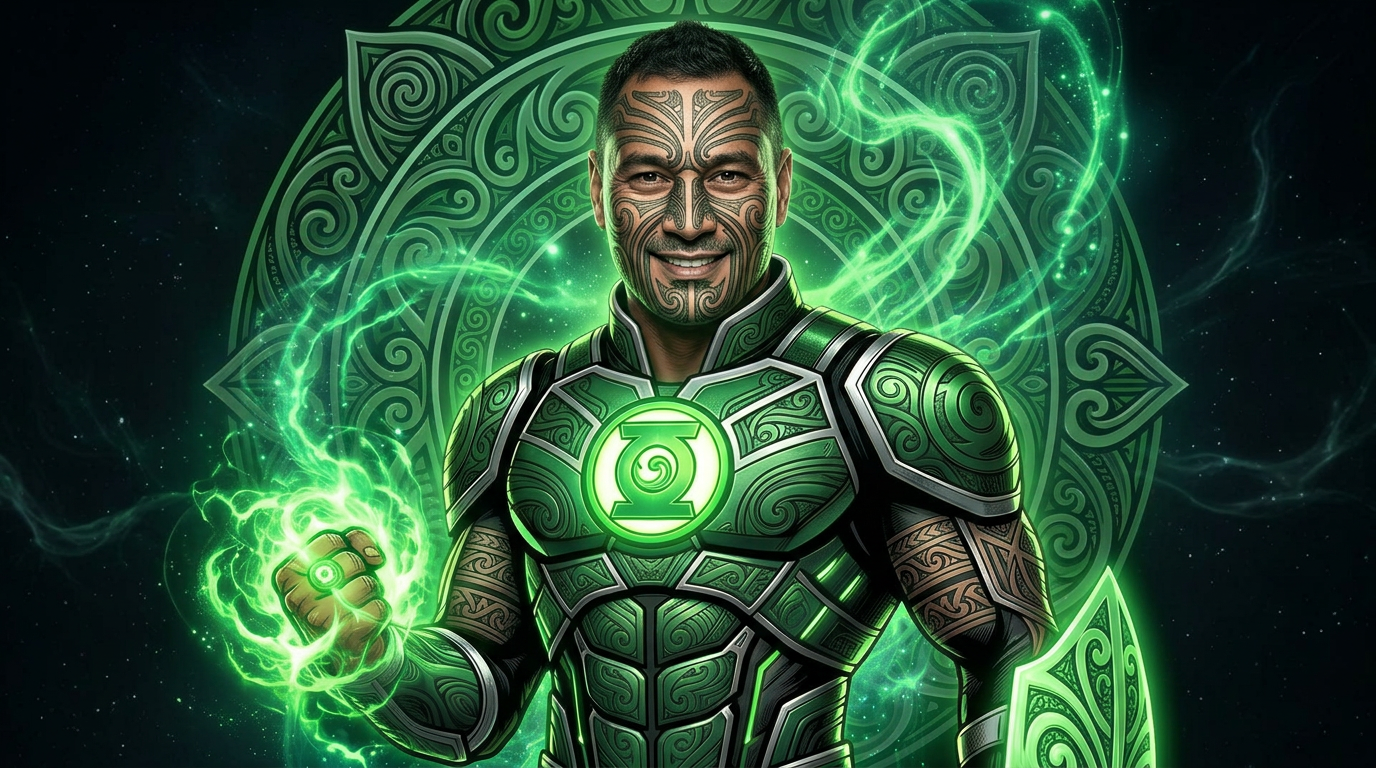
Whānau, I want you to click onto this essay at themaorigreenlantern.maori.nz, because it is not a rant — it is a kete.
Inside it there is a wealth of verified information you can use in your daily life: at the polling booth, at the marae AGM, at the petrol pump when you feel the theft in your hip pocket. There is an audio podcast that lays out this kaupapa in detail for those driving or digging the maara, a short video that explains it for those with five minutes, and for the long-form readers this roughly 3,000-word cited essay is waiting for you.
All of it sits there permanently — a repository for our mokopuna, so that in thirty years they can look back and say: at least we knew the Māori Green Lantern was warning us.
The Whakapapa Of The Crime: Built On Taken Whenua, Flayed By Merchant Bankers
Our railways were never a neo-liberal "asset."
Between 1870 and 1929, roughly half of all public works spending went into rail — a public project funded by the Crown and, as documented in the Waitangi Tribunal's Rangahaua Whanui research, paid for twice by Māori whose whenua was compulsorily taken under the Public Works Act to lay the tracks. (Corroborated — Public Futures Aotearoa's rail case study citing Cathy Marr, Waitangi Tribunal Rangahaua Whanui Series.)
Then came the butchers of the Fourth National Government.
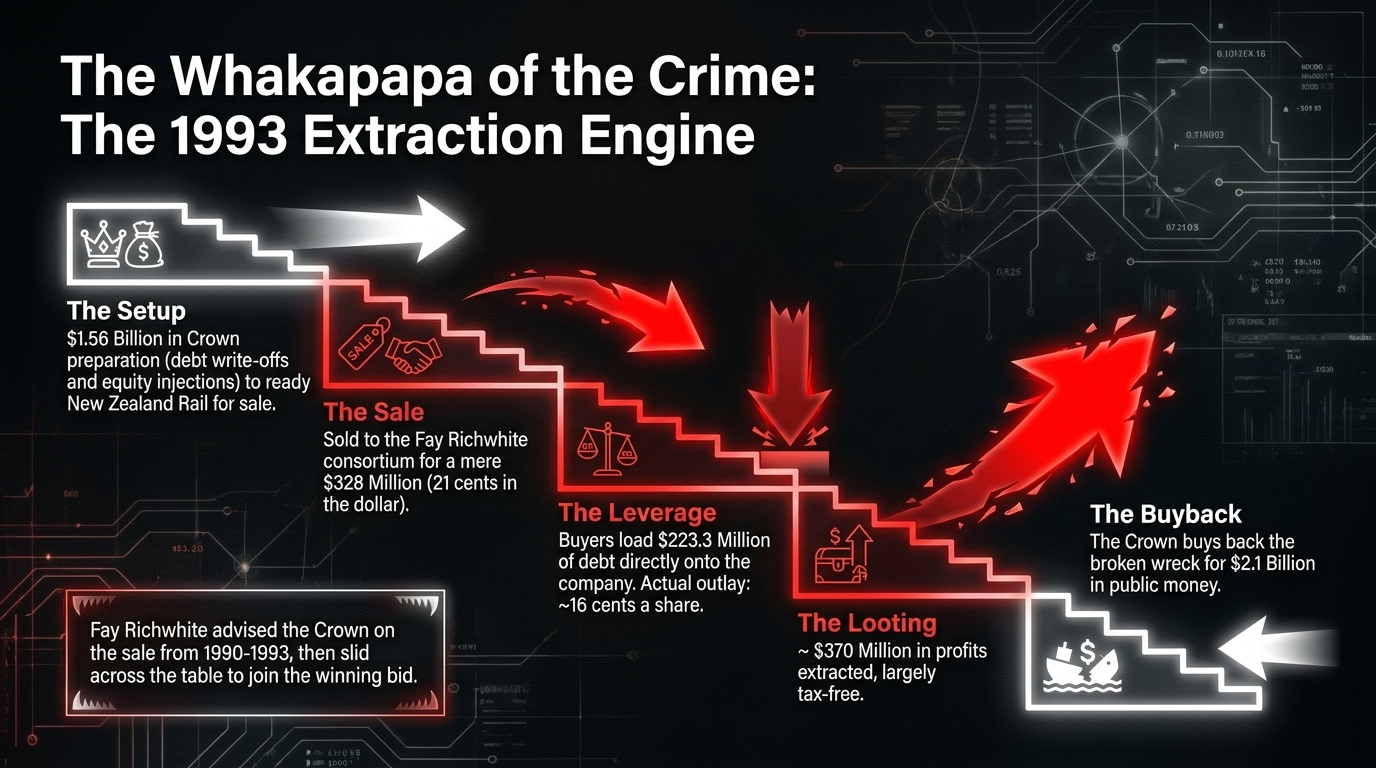
In 1993 the Bolger government sold New Zealand Rail for $328 million to a consortium of merchant bankers Fay, Richwhite & Co. (31.8%), US rail operators Wisconsin Central and Berkshire Partners (27.3% each), and Richwhite family interests.
But the buyers barely paid.
This was a leveraged buyout in which the company borrowed $223.3 million against itself — roughly 68% of the purchase price loaded back onto the victim — while the consortium put in around $105 million of its own.
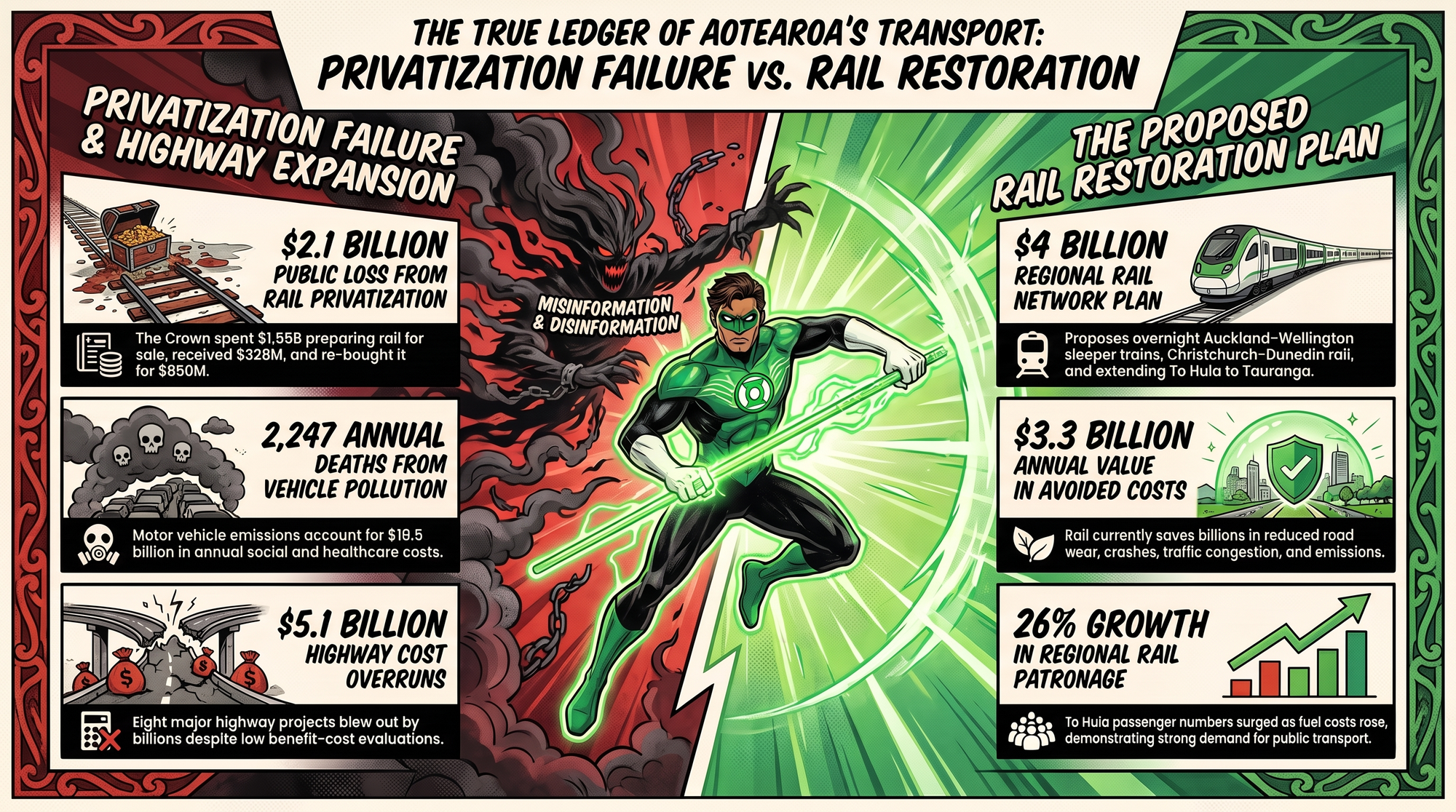
The Crown had already written off $1.2 billion of rail debt and injected $360 million in fresh equity to make the corpse look pretty for auction. $1,200 million plus $360 million equals $1,560 million spent preparing the sale. They took back $328 million. That is 21 cents in the dollar.
And here is the stench that should curdle your morning milo: Fay Richwhite advised the Crown on this very sale from 1990 to 1993 before sliding across the table to join the winning bid. Treasury itself noted the consortium's unfair advantage. The referee bought the team. Economists have since called it a conflict of interest fit for a post-Soviet fire sale.
The extraction was surgical.
In 1995 the rebranded Tranz Rail refinanced and paid shareholders a $100 million capital repayment — largely by selling its stake in Clear Communications. On Gaynor's arithmetic the main investors' effective outlay fell to about $16.8 million, which divided across roughly 105 million shares is sixteen cents a share for the entire national railway, ferries included. The same analysis estimated the four principal investors extracted about $370 million in profits, mainly tax-free. Sixteen cents in. Three hundred and seventy million out.
They had other help.
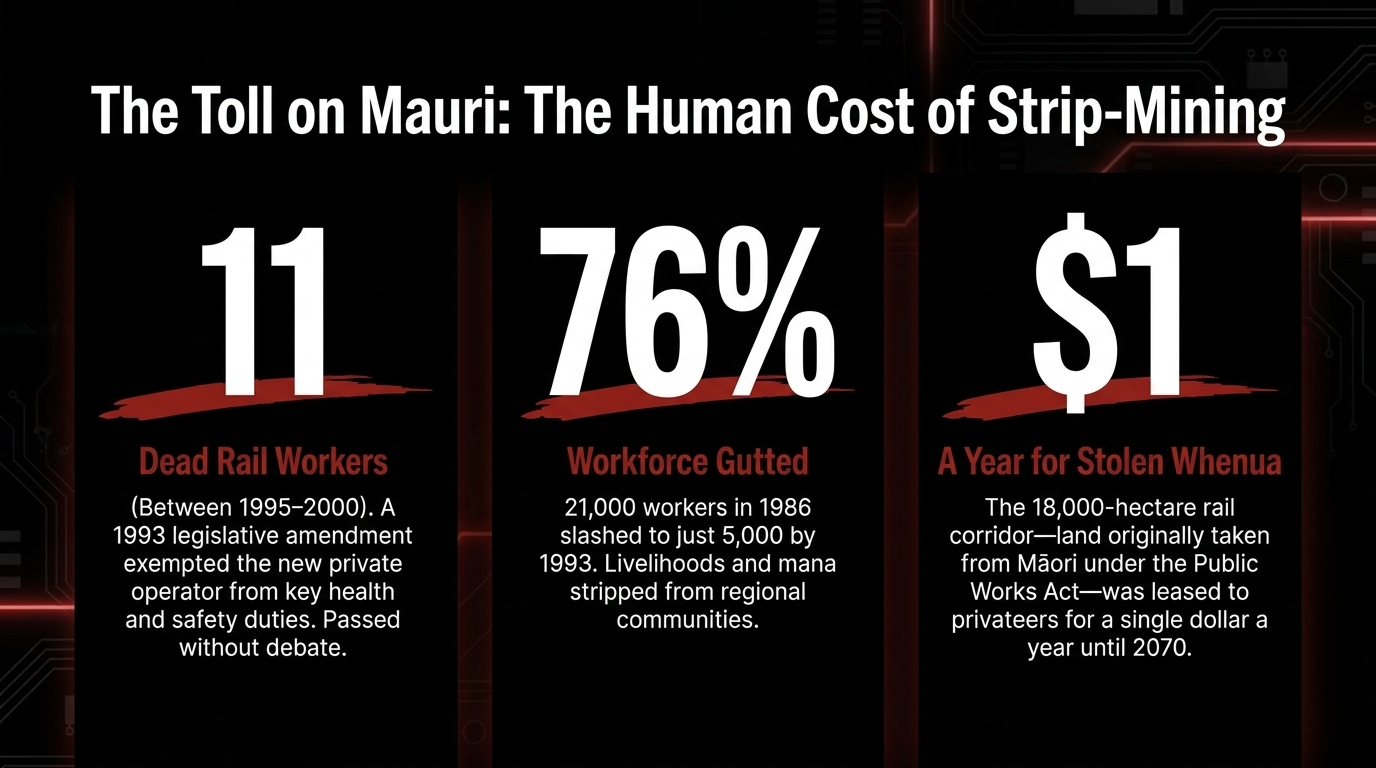
In 1993 an amendment to the rail sale legislation exempted the new private operator from key duties under the Health and Safety in Employment Act — passed, researchers record, without debate. Between 1995 and 2000, eleven rail workers were killed on the job. A workforce of 21,000 in 1986 was cut to 5,000 by 1993 — a 76% gutting — with workshops closed, regional services annihilated, and maintenance deferred until the whole network was so run down the National Business Review's own columnists were begging for renationalisation.
And who bought the wreck home?
We did. Twice.
The network for $1 plus a $200 million restoration commitment in 2004, then the rail and ferry business from Toll for $690 million in 2008, with Finance Minister Michael Cullen closing the book on "one of the most disastrous privatisations in New Zealand history".
Run the ledger, whānau: $1.56 billion in before the sale, minus $328 million back, plus $890 million in buybacks. Roughly $2.1 billion of public money, nominal dollars, to buy, lose to looters, and re-buy what was already ours. The privateers' downside was sixteen cents a share. Yours was two billion dollars and eleven dead workers.
The Deep Dive Podcast
Listen to a lively conversation between two hosts, unpacking and connecting topics in the sources of this essay. I apologise in advance for the AI's very harsh pronounciation of reo. Please dont shoot me, :).
Youtube Video
Like video? Here is a short video suppporting the essay. Again, don't shoot the messenger please because of AI's pronounciation. :)
Koha Consideration
You might ask who supports the Māori Green Lantern to chase sixteen-cent railways and two-billion-dollar ledgers while the trucking lobby buys access the ordinary way?
You do.
Essay by essay, koha by koha — there are no corporate patrons behind this mahi, no Fay Richwhite consulting fee, no "access" being sold. Every koha says whānau will support the accountability the Crown and its consultants will never volunteer. It says rangatiratanga includes supporting our own truth-tellers.
Kia kaha, whānau. Stay vigilant. Stay connected. And if you can, consider a koha so this voice — and this repository for our mokopuna — stays alive.
If you cannot koha, no worries. Subscribe, follow, kōrero, and share this essay with your whānau — that is koha in itself.
Four pathways:
- Direct koha: Koha platform
- Essays direct + subscribe support: themaorigreenlantern.maori.nz portal
- Bank transfer: Ivor Jones, 03-1395-0099387-000
- Facebook: Become a supporter
Tika, Pono, Tikanga: Where The Mauri Drained Out
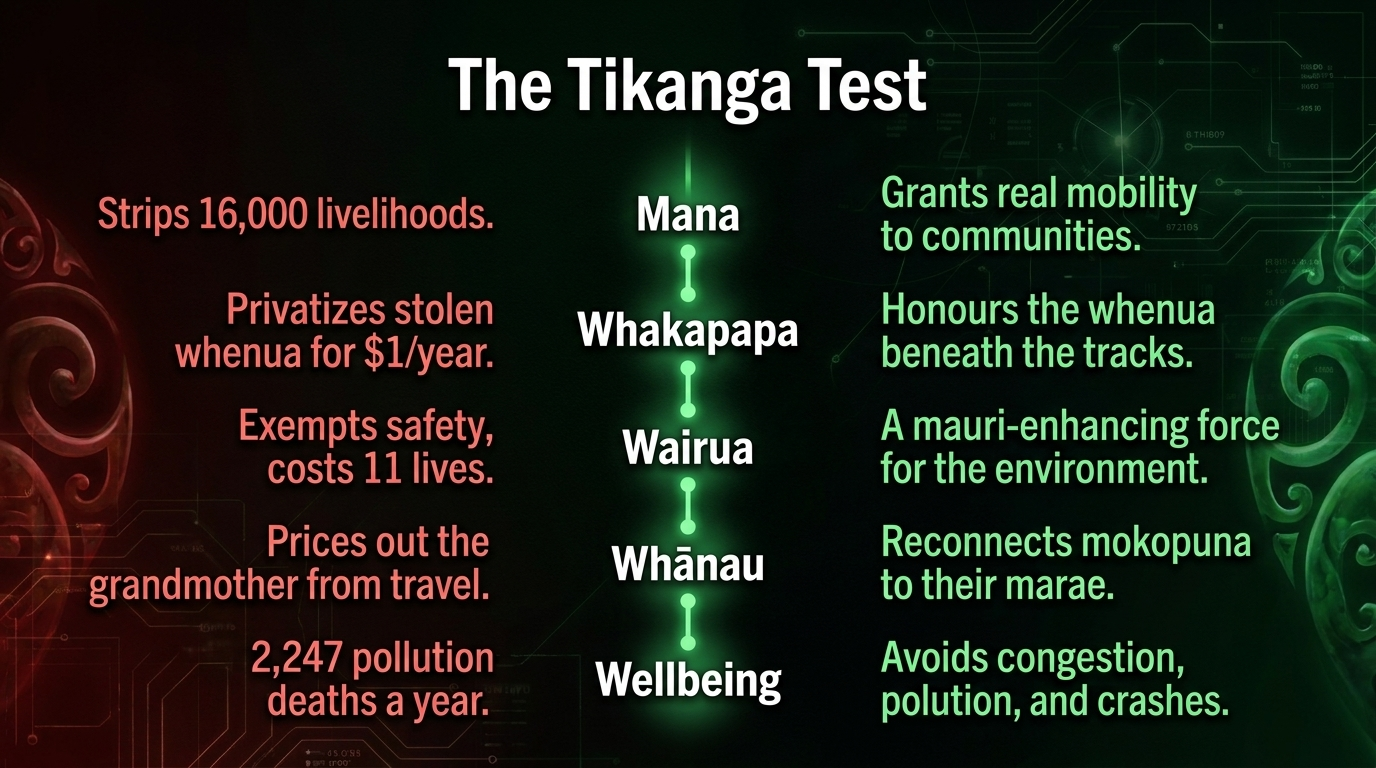
Tika asks: what is right?
Pono asks: what is true?
Tikanga asks the five questions that tell you whether a system carries mauri or eats it.
Did the system preserve the mana of the people it touched? No — it stripped 16,000 workers of their livelihoods and mana.
Did it recognise their whakapapa? No — it leased an 18,000-hectare corridor built on taken Māori land to the privateers for $1 a year until 2070, converting the take from raw theft into rentier income without one dollar to iwi or hapū.
Did it respect their wairua? Ask the whānau of the eleven dead.
Did it involve their whānau? The amendment was passed without debate — the people were locked out of the room their own ancestors paid to build. Did it return anyone to wellbeing? It returned the looters to Remuera clifftops and left commuters, freight customers and future taxpayers holding the bill.
That is the mauri ledger of 1993. Now watch the same hand play the same game in 2026.
Three Examples For The Western Mind
I know some of you need this translated out of tikanga and into the only language the Palmerston North bowling club respects: cold arithmetic and corpses.
Here are three.
Example One: The Double Standard In Disguise — Rail Gets A Business Case, Motorways Get A Ouija Board
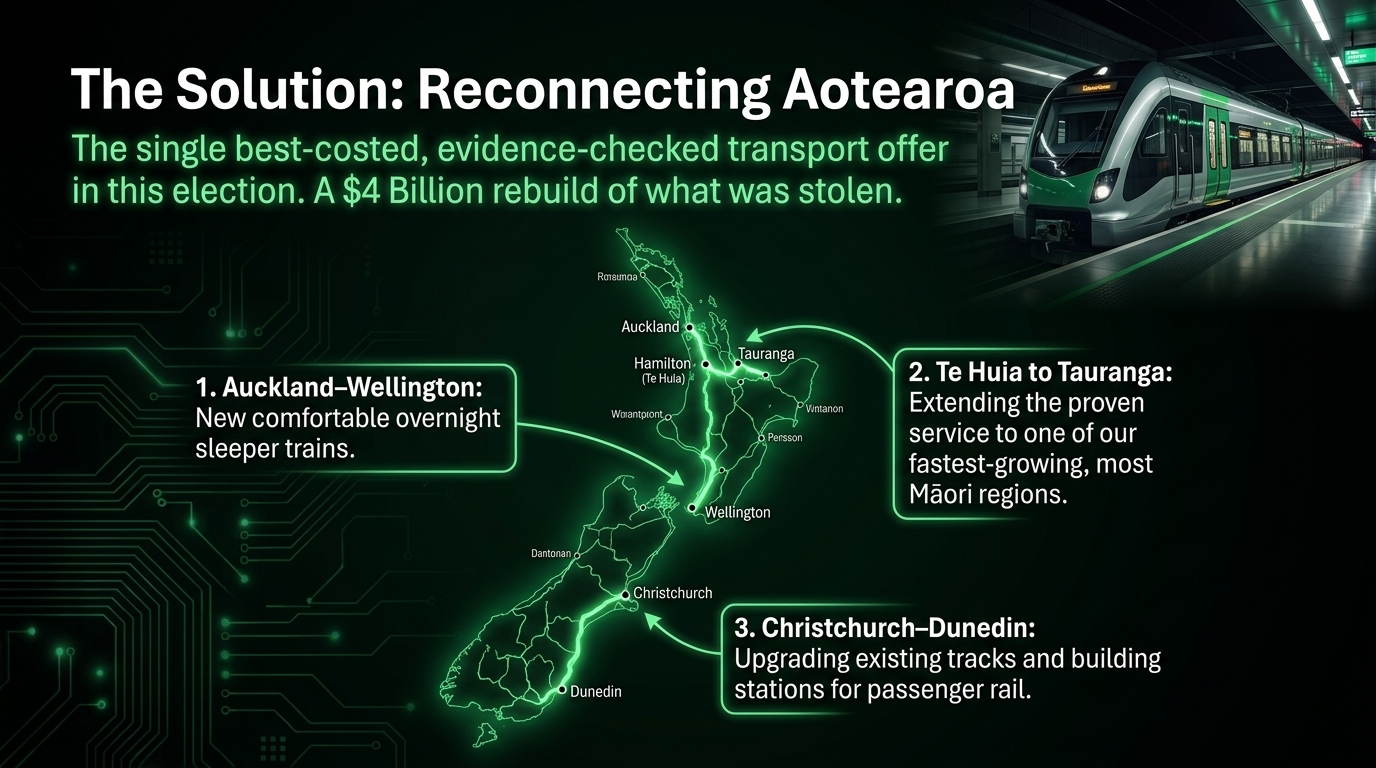
Harm quantified: eight Roads of National Significance have blown out by $5.1 billion, with most posting benefit-cost ratios under 2 — and only reaching even that because NZTA stretched the benefit window to 60 years and slashed discount rates to 2% or below, a rigging that made projects which "previously barely qualified as economical" suddenly fly.
For less than a quarter of the RoNS programme, Aotearoa gets back what the Fay Richwhite consortium stripped.
The tikanga impact: when the state demands Pono from the train and accepts fiction from the bulldozer, whānau learn the system is not neutral — it is captured.
I have traced this government's habit of selling you numerology as economics before in "The $4 Billion Mirage" — same calculators, new costume.
Example Two: The Killer Nobody Invoices
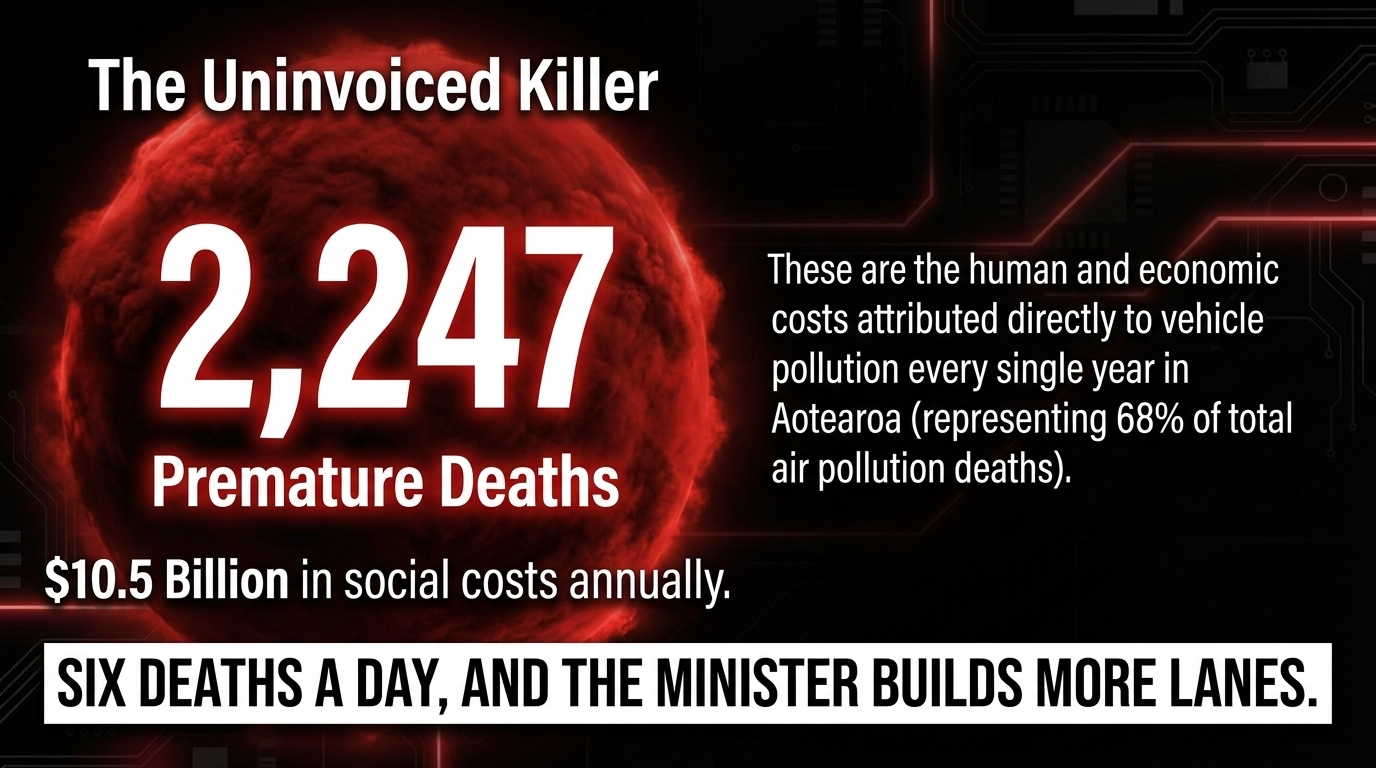
Harm quantified: HAPINZ 3.0, the Ministry for the Environment's landmark study, attributes ~3,300 premature deaths a year and $15.6 billion in social costs to human-made air pollution, and the Ministry of Transport's own briefing says motor vehicles account for about 2,247 of those deaths and $10.5 billion a year — 68% of the deaths, 67% of the social bill (2247 ÷ 3300; 10.5 ÷ 15.6 — working shown). Six-plus deaths every day from tailpipes, and the minister builds more lanes.
The solution: shift people and freight to rail and credible public transport; independent analysis already values rail's existing contribution at $3.3 billion a year in avoided congestion, pollution, crashes and road wear, and transport is about 19% of our gross emissions.
The tikanga impact: this is a failure of kaitiakitanga at body-count scale, and my essay "He Riri Nō Te Ngākau — A Fury From The Heart — Why This Coalition Government Must Never Govern Again" names the ministers who chose the lanes anyway.
Example Three: Car Dependency Is Not Freedom — It Is A Tax On Rangatiratanga
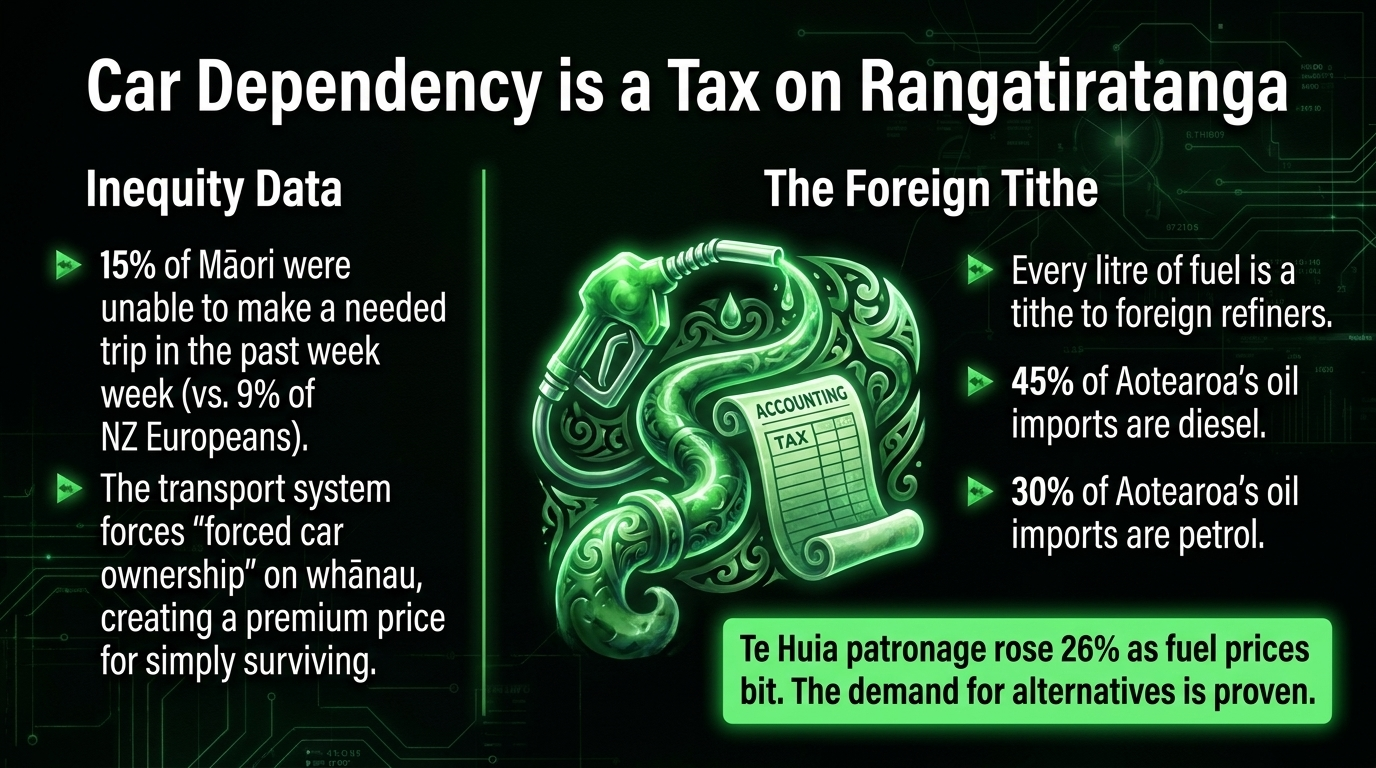
Harm quantified: Māori carry the transport system's failures hardest — lower licensing, lower public transport access, higher exposure to "forced car ownership"; 15% of Māori could not make a needed trip in the previous week versus 9% of NZ Europeans; kaumātua use public transport at 18% versus 26% for non-Māori, trains at 10% versus 16%; and Otago public health modelling finds transport harms fall on Māori with a burden comparable to tobacco and obesity. Meanwhile diesel is 45% of our oil imports and petrol another 30% — every litre a tithe to foreign refiners.
The solution: Te Huia's own numbers prove the proof of concept — rail patronage rose 26% in the last measured quarter as fuel prices bit, and the Greens' Tauranga extension would grant one of our fastest-growing, most Māori regions a real choice.
The tikanga impact: manaakitanga means a grandmother in Murupara can catch a train to her mokopuna's graduation without begging a ride.
I covered how the coalition made being poor a premium service in "Five Kingmakers, No Conscience".
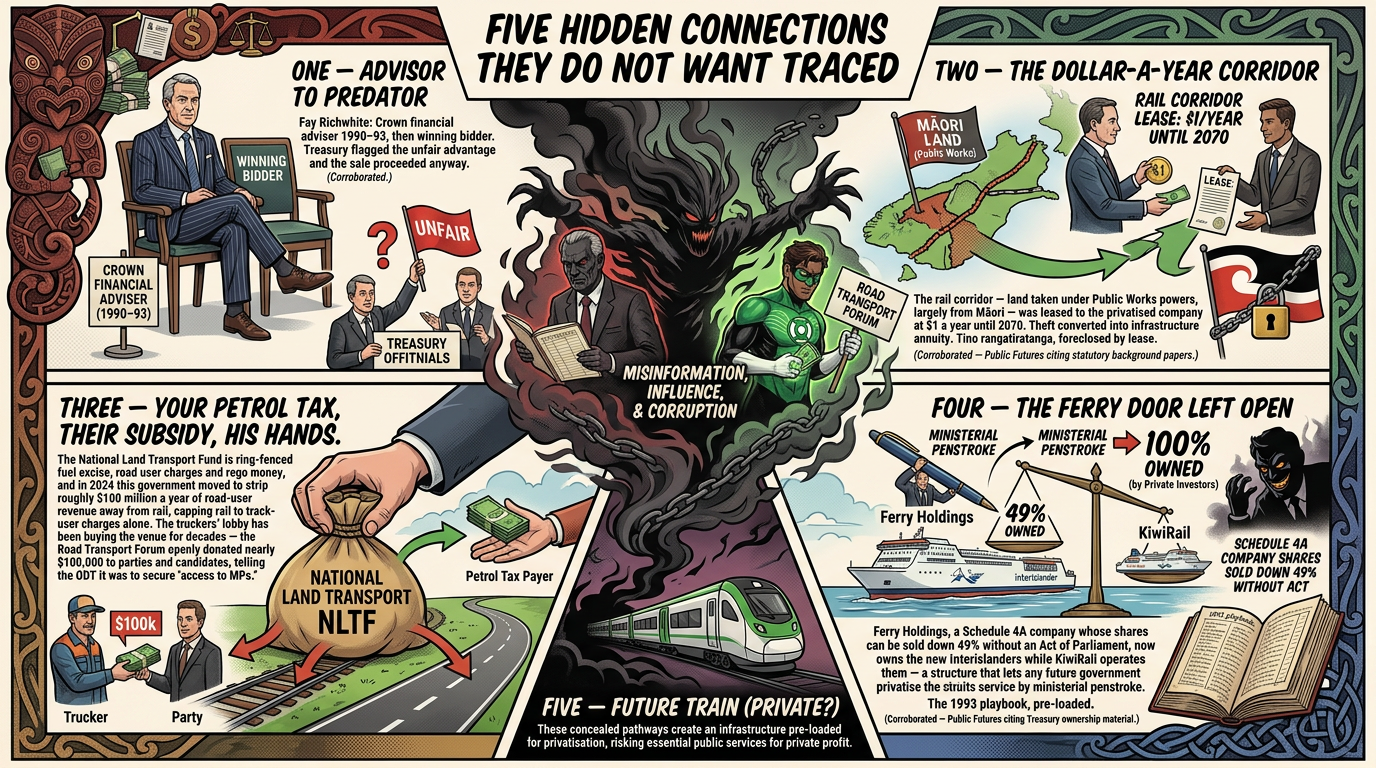
Five Hidden Connections They Do Not Want Traced
One — Advisor To Predator
Fay Richwhite: Crown financial adviser 1990–93, then winning bidder. Treasury flagged the unfair advantage and the sale proceeded anyway.
Two — The Dollar-A-Year Corridor
The rail corridor — land taken under Public Works powers, largely from Māori — was leased to the privatised company at $1 a year until 2070. Theft converted into infrastructure annuity. Tino rangatiratanga, foreclosed by lease.
Three — Your Petrol Tax, Their Subsidy, His Hands
The National Land Transport Fund is ring-fenced fuel excise, road user charges and rego money, and in 2024 this government moved to strip roughly $100 million a year of road-user revenue away from rail, capping rail to track-user charges alone. The truckers' lobby has been buying the venue for decades — the Road Transport Forum openly donated nearly $100,000 to parties and candidates, telling the ODT it was to secure "access to MPs."
Four — The Ferry Door Left Open
Ferry Holdings, a Schedule 4A company whose shares can be sold down 49% without an Act of Parliament, now owns the new Interislanders while KiwiRail operates them — a structure that lets any future government privatise the straits service by ministerial penstroke. The 1993 playbook, pre-loaded. (Corroborated — Public Futures citing Treasury ownership material.)
Five — Same Chorus, Same Donors' Hymnbook
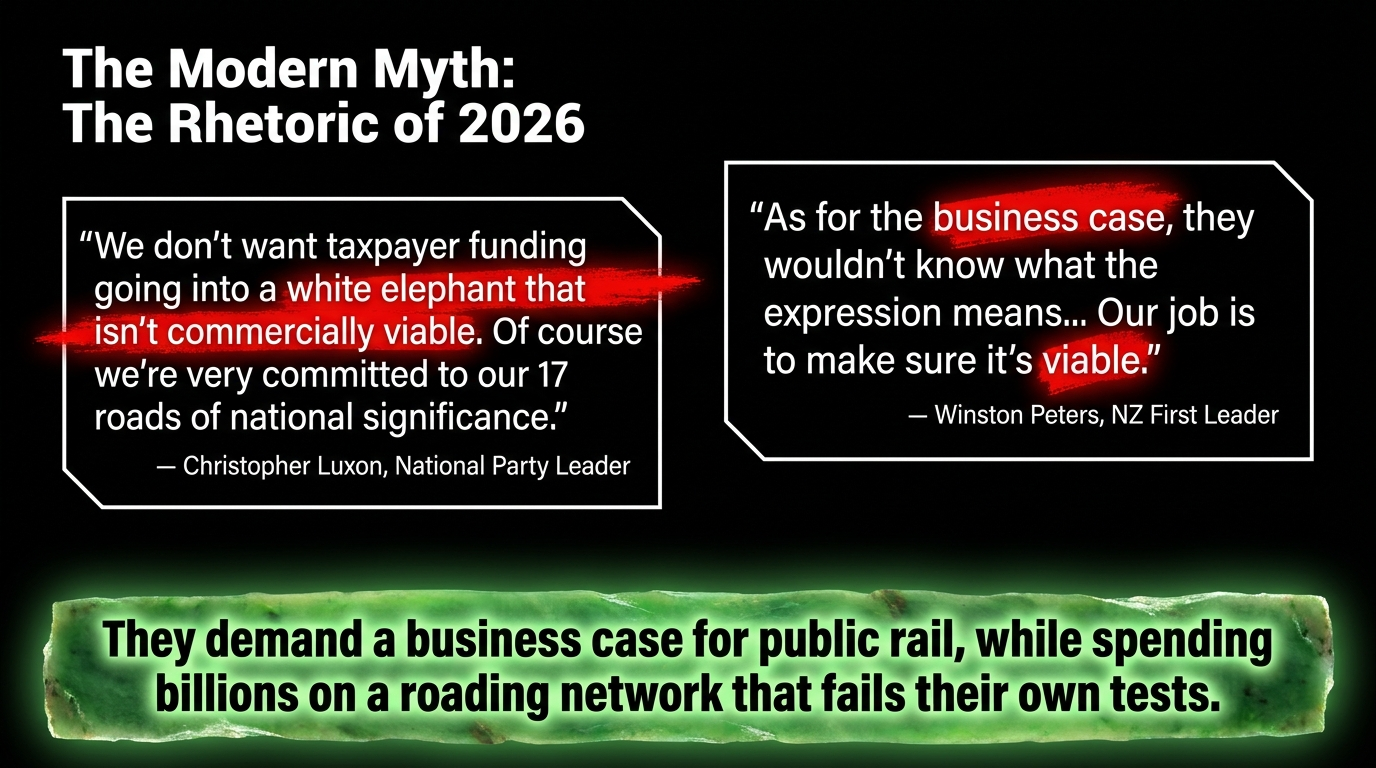
When Christopher Luxon calls the $4 billion, Infometrics-reviewed rail plan a "white elephant" and Winston Peters wonders aloud whether it is "viable", they are not doing analysis — they are reading the trucking lobby's lines over your family's future. I traced the money machinery behind this chorus in "Blood Money And Ballot Papers: The Whakapapa Of National's Hard-Right Machine".
Pono: The Evidence Against My Own Argument, Before You Ask
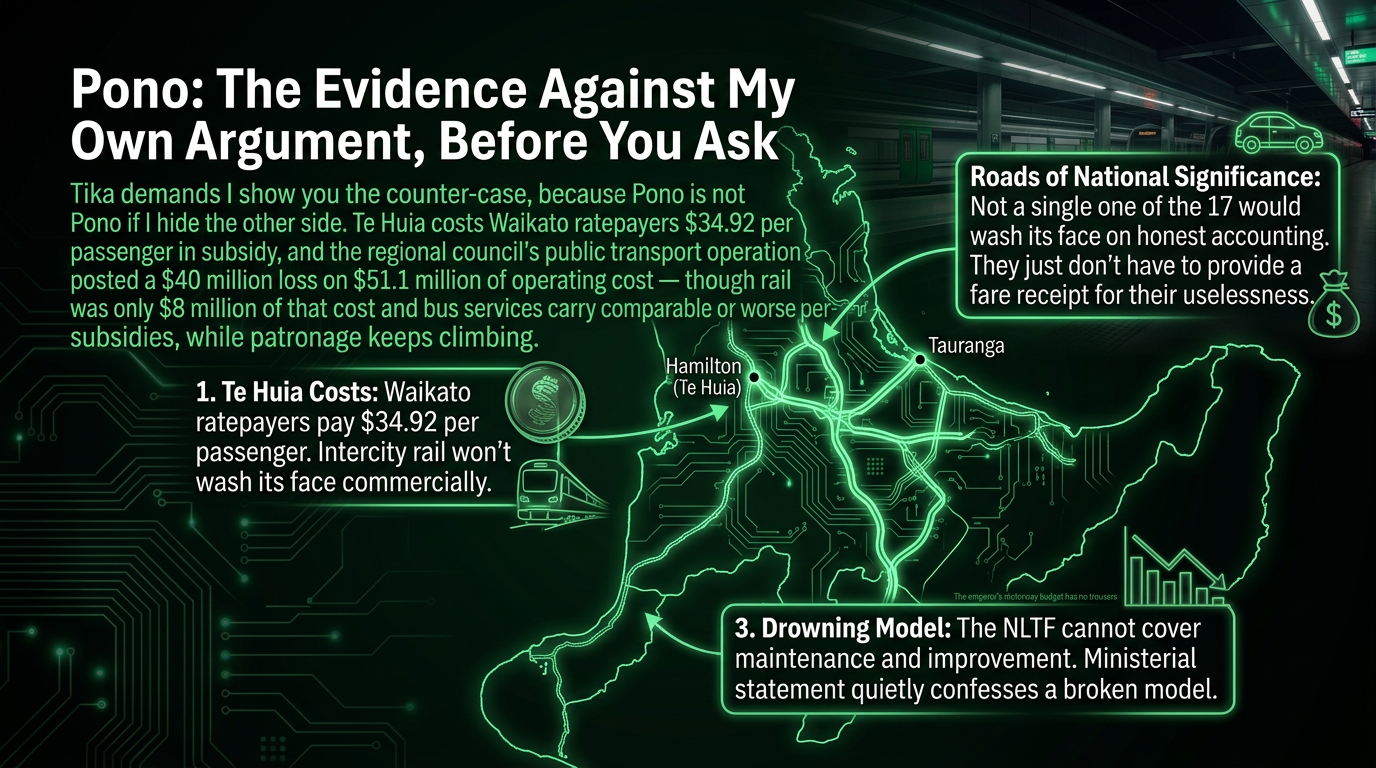
Tika demands I show you the counter-case, because Pono is not Pono if I hide the other side.
Te Huia costs Waikato ratepayers $34.92 per passenger in subsidy, and the regional council's public transport operation posted a $40 million loss on $51.1 million of operating cost — though rail was only $8 million of that cost and bus services carry comparable or worse per-trip subsidies, while patronage keeps climbing. Intercity passenger rail will not wash its face commercially.
Neither — on any honest accounting — does a single one of the seventeen Roads of National Significance Luxon will not apologise for; the difference is the motorway never has to hand you a fare receipt proving its uselessness.
And the August 2026 ministerial statement on land transport quietly confesses the whole model is drowning: the NLTF cannot cover maintenance plus improvement without "savings, reprioritisation, higher user charges, or further Crown funding." The emperor's motorway budget has no trousers.
Implications: The Bill Arrives In November
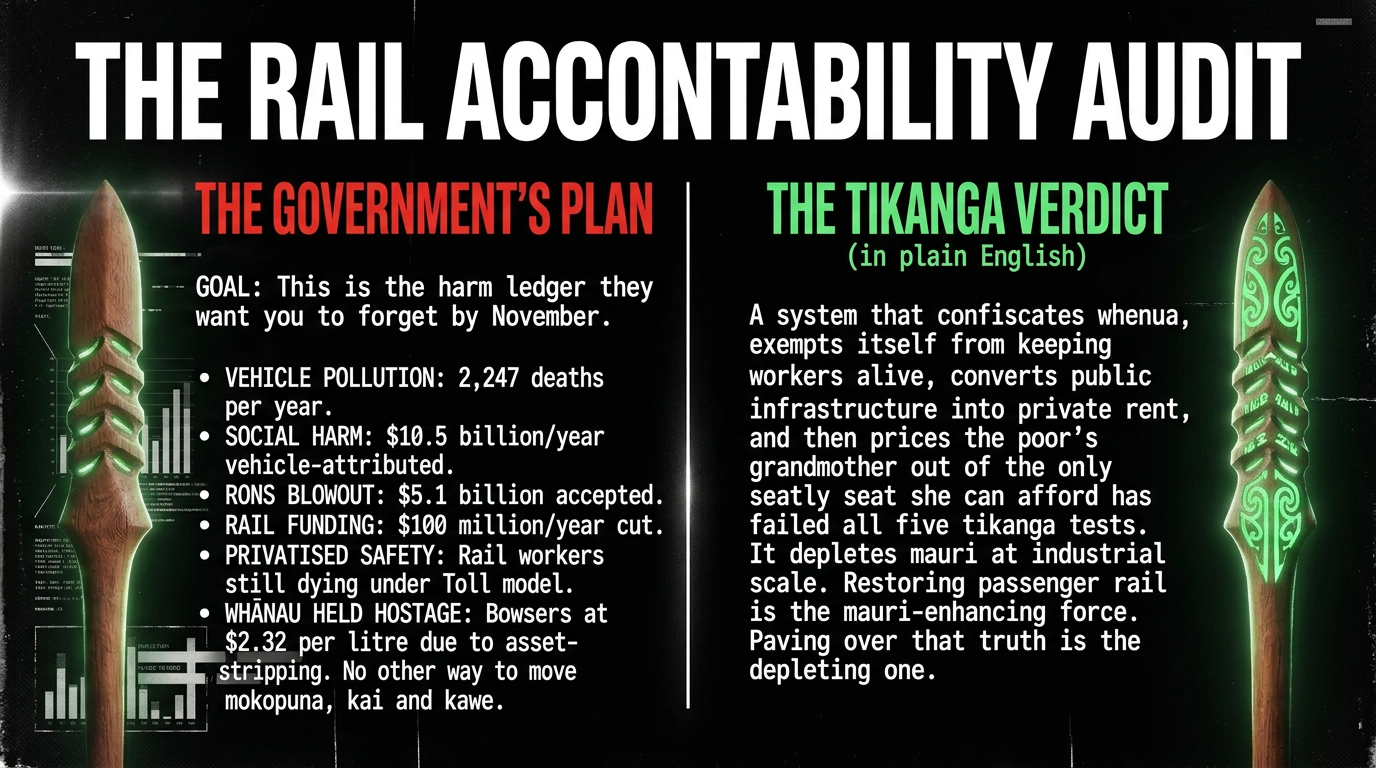
Here is the harm ledger this government wants you to forget by the November election.
About 2,247 vehicle-pollution deaths a year. About $10.5 billion a year in vehicle-attributed social harm. A $5.1 billion RoNS blowout they found acceptable. $100 million a year carved out of rail funding. A workforce already gutted once on the Australian Toll model, railway men still dying under privatised safety regimes, and whānau from Kawerau to Kaitaia held hostage to bowsers at $2.32 a bag of sand — sorry, per litre — because three decades of asset-stripping left them no other way to move mokopuna, kai and kawe.
And the tikanga verdict in plain English, for every reader: a system that confiscates whenua, exempts itself from keeping workers alive, converts public infrastructure into private rent, and then prices the poor's grandmother out of the only seat she can afford has failed all five tikanga tests. It depletes mauri at industrial scale. Restoring passenger rail is the mauri-enhancing force. Paving over that truth is the depleting one.
The November Reckoning
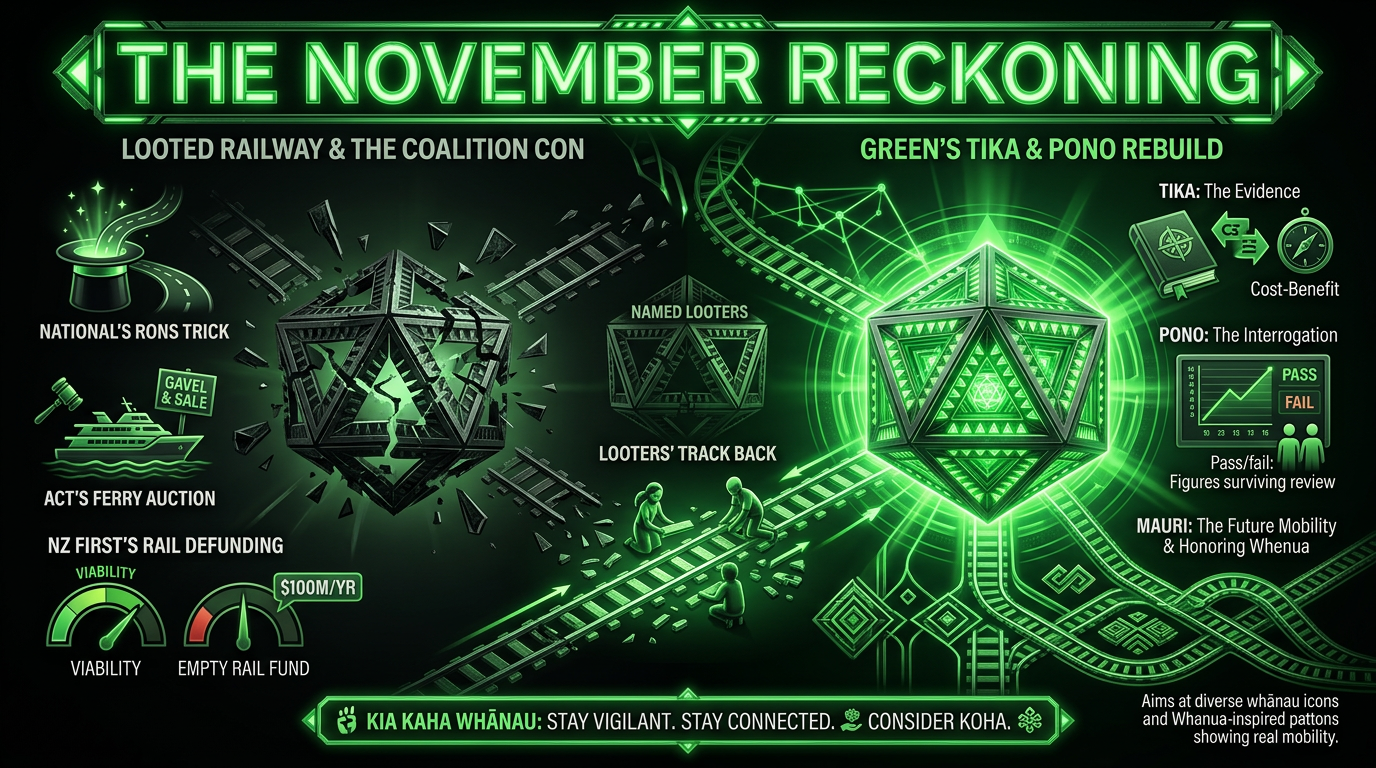
Do not vote this coalition back in.
National's scheme is the RoNS BCR conjuring trick and foreign-oil tithe writ large; ACT wants to auction the ferries next through the Schedule 4A side door; NZ First campaign-talks viability while the ministerial record is the $100-million-a-year rail defunding.
I laid out the full case in "He Riri Nō Te Ngākau — Why This Coalition Government Must Never Govern Again" and "The Ten-Point Con Job Has A Whakapapa", and I meant every named name in both.
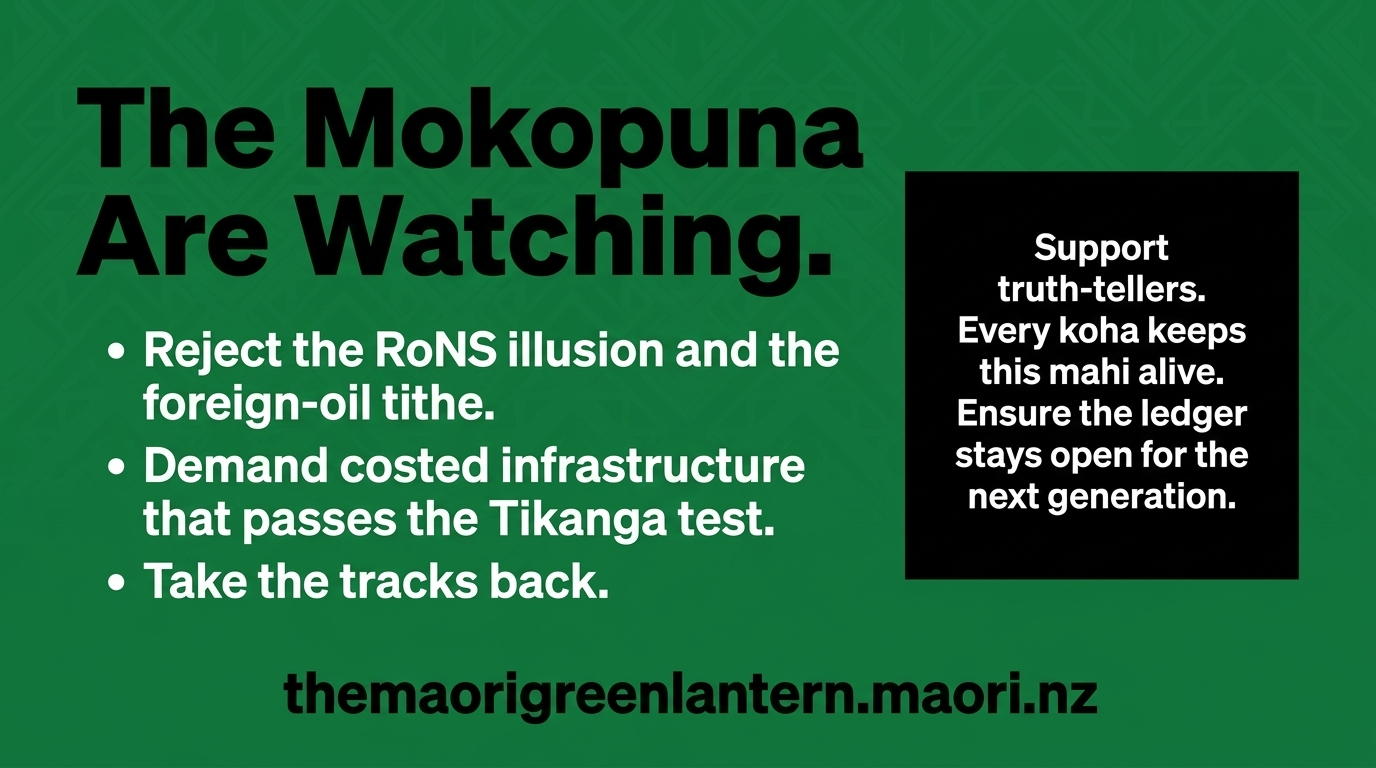
Vote Green not because the Greens are saints — no politician is — but because the single best-costed, evidence-checked transport offer in this election is theirs: a $4 billion rebuild of what was stolen, reviewed independently, aimed straight at the whānau the road lobby has never once served. That is Tika. The figures survive interrogation. That is Pono. It gives our people real mobility, honours the whenua under the tracks, and starts repaying the tikanga debt. That is mauri.
The mokopuna are watching. Give them a scene where we counted the cost, named the looters, and took the tracks back.
Kia kaha whānau. Stay vigilant. Stay connected. Consider koha to keep this voice alive.
Disclaimer: Factual claims are confidence-labelled; original Gaynor columns are paywalled and secondhand-sourced accordingly. Opinion and characterisation of the government's ideology are clearly opinion grounded in the cited record. No allegation of criminality beyond what sources report. Corrections via the retraction protocol; right of reply genuinely stands.