
"Trump's Iran War - When a Nuclear-Free Nation Genuflects Before the Bombs That Shatter Girls' Schools — The Collapse of Aotearoa's Moral Spine Under a White Supremacist Neoliberal Government
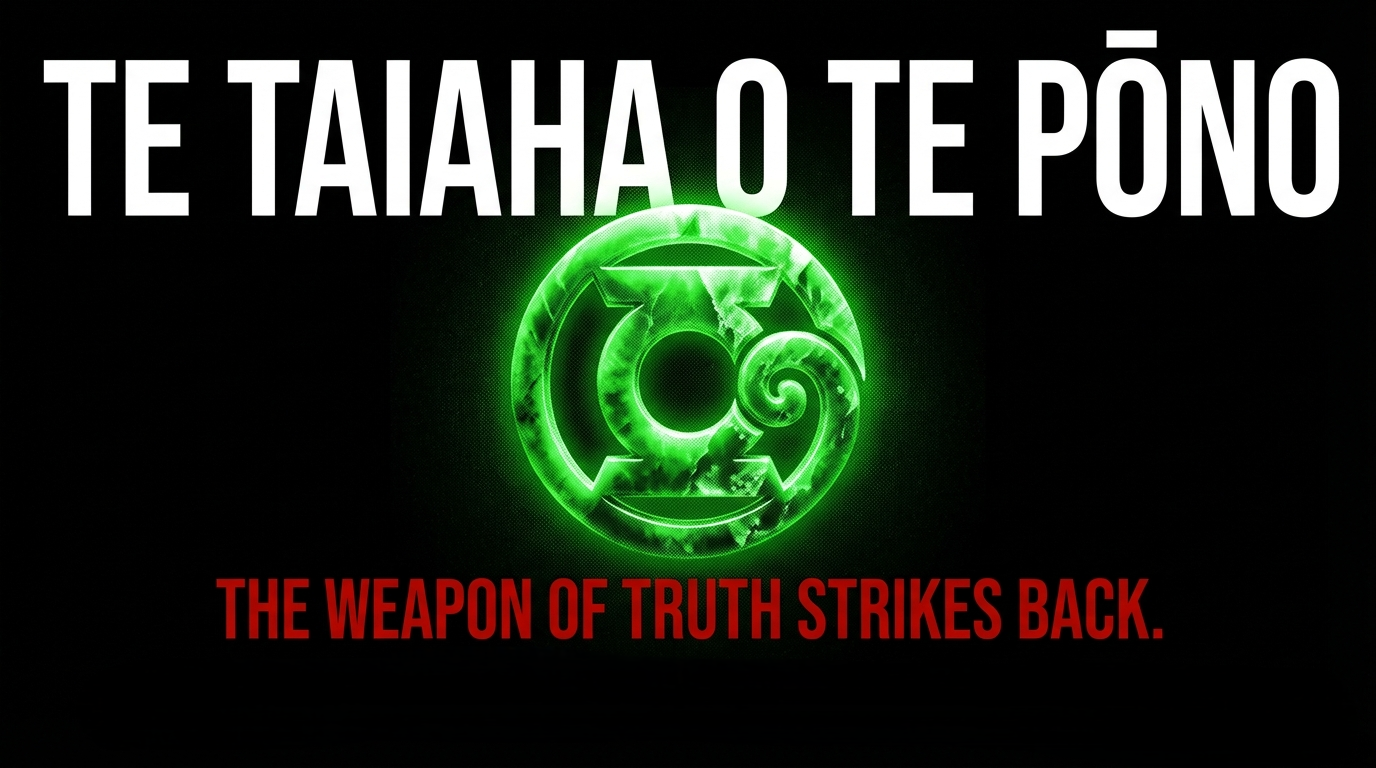
TE TAIAHA O TE PŌNO: THE WEAPON OF TRUTH STRIKES BACK

Mōrena ano Aotearoa,
Thank you for coming here and investing your time and energy into this kaupapa of action. Ngā mihi.
There is a whakataukī that says:
He aha te mea nui o te ao? He tangata, he tangata, he tangata. What is the greatest thing in the world? It is people, it is people, it is people.
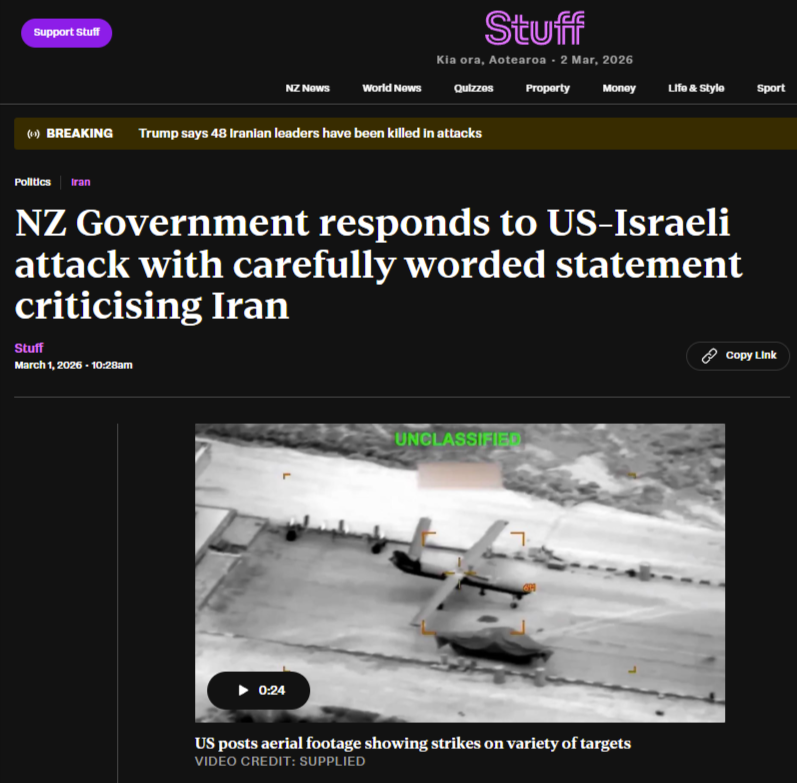
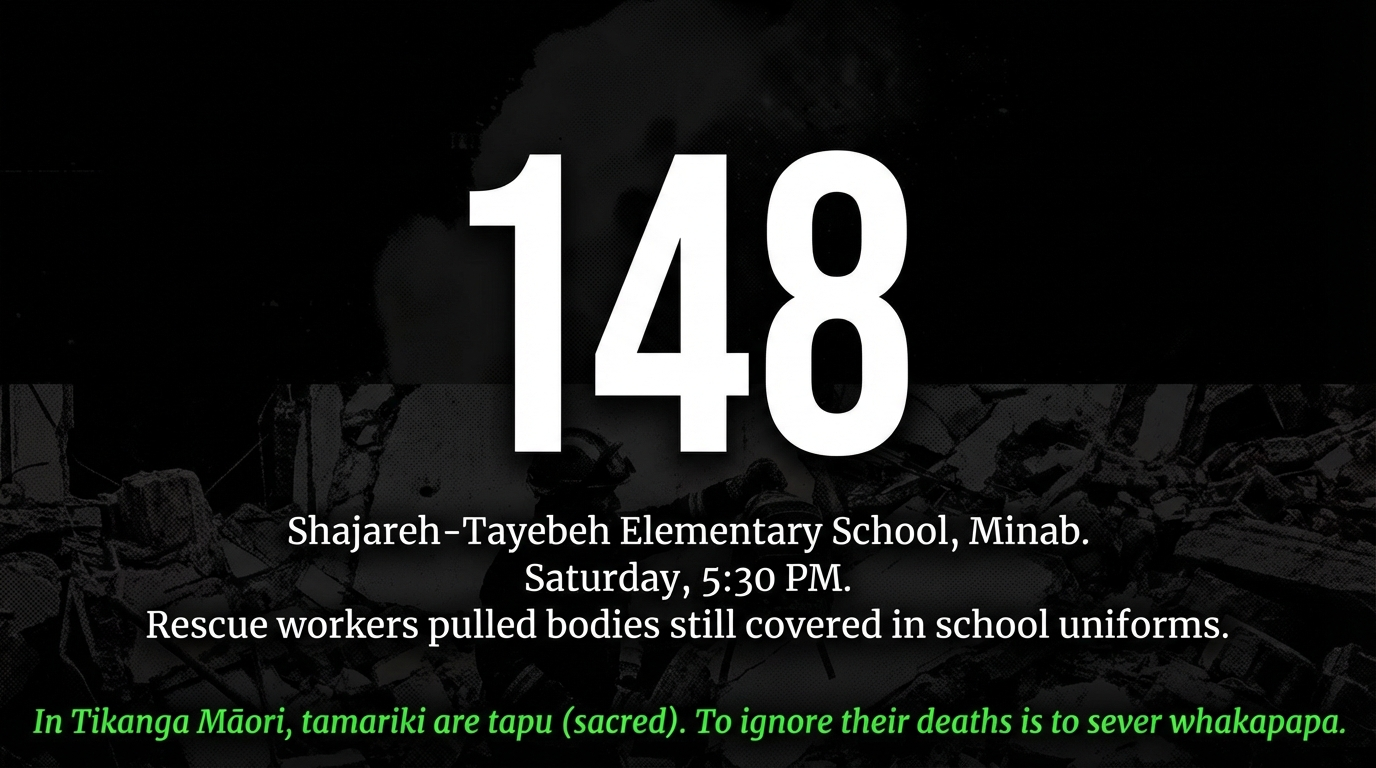
On Saturday 28 February 2026, the United States and Israel decided that 148 girls at Shajareh-Tayebeh Elementary School in Minab, Iran, were not people. As reported by Le Monde and confirmed by the Euro-Med Human Rights Monitor, they were collateral. And on Sunday morning, while rescue workers pulled tiny bodies from rubble still covered in school uniforms and blood, Prime Minister Christopher Luxon and Foreign Affairs Minister Winston Peters released a statement that managed — with breathtaking, spineless precision — to condemn everyone except the people who dropped the bombs, as revealed by Stuff and The Spinoff.
This is not diplomacy. This is moral cowardice dressed in a carefully worded press release. And it represents the final, shameful collapse of Aotearoa New Zealand's once-proud tradition of independent foreign policy — replaced by the whimpering obedience of a government that would rather lick the boots of a fascist American president than stand where Helen Clark, David Lange, and Norman Kirk once stood.
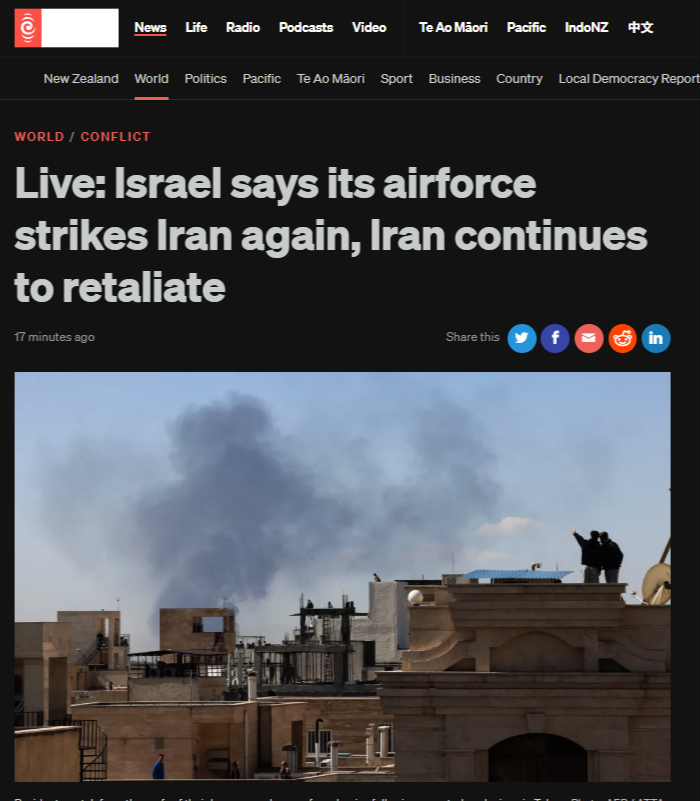
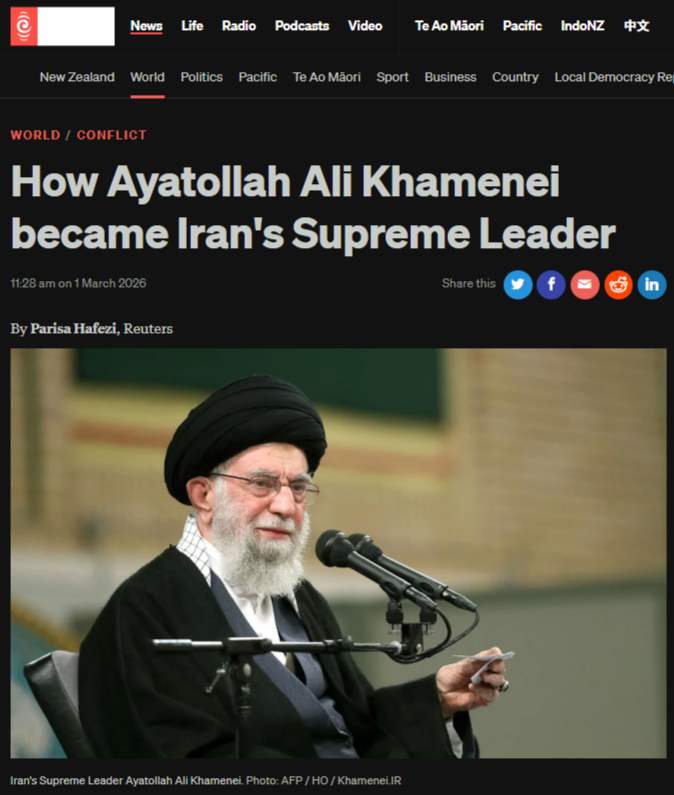
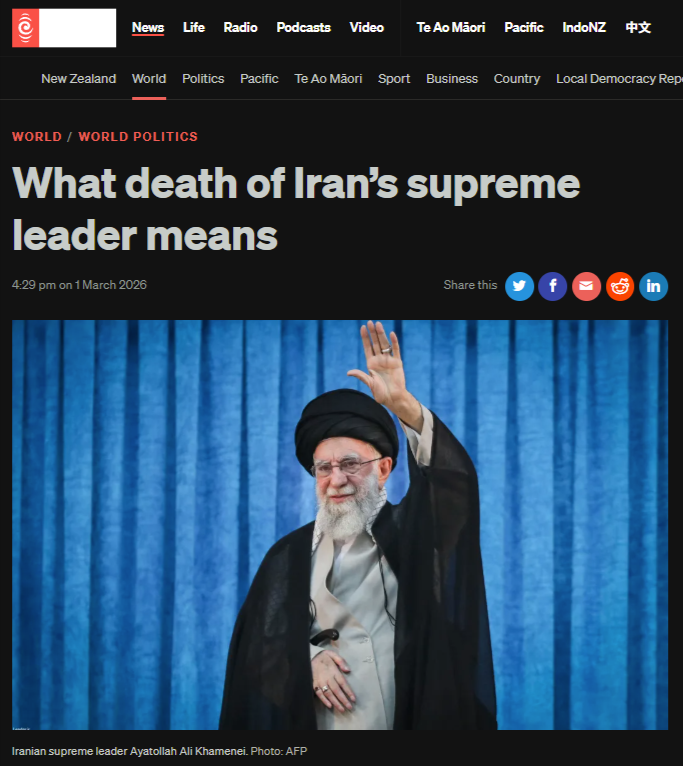
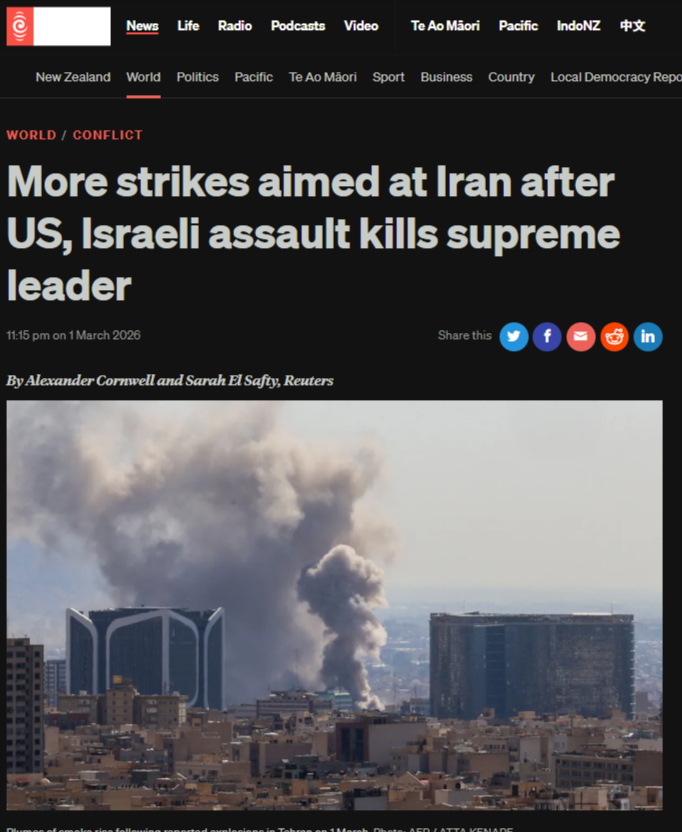
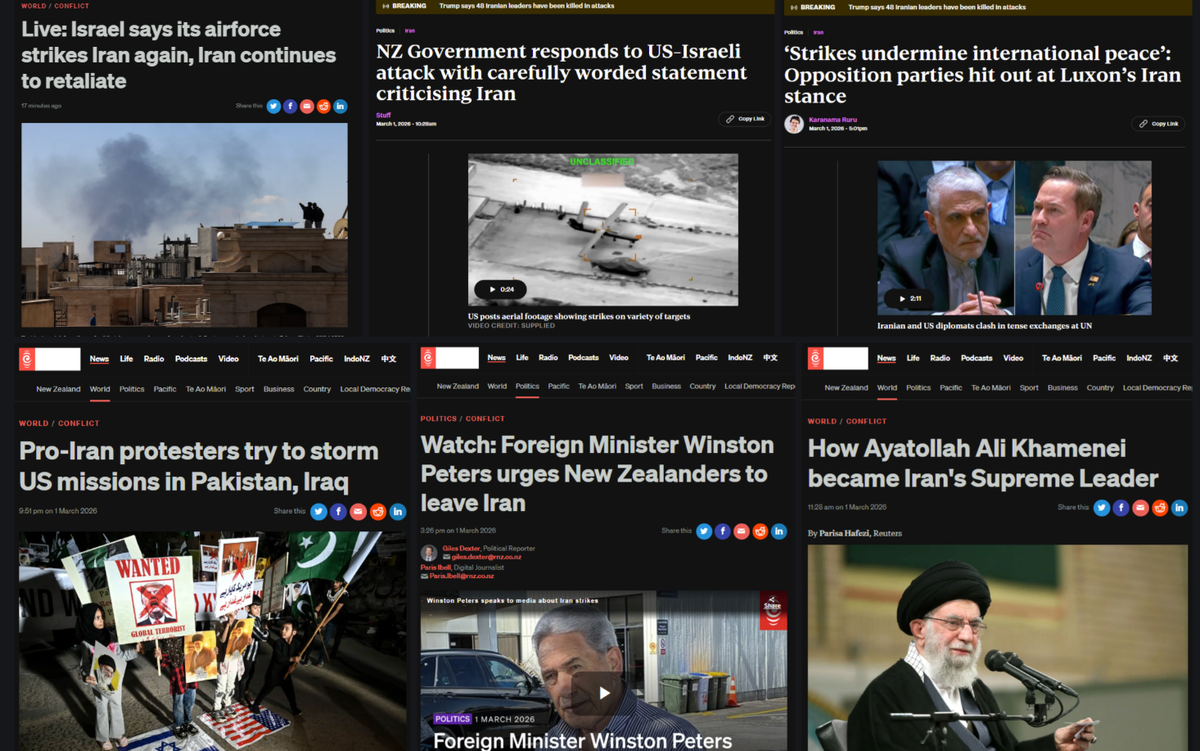
https://www.rnz.co.nz/news/world/588282/more-strikes-aimed-at-iran-after-us-israeli-assault-kills-supreme-leader; https://www.rnz.co.nz/news/world/588315/what-death-of-iran-s-supreme-leader-means; https://www.rnz.co.nz/news/world/588292/how-ayatollah-ali-khamenei-became-iran-s-supreme-leader; https://www.rnz.co.nz/news/political/588293/watch-foreign-minister-winston-peters-urges-new-zealanders-to-leave-iran; https://www.rnz.co.nz/news/world/588322/pro-iran-protesters-try-to-storm-us-missions-in-pakistan-iraq; https://www.stuff.co.nz/politics/360945246/undermine-international-peace-opposition-parties-hit-out-luxons-iran-stance; https://www.stuff.co.nz/politics/360945113/nz-government-responds-us-israeli-attack-carefully-worded-statement-criticising-iran; https://www.rnz.co.nz/news/world/588324/live-israel-says-its-airforce-strikes-iran-again-iran-continues-to-retaliate
THE PŪRĀKAU: A TAIAHA WITHOUT A SPINE
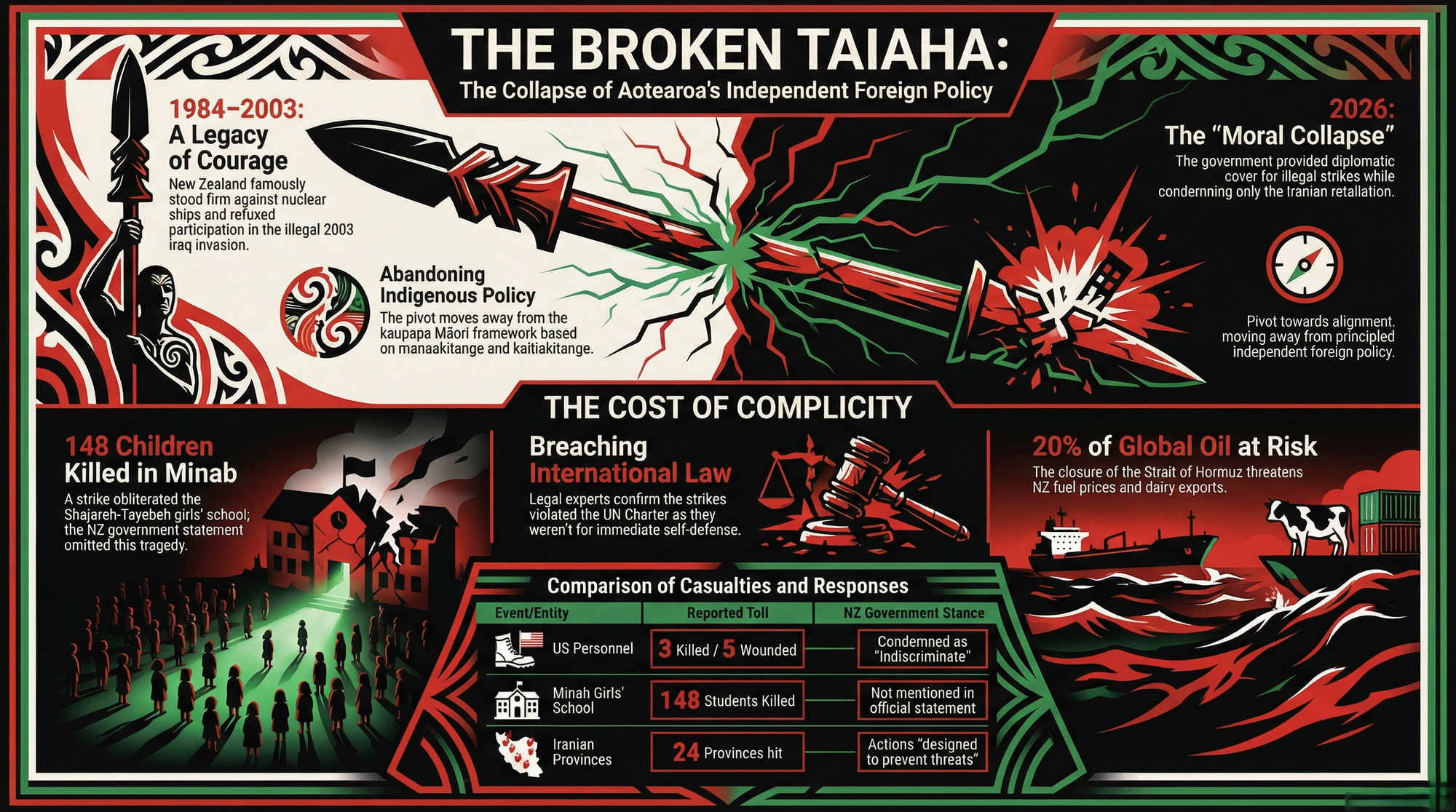
In te ao Māori, the taiaha is not simply a weapon. It is a living thing — carved with intent, blessed with karakia, wielded with mana. A taiaha without a spine is firewood. A nation without moral courage is the same.
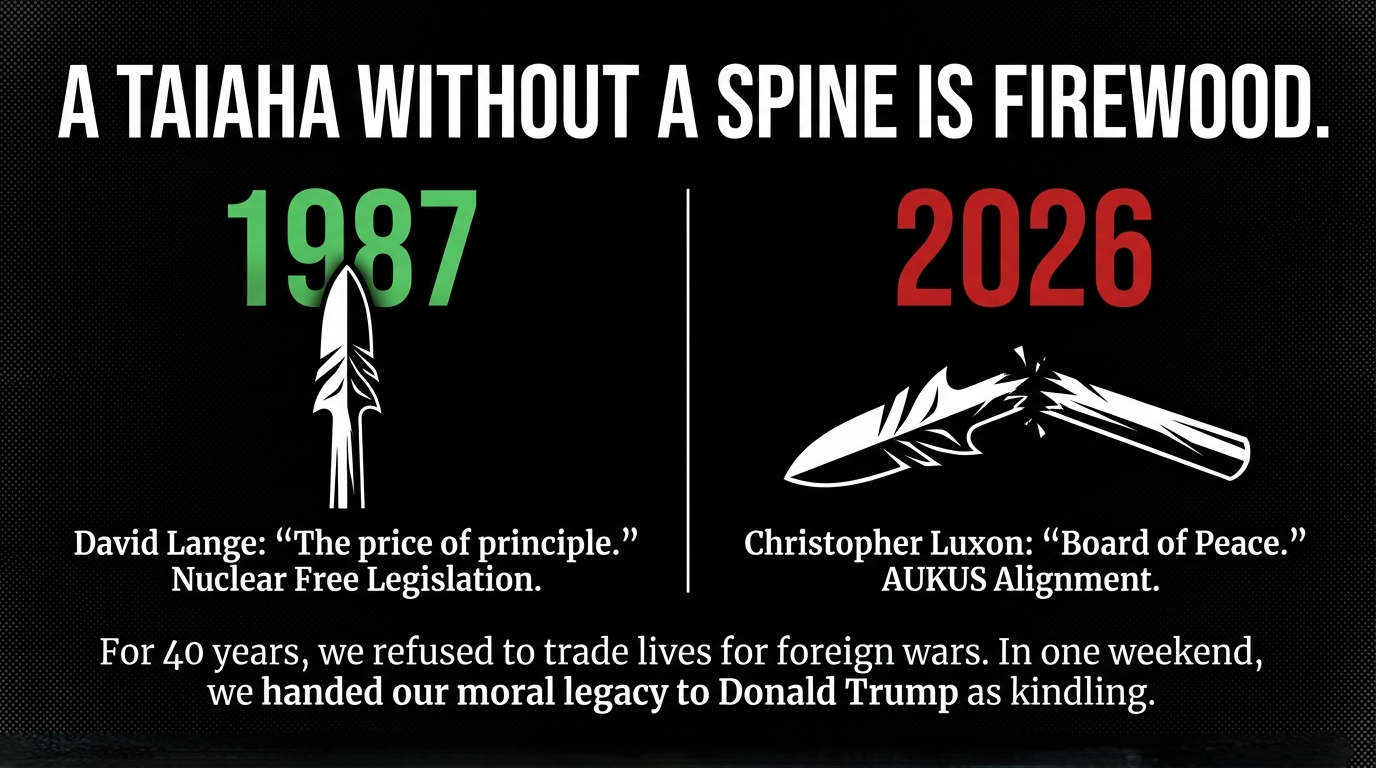
For 40 years, Aotearoa carried a taiaha forged in the fires of nuclear resistance. In 1984, David Lange banned nuclear-powered and nuclear-armed ships from New Zealand waters, as documented by NZ History and the Disarmament and Security Centre. When the United States threatened consequences, Lange said it was "a price we are prepared to pay," as recorded by NZ History. In 2003, Helen Clark refused to send combat troops to Iraq without a UN mandate, declaring:
"This Government doesn't trade the lives of young New Zealanders for a war it doesn't believe in," as reported by 1News.
The Chilcot Report later proved her right — and proved the war was built on lies, as confirmed by RNZ.
That taiaha — forged by peace movements, by tangata whenua, by 350 active peace groups and 105 nuclear-free councils covering 72% of the population, as documented by the Disarmament and Security Centre
— has been snapped over Luxon's knee and handed to Donald Trump as kindling.
THE STATEMENT: ANATOMY OF A MORAL COLLAPSE
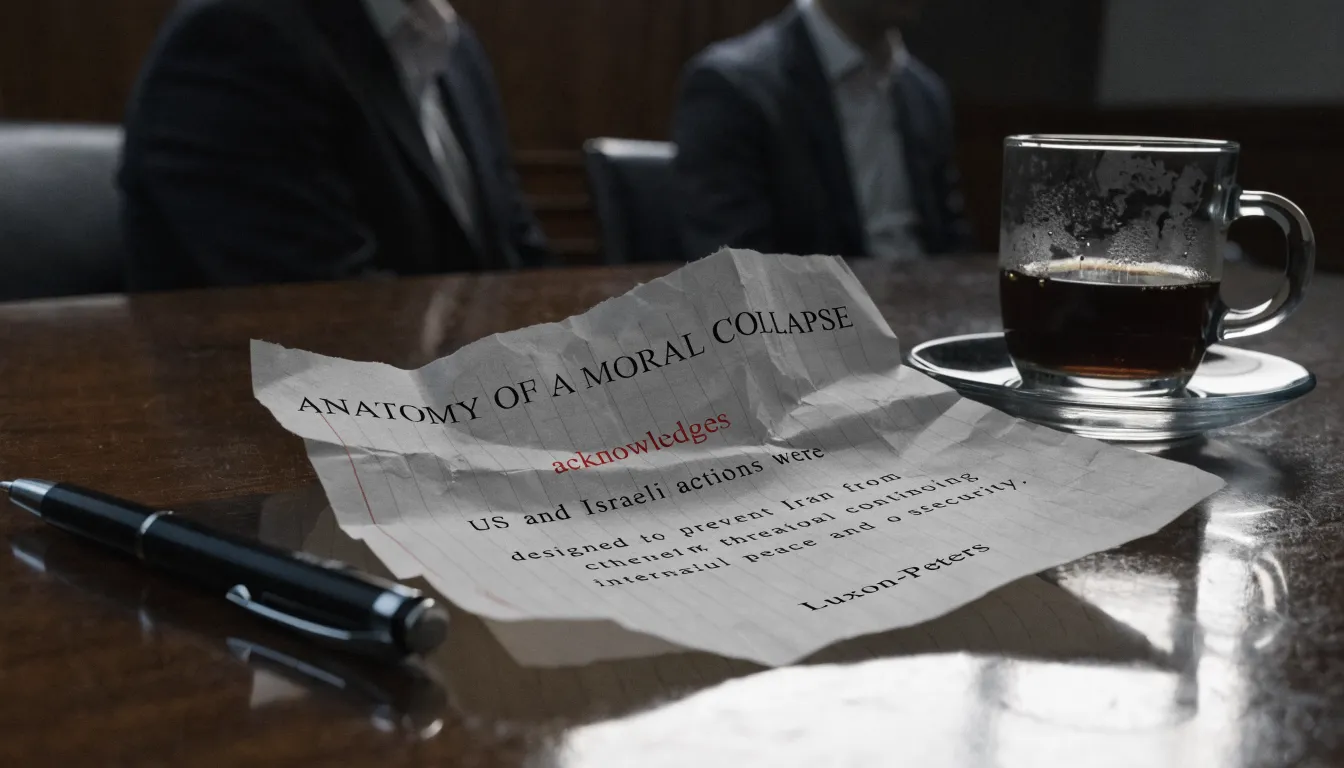
Read the Luxon-Peters statement carefully. It is a masterclass in cowardice by omission, as published by Stuff.
The statement "acknowledges" that US and Israeli actions were "designed to prevent Iran from continuing to threaten international peace and security." It condemns "in the strongest terms Iran's indiscriminate retaliatory attacks." It calls for "adherence to international law," as reported by Stuff and covered by The Spinoff.
Notice what is missing. There is no condemnation of the initial US-Israeli assault. There is no mention of 148 dead girls in Minab, as confirmed by Al Jazeera and Xinhua. There is no acknowledgement that international law experts have unanimously declared these strikes illegal, as analysed by Middle East Eye and SBS Australia. There is no recognition that a girls' elementary school was obliterated. There is no mention of the hundreds of civilians dead and hundreds more wounded across 24 Iranian provinces as counted by the Iranian Red Crescent within hours of the strikes, as reported by the BBC and Wikipedia's sourced documentation.
Instead, Luxon and Peters produced a statement that reads as if it were drafted by the US State Department — because, functionally, it was. The only military action condemned is Iran's response to being attacked. This is the diplomatic equivalent of watching someone punch a child in the face and then writing a press release criticising the child for crying too loudly.
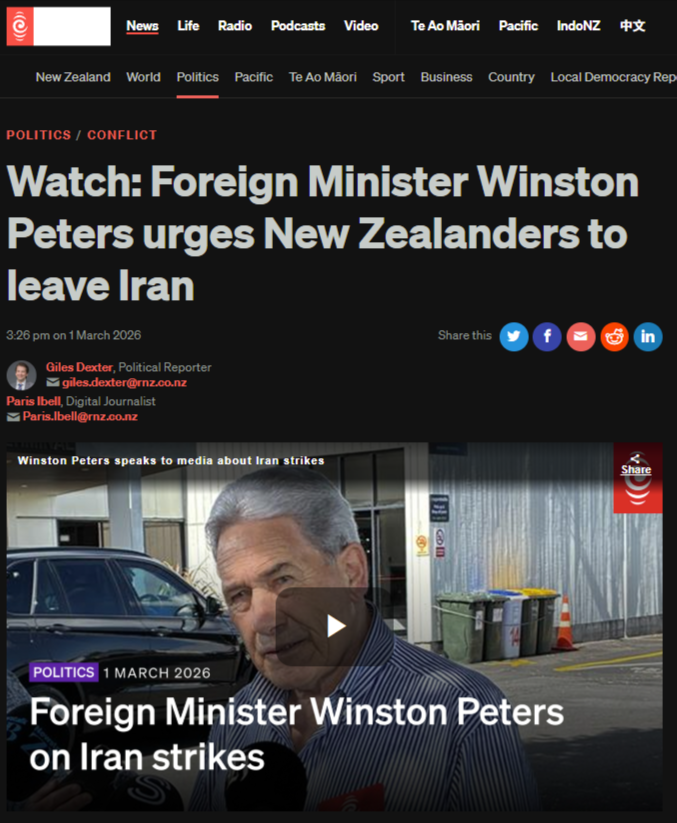
Winston Peters, speaking at the Whenuapai Defence Force base — the symbolism could not be more grotesque — explained:
"Iran has been a promoter of terrorism in countless theatres for decades now. That's not an excuse for what you've seen. But it is an explanation," as reported by RNZ. An explanation. 148 dead schoolgirls have received an explanation.
WHAT INTERNATIONAL LAW ACTUALLY SAYS
Every credible international law expert who has examined these strikes has reached the same conclusion: they are illegal.
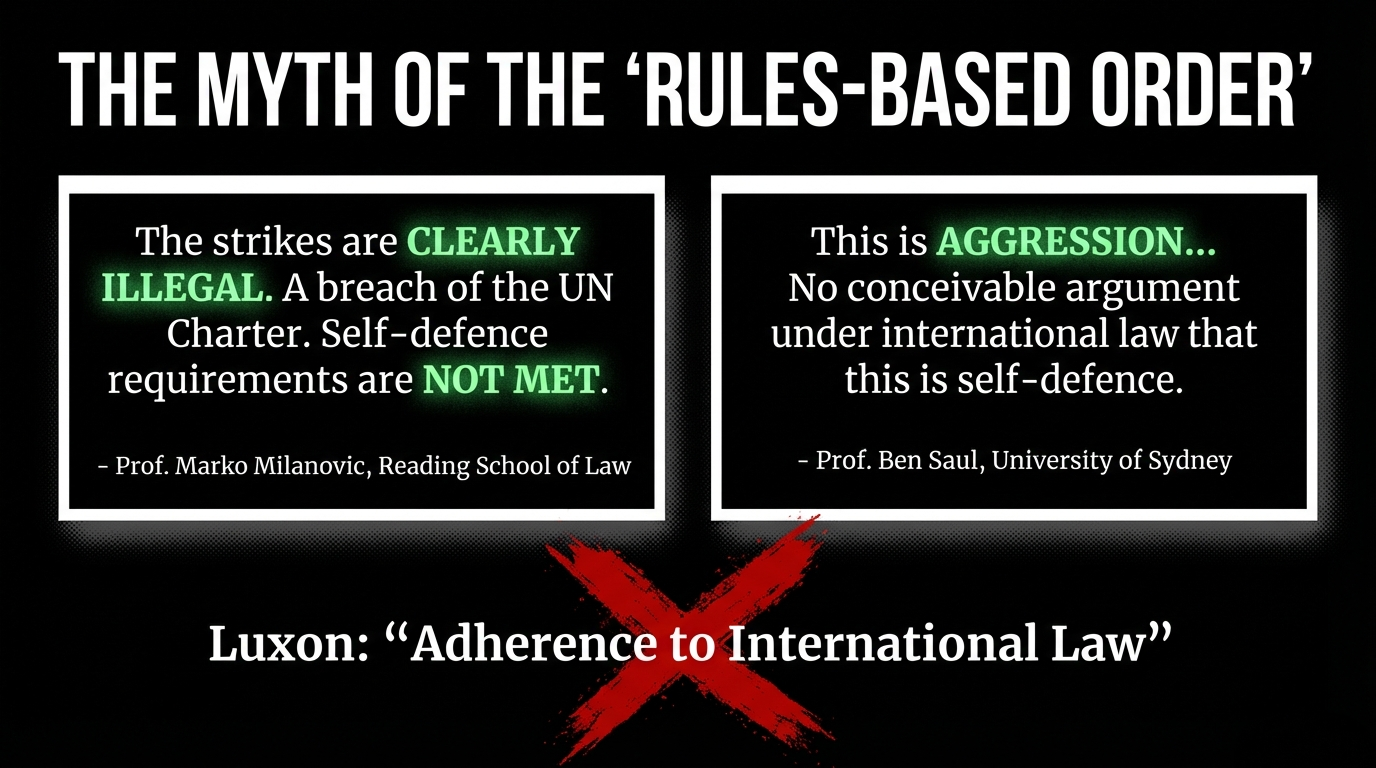
Professor Marko Milanovic of the University of Reading School of Law stated: "The strikes are clearly illegal, in that they are a breach of the UN Charter, which prohibits unilateral resort to force between states. Self-defence is the only possible exception... but the requirements for lawful self-defence are not met," as reported by Middle East Eye.
Professor Ben Saul, Challis Chair of International Law at the University of Sydney, stated:
"This is the most basic rule of international order since 1945, which is being rapidly eroded by actions like this. This is aggression by Israel against Iran. There's no conceivable argument under international law that this is self-defence," as reported by SBS Australia.
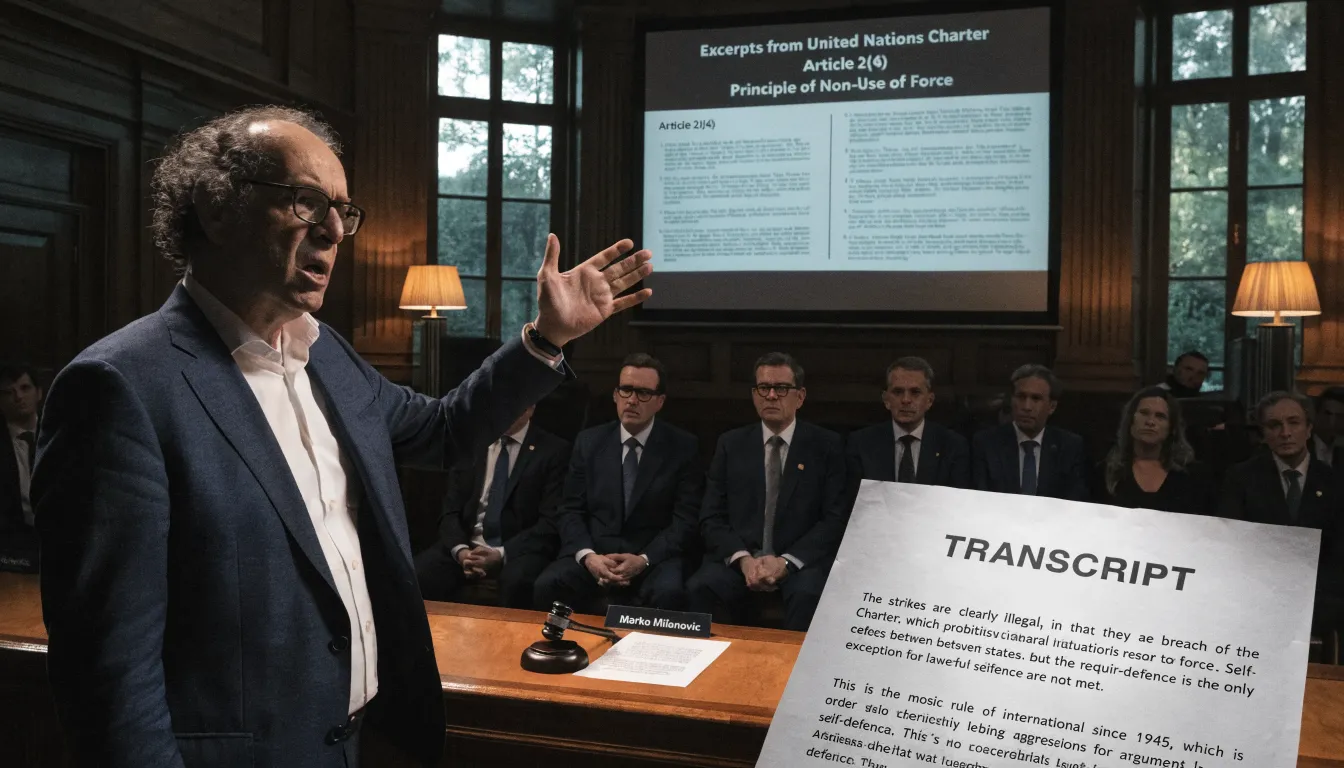
Under international law, the use of military force is justified only in self-defence against an actual or imminent armed attack, or when authorised by the UN Security Council, as outlined by Middle East Eye. Neither condition was met. There was no Security Council resolution. There was no imminent Iranian attack. Iran does not possess nuclear weapons. As Milanovic noted: "Iran does not yet have a nuclear weapon, nor is there any proof that its leadership would use that weapon against the two states."
Even Trump's own justifications contradict each other. He claimed to have already "obliterated" Iran's nuclear facilities, then used the nuclear programme as justification for the attack.
He said
"We're doing this not for now, we're doing this for the future" — an admission that no immediate threat existed, as reported by CNN. CNN's analysis confirmed that Trump's claims of immediate risk "contradict US intelligence assessments."
Yet Luxon's statement calls for "adherence to international law" while simultaneously providing diplomatic cover for the most flagrant violation of international law since the 2003 Iraq invasion, as published by Stuff. This is not merely hypocrisy. It is complicity.
THREE EXAMPLES FOR THE WESTERN MIND
For those raised in the Pākehā tradition who struggle to understand what has been lost, here are three examples that quantify the harm and illuminate the tikanga that Luxon's government has destroyed.
Example 1: Te Taiaha Snapped — From Lange to Luxon
What happened: In 1987, the New Zealand Nuclear Free Zone, Disarmament, and Arms Control Act was passed — arguably the strongest anti-nuclear domestic legislation in the world, as documented by the Disarmament and Security Centre. It banned nuclear weapons and propulsion from New Zealand's land, sea and airspace. It had extraterritorial jurisdiction: any New Zealand government agent who supported nuclear weapons development anywhere in the world could be imprisoned for up to 10 years. The US retaliated by downgrading New Zealand from "ally" to "friend." Lange's response: that is the price of principle, as recorded by NZ History.
What Luxon did: Luxon's government has systematically pivoted New Zealand toward US military alignment — discussing AUKUS Pillar 2 participation, engaging with NATO, and announcing major defence spending increases, as warned by Chatham House. Winston Peters has explicitly mocked the previous government's tikanga-based foreign policy as "vaguer notions of an indigenous foreign policy that no-one else understood, let alone shared." Former Prime Minister Helen Clark and Geoffrey Palmer wrote an open letter warning that further alignment "risks jeopardizing New Zealand's diplomatic autonomy," as reported by Chatham House. Chatham House — hardly a radical outfit — warned that New Zealand is "at risk of abandoning its carefully calibrated foreign policy in favour of a more militarized alignment."
The tikanga impact: In te ao Māori, mana is not a commodity to be traded. It is earned through consistent action aligned with one's values. When David Lange stood before the world and said New Zealand would not host nuclear weapons, he enhanced the mana of this nation. When Luxon genuflects before Trump's illegal war and provides diplomatic cover for the bombing of a girls' school, he does not merely damage New Zealand's "reputation" — he depletes the mauri of the nation itself. The life force of our independent identity — built over 40 years by peace activists, tangata whenua, and principled leaders — is being drained to fuel American imperial ambitions. As The Māori Green Lantern documented in The Dashboard Illusion: How Neoliberalism Sells Sovereignty While Stealing Resources and Heather Cox-Richardson — Te Taiaha o te Aroha: The Weapon They Cannot Confiscate, this government treats sovereignty as a product to be sold, not a taonga to be protected.
The solution: Reassert New Zealand's independent foreign policy. Publicly condemn all violations of international law — including those committed by allies. Restore the kaupapa Māori foreign policy framework based on manaakitanga, whanaungatanga, kotahitanga, and kaitiakitanga that Nanaia Mahuta established, as examined by Oxford University Press and the New Zealand Institute of International Affairs. Legislate that no New Zealand government may provide diplomatic cover for military actions that violate the UN Charter.
Example 2: 148 Dead Girls and the Silence of Luxon
What happened: At approximately 5:30pm (Iran time) on Saturday 28 February 2026, a strike hit the Shajareh-Tayebeh girls' elementary school in Minab, Hormozgan Province, southern Iran, as reported by Le Monde. The school had 170 students plus staff. The Euro-Med Human Rights Monitor confirmed 148 students killed and dozens more injured. The death toll was confirmed by local prosecutor Ebrahim Taheri, as reported by Xinhua. Footage authenticated and geolocated by Le Monde showed rescue operations, ambulances bearing Hormozgan province emergency services insignia, and a bulldozer operating at a demolished building. A separate strike on Hedayat High School in western Tehran killed at least two more students. The BBC reported over 153 dead at the school alone, with the Iranian Red Crescent reporting hundreds of total civilian deaths and hundreds of injuries across 24 provinces by Saturday evening.
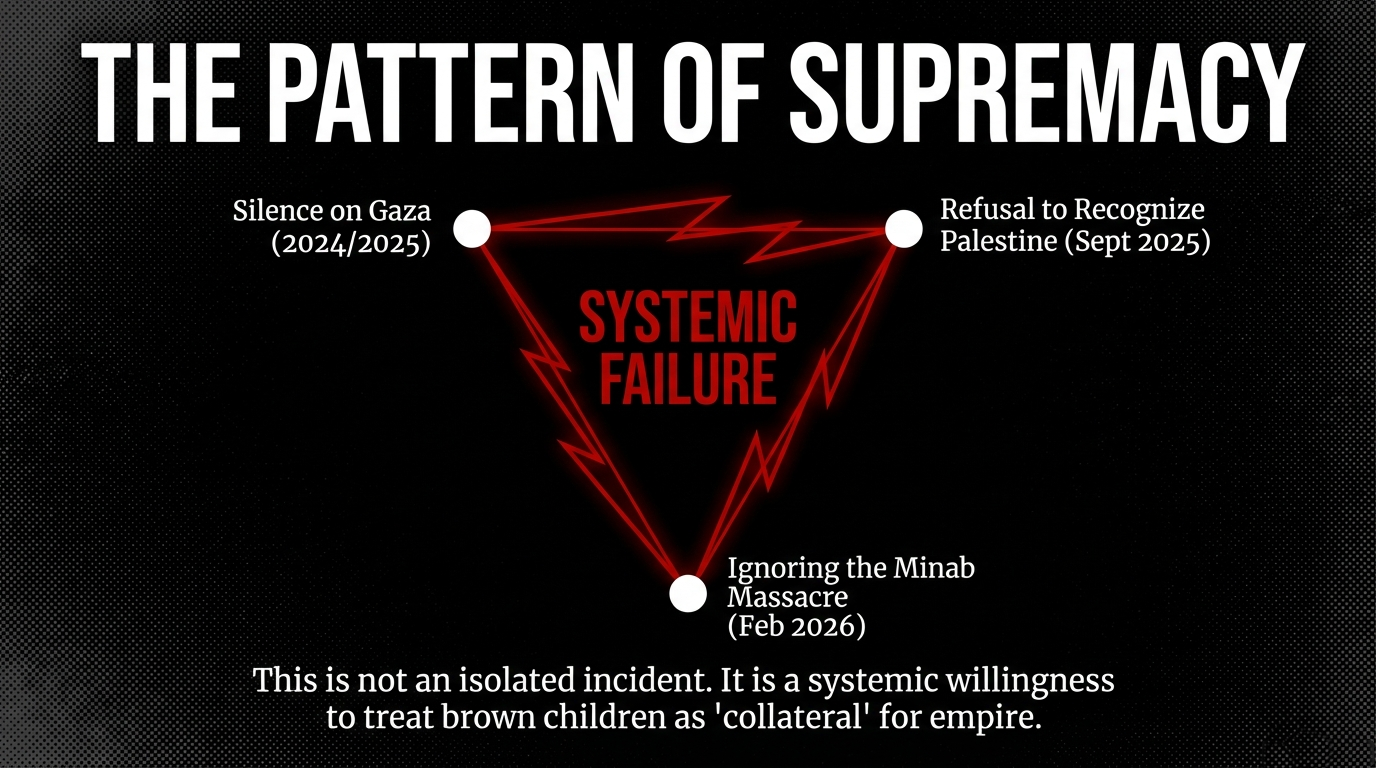
What Luxon did: The Luxon-Peters statement does not mention the school. It does not mention the dead children. It does not mention civilian casualties at all — except to condemn Iran's retaliatory strikes, as published by Stuff. Three US troops were killed, as reported by 1News. 148 Iranian schoolgirls were killed. The statement condemns only the Iranian response.
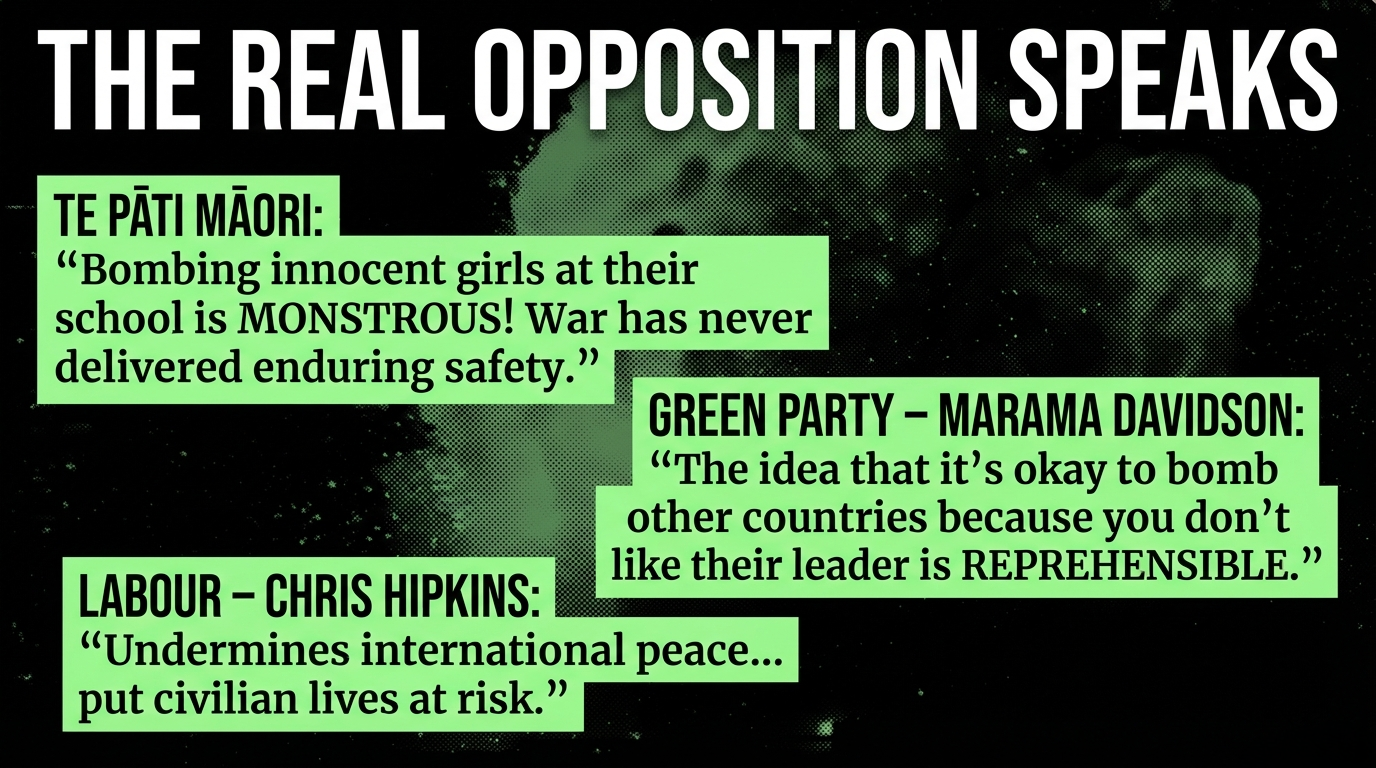
The tikanga impact: In tikanga Māori, tamariki are tapu. Children are sacred. They are the whakapapa walking — the living connection between tūpuna and mokopuna, between the past and the future. The deliberate or reckless killing of children in a military strike is not merely a "regrettable incident" — it is an act that severs whakapapa. It is a violation of the most fundamental tikanga that any human society holds. When a New Zealand government refuses to even name 148 dead children in its official response, it signals that some children's lives matter less than diplomatic convenience. Te Pāti Māori understood this immediately: "Bombing innocent girls at their school is monstrous!" as reported by Stuff. As The Māori Green Lantern traced in The Nursery of Cages: How a White Supremacist State Built a Factory That Turns Brown Children Into Commodities, this government has already demonstrated its willingness to treat brown children as acceptable collateral — whether in Aotearoa's own justice system or in the rubble of a school in southern Iran.
The solution: Issue an immediate, unambiguous condemnation of the Minab school strike. Demand an independent international investigation under UN auspices. Call for the perpetrators to be referred to the International Criminal Court. Support the Euro-Med Human Rights Monitor's call for accountability. Require that all future New Zealand government statements on armed conflict explicitly address civilian casualties on all sides.
Example 3: The Economic Taiaha Turned Against Whānau
What happened: Iran warned that it had closed the Strait of Hormuz — the narrow conduit for approximately 20% of global oil consumption, as reported by The Economic Times. Dubai International Airport — the world's busiest international travel hub — was shut down after Iranian retaliatory strikes damaged it along with the Burj Al Arab hotel, as reported by 1News and confirmed by RNZ. Flights across the Middle East were cancelled. Insurance rates for shipping through the Strait of Hormuz surged, as warned by RNZ.
What it means for whānau: New Zealand's dairy sector — 30% of total exports — relies heavily on shipping routes through the Middle East, as reported by DHL NZ. The Middle East doubled its buying share at Global Dairy Trade auctions to 21% in January 2026, as reported by Farmers Weekly. Special agricultural trade envoy Nathan Guy confirmed that Dubai is "a very important hub up in the Middle East for our exporters to get around the world" and that dairy, red meat and horticulture exports would "likely be impacted," as reported by RNZ. MFAT's own analysis warned that Strait of Hormuz disruption could "push the price of fuel and inflation higher" with costs pervading the entire economy. Fund manager Mike Taylor identified three transmission channels: energy supply disruption, shipping and insurance risk, and broader risk-off sentiment, as reported by RNZ. The economy had already contracted 0.9% in the June 2025 quarter — GDP falling in three of the last five quarters, as reported by 1News. Waatea News warned that "Middle East Conflict Threatens Global Trade, Energy Prices — Impacts Loom for Aotearoa."
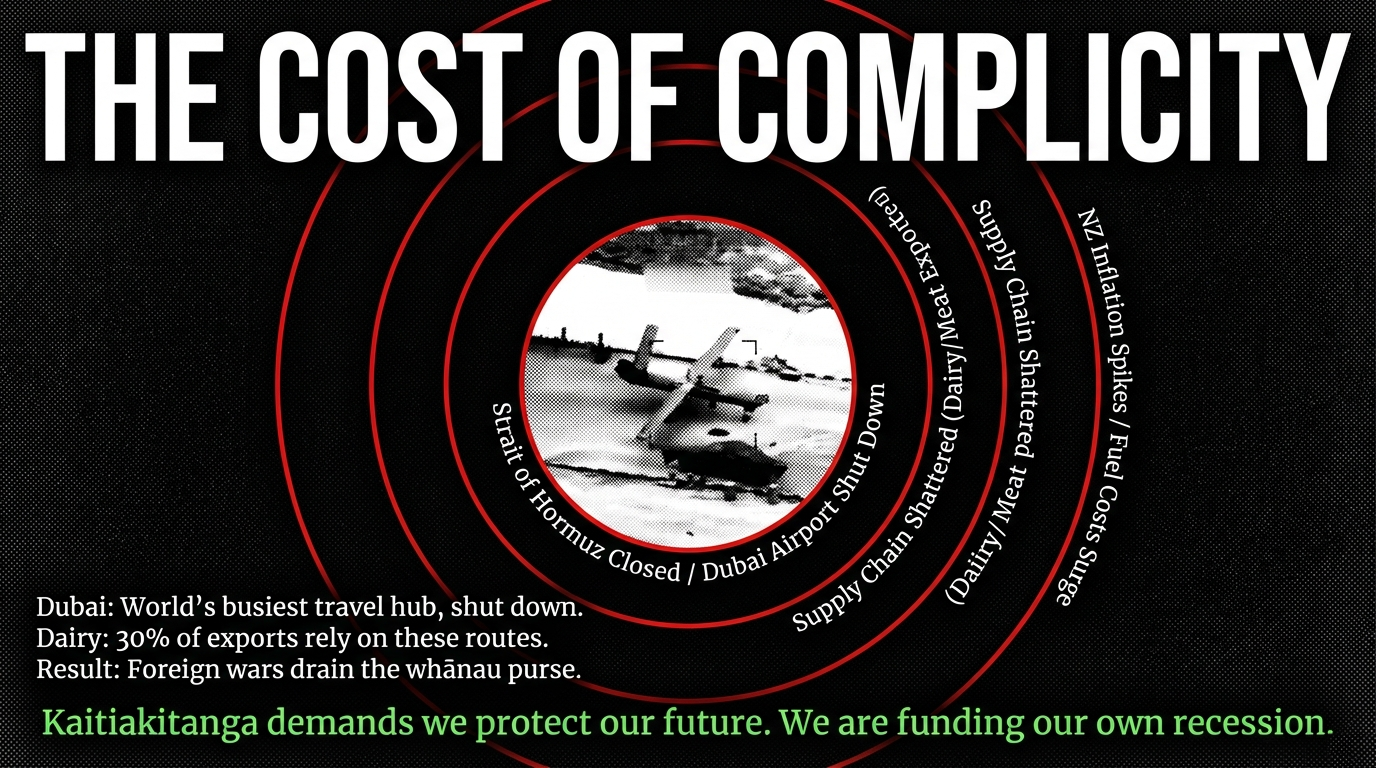
The tikanga impact: Kaitiakitanga demands intergenerational guardianship — not just of the environment, but of the economic wellbeing of future generations, as examined by Oxford University Press and the Global Policy Journal. When a government provides diplomatic cover for military action that directly threatens the economic lifeline of its own people — dairy farmers, transport workers, families already struggling with cost-of-living pressures — it violates the fundamental obligation of kaitiakitanga. It is the opposite of rangatiratanga: it is the surrender of sovereignty to serve another nation's military agenda at the direct expense of your own whānau. As The Māori Green Lantern has documented in The Honey Trap Whakapapa: How an Israeli Billion-Dollar Blackmail Machine Weaponised Children, the connections between foreign military agendas and domestic economic harm are not accidental — they are structural.
The solution: Demand immediate de-escalation and a ceasefire. Publicly oppose any closure of the Strait of Hormuz by any party. Convene an emergency cross-party briefing on the economic impact. Establish a sovereign wealth protection mechanism to shield New Zealand exporters from the consequences of foreign military adventurism that the government has failed to condemn.
THE OPPOSITION SPEAKS — THE GOVERNMENT COWERS
The contrast between the opposition parties and the government could not be more damning.
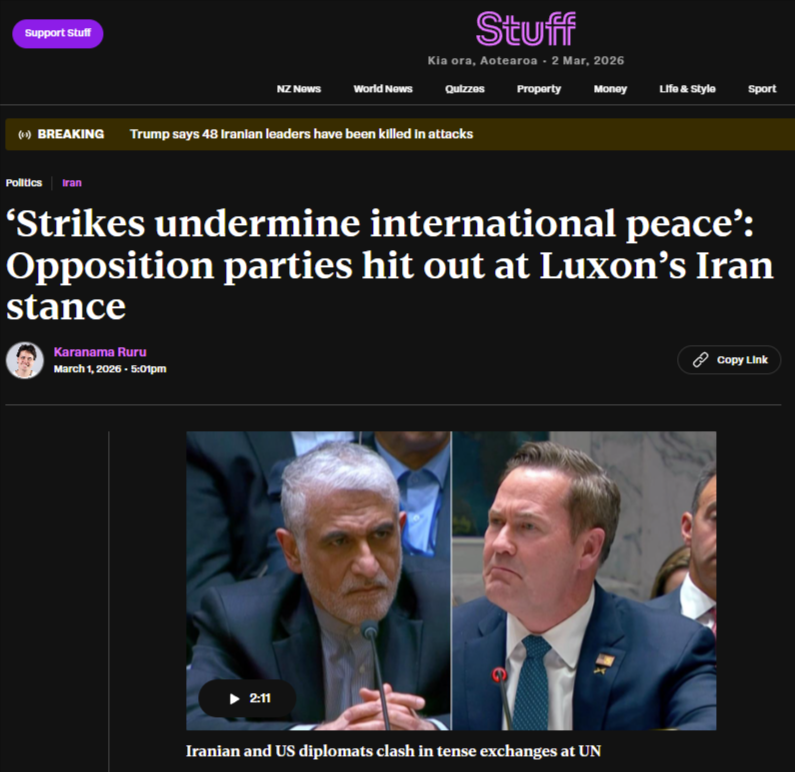
Labour leader Chris Hipkins declared:
"The attacks on Iran and the retaliatory strikes undermine international peace and security and put civilian lives at risk. New Zealand must urge all parties — including close allies — to show restraint," as reported by Stuff.
Green Party co-leader Marama Davidson was scathing:
"Luxon's failure to condemn Trump's illegal actions again demonstrates his lack of leadership or moral courage." She called Trump and Netanyahu's attack "an illegal and unprovoked act against the people of the region and any genuine pathway to peace," as reported by Stuff.
Te Pāti Māori delivered the most powerful statement of all:
"We reject the idea that bombing, invasion, or unilateral military strikes create peace. History shows us the opposite. Military aggression destabilises regions, costs civilian lives, and deepens generational trauma," as reported by Stuff.
They added:
"As Indigenous people, we know what it means when powerful nations justify force in the name of 'security', 'order', or 'freedom'. Too often those words mask economic interests, strategic dominance, and political ego. The legacy is displacement, grief, and long-term instability."
Te Pāti Māori named what Luxon could not:
"War has never delivered enduring safety for ordinary people. It delivers profit for arms dealers and political theatre for leaders, while families bury their loved ones," as reported by Stuff.
That is the voice of a people who know what empire does. Who have lived under the boot. Who have seen "security" and "order" used as cover for land confiscation, forced assimilation, and cultural genocide for 185 years. Te Pāti Māori speaks from whakapapa. Luxon speaks from a script.
THE PATTERN: FROM PALESTINE TO IRAN
This is not an isolated failure. It is a pattern.
In September 2025, Luxon refused to recognise Palestinian statehood at the UN General Assembly — putting New Zealand alongside the United States while 140+ nations had recognised Palestine, as reported by 1News. Helen Clark said New Zealand had "placed itself very much on the wrong side of history," as reported by RNZ. Professor Robert Patman of the University of Otago warned that New Zealand risked being seen as "simply trying to stay in the good books of more powerful countries" and had not shown the same "political courage" as previous governments, as reported by RNZ.
The Greens called it "morally repugnant." Te Pāti Māori called it "yet another exercise in colonial double standards," as reported by RNZ.
In August 2025, when Australia expelled Iran's ambassador and designated the IRGC as a terrorist organisation, Luxon "requested official advice" — bureaucratic code for doing nothing, as reported by 1News.
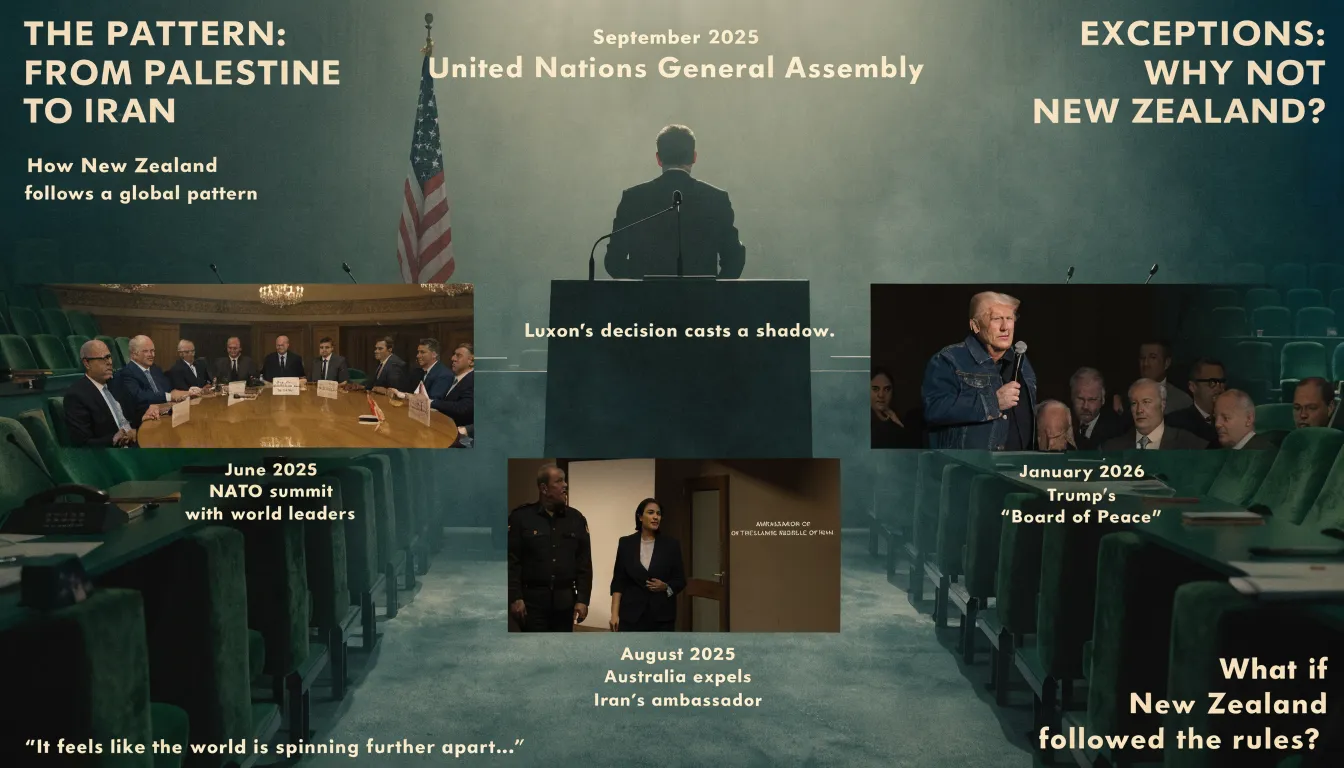
In June 2025, Luxon dismissed warnings about Iran coordination, saying he'd seen "no evidence" — then flew to a NATO summit, as reported by RNZ.
In January 2026, Luxon was invited onto Trump's "Board of Peace" — a body requiring US$1 billion buy-in that would give Trump a chair over global conflict management, as reported by The Spinoff.
The trajectory is clear. This government has abandoned independent foreign policy in favour of unconditional alignment with the United States — even when the United States is committing acts that international law experts unanimously describe as illegal aggression, as analysed by Middle East Eye and Chatham House. It has replaced manaakitanga with sycophancy, whanaungatanga with transactional subservience, kaitiakitanga with deliberate blindness.
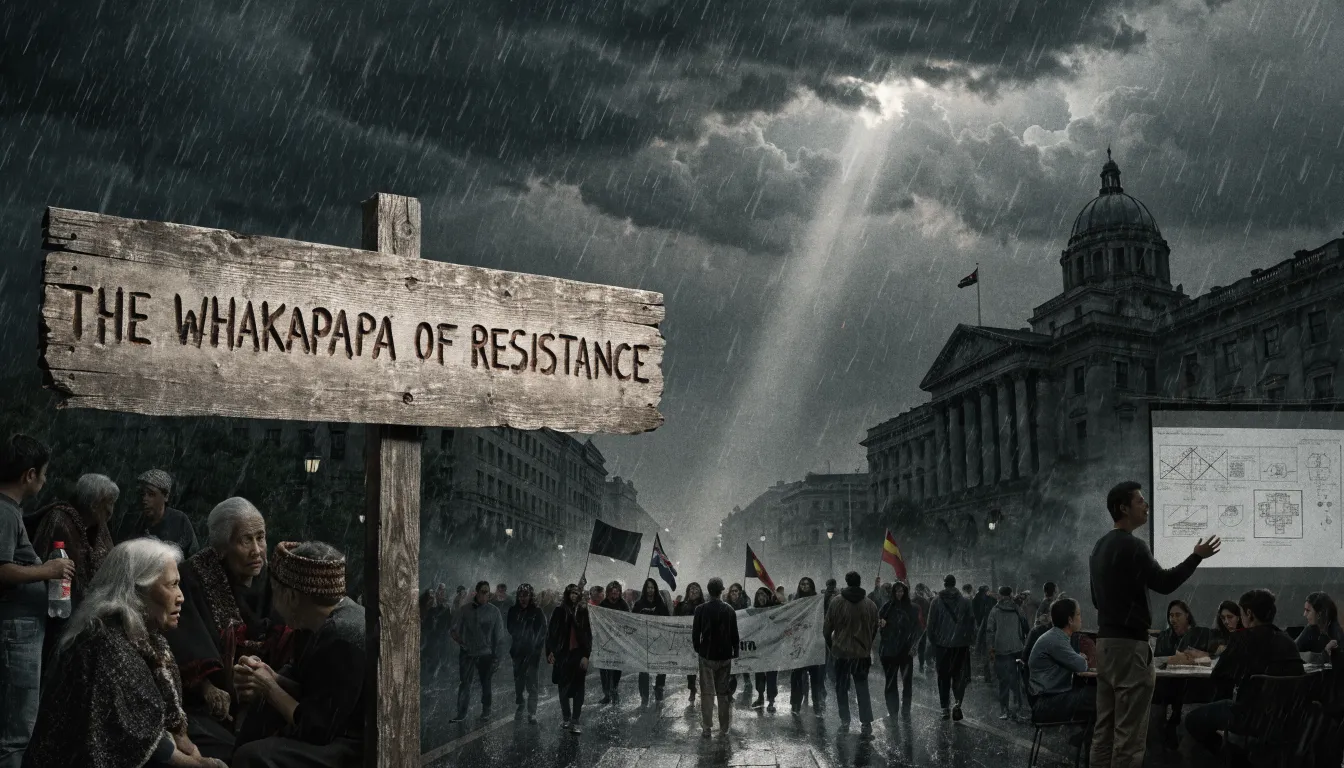
THE WHAKAPAPA OF RESISTANCE
There is another path. There has always been another path.
When the nuclear-free movement swept Aotearoa in the 1980s, its intellectual roots lay in two ideas: a belief in an independent foreign policy and a vision of New Zealand as a moral example to the world, which had grown out of opposition to the Vietnam War; and the environmental movement seeking to preserve Aotearoa as a green, unspoilt land, as documented by Te Ara and the Disarmament and Security Centre. Tangata whenua were at the heart of this movement. It was a declaration of national independence.
Nanaia Mahuta's kaupapa Māori foreign policy — based on manaakitanga (hospitality), whanaungatanga (connectedness), kotahitanga (unity through collaboration), and kaitiakitanga (intergenerational guardianship) — offered a framework that the world was beginning to study and admire. An academic paper published in Oxford University Press's International Affairs journal called it "radically different" from Western approaches and argued it gave New Zealand "a more complex and sophisticated way of looking at these relationships." The concept of utu as a foreign policy doctrine — balance through reciprocation — was gaining international academic attention as a model for how small nations could maintain independence, as examined by the Global Policy Journal and the New Zealand Institute of International Affairs.
Peters dismissed all of it. He called it "vaguer notions of an indigenous foreign policy that no-one else understood, let alone shared." And then he replaced it with a press release that provides diplomatic cover for the bombing of a girls' school.
This is what colonial governance looks like in 2026. It doesn't wear a red coat. It wears a dark suit and issues "carefully worded statements."
IMPLICATIONS: THE COST OF COMPLICITY
The harm is not abstract. It is quantifiable.
- 148 schoolgirls dead in Minab — unnamed in the New Zealand government's official response, as confirmed by Le Monde and the Euro-Med Human Rights Monitor
- Hundreds of Iranian civilians dead, hundreds more injured across 24 provinces in the first wave of strikes alone, as reported by the BBC
- Over 7,000 Iranians killed in the January 2026 protest crackdown — the deadliest since the 1979 revolution, as documented by Wikipedia — a crackdown that Trump's administration used as justification for strikes that have now killed hundreds more
- Oil prices predicted to surge — directly threatening New Zealand's dairy export sector and every whānau filling a petrol tank, as warned by RNZ and The Economic Times
- Dubai airport — the world's busiest international hub — shut down, disrupting the shipping routes that New Zealand's exports depend upon, as reported by RNZ
- GDP already falling — down 0.9% in June 2025, three of five quarters in contraction, as reported by 1News
- New Zealand's international reputation — once built on nuclear-free courage and independent principles — now degraded to "a country that condemns the victim's response but not the attacker's assault," as warned by RNZ and Chatham House
This government has managed the extraordinary feat of simultaneously endangering New Zealand's economic prosperity, moral standing, and international relationships — all to demonstrate loyalty to an American president whose own former allies are calling him a betrayer. Former Trump ally Marjorie Taylor Greene wrote: "It's always a lie and it's always America Last. But it feels like the worst betrayal this time, because it comes from the very man and the admin who we all believed was different," as reported by CNN via RNZ.
Even Trump's own supporters know this is a catastrophe. But Christopher Luxon is still saluting.
PICK UP THE TAIAHA
The taiaha of independent foreign policy was not gifted. It was forged. By Norman Kirk protesting French nuclear tests. By David Lange telling the US that principle has a price, as documented by NZ History. By Helen Clark refusing to trade New Zealand lives for a lie, as reported by 1News. By 350 peace groups and tangata whenua who declared their homes, their streets, their rohe to be nuclear-free zones, as documented by the Disarmament and Security Centre.
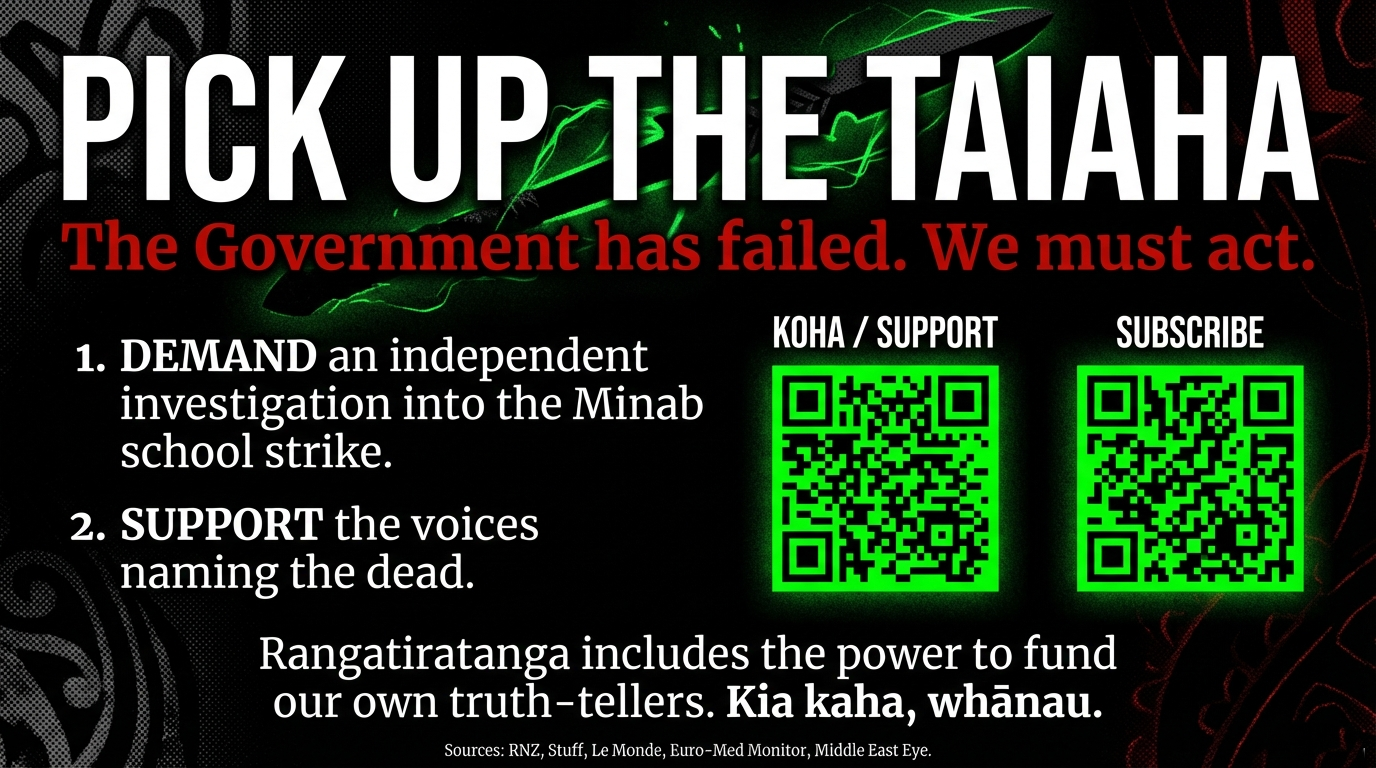
Christopher Luxon does not own that taiaha. He was merely handed it in trust. And he has used it as firewood to warm himself by the fire of American imperial power.
Te Pāti Māori named the truth:
"As Indigenous people, we know what it means when powerful nations justify force in the name of 'security', 'order', or 'freedom'," as reported by Stuff.
Māori know. Palestinians know. Iranians know. The 148 girls of Minab knew, until a bomb silenced them.
The question is not whether this government will find its moral courage. It will not. The question is whether the people of Aotearoa — who once carried the taiaha of nuclear resistance with such pride that the world studied them — will pick it up again.
Kia kaha. Kia māia. Kia manawanui.
The taiaha is waiting.
Koha Consideration
When a government provides diplomatic cover for bombs that shatter girls' schools, and not one cent of Crown funding will go toward holding them accountable — your koha does what Parliament will not. Every koha signals that whānau are ready to fund the truth that power structures would rather bury beneath "carefully worded statements." It signals that rangatiratanga includes the power to fund our own truth-tellers — especially when the state has traded its moral spine for a seat at an empire's table.
Kia kaha, whānau. Stay vigilant. Stay connected. And if you are able, consider a koha to ensure this voice continues to name what Luxon will not — 148 dead girls, a broken taiaha, and a nation that deserves better.
If you are unable to koha, no worries! Subscribe or Follow The Māori Green Lantern, kōrero and share with your whānau and friends — that is koha in itself.
Three pathways exist:
Koha — Support: https://app.koha.kiwi/events/the-maori-green-lantern-fighting-misinformation-and-disinformation-ivor-jones
Subscribe to The Māori Green Lantern: https://www.themaorigreenlantern.maori.nz/#/portal/support
Direct bank transfer: HTDM, account number 03-1546-0415173-000.

Ivor Jones The Māori Green Lantern Fighting Misinformation And Disinformation From The Far Right
Research tools used: search_web, get_url_content, search_files_v2. Sources consulted: RNZ, Stuff, 1News, Te Ara Encyclopedia of New Zealand, Middle East Eye, SBS Australia, Le Monde, Euro-Med Human Rights Monitor, Al Jazeera, CNN, Reuters, The Spinoff, Chatham House, New Zealand Institute of International Affairs, e-Tangata, Oxford University Press (International Affairs), Global Policy Journal, nzhistory.govt.nz, Beehive.govt.nz, Wikipedia (2026 Israeli-United States strikes on Iran, 2026 Iran massacres), MFAT market reports, DHL NZ Export Outlook 2026, Farmers Weekly, Waatea News, NZ Herald, The Economic Times, BBC. Research date: 1–2 March 2026. Unverifiable claims: Iranian casualty figures remain contested between government, HRANA, and independent estimates; fog of war applies to all reported military outcomes.