"A Cheaper Bill Is Not The Same As Power" - 29 October 2026
Labour Offers Real Changes. The Greens Offer A Different Direction. A Government’s Brochure Is Not A Transfer Of Authority.


Kia ora Aotearoa,
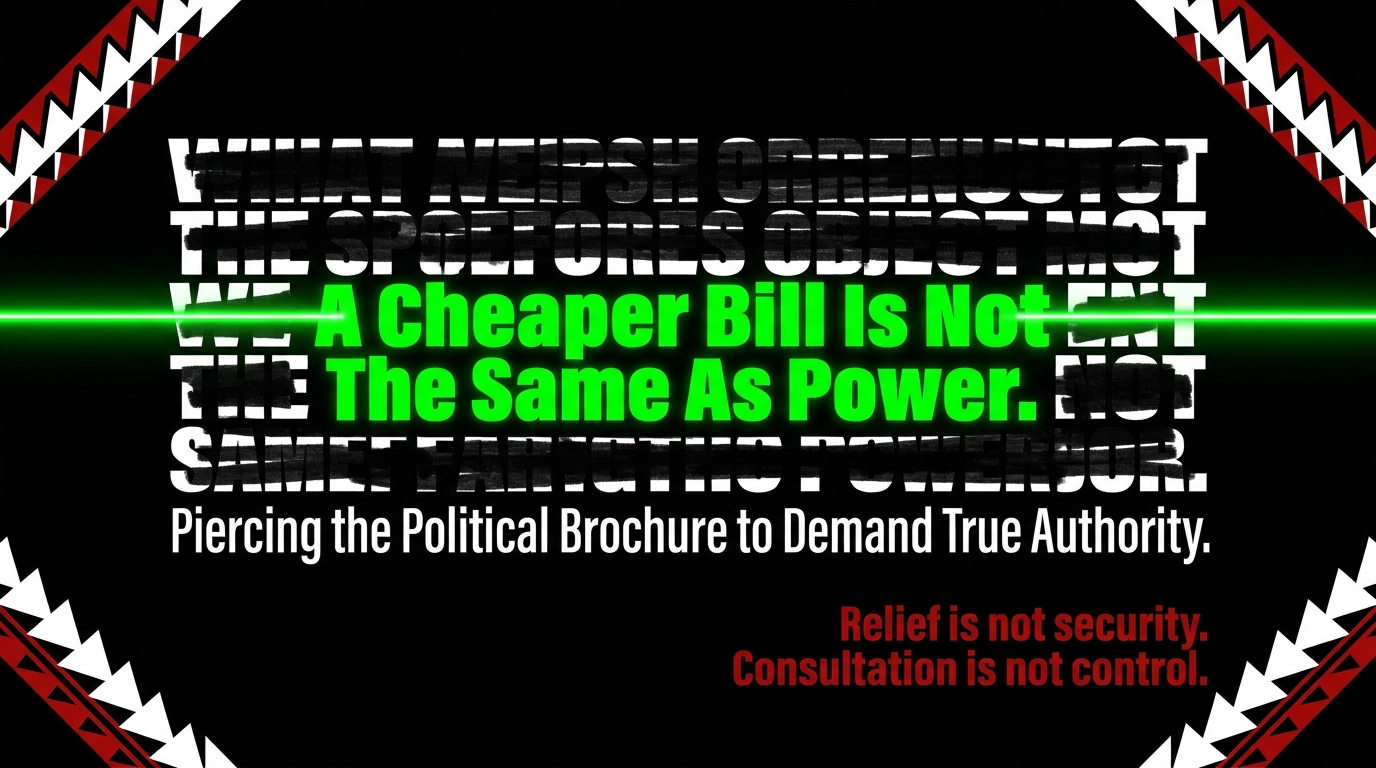
A government can help pay your bill without changing who has power over your life.
Lower costs matter. An affordable appointment, a smaller electricity bill and a warmer home are not trivial improvements. But relief is not the same as security. Consultation is not the same as control. And putting “community” in a ministerial statement does not tell us who holds the money, makes the decision or answers when something goes wrong.
 RNZ | Te Reo Irirangi o Aotearoa
Different choices can matter enormously. But they still need examination: different for whom, funded how, and accountable to whom?
I want to compare Labour’s programme with the Greens’ on healthcare, electricity and Māori health decision-making. Not by counting attractive promises, but by following the relationship between resources and authority.
Who pays? Who owns? Who decides? What can whānau enforce when the language of empowerment meets the machinery of government?
I will not pretend Labour offers nothing structural. I will not pretend every Green forecast is independently proven. Nor will I let the coalition’s documented decisions disappear beneath its reassuring language about patients and communities.
A manifesto deserves inspection. A government deserves judgment on its record.
What Counts As Better?
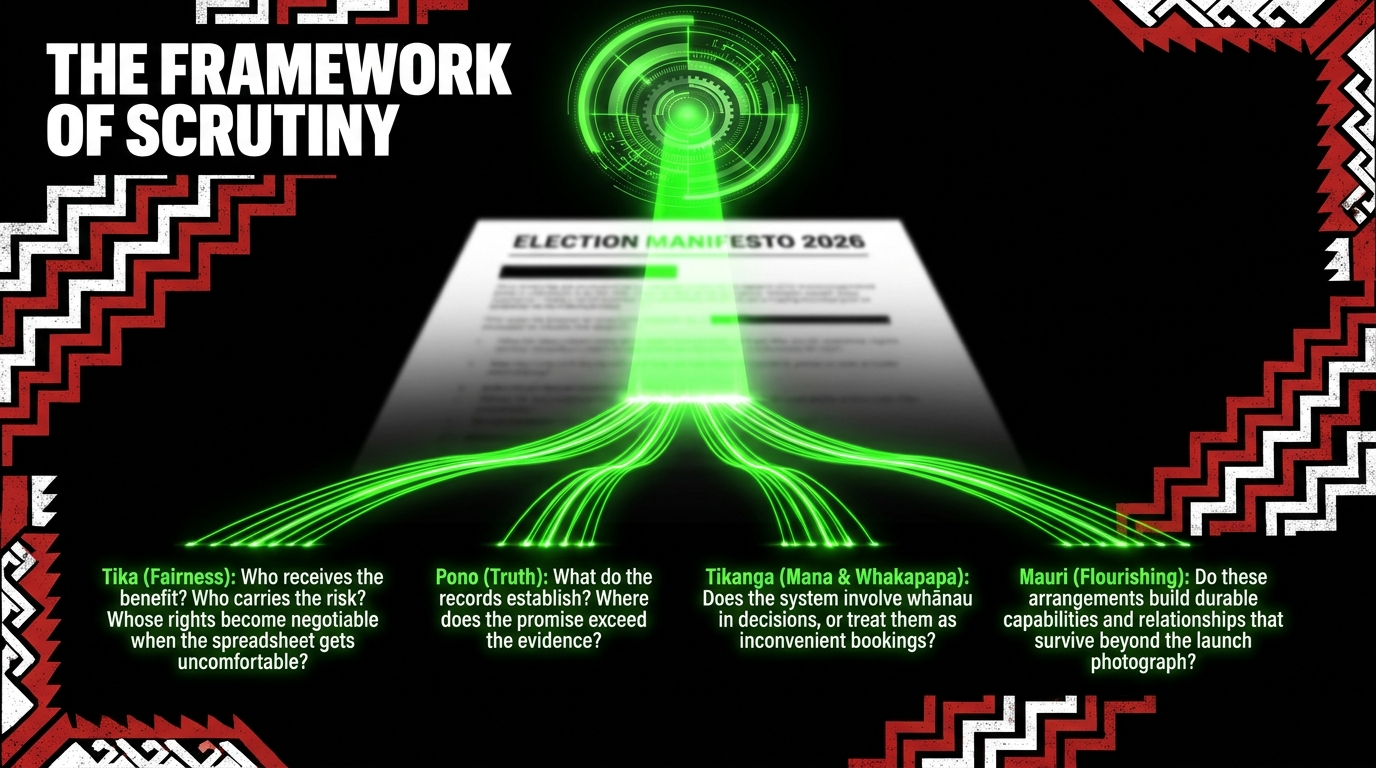
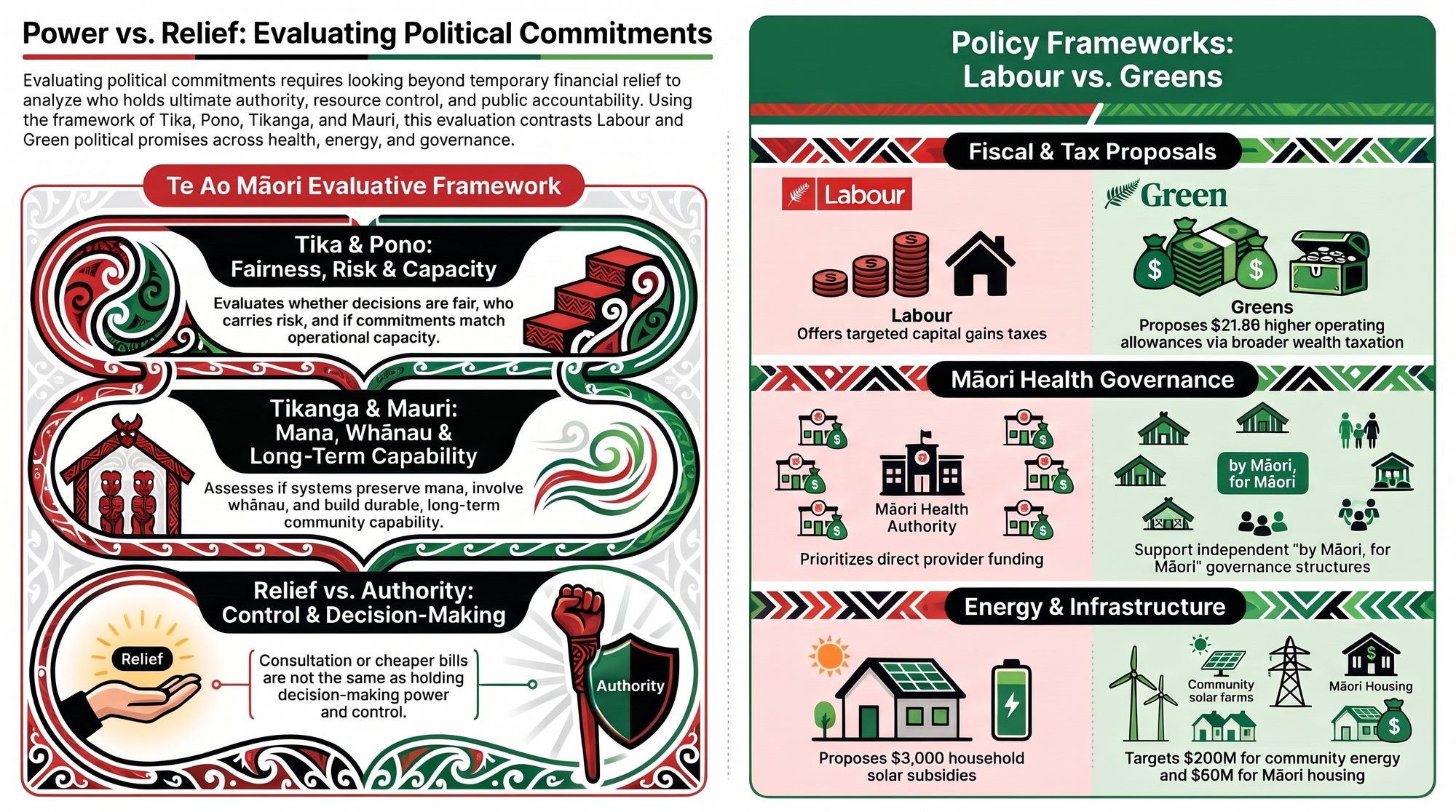
My questions come through Tika, Pono, Tikanga and mauri. I use these as an editorial framework, not an exhaustive definition or a claim to speak for every Māori understanding.
Tika asks whether a decision is right, fair and consistent with the obligations involved. Who receives the benefit? Who carries the risk? Whose rights become negotiable when the spreadsheet gets uncomfortable?
Pono asks what is true. What do the records establish? Where does the promise exceed the evidence?
Tikanga asks whether a system preserves mana, recognises whakapapa, respects wairua and involves whānau in decisions affecting their lives.
Mauri asks whether those arrangements strengthen the conditions in which people and communities can flourish.
Consider the difference between being invited to comment on a building and holding a key to it. You can be consulted about the walls while somebody else controls entry, expenditure and whether the place remains open.
That comparison does not define rangatiratanga. It illustrates why having a voice can leave the underlying relationship untouched.
In “Brendon Asked Where Power Lives — The Crown Answered By Taking It Back”, I examined authority over design, delivery, monitoring and resources. Those questions belong here too. Neither “Māori” nor “community” in an institution’s description should excuse it from accountability to whānau.
Follow The Money Without Cooking The Comparison
A political argument does not become stronger when its numbers become less honest.
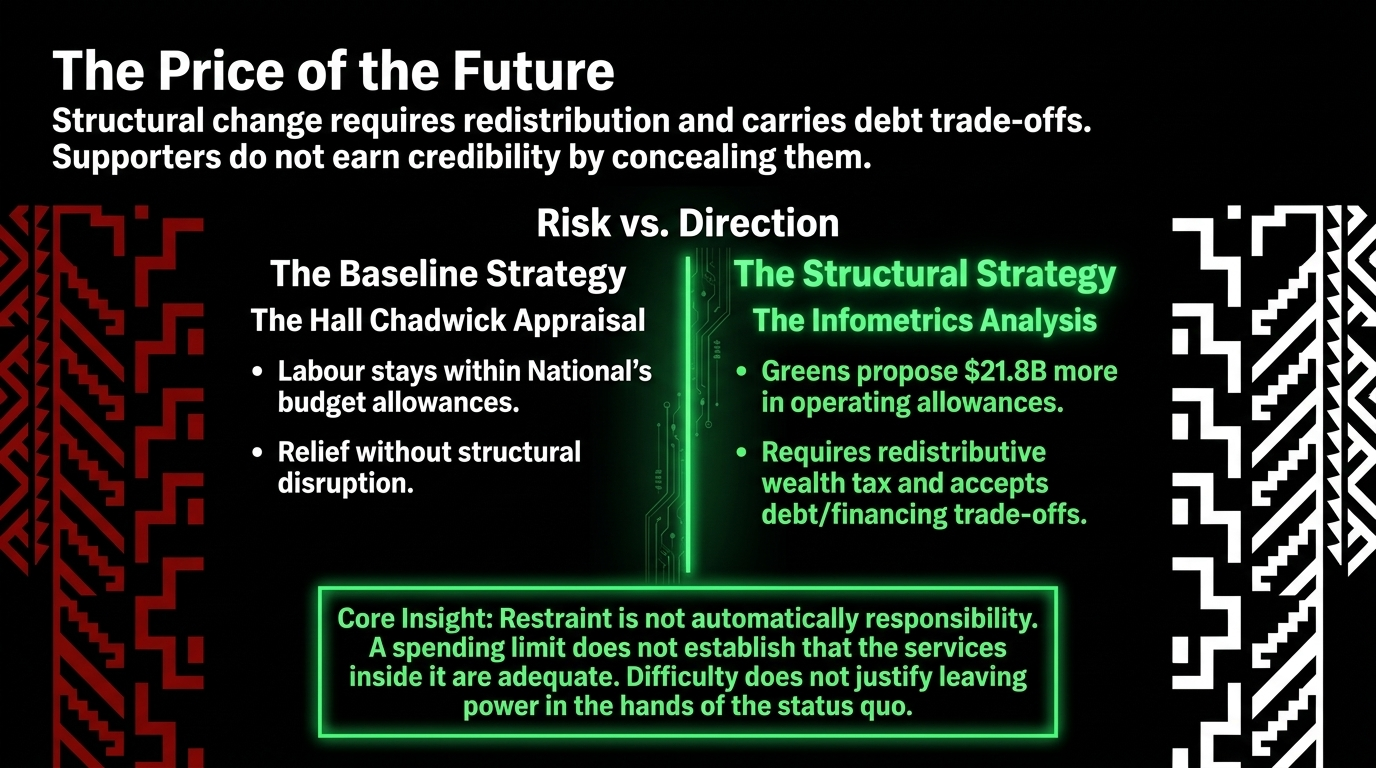
Labour’s fiscal document reproduces a Hall Chadwick appraisal supporting the estimates conditional on their underlying assumptions. It expressly excludes unannounced material and gives no assurance on the assumptions themselves. That is external scrutiny—not a guarantee covering every subsequent promise.
The Green fiscal document says Infometrics analysed its first-order fiscal effects. That should not be inflated into proof that every tax yield, economic effect or service improvement will materialise.
“Reviewed” is not a magic word that turns a forecast into money already collected.
The parties do propose different funding settlements. Labour proposes a targeted capital gains tax on residential investment and commercial property, with specified exemptions and revenue directed to health.
The Greens’ fiscal programme goes further across wealth, large acquisitions, corporations and banks, alongside personal-income-tax changes. That is the substantive basis for describing it as more redistributive—not a guarantee that every revenue assumption will hold.
The spending difference is substantial. Across 2027/28–2030/31, the Greens propose $21.8 billion more in cumulative operating allowances than Labour. This uses the corresponding rows in Labour’s table and the Green table. These are nominal forecast amounts—not a comparison of total government spending or health provision.
There is a trade-off. The Greens’ tables project additional debt and financing costs relative to PREFU. Supporters should say so rather than pretend that calling something investment removes its risks.
But restraint is not automatically responsibility. A spending limit does not establish that the services inside it are adequate.
My test is whether resources match obligations—and whether the public can see the assumptions, challenge them and hold somebody accountable.
The Deep Dive Podcast
Listen to a lively conversation between two hosts, unpacking and connecting topics in the sources of this essay. I apologise in advance for the AI's very harsh pronounciation of reo. Please dont shoot me, :).
Youtube Video
Like video? Here is a short video suppporting the essay. Again, don't shoot the messenger please because of AI's pronounciation. :)
The Appointment That Must Actually Exist
A free appointment is useful only if somebody can provide it.
Election campaigns encourage us to admire the entitlement before examining the capacity behind it.
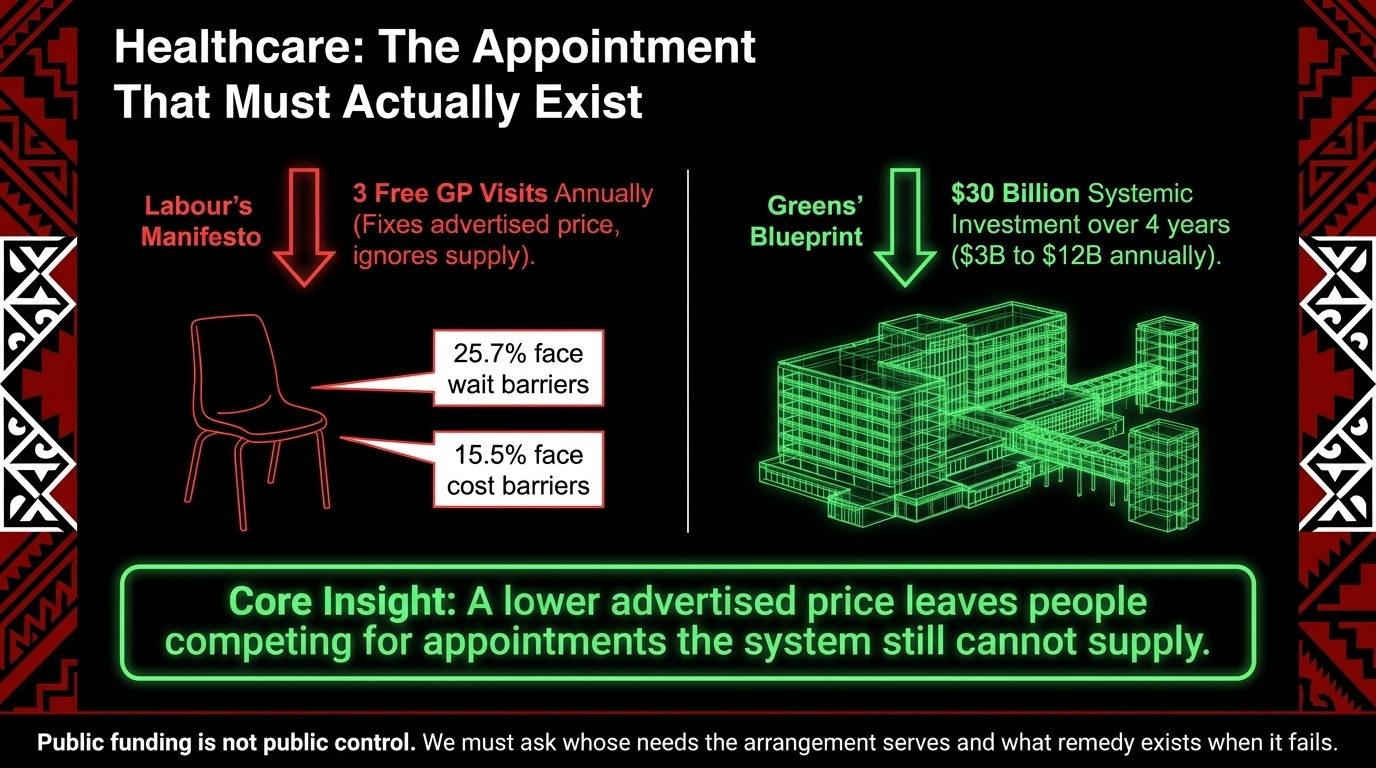
The Ministry of Health’s 2023/24 survey summary reports that 25.7% of adults identified appointment waits as a barrier to visiting a GP. Separately, 15.5% reported not visiting because of cost. Adults here means people aged 15 and over. The groups can overlap; adding the percentages would manufacture an affected population the survey does not establish.
These are historical results, not the latest available figures. Responses were collected between July 2023 and July 2024. I will not assign every reported barrier to this coalition.
What the evidence establishes is that affordability and availability are different problems.
Labour promises three free GP visits annually and lists additional health initiatives alongside cost-pressure funding. That is a recognisable benefit. It should not be dismissed by people fortunate enough not to worry about the fee.
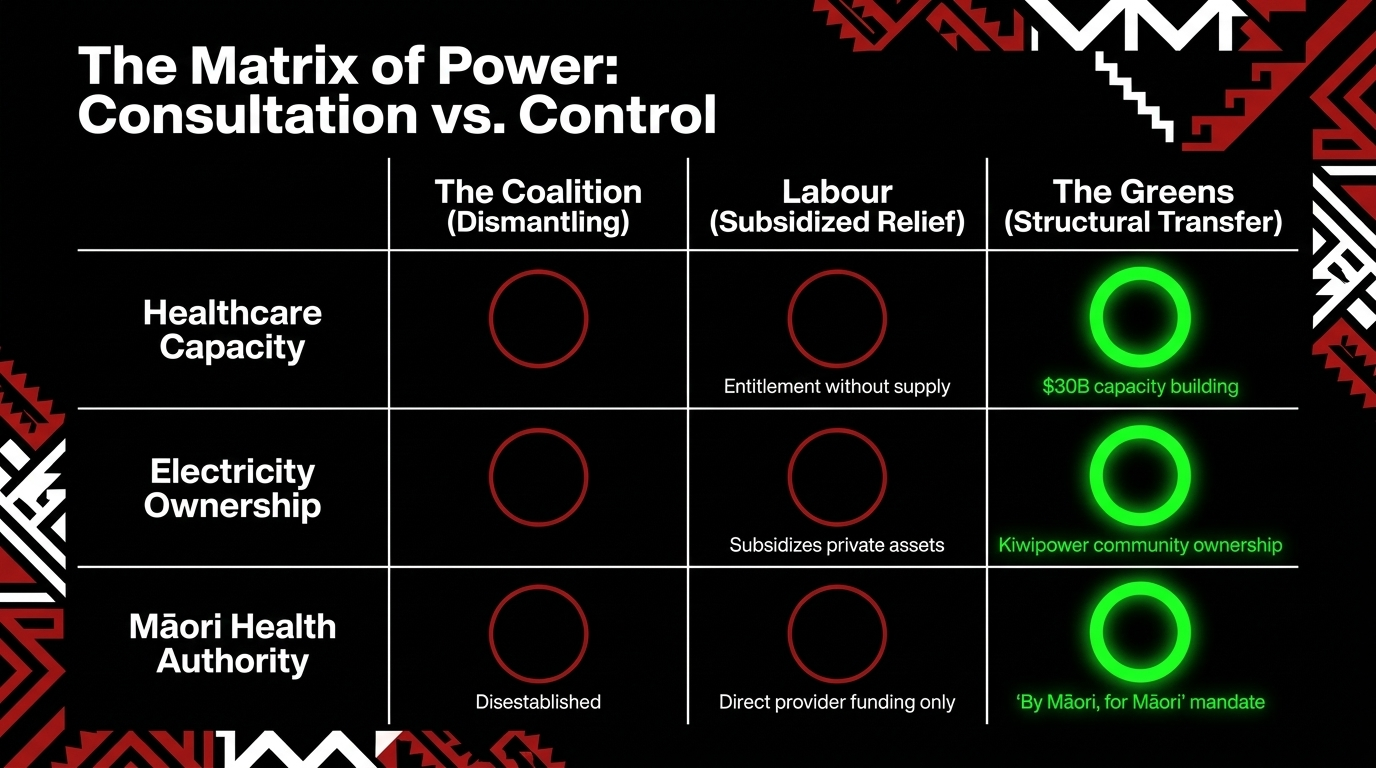
The Greens propose broader investment covering workforce, hospital capacity, primary care, prevention and hauora Māori. Their health row totals $30 billion over four forecast years, with annual allocations rising from $3 billion to $12 billion. That is proposed expenditure, not care already delivered.
The risk is that a lower advertised price leaves people competing for appointments the system still cannot supply.
Tika asks whether help reaches those facing the greatest barriers. Pono asks whether the funded entitlement corresponds to actual capacity. Tikanga asks whether care recognises people’s relationships, identity and need for whānau involvement instead of treating them as inconveniently complicated bookings.
The survey does not measure mana or wairua. Those are questions I bring to the response.
The practical requirement is straightforward: report affordability and availability together. Can people enrol? Obtain timely care? Maintain continuity? Involve whānau where they want that support? Receive care that respects who they are?
Publish Māori-specific results rather than hiding behind a national average. Show whether the people facing barriers are actually getting through.
Ministers must answer for funding and national policy. Funders and providers must answer for the responsibilities they hold. None should be permitted to point elsewhere while the person seeking care remains outside.
As I argued in “The Public Pays, The Private Sector Grows”, public funding and public control are not interchangeable. Nor should kaupapa Māori providers, charities, clinician-owned practices and investor-owned chains be treated as one indistinguishable category.
The question is whose needs an arrangement serves, under what obligations, and with what remedy when it fails.
Solar Without A Mortgage
The electricity comparison also improves when we stop caricaturing the alternatives.
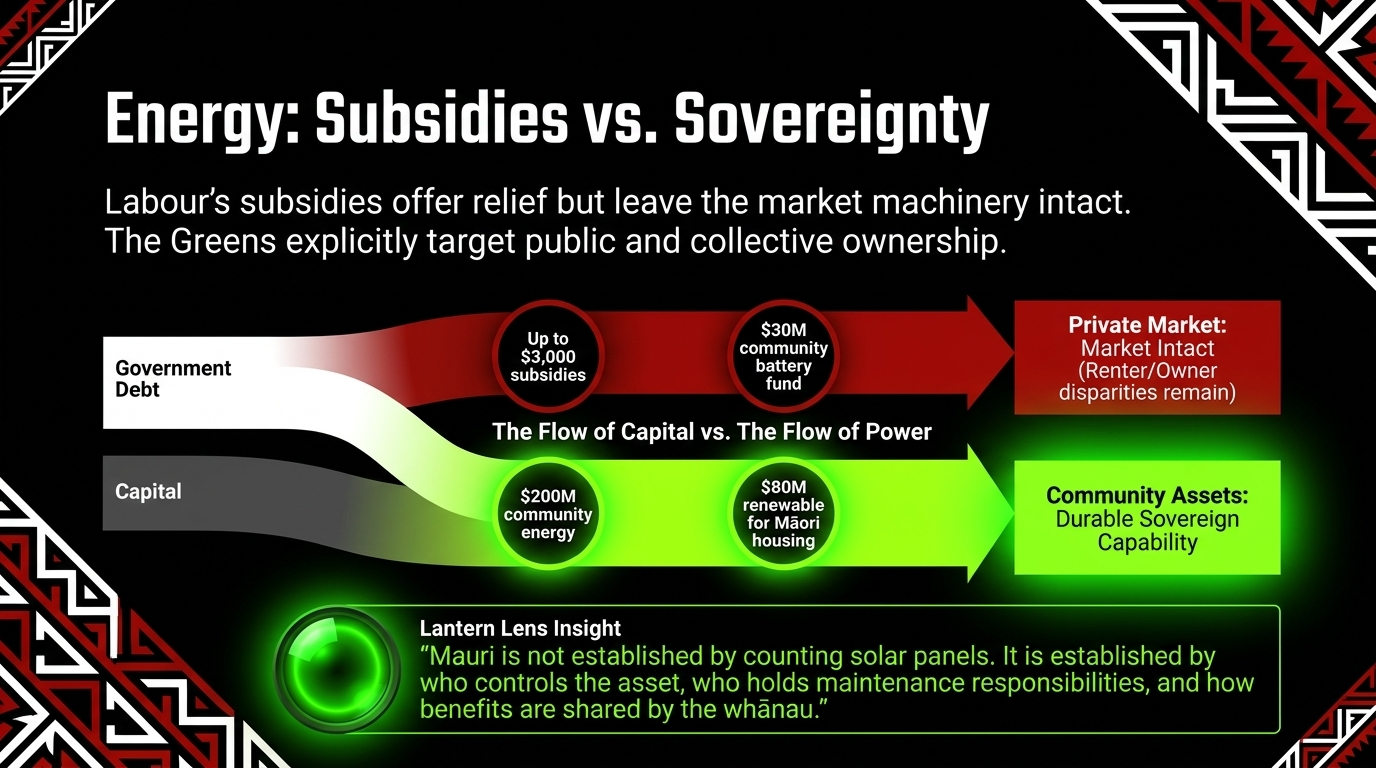
Labour’s SolarSaver proposes government-backed finance, assistance for eligible households including renters, and a community battery fund open to organisations including iwi, trusts and charities. One financing route would leave the household owning the system from the outset.
That is not merely a coupon.
The Greens propose Kiwipower, investment in community-owned generation, solar on public homes and renewable energy for Māori housing. Public and collective ownership are explicit parts of their direction.
But an attractive ownership model still needs workable terms.
For a renter, the questions include permission, portability, maintenance and whether the benefit follows the household or stays with the property. For a borrower, they include interest, repayments, equipment performance and liability when circumstances change.
Labour offers subsidies of up to $3,000 for eligible households and lists a $30 million community battery fund. “Up to” does not mean everybody receives the maximum.
The Green release proposes $200 million for community energy and $80 million for renewable energy in Māori housing. An allocation does not, by itself, explain who controls an asset or how benefits are shared.
This is where Tikanga must do more than decorate the brochure. Who sets priorities? Who can participate? Who carries maintenance responsibilities? Can affected whānau obtain the records and challenge a decision?
Mauri is not established by counting panels. My test is whether the investment leaves durable capability: useful assets, reduced exposure to costs, people able to maintain them, and relationships that survive beyond the launch photograph.
We also need honesty about what already exists. EECA documents community renewable projects and a school-solar expansion announced under the current Government. The choice is not community energy or none.
The argument is about scale, access, ownership and accountability.
Nor does a high electricity bill prove every accusation made about the market. The peer reviewers of the Government-commissioned market review considered the system overall well designed and apparently reasonably competitive, except perhaps under stressed conditions, while seeking further investigation of market power.
They questioned Frontier Economics’ particular Crown-corporation proposal. They did not directly evaluate the Greens’ later Kiwipower design, and their discussion does not close the case against every structural intervention. Their concerns about mandates, investment and uncertainty nevertheless deserve answers.
Demand independently checked bills after repayments. Demand access information for renters. Demand maintenance and benefit-sharing rules. Require technical evidence before promising outage protection.
Putting “public” in the name does not settle those questions.
A Māori Voice Is Not The Same As Māori Authority
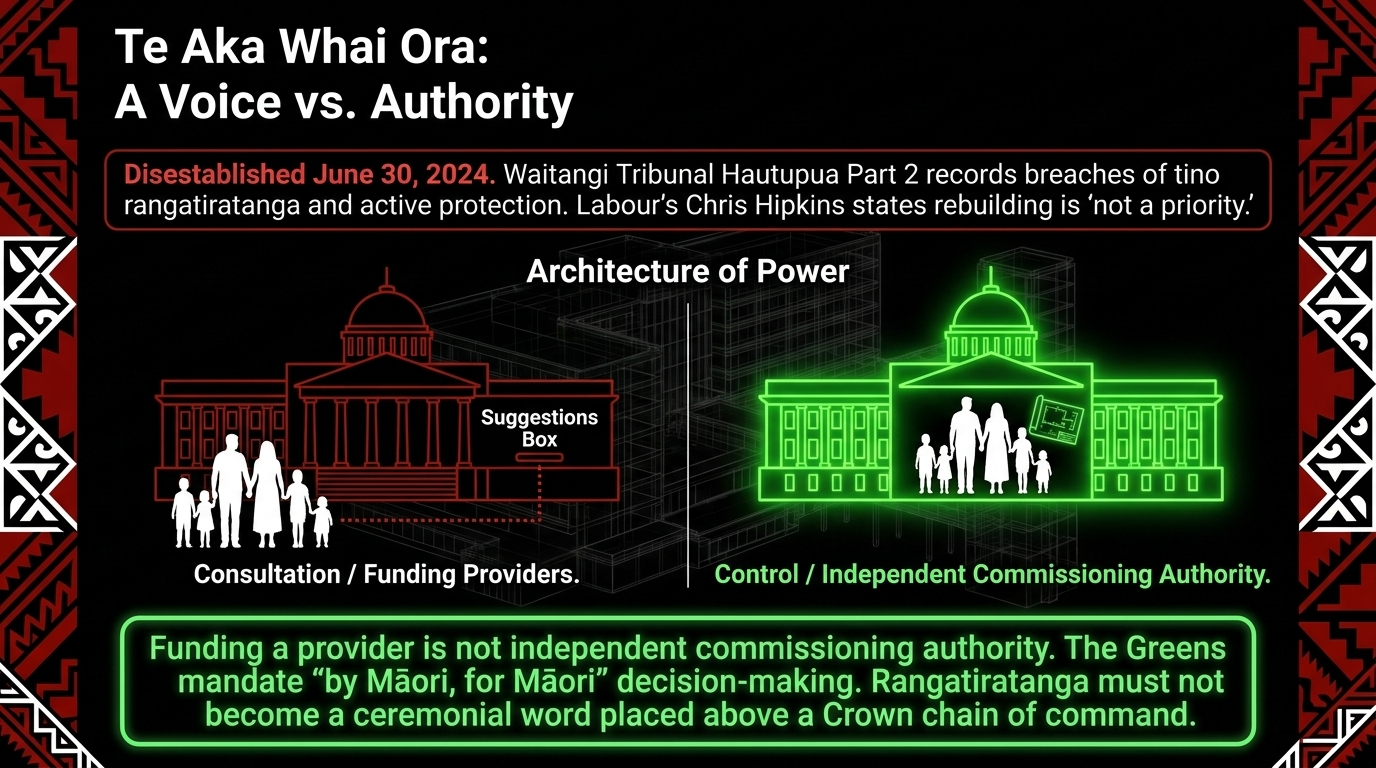
Here the coalition’s record is not hypothetical.
The legislation disestablishing Te Aka Whai Ora came into force on 30 June 2024. It removed the separate authority and changed provisions requiring joint decision-making or its agreement. It did not abolish every Māori engagement or advisory mechanism.
That claim deserves examination, not automatic dismissal.
Health New Zealand documents a programme devolving operational decisions and budget authority to districts, with explicit delegations and accountability settings. That is a real institutional programme.
But moving authority down a Crown organisation is not the same question as giving Māori independent authority over Māori health priorities.
The question is not whether any decisions move closer to local services. It is who receives the power, what they can determine and to whom they answer.
The Waitangi Tribunal’s official account of Hautupua Part 2 records failures of meaningful consultation and respect for Māori self-determination in the replacement arrangements. It identifies breaches involving tino rangatiratanga, partnership, active protection, equity and options, and recommends reconsidering a stand-alone Māori health authority with extensive consultation and robust evidence.
These are Tribunal findings, not a court judgment. They are nevertheless a substantial challenge to the story that dismantling the authority necessarily empowered Māori communities.
Against those findings, a promise of decisions closer to home is not enough. The Crown must demonstrate what effective authority Māori gained.
The alternatives also need scrutiny.
Hipkins has described rebuilding Te Aka Whai Ora as “not a priority”, arguing instead for resources to reach Māori providers directly and for building on iwi-Māori partnership boards. That is a substantive position, not an empty space.
But funding a provider and giving Māori independent commissioning authority are different things.
In the same report, Lady Tureiti Moxon calls for a stronger, independent Māori-governed entity with secure resources and accountability to whānau. Her criticism identifies the question Labour must answer: what power accompanies the funding?
The Greens’ manifesto framework explicitly supports Māori decision-making and a “by Māori, for Māori” approach. I support that direction. I will not turn it into a claim that a complete transfer of health commissioning or budget authority has been demonstrated.
Nobody earns exemption from scrutiny by using language I agree with.
The practical test is a power-by-power examination: who determines priorities, controls commissioning, appoints decision-makers, monitors performance and provides remedies? What can ministers override? How can whānau challenge the institution?
An institution can be Māori-led and still owe whānau a clear account of its decisions. Rangatiratanga must not become a ceremonial word placed above an ordinary chain of command.
My test of mauri is whether people gain the ability to shape care, protect relationships and build wellbeing—not simply whether another organisational chart is announced.
The Strongest Case Against My Recommendation
The strongest objection is that ambitious programmes can fail.
Revenue can disappoint. Implementation can stall. A public entity can have an incoherent mandate. More money can be allocated without the workforce needed to use it.
The Greens’ fiscal tables show debt and financing trade-offs. Supporters do not earn credibility by concealing them.
Labour deserves a fair hearing too. Its manifesto includes structural proposals concerning supermarket competition, employment bargaining, electricity and state-owned enterprises. Calling that “nothing” would be campaigning by distortion.
But difficulty does not establish that the present distribution of power is right.
The answer to implementation risk is transparent assumptions, staged delivery, enforceable duties and consequences for failure. It is not a demand that whānau lower their expectations indefinitely.
In “Vote For The Future They Keep Calling Impossible”, I supported a different direction. That support should sharpen scrutiny, not switch it off.
The Choice I Am Making
I do not want the National–ACT–New Zealand First coalition returned to power.
My case is not that every decision it has made is harmful. It is that abolishing Te Aka Whai Ora and removing its statutory place in joint decision-making—while presenting the change as bringing decisions closer to hapū—deserves a political consequence. Read the legislation, the ministerial justification and the Tribunal’s findings together.
I recommend a Green party vote because I prefer its more explicit commitment to redistribution, public investment and community ownership. Its fiscal programme and energy proposals explain that preference. They do not guarantee delivery.
This is my political judgment, not an objectively compulsory conclusion.
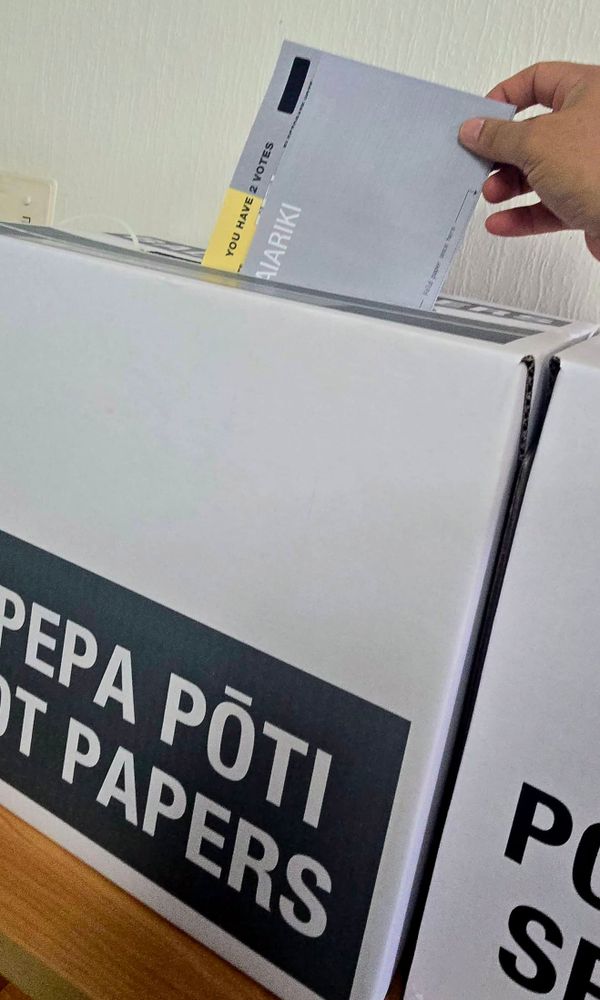
The election is on Saturday 7 November 2026, and voting is open.
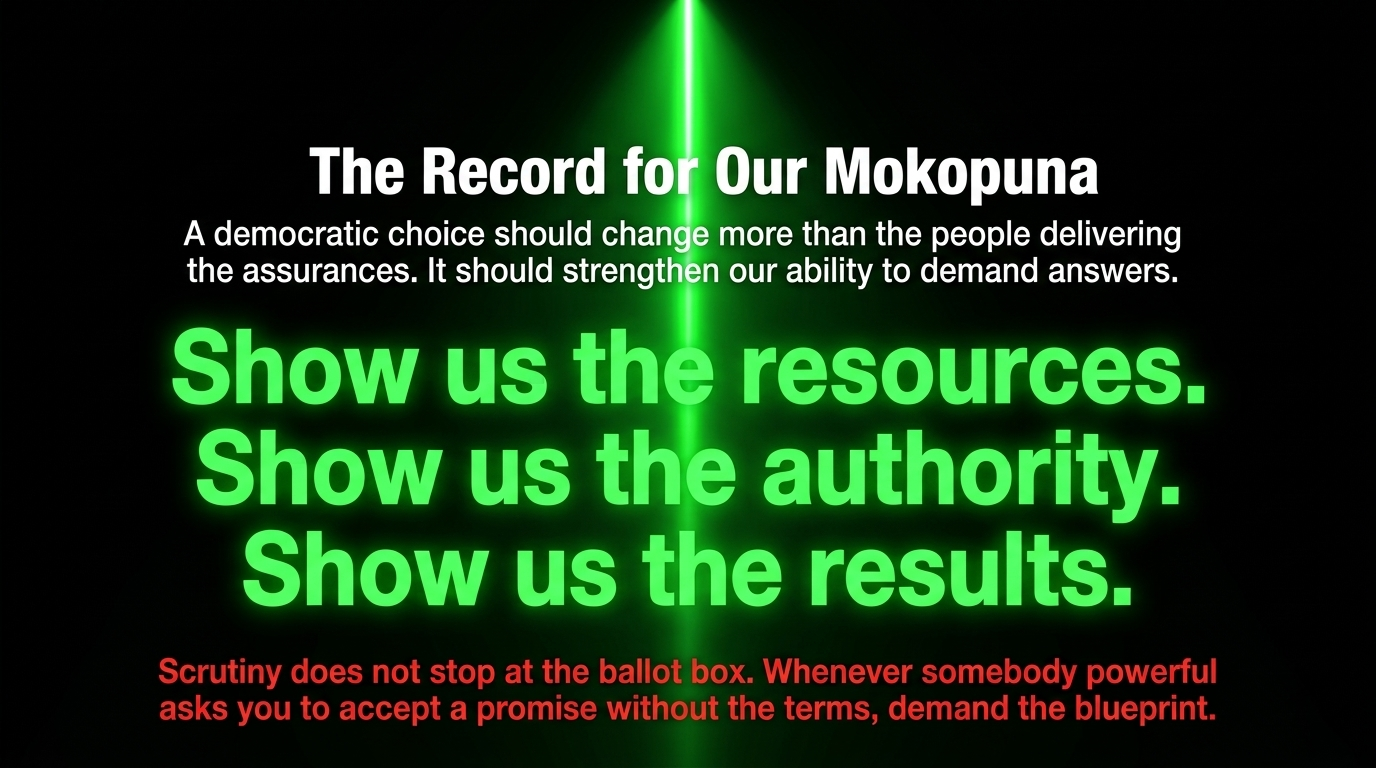
Open and share this essay because its questions are useful beyond election day: at the clinic, around a community project and whenever somebody powerful asks you to accept a promise without the terms.
Keep it as part of the record for our mokopuna. Not proof that one writer saw everything, but evidence that warnings were raised, decisions were examined and silence was not universal.
A democratic choice should change more than the people delivering the assurances. It should strengthen our ability to demand answers.
Show us the resources. Show us the authority. Show us the results.
Koha For Scrutiny That Does Not Stop At The Ballot Box

This mahi is supported through koha and has no corporate support. Your support helps me examine promises, scrutinise decisions and ask whether accountability reaches whānau.
You can give koha, support through the website, or use the Facebook subscription pathway.
Bank transfer: Ivor Jones — 03-1395-0099387-000.
If money is tight, subscribing, following, discussing and sharing are valuable support too. Rangatiratanga and accountability need an informed public, not a paywall around the conversation.
Disclaimer
This essay expresses my political views, including my recommendation to vote Green. Policy promises and fiscal forecasts are not guarantees of delivery. My use of Tika, Pono, Tikanga and mauri is an editorial framework, not a claim to speak for all Māori, iwi or hapū. Corrections supported by reliable evidence are welcome.