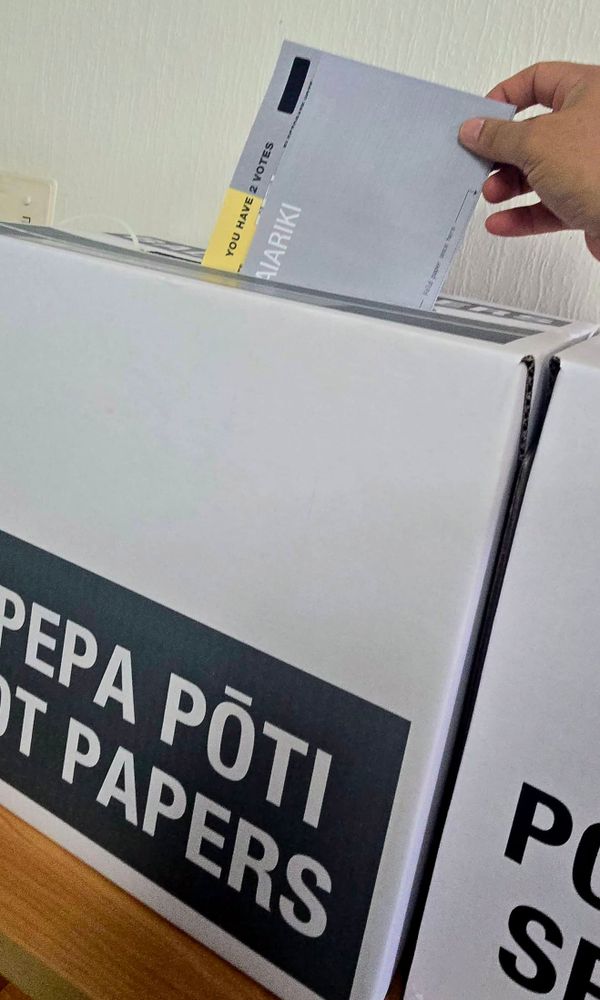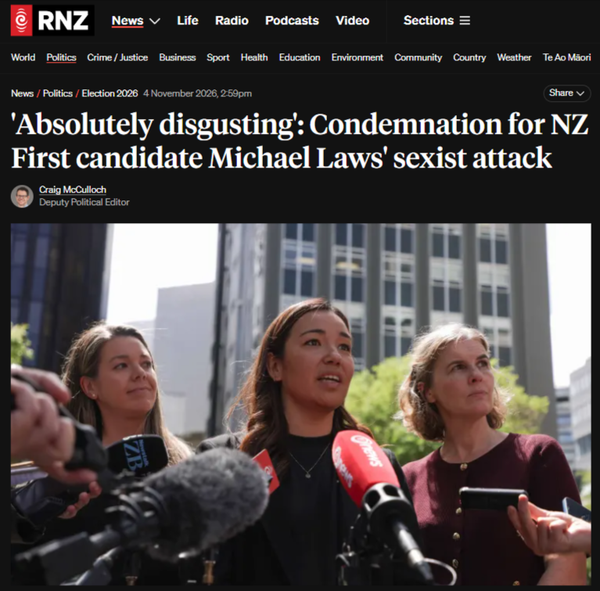
"I Wanted A Māori Movement, Not Another Political Machine" - 5 November 2026
I wanted this Te Pāti Māori to be better. Its split-vote pitch raises a deeper question: are we protecting Māori political independence—or a party machine?

If Te Pāti Māori Cannot Survive Honest Questions, It Is The Structure That Needs To Go
Mōrena Aotearoa,
I wanted this version of Te Pāti Māori to be better.
Not perfect. Not free of arguments or strong personalities. I wanted it to be better at the thing that matters: putting the people before the machinery built in their name.
That hope has worn thin.
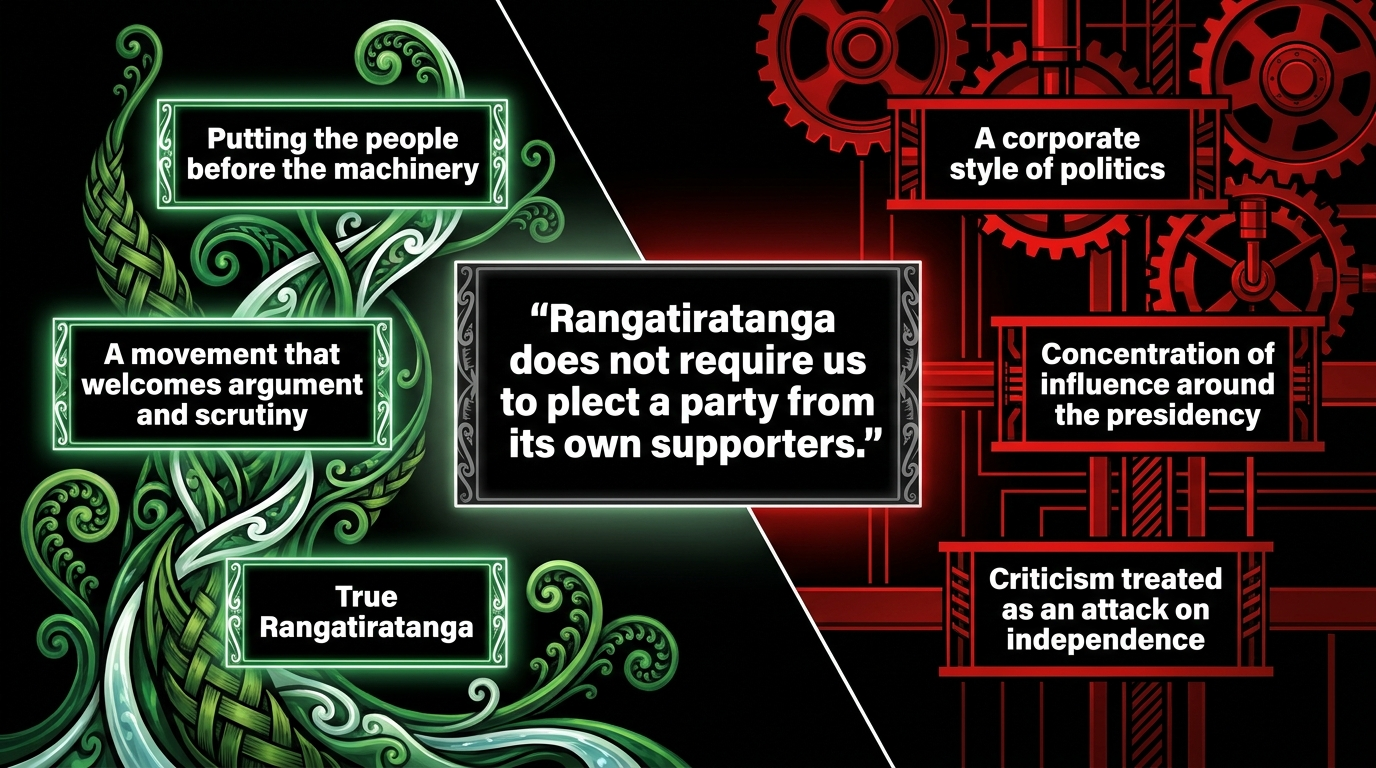
I do not like the corporate style of politics I see around the party. I do not like the concentration of influence around John Tamihere’s presidency. And I am tired of being expected to treat criticism of a Māori political organisation as though it were an attack on Māori political independence.
Those are not the same thing.
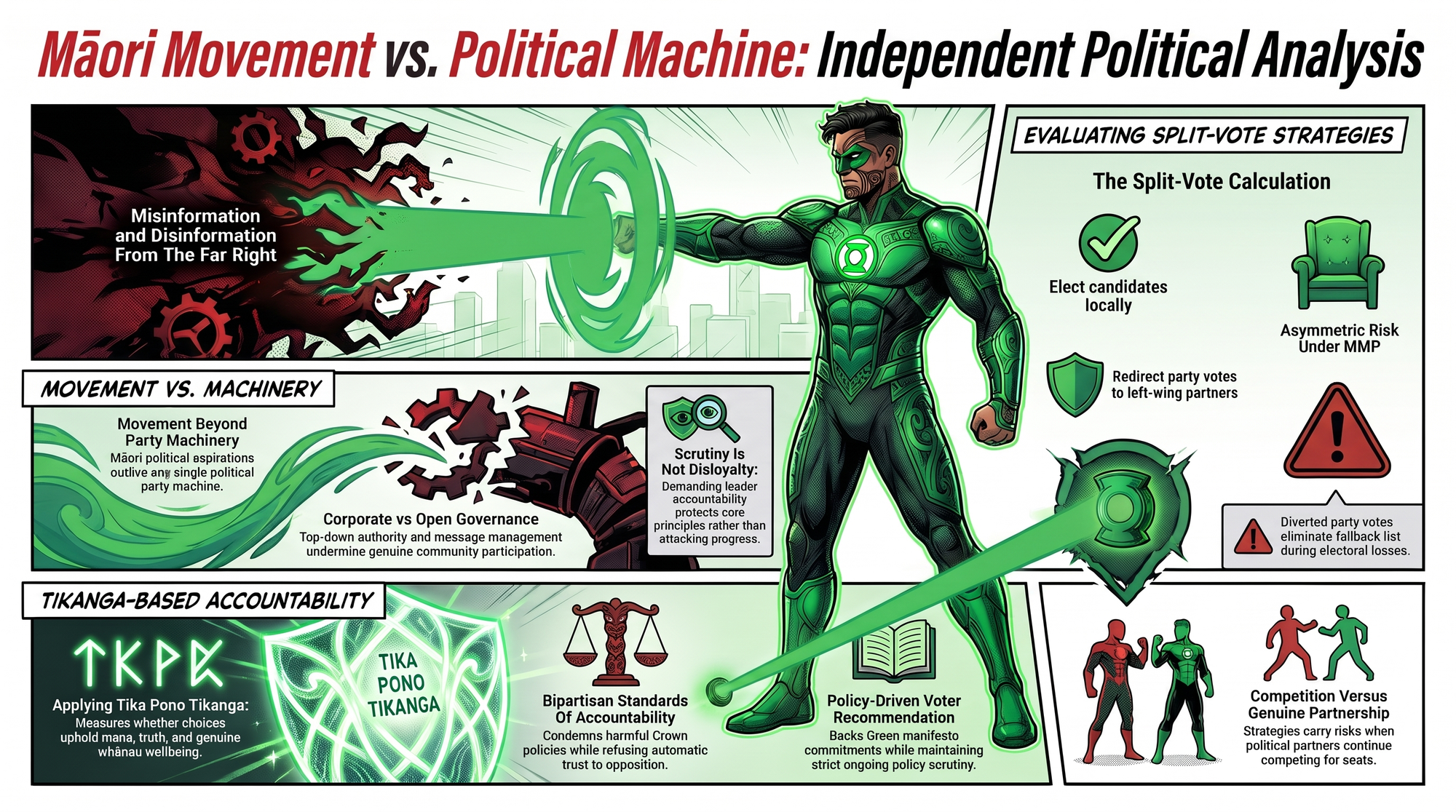
Rangatiratanga does not require us to protect a party from its own supporters. It certainly does not require us to pretend that the people running it are beyond question.
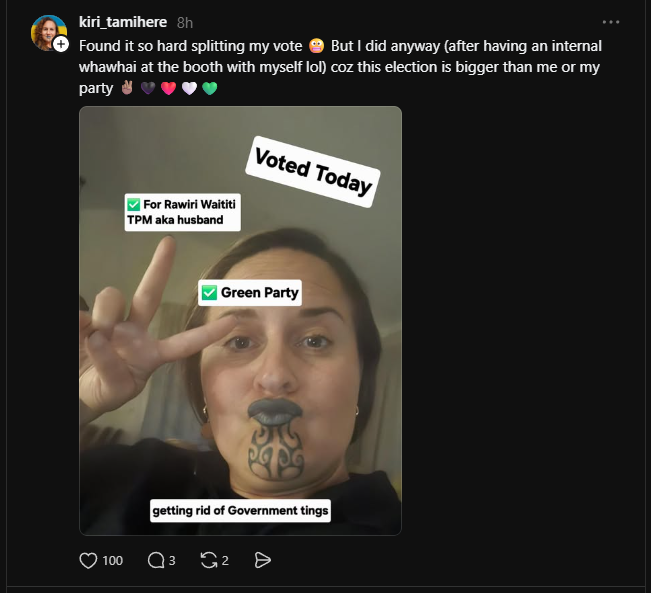
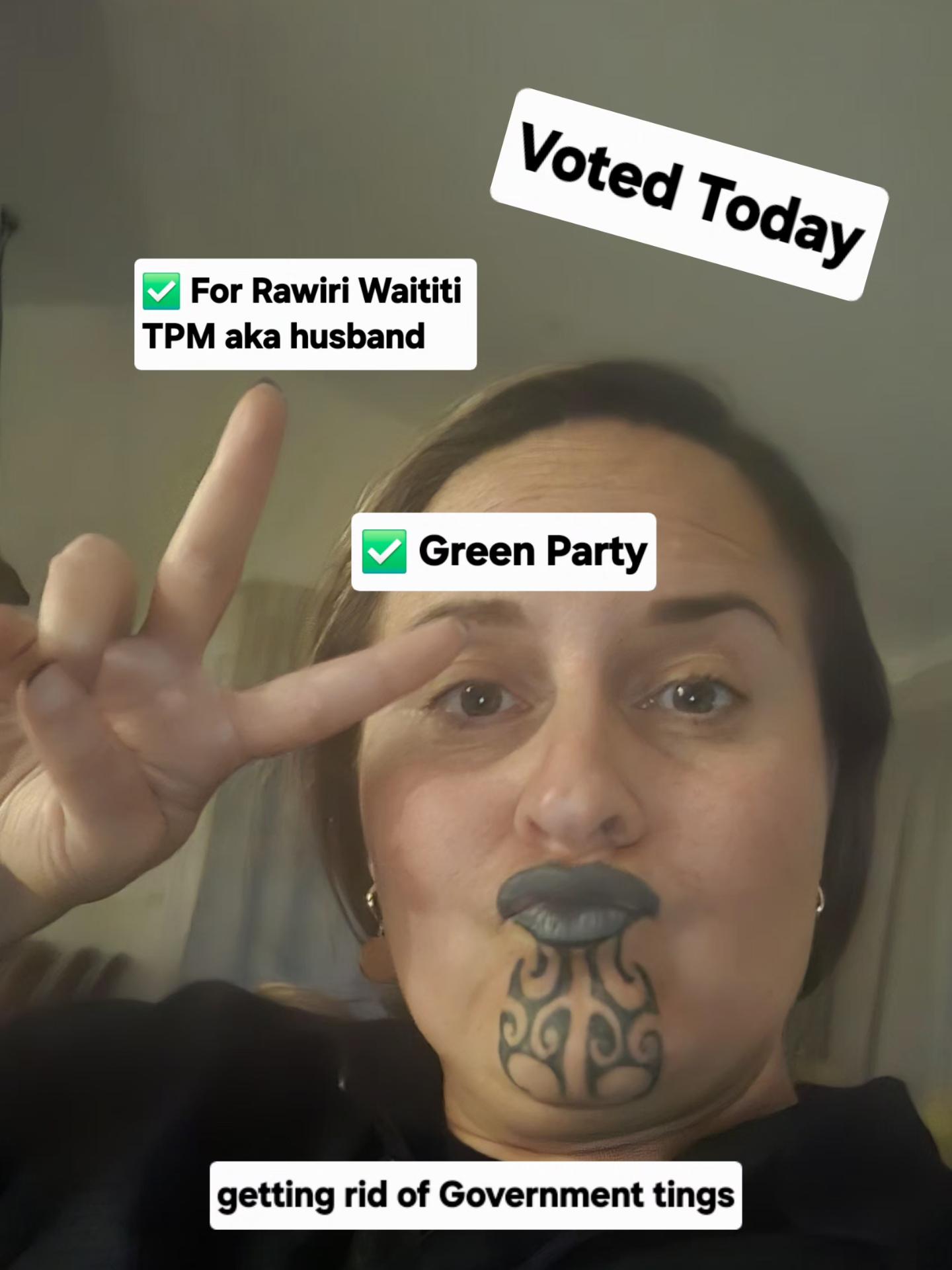
Kiri Tamihere-Waititi brought that frustration into focus. She presents an electorate vote for Rawiri Waititi and a party vote for the Greens, accompanied by an account of how difficult the decision was before she concluded that the election was “bigger than me or my party”.

I understand the strategy. My objection is not a failure to understand it.
My objection is to the politics around it: the leadership, the sales pitch, the assumptions and the expectation that a declaration of good intentions should settle the argument.
This is about what the split-vote strategy can achieve, what it risks, and what sort of political organisation Te Pāti Māori wants to be. It is also about why I can recommend the Greens without applauding the way another party’s leadership tells people to vote for them.
Following The Strategy Does Not Make It Right
Kiri's posted 8 hours ago and I am addressing the message it presents, not claiming access to a ballot.
But the organisational context is public. Kiri Tamihere-Waititi as Te Pāti Māori’s general manager, Rawiri Waititi’s wife and John Tamihere’s daughter in its report on the party’s internal conflict.
Those family relationships are not evidence of wrongdoing. Her position in the organisation is what makes the message politically significant.
Nor is she necessarily contradicting party policy. Te Ao Māori News reported that Te Pāti Māori was asking supporters to elect its candidates while directing party votes towards Labour, the Greens or another left-wing party. Debbie Ngarewa-Packer called it “one plan, two votes” in the report on the campaign.
Fine. Then the criticism belongs with the people who designed and promoted that policy.
Saying “this is the strategy” is not a defence of the strategy. It is an acknowledgment of responsibility.
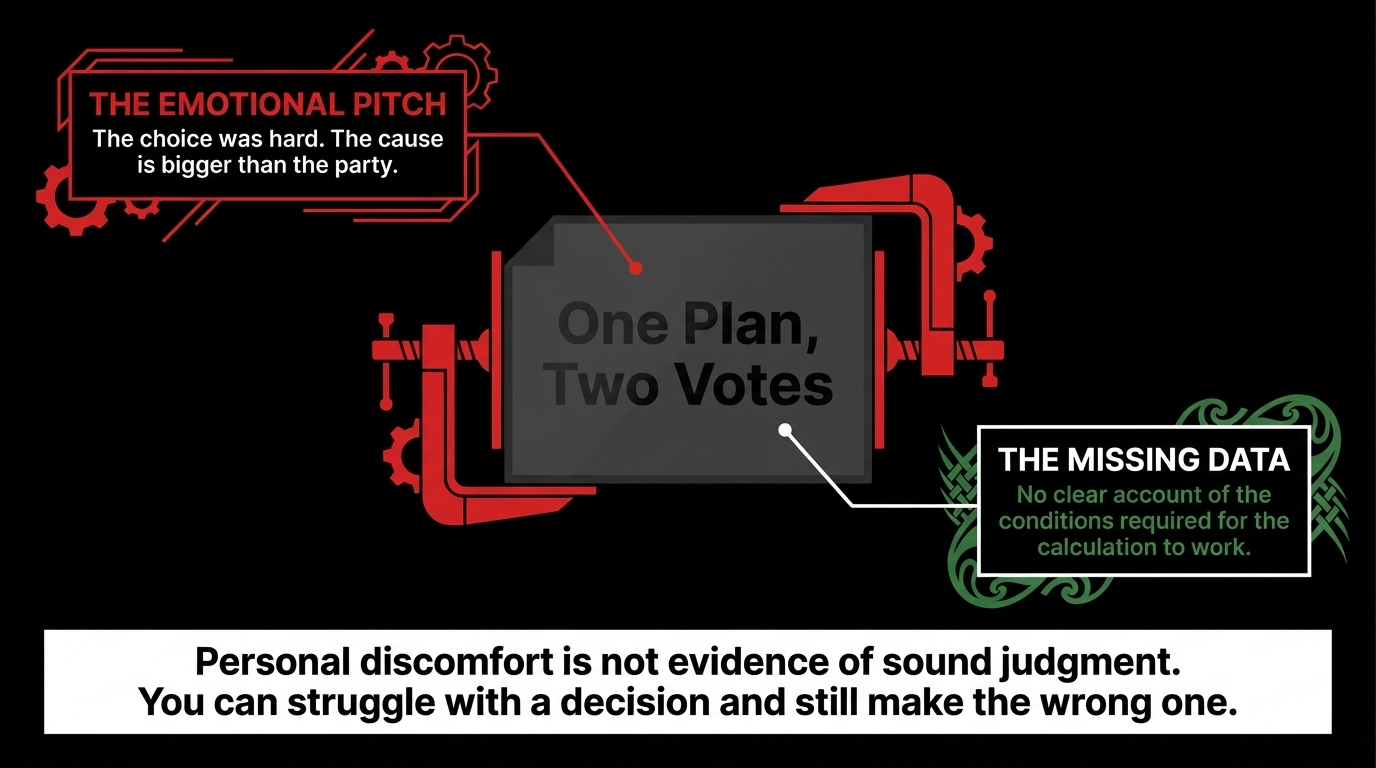
What bothers me about the post is the gap between the emotional explanation and the political explanation. We hear that the choice was hard. We hear that the cause is bigger than the party.
What we do not get in that message is a clear account of the conditions that must hold for the calculation to work.
Personal discomfort is not evidence of sound judgment. You can struggle with a decision and still make the wrong one.
Yes, The Arithmetic Has A Logic
I am not going to weaken this argument by pretending the strategy is mathematically senseless.
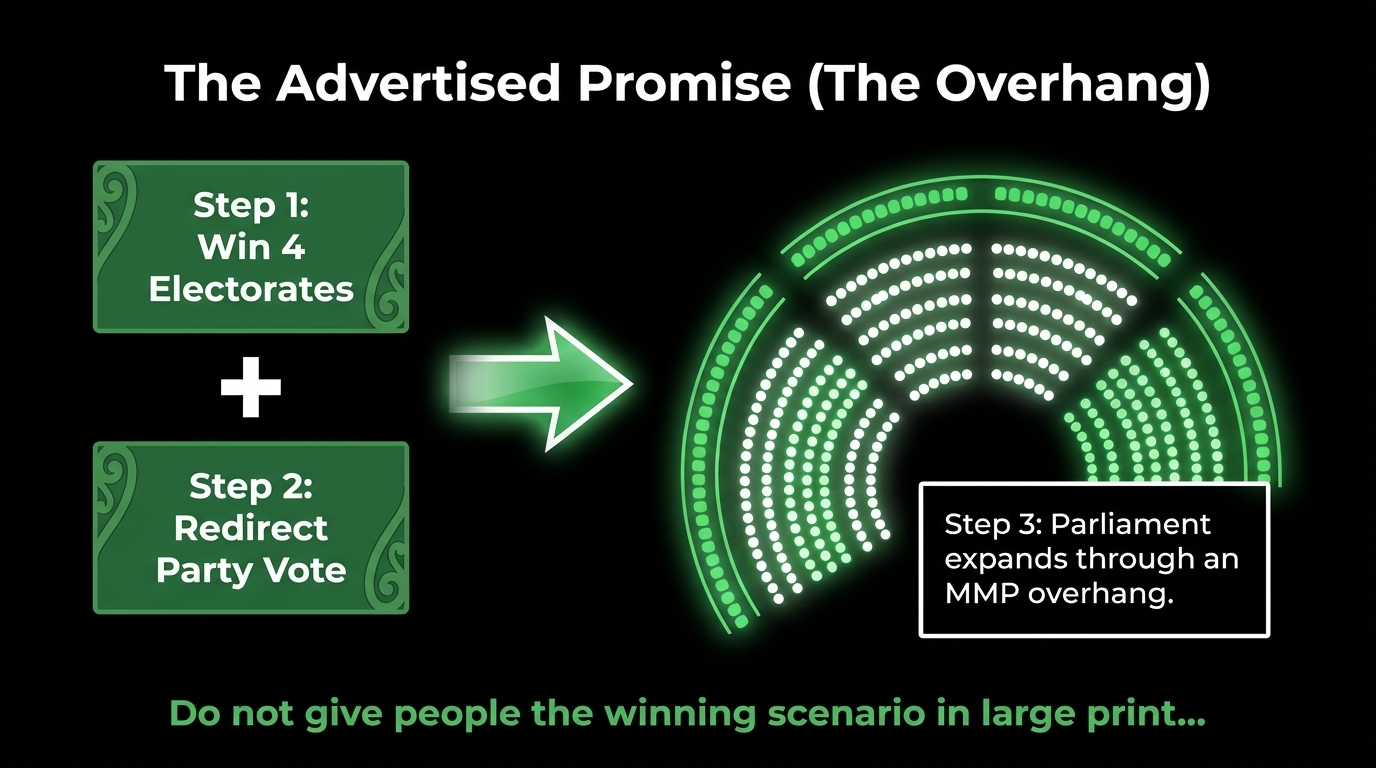
Under MMP, the party vote normally determines a party’s overall seat entitlement. Electorate winners occupy those seats first, with list MPs making up the balance. If a party wins more electorates than its entitlement would otherwise provide, it keeps those additional seats and Parliament expands through an overhang. That is how the Electoral Commission explains the system.
Imagine a party wins four electorates but its party vote entitles it to two seats. It keeps four MPs. If its entitlement rises to three, it still has four MPs. In that hypothetical situation, supporters might reason that their party votes could elect additional MPs elsewhere. This illustration follows the Commission’s allocation rules.
That is the strongest case for the strategy.
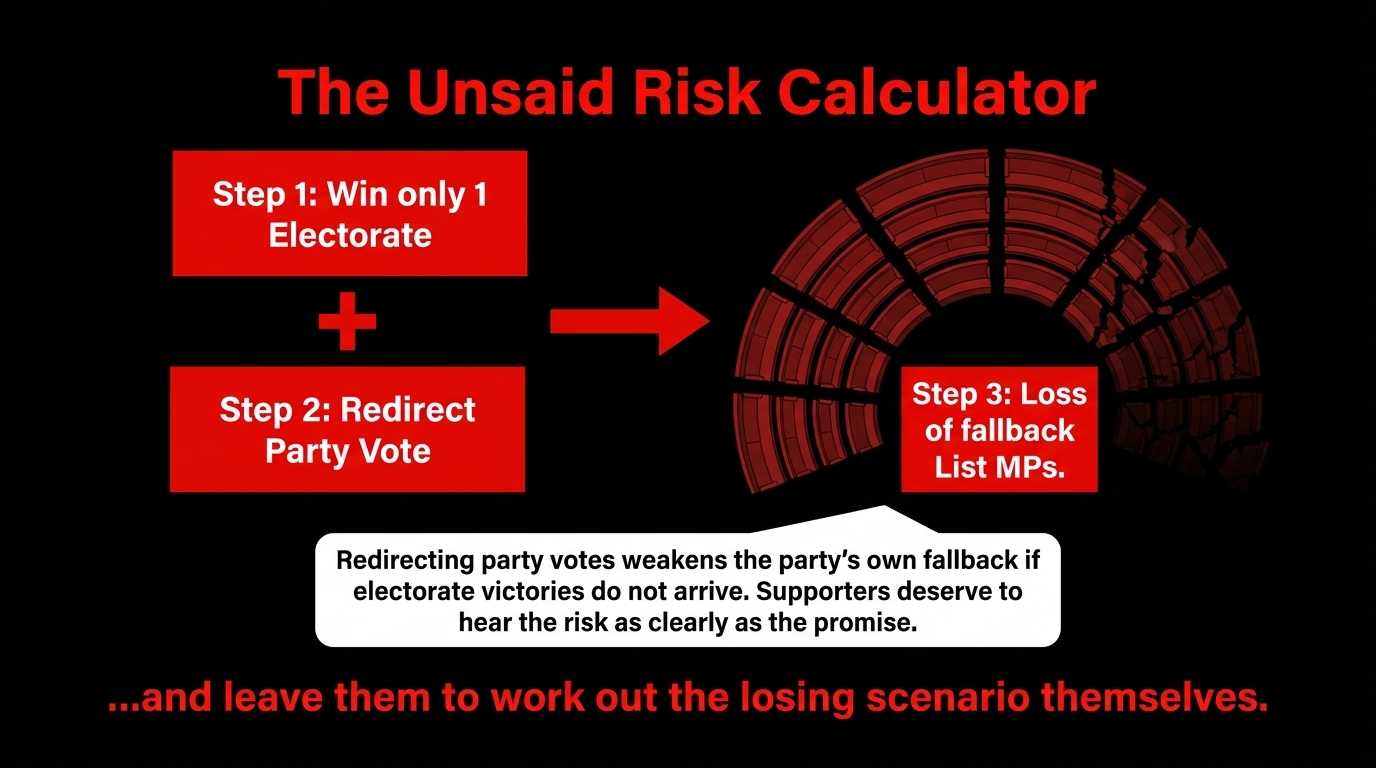
But now imagine the electorate result disappoints. The party wins one electorate rather than four. A three-seat entitlement would give it that electorate MP and two list MPs. A one-seat entitlement would leave it with just the electorate MP. Again, that is an illustration of the rules, not a prediction.
The difference matters.
Redirecting party votes can help a preferred bloc. It can also weaken the party’s own fallback if electorate victories do not arrive.
I am not claiming this guarantees failure. I am saying supporters deserve to hear the risk as clearly as they hear the promise.
Do not give people the winning scenario in large print and leave them to work out the losing scenario themselves.
The Deep Dive Podcast
Listen to a lively conversation between two hosts, unpacking and connecting topics in the sources of this essay. I apologise in advance for the AI's very harsh pronounciation of reo. Please dont shoot me, :).
Youtube Video
Like video? Here is a short video suppporting the essay. Again, don't shoot the messenger please because of AI's pronounciation. :)
Other Parties Have Not Stopped Competing
There is another part of this that the language of solidarity can make too easy to overlook.
When Te Ao Māori News examined the strategy, Labour and the Greens were still supporting their own candidates in Māori electorates. Marama Davidson defended voters’ right to choose their preferred local representative and stood behind the Green candidates in the same reporting.
They have every right to do that.
Te Pāti Māori does not own those electorates. Nobody acquires an exclusive claim to Māori votes by announcing a strategy.
But supporters should understand the difference between a reciprocal arrangement and a concession one party hopes will benefit a wider cause.
As reported, Te Pāti Māori was encouraging votes towards parties that continued competing against its electorate candidates. That is the relationship described by Te Ao Māori News.
Perhaps the calculation works anyway. But “we all want this government gone” does not turn electoral competitors into partners on every part of the ballot.
If the strategy rests on expectations rather than commitments, say so.
Whānau can handle an honest explanation. We do not need the uncertainty wrapped in a comforting story.
The Standard Does Not Change When Our Side Benefits
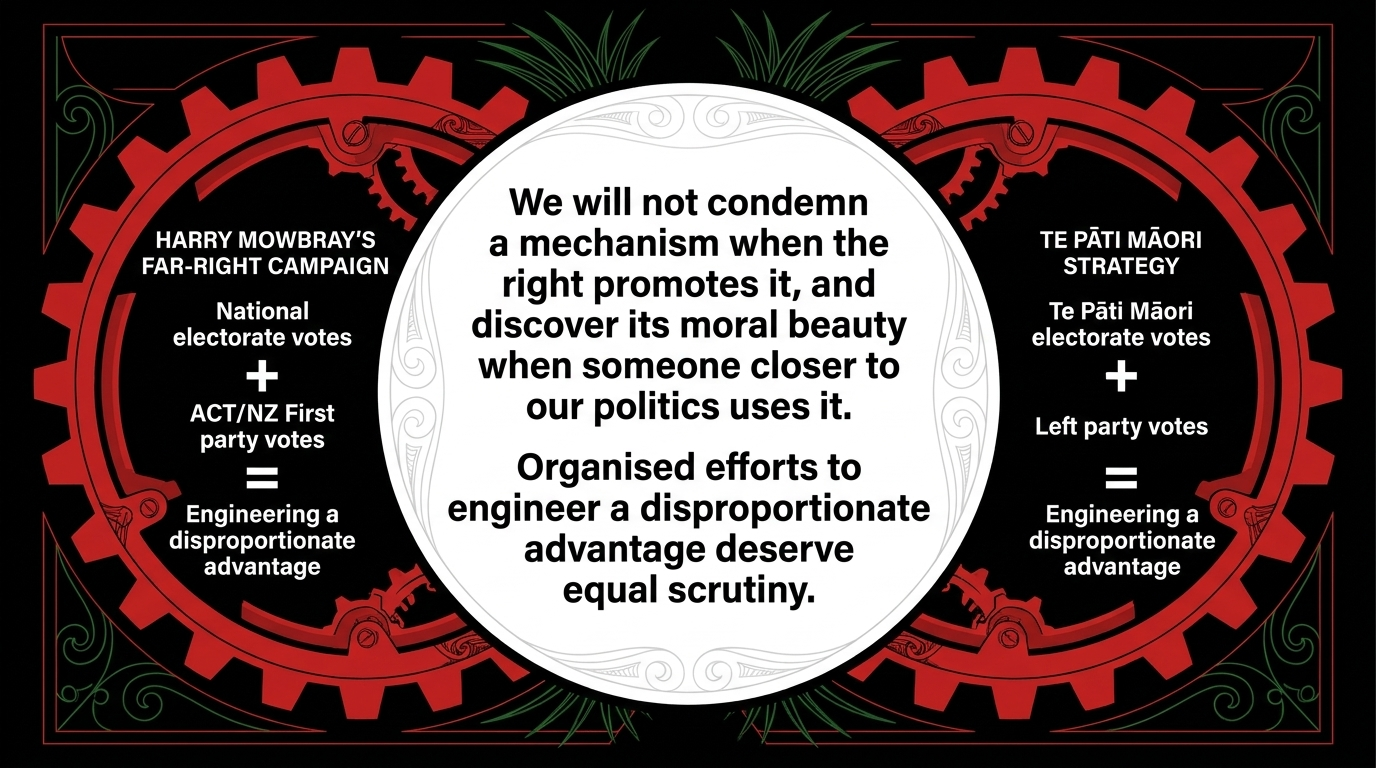
Harry Mowbray’s campaign encouraged National electorate votes alongside party votes for ACT or New Zealand First, seeking an overhang that would strengthen the centre-right bloc. RNZ described that approach in its report on his split-vote campaign.
The comparable mechanism is obvious: electorate victories for one party, party votes for others, and a hoped-for advantage for the wider bloc. That is also the broad mechanism described in reporting on Te Pāti Māori’s strategy.
The people and their purposes are not identical. Mowbray told RNZ that part of his intention was to discredit MMP. I have no basis for assigning that motive to Te Pāti Māori. His remarks are recorded in RNZ’s report.
But I will not condemn a mechanism when the right promotes it and suddenly discover its moral beauty when somebody closer to my politics uses it.
I made that distinction in “Your Fortune Is Not A Mandate”.
Voters choosing different parties on their ballots is one thing. Organised efforts to engineer a disproportionate advantage deserve scrutiny, whoever stands to gain.
Otherwise, we are not defending a principle. We are cheering for a team.
Māori Independence Is Bigger Than This Party
Here is where my disagreement goes beyond the screenshot.
I wanted a Māori political movement with the confidence to welcome scrutiny, not an organisation whose leadership I feel expected to trust because of the cause it represents.
My concern is with what I see as a corporate political culture: authority concentrated near the top, a strong emphasis on managing the message, and too little reassurance that ordinary supporters can meaningfully challenge the direction.
That is my political assessment. It is not an allegation of financial wrongdoing, and it is not a claim that every person working inside the party shares those habits.
But John Tamihere’s presidency is part of why I have lost confidence in this version of the organisation.
A Māori name does not answer a governance question. Neither does a Māori cause.
If this current structure cannot make room for genuine accountability, I would rather see it lose its hold than watch people keep defending it out of fear that nothing else can exist.
To be clear, I mean the political structure—not anyone’s safety or wellbeing. Parties can be replaced. Leadership arrangements can end. Movements can reorganise.
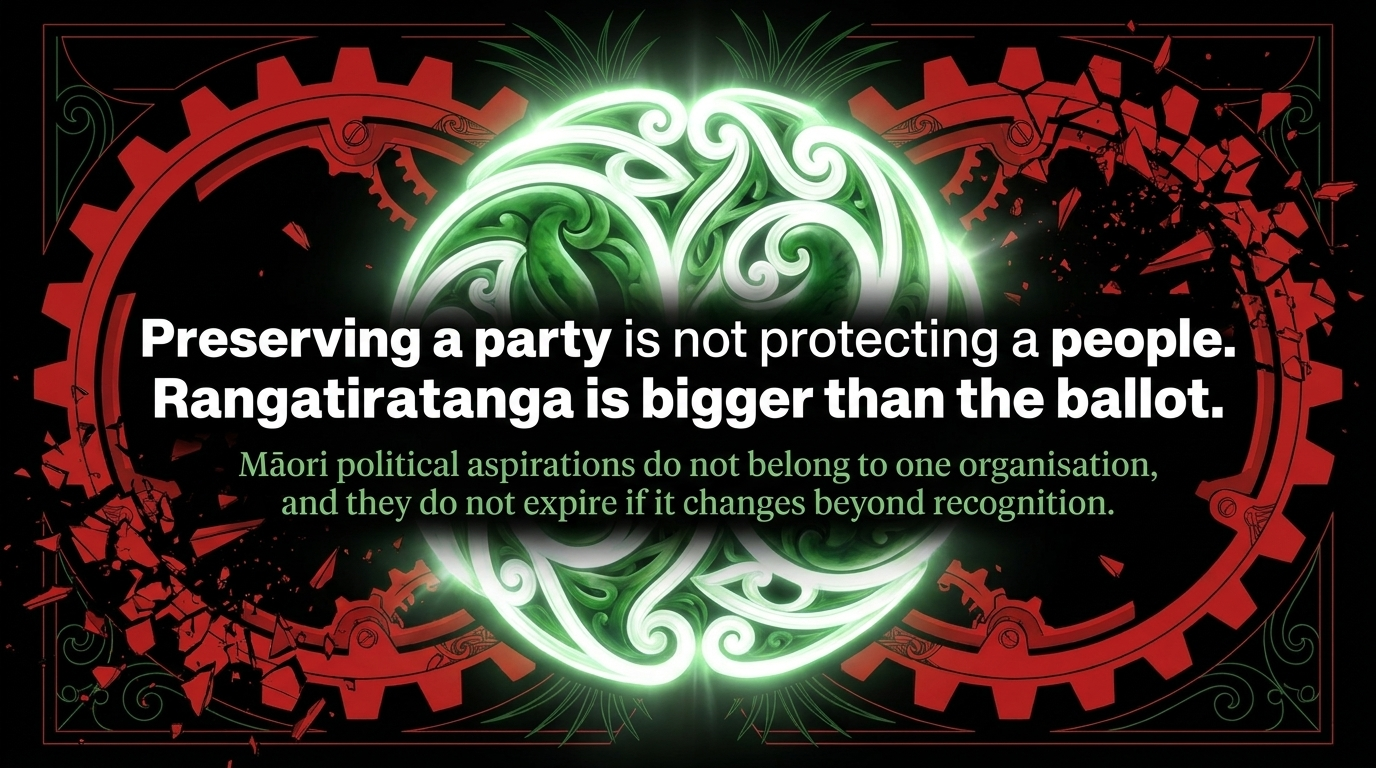
Māori political aspirations do not belong to this particular organisation, and they do not expire if it changes beyond recognition.
If something better grows out of that change, so be it.
I am not prepared to confuse preserving a party with protecting a people.
Tikanga Is Not A Coat You Put Over The Machinery
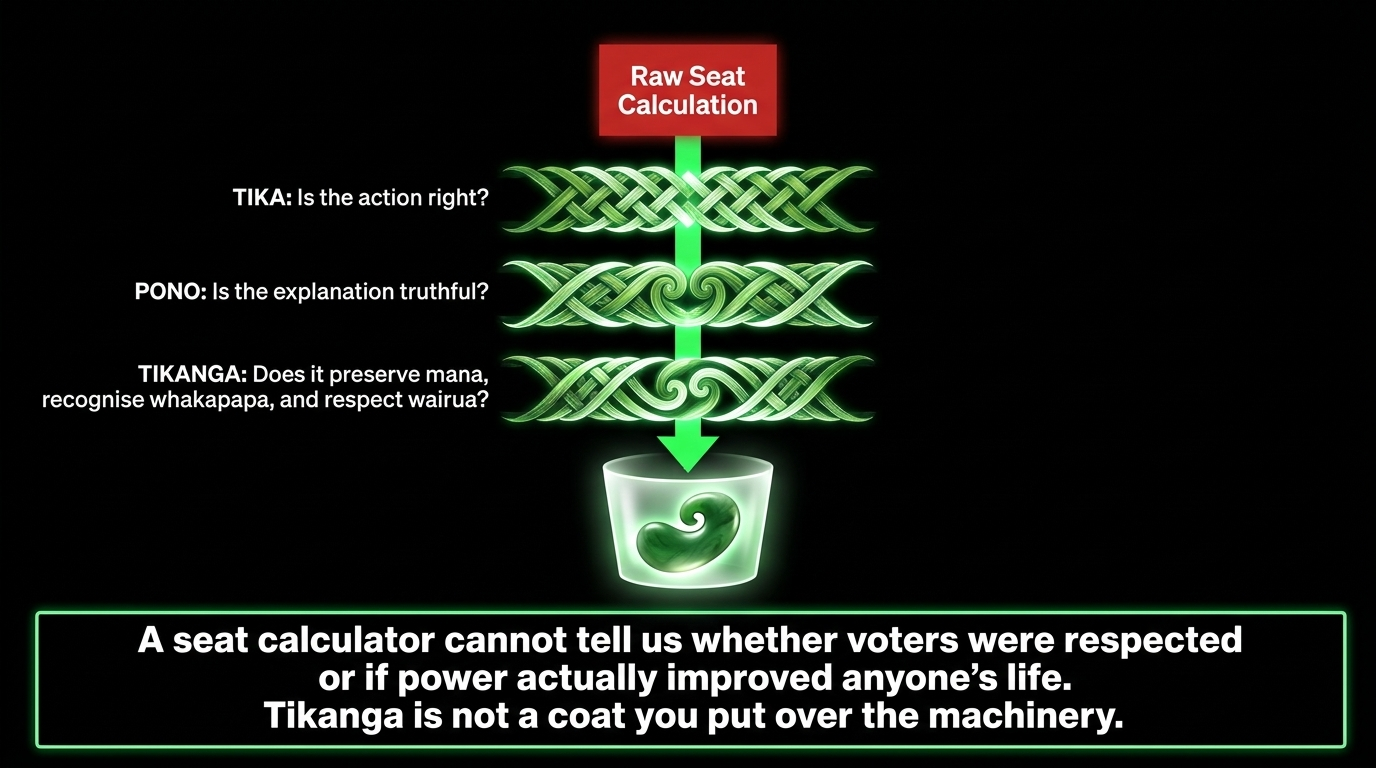
When I bring Tika, Pono and Tikanga into this argument, I am not looking for Māori words to decorate a conclusion I have already reached.
I want them to make the questions harder.
Is the action right? Is the explanation truthful? Are the people affected involved in the decision? Does the exercise of power preserve their mana, recognise their whakapapa, respect their wairua and strengthen the wellbeing of their whānau?
That is the approach I have used in “Vote For The Future They Keep Calling Impossible”.
For someone accustomed to Western management language, think about a workplace reporting improved productivity while its staff become exhausted and their families absorb the cost. The output can rise while the institution fails the people sustaining it.
Or think about a hospital counting completed appointments without asking whether patients felt safe, understood the treatment or could involve the people who care for them.
Those are explanatory examples, not claims about a particular employer or hospital. They show why a narrow measure cannot answer every important question.
The same applies to a seat calculator.
It can help estimate parliamentary outcomes. It cannot tell us whether voters were respected, whether disagreement was welcome or whether the resulting power improved anyone’s life.
Building mauri requires more than winning an argument about numbers. It requires an honest relationship with the people whose trust makes the organisation possible.
And “bigger than my party” cannot be used to close that conversation.
This Government Still Needs To Go
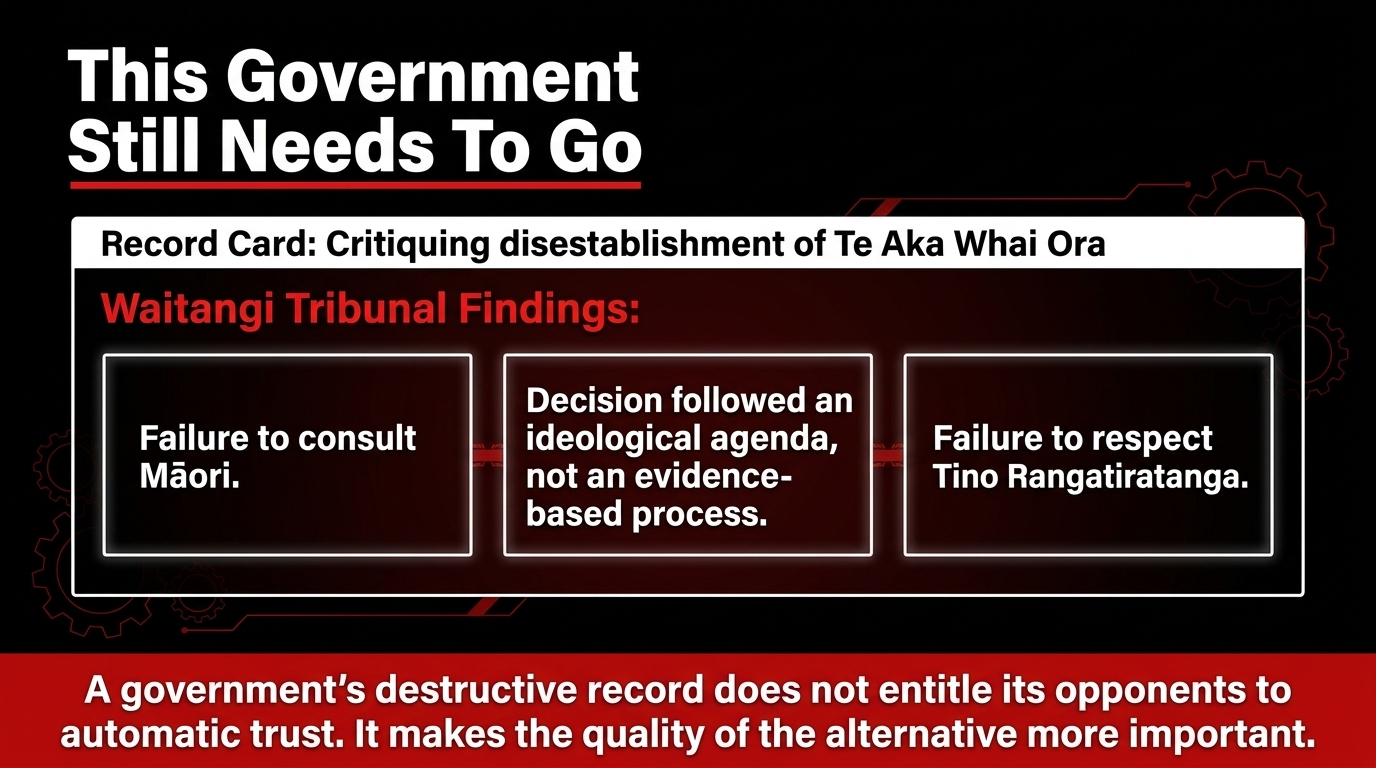
None of this lets the coalition off the hook.
I do not have to choose between silence about Te Pāti Māori and support for Christopher Luxon, David Seymour or Winston Peters.
Consider Te Aka Whai Ora. The Waitangi Tribunal found that the Crown did not consult Māori or obtain substantive official advice before deciding the authority was unnecessary. It found the decision followed an ideological agenda rather than an evidence-based process. Those are the Tribunal’s findings on disestablishment.
Its subsequent findings addressed failures of meaningful consultation, respect for tino rangatiratanga and timely development of a clear alternative plan. The Tribunal’s later report explains those failures.
That is not harmless administrative tidying. It is the Crown exercising power over Māori while failing obligations the Tribunal found it should have honoured.
I do not need to invent anyone’s private motives to condemn that conduct.
I have examined the wider political record in “The Coalition’s Damage Diary”.
But a government’s destructive record does not entitle its opponents to automatic trust. If anything, it makes the quality of the alternative more important.
“Look how bad they are” is a reason to seek change. It is not a reason to stop asking questions.
Why I Recommend The Greens
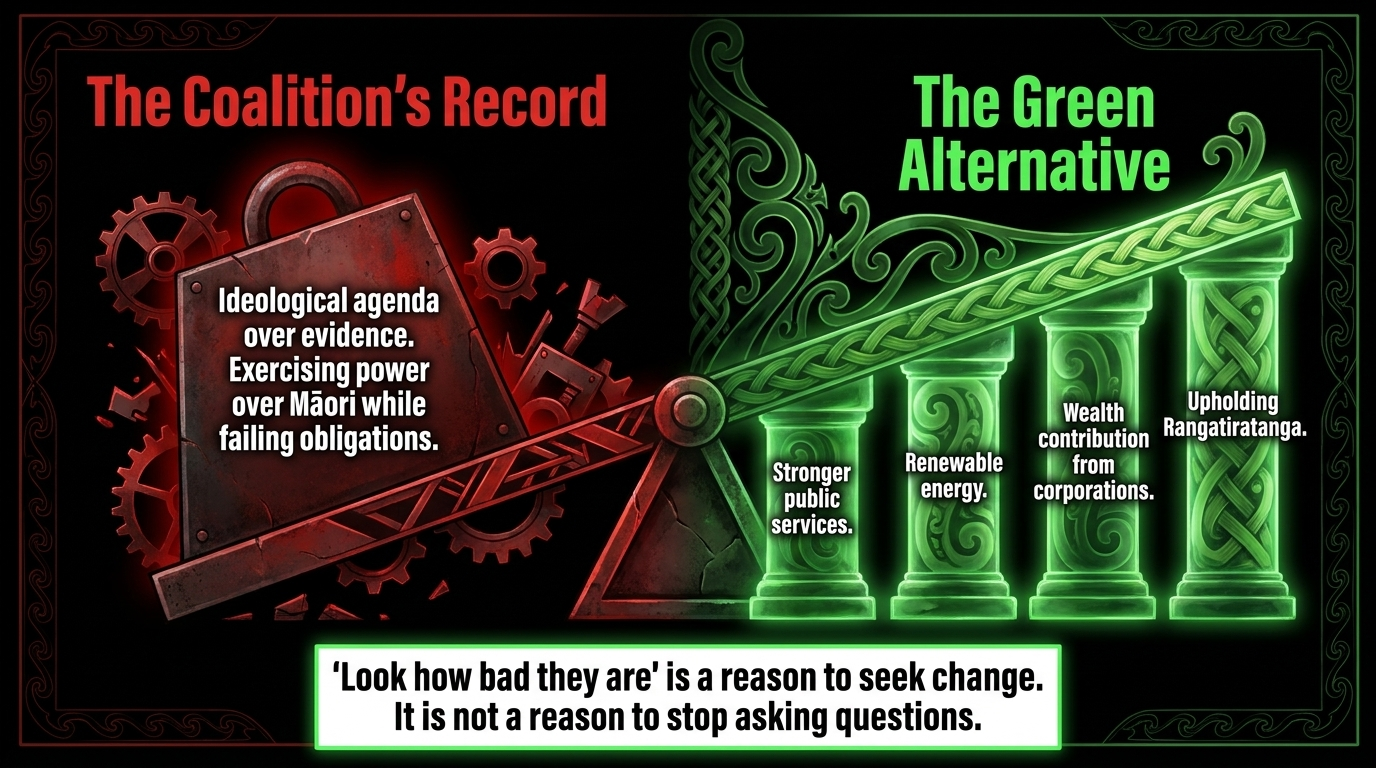
My recommendation of a Green party vote rests on their programme, not on Tamihere-Waititi’s difficulty in making her choice.
The Greens propose stronger public services, affordable housing and transport, renewable energy, greater contributions from substantial wealth and large corporations, and arrangements that uphold rangatiratanga. Those are published manifesto commitments, not achievements I am pretending have already happened.
That direction is why I support them.
I want politics to move away from treating public provision as a burden and concentrated wealth as something too delicate to disturb. I want Māori authority respected, not managed around.
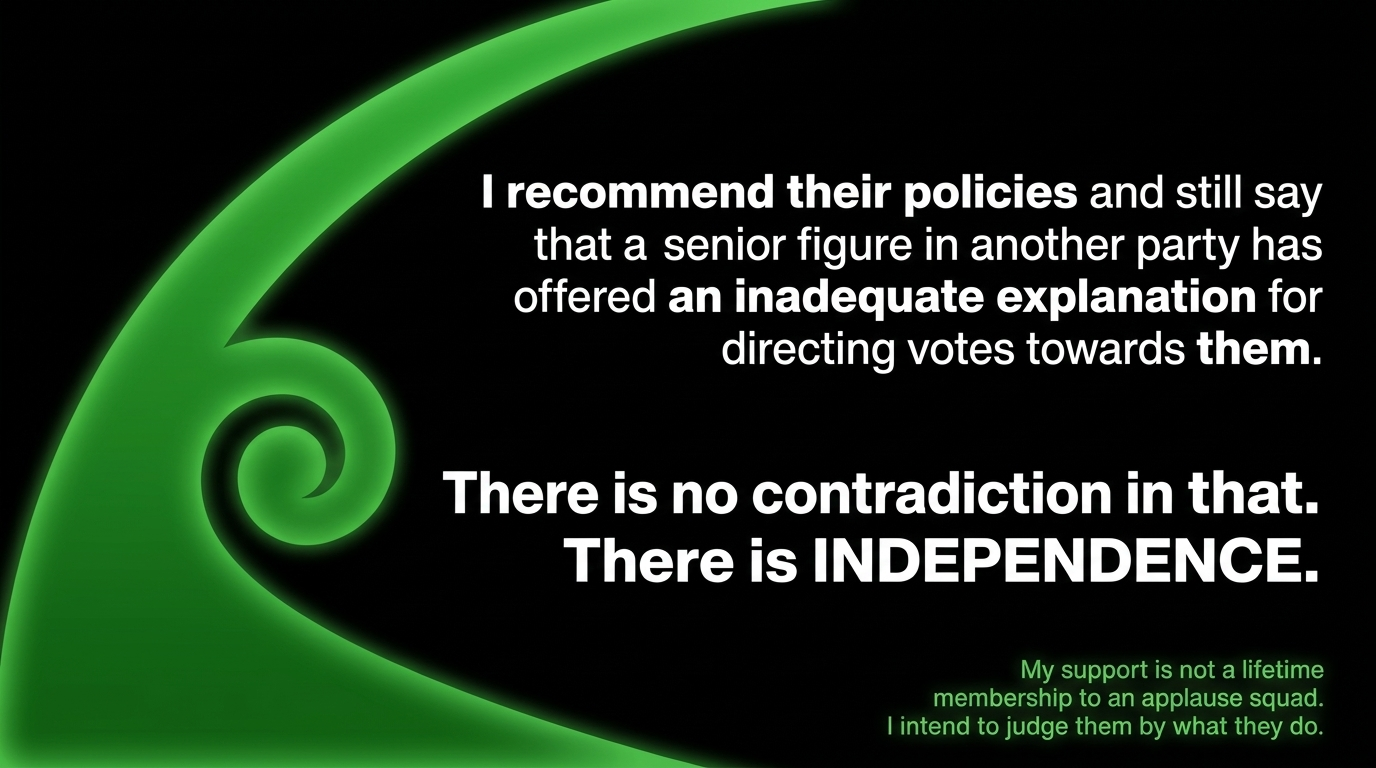
The Greens must still be held to their promises. My support is not a lifetime membership of an applause squad.
I can recommend their policies and still say that a senior figure in another party has offered an inadequate explanation for directing votes towards them.
There is no contradiction in that. There is independence.
What I Want Our Mokopuna To Find
I would love you to read, listen to and share this work because I want it to be useful outside an election argument.
Take the questions to a candidate. Discuss the calculation with your whānau. Use the sources when somebody tells you there is only one respectable way to vote.
For those who prefer other formats, my related essay “Vote For The Future They Keep Calling Impossible” brings together a cited written argument with audio and video.
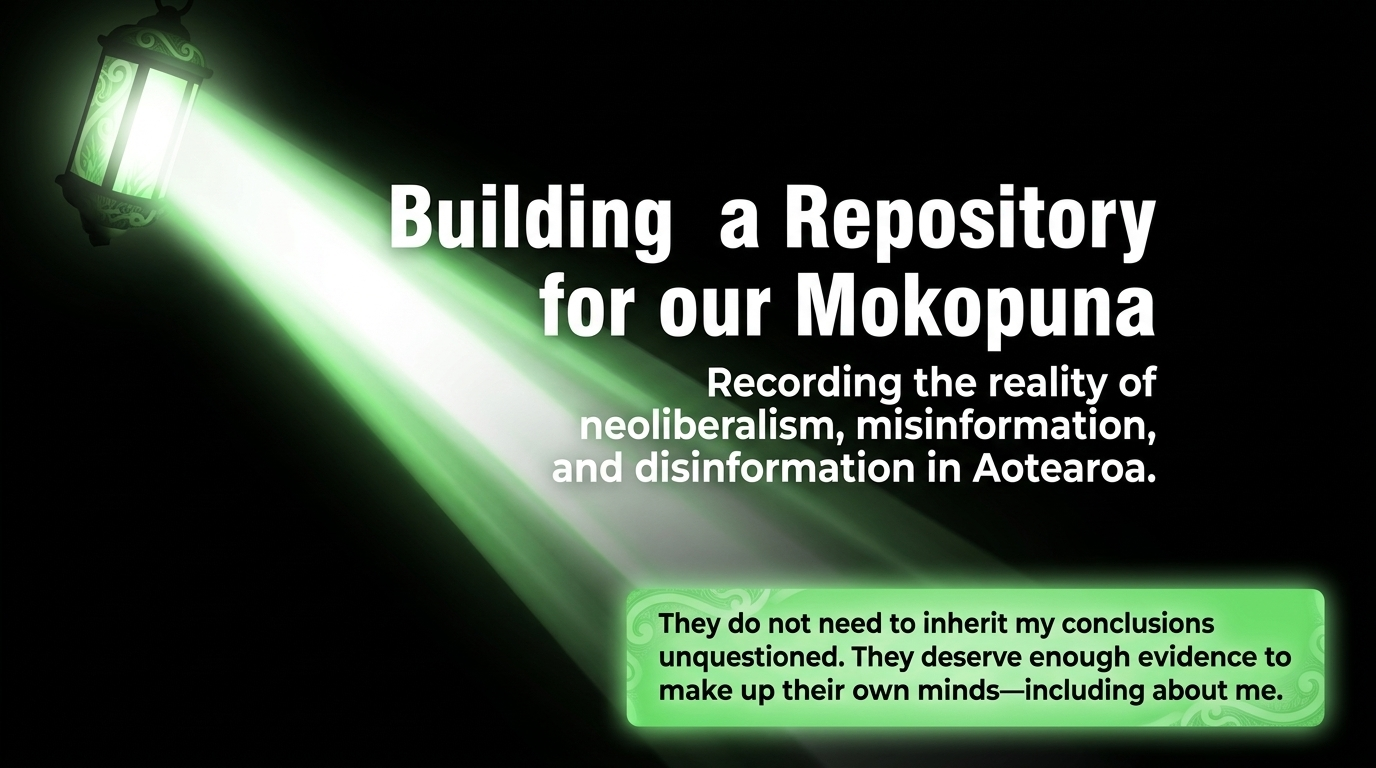
I am building this repository for our mokopuna. I want them to be able to look back at this work on neoliberalism, misinformation and disinformation in Aotearoa and see that people were recording what happened and trying to protect them.
They do not need to inherit my conclusions unquestioned.
They deserve enough evidence to make up their own minds—including about me.
Koha Consideration

This kind of independence needs people willing to support and protect it.
The Māori Green Lantern is supported through koha, not corporate patronage, as described on the Koha page.
Your support helps keep this mahi answerable to its kaupapa rather than to a party office or a corporate sponsor. It helps protect the freedom to say something inconvenient, even when the people being questioned would prefer solidarity without scrutiny.
If you are able, you can:
- Make A Koha To Support And Protect This Mahi.
- Subscribe Through The Māori Green Lantern.
- Make a direct bank transfer to Ivor Jones, account number 03-1395-0099387-000, as published on the Koha page.
- Support Through Facebook.
If you cannot koha, there is no shame in that. Read, follow, kōrero and share with your whānau. Helping reliable information reach someone who needs it is support too.
The People Come First

I do not recommend returning this coalition to power. The Tribunal’s findings on Māori health are reason enough to reject the idea that its treatment of Māori authority is merely a difference in management style.
I recommend a Green party vote because I support the direction of their published programme. Then I intend to judge them by what they do.
And I will not pretend to have confidence in the current form of Te Pāti Māori when I do not.
I had hoped for better. I still want better. But wanting a strong Māori political future does not oblige me to preserve a structure I no longer trust.
A party is supposed to serve the people. If its current machinery gets in the way, change the machinery. If the organisation cannot survive that change, the organisation is not the thing we should be protecting.
Our aspirations are bigger than a party.
That does not make every strategy promoted in their name wise.
Disclaimer: This essay expresses my political opinions. Criticism of Te Pāti Māori concerns its leadership, governance and strategy—not Māori political independence or anyone’s whakapapa. References to the party’s current form ending mean democratic political change, never harm to any person. The supplied screenshot has not been independently authenticated.