"The Coalition’s Lifeboat Is Taking Water: They Turn Cancer Care Into A Weapon Against Each Other" - 9 October 2026
National, ACT, And NZ First Demand Another Term While They Raid Each Other’s Portfolios, Gut Māori Authority, And Make Whānau Carry The Political Cost.

Mōrena Aotearoa,
In my second essay for this morning, I examine National’s attempt to turn a health announcement into an election weapon against its own coalition partners; the mathematics and moral failure inside its foreign-aid-for-medicines framing; the effects of a system that treats Māori authority as expendable; and why the framework of Tika, Pono, and Tikanga exposes the coalition’s political conduct for what it is.
The final section explains why I will not vote this coalition back into power on 7 November 2026, and why I recommend the Green Party. The election date is verified by Elections NZ.
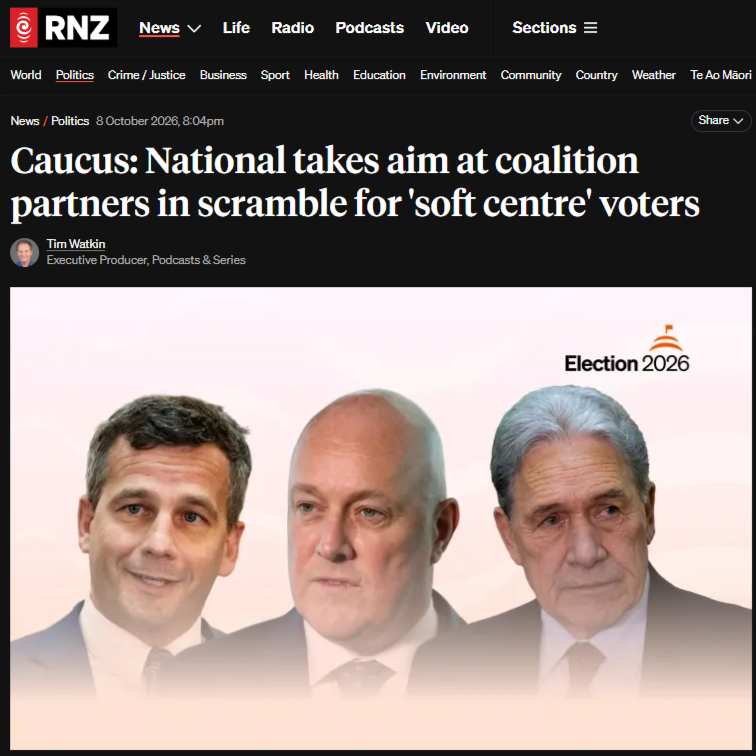
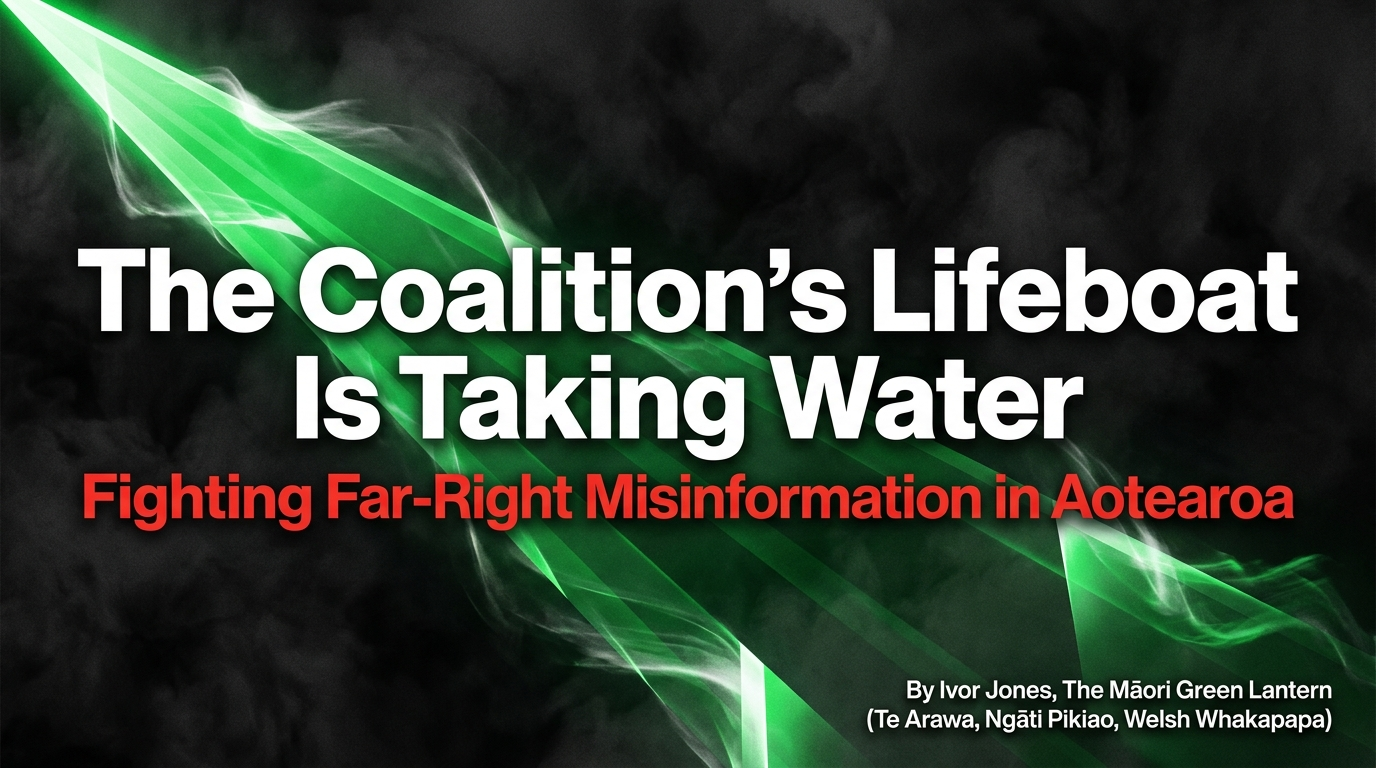
 RNZ | Te Reo Irirangi o Aotearoa
I would love you to click through to The Māori Green Lantern because this whare holds material you can use in daily life. There is an audio podcast that lays out this kaupapa in detail, a short video that explains it plainly, and—for readers who want every receipt—a fully cited long-form essay of roughly 3,000 words. This is a repository for our mokopuna, so that they can look back and say: at least we knew The Māori Green Lantern, among a few others, was warning us.
The Lifeboat Has Become A Feeding Frenzy
National is not presenting as the steady captain of a functioning coalition. It is acting like a party clambering over its own crew to reach the lifeboat first.
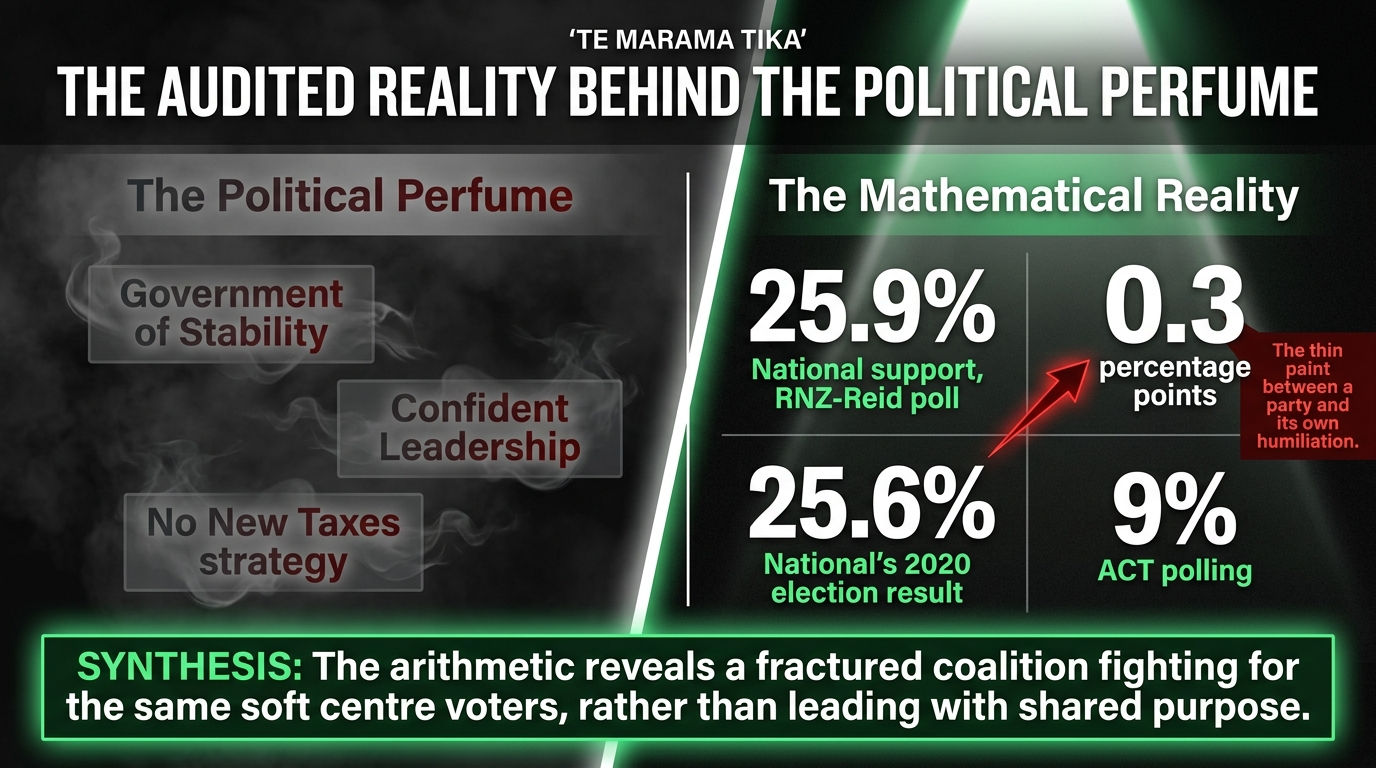
RNZ reports National at 25.9 percent in the RNZ-Reid Research poll—only 0.3 percentage points above its 25.6 percent 2020 election result. That is not the distance between confidence and victory; it is the thin paint between a party and its own humiliation. RNZ
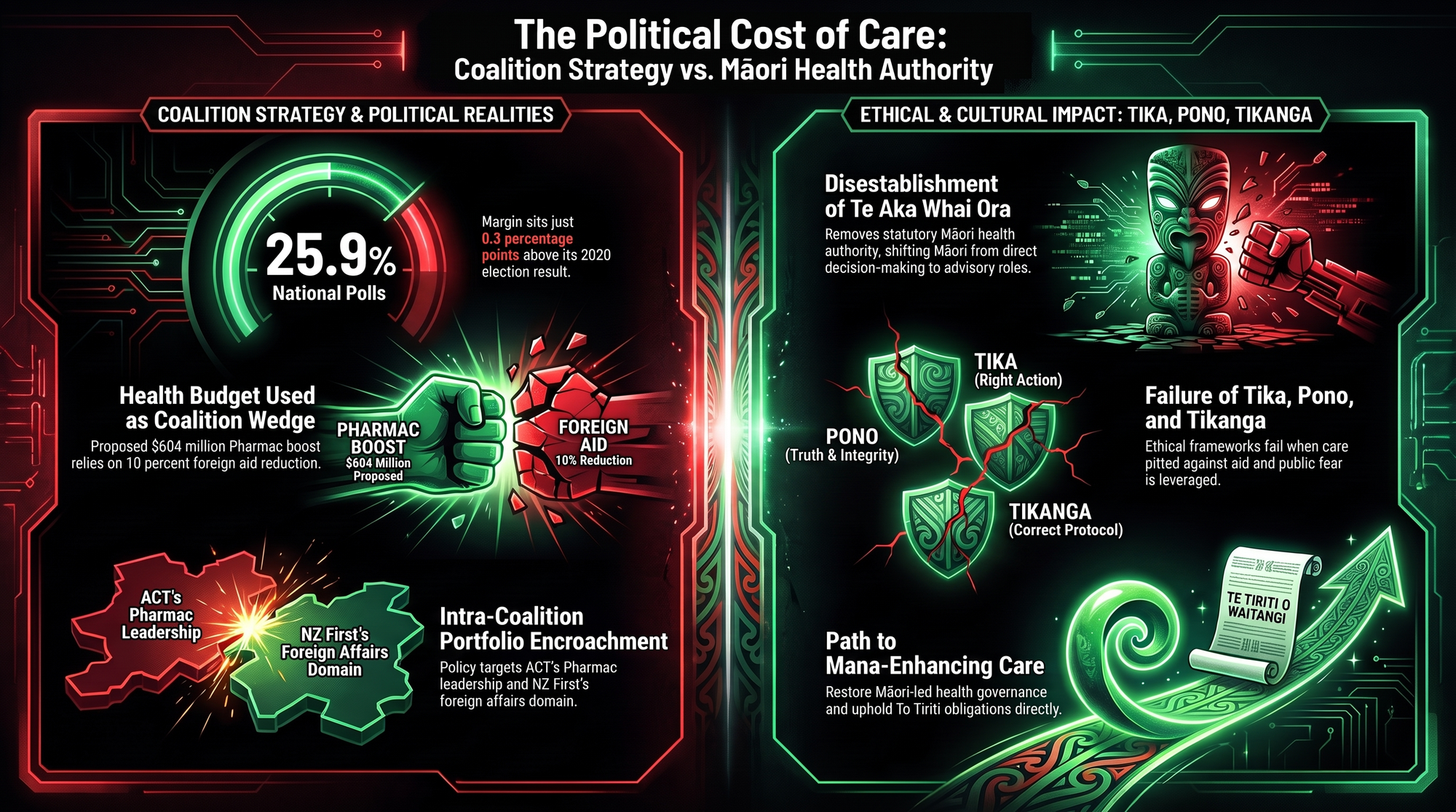
RNZ also reports ACT at 9 percent in both its cited polls, while its political editors describe National, ACT, and NZ First as seeking not merely the soft centre but votes from one another. That is the coalition’s real whakapapa at election time: not shared purpose, not collective responsibility, but competing appetites fighting inside the same pantry. RNZ
National’s medicine announcement does not repair that fracture. It weaponises it.
The Cancer-Care Wedge
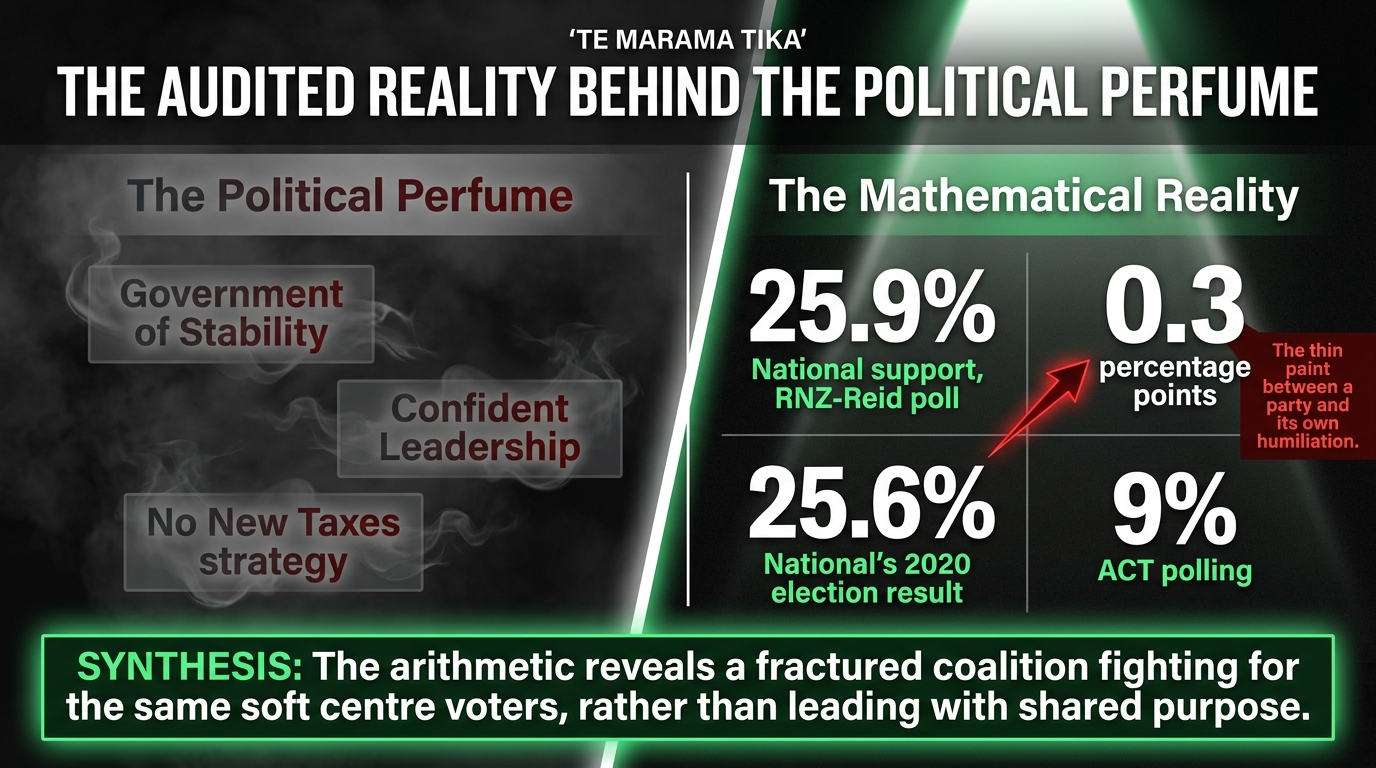
National promises a further $604 million uplift for Pharmac, while saying it will “largely” pay for this by reducing foreign aid outside the Pacific and making MFAT more efficient. It also promises new cancer-screening measures, clinical-trial targets, and access to CAR-T therapy. National’s policy announcement
Cancer patients deserve medicines. Whānau deserve screening. Nobody with a conscience disputes that.
But National has chosen to market care by inviting the public to resent people beyond our borders. Its own statement says the money should be spent “here at home” rather than “sent offshore.” National’s policy announcement That is not a durable plan for health funding. It is an election-season bargain-bin morality: make suffering compete with suffering, then call it fiscal management.
RNZ identifies the political calculation clearly. David Seymour, as Associate Health Minister responsible for Pharmac, has owned the coalition’s medicines increases. Winston Peters, as Foreign Minister, oversees the portfolio National proposes cutting. National is not simply announcing a health policy; it is elbowing ACT out of the Pharmac photograph while cutting into NZ First’s foreign-affairs territory. RNZ
The coalition said it was the government of stability. What we see is a three-headed taniwha biting its own tails while asking whānau to clap.
Tika, Pono, And Tikanga
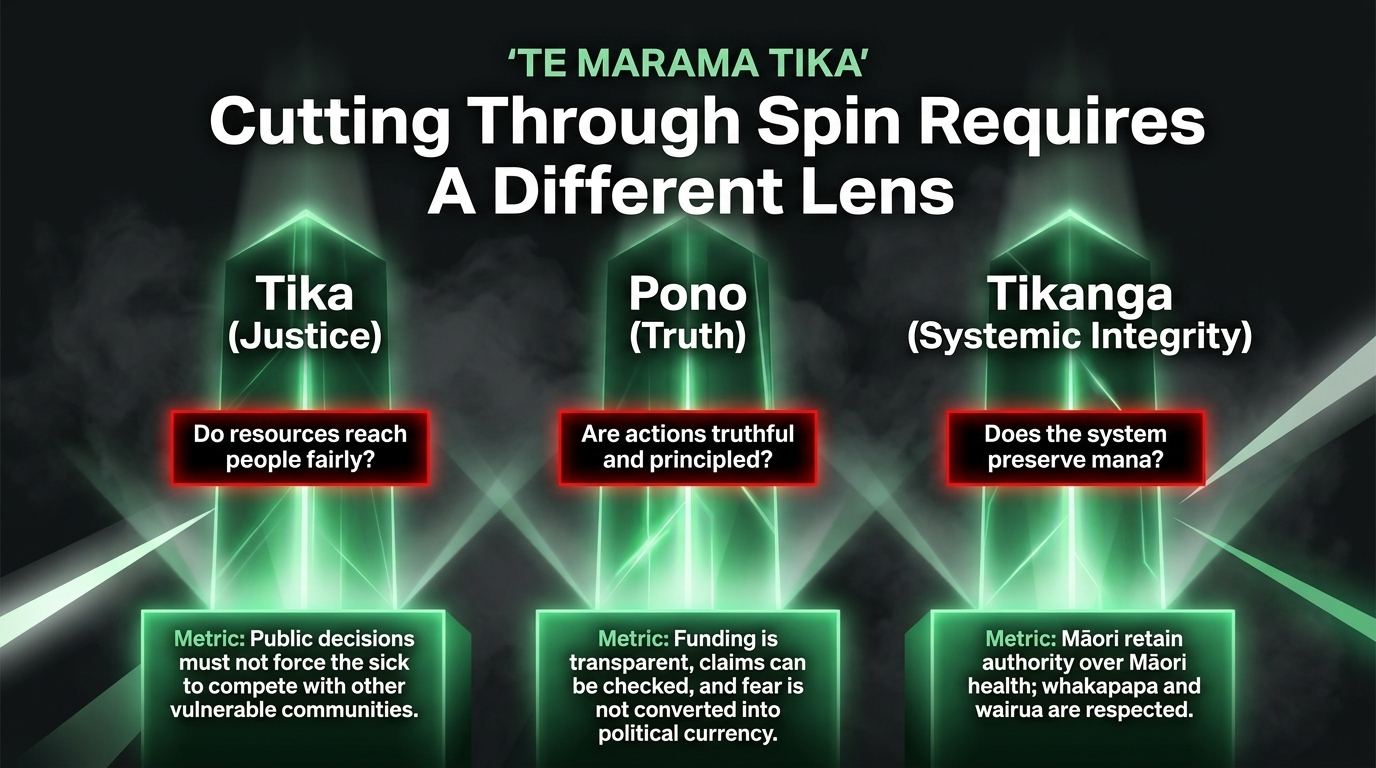
Tika asks whether conduct is right and just. Pono asks whether words and actions are truthful, principled, and carried with integrity. Tikanga asks the harder question: did this system preserve mana, recognise whakapapa, respect wairua, involve whānau, and return people to wellbeing?
On that standard, this coalition’s conduct fails before it reaches the press-conference microphone.
A health system is not tika merely because a Minister announces a dollar figure. It is tika when resources reach people fairly, when public decisions do not force the sick to compete with other vulnerable communities, and when those most harmed have actual power over the system.
A policy is not pono merely because it uses the language of “patients first.” It is pono when its funding is transparent, its claims can be checked, and it does not convert fear into a political currency.
A system is not tikanga-led merely because it says “wellbeing.” It is tikanga-led when Māori retain mana and authority over Māori health, when whānau are central rather than an afterthought, and when the Crown protects rather than appropriates decision-making power.
The Waitangi Tribunal’s reporting on the Crown’s disestablishment of Te Aka Whai Ora raises grave concerns about Māori health, Treaty obligations, and the absence of a credible replacement pathway. Waitangi Tribunal The coalition removed the statutory Māori health authority, then asks us to believe that a contest over press-release credit for Pharmac is health leadership. It is not.
I have previously traced that whakapapa in “The Crown Ripped Māori Hands From The Health System Then Called The Amputation Patient Care”, and in “The Vitamin Sermon”. The record is not an isolated blunder. It is a pattern: remove Māori authority, centralise power, then sell a thinner system as efficiency.
The Deep Dive Podcast
Listen to a lively conversation between two hosts, unpacking and connecting topics in the sources of this essay. I apologise in advance for the AI's very harsh pronounciation of reo. Please dont shoot me, :).
Youtube Video
Like video? Here is a short video suppporting the essay. Again, don't shoot the messenger please because of AI's pronounciation. :)
Koha Consideration
You may wonder who supports The Māori Green Lantern to produce this high-volume, evidence-led mahi—tracing the political games that turn cancer care, foreign aid, and Māori health into battlegrounds while whānau pay the price.
The answer is whānau. There are no corporate sponsors behind this mahi. Every koha says that our people are prepared to support the accountability that Crown and corporate structures so often refuse to provide. It says rangatiratanga includes the power to support our own truth-tellers.
Kia kaha, whānau. Stay vigilant, stay connected, and—if you are able—consider a koha to ensure this voice continues. If koha is not possible, that is all good: subscribe or follow The Māori Green Lantern, kōrero about this work, and share it with whānau and friends. That is koha too.
- Support this mahi through Koha — Support The Māori Green Lantern.
- Receive essays directly and support through The Māori Green Lantern Subscription Portal.
- Direct bank transfer: Ivor Jones — 03-1395-0099387-000.
- Follow and support via The Māori Green Lantern On Facebook.
Three Examples For The Western Mind
Example One: The Ambulance And The Fire Brigade
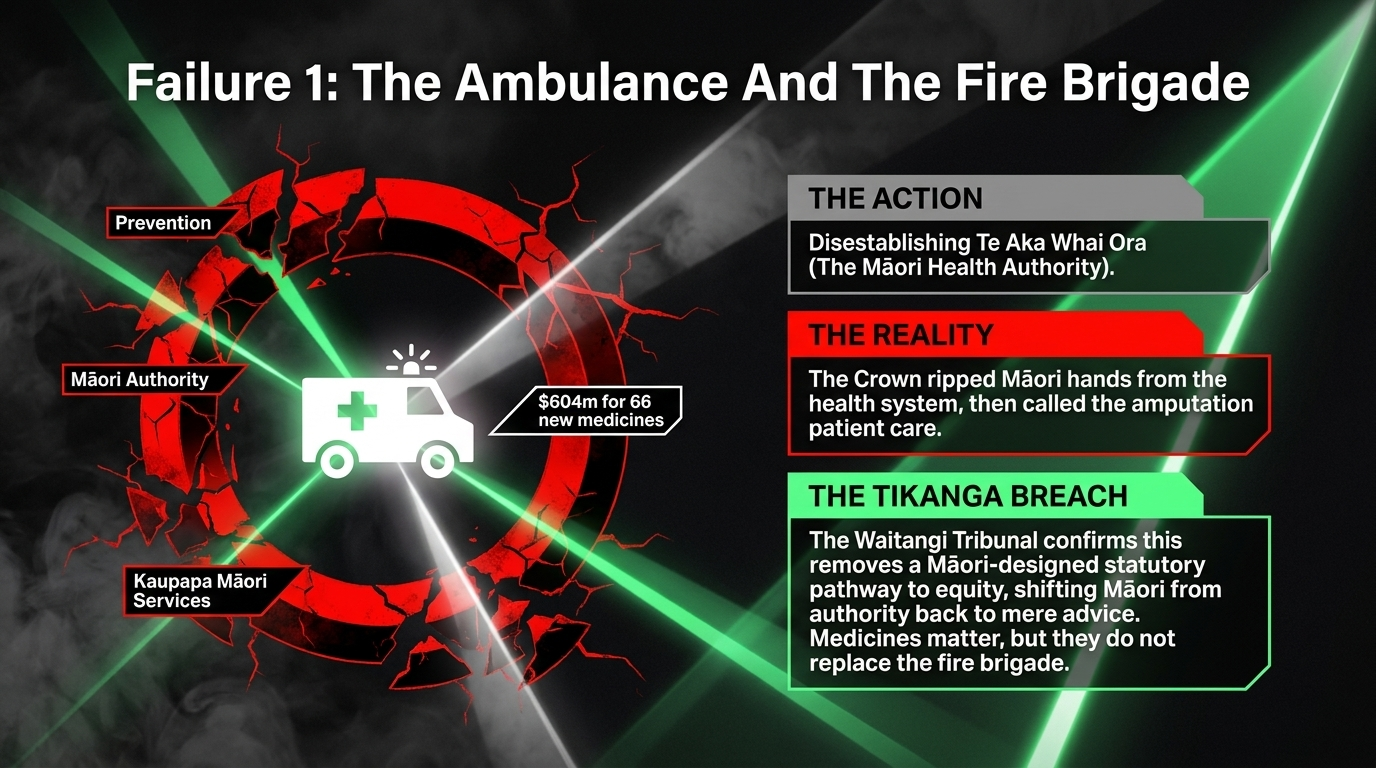
Imagine a government cuts a fire brigade, sells off equipment, and then holds a press conference celebrating a new ambulance. Both may be necessary services. But an ambulance does not restore the firefighters, the trucks, the prevention work, or the community’s confidence that help will arrive.
That is what it looks like when a government promotes medicines while having disestablished Te Aka Whai Ora. The medicines matter. They do not cancel the removal of a Māori-designed statutory pathway toward equity. The Waitangi Tribunal’s findings make clear why this is not a technical organisational change but a breach of Treaty responsibility. Waitangi Tribunal
Tikanga Impact: The system fails to preserve mana because Māori are shifted from authority back to advice. It fails whakapapa because it treats accumulated Māori health evidence as disposable. It fails wairua because it tells whānau to trust a system that first removed their place within it.
Solution: Restore and properly resource Māori-led health authority and kaupapa Māori services, with Māori governance—not merely consultation—over priorities, data, funding, and accountability. The Green Party’s published 2026 manifesto commits to Māori deciding the destiny of whānau, hapū, and iwi and says this is affirmed by Te Tiriti. Green Party Manifesto
Example Two: The Family Budget Lie
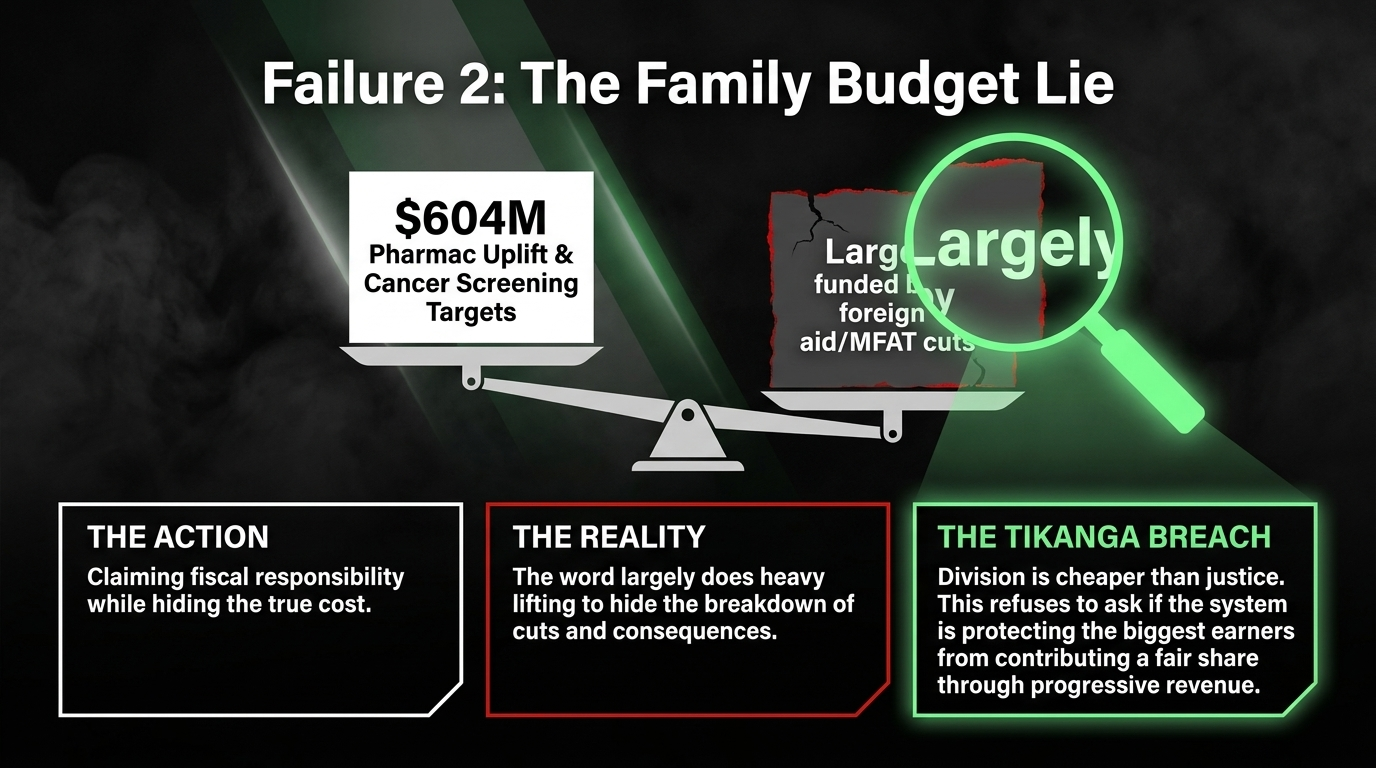
Imagine a parent says there is no money for groceries, then insists the only option is to take food from the neighbour’s children. That is not a household budget. It is a refusal to ask whether the parent is paying a fair share, wasting money elsewhere, or protecting the biggest earners from contributing more.
National’s plan says it will “largely” fund a further $604 million medicines package by reducing foreign aid and associated administration costs by 10 percent, while protecting Pacific aid. National’s policy announcement The word “largely” does heavy lifting. It does not give voters a complete transparent breakdown of the foreign-aid cuts, the claimed administrative savings, or the consequences for affected programmes.
Tikanga Impact: Tikanga is shattered when care is framed as a contest between different groups of people who need help. Mana is not divisible. A child receiving health care here and a community receiving development support overseas are not enemies. The political machine makes them enemies because division is cheaper than justice.
Solution: Fund health through transparent, progressive and durable revenue choices, not by manufacturing a false moral war between cancer patients and people beyond New Zealand’s shores. The Green Party’s manifesto places affordable living, healthy nature, and real democracy at the centre of its programme, alongside equitable and accessible health care. Green Party Manifesto
Example Three: The Three Flatmates Fighting Over The Same Fridge
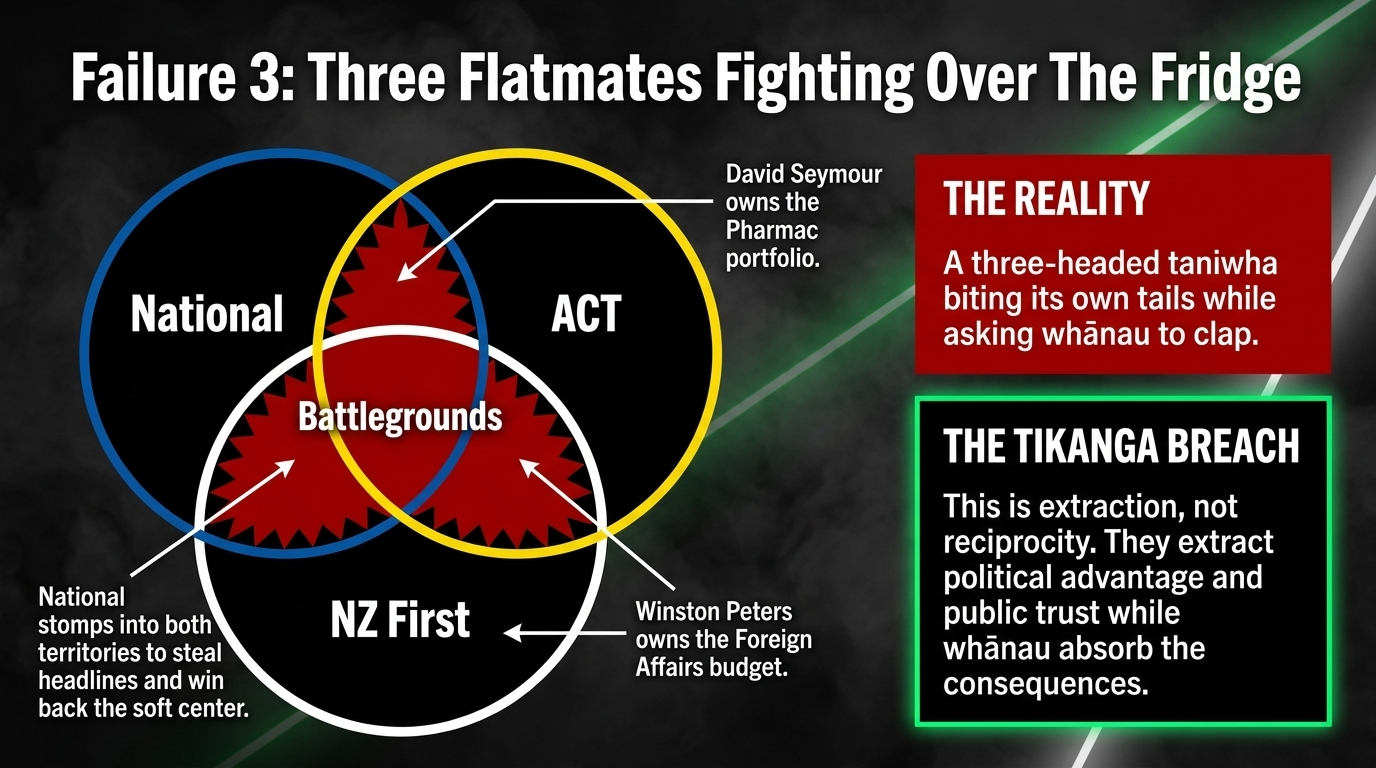
Imagine three flatmates promise the landlord a calm, stable home. Then one claims the food budget as its achievement, another claims the kitchen, and the third finds the cupboard emptied to pay for it. They do not have a household plan. They have a fight.
RNZ reports that National’s medicines policy stepped into both ACT and NZ First territory: Seymour’s Pharmac responsibility and Peters’ foreign-affairs budget. RNZ’s political reporting describes National’s move as an effort to draw support from its coalition partners while party figures express polling concern. RNZ
Tikanga Impact: Whānau need a government that behaves like a responsible collective, not a gang of Ministers competing for credit while public services absorb the consequences. Tikanga requires relationships built on reciprocal duty. This is not reciprocity. It is extraction—of political advantage, public trust, and other people’s mana.
Solution: Vote for a programme that treats democracy as more than a contest for ministerial credit. The Greens’ published policy proposes to reduce big-money influence through donation limits, a ban on company donations, and a public lobbyist register. Green Party Democracy Policy Announcement
The Record Already Written

This essay does not stand alone. The political pattern has been documented across the Māori Green Lantern archive.
In “Seven Parties Walked Into The Light”, I set out why a coalition that attacks Te Tiriti, Māori institutions, and public accountability cannot be treated as a normal change of government.
In “The Kaitiaki They Killed”, I documented the political choice to dismantle Māori health authority and treat human wellbeing as a cost line.
In “Luxon’s Coalition Is Rotting From The Inside”, I wrote about a government whose internal fractures become costs paid by the public.
The connection is not mysterious. The coalition uses the language of efficiency while centralising power. It uses the language of patient care while dismantling Māori authority. It uses the language of stable government while its parties raid one another’s portfolios for votes. The beneficiaries are the political operators who keep control. The bill lands with whānau.
Why I Will Not Vote For This Coalition
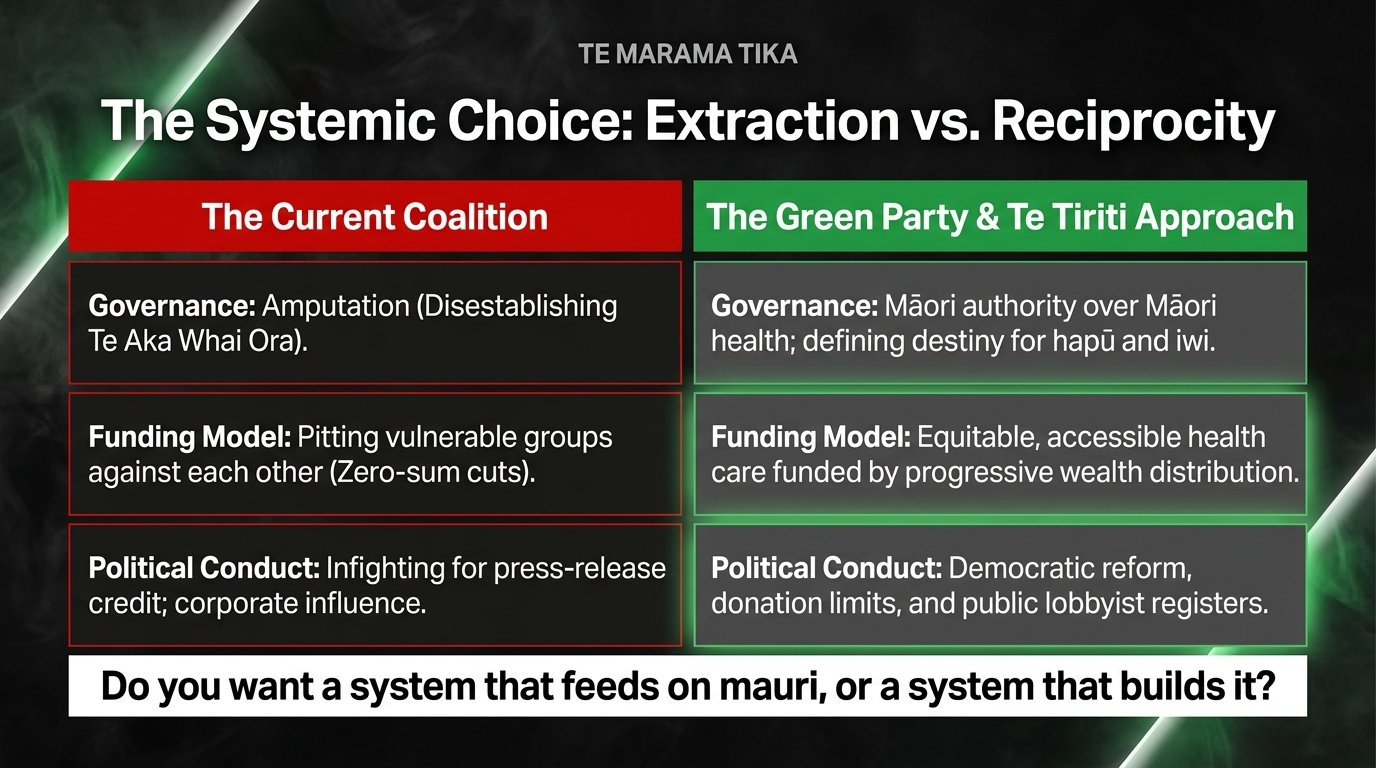
I will not vote to return a coalition that has shown such contempt for Māori authority, Te Tiriti obligations, public accountability, and the idea that health is a collective responsibility.
I will not vote for a government that dismantles Te Aka Whai Ora, then asks Māori to be grateful for being invited back into a Crown-controlled system as advisers. The Waitangi Tribunal’s findings demand scrutiny, not amnesia. Waitangi Tribunal
I will not vote for a government that makes cancer care the rhetorical weapon in a contest against people needing development support overseas. National’s $604 million promise may be real as a campaign commitment, but it is wrapped in a false choice and political opportunism. National’s policy announcement
I will not vote for a coalition that calls itself stable while its largest party turns the Pharmac portfolio and foreign-aid budget into a shopping aisle from which it can steal headlines from ACT and NZ First. RNZ
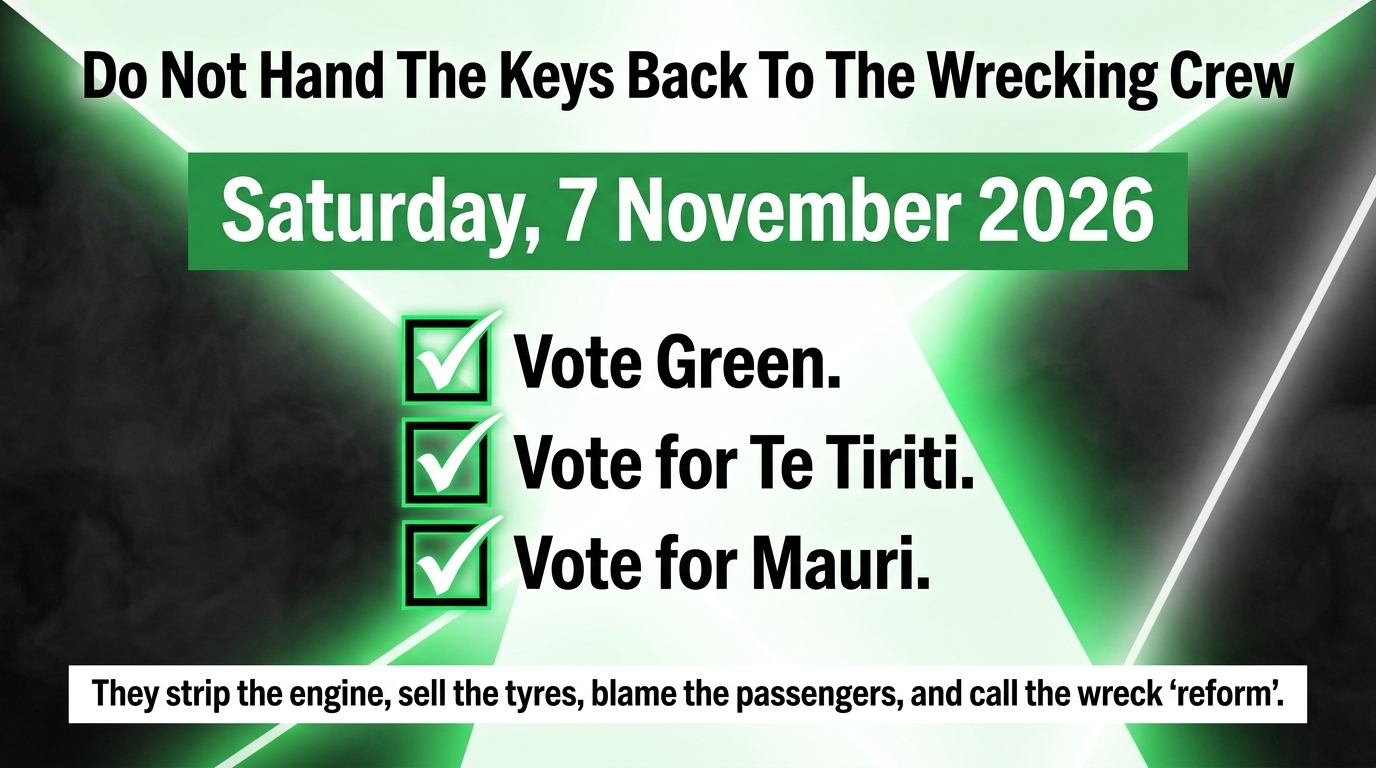
The election is on Saturday, 7 November 2026. Elections NZ
Why I Recommend The Green Party
I recommend voting Green because the party’s published manifesto places Te Tiriti, Māori self-determination, accessible health care, and a fairer distribution of wealth and power at the centre of its programme. Green Party Manifesto
The Greens’ promises remain promises until implemented; they must be held to account like every other party. But their stated direction is materially different from the coalition’s record: Māori decision-making rather than Māori removal; public-health equity rather than culture-war politics; and democratic reform rather than corporate influence. Green Party Manifesto
That is the choice as I see it. Do not hand the keys back to a coalition that has shown it will strip the engine, sell the tyres, blame the passengers, and call the wreck “reform.”
Vote Green. Vote for Te Tiriti. Vote for a health system that builds mauri instead of feeding on it.
Disclaimer: This is evidence-led public-interest commentary about public actors and policies. All factual claims are linked to their sources; analytical conclusions and political recommendations are clearly expressed as opinion. Corrections will be made promptly where credible evidence establishes an error.