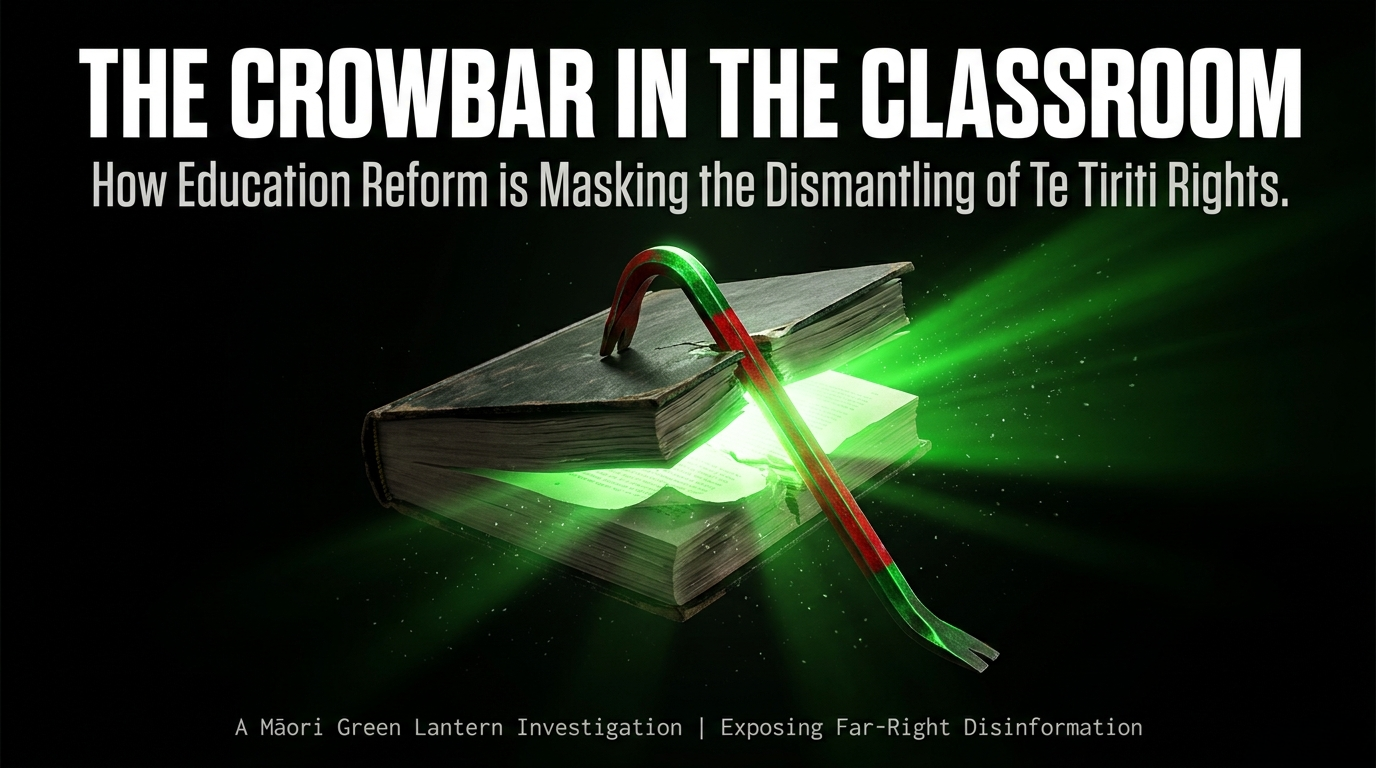
"THE CROWBAR IN THE CLASSROOM: How Goldsmith, Stanford and Luxon Are Burning Down Māori Education While Calling It Reform" - 16 May 2026
They strip Treaty protection from Māori tamariki, delay the backlash with a curriculum concession, then stand in front of cameras and call the wreckage progress.

Kia ora Aotearoa,
This essay examines the government's education changes because they directly affect Māori whānau, democratic accountability, and the Crown's legal obligations in public education.
There is an old colonial trick: break the structure that protects the people, then offer them a new structure designed by power, branded as improvement.
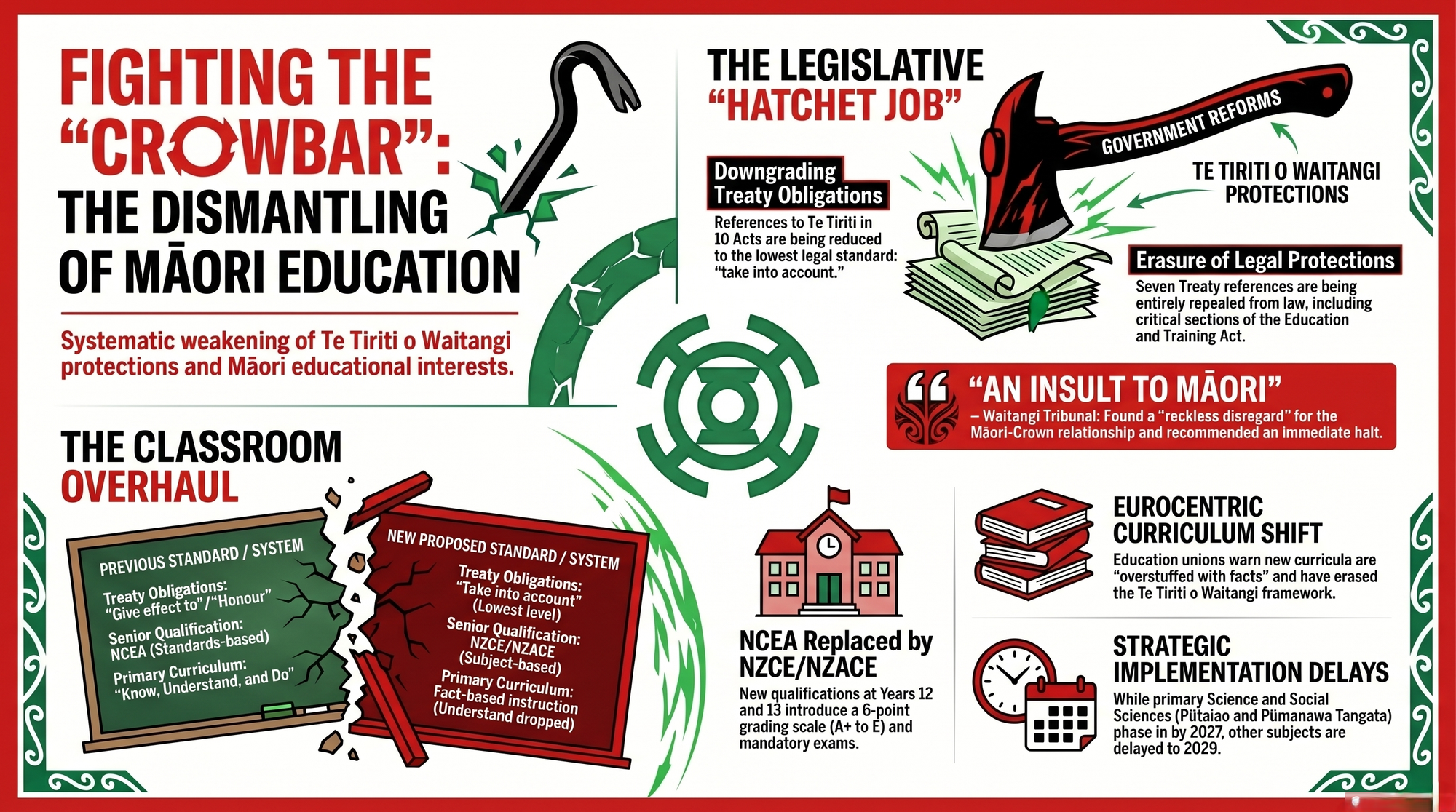
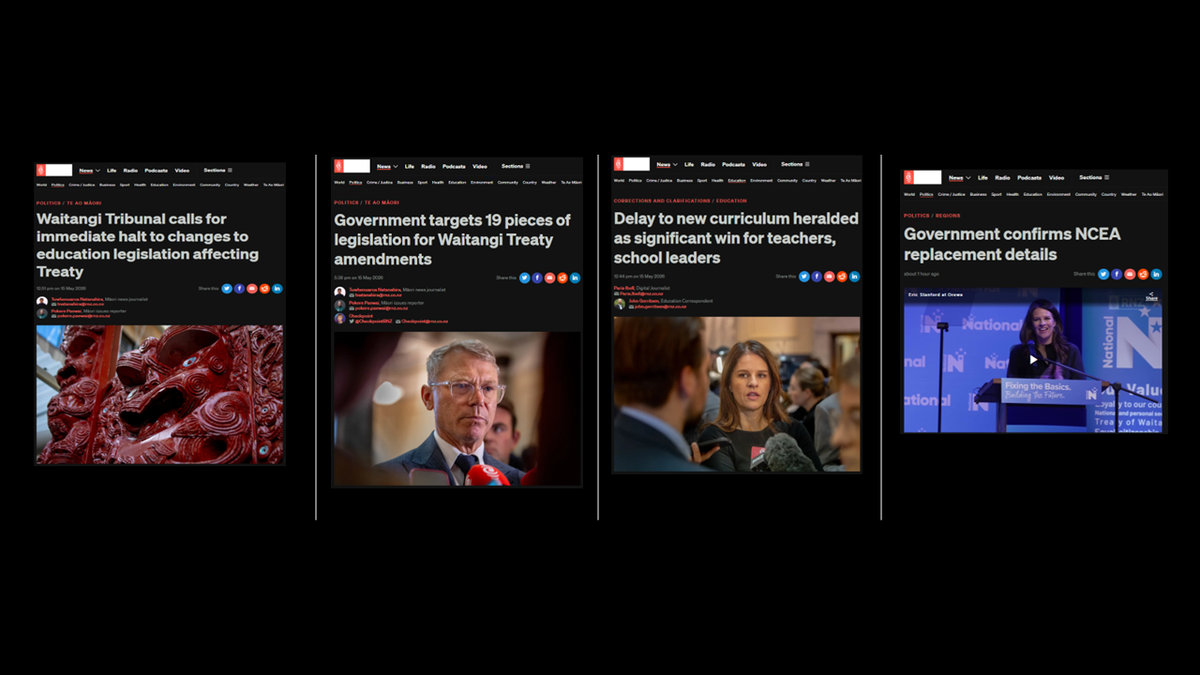
In my view, that is exactly what this government is doing in education, because the government has confirmed the replacement of NCEA while the Waitangi Tribunal has simultaneously called for an immediate halt to Treaty-related education law changes, as reported by RNZ on the NCEA replacement and RNZ on the Tribunal's halt recommendation.
Background
 RNZ News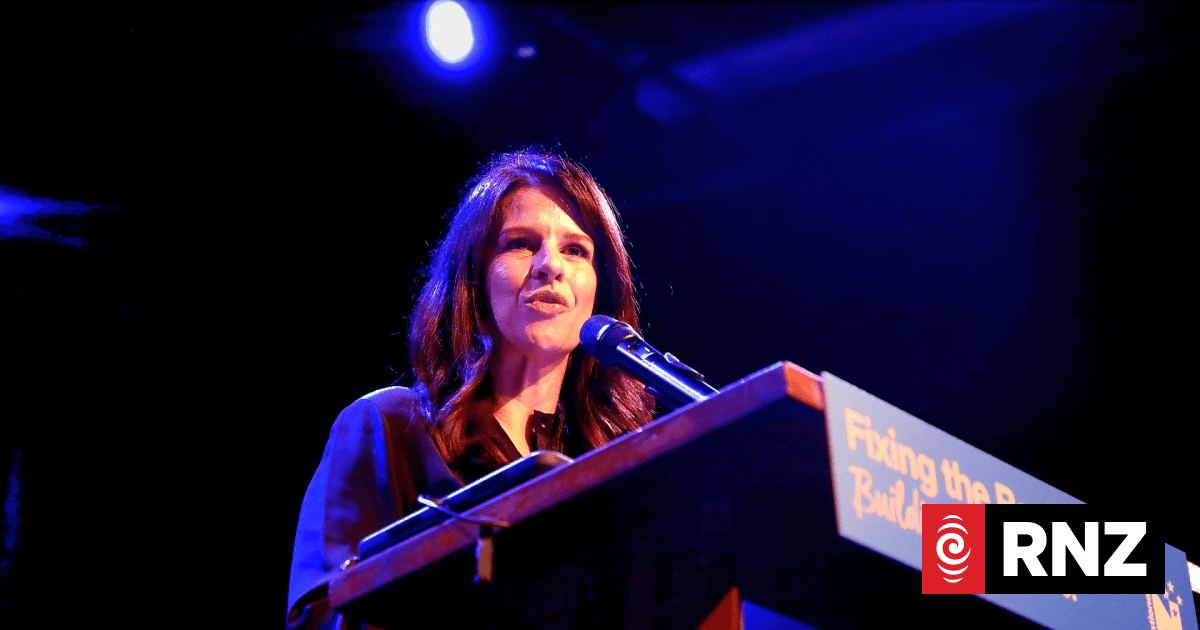
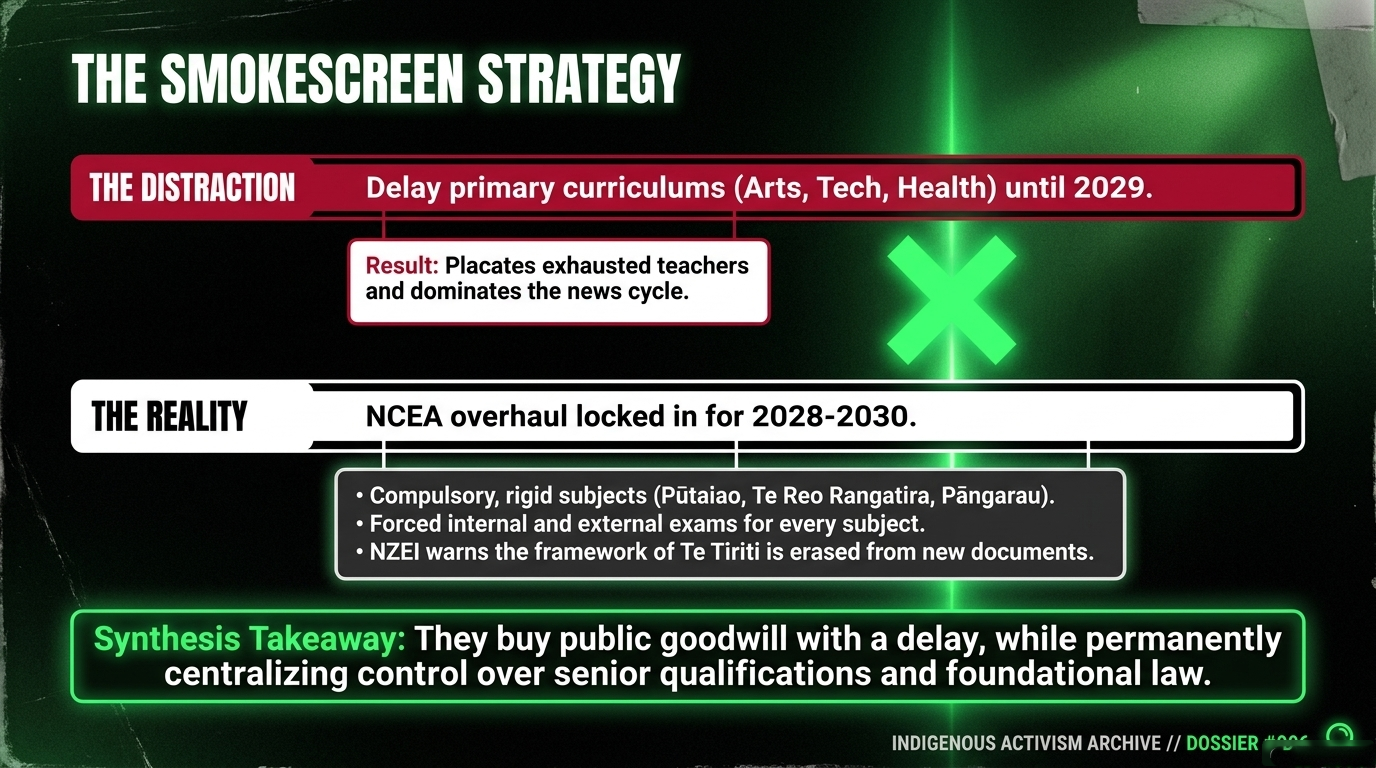
The government has confirmed that NCEA will be replaced by the New Zealand Certificate of Education at Year 12 and the New Zealand Advanced Certificate of Education at Year 13, with a six-point grading scale from A+ to E, at least five subjects per year, and a Foundational Award at Year 11 required before students can gain the new qualifications, as set out by RNZ's report on the announcement and reinforced in the same RNZ coverage of Stanford and Luxon in Orewa.
The Deep Dive Podcast
Listen to a lively conversation between two hosts, unpacking and connecting topics in the sources of this essay. I apologise in advance for the AI's very harsh pronounciation of reo. Please dont shoot me, :).
The same announcement confirms Level 1 will disappear in 2028, Year 12 students will begin the new NZCE in 2029, and Year 13 students will begin the NZACE in 2030, as detailed by RNZ's NCEA replacement report and again in RNZ's account of the implementation timetable.
Stanford also confirmed that every subject will include both internal assessment and an examination, and that industry-led subjects developed by Industry Skills Boards will sit alongside ministry-developed subjects, according to RNZ's reporting on the policy detail and RNZ's summary of the new qualification structure.
 Tnatanahira, Pokere Paewai, Checkpoint
At the same time, the Ministry delayed full implementation of four curriculum areas for primary schools until 2028 or 2029 while retaining the timeline for Years 9-10 and expecting schools to begin using the new Years 0-8 Science and Social Sciences content from 2027, as reported by RNZ on the curriculum delay and clarified in the same RNZ education story.
 Paris Ibell, John Gerritsen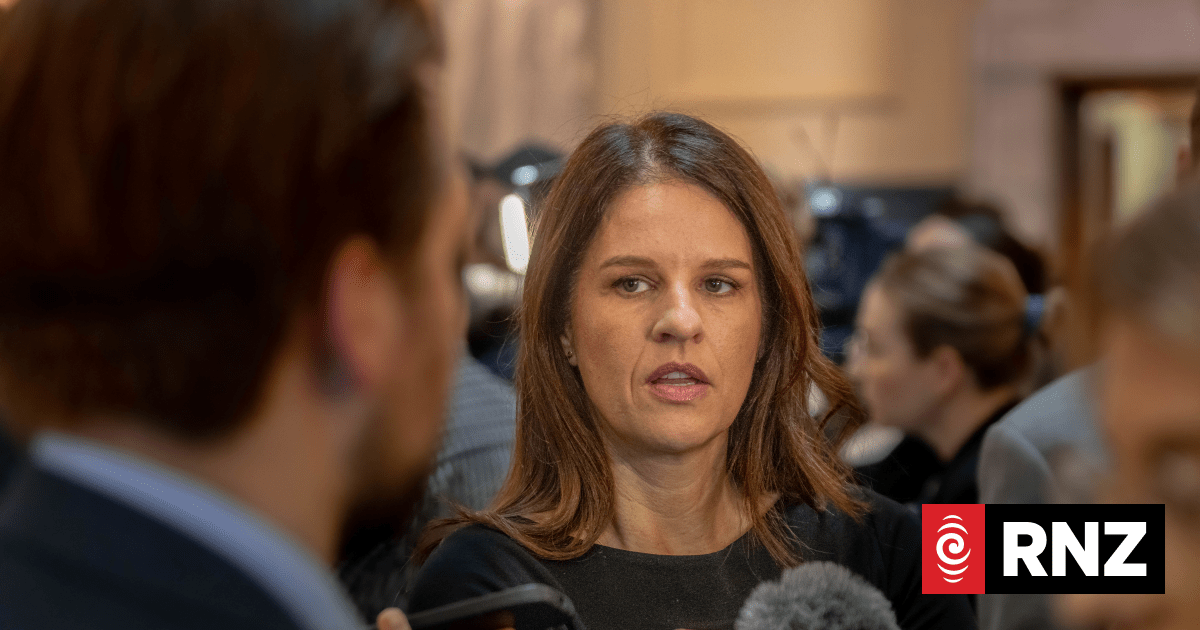
The country's largest education union described that delay as a significant win, but its national secretary Stephanie Mills also warned that the new curriculum remained very Eurocentric and said the framework of Te Tiriti o Waitangi had been erased from the new documents, as reported by RNZ's coverage of teachers and principals and quoted in the same RNZ article on the delayed rollout.
 Tnatanahira, Pokere Paewai
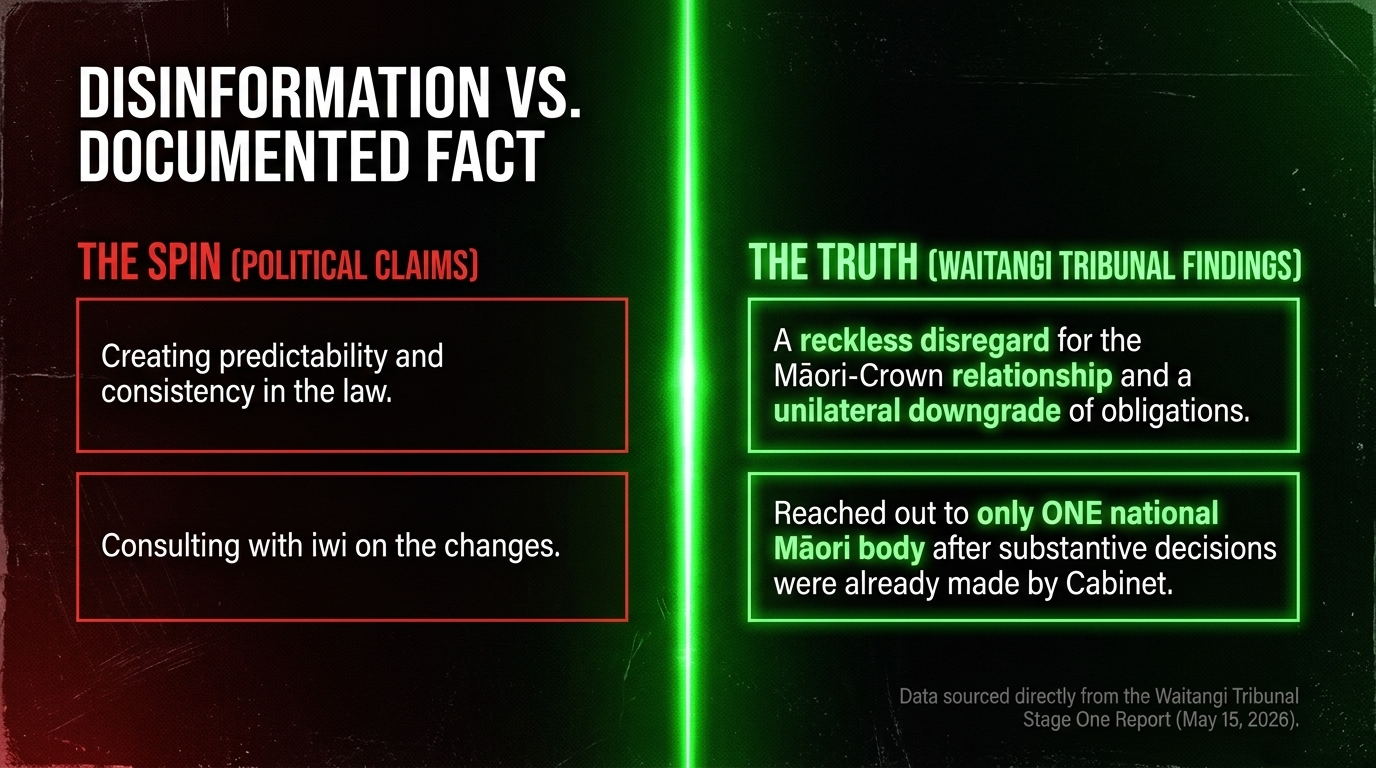
On 15 May 2026, the Waitangi Tribunal recommended an immediate halt to draft legislation weakening government obligations to Te Tiriti in education and found the Crown had breached the principles of partnership and good government, as reported by RNZ's Tribunal story and stated again in RNZ's reporting on the Tribunal findings.
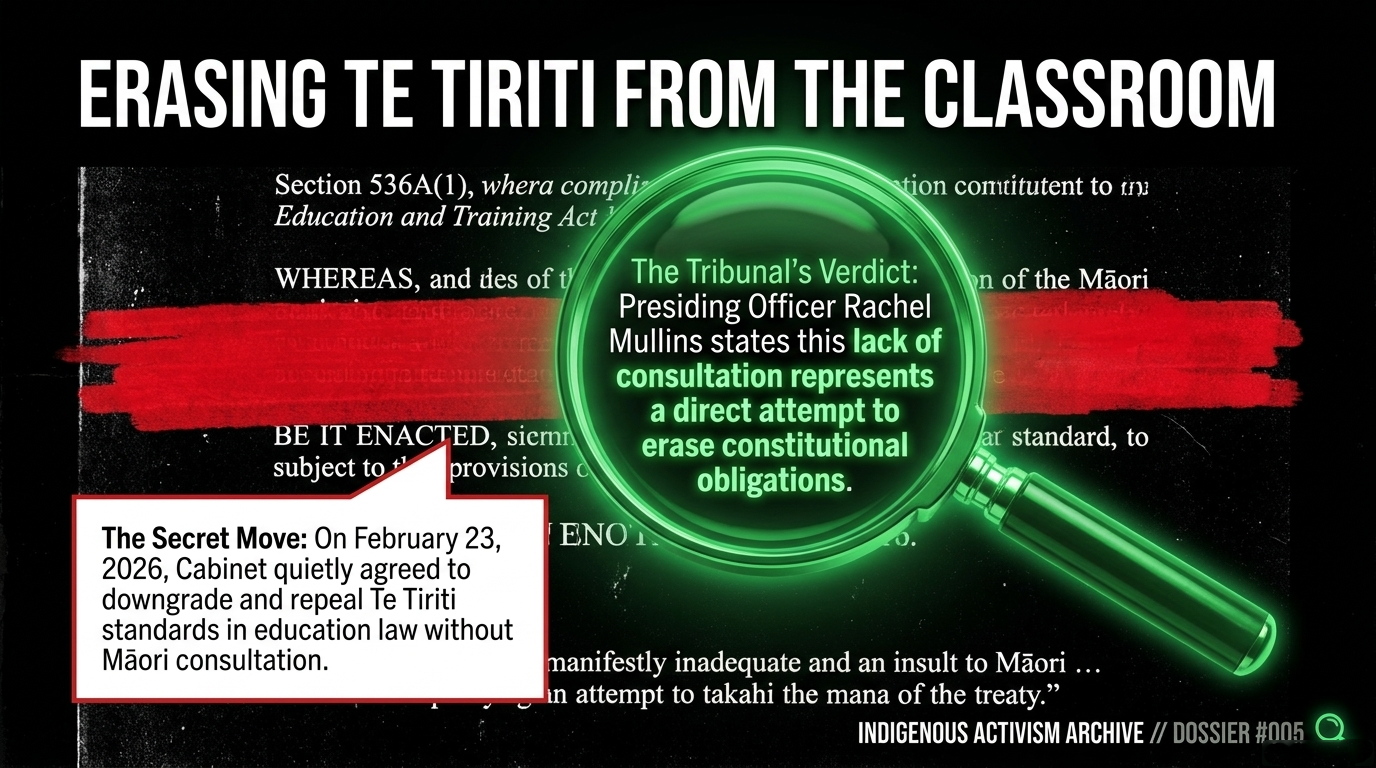
Presiding officer Rachel Mullins said Cabinet had already agreed on 23 February 2026 to downgrade Treaty standards in multiple sections of the Education and Training Act to no higher than “take into account”, and that those decisions had been made without consultation or engagement with Māori, as revealed by RNZ's report on the Tribunal letter to ministers and reinforced in RNZ's coverage of the same report.
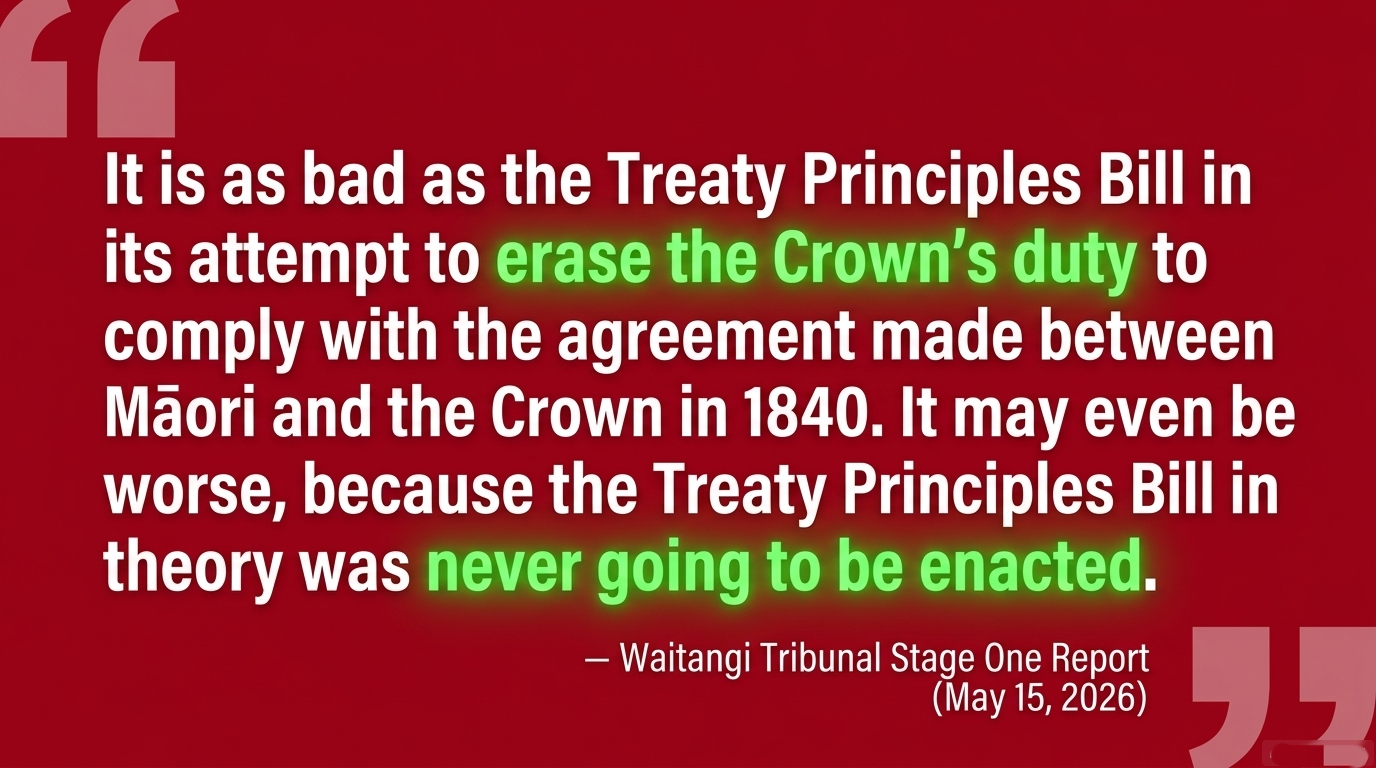
Mullins also said the move was as bad as the Treaty Principles Bill in its attempt to erase the Crown's duty to comply with the agreement made in 1840 and may even be worse because the Treaty Principles Bill was never going to be enacted, according to RNZ's publication of the Tribunal findings and the same RNZ article quoting the presiding officer directly.
Analysis
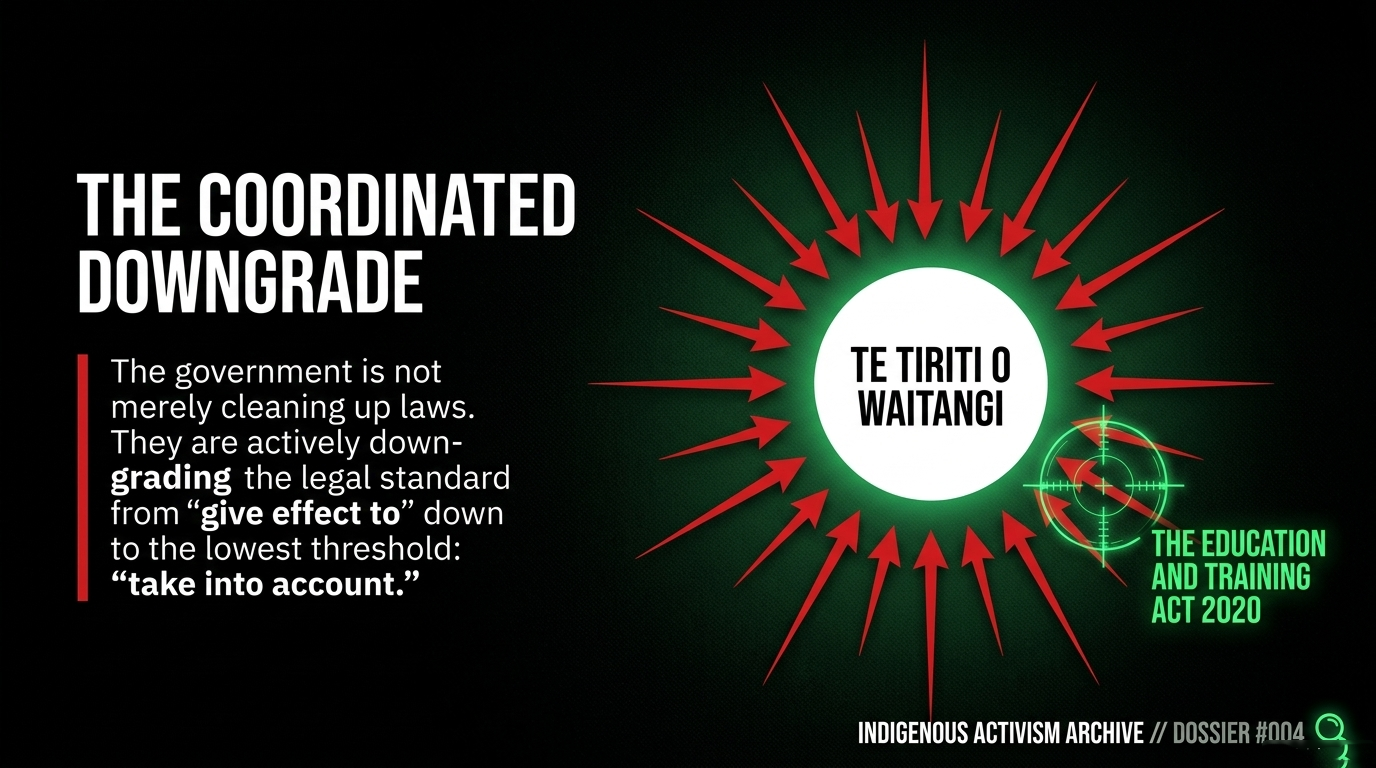
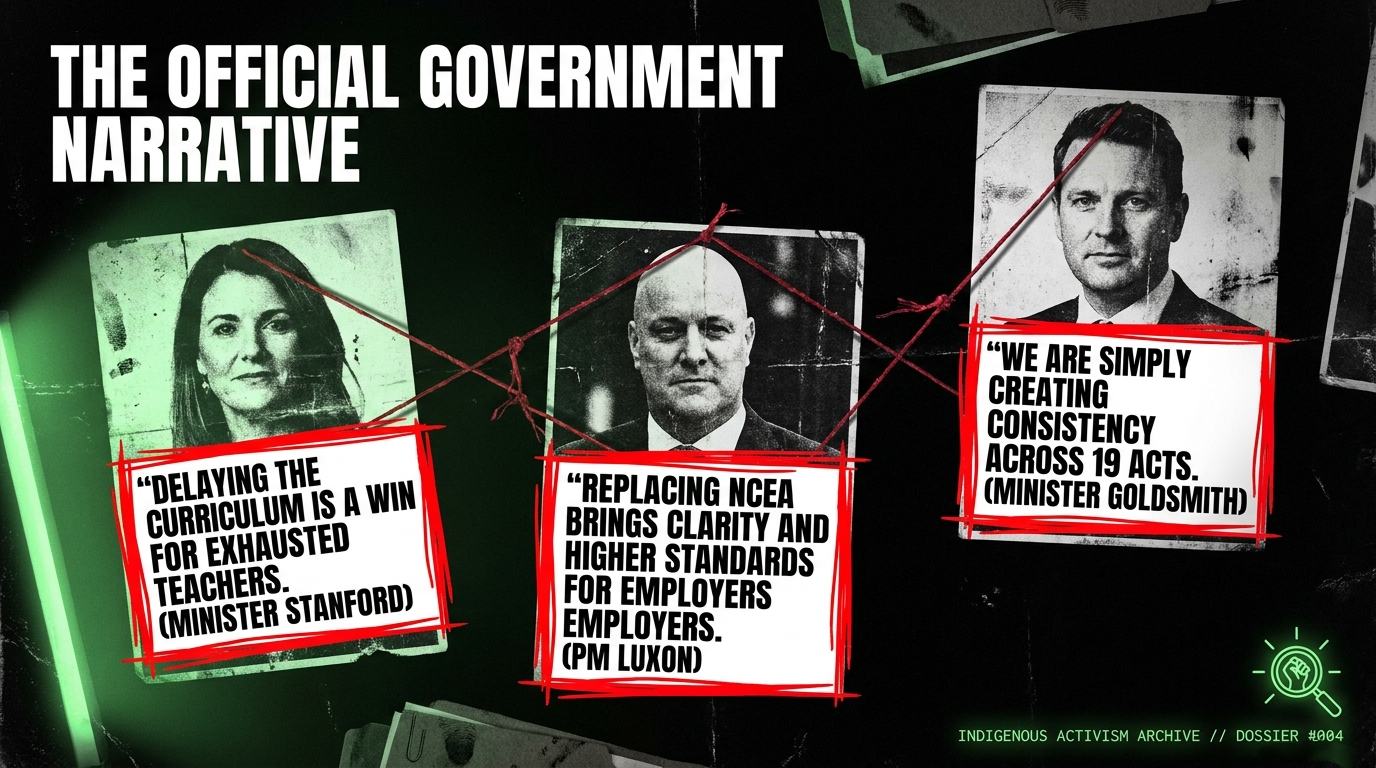
The first hidden connection is timing. Goldsmith announced amendments affecting 19 pieces of legislation on the same day the Tribunal released its education report, and RNZ reported that the full list of changes was released to media half an hour before the Tribunal's report went public, as shown by RNZ's report on the 19 targeted laws and RNZ's report on the Tribunal warning.
The second hidden connection is method. Goldsmith said the government had agreed to amend two references, repeal seven references, and reduce 10 Acts to a standard of no higher than “take into account”, while the Tribunal had already warned that downgrading education obligations to that level would signal a major shift in the Crown's commitment to Te Tiriti, as reported by RNZ's legislative review story and RNZ's Tribunal coverage.
The third hidden connection is consultation, or the lack of it. RNZ reported that the government said it was consulting with iwi, but the Tribunal found the Crown had so far only reached out to one national Māori body, the National Iwi Chairs Forum, and called the idea that select committee submissions were enough “manifestly inadequate” and “an insult to Māori”, as documented by RNZ's report on the 19 Acts review and RNZ's report on the Tribunal findings.
The fourth hidden connection is curriculum ideology. Mills said the delayed curriculum remained Eurocentric, overstuffed with facts, and focused on instruction from the front of the class, while also saying Te Tiriti had been erased from the framework, as reported by RNZ's education coverage and reiterated in the same RNZ article quoting the union response.
The fifth hidden connection is structural. The NCEA replacement introduces a more standardised qualification system with compulsory subjects, visible grades, exams in every subject, and industry-led subjects, at the exact moment the government is weakening Treaty clauses in education law, as described by RNZ's report on the new qualification design, RNZ's report on the broader Treaty amendment programme, and RNZ's report on the Tribunal's warning.
In my view, this is not administrative tidying but a coordinated ideological project, because Goldsmith explicitly called the 19-law package a first step and said conversations would continue about how the review could go further in future, as reported by RNZ's story on the targeted legislation and supported by RNZ's reporting on the government's stated next steps.
Treaty lawyer Tania Waikato told RNZ that the government's language about clarity was a convenient excuse and said the courts already understood the different Treaty standards in law, as reported by RNZ's coverage of Waikato's response and contextualised by RNZ's report on the Tribunal's criticism of the process.
Implications
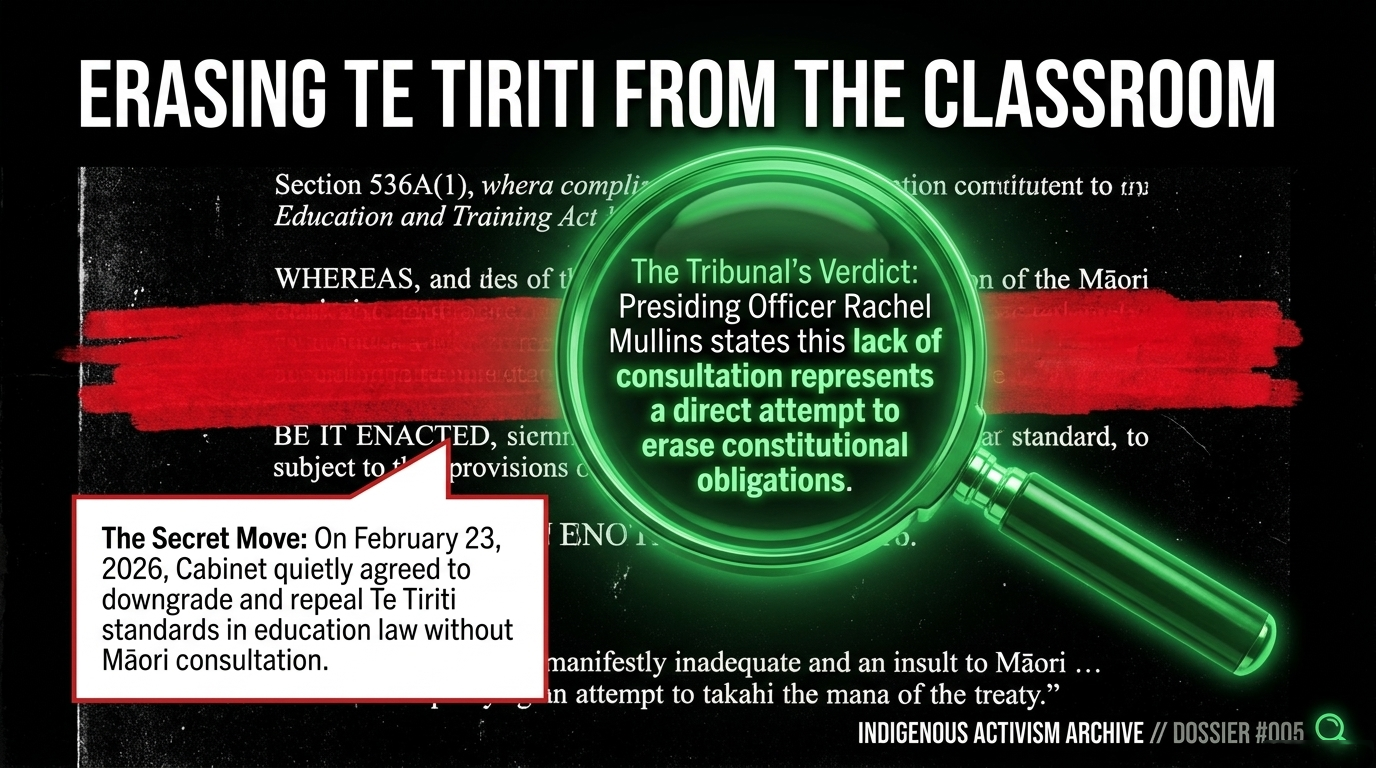
The harm here is not abstract. The Tribunal found the Crown acted contrary to clear and repeated official advice, showed reckless disregard for likely harm to the Māori-Crown relationship, and risked disproportionately harming Māori because Treaty provisions operate as safeguards for Māori interests, as explained by RNZ's Tribunal report and reinforced by RNZ's coverage of the same findings.
The Impact On Tamariki & Whānau
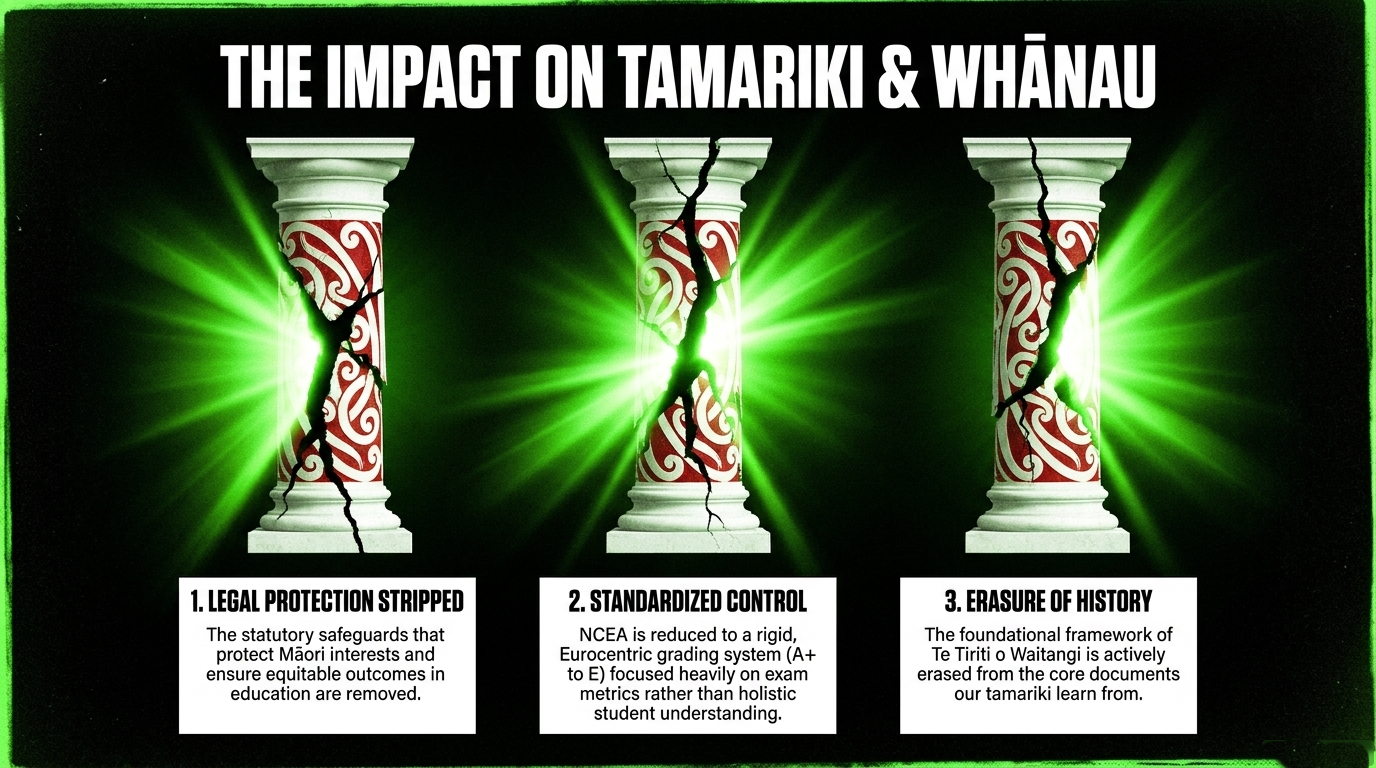
For whānau, that means three things.
First, the legal obligations protecting Māori interests in education are being downgraded or removed, as shown by RNZ's report on the Education and Training Act changes and RNZ's report on the wider 19-Act package.
Second, a more rigid senior qualification is being imposed on current Year 9 students, as confirmed by RNZ's report on the NCEA replacement and repeated in RNZ's summary of the rollout.
Third, even where ministers retreat on timeline, they are not retreating on direction, as shown by RNZ's report on the curriculum delay and RNZ's report on the legislative Treaty overhaul.
In my view, this government is using the language of reform to carry out a quieter, colder project: weaken Te Tiriti in law, centralise control over curriculum and assessment, and tell the public the whole thing is about standards.
The Far Right Playbook Exposed
The evidence for that judgment is in plain sight in RNZ's reporting on the NCEA replacement, RNZ's reporting on the curriculum delay, RNZ's reporting on the Tribunal's recommendation to halt the education changes, and RNZ's reporting on the 19-law Treaty amendment programme.
The taiaha here is not metaphor alone. It is documented fact. It is dates, sections, ministers, Cabinet decisions, and the Tribunal's own words, all laid out by RNZ's Tribunal coverage and RNZ's legislative review coverage.
Koha Consideration
Kia kaha, e te whānau. Stay vigilant. Stay connected. Every koha funds rangatiratanga's own truth tellers.
- Koha: The Māori Green Lantern — Fighting Misinformation and Disinformation
- Subscribe: The Māori Green Lantern
- Bank: HTDM 03-1546-0415173-000
- Facebook: The Māori Green Lantern on Facebook
Transparency note: Sources used in this draft are four RNZ reports dated 15-16 May 2026. URL audit completed on 16 May 2026 before file share.
Views expressed constitute honest opinion on matters of public interest under the Defamation Act 1992 (NZ) and Durie v Gardiner NZCA 278. All factual claims above are linked to verified source material. Named individuals are referenced solely in their public capacity.