
"THE SILENCING SEASON: How Te Pāti Māori's Leadership Expelled a Wāhine MP, Lost in Court, and Then Sent Debbie Ngarewa-Packer to Call It a "Process" Issue" - 13 May 2026
A man threatened to destroy a woman's career. A court ruled him unlawful. His co-leader went on television and said "tough seasons happen." This is what complicity sounds like when it wears tikanga clothing.

Kia ora Aotearoa,
This essay examines the public statements of Mariameno Kapa-Kingi and Debbie Ngarewa-Packer because they directly affect Māori whānau, democratic representation in Te Tai Tokerau, and the public accountability of elected officials. This essay exercises the responsible communication defence under Durie v Gardiner NZCA 278 and qualified privilege under Lange v Atkinson 3 NZLR 385. Named individuals are referenced solely in their public capacity.
What This Essay Is About
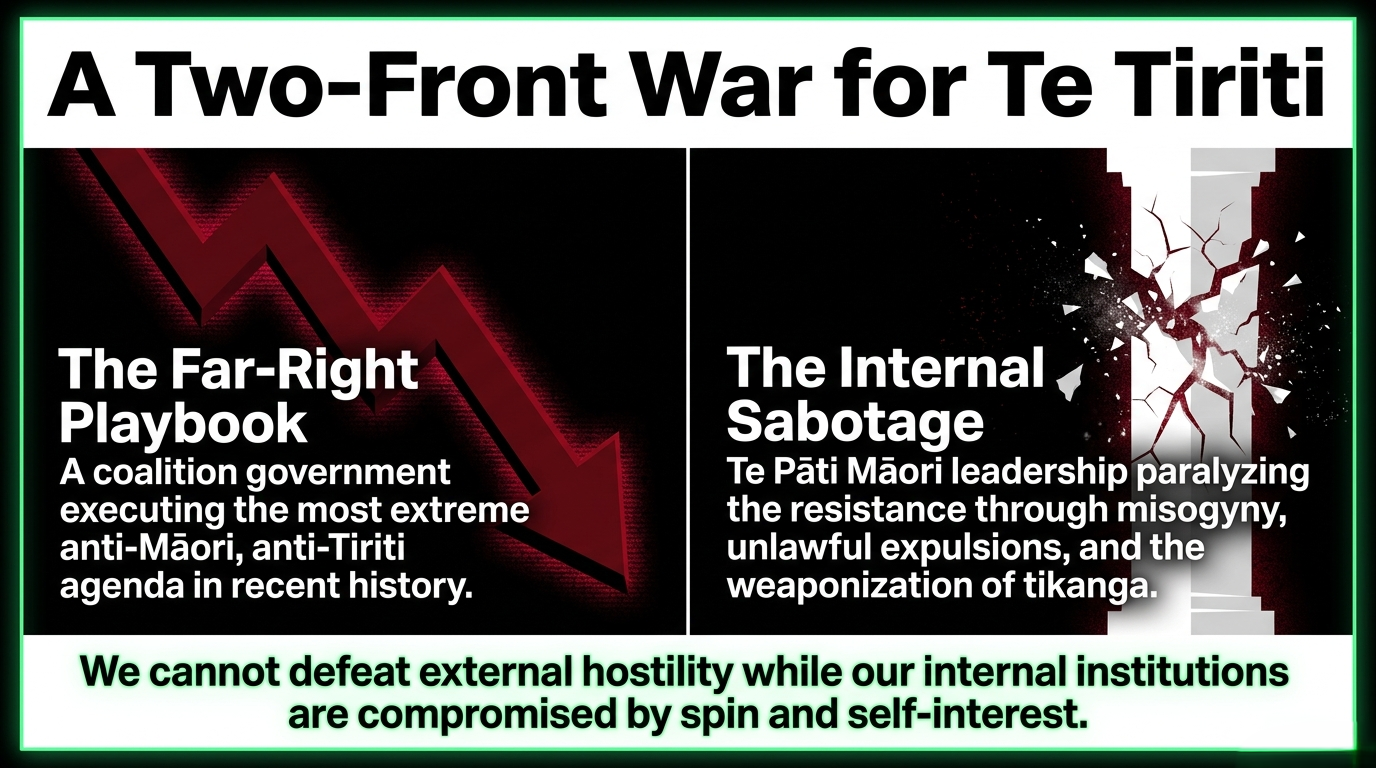
This is not a he-said-she-said story. This is a documented record of institutional abuse of power inside a political party that claims to represent the most vulnerable Māori communities in Aotearoa — and the specific, demonstrable ways in which that abuse has been minimised, deflected, and normalised by the party's own co-leader.
The Deep Dive Podcast
Listen to a lively conversation between two hosts, unpacking and connecting topics in the sources of this essay. I apologise in advance for the AI's very harsh pronounciation of reo. Please dont shoot me, :).
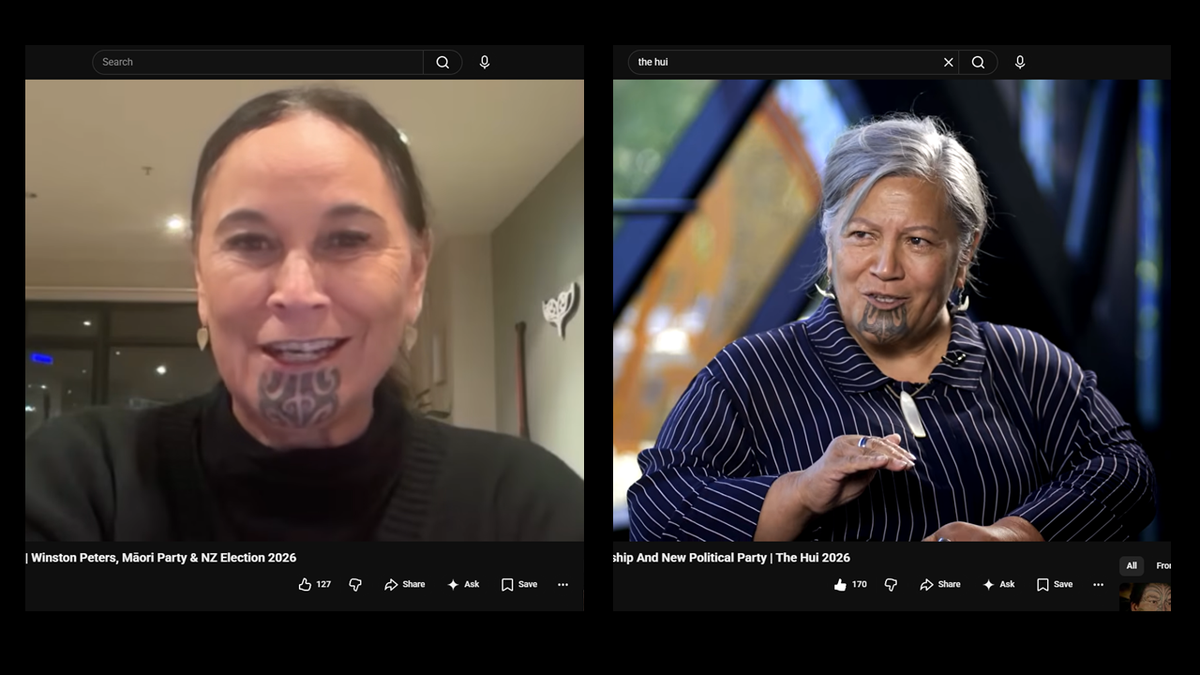
The evidence comes from three places: a 55-page High Court ruling that found Te Pāti Māori acted unlawfully; a forensically honest interview by Mariameno Kapa-Kingi with Julian Wilcox of The Hui; and the Bradbury Group interview with Debbie Ngarewa-Packer on the night Mariameno launched Te Tai Tokerau Party.
We will go through each in granular detail, because the whānau of Te Tai Tokerau, Te Tai Tonga, and every other Māori electorate deserve a reckoning with what has been done in the name of their movement.
The Background: What Actually Happened
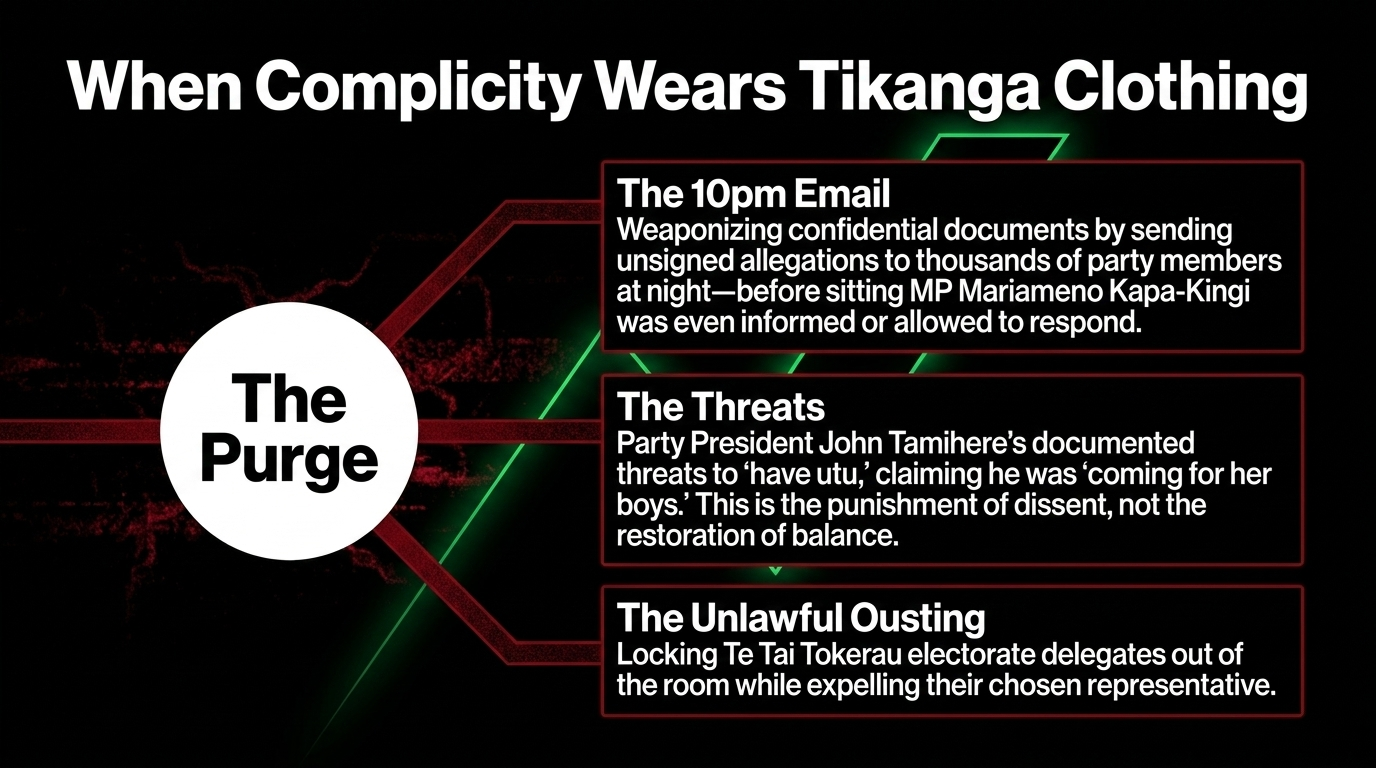
In October 2025, Te Pāti Māori's leadership sent a late-night email to all party members containing serious allegations against Mariameno Kapa-Kingi and her son, Eru. The email alleged a $133,000 budget overspend and accused Eru Kapa-Kingi of bullying parliamentary security staff. As revealed by Te Ao News, the email landed after 10pm, it was unsigned, and it was distributed to the entire membership base — not to Mariameno first.
Here is the context the leadership did not include: Mariameno's office had overspent its budget because she took on the parliamentary work of Tāmaki Makaurau electorate MP Takutai Moana Natasha Kemp, who was gravely ill.
As confirmed by The Spinoff, the co-leaders had already approved a $33,000 transfer to cover this extra work. Mariameno requested further payments. Debbie Ngarewa-Packer verbally agreed to help sort it — then later denied making that commitment.
Kemp died in June 2025. Three months later, the leadership sent a late-night email to the entire party blaming Mariameno for the overspend, as Te Ao News documented in detail.
That is not governance. That is a setup.
Then came the threats.
According to The Spinoff's detailed, court-verified timeline, as Mariameno left a meeting, party president John Tamihere told her that
"if she walked out the door, he would not endorse her candidacy for the next election."
At a separate hui, Tamihere allegedly said he was "coming for her boys" and "was going to have utu."
These are not allegations of policy disagreement. These are documented, reported threats — direct, personal, retaliatory — made by the president of a political party against a sitting woman MP.
Te Pāti Māori then expelled both Mariameno Kapa-Kingi and Tākuta Ferris in November 2025. The expulsion included the charge that Ferris had failed to raise internal complaints "directly with the party president," as Newstalk ZB reported. Read that again: an MP was expelled, in part, for not funnelling his complaints through the man he was complaining about.
Te Tai Tokerau — Mariameno's own electorate — was excluded from the meeting that decided her fate, as Te Ao News confirmed. Her own people were locked out of the room.
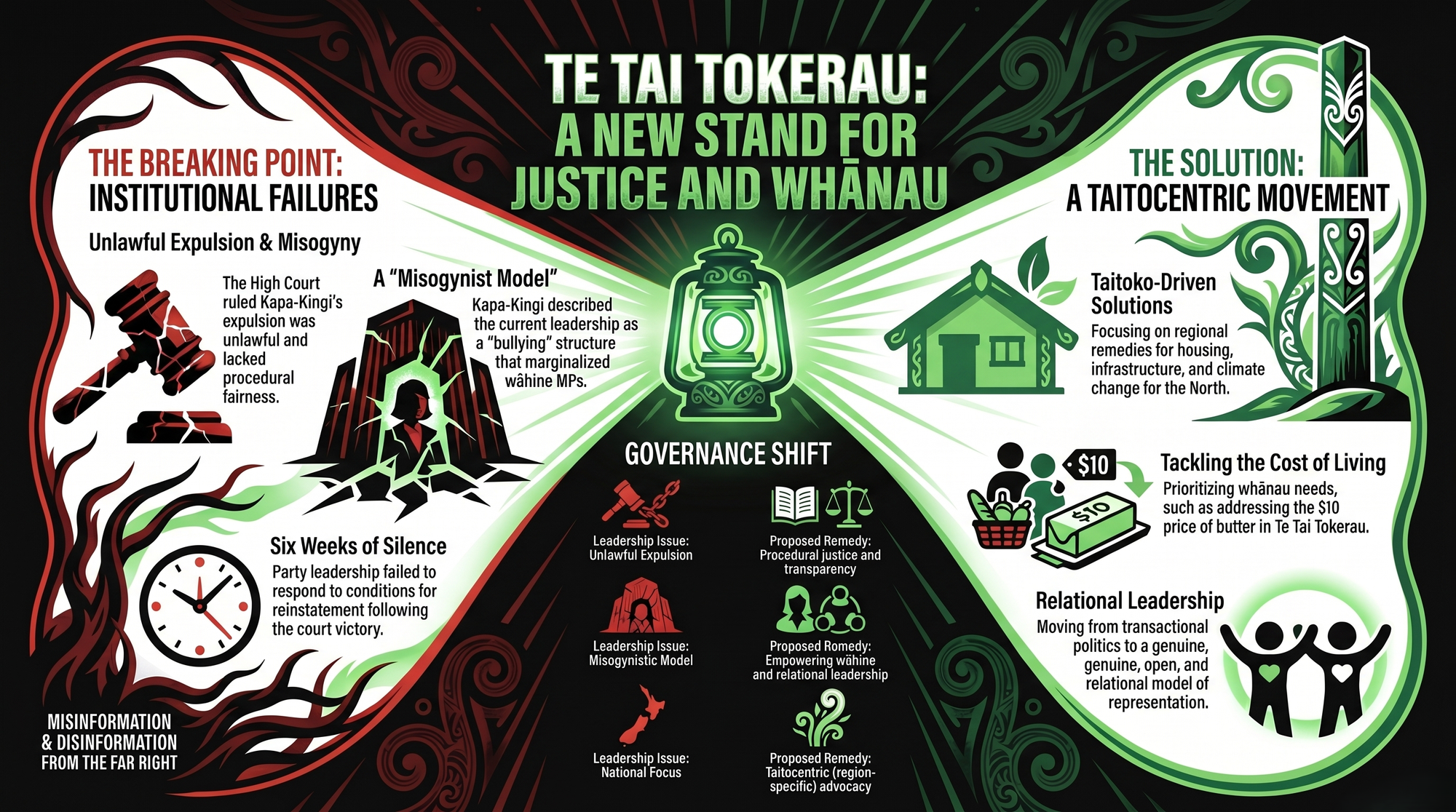
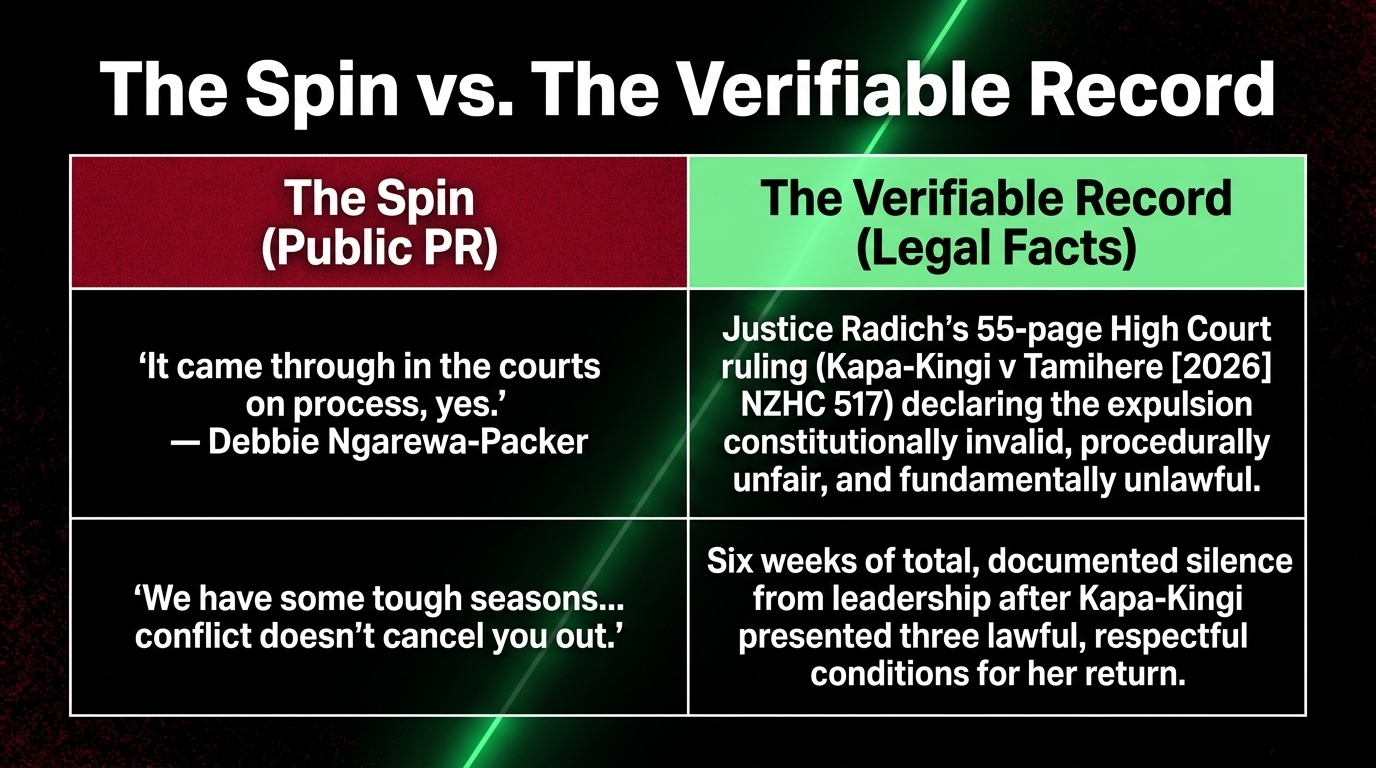
The High Court of New Zealand ruled the entire process unlawful. As confirmed in the full judgment Kapa-Kingi v Tamihere [2026] NZHC 517, Mariameno was denied procedural fairness, excluded from key meetings, and expelled through a process constitutionally invalid under the party's own rules. Justice Radich found the party's conduct "could not on any view be seen as elevating and enhancing relationships, as working together with respect, as promoting whanaungatanga." Fifty-five pages. Unlawful.
What Mariameno Said on Camera
On camera, to Julian Wilcox of The Hui, Mariameno Kapa-Kingi said everything the leadership hoped she would not.
She named John Tamihere directly:
"Yes — let's call out the elephant in the room. I'm talking about John Tamihere as president of the party."
She named her three conditions for return: removal of Tamihere as president; reinstatement of Tākuta Ferris; public apologies. She made those conditions "clearly, plainly, respectfully through the caucus." She received no response. She confirmed this twice when pressed by Wilcox.
She described contact from party leaders as "sparse — none at all, probably. Like really sparse. I've had to initiate the contact." She reached out after the first interim ruling. She reached out again after the final ruling. Nothing came back in between — a silence that, as The Spinoff confirmed, extended for six weeks after the court win.
She named the leadership model as misogynistic — not as a feeling, but as a documented pattern:
"That model which is a misogynist model, which is a bullying model — those things, there's no place for those things. There never has been, but there's certainly no place for those things in my mind."
When Wilcox asked her directly — is Te Pāti Māori misogynistic? — she answered without hesitation:
"I'm saying that, yeah. I'm saying that the model, the leadership and the model — it allowed it."
She also confirmed, carefully and without speaking for them directly, that the other wāhine MPs in Te Pāti Māori — Orini Kaipara and Hana-Rawhiti Maipi-Clarke — shared conversations about how tough the working conditions were:
"The conditions in which we had to work were tough for all of us."
That statement, confirmed in The Spinoff's analysis that Kaipara herself had publicly supported Kapa-Kingi during the conflict, deserves scrutiny from every journalist covering this election.
What Debbie Said — Line by Line
Now let us go through Debbie Ngarewa-Packer's Bradbury Group interview with the same precision. This is where the subtle corruption lives — not in dramatic statements, but in the careful, managed, tikanga-flavoured language of a co-leader protecting an institution rather than her people.
Statement 1: "Whether the argument of Mariameno should have been dismissed, expelled, has come through in the courts on process, yes."
"On process, yes." This is how Debbie Ngarewa-Packer characterised a 55-page High Court ruling that found the entire expulsion unlawful. Not a procedural technicality. An unlawful exercise of institutional power. As the full judgment confirms, the court found Mariameno was denied the right to respond, excluded from key meetings, and that the process "could not on any view" be seen as consistent with the party's own tikanga values. To reduce that to "it came through on process" makes the ruling sound small. It implies nothing substantively wrong happened — only that some paperwork was done incorrectly. This is the language of an institution managing its reputation, not a co-leader reckoning with harm done to a colleague.
For the non-Māori reader: if your employer fired you without letting you respond to the allegations, locked your union rep out of the disciplinary meeting, and the Employment Court ruled the whole process unlawful — and then your employer's colleague went on television and said "yes, there were some process issues" — you would recognise immediately that they were not acknowledging wrongdoing. They were managing the optics of it.
Statement 2: "Whether the conflict could be resolved, I think, has been determined in the decision that Mariameno has made in the last couple of days."
This sentence places responsibility for the unresolved conflict on Mariameno — not on the leadership that ignored her three clear conditions for six weeks after the court ruling. It implies that if Mariameno had simply chosen differently, resolution was available. But as Mariameno stated plainly and directly on camera: "Nothing has come from me putting those positions clearly, plainly, respectfully through the caucus. Nothing has changed from that." The conflict was not unresolved because Mariameno was unreasonable. It was unresolved because the leadership chose not to respond.
Statement 3: "It's for me about longevity, it's about loyalty and consistency."
This is the institutional loyalty argument. It sounds principled. In this context it is deflection. Loyalty to what, exactly? To a leadership structure the High Court found had acted unlawfully? To a party president who, as The Spinoff's court-verified timeline documents, threatened a woman MP's career, said he was "coming for her boys," and whose daughter is the party's general manager and whose son-in-law is the party's co-leader? Loyalty is only a virtue if the institution deserves it. When the institution is the problem, loyalty to it is not principle — it is complicity.
Statement 4: "We have still turned up to the house, we have still been able to go out there and win the fast-track seabed mining kaupapa."
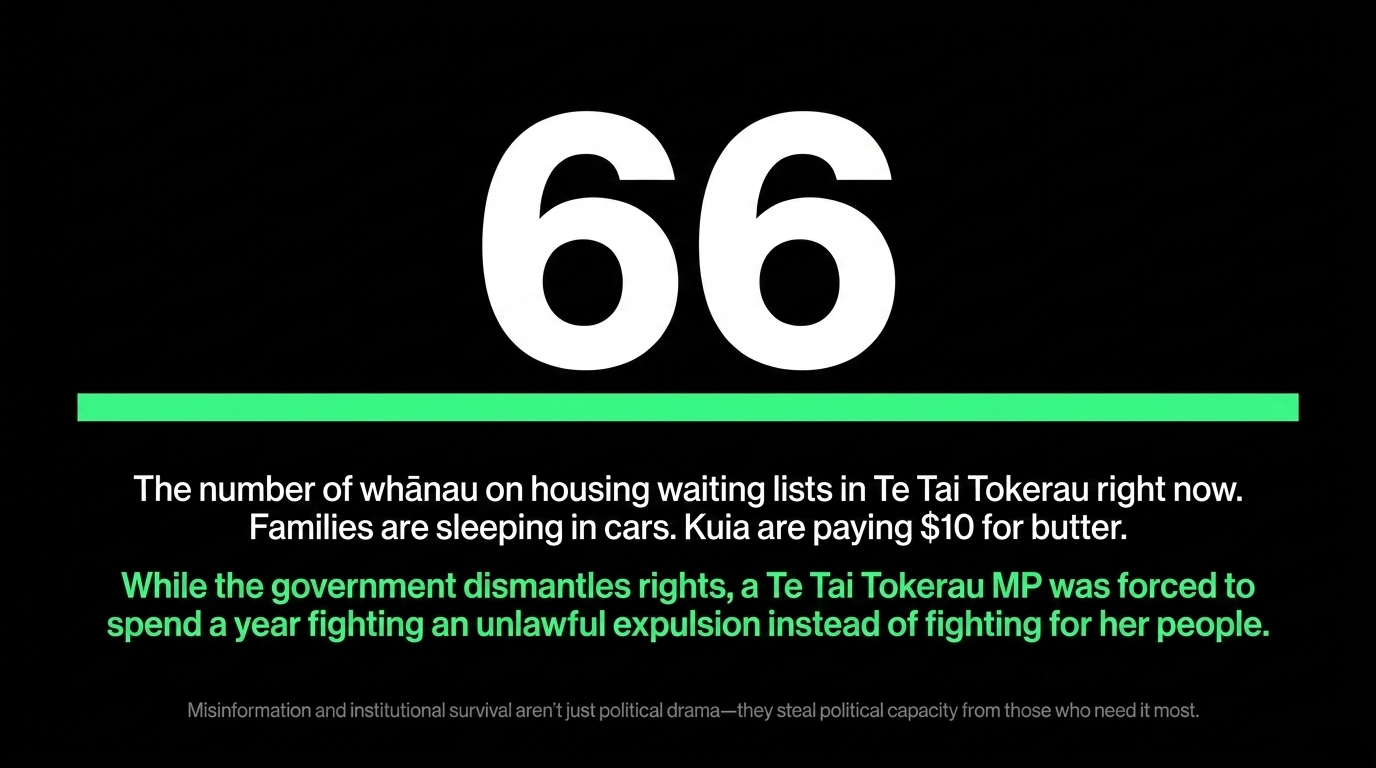
This is the pivot to wins. The question was about whānau who are sick of the drama and watching the party implode. The answer immediately redirects to policy achievements. These are real achievements. They do not address the question. As Te Ao News has documented, 66 whānau in Te Tai Tokerau are on housing waiting lists and families are sleeping in cars. Those people do not need a list of legislative wins. They need an acknowledgement that their MP was unlawfully expelled and that the party that did it has not apologised. The pivot is not accidental. It is a performance of accountability without its substance.
Statement 5: On Hone Harawira potentially standing for Te Tai Tokerau — "I'm not in a position to deny."
This is the most politically calculated moment in the interview. On the night Mariameno launched her new party, Debbie Ngarewa-Packer went on national television and signalled that Hone Harawira — who left Te Pāti Māori in 2011 to form the Mana Party, and has not been affiliated with it since — may be parachuted into Te Tai Tokerau to contest the seat against her.
As The Spinoff confirmed, the entire Te Tai Tokerau electorate committee had already resigned from Te Pāti Māori, making any Harawira candidacy dependent entirely on the national leadership to organise.
Debbie frames it as the electorate's decision:
"It is not a Debbie show; it is the mana of those electorates."
But she said it in the same breath as
"I'm not in a position to deny"
— effectively signalling institutional appetite for the move while claiming institutional distance from it. That is not tikanga. That is playing a hand while pretending you're not holding cards.
Three Examples: The Harm Quantified
Example 1: The Verbal Threats That Were Never Condemned
John Tamihere allegedly told Mariameno that if she walked out of a meeting, "he would not endorse her candidacy for the next election." He allegedly told her he was "coming for her boys" and would "have utu" — claims on the public court record, as confirmed by The Spinoff's verified timeline and analysed in detail by Dr Rawiri Taonui in his Substack.
Debbie Ngarewa-Packer has never, in any public statement, condemned those reported remarks. On the Bradbury Group, when Bradbury characterised Mariameno as the aggressor — having "dropped any pretence of solidarity" and "directly attacking" Te Pāti Māori — Debbie did not correct the framing. She worked entirely within it.
In tikanga terms: Utu in its original form is about restoring balance — righting a wrong, returning to equilibrium. But utu exercised by a person in institutional power against a person with less institutional power is not restoration of balance. It is the punishment of dissent. When a party president says "I am going to have utu" to an MP who raised governance concerns, he is not restoring balance. He is issuing a threat. Silence from co-leadership in the face of that reported threat is not neutrality. It is permission.
The harm quantified: Mariameno spent the better part of a year fighting an unlawful expulsion through the courts rather than fighting for Te Tai Tokerau in Parliament. That is a year of political capacity — policy development, constituent services, budget advocacy — redirected into institutional survival. As Te Ao News documented, 66 whānau are on housing waiting lists in Te Tai Tokerau and families are sleeping in cars. That cost was paid by them.
Example 2: The 10pm Email — Institutional Power as a Weapon
On the night of 13 October 2025, Te Pāti Māori's leadership sent an unsigned email to all party members after 10pm, containing confidential Parliamentary Service documents alleging budget overspend and misconduct. As Te Ao News reported in its detailed analysis and The Spinoff's full timeline confirmed, this email was sent to the entire membership, not first to the MP concerned; after 10pm so accusations landed before Mariameno could respond; unsigned so no individual had to publicly own the decision; and stripped of the context — that the budget issues arose because Mariameno covered the work of a dying colleague with verbal approval from co-leaders.
For the non-Māori reader: this is the institutional equivalent of a manager distributing an employee's confidential performance documents to the entire company before showing them to the employee. It is not discipline. It is public humiliation as a political weapon.
As Te Ao News noted directly, co-leader Debbie Ngarewa-Packer told the Herald she "still has aroha" for Eru Kapa-Kingi and "this is not about crucifying anyone" — but as the article observed, "the party's late-night disclosure to its members smacks more of utu than aroha." In the Bradbury Group interview, this email does not feature in Debbie's description of "tough seasons." She does not describe it as inappropriate. She does not acknowledge it at all. That absence is a choice.
In tikanga terms: Kōrero — the right to speak, to be heard, to respond before judgement — is not a Western procedural concept. It is wairua. It is the breath that sustains the mauri of any collective body. When you send accusations to thousands of people before the accused person knows about them, you do not just violate natural justice. You destroy the mauri of the process itself. You ensure that no matter what the accused says in response, she is always catching up to damage already done. That is not tikanga. That is the colonial logic of presuming guilt and managing the optics.
Example 3: Tamihere's Dual Role — The Governance Failure Nobody Names
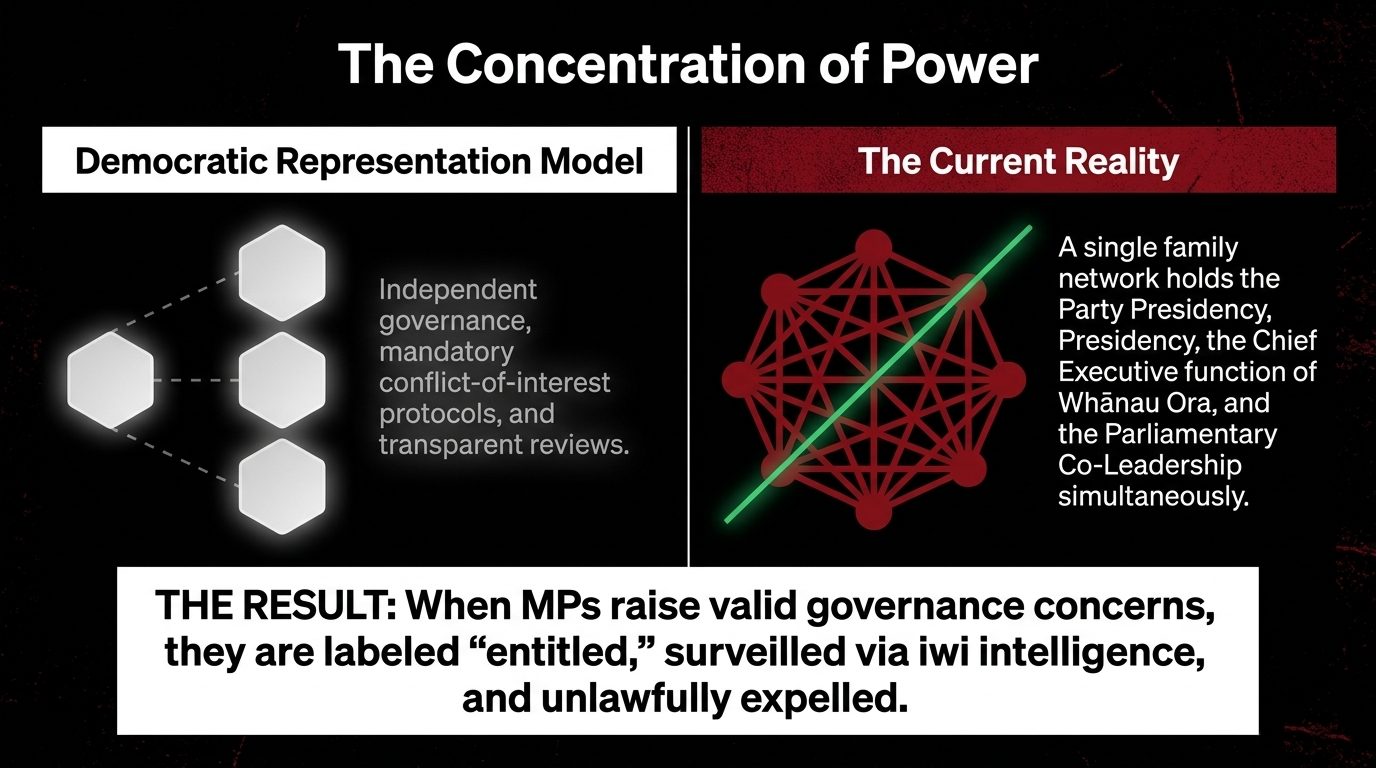
John Tamihere is simultaneously the president of Te Pāti Māori and the CEO of the Whānau Ora Commissioning Agency, one of the largest allocators of Māori social service funding in Aotearoa. As Te Ao News confirmed in its April 2026 interview with Tamihere, his daughter Kiri Tamihere-Waititi is the party's general manager, and his son-in-law Rawiri Waititi is the parliamentary co-leader. This means one family network holds the party presidency, the party's chief executive function, and the parliamentary co-leadership simultaneously.
For the non-Māori reader: in any corporate governance framework, in any public sector body subject to standard accountability rules, this concentration of family authority in a single network would trigger mandatory conflict-of-interest protocols, disclosure requirements, and formal review. In Te Pāti Māori, it has triggered nothing from co-leadership — because the two MPs who formally raised governance concerns were expelled.
Tamihere's own public response to the criticism was to call Kapa-Kingi and Ferris motivated by "greed, avarice and entitlement," as Chris Lynch Media reported. He also claimed, as The Spinoff documented, that an iwi chair had warned him Kapa-Kingi was seeking support from Māori leaders to challenge the co-leadership. If accurate, this means Tamihere was receiving intelligence from iwi networks about internal party politics and using it to justify pre-emptive discipline of a sitting MP. That is not party management. That is the surveillance of dissent.
Debbie Ngarewa-Packer, on the Bradbury Group, said:
"The mana sits with our electorates."
But mana does not sit with the electorates when the party president is collecting reports from iwi chairs about which MPs are building support networks and deploying that intelligence to justify removing them. That is centralised control using the language of decentralisation as cover.
As noted in Te Ao News' October 2025 analysis, as early as March 2025 a Tāmaki Makaurau electorate AGM had put forward a remit calling for Tamihere's resignation, citing serious integrity questions over the party's handling of constitutional processes. The AGM rejected it unanimously — but the fact that it was raised at all tells you something about how widely the concerns were held, long before any of this became public.
The Broader Indictment
Let us be plain about what Te Pāti Māori's leadership has done, in sequence, with verified sources attached to each claim:
It expelled two sitting MPs through a process the High Court found unlawful, per the full judgment at Kapa-Kingi v Tamihere [2026] NZHC 517.
It sent an unsigned, weaponised 10pm email to its entire membership containing confidential documents about a sitting MP before she was informed, as Te Ao News documented.
Its president made reported threats about a woman MP's candidacy and her children, allegations confirmed on the court record and detailed by The Spinoff.
It excluded Te Tai Tokerau — the very electorate of the MP being expelled — from the meeting that decided her fate, as Te Ao News confirmed.
It had iwi call publicly for the president to resign in November 2025 — and ignored them, as reported by both Te Ao News and 1News.
It received three lawful, reasonable conditions from a reinstated MP following a court win — and responded with six weeks of documented silence, as confirmed by The Spinoff.
Then it sent its co-leader onto national television to call all of the above "process issues" and "tough seasons."
This is a party whose leadership has normalised the suppression of internal dissent, the weaponisation of institutional resources against critics, and the use of tikanga language as branding while violating tikanga principles in practice. And it is doing all of this while the Luxon-Peters-Seymour government — which has dismantled the Māori Health Authority, attacked pay equity, and is moving through 23 pieces of legislation weakening Te Tiriti, as the Waitangi Tribunal has documented and as Debbie herself confirmed on the Bradbury Group — strips 60 years of Māori policy gains, piece by piece.
When Debbie says on the Bradbury Group that Labour's focus on Te Pāti Māori rather than the collective opposition effort reflects "a sad lack of maturity and understanding" — she is right. But she is also the co-leader of the party that generated the conditions for that focus. The Labour Party did not send a 10pm email with confidential documents about a sitting MP. The Labour Party did not expel two MPs through an unlawful process. These things happened inside Te Pāti Māori. And its co-leader calls them tough seasons.
The Electoral Stakes
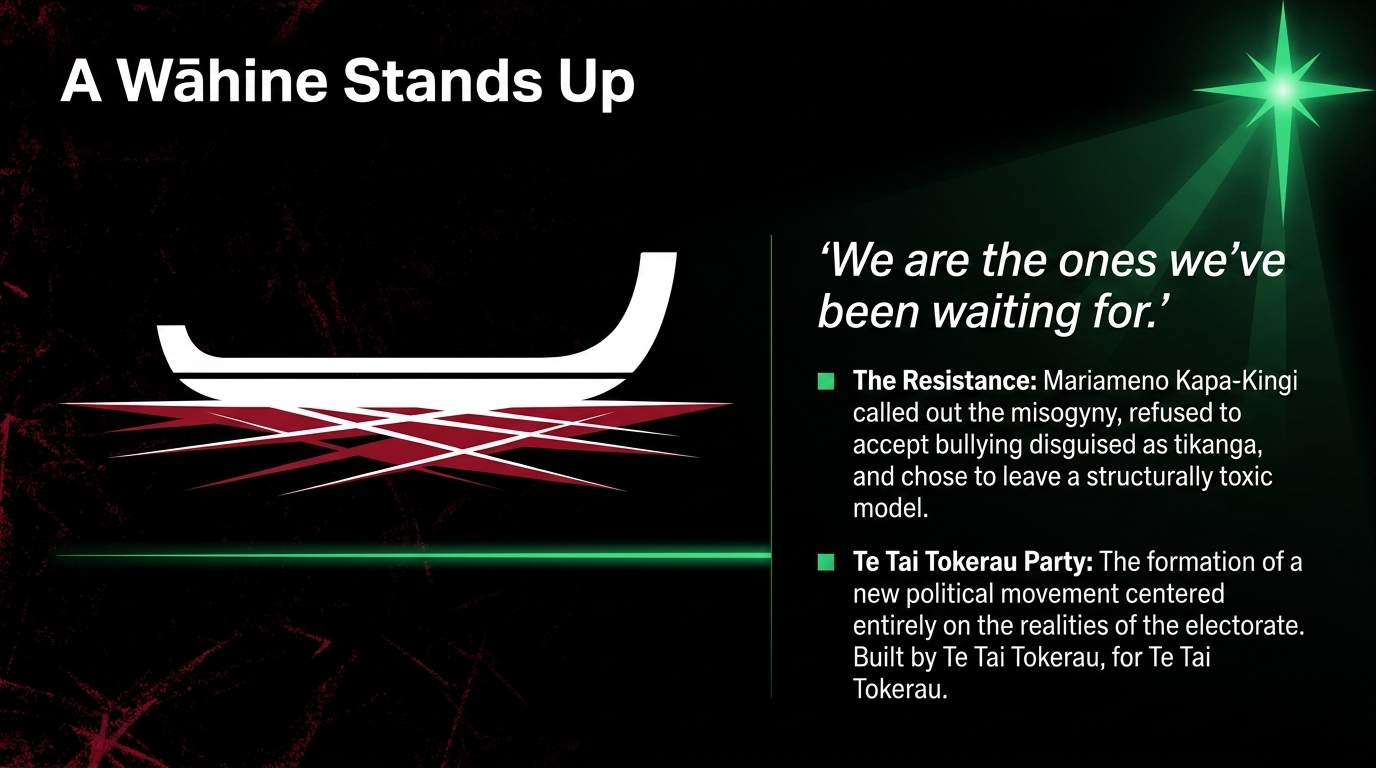
Mariameno's departure has turned Te Tai Tokerau into a four-way race — Te Tai Tokerau Party, Te Pāti Māori with an as-yet unnamed candidate, Labour's Willow-Jean Prime, and Green MP Hūhana Lyndon. As The Spinoff has confirmed, there is a real possibility that a Labour candidate comes through the middle and Te Tai Tokerau loses a Māori voice entirely. Meanwhile, the entire Te Tai Tonga electorate committee has resigned from Te Pāti Māori, and Tākuta Ferris is standing as an independent in the south.
Near 200 financial backers signed up to support Mariameno within 24 hours of her launch, as 1News reported. Her team includes young people from 16 to 36. She has been told at garages, in stores, everywhere she goes: "We'll vote for you whatever you decide to do." That is not a political accident. That is a community that had been waiting for someone to name out loud what they already knew.
The Moral Reckoning
Mariameno Kapa-Kingi walked through a year of institutional war — a 10pm email weaponising her dead colleague's work, an unlawful expulsion, six months of leadership silence after a court win, reported threats about her career and her children — and came out the other side standing straight. She named the misogyny. She named the man. She stated her conditions clearly and respectfully and waited. She did not soften it when those conditions were ignored. She built something new.
Debbie Ngarewa-Packer went on television and called it process issues and tough seasons.
The wāhine of Te Tai Tokerau — the ones raising mokopuna while the bills pile up, the ones who stood at hui and called for Tamihere to step down and were ignored, the ones working since they were 16 who have never once tolerated bullying in their working lives — will remember which woman told the truth.
As The Spinoff put it directly: "Without an unlikely clear-out of senior leaders, some accountability being taken, and a genuine apology to Kapa-Kingi, Ferris, its electorate councils and party members, the party risks slipping back to oblivion."
That assessment was published in March 2026. The party's response was six more weeks of silence — and then a co-leader on television calling it a tough season.
Ka huri.
Tautoko This Mahi

This essay followed the whakapapa of institutional power from a 10pm email to a 55-page court ruling to a television interview where a co-leader said "tough seasons." That whakapapa leads straight to the 66 whānau on housing waiting lists in Te Tai Tokerau, to the kuia paying $10 for butter, to the rangatahi leaving for Australia because the politics that was supposed to serve them has been captured by the people running it.
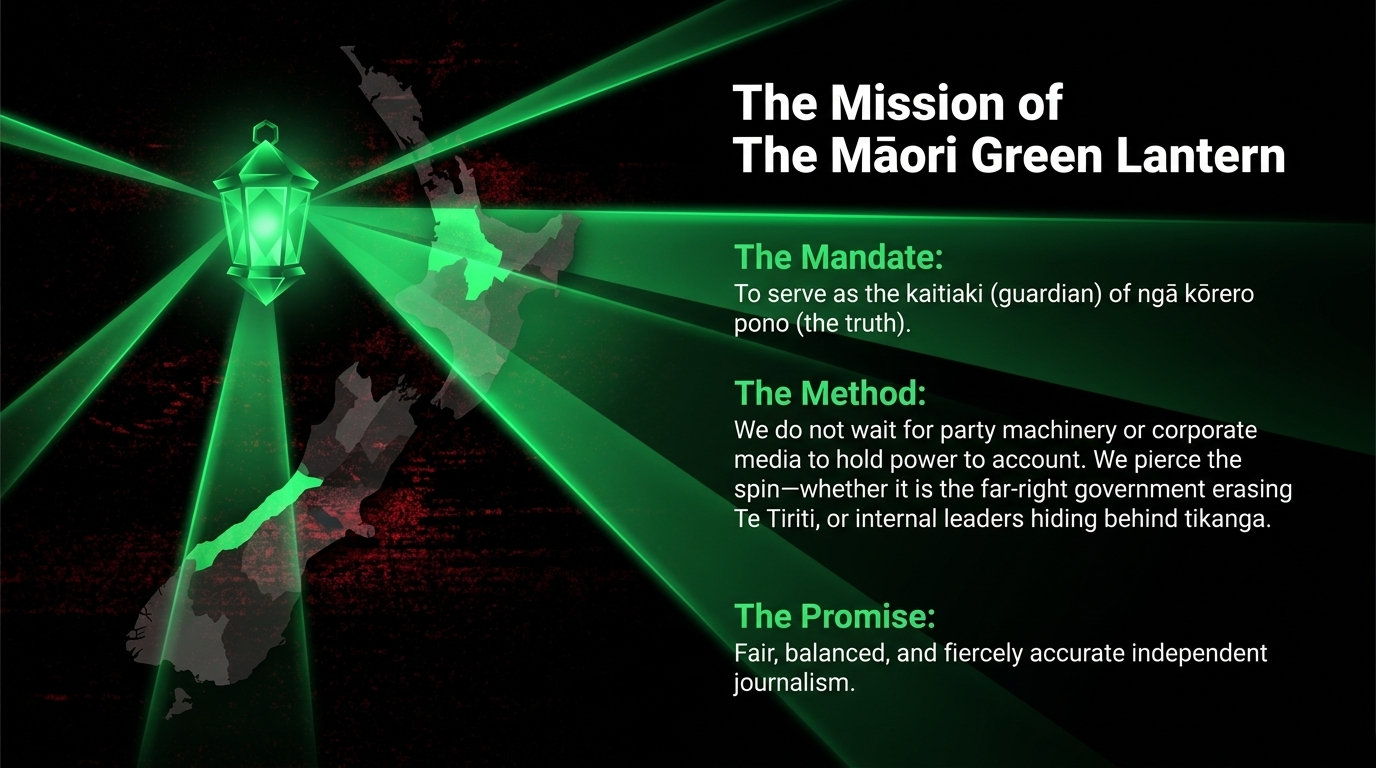
Mariameno named the misogyny. This essay named the pattern. Your koha keeps the taiaha sharp. Every contribution to the Māori Green Lantern signals that rangatiratanga includes the power to fund our own truth-tellers — that we do not wait for party machinery or corporate media to hold power to account.
If koha is not possible right now — no worries. Subscribe, share, kōrero with your whānau and friends. Pass this to the people in your network who need to understand what happened in Te Tai Tokerau and why it matters for every Māori electorate before November. That sharing is koha in itself.
Four pathways to support this mahi:
- 💛 Koha directly: Support the Māori Green Lantern via Koha
- 📩 Subscribe to essays: themaorigreenlantern.maori.nz
- 🏦 Bank transfer: HTDM — 03-1546-0415173-000
- 📘 Facebook: Follow and subscribe
Kia kaha, whānau. Stay vigilant. Stay connected.
Ko Ivor Jones tēnei — tohunga mau rākau wairua, kaitiaki o ngā kōrero pono. Nō Tauranga-moana ahau. Nō Te Arawa.

Research transparency: All URLs live-verified via fetch on 13 May 2026 NZST. Primary sources: The Hui interview transcript (user-provided), The Bradbury Group transcript (user-provided), Kapa-Kingi v Tamihere [2026] NZHC 517, The Spinoff, Te Ao News, 1News, Newstalk ZB, Evening Report, Dr Rawiri Taonui, Chris Lynch Media, Waitangi Tribunal. Named individuals referenced solely in their public capacity. Unverifiable claims flagged "available evidence suggests."
Views expressed constitute honest opinion on matters of public interest under the Defamation Act 1992 (NZ) and Durie v Gardiner NZCA 278. All factual claims sourced and cited. Corrections: contact via themaorigreenlantern.maori.nz. Named individuals referenced solely in their public capacity.