"The Crown Ripped Māori Hands From The Health System — Then Called The Amputation “Patient Care”" - 27 September 2026
How Luxon’s Coalition Destroyed Te Aka Whai Ora, Downgraded Māori Authority To Ministerial Advice, And Left Whānau Paying More To Enter A System In Which We Still Die Younger

Mōrena anō, Aotearoa.
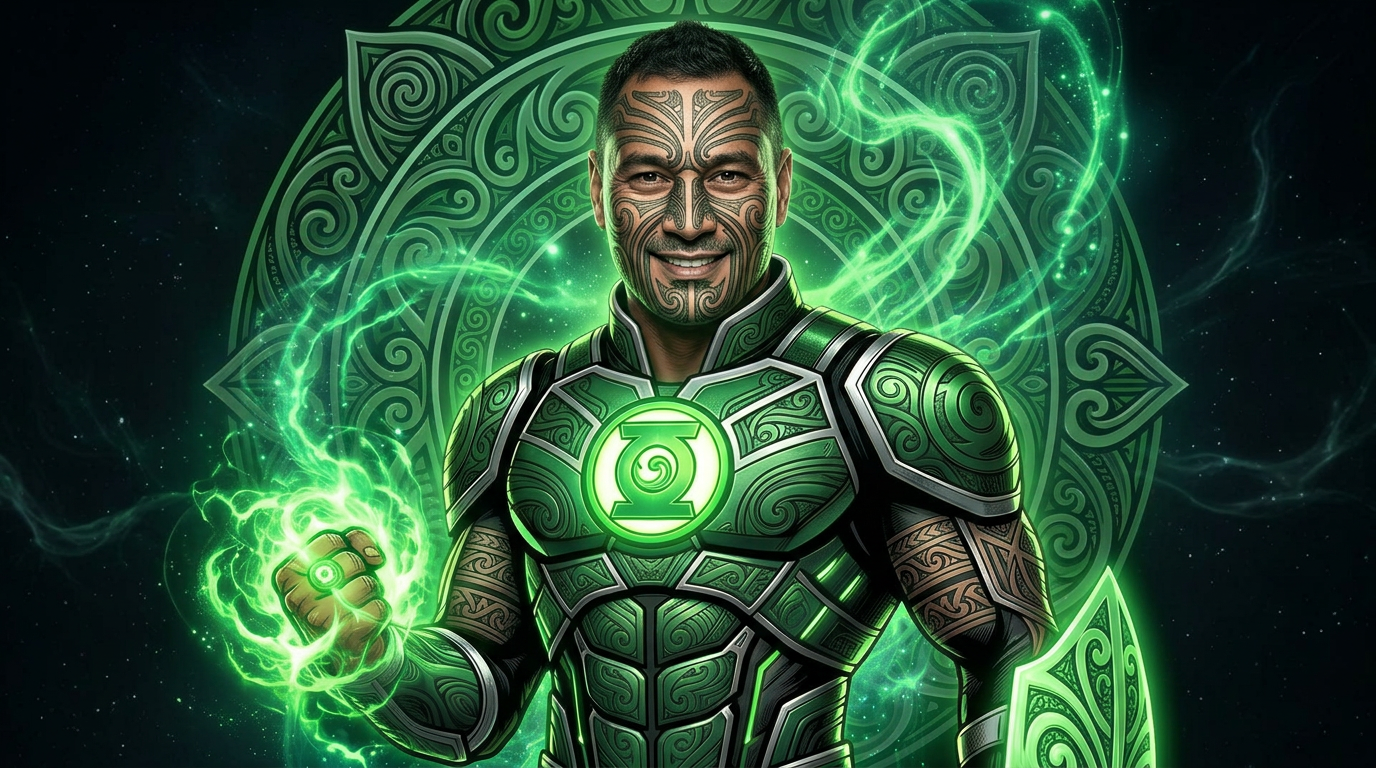
I am Ivor Jones, The Māori Green Lantern. I am writing from a framework of Tika and Pono. In this essay, Tika means doing what is right, just and properly aligned. Pono means telling the truth and requiring a government’s deeds to match its words.
This essay explains what happened after the coalition destroyed Te Aka Whai Ora, what the Crown claimed would replace it, what the Waitangi Tribunal discovered when it followed the paperwork, and how Parliament shifted Māori authority into a system of Crown-controlled advice.
It also tests the Government’s strongest defence, audits the harm in measurable terms, translates three examples for the Western mind, and lays out what restoration must look like.
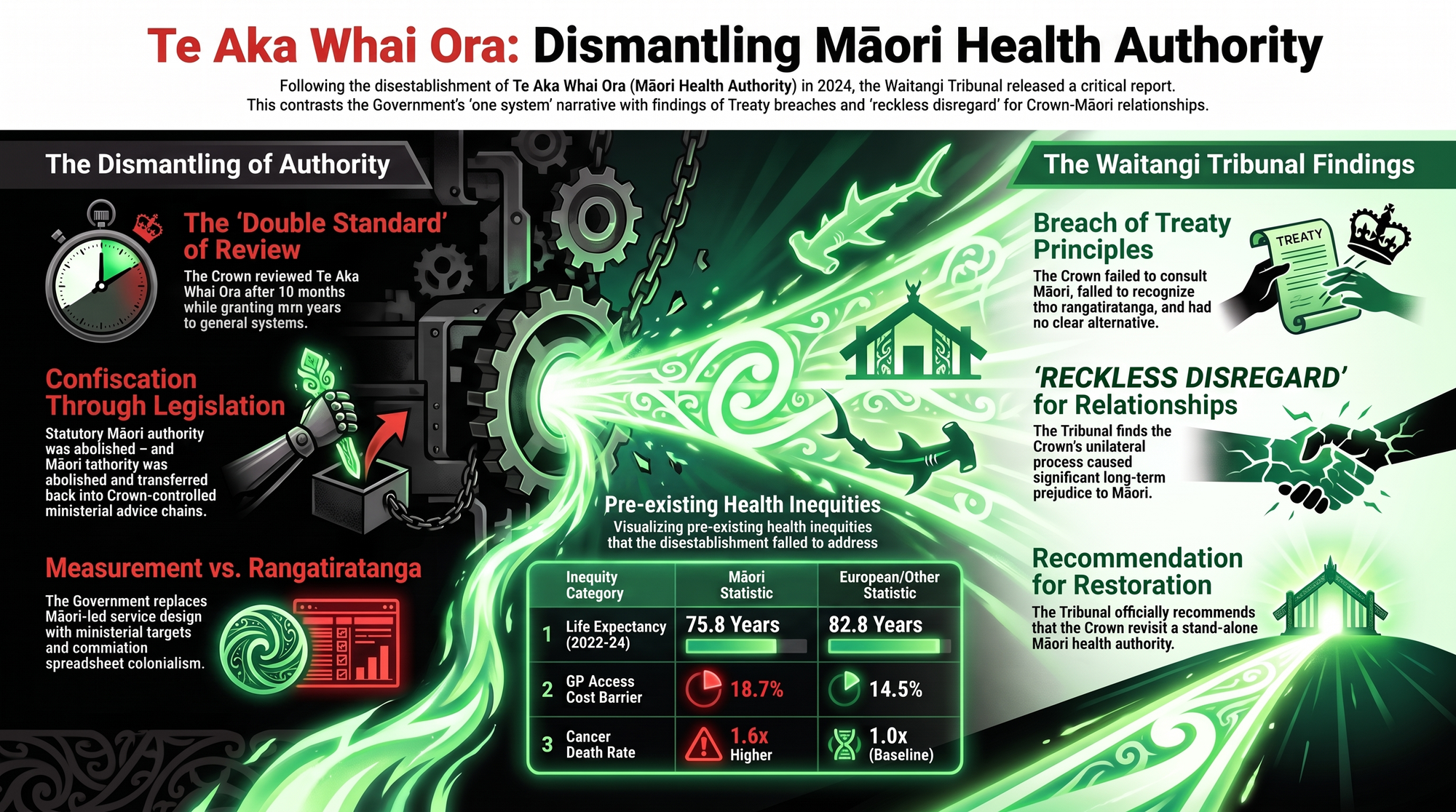
I would love you to click into this essay because there is a wealth of information here that you can use in your daily life—in conversations with whānau, at work, in classrooms, in submissions, and when somebody repeats the Government’s “one system for everyone” propaganda.
I have created an audio podcast that lays out this kaupapa in detail. I have created a short video explaining the core argument. For long-form readers, this fully cited essay is waiting for you.
This platform is not merely content for today’s algorithm. It is a repository for our mokopuna. I want them to look back and say:
At least we knew. At least The Māori Green Lantern, alongside a small number of courageous Māori voices and allies, was warning us.
The Crown Performed An Amputation
 RNZ | Te Reo Irirangi o Aotearoa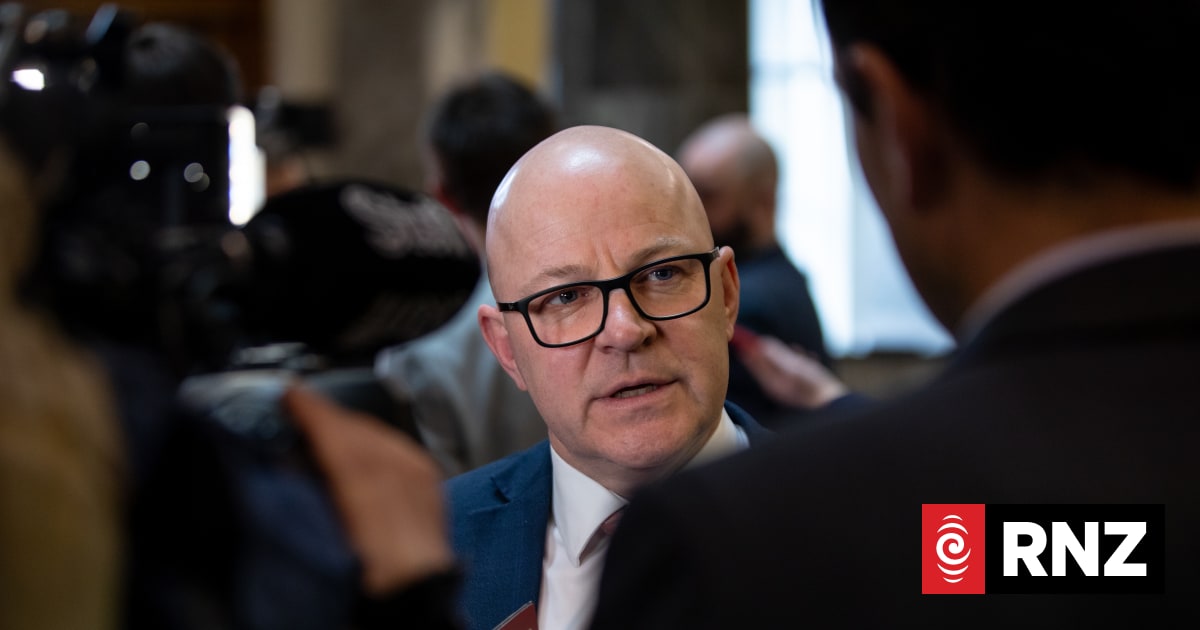
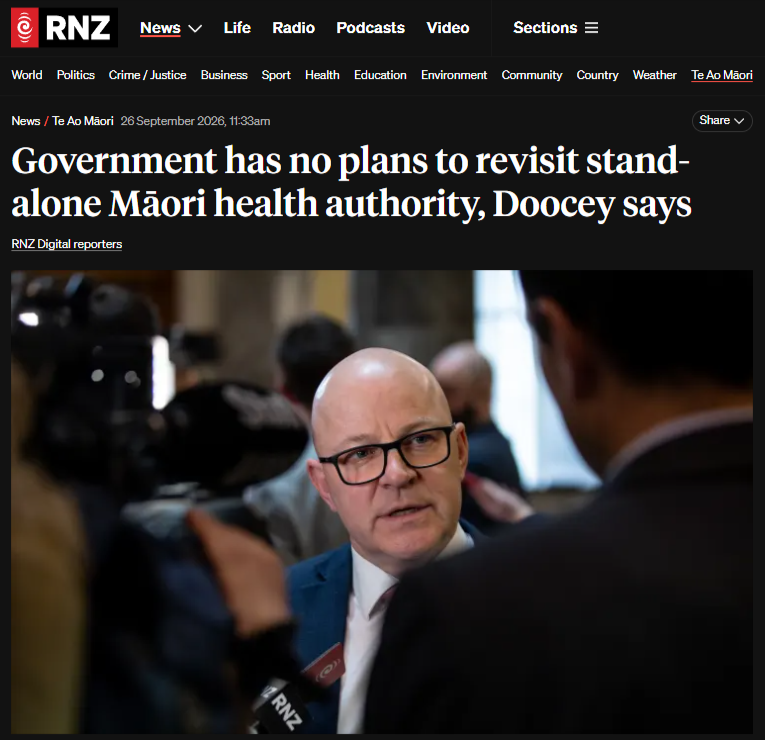
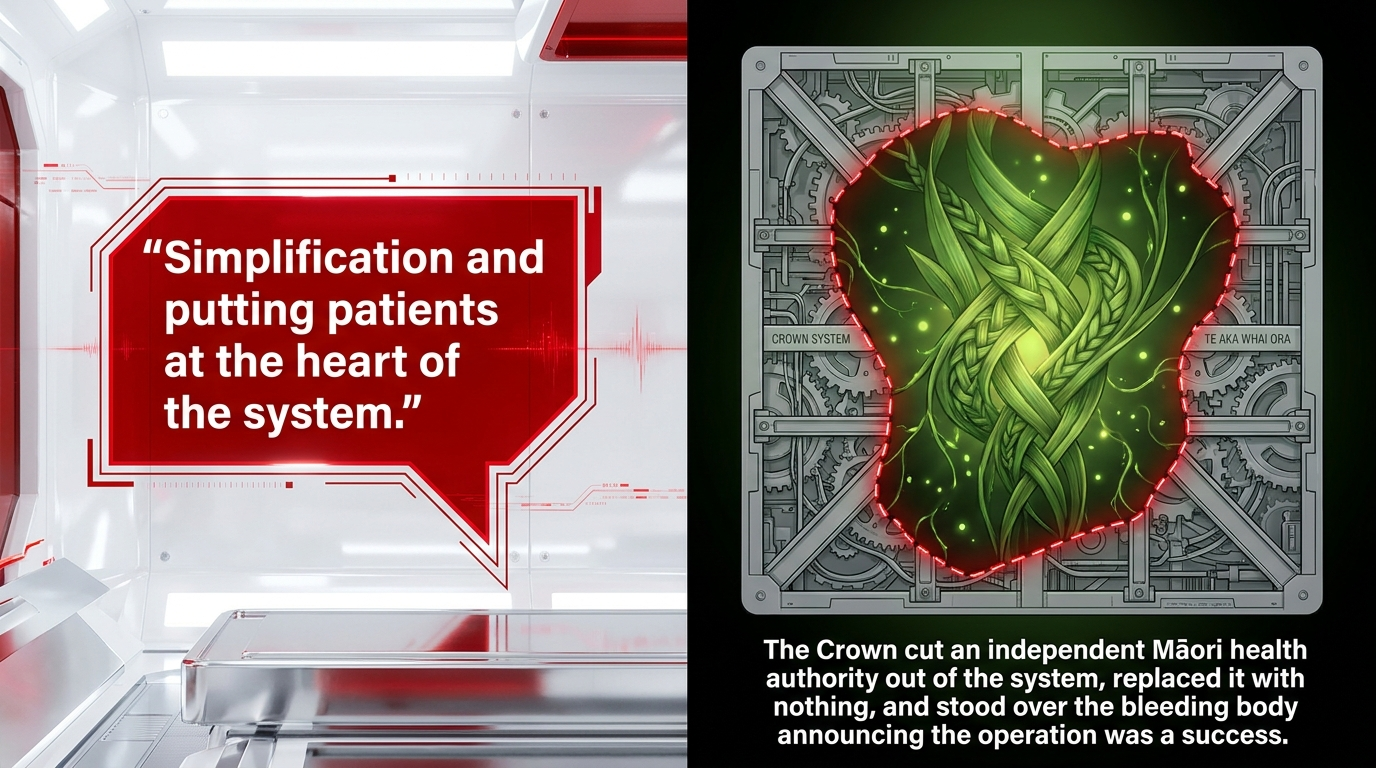
The Government cut Te Aka Whai Ora out of the health system and then stood over the bleeding body announcing that the operation had simplified the patient.
That is the fraud at the centre of this story.
Te Aka Whai Ora was established under the Pae Ora framework in 2022 after decades of evidence that Crown-controlled health structures had failed Māori. It was formally disestablished on 30 June 2024, with its statutory authority, functions and responsibilities transferred back into Crown-controlled institutions, according to Manatū Hauora’s statutory overview and the legislation dismantling the authority.
The coalition did not first produce a complete replacement, test it, consult Māori, measure whether it could address inequity, and then make an evidence-based decision. TheWaitangi Tribunal found that the Crown spent nearly 18 months talking about alternative plans that did not materialise.
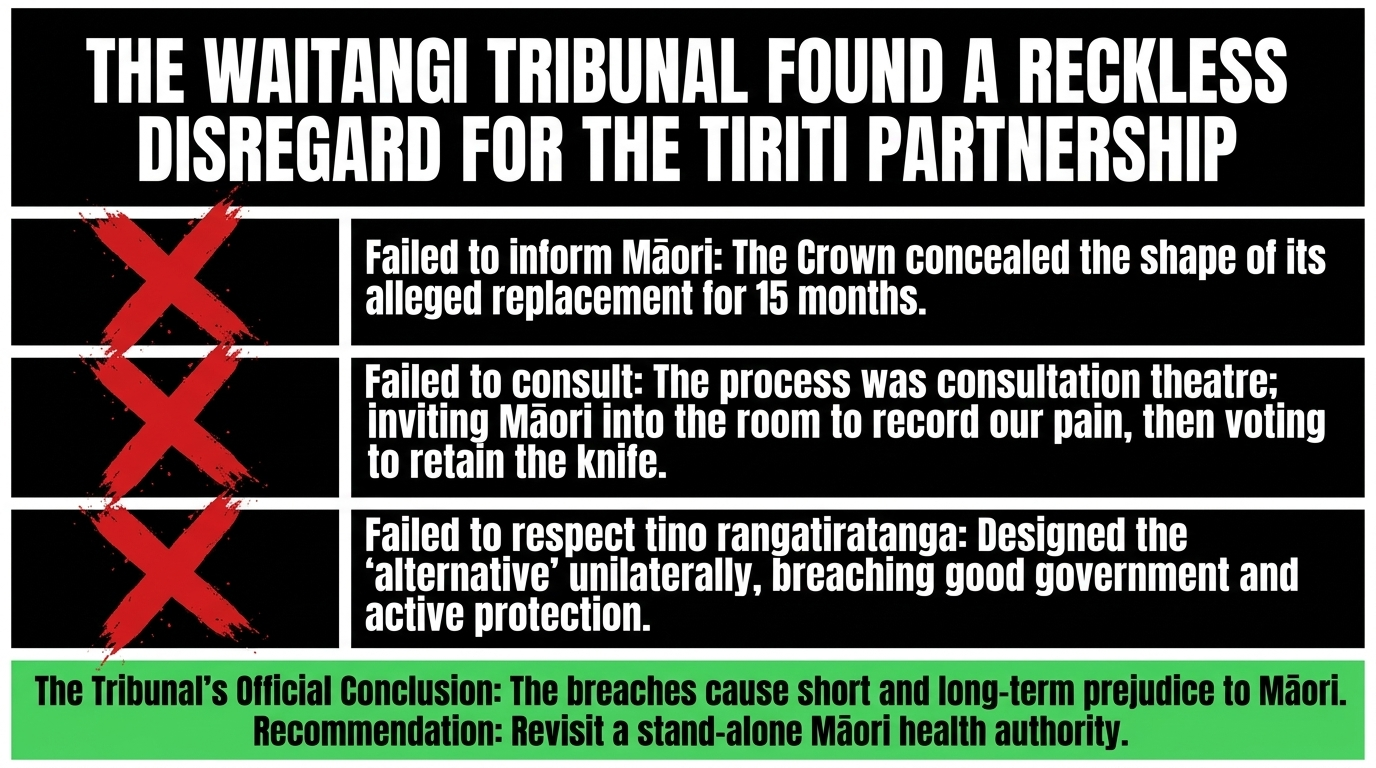
Immediately before the Tribunal’s May 2025 hearing, the Crown changed its position and said the “alternative” was effectively the legislative framework already operating when Te Aka Whai Ora had been removed 15 months earlier. The Tribunal found that this failure to inform Māori properly breached good government and that the Crown had designed its alternative unilaterally, without adequately recognising Māori tino rangatiratanga, according toHautupua Part 2.
That is not reform.
That is the Crown demolishing the whare, hiding the replacement plans, and then pointing at the empty section as proof that Māori never needed a home.
Tika Asks Whether The Process Was Right
Under Tika, a decision is not made right merely because Parliament possesses the legal power to force it through. Tika asks whether the decision protects life, honours relationships, responds to evidence and preserves the mana of the people carrying the consequences.
The Tribunal found that the Crown failed to inform Māori adequately, failed to undertake meaningful consultation, failed to respect Māori self-determination, and failed to involve Māori properly in changes to the Hauora Māori Strategy and the governing legislation. Those findings are set out directly in the Tribunal’s official account of Hautupua Part 2 and its full pre-publication report.
The Tribunal found breaches of tino rangatiratanga, kāwanatanga and good government, partnership and consultation, active protection, equity, and options. It concluded that Māori had suffered and would continue to suffer short- and long-term prejudice, and it recommended that the Crown revisit a stand-alone Māori health authority, consult extensively with Māori, and ground Māori health decisions in robust evidence and scientific knowledge, according to the Waitangi Tribunal’s report record.
That is not a minor procedural slap.
It is a finding that the Crown pulled down Māori authority, concealed the shape of its alleged replacement, ignored the people affected, and failed across nearly the entire Tiriti relationship.
The Deep Dive Podcast
Listen to a lively conversation between two hosts, unpacking and connecting topics in the sources of this essay. I apologise in advance for the AI's very harsh pronounciation of reo. Please dont shoot me, :).
Youtube Video
Like video? Here is a short video suppporting the essay. Again, don't shoot the messenger please because of AI's pronounciation. :)
Koha Consideration
You might ask who supports The Māori Green Lantern to produce this volume of detailed, sourced work about our society.
You do.
There is no line of corporate patrons rewarding me for exposing the dismantling of Māori health authority. This mahi survives through koha, subscriptions, kōrero and whānau sharing the evidence.
Every koha says that whānau are prepared to support the accountability Crown and corporate structures will not provide. It says rangatiratanga includes supporting our own truth-tellers while the Government turns Māori power into ministerial advice.
Kia kaha, whānau. Stay vigilant. Stay connected. If you are able, consider a koha so this voice continues.
If you cannot koha, kāore he raru. Subscribe, follow, kōrero and share this kaupapa with whānau and friends. That is koha in itself.
Four pathways exist:
- Koha — Support The Māori Green Lantern
- Subscribe To The Māori Green Lantern
- Direct bank transfer to Ivor Jones: 03-1395-0099387-000
- Follow And Support On Facebook
Pono Exposes The Government’s Advertising
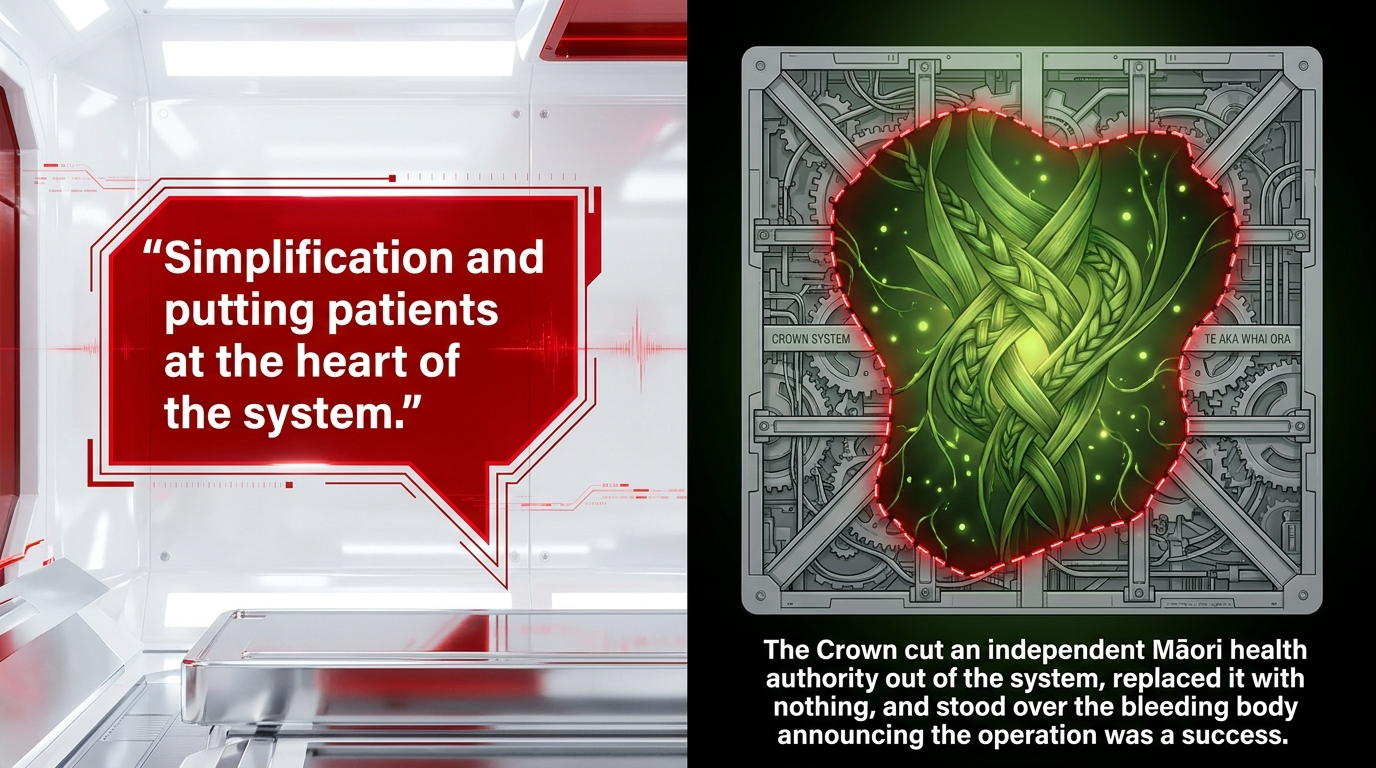
Pono tests the distance between the press release and the deed.
Health Minister Simeon Brown said the 2026 legislation put “patients at the heart” of the health system, strengthened accountability and replaced vague principles with measurable results. His case is that targets for cancer care, childhood immunisation, emergency departments, specialist assessments, elective treatment and primary-care access will improve delivery, according to his official ministerial announcement.
That is the Government’s strongest argument. It deserves to be stated accurately rather than replaced with a straw man.
Targets can expose delays. Targets can focus management. Targets can reveal whether services are moving. Māori life expectancy has also improved: Stats NZ reports an increase of 3.1 years between 2005–2007 and 2022–2024, which is genuine progress and must not be hidden merely because it complicates the political argument, according to Stats NZ’s life-expectancy release.
But a dashboard cannot exercise rangatiratanga.
A waiting-time target cannot replace Māori authority over service design. An emergency-department measure cannot replace tikanga. A ministerially appointed committee cannot become an independent Māori health authority simply because the Government prints “Hauora Māori” on the letterhead.
The coalition’s trick is to present measurement and Māori power as though they are interchangeable. They are not.
You can measure the speed of an ambulance while refusing Māori any authority over why our whānau require the ambulance in the first place.
That is not Pono. That is spreadsheet colonialism.
The Double Standard Is Documented
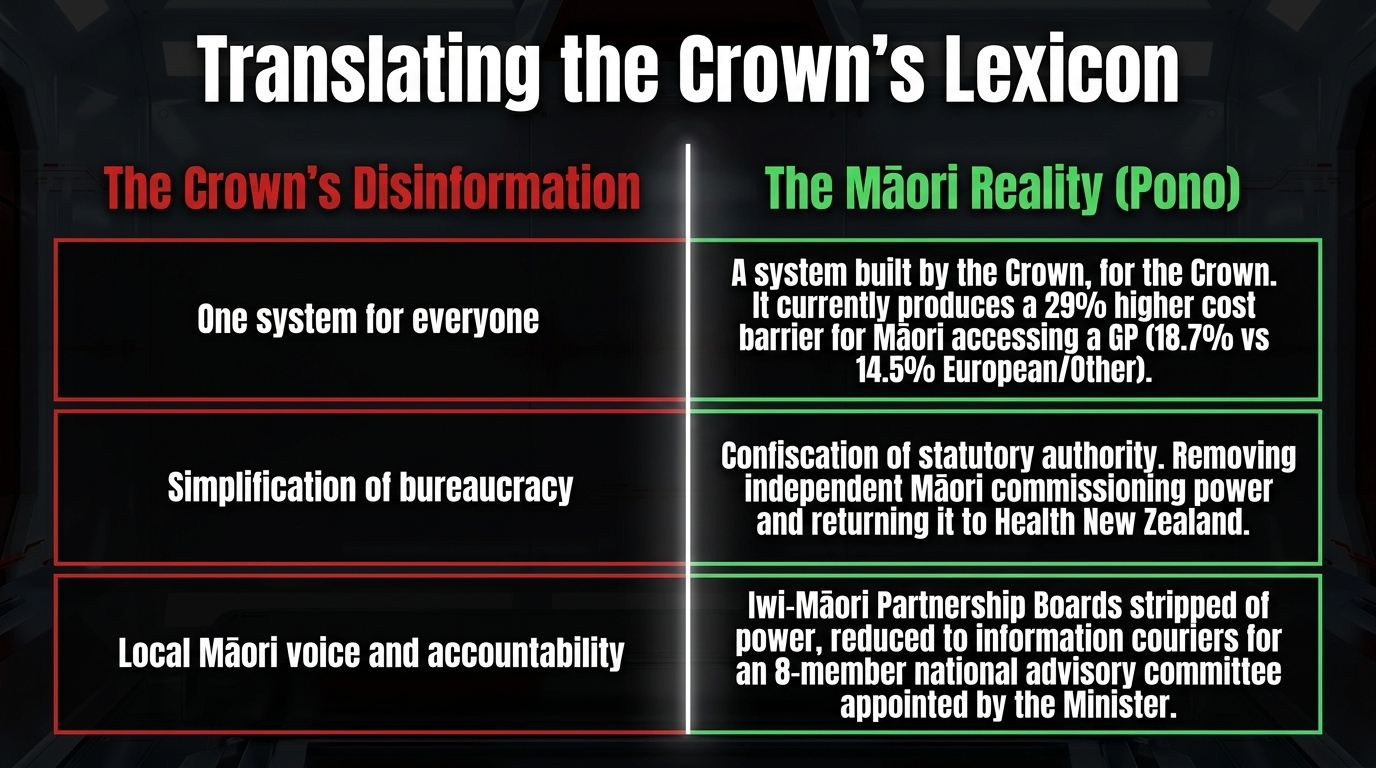
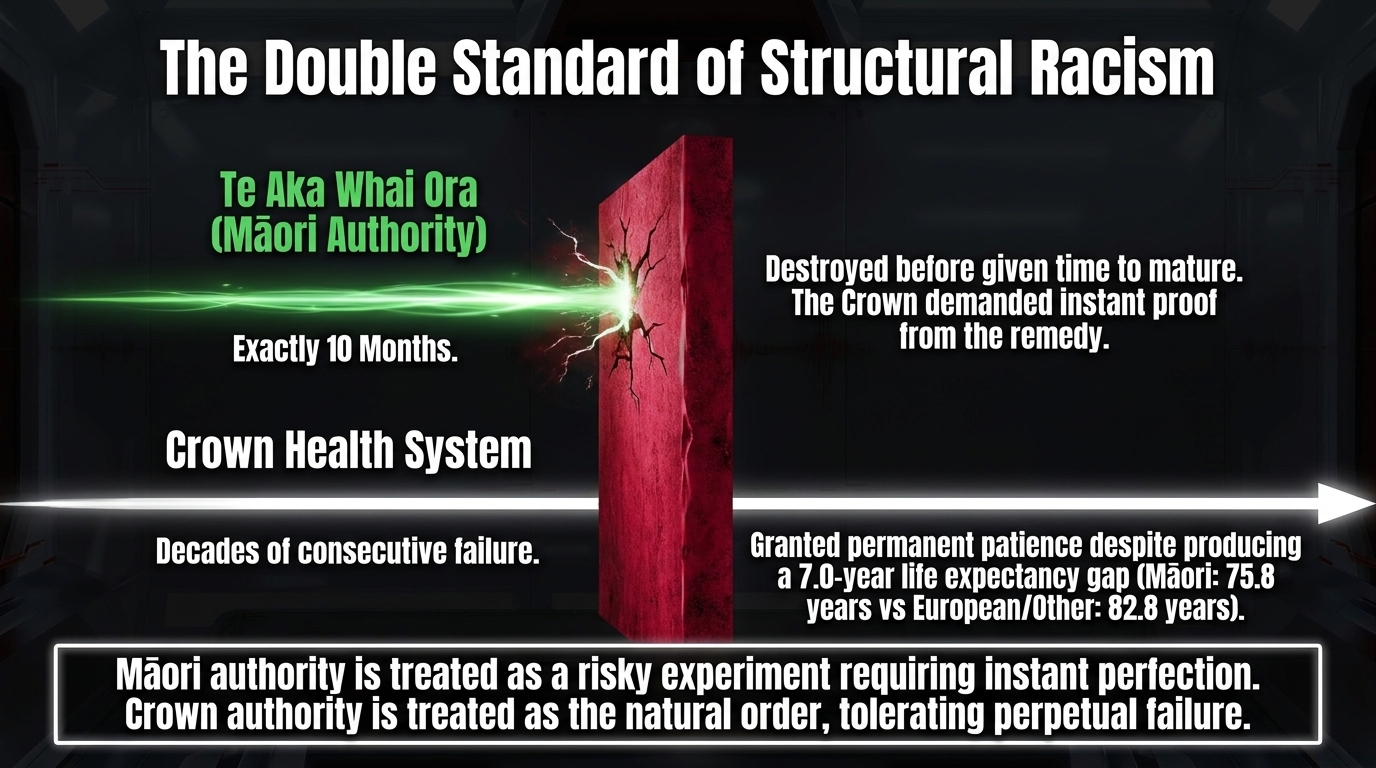
The Tribunal found that the Crown reviewed Te Aka Whai Ora only 10 months after its establishment while saying that other system-wide changes required longer than one year before review. The Tribunal called this a double standard and a breach of good government in Hautupua Part 2.
Read that again.
The Māori institution had to justify its existence almost immediately. The Crown-controlled system that had produced generations of inequity was granted patience.
That is how structural racism operates when it learns the language of management.
Māori authority is treated as a risky experiment. Crown authority is treated as the natural order. Māori must prove success immediately. The Crown can fail for generations and still appoint itself to conduct the next review.
In my opinion, this is a white-supremacist structure in its institutional meaning: Crown authority is positioned as normal, neutral and permanent, while distinct Māori authority is positioned as exceptional, suspicious and disposable. That is a judgment about the documented structure and effect of public policy—not an allegation that every person supporting the coalition privately identifies as a white supremacist.
Five Transfers Of Power
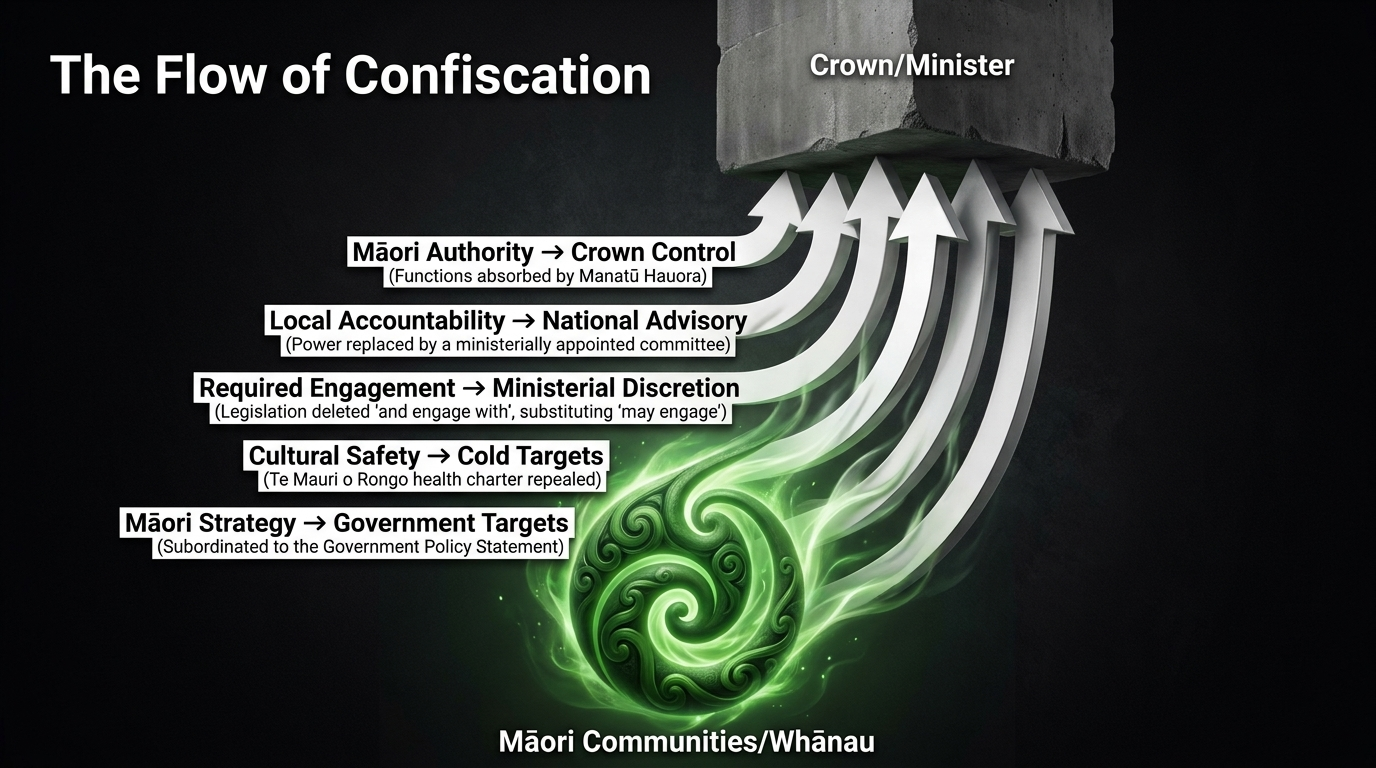
The coalition did not merely abolish one organisation. It moved authority through at least five connected channels.
Transfer One: From Māori Authority To Crown Control
Te Aka Whai Ora was a separate statutory Māori health authority. Its removal returned functions to Health New Zealand and the Ministry, as set out in the disestablishment legislation.
The Government calls that simplification.
I call it confiscation conducted through legislation.
Transfer Two: From Local Māori Accountability To A National Advisory Chain
The amended framework recasts Iwi-Māori Partnership Boards around gathering local views and transmitting those insights to the Hauora Māori Advisory Committee. The Health Committee’s reprinted legislation replaces their wider functions with engagement and communication functions.
The joint differing view from Labour, the Green Party and Te Pāti Māori warned that the bill removed substantive local functions and substituted a more distant national advisory arrangement. That criticism, and the majority’s contrary position, appear together in the official Health Committee report.
The words “Māori voice” survive.
The power behind the voice does not.
Transfer Three: From Required Engagement To Ministerial Discretion
The legislation deletes “and engage with” from the statutory heading governing Health New Zealand’s relationship with Iwi-Māori Partnership Boards, repeals section 15(b), and repeals section 16A concerning engagement with and reporting to Māori. Those changes appear in the reprinted amendment legislation.
The legislation says Health New Zealand may still engage with Māori.
“May engage” is not partnership. It is permission granted to the Crown by the Crown to consult Māori when the Crown considers Māori useful.
Transfer Four: From Principles And Cultural Safety To Targets
The Act repeals the health-sector principles and removes Te Mauri o Rongo, the New Zealand Health Charter. The Government says these provisions were vague and bureaucratic; opposition parties and Māori health submitters said their removal strips away equity, cultural safety and Māori substance, as recorded in the ministerial case for repeal and the Health Committee’s differing view.
This is neoliberalism’s favourite card trick.
Remove the obligation to understand the whole person. Replace it with six boxes. Hit the boxes. Declare success.
A target tells you how quickly somebody moved through a system. Tikanga asks whether the system preserved their mana, recognised their whakapapa, respected their wairua, involved their whānau and returned them to wellbeing.
The coalition measures motion.
Tikanga measures mauri.
Transfer Five: From Māori Strategy To Government Targets
The revised hierarchy requires health strategies to give effect to targets in the Government Policy Statement. The Health Committee report explains that the GPS is intended to become the primary strategic document.
That means a Hauora Māori Strategy exists beneath priorities determined by the Government of the day.
The Māori strategy may speak.
The ministerial targets command.
The Consultation Theatre
The Health Committee received 1,787 submissions and heard oral evidence from 97 submitters. The committee also invited Health Minister Simeon Brown to give oral evidence, and the Minister declined, according to the committee-process record.
Submitting is democratic participation. It is not the same thing as sharing authority.
A government can hear every submission, reject every amendment that would restore Māori power, and still boast that consultation occurred. That is consultation theatre: invite Māori into the room, record our pain, thank us for our contribution, and then vote to retain the knife.
The joint Labour–Green–Te Pāti Māori differing view records that proposed amendments seeking to restore equity, retain the health-sector principles, protect Iwi-Māori Partnership Board functions, require equity reporting, preserve cultural safety and strengthen Te Tiriti expertise were defeated by Government members. The details appear in the official select-committee report.
The process collected Māori words.
The coalition kept Crown power.
Three Examples For The Western Mind
Example One: The Corporate Board
Imagine a corporation discovers that one group of customers experiences consistently worse outcomes. It creates an independent body led by that community and gives it influence over strategy, commissioning and accountability.
A new board arrives. It abolishes the independent body, transfers control back to head office and establishes an eight-member advisory committee whose members are appointed by the same minister controlling the system. The committee may advise. The board must “take account” of its advice. The board retains the decision.
That is broadly the power movement created by the disestablishment of Te Aka Whai Ora and the revised statutory role of the Hauora Māori Advisory Committee, whose eight members are ministerially appointed under the amended framework.
The quantified harm sits outside the boardroom. In 2024/25, 18.7% of Māori adults reported not visiting a GP because of cost, compared with 14.5% of European/Other adults, according to the New Zealand Health Survey.
The gap is 18.7−14.5=4.218.7−14.5=4.2 percentage points. Relative to the European/Other rate, the Māori cost barrier is (18.7−14.5)÷14.5×100=28.97%(18.7−14.5)÷14.5×100=28.97%, or roughly 29% higher.
The Tikanga Impact: Whanaungatanga requires relationships carrying reciprocal responsibilities. Replacing Māori authority with advice breaks that reciprocity. The Crown listens without surrendering control.
The Solution: Restore an independent Māori health authority with commissioning power, guaranteed Māori appointment processes, statutory protection and direct accountability to Māori—not merely to the minister.
Example Two: The Failed Factory
Imagine a factory has produced defective equipment for decades. Workers establish a specialist safety unit to correct the failures.
Management reviews the new safety unit after only 10 months, closes it, and then says the rest of the factory needs more than one year before anybody can judge its performance. That is the double standard the Tribunal identified inHautupua Part 2.
The human measure is unforgiving. Māori life expectancy in 2022–2024 was 75.8 years, compared with 82.8 years for European/Other people, according to Stats NZ.
The calculation is 82.8−75.8=7.082.8−75.8=7.0 years.
For males, it is 81.3−73.7=7.681.3−73.7=7.6 years. For females, it is 84.4−78.0=6.484.4−78.0=6.4 years, using the Stats NZ period life tables and ethnic life-expectancy release.
Those figures do not prove that abolishing Te Aka Whai Ora single-handedly created the entire life-expectancy gap. They prove the enormous pre-existing inequity that made dismantling Māori authority so reckless.
The Tikanga Impact: Kaitiakitanga requires guardianship across generations. Destroying a Māori institution before allowing it time to mature abandons mana mokopuna. The Crown demanded instant proof from the remedy while granting permanent patience to the disease.
The Solution: Re-establish the authority, guarantee it a sufficient evaluation period, establish independent Māori-led assessment, and judge it against equity outcomes rather than a political timetable.
Example Three: The Dashboard In The Burning Hospital
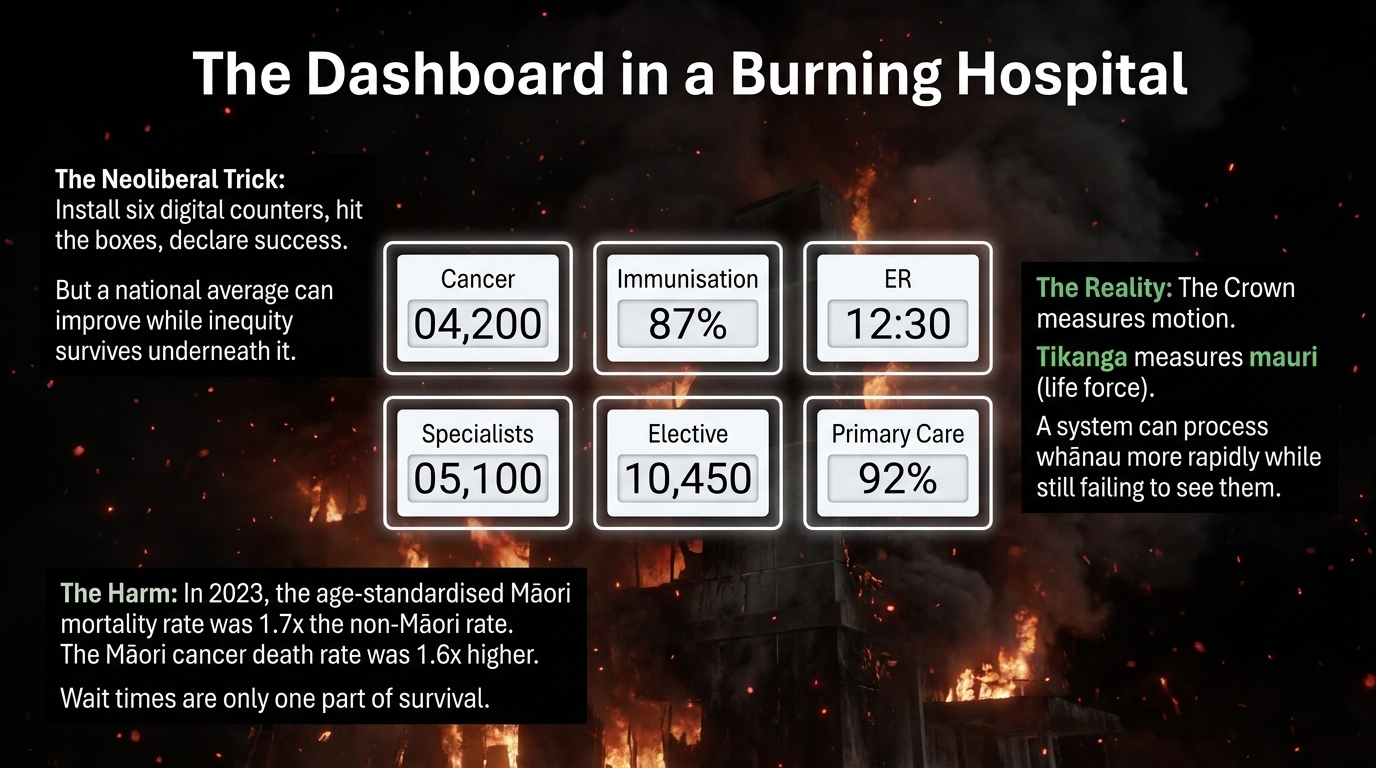
Imagine a hospital is burning. Management installs six digital counters showing ambulance handover time, surgery throughput, immunisation, cancer care, specialist assessments and access to primary care.
The counters may be useful. But management also removes the principles requiring attention to equity, cultural safety and community relationships.
That is the danger of replacing statutory principles with six target areas. The target categories are listed in the reprinted amendment legislation.
In 2023, the age-standardised Māori mortality rate was 1.7 times the non-Māori rate, according to Health NZ’s mortality data. The Māori cancer death rate was 1.6 times the non-Māori rate, according to Health NZ’s cancer data.
A national target can improve while Māori remain behind. An average can move while inequity survives underneath it.
The Tikanga Impact: Manaakitanga is not throughput. Mauri is not a quarterly target. A system can process Māori more rapidly while still failing to see us, hear us or place our whānau at the centre.
The Solution: Retain targets, but require every target to be reported by ethnicity, deprivation, disability, region and gender. Restore statutory equity and cultural-safety duties. Give Māori institutions the authority to intervene when national improvement conceals Māori deterioration.
The Funding Lens
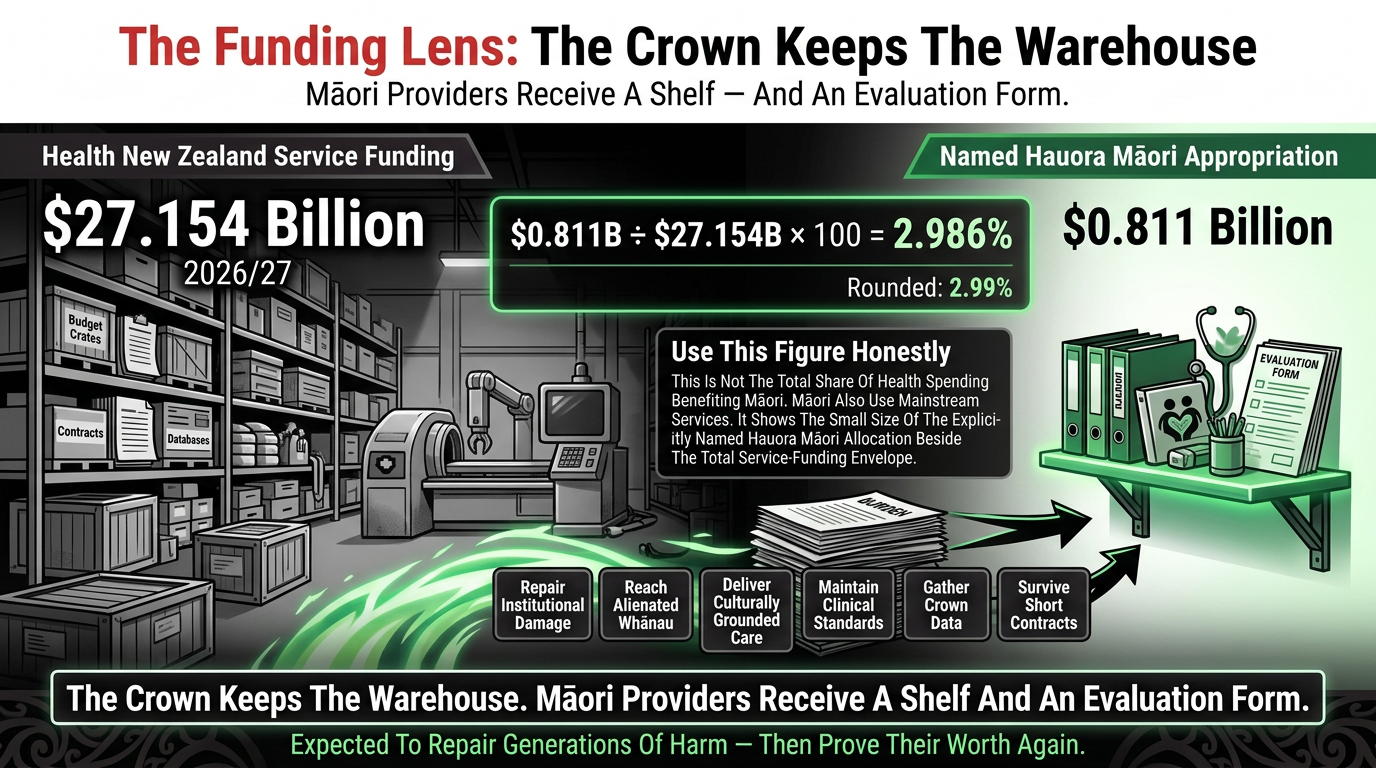
For 2026/27, Manatū Hauora records $27.154 billion in Health New Zealand service funding and a named Hauora Māori appropriation of $0.811 billion, according to its health-funding trends.
The calculation is:
0.811÷27.154×100=2.986%0.811÷27.154×100=2.986%
Rounded, the named Hauora Māori appropriation equals 2.99% of Health New Zealand service funding.
That figure must be used honestly. It is not the total percentage of health expenditure benefiting Māori, because Māori also receive services through general appropriations. It does, however, reveal how comparatively small the explicitly named Hauora Māori allocation is beside the total service-funding envelope.
This is the neoliberal arrangement: Māori providers are expected to repair generations of institutional damage, reach whānau whom mainstream systems have alienated, provide culturally grounded care, maintain clinical standards, gather Crown data and survive short contracting cycles—then prove their worth repeatedly to the same system that helped create the need.
The Crown keeps the warehouse.
Māori providers receive a shelf and an evaluation form.
What The Tribunal Actually Found
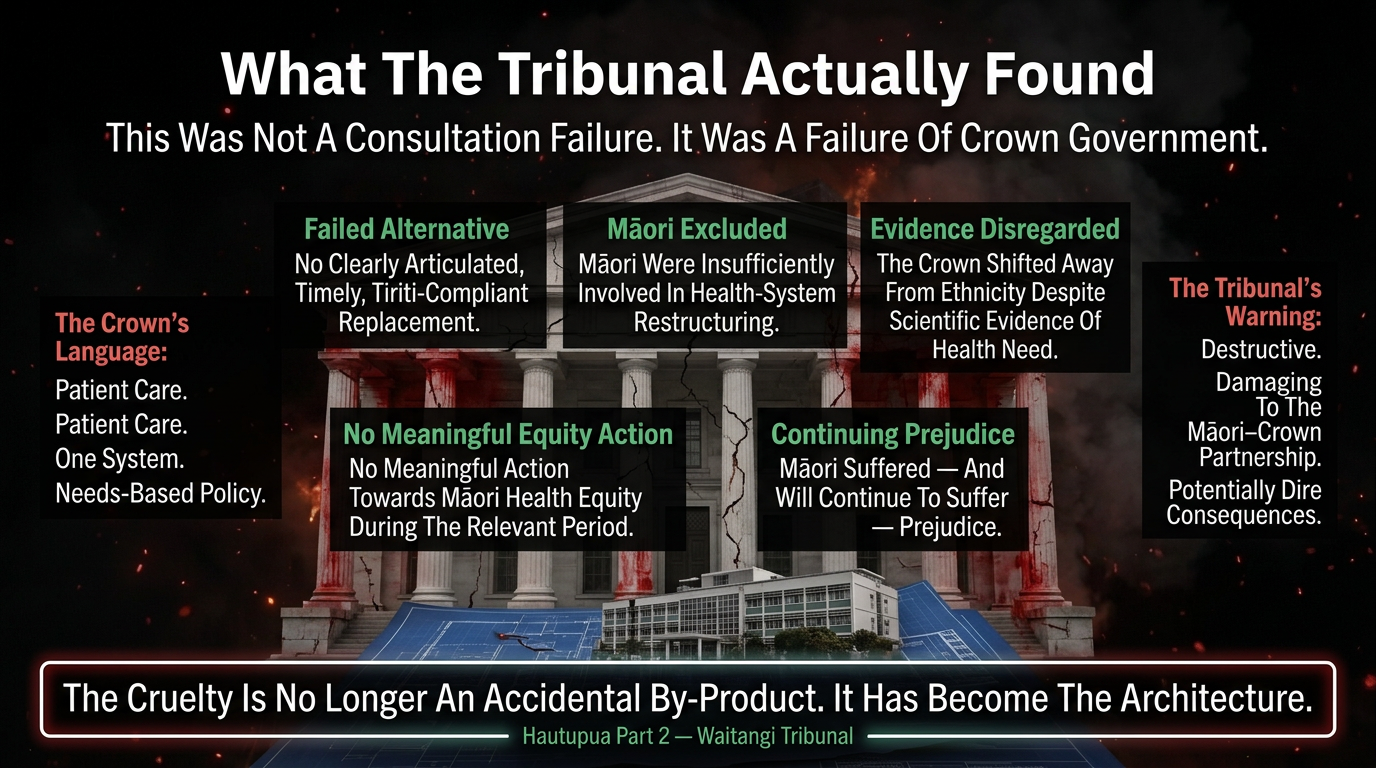
The Tribunal did not merely say consultation could have been better.
It found that the Crown failed to produce a clearly articulated, Tiriti-compliant alternative in a timely manner. It found no meaningful action towards Māori health equity during the relevant period. It found the Crown insufficiently involved Māori in health-system restructuring and shifted away from ethnicity despite scientific evidence that ethnicity remains an important indicator of health need, according toHautupua Part 2.
The Tribunal described the shift as destructive and damaging to the Māori–Crown partnership and warned that it could have dire consequences. It found Māori had suffered and would continue to suffer prejudice, according to theofficial Tribunal report.
My opinion is blunt: when a government receives evidence that a population is dying younger, removes that population’s independent health authority, fails to build a clear replacement, weakens local Māori power, repeals equity principles and calls the result “patient care,” the cruelty is no longer an accidental by-product.
It has become the architecture.
The Wider Whakapapa
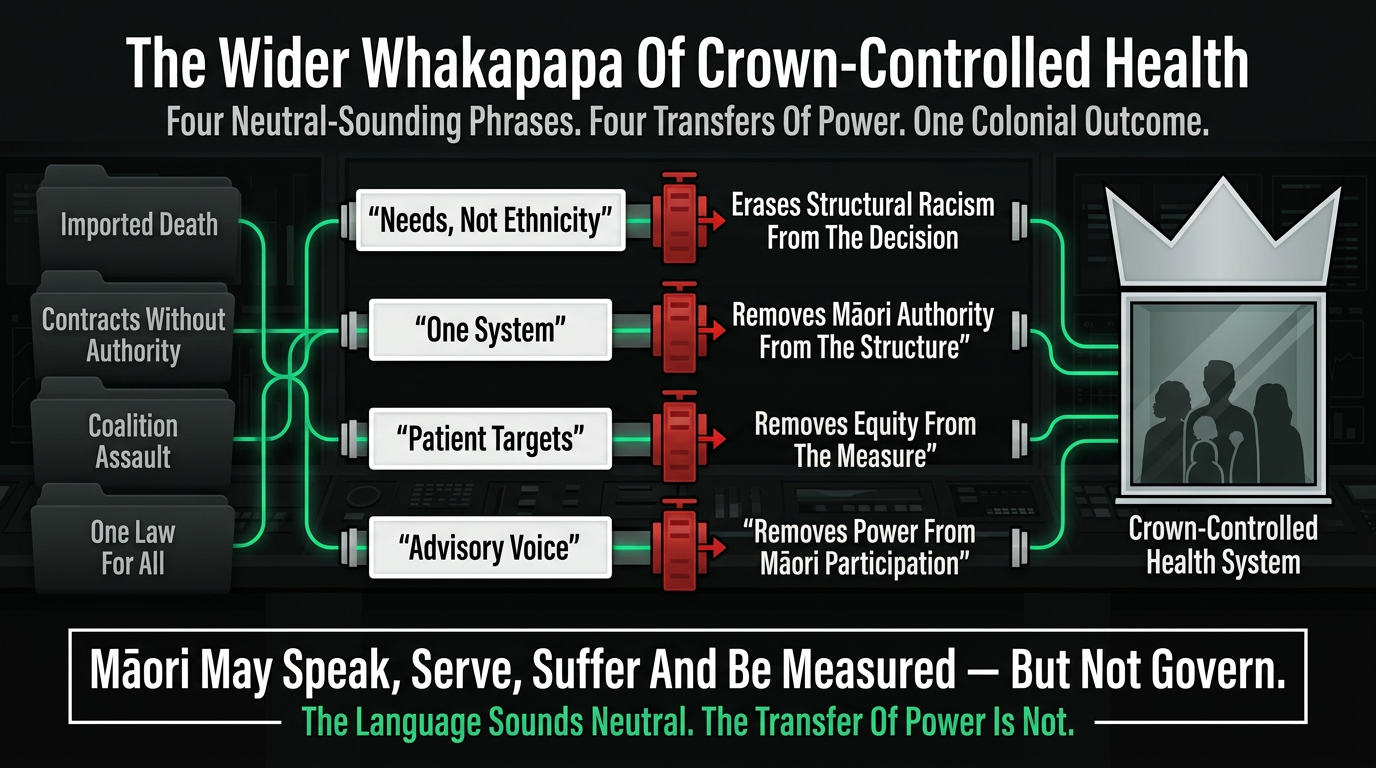
This does not stand alone.
In “Imported Death”, I traced the relationship between neoliberal restructuring, mental-health underinvestment, Te Aka Whai Ora’s destruction and the political language used to present austerity as innovation.
In “Chris Hipkins’ Labour Keeps The Neoliberal Knife At Māori Throats”, I argued that devolving contracts without devolving authority leaves Māori providers as shock absorbers inside a Crown-designed system.
In “Luxon’s Coalition Is Rotting From The Inside”, I placed the destruction of Te Aka Whai Ora beside the coalition’s broader assault on Māori institutions, rights and material wellbeing.
In “The Hobson’s Pledge Production Line”, I documented the ideological pipeline promoting “one law for all” while removing the distinct institutions required to remedy unequal outcomes.
The hidden connection is now impossible to miss.
“Needs, not ethnicity” removes the evidence of structural racism from the decision. “One system” removes Māori authority from the structure. “Patient targets” remove equity from the measure. “Advisory voice” removes power from Māori participation.
Each phrase sounds neutral.
Together they form a Crown-controlled health system in which Māori may speak, serve, suffer and be measured—but not govern.
Tika And Pono Demand Restoration
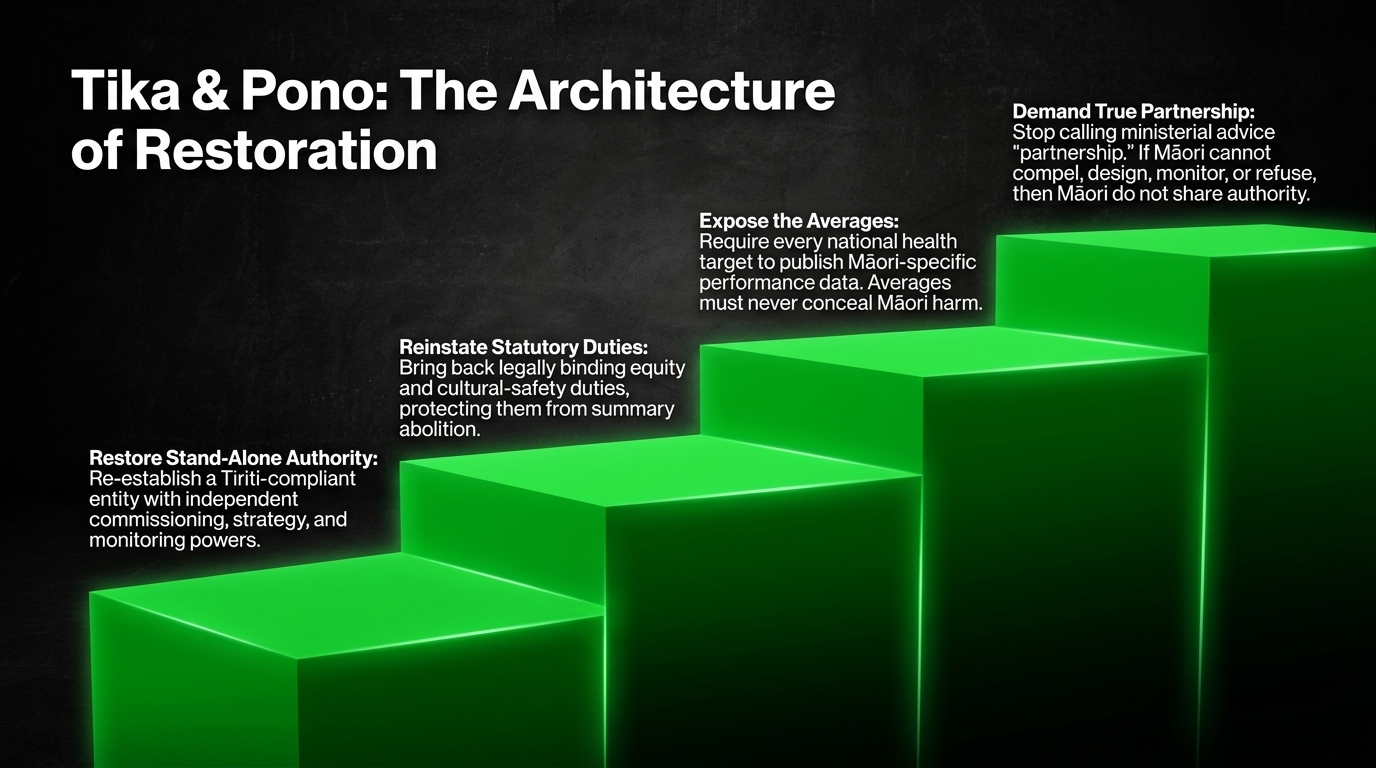
Tika requires more than undoing one repeal.
It requires:
- Restoring a stand-alone Māori health authority with meaningful commissioning, strategy and monitoring powers, consistent with the Tribunal’s recommendation.
- Restoring Iwi-Māori Partnership Board functions at rohe level rather than reducing them to information couriers for a national committee.
- Reinstating statutory equity, cultural-safety and Te Tiriti duties alongside measurable service targets.
- Requiring every national target to publish Māori-specific performance so national averages cannot conceal Māori harm.
- Protecting the authority from summary abolition without informed Māori consent and a proper Tiriti-compliance process.
- Funding kaupapa Māori providers through durable, indexed arrangements rather than forcing them through perpetual short-term contracting contests.
- Treating mātauranga Māori, wairuatanga, whanaungatanga and manaakitanga as foundations of health—not decorative cultural accessories attached after decisions are made.
Pono requires the Government to stop calling advice “partnership.”
If Māori cannot compel, commission, design, monitor or refuse, then Māori do not share authority.
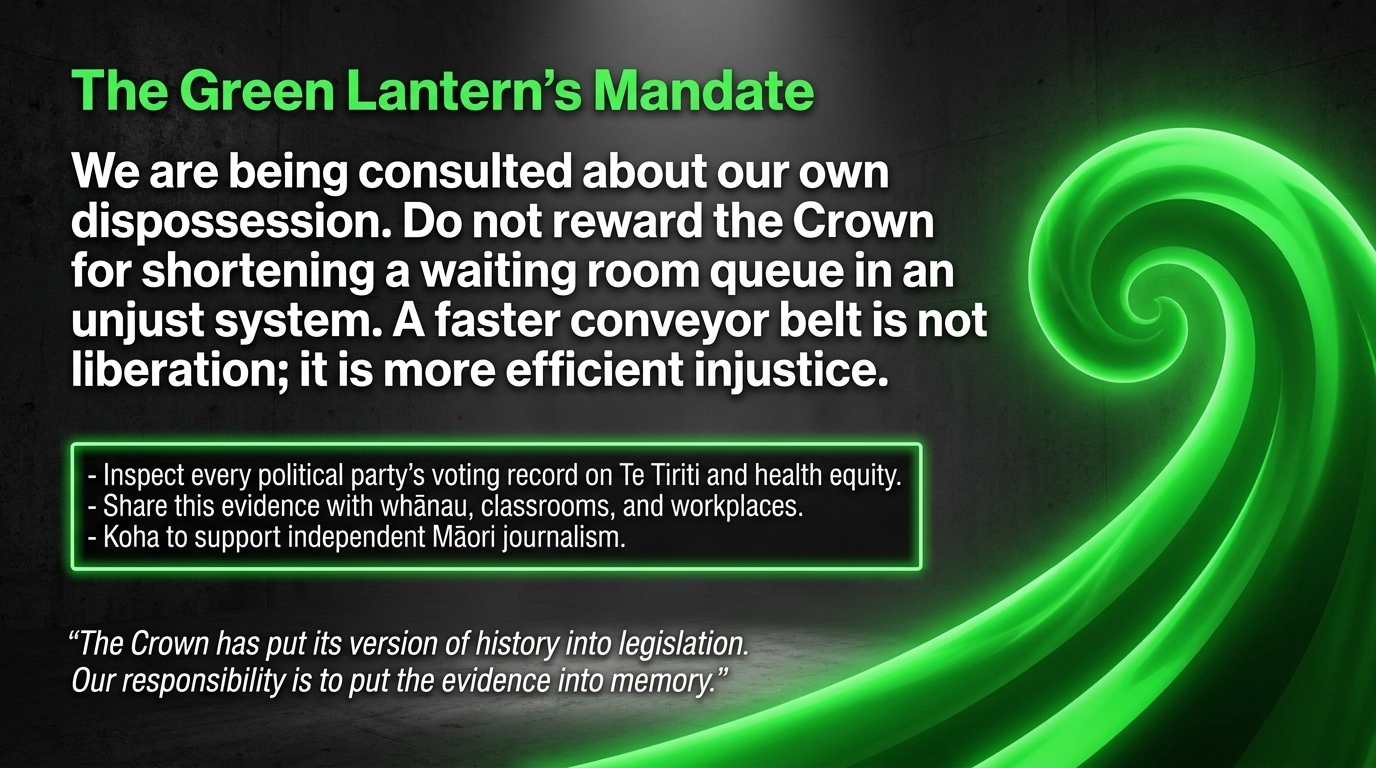
We are being consulted about our own dispossession.
Why I Will Not Vote This Coalition Back Into Power
I will not vote this coalition back into government.
That is my political opinion, based on the coalition’s public actions: it abolished Te Aka Whai Ora, reduced Māori health governance, repealed health-sector principles, removed statutory engagement and reporting provisions, and rejected amendments intended to restore equity and Māori accountability, as recorded in the disestablishment law and the Health Committee report.
This Government asks Māori to trust the system that produced the gap.
It asks Māori to accept advice instead of authority.
It asks Māori to admire targets while repealing the principles that determine whose life counts inside those targets.
I recommend a Green Party vote because the Green Party opposed the 2026 restructuring, joined the formal parliamentary case for restoring equity and Te Tiriti obligations, supported stronger Iwi-Māori Partnership Board powers, opposed the repeal of cultural-safety protections, and campaigned publicly against the bill’s one-size-fits-all model. Those positions are documented in the joint parliamentary differing view and the Green Party’s Pae Ora submission guide.
That recommendation is not a claim that any party is flawless. It is a judgment about the verified choices before us.
If health equity, Te Tiriti, kaupapa Māori care and public services matter to you, inspect every party’s published policy and voting record before casting your vote. Do not reward a coalition that amputated Māori authority and then demanded applause for shortening the waiting-room queue.
A faster conveyor belt through an unjust system is not liberation.
It is more efficient injustice.
Kia kaha, whānau. Stay vigilant. Stay connected. The Crown has put its version of history into legislation. Our responsibility is to put the evidence into memory.
Legal Disclaimer
This essay distinguishes verified facts from analysis and opinion. It does not allege criminality or private misconduct. Descriptions such as “white-supremacist structure,” “neoliberal cruelty,” “confiscation” and “spreadsheet colonialism” are political opinions based on the legislation, official statistics, ministerial statements and Waitangi Tribunal findings linked throughout.
If a material factual error is identified, the publication should review the primary evidence promptly, correct the record transparently and append a dated correction.