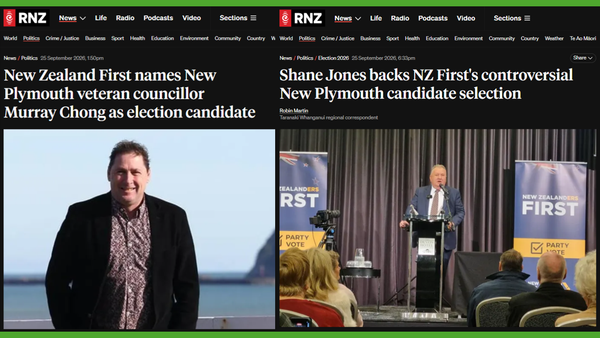
"The Weather Man Who Sells You The Climate: Rata, The Coalition, and the Con on Te Tiriti" - 26 September 2026
A Dame Tells You Your Language Was Never Banned While Her Political Allies Vote To Strip Te Tiriti From Nineteen Laws — Kia Kaha, Whānau, This Is The Repository Your Mokopuna Will Thank You For Reading.

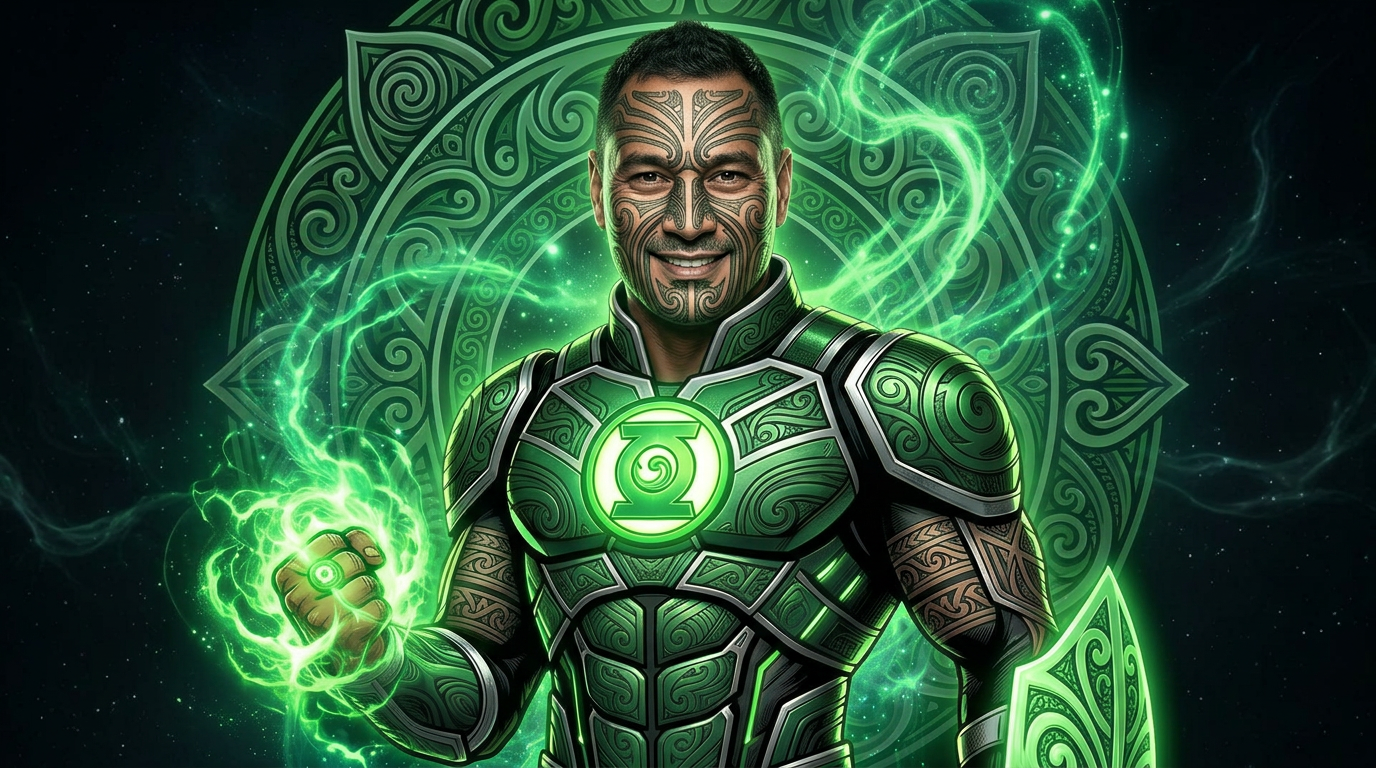
I am Ivor Jones. You know me as the Māori Green Lantern.
Before I put the taiaha to work, here is exactly what you are about to read, so you can judge for yourself whether it earns your trust:
First, I dismantle Dame Elizabeth Rata's central historical claim — that New Zealand's schools ran fair and neutral until "the 1970s" — using the Crown's own Tribunal findings, its own Ministry data, and its own courts.
Second, I trace the hidden institutional rope connecting Rata to the Free Speech Union to the ACT Party's ongoing war on Te Tiriti.
Third, I give you three plain examples built for the Western mind — core claim, quantified harm, solution, tikanga impact — with the maths shown, not asserted. Fourth, I name the coalition government's own voting record and budget decisions on this exact kaupapa, and I tell you plainly why I believe you should not return them to power this November, and why I recommend the Green Party instead.
E hoa mā — I would love for you to click through every link below, because this essay is a wealth of information for your daily life, your dinner-table arguments, your kaumātua who ask you "but wasn't the language just left to die out naturally?"
I have also built an audio podcast that walks through this kaupapa in full, and a short video that explains it in five minutes, for those who don't have time for three thousand words of citations.
This essay is the long-form version, built so that our mokopuna, decades from now, can look back and say: at least the Māori Green Lantern — amongst a few — was warning us.
The Weather Man Who Sells You The Climate
A weather report tells you it rained yesterday. A climate report tells you why it keeps raining on the same street every winter while the street next door stays dry.
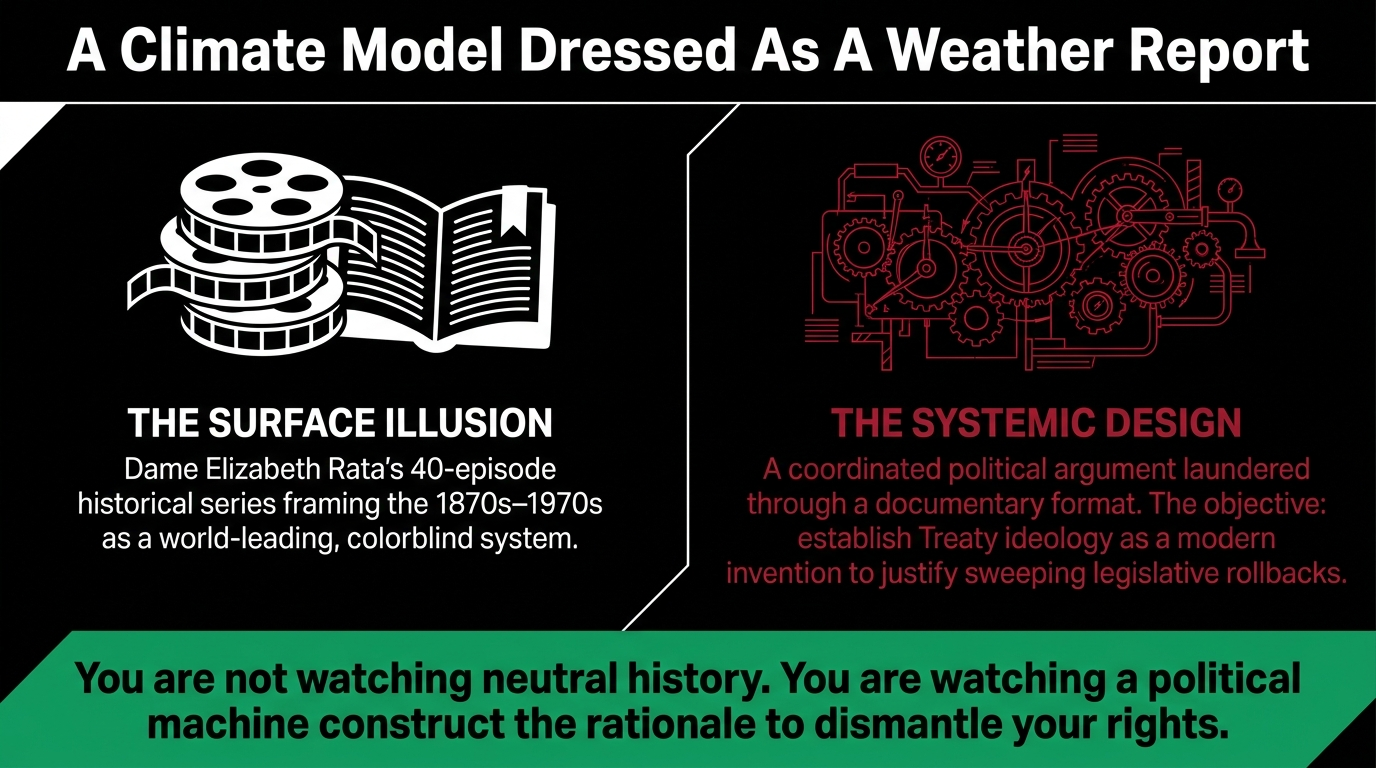
Dame Elizabeth Rata is not giving you weather. She is giving you a climate model dressed as weather, so you never ask who built it.
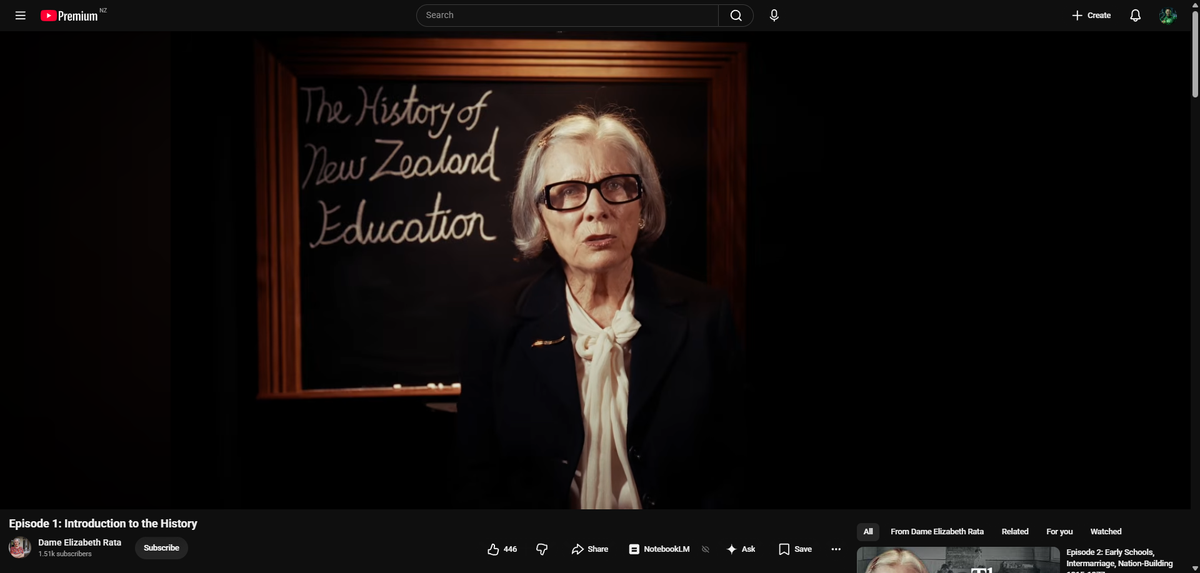
Her own university's honours page states her thesis plainly: New Zealand built a "world-leading" school system from 1877, and it held for a century — until "a major turn from the 1970s, accelerating after 2007" sent it into decline, according to the University of Auckland's own tribute page.
She never says "mātauranga Māori."
She never says "decolonisation."
She doesn't need to.
Forty episodes, according to the Rova podcast archive and the FSU's own Buzzsprout feed, build the conclusion in your head one inspector's report at a time, until you arrive at it believing you got there yourself.
That is not history broadcast neutrally.
That is a political argument laundered through a documentary format, and every white supremacist, neoliberal talking point about "Treaty ideology" being a modern invention rides in on its back.
The Deep Dive Podcast
Listen to a lively conversation between two hosts, unpacking and connecting topics in the sources of this essay. I apologise in advance for the AI's very harsh pronounciation of reo. Please dont shoot me, :).
Youtube Video
Like video? Here is a short video suppporting the essay. Again, don't shoot the messenger please because of AI's pronounciation. :)
Koha Consideration

You might ask who is paying the Māori Green Lantern to fact-check a Dame, a Union, and a coalition government all in one essay.
The answer is you do. There are no corporates behind this mahi — every koha signals that whānau are ready to fund the accountability the Crown and the Free Speech Union will not provide themselves. It signals that rangatiratanga includes the power to support our own truth tellers.
Kia kaha, whānau. Stay vigilant. Stay connected. And if you are able, consider a koha to ensure this voice continues.
If you are unable to koha, no worries — subscribe or follow the Māori Green Lantern at themaorigreenlantern.maori.nz, and kōrero this essay with your whānau and friends. That is koha in itself.
Four pathways exist: support directly via Koha — Support, receive essays directly via Subscribe to the Māori Green Lantern, direct bank transfer to Ivor Jones, account 03-1395-0099387-000, or follow on Facebook.
Three Examples For The Western Mind
Example One — The Language Ban
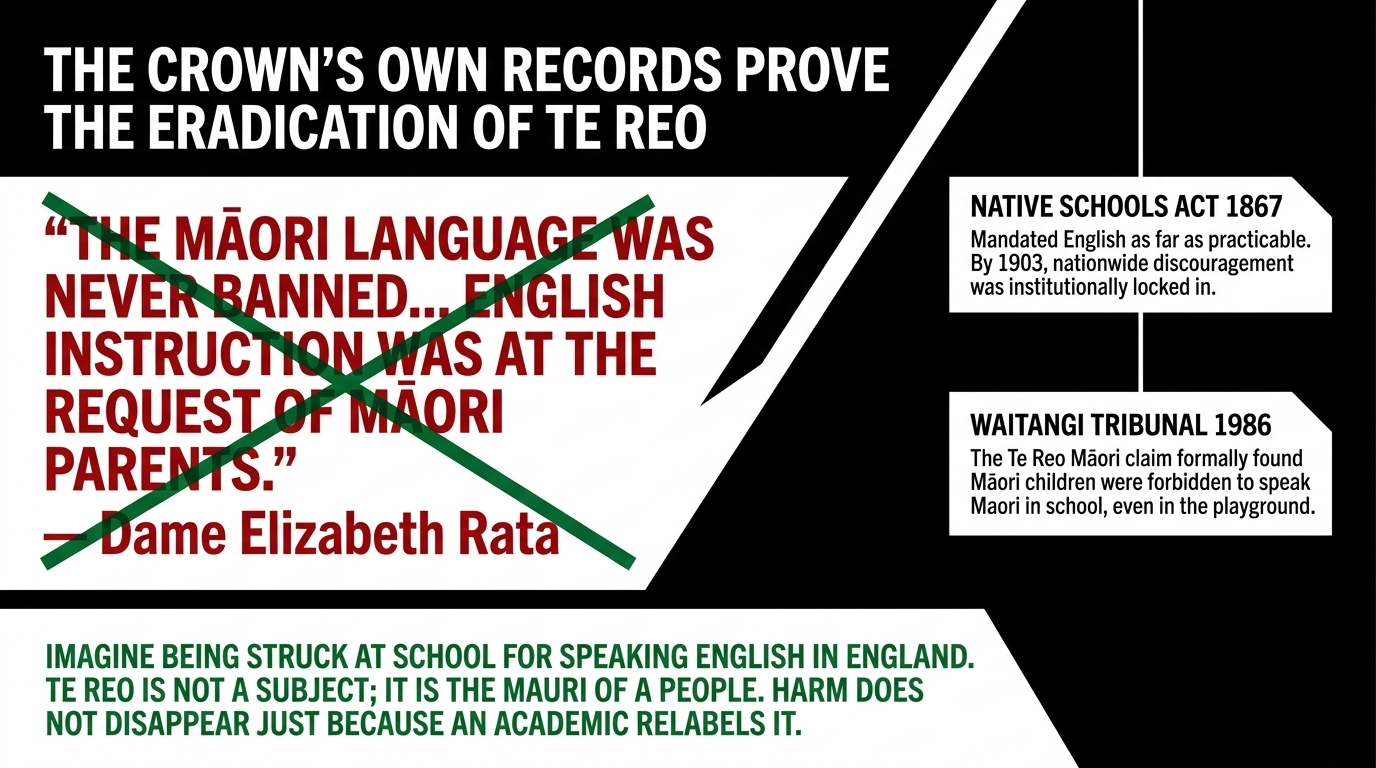
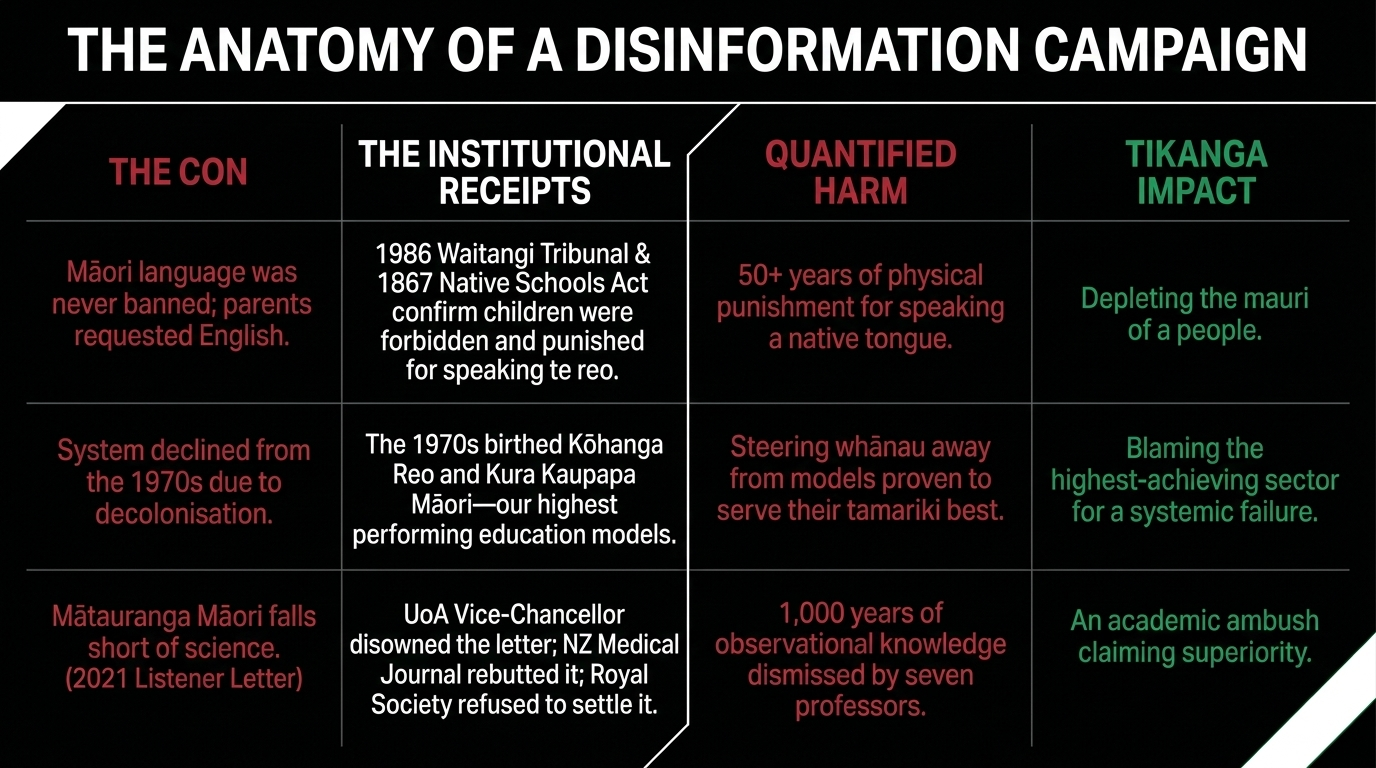
Core claim: Rata's framing implies te reo Māori was never really banned — that this is activist myth-making.
The truth, with the maths shown: The Waitangi Tribunal's own 1986 report on the Te Reo Māori claim found Māori children were "forbidden to speak Maori in school, even in the playground," and punished for it. The Native Schools Act 1867 mandated English "as far as practicable." By 1903, AUT's own published research confirms this had hardened into nationwide discouragement, and the historian Ranginui Walker's own chapter documents the mechanism directly. No calculation is needed here — this is a documentary record, not a statistic, and the record says: banned, punished, suppressed.
Quantified harm: Multiple generations, punished physically, for speaking their own tongue, for over fifty years, until the Tribunal itself intervened in 1986.
Solution: Name the suppression accurately, every single time, so no "neutral" video gets to soften it into ambiguity.
Tikanga impact for the Western mind: Imagine being struck at school for speaking English in England. That is the scale of violence being minimised here. Te reo is not a subject. It is the mauri of a people, and mauri deliberately depleted does not get relabelled as "never touched."
Prior Māori Green Lantern coverage: I have traced this exact pattern of institutional minimisation before, in my essay on the ACT Party's manufactured outrage as a smokescreen for deregulation — the method is always the same: deny the harm happened, then deny the remedy is needed.
Example Two — The "Decline" Story
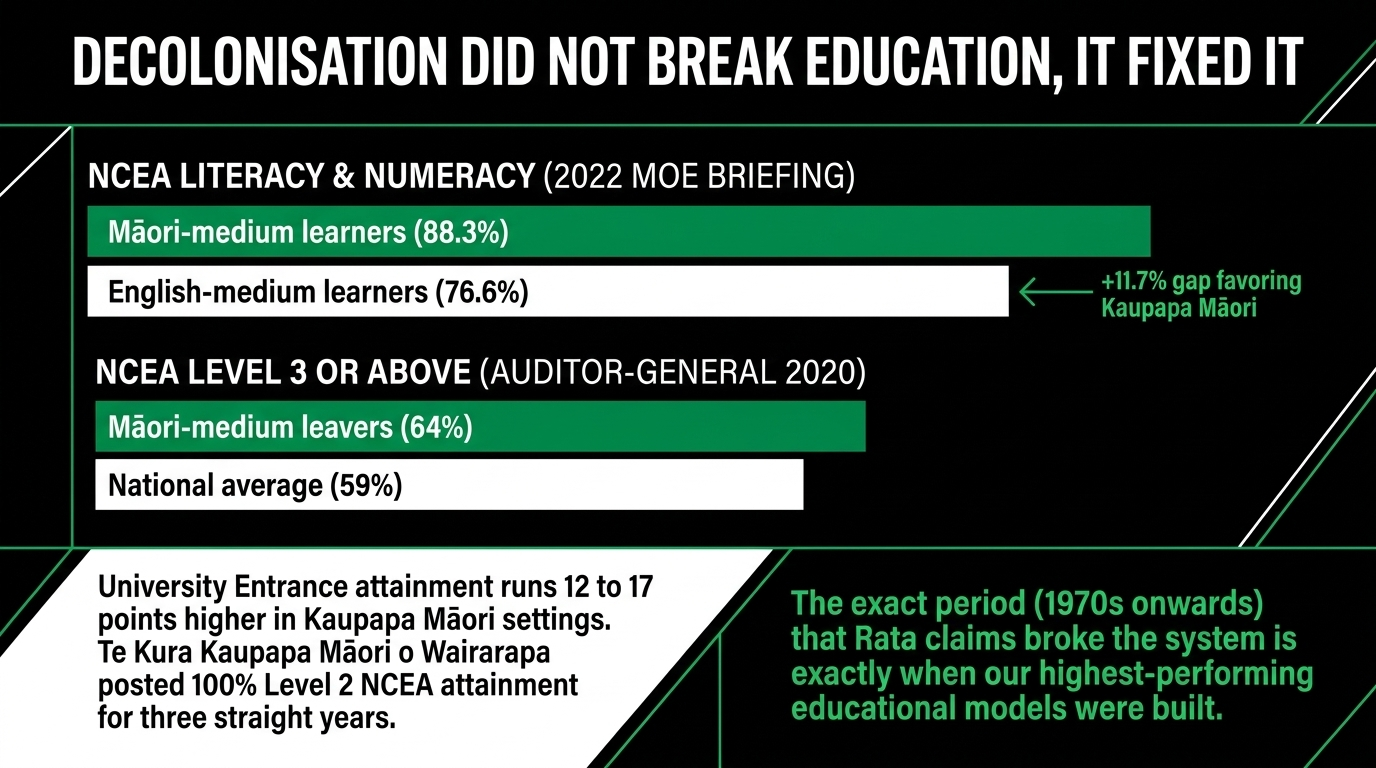
Core claim: Something starting "in the 1970s, accelerating after 2007" broke a great system.
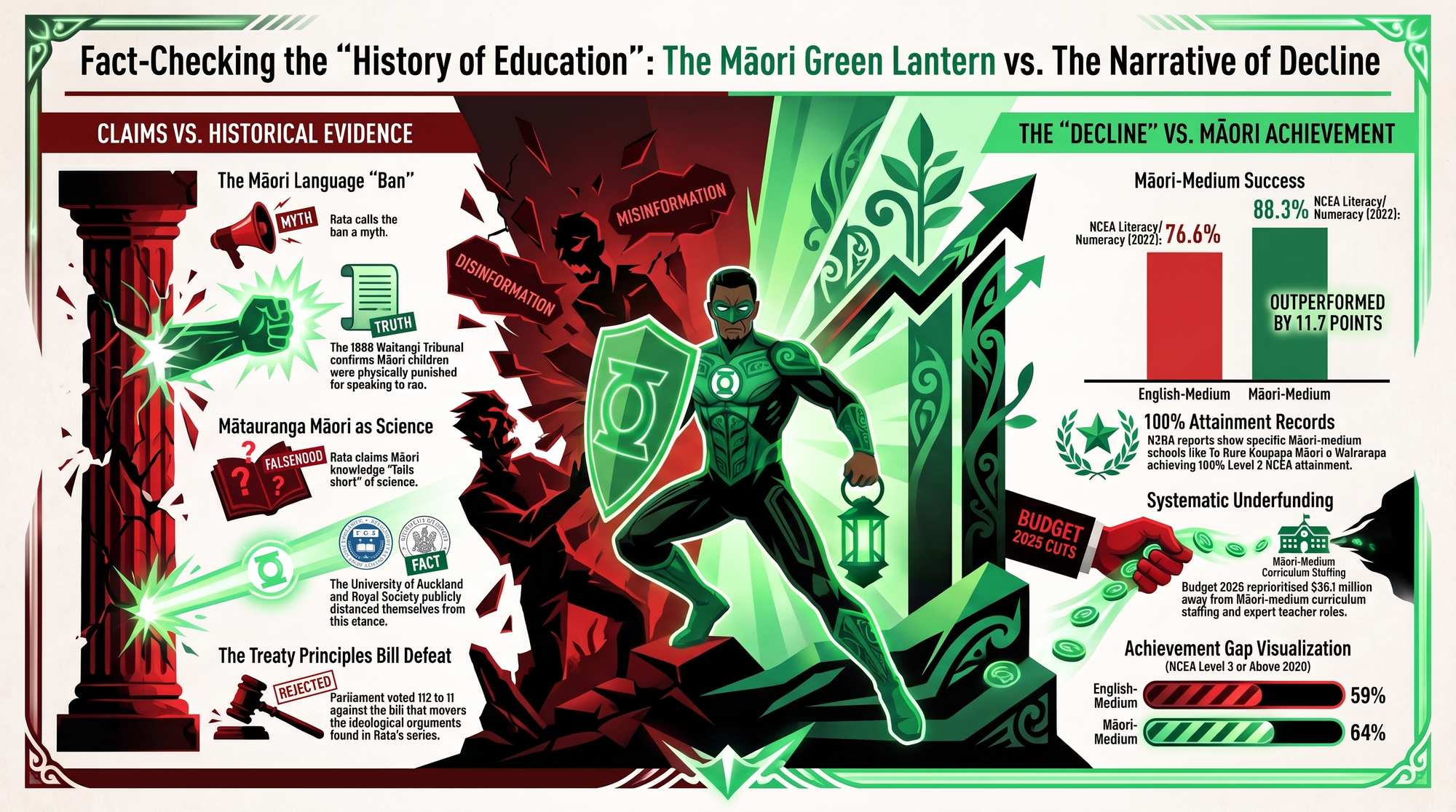
The truth, with the maths shown: That exact period is when kōhanga reo, kura kaupapa Māori, and Māori-medium education grew. The Ministry of Education's own briefing confirms Māori-medium learners hit 88.3% for NCEA literacy and numeracy in 2022, against 76.6% in English medium — a gap of 11.7 percentage points in the opposite direction Rata's story requires. NZQA's own report confirms University Entrance attainment running 12 to 17 points higher in Kaupapa Māori settings than comparable English-medium schools. NZQA's own assessment report confirms Te Kura Kaupapa Māori o Wairarapa posted 100% Level 2 NCEA attainment for three straight years. The Parliamentary Auditor-General's own report confirms 64% of Māori-medium leavers achieved NCEA Level 3 or above in 2020, against 59% nationally — a further 5-point gap, again in Rata's model's favour, not against it.
Quantified harm: Every whānau steered away from Kaupapa Māori education by this narrative is steered away, by up to 17 percentage points of measurable outcome, from the sector proven to serve their tamariki best.
Solution: Fund and expand Kaupapa Māori and Māori-medium education because of this data, not despite the manufactured "decline" story.
Tikanga impact for the Western mind: Imagine being told the neighbourhood school that gets the best exam results is secretly the cause of the district's falling standards. That is the logical structure Rata is asking you to accept.
Prior Māori Green Lantern coverage: I documented the funding side of this exact fight in my piece on the dismantling of Te Aka Whai Ora — starve the Māori-led model, then blame the model for the starvation.
Example Three — "Falls Short Of Science"
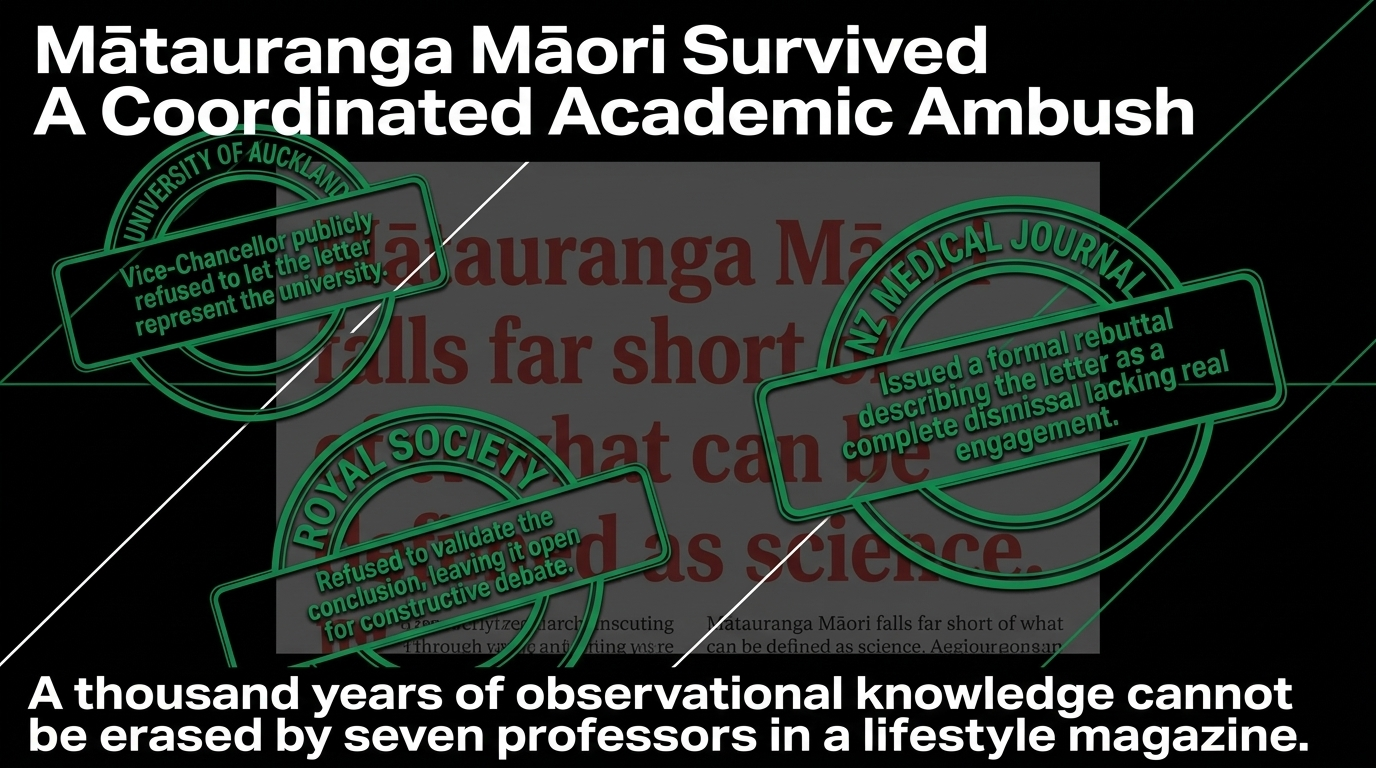
Core claim: The 2021 Listener letter Rata co-authored declared mātauranga Māori "falls far short of what can be defined as science," per Wikipedia's documented summary of the letter.
The truth, with the maths shown: No calculation applies here — this is an institutional verdict, and it went against her. Research Professional News reports that University of Auckland Vice-Chancellor Dawn Freshwater publicly refused to let the letter represent the university. The NZ Medical Journal's formal rebuttal describes the letter as a "complete dismissal" without engagement. The Royal Society's own statement and Stuff's reporting on the panel's decision confirm the panel called the question one for "further constructive and respectful debate" — contested, not resolved.
Quantified harm: A thousand years of observational knowledge, told by seven professors in a national magazine that it "falls far short," with no equal-space right of reply granted at time of publication.
Solution: Cite the university's own repudiation and the Society's own refusal to settle the question, every time this claim resurfaces.
Tikanga impact for the Western mind: Imagine Newton's laws being declared unscientific by seven professors from a rival discipline, in a lifestyle magazine, with the university publicly disowning the claim the next day. That is what happened here, to mātauranga Māori.
The Hidden Rope: Rata, The Free Speech Union, And The ACT Party
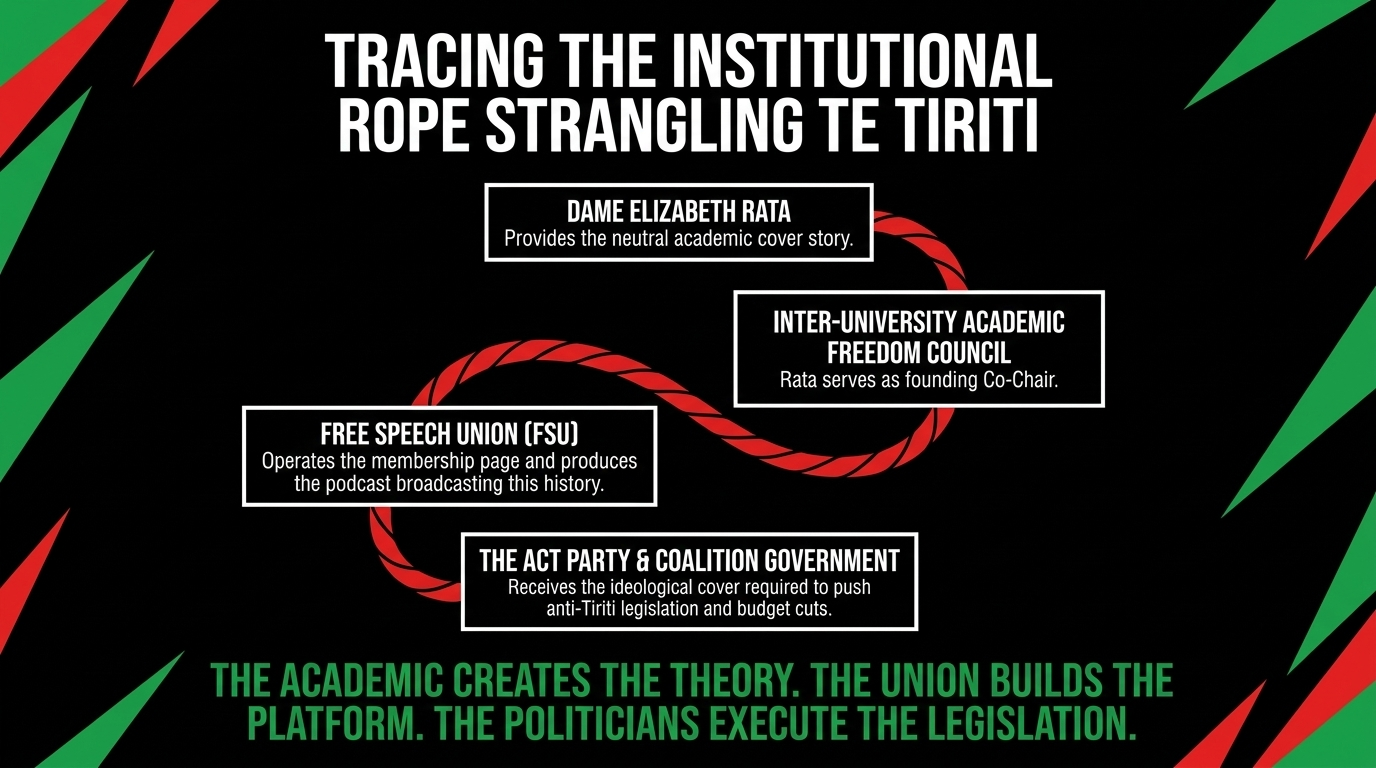
Rata is the founding Co-Chair of the Free Speech Union's own Inter-University Academic Freedom Council, confirmed on her own University of Auckland profile and the FSU's membership page.
Her "neutral" series airs on a podcast the FSU itself states it produces, hosted by a Herald columnist who has publicly defended the FSU in print.
This is the same ideological ecosystem that produced ACT's Treaty Principles Bill — and the numbers on that bill tell you exactly how isolated this worldview is even inside Parliament.
Why This Coalition Government Must Not Return To Power
I do not soften this.
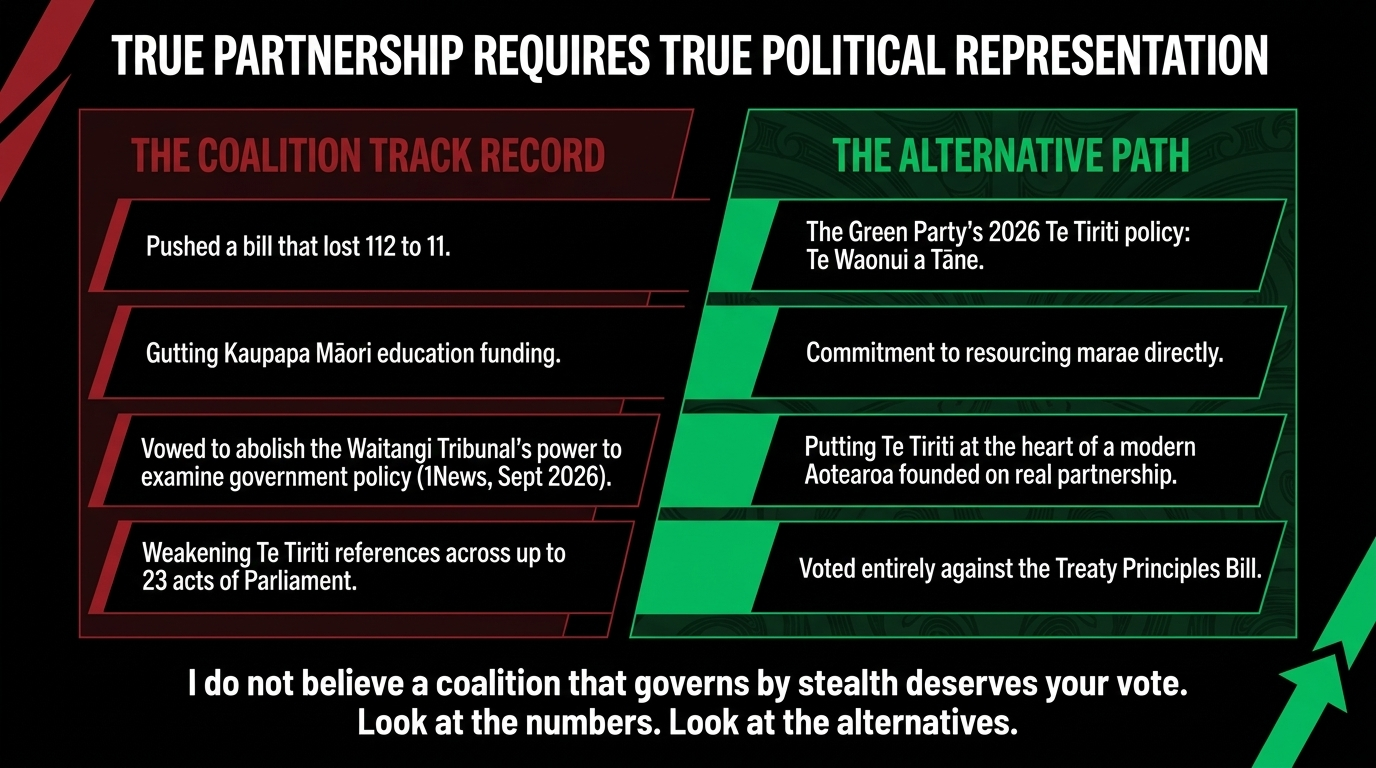
On 10 April 2025, Parliament voted on ACT's Treaty Principles Bill — the legislative arm of exactly the "Treaty ideology is a con" worldview Rata's series feeds. The result: 112 votes against, 11 for — confirmed by Wikipedia's vote record and reported by the BBC. That is roughly ten MPs rejecting the bill for every one who supported it. Even National and NZ First, the coalition's own partners, walked away from it.
And yet, per 1News reporting from September 2026, ACT now vows to abolish the Waitangi Tribunal's power to examine current government policy — after the Tribunal found the Crown breached Treaty principles on section 7AA, Māori council wards, and the Treaty Principles Bill itself, and the coalition pressed ahead regardless.
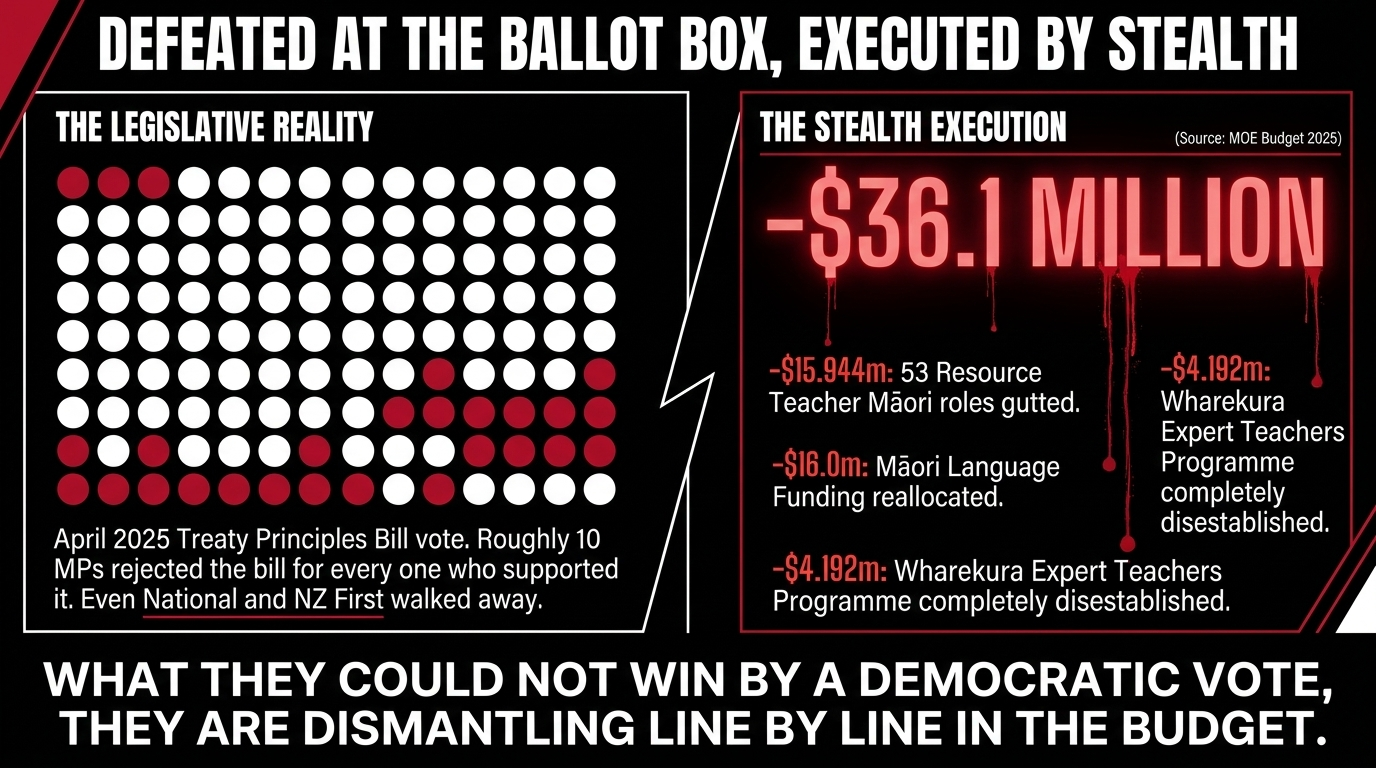
The Green Party reports that Cabinet is weakening Te Tiriti references across acts of Parliament by stealth — the party's own releases cite figures of both 19 and 23 affected statutes. What I can verify directly is the money: the Ministry of Education's own Budget 2025 documents confirm $36.1 million reprioritised out of Kaupapa Māori and Māori-medium curriculum staffing — $15.944m from 53 Resource Teacher: Māori roles, $16m reallocated from Māori Language Funding, $4.192m from the Wharekura Expert Teachers Programme, disestablished entirely.
This is a government that lost the Treaty Principles Bill vote 112 to 11, and is now pursuing by budget line and by stealth-legislation exactly what it could not win by vote. Rata's series gives that agenda its intellectual cover story.
I do not believe this coalition — National, ACT, and NZ First — deserves your vote this November. I recommend the Green Party, whose 2026 Te Tiriti policy Te Waonui a Tāne commits to resourcing marae directly and to putting Te Tiriti "at the heart of a modern Aotearoa founded on real partnership," and whose MPs voted against the Treaty Principles Bill alongside National, NZ First, Labour, and Te Pāti Māori.
No Softening

I will not pretend this is a fair fight between equally weighted historians. This is a Dame, a university chair, and a political-advocacy platform, telling Māori whānau their language wasn't really banned, their best-performing schools caused the system's decline, and their knowledge system falls short of science — while her political allies vote to gut the Tribunal that would hold the Crown to account for exactly this pattern.
That is not history.
That is a con dressed as a documentary, serving a government that lost its own vote 112 to 11 and is now trying to win by budget line what it lost at the ballot box.
Ko te tika me te pono ōku patu. Kāore au e whakangāwari.