"HE MAUNGA KEI RARO I TE MOANA: THE MAN WHO MAPPED THE BONES OF PAPATUANUKU AND THE LANTERN THAT REFUSES TO DIE: - 14 April 2026
A letter from the floor of the Pacific to the spine of a dying regime — for Jim Gill of California, whose maunga stands in Aotearoa waters while his son-in-law drives the taiaha
Kia ora Aotearoa, Te Ao Māori and Te Ao Pākeha,
TE KUPU WHAKATŪWHERA — The Opening That Cannot Be Closed
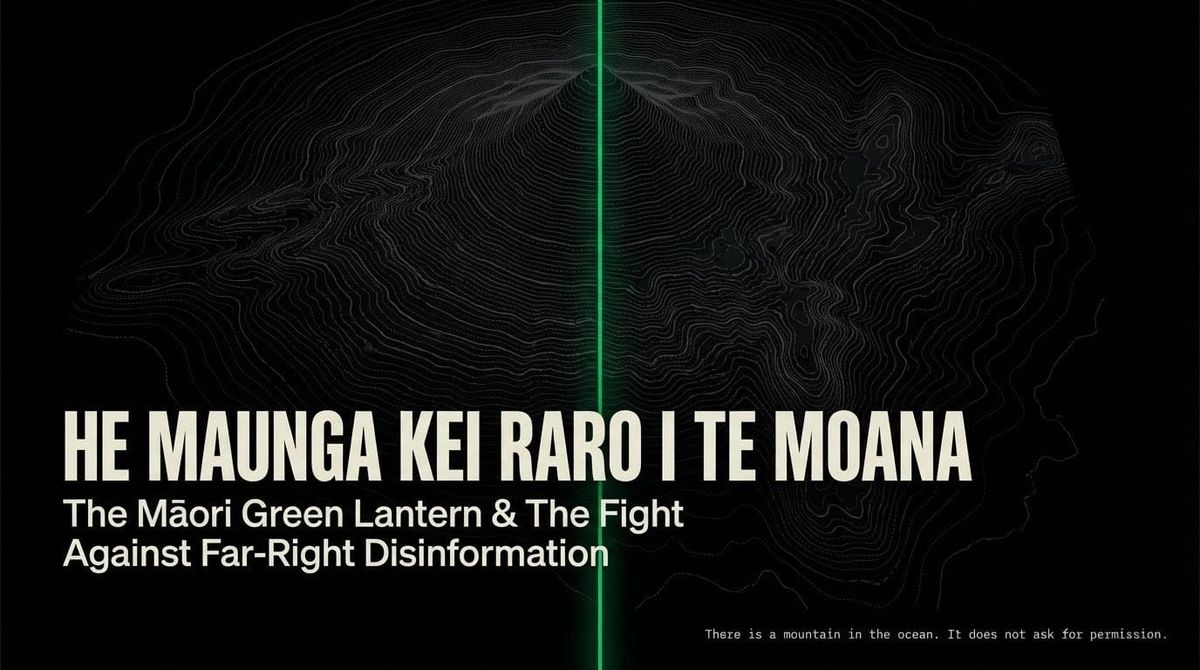
There is a mountain in the ocean.
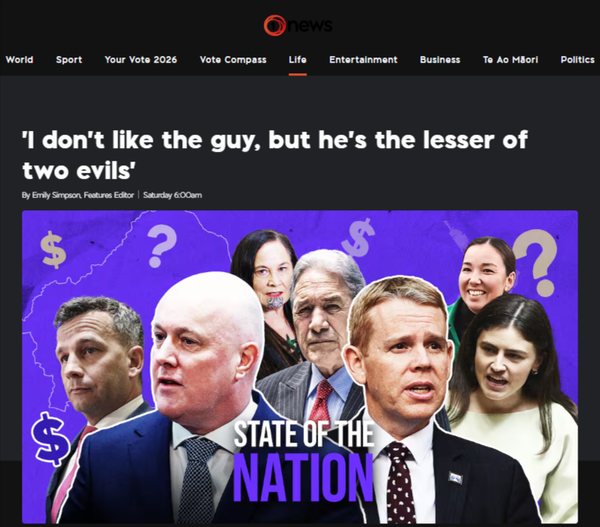
It does not ask for permission. It does not file a Resource Management Act application. It does not seek approval from Christopher Luxon or Winston Peters or David Seymour. It rises from the floor of the Pacific, silent and immense, and it has been there longer than any government, any flag, any colonial fiction of ownership.
The Deep Dive Podcast
Listen to a lively conversation between two hosts, unpacking and connecting topics in the sources of this essay.
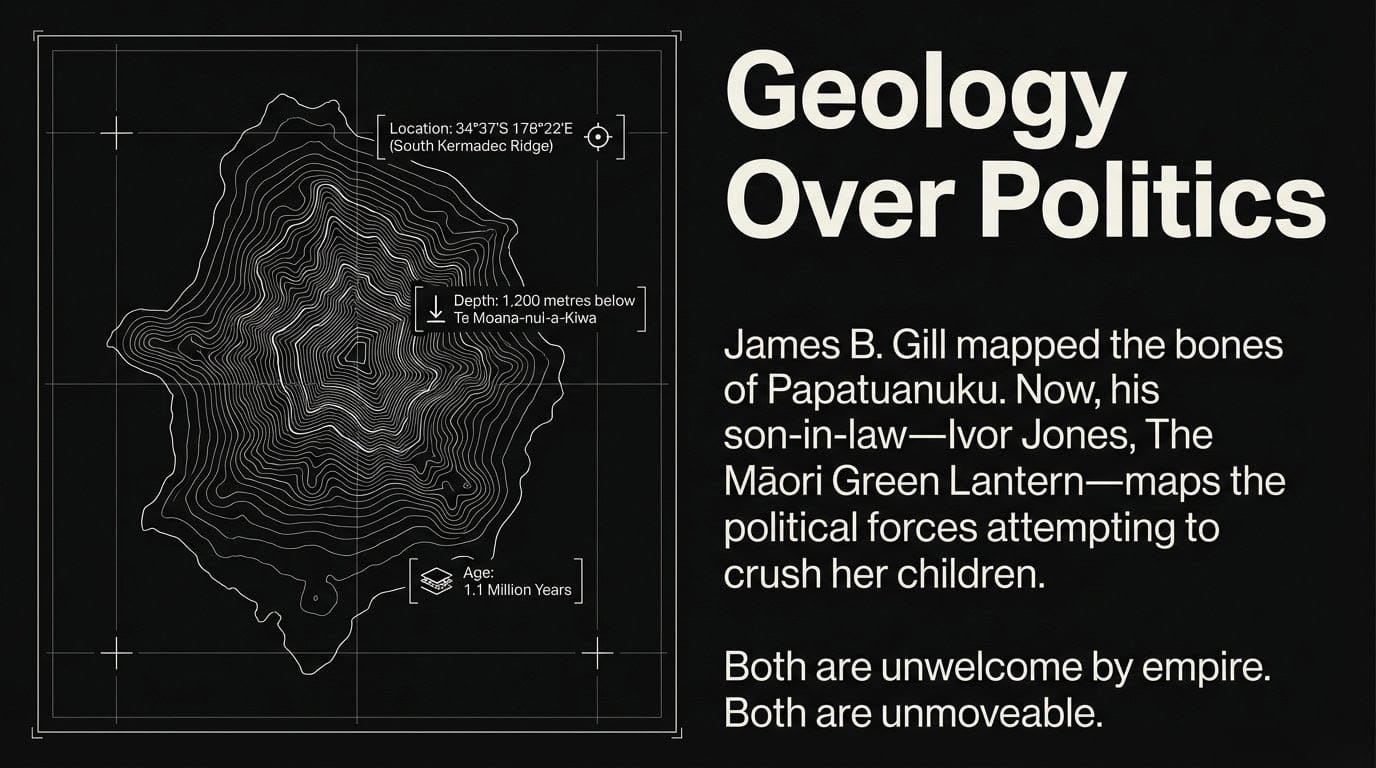
It is 1,200 metres below the surface of Te Moana-nui-a-Kiwa, sitting at 34°37′S 178°22′E in the Havre Trough of the South Kermadec Ridge — and it bears the name of a man from California who spent his life listening to what the earth was saying beneath the waves.
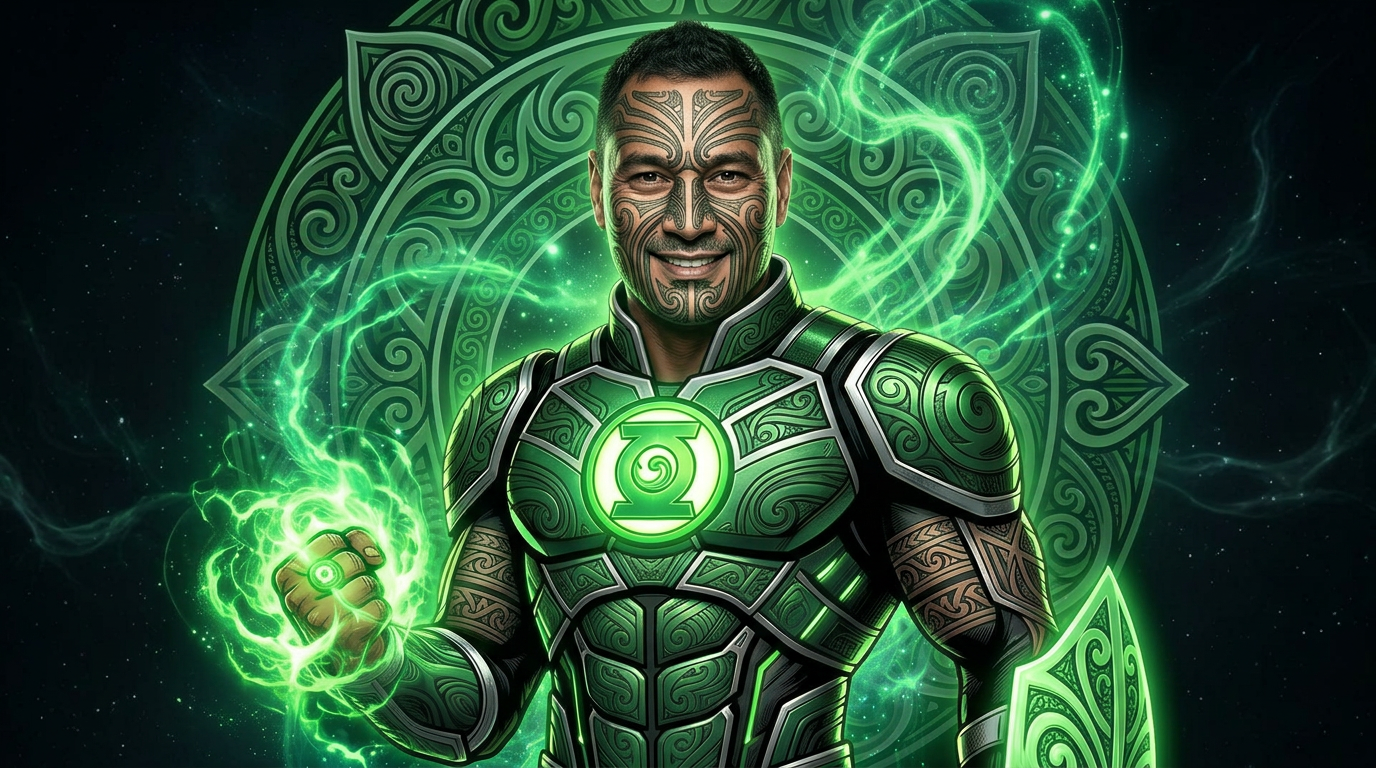
That man is James B. Gill — Jim — geochemist, student of Papatuanuku, mapper of island arc volcanism across the Pacific, author of foundational work on the geochemical evolution of Fiji, and father-in-law of Ivor Jones, The Māori Green Lantern.
HE KŌRERO MĀ JIM — A Word for a Man of Mana
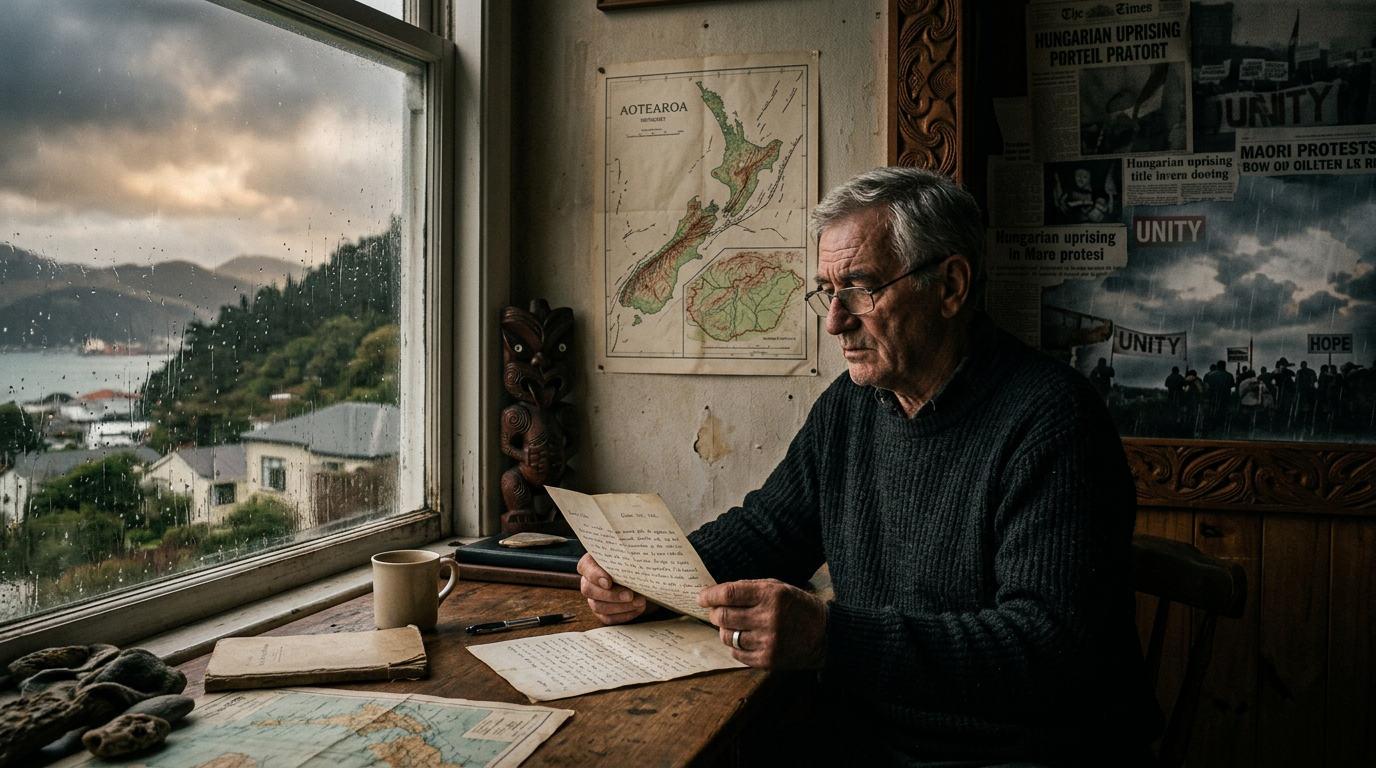
Jim, you wrote with the quiet generosity of a man who has spent decades reading the deep earth:
"Maybe MGL can echo hope from Hungary to NZ, USA, Israel, and elsewhere that change is possible, however imperfect."
You wrote that from California — Trumpland, as the Māori Green Lantern puts it — a place where the machinery of authoritarian performance runs hot and loud.
You wrote it after reading an essay published from Aotearoa, by a man who is your own blood through the bonds of whānau, who has driven nine hundred taiaha into the spine of a regime that is currently — and this is not metaphor, this is documented fact — dismantling indigenous rights at the speed of legislation.
You study the tectonic forces that shape the earth from below. This platform studies the political forces that crush people from above.
The methodology is the same: trace the whakapapa, name the pressure points, map what is being broken, and refuse to pretend the fault lines are invisible.
Welcome to Te Ao Māori, Jim. You have been here longer than you knew. The Gill Seamount speaks from New Zealand waters. So does the Māori Green Lantern. So, now, do you.
The man who named the bones of Papatuanuku has a son-in-law who names the crimes committed against her children.
Both are unwelcome by empire.
Both are unmoveable.
TE ATAAHUA O TE KŌRERO MĀORI — The Metaphor That Cuts Deeper Than a Press Release
In the metaphorical register of Te Ao Māori, hear this:
Papatuanuku is bleeding.
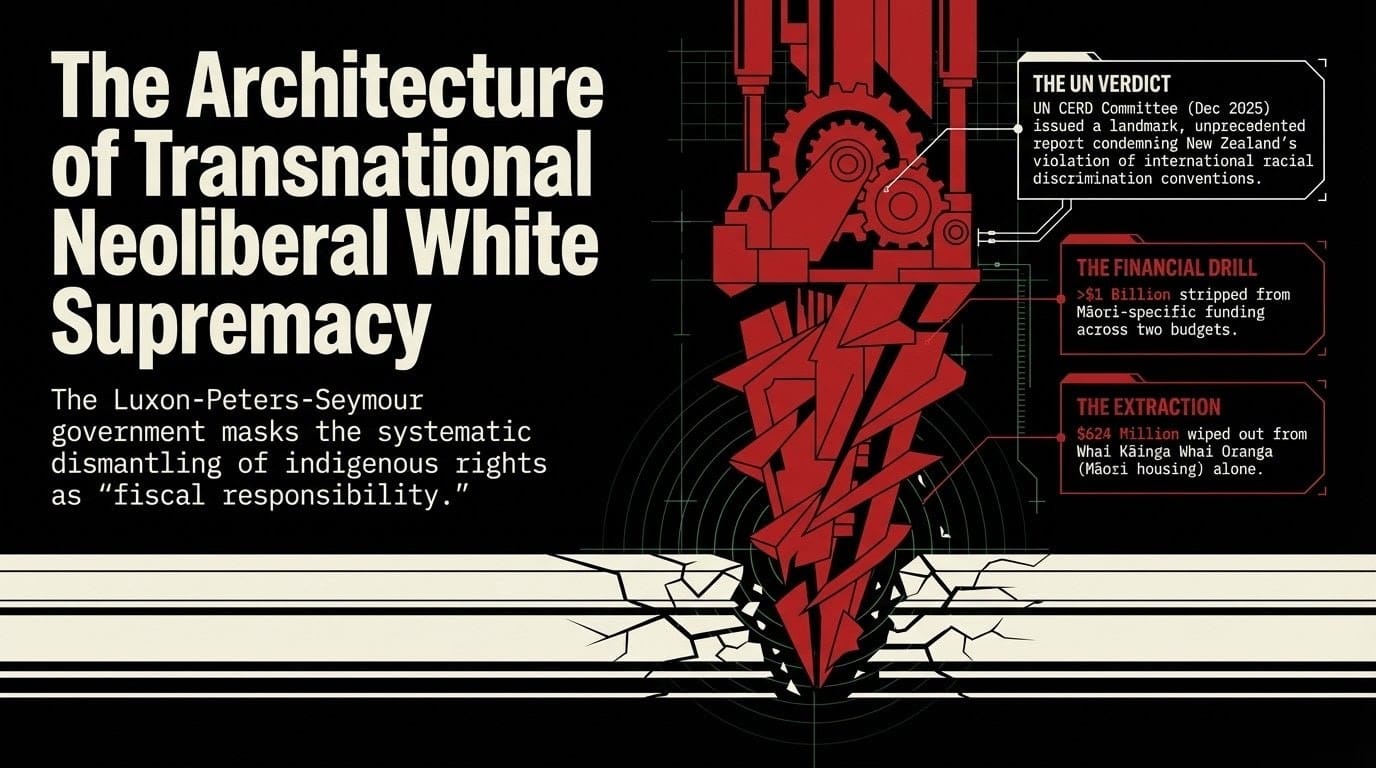
Not bleeding the way a bureaucratic report bleeds — quietly, in tables, with asterisks and footnotes. Bleeding the way a mountain bleeds when the rock is fractured at its base and the pressure has nowhere to go. The Luxon-Peters-Seymour government did not merely cut a few programmes. It drove a drill into the whakapapa of the nation and called the extracted material "fiscal responsibility."
The tuna — the long-finned eel, sacred marker of wai Māori, connector of mountain to sea — does not stop moving because the Crown built a dam. But the tamariki downstream are still thirsty while the Crown's donors are still wet.
The pātaka — the raised storehouse, the physical embodiment of manaakitanga, the community's collective food security held above the ground where rats cannot reach it — has been emptied by men in suits who have never gone hungry in their lives, and those men have had the extraordinary audacity to call it efficiency.
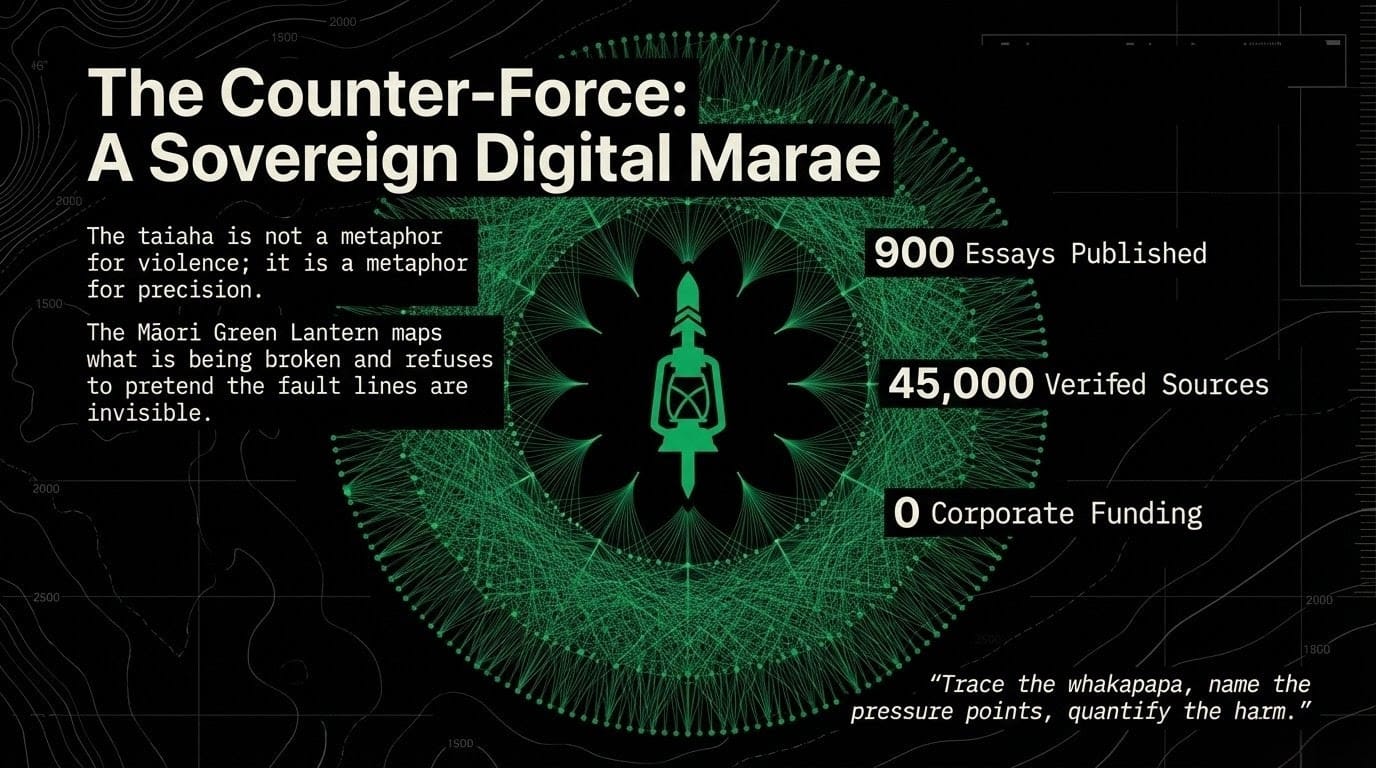
The taiaha — the weapon, the orator's instrument, the disciplined force of wairua in motion — is not a metaphor for violence. It is a metaphor for precision. And what this platform has done across 900 essays is precisely that: not rage, but anatomy. Not noise, but whakapapa traced to its source.
The dying regime builds its dams. The tuna still moves. And now even a scientist in California — a man who has literally mapped the mountains beneath the waves of this ocean — has looked east and confirmed: change is possible.
That is not hope. That is geology.
TE TŪĀHUATANGA — Historical Context: The Architecture of What Is Being Destroyed
This is not a new story. The names change; the mechanism does not.
The current coalition government — National under Christopher Luxon, ACT under David Seymour, NZ First under Winston Peters — took office in late 2023 and immediately began executing what the Waitangi Tribunal would later characterise, and what the UN's CERD committee confirmed in December 2025, as a systematic dismantling of the indigenous rights framework of Aotearoa New Zealand.
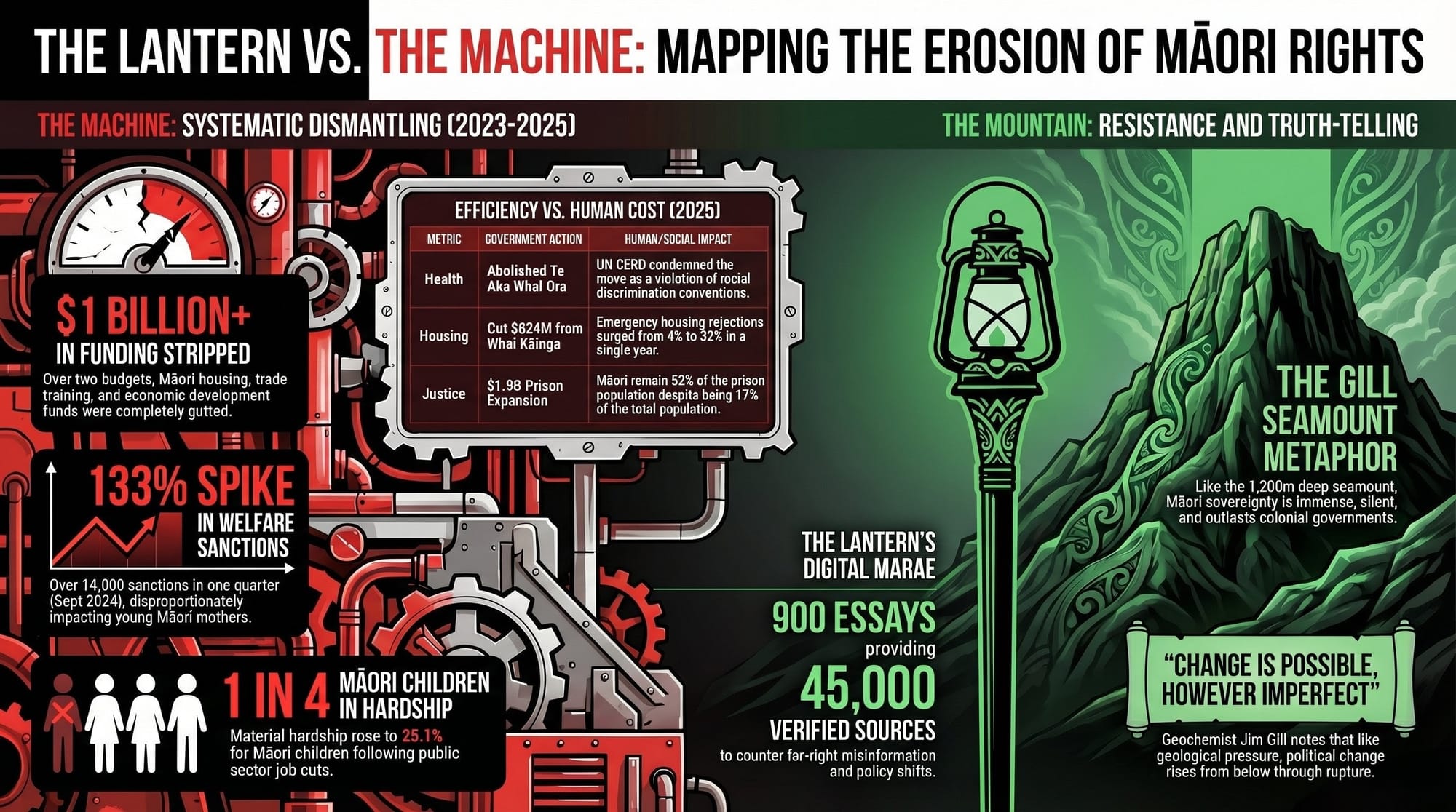
The UN issued what Lady Tureiti Moxon described as a report "unprecedented in both its length and its language." The government's response was to continue. Over two budgets — 2024 and 2025 — they stripped more than $1 billion in Māori-specific funding, gutting Māori housing ($624 million wiped from Whai Kāinga Whai Oranga), Māori trade training, Māori economic development, and kaupapa Māori education in a single political cycle.
Jim, you are watching this from a country where similar forces are at work. The playbook is not coincidence. It is a transnational ideology with a name: neoliberal white supremacy — the belief, operationalised through policy, that indigenous and poor communities should be managed at the lowest possible cost while the conditions of their dispossession are protected by law.
NGĀHERU MĀ TE HINENGARO O TE RĀ — Three Examples for the Western Mind
Because mātauranga Māori deserves translators, not just witnesses.
Example One: The Punishment Machine — What Manaakitanga Means When You Destroy It
For the western mind: Imagine a government that, facing rising unemployment it created by cutting 7,000 public sector jobs, responded by cutting the benefits of unemployed people who failed to meet arbitrary meeting schedules — and did so at twice the previous rate, hitting young people and Māori disproportionately.
That is not imagination. That is the Traffic Light sanction system, documented and verified in this platform's investigation.
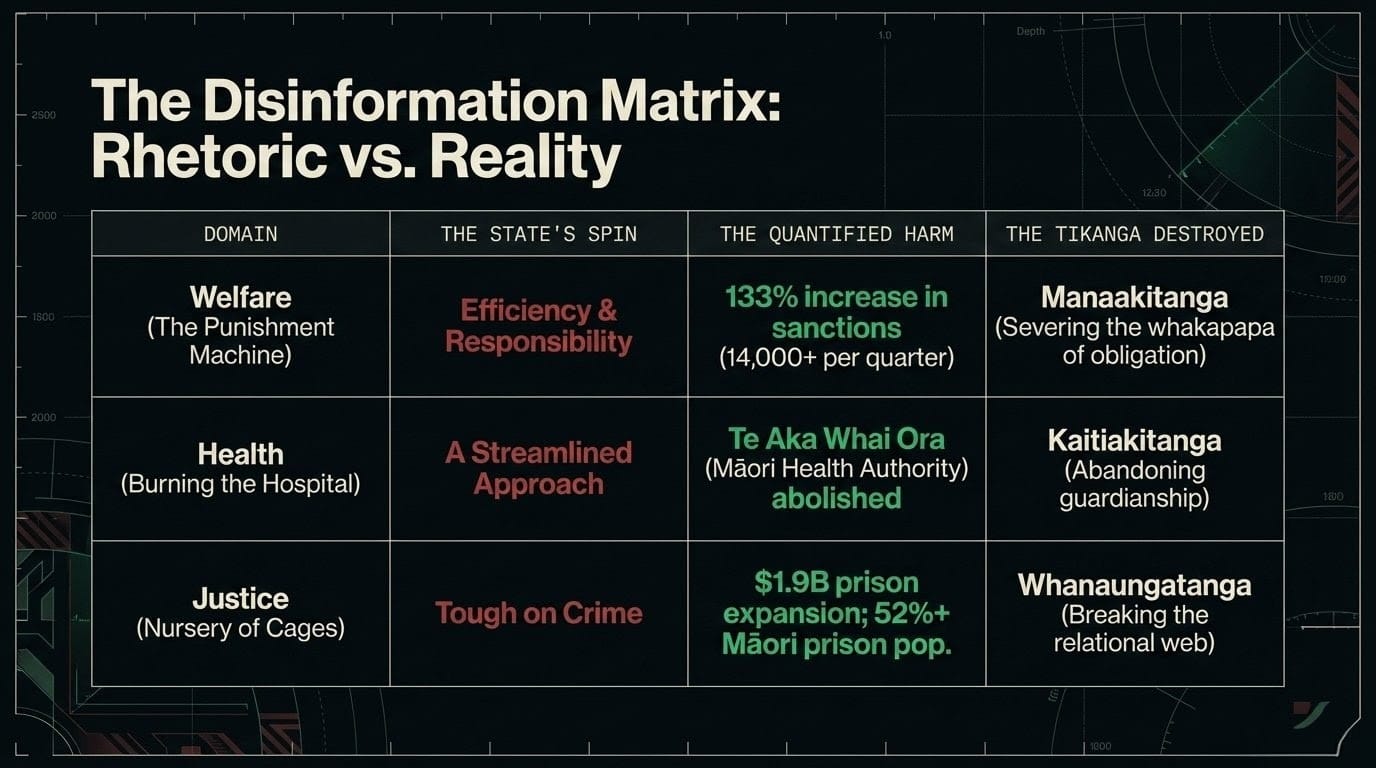
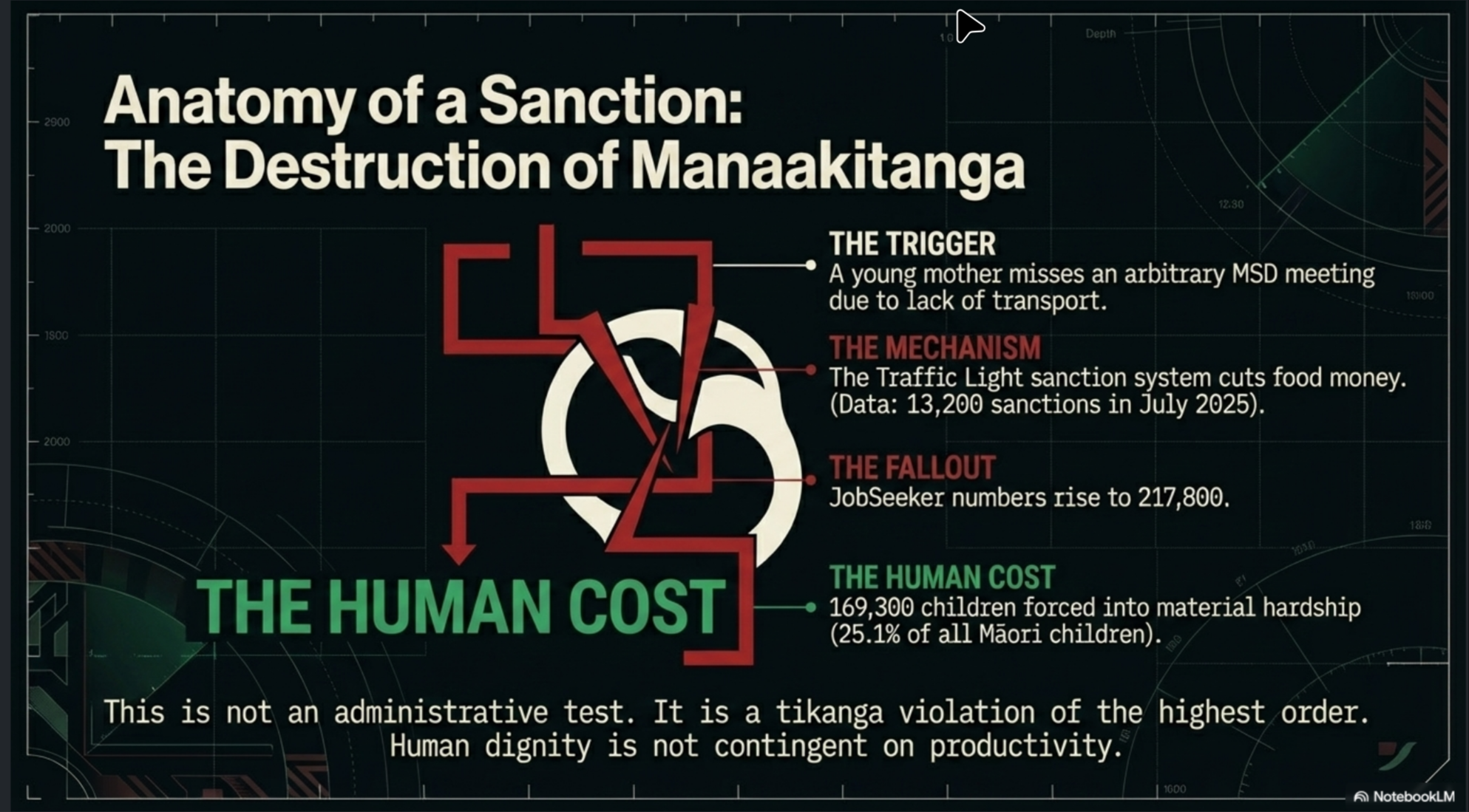
The quantified harm: As documented by Te Pāti Māori citing MSD data, sanctions increased by 133% — over 14,000 sanctions in a single quarter (September 2024). By July 2025, MSD's own data confirmed 13,200 sanctions, up 27.1%. Children in material hardship reached 169,300 — up from 121,800 in 2022.
For Māori children specifically: 25.1% — one in four — in material hardship. Meanwhile, JobSeeker numbers, which the government promised to reduce by 50,000, increased to 217,800 — up nearly 28,000 from the baseline.
What this destroys in tikanga: Manaakitanga is not charity. It is not a welfare policy. It is the foundational obligation of any community with resources to those without — the recognition that human dignity is not contingent on productivity.
When the Crown builds a punishment machine that cuts the food money of a young Māori mother because she missed a meeting while managing three children and no car, it does not merely fail an administrative test. It commits a tikanga violation of the highest order. It severs the whakapapa of obligation. It says: your life is worth less than our budget line.
Jim, in the United States you have watched what happens when SNAP is cut, when Medicaid is slashed, when the social contract is described as "waste." This is the same machine, running in a country small enough that the harm is even more concentrated.
Example Two: The Hospital They Burned Down — What Kaitiakitanga Means in Health
For the western mind: Imagine that a country had a dedicated health authority — staffed by and for indigenous people, designed to close a gap in life expectancy that has persisted since colonisation — and a new government abolished it, not because it failed, but because it was specifically Māori, and that was, in the government's ideology, the problem.
That is the abolition of Te Aka Whai Ora, the Māori Health Authority, executed in the first weeks of the Luxon government — and condemned by the UN CERD committee in its landmark December 2025 report, which recommended "revitalising the Māori Health Authority or establishing similar bodies composed of Māori and Pacific health experts to reduce health disparities." The committee warned the government's actions "may seriously risk undermining the legal, institutional, and policy framework" of the racial discrimination convention New Zealand has signed. New Zealand signed it. Then violated it. Then carried on.
The quantified harm: Māori youth unemployment sits at 21.4% — more than double the national average, as this platform documented in He Pātiki kei raro i te Repo. Emergency housing rejections rose from 4% to 32% in a single year. As the Gift of the Gallows investigation found, even Simeon Brown's cancer infusion "compassion" announcement — 14 chairs, cameras rolling — was architecture built on the bones of a health system he gutted.
What this destroys in tikanga: Kaitiakitanga is guardianship. It is the obligation to protect what has been entrusted to you — the environment, the community, the hauora of the people. A government that abolishes the one institution designed to protect Māori health does not merely fail at policy. It abandons kaitiakitanga entirely. It removes the guardians. It leaves the taonga unprotected. And then it holds a press conference and calls it "a more streamlined approach."
Jim, your work as a geochemist is itself an act of kaitiakitanga — understanding Papatuanuku so she can be cared for, mapped so her boundaries can be respected. This government's approach is the opposite: it maps what is valuable and extracts it, while billing the people who owned it for the service.
Example Three: The Nursery of Cages — What Whanaungatanga Means When You Criminalise It
For the western mind: Imagine building a prison expansion worth $1.9 billion, reinstating mandatory minimum sentences proven not to reduce crime, creating new criminal offences for associating with people who have criminal records, removing cultural context from sentencing — and then stepping back and watching the predictable result: the most vulnerable, most historically dispossessed population fills the cages.
That is what this platform documented in The Nursery of Cages.
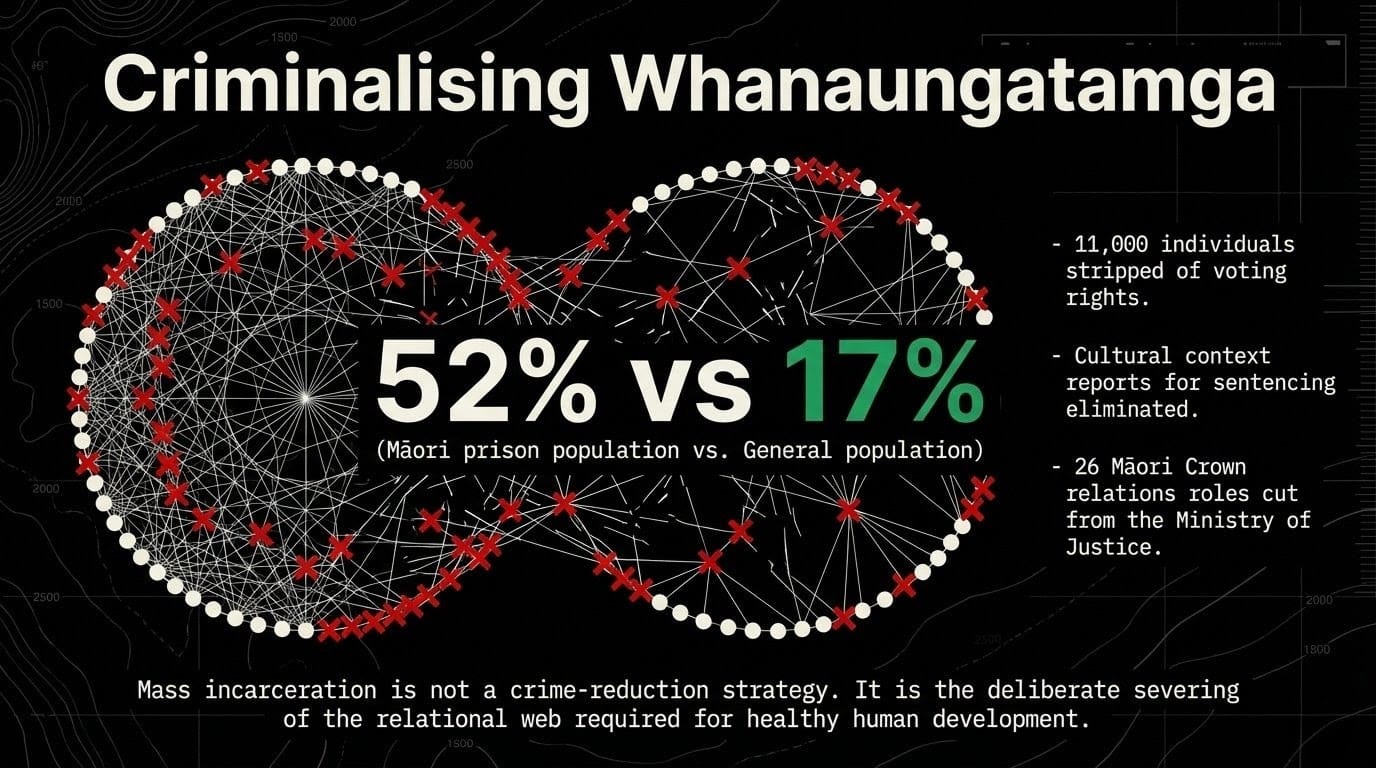
The quantified harm: Māori constitute 52%+ of the prison population while being approximately 17% of the general population. Three Strikes legislation reinstated regardless of rehabilitation progress. Prisoner voting rights stripped — affecting 11,000 people, the majority Māori. Cultural reports that provided whakapapa context to sentencing judges? Ended. As Amnesty International Aotearoa confirmed, Māori are "among those most at risk of human rights violations for nearly all the rights measured." The Ministry of Justice is now proposing to cut 26 roles including the entire Māori Crown relations team — the people whose job is to ensure Te Tiriti obligations are met in the justice system.
What this destroys in tikanga: Whanaungatanga is the web of relationships — family, hapū, iwi, community — that holds the individual within a structure of meaning and accountability. It is the understanding that no person exists in isolation, and that responsibility flows in all directions within the network. Mass incarceration of Māori men does not merely remove individuals. It severs whanaungatanga at scale. It removes fathers, brothers, uncles. It breaks the transmission of mātauranga. It leaves tamariki without the relational web that tikanga requires for healthy development. And then the government points at the consequences and calls them a "gang problem."
Jim, the United States has been running this experiment for fifty years. The result is documented, quantified, and irrefutable: mass incarceration of Black and brown people is a political choice, not a crime-reduction strategy. Aotearoa is following the same template with its eyes open and its conscience closed.
NGĀ TIKANGA O TE WHAKAARO — The Implications: What It Means That You Can Still See From There
Jim, your note contained a word that matters more than you may have realised: imperfect.
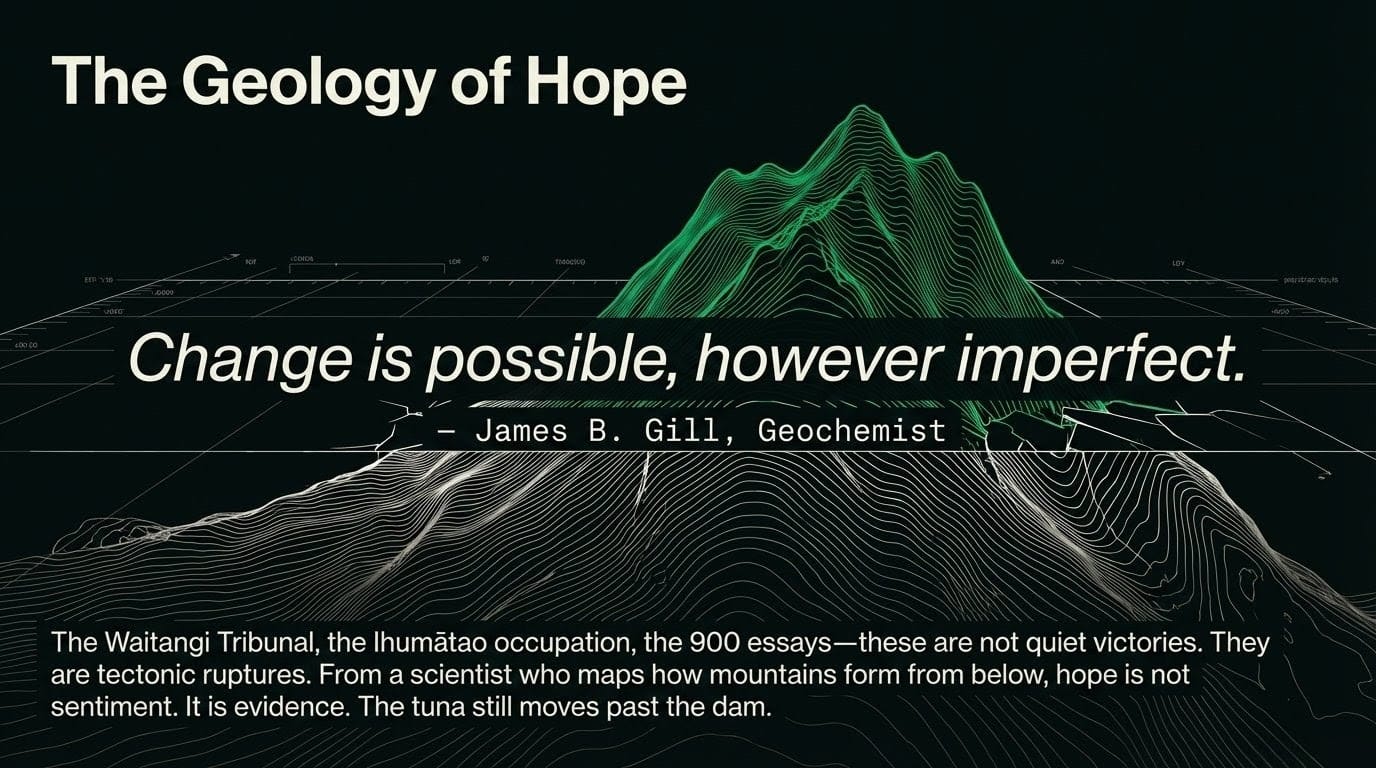
"Change is possible, however imperfect."
That is the note of a scientist. A man who has spent a career understanding that geological processes are not clean, not linear, not tidy — that the earth breaks and reforms and breaks again, that the seamount does not rise in a straight line but through rupture, pressure, and the slow accumulation of force over time.
Te ao Māori understands this.
The Waitangi Tribunal's findings are not a victory — they are a record of rupture. The occupation of Ihumātao was not a clean win — it was a demonstration that collective force can redirect the machine, imperfectly, partially, but actually.
The Two Kings and a Broken Child essay mapped the same truth: that whakapapa survives even when the state tries to sever it, because the roots go deeper than any policy can reach.
Hungary changed, imperfectly. Iran is moving, imperfectly. Aotearoa is in rupture. The tuna is still moving.
And there, in California, a man with a maunga named after him in New Zealand waters looked east across the Pacific — across the same tectonically active region he has spent his life studying — and said: change is possible.
That is not sentiment. From a scientist who has mapped how mountains form from below? That is evidence.
The Lantern, the Maunga, and the Immoveable Thing
The Gill Seamount sits at 34°37′S, 178°22′E, in the South Kermadec Ridge, 1,200 metres below the surface of Te Moana-nui-a-Kiwa. It has been there for 1.1 million years, give or take 400,000. It will still be there when this government is a footnote.
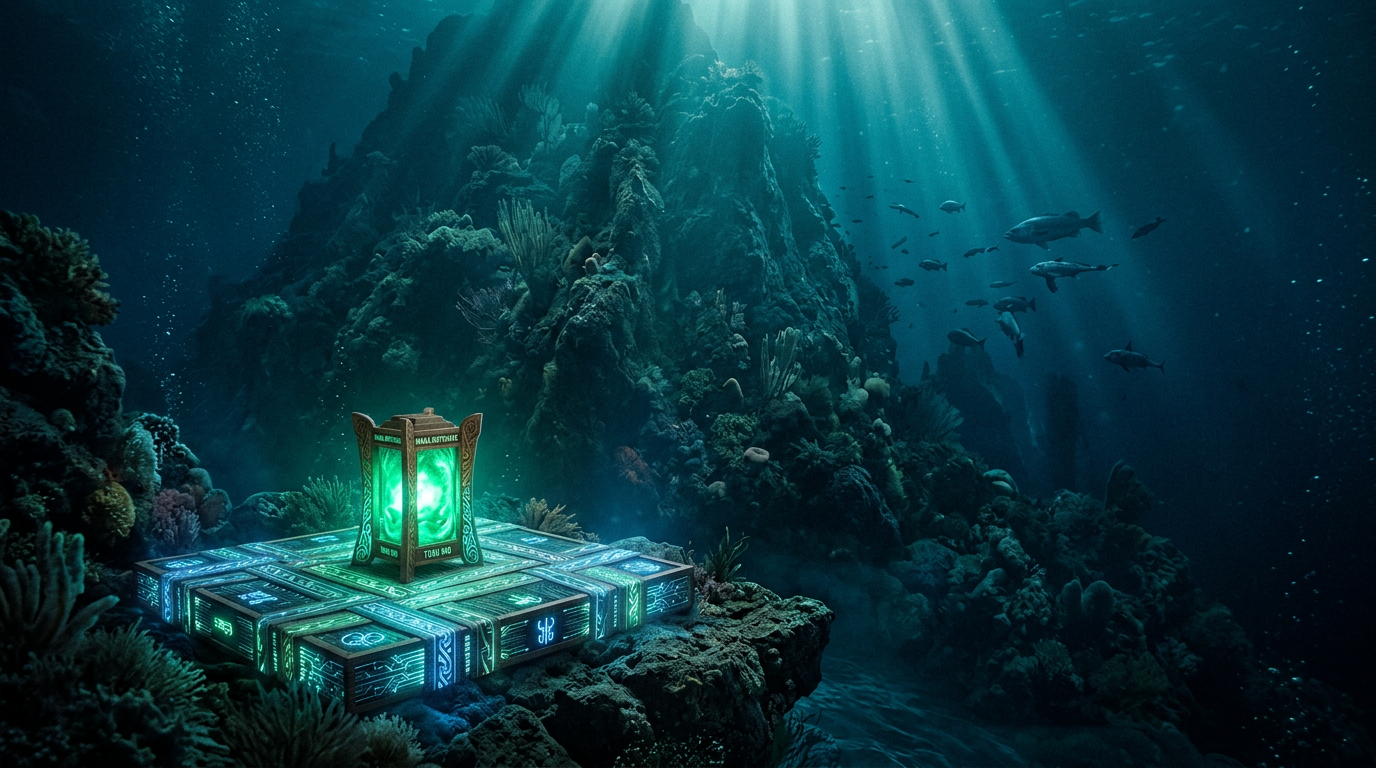
The Māori Green Lantern has published 900 essays in defence of whānau who did not ask to be governed by a regime that views their existence as a budget problem. Those essays are not disappearing either. They sit in a sovereign digital marae — 900 receipts, 45,000 sources, every claim verified, every network traced, every harm quantified.
And now: a father-in-law in California — a man who listened to Papatuanuku speak from her bones — has confirmed what every seamount already knows.
The pressure builds from below.
The mountain rises.
The lantern does not go out.
Nō reira, tēnā koe e Jim.
Tēnā tō maunga e tū ana i roto i ngā wai o Aotearoa. Ko tōu whakaaro, he taiaha anō. He mihi maioha, he mihi aroha.
(To you, Jim. Your mountain stands in the waters of Aotearoa. Your thought is also a taiaha. With deep respect and love.)
Ivor Jones
The Māori Green Lantern
themaorigreenlantern.maori.nz
KO TE KOHA — Because Truth-Tellers Need Resources Too
Jim Gill has a seamount. This platform has 900 essays and zero corporate funding.
The machinery this work exposes — $1 billion stripped from Māori, 169,300 children in material hardship, 14,000 welfare sanctions in a single quarter, a Māori Health Authority abolished, 52% of prisoners Māori while their whanaungatanga is legislated away — that machinery is funded.
It has donors. It has think tanks. It has a Treasury department working overtime.
The counter-machinery is you.
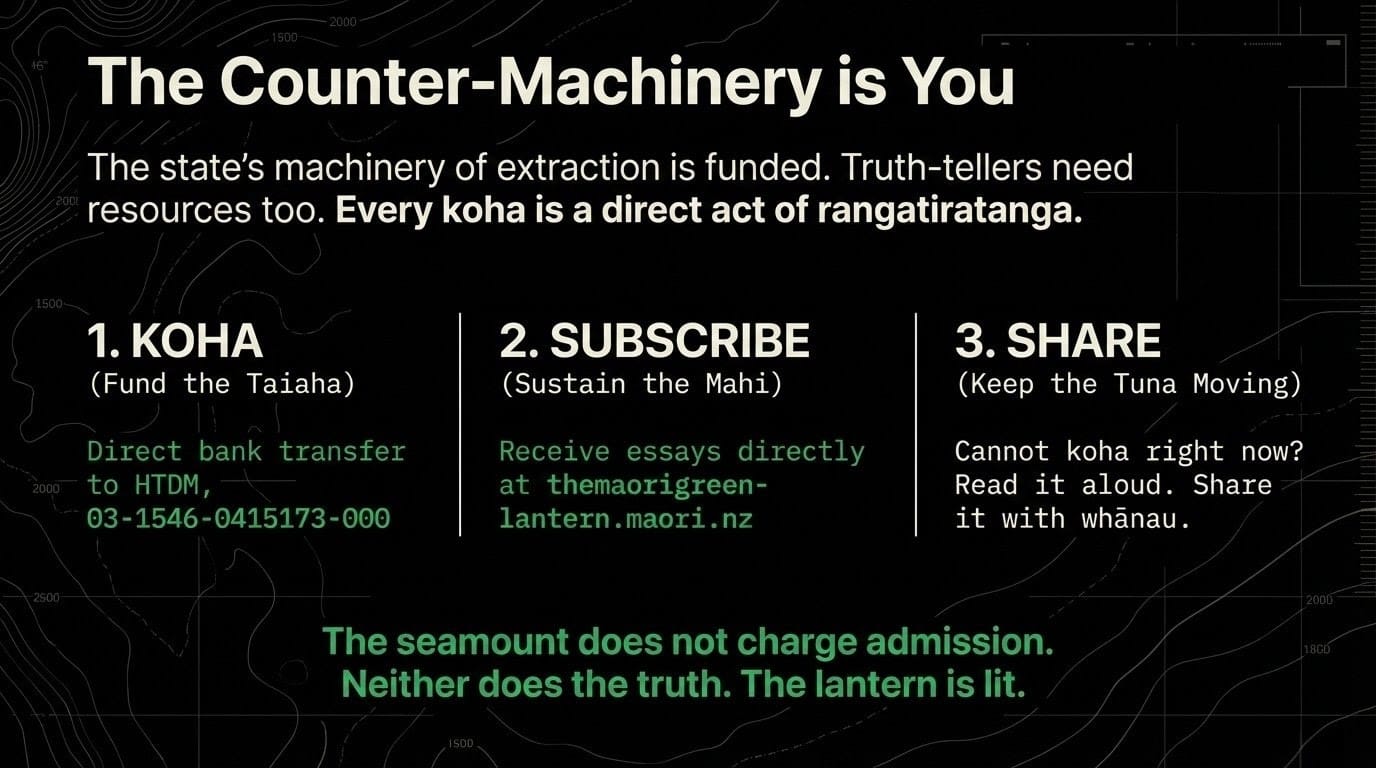
Every koha to this platform is a direct act of rangatiratanga — the power to fund our own truth-tellers when the Crown will not. Every share, every subscription, every conversation with whānau is the tuna moving past the dam.
Three pathways:
If you are able to contribute directly, every koha keeps the taiaha sharp: Support the Māori Green Lantern via Koha
If you want essays delivered to your inbox and want to sustain this mahi long-term: Subscribe at themaorigreenlantern.maori.nz
If bank transfer is your pathway, the account is: HTDM, 03-1546-0415173-000
If Facebook is your marae: Follow and subscribe here
And if you cannot koha right now — no worries, not even a little bit. Share this essay. Kōrero about it with your whānau. Read it aloud to someone who needs to hear that change is possible. Subscribe for free. That is koha too.
The seamount does not charge admission. Neither does the truth.
Kia kaha, whānau. The lantern is lit. Jim, it's partly lit by you.

Transparency: Research conducted 14 April 2026. Sources verified via search_web and fetch_url. MGL essay archive cross-referenced. UN CERD December 2025 report verified via The Guardian and Te Ao News. Gill Seamount location confirmed via Wikipedia South Kermadec Ridge Seamounts. James B. Gill's Pacific geochemistry work confirmed via ANU repository and AGU publications. All claims are sourced. Where URLs appear truncated in the source archive, the domain themaorigreenlantern.maori.nz is confirmed live.