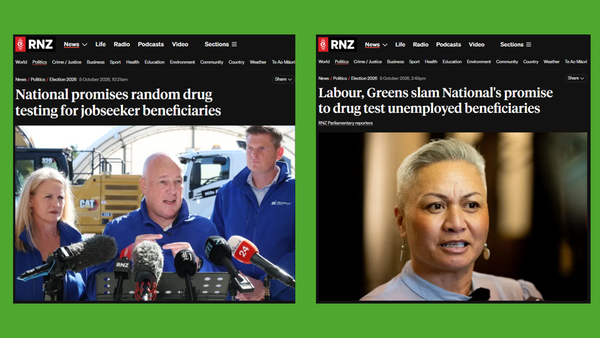
"How a White Supremacist Neoliberal Government Sold Our Surgeries and Still Refuses to Pay the Māori Health Debt" - 14 August 2026
They found $298.4 million for private theatres in a heartbeat — but not a single full repayment for the Māori health debt their own Tribunal priced years ago.

He kupu whakataki – I am done being polite
Mōrena Aotearoa, on this wet Friday morning in August.
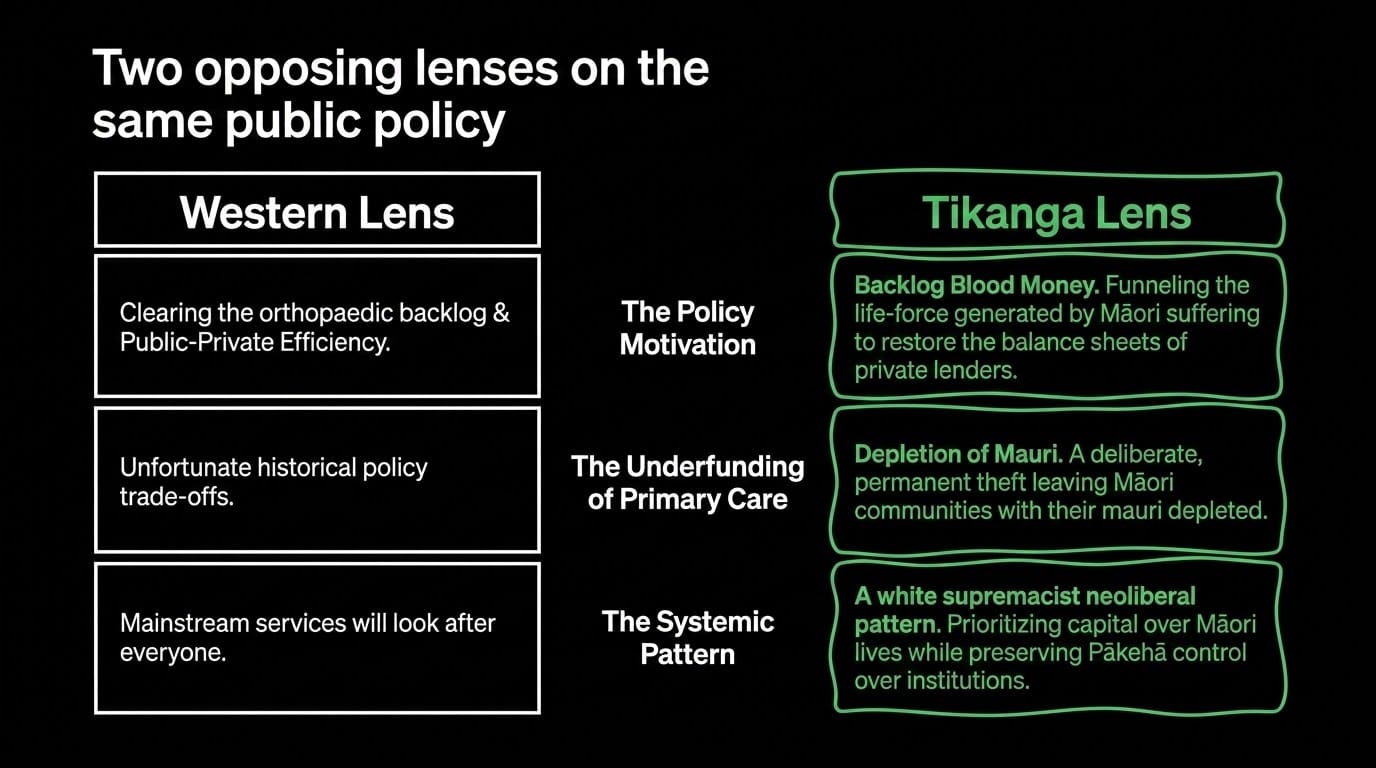
I'm Ivor Jones, The Māori Green Lantern, and I am done pretending this is policy incompetence or "difficult trade-offs."
This is a white supremacist neoliberal government deliberately funnelling our pain into private revenue streams while the Māori health debt sits unpaid on the Crown's balance sheet.
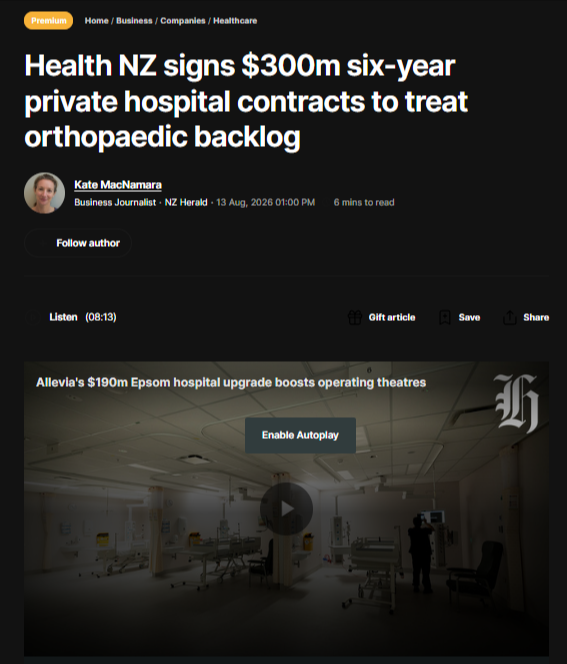
Health NZ has just signed long-term contracts with private hospitals to clear orthopaedic backlogs
— a "whole-of-life" value of $298.4 million over six years, covering an annualised 3222 patients' worth of hip and knee surgeries.
 Kate MacNamara
I want you to sit with this: the Crown has quietly found almost the exact amount of money its own experts say it underfunded Māori primary health organisations — and chose to hand it to Southern Cross, Allevia, and Mercy instead of paying the Māori health debt Hauora laid out in black and white.
Example 1 - Turning The Orthopaedic Backlog Into A Private Revenue Stream
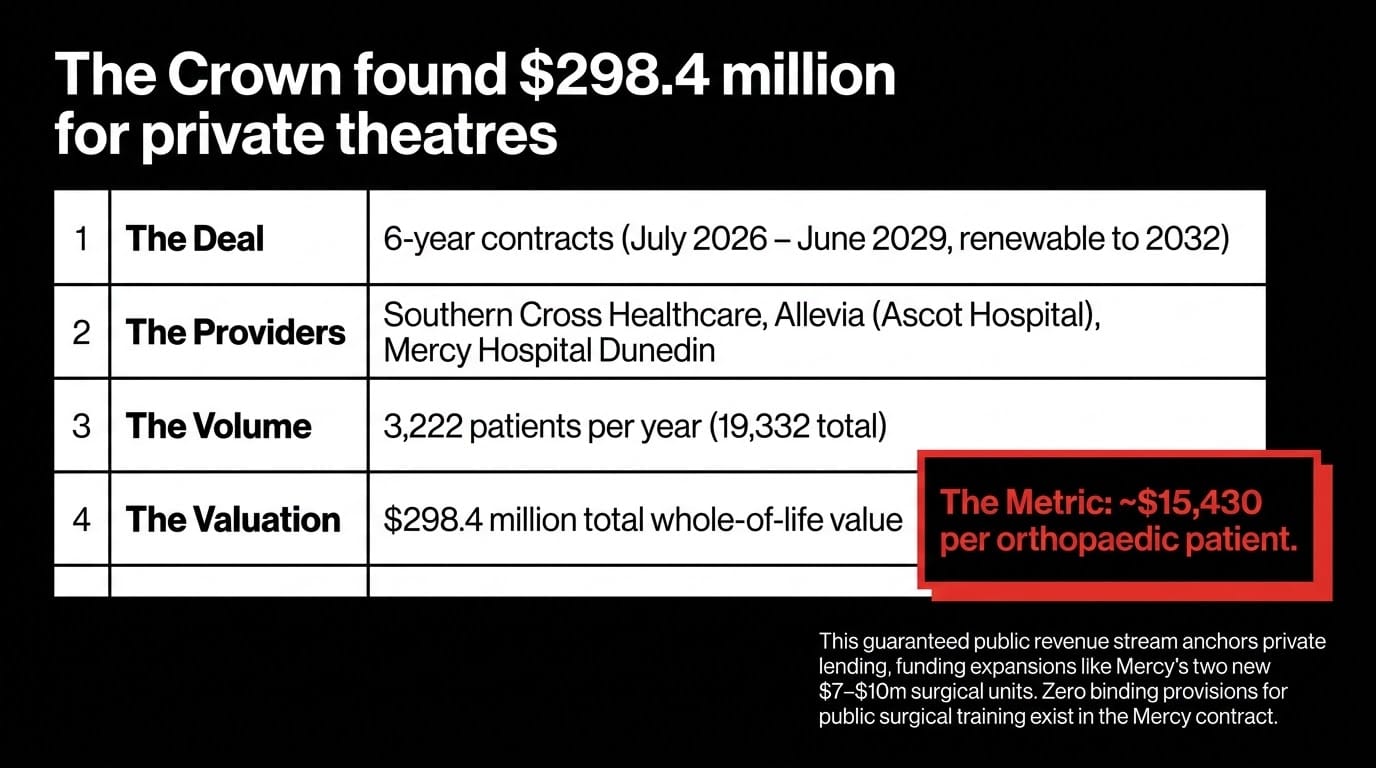
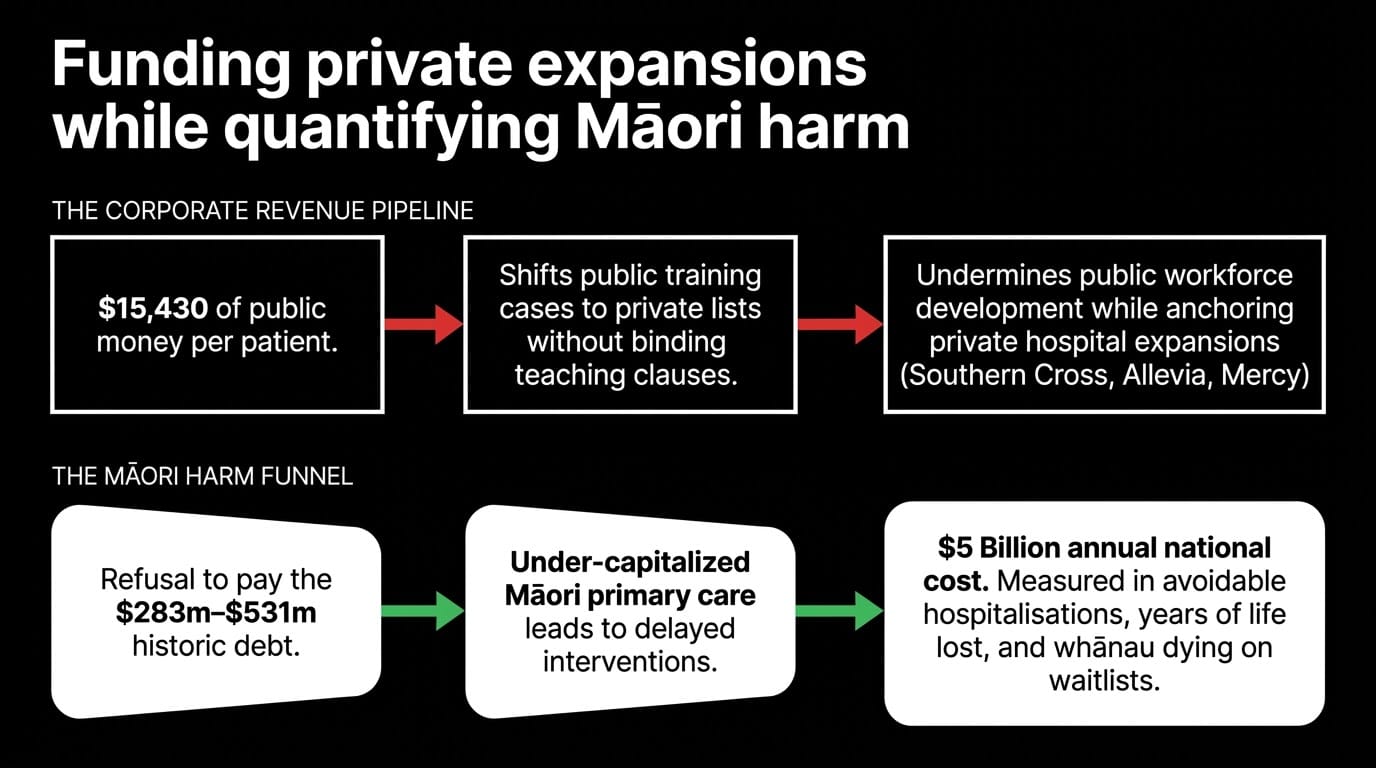
Health NZ's contracts flow into three private providers: Southern Cross Healthcare, Allevia (Ascot Hospital and Clinic), and Mercy Hospital Dunedin. Every contracted patient carries roughly $15,430 of public money into private theatres.
Mercy Hospital's own chief executive openly acknowledges that the guaranteed revenue from this contract anchors the lending needed to build two new surgical units costing $7–10 million each — the backlog turned directly into collateral for private expansion.
Southern Cross Healthcare's own material and the Southern Cross Health Trust's public reporting confirm the network is mid-expansion, riding the same publicly funded tide as Allevia.
Quantified harm
Every orthopaedic patient in this contract carries around $15,430 of public money that lands in private theatres with no binding obligation to train public registrars, a structural gap confirmed by the Waitangi Tribunal's own WAI 2575 findings. The Conversation's evidence review confirms shifting cases into private lists without binding teaching clauses undermines workforce development nationally.
Tikanga impact explained for the western mind
Tikanga is not "culture" as decoration — it is the practice that keeps mauri, the life force of people and relationships, intact. When a government sends $298.4 million into institutions that are not Māori-governed and do not answer to iwi or hapū, it sends the life-force generated by our suffering into someone else's account, a dynamic Te Ara's history of hospitals in Aotearoa traces back to the colonial origins of the public hospital system itself.
The Solution
If $298.4 million can be found for private theatres, the same sum can back Māori-owned surgical capacity, as argued in "Dreaming of a Māori hospital" and its peer-reviewed companion piece in the New Zealand Medical Journal. Every future contract should embed binding registrar training clauses, a gap The Conversation confirms is otherwise structurally ignored.
I trace this exact pattern — crisis manufactured, then handed to corporate providers — in my earlier essay, available in the Māori Green Lantern archive, on Simeon Brown's pharmacist expansion.
The Deep Dive Podcast
Listen to a lively conversation between two hosts, unpacking and connecting topics in the sources of this essay. I apologise in advance for the AI's very harsh pronounciation of reo. Please dont shoot me, :).
YouTube Video
Like video? Here is a short video suppporting the essay. Again, don't shoot the messenger please because of AI's pronounciation. :).
Koha Consideration — Supporting The Taiaha, Not Funding The Crown
Every koha signals that whānau are ready to support the accountability that Crown and corporate structures will never provide for themselves.
In the context of this essay, a koha says: you see how this government turns Māori suffering into private contracts while refusing to pay the Māori health debt, and you understand that rangatiratanga includes the power to support our own truth-tellers who trace the money and name the harm.
Kia kaha, whānau. Stay vigilant. Stay connected. And if you are able, consider a koha to ensure this voice continues to expose the backlog blood money and every other scam run on our hauora.
If you are unable to koha, kei te pai — subscribe or follow The Māori Green Lantern, kōrero with your whānau and friends, and share these essays. That is koha in itself.
Four pathways exist:
For those who wish to support this mahi directly with a koha (voluntary contribution), please visit: Koha — Support
For those who wish to receive essays directly and support through subscription: Subscribe to the Māori Green Lantern
For those who prefer direct bank transfer: Ivor Jones, account number 03-1395-0099387-000
For those on Facebook: Follow on Facebook
Example 2 - The Unpaid Māori Health Debt, Side By Side
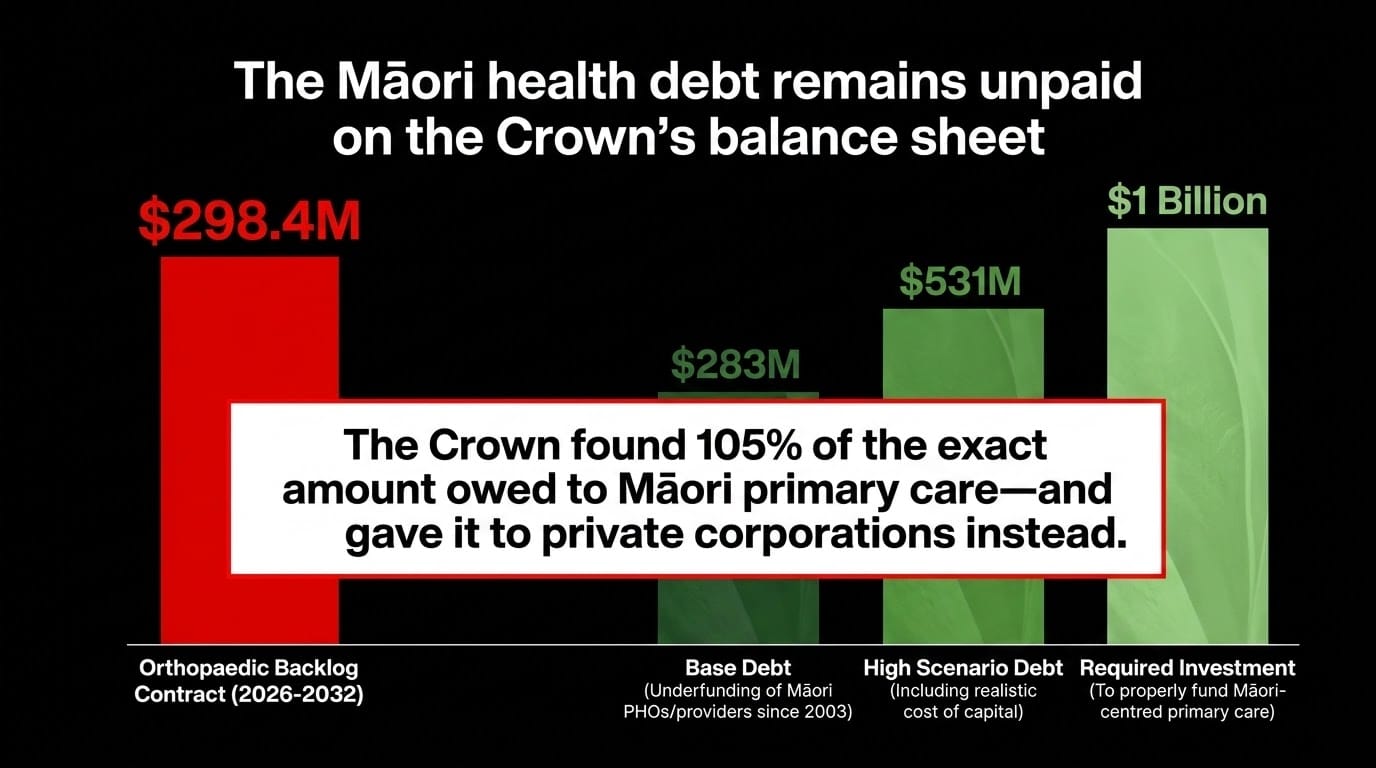
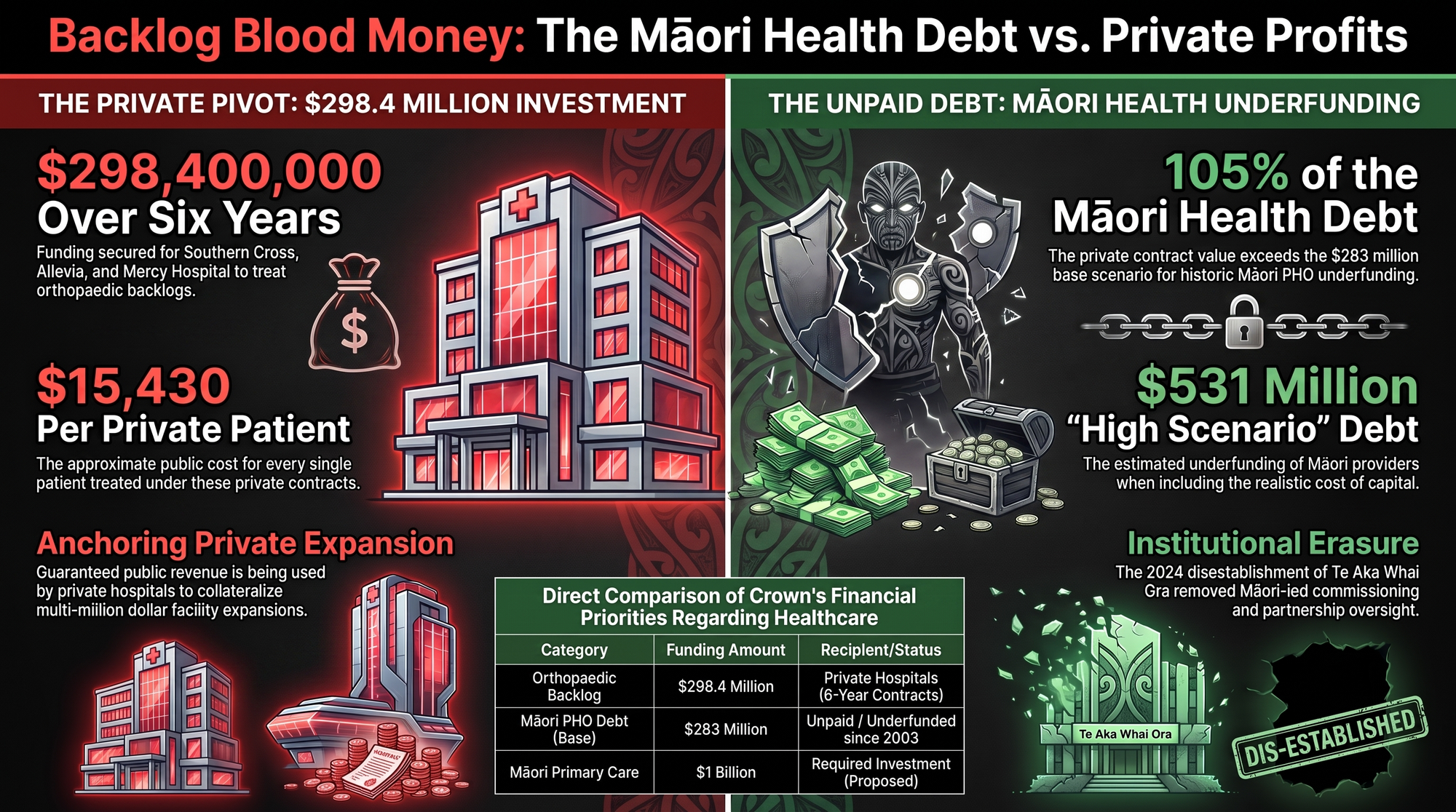
Sapere's base-scenario figure puts accumulated Māori PHO underfunding since 2003 at $283 million, rising to $531 million once cost of capital is applied. National Hauora Coalition states $1 billion is needed to properly fund Māori-centred primary care, with underinvestment costing the country roughly $5 billion a year.
The orthopaedic contract, at $298.4 million, is about 105 percent of the base underfunding figure and 56 percent of the high-scenario figure. Hauora recommended agreeing an underfunding methodology and fully compensating Māori providers, a step the Ministry of Health's own Wai 2575 inquiry page confirms has still not concluded.
Quantified Harm
Sapere and National Hauora Coalition quantify the ongoing harm at roughly $5 billion a year in avoidable health loss and social cost. Every dollar of the $298.4 million orthopaedic contract is a dollar not used to pay down that debt.
Tikanga Impact Explained For The Western Mind
The Ministry of Health's Wai 2575 inquiry documentation and the Waitangi Tribunal's WAI 2575 report formally acknowledge the Crown breached its obligations to protect Māori health. Tikanga demands redress and restoration of mauri once harm is acknowledged — a judgment made, then left unpaid.
The Solution
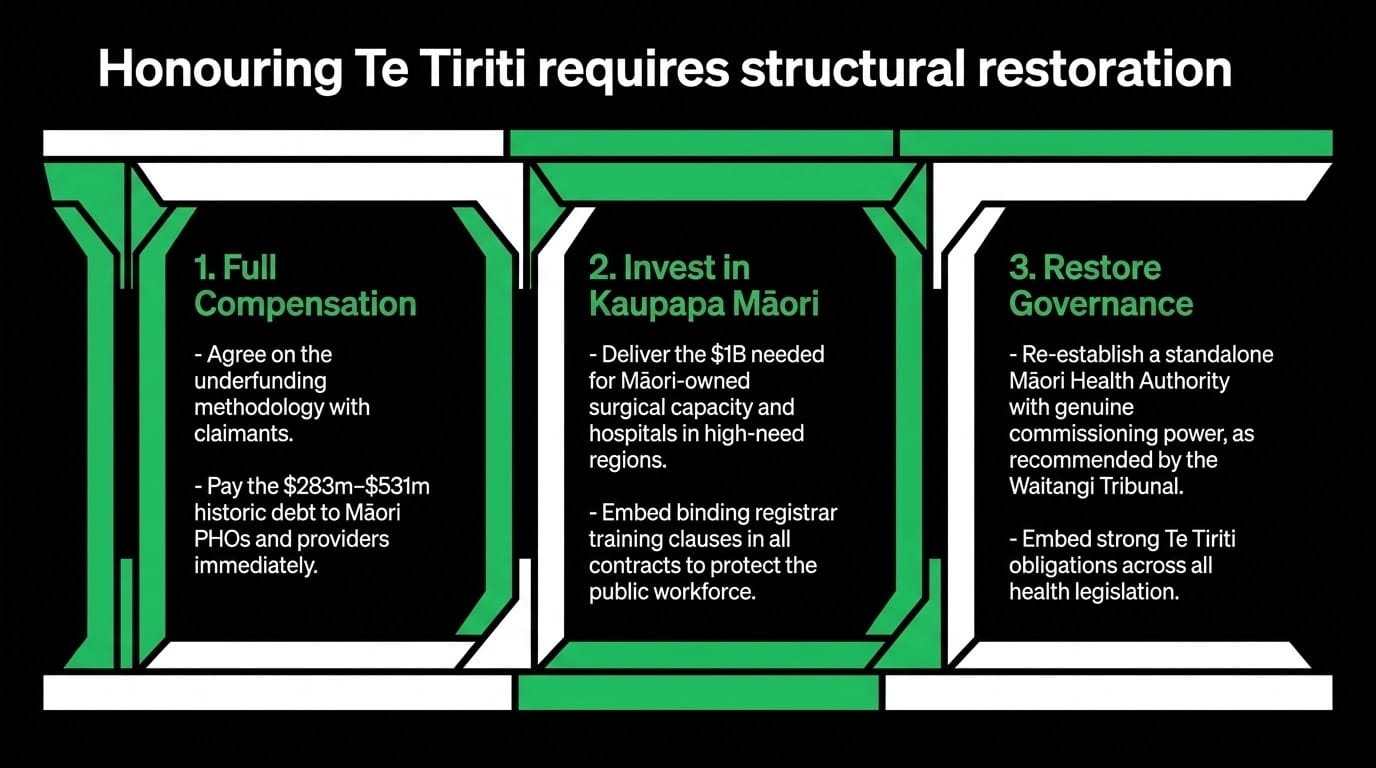
Hauora's own recommendation is to agree the underfunding methodology and fully compensate Māori providers, and to deliver the $1 billion investment National Hauora Coalition says is needed rather than drip-feeding programmes while funding private contracts.
I've written about this exact debt logic in my essay on welfare sanctions and punitive policy in the Māori Green Lantern archive, tracing how the same government logic punishes brown bodies while rewarding capital.
Example 3 - Dismantling Te Aka Whai Ora While Ramping Up Outsourcing
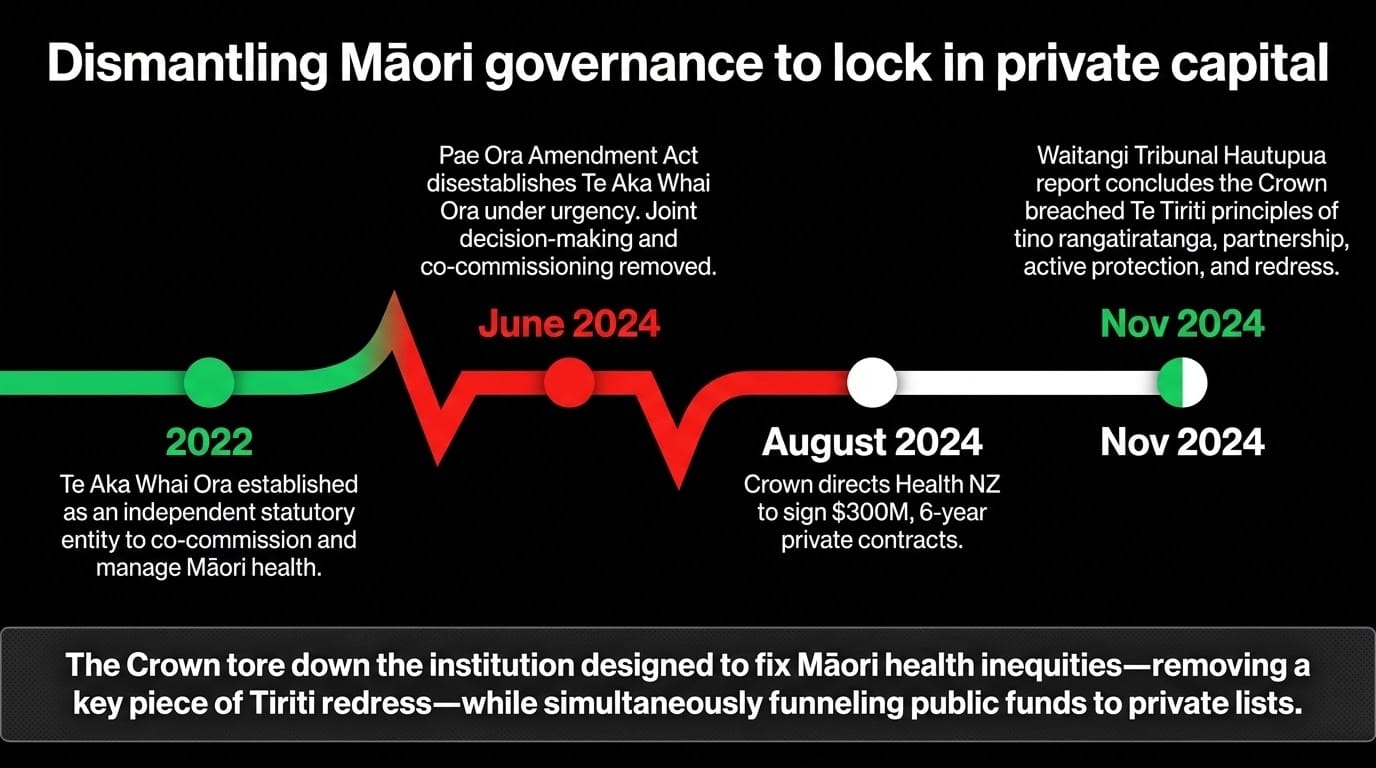
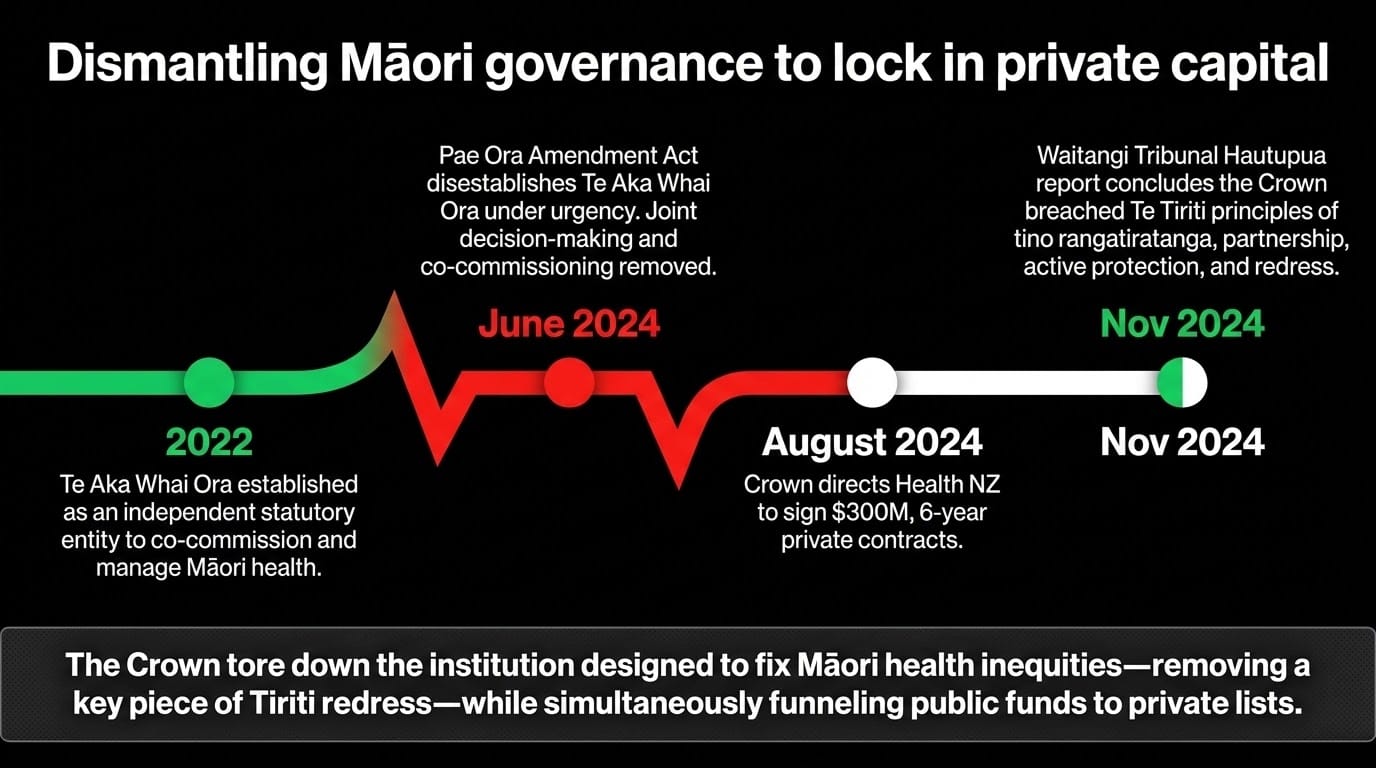
Te Aka Whai Ora, established in 2022, was an independent statutory entity tasked with managing Māori health policy and co-commissioning services with Health NZ.
The Pae Ora (Disestablishment of Māori Health Authority) Amendment Act 2024 came into force on 30 June 2024, confirmed by Buddle Findlay's legal summary and the Ministry of Health's own disestablishment bundle.
The Waitangi Tribunal's Hautupua report found the Crown's disestablishment process breached Te Tiriti principles of tino rangatiratanga, partnership, active protection, and redress, acting unilaterally and in haste without proper Māori consultation.
Quantified harm
Te Aka Whai Ora existed for less than two years, confirmed by its own Wikipedia-documented establishment and disestablishment dates, while the inequities it was meant to address took decades to create, as documented in the Waitangi Tribunal's WAI 2575 report. At the same time, Health NZ was locking in long-term private orthopaedic contracts, embedding private provision while dismantling Māori governance.
Tikanga Impact Explained For The Western Mind
Tureiti Moxon's account of why the Māori Health Authority must stay makes clear Te Aka Whai Ora represented tino rangatiratanga in health — Māori exercising authority over Māori hauora, not merely being consulted by Crown bodies that retain final power.
The Solution
The Tribunal's Hautupua report recommends revisiting a standalone Māori Health Authority with genuine commissioning power, and analysis of the government's wider Treaty clause changes shows why weakened Te Tiriti obligations make this urgent.
I've covered this dismantling pattern in essays archived on the Māori Green Lantern site, unpacking how law changes across health, welfare, and education follow the same script.
This Is A White Supremacist Neoliberal Government

A government that disestablished Te Aka Whai Ora under urgency, confirmed by the Tribunal's own Hautupua findings, while ignoring Hauora's call for full compensation of Māori health underfunding, and then finding almost exactly that amount of money for long-term private hospital contracts, is not simply "centre-right."
It is a white supremacist neoliberal government using health policy to preserve Pākehā control over capital while keeping Māori in a permanent state of managed crisis.
I've documented this same pattern across more than a thousand essays on themaorigreenlantern.maori.nz, and this orthopaedic contract story fits the same whakapapa of harm.
Ngā mihi,
Ivor Jones The Māori Green Lantern Fighting Misinformation And Disinformation From The Far Right
Disclaimer and right of reply: This essay is based on verified reporting, Tribunal documents, academic analysis, and official legislation as at August 2026. It criticises public policy and structural decisions in the public interest, not private lives. Factual claims are linked directly to sources; opinions are clearly framed as analysis built on those facts. Ministers and public entities are addressed in their public capacity, consistent with qualified privilege under Lange v Atkinson. Any party named is welcome to respond with evidence; retraction or amendment will follow if credible information shows material error.