"Labour’s Lifeline To National: Why Did The Opposition Rescue A Bill Even ACT And NZ First Refused To Touch?" - 27 August 2026
When National Could Not Convince Its Own Coalition, Labour Supplied The Votes — And Put Digital Identity, Privacy, And Whānau Rights On The Table Without Getting Its Questions Answered.

I am Ivor Jones, the Māori Green Lantern. I hold the Crown to account. I hold National to account.
And when Labour walks into Parliament, sees a dangerous bill abandoned by National’s own coalition partners, then offers it a lifeline anyway, I hold Labour to account too.
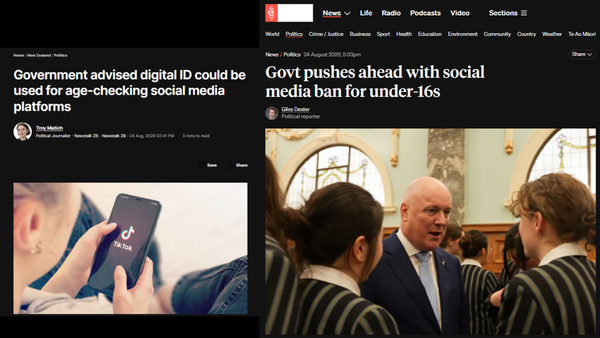
 RNZ | Te Reo Irirangi o Aotearoa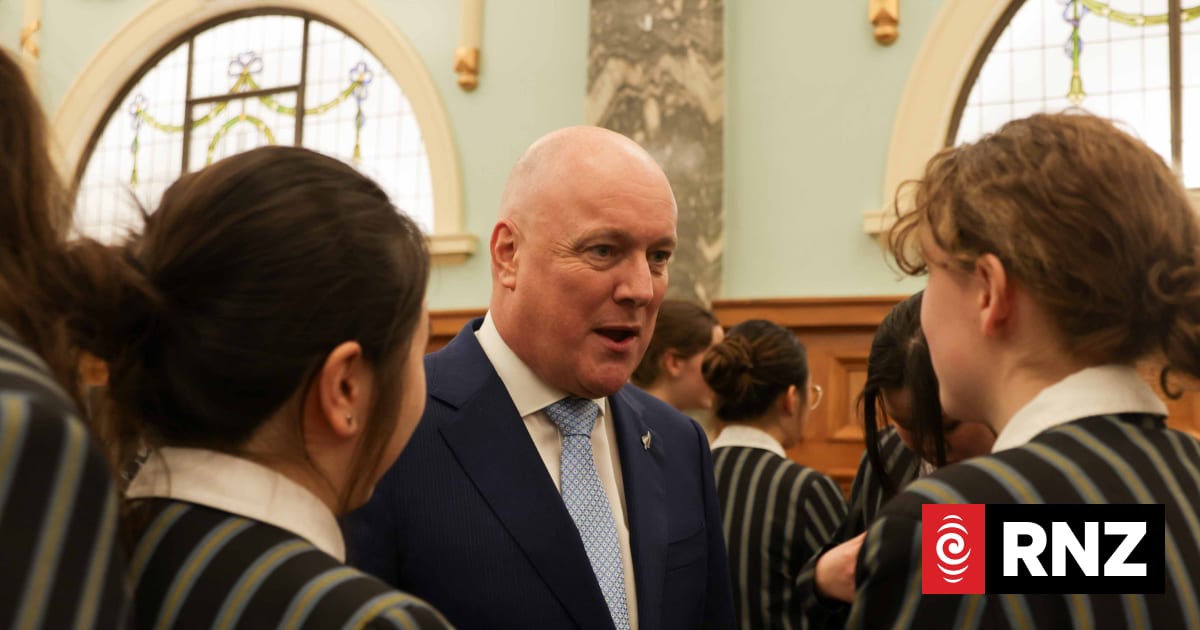
This is not team sport. It is not blue versus red. It is not about giving Labour a free pass because National and ACT have spent years feeding racism, neoliberal austerity, and anti-Māori grievance into the bloodstream of this country. If Labour advances the same machinery — even with softer words and a promise of later amendments — then Labour must answer for that choice.
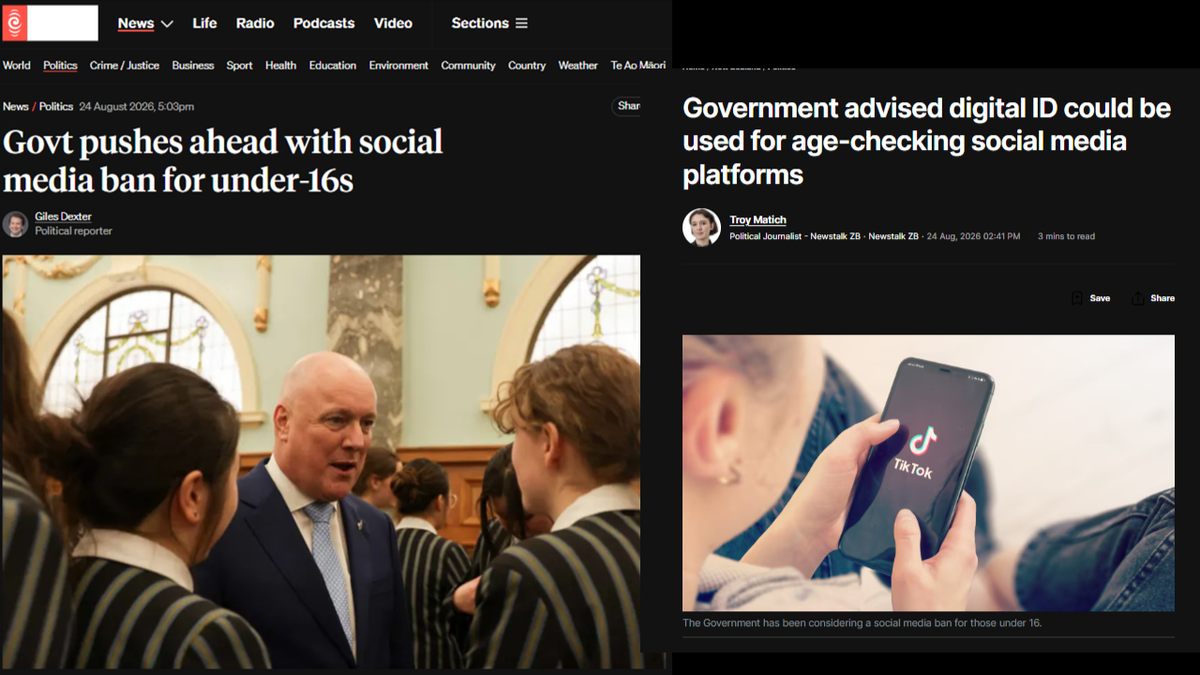
 Troy Matich
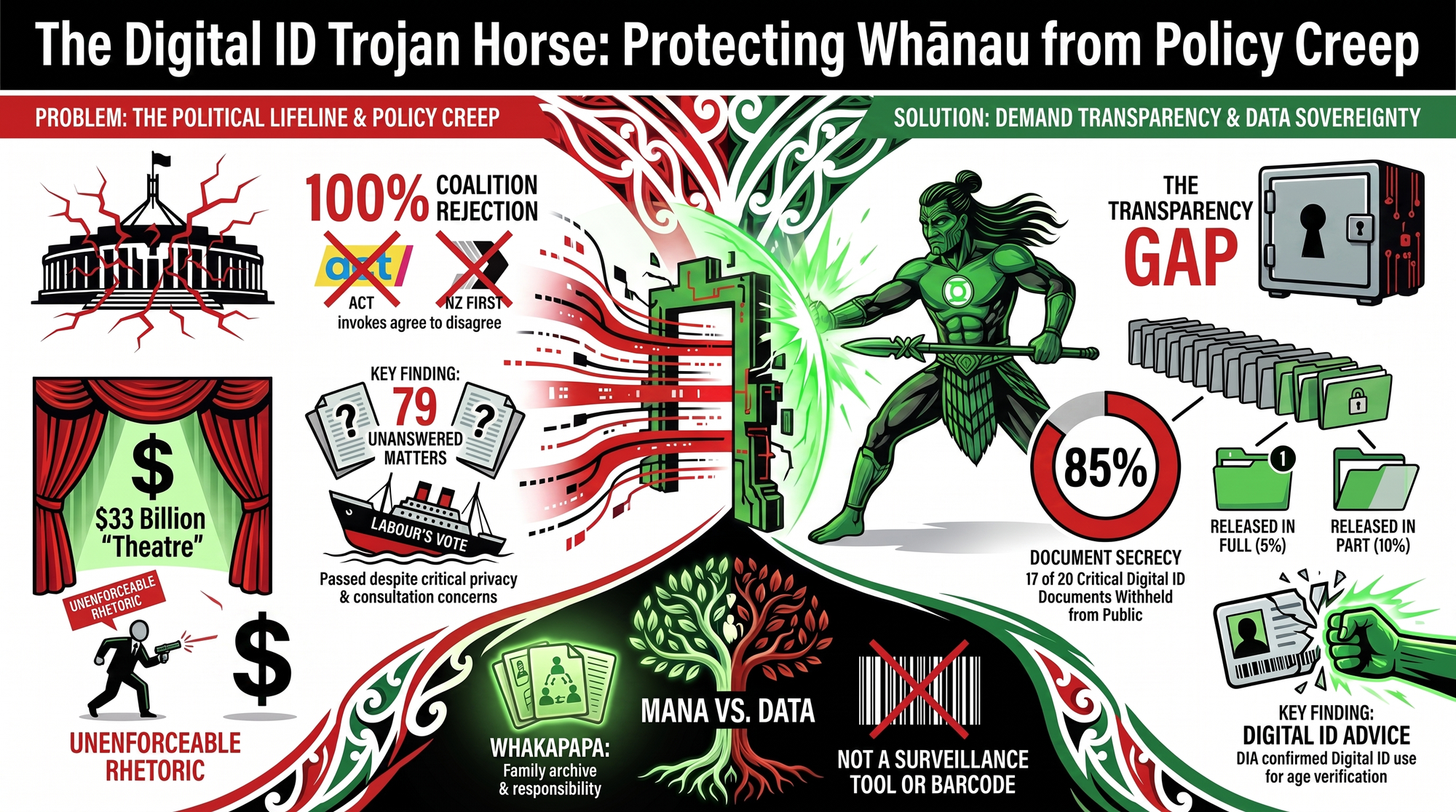
Labour has chosen to support National’s under-16 social-media bill at first reading, allowing it to move to select committee before the election.
Chris Hipkins says Labour wants it improved; Labour’s Reuben Davidson says the bill needs a stronger regulatory approach and “safety by design.”
Those are reasonable aspirations. But aspirations are not safeguards, and parliamentary process is not a substitute for political courage.
1News reported that Labour had previously demanded access to key assessments and answers to 79 questions before deciding whether to support the bill.
The public reporting does not establish that those demands were met before Labour supplied the votes. Labour’s support and its earlier 79 questions; it remains unverified as to whether every question was answered before the caucus decision.[1news.co]
The Bill National Could Not Carry
National introduced the Online Safety (Minimum Age and Child Safety Risk Assessment) Bill to require selected social-media platforms to take “reasonable steps” to ensure users are over 16.
The bill is designed to cover services including Instagram, TikTok, Snapchat, and Facebook, while excluding services such as Discord, WhatsApp, Roblox, Spotify, LinkedIn, and AI chatbots, according to 1News’s report. Confidence: Verified.[1news.co]
National did not carry its own partners.
New Zealand First leader Winston Peters said his party would “never support this,” warning about the direction and “slippery slope” such legislation could take the country. ACT leader David Seymour invoked ACT’s coalition-agreement right to disagree and said National had “hitched their wagon to a terrible solution”; he argued it would not work and its side effects would leave New Zealand worse off. 1News reported both statements. [1news.co]
Let that sit where it belongs. ACT and NZ First — parties that rarely deserve credit for defending collective rights, Māori rights, or public services — refused to carry National’s bill. Their objections may be inconsistent with their broader records. They may be opportunistic. But on this specific bill, they refused to give National the parliamentary cover it needed.
Labour provided it.
That is the political fact Labour must explain.
The Deep Dive Podcast
Listen to a lively conversation between two hosts, unpacking and connecting topics in the sources of this essay. I apologise in advance for the AI's very harsh pronounciation of reo. Please dont shoot me, :).
Youtube Video
Like video? Here is a short video suppporting the essay. Again, don't shoot the messenger please because of AI's pronounciation. 😄
Koha Consideration
Every koha signals that whānau are ready to support the accountability that Crown and corporate structures will not provide.
It signals that rangatiratanga includes the power to support our own truth tellers — those who ask who benefits when a child-safety bill becomes a pathway to checking everybody’s identity.
Kia kaha, whānau. Stay vigilant. Stay connected. And if you are able, consider a koha to support this mahi and keep this voice speaking while Parliament asks whānau to trust systems it has not yet properly explained.
If you are unable to koha, no worries. Subscribe or follow The Māori Green Lantern, kōrero, and share this with your whānau and friends. That is koha in itself.
- Koha — Support This Mahi
- Subscribe To The Māori Green Lantern
- Direct bank transfer: Ivor Jones, 03-1395-0099387-000
- Facebook Subscription
Why Did Labour Support It?
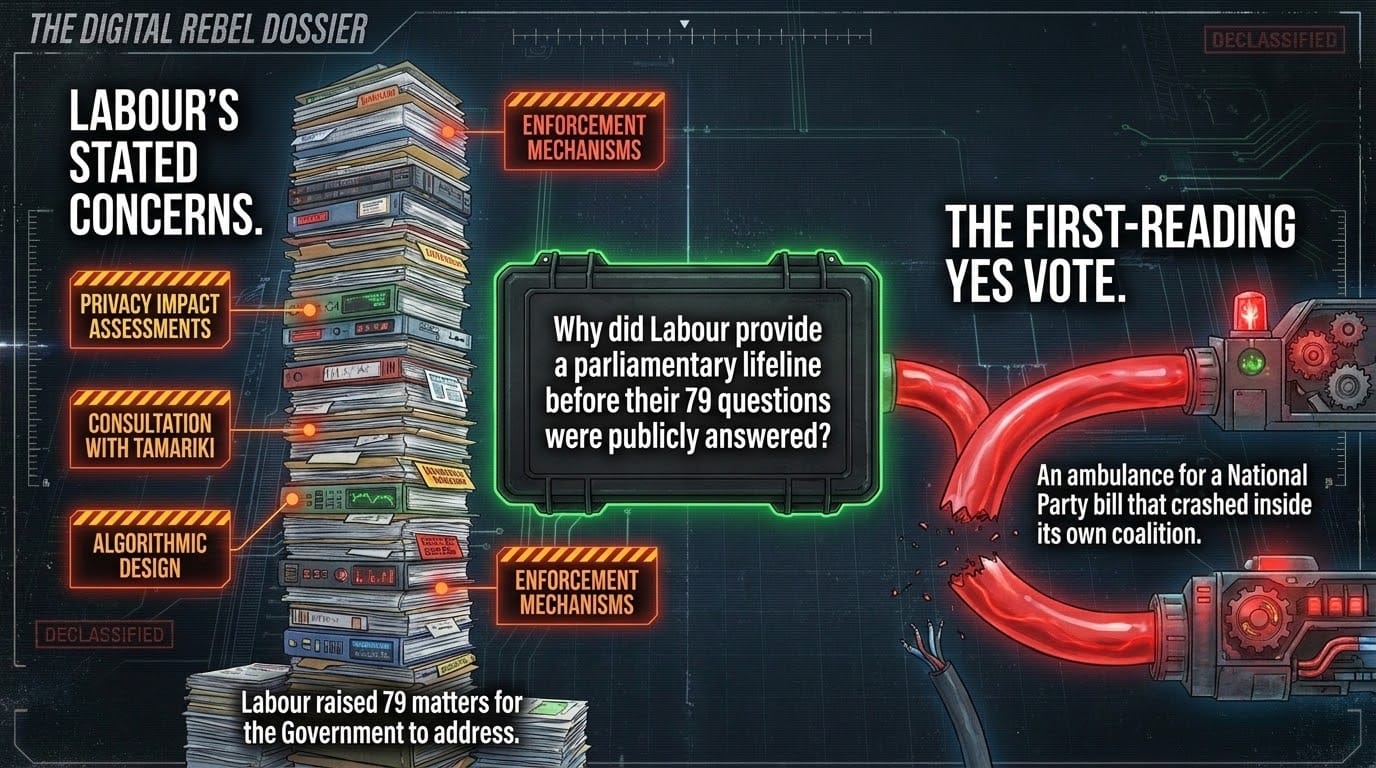
Labour’s stated explanation is procedural and conditional.
First-reading support does not bind a party to vote for a bill at later stages. A first reading sends a bill to select committee, where the public can make submissions and MPs can recommend changes. Hipkins says Labour wants the process underway so a “greatly improved” bill can be implemented after the election. 1News reported that position.[1news.co]
That is the official answer.
But it does not answer the accountability question.
If Labour believed the bill’s risks were serious enough to assemble 79 questions, request key assessments, and express concern that safety nets might “do more harm than good,” why did it give National the votes before the public could see the answers? 1News records that Labour had asked for those materials and that Davidson identified concerns with a model focused “purely on age restriction.”
The select committee is valuable. Public submissions matter. But a select committee cannot reverse the political reality that Labour has already revived a National bill National could not shepherd through its own coalition.
Labour had leverage. It could have said: no first-reading support until the Government publishes the privacy impact assessment; no support until the 79 questions receive public answers; no support while biometric or digital-identity mechanisms remain vague; no support without evidence that the measure will reduce harm rather than simply shift it into a data-harvesting system.
Instead, Labour chose momentum.
The Digital ID Question Labour Must Answer
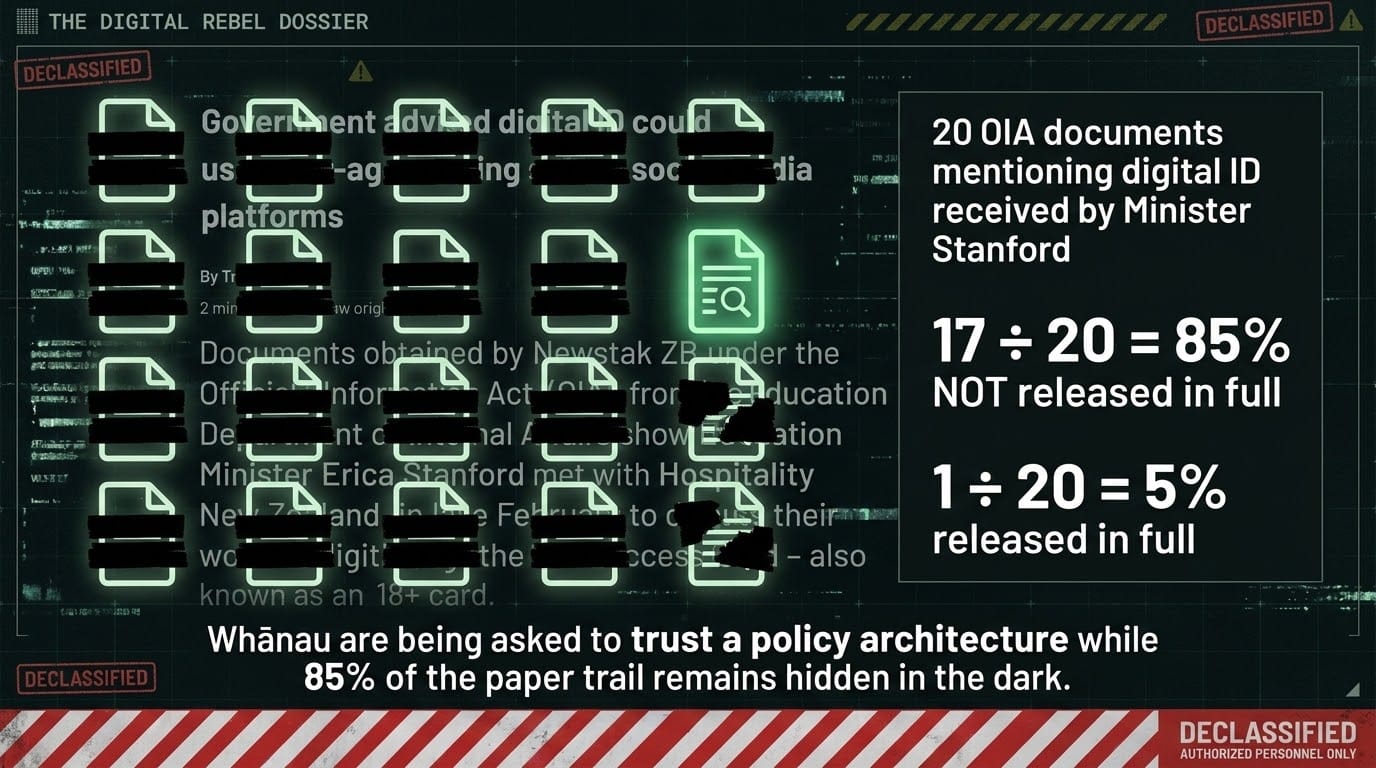
The most dangerous part of this story is not that politicians want to reduce online harm to tamariki. Every parent, caregiver, teacher, and whānau member understands the harms that platforms can cause. The question is whether the proposed cure builds a new system of identity checking that exposes everyone else to data extraction, exclusion, and surveillance.
The Department of Internal Affairs’ own Digital Identity Services Trust Framework is a legal framework for accredited digital identity services in Aotearoa New Zealand. The government’s framework says it includes rules and regulations intended to protect information and privacy. Digital.govt.nz states that the framework governs accredited digital identity services.
But a legal framework is not the same thing as democratic consent. A privacy statement is not the same thing as a guarantee against function creep. And a policy marketed as protecting under-16s can become the political doorway through which age verification becomes routine identity verification for everyone else.
The New Zealand Bill of Rights Act affirms freedom of expression, including the right to seek, receive, and impart information and opinions in any form. It also affirms protection against unreasonable search and seizure. Those rights can be limited by law only where the limit is demonstrably justified in a free and democratic society. The official legislation sets out those protections in sections 5, 14, and 21.
Labour cannot claim to be the party of rights, privacy, and democratic guardrails while treating these questions as problems for later. The time to secure protections is before you grant a bill legitimacy — not after National has already won the headline that Labour helped it win.
Three Examples For The Western Mind
Example One: The Fire Alarm And The Locked Front Door
Imagine a school has a real fire-safety problem. The board proposes an alarm system. Good. Then it says every parent, caregiver, grandparent, visitor, teacher, and child must submit their photo ID and face scan before entering the gate — just in case there is a fire.
The fire is real. The risks to children are real. But the response has turned into a permanent identity checkpoint.
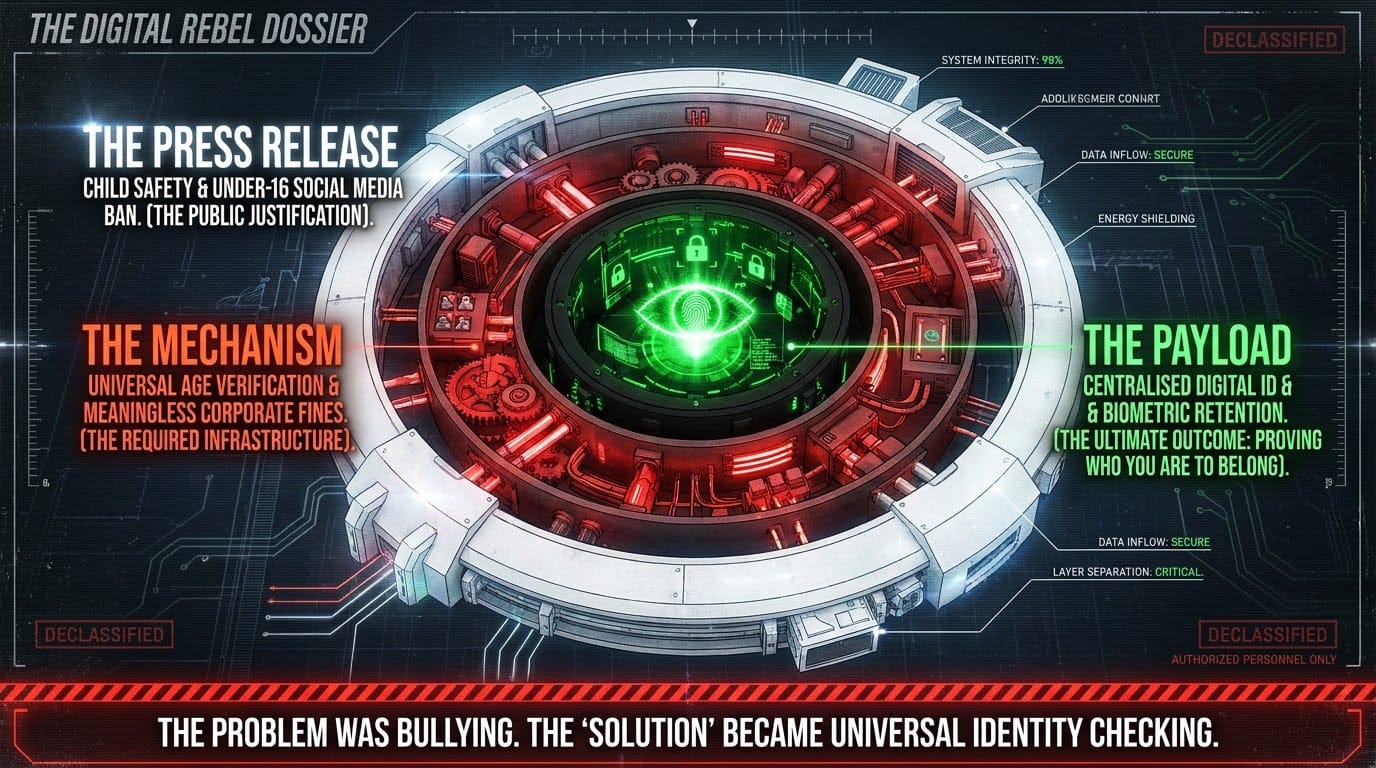
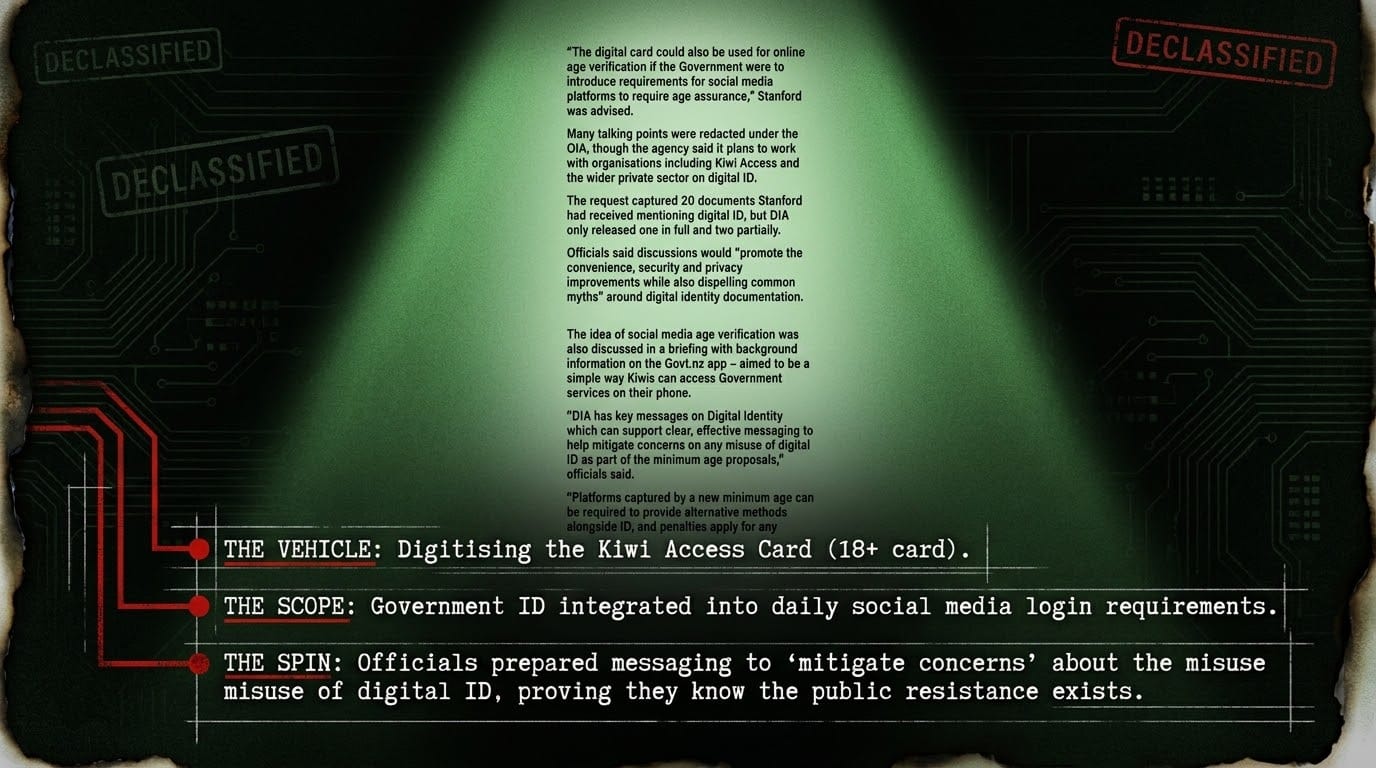
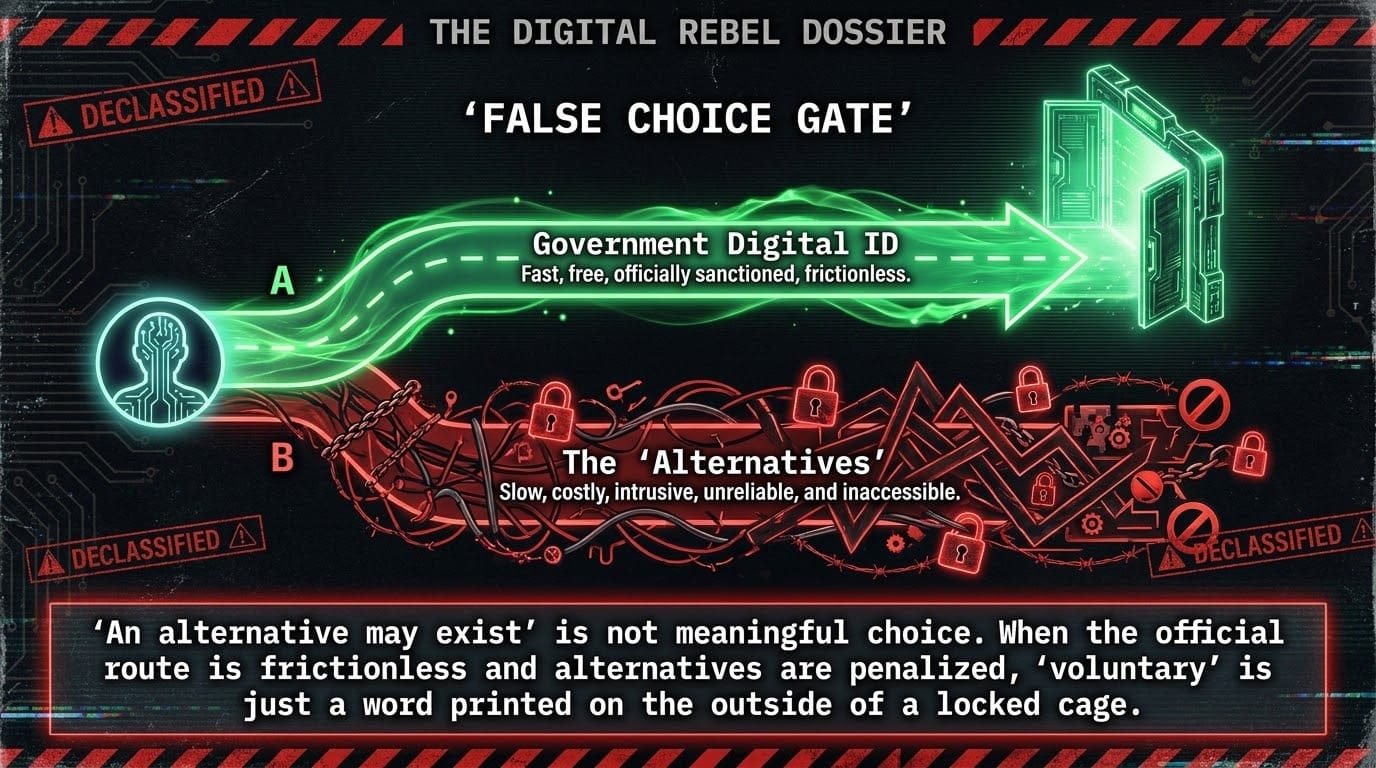
That is the core problem with a social-media ban built around age assurance. The Government says platforms must take reasonable steps to verify age. Labour says the bill can be improved later. But the people whose faces, documents, and digital credentials may be demanded are not just 15-year-olds. Age-gating systems have to distinguish children from adults. That creates pressure to verify everyone.
The bill’s age-verification requirement is verified; the system-wide identity risk is a reasoned policy consequence requiring technical and legislative detail still not publicly established.[1news.co]
Quantified harm: Labour raised 79 questions before announcing first-reading support. Those questions included requests for key assessments and concerns about the bill’s safety effects.[1news.co]
Solution: Labour should make its later-stage support conditional on a published privacy impact assessment, a full Bill of Rights Act consistency analysis, clear statutory prohibition on compulsory government digital ID for age verification, strict data-minimisation duties, and independent enforcement.
Tikanga Impact: In tikanga Māori, identity is not a commodity to be handed over because a central authority says it is convenient. Whakapapa is relational. Mana is inherent. A system that treats identity as a ticket to participate in community life risks turning a taonga into an administrative barcode.
Example Two: The House That National Could Not Build
National brought the bill forward. ACT refused it. NZ First refused it. National did not have the numbers.
Labour then supplied them.
This is like a builder whose two business partners inspect a bridge plan, say the foundations are unsafe, and leave the job. The neighbour then steps in, lends the builder the tools, and says: “I do not endorse the bridge; I merely want it to reach the next inspection.”
That may sound procedural. But the bridge is now standing because the neighbour gave the builder the tools.
Quantified harm: Of National’s two formal coalition partners, two publicly opposed the bill at the point Labour agreed to support first reading.[1news.co]
Solution: Labour should publish a non-negotiable amendment list before select committee closes: no biometric retention, no centralised identity database, no private vendor reuse of age-assurance data, no penalties imposed without independent audit, and mandatory Māori data sovereignty engagement before implementation.
Tikanga Impact: Rangatiratanga means exercising authority with responsibility, not enabling someone else’s authority while hoping to edit the consequences later. Labour’s obligation is not merely to improve National’s machinery. It is to stop harmful machinery from being normalised in the first place.
Example Three: The 79 Questions Nobody Had To Answer
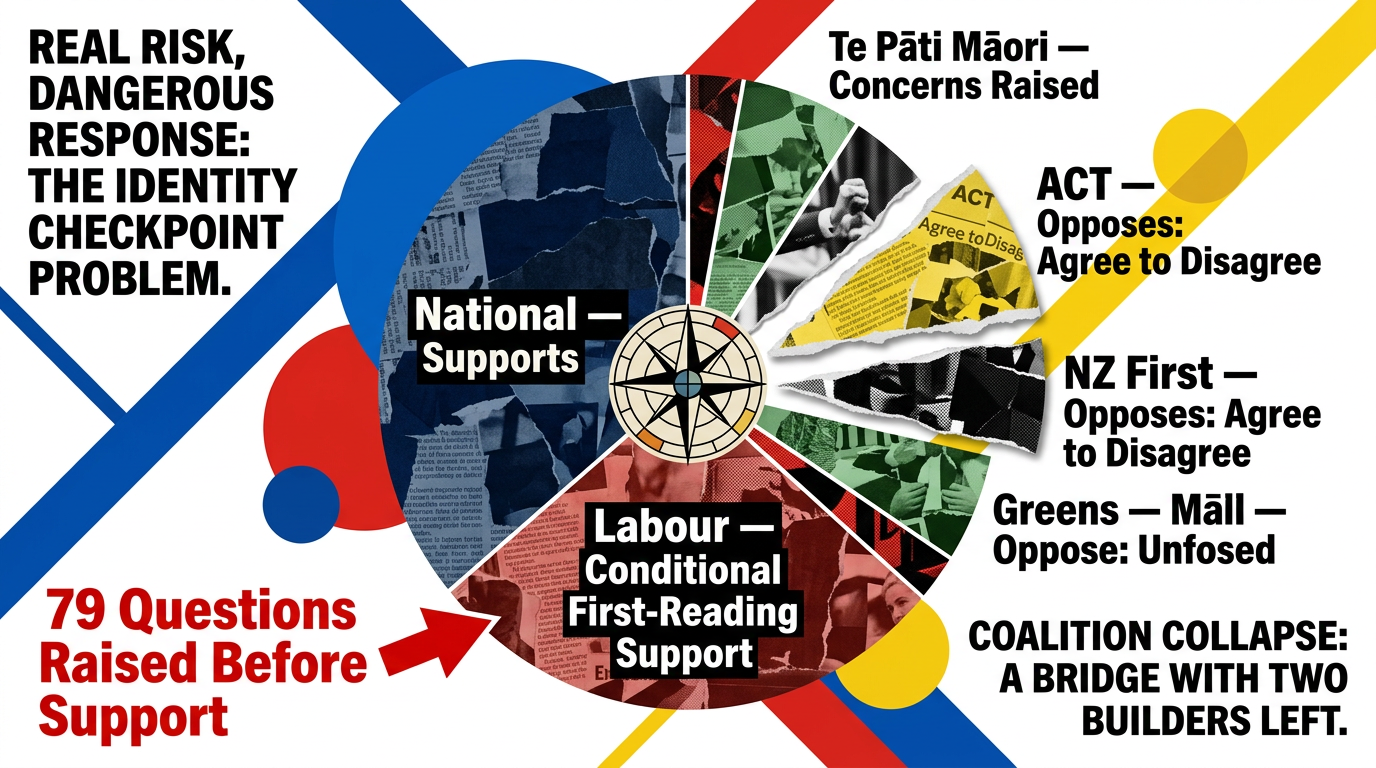
Labour’s caucus had a document full of questions. It wanted key assessments. It warned the safeguards could cause harm. Then it voted to let the bill proceed.
That is like a doctor saying, “I have 79 concerns about this operation, I have not seen the scans, and I am worried the treatment might harm the patient — but let us begin the operation and ask the questions later.”
No serious health professional would accept that. No whānau should accept it from Parliament.
Quantified harm: The known figure is 79 Labour questions. The unknown figure is the number answered before Labour’s decision. No accessible reporting reviewed for this essay confirms that all 79 had been answered. Therefore, the correct statement is not “zero answers”; it is: the public record available to this essay does not verify how many, if any, were answered before Labour committed first-reading support. Confidence: Verified for the 79 questions; Unverified for the response count.[1news.co]
Solution: Release Labour’s 79 questions and the Government’s full written responses. Publish the privacy impact assessment and technical age-assurance model. Give rangatahi, disability communities, rural communities, migrant communities, Māori data-sovereignty advocates, privacy experts, schools, and whānau sufficient time to respond before any second reading.
Tikanga Impact: Kōrero is not a box-ticking exercise after Cabinet has decided the destination. Genuine consultation means the answer can change because the people have spoken. Anything less is extraction: take the data, take the submission, take the consent — then carry on regardless.
Labour’s Choice Is Not Neutral
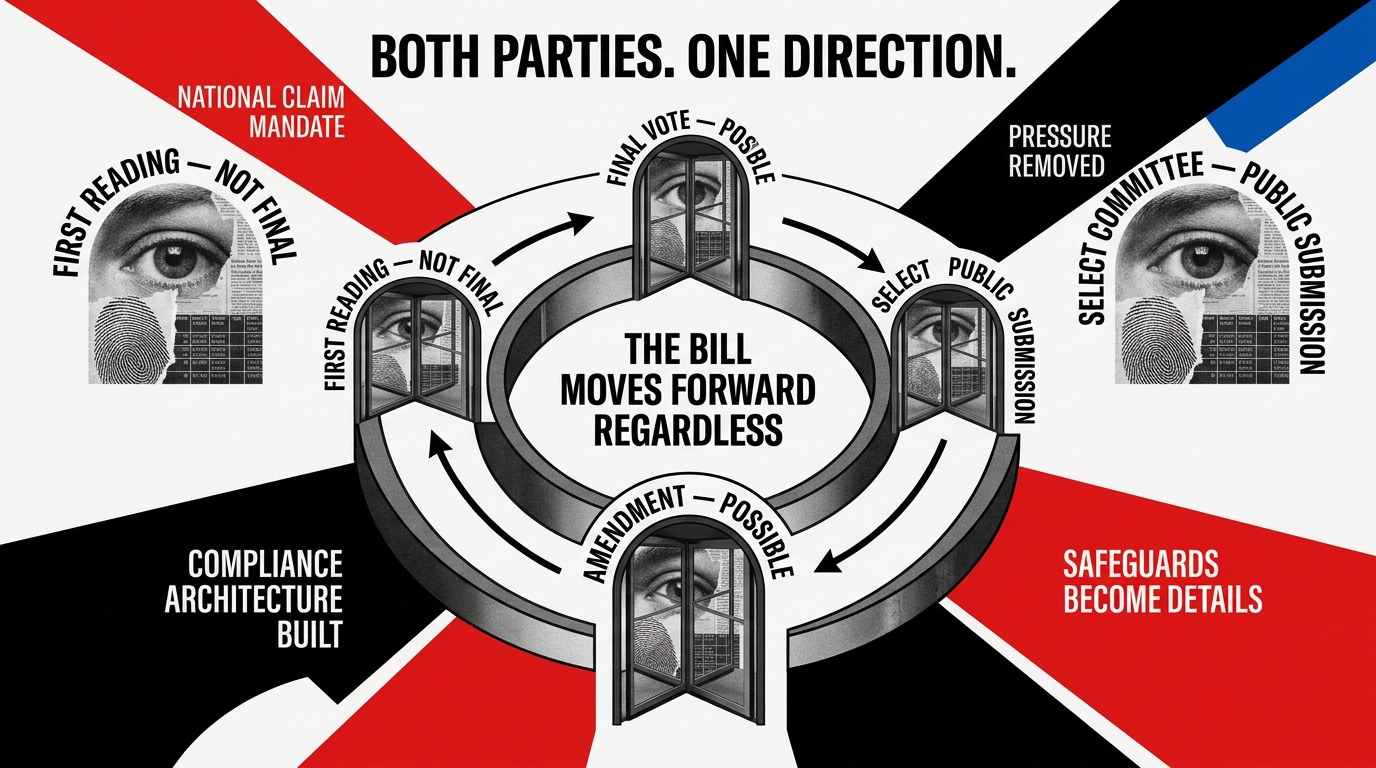
The cleanest version of Labour’s defence is this: support at first reading lets the public submit, lets Parliament amend, and does not bind Labour to final support. That is true as far as it goes. 1News explains that first reading sends the bill to select committee and does not commit a party at later stages. [1news.co]
But Labour’s choice is not neutral.
It rescues National from a failure inside its own governing coalition. It lets National claim a cross-party mandate for a policy whose technical safeguards remain unclear. It takes the pressure off the Government to answer questions before the bill gets its first institutional stamp of approval. And it tells every future government that a child-safety label is enough to turn questions about surveillance, consent, exclusion, and data control into details for later.
That is why Labour must be held to account.
Not because Labour and National are identical in every respect. They are not. Not because first-reading support is final endorsement. It is not. But because both parties are now aligned on the crucial first step: allowing a policy built on age verification to move forward before the public has seen the protections that would stop it becoming an identity-surveillance system.
That is not transformation. It is neoliberal managerialism: identify a real social harm, outsource responsibility to platforms and systems, build a compliance architecture around people’s data, and call the expansion of monitoring “safety.”
The child is still exposed to harmful content. The platform is still monetising attention. The corporation is still writing the terms. The State is simply getting a new identity checkpoint.
Questions Labour Must Answer
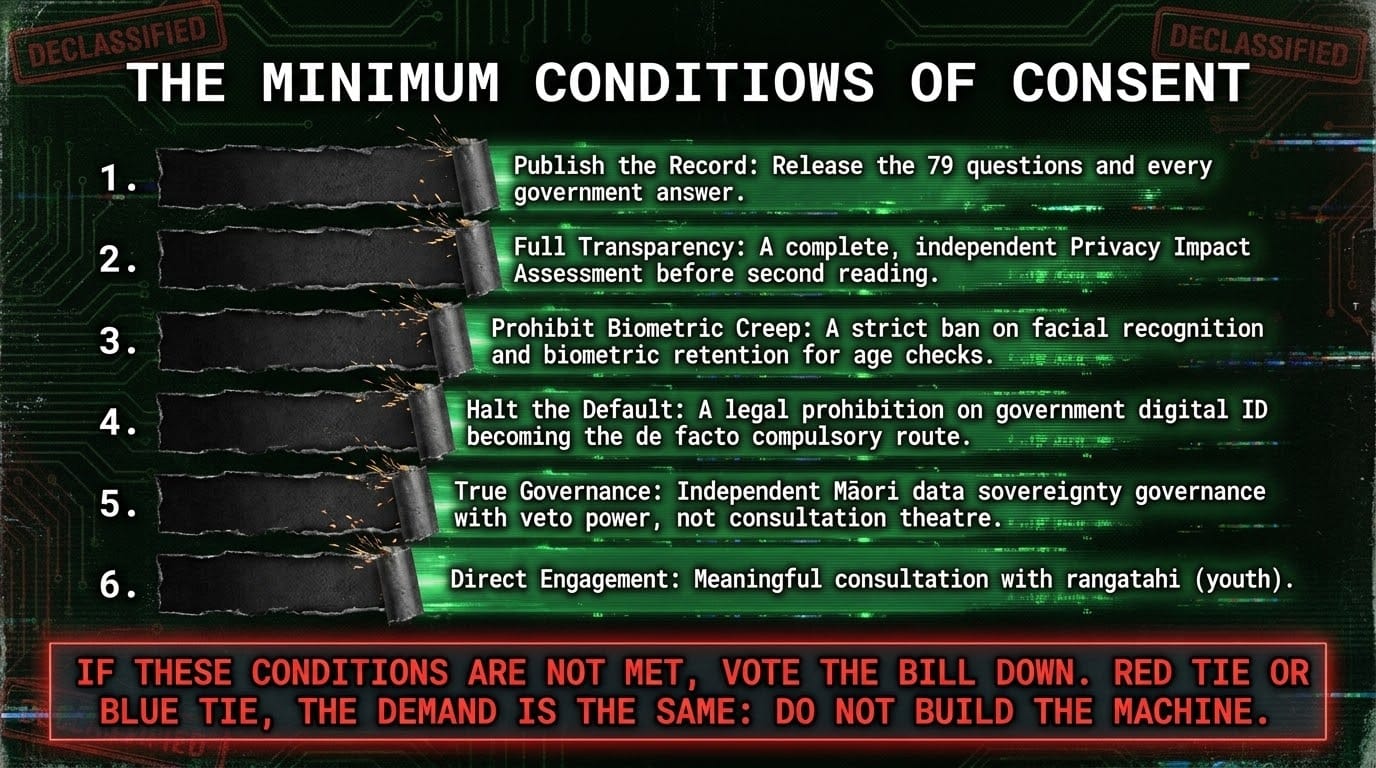
Labour should answer these publicly before the bill returns from select committee:
- Will Labour refuse final support unless the Government publishes a full privacy impact assessment?
- Will Labour prohibit mandatory use of government-issued digital ID for social-media age checks?
- Will Labour prohibit facial recognition, biometric retention, and vendor secondary use of age-assurance data?
- Will Labour release its 79 questions and publish every Government answer?
- Will Labour require a Bill of Rights Act assessment specifically addressing freedom of expression, privacy, and unreasonable search?
- Will Labour require Māori data sovereignty governance with actual decision-making power, not token consultation?
- What evidence threshold will Labour require to show the system reduces harm rather than merely pushes rangatahi onto less visible platforms?
- If ACT and NZ First considered the proposal too risky to support, what evidence persuaded Labour that moving it forward before its concerns were resolved was safe?
Until Labour answers these questions, its “first reading only” line is not enough. It is a procedural shield around a political decision.
The Verdict
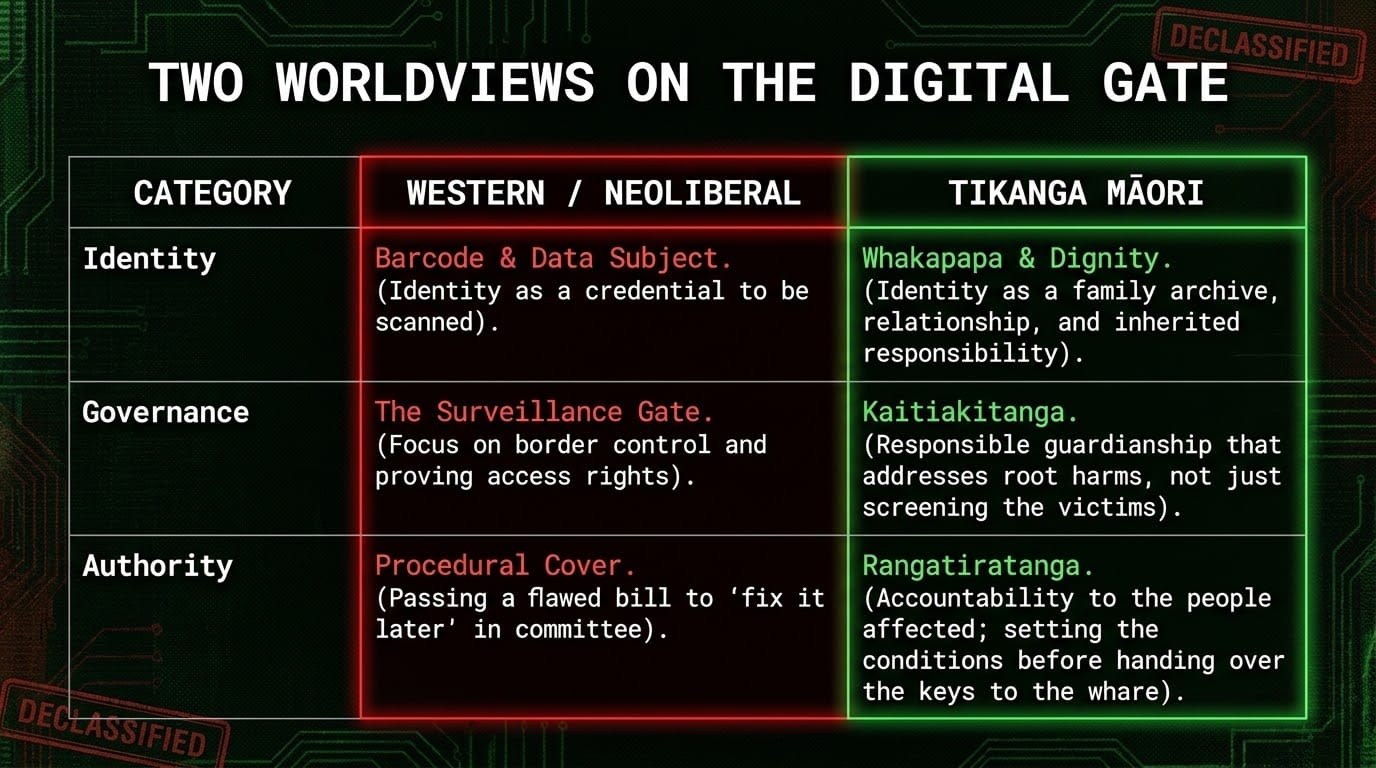
National built the bill. Its own coalition partners refused to carry it. Labour supplied the stretcher, the oxygen, and the votes.
That is the story.
Labour can still prove that its support was a route to stronger protections rather than a surrender to election-year child-safety theatre. But it must do that with binding amendments, public documents, genuine Māori data governance, and a willingness to kill the bill if its risks cannot be contained.
Anything less is Labour helping National build the gate — then promising whānau it will come back later to check whether it locks from the inside.
Māuri Ora.
Ivor Jones The Māori Green Lantern Fighting Misinformation And Disinformation From The Far Right

Public-Interest And Accuracy Note: This essay distinguishes verified facts from analysis. Labour’s first-reading support, its 79 questions, National’s bill description, ACT and NZ First’s opposition, and the parliamentary process are supported by contemporaneous reporting. The description of “neoliberal managerialism,” the likely policy effects, and the political critique are the author’s opinions based on those facts. The RNZ article supplied by the reader could not be fully fetched through the available tool, so the specific events were corroborated using 1News’ contemporaneous reporting. The legal and digital-identity framework was checked against official New Zealand government sources. Right of reply is open to Labour, Chris Hipkins, Reuben Davidson, Erica Stanford, National, ACT, and New Zealand First.