"THE CROWN BUILT A DRAIN AND CALLED IT DEVELOPMENT" - 28 June 2026
$167 million of public money. A decade of losses. Dead tuna in the community drain. An 88.3-percentage-point gap below industry standard. And a minister who cannot be found for comment.

He Whakatūwhera — I Am Looking At The Drain
Mōrena Aotearoa,
I am Ivor Jones. I am Te Māori Green Lantern. I am Te Arawa, Ngāti Pikiao, with Welsh whakapapa threading through my bones alongside the tikanga of my tūpuna.
And I am looking at the Duke St drain in Ōpōtiki, where the tuna floated dead in industrial wastewater, and I am telling you exactly who built this drain and who is still getting paid to pretend it didn't smell.
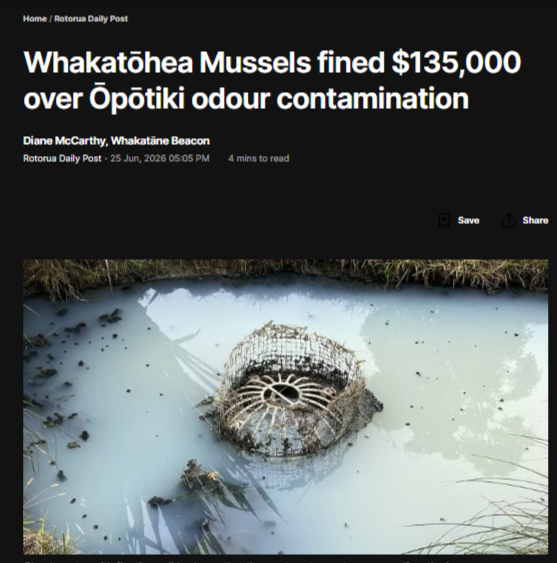
 Diane McCarthy, Whakatāne Beacon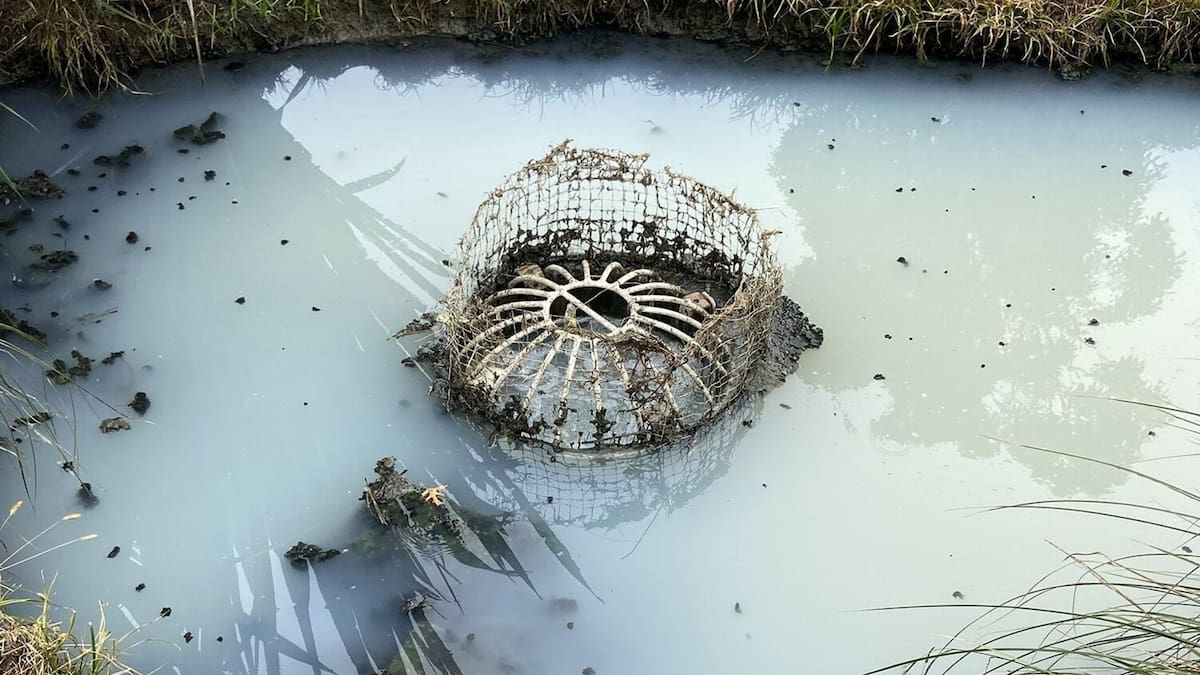
This is not a story about a mussel company. This is a story about colonisation with better spreadsheets.
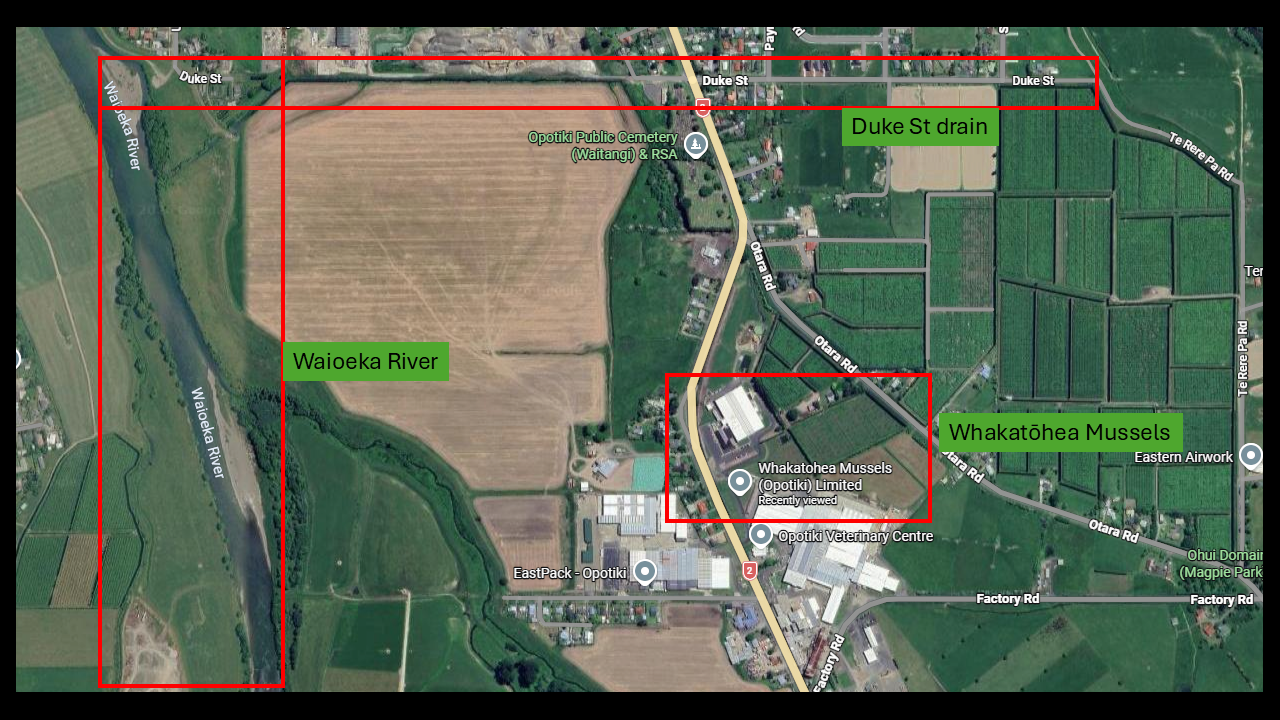
The mussel company wears Whakatōhea's name on its door. The Crown holds 38.21 percent of its shares. The same Crown's regional development unit funded it. The same Crown's harbour infrastructure subsidised it. The same Crown's statutory body found it breached takeover laws.
The same Crown's courts fined it — and kept the money for the Crown's consolidated account, not the people who fled their homes in the stink (Takeovers Panel IAR, October 2024; Rotorua Daily Post, 25 June 2026; Beehive harbour completion, 23 November 2025).
And the industry — the mussel industry this company is supposedly part of — is recording record profits.
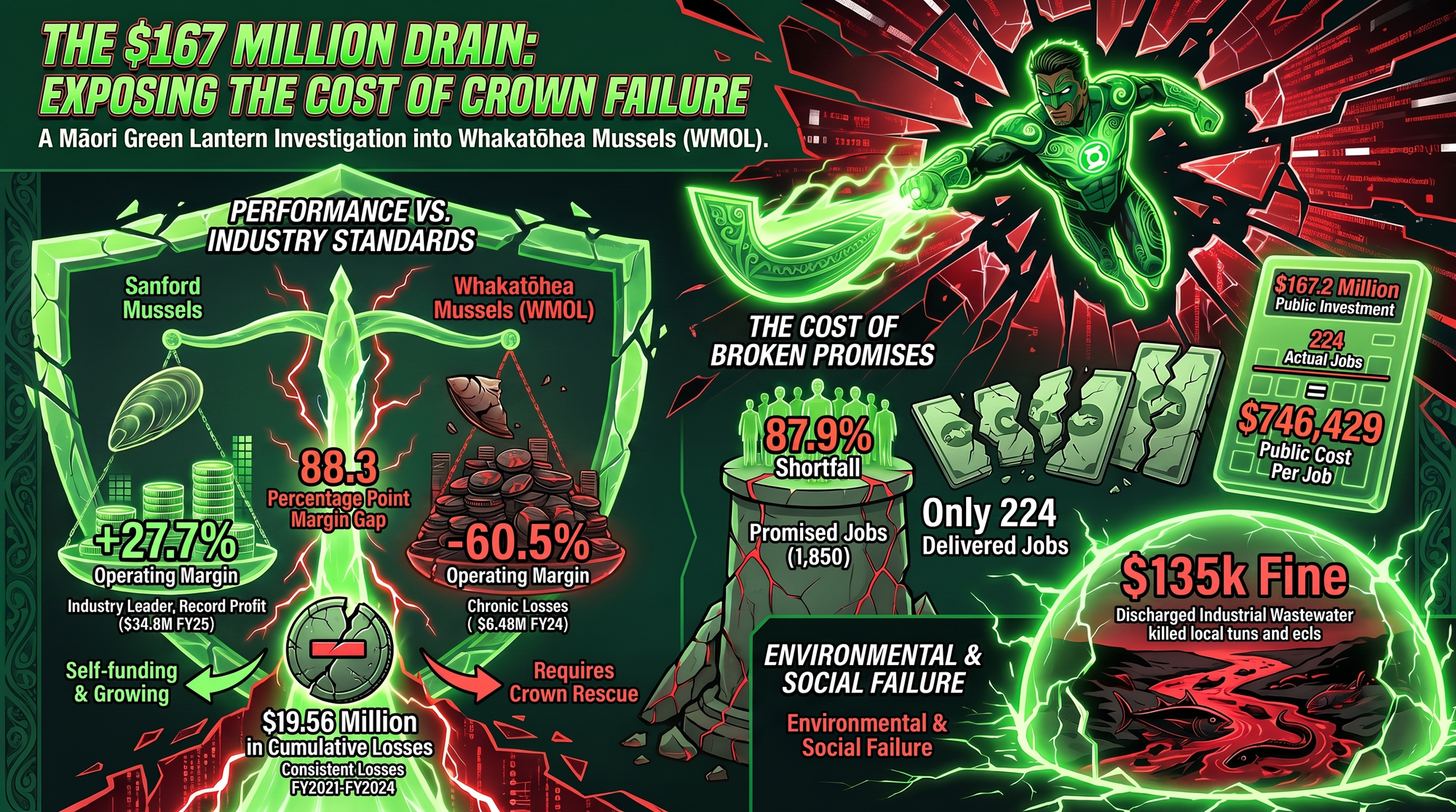
Sanford Limited, the country's largest listed seafood company, delivered a mussel profit contribution of $34.8 million in FY2025 at a 27.7 percent margin (Sanford FY25 Annual Report, November 2025).
Whakatōhea Mussels, in the same industry, in the same period, posted a negative 60.5 percent operating margin (Takeovers Panel IAR, October 2024).
The gap between those two numbers — 88.3 percentage points — is not bad luck. It is not global markets. It is not the economy. It is a management and governance failure embedded inside a structure the neoliberal Crown built and still refuses to honestly account for.
The tuna in the drain are the evidence.
🎙️ THE DEEP DIVE PODCAST
Listen: Two hosts unpack the numbers, the drain, the dead tuna, the Sanford revelation, the Takeovers Code breach, and the $167 million question.
(I apologise in advance for the AI's very harsh pronunciation of te reo Māori — please don't shoot me 😅. The taiaha is in the analysis, not the accent.)
📺 YOUTUBE VIDEO
Like video? Here is a short video supporting this essay — the numbers, the drain, the dead tuna, the Sanford comparison, and the $746,429-per-job question.
(Again, don't shoot the messenger because of AI's pronunciation — kia aroha mai 😅)
Numerical audit

This government relies on the public not checking the arithmetic. I check.
| Claim | Formula | Verified Result | Source |
|---|---|---|---|
| Fine as % of FY2024 annual net loss | $135,000 ÷ $8,700,000 | 1.55% | NZ Herald, 25 Jun 2026; Takeovers Panel IAR |
| Fine as % of total public investment | $135,000 ÷ $167,200,000 | 0.08% | Calculated from verified public investment total |
| WMOL cumulative operating losses FY2021–24 | $1.209m + $6.9m + $4.965m + $6.486m | $19.56 million | Takeovers Panel IAR |
| Total verified public investment | $95.2m + $20m + $52m | $167.2 million | Beehive Nov 2025 |
| Jobs promised vs delivered | 1,850 − 224 | 1,626 shortfall (87.9%) | Beehive Feb 2020; Purpose Capital Mar 2026 |
| Public cost per job delivered | $167,200,000 ÷ 224 | $746,429 per job | Calculated |
| Sanford mussel profit margin FY25 | $34.8m ÷ $125.5m | 27.7% | Sanford FY25 Annual Report |
| WMOL operating margin FY2024 | −$6.486m ÷ $10.713m | −60.5% | Takeovers Panel IAR |
| Industry vs WMOL margin gap | 27.7% − (−60.5%) | 88.3 percentage points | Calculated |
| WMOL performance gap vs industry standard | $2.97m − (−$6.49m) | $9.46m gap in one year | Calculated |
| Te Huata+CRHL+TTOTW aggregate post-allotment | Combined verified holding | 52.32% | Takeovers Panel 2025 |
He Kōrero Tūturu — The court record

On 11 May 2026, Judge Prudence Steven in the Tauranga District Court convicted Whakatōhea Mussels of unlawfully discharging insufficiently treated wastewater from its Ōpōtiki mussel processing factory into the Duke St drain (Rotorua Daily Post, 25 June 2026).
The contamination ran from 27 January to 7 March 2025, and again on 28 March 2025.
The court found this reflected
“system failures and inadequate oversight in the management of the business activities, in part due to a lack of experience and appropriate expertise within the organisation itself” (Rotorua Daily Post, 25 June 2026).

The community carried the cost:
- 79 odour complaints from at least 35 people to Bay of Plenty Regional Council.
- A resident documented odour across 30 separate dates and was forced to vacate his home.
- A long-time neighbour sold their property, citing the odour.
- A local business was forced to truck water in from elsewhere.
- Dead eels were seen floating in the drain.
- The resident who raised the problem with the company felt “belittled and frustrated and angry” (Rotorua Daily Post, 25 June 2026).
The company pleaded guilty.
Fine: $135,000 — paid to the Crown, not the community (Rotorua Daily Post, 25 June 2026). That is 0.08 percent of $167.2 million in public money. That is not accountability. That is a receipt.
Ko Te Aho Matua — The industry standard

Before I expose how far below normal Whakatōhea Mussels operates, I need to show you what a healthy mussel business looks like. Because this neoliberal government and its institutional cheerleaders have spent twelve years telling Ōpōtiki that WMOL's chronic losses are a development trajectory. They are not.
They are a management failure in a profitable industry.
| Metric | Sanford Mussels FY2025 | WMOL FY2024 | Gap |
|---|---|---|---|
| Revenue | $125.5 million | $10.713 million | — |
| Profit/Loss contribution | +$34.8 million profit | −$6.486 million loss | $41.3m |
| Operating margin | +27.7% | −60.5% | 88.3 percentage points |
| Trajectory | Record result | Doubled losses year-on-year | Opposite directions |
| Capital dependency | Self-funding | Requires Crown/shareholder rescue | Structural |
Sources: Sanford FY25 Annual Report; Takeovers Panel IAR October 2024
Sanford explicitly states that mussels can be developed at low risk with relatively low capital (Sanford FY25 Annual Report). The Crown invested $167.2 million of public money into what the industry's own leading operator describes as a low-capital, low-risk sector
— and the result is $19.56 million in cumulative losses, a Takeovers Code breach, and a community drain running with industrial wastewater.
If WMOL had matched Sanford's 27.7% mussel margin, it would have produced approximately $2.97 million in profit on its FY2024 revenue instead of a $6.49 million operating loss — a one-year performance gap of approximately $9.46 million.
Ko Te Mea Nui — The Sanford bombshell nobody reported

Sanford's FY25 Annual Report confirms that Whakatōhea Mussels was processing Sanford's own North Island Coromandel mussels as a third-party contractor in FY2025 — the same financial year the wastewater contamination occurred (Sanford FY25 Annual Report).
Sanford said the North Island harvesting and processing proved challenging, with poor crop condition producing high waste and lower-than-expected yields (Sanford FY25 Annual Report).
That means a profitable listed seafood company was using WMOL as a lower-cost processing contractor while WMOL absorbed the operational risk and recorded chronic losses.

During year one of that arrangement, the wastewater system failed, the drain ran foul, and the community wore the cost.
Ko Ngā Kaute o Ngā Tau — The profitless decade
| Financial Year | Revenue | Operating Expenses | Operating Loss |
|---|---|---|---|
| FY2021 | $4.597m | $5.806m | ($1.209m) |
| FY2022 | $7.023m | $13.923m | ($6.900m) |
| FY2023 | $16.444m | $21.409m | ($4.965m) |
| FY2024 | $10.713m | $17.199m | ($6.486m) |
| Cumulative | ($19.560m) |
Source: Takeovers Panel IAR, October 2024
By November 2024 — two months before the contamination began — the company had breached its banking covenants and was seeking another $12 million in emergency capital (BusinessDesk, 19 November 2024).
A company in financial distress. A wastewater system requiring maintenance. An Ōpōtiki summer. No one is required to connect those dots in the public record. This essay does.
Ko Hea Ngā Mahi? — Where are the 1,850 jobs?
| Year | Jobs Claimed | Who | Source |
|---|---|---|---|
| 2020 | 1,850 (730 in Ōpōtiki) | Shane Jones / Stuart Nash | Beehive, 27 Feb 2020 |
| 2020 | About 2,000 jobs | Ministerial — Te Ao Māori News | Te Ao Māori News, 27 Feb 2020 |
| 2025 | More than 200 full-time staff | Grow Regions | Grow Regions, 24 Nov 2025 |
| 2026 | 224 employees | Purpose Capital | Purpose Capital, March 2026 |
The verified record shows 224 jobs against a promise of 1,850 — a shortfall of 1,626 jobs, or 87.9 percent. $167.2 million in public money. 224 jobs. $746,429 per job delivered.
Ko Te Hanganga o te Mahi — Follow the money
Layer one: Who owns Whakatōhea Mussels

| Holder | Stake | Nature |
|---|---|---|
| Crown Regional Holdings Ltd (CRHL) | 38.21% | Crown entity |
| Te Tāwharau o Te Whakatōhea (TTOTW) | 9.28% | Post-settlement iwi entity |
| Te Huata 1 Limited Partnership | 0% → 4.85% → 0% | Iwi-connected entity |
| Remaining shareholders | ~52.51% | Mainly local people, family trusts and iwi trusts |
The single largest shareholder of a company wearing Whakatōhea's name is the Crown, not the iwi post-settlement entity (Takeovers Panel IAR, October 2024).
Layer two: Who owns the ocean — Eastern Seafarms
The 3,800-hectare marine farm consent is held by Eastern Seafarms, not WMOL. Its ownership is 54 percent Whakatōhea, 26 percent Sealord, and 20 percent NZ Seafarms (Ōpōtiki District Council aquaculture page). Sealord is equally owned by Moana New Zealand and Nissui of Japan (Sealord press release, 2024).
That means the Crown's $52 million equity sits in the loss-making processing company, not the ocean-space asset itself.
Ko Te Takeovers Panel — The Code breach nobody reported
On 10 April 2025 — thirteen days after the final contamination date — Te Huata 1 Limited Partnership had a $4 million loan capitalised into 1,777,777 new WMOL shares (Takeovers Panel 2025 transaction). The combined holding of CRHL, Te Huata, and TTOTW, as potential associated persons, reached 52.32 percent. The Takeovers Panel refused to grant the exemption CRHL applied for, confirming the breach was real, and the company later reversed and remedied the structure through a proper shareholder process (Takeovers Panel 2025 transaction).
This happened while the company was inside the same broad period as its environmental compliance failure. The governance scandal and the contamination scandal are part of the same chronology.
Ko Ngā Kaunihera — The institutional architecture of excuse-making
Bay of Plenty Regional Council was simultaneously a harbour co-investor, consent authority, environmental regulator/prosecutor, and harbour governance participant (Beehive, 23 Nov 2025; Ōpōtiki District Council meeting outcomes, 29 Apr 2025).
Ōpōtiki District Council continued to publicly celebrate the harbour development while not publishing a corresponding statement about the contamination prosecution on its project portal (Ōpōtiki District Council harbour portal).
Kānoa's own commissioned impact study found that economic indicators beyond employment did not yet show clear change and that some projects had not reached self-sustainability (MBIE / Allen + Clarke, November 2023).
Ko Te Whatunga Hou — Comparative analysis of Te Ohu Kaimoana's aquaculture investments
Whakatōhea Mussels does not sit in isolation. It sits inside a Treaty-grounded Māori aquaculture network shaped by the Māori Commercial Aquaculture Claims Settlement Act 2004, Te Ohu Kaimoana's trustee role, and negotiated Regional Aquaculture Agreements across multiple iwi and regions (MPI aquaculture settlement; Takutai Trust timeline; Te Ohu Kaimoana history).
Legislative foundation
The settlement architecture requires the Crown to provide aquaculture settlement assets to Te Ohu Kaimoana for distribution to Iwi Aquaculture Organisations, including Whakatōhea in the Eastern Bay of Plenty (MPI aquaculture settlement; Whakatōhea iwi commercial page).
That means the underlying aquaculture pathway is Treaty-grounded, not a discretionary commercial favour.
Network comparison
| Entity | Role | Performance signal | Source |
|---|---|---|---|
| Moana New Zealand | Largest Māori-owned seafood company; settlement steward | Net profit after tax NZD $53.6m in 2024 | Moana NZ 2024 annual report |
| Sealord Group | 50% Moana NZ / 50% Nissui; 26% Eastern Seafarms | Major commercial operator tied into WMOL water space | Sealord press release, 2024; ODC aquaculture page |
| Te Whānau-ā-Apanui / Te Huata | Mussel spat hatchery development at Te Kaha | $6m Crown-backed hatchery support; industry supply role | Beehive, 23 Mar 2022; Hatchery International, 2024 |
| Te Aupōuri | Far North iwi mussel farming entrant | Operational newcomer mentored in sector growth | Te Ao Māori News, 12 Dec 2022 |
| Bay of Plenty 12-iwi aquaculture agreement | Collective regional settlement arrangement | $35m agreement over 5,000 hectares signed in Ōpōtiki in Dec 2025 | Te Ao Māori News, 18 Dec 2025 |
| Whakatōhea Mussels | Crown-backed processing anchor node | −60.5% operating margin FY2024; cumulative losses; contamination conviction | Takeovers Panel IAR; Rotorua Daily Post, 25 June 2026 |
What the comparison shows
The Treaty settlement infrastructure itself is producing real Māori aquaculture activity: Moana New Zealand is profitable, Te Huata is building upstream hatchery capability, Te Aupōuri is participating in mussel farming, and a 12-iwi Bay of Plenty agreement worth $35 million was signed in Ōpōtiki in December 2025 (Moana NZ 2024 annual report; Te Ao Māori News, 18 Dec 2025).
WMOL is the outlier. It is the node with the biggest direct Crown equity footprint and the weakest verified operating performance. That distinction matters. The failure here is not Māori aquaculture as such. The failure is the Crown-managed, Crown-capitalised, Crown-majority-influence node inside a wider Māori seafood and aquaculture network that otherwise shows growth, asset consolidation, or profitable performance.
The timing makes the contradiction sharper. In December 2025, twelve iwi signed a landmark Bay of Plenty aquaculture agreement in Ōpōtiki while the company at the heart of that local infrastructure was already heading toward criminal conviction for the contamination that occurred between January and March 2025 (Te Ao Māori News, 18 Dec 2025; Rotorua Daily Post, 25 June 2026).
The regional network was being ceremonially expanded at the same time the anchor processing company was carrying unspoken environmental and governance failures.
Why this matters

This comparison changes the frame. It stops lazy commentary that treats WMOL's performance as proof that Māori aquaculture is flawed.
The evidence points elsewhere.
Te Ohu Kaimoana's settlement architecture is building a network of Māori seafood capability.
The breakdown appears where heavy Crown equity, regional development politics, and weak operational governance are layered over that network.
He Kupu Ki Te Hinengaro ō Te Pākehā — Three examples for the Western mind
Example 1: The contractor who poisoned the neighbourhood
A profitable listed seafood company sends product to a Crown-backed subcontractor. The subcontractor has never made a profit. During the contract year, the subcontractor's wastewater system fails, the community drain runs foul, and dead eels are seen floating in the water (Sanford FY25 Annual Report; Rotorua Daily Post, 25 June 2026). A court fine equal to 0.08 percent of public investment is not accountability.
Example 2: The benchmark the government hoped you would never run
Sanford's mussel margin was +27.7 percent. WMOL's operating margin was −60.5 percent. The gap is 88.3 percentage points. That is not a story about an industry downturn.
It is a story about one operator radically underperforming the industry benchmark while living on public subsidy.
Example 3: The ocean asset and the silent partner
The water-space asset sits in Eastern Seafarms. The Crown's $52 million equity sits in WMOL. Sealord, via its joint ownership with Moana New Zealand and Nissui, holds 26 percent of the marine farm vehicle (ODC aquaculture page; Sealord press release, 2024). The structure matters because value and risk are not sitting in the same place.
He Ara Whakamua — Five things that must happen now

- Shane Jones must publicly account for the investment promises attached to this project.
- The full WMOL share register should be obtained and scrutinised in the public interest.
- Direct compensation mechanisms for affected residents should be pursued, because the fine goes to the Crown rather than the complainants.
- The Eastern Seafarms structure and water-space ownership should face Treaty-grounded scrutiny.
- An independent management review of WMOL should be commissioned and published.
He Whakamutunga — Ko Au, Ko Te Tuna, Ko Te Wai
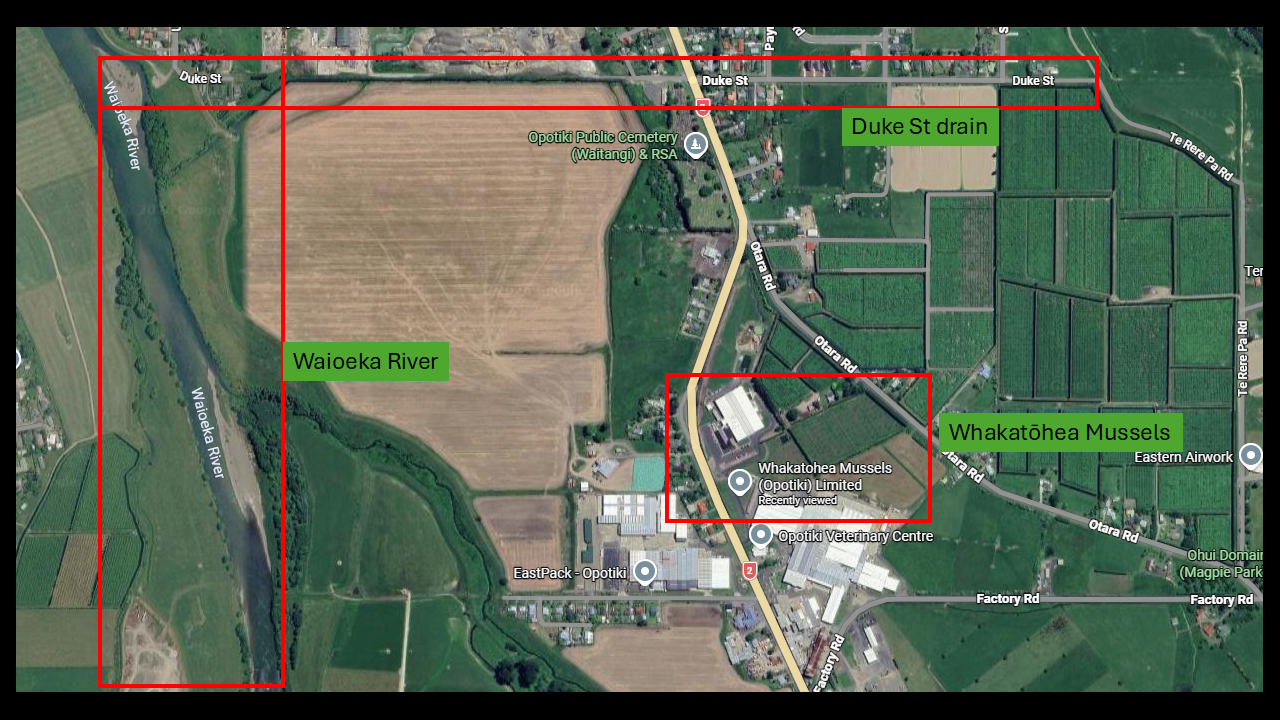
I am looking at the Duke St drain. The company that killed the tuna has never made a profit in the years visible in the public record used here. The Crown that backed it holds the largest single stake. The regulator that prosecuted it co-invested in the infrastructure that made the pollution possible. The wider Māori aquaculture network shows that better outcomes are possible. That contrast is what makes this failure so sharp.
The neoliberal Crown has a theology: brand it Māori, fund it publicly, retain control structurally, evaluate it gently, celebrate infrastructure as achievement, and when the system fails — fine the company a fraction of a percent of public investment and call it accountability.
The eels do not get a press conference. But they get this essay.
Kia kaha, whānau. Stay vigilant. Stay connected.
Tautoko

The people in this essay did not choose to be in it.
A resident kept a diary. Thirty dates. Odour so bad he packed a bag and left his home. A neighbour sold their house. A business trucked in water from somewhere else. Dead eels in a drain that runs through a community the Crown promised 1,850 jobs and delivered 224.
Nobody paid them for that. Nobody compensated them for the $135,000 fine that went to Wellington instead of to their street. Nobody held a press conference for the eels.
This essay cost time, research, calculation, legal review, and the kind of sustained attention that institutional power relies on nobody applying to its spreadsheets. The Takeovers Code breach was sitting in a public register. The Sanford connection was in a published annual report. The 88.3 percentage-point gap between what the industry achieves and what $167.2 million of public money produced — that arithmetic was available to anyone who chose to do it.
Nobody did. Until now.
This mahi is not funded by a media organisation, a government agency, a corporate sponsor, or a university research grant. It is funded by whānau who believe that the community in the Duke St drain deserves the same quality of public interest scrutiny that gets applied to far less consequential things in far more powerful places.
If this essay gave you something — clarity, anger, a number to quote, a question to ask your councillor, a reason to share — then it has done its job. And if you are in a position to koha, here is what that support actually buys:
🔍 Research time — verifying every URL, fetching every source, running every calculation before a word is written.
⚖️ Legal review — every essay is assessed against the NZ Defamation Act 1992. Naming names accurately costs care, not courage. Courage without care is just noise.
📢 Publication infrastructure — hosting, tools, the platform that gets this to you without a paywall, because the community in the drain cannot afford a BusinessDesk subscription and they deserve to read this too.
🎙️ Audio and video production — so the essay reaches people who learn by listening, by watching, in te reo contexts, in kitchens and cars and on the way to a job that pays less than the Living Wage.
You do not have to koha to deserve this mahi. Share it. Talk about it. Ask your local councillor why the ODC harbour portal has no statement about the prosecution. Ask your regional councillor how a $20 million co-investor also prosecutes the same company and sits on its governance committee. Ask Shane Jones — publicly — when he plans to make a statement.
That question, asked loudly enough and often enough, is koha too.
And if you can give financially — ngā mihi nui, e hoa. Every dollar signals that independent, kaupapa Māori accountability journalism is worth sustaining.
- 💚 Koha (direct): app.koha.kiwi/events/the-maori-green-lantern-fighting-misinformation-and-disinformation-ivor-jones
- 📬 Subscribe (free or paid): themaorigreenlantern.maori.nz/#/portal/support
- 🏦 Direct bank transfer: HTDM — 03-1546-0415173-000
- 📘 Facebook: facebook.com/Themaorigreenlantern/subscribe
The eels did not get a press conference. But the community that watched them float past deserves a press that asks why.
Kia kaha, whānau. Stay vigilant. Stay connected.
Research transparency
This essay uses verified public sources including the Daily Post court-report PDF, Takeovers Panel records, Te Ohu Kaimoana and MPI settlement material, Beehive releases, MBIE evaluation documents, council material, Sanford reporting, Moana New Zealand reporting, and Te Ao Māori News coverage of the 12-iwi Bay of Plenty aquaculture agreement.
Right of reply remains open to all public actors named in their public capacities. Opinions are the author's assessments grounded in the cited documentary record.