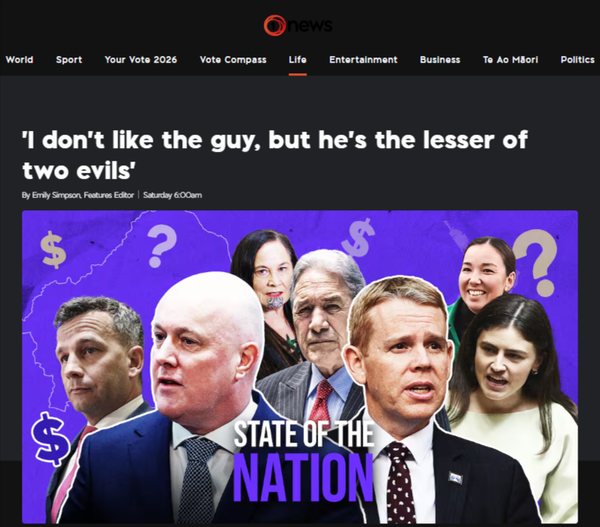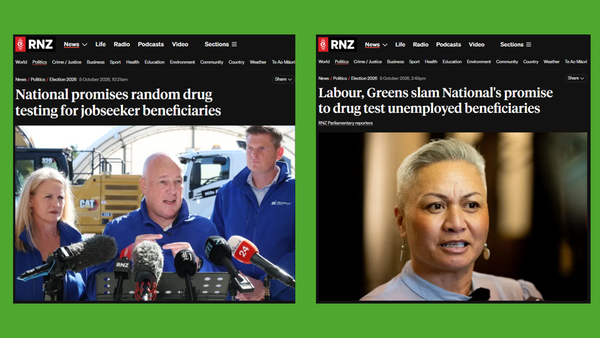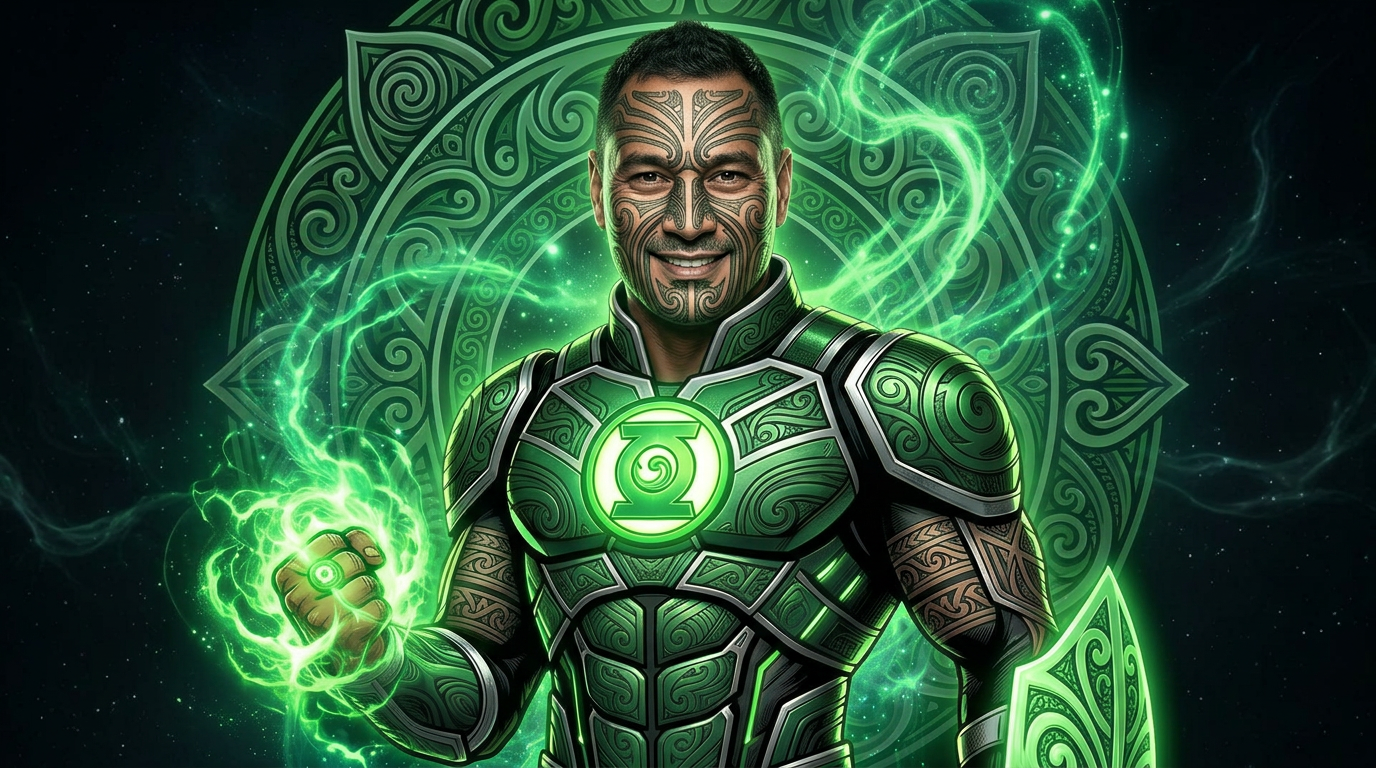
THE MURU IN PLAIN SIGHT: How a White Supremacist Neoliberal Government Is Bulldozing Māori Democracy Into the Drain — and Calling It Efficiency - 5 May 2026
They didn't take your seat at the table. They took the table, replaced it with a board of mayors who were never elected to speak for you, gave them three months to rubber-stamp their own extinction, and told the press it was about ratepayer value.

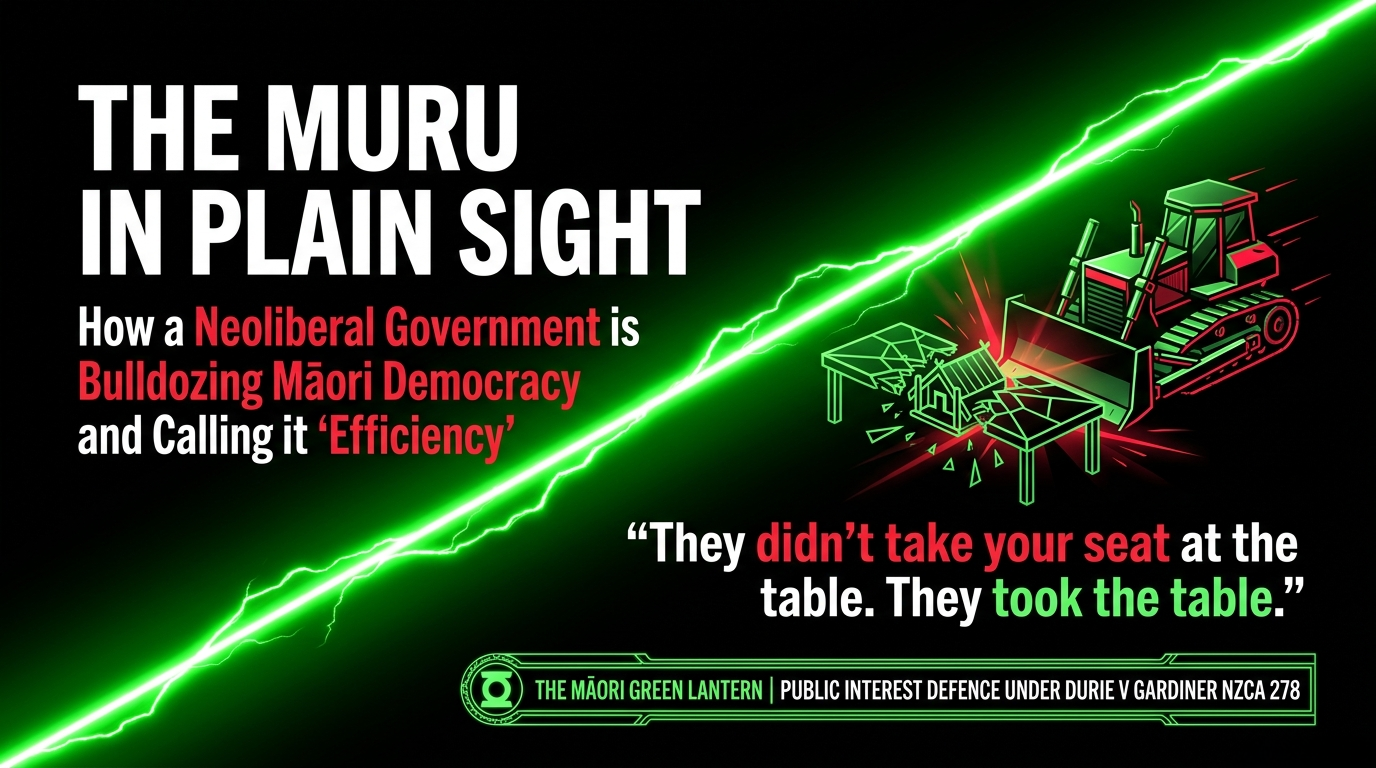
This essay examines the government's May 2026 council amalgamation ultimatum because it directly affects Māori whānau, mana whenua tino rangatiratanga, and the democratic rights of tangata whenua across Aotearoa — public interest defence under Durie v Gardiner NZCA 278.
The Deep Dive Podcast
Listen to a lively conversation between two hosts, unpacking and connecting topics in the sources of this essay.
The Muru the Government Calls a Meeting
Imagine a taniwha — not the kind that protects the wai, but the kind that has always lived in the Beehive — arriving at your marae gate not with a taiaha but with a clipboard. It does not break down the palisade. It files a submission. It holds a consultation. It gives you twelve weeks to redesign your own whare, and when you do not deliver plans to its satisfaction, it informs you — politely, in a press release — that it will redesign the whare for you.
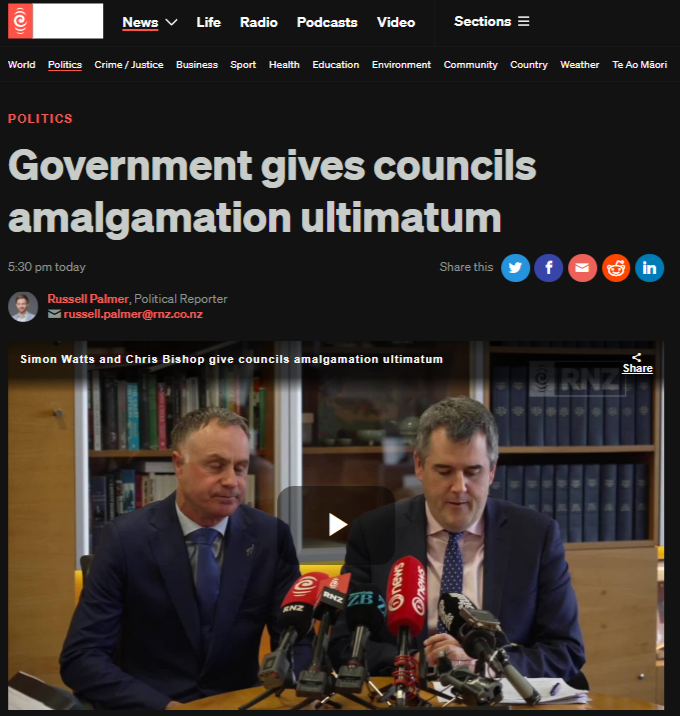
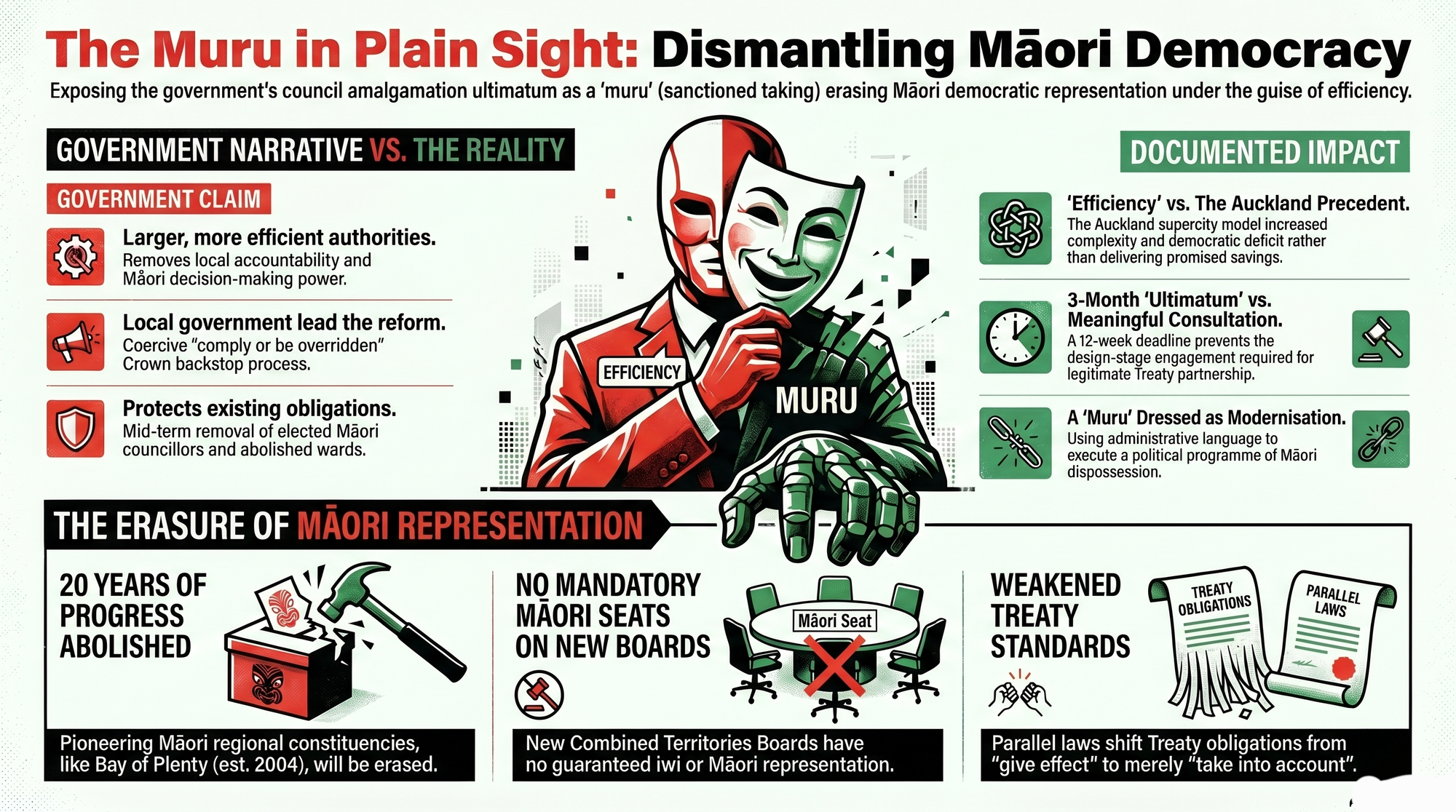
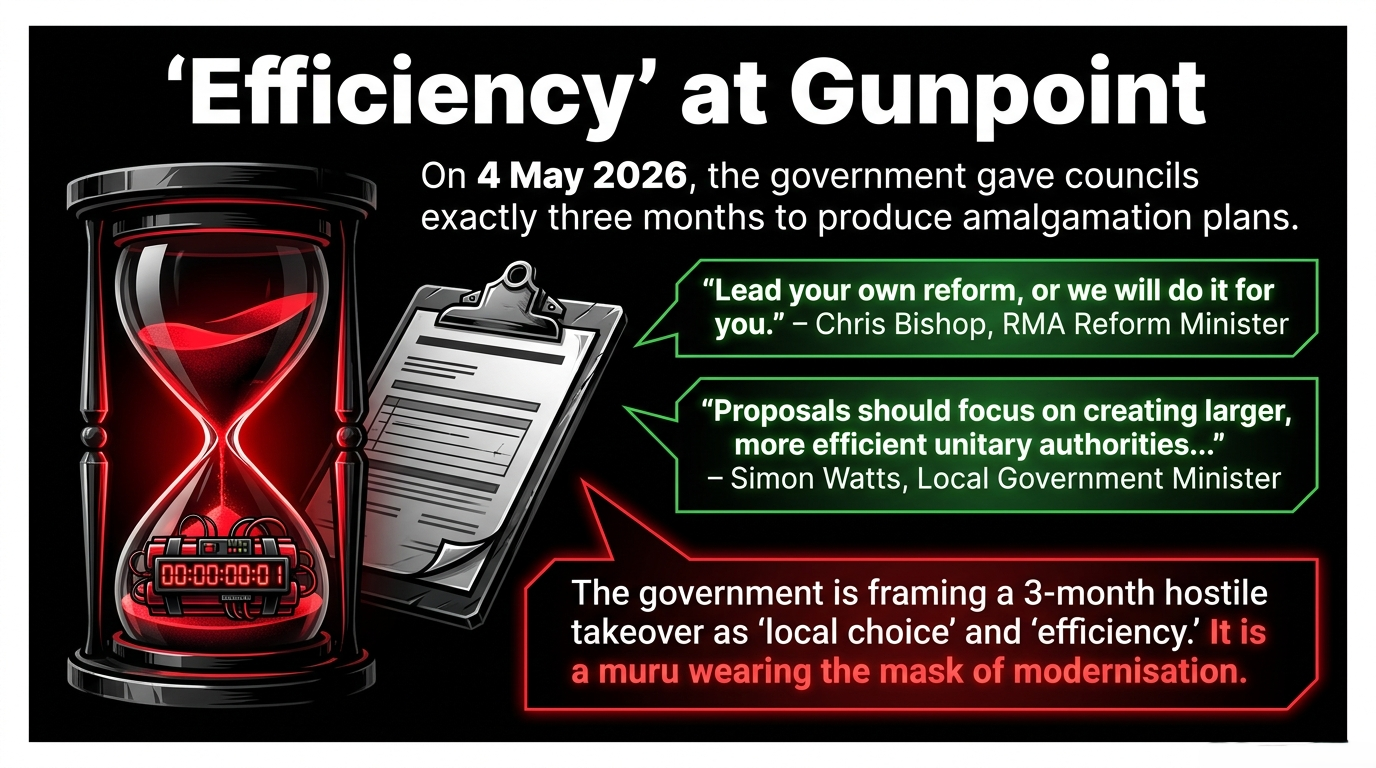
This is what Chris Bishop and Simon Watts announced on 4 May 2026: an ultimatum dressed as local democracy, a muru wearing the mask of modernisation.
 Russell Palmer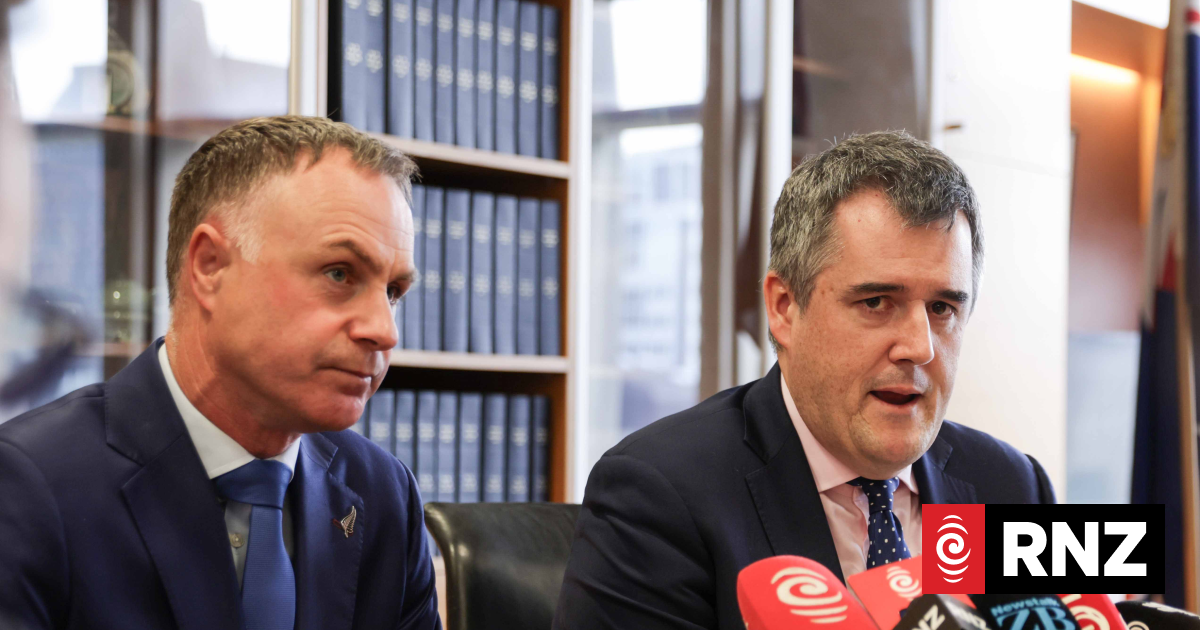
As RNZ reported, councils have been given three months to produce amalgamation plans — or the Crown will produce them instead. Farmers Weekly confirmed the framing: comply, or be overridden.
That is not reform. That is rangatira at gunpoint.
The lands of the muru were always stripped in the name of something noble — law, order, progress, civilisation. In 2026 the word is efficiency. The machinery is the same. The target is the same. Only the language has been laundered.
Ko Wai Te Take — What Just Happened
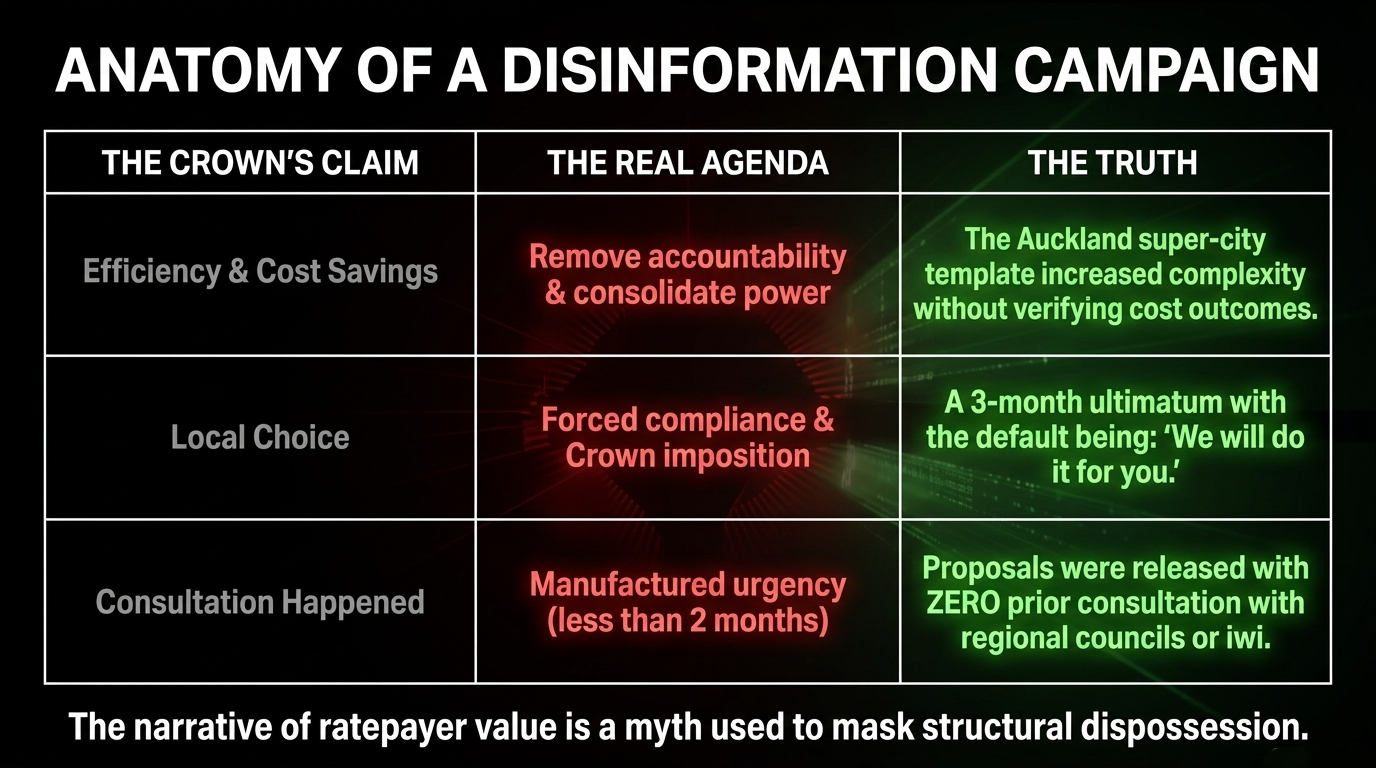
On 4 May 2026, the Luxon coalition government issued what amounts to a constitutional ultimatum to every council in Aotearoa: produce amalgamation plans within three months, or the Crown will impose them for you, as reported by RNZ and confirmed by the NZ Herald.
This is not consultation. This is managed democracy at gunpoint.
The announcement is the culmination of a process that began in November 2025, when Ministers Simon Watts and Chris Bishop announced the two-stage Simplifying Local Government proposal — the most significant restructure of local government since 1989.
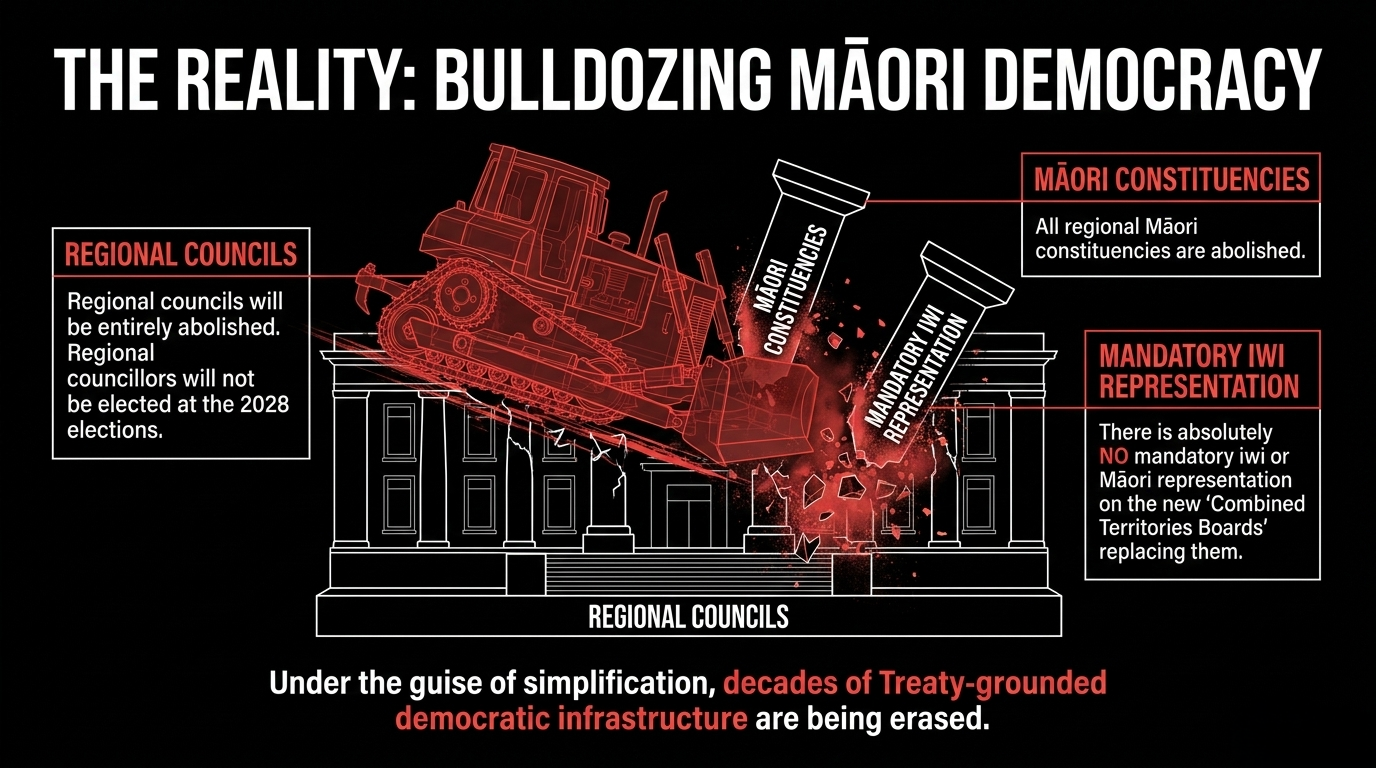
Under the plan, elected regional councillors would be abolished and replaced by Combined Territories Boards (CTBs) made up of the mayors of city and district councils, as The Spinoff detailed.
Those CTBs would then be given two years to produce
"regional reorganisation plans"
— effectively blueprints for full amalgamation into Auckland-style unitary authorities, as Bell Gully's analysis confirmed.
Te Hītori Tūāhua — The Whakapapa of This Attack
This assault has deep roots.
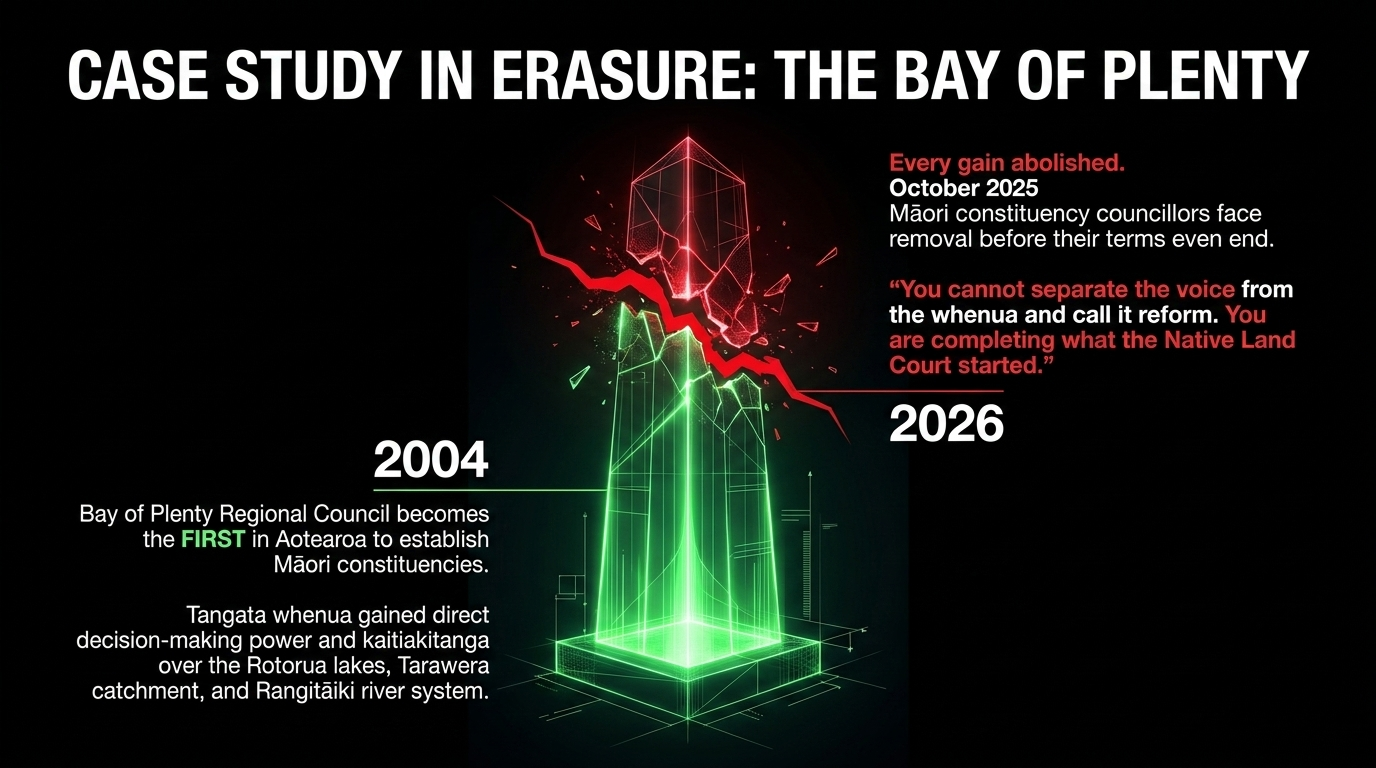
For decades, tangata whenua fought to get any seat at local government tables. The Bay of Plenty Regional Council — right here in the Te Arawa rohe — was the first local government body in Aotearoa to establish Māori constituencies, doing so in 2004, as Te Ao Māori News documented. Freshly elected Māori constituency councillors may now be stripped of their roles before they can serve their full terms, as the NZ Herald warned.
That history of struggle is not incidental.
It is the precise thing being erased.
The government's proposal explicitly confirms no mandatory iwi or Māori representation on the new Combined Territories Boards, as The Spinoff confirmed.
Any Māori constituencies of regional councils — every single one of them — will be abolished.
This is not restructuring. This is the bulldozing of every gain made under te Tiriti in the local government space.
Ngā Tauira Toru — Three Examples for the Western Mind
Example One: The Bay of Plenty Precedent — Twenty Years of Work, Erased in a Press Release
The Claim: Māori regional constituencies are not a gift from the Crown. They are hard-won, Treaty-grounded democratic infrastructure built over two decades.
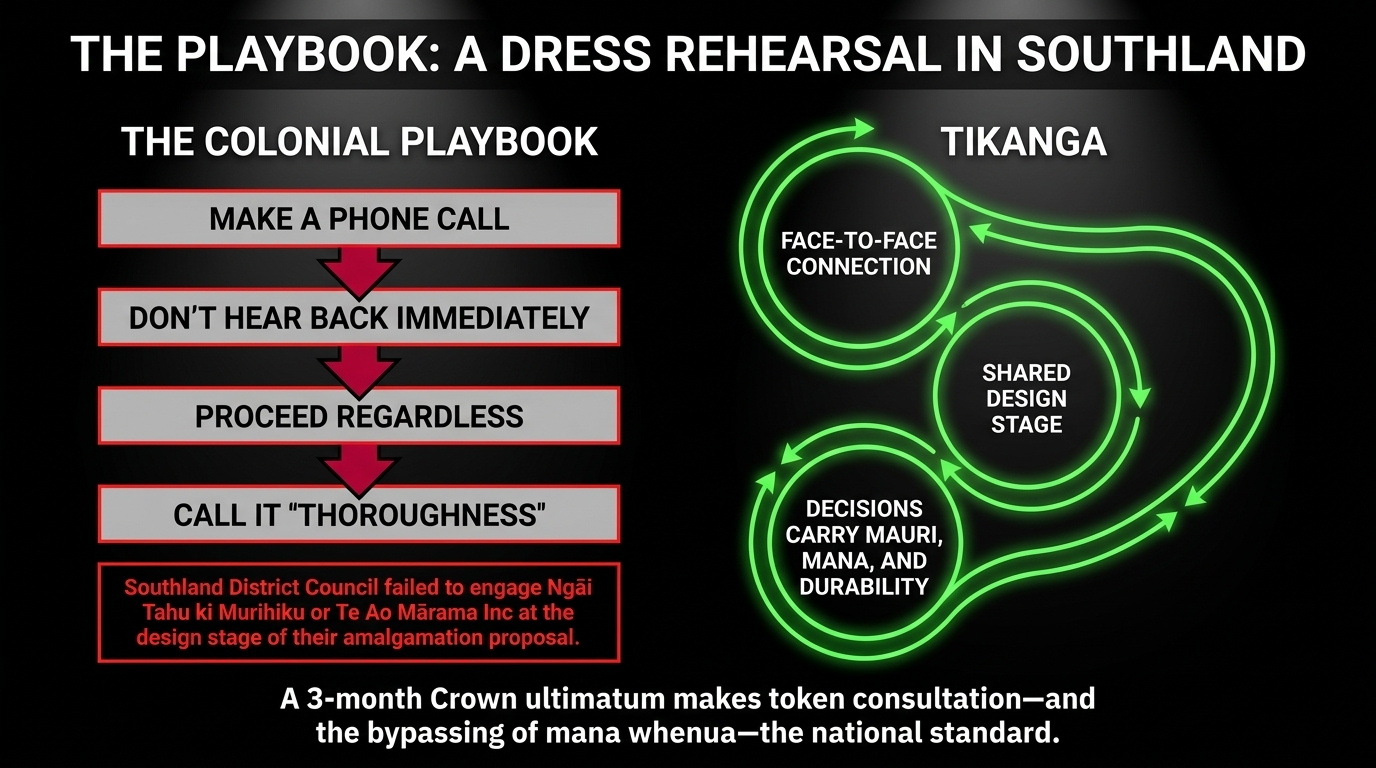
The Harm, Quantified: The Bay of Plenty Regional Council was the first in Aotearoa to establish Māori constituencies in 2004, as Te Ao Māori News confirmed. These constituencies give tangata whenua — Te Arawa, Ngāti Awa, Tūhoe, Ngāti Ranginui, Ngāi Te Rangi, and others — direct decision-making power over the Rotorua lakes, the Tarawera catchment, the Rangitāiki river system. Under the government's plan, all of that representation is abolished. Not reformed. Not replaced. Abolished. The October 2025 Māori constituency councillors, just months into their terms, face being removed before they complete them, as the NZ Herald confirmed.
The Tikanga Impact (for the Western mind): Imagine the Scottish Parliament being abolished after two decades, with no Scottish seats guaranteed in whatever replaced it — and the justification given was that it would save money on administrators. That is the scale of what is happening here. The Bay of Plenty Māori constituencies are not a Māori "add-on." They are the democratic mechanism through which iwi exercise kaitiakitanga — guardianship — over their own taiao. You cannot separate the voice from the whenua and call it reform. You are simply completing what the Native Land Court started.
The Solution: Enshrine Māori constituencies as a permanent, non-negotiable feature of any successor governance structure. Any reorganisation plan must be required to demonstrate how it expands, not contracts, meaningful Māori decision-making. That is what Treaty partnership looks like in practice.
Example Two: The Southland Dress Rehearsal — What Happens When You Don't Consult
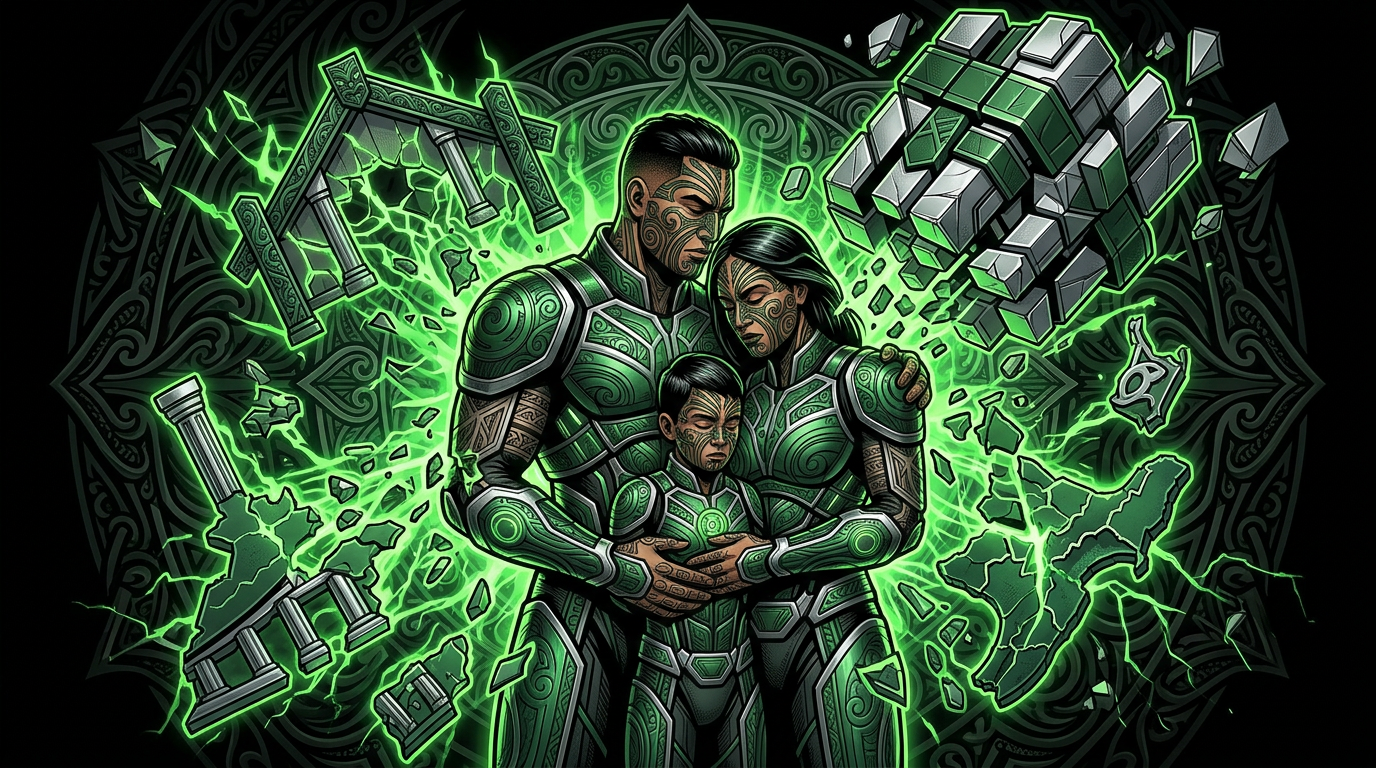
The Claim: Councils that excluded iwi from amalgamation planning are not an aberration. Under this government's model, they are the template.
The Harm, Quantified: When Southland District Council launched its amalgamation proposal in 2025, Te Ao Māori News reported that it had failed to engage either Ngāi Tahu ki Murihiku or Te Ao Mārama Inc — the body representing the four Southland rūnanga in resource management. The Local Government Commission had to reach out to Te Ao Mārama itself to request feedback, because the council had not. Mayor Rob Scott's defence: he "reached out to Ngāi Tahu's chair early in the piece but believed the timing must not have been right for them to respond." This is the colonial playbook performed with a smile — make a phone call, don't hear back, proceed regardless, and describe it as thoroughness. Under a three-month Crown ultimatum, this pattern becomes standard operating procedure nationally.
The Tikanga Impact (for the Western mind): In tikanga, kanohi ki te kanohi — face to face — is not a courtesy. It is the foundation of decision-making that has legitimacy. A decision that excludes the voice of mana whenua is not merely procedurally deficient. It is spiritually void — it carries no mauri, no mana, no durability. The Western legal system is slowly catching up: the Waitangi Tribunal has found repeatedly that meaningful participation, not token consultation, is a Treaty obligation. But this government is moving too fast for the law to follow, which is precisely the point.
The Solution: No reorganisation plan should be accepted by the Crown unless it can demonstrate — with documented evidence — that mana whenua were engaged at the design stage, not the feedback stage. The difference matters enormously. Feedback is asking permission after the decision is made. Design-stage engagement is actually sharing power.
Example Three: The Auckland Supercity Warning — The Efficiency Myth Already Exploded
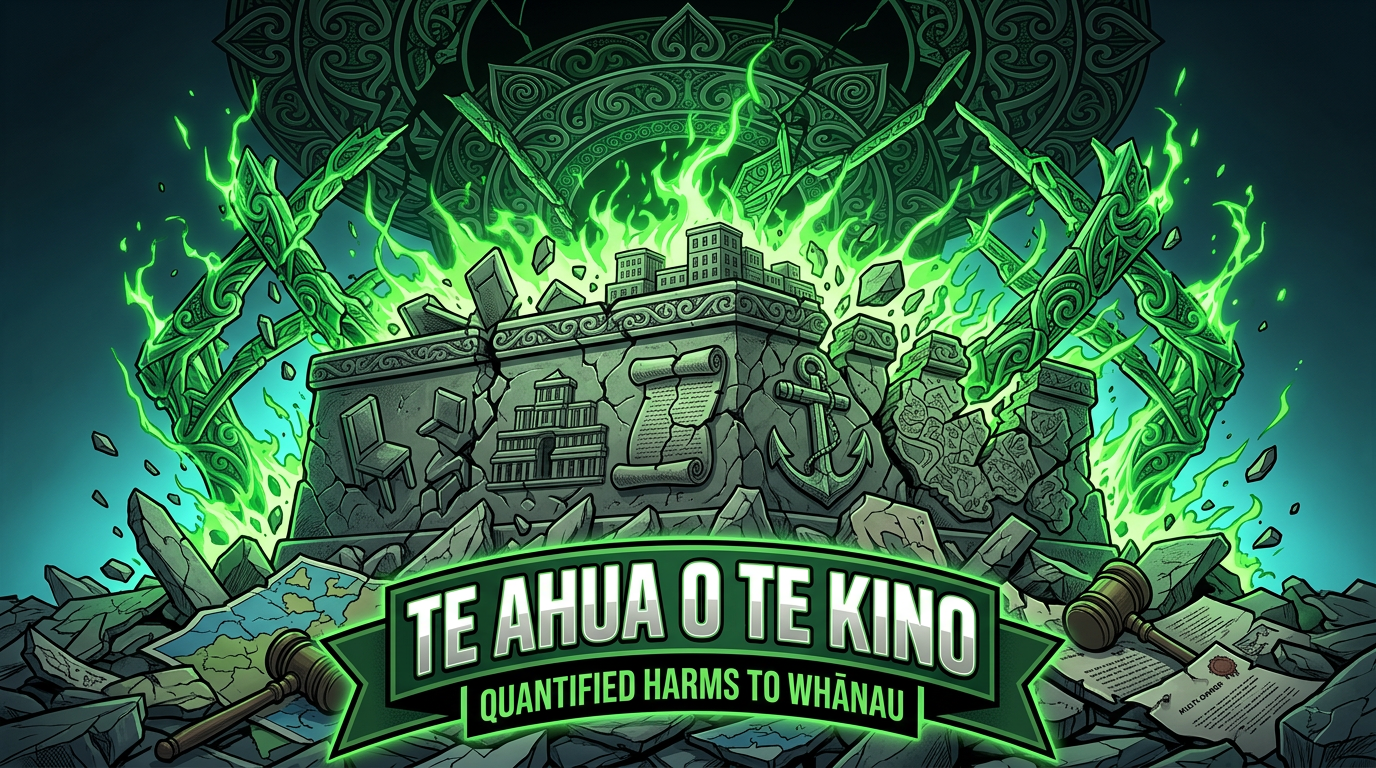
The Claim: Amalgamation saves ratepayers money. The government says so. The evidence says otherwise.
The Harm, Quantified: As the NZ Herald's Leeann Watson documented, the Auckland supercity model — the template for this entire reform programme — did not deliver the promised savings. Complexity increased. The democratic deficit widened. Māori voices were further diluted within a single enormous governance structure where the sheer numbers of the Tāmaki population systematically drowned out iwi concerns. The government's own Regulatory Impact Statement for the Simplifying Local Government proposals acknowledges the uncertainty of cost outcomes. There is no verified model showing amalgamation saves money. There is, however, an extensive documented record showing it removes accountability.
The Tikanga Impact (for the Western mind): Tikanga is not a spiritual add-on to governance. It is a governance system. It operates on the principle of whakapapa — everything is connected, everything has lineage, everything must be traceable to its source. When you amalgamate nine councils into one, you do not just merge spreadsheets. You sever the connections between decision-making bodies and the communities they were built to serve. You replace whakapapa governance with corporate governance. You replace accountability with brand management. This is not an upgrade. It is a hostile takeover.
The Solution: Commission an independent, Treaty-compliant cost-benefit analysis of Auckland's supercity model — including the democratic and cultural costs, not just the financial ones — before a single amalgamation plan is approved anywhere in Aotearoa. If the model cannot be proven to work for Auckland's Māori communities after fifteen years, it should not be exported to every other rohe in the country.
Ngā Hononga Huna — Five Verified Hidden Connections
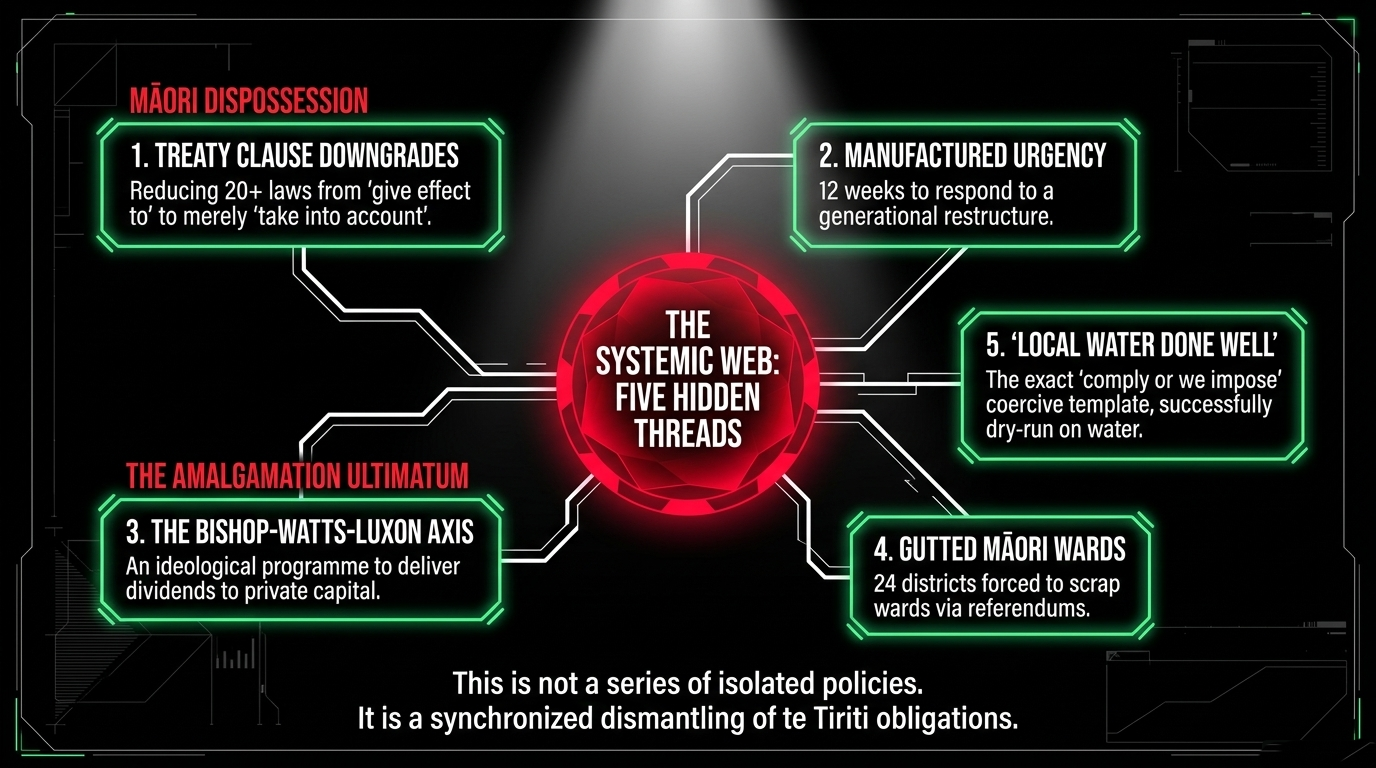
The full architecture of what is happening requires following five threads simultaneously:
1. Treaty Obligations Being Quietly Dismantled in Parallel
While the council reform grabs headlines, the government is simultaneously moving to weaken Treaty clauses across 20+ pieces of legislation — reducing the standard from "give effect to" down to merely "take into account," as 1News confirmed. The government's own Ministry of Justice officials warned this carried "significant risk to the Māori-Crown relationship" with "no apparent benefits," as The Spinoff reported. Cabinet overruled them. The Waitangi Tribunal found the Crown's process would breach Te Tiriti. The government ignored that too. As Te Ao Māori News analysed, this reduction sets the lowest possible Treaty standard — and the local government reforms will operate under that weakened standard.
2. The Manufactured Urgency Is a Power Grab Disguised as Efficiency
The consultation window for the November 2025 proposals ran only until 20 January 2026 — less than two months for a restructure of this magnitude, as CityWatch NZ documented. The Tiriti Action Group found the proposals were released without prior consultation with regional councils or iwi. Wellington Mayor Andrew Little — former Minister of Treaty Negotiations — stated the proposals are inconsistent with the Crown's Treaty obligations, warning they "dilute, or in fact completely remove" Māori representation. Twelve weeks to respond to the most significant local government restructure since 1989 is not consultation. It is a countdown.
3. The Bishop–Watts–Luxon Axis Is Executing an Ideological Programme
This is not pragmatic restructuring. It is the implementation of a coherent neoliberal programme that the Māori Green Lantern documented in Te Ara Utu: The Toll Road to Nowhere — Chris Bishop's pattern of using infrastructure and governance reform to build poverty traps through Māori rohe while delivering dividends to private capital. Minister Bishop's framing — that the status quo is "not acceptable and not an option" — mirrors the language of every privatisation assault since Rogernomics. As the NZ Herald revealed, Shane Jones was publicly musing about abolishing regional government in July 2025. The script was written long before the consultation began.
4. Māori Wards Already Gutted — Now Constituencies Follow
The 2025 local body elections saw 24 districts vote to scrap Māori wards, following the government's earlier decision to force referendums — a move E-Tāngata described as reversing nearly 200 years of struggle for Māori representation at the local level. The NZ Herald's ward results map showed 24 councils scrapping, 18 keeping — a democratic mechanism used to strip Māori representation that would have been unlawful if applied to any other ward. Now the regional Māori constituencies — harder-won and more structurally significant — are next. The pattern is systematic erasure, as the Māori Green Lantern previously exposed in The Far-Right Attack on Māori Democracy.
5. The "Local Water Done Well" Template Is the Dry Run
The government's Local Water Done Well reforms — requiring councils to submit Water Services Delivery Plans or face Crown imposition — established exactly this coercive "comply or we act" template, as Tararua District Council confirmed. Now that template is being applied to the entirety of local government. The ultimatum language is identical. The method is identical. This is a tested playbook. The NZ Herald confirmed the framing as "submit plans or we will do it for you" — word for word. You do not test a mechanism on water infrastructure and then apply it to democratic governance by accident.
Te Ahua o te Kino — Quantified Harms to Whānau
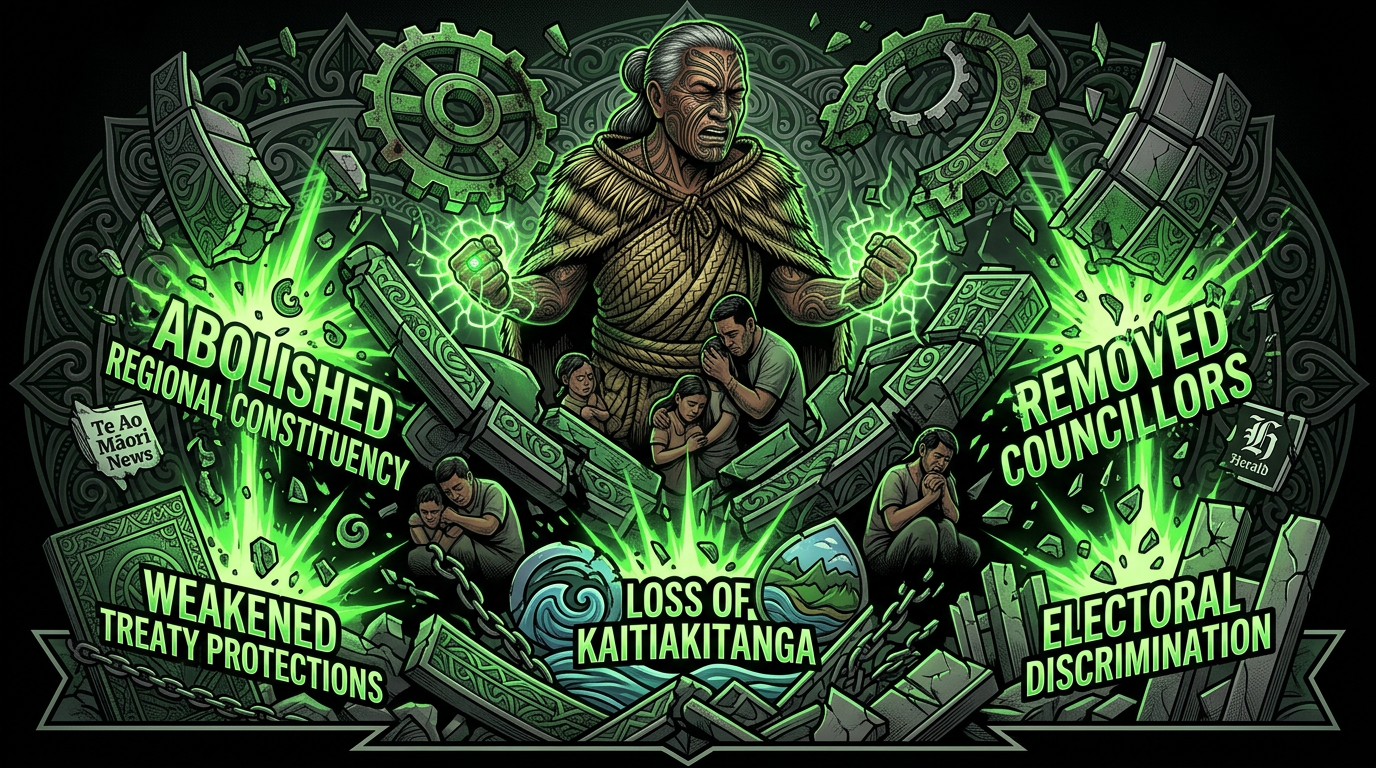
The harms are not abstract. They are structural, measurable, and deliberate:
- Every Māori regional constituency abolished — including Bay of Plenty's pioneering model established in 2004, as Te Ao Māori News confirmed
- October 2025 Māori constituency councillors may not complete their terms — removed mid-mandate, as the NZ Herald warned
- No mandatory Māori representation on Combined Territories Boards, as The Spinoff confirmed
- Treaty protections weakened across 20+ pieces of legislation simultaneously, as 1News confirmed — the laws that govern future council structures will operate under a lower Treaty standard
- Environmental kaitiakitanga at risk — regional environmental functions being restructured away from the bodies where mana whenua currently hold seats, as the Tiriti Action Group documented
- Electoral discrimination compounded — existing structural barriers already strip Māori of fair representation, including the one-vote-per-block rule for Māori multiple-owned land, as E-Tāngata's Mike Smith exposed; amalgamation deepens every one of these deficits
He Aha Te Tikanga — The Tikanga Lens
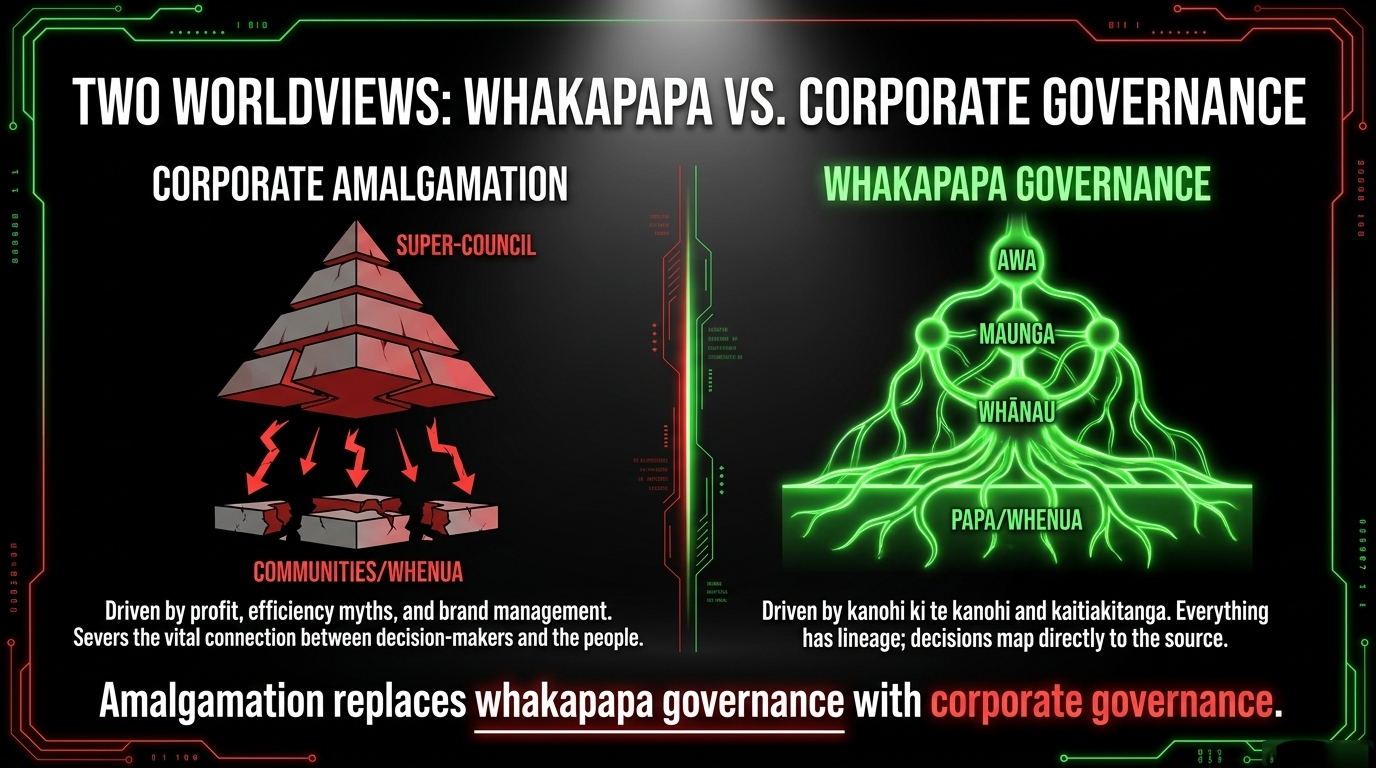
In te ao Māori, the structure of governance is not merely administrative — it is whakapapa. The right of hapū and iwi to participate in decisions about their rohe, their wai, their taiao flows from the same source as the right to breathe: it is not granted by government, it is inherent.
It is tino rangatiratanga.
What this government is doing is using the language of efficiency and ratepayer value to perform what is, in tikanga terms,
a muru — a sanctioned taking — of the political ground that Māori have occupied through decades of advocacy, litigation, Treaty settlement, and democratic contest.
They are taking back what they never truly gave.
The Waitangi Tribunal has repeatedly found that meaningful Māori participation in resource management and local governance is a Treaty obligation, not a discretionary policy choice, as the Tiriti Action Group confirmed. This government is treating it as the latter — and its own officials are telling it that is wrong, as 1News revealed.
Ngā Tuhinga o Mua — Related MGL Essays
This essay is one thread in a larger whakapapa of documented assault. For the full picture:
- Te Ara Utu: The Toll Road to Nowhere — documents Chris Bishop's pattern of using infrastructure reform to extract value from Māori rohe while delivering it to private capital
- The Colosseum of Kingsland — exposes Bishop's use of ministerial override powers to bypass local democratic structures, including elected local boards
- The Grave Robbers in Suits — traces how the Treaty Principles Bill's burial was followed by the "take into account" downgrade — a quieter, more effective erasure
- When the Whenua Bleeds — follows the environmental crime scene that regional councils are currently mandated to address, and what happens when that mandate is restructured away
- The Trapdoor Prime Minister — documents Luxon's pattern of presenting corporate restructuring as democratic reform
Ko Ngā Tikanga Hē — The Fallacies Being Deployed
| Fallacy | How It's Used | The Truth |
|---|---|---|
| "Efficiency" | Amalgamation saves ratepayers money | Auckland super-city did not reduce costs; complexity increased, as the NZ Herald confirmed |
| "Local choice" | CTBs will lead their own reform | Three-month ultimatum with Crown imposition as the default, as RNZ confirmed |
| "Restoring democracy" | Referendums on Māori wards were democratic | Referendums were imposed only on Māori wards — no other ward type, as The Spinoff explained |
| "Treaty settlements protected" | Existing obligations carried over | No guarantee of enduring rights; "take into account" standard guts future protections, as Te Ao Māori News analysed |
| "Consultation happened" | Submission window was open | Released without prior iwi consultation; Southland failed to engage Ngāi Tahu at all, as Te Ao Māori News confirmed |
He Ara Whakamua — What Must Be Done
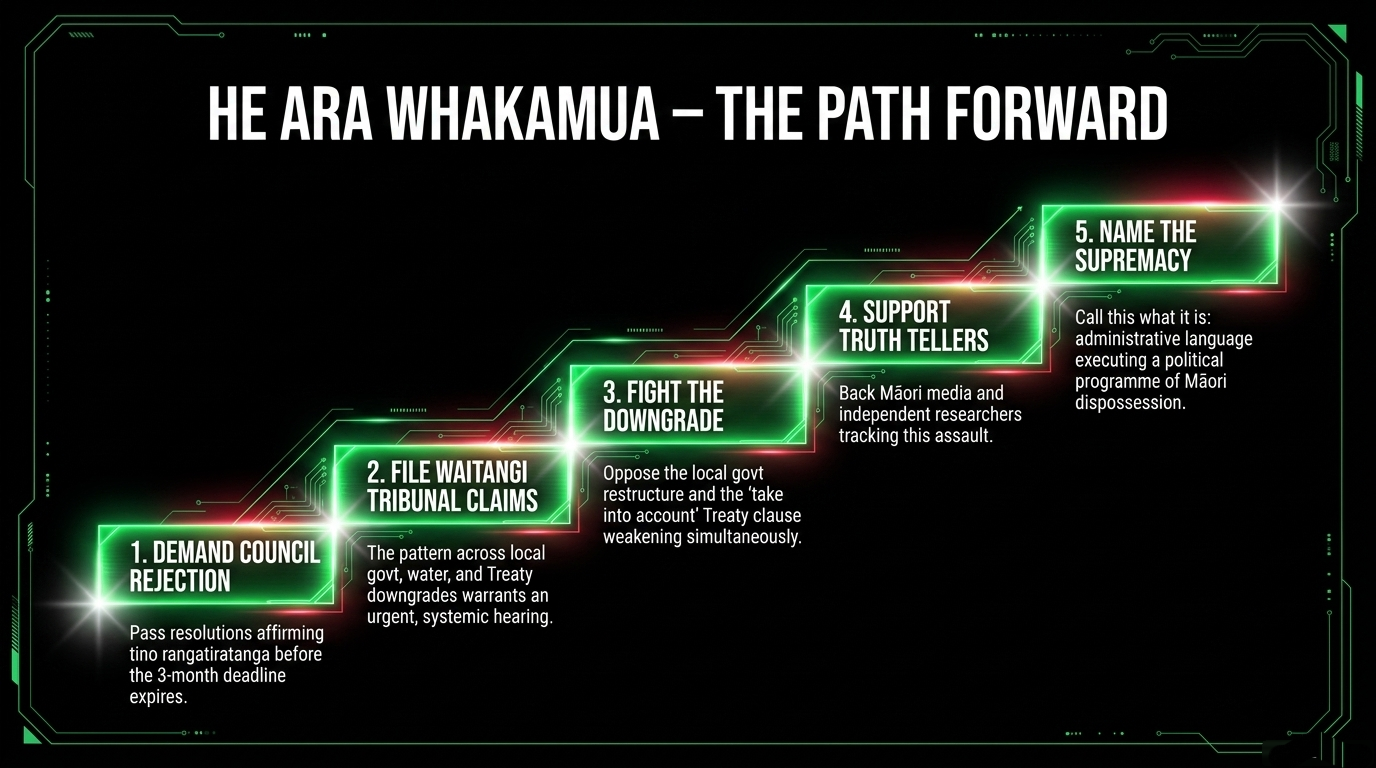
- Demand your council reject the ultimatum — pass resolutions affirming tino rangatiratanga and Treaty obligations before the three-month deadline expires
- File urgently with the Waitangi Tribunal — the pattern of Treaty breach across local government reform, water services, and Treaty clause weakening constitutes a systemic grievance warranting urgent hearing
- Oppose the Treaty clause downgrade in parallel — the local government restructure and the "take into account" downgrade are two arms of the same assault; both must be fought simultaneously, as The Spinoff confirmed
- Support Māori media and researchers — the only journalism tracking this consistently is coming from Te Ao Māori News, E-Tāngata, and independent voices
- Name it for what it is — this is a white supremacist neoliberal government using administrative language to execute a political programme of Māori dispossession. The evidence is on the record. Say it.
He Kōrero Whakakapi — Moral Clarity
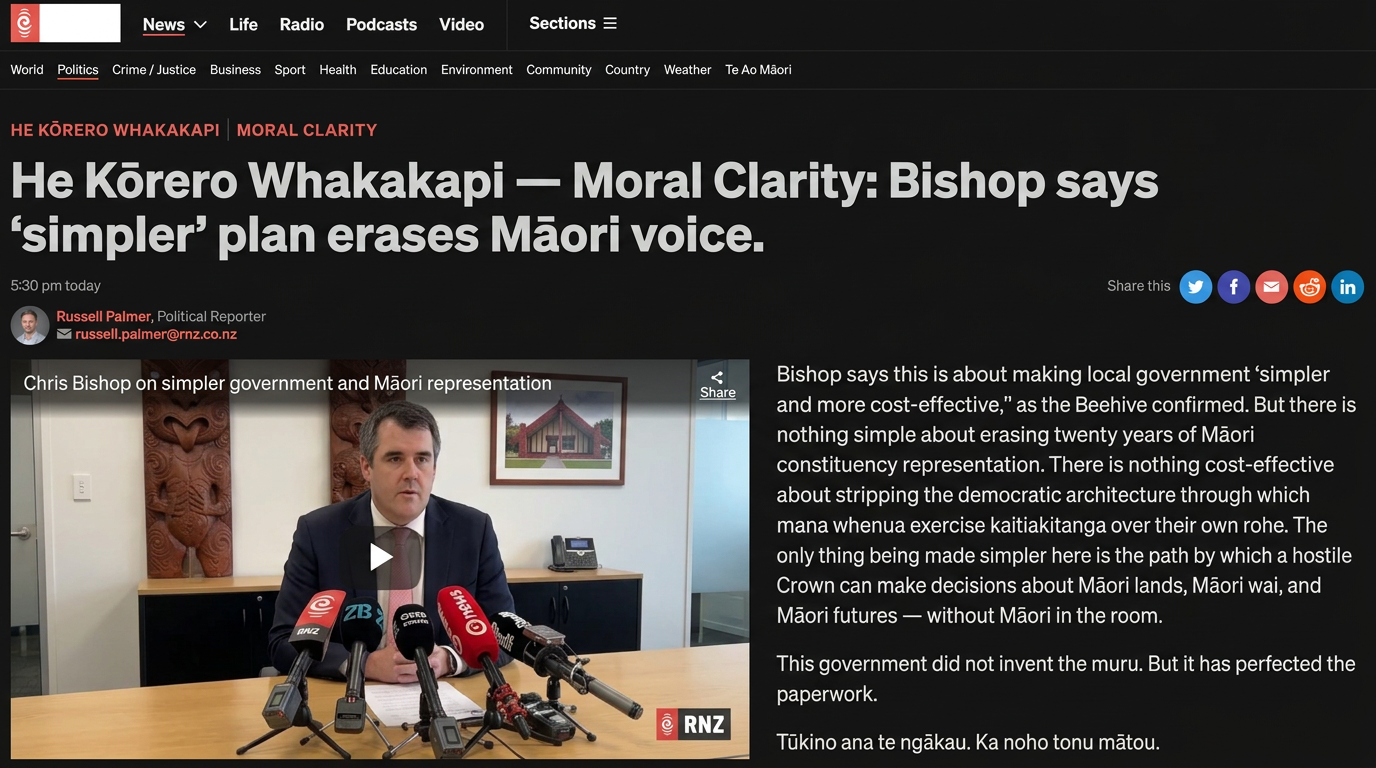
Bishop says this is about making local government "simpler and more cost-effective," as the Beehive confirmed. But there is nothing simple about erasing twenty years of Māori constituency representation. There is nothing cost-effective about stripping the democratic architecture through which mana whenua exercise kaitiakitanga over their own rohe. The only thing being made simpler here is the path by which a hostile Crown can make decisions about Māori lands, Māori wai, and Māori futures — without Māori in the room.
This government did not invent the muru. But it has perfected the paperwork.
Tūkino ana te ngākau. Ka noho tonu mātou.
🔥 He Tono Koha — Fund the Voice They Cannot Buy
They bulldozed the Māori constituencies. They weakened the Treaty clauses. They gave you twelve weeks to respond to the most significant democratic restructure in a generation
— and when the submissions closed, they called it consultation.
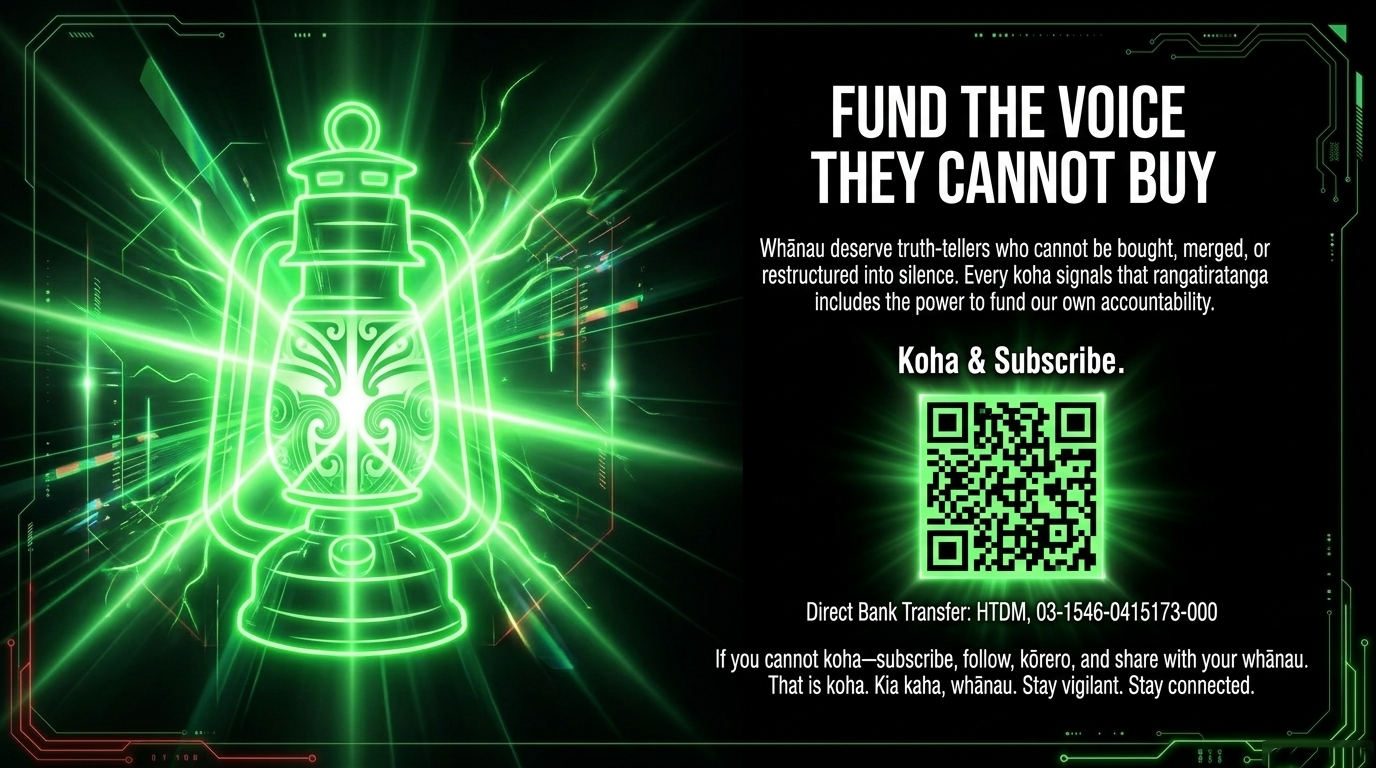
This essay exists because whānau deserve truth-tellers who cannot be bought, merged, or restructured into silence. Every koha signals that rangatiratanga includes the power to fund our own accountability. Every subscription means one more whānau member gets this analysis before the deadline passes.
Koha — Support this mahi directly: https://app.koha.kiwi/events/the-maori-green-lantern-fighting-misinformation-and-disinformation-ivor-jones
Subscribe — receive essays directly: https://www.themaorigreenlantern.maori.nz/#/portal/support
Direct bank transfer: HTDM, 03-1546-0415173-000
Facebook: https://www.facebook.com/Themaorigreenlantern/subscribe/
If you cannot koha — no worries. Subscribe, follow, kōrero, share with your whānau and friends. That is koha. Kia kaha, whānau. Stay vigilant. Stay connected.
Views expressed constitute honest opinion on matters of public interest under the Defamation Act 1992 (NZ) and Durie v Gardiner NZCA 278. All factual claims sourced and cited. Errors and right of reply: contact via themaorigreenlantern.maori.nz. Named individuals referenced solely in their public capacity.