"The Sun Tax Con: How A White Supremacist Neoliberal Government Sold You A Market It Never Meant You To Enter" — 19 September 2026
Two Monopolies. One Coalition. And Exactly One Rule Decides Which Gets Broken: Does The Crown Own A Share Of It?


Kia ora koutou, it's Ivor Jones, The Māori Green Lantern, and I am furious — properly, taiaha-in-hand furious
— because I have just finished reading a set of policies from three coalition partners that only make sense once you stop listening to what they say and start looking at what they own.
Here is the pattern, stated plainly before I prove it line by line: this coalition government will happily force the break-up of a monopoly it has no financial stake in, and will fight tooth and nail to protect a monopoly it profits from directly to the tune of $599.5 million a year. Everything else — the "market opening" language, the "investor confidence" warnings, the talk of "choice" and "competition" — is packaging built around that one fact.
What this essay covers: I trace ACT's solar and lines policy from Energy Spokesperson Simon Court's own words through to who can actually afford to use it, using Electricity Authority connection data, EECA's own installed-cost benchmarks, and Stats NZ's census figures.
I place that solar policy directly beside this same coalition's live fight over whether to break up the power gentailers, and beside National's separate pledge to break up the grocery duopoly — and I show you the single variable, Crown shareholding, that predicts every position taken.
I show my arithmetic on every number, with the formula behind it, so you can check my working rather than take my word for it.
I close with my own view, on why a government this consistent about protecting its own revenue does not deserve a second term this November.
This is a repository. One day our mokopuna will go looking for who told the truth while the power bills climbed and the gentailers kept the dividends. At least there was The Māori Green Lantern, warning them.
The Pūrākau: A Waka Sold As A Fleet
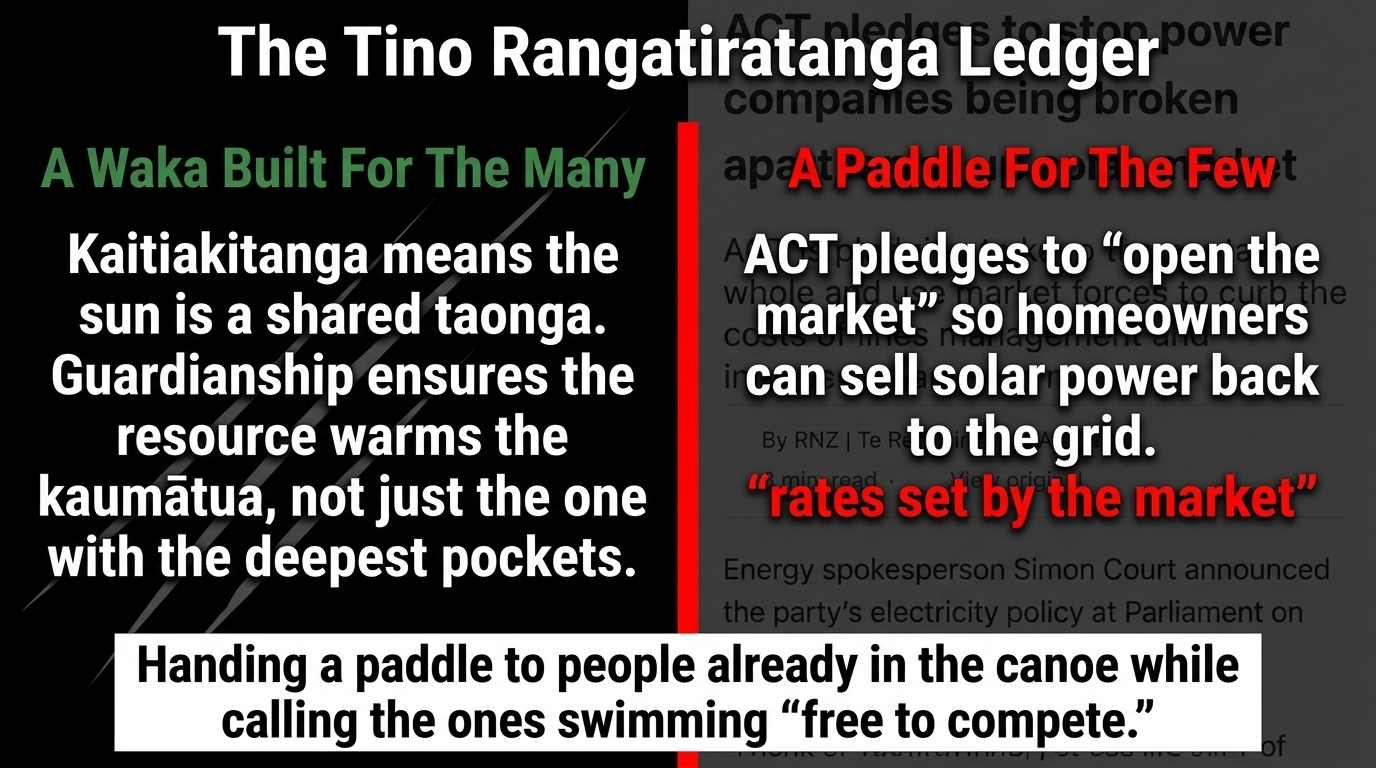
In te ao Māori, a waka built for the many is not the same thing as a waka built for the few who happen to own a paddle already.
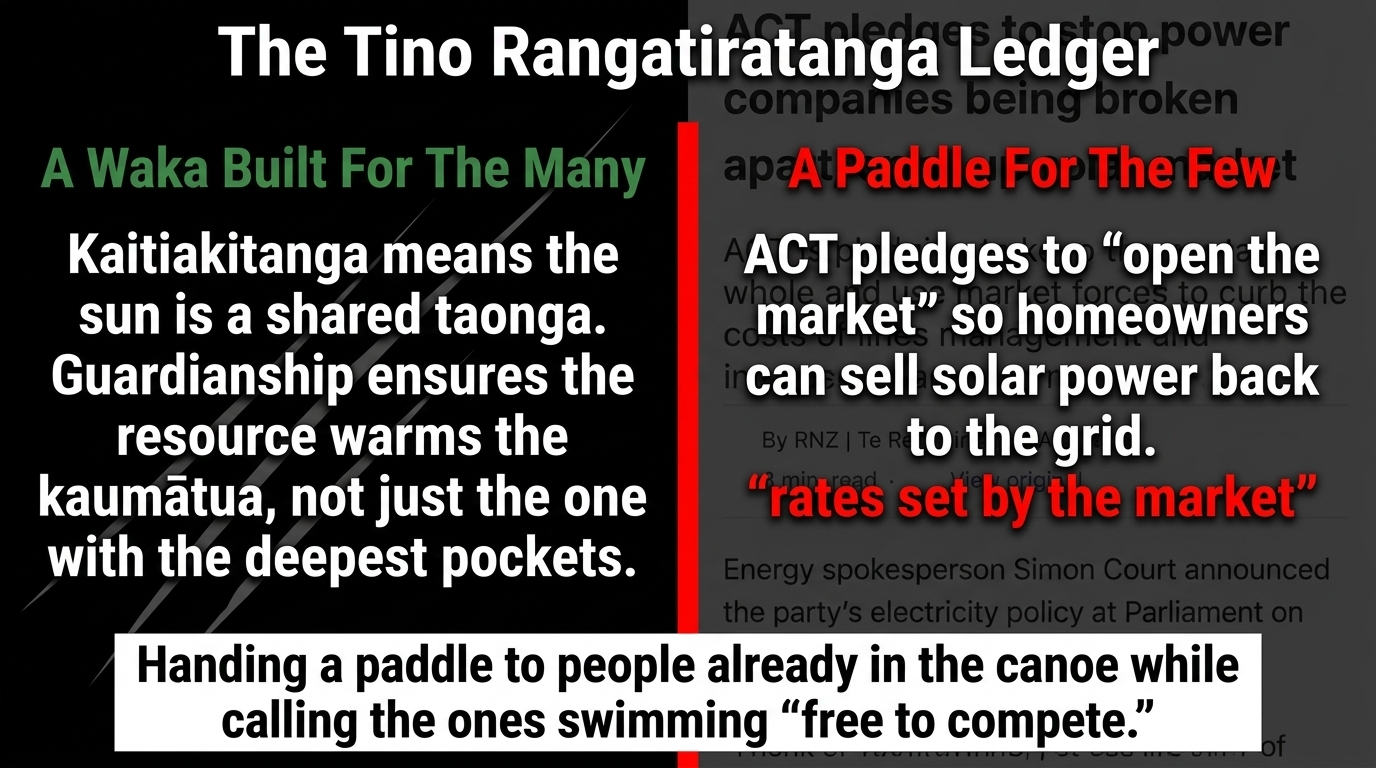
Kaitiakitanga means the resource — the sun, the grid, the power that keeps a kaumātua warm through a Rotorua winter — belongs to the collective, not to whoever got there first with the deepest pockets.
ACT wants you to believe "opening the market" is the same as sharing the taonga. It is not. It is handing a paddle to the people already sitting in the canoe and calling the ones still swimming "free to compete."
Background: What This Government Actually Announced
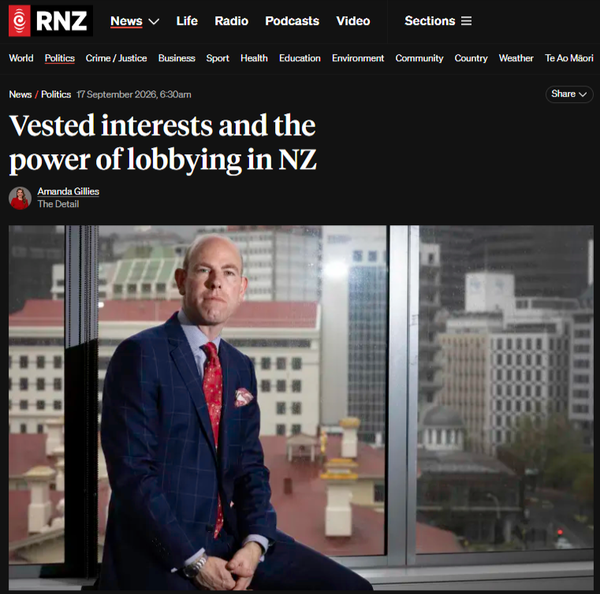
 RNZ | Te Reo Irirangi o Aotearoa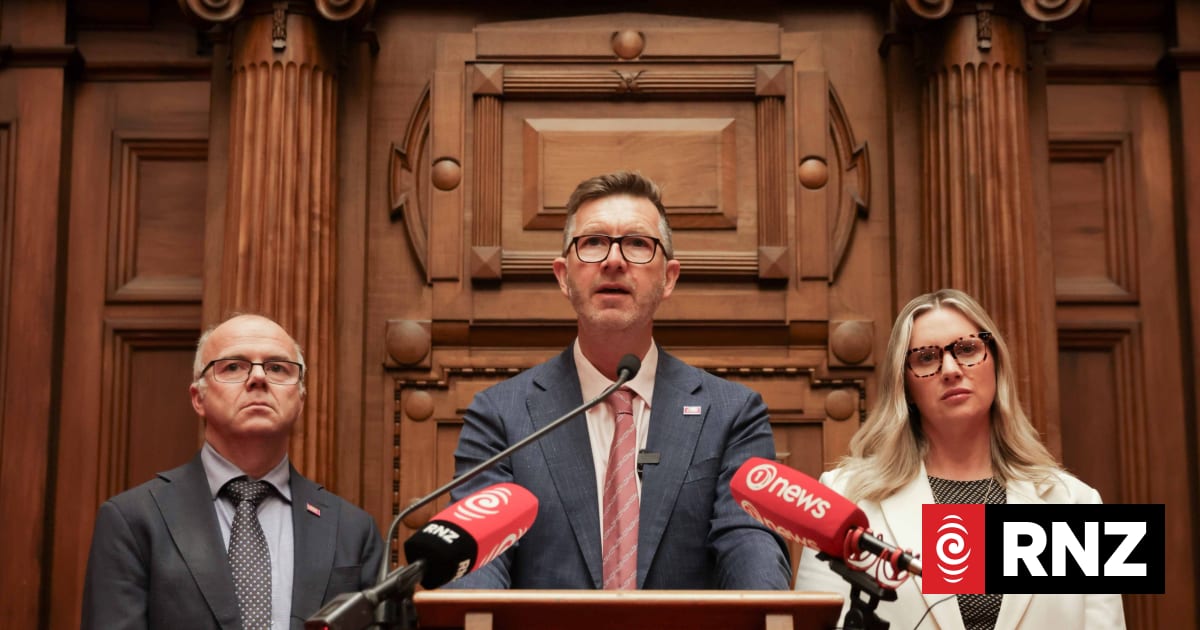
On 18 September 2026, ACT Energy Spokesperson Simon Court stood at Parliament and pledged, in his own words, to keep every gentailer — Mercury, Meridian, Genesis and Contact — structurally whole, arguing a break-up would "shatter the confidence of anyone seeking to invest in growing capacity."
In the same breath, he promised households could sell self-generated power, choose a buyer, export when "the network has room," and get paid at "rates set by the market" instead of a rate set unilaterally by their retailer, per the full RNZ report of the announcement. He used Northland as his flagship example — a region he said could generate "two to three times as much electricity from solar as Northland needs," strangled by "one skinny... rather unreliable connection to the grid."
Nowhere in that announcement, as fully reported, is there a subsidised finance scheme, a rent-to-own pathway for tenants, a requirement that landlords pass solar savings to renters, or a single mechanism aimed at the whānau least likely to own the roof over their own heads. I read the whole thing. That absence is not my inference. It is what is actually there — and what is not.
Two days earlier, National had announced the opposite instinct in a different sector entirely: a pledge to force the break-up of Foodstuffs, splitting Pak'nSave from New World and Four Square, subject to a Commerce Commission review inside 100 days (1News, 16 September 2026).
Finance Spokesperson Nicola Willis was explicit about the limits of that appetite: "National is not pursuing structural separation in any other sector." Meanwhile NZ First has spent the year campaigning to do to the gentailers exactly what National wants done to Foodstuffs — split them into separate generation and retail businesses "so they can no longer control both the power and the price" (NZ First policy page, "Breaking up the Gentailers").
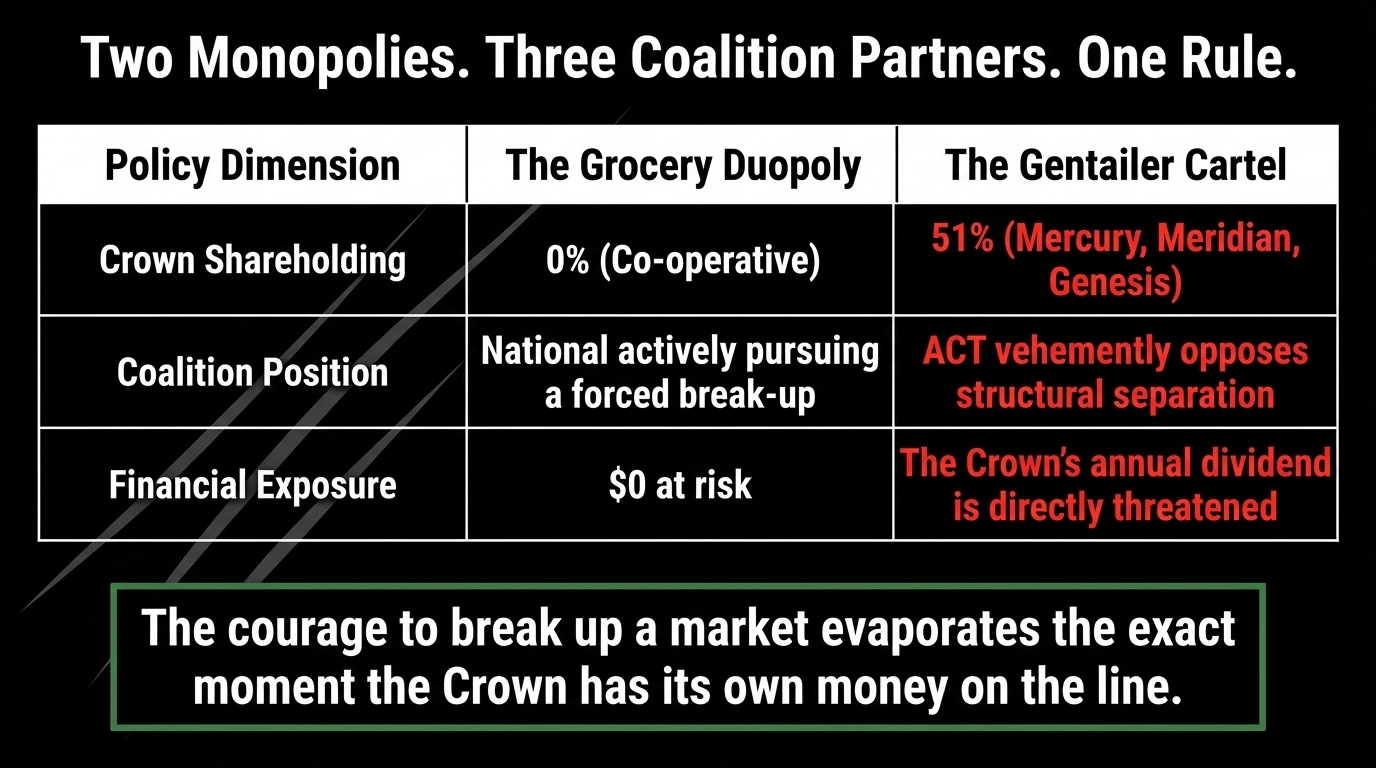
Three coalition partners. Two duopolies. Three different answers to the identical question — and the difference between them is not ideology. It is ownership.
The Deep Dive Podcast
Listen to a lively conversation between two hosts, unpacking and connecting topics in the sources of this essay. I apologise in advance for the AI's very harsh pronounciation of reo. Please dont shoot me, :).
Youtube Video
Like video? Here is a short video suppporting the essay. Again, don't shoot the messenger please because of AI's pronounciation. :)
Koha Consideration
You might ask who is paying The Māori Green Lantern to lay a government's own dividend statements next to its own press releases and show you the contradiction in plain arithmetic.
The answer is you do. No gentailer, no Foodstuffs lobbyist, no Beehive comms team is behind this mahi — every number in this essay was checked on my own time, because whānau deserve to see this comparison made in public before they vote, not after. Every koha signals that whānau are ready to support the accountability that a government protecting its own $599.5-million-a-year revenue stream will never volunteer on its own. It signals that rangatiratanga includes the power to support our own truth-tellers, especially in an election year.
If you are unable to koha, no worries! Subscribe or follow The Māori Green Lantern at themaorigreenlantern.maori.nz, kōrero and share this with your whānau and friends before November — that is koha in itself.
Four pathways exist:
For those who wish to support this mahi directly with a koha (voluntary contribution): Koha — Support
For those who wish to receive essays directly and support through subscription: Subscribe to The Māori Green Lantern
For those who prefer direct bank transfer: Ivor Jones, account number 03-1395-0099387-000
For those on Facebook: Facebook — subscribe
The Con, Line By Line: Five Verified Revelations
One. Fewer than one home in twenty-five in this country has solar to sell back in the first place.
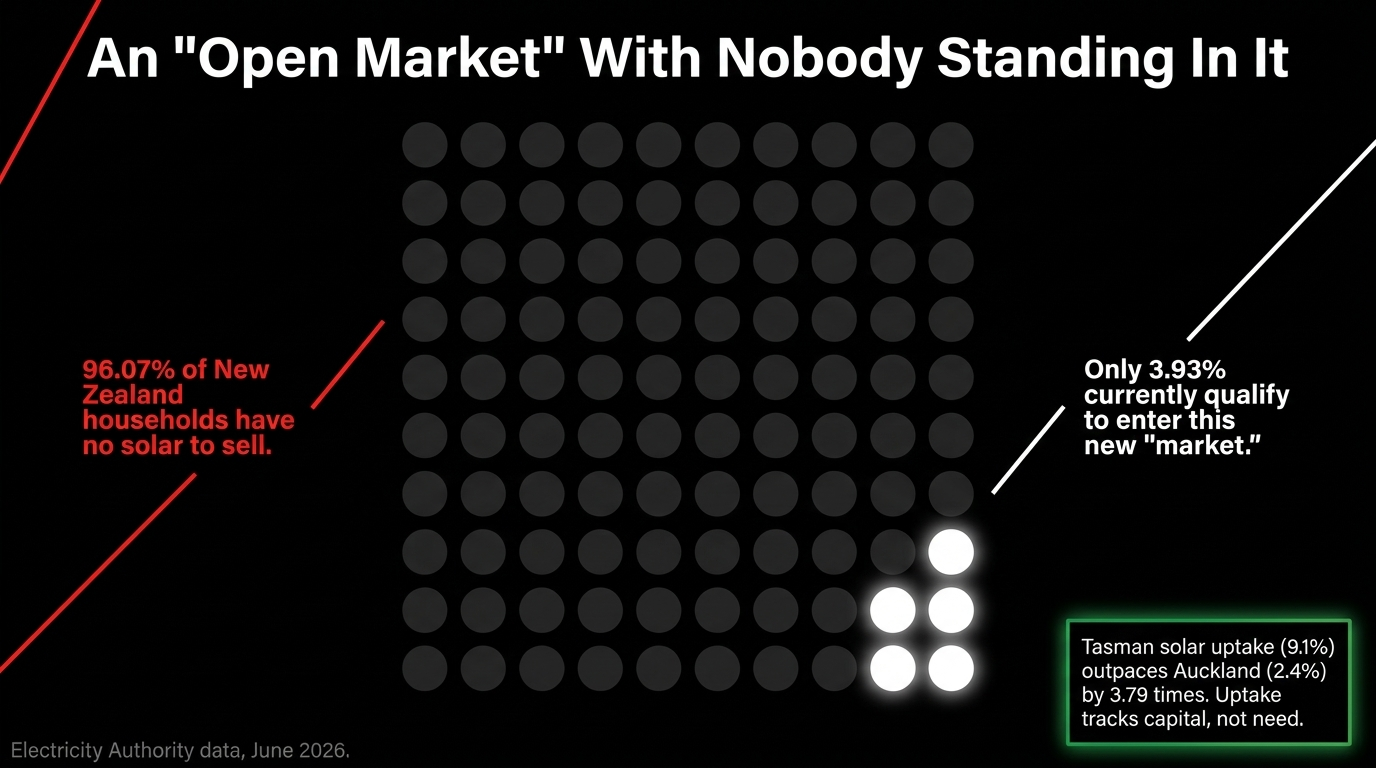
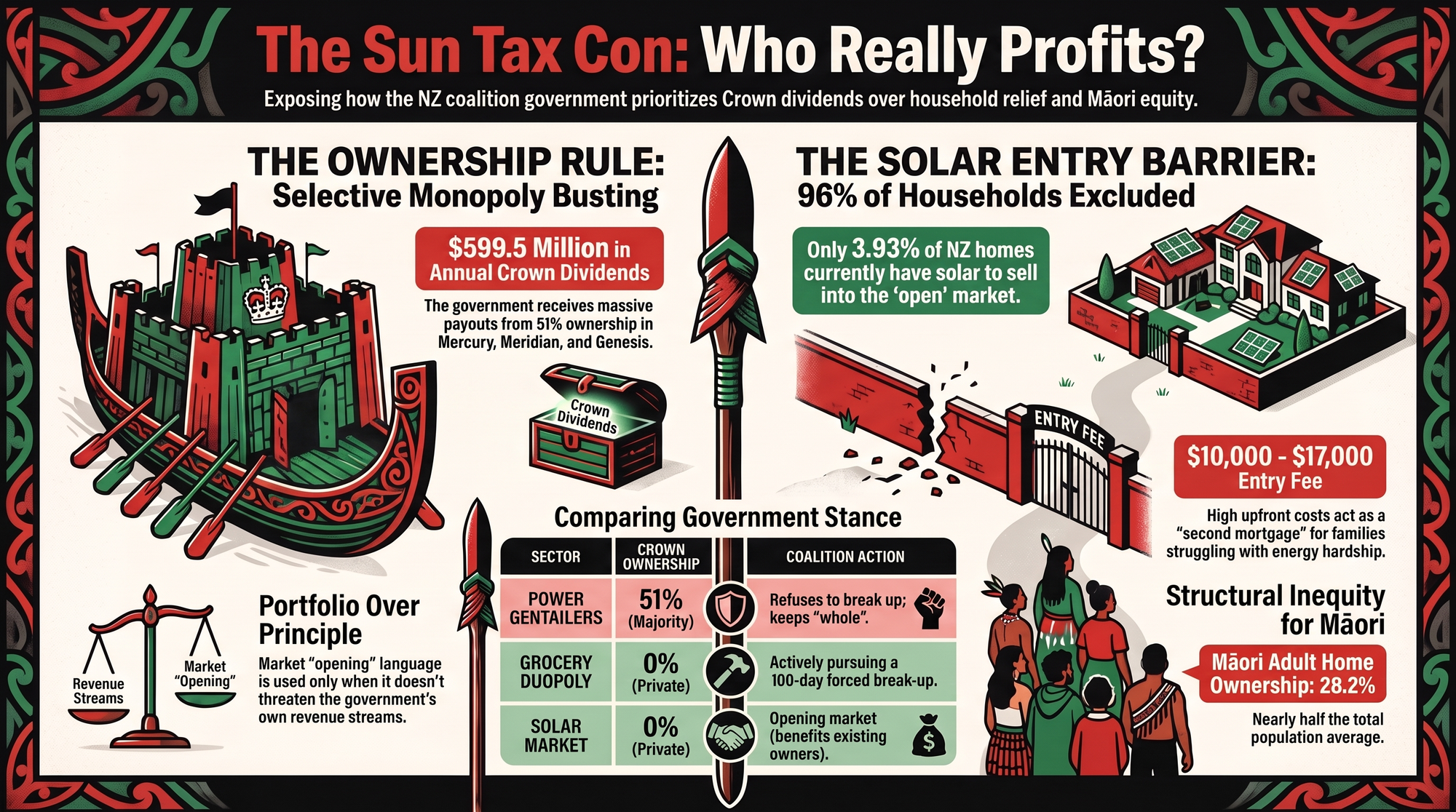
The Electricity Authority's own data, as at 30 June 2026, put rooftop solar on 80,463 of roughly 2.05 million households nationally — that's 80,463 divided by 2,050,000, times 100, which comes to 3.93%, rounding to 4% (Electricity Authority data via newswire.co.nz, 25 July 2026).
Flip that and 96.07% — call it 96% — of households have nothing to sell into ACT's brand-new "market."
Two. Uptake tracks money, not need — and Auckland proves it.
Tasman sits at 9.1% solar uptake, Auckland at 2.4% — that's 9.1 divided by 2.4, which is 3.79 times higher in Tasman, despite Auckland holding the single largest number of raw solar connections in the country.
Raw numbers flatter a policy that percentages expose (Electricity Authority data via newswire.co.nz).
Three. Home ownership — the one thing you need before you can even think about solar — is split almost double against Māori.
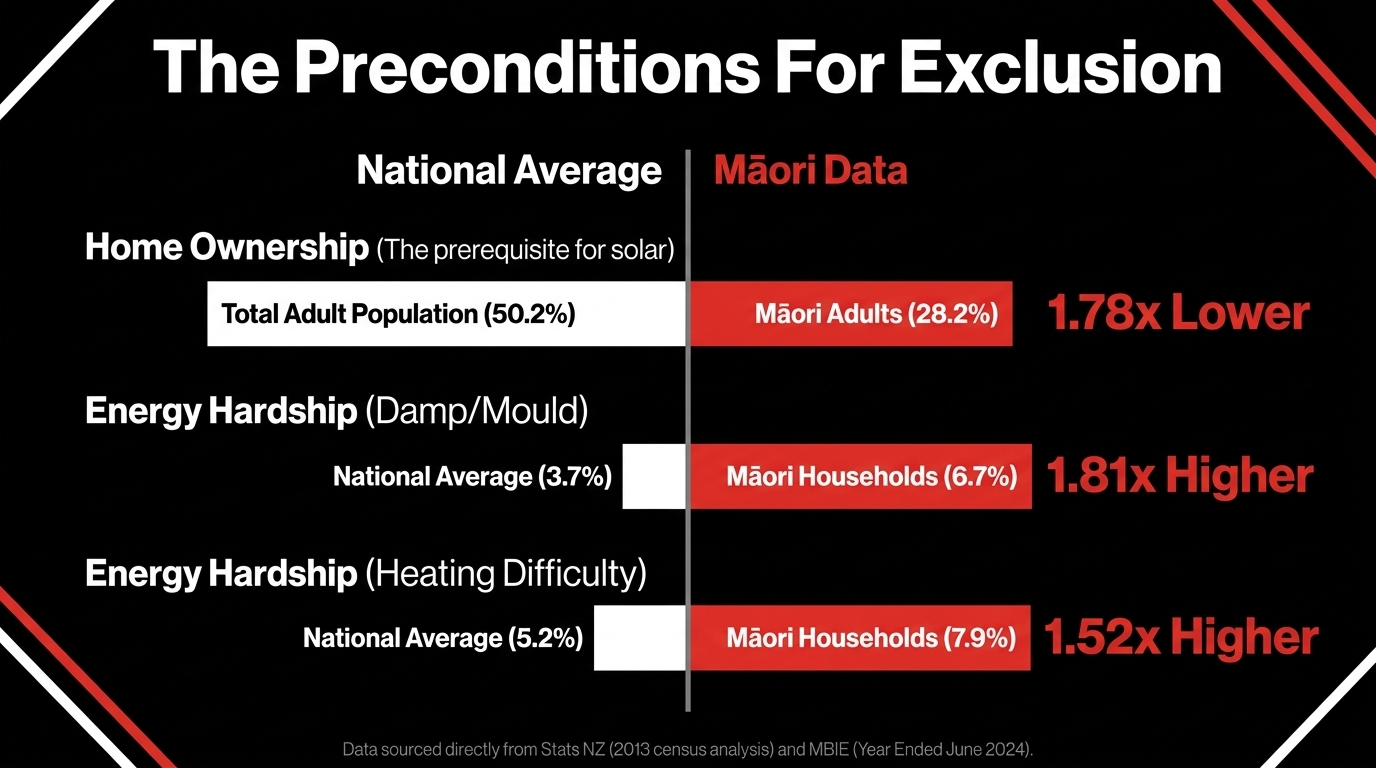
Stats NZ's own dedicated 2013 census analysis of Māori and Pacific home ownership found Māori adult home ownership at 28.2% against 50.2% for the total adult population.
That is 50.2 divided by 28.2, which is 1.78 times — nearly double, not the "two-to-one" I might be tempted to round it to if I weren't showing you my working (Stats NZ, "Changes in home-ownership patterns 1986–2013: Focus on Māori and Pacific people").
Four. The entry price is real money, not pocket change for a household this government's own hardship data says is already struggling.
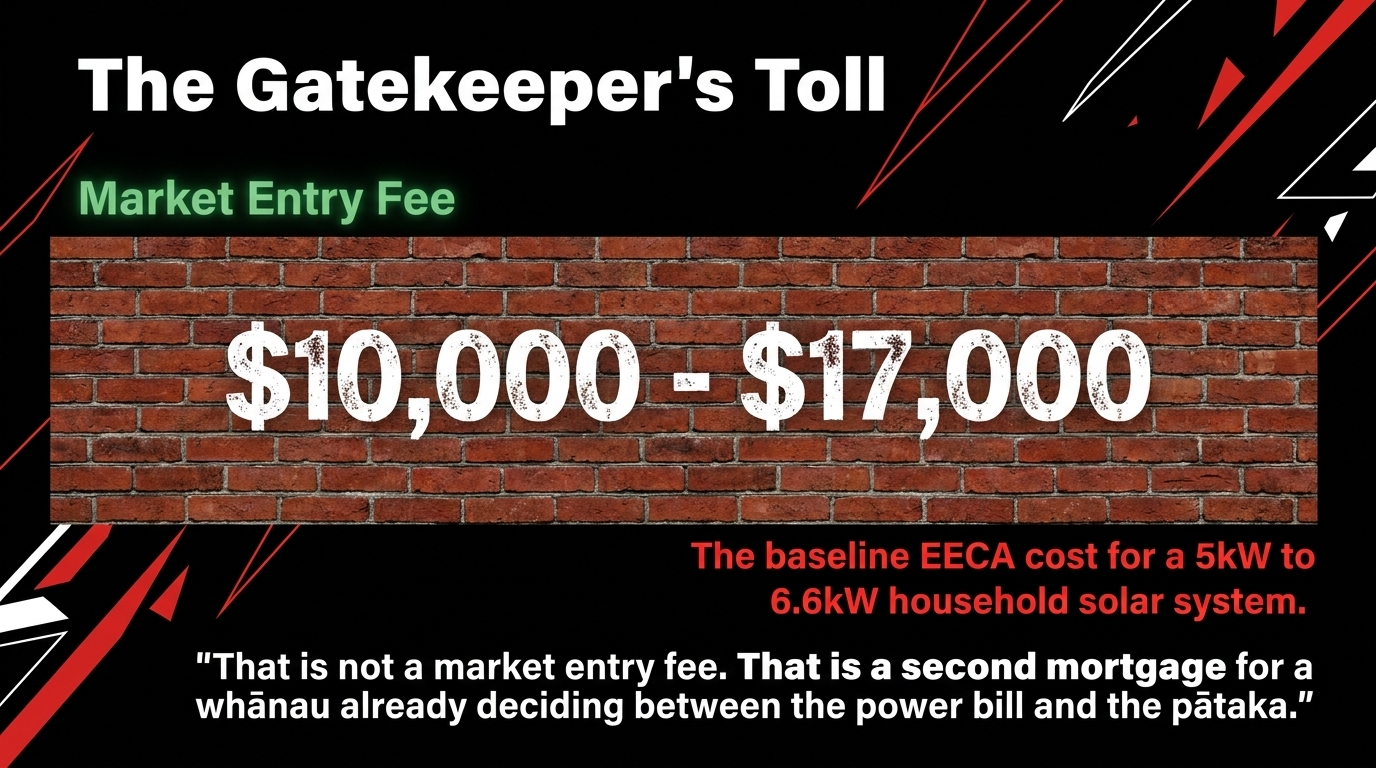
EECA's own published benchmark is roughly $2,000 per installed kilowatt.
A 5kW household system: two thousand times five, $10,000, floor price.
A family-sized 6.6kW system: EECA's own banded quote, $13,000 to $17,000 (EECA, "Breaking down home solar costs and savings").
That is not a market entry fee. That is a second mortgage for a whānau already deciding between the power bill and the pātaka.
Five. The Crown's own dividend statements explain why the gentailers stay whole while Foodstuffs does not.
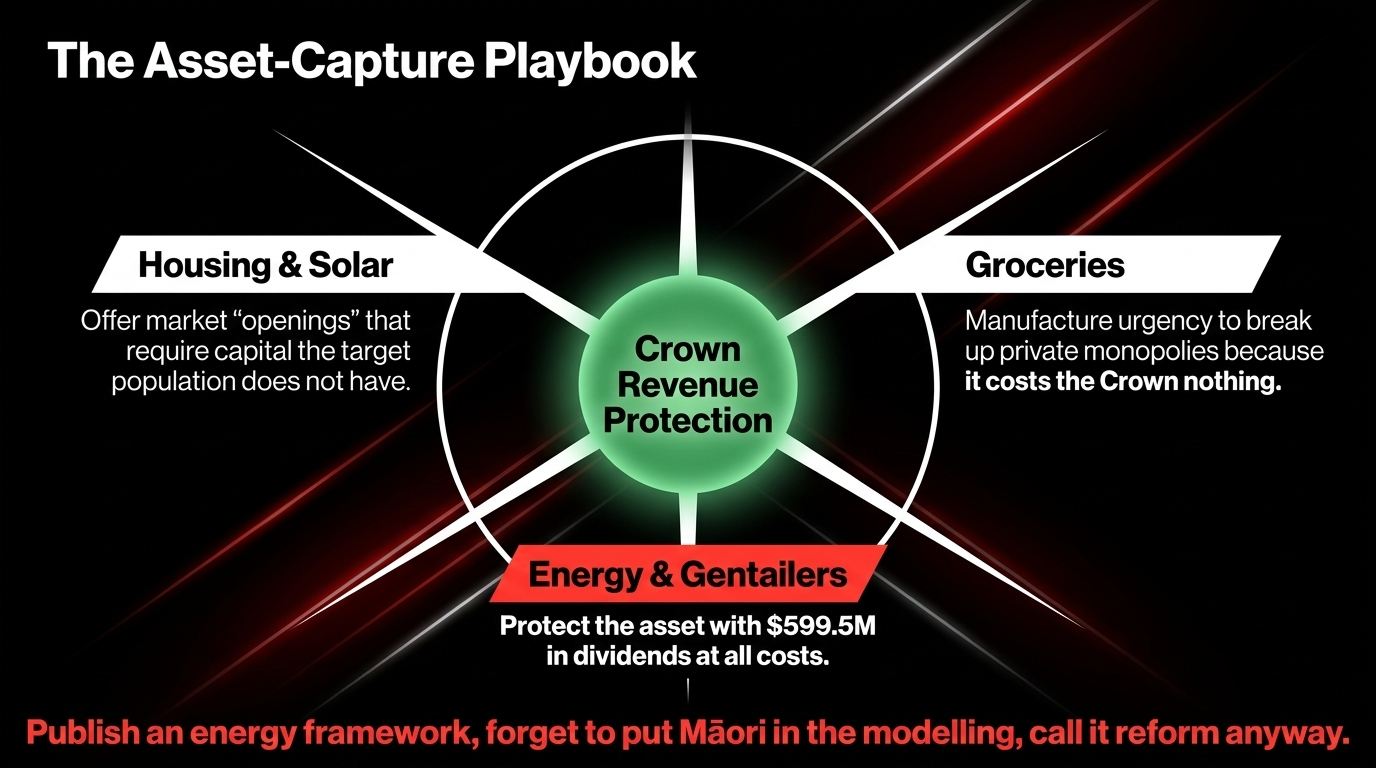
Mercury, Meridian and Genesis are each 51% Crown-owned, and paid the government $599.5 million in dividend entitlements in the year to June 2026 alone — Mercury $196.2m, Meridian $303.9m, Genesis $99.3m — while Contact, the one fully private gentailer, pays the Crown nothing (interest.co.nz, 7 September 2026).
Foodstuffs, by contrast, is owned entirely by independent co-operative members; the Crown holds no shares in it whatsoever.
Consumer NZ Chief Executive Jon Duffy named the mechanism directly in that same reporting: gentailer dividend revenue "will be an important part of balancing the Government's books. So there's probably a disincentive to do away with those dividend payments."
Energy Minister Simeon Brown was asked outright whether that dividend stream disincentivises reform of the electricity market.
He did not respond.
Two Faces Of The Same Refusal
Watch three coalition partners answer one question — should a concentrated market be broken up by force of law — and give three different answers depending entirely on who profits.
| Dimension | Gentailer Break-Up Fight | Solar "Market Opening" | Grocery Break-Up Pledge |
|---|---|---|---|
| Crown shareholding | 51% in three of four gentailers | Not applicable — no ownership change proposed | Zero — Foodstuffs is a member-owned co-operative |
| Coalition position | ACT opposes; NZ First supports; National silent on this sector specifically | Uncontested inside the coalition | National actively pursuing, with a 100-day Commerce Commission review |
| Who can access any benefit | Everyone, in theory — structural reform doesn't require capital to benefit from lower prices | Only the 3.93% of households with solar, or those who can find $10,000–$17,000 to install it | Everyone, in theory, once (if ever) implemented |
| Crown financial exposure if changed | Directly threatens the $599.5 million a year Crown dividend | Zero — leaves gentailer ownership and profit untouched | Zero — the Crown has nothing invested to lose |
| Timeframe for whānau relief | Immediate in principle, if legislated | Immediate for the 4% who already qualify; effectively never for the other 96% | Not until 2029 at the earliest, per National's own modelling, with full effect only by 2035 |
The rule holds without exception: touch a monopoly the Crown doesn't own, and this coalition finds its courage. Touch one the Crown profits from, and the same coalition finds its caution.
Three Examples For The Sceptical Mind
Example One — The Roof You Don't Own.
Core claim: "opening" the solar market rewards anyone who wants to generate power.
Quantified harm: with 96.07% of households holding no solar and Auckland — the most rental-dense city in the country — sitting at just 2.4% uptake, this "market" has almost nobody standing in it.
Solution: a government-backed, interest-free solar finance scheme targeted at Māori and low-income households, funded from the same $599.5 million dividend stream the Crown currently protects — if there is fiscal room to protect a dividend, there is fiscal room to fund a whānau's panel.
Tikanga impact: kaitiakitanga treats the sun as a shared taonga, not a private subscription service; a policy gated by bank balance inverts guardianship into gatekeeping.
As I documented in When The Petrol Tanker Runs Dry, this government has a pattern: publish an energy framework, forget to put Māori in the modelling, call it reform anyway.
Example Two — The Grocery Door Swings Open Only Because It Costs The Crown Nothing.
Core claim: National's Foodstuffs policy proves this coalition is willing to take on concentrated markets.
Quantified harm: that willingness evaporates completely the moment a break-up would cost the Crown its own money — the same courage doesn't extend to a sector generating $599.5 million a year, and Willis said so herself.
Solution: every coalition partner should be required to state, before the election, whether they would support gentailer restructuring even if it cost the Crown its dividend; Willis has effectively already answered that question, and the answer was no.
Tikanga impact: as I traced through the asset-capture playbook in The Colosseum Of Kingsland, this is the same move every time — manufacture urgency where it costs nothing, protect the asset where it profits them.
Example Three — The Whānau Caught Between Both Doors.
Core claim: this government's cost-of-living policies are helping ordinary households.
Quantified harm: Māori households sit at 1.78 times lower home ownership and up to 1.81 times higher energy hardship — 6.7% versus 3.7% on damp/mould, 7.9% versus 5.2% on heating difficulty — than the national average, and neither the solar policy nor the gentailer standoff moves either number (MBIE, Report on Energy Hardship Measures, Year Ended June 2024).
Solution: a genuine cost-of-living response would means-test relief against both metrics directly, rather than offering market "openings" that require capital the target population does not have.
Tikanga impact: calling a system that delivers a $599.5 million annual cheque to the Crown while these hardship rates persist a system that merely "works" is itself a political choice about whose wellbeing counts as the measure of success.
The Quantified Harm, Laid Bare
- 96.07% of NZ households have no solar to sell into this "open" market — Electricity Authority data
- 3.79 times higher solar uptake in Tasman than Auckland, proving capital drives access, not need — same source
- 1.78 times higher home ownership for the total population than for Māori adults, the precondition this policy requires — Stats NZ
- $10,000 to $17,000 upfront capital required to enter the market this policy "opens" — EECA
- $599.5 million in annual Crown dividends from gentailers this government refuses to touch — interest.co.nz
- 1.81 times and 1.52 times — the margin by which Māori households exceed the national average on damp/mould and heating hardship — MBIE
Every figure above has its formula shown in this essay's working, not asserted from memory. That is not optional in this kaupapa. That is the whole discipline.
The Verdict — Opinion, Grounded In What's Above
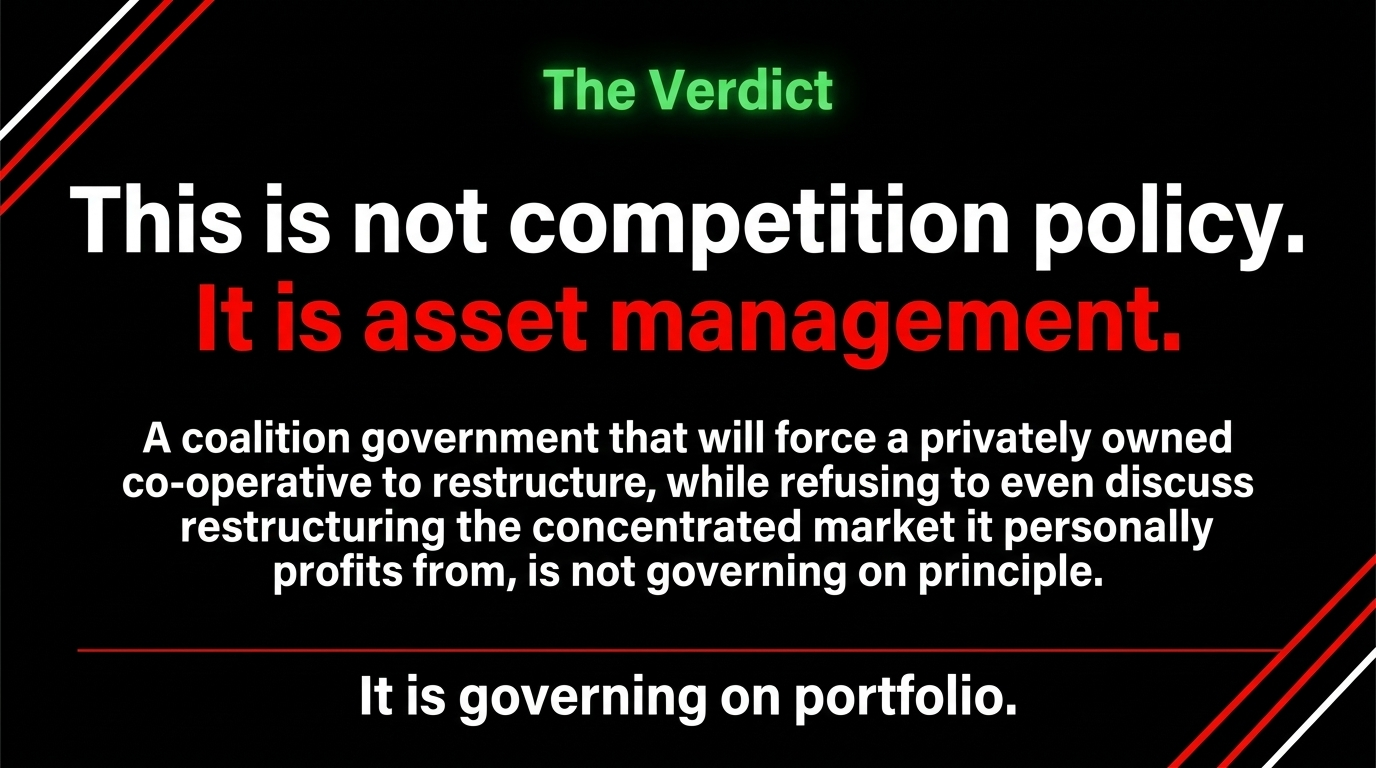
Here is my view, and I flag it plainly as opinion, sitting right beside the facts that built it: a coalition government that will force a privately owned co-operative to restructure while refusing even to discuss restructuring the concentrated market it personally profits from — to the tune of $599.5 million in one year — is not governing on principle.
It is governing on portfolio.
That is not competition policy. It is asset management, dressed up in the language of "letting the market work," applied selectively wherever the market happens to work for the Crown's own books.
Whānau are being asked, this November, to reward a government whose only consistent position across two major cost-of-living fights is protecting its own revenue.
I do not think that deserves a second term.
That is my view, and I have shown you every figure that built it, with the formula behind each one, so you can check my working and reach your own conclusion rather than take mine on faith.
Kia kaha, whānau. Stay vigilant. Stay connected. And in November, ask every candidate at your door the one question this whole essay is built on: would you break up a monopoly if it cost the Crown its own dividend? Watch how fast the answer changes.

Disclaimer: this essay reflects analysis of publicly available, verified sources current as at 19 September 2026. Policy positions are subject to change before the 2026 general election. The opinion expressed in "The Verdict" is the author's own, clearly flagged as such, and is offered alongside the factual basis for it rather than presented as established fact.